PerformaBe F228Be - Pregnant Revel - Free user manual and instructions
Find the device manual for free PerformaBe F228Be Revel in PDF.


User questions about PerformaBe F228Be Revel
0 question about this device. Answer the ones you know or ask your own.
Ask a new question about this device
Download the instructions for your Pregnant in PDF format for free! Find your manual PerformaBe F228Be - Revel and take your electronic device back in hand. On this page are published all the documents necessary for the use of your device. PerformaBe F228Be by Revel.
USER MANUAL PerformaBe F228Be Revel
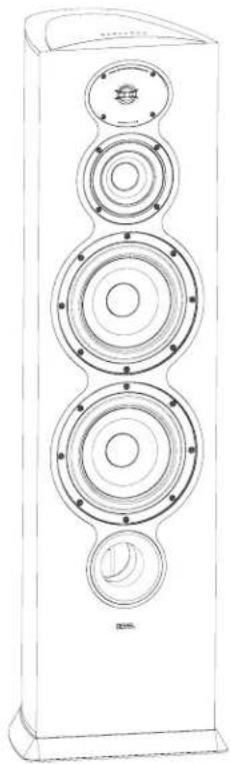
F228Be and M126Be Loudspeaker Owner's Manual
natural_image
Line drawing of a multi-tiered speaker tower with concentric circular speakers and a small fan (no text or symbols)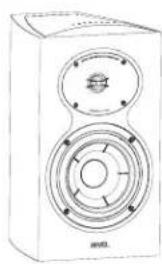
natural_image
Line drawing of a speaker or audio device with a circular vent and top panel (no text or symbols)M126Be
F228Be
IMPORTANT SAFETY INSTRUCTIONS
- Use only attachments/accessories specified by the manufacturer.
- Use only with the cart, stand, tripod, bracket, or table specified by the manufacturer or sold with the apparatus. When a cart is used, use caution when moving the cart/apparatus combination to avoid injury from tip-over.
- Refer all servicing to qualified service personnel. Servicing is required when the apparatus has been damaged in any way, such as when the power-supply cord or plug is damaged, liquid has been spilled or objects have fallen into the apparatus, or the apparatus has been exposed to rain or moisture, does not operate normally or has been dropped.
WEEE NOTICE
The Directive on Waste Electrical and Electronic Equipment (WEEE), which entered into force as European law on 14/02/2014, resulted in a major change in the treatment of electrical equipment at end-of-life.
The purpose of this Directive is, as a first priority, the prevention of WEEE, and in addition, to promote the reuse, recycling and other forms of recovery of such wastes so as to reduce disposal. The WEEE logo on the product or on its box indicating collection for electrical and electronic equipment consists of the crossed-out wheeled bin, as shown below.

This product must not be disposed of or dumped with your other household waste. You are liable to dispose of all your electronic or electrical waste equipment by relocating over to the specified collection point for recycling of such hazardous waste. Isolated collection and proper recovery of your electronic and electrical waste equipment at the time of disposal will allow us to help conserving natural resources. Moreover, proper recycling of the electronic and electrical waste equipment will ensure safety of human health and environment. For more information about electronic and electrical waste disposal, recovery, and collection points, please contact your local city center, household waste disposal service, shop from where you purchased the equipment, or manufacturer of the equipment.
ROHS COMPLIANCE
This product is in compliance with Directive 2011/65/EU of the European Parliament and of the Council of 8 June 2011 on the restriction of the use of certain hazardous substances in electrical and electronic equipment.
TABLE OF CONTENTS
Unpacking the F228Be 3
About Revel PerformaBe Loudspeakers....4
Overview
Binding Posts, Shorting Straps (F228Be only).... 4
Installation Considerations
Loudspeaker Placement, Listening Room Acoustics,
Acoustic Treatment Materials, Adjustable Spikes (F228Be). 5
Making Connections
Observe Proper Polarity, Speaker Cable, Connections ..... 7
Optimizing Performance
Port Plugs, Speaker Placement 11
Caring for Your Loudspeakers
Grilles, Beryllium Caution, Cabinet Finish 11
Specifications....13
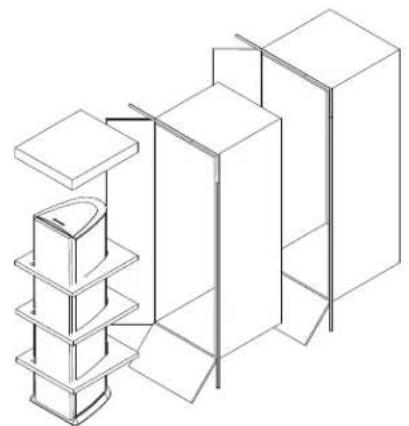
UNPACKING THE F228Be
natural_image
Isometric line drawing of stacked 3D rectangular blocks with no text or symbols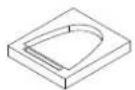
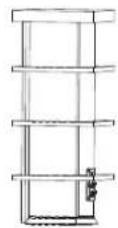
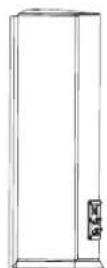
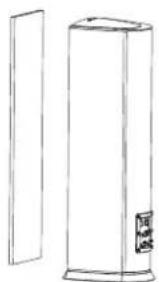
Unpack the F228Be in the order of the illustrations below.
Step 1 Step 2 Step 3
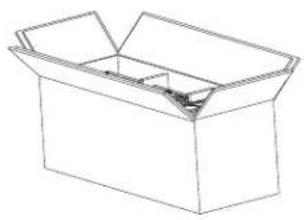
natural_image
Line drawing of a rectangular box with an open lid and internal structure (no text or symbols)Step 4 Step 5 Step 6 Step 7
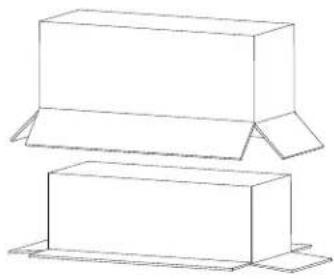
natural_image
Line drawing of two rectangular 3D shapes with different top and bottom views (no text or symbols)Step 8 Step 9 Step 10 Step 11
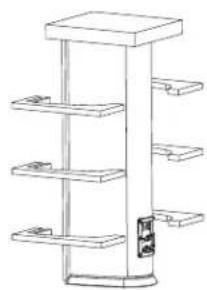
natural_image
Line drawing of a multi-level shelf with a vertical cylindrical structure and a small inset image (no text or symbols)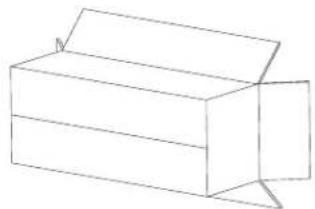
natural_image
Simple line drawing of a 3D rectangular box with a folded top surface (no text or symbols)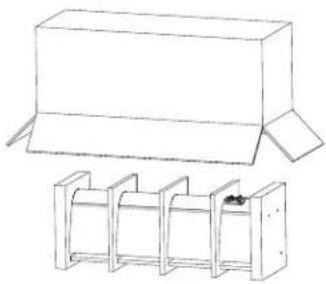
natural_image
Line drawing of a rectangular box placed on top and a multi-tiered rack structure (no text or symbols)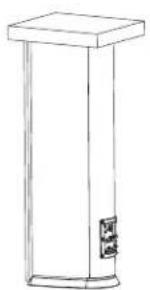
natural_image
Simple line drawing of a vertical cylindrical object with a square top and a small protruding part on the side (no text or symbols)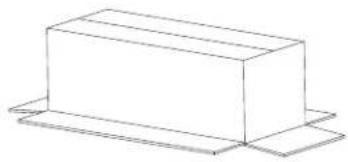
natural_image
Simple line drawing of a rectangular box with a flat base (no text or symbols)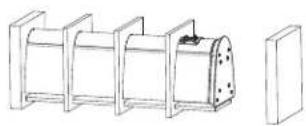

natural_image
Simple line drawing of a cylindrical container with a side panel, no text or symbols presentABOUT REVEL PERFORMABe LOUDSPEAKERS
FEATURE HIGHLIGHTS
• Beryllium Dome Tweeter
- 5th-generation Acoustic Lens Waveguide
- Deep Ceramic Composite (DCC™) Cone Midrange and Woofers
- Wide bandwidth and dynamic range with minimal dynamic compression
• High-order Crossovers with Film Capacitors and Air Core Inductors
• Premium High-Gloss Finishes: Black, White, Walnut, Metallic Silver
Thank you for purchasing the Revel PerformaBe loudspeakers. These true full-range loudspeakers deliver an impressive combination of wide frequency range, uncompressed dynamic range and low distortion across the entire audible spectrum.
The tweeter dome is pure Beryllium (Be), a rare and costly metal with a multitude of properties that make it the ideal tweeter dome material. Beryllium is extremely low mass (approximately half the weight of aluminum, titanium and diamond) yet up to 4.5 times stiffer than aluminum or titanium, yielding superior high frequency extension and resolution to 40kHz. Its high thermal conductivity helps cool the voice coil for increased reliability. This newly developed tweeter sets a new standard of transparency for speakers anywhere near the PerformaBe's class. The tweeter's integrated 5th generation acoustic lens waveguide is based on a breakthrough mathematical approach that accurately matches the tweeter's dispersion to that of the midrange transducer in the crossover region. This gives the loudspeaker very smooth sound over an exceptionally wide listening area—an important contributor to lifelike imaging for multiple listeners in a room. Further, the remarkable waveguide actually increases the tweeter's dispersion at frequencies above the crossover range.
The Revel PerformaBe's low frequency and midrange transducers feature newly developed Deep Ceramic Composite (DCC) cone technology. With DCC the aluminum cone is exposed to intense plasma discharge in order to fuse a deep layer of ceramic to both sides of the cone, thereby stiffening and damping the cone far beyond untreated aluminum. DCC technology reduces cone resonance and promotes ideal piston motion; the benefits are immediately audible in midrange purity and detail retrieval. Their cast aluminum frames eliminate another source of resonance that is common in many lesser-quality loudspeakers. The PerformaBe models employ a sophisticated fluid-model designed low frequency port with identical flares on both ends. This greatly minimizes dynamic compression and port-generated noise, assuring low distortion low frequency performance.
The Performa enclosures are similar to our flagship Ultima2 Series. The fully curved enclosure is inherently stiffer than conventional rectangular enclosures. The cabinet walls are formed with contiguous wood layers to damp material resonance, while strategically placed braces eliminate the possibility of enclosure-induced coloration. These beautiful, modern enclosures are finished in high-gloss black, white, metallic or genuine American walnut in a process (developed and overseen by Italian luxury cabinet makers) that exceeds automotive finish quality. The loudspeaker grilles are designed to minimize diffraction to maintain perfect three-dimensional imaging. The magnetic grille attachment method completely eliminates ugly hardware on the loudspeaker baffle. Whether you use them with or without grilles PerformaBe speakers will always present a clean, sophisticated appearance.
Revel Performa Be's crossover networks features carefully selected components that contribute to great performance and benchmark setting value. These high-order crossover networks dramatically reduce distortion and dynamic compression for clear sound that maintains the same quality over a very wide dynamic range. These precision networks optimize the speakers' timbre accuracy, enhancing musical enjoyment for listeners who are anywhere in the room, not only those seated on-axis to the loudspeakers. Revel-designed binding posts are heavily gold plated and include an articulated section that allows for more secure connections when using spade lugs. The floor standing F228Be includes two sets of binding posts that enable the loudspeakers to be bi-wired or bi-amped.
During development every Revel loudspeaker model is compared to competitive models in our unique position-independent double-blind listening lab. This process utilizes the latest psychoacoustic research to assure that these listening tests are valid, enabling us to verify that all Revel loudspeakers are superior to their competitors before they are allowed to go into production.
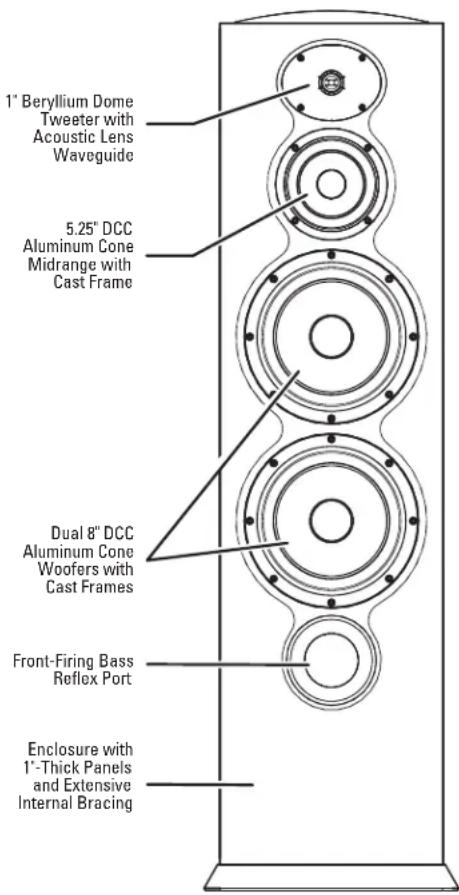
F228Be OVERVIEW
text_image
1" Beryllium Dome Tweeter with Acoustic Lens Waveguide 5.25" DCC Aluminum Cone Midrange with Cast Frame Dual 8" DCC Aluminum Cone Woofers with Cast Frames Front-Firing Bass Reflex Port Enclosure with 1"-Thick Panels and Extensive Internal Bracing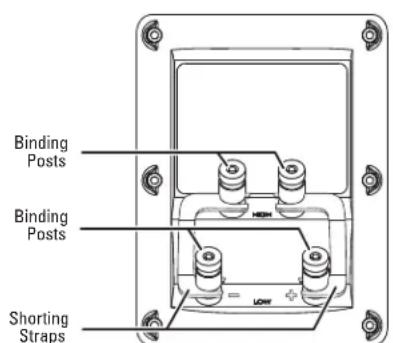
text_image
Binding Posts Binding Posts Shorting StrapsF228Be Input Plate
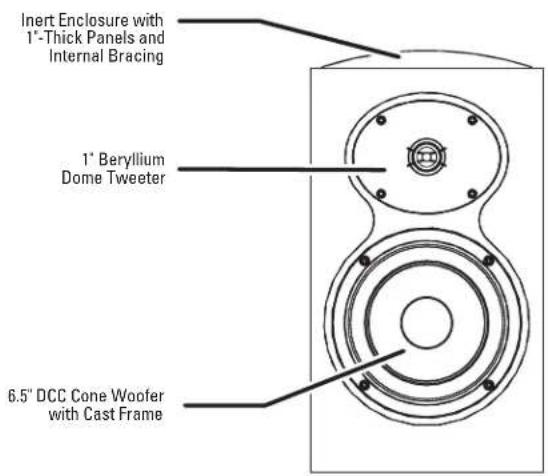
M126Be OVERVIEW
text_image
Inert Enclosure with 1"-Thick Panels and Internal Bracing 1" Beryllium Dome Tweeter 6.5" DCC Cone Woofer with Cast Frame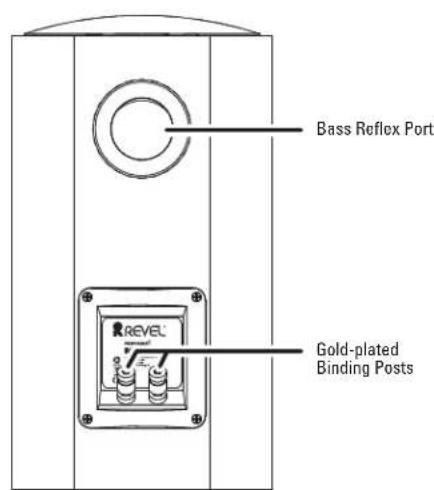
text_image
Bass Reflex Port Gold-plated Binding PostsINSTALLATION CONSIDERATIONS
Loudspeaker fidelity depends on the following three factors: loudspeaker accuracy, loudspeaker placement, and listening room acoustics. Experimenting with loudspeaker placement and listening room acoustics will have the most significant impact on the loudspeakers' performance.
natural_image
Simple line drawing of a V-shaped structure with two identical arches and a central circle, no text or symbols present.LOUDSPEAKER PLACEMENT
The following are important loudspeaker placement considerations for all models:
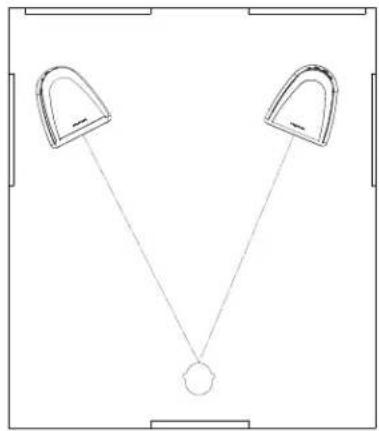
- Remove all obstructions between the loudspeaker and the primary listening position. For instance, a coffee table between the loudspeaker and the primary listening position will create reflections that will degrade stereo imaging and timbre. Placing the loudspeakers near large objects may also cause unwanted reflections.
- For the best stereo imaging, place the loudspeakers so that they are both the same distance from the primary listening position and so they are both the same distance from the side walls, as shown in the illustration at the top of the next column.
- For optimal stereo imaging and timbre, aim the loudspeakers directly toward the primary listening position as shown in the illustration above. If you wish to widen the stereo soundstage you can reduce this toe-in angle, even to the point at which the loudspeakers are pointing straight forward.
- Moving the loudspeakers farther from the front and side listening room walls will improve stereo imaging and the sense of spaciousness in the listening space.
- Moving the loudspeakers closer to the corners or walls of the listening room will increase bass level.
M126Be HEIGHT PLACEMENT
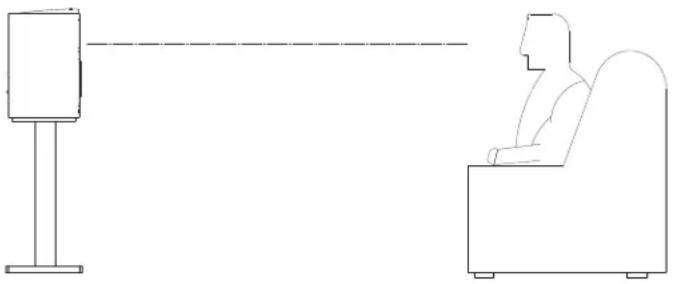
- For best results, place the M126Be speaker so the tweeter is aligned within a few inches of seated listener height.
natural_image
Line drawing of a person sitting in a chair facing a desk, with no text or symbols present.- Optional Performa-series M Stand pedestal stands are available for the M126Be that places the speakers at the proper height for seated listeners. Refer to the assembly instructions that are included with the stands for additional information.
CAUTION: When placed on the optional pedestal stands, loudspeakers such as the M126Be have a high center of gravity, which may cause them to fall if tipped or improperly positioned. To avoid this, anchor the stand to the floor and/or wall using the same procedures and hardware used to anchor bookcases, wall units, and other furniture. HARMAN International Industries, Inc. assumes no responsibility for proper selection and installation of hardware or for any personal injuries or product damages resulting from improper installation or a fallen loudspeaker.
ADJUSTABLE SPIKES (F228Be ONLY)
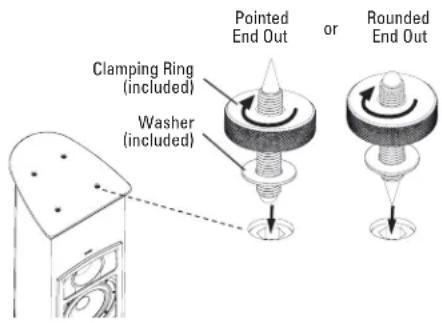
Four adjustable spikes are included for each F228Be loudspeaker. You can install these spikes in the bottom of the loudspeaker cabinets to provide optimal stability, accommodating installations on tile, hardwood, or carpeted floors.
To install and adjust the spikes:
- Place the loudspeaker on its side on a soft towel or carpeted floor.
- Screw the spikes into the fittings on the bottom of the loudspeaker. The spikes can be installed with either the pointed end or round end protruding from the cabinet.
text_image
Clamping Ring (included) Washer (included) Pointed End Out or Rounded End OutNOTE: When moving the F228Be with the spikes installed, avoid dragging the loudspeaker across the floor.
If the loudspeakers are to be placed on a carpeted floor, install the spikes with the pointed ends protruding from the cabinet.
- If the loudspeakers are to be placed on a wood, linoleum or tile floor, install the spikes with the round ends protruding from the cabinet. After determining the final locations for the speakers, you can place coins or use-specific discs under the spikes to protect the floor surface from damage.
NOTE: If you prefer to install the spikes with the pointed ends protruding from the cabinet, you must place coins or similar items under the spikes to avoid damaging the floor surface - Rotate the locking ring clockwise to firmly secure the spike to the cabinet. Make sure to thread the locking rings of all four spikes to achieve a level balance when the loudspeaker is placed right side up on the floor.
CAUTION: Floor-standing loudspeakers such as the F228Be have a high center of gravity, which may cause them to fall if tipped or improperly positioned. To avoid this, anchor the loudspeaker to the floor and/or wall using the same procedures and hardware used to anchor bookcases, wall units, and other furniture. HARMAN International Industries, Inc. assumes no responsibility for proper selection and installation of hardware or for any personal injuries or product damages resulting from improper installation or a fallen loudspeaker.
LISTENING ROOM ACOUSTICS
Listening rooms have a profound impact on sound, particularly at lower frequencies. In fact, the effect of the listening room can dominate sounds below around 400Hz. Ideally, listening rooms would include optimized dimensional ratios to minimize the effects of room resonances. But in reality, most listening rooms are not designed to enhance loudspeaker performance.
The interaction between loudspeakers and listening rooms is complex, with two important determinants that affect the loudspeaker and the listener:
- Surfaces and other boundaries often cause large peaks and dips in low-frequency response.
- All rooms suffer, at least to some degree, from standing waves (also known as room modes or resonances) that create large low-frequency response errors. Bass loudness can vary plus or minus 12dB or more in different areas of the room.
Unfortunately, there is no simple solution that addresses both of these factors. Even computer software programs that examine one or both factors may not calculate proper primary listening position or loudspeaker placement values.
In most cases, proper selection of the primary listening position combined with proper placement of the loudspeaker can result in superior performance at lower frequencies. The difference between superior and inferior results is often just a small adjustment of the
ACOUSTICTREATMENT MATERIALS
The Revel PerformaBe models feature high-order filters that optimize the loudspeakers' on-axis and off-axis response, minimizing sonic degradations that occur in overly "live" rooms (those with surfaces that are acoustically reflective). Many listeners choose to place acoustic treatment materials at the room's primary reflection points to reduce these reflections. The most important locations are the first reflection points on the front and side walls. Either broadband acoustic absorbers or diffusers may be placed at the first reflection points on the rear wall.
NOTE: There are numerous options for absorbent material. None are superior to low-cost fiberglass. It is important to use absorbers that are at least four inches thick, to avoid altering the spectral response of the loudspeakers. If sculpted foam is used, it must be at least eight inches thick, as such absorbers are less efficient than non-sculpted foam.
Because the listener's eyes and ears are on the same plane, the "mirror method" is an accurate determinant of first reflection points. This method can be used to determine reflection points for side walls, rear walls, front walls, and even the ceiling. Applying acoustic treatment materials to the side walls is most important, followed by the ceiling, front wall and rear wall.
To determine reflection points using the mirror method:
- Once the loudspeakers have been placed, sit in the primary listening position and ask another person to slide a mirror along the listening room walls.
- Note the locations at which you can see either loudspeaker in the mirror from the primary listening position. Be sure to look for both loudspeakers in the reflection on each room boundary. These are reflection points that require acoustic treatment materials.
If acoustic treatment materials are not available, hanging a rug over the reflection points will help reduce sonic degradation in overly "live" rooms. Carpeting the floor area between the loudspeakers and the primary listening position and placing irregular surfaces such as bookcases at the first reflection points will also help minimize strong reflections.
MAKING CONNECTIONS
CAUTION: Never make or break connections unless all system components are powered off.
BINDING POSTS
These gold-plated terminals provide connections from the power amplifier(s) to provide secure connection for speaker cables terminated with banana plugs, spade lugs, pin connectors or bare wire.
OBSERVE PROPER POLARITY
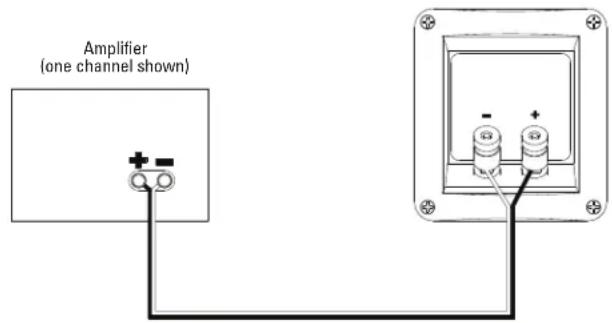
Connect the amplifier's positive (+) terminal to the positive (+) terminal on the corresponding speaker; connect the amplifier's negative (−) terminal to the negative (−) terminal on the corresponding speaker. Do not reverse polarities (that is, do not connect + to −, or − to +) when making connections. Doing so will cause poor stereo imaging and diminished bass response.
SPEAKER CABLE
Use high-quality loudspeaker cable with a maximum total loop resistance of 0.07 Ohms or less for each wire run. Refer to the table below to determine the appropriate wire gauge for your installation.
MINIMUM WIRE GAUGE
| Maximum Wire Length (Feet) | Maximum Wire Length (Meters) | Minimum Wire Gauge (AWG) |
| <87 | <27 6 | |
| <69 <21 7 | ||
| <58 <18 8 | ||
| <43 <13 9 | ||
| <34 <10 10 | ||
| <27 | <8 11 | |
| <22 <7 12 | ||
| <17 | <5 13 | |
| <14 | <4 14 | |
| <11 | <3.5 15 | |
| <9 | <3 16 | |
| <7 | <2 17 | |
| <5 | <1.5 18 |
NOTE: High loop resistances that exceed 0.07 Ohms (for each wire run) will cause the loudspeaker's filter network to be mis-terminated, resulting in considerable degradation of sound quality.
M126Be
The M126Be has one set of binding posts as illustrated here.
text_image
Amplifier (one channel shown)- Connect both loudspeakers using the same method, using speaker cables of the same length for each speaker.
- Review the owner's manuals for all associated audio components to determine their correct connection procedures.
F228Be
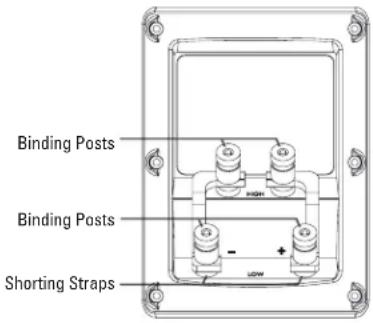
The F228Be has one pair of high frequency and one pair of low frequency binding posts that come from the factory connected by a pair of shorting straps (see below). The two sets of binding posts can be configured for single-wire, bi-wired, or bi-amped connections. See the instructions on this page through page 10 for additional information.
text_image
Binding Posts Binding Posts Shorting StrapsBefore making connections to the F228Be speakers note the following:
- The standard connection method uses a single loudspeaker cable. The F228Be is equipped with two pairs of input terminals to allow for bi-wiring or bi-amping. While Revel does not endorse one particular connection method over another, these additional connection options are available if desired. The design of this loudspeaker is such that optimal performance can be attained using the standard connection method.
- Vertical bi-amped connections (see below) must be made with identical power amplifiers. Horizontal bi-amped connections (see below) can be made with identical or non-identical power amplifiers with identical gain factors.
- When making bi-amped connections, both power amplifiers must receive identical input signals from the associated preamplifier. If the associated preamplifier offers two connectors per output channel, each power amplifier can be connected to a separate connector for the same output channel of the preamplifier. If the associated preamplifier does not offer two connectors per output channel "Y" adaptors are required.
- No matter which connection method you choose, the speaker cables used for the left and right loudspeakers should always be the same length.
- If desired, contact your authorized Revel dealer for information about the suitability of power amplifier components before connecting the F228Be to your power amplifier(s).
- Review the owner's manuals for all associated audio components to determine their correct connection procedures.
NOTE Do not use an electronic crossover network when bi-amping Revel F228Be loudspeakers. Doing so will cause a considerable degradation of sound quality.
SINGLE-WIRED CONNECTION
NOTE: Do not remove the shorting straps between the speaker terminals.
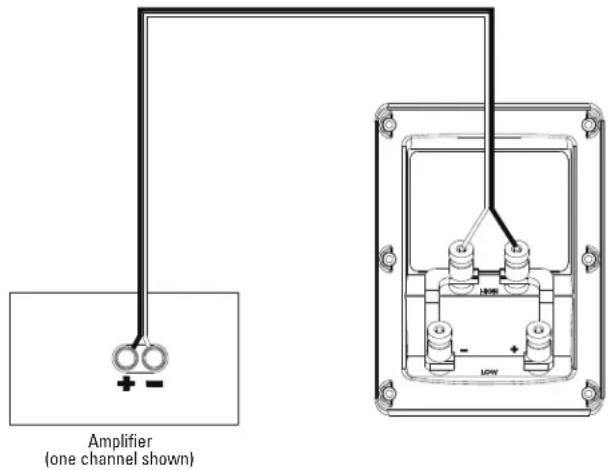
Single-wired connections are the most common. These are made between one pair of F228Be input terminals and one power amplifier output channel as shown below.
text_image
Amplifier (one channel shown)To make single-wire connections:
- Connect one speaker cable to the desired set of F228Be input terminals. (The high-frequency – "HIGH" – input terminals are recommended.) Then connect the other end of that speaker cable to the desired power amplifier output channel.
- Repeat step 1 to connect the second F228Be to the power amplifier's remaining output channel.
BI-WIRED CONNECTIONS
CAUTION: Remove the shorting straps before making bi-wired connections. Failure to do so may cause damage to some power amplifiers
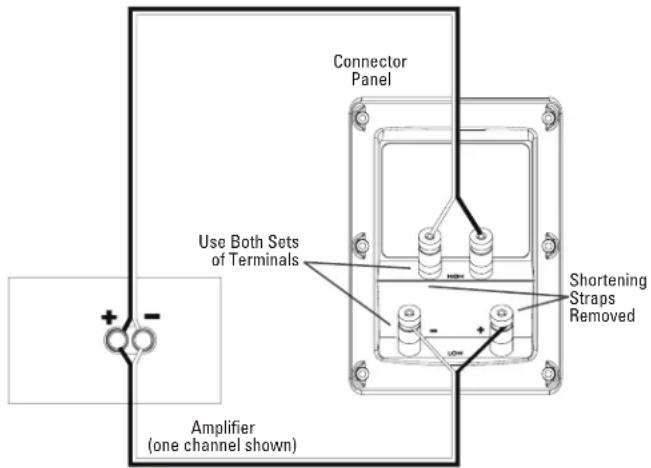
Bi-wired connections use two sets of speaker cables to connect both sets of F228Be input terminals to a single power amplifier output channel as shown below.
text_image
Connector Panel Use Both Sets of Terminals Shortening Straps Removed Amplifier (one channel shown)- Remove the shorting straps.
- Connect one speaker cable to the high-frequency set of F228Be input terminals. Then connect the other end of that speaker cable to the desired power amplifier output channel.
- Connect another speaker cable to the low-frequency set of F228Be input terminals. Then connect the other end of that speaker cable to the same power amplifier output channel that you connected in step 2.
- Repeat steps 1, 2 and 3 to connect the second F228Be to the power amplifier's remaining output channel.
VERTICAL BI-AMPED CONNECTIONS
CAUTION: Remove the shorting straps before making bi- amped connections. Failure to do so may cause damage to some power amplifiers.
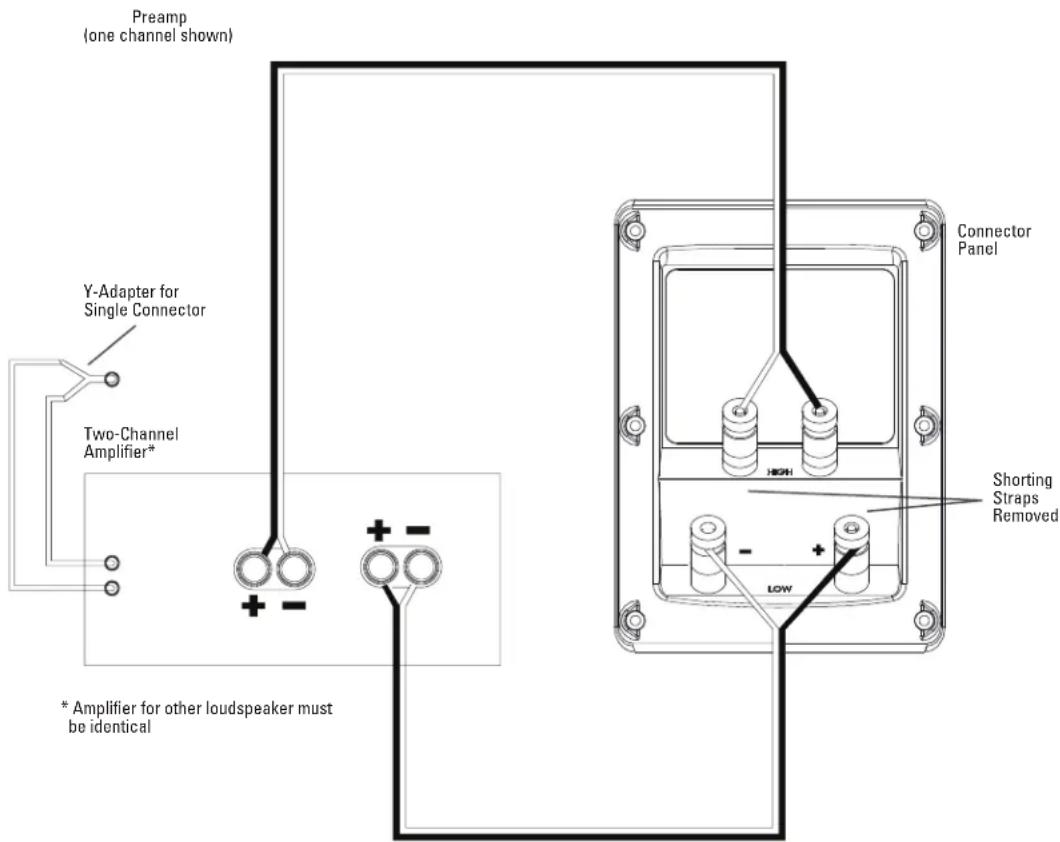
Vertical bi-amped connections are made between both pairs of F208 input terminals and two separate output channels of a single power amplifier. Each F208 loudspeaker is connected to an individual power amplifier, which can sometimes increase sonic performance. The power amplifiers for the two loudspeakers must be identical.
NOTE:
- Vertical bi-amped connections must be made using two identical power amplifiers, one for each loudspeaker.
- When making vertical bi-amped connections, both power amplifier channels must receive identical input signals from the associated preamplifier. If the associated preamplifier does not have two output connectors for each channel, "Y" adaptors are required.
text_image
Preamp (one channel shown) Y-Adapter for Single Connector Two-Channel Amplifier* * Amplifier for other loudspeaker must be identical Connector Panel Shorting Straps Removed + - + -- Remove the shorting straps.
- Connect one speaker cable to the high frequency set of F228Be input terminals. Then connect the other end of that speaker cable to the desired power amplifier output channel.
-
Connect another speaker cable to the low-frequency set of F228Be input terminals. Then connect the other end of that speaker cable to another output channel of the same power amplifier you connected to the high-frequency input terminals.
-
Connect both amplifier channel inputs to the output of a single preamplifier channel. If the preamp only has one connector for the channel, use a "Y"-adaptor.
- Repeat steps 1, 2 and 3 to connect the second F228Be to another, identical power amplifier. Repeat step 4 to connect the second amplifier to the preamplifier's other channel.
HORIZONTAL BI-AMPED CONNECTIONS
CAUTION: Remove the shorting straps before making bi-amped connections. Failure to do so may cause damage to some power amplifiers.
The two power amplifiers can be identical or non-identical, but they must have identical gain factors. If their gain factors are not identical, at least one of the amplifiers must have a means of adjusting its input level. Contact your authorized Revel dealer for assistance.
Horizontal bi-amped connections are made between both pairs of F228Be input terminals and two separate output channels of two separate power amplifiers. The F228Be's set of high-frequency input terminals is connected to one power amplifier, while the F228Be's set of low-frequency input terminals is connected to the other power amplifier.
NOTE: When making horizontal bi-amped connections, both power amplifiers must receive identical input signals from the associated preamplifier. If the associated preamplifier does not have two output connectors for each channel, "Y" adaptors are required.
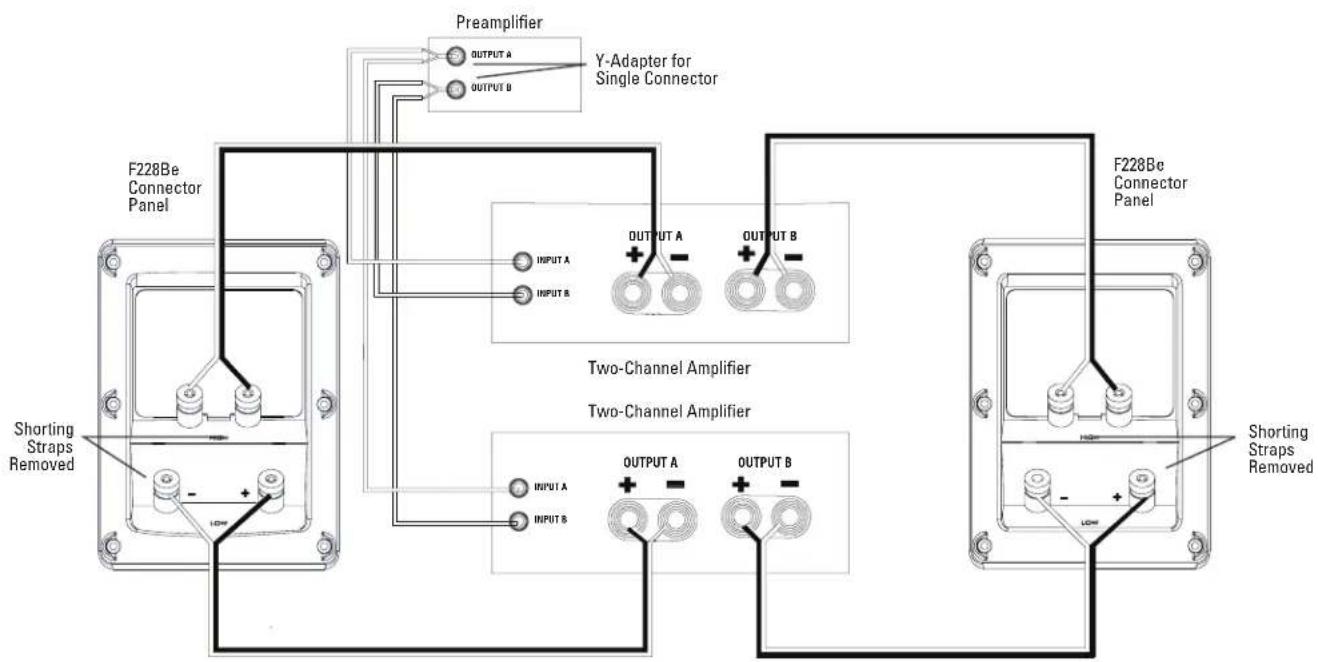
flowchart
graph TD
    A["F228Be Connector Panel"] -->|Preamplifier| B["Y-Adapter for Single Connector"]
    A --> C["Two-Channel Amplifier"]
    A --> D["Two-Channel Amplifier"]
    B --> E["F228Be Connector Panel"]
    C --> F["Shorting Straps Removed"]
    D --> G["Shorting Straps Removed"]
    style A fill:#f9f,stroke:#333
    style B fill:#ccf,stroke:#333
    style C fill:#cfc,stroke:#333
    style D fill:#fcc,stroke:#333
- Remove the shorting straps
- Connect one speaker cable to the high-frequency set of F228Be input terminals. Then connect the other end of that speaker cable to the desired power amplifier output channel.
- Connect another speaker cable to the low-frequency set of F228Be input terminals. Then connect the other end of that speaker cable to the desired output channel on another power amplifier.
-
Repeat step 2 to connect the high frequency set of input terminals on the second F228Be to the other channel of the power amplifier that was connected in step 2.
-
Repeat step 3 to connect the low-frequency set of input terminals on the second F228Be to the other channel of the power amplifier that was connected in step 3.
- Connect the left and right channel inputs of the high-frequency amplifier to the preamplifier's left and right outputs. Repeat for the left and right inputs of the low-frequency amplifier. If the preamplifier only has one connector for each channel, use "Y"-adaptors.
OPTIMIZING PERFORMANCE
PORT PLUGS
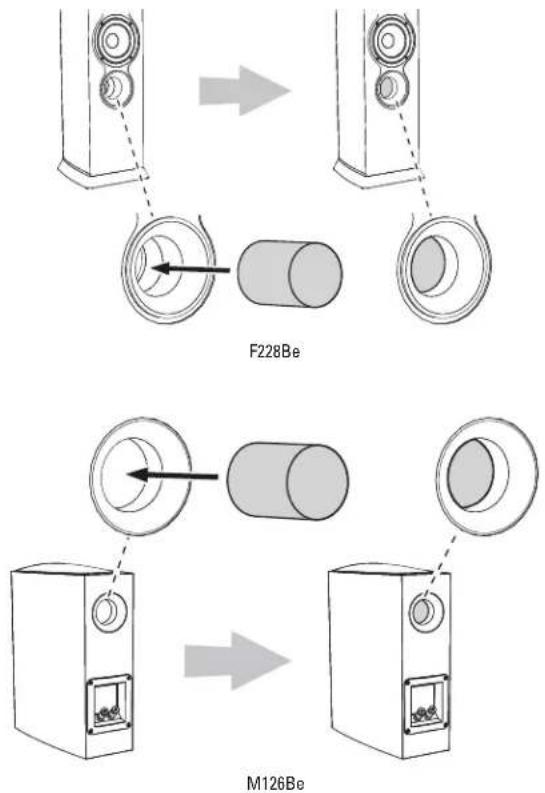
Revel PerformaBe loudspeakers include a pair of foam port plugs that can be used to adjust the loudspeaker's low-frequency performance in certain installation situations.
If your loudspeakers are built into an entertainment center or shelving unit, or if the loudspeaker is located less than about two feet (0.61m) from walls or other large objects, inserting the port plugs into the loudspeaker's port openings can reduce the overly-aggressive bass output that can be created by the speaker's proximity to large bass energy reflecting surfaces.
Insert the port plug into the loudspeaker's port tube opening far enough so that the end of the plug is flush with the inside end of the port tube's flared section.
text_image
F228Be M126BeCAUTION: Be careful not to insert the port plug so far into the port tube that it falls inside of the speaker.
LOUDSPEAKER VOLUME LEVELS
The high-order filters employed in Revel Performa3 series loudspeakers include steep cut-offs to reduce potential transducer damage from "out-of-band" frequencies. Combined with carefully selected transducers and filter network components, this approach helps the Performa3 floorstanding loudspeakers maintain their performance under extreme operating conditions.
However, all loudspeakers have limits when it comes to continuous playback. To avoid exceeding these limits, avoid playback at volume levels that distort or strain the sound.
CAUTION: To avoid damage, reduce the volume level immediately if the loudspeaker sound is not clean and clear. If you hear distortion, turn it down!
Once you have installed and connected your loudspeakers follow these steps the first time you turn your new PerformaBe loudspeakers on:
- Begin playback of a familiar music or film source.
- Listen from the primary listening position, increasing volume to a comfortable level.
- Experiment with the loudspeakers' placement to achieve the best overall tonal balance, stereo image precision, and sense of spaciousness in the listening room. Refer to the Installation Considerations section on page 5 for additional information about loudspeaker placement.
CARING FOR YOUR LOUDSPEAKERS
GRILLES
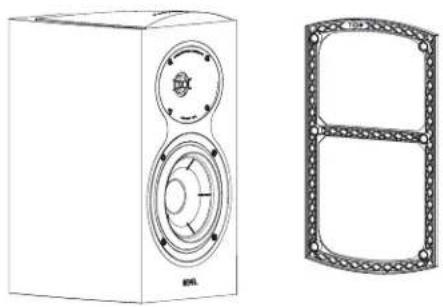
Revel PerformaBe speakers feature grilles with a magnetic attachment method that eliminates unsightly attachment hardware from the speaker baffle, so if you decide to use your speakers with the grilles removed they will retain their elegant appearance.
F228Be
When installing the grilles on the F228Be speakers, orient them so that the "TOP" markings (embossed in the rears of the grille frames) are towards the tops of the speaker cabinets.
M126Be
When installing the grille on the M126Be, orient it so that the plastic frame's crossbar is more towards the top of the speaker cabinet.
natural_image
Technical line drawing of a speaker and its side panel (no text or symbols)CABINET FINISH
The cabinet's wood veneer or lacquer finish does not require routine maintenance. Cabinet surfaces that have been marked with dust, fingerprints, or other dirt can be cleaned using a soft cloth – preferably micro-fiber, and high quality auto wax. Take care not to come in contact with the transducers.
- To clean the grille, gently vacuum it using a soft-bristled brush vacuum attachment with the vacuum cleaner set to the lowest possible suction.
CAUTION: To prevent cabinet damage, do not use a cloth made with steel wool or metal polish to clean the cabinet. To prevent possible transducer damage, do not apply furniture polish directly to the cabinet.
BERYLLIUM TWEETER CAUTION
Beryllium dust is a hazardous material. The Revel PerformaBe Beryllium dome will not emit any dust under normal circumstances and is perfectly safe unless it is damaged. The tweeter dome is protected by the acoustic lens and waveguide. As long as the waveguide remains intact there is no cause for concern. In the unlikely event that the dome is damaged in any way, cover the tweeter with adhesive plastic tape and contact Revel for further instructions. Do not play the speaker if it has a damaged tweeter dome.
At the end of the speaker's life do not dispose of it in a landfill or incinerator. Bring the speaker to an appropriate recycling or hazardous waste disposal site. Please contact Revel customer service for more information about proper disposal.
SPECIFICATIONS
F228Be
| Type: 3-way dual 8" floorstanding loudspeaker | |
| Low-frequency transducer: Two 8" (200mm) Deep Ceramic Composite aluminum cones, with cast frames | |
| Midrange transducer: 5-1/4" (130mm) Deep Ceramic Composite aluminum cone, with cast frame | |
| High-frequency transducer: 1" (25mm) Beryllium dome, with acoustic lens waveguide | |
| Recommended amplifier power range: 50 – 350 watts | |
| Frequency response: 27 Hz- 44 kHz (-6dB) | |
| Low-frequency extension: 23Hz (-10dB); 27Hz (-6dB); 31Hz (-3dB) | |
| Nominal impedance: 8 ohms | |
| Sensitivity (2.83V/1m): 90 dB | |
| Crossover frequencies: 260Hz; 2.1kHz | |
| Enclosure type: Bass-reflex via front-mounted port | |
| Inputs: Dual gold-plated binding posts with shorting straps | |
| Available finishes: | High gloss piano black, white, metallic and walnut |
| Dimensions (H x W x D): | 46.5" x 11.8" x 13.2" (1181mm x 302mm x 335mm) |
| Weight: | 82 lbs. (37.2kg) |
M126Be
| Type: 2-way 6-1/2" bookshelf loudspeaker | |
| Low-frequency transducer: 6-1/2" (165mm) DCC aluminum cone, with cast frame | |
| High-frequency transducer: 1" (25mm) Beryllium dome, with acoustic lens waveguide | |
| Recommended amplifier power range: 50 – 150 watts | |
| Frequency response: 54Hz-44kHz (-6dB) | |
| Low-frequency extension: 41Hz (-10dB); 48Hz (-6dB); 54Hz (-3dB) | |
| Nominal impedance: 8 ohms | |
| Sensitivity (2.83V/1m): 86 dB | |
| Crossover frequencies: 1.7 kHz | |
| Enclosure type: Bass reflex via rear-mounted port | |
| Inputs: Gold-plated binding posts | |
| Available finishes: | High gloss piano black, white, metallic and walnut |
| Dimensions (H x W x D): | 15.2" x 8.3" x 10.3" (386mm x 211mm x 262mm) |
| Weight: | 22 lbs. (9.97kg) |
LIMITED WARRANTY
Revel loudspeakers are warranted against defects. The duration of a warranty depends on the laws in the country in which it was purchased. Your local Revel retailer can help you determine the duration and coverage of your warranty.
For more information please visit: REVELSPEAKERS.COM
Please visit REVELSPEAKERS.COM for additional language support on the user manual.
HARMAN International Industriesl, Incorporated
8500 Balboa Boulevard, Northridge, CA 91329 USA
© 2017 HARMAN International Industries, Incorporated. All rights reserved.
Revel and the Revel logo are trademarks of HARMAN International Industries, Incorporated, registered in the United States and/or other countries.
All Rights Reserved. Features, specifications and appearance are subject to change without notice.
For questions, assistance or additional information concerning any of our products, call us at: (516) 594-0300 or (888) 691-4171. For technical support, submit your detailed inquiry to: csupport@harman.com.