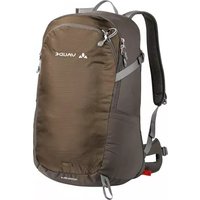
Minnie 4 5 - Backpack Vaude - Free user manual and instructions
Find the device manual for free Minnie 4 5 Vaude in PDF.


| Product Type | Training Backpack |
| Brand | VAUDE |
| Model | Minnie 4 5 |
| Volume | Approx. 35 L |
| Weight | Approx. 900 g |
| Dimensions (H x W x D) | Approx. 55 x 30 x 20 cm |
| Suspension System | Full Contact Back or Aeroflex (ventilated) |
| Frame | Lightweight aluminum frame (removable in some models) |
| Back Ventilation | Yes, with mesh panel (depending on system) |
| Adjustable Torso Length | Yes, via F.L.A.S.H. or similar system |
| Hip Belt | Removable, padded, with load-bearing capability |
| Shoulder Straps | S-shaped for women, fleece-lined |
| Sternum Strap | Adjustable, with elastic |
| Gear Attachment | Side and front loops for skis, trekking poles, ice tools |
| Compartment Design | Lid compartment, main compartment, bottom compartment (separate), side mesh pockets, map pocket |
| Hydration System Compatible | Yes |
| Material | Recycled polyester, bluesign® approved fabric |
| Eco-Certifications | Green Shape, bluesign® system partner |
| Care Instructions | Hand wash with mild detergent; air dry; no machine wash or dry cleaning |
| Warranty | 3 years against material and manufacturing defects |
| Repair | Charge repair service available; minor repairs possible at home (buckles, holes with duct tape) |
| Intended Use | Training, hiking, mountaineering, day trips |
Frequently Asked Questions - Minnie 4 5 Vaude
User questions about Minnie 4 5 Vaude
0 question about this device. Answer the ones you know or ask your own.
Ask a new question about this device
Download the instructions for your Backpack in PDF format for free! Find your manual Minnie 4 5 - Vaude and take your electronic device back in hand. On this page are published all the documents necessary for the use of your device. Minnie 4 5 by Vaude.
USER MANUAL Minnie 4 5 Vaude
natural_image
Illustration of a hiking backpack with visible straps and latches (no text or symbols)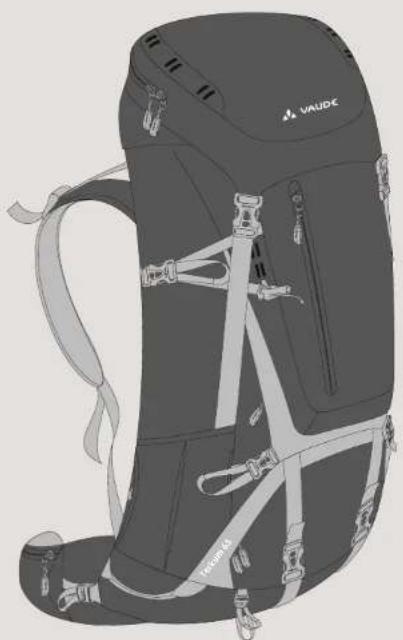
natural_image
Line drawing of a VAUDE backpack with straps and ladders (no text or symbols)
natural_image
Illustration of a dark gray backpack with attached harnesses and straps (no text or symbols)training
Backpacks

TRAINING BACKPACKS
THANKING BANK
DeDicateD to making y(our) world a better place
PAGE: 2
InDEX

CSR-PREIS
DER BUNDESREGIERUNG
NOMINIERTES UNTERNEHMEN 2013

bluesign®
SYSTEM PARTNER

climate
Protect our planet
"Dedicated to making y(our) world a better place."


VAUDE IST PARTNER DES WWF DEUTSCHLAND
Responsibility for people and nature – what we do:

DOCUMENT CHAPTER 10 INDEX TRAINING BACKPACKS
HAINING SAEK DOKS
PAGE: 3
INDEX
Index (clickable)
introDuction 4
1 technology....5
Full contact back 5
muScle Flex....5
VFleX....5
anatomic alpin 5
aeroFlex 6
aeroFlex eaSy aDJust. 6
SiZe claSSiFicationS and torSo length 7
tergolight 7
tergolight comFort....7
Shoulder harneSS aDJuStment 8
F.l.a.S.h. 8
F.l.a.S.h.nt 8
the DiStinctive Difference: women'S backpackS....9
Stowable liD 10
ultralight 10
ultra Seam tech 10
Fit & aDJuStment 11
aDJuSt the backpack 11
2 tipS and tricks.... 12
attaching gear: SiDe attachment.... 12
Front attachment 12
attaching gear: trekking poles 13
attaching gear: ice tools 13
packing correctly - what goes where 14
aDJust aluminium Frame 15
care and repair 15
3 green Shape 16
recycleD materials 17
organic cotton 18
tencel ^® 18
VauDe ecolour 19
better, but not green Shape 19

TRAINING BACKBACKS
TRAINING BACKPACKS IN
IntroDuction
PAGE: 4
INDEX

natural_image
Portrait of a smiling woman with blonde hair, arms crossed, outdoors with greenery and forest background (no text or symbols visible)If you buy a VAUDE backpack you get a functional piece of gear that is not only the result of innovative engineering but also part of our passion for mountain sports. Every backpack that we develop is part of our philosophy: making equipment that works – no matter whether that is in the Alps or on your daily commute.
Backpacks are our core competence. We have been building backpacks ever since VAUDE was established. Beginning with our early backpacks in 1974 we kept improving them constantly: From simple hiking packs to ultralight alpine and trekking packs with efficient backsystems.
Maybe we did not reinvent the backpack but we sure improved it a lot.
Every VAUDE backpack has to match 5 criteria:
- form follows function
- the pack fits on the back comfortably and without pressure
- adjustments can be made quick and easy
- the pack must not compromise the agility of the carrier
- the used materials and manufacturing have to be of high quality for the longevity of the pack
Before we throw each pack on the market we always ask ourselves the question whether these 5 criteria are being met – and we improve the backpack until it matches our requirements. This way we make sure that our demands to function and quality are being met.

TRAINING BACKPACKS III
1 technology
PAGE: 5 ▶ INDEX
MUSCLE FLEX

natural_image
Diagram of a medical device with tubing and internal structures (no text or labels)VFLEX

natural_image
Diagram of a mechanical or fluidic device with directional arrows indicating flow or movement (no text or symbols present)ANATOMIC ALPIN

Full contact back
A full contact back brings in the pack close to the body, allowing the load to be carried closer to the wearer's center of gravity.
Backpacks with full contact backs are ideally suited for mountain sports that are extremely motion intensive such as mountaineering, climbing and ski touring.
Pros:
- A close fitting pack allows the wearer full freedom of movement.
• The load is evenly distributed.
• The backpack can be heavily loaded.
Cons:
• Less ventilation of the back.
muScle Flex
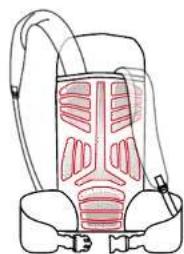
The Muscle Flex is designed for use in challenging mountain terrain. This extra light suspension system sits close to your body for perfect stability and freedom of movement. A lightweight aluminum frame stabilizes the upper part of the back while adapting to the torsional movement of the lower back. The frame can be shaped as needed or removed entirely. The back of pack is made of hot stamped viscoelastic foam. The anatomical stamps in the foam follow the muscle groups of the human back allowing for optimal load distribution.
VFlex
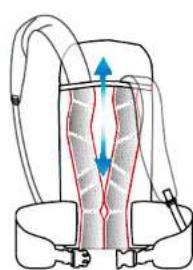
The Ultralight VFlex Suspension System is specially on gineered to meet the demands of alpine terrain. The backpack sits close to the body and distributes the load evenly across the back allowing for optimal balance when hiking. Inside the backpack a preformed back plate ensures firm pack stability. Even when fully loaded, this prevents the backpack from warping out against the back. For Ultralight use the plate can be removed, reducing the weight even further. The hip belt can be completely detached, which is extremely practical when wearing a climbing harness on high altitude tours.
anatomic alpin
Designed for alpine use and longer tours with lots of luggage.
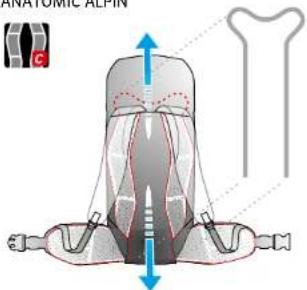
We've given our Anatomic Alpine suspension system some great new features. Instead of the removable aluminium frame, it now sports a lightweight, anatomical back panel inside the pack. This prevents the load from bulging into your back, significantly improving carrying comfort. The panel can be removed when necessary to reduce weight.
Two large mesh pads are positioned along the spine to create a channel for superior ventilation. A new hipbelt can be worn three ways:
- as a traditional hipbelt with a comfortable, broad hipwings.
- with the hipwings folded away and a strap hipbelt - especially practical when you're wearing a climbing harness for example.
- without the hipbelt - the hipbelt can be completely detached.

TRAINING BACKPACKS III
1 TECHNOLOGY
PAGE: 6
INDEX
AEROFLEX

natural_image
Illustration of a human torso with blue arrows indicating movement or pressure, alongside a silhouette of a person (no text or symbols)AEROFLEX EASY ADJUST

natural_image
Diagram of a medical device with tubing and arrows indicating movement or force (no text or symbols)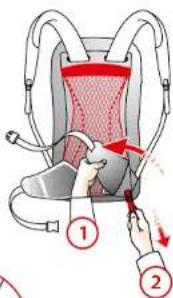
FULL VENTILATION SUSPENSION SYSTEMS
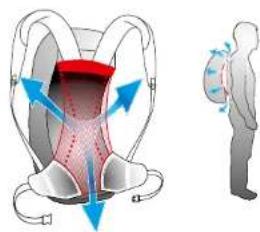
Full ventilation suspension systems create a space between the pack's main compartment and your back that is open on three sides to allow air to circulate freely.
The backpack does not lie directly against the wearer's back but is held away by a lightweight tensioned mesh panel that maintains a distance between your back and the pack, ensuring maximum ventilation.
Mesh tensioned ventilated suspension systems are best suited for activities that demand the greatest amount of back ventilation possible.
Pros
- Optimum back ventilation.
• High carrying comfort.
Cons
- Due to the distance between the mesh and the main compartment of the pack, the load is carried farther away from the wearer's center of gravity.
- The backpack is not as stable and should therefore not be loaded too heavily.
AEROFLEX
Best suited for backcountry hikes and short trekking tours – i.e. for activities in which less gear needs to be transported while the back needs maximum ventilation.
Spring steel frame and mesh panel
The patented suspension system creates a clearance between the backpack and the mesh panel so air can circulate freely. This open space allows for ideal 3-way air flow (= from both sides and below) of the back.
An ultralight spring steel frame provides the tension for the mesh panel with the aid of a clamp tensioner (connector). This allows the pack to retain its form and maintains the panel's tension even when the pack is fully loaded.
Benefit:
• Excellent ventilation of the back
- Ventilation is not adversely affected when the pack is fully loaded
AEROFLEX EASY ADJUST
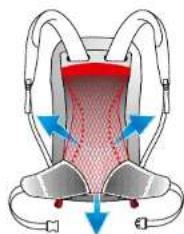
Backpacks with the Aeroflex Easy Adjust can be transformed from a full ventilation suspension system to a full contact back. This allows the backpack to be used for a wide array of activities.
They can be utilized (depending on their additional features) for hiking or snowshoeing, as well as via ferrata routes or short day trekking tours.
Spring steel frame and adjustable mesh panel
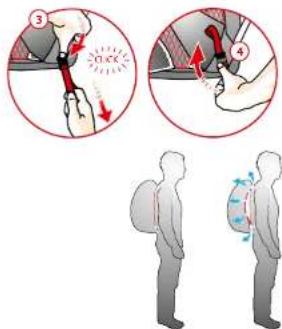
Aeroflex Easy Adjust has the same stable spring steel frame and 3-way air flow as the Aeroflex. The tension of the frame, however, can be easily adjusted using two pull loops at the connector.
By pulling on both finger loops, the tension can be increased (or re-established) and the clearance space can be adjusted to its maximum size. Reducing the tension allows the mesh to slacken up. This reduces the distance between the mesh and the packsack, bringing the pack closer to the wearer's center of gravity.
Large mesh distance: for maximum ventilation on mountain ascents or in hot weather on easy terrain.
Small mesh distance: when the backpack needs to be brought in closer to the body for better load balance (for example, on mountain descents, difficult terrain or via ferrata routes).
Benefits:
• Best possible ventilation of the back.
- Very wide range of use thanks to the adjustability of the mesh tension.

TRAINING BACKPACKS III
1 technology
PAGE: 7
INDEX
natural_image
Illustration showing human body posture with spine and backpacks, alongside a side-view of human torso (no text or symbols)TERGOLIGHT
TERGOLIGHT COMFORT
natural_image
Line drawing of a seatbelt device with red directional arrows indicating movement or force (no text or symbols)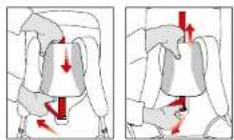
trekking SuSpenSion SyStems
Our trekking and travel backpacks are bona fide "pack mules" – they have been specifically designed to transport large amounts of gear and heavy loads.
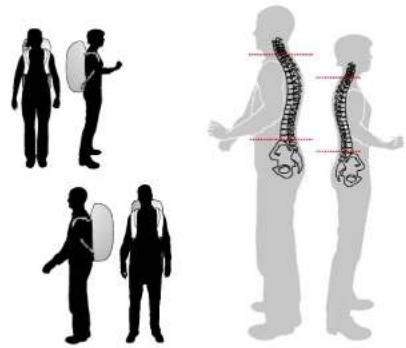
To ensure best possible carrying comfort, it is extremely important to be able to optimally adjust the individual torso length of a pack. A poorly fitting backpack can not only ruin a tour, it can also lead to stiff shoulders and neck as well as back pain. A fine-tuned backpack fit is easier to carry because the load is evenly transferred onto the hips and shoulders and therefore requires less effort and energy to carry it.
This is why we have designed out trekking backpacks to provide perfect torso length adjustability – most models can even be adjusted while being worn so the pack does not need to be removed.
Size classificationS and torSo length
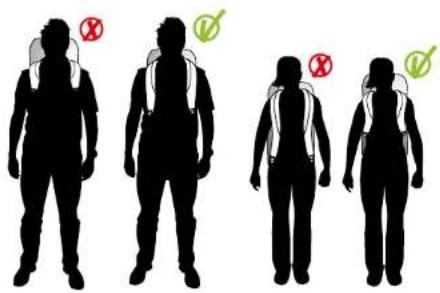
A large trekking backpack is often too long and protrudes above the shoulders (in extreme cases even over the head) of people with shorter backs. This constricts the head's freedom of movement and is often very uncomfortable. People with long backs often have difficulties adjusting the shoulder straps and torso length to fit appropriately when the backpack is too short.
This is why we offer the trekking backpacks in our Astra and Terkum series in two different sizes (I and II or II and III).
tergolight
Simplicity and comfort in perfect harmony. The revamped Tergolight suspension system has been specially developed for multi-day tours and short trekking routes.
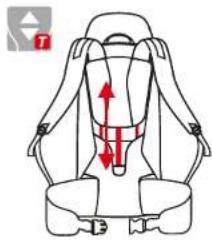
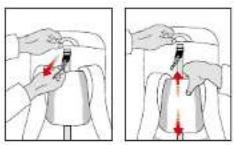
Rapid variable adjustment of the shoulder pads and straps to the wearer's torso length. The aluminium frame provides stability and distributes the pack load optimally over the back and hips. Open to the bottom, it adapts to the torsional movement of the body in motion.
tergolight comFort
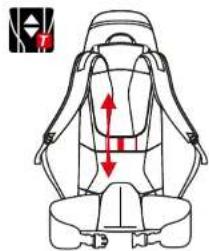
Maximum comfort for heavy loads. The "Comfort" version of the Tergolight suspension system is suitable for long tours with a heavy pack.
Adjustment of the torso length to the wearer's size. Two built-in aluminium plates provides stability of form and optimally distribute heavy loads over the back and hips. Denser materials at the shoulder straps and hip belt ensure comfort during long tours.
The Tergolight Comfort suspension system is also used in a slightly modified version in VAUDE child carriers.

TRAINING BACKPACKS III
1 technology
PAGE: 8
INDEX
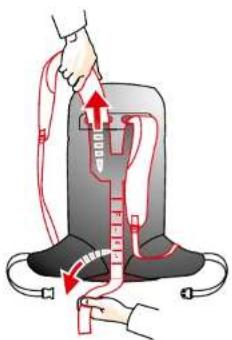
F.L.A.S.H.

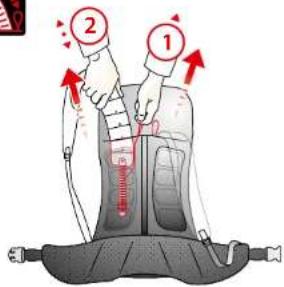
F.L.A.S.H. NT

Shoulder harneSS aDJuStment
Every person has an individual torso length and shape; that's why a backpack (especially a mountain sports backpack!) is not a one-size-fits-all piece of gear. Both unusually tall people with a sturdy build and shorter-than-average people with a small frame have a hard time getting a comfortable fit out of a pack that can't be individually adjusted.
At VAUDE we offer fully adaptable backpacks in all categories – for whichever volume range or type of activity, from hiking packs to climbing packs.
A pack's shoulder straps are often too short for unusually tall people with a sturdy build – they tend to be uncomfortable under the arms. When the shoulder straps are adjusted out to their full length, the sternum strap often can't be used because it would be positioned much too high – practically up at the neck. The pack rides much too high on the back, and hipbelt doesn't fit properly (also much too high) so it doesn't carry the load of the pack. Carrying comfort is significantly reduced – especially when the pack is heavily loaded.
Pros
No matter which adjustment system the backpack has, it can be customized for your height and torso length for a stabilized and balanced fit, whatever the activity.
Cons
The only drawback of an adjustable shoulder harness system is a slightly increased overall weight of the backpack. That's why our ultralight models – in which every gram counts – don't feature this system.
F.I.a.S.h.
F.L.A.S.H. stands for Floating Length-Adjustable Shoulder Harness and means that the length of the length of the shoulder strap harness can be minutely adjusted using an integrated system.
Used in backpacks with the Aeroflex and Aeroflex Easy Adjust suspension systems
Function
The adjustment mechanism is found behind the mesh tensioned back panel. Shoulder harness length is adjusted using a Velcro band on the shoulder straps behind the spring steel frame. The shoulder straps run through reinforced openings in the mesh back panel so that tension isn't affected when the pack is heavily loaded.
Benefits:
• Continuous adjustment for individual torso lengths.
- Simple, easy-access adjustment.
F.I.a.S.h. nt
The F.L.A.S.H. NT system has two pull loops that allow you to precisely adjust the length of the shoulder straps quickly and comfortably. A pull system at the point where the shoulder straps exit the pack lets you adjust the individual length of the shoulder straps for custom-fitting comfort. F.L.A.S.H. NT is used in conjunction with the Anatomic NT and Ergonomic suspension systems.

TRAINING BACKPACKS III
1 technology
PAGE: 9
INDEX
FRAUENRUCKSÄCKE
natural_image
Silhouette figures of two human figures viewed from behind, no text or symbols present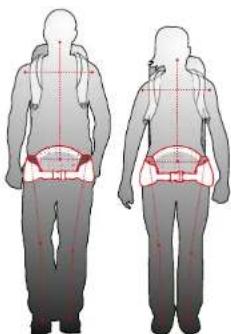
natural_image
Side-by-side anatomical diagrams of human torso and torso with red measurement lines, no text or symbols presentthe DiStinctiVe Difference: women'S backpackS
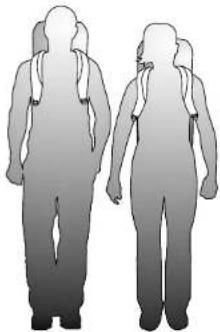
- Shorter torso length - On average, women are more than 10 cm shorter than men. They usually have shorter torso lengths and narrower shoulders. For this reason we've de signed our women's packs with a shorter torso length as well as made them smaller overall and given them a narrower profile for an optimal fit.
- S-shaped shoulder straps - Women's backs and shoulders tend to be significantly narrower than men's. Our women's packs have S-shaped shoulder straps so the pack won't chafe under the arms or bind in the chest area. This design creates stability in the shoulder area so the pack won't slip around as can happen with straight shoulder straps.
The sternum strap can easily be individually adjusted using a slide rail on the shoulder straps. This is a very important feature – especially for women – because many women feel more comfortable with the sternum strap at a higher position.
- Special hipbelt design - Generally speaking, women's hips are broader than men's, and have a somewhat flatter angle. We've designed our women's hiking packs with somewhat broader hipbelts and adjusted them accordingly for women's hips. Our women's trekking backpack's hipbelts compensate for these differences using the Boa system.
- Softer materials - Our women's backpack's shoulder straps are lined with a soft fleece fabric which makes a big difference in comfort when wearing short sleeve or sleeveless tops.

TRAINING BACKPACKS III
1 technology
PAGE: 10
INDEX
STOWABLE LID
natural_image
Side-by-side illustrations of a person wearing a backpack, with red circles highlighting the back area (no text or symbols present)Stowable liD
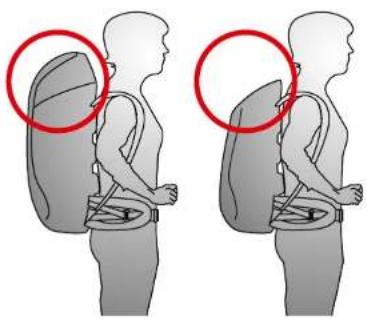
There are some occasions when freedom of movement for your head is of vital importance – for example, when you're climbing and need an unrestricted view.
The alpine backpacks feature a lid compartment that can be stowed into the main compartment when needed, guaranteeing full freedom of movement. The pack can be then fully closed using an additional flap and two zips when the lid is stowed away.
This feature reduces the height of the backpack, so climbers have more room to move their heads around when they really need it, such as when wearing a helmet and/or a hood.
natural_image
Mountain cliff with white clouds against a blue sky background (no text or symbols)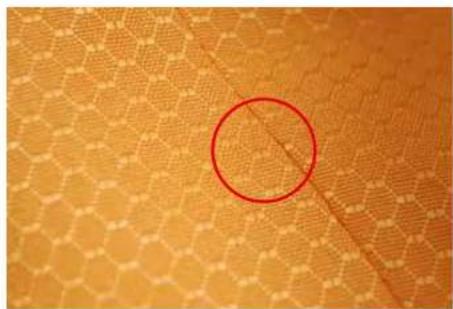
natural_image
Close-up of a honeycomb-patterned fabric with a red circle highlighting a small defect or defect (no text or symbols present)ultralight
The Ultralight icon identifies VAUDE backpacks that belong to the lightest in their class available on the market today. Their minimal weight is made possible by extremely lightweight materials and by paring them down to the most necessary features.
ultra Seam tech
Ultra Seam Tech is our label for the use of or combination of four technologies. With Ultra Seam Tech, two materials are permanently bonded together without using needle and thread. Seams are absolutely waterproof with this technology. The backpacks have a lower total weight because seams allowances and thread aren't needed. The material has a higher tensile strength, because the fabric isn't perforated by a needle.

TRAINING BACKPACKS
TRAINING BACKPACKS III
1 technology
PAGE: 11
INDEX
Fit & aDJuStment
Weight Distribution
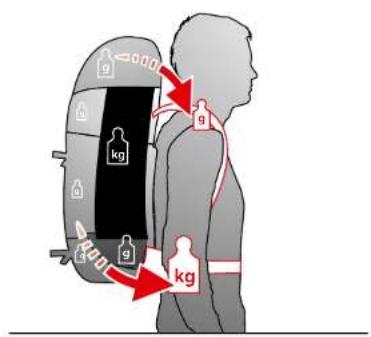
It is very important to load your backpack as shown on the diagram seen here. It is essential that the body's center of gravity is not shifted too far backwards, upwards or downwards by the weight of the pack. If this happens, your muscles have to compensate leading to muscle tension and strain, which may result in headaches. The closer your backpack's center of gravity is to your own, the better your balance and the less you will feel the weight.
Load
As a rule of thumb, you should not carry more than 25 - 30% of your own body weight on longer hikes. Only well conditioned hikers should carry more than this. Small children can easily get used to hiking and wearing a backpack, but they should never carry more than a snack, a stuffed animal and possibly their own sleeping bag.
aDJust the backpack
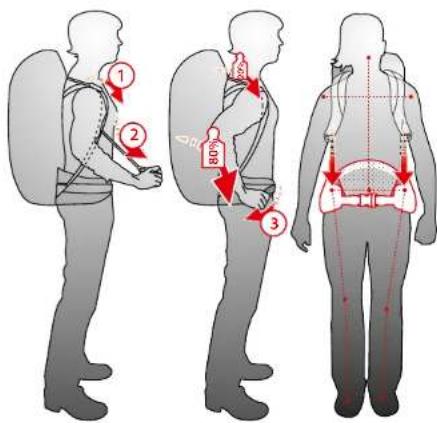
To adjust a loaded backpack, hoist it onto your back and proceed as follows:
- Fasten the shoulder straps and load adjustment straps a (1 and 2) nd tighten slightly. The buckles and load-lifter straps should lie between your collar bone and the top of your shoulder (red arrow). The mid-point of the padded shoulder belt should be about at the top of your shoulders. If this is not the case, adjust the length of the shoulder strap accordingly.
- Raise your shoulders and fasten the hipbelt, then tighten it (3). The hipbelt should straddle your hipbones and carry about 80% of the pack's weight.
- Loosen the shoulder straps until the entire weight of the pack is resting on your hips. Then tighten the straps gently to stabilise the pack on your shoulders.
- Pull the load-lifting straps tight. The shoulder straps will lift away from the shoulders slightly and so take the weight off them.
- Last but not least, slide the sternum strap to a comfortable height (red arrow) and fasten it. Make sure when tightening the strap that the elastic is not overstretched as this may restrict breathing.

TRAINING BACKPACKS III
2 TIPS AND TRICKS
PAGE: 12
INDEX
SIDE ATTACHEMENT FRONT ATTACHEMENT
ATTACHING GEAR: SIDE ATTACHEMENT
Attaching Skis
There are three ways to attach skis to your backpack:
Option 1: Side attachment
- Attaching your skis to the side of your backpack is the most secure option.
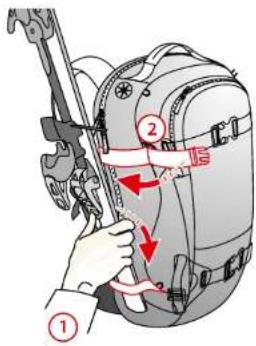
- One ski is attached to the left-hand side, one to the right of the pack. With the bottom surface against the pack, slide each ski down into the dedicated lower loop until you reach the ski binding, then tighten the upper compression loop to fix the ski firmly.
Hint: Skis are most secure if they are tied together at the top. You can do this with a long piece of cord. This holds them more securely on the side and stops them from swaying back and forth.
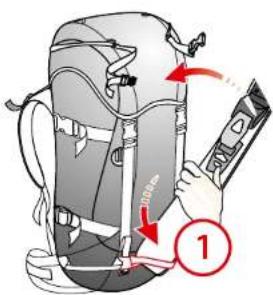
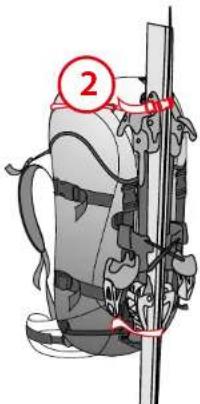
FRONT ATTACHEMENT
Option 2: Front attachment
If the skis only need to be carried over a short distance, it is easiest to attach them to the front of your pack. This is the quickest way to attach your skis.
Both skis are slid through the top of the lower front ski lash point until the ski binding is reached. The second step is to wrap the strap around the skis and pull in tightly. At the same time, the buckle should be closed. Take note that skis may bump against the back of your head while you walk.
Some of our winter models have an additional strap with which skis can also be attached to the top of the backpack.
Careful: Especially when you walk downhill, skis attached to the front of your pack may injure your head and throw you off balance!
Hint: When going downhill attach your skis horizontally.

TRAINING BACKBACKS
TRAINING BACKPACKS III
2 tips and tricks
PAGE: 13
INDEX
TREKKING POLES
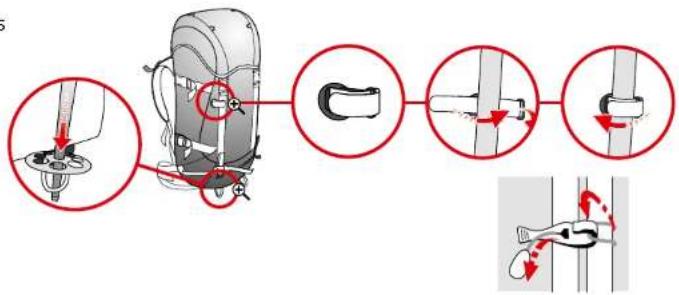
attaching gear: trekking poles
Trekking Poles are inserted from below into the loop and fixed the same way as the ice equipment on top.
Please fix the shaft afterwards on top with the Velcro strap by opening it, putting the shaft inside and closing it again.
ICETOOLS

attaching gear: ice tools
The shaft of the ice equipment is inserted from the top through the loop and then folded down.
Fix the shaft afterwards on top with the Velcro strap by opening it, putting the shaft inside and closing it again.

TRAINING BACKRACKS
TRAINING BACKPACKS III
2 TIPS AND TRICKS
PAGE: 14
INDEX
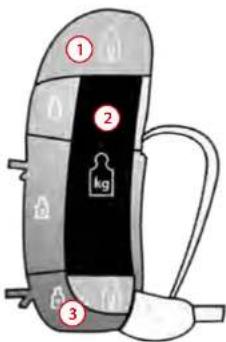
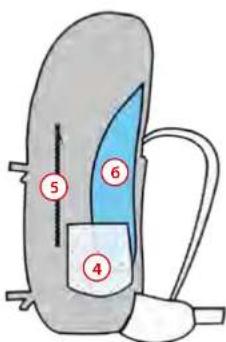
PACKING CORRECTLY - WHAT GOES WHERE
In order to ensure that your backpack fits as comfortably as possible, the loaded pack's center of gravity should lie directly above your own. Most people's center of gravity lies somewhere between their waist and hips. Heavy items should therefore be carried in the middle of the pack, as close in to the back as possible, and centered between your shoulder blades. The closer your pack's center of gravity is to your own, the better your balance and the less you feel the weight of the load.
- Lid Compartment: A lid compartment is standard on backpacks of a certain size and above. This is where you pack all small items of gear that need to be close at hand, e.g. mobile phone, GPS, compass, tissues, cap, chocolate bars and first aid set. You should never put heavy, bulky items such as a full water bottle into the lid of your backpack. For one thing you will shift the center of gravity up too high, and for another the heavy object may hit you on your head.
- Main Compartment: You should take a tactical approach to packing the main compartment: Lighter items such as clothing should be packed at the bottom, top and on the sides. Heavier items such as climbing equipment (carabiners, wedges, quickdraws), the tent, tinned food or water supplies should be packed in the middle, close in to your back.
- Bottom Compartment: Most larger backpacks (approx. 40 liter or more) have a bottom compartment that is separate from the main compartment. This is the best place to store lightweight, bulky items that would take up too much room in the main compartment, such as a sleeping bag, shoes or dirty laundry bag.
- Outer Pockets and Mesh Pockets: Side outer or mesh pockets offer room for smaller items and are perfect for all the things you need to have close at hand (rain jacket, cap, tissues, gloves etc.). They should be packed to about the
same weight on each side. Be careful about sharp objects – they may easily pierce the mesh material in a fall.
- Map Pocket: A range of hiking and trekking backpacks have map pockets on the side. These are large enough for all regular sized maps. They are also easily accessible from the outside, so you can get at them without having to open the main compartment.
- Hydration System: Almost all VAUDE backpack models are hydration system compatible. The pocket for the hydration bladder always lies close to your back so that it doesn't offset your center of gravity. The hydration tube port can always be found near the shoulder straps.

TRAINING BACKPACKS III
2 TIPS AND TRICKS
PAGE: 15
INDEX
ADJUST ALUMINIUM FRAME
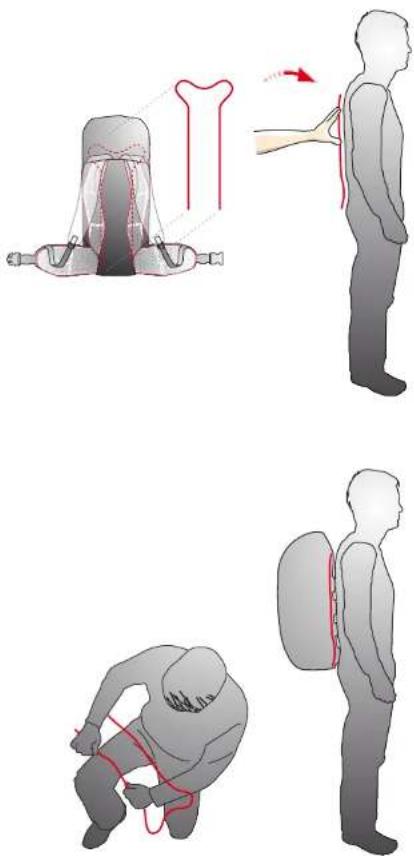
ADJUST ALUMINIUM FRAME
In order to offer even greater custom-fitting individual back adjustability, we've provided our Proflex and Anatomic Alpin suspension systems with removable aluminum frames.
Release the aluminum frame and take it out of the back.
Check for fit: the aluminum frame is already anatomically shaped, yet you can even further optimize its fit. To do this you need a second person to hold the stays against your back.
Individual adjustment: ideally the stays already follow the curvature of your back. If this is not the case, then you can bend them by gently pressing them against your knee or the corner of a table.
When reinserting the aluminum frame please make sure that it is in the right direction.
CARE AND REPAIR
Cleaning: Stains and dirt are best removed using a damp sponge and a mild detergent. If the backpack is heavily soiled, it can be washed under the shower or in the bathtub. Never wash it in a washing machine or dryclean!! To dry the pack, hang it in a well ventilated place.
Guarantee, Care and Repair: VAUDE gives original owners a three-year guarantee on their backpack against material and manufacturing defects. Essentially all damaged equipment can be sent into us and will be repaired for a charge. No matter whether it's a zipper that needs replacing or a hole that needs mending, our repair professionals can repair (almost) anything. Minor repairs can however also be made at home or at a dealer's.
Stiff Zippers: Stiff zippers are best treated with a silicon spray (e.g. from a hardware store). Simply spray onto the zippers and they can easily be opened and closed again.
Holes: These usually appear in the bottom of the backpack. The easiest solution is to glue smaller holes from the inside with duct tape. Larger holes have to be sewn up.
Damaged Buckles: On many backpacks you can easily replace defective buckles yourself. To do this, unthread the strap from the damaged buckle and thread it through the new one.

TRAINING BACKBACKS
TRAINING BACKPACKS
3 GREEN SHAPE
PAGE: 16
INDEX
natural_image
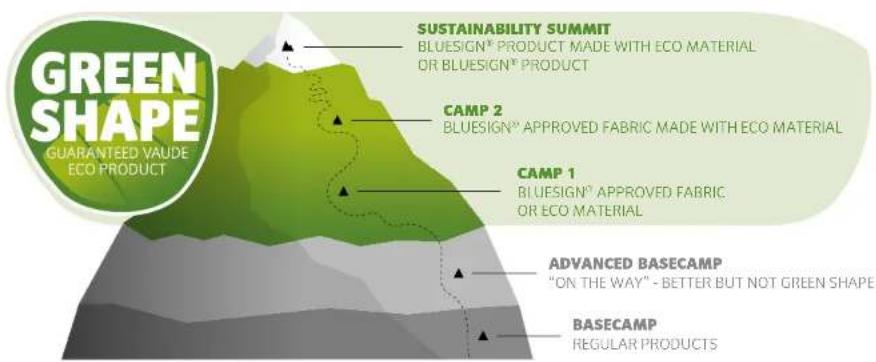
Pink high-temperature jacket with hooded upper and front panels, no visible text or symbolsGreen Shape is the VAUDE guarantee for environmentally friendly products – made from sustainable materials and resource-conserving production methods.
We demand superior quality and functionality from our products. In the outdoors, they should provide reliable protection from the elements, facilitate athletic performance and be our everyday favorite gear and apparel for years to come: Performance meets Ecology.
The “VAUDE Green Shape Mountain” is the company’s own evaluation system for products with ecological benefits. We are proud of the fact that the Green Shape percentage of the Summer Collection 2014 is already at 42% – in the clothing division at 78%.
When is a product Green Shape:
- When it meets of the conditions of a "bluesign" product" or
- When it is dyed with VAUDE eColour or
- When it is made from at least 90 % environmentally friendly materials:
- bluesign ^® approved fabric
- organic cotton
- recycled materials
- a combination of the above with at least 35 % Tencel® or hemp
More details about Green Shape at www.green-shape.de.


The bluesign® Standard is the world's strictest environmental standard for textile products. Like an ecological purity law – only materials are approved that are not harmful to you or the environment. Our goal is to protect man and nature. For more information: www.bluesign.com
TRAINING BACKRACKS
TRAINING BACKPACKS
GREEN SHAPE - RECYCLED MATERIALS
PAGE: 17
INDEX
flowchart
graph TD
    A["Feed"] --> B["Recycle"]
    B --> C["Waste"]
    C --> D["Recycle"]
    D --> E["PET Recycling"]
    E --> A
    style A fill:#90EE90,stroke:#333
    style B fill:#FFD700,stroke:#333
    style C fill:#E6F2FF,stroke:#333
    style D fill:#E6F2FF,stroke:#333
    style E fill:#E6F2FF,stroke:#333
natural_image
Close-up of translucent, crystalline material with a glass container in the background (no text or symbols visible)


RECYCLED MATERIALS
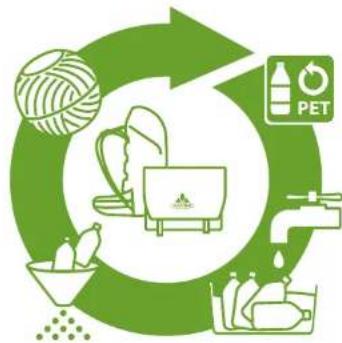
VAUDE products that are made from at least 90% recycled materials are Green Shape.
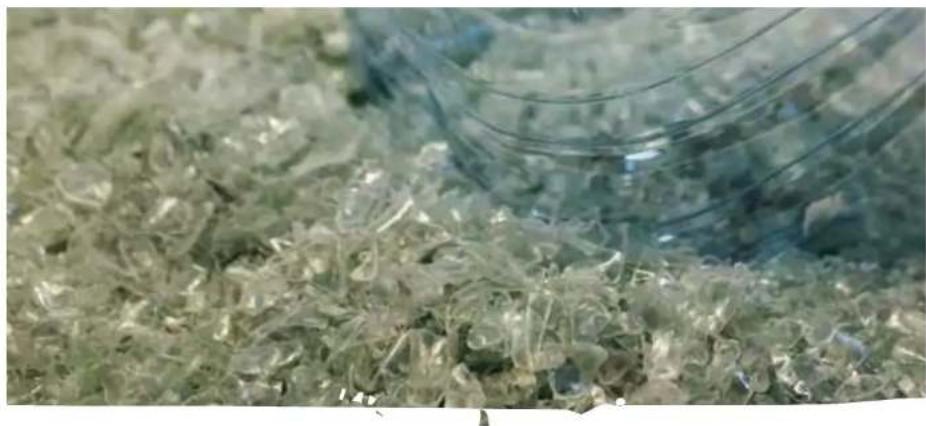
We use a variety of recycled input materials for new products, for example polyester or polyamide. New products are also manufactured from recycled PET bottles.
Advantages:
• 100% reduction in fossil-based raw materials (petroleum)
- Waste reduction
- Up to 50% energy savings in manufacturing
- 50% less CO_2 emissions

TRAINING BACKBACKS
TRAINING BACKPACKS
GREEN SHAPE - TENCEL®
PAGE: 18
INDEX
natural_image
Close-up of cotton bolls on a dry branch against a plain sky (no text or symbols)

TENCEL®
flowchart
graph LR
    A["ZELLSTOFF"] --> B["PASER PRODUCTION"]
    B --> C["TEMPLE"]
    B --> D["LOCOMPUTER"]
    D --> E["STEEL"]



ORGANIC COTTON
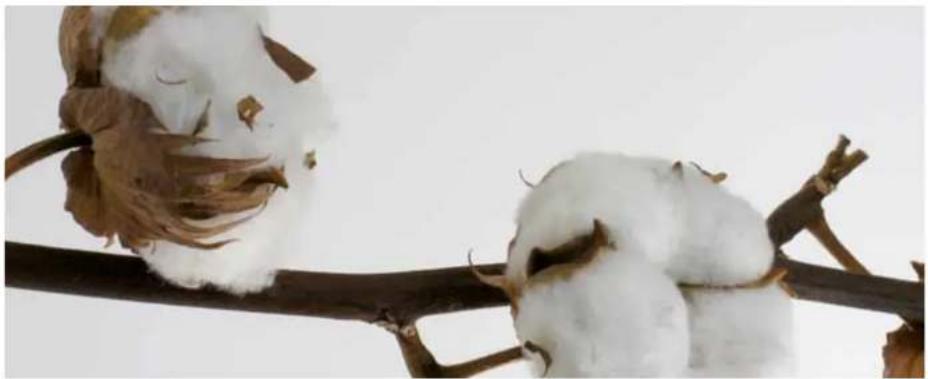
VAUDE products that are made of at least 90% organic cotton are Green Shape.
Conventional cotton production accounts for the use of 25% of all insecticides and 11% of all pesticides in the world, although it only covers 2.4% of the world's cultivated land use (Source: www.pan-germany.org).
Organic cotton is environmental friendly because:
- Pesticides and chemical fertilizers are not used
• The health and social situations of the farmers and workers are improved
• Less harmful substances exist in the fabric
• Natural soil fertility and bio-diversity is retained
• The seed supply is not genetically engineered
TENCEL ^®
VAUDE products that are made from at least 35%
Tencel ^® and at least 90% sustainable fibers in total (for example, organic cotton) are Green Shape.
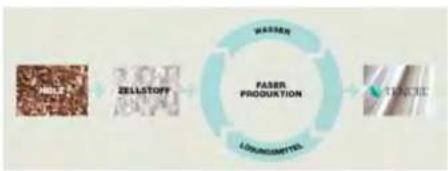
Tencel is a natural fiber made from wood pulp cellulose that conserves resources. It is extremely comfortable thanks to a silky smooth surface that transports moisture quickly away from the body and inhibits bacterial growth.
Advantages:
- No finishing chemicals to ensure the product's functionality required!
- Fiber from certified, fast growing eucalyptus trees that need no fertilizers or irrigation.
- Closed production cycle: water and solvents are recovered completely
• 100% biodegradable

DOCUMENT CHAPTER 16.2 (TO INDEX)
TRAINING BACKPACKS III
GREEN SHAPE - VAUDE ECOLOUR
PAGE: 19
INDEX
natural_image
Close-up of wildflowers in green grass with yellow flowers in the background (no text or symbols)
VAUDE ECOLOUR
VAUDE products dyed with ecolour are Green Shape. VAUDE ecolour is an environmentally friendly dye process in which the pigments are added during the spinning process.
Advantages compared to conventional dye processes:
- 62% less CO_2 emissions
- 89% less water is used
- 63% less chemicals
- 63% less energy is needed
BETTER, BUT NOT GREEN SHAPE
VAUDE has many products in its collection that are more ecological than conventional versions, but that don't automatically fulfill our own strict Green Shape criteria:

Products with less than 90%
sustainable materials

Sympatex: 100% PTFE-free, recyclable and bluesign ^® approved membrane makes a Green Shape product if in addition, for example, outer materials are bluesign ^® approved or made from recycled materials. More information on fluorocarbon free membranes: www.vaude.com/en-GB/Membrane/

Cocona: antibacterial performance thanks to activated carbon particles from coconut shells: no chemical finishing treatments required, however, the percentage of renewable fibers in the product overall is too small.

PVC-free tarpaulin: The problem with PVC (polyvinylchloride) is that it contains phthalate plasticizers. Phthalates are suspected of causing cancer. "PVC-free" means that these products are made 100% without PVC. Examples: Hot Couture Fashion Bags. Just as waterproof, but with eco-friendlier materials.

Made in Germany: Produced in our own EMAS, ISO14001 and bluesign® certified production facilities in Obereisenbach or in other German factories.
vaude.com
The Spirit of Mountain Sports


- Backpacks
- "Dedicated to making y(our) world a better place."
- Index (clickable)
- MUSCLE FLEX
- VFLEX
- ANATOMIC ALPIN
- Full contact back
- Pros:
- Cons:
- AEROFLEX
- AEROFLEX EASY ADJUST
- FULL VENTILATION SUSPENSION SYSTEMS
- Pros
- Cons
- Spring steel frame and mesh panel
- Benefit:
- Spring steel frame and adjustable mesh panel
- Large mesh distance: for maximum ventilation on mountain ascents or in hot weather on easy terrain.
- Benefits:
- trekking SuSpenSion SyStems
- Size classificationS and torSo length
- tergolight
- tergolight comFort
- Shoulder harneSS aDJuStment
- FRAUENRUCKSÄCKE
- the DiStinctiVe Difference: women'S backpackS
- Stowable liD
- ultralight
- ultra Seam tech
- Fit & aDJuStment
- Weight Distribution
- Load
- aDJust the backpack
- ATTACHING GEAR: SIDE ATTACHEMENT
- Attaching Skis
- FRONT ATTACHEMENT
- attaching gear: trekking poles
- attaching gear: ice tools
- PACKING CORRECTLY - WHAT GOES WHERE
- ADJUST ALUMINIUM FRAME
- CARE AND REPAIR
- Green Shape is the VAUDE guarantee for environmentally friendly products – made from sustainable materials and resource-conserving production methods.
- When is a product Green Shape:
- RECYCLED MATERIALS
- Advantages:
- ORGANIC COTTON
- Organic cotton is environmental friendly because:
- TENCEL ®
- VAUDE ECOLOUR
- Advantages compared to conventional dye processes:
- BETTER, BUT NOT GREEN SHAPE
- Products with less than 90%
Brand : Vaude
Model : Minnie 4 5
Category : Backpack