
IMini - Hearing aid SIEMENS - Free user manual and instructions
Find the device manual for free IMini SIEMENS in PDF.


| Brand | Siemens |
| Model | iMini |
| Product Type | Hearing instrument (In-the-Ear) |
| Intended Use | Improve hearing of hearing-impaired persons; must be prescribed by a hearing health specialist |
| Battery Type | Size 10 (zinc-air) |
| Low Battery Indicator | Acoustic signal (can be activated by Hearing Care Professional) |
| Power-On Delay | 6/12/18 seconds (selectable by Hearing Care Professional) |
| Wax Protection | Sieve, recess or guard on sound outlet; cleanable or replaceable by Hearing Care Professional |
| Cleaning Method | Use a soft, dry tissue; do not use water, alcohol or other solvents |
| Dry Aid Kit | Recommended to place instruments in a dry aid kit with moisture-attracting capsule overnight |
| Operating Environment | Avoid extreme heat, humidity, strong magnetic fields (>0.1T), X-rays, and microwaves |
| Storage | Remove batteries if not in use for prolonged period; turn off when not in use |
| Disposal | Recycle hearing instruments, batteries and accessories according to national regulations; do not dispose in household trash |
| Safety Warning | Choking hazard from small parts; keep away from children under 36 months; not for children under 36 months or mentally disabled persons |
| Explosion Hazard | Do not use in explosive atmospheres (e.g., mining areas) |
| Serial Number | Located on the outside of the hearing instrument |
| Certification | CE marking compliant with European Directive 93/42/EEC for medical devices |
| Manufacturer | Siemens AG |
Frequently Asked Questions - IMini SIEMENS
User questions about IMini SIEMENS
0 question about this device. Answer the ones you know or ask your own.
Ask a new question about this device
Download the instructions for your Hearing aid in PDF format for free! Find your manual IMini - SIEMENS and take your electronic device back in hand. On this page are published all the documents necessary for the use of your device. IMini by SIEMENS.
USER MANUAL IMini SIEMENS
natural_image
Close-up of a small, brown, oval-shaped object against a light blue background (no text or symbols visible)iMini
User Guide
SIEMENS
Content
Your iMini hearing instrument 3
Intended use 4
General notes on safety 5
Handling batteries 8
Inserting and removing the hearing instrument 10
Turning your hearing instrument on and off 11
Maintenance and care 12
Troubleshooting 14
Disposal information 15
Your iMini hearing instrument
EN
iMini
(battery type: 10)

① Battery compartment
② Vent
③ Microphone
④ Removal cord
Each hearing instrument can be identified by the serial number located on the outside of the instrument.
Intendeduse
Hearing instruments are intended to improve the hearing of hearing impaired persons. Diagnosis and prescription of a hearing instrument must be performed by hearing health specialists, e.g. ENT doctors, audiologists or acousticians.
Read and follow the instructions of this user guide to avoid injuries and to protect the hearing instruments from damage.
| Symbols: | |
| Be aware of information marked with the warning symbol WARNING, CAUTION or NOTICE! | |
 | WARNING points out a situation that could lead to serious injuries, CAUTION indicates a situation that could lead to minor and moderate injuries. |
| NOTICE NOTICE indicates possible property damage. | |
| General | Advice and tips on how to handle your device better. |
| Checkout | Instruction. Indicates that something has to be done. |
 | Indicates an option that not every hearing instrument has. Ask your Hearing Care Professional to check off the relevant information. |
General notes on safety
EN
NOTICE
Your hearing instruments are sensitive to extreme heat, high humidity, strong magnetic fields (>0.1T), X-rays and mechanical stress.
Do not expose your hearing instruments to extreme temperature or high humidity.
Do not leave them in direct sunlight.
Do not wear them in the shower or when you apply make-up, perfume, aftershave, hairspray or suntan lotion.
Do not wear your hearing instruments when you are exposed to short-waves, a strong magnetic field, a high frequency field or X-rays.
Do not place your hearing instruments in a microwave oven.

WARNING
Choking hazard posed by small parts.
Keep hearing instruments, batteries and accessories out of children's reach.
If swallowed consult a physician or hospital immediately.
This hearing instruments are not designed for children under the age of 36 months or mentally disabled persons.

Siemens offers special hearing instruments for the fitting of infants and small children.
Ask your Hearing Care Professional for further information.
NOTICE
Leaking batteries damage the hearing instruments.
▶ Turn the hearing instruments off when not in use to preserve the battery.
Remove batteries when the instruments are not in use for a prolonged period of time.
NOTICE
Batteries contain harmful substances that pollute the environment.
Do not throw used batteries into household trash.
Dispose batteries according to national regulations or return them to your Hearing Care Professional.

In some countries restrictions for the usage of wireless equipment exist.
Refer to local authorities for further information.

WARNING
Hazard of explosion in explosive atmospheres!
Do not use your hearing instruments in areas where there is a danger of explosions (e.g. mining area).
Handlingbatteries

original size

Always use the right size batteries.
Remove the tab on your batteries only when you are ready to use them.
The positive (+) side of the batteries is always the smooth side.
Always keep spare batteries with you.

In some types of instruments the sounds may become fainter or you may hear additional sounds. This means that the battery power is low.
If this happens, change the battery.
Low battery indicator
Your Hearing Care Professional can activate an acoustic signal to inform you when the battery is nearly empty. If you hear an acoustic signal or experience low amplification power, replace the battery.
EN
Open the battery compartment.

natural_image
Illustration of a satellite with extended arm and blue arrow indicating rotation (no text or symbols)Insert the battery. Make sure the "+" symbols on the battery and compartment are aligned.

natural_image
Abstract 3D wireframe diagram with intersecting planes and a central blue arrow (no text or symbols)▶ Close the battery compartment.
Inserting and removing the hearing instrument

Never pull on the battery compartment door or volume control wheel to remove the hearing instrument, as this could cause damage to your hearing instrument.
Inserting
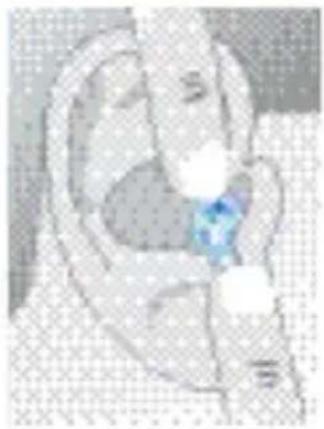
Insert the hearing instrument into the ear canal.
Slightly twist and push the hearing instrument into its proper position.
natural_image
Illustration of a human ear with a blue object on the chest area (no text or symbols)Removing
▶ Push lightly on the back of your ear to loosen the hearing instrument.
▶ Pull the hearing instrument out.

natural_image
Illustration of a hand holding an ear with a blue object near the ear (no text or symbols visible)Turning your hearing instrument on and off
EN
On
▶ Fully close the battery compartment to turn your hearing instrument on.
Off
▶ Fully open the battery compartment to turn your hearing instrument off.
Power-on delay
Your hearing instrument is equipped with a "power-on delay" feature which can be activated by your Hearing Care Professional. This allows you to turn the hearing instrument on with an automatic delay of 6/12/18 seconds, so that you may insert the hearing instrument into your ear without experiencing unpleasant feedback (whistling).
Maintenance and care
Your hearing instruments are highly sensitive systems. Proper care and handling will ensure the best possible performance.
Clean instruments regularly to prevent damage to the hearing instruments and to avoid health problems.
NOTICE
Do not put your hearing instruments in water.

natural_image
Symbol of a faucet with a red diagonal line crossing it, indicating no text or numbers present.Clean your hearing instruments with a soft, dry tissue, as necessary.
Do not use alcohol or other solvents as it will damage the instruments.
Be careful not to damage the wax protection when cleaning the hearing instruments.
Place your hearing instruments in a "dry aid kit" with a special moisture-attracting capsule overnight.
If the windscreen of your hearing instruments is soiled, ask your Hearing Care Professional to clean or exchange the windscreen.
▶ Ask your Hearing Care Professional for special care sets and further information on how to keep your hearing instruments in good condition.
Wax protection
Your hearing instruments are equipped with a sieve, recess or guard on the sound outlet to prevent earwax from entering the hearing instruments.
Your Hearing Care Professional will provide you with the wax protection appropriate for your instruments and can advise you how to clean or replace it.

natural_image
Illustration of a stylized ear with a blue arrow pointing to it (no text or symbols)If the instruments sound distorted or weak exchange the wax protection.
Troubleshooting
Use these tips to resolve simple issues.
| Problem Possible solution | |
| Sound is weak. Replace empty battery. Clean instrument. Close battery door completely. | |
| Hearing instrument emits whistling sounds. | Reinsert the instrument until it fits securely. Clean instrument. |
| Sound is distorted. Replace empty battery. Clean instrument. | |
| Hearing instrument emits signal tones. | Gently close battery compartment completely. Replace empty battery. |
| Hearing instrument does not work. | Check if the hearing instrument is turned on. Gently close battery compartment completely. Replace empty battery. Make sure battery is inserted correctly. Power-on delay is active – wait 18 seconds and check again. |
Consult your Hearing Care Professional if you encounter further problems.
Disposalinformation
EN
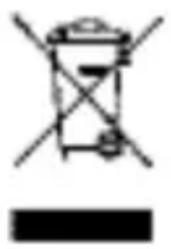
Within the European Union, the marked equipment is covered by "Directive 2002/96/EC of the European Parliament and of the Council of 27 January 2003 on waste electrical and electronical equipment."
Amended by "Directive 2003/108/EC" (WEEE).
natural_image
Simple line drawing of a trash bin with crossed handle and no text or symbols

Recycle hearing instruments, batteries and accessories according to national regulations.
With the CE marking Siemens confirms compliance with the European Directive 93/42/EEC concerning medical devices.

© Siemens AG, 10.2011 · ANR
Document No. A91SAT-01462-99T3-7600
Order/Item No. 106 671 75
Printed in Germany
www.siemens.com/hearing
- iMini
- User Guide
- Content
- Your iMini hearing instrument
- Intendeduse
- General notes on safety
- NOTICE
- WARNING
- Handlingbatteries
- original size
- Low battery indicator
- EN
- Inserting and removing the hearing instrument
- Inserting
- Removing
- Turning your hearing instrument on and off
- On
- Off
- Power-on delay
- Maintenance and care
- Wax protection
- Troubleshooting
- Disposalinformation
Brand : SIEMENS
Model : IMini
Category : Hearing aid