Euro 380 - Phone AUDIOLINE - Free user manual and instructions
Find the device manual for free Euro 380 AUDIOLINE in PDF.


User questions about Euro 380 AUDIOLINE
0 question about this device. Answer the ones you know or ask your own.
Ask a new question about this device
Download the instructions for your Phone in PDF format for free! Find your manual Euro 380 - AUDIOLINE and take your electronic device back in hand. On this page are published all the documents necessary for the use of your device. Euro 380 by AUDIOLINE.
USER MANUAL Euro 380 AUDIOLINE
Operating Instructions 47.
natural_image
Simple line drawing of a dome-shaped container with two side slots (no text or symbols)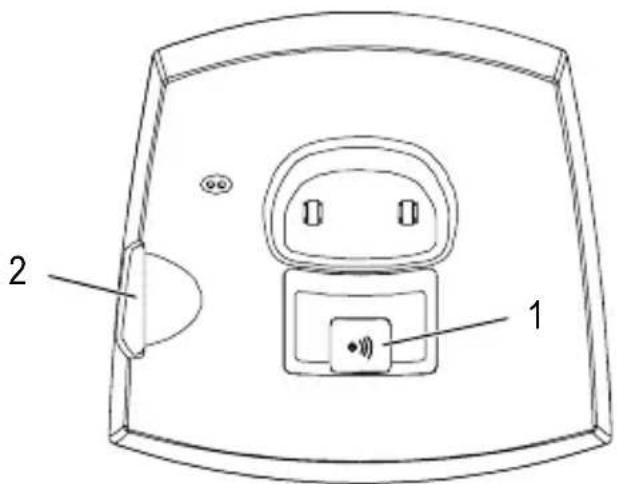
text_image
1 2text_image
Diagram showing a mechanical assembly with labeled parts and directional arrows indicating movement or flow.Eingegebener IDD Code: 00
Eingegebener IDD Code: 00
Please read this operating instruction manual thoroughly.
Intended use
The telephone is suitable for telephoning within a public telephone network system. Any other use is considered unintended use. Unauthorised modification or reconstruction is not permitted. Under no circumstances open the device or complete any repair work yourself.
Installation location
Prevent excessive exposure to smoke, dust, vibration, chemicals, moisture, heat and direct sunlight.
Do not use the handset in potentially explosive areas.
Power supply

Attention: Only use the power adapter plug supplied because other power supplies could damage the telephone. Ensure access to the power adapter plug is not obstructed by furniture or such.
Rechargeable batteries

Attention: Do not throw batteries into a fire. Only use batteries of the same type! Pay attention to correct polarity. Incorrect polarity of the batteries represents a risk of explosion during charging.
Power failure
The telephone cannot be used to make calls in the event of a power failure. Always keep a cord connected telephone which operates without an external power supply available in case of emergency situations.
Medical equipment

Attention: Never use the telephone in the vicinity of medical equipment. Effects on such equipment cannot be fully ruled out.
DECT ^1 DECT telephones can cause an unpleasant humming sound in hearing aids.
Disposal
When you want to dispose of the device, bring it to a collection point provided by your local public waste authorities (e.g. recycling center). The adjacent symbol indicates that the device must not be disposed of in normal domestic waste! According to laws on the disposal of electronic and electrical devices, owners are obliged to dispose of old electronic and electrical devices in a separate waste container.

Batteries must be disposed of at the point of sale or at appropriate collection points provided by the public waste authorities.

Packaging materials must be disposed of according to local regulations.
Putting the Telephone into Operation
2 Putting the Telephone into Operation
Safety information

Attention: It is essential to read the Safety Information in Chapter 1 before starting up.
Checking the contents of the package
The package contains:
| Content | Model Euro 38X | |||
| 380 382 | 1 | 383 1 | 384 1 | |
| Base station (TAM) with power adapter plug | 1 1 1 | 1 | ||
| Charging station with power adapter plug - | 1 2 3 | |||
| Handset 1 2 3 4 | ||||
| Telephone connection cable 1 1 1 1 | ||||
| Batteries 2 4 6 8 | ||||
| Operating manual 1 1 1 1 | ||||
Connecting the base station

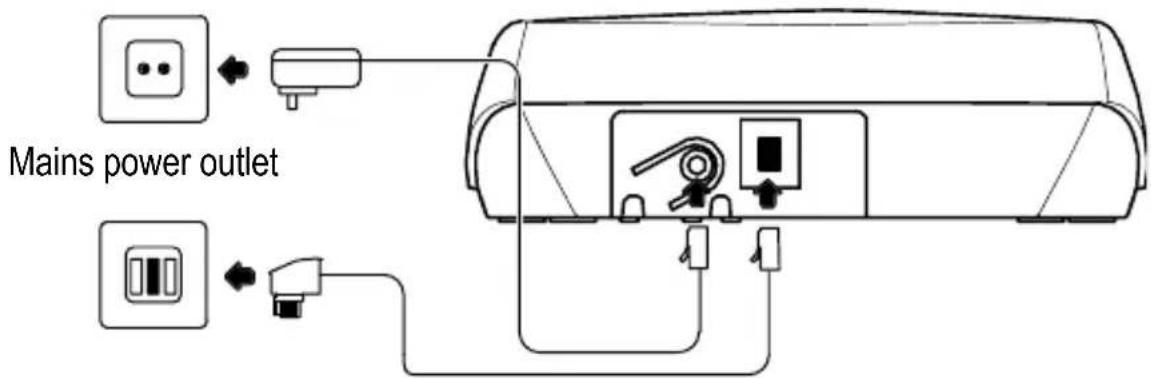
Attention: Position the base station at least 1 m away from other electronic devices, otherwise there is a risk of mutual disturbance.
Connect the base station as illustrated in the diagram. For reasons of safety, only use the power adapter plug and telephone connection cable supplied.
text_image
Mains power outletTelephone connection socket
1 Visit www.audioline.de to find out whether this telephone set is available.
Putting the Telephone into Operation
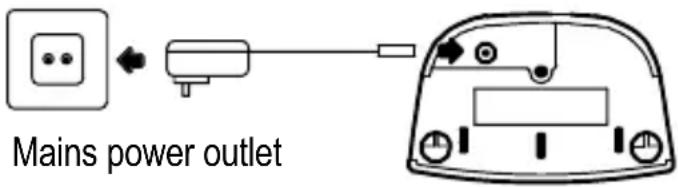
Connecting the charging station 1
Connect the charging station as illustrated in the diagram. For safety reasons, only use the power adapter plug supplied.
text_image
Mains power outletInserting the batteries
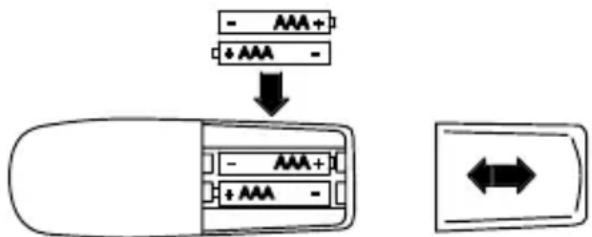
Insert the batteries in the open battery compartment. Only use batteries of the type AAA Ni-MH 1.2V. Pay attention to correct polarity. Close the battery compartment.
text_image
- AAA+ + AAA - ↓ - AAA+ + AAA -Charging the batteries

Before the handset is used for the first time, insert it in the base station/charging station for at least 14 hours.
When the handset is inserted in the base station/charging station properly, you will hear a confirmation signal. The handset warms up during the charging process. This is normal and does not represent a risk. Do not charge the handset with charging units from other manufacturers. The current battery charge status is indicated in the display:


Full Half empty Weak Empty
Setting the time and date on the handset
The time and date are set via the menu. Refer to Page 72 for the sequence of menu option selections necessary.
Private branch exchanges
The information on Page 67 explains how to install your telephone in a private branch exchange.
Setting the weekday and time on the answering machine
The weekday and time are set automatically on the answering machine via the handset.
^1 Only applies to telephone sets with at least two handsets “Checking the contents of the package” on Page 50.
Operating Elements
3 Operating Elements
The buttons on the telephone are depicted with a uniform contour in this operating manual. Slight variations in the symbols on the telephone buttons compared to those depicted here are possible.
Handset
1 VIP button
2 Menu button / OK button
3 Open calls log / Scroll upwards
4 R-button
5 Open phone book / Scroll downwards
6 End call (on-hook)
7 Key lock
8 Ringing tone on/off /
Temporary tone dialling
9 Play messages
10 Take call / redial
11 Handsfree mode on/off
12 Delete / Back / Mute
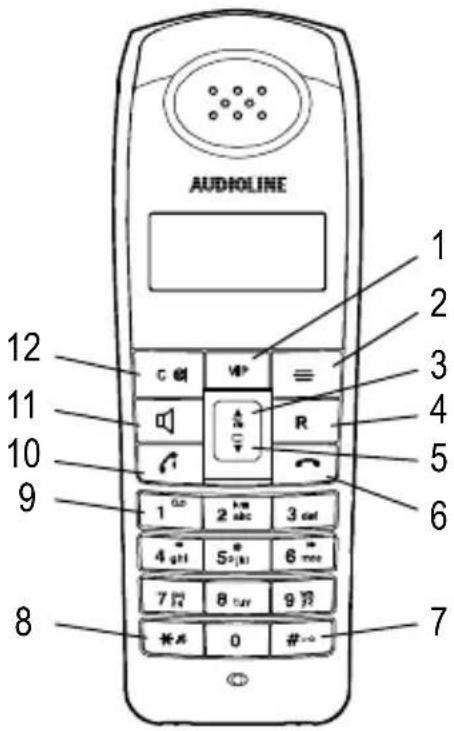
text_image
AUDIOLINE 1 2 3 4 5 6 7 8 9 10 11 12 C C V R 1 2 km 3 cm 4 qH 5* 6 mm 7 F 8 car 9 FA 0 #
Base station
1 Paging button (locate handset)
2 SIM card reader
Charging station 1
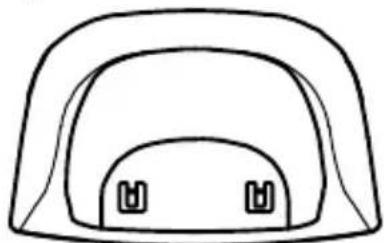
natural_image
Simple line drawing of a dome-shaped container with two side slots (no text or symbols)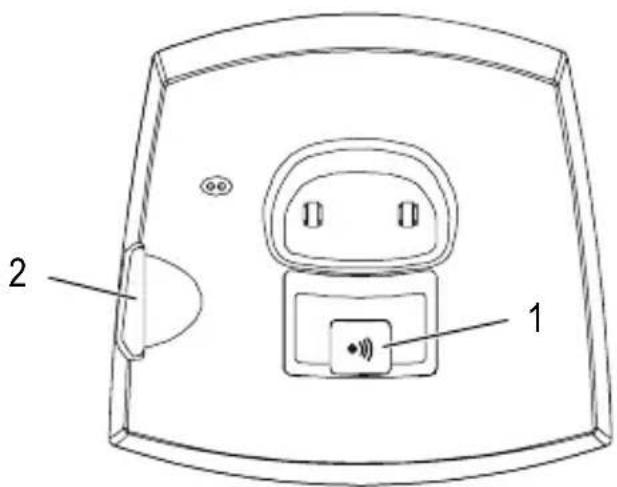
text_image
1 21 Only applies to telephone sets with at least two handsets, "Checking the contents of the package" on Page 50.
4 Operating the Telephone
Display and notation of operation sequences
Enter digits or letters
* Press the button depicted briefly
2 sec ✱ Press the button depicted for 2 seconds
( ) Handset rings
Remove the handset from the base
station
Place the handset in the base station
English or Text or icon in the display
Icons in the display
Icon Description
| You can scroll through the menu. | |
| On: The connection to the base station is good.Flashing: The connection to the base station is poor. Move nearer to the base station. | |
| On: An external call is currently being made.Flashing: An external call has been received. Page 56. | |
| On: The answering machine is activated. Page 61.Flashing: New messages have been recorded. Page 64. | |
| The ringing tone has been switched off. Page 60. | |
| The microphone is deactivated (muted). Page 59. | |
| The key lock function is activated. Page 60. | |
| On: Battery charge capacity indicator.Flashing: Batteries must be charged.Run-through segments: Batteries are being charged. Page 51. | |
| Indicates the setting currently activated. | |
| New Calls | New calls have been registered in the calls log. Page 76. |
Operating the Telephone
20.04 Date display. 📋 Page 72.
12:10 Time display. ☐ Page 72.
-1- Internally assigned call number of the handset.
Further information, Page 58.
Only applies to telephone sets with at least two handsets;
“Checking the contents of the package” on Page 50.

The display lighting switches off automatically if no button is pressed within a period of 10 seconds.
Standby mode
All descriptions in this operating manual assume that the handset is in Standby mode. The handset is in Standby mode after pressing the button.
Navigation buttons
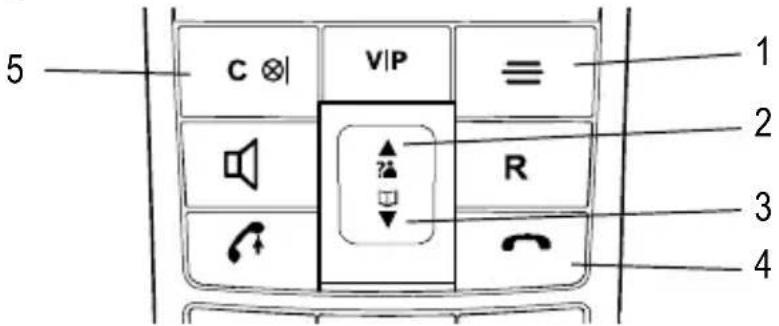
text_image
5 C ⊗| V|P ≡ R 2 3 4Button In Standby mode In Menu
| 1 - Opens the main menu - Opens the menu displayed | ||
| 2 - Opens the calls log | - Scroll up in the menus- Change the settings | |
| 3 - Opens the phone book | - Scroll down in the menus- Change the settings | |
| 4 | - Cancel programming and saving processes | |
| 5 - Move one level back | ||
Navigating in the menu
All the functions can be accessed via the various menus. Refer to the menu structure to find how to access the respective functions. ☐ Page 69.
≡ Open the main menu
or ▲Move to and select the required submenu
≡ Open the submenu
or ▲Move to and select the required function
≡ Open the function
or ▲Move to and select the required setting
Enter digits or letters using the relevant digit keys
≡ Confirm the input
c Move one level back
Cancel the programming and saving
processes and return to Standby mode

Every process is automatically cancelled if there is no input within 30 seconds.
Creating phone book entries - example
The way in which to navigate through the menus and enter data is explained by means of the example Creating phone book entries. Proceed as in this example for all the settings.
Open the phone book
≡, New ≡ Select the function and confirm
Number 儿,≡
Enter the phone number (max. 20 digits) and confirm it
Name 乘,≡ Enter the name (max. 12 characters) and confirm it
Telephoning
5 Telephoning
Taking a call

Take the call
Ending a call

Making a call
Enter the phone number (max. 20 digits)
c Delete the last digit if incorrect
Dial the phone number
You can also make a call by first pressing and holding the Call button for 2 seconds or pressing the handsfree button to obtain the dialling tone. The phone number then entered is dialled immediately. It is not possible to correct wrong digits individually using this dialling procedure.
Redialling
The telephone stores the last 10 numbers dialled in a redialling list.
≡, ▲ or ▼
Redial, ≡ Open the redialling list
or, or
Select an entry and dial the number
or
Open the redialling list
or, or
Select an entry and dial the number
Calling back received calls
The telephone stores the numbers of the last 20 calls received in a calls log.
≡, ▲ or ▼
Calls log, ≡ Open the calls log
or, or
Select an entry and dial the number
or
Open the calls log
or, or
Select an entry and dial the number
Dialling numbers from the phone book
Phone numbers must have been stored in the phone book for this function.
Page 74.
Open the phone book
or, or
Select an entry and dial the number
Chain dialling
Numbers can be linked and dialled for certain telephone services, such as telephone banking, call-by-call or calling card procedures.
Open the phone book and dial numbers from it in succession or combine them with manually entered numbers. Numbers can be dialled as often as necessary from the phone book and combined with manually entered numbers after a connection has been made. The example below describes the procedure for predialling a call-by-call number.
Open the phone book
or,
Select the call-by-call number
or Select,
≡, ▲ or ▼
Phonebook, ≡ Open the phone book again via the menu
or,
Select an entry and dial the number or
Enter the number manually and dial the number
Telephoning
Internal calls ^1
Making internal calls
There must be two or more handsets (HS1, HS2, ...) registered on your base station in order to make internal calls free of charge.
HS1: ≡, ▲ or ▼
Call internal, ≡, e.g.: 2
Dial the internal call number of the handset required
HS2: Take the internal call on the other handset
HS1/HS2: End the internal call
Forwarding external calls internally
HS1: ≡, ▲ or ▼
Call internal, ≡, e.g.: 2
Dial the internal call number of the handset required during the external call
HS2: Take the internal call on the other handset
HS1: Transfer the call
If the handset called does not answer, take the external call back by pressing the 📄 button.
Holding a call / brokering
While a call is in progress, it is possible to dial another handset in order to consult with someone. The external caller is put on hold while you converse with the second, internal person called. You can switch between the callers as often as necessary.
HS1: ≡, ▲ or ▼
Call internal, ≡, e.g.: 2
Dial the internal call number of the handset required during the external call
HS2: Take the internal call on the other handset
HS1: ≡, ▲ or ▼
Switching, ≡ Switch between the callers
1 Internal calls are only possible when at least two handsets are registered in the system; “Checking the contents of the package” on Page 50.
Conference calls
An external call can be transferred to another internal handset for a conference call.
HS1: ≡, ▲ or ▼
Call internal, ≡, e.g.: 2
Dial the internal call number of the handset required during the external call
HS2: Take the internal call on the other handset
HS1: ≡, ▲ or ▼
Conference, ≡ Start the conference
HS1 / HS2: End the conference
Adjusting the receiver volume
The volume can be adjusted to one of 5 settings during a call.
or ▲ Select the required volume
Talk time display
The duration of a call is displayed in hours, minutes and seconds during the call.
Handsfree
This function is used to listen to the caller via the loudspeaker.
Activate handsfree mode
Deactivate handsfree mode
Muting the microphone in the handset
The microphone in the handset can be activated and deactivated during a telephone conversation.
C Deactivate the microphone (muting function activated)
c Activate the microphone
Telephoning
Key lock
The key lock prevents functions assigned to buttons being activated inadvertently.
2 sec 0→/#Activate the key lock function

Incoming calls can still be taken in the normal way even when the key lock function is activated.
2 sec 0- /# Deactivate the key lock function
Handset ringing melody
The ringing melody on the handset can be switched off.
2 sec */ Deactivate the ringing melody
2 sec */Activate the ringing melody
Searching for the handset (Paging)
If you have mislaid your handset, you can locate it again with the aid of a search tone.


Deactivate the search tone
6 Answering Machine

Your answering machine is equipped with a vocal operator guidance.
Observe the instructions and information provided.
Opening the Ans. Settings menu
The answering machine settings are defined via the handset.
≡ Open the main menu

Ans. machine, ☐ Select the submenu and confirm

Ans. settings, ≡ Select the Ans. Settings menu and confirm
Ans Settings menu, key function assignment
If you open the Ands. Settings menu, you can change the following answering machine settings. The following table provides an overview of the respective functions assigned to the individual buttons in the Ans Settings menu.
Button Functions
| 1 Play the | Ans. Settings menu |
| 5 Delete the outgoing message during playback | |
| 7 Select the outgoing message: OGM 1 or 2 (answer only) | |
| 8 Play the currently set outgoing message Press 2 to stop | |
| 9 Record outgoing message 1 or 2 (answer only) | |
| 0 Switch the answering machine on/off | |
| # Set the number of rings before call is taken / End recording of outgoing message | |
| c Exit the | Ans. Settings menu |
2 sec □c Exit the Ans. Settings menu and return to Standby mode
Answering Machine
Language
The answering machine's vocal output is German and cannot be changed.
Setting the weekday and time
The weekday and time of receipt is announced when each message is played back. Setting the weekday and time; ☐ Page 72.
Maximum recording time
The answering machine can store up to 99 messages. The maximum total recording time is 15 minutes. The maximum length of a message is 2 minutes. When there is no memory capacity available to record new messages, no further messages are recorded. The Display shows Memory full.
Ringing delay for taking a call
You can select from 2 to 8 ringing tones or the Time Saver setting for pre-remote access free of charge. The free pre-remote access function enables you to determine whether new messages have been left on your answering machine.
- If new message have been recorded on your answering machine, your call is taken after 2 rings.
- If no messages have been recorded, the call is taken after 6 rings. Replace the receiver before the 6th ring. No charges are accrued.
Further information on remote access; Page 65.
Call screening
You can listen-in to the caller without actually taking the call.
≡Activate the call screening function
c Deactivate the call screening function
Taking calls already answered by the TAM
It is possible to take a call even if the answering machine has already begun to take it. Recording of the message is stopped in this case.
Take the call
Selecting the answering mode
The answering machine is provided with two, pre-recorded outgoing messages, OGM 1 and OGM 2. After outgoing message 1 (OGM 1) has been played, the caller can leave a message. Outgoing message 2 (OGM 2), on the other hand, is purely an answer only announcement after which no message can be left. Both pre-recorded outgoing messages can be replaced by ones of your own. When the answering machine's memory is full, OGM 2 is automatically played.
Recording/Deleting outgoing messages
Recording outgoing messages
Before recording an outgoing message, select the answering mode (OGM 1 or 2) for which you want to record a message. Your own outgoing message may be up to 120 seconds long.
Deleting outgoing messages and returning to pre-recorded messages
After deleting your own outgoing message, the pre-recorded message is automatically reactivated.
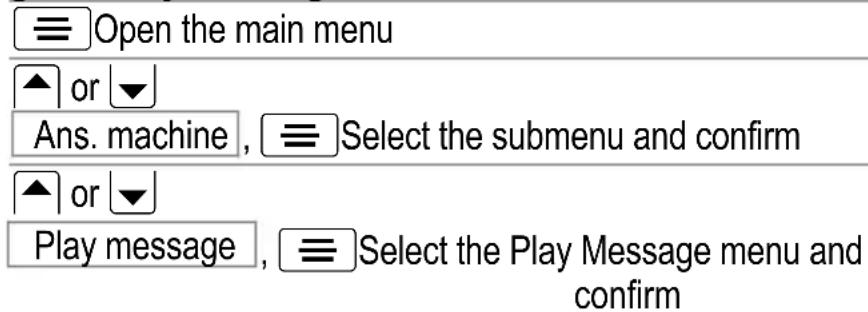
Opening the Play Message menu
text_image
≡ Open the main menu ▲ or ▼ Ans. machine, ≡ Select the submenu and confirm ▲ or ▼ Play message, ≡ Select the Play Message menu and confirmAnswering Machine
Key function assignment, Play Message menu
The following table provides an overview of the respective functions assigned to the individual buttons in the Play Message menu.
Button Functions
| 2 Play the messages, start/stop |
| 4 Repeat playback of the message |
| 2 x 4 Play previous message |
| 5 Delete message during playback |
| 6 Play next message |
| 2 sec C Exit the Play Message menu and return to Standby mode |
Adjusting the receiver volume
The volume can be adjusted to one of 5 settings during a message.
or ▲ Select the required volume
Handsfree
This function is used to listen to the message via the loudspeaker.
Activate handsfree mode
Deactivate handsfree mode
Playing recorded messages
The recorded messages are played back in the sequence they were recorded. The weekday and time of recording are announced for the respective message prior to being played.
Delete all old messages
All the old messages are deleted. New messages are retained.
≡ Open the main menu
or
Ans. machine, ≡ Select the submenu and confirm
or
Del old megs, ≡ Select the function and confirm
Remote access
You can call your answering machine from another telephone to play any new messages or execute other functions. A condition for this is the use of a telephone which implements tone dialling.
PIN code for remote access
The default setting of the PIN code is "0000". In order to use the remote access function, the default PIN code "0000" must be changed. Remote access is only possible when the PIN code is not set to "0000".
Changing the PIN code; Page 69.
Starting remote access
Dial your own phone number
※, While the OGM is playing, press the button and enter the PIN code
If the PIN code entry is incorrect, the OGM is repeated. If the PIN code is entered incorrectly three times, the line is automatically disconnected.
You can now execute other functions. 📋 Table: Key function assignment for remote access.
Remote activation of the answering machine
Dial your own phone number
If you forgot to activate your answering machine, you call is taken after the 10th ring.
※, While the OGM is playing, press the button and enter the PIN code
0 Switch the answering machine on/off
You can now execute other functions. ☐ Table: Key function assignment for remote access.
Answering Machine
Key function assignment for remote access

Remote access is automatically cancelled if there is no input within 8 seconds.
The following table provides an overview of the respective functions assigned to the individual buttons.
Button Functions
| 1 | Play the menu options |
| 2 | Start playback of all messages |
| 3 | Start playback of new messages |
| 4 | Repeat playback of the current message |
| 2 x 4 | Play the previous message |
| 5 | Delete the message during playback |
| 6 | Play the next message |
| 7 | Select the outgoing message:OGM 1 or 2 (answer only) |
| 8 | Play the currently set outgoing message |
| 9 | Record outgoing message 1 or 2 (answer only) |
| 0 | Switch the answering machine on/off |
| # | End recording of the outgoing message |
| Place the telephone on-hook to end remote access | |
7 PABX / Supplementary Services
R-button on private branch exchanges
If the telephone is connected to a private branch exchange, all the functions associated with the R-button, such as transferring calls and automatic call back, can be used. Please refer to the information in the operating manual enclosed with your private branch exchange with regard to the Flash time to set in order to use these functions. The dealer where you purchased the exchange can provide information as to whether the telephone will work properly with the exchange.
Setting the Flash time 📋 Page 72.
Number for an outside line
When the phone is used in a PABX, it is initially necessary to dial the number for an outside line to obtain the dialling tone. The number for an outside line must always be dialled first when you make an external call. The number for an outside line must also be entered for phone numbers stored in the phone book.
Example: The number for an outside line on your PABX system is 9. The phone number you want to dial is 04421 941699. Your phone book entry must read 904421941699.
Certain PABX systems take a little time before the dialling tone can be heard. In the case of such systems, it is possible to enter a dialling pause after the number for the outside line so that you can continue dialling directly without needing to wait for the dialling tone.
Entering the dialling pause manually
You can enter the dialling pause manually after the number for an outside line.
9 Enter the number for an outside line
2 sec 0 Insert a dialling pause
04421941699
Enter
the phone number
Example: The phone book entry in this case reads 9P04421941699.
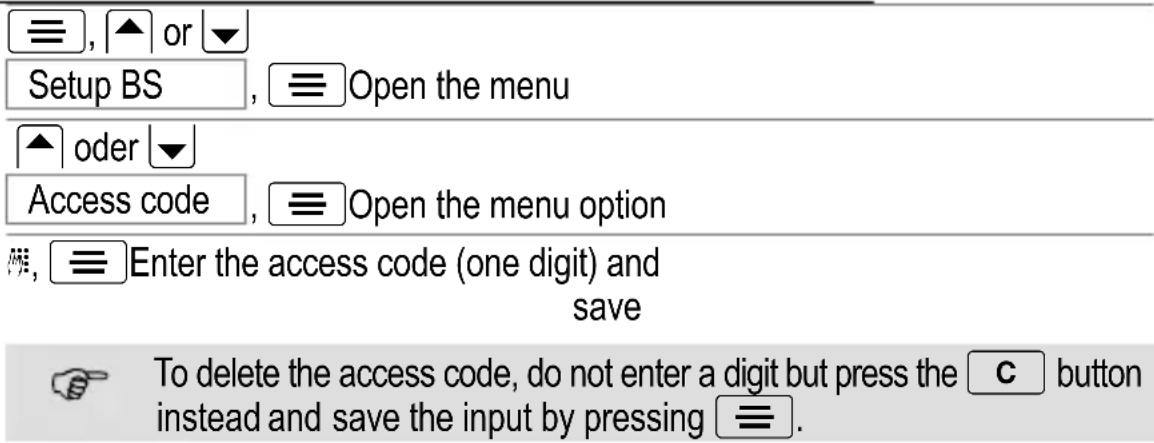
Entering the “access code” for automatic dialling pause
Enter the number for an outside line as an “access code” in order that a dialling pause is automatically inserted. When dialling a phone number, the telephone then detects that the “access code” matches the first number you dial. A dialling pause is then automatically inserted after entering the “access code”.
Example: Enter the "access code" 9 for the above example. The phone book entry then reads 904421941699. The phone number then dialled is 9P04421941699.
PABX / Supplementary Services
text_image
≡ , ▲ or ▼ Setup BS , ≡ Open the menu ▲ oder ▼ Access code , ≡ Open the menu option ≡ Enter the access code (one digit) and save To delete the access code, do not enter a digit but press the C button instead and save the input by pressing ≡.R-button and supplementary services
Your telephone supports the supplementary services offered by your telephone network provider, such as brokering, call waiting and conference facilities. These supplementary services can be used via the R-button. Please ask your telephone network provider which Flash time you need to set in order to use the supplementary services. Please contact the telephone network provider with regard to enabling the supplementary services. Setting the Flash time Page 72.
Caller number display (CLIP ^1 )

The caller number display function is a supplementary service offered by telephone network providers.
Contact your network provider for further information.
If this function is available with your telephone line, the number of the caller appears in the display when the phone rings. If the caller has suppressed transmission of his phone number, the corresponding message appears in the display. In this case, the phone number cannot be displayed and, therefore, is not stored in the calls log.
8 Menu Structure
Main menu
Access the Main menu by pressing the ≡ button. Use the ▲ or ▼ button to scroll to and select the required submenu. Further information on the menu and operation: Chapter 4.
Ans. machine
| Play message | ||||
| Del old megs Delete all? Megs deleted! | ||||
| Chg RemotePIN* | Enter PIN | New PIN | Repeat PIN | |
| Ans. settings | ** Listen ** | |||
* The default setting of the answering machine PIN (remote access) is "0000". Further information on the answering machine: Chapter 6.
Phonebook (☐)
| Entry 1 | ≡ | New | Number | Name 1 | |
| Entry 2 | Select | ||||
| Entry ... | Edit | Number | Name 1 | ||
| Delete Delete? | |||||
| Delete list Delete list? Deleted | |||||
Redial (☐)
| Entry 1 ≡ Select | ||
| Entry 2 | Store No. ☐ Name 1 | |
| Entry ... | Delete Delete? | |
| Delete list Delete list? Deleted | ||
GB
^1 Letters are also imprinted on the digit keys. Letters, digits and special characters are entered by pressing the relevant key the respective number of times. Use the Star button to switch between upper and lower case.
flowchart
graph TD
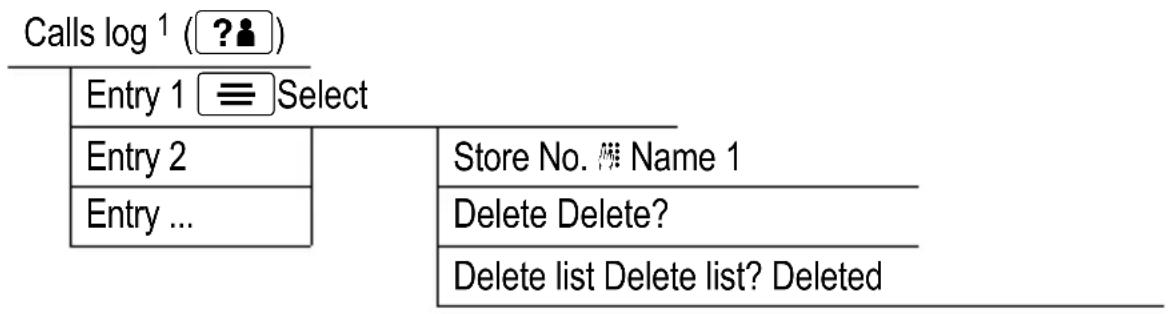
    A["Calls log 1 ( ?# ) "] --> B["Entry 1 ≡ Select"]
    B --> C["Entry 2"]
    C --> D["Store No. 🎯 Name 1"]
    C --> E["Entry ..."]
    E --> F["Delete Delete?"]
    E --> G["Delete list Delete list? Deleted"]
flowchart
graph TD
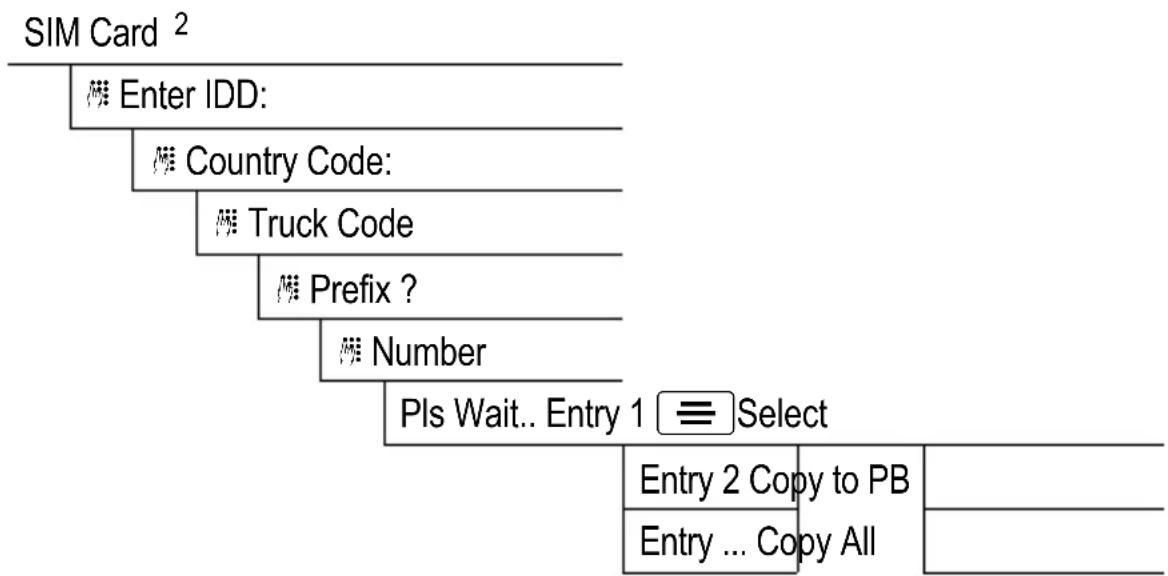
    A["SIM Card 2"] --> B["Enter IDD"]
    B --> C["Country Code"]
    C --> D["Truck Code"]
    D --> E["Prefix ?"]
    E --> F["Number"]
    F --> G["PIs Wait.. Entry 1 Select"]
    G --> H["Entry 2 Copy to PB"]
    G --> I["Entry ... Copy All"]
^1 The (CLIP ^3 ) feature is necessary to display and save phone numbers in various call logs. The caller number display function is a supplementary service offered by telephone network providers. Contact your network provider for further information. Further information, ☐ Page 68.
^2 Further information on the SIM card reader, ☐ Page 78.
^3 CLIP: Calling Line Identification Presentation
Call internal ^1
Number e.g: 2
Setup HS
| Ring melody Melody 1 - 6 | ||
| Ring volume Ring volume 0 - 5 | ||
| Tones Battery low On | ||
| No coverage On | Off | |
| Key beeps On | Off | |
| Off | ||
| Handset Name Euro 380 | ||
| Language Deutsch | ||
| Turkish | ||
| English | ||
| Reset Reset? | ||
GB
1 Internal calls are only possible when at least two handsets are registered in the system; “Checking the contents of the package” on Page 50.
Setup BS
| Change PIN 1 | Enter PIN | New PIN | Repeat PIN |
| Dial mode2 | DTMF | ||
| Flash time3 | Pulse | ||
| 80 ms, 100 ms | |||
| Access code3 | 120 ms, 180 ms | ||
| 250 ms, 300 ms | |||
| 600 ms, 800 ms | |||
| Number | |||
| Reset Enter PIN Reset? | |||
Date/Time
| Set Date/Time | Year | Date | Time |
| Time Format | 12hr | ||
| 24hr | |||
| Date Format mm.dd | |||
| dd.mm | |||
^1 The default PIN code is “0000”.
^2 Further information on dialling mode, ☐ Page 81.
^3 Further information on private branch exchanges, ☐ Page 67.
VIP phone book ^1
Open the VIP phone book by pressing the Info button.
Entry 1 ≡ Select
| Entry 2 | Delete? | Edit Number Name 2 |
| Entry ... Delete |
GB
^1 When using the VIP phone book, new entries are created using the “Edit” menu.
^2 Letters are also imprinted on the digit keys. Letters, digits and special characters are entered by pressing the relevant key the respective number of times.
Use the Star button to switch between upper and lower case.
9 Phone Book
You can use the phone book to store up to 255 phone numbers together with the associated names.
- Always enter the area access code with the phone numbers so that incoming local calls can also be assigned to a phone book entry.
- When the memory capacity is used up, the message Full appears when an attempt is made to save another number. To create space, an entry in the phone book must be deleted.
- The phone book entries are arranged in alphabetical order. To access the required phone book entry directly, press the first letters of the corresponding name.
Entering names
Letters are also imprinted on the digit keys. Letters, digits and special characters are entered by pressing the relevant key the respective number of times.
| 1 Enter a space |
| C Delete characters |
| 1, 0, # Enter a special character |
| ▲ or ▼ Move the cursor |
| * Switch between upper and lower case |
To enter the same letter twice, press the button to enter the letter. Wait until the cursor skips one position forwards. Enter the letter again.
Creating phone book entries

text_image
Open the phone book ≡ , New ≡ Select the function and confirm Number ≡, ≡ Enter the phone number (max. 20 digits) and confirm itName ≡, ≡ Enter the name (max. 12 characters) and confirm it
Editing phone book entries
| ■■ Open the phone book | |
| ▲ or ▼ | Entry ... , ≡ Select a phone book entry and confirm it |
| ▲ or ▼ | Edit , ≡ Select the function and confirm |
| Number | , ≡ Edit the phone number (max. 20 digits) and confirm it |
| Name | , ≡ Edit the name (max. 12 characters) and confirm it |
Deleting phone book entries
Deleting an individual entry
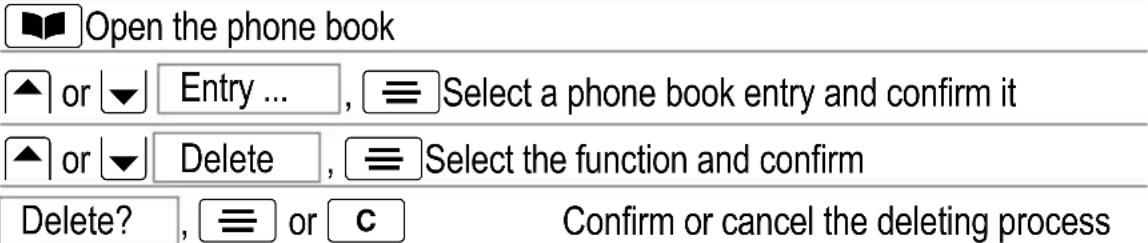
text_image
Open the phone book or ▼ Entry ... , ≡ Select a phone book entry and confirm it or ▼ Delete , ≡ Select the function and confirm Delete? , ≡ or c Confirm or cancel the deleting processDeleting all entries

text_image
Open the phone book ► or ▼ Entry ..., ≡ Select a phone book entry and confirm it ► or ▼ Delete list , ≡ Select the function and confirm Delete list?, ≡ or c Confirm or cancel the deleting process10 Calls Log
A total of 20 phone numbers are stored in a calls log.

The caller number display function is a supplementary service offered by telephone network providers. Your telephone displays the phone number of the caller when your telephone network provider offers this service. Contact your network provider for further information.
Messages in the display:
Unavailable The phone number is received only partially or with
errors.
Information related to the phone number is not available.
It could concern an international call.
Withheld The caller has suppressed the transmission of their
phone number.
Displaying numbers in the calls log

Open the calls log and select an entry
Saving a phone number in the calls log in the phone book
A phone number stored in the calls log can be saved in the phone book directly.

Open the calls log and select an entry

text_image
or Store No., Select the function and confirmName ≡, ≡ Enter the name (max. 12 characters) and
confirm it
As soon as the phone number in the phone book has been saved together with a name, the name entered appears in the calls log.
Deleting phone numbers from the calls log
Deleting individual phone numbers
?Open the calls log
or ▲ Entry ... , ≡ Select the entry and confirm
or Delete, Select the function and confirm
Delete? , ≡ or c Confirm or cancel the deleting process
Deleting all phone numbers
?Open the calls log
or ▲ Entry ... , ≡ Select the entry and confirm
or Delete list, Select the function and confirm
Delete list?, ≡ or c Confirm or cancel the deleting process
11 SIM Card Reader
PLEASE DO NOT REMOVE OR INSERT THE SIM CARD DURING SIM CARD OPERATIONS.
A SIM card reader is integrated in the base station. You can insert your mobile phone SIM card in order to transfer phone numbers stored on it to the phone book.
In order to be able to use this function, deactivate all the SIM card security features. Proceed as described in the operating manual supplied with the mobile phone
- Draw the inserting device (1) out of the base station.
- Insert the SIM card (2) as illustrated.
- Push the inserting device (1) carefully back in the base station.
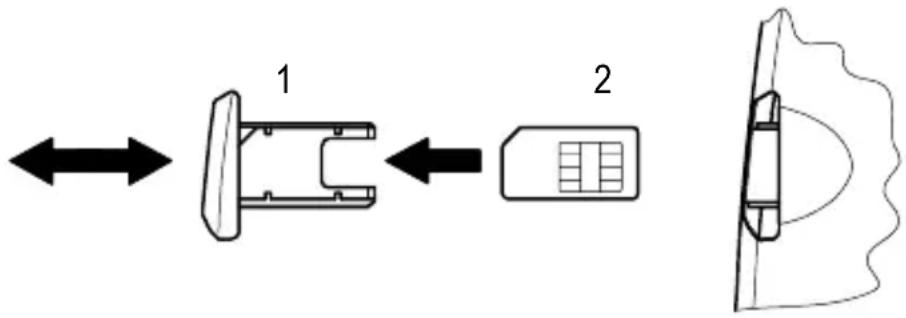
text_image
Diagram showing a mechanical assembly with labeled parts 1 and 2, including directional arrows and a close-up of the final part.IDD code, country code and truck code
It is essential to enter the codes in order to adapt numbers transferred from the mobile phone for use with the telephone in the conventional telephone network. Your telephone detects whether the number concerns a national or international phone number. If you do not enter an IDD code and country code, only the “+” preceding the country code is deleted.
Example "Country code is correct":

In the case of a national phone number, the country code preceding the phone number is replaced by a 0.
Phone number on the SIM card: +49 173 123456789 (Germany)
IDD code entered: 00
Country code entered: 49 (Germany)
Truck code entered: 0 (this digit replaces the +49)
Number stored in handset: 0173 123456789
Example "Country code is not correct":

In the case of an international phone number, the IDD code is inserted preceding the phone number.
Phone number on the SIM card: +31 173 123456789 (Netherlands)
IDD code entered: 00
Country code entered: 49 (Germany)
Truck code entered: 0 (this digit replaces the +49)
Number stored in handset: 0031 173 123456789
Number for an outside line in PABX
Example "Country code is correct":
You can program numbers in your public branch exchange for outside lines to be automatically inserted in front of the actual phone number.

If you do not intend to use this function, press the C key when "Prefix?" appears. To enter the number for an outside line, press the ≡ key
Phone number on the SIM card: +49 173 123456789 (Germany)
IDD code entered: 00
Country code entered: 49 (Germany)
Truck code entered: 0 (this digit replaces the +49)
Digit entered: 0 (example for an outside line)
Number stored in handset: 00173 123456789
Copying entries on the SIM card in the phone book
Phone numbers stored on the SIM card inserted can be copied in the phone book.
Only the phone book stored on the SIM card is copied, not the phone book integrated in the mobile phone! If some phone book entries are not included, copy all the entries in the integrated mobile phone directory onto the SIM card. All the phone book entries should now be available for copying.
SIM Card Reader
Copying individual entries
| ≡ Open the main menu | |
| ▲ or ▼ SIM Card, ≡ Select the submenu and confirm | |
| Pls Wait.. SIM card is read | |
| If your SIM card is not enabled, you will receive a corresponding message. Insert the SIM card in the mobile phone again and enable the SIM card. Refer to the operating manual supplied with your mobile phone for more detailed information. | |
| Enter IDD: ≡, ≡ | Enter the IDD code (max. 4 digits) and confirm |
| Country Code: ≡, ≡ | Enter the national code (max. 3 digits) and confirm |
| ▲ or ▼ Select an entry | |
| ≡, ▲ or ▼ | |
| Copy to PB, ≡ Select the function and confirm | |
g all entries
It is also possible to copy all the entries from the SIM card in the phone book simultaneously.
| orSelect an entry |
| , or |
| Copy All, Select the function and confirm |

When the memory capacity is used up, the message "Full" appears in the display. To create space, entries in the phone book must be deleted.
12 Special Functions
Dialling mode
The telephone can be operated in new, digital exchanges (TONE) as well as analogue exchanges (PULSE). The dialling mode is controlled via the menu. Refer to Page 72 for the sequence of option selections.
Temporary tone dialling
If you only operate the telephone using PULSE dialling mode, you can still make use of the advantages of TONE dialling mode (e.g.: remote access of the answering machine in the conventional telephone network). You can temporarily switch to Tone dialling when a connection has already been made.
1 sec ✱ Press when a connection has been established
When the call is ended, the equipment automatically switches back to Pulse dialling.
Expanding the Telephone System
13 Expanding the Telephone System
Registering/Deregistering handsets
You can register a total of 4 handsets on your base station.
Proceed as follows to open the Register/Deregister menu for handsets:

Open the menu and enter the code
The code does not appear in the display when entered. You must enter the key combination without display assistance.
Registration, ≡ Open the menu option
Registering handsets

Register , ≡ Open the menu option
停,≡ Enter the PIN and confirm it
Searching
Set the base station to Register mode
10 sec □ Start Register mode
Register mode remains active for up to 60 seconds.
Registered
Registering handsets

Deregister, ≡ Open the menu option
Enter the PIN and confirm it

Handset, ≡ Select the handset
Deregister? , ≡ Confirm deregistration
Stored, Register!
14 In the Case of Problems
Service hotline
Should problems arise with the telephone, please refer to the following information first. In the case of technical problems, you can contact our hotline service, tel. 0180 5 00 13 88 (cost via Telekom at time of going to print: 12 ct/min). In the case of claims under the terms of guarantee, contact your sales outlet. There is a 2 year period of guarantee.
Problems and solutions
Problems Solutions
| No telephone calls possible | - The telephone is not connected properly or is defective. Only use the telephone connection cable supplied.- Test whether the telephone connection is in order by using another telephone.- The power adaptor plug is not plugged in or there is a complete power failure.- The rechargeable batteries are empty or defective.- The handset is too far from the base station.- The wrong dialling mode is set; Pages 72 and 81. |
| Connection is disturbed or cut off | - The handset is too far from the base station.- The base station is in an unsuitable location. |
| The system no longer responds | - Reset all the functions to their default settings; Page 86.- Disconnect the power adapter plug briefly from the power socket. |
| The batteries are empty in a short time | - Batteries are empty or defective.- Place the handset in the base station properly. Clean the contact surfaces on the handset and base station with a soft, dry cloth.- Place the handset in the base station for 14 hours. |
| The CLIP 1 function does not work | - The caller number display function is a supplementary service offered by telephone network providers. Contact your network provider for further information.- The caller has suppressed the transmission of their phone number. |
| The SIM card cannot be read | - Check that the SIM card is inserted correctly; Page 78.- Ensure that all the SIM card security features have been deactivated. |
| The answering machine does not record any messages | - Ensure that the answering machine is connected correctly and switched on.- Check whether the answering machine memory is full. Delete messages from the memory, if necessary; Pages 64 and 64. |
| No remote access functions can be executed | - Check that the correct security code has been entered for remote access; Page 65.- The telephone used for remote access must be set to Tone dialling. |
15 Technical Properties
Technical data
| Feature Value | |
| Standard DECT | 1 |
| Power supply Input: 220/230 V, 50 Hz | Output: 6 V, 300 mA |
| Range Outdoors: Approx. 300 m | Indoors: Approx. 50 m |
| Standby Up to 100 h | |
| Max. talk time Up to 10 h | |
| Rechargeable batteries 2 x AAA Ni-MH | 1.2V |
| Dialling mode Tone dialling mode | Pulse dialling mode |
| Permissible ambient temperature 10°C | to 30°C |
| Permissible relative humidity 20% to 75% | |
| Flash function 80 ms, 100 ms, 120 ms, | 180 ms,250 ms, 300 ms, 600 ms, 800 ms |
GB
^1 DECT: Digital Enhanced Cordless Telecommunication = Standard for cordless telephones.
Technical Properties
Default settings
Handset
The default settings for the handset are restored via the menu. Refer to Page 71 for the sequence of option selections.
| Handset name: Euro 300 Phone book: Empty | |
| Ringing tone volume: 5 Redialling list: Empty | |
| Ringing melody: 1 Key lock: Off | |
| Battery warning signal: On Loudspeaker volume: 3 | |
| Range warning signal: On Receiver volume: 3 | |
| Key tone: On | |
Base station
The default settings for the base station are restored via the menu. Refer to Page 72 for the sequence of option selections.
| PIN code: 0000 Calls log: | Empty | ||
| Dialling mode: | Tone | Flash time: | 100 ms |
| Number for outside line: | Empty | ||
Base station (answering machine)
| Answering machine: | On | Outgoing message: | OGM 1 |
| Ring delay: | 6 rings |
Declaration of Conformity
This device fulfils the requirements stipulated in the EU directive: 1999/5/EU directive on radio equipment and telecommunications terminal equipment and the mutual recognition of their conformity. Conformity with the above mentioned directive is confirmed by the CE symbol on the device.
To view the complete Declaration of Conformity, please refer to the free download available on our web site www.audioline.de.

16 Maintenance / Guarantee
Maintenance
- Clean the housing surfaces with a soft, fluff-free cloth.
- Never use cleaning agents or solvents.
Guarantee
AUDIOLINE equipment is produced and tested according to the latest production methods. The implementation of carefully chosen materials and highly developed technologies ensure trouble-free functioning and a long service life. The terms of guarantee do not apply where the cause of equipment malfunction is the fault of the telephone network operator or any interposed private branch extension system. The terms of guarantee do not apply to the batteries or power packs used in the products. The period of guarantee is 24 months from the date of purchase.
All deficiencies resulting from material or production faults which occur during the period of guarantee will be eliminated free of charge. Rights to claims under the terms of guarantee are annulled following intervention by the purchaser or third parties. Damage caused as a result of improper handling or operation, normal wear and tear, incorrect positioning or storing, improper connection or installation, Acts of God or other external influence are not covered by the terms of guarantee. In the case of complaints, we reserve the right to repair or replace defect parts or provide a replacement device. Replacement parts or devices become our property. Rights to compensation in the case of damage are excluded where there is no evidence of intent or gross negligence by the manufacturer.
If your device shows signs of defect during the period of guarantee, please return it to the sales outlet in which you purchased the AUDIOLINE device together with the purchase receipt. All rights to claims under the terms of guarantee in accordance with this agreement must be asserted exclusively with regard to your sales outlet. Two years after the purchase and transfer of our products, claims under the terms of guarantee can no longer be asserted.
Index
17 Index
A
Accepting calls being recorded, 62
Ans Settings menu, 61
Answering machine, 61
Answering mode, 63
Automatic dialling pause, 67
B
Base station, 50
Battery charge status, 51
Brokering, 58
C
Call screening, 62
Caller number display, 68, 76
Calling back, 56
Calls log, 70, 76
Card reader, 78
Chain dialling, 57
Charging, 51
Charging station, 51
CLIP, 68
Conference, 59
Country code, 78
Creating, 55, 74
D
Date, 51
Declaration of Conformity, 86
Default setting, 71, 72
Default settings, 86
Delay, 62
Deleting, 63, 64, 75, 77
Deregistering, 82
Dialling, 57
Dialling mode, 72, 81
Dialling pause, 67
Display icons, 53
Display messages, 76
E
Editing, 75
Ending a call, 56
Entering names, 74
Entering text, 74
Erweiterung, 82
F
Forwarding calls, 58
Functions, 81
G
Guarantee, 87
H
Handsfree, 59
Holding a call, 58
|
IDD code, 78
Inserting batteries, 51
Internal call, 58
Internal calls, 71
International direct dialling code, 78
K
Kartenlesegerät, 70
Key function assignment, 61, 64, 66
Key lock, 60
L
Language, 62
Linking, 57
M
Main menu, 69
Maintenance, 87
Making a call, 56
Maximum recording time, 62
Menu structure, 69
Messages, 64, 76
Muting, 59
Muting button, 59
N
Navigation buttons, 54
Notation, 53
Number for outside line, 67
0
Off-hook, 56
On-hook, 56
Operating elements, 52
Operation, 53
Outgoing message, 63
P
Package contents, 50
Paging, 60
Phone book, 57, 69, 74
Phone book entries, 55, 74
PIN code, 65
Play Message menu, 63
Private branch exchanges, 67
Problems, 83
Problems and solutions, 83
Pulse dialling mode, 72, 81
R
R-button, 67, 68
Receiver volume, 59
Recording, 63
Redialling, 56, 69
Registering, 82
Registering/Deregistering handsets, 82
Remote access, 65
Remote activation, 65
Ringing melody, 60, 71
S
Safety information, 48
Saving, 55, 74, 76
Searching, 60
Service hotline, 83
SIM card reader, 78
Supplementary services, 67
Index
T
Taking a call, 56
Talk time, 59
Technical data, 85
Telephoning, 56
Temporary tone dialling, 81
Time, 51, 62
Tollsaver, 62
Tone dialling mode, 72, 81
Troubleshooting, 83
V
VIP phone book, 73
W
Weekday, 51, 62