
Ambiano MD37115 - Refrigerator MEDION - Free user manual and instructions
Find the device manual for free Ambiano MD37115 MEDION in PDF.


| Product Type | Refrigerator with freezer compartment |
| Brand | Medion (Ambiano MD37115) |
| Total Storage Capacity | 46 L (Refrigerator: 41 L, Freezer: 5 L) |
| Energy Efficiency Class | A+ |
| Annual Energy Consumption | 107 kWh/year |
| Daily Energy Consumption | 0.29 kWh/24h |
| Climate Class | SN/N/ST (ambient temperature: +10°C to +38°C) |
| Noise Level | < 35 dB |
| Dimensions (W x H x D) | 500 x 480 x 445 mm |
| Weight | Approx. 13 kg |
| Power Supply | 220–240 V ~ 50 Hz, 0.6 A |
| Electrical Protection Class | I |
| Refrigerant | Cyclopentane (16 g) |
| Compressor | D40CY1 |
| Temperature Control | Rotary control with 5 settings (0 = off, 5 = coldest) |
| Defrosting | Manual defrost for freezer compartment |
| Door Hinge | Reversible (right-hinged as shipped, can be changed to left) |
| Adjustable Feet | Yes, two front feet for leveling |
| Number of Shelves | One adjustable shelf in refrigerator compartment |
| Door Compartments | One small, one large |
| Freezer Compartment | Yes, for freezing fruit and making ice cubes |
| Cleaning & Maintenance | Use mild detergent; avoid abrasive or solvent-based cleaners |
| Warranty | 3 years |
| Included Accessories | Shelf, collection tray for condensation water, operating instructions |
Frequently Asked Questions - Ambiano MD37115 MEDION
User questions about Ambiano MD37115 MEDION
0 question about this device. Answer the ones you know or ask your own.
Ask a new question about this device
Download the instructions for your Refrigerator in PDF format for free! Find your manual Ambiano MD37115 - MEDION and take your electronic device back in hand. On this page are published all the documents necessary for the use of your device. Ambiano MD37115 by MEDION.
USER MANUAL Ambiano MD37115 MEDION
natural_image
Two white and black rectangular storage units labeled 'ATBIANO', one black and one white, displayed against a plain background (no additional text or symbols visible)Contents
Overview .... 4
Use....5
Scope of delivery/device parts 6
General information 7
Please read these operating instructions and keep them in a safe place ....7 Explanation of symbols ....7
Proper use 8
Safety information 9
General safety instructions ....10 Transport....11 Setting up and electrical connection ....11 Setting up the appliance ....12 Cleaning and maintenance ....14 Faults ....15 Disposal ....15
Package contents 16
Changing the door hinge 16
Using the refrigerator 17
Notes on using the refrigerator .... 17 Setting the temperature .... 18
Defrosting the freezer compartment 18
Switching off the appliance .....19
Cleaning the appliance ....19
Transport 20
Troubleshooting....21
End of operation 22
Disposal....22
Technical data....23
Declaration of conformity 23
Legal notice 24

B
C

D
natural_image
Isometric line drawing of a 3D cube with internal cutouts and mounting brackets (no text or symbols)E
natural_image
Technical line drawing of a 3D mechanical component with mounting holes and internal structure (no text or symbols)Scope of delivery/device parts
1 Hinge, top
2 Temperature control
3 Door compartment, small
4 Door compartment, large
5 Hinge, bottom
6 Adjustable feet
7 Mains cable with plug (on the back, not shown)
8 Shelf
9 Freezer compartment
General information
Please read these operating instructions and keep them in a safe place

These operating instructions are for the refrigerator MD 37115. They contain important information about set-up and operation.
Read the operating instructions carefully, in particular the safety instructions, before you use the refrigerator. Non-compliance with these
operating instructions can lead to serious injury or damage to the refrigerator.
Please retain these operating instructions for future reference. If you pass on the refrigerator to a third party, please also pass on these operating instructions.
Explanation of symbols
The following symbols and signal words are used in these instructions, on the appliance or on the packaging.

DANGER!
This signal word indicates a hazard with a high degree of risk which, if not avoided, will result in death or serious injury.

WARNING!
This signal word indicates a hazard with a medium level of risk which, if not avoided, could lead to death or serious injury.

CAUTION!
This signal word indicates a hazard with a low level of risk which, if not avoided, could result in a minor or moderate injury.
NOTICE!
This signal word warns of possible damage to property.
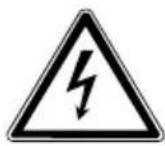
Warning: risk of electric shock.

Warning: risk of explosion.

This symbol gives you useful additional information on assembly or operation.
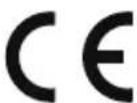
Declaration of conformity (see section “Declaration of conformity”): Products bearing this symbol meet all the regulations and standards applicable in the European Economic Area.
Proper use
This appliance is used for cooling drinks and food. This appliance is intended to be used in private households or for similar household applications, such as:
- in staff kitchens in shops, offices and other commercial areas;
-on agricultural estates;
—by customers in hotels, motels and other residential facilities;
-in bed & breakfast accommodation.
When used in commercial areas, the valid regulations must be observed.
Please note that we shall not be liable in cases of improper use:
- Do not modify the appliance without our consent and do not use any auxiliary equipment that we have not approved or supplied.
- Use only spare parts and accessories that we have supplied or approved.
- Heed all the information in these operating instructions, especially the safety information. Any other use is deemed improper and can cause personal injury or property damage.
- Do not use the appliance in extreme environmental conditions.
Safety information
WARNING!
Risk of injury for children or persons with limited physical, sensory or mental capabilities (for example partially disabled people or elderly people with limited physical and mental capabilities) or no knowledge and experience (for example, older children).
- Store the appliance and its accessories out of the reach of children.
- This appliance may be used by children over the age of 8 and by persons with reduced physical, sensory or mental abilities or by those without experience and/or knowledge, if they are supervised or have been instructed in the safe use of the appliance and have understood the dangers that result from it. Children must not be allowed to play with the appliance. Cleaning and user maintenance may not be carried out by children, unless they are aged 8 or over and are supervised.
- Children younger than 8 should be kept away from the appliance and the mains cable.
WARNING!
Risk of suffocation.
There is a risk of suffocation if plastic packaging or small parts are inhaled or swallowed.
- Do not store any of the packaging material used (bags, polystyrene, etc.) within the reach of children.
General safety instructions

WARNING!
Risk of injury due to damage to the cooling system.
- Do not place the appliance on its side or rear, otherwise oil may leak out of the compressor into the coolant circuit and could block it.
- If the cooling system is damaged, the room in which the appliance is situated must be thoroughly aired for several minutes (the room must be at least 2m3 ).
- Damage to the coolant circuit must be prevented.
- Contact between the coolant and the eyes or skin could lead to injuries. If affected, rinse out your eyes immediately and seek medical advice.
- There is a risk of fire! Do not operate any electrical devices inside the freezer compartment that are not approved by the manufacturer. Do not use any other mechanical equipment or other artificial methods to speed up the defrosting process except those recommended by the manufacturer. Keep open flames away from the appliance.
- Manipulations to the coolant circuit are not permitted and will invalidate the warranty.
- If the cooling system becomes damaged and no ignitable gas-air mixture can form, the room in which the appliance is located must be well ventilated for a few minutes (according to the EN 378 standard, the room must have a minimum size of 1m3 per 8 g of refrigerant. Your freezer contains 16 g of refrigerant).
Transport

CAUTION!
Risk of injury.
The appliance is very heavy. There is a risk of injury due to overstraining while lifting.
- Transport the appliance with at least one other person.
NOTICE!
Risk of damage.
Risk of damage to the appliance due to improper transport.
- The appliance should always be transported upright. If transported at an angle of more than 45irc , leave to stand for 2 hours before connecting to the mains and switching on so that the cooling circuit can settle down.
- Do not place the appliance on its side or rear as oil may leak out of the compressor into the coolant circuit and could block it.
- Do not expose the appliance to rain or splashes of water.
- Once the appliance has been set up at the desired location, leave it to stand for 2 hours before connecting to the mains and switching on so that the cooling circuit can settle down.
Setting up and electrical connection
Before connecting up the appliance
- Unpack the appliance and remove the adhesive tape. Remove any possible adhesive residue using a mild cleaning agent.
- Dispose of the protective polystyrene foam packaging separately.
-
Wipe down the inside of the appliance and the fitting elements using lukewarm water and a mild cleaning agent and allow to dry.
-
After setting up the appliance, ensure that it is not standing on the power cable.
- Do not operate the appliance if it has been visibly damaged or the mains cable or plug is defective.
Setting up the appliance
- Connect the appliance only to a properly installed safety socket that is easy to reach and close to the set-up location. The mains voltage should correspond to the technical data for the appliance. The safety socket must be freely accessible so that you can unplug the appliance from the mains quickly if necessary.
- Do not use an extension cable.
- Ensure the mains cable is out of harm's way and will not trip people up. Do not allow the mains cable to become trapped or squashed.
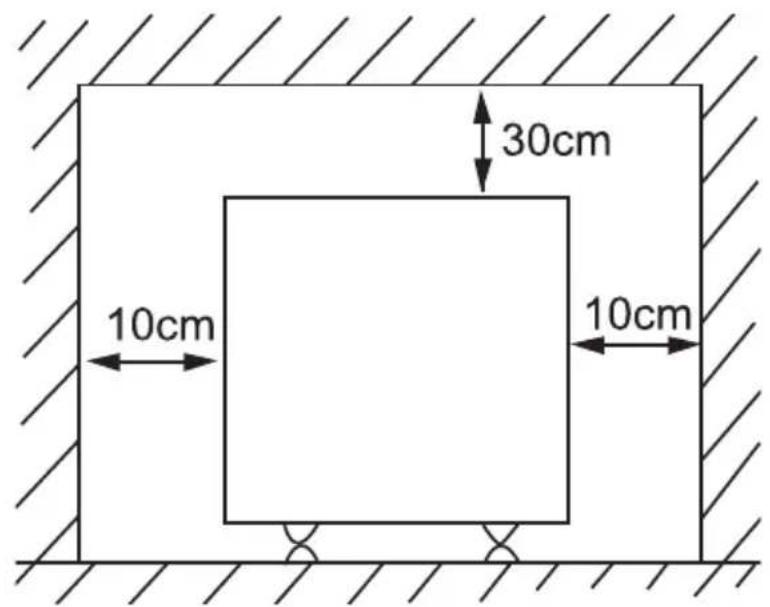
- To ensure adequate ventilation, maintain a minimum distance of 30 cm to the ceiling, 10 cm to the rear wall and 10 cm to the other walls, otherwise the internal electronics could be damaged (see Fig. B and C).
- Set up the appliance in a dry and ventilated room. Do not expose the appliance to direct sunlight because this can damage the surfaces of the appliance and increase energy consumption.
- Protect the appliance from moisture and splashes.
- Never immerse the appliance in water.
- Do not set up the appliance near to heat sources such as ovens, radiators, underfloor heating, etc.
- Set up the appliance on a stable, fl at surface.
-
The appliance should be level; compensate for any unevenness in the floor by appropriately unscrewing the two adjustable feet 6.
-
Do not place any other household appliances (such as a microwave, food processor, etc.) on top of the refrigerator.
- Do not use any electrical devices inside the appliance.
Handling the appliance

WARNING!
Risk of explosion!
Flammable gases and liquids could cause explosions if stored in the freezer compartment.
- Do not store any explosive substances or spray cans with flammable propellants in the appliance.
- Do not freeze any carbonated beverages. Expanding water could burst the containers.
- Only freeze high-proof alcoholic drinks if they are tightly sealed and stood upright.
- Do not store any glass or metal containers with liquids in the freezer compartment.
- Do not use defrosting sprays under any circumstances. This could cause the formation of explosive gases.

WARNING!
Risk of injury/risk to health!
Improper handling of the appliance could lead to injuries. Burns caused by low temperatures are possible.
- Do not touch the frozen inner walls of the freezer compartment or frozen food with your hands. Do not place ice cubes or ice lollies into your mouth that have just been taken out of the freezer compartment.
Cleaning and maintenance

DANGER!
Risk of electric shock.
There is a risk of electric shock due to live parts.
- Before starting any cleaning or maintenance work, always ensure that the mains plug has been disconnected from the safety socket (do not pull on the mains cable, but on the mains plug). If the plug is not accessible, the corresponding fuse for the mains electricity supply to the house needs to be switched off.

DANGER!
RISK OF EXPLOSION AND FIRE.
Explosions can occur due to the formation of gases.
- Do not use any flammable liquids to clean the appliance or any parts of the appliance.
- Do not use any defrosting sprays. They could cause the formation of explosive gases.
NOTICE!
Risk of damage.
Damage to the appliance caused by improper handling.
- Except for those recommended by the manufacturer, do not use any other mechanical equipment or other artificial methods e.g. electrical heater, hot air blower or hair dryer to speed up the defrosting process.
Sensitive surfaces:
- Do not use any sharp or abrasive cleansing agents on the inside of the appliance, the door of the appliance or the housing of the appliance because these items could damage the surfaces.
- Do not allow oil and grease to come into contact with the plastic parts and the door seal as the surface can become porous and brittle.
Faults

WARNING!

Risk of electric shock!
There is a risk of electric shock due to live parts.
- Never try to open and/or repair an appliance component yourself. There is a risk of electric shock.
- To prevent risks, damaged mains cables may only be replaced by our Service Centre or by a qualified specialist workshop.
- In the event of a fault, contact our Service Centre or another suitable specialist workshop.
Disposal

WARNING!
Risk of injury!
There is a risk of suffocation if the door slams shut.
- Remove the door before disposing of the appliance and leave the storage shelves in the appliance to prevent children climbing into it.
- Before disposal, cut off the mains cable.
Package contents
WARNING!
Risk of suffocation.
There is a risk of suffocation if plastic packaging or small parts are inhaled or swallowed.
- Do not store any of the packaging material used (bags, polystyrene, etc.) within the reach of children.
When unpacking, ensure that the following parts are included:
- Refrigerator
- Shelf
• Collection tray for any incidental condensation water - Operating instructions incl. warranty documents
Changing the door hinge
The refrigerator is supplied with a right-hinged door. If you want to change the opening direction, proceed as follows:
Tools required:
• No. 8 spanner (metric)
- Small flat-head screwdriver
- Disconnect the mains plug from the mains socket.
- Empty the refrigerator, including the shelf and all food, etc.

Place all parts safely to one side. They will all be needed to reinstall the door.
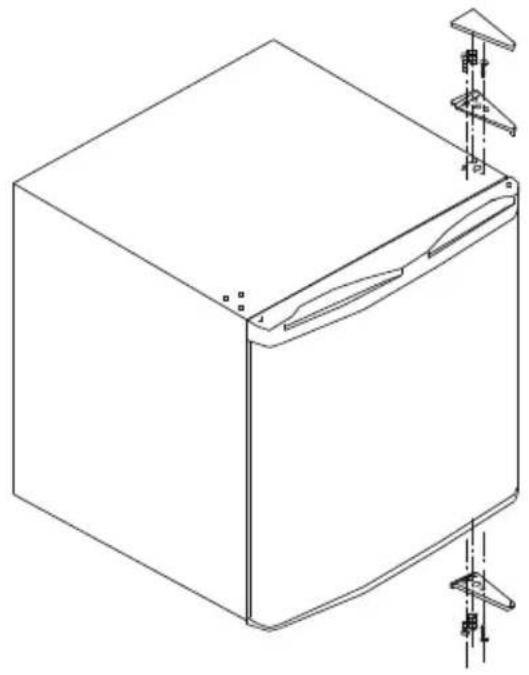
- Remove the cover for the top hinge on the right side, e.g. using a fl at-head screwdriver (see Fig. D), and remove the dummy plugs from the left side of the appliance.
- Remove the three screws on the top hinge 1 using the spanner.
- Remove the top hinge. Carefully lift off the door and place it on a padded surface to avoid any scratches.
- Tilt the appliance slightly backwards and remove the adjustable feet 6.
-
Remove the three screws on the bottom hinge 5 with a spanner and then remove the hinge.
-
Fit the bottom hinge on the left side of the appliance and mount the adjustable feet.
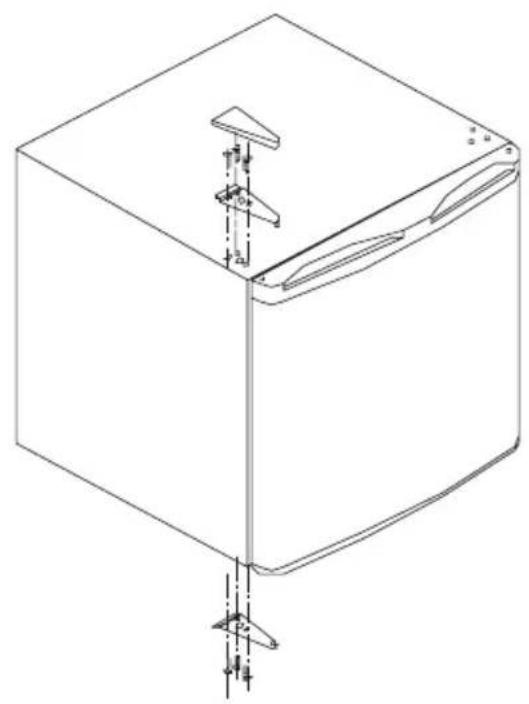
- Place the door onto the hinge using the bolts. Insert the hinge bolts for the top hinge into the holes on the top left of the door. Align the door horizontally. Now insert the three mounting screws for the top hinge into the drilled holes provided for this purpose on the left side of the appliance and tighten them (see Fig. E).
- Replace the cover onto the hinge and press down firmly. Insert the dummy plugs into the now empty holes on the right side of the appliance.

Please note: The door seal will adapt to the new door hinge after a few hours.
Using the refrigerator
- Remove the packaging materials and all protective fi lms.
- Clean all parts of the appliance thoroughly before switching it on for the first time (see section “Cleaning the appliance” on page 19).
- After cleaning, dry the appliance thoroughly before switching it on for the first time.
- Set up the appliance in a suitable location (see “Cleaning the appliance” on page 19).
- Connect the appliance only to a properly installed power socket. The mains voltage must correspond to the technical data for the appliance.
- Set the temperature control 2 to 5 and close the door.
About 2–3 hours after connection to the mains, the appliance has reached operating temperature and you can load the appliance.
Notes on using the refrigerator
The appliance works correctly in ambient temperatures from +10°C to +38°C.
- Place only food or drinks that are already cooled or at room temperature into the refrigerator. Do not place hot food or drinks into the refrigerator.
- Ensure adequate ventilation to prevent increased energy consumption and any possible damage to the internal electronics.
- Do not open the door too often and do not leave the door open for extended periods.
- Store foods only in suitable containers or the original packaging.
- The freezer compartment can be used to freeze fruit and produce ice cubes.
Setting the temperature
The temperature of the refrigerator compartment is controlled via the temperature control 2.
The cooling temperature can be set as follows:
0 The appliance is switched off
1 The lowest cooling level (the warmest)
2-4 Intermediate settings
5 The highest cooling level (the coldest)
The energy consumption and the temperature inside the fridge can increase at ambient temperatures outside the permissible range.

Do not load the refrigerator and the freezer compartment until the appliance has cooled down.
Before adding fresh food, bring the temperature of the refrigerator compartment down to the coldest level 5.
Defrosting the freezer compartment
WARNING!
Risk of injury.
Burns caused by low temperatures are possible.
- Do not touch the frozen inner walls of the freezer compartment or frozen food with your hands. Use an aid such as a dry cloth to handle the frozen food.
Coarse ice deposits on the surfaces of the freezer reduce the efficiency of the appliance and increase energy consumption. Therefore, defrost the appliance regularly as soon as the layer of ice is thicker than 3–4 mm.
- Before defrosting the appliance, set the temperature control to position 5 for a few hours beforehand. The frozen food can then be stored for a longer period of time at room temperature.
NOTICE!
Risk of damage
Damage to the appliance caused by improper handling.
- Do not use any other mechanical equipment or other artificial methods e.g. electrical heater, hot air blower or hair dryer or any sharp or hard objects to speed up the defrosting process. The thermal insulation and the interior of the appliance are sensitive to scratches and heat and could melt.
-
Do not operate any electrical devices inside the refrigerator. Both appliances could be irreparably damaged.
-
Remove the frozen food from the freezer compartment and wrap it in a few sheets of newspaper and maybe also a blanket and then store it in a cool location.
- Set the temperature control to position 0 and disconnect the mains plug.
- Clean the appliance, see section "Cleaning the appliance".
Switching off the appliance
- In order to switch off the power to the appliance completely, disconnect the mains plug 7 from the mains socket.
Cleaning the appliance

WARNING!
Risk of electric shock.
There is a risk of electric shock from electrified parts.
- Before starting any cleaning, pull the mains plug out of the socket (pull on the plug, not the cable). If the plug is not accessible, the corresponding fuse for the mains electricity supply to the house needs to be switched off.
NOTICE!
Risk of damage.
Equipment damage due to improper handling of the sensitive surfaces of the appliance.
- Sensitive surfaces: Do not allow oil and grease to come into contact with the plastic parts and the door seal as the surface can become porous and brittle.
-
Never use acidic, abrasive or granular, vinegar-, soda- or solvent-based cleaning agents. These may damage the surfaces of your appliance.
-
Empty the refrigerator.
- Set the temperature control to position 0 and disconnect the mains plug 7.
- Remove the shelf 8 from the refrigerator compartment.
- Wash out the refrigerator compartment with a mild detergent (such as washing-up liquid or a soda solution of 3 tablespoons of soda to one litre of water) and dry thoroughly.
- Clean all of the fittings carefully and dry them.
- Clean the appliance surfaces, except the door seal, with a mild cleaning agent. If necessary, the appliance surface can be treated with silicone wax.
- Clean the door seal with clean water; wipe it off and allow it to dry.
- Put the mains plug back into the socket.
- As soon as the appliance has reached its operating temperature, you can fill the appliance with food again.
Transport
- Unplug the appliance from the safety socket.
- Remove all items and the shelf 8 from the interior of the appliance.
- Screw in the adjustable feet 6.
- Tape the door in place using adhesive tape.
- The appliance should always be transported upright. If transported at an angle of more than 45irc , leave to stand for 2 hours before connecting to the mains and switching on so that the cooling circuit can settle down.
Troubleshooting
Faults may occur during operation. Please use the following table to check whether you can resolve the problem yourself. All other repairs are prohibited and will invalidate the warranty cover. In the event of a fault, contact our Service Centre or another suitable professional repair workshop.
| Malfunction Problem Remedy | ||
| The appliance is not working. | The electrical circuit has been interrupted. | - Check whether the mains plug is plugged in.- Check whether the connection cable has been damaged. |
| The temperature is not low enough. | The door will not shut tight, or is opened too often. | - Arrange the contents of the fridge so that nothing can prevent the door from closing.- Open the door only for a short period of time.- Check the door seal. |
| The temperature is not low enough. | The appliance has been set up in a location that is exposed to direct sunlight or next to a heat source. | - Set up the appliance in another location.- Set the appliance to a colder setting. |
| The appliance is operating too loudly or vibrating. | The feet on the appliance have not been properly adjusted. | - Adjust. |
| Temperature control does not work. | The temperature sensor is defective. | - Contact the customer service department. |
End of operation
If you do not intend to use the appliance for a long period of time, perform the following tasks:
- Remove the plug from the wall socket.
- Empty the appliance.
- Wipe out the cooling area and allow it to dry.
- Carefully wash all fittings.
- Leave the door open to avoid unpleasant odours and mould formation.
Disposal


Appliance
Old appliances should not be disposed of with the normal household rubbish.
In accordance with Directive 2012/19/EU, the appliance must be properly disposed of at the end of its service life.
This involves separating the materials in the appliance for the purpose of recycling and minimising the environmental impact.
Take old appliances to a collection point for electrical scrap or a recycling centre.
Contact your local waste disposal company or your local authority for more information on this subject.
- Before disposal cut off the cable.
Disposal of packaging
www.recyclenow.com

SLEEVE TR
AY FILM
CARD
widely
recycled
PLASTIC
check local
recycling
PLASTIC
not currently
recycled
Sort packaging before disposal. Dispose of card and cardboard with waste paper and dispose of plastic wrapping with recyclable materials.
Technical data
Power supply: 220–240 V \~ 50 Hz
Current: 0.6 A
Energy efficiency class: A+
Electrical protection class: I
Energy consumption: 107 kWh/year
0.29 kWh/24 hours
Storage capacity: 46 l
Refrigerator: 41 l
Freezer: 5 l
Climate class: SN/N/ST
Noise emissions: < 35 dB
Dimensions (W x H x D): 500 x 480 x 445 mm
Weight: approx. 13 kg
Propellant gas:
Cyclopentane (16 g)
Compressor:
D40CY1
Technical data subject to change!
Declaration of conformity
Medion AG hereby declares that the product MD 37115 conforms to the following European requirements:
• EMC Directive 2014/30/EU
• Low Voltage Directive 2014/35/EU
• Ecodesign Directive 2009/125/EC
• RoHS Directive 2011/65/EU
Full declarations of conformity are available at www.medion.com/conformity.
Legal notice
Copyright © 2016
Status: 2016-09-01
All rights reserved.
This operating manual is protected by copyright.
Mechanical, electronic and any other form of reproduction is prohibited without the written permission of the manufacturer
Copyright is owned by the company:
Medion AG
Am Zehnthof 77
45307 Essen
Germany

The operating manual can be reordered via the service hotline and is available for download via the service portal at www.medion.com/gb/service/start/.
You can also scan the QR code above and download the operating manual onto your mobile device via the service portal.

Spend a little Live a lot
Great care has gone into the manufacture of this product and it should therefore provide you with years of good service when used properly. In the event of product failure within its intended use over the course of the first 3 years after date of purchase, we will remedy the problem as quickly as possible once it has been brought to our attention. In the unlikely event of such an occurrence, or if you require any information about the product, please contact us via our helpline support services, details of which are to be found both in this manual and on the product itself.
PRODUCED IN CHINA FOR:
Standard rate free phone

www.medion.co.uk
MODEL:
MD 37115
02/2017
3
YEARS WARRANTY
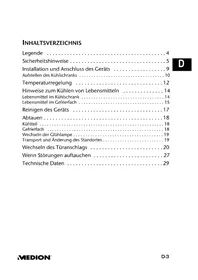
- Contents
- Overview .... 4
- Use....5
- Scope of delivery/device parts 6
- General information 7
- Proper use 8
- Safety information 9
- Package contents 16
- Changing the door hinge 16
- Using the refrigerator 17
- Defrosting the freezer compartment 18
- Cleaning the appliance ....19
- Transport 20
- Troubleshooting....21
- End of operation 22
- Disposal....22
- Technical data....23
- Declaration of conformity 23
- Legal notice 24
- Scope of delivery/device parts
- General information
- Please read these operating instructions and keep them in a safe place
- Explanation of symbols
- DANGER!
- WARNING!
- CAUTION!
- NOTICE!
- Proper use
- Safety information
- Risk of suffocation.
- General safety instructions
- Risk of injury due to damage to the cooling system.
- Transport
- Risk of injury.
- Risk of damage.
- Setting up and electrical connection
- Before connecting up the appliance
- Setting up the appliance
- Handling the appliance
- Risk of explosion!
- Risk of injury/risk to health!
- Cleaning and maintenance
- Risk of electric shock.
- RISK OF EXPLOSION AND FIRE.
- Faults
- Risk of electric shock!
- Disposal
- Risk of injury!
- Package contents
- Changing the door hinge
- Using the refrigerator
- Notes on using the refrigerator
- Setting the temperature
- Defrosting the freezer compartment
- Risk of damage
- Switching off the appliance
- Cleaning the appliance
- Troubleshooting
- End of operation
- Appliance
- Disposal of packaging
- Technical data
- Technical data subject to change!
- Declaration of conformity
- Legal notice
- PRODUCED IN CHINA FOR:
Brand : MEDION
Model : Ambiano MD37115
Category : Refrigerator