
HONCQ2T818EX - Refrigerator HOOVER - Free user manual and instructions
Find the device manual for free HONCQ2T818EX HOOVER in PDF.
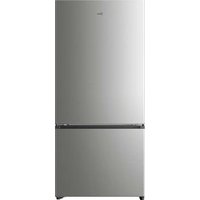


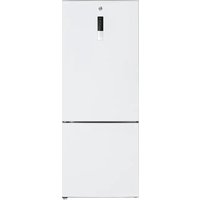
| Product type | Fridge-freezer |
| Brand | Hoover |
| Model | HONCQ2T818EX |
| Dimensions (H x W x D) | 1850 x 830 x 725 mm |
| Total volume | 640 L |
| Fridge volume | 456 L |
| Freezer volume | 184 L |
| Energy class | E |
| Annual consumption | 330 kWh/year |
| Freezing capacity | 10 kg/24h |
| Climate class | SN-N-ST-T (10°C to 43°C) |
| Frost-free technology | Yes |
| Interior lighting | LED |
| Refrigerant | R600a (isobutane) |
| Power supply | 220-240 V ~ 50 Hz |
| Input current | 2 A |
| Approximate weight | 80 kg |
| Special functions | Super Cool, Super Freeze, Holiday, Eco, Standby, Lock |
| Maintenance and cleaning | Regular manual cleaning, automatic defrost, do not use sharp objects |
| Safety | Child lock, door open alarm, mandatory grounding |
| Spare parts | Available 7 to 10 years after the last model |
| Repairability | Repair by professional only, LED lamp not replaceable by user |
Frequently Asked Questions - HONCQ2T818EX HOOVER
User questions about HONCQ2T818EX HOOVER
0 question about this device. Answer the ones you know or ask your own.
Ask a new question about this device
Download the instructions for your Refrigerator in PDF format for free! Find your manual HONCQ2T818EX - HOOVER and take your electronic device back in hand. On this page are published all the documents necessary for the use of your device. HONCQ2T818EX by HOOVER.
USER MANUAL HONCQ2T818EX HOOVER
Switch on/off the appliance 11
Lock/Unlock Panel 11
Adjust the Temperature 12
Super Cool Function 12
Super Freeze Function 12
Holiday Function 12
Eco Function 13
Standby Function 13
14 Equipment
16 Energy saving tips
17 Care and cleaning
19 Troubleshooting
23 Installation
27 Technical data
29 Customer service
Thank you for purchasing a Hoover Product.
Please read these instructions carefully before using this appliance. The instructions contain important information which will help you get the best out of the appliance and ensure safe and proper installation, use and maintenance.
Keep this manual in a convenient place so you can always refer to it for the safe and proper use of the appliance.
If you sell the appliance, give it away, or leave it behind when you move house, make sure you also pass this manual so that the new owner can become familiar with the appliance and safety warnings.
Accessories
Check the accessories and literature against this list:
Ice cube tray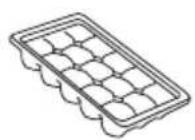
Egg tray × 2
Energy label, User manual, Warranty card

Stop blocking × 2
Middle hinge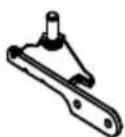
Upper hinge, Upper hinge bent hook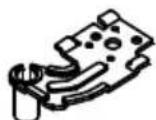
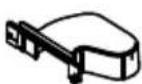
Lower hinge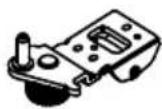
Upper trim cover
Middle front beam screw cap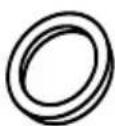
fixture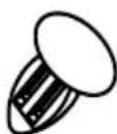

WARNING – Important Safety information

NOTICE - General information and tips

Environmental information
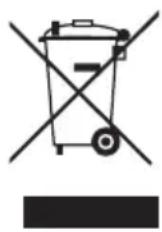
Disposal
Help protect the environment and human health. Put the packaging in applicable containers to recycle it. Help to recycle waste of electrical and electronic appliances. Do not dispose appliances marked with this symbol with the household waste. Return the product to your local recycling facility or contact your municipal office.
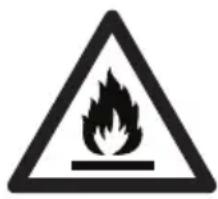
WARNING: Risk of fire/flammable material
The symbol indicates there is a risk of fire since flammable materials are used. Take care to avoid causing a fire by igniting flammable material.

WARNING!
Risk of injury or suffocation!
Refrigerants and gases must be disposed of professionally. Ensure that the tubing of the refrigerant circuit is not damaged before being properly disposed of. Disconnect the appliance from the mains supply. Cut off the mains cable and dispose of it. Remove the trays and drawers as well as the door catch and seals, to prevent children and pets from getting closed in the appliance.
Before switching on the appliance for the first time read the following safety hints!
WARNING!
Before first use
Make sure there is no transport damage. Remove all packaging and keep out of children's reach.
Wait at least two hours before installing the appliance to ensure the refrigerant circuit is fully efficient. Always handle the appliance with at least two people because it is heavy.
Installation
The appliance should be placed in a well-ventilated area. Ensure at least 10 cm of space above and around the appliance. Never place the appliance in a damp area or where it might be splashed with water. Clean and dry water splashes and stains with a soft, clean cloth. Do not install the appliance in direct sunlight or near heat sources (e.g., stoves, heaters). Install and level the appliance in an area suitable for its size and use. Keep ventilation openings in the appliance or in the built-in structure clear of obstruction. Make sure that the electrical information on the rating plate agrees with the power supply. If it does not, contact an electrician. The appliance operates on a 220-240 VAC/50 Hz power supply. Abnormal voltage fluctuations may cause the appliance to fail to start, damage the temperature control or compressor, or produce abnormal noise during operation. In such cases, an automatic voltage regulator should be installed.
Do not use multi-plug adapters or extension cables.
- Do not place multiple portable socket-outlets or portable power supplies at the rear of the appliance. Ensure that the power cable is not trapped by the refrigerator. Do not step on the power cable. Use a separate, easily accessible earthed socket for the power supply. The appliance must be earthed.
Only for UK: The appliance's power cable is fitted with a 3-core (grounding) plug that fits a standard 3-core (grounded) socket. Never cut off or remove the third pin (grounding). After installation, the plug should be accessible.
Do not damage the refrigerant circuit.
WARNING!
Daily use
This appliance can be used by children aged 8 years and above and persons with reduced physical, sensory, or mental capabilities or lack of experience and knowledge if they have been given supervision or instruction concerning use of the appliance in a safe way and understand the hazards involved.
Children aged 3 to 8 years are allowed to load and unload the appliance, but are not allowed to clean or install it.
Keep children under 3 years of age away from the appliance unless they are constantly supervised.
Children shall not play with the appliance.
If cool gas or other inflammable gas is leaking in the vicinity of the appliance, turn off the valve of the leaking gas, open the doors and windows, and do not unplug the power cable of the refrigerator or any other appliance.
Note that the appliance is designed to operate within an ambient temperature range of 10 to 43°C. The appliance may not work properly if it is left for a long period at a temperature above or below the indicated range.
- Do not place unstable articles (heavy objects, containers filled with water) on top of the refrigerator, to avoid personal injury caused by falling or electric shock caused by contact with water.
▶ Do not pull on the door shelves. The door may be pulled slant, the bottle rack may be pulled away, or the appliance may topple.
▶ Open and close the doors only with the handles. The gap between the doors and between the doors and the cabinet is very narrow. Do not extend your hands in these areas to avoid pinching your fingers. Open or close the refrigerator doors only when there are no children standing within the range of door movement.
- Do not store or use inflammable, explosive or corrosive materials in the appliance or in the vicinity.
- Do not store medicines, bacteria or chemical agents in the appliance. This appliance is a household appliance. It is not recommended to store materials that require strict temperatures.
▶ Never store liquids in bottles or cans (besides high percentage spirits) especially carbonated beverages in the freezer, as these will burst during freezing.
▶ Check the condition of food if a warming in the freezer has taken place.
▶ Do not set unnecessarily low temperature in the refrigerator compartment. Minus temperatures may occur at high settings. Attention: Bottles can burst.
▶ Do not touch frozen goods with wet hands (wear gloves). Especially do not eat ice lollies immediately after removal from the freezer compartment. There is the risk of freeze or the formation of frost blisters. First aid: keep immediately under running cold water. Do not pull away!
▶ Do not touch the inside surface of the freezer storage compartment when in operation, especially with wet hands, as your hands may freeze onto the surface.
WARNING!
Daily use
▶ Unplug the appliance in the event of a power interruption or before cleaning. Allow at least 7 minutes before restarting the appliance, as frequent starting may damage the compressor.
- Do not use electrical devices inside the food storage compartments of the appliance, unless they are of the type recommended by the manufacturer. Maintenance / cleaning
▶ Make sure children are supervised if they carry out cleaning and maintenance.
Disconnect the appliance from the electrical supply before undertaking any routine maintenance. Allow at least 5 minutes before restarting the appliance, as frequent starting may damage the compressor.
Hold the plug, not the cable, when unplugging the appliance.
Do not clean the appliance with hard brushes, wire brushes, detergent powder, petrol, amyl acetate, acetone and similar organic solutions, acid or alkaline solutions. Please clean with special refrigerator detergent to avoid damage.
Do not scrape off frost and ice with sharp objects. Do not use sprays, electric heaters like heater, hair dryer, steam cleaners or other sources of heat in order to avoid damage to the plastic parts.
Do not use mechanical devices or other means to accelerate the defrosting process, other than those recommended by the manufacturer.
If the supply cord is damaged, it must be replaced by the manufacturer, its service agent or similarly qualified persons in order to avoid a hazard.
Do not try to repair, disassemble or modify the appliance by yourself. In case of repair please contact our customer service.
Eliminate the dust on the back of the unit at least once in the year to avoid hazard by fire, as well as increased energy consumption.
Do not spray or flush the appliance during cleaning.
Do not use water spray or steam to clean the appliance.
Do not clean the cold glass shelves with hot water. Sudden temperature change may cause the glass to break.
Refrigerant gas information
The appliance contains the flammable refrigerant ISOBUTANE (R600a). Make sure the refrigerant circuit is not damaged during transportation or installation. Leaking refrigerant may cause eye injuries or ignite. If a damage has occurred, keep away open fire sources, thoroughly ventilate the room, do not plug or unplug the power cords of the appliance or any other appliance. Inform the customer service.
In case of eyes get into contact with the refrigerant, rinse immediately it under running water and call immediately the eye specialist.
Intended use
This appliance is intended for cooling and freezing food. It has been designed exclusively for use in household and similar applications such as staff kitchen areas in shops, offices and other working environments; farm houses and by clients in hotels, motels and other residential type environments as well as in bed-and-breakfast and catering business. It is not intended for commercial or industrial use.
Changes or modifications to the device are not allowed. Unintended use may cause hazards and loss of warranty claims.
Standards and directives

This product meets the requirements of all applicable EC directives with the corresponding harmonised standards, which provide for CE marking.

NOTICE
Due to technical changes and different models, some of the illustrations in this manual may differ from your model.
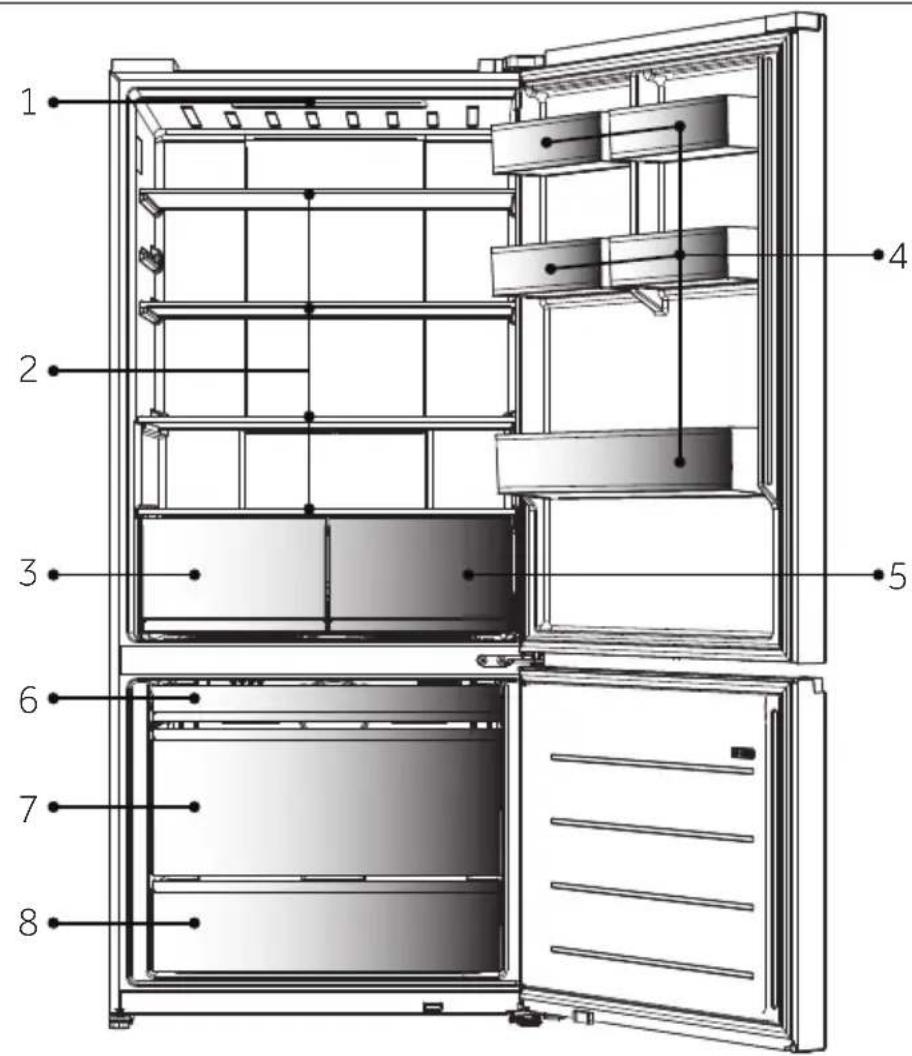
A: Refrigerator compartment
1 Refrigerator LED lamp 2 Glass shelves 3 Fresh area 4 Bottle holders 5 Fresh area
B: Freezer compartment
6 Sliding shelf 7 Freeze zone 8 Freeze zone
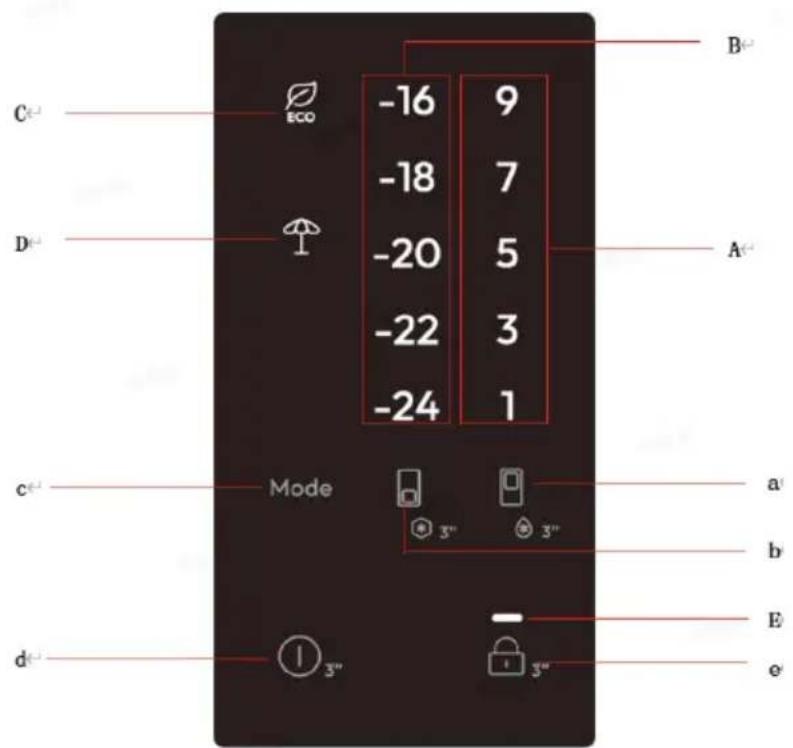
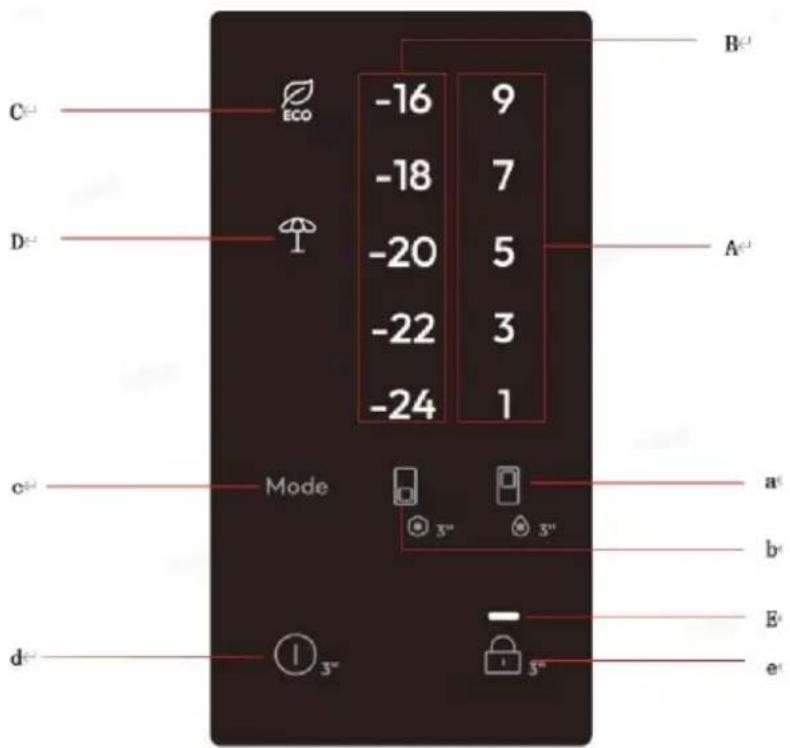
(A) Refrigerator Temperature icon (B) Freezer Temperature icon (C) ECO mode icon (D) Holiday mode icon (E) Lock function icon (a) Refrigerator temperature adjustment button (b) Freezer temperature adjustment button (c) Mode selection button (d) Standby function button (e) Lock function button
Before first use
Remove all packaging materials, keep them out of children's reach and dispose them in an environmentally friendly manner. - Clean the inside and outside of the appliance with water and a mild detergent before putting any food in it. ▶ After the appliance has been levelled and cleaned, wait for at least 2 hours before connecting it to the power supply. See Section INSTALLATION. ▶ Precool the compartments at high settings before loading with food. The function Power- Freeze helps to cool down the compartments quickly. The refrigerator temperature and freezer temperature are automatically set to 5°C and -18°C respectively. These are the recommended settings. If desired, you can change these temperatures manually. Please see ADJUST THE TEMPERATURE.
Sensor keys
The buttons on the control panel are sensor keys, which already respond when lightly touched with the finger.
Switch the appliance on/off.
The appliance operates as soon as it is connected to the power supply. When the refrigerator is first powered on, the fridge and freezer temperatures are automatically set to 5°C and -18°C respectively. The panel lock may be active.

NOTICE
When the appliance is switched on after being disconnected from the main power supply, it may take up to 12 hours for the correct temperatures to be reached.
Empty the appliance before switching it off. To switch off the appliance, pull the power cord out of the power socket.
Lock/unlock panel
Automatic lock: When the refrigerator doors are closed and no key is pressed within 30 seconds, the display screen will automatically turn off and lock.
Manual lock: When the display screen is unlocked, press and hold the button “e” (Panel lock selector) for 3 seconds. The buzzer rings once, the indicator “E” (Panel lock) illuminates, and the display is locked.
Adjust the temperature
The indoor temperatures are influenced by the following factors: ambient temperature, frequency of door opening, amount of stored food, and installation of the appliance.
Short press [a] to adjust the refrigerator temperature setting.
The refrigerator temperature settings are available at 1°C, 3°C, 5°C, 7°C, and 9°C.
Short press [b] to adjust the freezer temperature setting.
The freezer temperature settings are available at -16°C, -18°C, -20°C, -22°C, and -24°C.

NOTICE
After setting the temperature, if there is no operation within 5 seconds, the system will automatically determine and save the set temperature.
Super Cool function
When unlocked, press and hold the Refrigerator Temperature Adjustment Button for 3 seconds. All Refrigerator Temperature Icons will illuminate, a buzzer will sound once, and the Super Cool function will activate. When unlocked, press the same button for 3 seconds. A buzzer will sound once, and the Super Cool function will deactivate. After 4 hours in Super Cool mode, the function will automatically turn off, and the temperature setting will return to its previous state. When the Super Cool function is enabled, the refrigerator temperature is set to 1°C and cannot be adjusted.
Super Freeze function
When unlocked, press and hold the Freezer Temperature Adjustment Button for 3 seconds. All Freezer Temperature Icons will illuminate, a buzzer will sound once, and the Super Freeze function will activate. When unlocked, press the same button for 3 seconds. A buzzer will sound once, and the Super Freeze function will deactivate. After 50 hours in Super Freeze mode, the function will automatically turn off, and the temperature setting will return to its previous state. When the Super Freeze function is enabled, the freezer temperature cannot be adjusted.
The Super Freeze function is designed to preserve the nutritional value of frozen food by freezing it in the shortest time. If large quantities of frozen food are to be frozen at one time, it is recommended to set the Super Freeze function. Meanwhile, the Super Freeze function should be set 24 hours in advance to allow the freezer to reach a relatively low temperature before putting food in. At this time, the freezing speed of the freezer is improved, food can be frozen quickly, the nutritional value of the food is effectively preserved, and storage becomes quite convenient.
Holiday function
After the control panel is activated, if the refrigerator is in ECO Mode and the panel is unlocked, briefly press the mode selection button. A buzzer will sound once,
the Holiday Mode icon will illuminate, and Holiday Mode will be activated.
After the control panel is activated, if the refrigerator is in Holiday Mode and the panel is unlocked, briefly press the mode selection button again. A buzzer will sound once, the Holiday Mode icon will turn off, and the refrigerator will exit Holiday
Mode and return to Daily mode.

NOTICE
- When Holiday Mode is activated:
The refrigerator compartment temperature cannot be adjusted and will operate at 17°C. Its indicator will not be displayed.
- After exiting Holiday Mode:
The refrigerator compartment will revert to its previously set temperature.
The freezer compartment will maintain its originally set temperature without changes.
Eco function
When the display is on and unlocked in Daily Mode, briefly press the Mode button.
A beep will sound and the ECO Mode icon will illuminate, activating the mode.
From within ECO Mode, briefly press the same button again. A beep will sound,
the icon will turn off, and the refrigerator will switch to Holiday Mode.

NOTICE
Under Eco Mode:
The refrigerator compartment displays 5°C and the freezer compartment displays -18°C.
Temperature settings for both compartments cannot be adjusted.
Standby Function
To activate standby mode, when the panel is unlocked, press and hold the standby button for 3 seconds. The refrigerator will deactivate all functions and displays except for the standby button itself.
To deactivate, press and hold the same button for 3 seconds to resume normal operation. This setting is retained after a power loss.
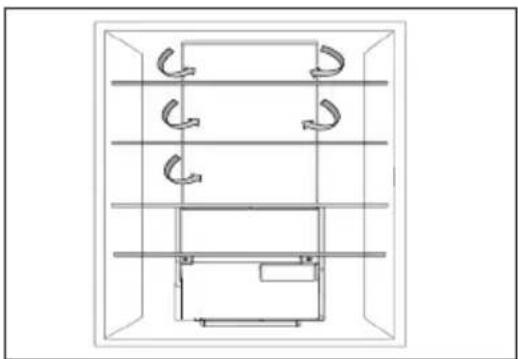
Multi-air-flow
- The refrigerator is equipped with a multi-air-flow system, with cool air flows located on every shelf level. This helps maintain a uniform temperature to ensure your food is kept fresher for longer.
Adjustable shelves
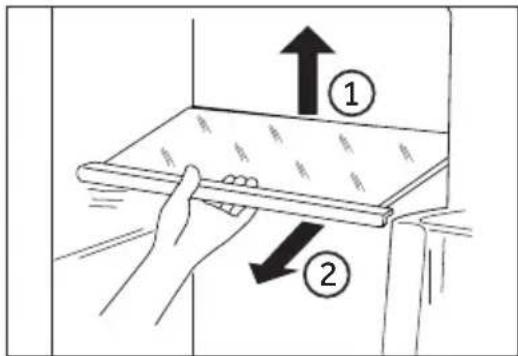
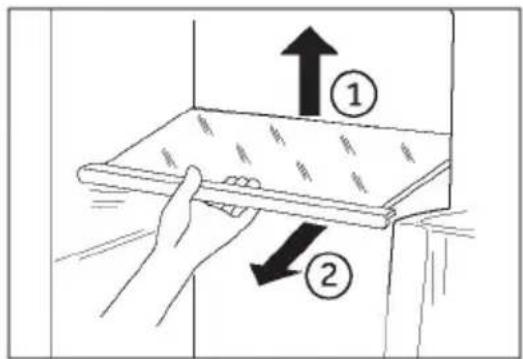
- The height of the shelves can be adjusted to fit your storage needs.
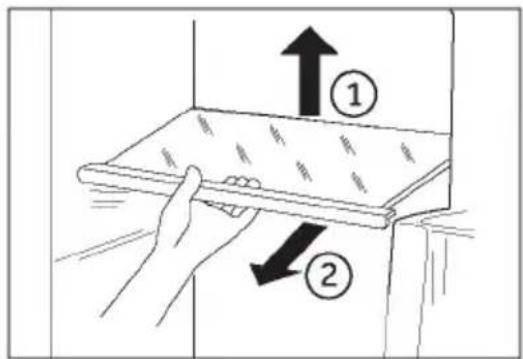
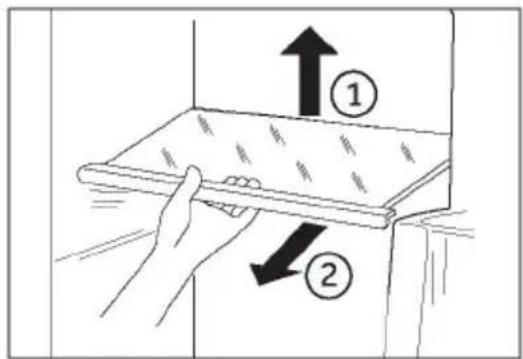
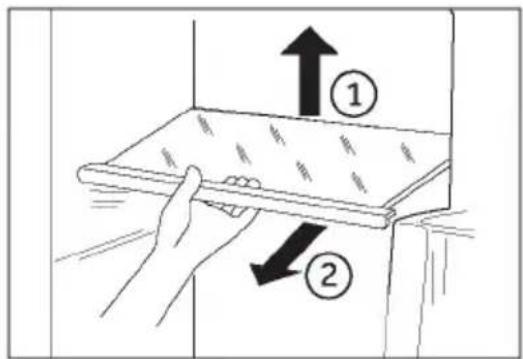
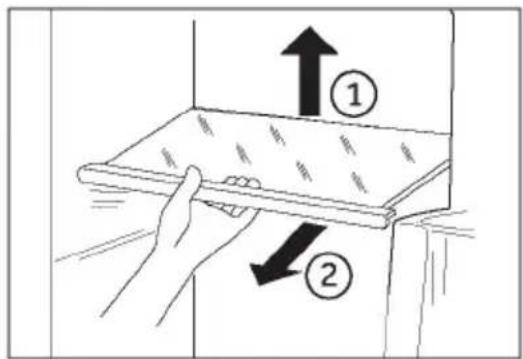
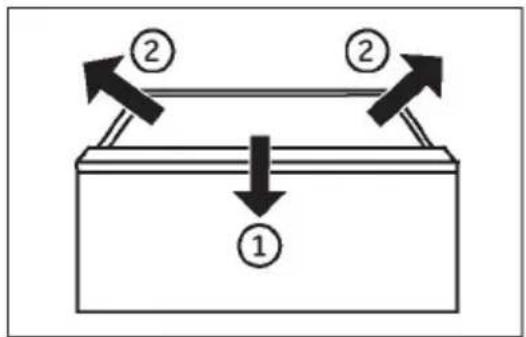
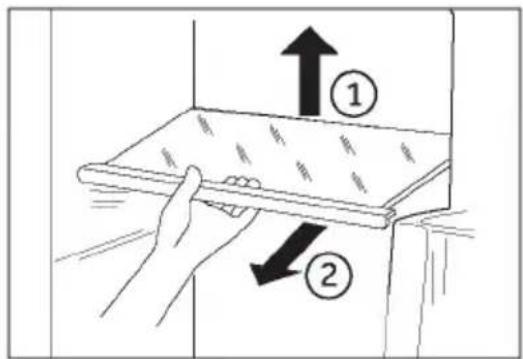
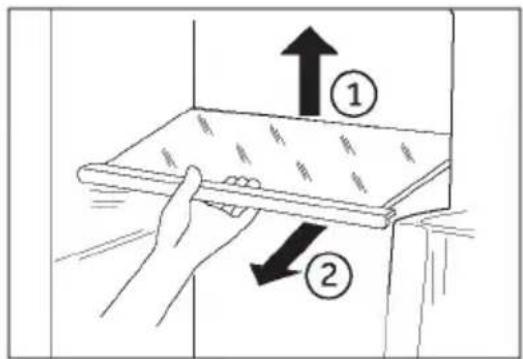
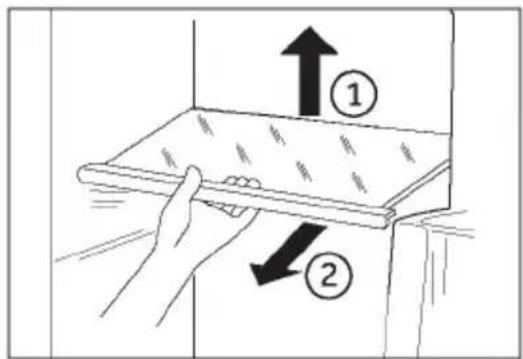
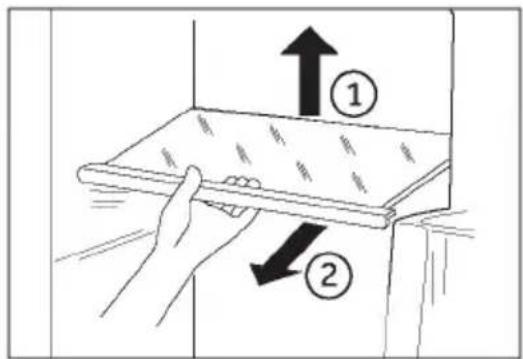
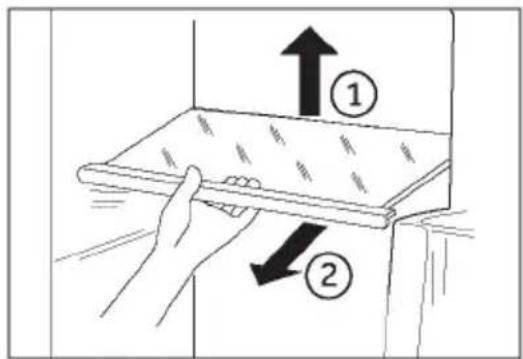
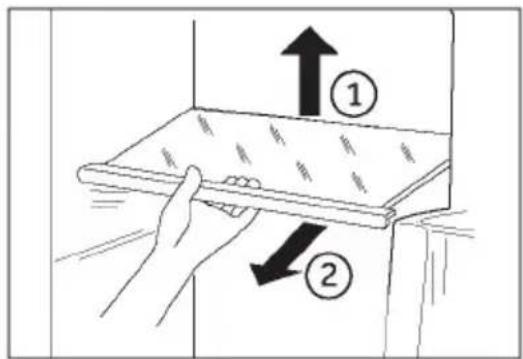
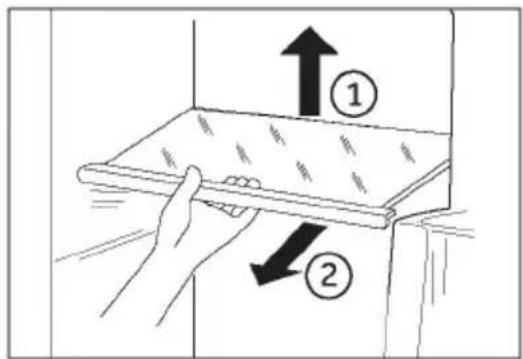
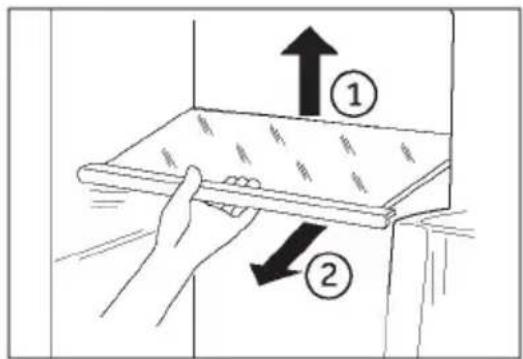
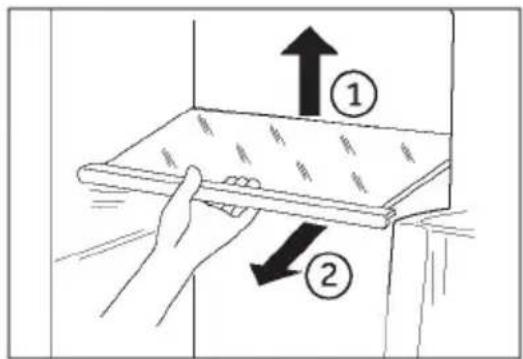
- To relocate a shelf, remove it first by lifting its hind edge ① and pulling it out ②.
- To reinstall it, put it on the lugs on both sides and push it to the most rearward position until the rear of the shelf is fixed inside the slots in the sides.
- The shelf 'Heat Resistant Area' has a maximum load capacity of 200 kg and the shelf remains undamaged (data sourced from internal laboratory).

NOTICE
Ensure that all ends of a shelf are level.
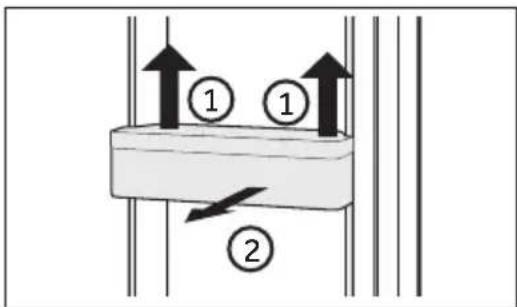
Removable door racks/bottle holder
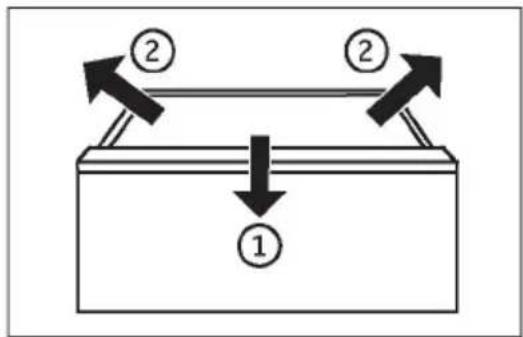
- The door racks can be removed for cleaning:
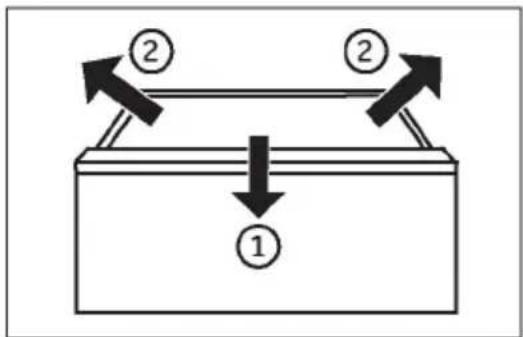
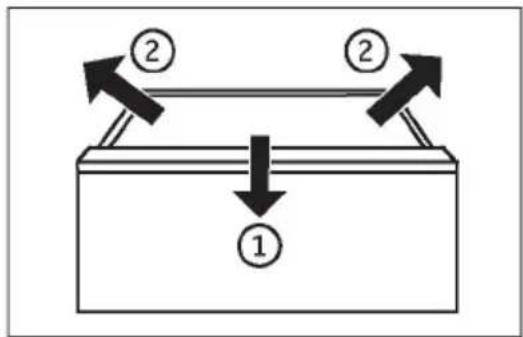
- Place hands on each side of the rack, lift it upwards ① and pull it out ②.
- To insert the door rack, carry out the above steps in reverse order.

NOTICE
When the appliance is switched on, it may take up to 12 hours for the correct temperatures to be reached.
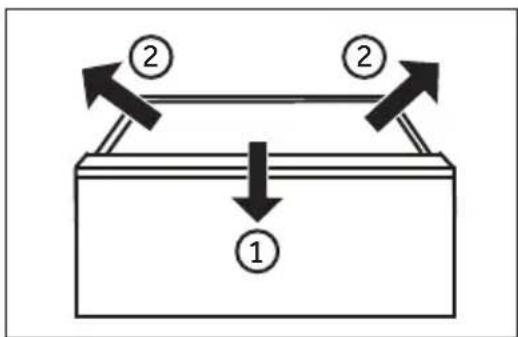
Removable drawer
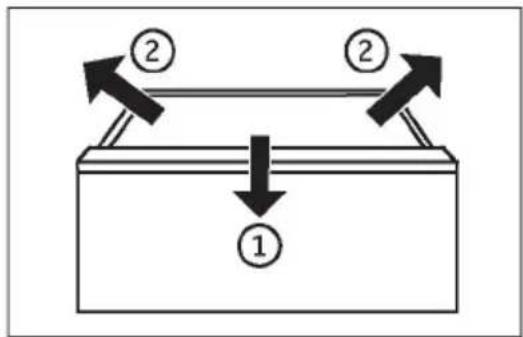
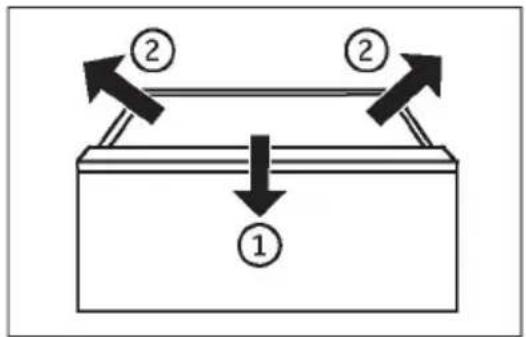
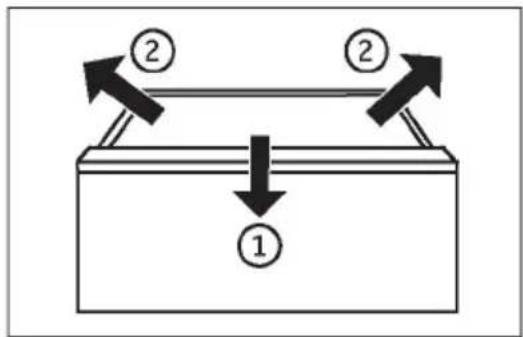
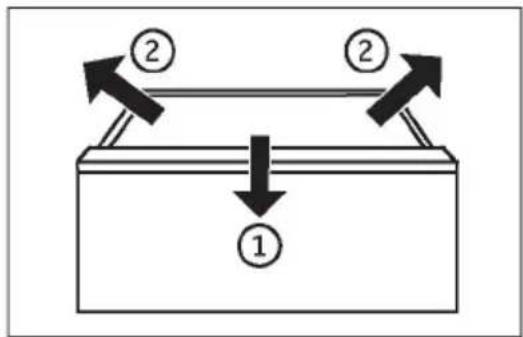
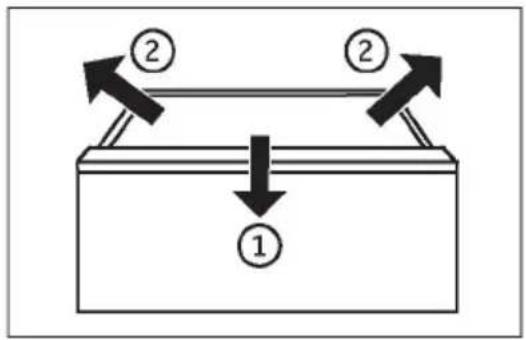
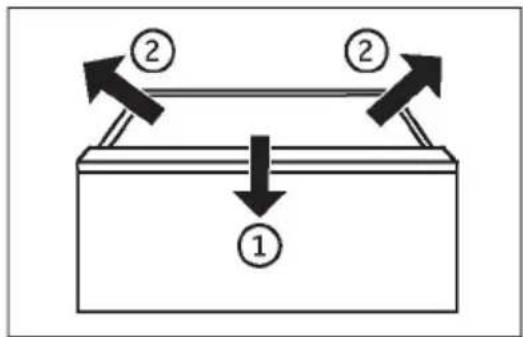
To remove the drawer, pull it out to the maximum extent ①, then lift and remove it ②.
To insert the drawer, carry out the above steps in reverse order.
Storing large items
Large items, such as frozen food, can be stored after:
removing both upper freezing trays as well as the middle freezer drawer, and storing the food directly on the shelf.
The Light
![graph TD A["①"] --> B["Processing Block"] C["②"] --> B B --> D["Output"] style A fill:#f9f,stroke:#333 style C fill:#f9f,stroke:#333](/content/2026/04/739052/images/af40674241277866c88333c0b42f9098fec0064382ffd3f11dde6db517ad82f6.jpg)
The LED interior light comes on when the door is opened. The performance of the lights is not affected by any of the appliance's other settings.
The Drawer
Please push or pull smoothly along the middle position of the drawer handle to avoid problems such as poor operation or detachment of the drawer.

Energy saving tips
Make sure the appliance is properly ventilated (see INSTALLATION).
Do not install the appliance in direct sunlight or near heat sources (e.g., stoves, heaters).
Avoid unnecessarily low temperature in the appliance. The energy consumption increases the lower the temperature is set.
Functions like POWER-FREEZE consume more energy.
Allow warm food to cool down before placing it in the appliance.
Open the appliance door as little and as briefly as possible.
Do not overfill the appliance to avoid obstructing the air flow.
Avoid air within the food packaging.
Keep door seals clean so that the door always closes correctly.
Defrost frozen food in the fridge storage compartment.
The most energy-saving configuration requires the appliance to keep drawers, food boxes, and shelves in factory-fresh condition, and food should be placed as far as possible without blocking the air outlet of the duct.
WARNING!
Disconnect the appliance from the power supply before cleaning.
Cleaning
- Clean the appliance when only little or no food is stored.
- The appliance should be cleaned every four weeks for good maintenance and to prevent bad stored food odors.
WARNING!
Do not clean the appliance with hard brushes, wire brushes, detergent powder, petrol, amyl acetate, acetone and similar organic solutions, acid or alkaline solutions. Please clean with special refrigerator detergent to avoid damage. Do not spray or flush the appliance during cleaning. Do not use water spray or steam to clean the appliance. Do not clean the cold glass shelves with hot water. Sudden temperature change may cause the glass to break. Do not touch the inside surface of the freezer storage compartment, especially with wet hands, as your hands may freeze onto the surface. In case of heating, check the condition of frozen goods.
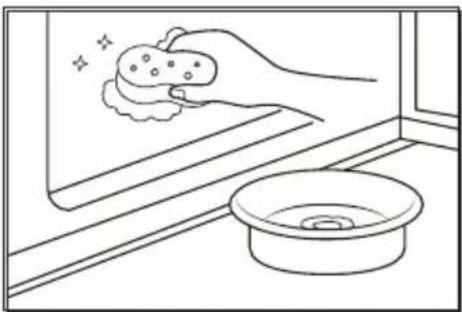
Always keep the door gasket clean.
Clean the inside and housing of the appliance with a sponge dampened in warm water and neutral detergent.
1. Please scrub the interior and exterior of the refrigerator, including door sealing, door rack, glass shelves, boxes and so on, with a soft towel or sponge dipped in warm water (you may add neutral detergent into the warm water).
2. If there is liquid spilled, remove all the contaminated parts, directly rinse with the flow water, dry and place it back into the fridge. 3. If there is spilled cream (such as the cream, melting ice cream), please remove all the contaminated parts, put into the warm water with about 40 °C for some time, then rinse with the flow water, dry and place it back into the fridge. 4. In case some small part or component gets stuck inside of the fridge (between shelves or drawers), use small soft brush to release it. If you could not reach the part, please contact Haier service. Rinse and dry with soft cloth. Do not clean any of the parts of the appliance in a dishwasher. Allow at least 5 minutes before restarting the appliance as frequent starting may damage the compressor.
Defrosting
The defrosting of the refrigerator and the freezer compartment are done automatically; no manual operation is needed.
Replacing the LED-lamps

WARNING!
Do not replace the LED lamp yourself, it must only be replaced by either the manufacturer or the authorised service agent.
Refrigerator compartment: 12 V max 5 W
Non-use for a longer period
If the appliance is not used for an extended period of time, and you will not use the Holiday-function for the refrigerator:
Take out the food.
Unplug the power cord.
Clean the appliance as described above.
Keep the doors open to prevent the creation of bad odours inside.

NOTICE
Turn the appliance off only if strictly necessary.
Moving the appliance
- Remove all food and unplug the appliance.
- Secure shelves and other moveable parts in the fridge and the freezer with adhesive tape.
- Do not tilt the refrigerator more than 45 degrees to avoid damaging the refrigerating system.

WARNING!
Do not lift the appliance by its handles. Never place the appliance horizontally on the ground.
Many occurring problems could be solved by yourself without specific expertise. In case of a problem please check all shown possibilities and follow below instructions before you contact an after sales service. See CUSTOMER SERVICE.
WARNING!
Before maintenance, deactivate the appliance and disconnect the mains plug from the mains socket. Electrical equipment should be serviced only by qualified electrical experts, because improper repairs can cause considerable consequential damages. A damaged supply should only be replaced by the manufacturer, its service agent or similarly qualified persons in order to avoid a hazard.
| Problem Possible Cause Possible Solution | |
| The compressor does not work. | Mains plug is not connected in the mains socket.The appliance is in the defrosting cycleConnect the mains plug.This is normal for an automatic defrosting |
| The appliance runs frequently or runs for a too long period of time. | The indoor or outdoor temperature is too high.The appliance has been off power for a period of time.A door of the appliance is not tightly closed.The door has been opened too frequently or for too long.The temperature setting for the freezer compartment is too low.The door gasket is dirty, worn, cracked or mis-matched.The required air circulation is not guaranteed.In this case, it is normal for the appliance to run longer.Normally, it takes 8 to 12 hours for the appliance to cool down completely.Close the door/drawer and ensure the appliance is located on a level ground and there is no food or container jarring the door.Do not open the door/drawer too frequently.Set the temperature higher until a satisfactory refrigerator temperature is obtained. It takes 24 hours for the refrigerator temperature to become stable.Clean the door/drawer gasket or replace them by the customer service.Ensure adequate ventilation. |
| The inside of the refrigerator is dirty and/or smells. | The inside of the refrigerator needs cleaning.Food of strong odour is stored in the refrigerator.Clean the inside of the refrigerator.Wrap the food thoroughly.. |
| It is not cold enough inside the appliance. | The temperature is set too high.Too warm goods has been stored.Too much food has been stored at one time.The goods are too close to each other.A door/drawer of the appli-ance is not tightly closed.The door/drawer has been opened too frequently or for too long. |
| It is too cold inside the appli-ance. | The temperature is set too low.The Super-Frz/Su-per-Coolfunction is activated or is running too long. |
| Moisture forma-tion on the inside of the refrigerator compartment. | The climate is too warm and toodamp.A door/drawer of the appli-ance is not tightly closed.The door/drawer has been opened too frequently or for too long.Food containers or liquids are left open. |
| Moisture accumulates on the refrigerators outside surface or between the doors/door and drawer. | The climate is too warm and too damp.The door is not closed tightly. The cold air in the appliance and the warm air outside it condensates. |
| Problem Possible Cause Possible Solution | ||
| Strong ice and frost in the freezer compartment. | ·The goods were not adequately packaged.A door/drawer of the appliance is not tightly closed.The door/drawer has been opened too frequently or for too long.The door/drawer gasket is dirty, worn, cracked or mismatched.Something on the inside prevents the door/drawer to close properly. | ·Always pack the goods well.Close the door/drawer.Do not open the door/drawer too frequently.Clean the door/drawer gasket or replace them by new ones.Reposition the shelves, door racks, or internal containers to allow the door/drawer to close. |
| The sides of the cabinet and door strip get warm. | ·This is normal. | |
| The appliance makes abnormal sounds. | ·The appliance is not located on level ground.The appliance touches some object around it. | ·Adjust the feet to level the appliance.Remove objects around the appliance. |
| A slight sound is to be heard similar to that of flowing water. | ·This is normal. | |
| You will hear an alarm beep. | ·The fridge storage compartment door is open. | ·Close the door. |
| You will hear a faint hum. | ·The anti-condensation system is working | ·This prevents condensation and is normal |
| The interior lighting or cooling system does not work. | ·Mains plug is not connected in the mains socket.The power supply is not intact.The LED-lamp is out of order. | ·Connect the mains plug.Check the electrical supply to the room. Call the local electricity company!Please call the service for changing the lamp. |
To contact the technical assistance, visit our website: https://corporate.haier-europe.com/en/
Under the section "website", choose the brand of your product and your country. You will be redirected to the specific website where you can find the telephone number and form to contact the technical assistance.
Power interruption
In the event of a power cut, food should remain safely cold for about 5 hours. Follow these tips during a prolonged power interruption, especially in summer:
▶ Open the door/drawer as few times as possible.
▶ Do not put additional food into the appliance during a power interruption. If prior notice of a power interruption is given and the interruption duration is longer than 5 hours, make some ice and put it in a container in the top of the refrigerator compartment. An inspection of the goods is required immediately after the interruption. As temperature in the refrigerator will rise during a power interruption or other failure, the storage period and edible quality of food will be reduced. Any food that defrosts should be either consumed, or cooked and refrozen (where suitable) soon afterwards in order to prevent health risks.
Memory function during power interruption
After restoration of power the appliance continues with the settings that were set before the power failure.
Unpacking

WARNING!
The appliance is heavy. Always handle with at least two persons. - Keep all packaging materials out of children's reach and dispose them in an environmentally friendly manner. ▶ Take the appliance out of the packaging. ▶ Remove all packaging materials.
Environmental conditions
The room temperature should always be between 10°C and 43°C, since it can influence the temperature inside the appliance and its energy consumption. Do not install the appliance near other heat-emitting appliances (ovens, refrigerators) without isolation.
Space recommendation
Recommended space when door is opened (Fig. 1.2.)
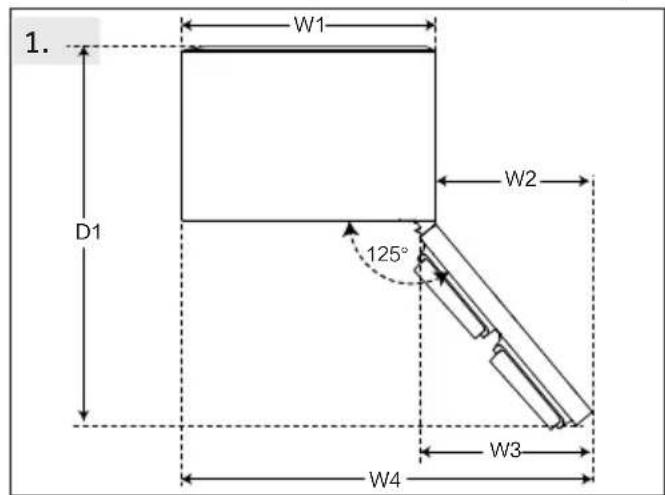
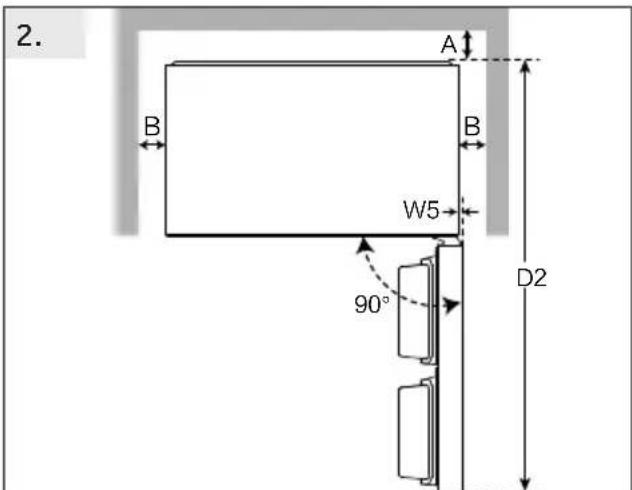
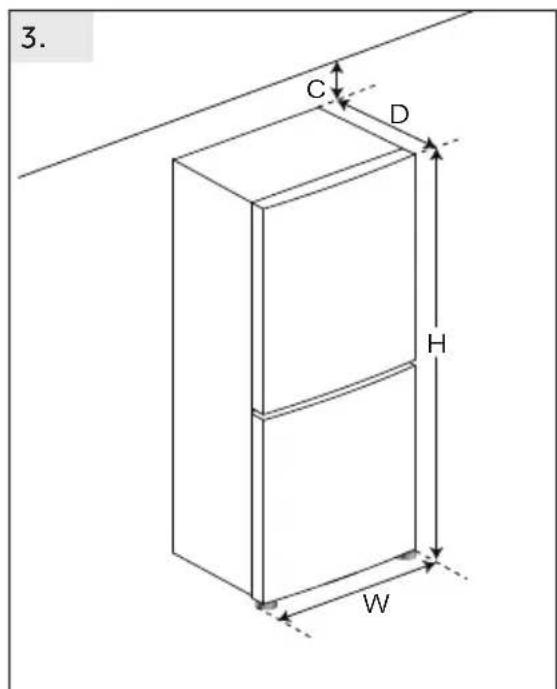
| (Unit : mm) | Model#1 | Model#2 | |
| Width | W1 | 830 | |
| W2 | 500 | ||
| W3 | 529 | ||
| W4 | 1330 | ||
| W5 | 21 | ||
| W | 830 | ||
| Depth | D1 | 1362 | |
| D2 | 1502 | ||
| D | 725 | ||
| Distance to back wall | A | 50 | |
| Distance to lateral walls | B | 50 | |
| Distance to ceiling | C | 50 | |
| Overall Height | H | 1850 | |
Ventilation cross-section
To achieve sufficient ventilation of the appliance for safety reasons, the information of the required ventilation cross sections must be observed.
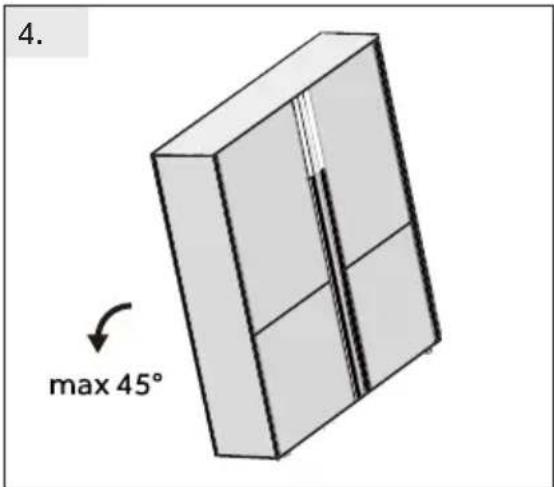
Aligning the appliance (Fig. 4.5.6.)
The appliance should be placed on a flat and solid surface.
- Tilt the refrigerator slightly backwards.
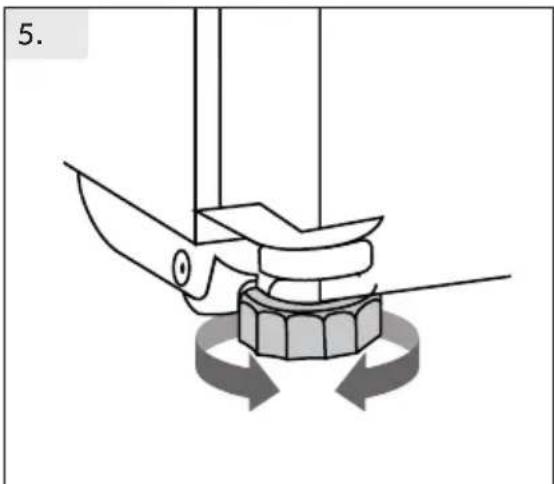
- Set the feet to the desired level.
Make sure the distance to the wall on the hinge side is at least 50 mm for the door to open properly.
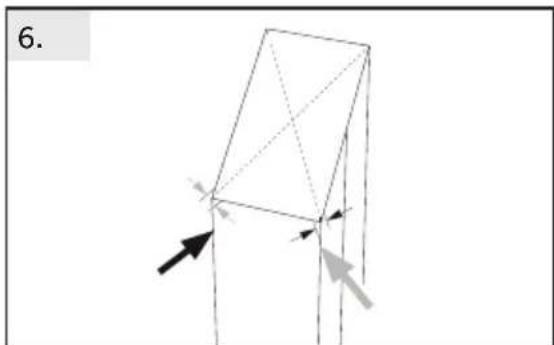
- The stability can be checked by alternately bumping on the diagonals. The slightly swaying should be the same in both directions. Otherwise the frame can warp; possible leaking door seals are the result. A low tendency to the rear facilitates the closing of the doors.

For a free standing appliance: this refrigerating appliance is not intended to be used as a built-in appliance
![graph TD A["Stage 1"] --> B["Stage 2"] B --> C["Stage 3"] C --> D["Stage 4"] D --> E["Stage 5"] style A fill:#f9f,stroke:#333 style B fill:#bbf,stroke:#333 style C fill:#bfb,stroke:#333 style D fill:#ffb,stroke:#333 style E fill:#fff,stroke:#333](/content/2026/04/739052/images/8829068ce19ea663518f6fc5ee5d8a50a9de96974c6e5d2e616931ddd8cb3294.jpg)
Fine tuning of the doors
If the doors are not in one level, this mismatch can be remedied by following:
I Using adjustable foot
Rotate the adjustable foot according to the direction of arrow to turn up or down the foot.
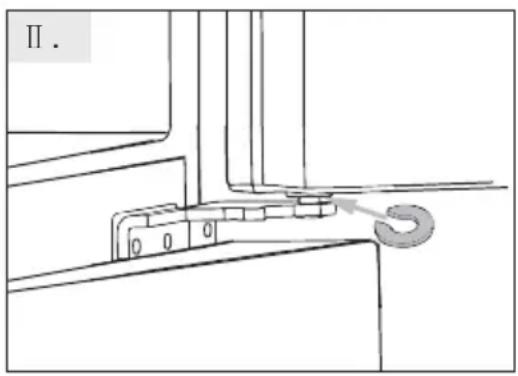
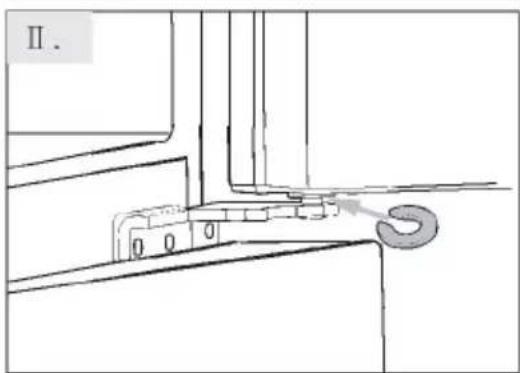
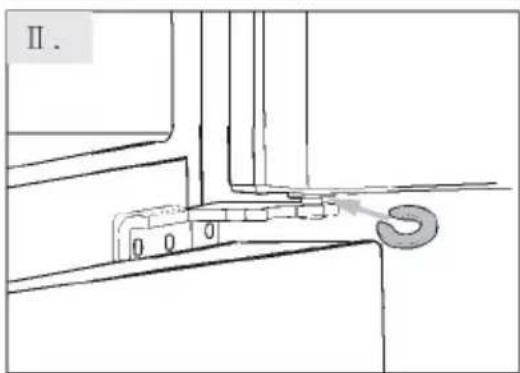
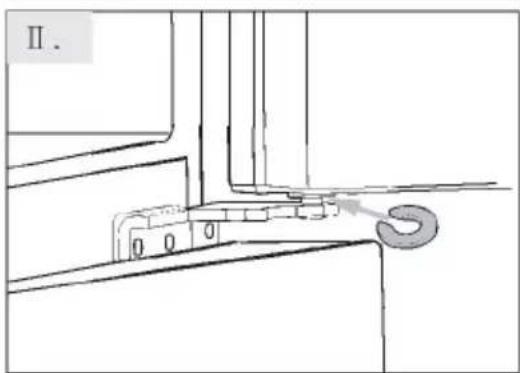
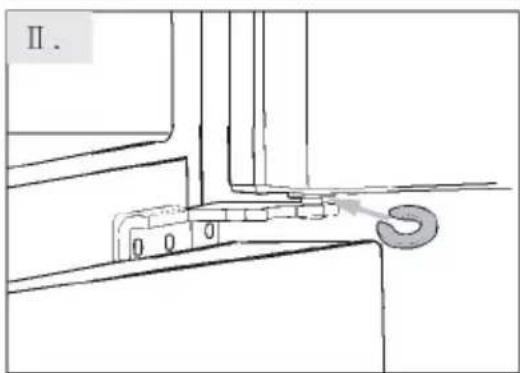
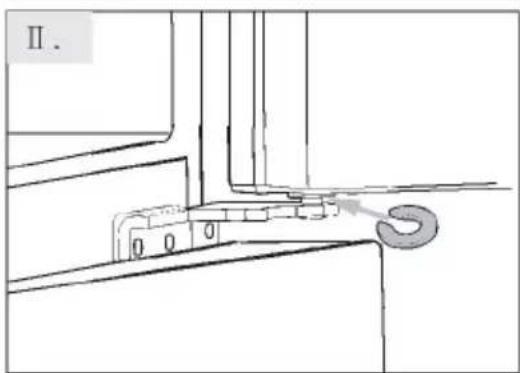
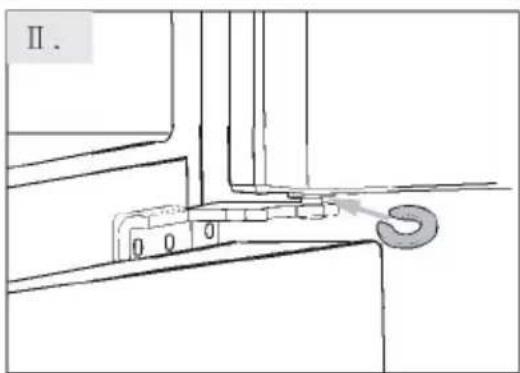
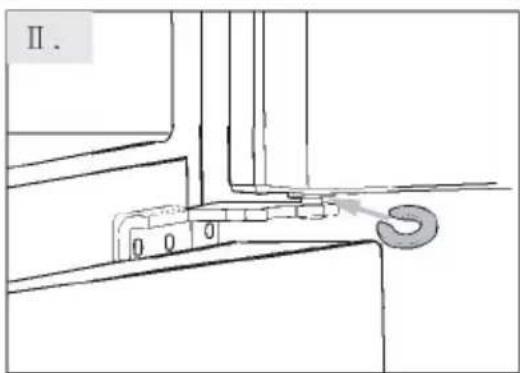
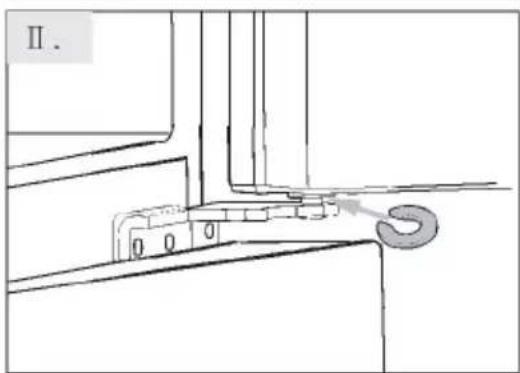
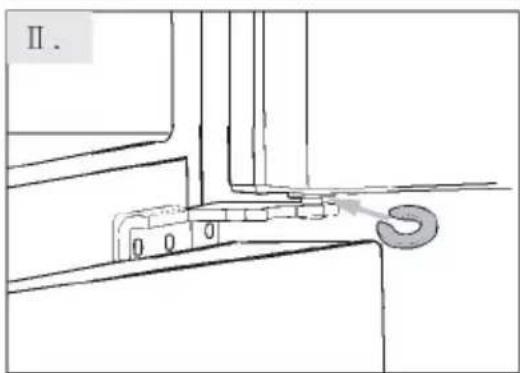
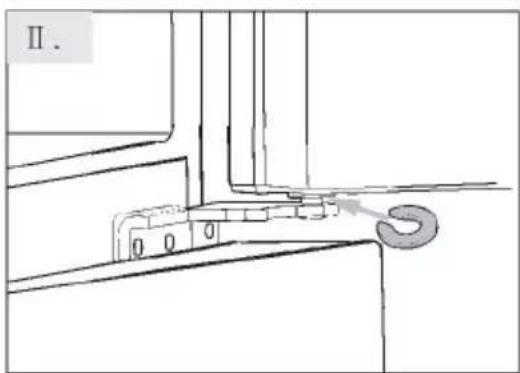
II Using spacers
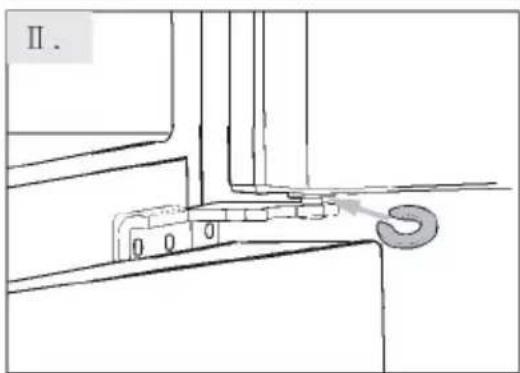
Open the upper door and lift it. Carefully clip the spacer (enclosed in the accessory bag) in the white plastic ring of the middle hinge by hand or using tools like pliers. Do not scratch or bruise the door.

NOTICE
In the future use of refrigerator, doors uneven phenomenon may occur to the weight of stored food. Then please adjust according to the above methods.
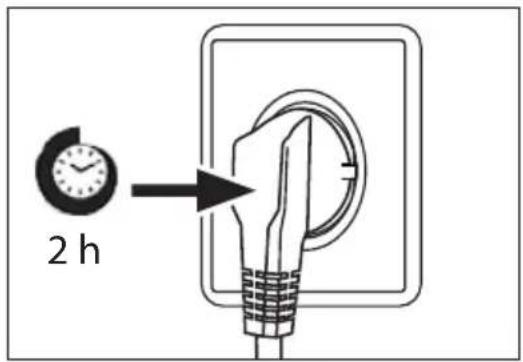
Waiting time
The maintenance-free lubrication oil is located in the capsule of the compressor. This oil can get through the closed pipe system during slanting transport. Before connecting the appliance to the power supply you have to wait at least 2 hours so that the oil runs back into the capsule.
Electrical connection
Before each connection check if:
▶ power supply, socket and fusing are appropriate to the rating plate.
▶the power socket is earthed and no multi-plug or extension. ▶the power plug and socket are strictly according.
Connect the plug to a properly installed household socket.
WARNING!
To avoid risks a damaged power cord must be replaced by the customer service (see warranty card).
Product fiche according to regulation EU No. 2019/2016
| Brand Hoover | |
| Model name / identifier | HONCQ2T818EX HONCQ2T818EW |
| Category of the model | Refrigerator-freezer |
| Energy efficiency class | E |
| Annual energy consumption(kWh/year)(1) 330 | |
| Total volume(L) 640 | |
| Volume refrigerator(L) 456 | |
| Volume freezer(L) 184 | |
| Star rating | */*** |
| Temperature of other compartments>14°C | Non applicable |
| Frost-free system | Yes |
| Freezing capacity(kg/24h) | 10 |
| Climate rating(2) | SN-N-ST-T |
| Noise emission class and airborne acoustical noise emissions(db(A) re 1pW) | C(37) |
| Temperature rise time (h) | 10 |
| Type of appliance | freestanding |
Explanations:
- Yes, featured
(1) Based on the results of the standards conformance test over 24 hours. The actual consumption depends on the use and the location of the appliance. (2) Climate rating SN: This appliance is intended for use in an ambient temperature of between +10°C and +32°C
Climate rating N: This appliance is intended for use in an ambient temperature of between +16°C and +32°C
Climate rating ST: This appliance is intended for use in an ambient temperature of between +16°C and +38°C
Climate rating T: This appliance is intended for use in an ambient temperature of between +16°C and +43°C.
Additional technical data
| Voltage / Frequency 220-240V ~/ 50Hz | |
| Input current (A) | 2 |
| Main fuse (A) | 8 |
| Coolant R600a | |
| Dimensions (H/W/D in mm) | 1850 / 830/725 |
We recommend our Haier Customer Service and the use of original spare parts.
If you have a problem with your appliance, please first check section TROUBLE-SHOOTING.
If you cannot find a solution there, please contact
▶ your local dealer or ▶ our European Call Service-Center (see listed phone numbers below) or ▶ the Service & Support area at www.haier.com where you can activate the service ▶ claim and also find FAQs.
To contact our Service, ensure that you have the following data available. The information can be found on the rating plate.
Model ____
Serial No. ____
Also check the Warranty Card supplied with the product in case of warranty.
| European Call Service-Center | ||
| Country* | Phone number Costs | |
| Haier Italy (IT) | 199 100 912 | |
| Haier Spain (ES) 902 509 123 | ||
| Haier Germany (DE) 0180 5 39 39 | 99 | • 14 Ct/Min Landline• max 42 Ct/Min Mobile |
| Haier Austria (AT) 0820 001 205 | • 14,53 Ct/Min Landline• max 20 Ct/Min all others | |
| Haier United Kingdom (UK) | 0333 003 8122 | |
| Haier France (FR) | 0980 406 409 | |
* For other countries please refer to www.haier.com
Haier Europe Trading S.r.l
Branch UK
Westgate House, Westgate, Ealing
London, W5 1YY
*Duration of the guarantee of the refrigerating appliance:
Minimum guarantee is: 2 years for EU Countries, 3 years for Turkey, 1 year for UK, 1 year for Russia, 3 years for Sweden, 2 years for Serbia, 5 years for Norway, 1 year for Morocco, 6 months for Algeria, Tunisia no legal warranty required.
*The period of spare parts for the repair of the appliance:
Thermostats, temperature sensors, printed circuit boards and light sources are available for a minimum period of seven years after placing the last unit of the model on the market.
Door handles, door hinges, trays and baskets for a minimum period of seven years and door gaskets for a minimum period of 10 year, after placing the last unit of the model on the market.
*For further information about the product, please consult https://eprel.ec.europe.eu/ or scan the QR on the energy label supplied with the appliance.
CERTIFICATE OF QUALITY
DESIGNATION: REFRIGERATOR
Q.C.PASSED
CHECKER No.
QC01

Equipment

NOTE
Refrigerator-freezer
HONCQ2T818EX HONCQ2T818EW
A: Refrigerator compartment

WARNING
Light
Westgate House, Westgate, Ealing
London, W5 1YY
Multi-airflow

NOTE
The light
A: Refrigerator compartment
Multi-airflow

NOTICE
The light
Adjusting the doors
Westgate House, Westgate, Ealing
London, W5 1YY

AVISO
Flux multi-air

REMARQUE
La lumière
Westgate House, Westgate, Ealing
Londres, W5 1YY

MEGJEGYZÉS
A világítás


AVVISO
Westgate House, Westgate, Ealing
London, W5 1YY
A: Koelkastgedeelte

LET OP
De verlichting
Westgate House, Westgate, Ealing
DESIGNATION: REFRIGERATOR
QUALITY CONTROL
PASSED INSPECTOR No.
QC01
Instruction manual

WARNING

Light
Adjusting the door
Westgate House, Westgate, Ealing
London, W5 1YY
A: Refrigerator
1 LED lamp for the refrigerator 2 Glass shelves 3 Fresh zone 4 Bottle holders 5 Fresh zone

WARNING
The light
Replacing the LED lamps

WARNING!
WARNING: Risk of fire/flammable material
A: Refrigerator compartment
B: Freezer compartment
6 Sliding shelf 7 Freeze zone 8 Freeze zone
Multiple air flow

NOTE
Light
Westgate House, Westgate, Ealing
London, W5 1YY
Refrigerator-freezer
HONCQ2T818EX
HONCQ2T818EW
A: Refrigerating compartment

NOTICE
Lighting
Cooling compartment: 12 V max 2 W
| (jednotka: mm) | Model č. 1 | Model č. 2 | |
| Širka | W1 | 830 | |
| W2 | 500 | ||
| W3 | 529 | ||
| W4 | 1330 | ||
| W5 | 21 | ||
| W | 830 | ||
| Híbka | D1 | 1362 | |
| D2 | 1502 | ||
| D | 725 | ||
| Vzdialenost od zadnej steny | A 50 | ||
| Vzdialenost od bočných stien | B 50 | ||
| Vzdialenost od stropu | C | 50 | |
| Celková výška | H | 1850 | |
Westgate House, Westgate, Ealing
London, W5 1YY
Multiple air flow

DESCRIPTION
Light
- EQUIPMENT
- ENERGY SAVING TIPS
- CARE AND CLEANING
- TROUBLESHOOTING
- INSTALLATION
- TECHNICAL DATA
- CUSTOMER SERVICE
- THANK YOU FOR PURCHASING A HOOVER PRODUCT
- ACCESSORIES
- WARNING – IMPORTANT SAFETY INFORMATION
- NOTICE - GENERAL INFORMATION AND TIPS
- ENVIRONMENTAL INFORMATION
- DISPOSAL
- WARNING: RISK OF FIRE/FLAMMABLE MATERIAL
- WARNING
- BEFORE SWITCHING ON THE APPLIANCE FOR THE FIRST TIME READ THE FOLLOWING SAFETY HINTS
- BEFORE FIRST USE
- DAILY USE
- REFRIGERANT GAS INFORMATION
- INTENDED USE
- STANDARDS AND DIRECTIVES
- NOTICE
- SENSOR KEYS
- SWITCH THE APPLIANCE ON/OFF
- LOCK/UNLOCK PANEL
- ADJUST THE TEMPERATURE
- SUPER COOL FUNCTION
- SUPER FREEZE FUNCTION
- HOLIDAY FUNCTION
- ECO FUNCTION
- STANDBY FUNCTION
- MULTI-AIR-FLOW
- ADJUSTABLE SHELVES
- REMOVABLE DOOR RACKS/BOTTLE HOLDER
- REMOVABLE DRAWER
- STORING LARGE ITEMS
- THE LIGHT
- THE DRAWER
- CLEANING
- DEFROSTING
- REPLACING THE LED-LAMPS
- NON-USE FOR A LONGER PERIOD
- MOVING THE APPLIANCE
- POWER INTERRUPTION
- MEMORY FUNCTION DURING POWER INTERRUPTION
- UNPACKING
- ENVIRONMENTAL CONDITIONS
- SPACE RECOMMENDATION
- VENTILATION CROSS-SECTION
- ALIGNING THE APPLIANCE (FIG. 4.5.6.)
- FINE TUNING OF THE DOORS
- I USING ADJUSTABLE FOOT
- II USING SPACERS
- WAITING TIME
- ELECTRICAL CONNECTION
- EXPLANATIONS
- YES, FEATURED
- CERTIFICATE OF QUALITY
- NOTE
- LIGHT
- MULTI-AIRFLOW
- ADJUSTING THE DOORS
- AVISO
- FLUX MULTI-AIR
- REMARQUE
- LA LUMIÈRE
- MEGJEGYZÉS
- A VILÁGÍTÁS
- AVVISO
- LET OP
- DE VERLICHTING
- INSTRUCTION MANUAL
- ADJUSTING THE DOOR
- REPLACING THE LED LAMPS
- MULTIPLE AIR FLOW
- LIGHTING
- DESCRIPTION
Brand : HOOVER
Model : HONCQ2T818EX
Category : Refrigerator