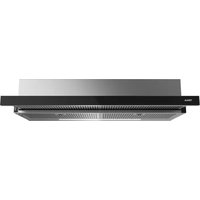
CNL 9415 PLUS - Basket TEKA - Free user manual and instructions
Find the device manual for free CNL 9415 PLUS TEKA in PDF.


User questions about CNL 9415 PLUS TEKA
0 question about this device. Answer the ones you know or ask your own.
Ask a new question about this device
Download the instructions for your Basket in PDF format for free! Find your manual CNL 9415 PLUS - TEKA and take your electronic device back in hand. On this page are published all the documents necessary for the use of your device. CNL 9415 PLUS by TEKA.
USER MANUAL CNL 9415 PLUS TEKA
natural_image
Modern kitchen interior with glossy black cabinets and built-in ovens, featuring a 'TEKA' logo in the top-right corner (no other text or symbols)User Manual
CNL 6415 PLUS/ CNL 6815 PLUS/ CNL 9815 PLUS/ CNL 9415 PLUS
DE ES EN FR PT
EL UK RU PL BG
RO AR
DEUTSCH

Before using your device for the first time, please carefully read the installation and maintenance instructions that come with it.
FRANÇAIS

2
3
natural_image
Technical line drawing of a mechanical assembly with two parallel plates and directional arrows indicating motion (no text or symbols)4
CNL 6415 PLUS/ CNL 9415 PLUS
CNL 6815 PLUS/ CNL 9815 PLUS
5
Inox models
Black and White models
6
7
natural_image
Line drawing of a multi-tiered kitchen or oven structure with a downward arrow indicating compression (no text or symbols)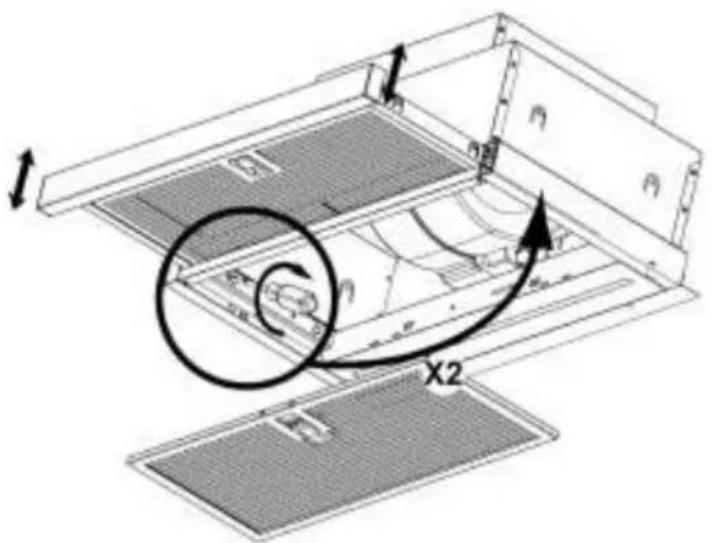
Sicherheitshinweise
Carefully read the instructions before installing and using the equipment. The manufacturer is not liable for improper installation and use of the equipment that may cause injuries and damage. Always keep the instructions at hand, so they can be easily referred to during use.
Children and Vulnerable people safety
- This appliance can be used by children aged from 8 years and above and persons with reduced physical, sensory or mental capabilities or lack of experience and knowledge if they are supervised by an adult or a person who is responsible for their safety.
- Children should be supervised to ensure that they do not play with the appliance.
- Cleaning and user maintenance shall not be made by children without supervision.
General Safety
- There shall be adequate ventilation of the room when the range hood is used at the same time as appliances burning gas or other fuels (not applicable to appliances that only discharge the air back into the room).
- Do not flambé under the range hood.
- CAUTION: Accessible parts may become hot when used with cooking appliances.
Installation
- The installation instructions are defined on the images at the beginning of this user manual.
- First, remove the protective foil from the back of the appliance and, following installation, remove the foil completely.
- The electrical installation is to be set up so that the appliance can be isolated from the mains with a minimum 3mm all-pole contact separation. Suitable separation devices include e.g.
cutouts, RCD's and contactors. This installation must comply with current regulations.
- If the electrical connection is done through a plug and this remains accessible after installation, then it is not necessary to provide the mentioned separation device.
- The air must not be discharged into a flue that is used for exhausting fumes from appliances burning gas or other fuels (not applicable to appliances that only discharge the air back into the room).
- The lower part of the extractor must be located at a minimum height of 50 cm above the hob for electric cookers and 65 cm for gas cookers. If the instructions of a gas cooker indicate a greater distance these must be observed.
- Before installing the extractor consult the local rules and regulations in force with respect to the discharge of air and fumes.
- When the extractor is working at the same time as other non-electrical cooking equipment, the outlet air pressure must not exceed 4 Pa ( 4 × 10^-5 bar).
- Before connecting the extractor to the mains, check that both the voltage and the frequency conform to that shown on the characteristics label located inside the extractor.
- To achieve optimum performance the length of the outlet hose should not exceed 4 meters or include more than two 90^ angles (elbows).
- Although venting to the outside is recommended, activated carbon filter may be used to allow the gas to be returned to the kitchen through the outlet pipe.
Cleaning
- There is a fire risk if cleaning is not carried out in accordance with the instructions.
- Do not allow grease to accumulate in any part of the extractor, especially in the grease filters as this COULD PRODUCE A FIRE RISK!
- The grease filters and the internal part of the extractor must be cleaned at least once a month depending on how often the extractor is used. Note that grease is deposited in the extractor when cooking, whether it is switched on or not.
- We recommend the use of gloves and caution when cleaning the inside of the extractor.
Repairs
- If the supply cord is damaged, it must be replaced by the manufacturer, its service agent or similarly qualified persons in order to avoid a hazard.
- Do not switch on the extractor if the supply cord is worn or has cuts or if there are signs of deterioration around the control panel.
- If the LED module is malfunctioning, it must be replaced by the manufacturer, its service agent or similarly qualified persons in order to avoid a hazard.
- If the extractor stops working or functions abnormally, unplug it from the mains and contact the technical service.
- Please contact the nearest Qualified Technical Assistance Service for any repairs always using original spare parts. Repairs and modifications carried out by others could damage the extractor or cause it to malfunction and cause safety risks.
Description of the appliance (Fig. 1-6)
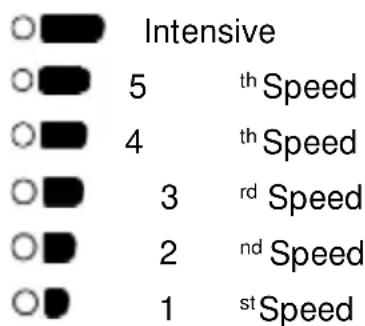
A Motor push control that allow 6 speeds to be selected
B Lamp push control

C Lighting by means of lamps
D Filters located over cooking area, easily withdrawn for cleaning
E Extractable group that allows a greater gas capture area
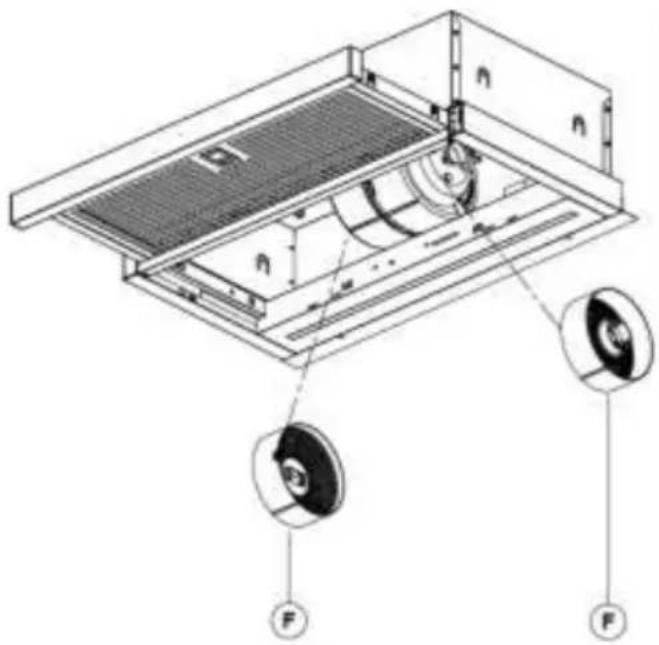
F Possibility of incorporating activated charcoal filter (Fig. 2)
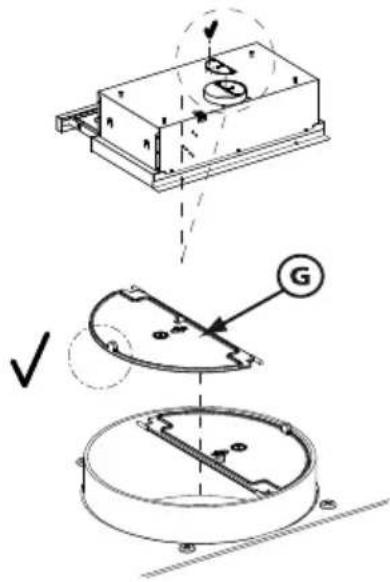
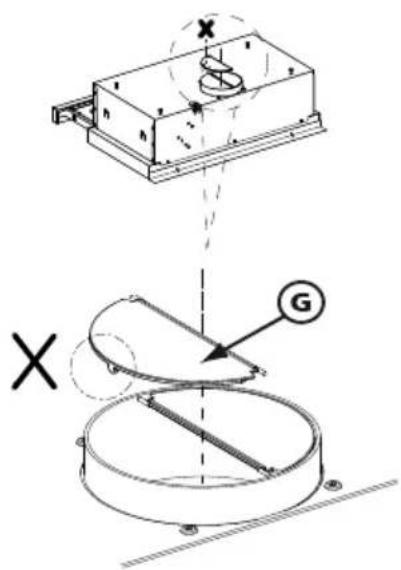
G Anti return tabs to be located in the outlet mouth, locating their ends in the holes provided (Fig.6).
Instructions for use
To achieve better extraction, we recommend switching on the extractor a few minutes before starting to cook (3 - 5 minutes) so that the air flow is continuous and stable when extracting the fumes.
Likewise, keep the extractor switched on for a few minutes when cooking is complete to allow all fumes and odours to be expelled.
Operating settings
- When the tray is opened, the hood starts operating at the last speed, depending on how it was used the last time.
- To increase speed gradually, press the “A” key as many times as necessary, until maximum speed is set.
- The sixth speed is timed, so the cooker hood will automatically reduce speed after seven minutes.
- To reduce the speed gradually, press the "V" key as many times as needed.
- To turn off the cooker hood directly at any speed, keep the "V" key pressed for 3 seconds.
Programming stop delay timer
1. Programming Timer
a. Open Tray with motors switched on or off
Cleaning and maintenance
Before carrying out any cleaning or maintenance activities, ensure that the extractor is disconnected from the mains.
To carry out cleaning and maintenance, follow the Safety Instructions.
Fire risk exists in case that cleaning does not take place according to the instructions.
Filter cleaning
To withdraw the filters from their locations release the anchoring points. Clean the filter, b. pressed "until" alkyEDs flicker quickly.
c. Press “√” or “▲” keys to select aspiration time. Each LED represents 5 minutes of operating time. The maximum operating time is 30 minutes (the LED corresponding to the intensive speed starts flickering fast).
d. 5 seconds after pressing the keys, the LED corresponding to the time stops flickering fast and the LED corresponding to the selected speed starts flickering slowly.
e. In stop delay timer Mode, speed can be adjusted by pressing "V" or "A" keys.
2. Cancellation of Stop Delay Timer:
Maintain "V" key pressed until the motors switch off or close the tray.
Lighting
The lighting can be switched on and off by pressing the key "💡".
When tray is opened, the lighting is switched on or off, depending on how it was used the last time.
either by putting it in the dishwasher (see notes) or leaving it standing in hot water to simplify the removal of grease or, if wished, by means of special sprays (protecting the non metallic parts). Once clean, leave it to dry.
To replace the filters, proceed in the reverse way to their removal. Make sure that the filter latch is securely attached to the housing to prevent untimely drops of the filters.
Attention: the cooker hood will not work until the main filter was reinstalled.
Notes: cleaning in the dishwasher with aggressive detergents may blacken the surface of metallic parts, without this affecting its gas retaining properties.
N.B. The filter must be cleaned at least once a month depending on how often the extractor is used. It must be remembered that grease is deposited in the extractor when cooking, whether it is switched on or not.
Cleaning of the extractor body
The use of warm ( 40^ C approx.) soapy water is recommended. A cloth moistened in this water is used for cleaning the extractor, paying special attention to the grids. Afterwards, dry it using a lint-free cloth.
Note:
- Never use metallic scouring pads or abrasive products that could damage the surface.
- Do not use scrapers with metallic surfaces such as knives, scissors etc.
Technical Information
Electrical characteristics:
REFER TO RATING PLATE
This appliance has been designed, tested and manufactured according to:
- Safety: EN/IEC 60335-1; EN/IEC 60335-2-31, EN/IEC 62233.
Installation
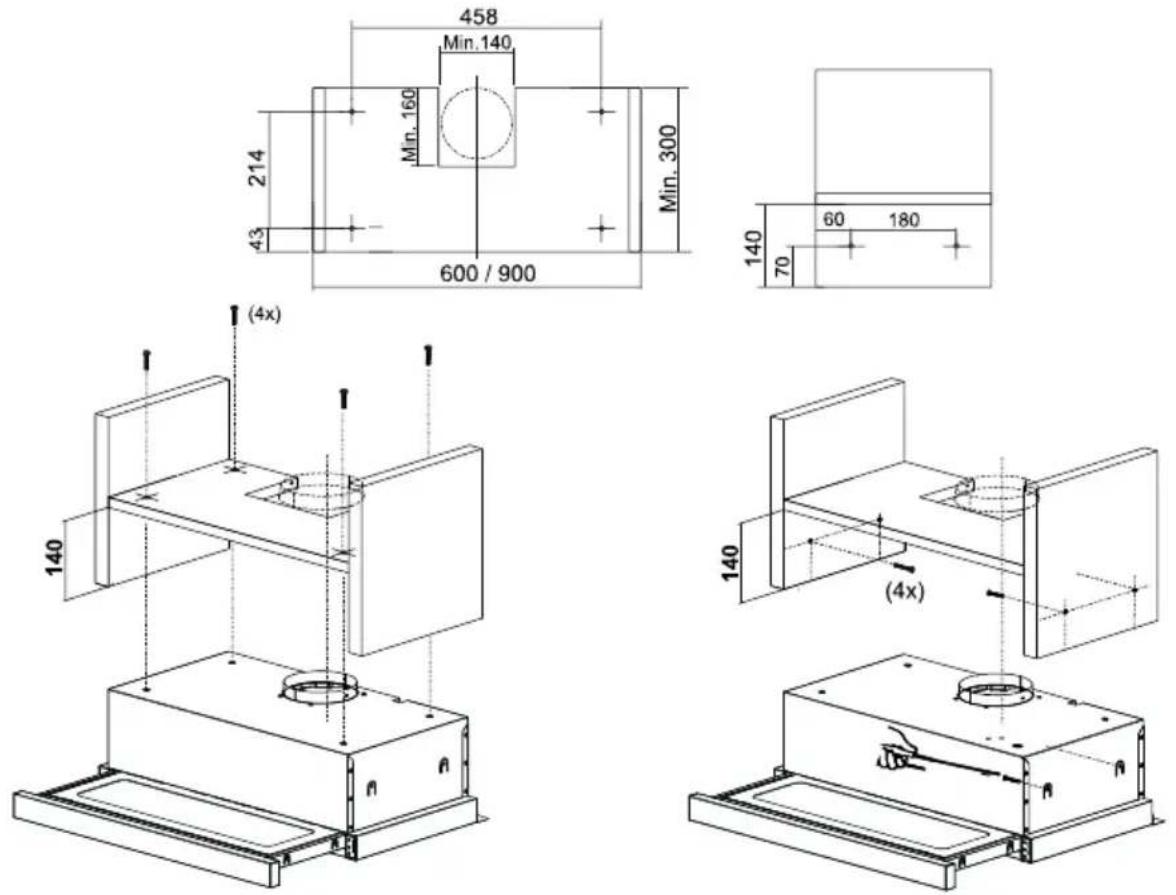
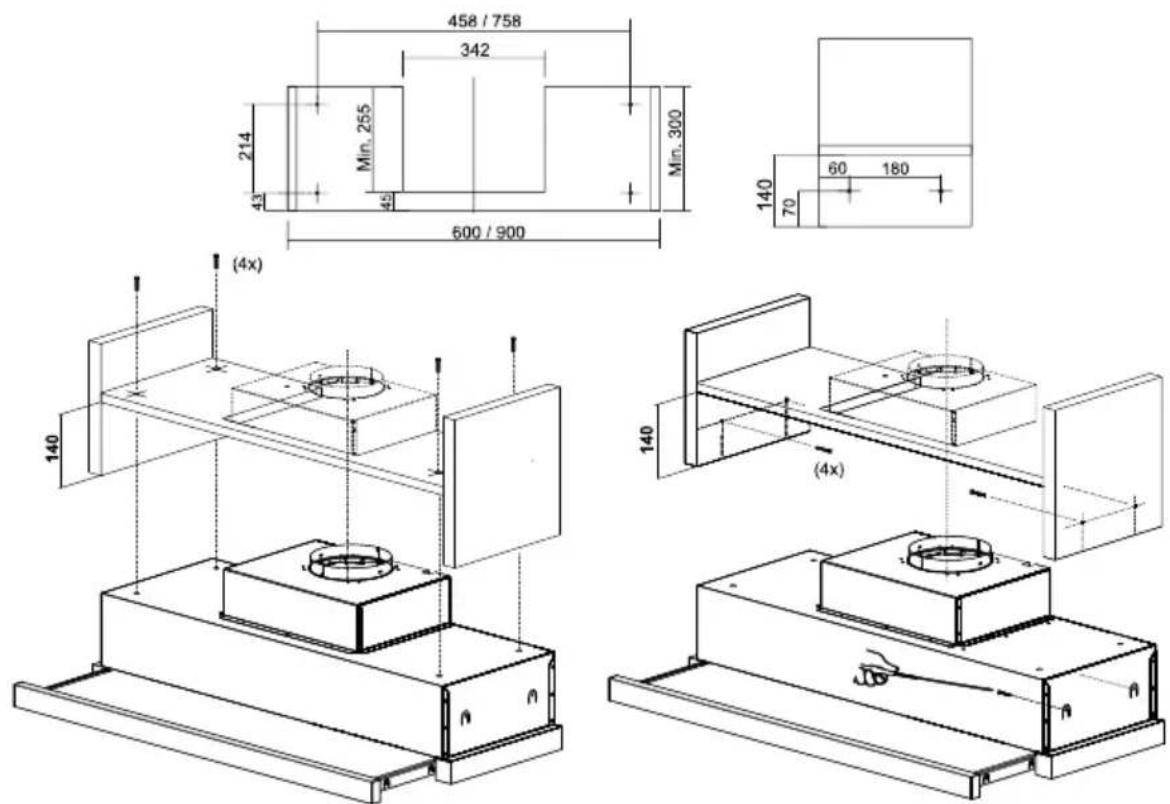
To fix the cooker hood please choose one of the following options:
a) Fixing to the upper part of the furniture:
Figure 4 must be used where the position of the holes is indicated.
b) To the internal side of the furniture:
When the body hood fits within the furniture, fasten with two screws on each side from the inside of the body hood, using their side holes.
Cleaning method for external glasses
Use microfaser and water, in case of need, add mild soap.
Aggressive cleaning material or detergent should not be used.
Activated charcoal filter
- To install the charcoal filter, the motor anchorage is made to coincide with the anchor points of the activated charcoal filter and turn it clockwise.
- The carbon filter lasts from three to six months depending on the particular conditions of use.
- The activated carbon filter can neither be washed nor regenerated. Once it is exhausted, it must be changed.
- To replace exhausted filters with new ones, withdraw the old one in the reverse order to that of installation.
- A reduction in the extraction flow rate may be observed in the hood with the installation of carbon filters.
• Performance: EN/IEC 61591; ISO 5167-1; ISO 5167-3; ISO 5168; EN/IEC 60704-1; EN/IEC 60704-2-13; EN/IEC 60704-3; ISO 3741; EN 50564/IEC 62301.
- EMC: EN 55014-1 / CISPR 14-1; EN 55014-2 / CISPR 14-2; EN/IEC 61000-3-2; EN/IEC 61000-3-3.
The lower part of the extractor must be located at a minimum height of 50 cm above the hob for electric cookers and 65 cm for gas cookers. If the instructions of a gas cooker indicate a greater distance these must be observed.
To achieve optimum performance the length of the outlet hose should not exceed 4 meters or include more than two 90^ angles (elbows).
Although venting to the outside is recommended, activated carbon filters may be
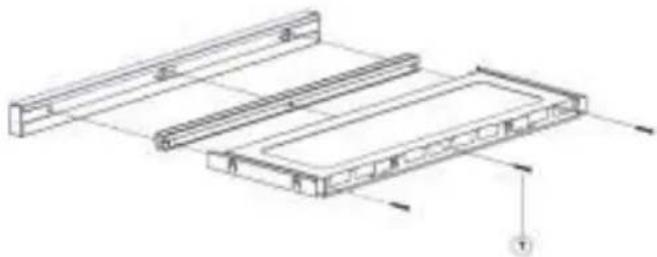
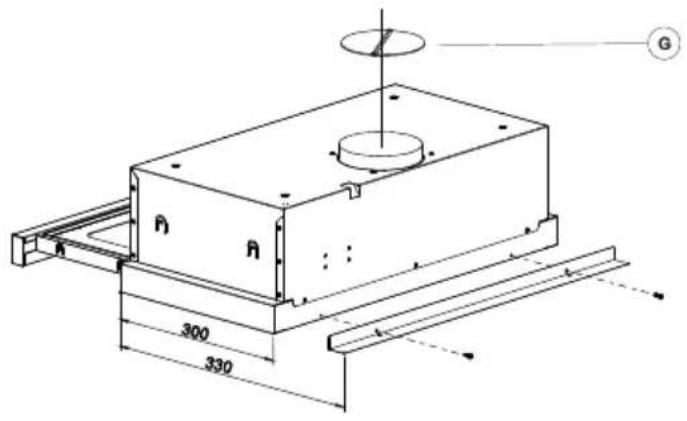
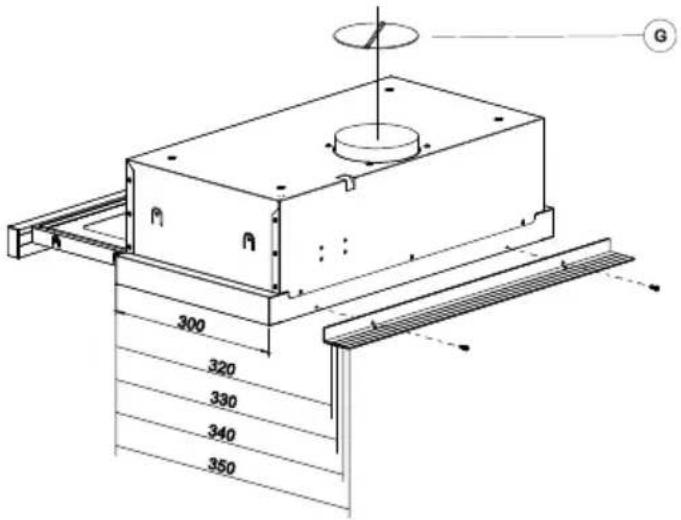
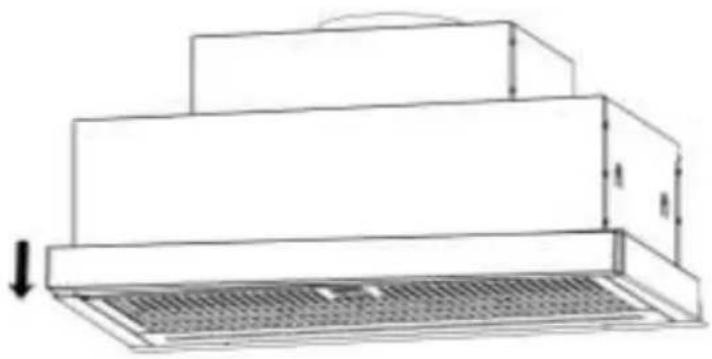
used, which allow the gas to be returned to the kitchen through the outlet pipe. If you wish to exchange the front for one matching the kitchen units, follow the following instructions (Fig. 3):
- Withdraw the movable group.
- Remove the screws (T) that support the front.
• Install the new front fixing it with the same screws that held the old one.
If something does not work
Before seeking technical assistance carry out the following checks first:
| Defect | Possible cause | Solution |
| The extractor does not work | The cable is not connected | Connect the mains cable |
| No current is reaching the plug | Revise/repair the electricity circuit | |
| The extractor does not blow enough or vibrates | Filter saturated with grease | Clean or substitute the filter |
| Outlet obstructed | Eliminate obstructions | |
| Inadequate air conduit | Contact the installer and follow instructions of this manual | |
| The lamps do not light | Lamp broken | Contact the Customer Service6815 PLUS: ILCOS D Code: DSL-12-S-5006415 PLUS ILCOS D Code: DSL-12-S-5009415 PLUS ILCOS D Code: DSL-12-S-5009815 PLUS ILCOS D Code: DSL-12-S-700 |
Special U.K. Requirements
Height above gas hob: 75 mm minimum.
This appliance must be connected by a competent person, using fixed wiring via a DOUBLE POLE SWITCHED FUSED SPUR OUTLET.
Special Australia Requirements
This appliance is not intended for use by young children or infirm persons without supervision.
Young children should be supervised to ensure that they do not play with the appliance.
Electrical connection
We recommend that the appliance is connected by a qualified electrician, who is a member of the N.I.C.E.I.C. and who will comply with the I.E.E. and local regulations.
Should the colour of the wires in the mains lead for the appliance not correspond with the coloured markings identifying the terminal in your spur box proceed as follows:
The wire which is coloured blue must be connected to the marked N (Neutral) or coloured Black.
The wire which is coloured brown must be connected to the marked L (Live) or couloured Red.
Where avialable (see installation), the wire which is coloured yellow/green must be connected to the marked or coloured Yellow/Green.
If the cooker hood is installed for use above a gas appliance then the provision vor ventilation
must be in accordance with the Gas Safety (Installation & Use) Regulations 1984 and the relevant Building Regulations. Detailed recommendations are contained in the following British Standard Codes of Practice BS6172, BS5440 and BS6891 Current Edition.
Environmental protection
Saving Energy
This appliance is energy-efficient but there are some tips on how to save even more energy:
- During cooking, ensure that there is a sufficient supply of air to enable the extractor hood to work efficiently and with a low level of operating noise.
- Adjust the fan speed to the amount of of steam produced during cooking. Only use intensive mode when required. The lower the fan speed, the less energy is consumed.
- If cooking produces large amounts of steam, select the higher fan speed in good time. If the cooking steam has already spread around the kitchen, the extractor hood will need to be operated for longer thus consuming more energy.
- Switch off the extractor hood if you no longer require it.
- Switch off the lighting if you no longer require it.
- Clean and (if required) replace the filter at regular intervals to increase the effectiveness of the ventilation system and to prevent the risk of fire.
- Put the lid on pans to reduce cooking steam and condensation.
Disposal of the packaging

The packaging bears the Green Point mark.
Dispose of all the packaging materials such as cardboard, expanded polystyrene and plastic wrapping in the appropriate bins. In this way you can be sure that the packaging materials will be re-used.
Dismantling the equipment:
- Disconnect the mains power.
- Remove the duct cover above the hood.
- Disconnect the duct.
- Supporting the equipment, remove the screws that fix it to the wall.
- For waste disposal, proceed according to the appropriate environmental protection guidelines.
Disposal of equipment no longer used

According to European Directive 2012/19/EU on the management of waste electrical and electronic equipment (WEEE), home electrical appliances should not be put into the normal systems for disposal of solid urban waste.
Outdated appliances should be collected separately to optimize component material recovery and re-cycling rates and to prevent potential harm to human health and the environment. The symbol of a rubbish container superimposed by a diagonal cross should be put on all such products to remind people of their obligation to have such items collected separately.
Consumers should contact their local authorities or point of sale and request information on the appropriate places to leave their old home electrical appliances.
Before disposing of your appliance, render it non-usable by pulling out the power cable, cutting this and disposing of it.
:EN/IEC 60704-1 :5168 Al'izuo :3-5167
:EN/IEC 60704-3 :EN/IEC 60704-2-13
.EN 50564/IEC 62301:3741 Alizuo