REVCHD12C - Drill BLACK & DECKER - Free user manual and instructions
Find the device manual for free REVCHD12C BLACK & DECKER in PDF.


User questions about REVCHD12C BLACK & DECKER
0 question about this device. Answer the ones you know or ask your own.
Ask a new question about this device
Download the instructions for your Drill in PDF format for free! Find your manual REVCHD12C - BLACK & DECKER and take your electronic device back in hand. On this page are published all the documents necessary for the use of your device. REVCHD12C by BLACK & DECKER.
USER MANUAL REVCHD12C BLACK & DECKER
English (original instructions) 3
1 Main handle
2 Trigger switch
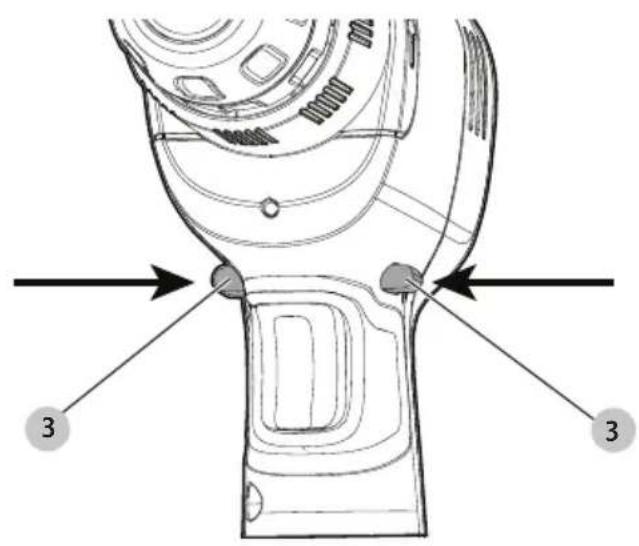
3 Forward/reverse slider
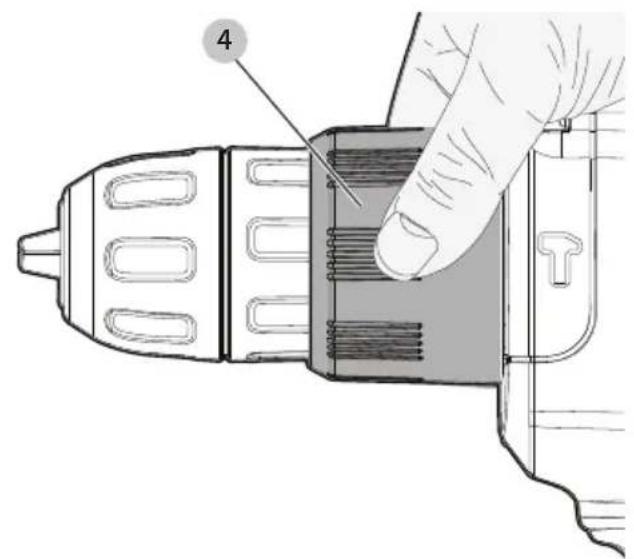
4 Torque adjustment collar
5 Keyless chuck
6 Front half of the chuck
7 Rear half of the chuck
8 Speed selector
9 LED work Light
10 Charger jack port
11 Charger
12 Charger jack plug
text_image
Diagram of a hand using a drill bit to adjust cable, labeled with parts 10, 12, and 13.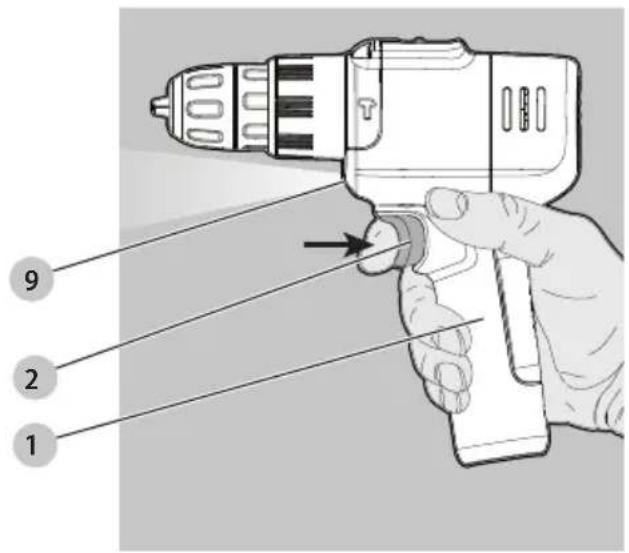
text_image
9 2 1Fig. D Fig. E
text_image
Technical diagram of a mechanical component with numbered parts and directional arrows indicating assembly or alignment.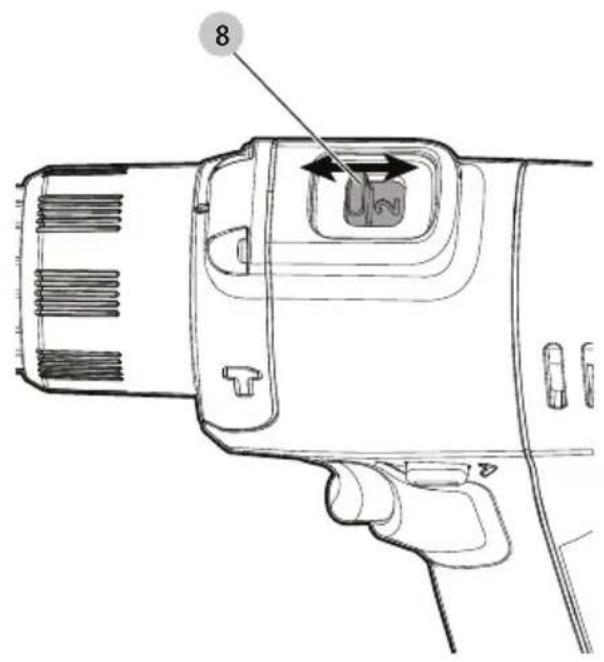
text_image
8Fig. F Fig. G
text_image
4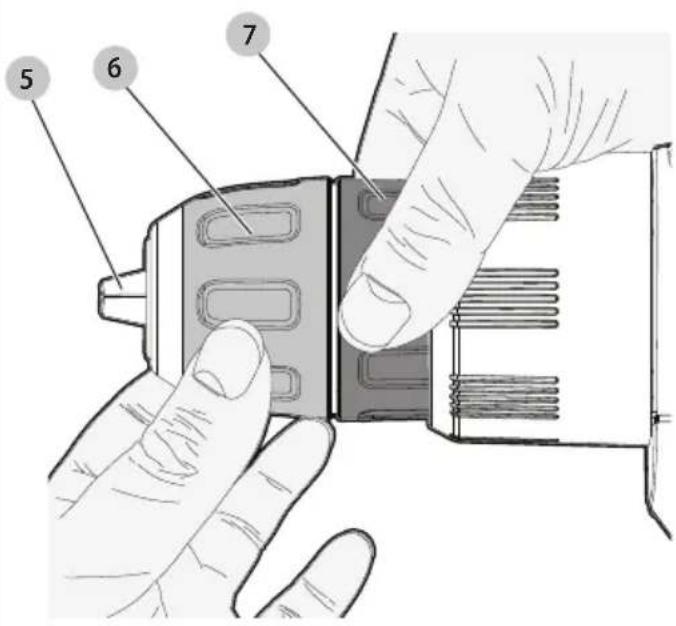
text_image
Diagram showing finger positioning of a device with numbered parts labeled 5, 6, and 7WARNING: Read all safety warnings and all instructions. Failure to follow the warnings and instructions may result in electric shock, fire and/or serious injury.

WARNING: To reduce the risk of injury, read the instruction manual.
Intended Use
This REVCHD12C hammer drill is designed for residential concrete, wood and metal drilling applications.
DO nOT use under wet conditions or in the presence of flammable liquids or gases.
DO nOT let children come into contact with the tool. Supervision is required when inexperienced operators use this tool.
Definitions: Safety Alert Symbols and Words
This instruction manual uses the following safety alert symbols and words to alert you to hazardous situations and your risk of personal injury or property damage.
DANGER: Indicates an imminently hazardous situation which, if not avoided, will result in death or serious injury.
WARNING: Indicates a potentially hazardous situation which, if not avoided, could result in death or serious injury.
CAUTION: Indicates a potentially hazardous situation which, if not avoided, may result in minor or moderate injury.
(### without word) Indicates a safety related message.
NOTICE: Indicates a practice not related to personal injury which, if not avoided, may result in property damage.
GENERAL POWER TOOL SAFETY WARNINGS
WARNING: Read all safety warnings, instructions, indications and specifications provided with this power tool. Failure to follow all instructions listed below may result in electric shock, fire and/or serious injury.
SAVE ALL WARNINGS AND INSTRUCTIONS FOR FUTURE REFERENCE.
The term "power tool" in the warnings refers to your mains-operated (corded) power tool or battery-operated (cordless) power tool.
1) Work Area Safety
a) Keep work area clean and well lit. Cluttered or dark areas invite accidents.
b) Do not operate power tools in explosive atmospheres, such as in the presence of flammable liquids, gases or dust. Power tools create sparks which may ignite the dust or fumes.
c) Keep children and bystanders away while operating a power tool. Distractions can cause you to lose control.
2) Electrical Safety
a) Power tool plugs must match the outlet. Never modify the plug in any way. Do not use any adapter plugs with earthed (grounded) power tools. Unmodified plugs and matching outlets will reduce risk of electric shock.
b) Avoid body contact with earthed or grounded surfaces, such as pipes, radiators, ranges and refrigerators. There is an increased risk of electric shock if your body is earthed or grounded.
c) Do not expose power tools to rain or wet conditions. Water entering a power tool will increase the risk of electric shock.
d) Do not abuse the cord. Never use the cord for carrying, pulling or unplugging the power tool. Keep cord away from heat, oil, sharp edges or moving parts. Damaged or entangled cords increase the risk of electric shock.
e) When operating a power tool outdoors, use an extension cord suitable for outdoor use. Use of a cord suitable for outdoor use reduces the risk of electric shock.
f) If operating a power tool in a damp location is unavoidable, use a ground fault circuit interrupter (GFCI) protected supply. Use of a GFCI reduces the risk of electric shock.
3) Personal Safety
a) Stay alert, watch what you are doing and use common sense when operating a power tool. Do not use a power tool while you are tired or under the influence of drugs, alcohol or medication. A moment of inattention while operating power tools may result in serious personal injury.
b) Use personal protective equipment. Always wear eye protection. Protective equipment such as a dust mask, non-skid safety shoes, hard hat, or hearing protection used for appropriate conditions will reduce personal injuries.
c) Prevent unintentional starting. Ensure the switch is in the off-position before connecting to power source and/or battery pack, picking up or carrying the tool. Carrying power tools with your finger on the switch or energizing power tools that have the switch on invites accidents.
d) Remove any adjusting key or wrench before turning the power tool on. A wrench or a key left attached to a rotating part of the power tool may result in personal injury.
e) Do not overreach. Keep proper footing and balance at all times. This enables better control of the power tool in unexpected situations.
f) Dress properly. Do not wear loose clothing or jewelry. Keep your hair, clothing and gloves away from moving parts. Loose clothes, jewelry or long hair can be caught in moving parts.
g) If devices are provided for the connection of dust extraction and collection facilities, ensure these are connected and properly used. Use of dust collection can reduce dust-related hazards.
EnglisH
h) Do not let familiarity gained from frequent use of tools allow you to become complacent and ignore tool safety principles. A careless action can cause severe injury within a fraction of a second.
4) Power Tool Use and Care
a) Do not force the power tool. Use the correct power tool for your application. The correct power tool will do the job better and safer at the rate for which it was designed.
b) Do not use the power tool if the switch does not turn it on and off. Any power tool that cannot be controlled with the switch is dangerous and must be repaired.
c) Disconnect the plug from the power source and/or remove the battery pack, if detachable, from the power tool before making any adjustments, changing accessories, or storing power tools. Such preventive safety measures reduce the risk of starting the power tool accidentally.
d) Store idle power tools out of the reach of children and do not allow persons unfamiliar with the power tool or these instructions to operate the power tool. Power tools are dangerous in the hands of untrained users.
e) Maintain power tools and accessories. Check for misalignment or binding of moving parts, breakage of parts and any other condition that may affect the power tool's operation. If damaged, have the power tool repaired before use. Many accidents are caused by poorly maintained power tools.
f) Keep cutting tools sharp and clean. Properly maintained cutting tools with sharp cutting edges are less likely to bind and are easier to control.
g) Use the power tool, accessories and tool bits etc. in accordance with these instructions, taking into account the working conditions and the work to be performed. Use of the power tool for operations different from those intended could result in a hazardous situation.
h) Keep handles and grasping surfaces dry, clean and free from oil and grease. Slippery handles and grasping surfaces do not allow for safe handling and control of the tool in unexpected situations.
5) Battery Tool Use and Care
a) Recharge only with the charger specified by the manufacturer. A charger that is suitable for one type of battery pack may create a risk of fire when used with another battery pack.
b) Use power tools only with specifically designated battery packs. Use of any other battery packs may create a risk of injury and fire.
c) When battery pack is not in use, keep it away from other metal objects, like paper clips, coins, keys, nails, screws or other small metal objects, that can make a connection from one terminal to another. Shorting the battery terminals together may cause burns or a fire.
d) Under abusive conditions, liquid may be ejected from the battery; avoid contact. If contact accidentally occurs, flush with water. If liquid contacts eyes, additionally seek medical help. Liquid ejected from the battery may cause irritation or burns.
e) Do not use a battery pack or tool that is damaged or modified. Damaged or modified batteries may exhibit unpredictable behavior resulting in fire, explosion or risk of injury.
f) Do not expose a battery pack or tool to fire or excessive temperature. Exposure to fire or temperature above 265 °F (130 °C) may cause explosion.
g) Follow all charging instructions and do not charge the battery pack or tool outside the temperature range specified in the instructions.
Charging improperly or at temperatures outside the specified range may damage the battery and increase the risk of fire.
6) Service
a) Have your power tool serviced by a qualified repair person using only identical replacement parts. This will ensure that the safety of the power tool is maintained.
b) Never service damaged battery packs. Service of battery packs should only be performed by the manufacturer or authorized service providers.
DRILL/IMPACT DRILL SAFETY WARNINGS
1) Safety Instructions for All Operations
a) Wear ear protectors when impact drilling. Exposure to noise can cause hearing loss.
b) Hold the power tool by insulated gripping surfaces, when performing an operation where the cutting accessory or fasteners may contact hidden wiring. Cutting accessory or fastener contacting a "live" wire may make exposed metal parts of the power tool "live" and could give the operator an electric shock.
2) Safety Instructions When Using Long Drill Bits
a) Never operate at higher speed than the maximum speed rating of the drill bit. At higher speeds, the bit is likely to bend if allowed to rotate freely without contacting the workpiece, resulting in personal injury.
b) Always start drilling at low speed and with the bit tip in contact with the workpiece. At higher speeds, the bit is likely to bend if allowed to rotate freely without contacting the workpiece, resulting in personal injury.
c) Apply pressure only in direct line with the bit and do not apply excessive pressure. Bits can bend causing breakage or loss of control, resulting in personal injury.
Additional Safety Information
WARNING: Never modify the power tool or any part of in damage or personal injury could result.
WARNING: ALWAYS use safety glasses. Everyday eyeglasses are NOT safety glasses. Also use face or dust mask if cutting operation is dusty. ALWAYS WEAR CERTIFIED SAFETY EQUIPMENT:
• ANSI Z87.1 eye protection (CAN/CSA Z94.3),
• ANSI S12.6 (S3.19) hearing protection,
• NIOSH/OSHA/MSHA respiratory protection.
WARNING: Some dust created by power sanding, sanding, grinding, drilling, and other construction activities contains chemicals known to the State of California to cause cancer, birth defects or other reproductive harm. Some examples of these chemicals are:
- lead from lead-based paints,
• crystalline silica from bricks and cement and other masonry products, and
• arsenic and chromium from chemically-treated lumber.
Your risk from these exposures varies, depending on how often you do this type of work. To reduce your exposure to these chemicals: work in a well ventilated area, and work with approved safety equipment, such as those dust masks that are specially designed to filter out microscopic particles.
- Wear protective clothing and wash exposed areas with soap and water. Allowing dust to get into your mouth, eyes, or lay on the skin may promote absorption of harmful chemicals. Direct particles away from face and body.
- Use clamps or other practical ways to secure and support the workpiece to a stable platform. Holding the work by hand or against your body is unstable and may lead to loss of control and injury.
• Air vents often cover moving parts and should be avoided. Loose clothes, jewelry or long hair can be caught in moving parts.
CAUTION: When not in use, place tool on its side on a stable surface where it will not cause
a tripping or falling hazard. Some tools with large battery packs will stand upright on the battery pack but may be easily knocked over.
WARNING: Always wear proper personal hearing protection that conforms to ANSI S12.6 (S3.19)
during use. Under some conditions and duration of use, noise from this product may contribute to hearing loss.
The label on your tool may include the following symbols. The symbols and their definitions are as follows:
V....volts
Hz ......hertz
min ...... minutes
or DC.....direct current
Class I Construction (grounded)
.../min.....per minute
BPM.....beats per minute
☐ Class II Construction (double insulated)
n_0 ......no load speed
n ......rated speed
PSI..... pounds per square inch
earthing terminal
⚠️......safety alert symbol
▲......visible radiation do not stare into the light
wearrespiratory protection
∞...... wear eye protection
○....wearhearing protection
readall documentation
do not expose to rain
The RBRC® Seal
Please take your BLACK+DECKER with a spent battery to an authorized BLACK+DECKER service center or to your local retailer for recycling. In some areas, it is illegal to place spent battery packs in the trash. You may also contact your local recycling center for information on where to drop off the spent battery pack. Do not place in curbside recycling. For more information visit www.call2recycle.org, or call the toll free number in the RBRC® Seal.
RBRC® is a registered trademark of Call 2 Recycle, Inc.
BATTERY AND CHARGER
The battery is not fully charged out of the carton. Before using the charger to charge the battery, read the safety instructions below and then follow charging procedures outlined.
Only for use with S010QU1400040 chargers.
READ ALL INSTRUCTIONS
Important Safety Instructions for All Integral Battery Tools
WARNING: Read all safety warnings, instructions, and cautionary markings for the battery, charger and product. Failure to follow the warnings and instructions may result in electric shock, fire and/or serious injury.
- NEVER force a charger cord plug into the tool.
- DO NOT modify a charger cord plug of a non-compatible charger in any way to fit into the tool as the battery may rupture causing serious personal injury.
- DO NOT charge or use the battery in explosive atmospheres, such as in the presence of flammable liquids, gases or dust. Inserting or removing the plug from the tool may ignite the dust or fumes.
• ONLY CHARGE the tool with provided charger
• DO NOT splash or immerse in water or other liquids.
• DO NOT allow water or any liquid to enter tool. - DO NOT store or use the tool in locations where the temperature may reach or exceed 104 °F (40 °C) (such as outside sheds or metal buildings in summer). For

EnglisH
best life store tools in a cool, dry location.
NOTE: Do not store the tool with the switch locked on. Never tape the switch in the ON position.
- DO NOT incinerate the tool even if it is severely damaged or is completely worn out. The battery can explode in a fire. Toxic fumes and materials are created when lithium-ion batteries are burned.
- If battery contents come into contact with the skin, immediately wash area with mild soap and water. If battery liquid gets into the eye, rinse water over the open eye for 15 minutes or until irritation ceases. If medical attention is needed, the battery electrolyte is composed of a mixture of liquid organic carbonates and lithium salts.
- Contents of opened battery cells may cause respiratory irritation. Provide fresh air. If symptoms persist, seek medical attention.
- Battery liquid may be flammable if exposed to spark or flame.
- Never attempt to open the tool for any reason. If the tool case is cracked or damaged, do not charge. Do not crush, drop or damage the tool. Do not use a tool or charger that has received a sharp blow, been dropped, run over or damaged in any way (e.g., pierced with a nail, hit with a hammer, stepped on). Damaged tools should be returned to the service center for recycling.
Storage Recommendations
The best storage place is one that is cool and dry, away from direct sunlight and excess heat or cold. Store the fully charged tool disconnected from the charger.
Transportation
NOTE: Integral Li-ion tools should not be put in checked baggage on airplanes and must be properly protected from short circuits if they are in carry-on baggage.
Tool Disposal
This product uses a lithium-ion rechargeable and recyclable battery. When the battery no longer holds a charge, the tool should be recycled. The tool should not be incinerated or placed in the trash.
The tool can be taken for disposal to an Authorized Service Center. Some local retailers are also participating in a national recycling program (refer to RBRC®). Call your local retailer for details. If you bring the tool to an Authorized Service Center, the Center will arrange to recycle the tool and its battery. Or, contact your local municipality for proper disposal instructions in your city/town.
Important Safety Instructions for All Integral Battery Charging
WARNING: Read all safety warnings, instructions, and cautionary markings for the battery, charger and product. Failure to follow the warnings and instructions may result in electric shock, fire and/or serious injury.
- The provided charger is not intended for any uses other than charging BLACK+DECKER rechargeable
tools. Charging other types of tools may cause their batteries to overheat and burst, resulting in personal injury, property damage, fire, electric shock or electrocution.
- DO NOT expose charger to water, rain or snow.
- Pull by the plugs rather than the cord when disconnecting the charger. This will reduce the risk of damage to the plugs and cord.
- Make sure that the cord is located so that it will not be stepped on, tripped over or otherwise subjected to damage or stress.
- When charging the tool outdoors, always provide a dry location.
- DO NOT use a charger with a damaged cord or plugs. Have them replaced immediately.
- Foreign materials of a conductive nature, such as, but not limited to, grinding dust, metal chips, steel wool, aluminum foil or any buildup of metallic particles should be kept away from the charger and charging contacts.
• Always unplug the charger from the power supply when there is no tool attached to it.
Charging Procedure (Fig. B)
WARNING: Do not use tool while it is connected to the charger. The integral battery needs to be charged before first use and whenever it fails to produce sufficient power on jobs that were easily done before. The battery may become warm while charging; this is normal and does not indicate a problem.
WARNING! Do not charge the battery at ambient temperatures below 40 °F (4 °C) or above 104 °F (40 °C). Recommended charging temperature: approx. 104 °F (40 °C).
NOTE: The charger will not charge a battery if the cell temperature is below approximately 40 °F ( 4 °C ) or above 104 °F ( 40 °C ).
- Insert the charger jack plug 12 into the charger jack port 10.
- Plug in the charger 11.
- Leave the tool connected to the charger for around 4 hours.
- The charging indicator will illuminate during charging.
Electronic Protection System
Li-Ion tools are designed with an Electronic Protection System that will protect the battery against overloading, overheating or deep discharge. The tool will automatically turn off and the battery will need to be recharged.
Important Charging Notes
- The tool may become warm to the touch while charging. This is a normal condition, and does not indicate a problem. To facilitate the cooling of the tool after use, avoid placing the tool in a warm environment such as in a metal shed or an uninsulated trailer.
-
If the tool does not charge properly, take the tool and charger to your local service center.
-
You may charge a partially used battery whenever you desire with no adverse effect on the tool.
OPERATION
WARNING: To reduce the risk of serious personal injury, turn unit off and lock the trigger before making any adjustments or removing/installing attachments or accessories. An accidental start-up can cause injury.
Proper Hand Position (Fig. C)
WARNING: To reduce the risk of serious personal injury, ALWAYS use proper hand position as shown.
WARNING: To reduce the risk of serious personal injury, ALWAYS hold securely in anticipation of a sudden reaction.
Proper hand position requires one hand on the main handle 1 and the other gripping the bottom of the main handle around the battery area.
Trigger Switch/Reversing Button (Fig. C, D)
- The drill is turned ON and OFF by pulling and releasing the trigger switch 2.
- A forward/reverse control button 3 determines the direction of the tool and also serves as a lock off button.
- To select forward rotation, release the trigger switch and depress the forward/reverse control button to the left.
- To select reverse, depress the forward/ reverse control button the opposite direction.
NOTE: The center position of the control button locks the tool in the off position. When changing the position of the control button, be sure the trigger is released.
Worklight (Fig. C)
CAUTION: Do not stare into worklight. Serious eye injury could result.
There is a worklight 9 located on the front of the tool. The worklight is activated when the trigger switch is depressed, and will automatically turn off after the trigger switch is released. If the trigger switch remains depressed, the worklight will remain on.
NOTE: The worklight is for lighting the immediate work surface and is not intended to be used as a flashlight.
Speed Selection (Fig. A)
The tool features two speed settings for greater versatility.
NOTE: Do not change speeds when the tool is running. Always allow the tool to come to a complete stop before changing speed.
- To select speed 1 (high torque setting), turn the tool off and permit it to stop. Slide the speed selector 7 back (away from the chuck).
- To select speed 2 (high speed setting), turn the tool off and permit it to stop. Slide the speed selector 7 forward (toward the chuck).
If the tool does not change speeds, confirm that the speed selection switch is completely engaged in the forward or back position.
Torque Control (Fig. F)
| Symbol Mode | |
| Drilling | |
| 1-10 Screwdriving (higher number = greater torque) | |
| T | Hammer drilling |
This tool is fitted with a torque adjustment collar 4 to select the operating mode and to set the torque for tightening screws. Large screws and hard workpiece materials require a higher torque setting than small screws and soft workpiece materials.
- For drilling in wood, metal and plastics, set the collar to the drilling position symbol
- For screwdriving, set the collar to the desired setting. If you do not yet know the appropriate setting, proceed as follows:
- Set the collar to the lowest torque setting.
- Tighten the first screw.
- If the clutch ratchets before the desired result is achieved, increase the collar setting and continue tightening the screw. Repeat until you reach the correct setting. Use this setting for the remaining screws.
- For drilling in masonry or concrete set the collar to the hammer drilling position symbol ⬆.
Keyless Chuck (Fig. G)
WARNING: Make certain the lock-off button is engaged to prevent switch actuation before installing or removing accessories.
WARNING: Do not attempt to tighten drill bits (or any other accessory) by gripping the front part of the chuck and turning the tool on. Damage to the chuck and personal injury may occur when changing accessories.
To Insert a Drill Bit or Other Accessory
- Grasp the rear half of the chuck 7 with one hand and use your other hand to rotate the front half 6 in the counterclockwise direction, as viewed from the chuck end.
- Insert the bit or other accessory fully into the chuck, and tighten securely by holding the rear half of the chuck and rotating the front portion in the clockwise direction as viewed from the chuck end.
Screw Driving (Fig. D)
- For driving fasteners, the forward/reverse control button 3 should be pushed to the left.
- Use forward/reverse control button 3 pushed to the right for removing fasteners.
- When moving from forward to reverse, or vice versa, always release the trigger switch 2 first.
Drilling
WARNING: TO REDUCE THE RISK OF PERSONAL HISTORY, ALWAYS ensure workpiece is anchored or clamped firmly. If drilling thin material, use a wood "back-up" block to prevent damage to the material.
- Use sharp drill bits only.
- Support and secure work properly, as instructed in the Safety Instructions.
- Use appropriate and required safety equipment, as instructed in the Safety Instructions.
- Secure and maintain work area, as instructed in the Safety Instructions.
- Always apply pressure in a straight line with the bit. Use enough pressure to keep the drill bit biting, but do not push hard enough to stall the motor or deflect the bit.
- Run the drill very slowly, using light pressure, until the hole is started enough to keep the drill bit from slipping out.
- Hold the drill firmly with two hands, one hand on the handle, and the other gripping the bottom around the battery area.
- IF DRILL STALLS, it is usually because it is being overloaded. RELEASE TRIGGER IMMEDIATELY, remove drill bit from work, and determine the cause of stalling. DO NOT CLICK TRIGGER OFF AND ON IN AN ATTEMPT TO START A STALLED DRILL – THIS CAN DAMAGE THE DRILL.
- Keep the motor running when pulling the bit back out of a drilled hole. This will help prevent jamming.
Hammer Drilling
IMPORTANT: Use carbide-tipped or masonry bits rated for percussion drilling only.
- Select the desired speed/torque range using the speed selector 8 to match the speed and torque to the planned operation.
- Turn the torque adjustment collar 4 to the hammerdrill symbol.
- Hold the drill firmly with two hands, one hand on the handle, and the other gripping the bottom around the battery area.
- Pull the trigger switch 2, applying just enough pressure on the drill to keep it from bouncing excessively or "rising" off the bit. Too much force will cause slower drilling speeds, overheating, and a lower drilling rate.
- Drill straight, keeping the bit at a right angle to the work.
- Do not exert side pressure on the bit when drilling as this will cause clogging of the bit flutes and a slower drilling speed.
- A smooth, even flow of dust indicates the proper drilling rate.
- When drilling deep holes, if the drill speed starts to drop off, pull the bit partially out of the hole with tool still running to help clear debris from the hole.
Common Drilling Materials
Wood
- Use twist bits, spade bits, power auger bits or hole saws.
- These bits should be sharp and should be pulled out frequently when drilling to clear chips from the flutes.
Metal
- Use high-speed steel twist drill bits or hole saws.
- Use a cutting lubricant when drilling metals. The exceptions are cast iron and brass which should be drilled dry.
- Using a sulfurized cutting oil is recommended.
Masonry
- When drilling in masonry, use carbide-tipped bits rated for percussion drilling and be certain that the bits are sharp.
- Use a constant and firm force on the tool to drill most effectively.
MAINTENANCE
WARNING: To reduce the risk of serious personal injury, turn unit off and lock the trigger before making any adjustments or removing/installing attachments or accessories. An accidental start-up can cause injury.
Your BLACK+DECKER product has been designed to operate over a long period of time with a minimum of maintenance. Continuous satisfactory operation depends upon proper care and regular cleaning.
Cleaning
WARNING: Blow dirt and dust out of all air vents with dry air at least once a week. To minimize the risk of eye injury, always wear ANSI Z87.1 approved eye protection when performing this procedure.
WARNING: Never use solvents or other harsh chemicals for cleaning the non-metallic parts of the tool. These chemicals may weaken the plastic materials used in these parts. Use a cloth dampened only with water and mild soap. Never let any liquid get inside the tool; never immerse any part of the tool into a liquid.
Accessories
WARNING: Since accessories, other than those offered by BLACK+DECKER, have not been tested with this product, use of such accessories with this product could be hazardous. To reduce the risk of injury, only BLACK+DECKER recommended accessories should be used with this product.
Recommended accessories for use with your product are available at extra cost from your local dealer or authorized service center. If you need assistance in locating any accessory, please contact BLACK+DECKER call
1-800-544-6986
REVCHD12C Capacities
RPM 0-350 / 0-1350
BPM 20,250
Bits, Masonry Drilling 5/32"-3/8" (4-10mm)
Repairs
The charger and battery pack are not serviceable. There are no serviceable parts inside the charger or battery pack.
WARNING: To assure product SAFETY and RELIABILITY, repairs, maintenance and adjustment (including brush inspection and replacement, when applicable) should be performed by a BLACK+DECKER factory service center or a BLACK+DECKER authorized service center. Always use identical replacement parts.
Register Online
Thank you for your purchase. Register your product now for:
- WARRANTY SERVICE: Registering your product will help you obtain more efficient warranty service in case there is a problem with your product.
- CONFIRMATION OF OWNERSHIP: In case of an insurance loss, such as fire, flood or theft, your registration of ownership will serve as your proof of purchase.
- FOR YOUR SAFETY: Registering your product will allow us to contact you in the unlikely event a safety notification is required under the Federal Consumer Safety Act.
- Register online at www.BlackandDecker.com / NewOwner
TWO-YEAR LIMITED WARRANTY
Black & Decker (U.S.) Inc. warranties this product to be free from defects in material or workmanship for a period of two (2) years following the date of purchase, provided that the product is used in a home environment. This limited warranty does not cover failures due to abuse, accidental damage or when repairs have been made or attempted by anyone other than BLACK+DECKER and its Authorized Service Centers. A defective product meeting the warranty conditions set forth herein will be replaced or repaired at no charge in either of two ways:
The first, which will result in exchanges only, is to return the product to the retailer from whom it was purchased (provided that the store is a participating retailer). Returns should be made within the time period of the retailer's policy for exchanges. Proof of purchase may be required. Please check with the retailer for its specific return policy regarding time limits for returns or exchanges. The second option is to take or send the product (prepaid) to a BLACK+DECKER owned or authorized Service Center for repair or replacement at BLACK+DECKER's option. Proof of purchase may be required. BLACK+DECKER owned and authorized service centers are listed online at www.blackanddecker.com. This warranty does not apply to accessories. This warranty gives you specific legal rights and you may have other rights which vary from state to state or province to province. Should you have any questions, contact the manager of your nearest BLACK+DECKER Service Center. This product is not intended for commercial use, and accordingly, such commercial use of this product will void this warranty. All other guarantees, express or implied, are hereby disclaimed.
LATIN AMERICA: This warranty does not apply to products sold in Latin America. For products sold in Latin America, check country specific warranty information contained in the packaging, call the local company or see the website for such information.
Imported by. Black & Decker (U.S.) Inc.,
701 E. Joppa Rd.
Towson, MD 21286

BlackandDecker.com
(1-800-544-6986)
portezdes protections auditives
Importé par.Black & Decker (U.S.) Inc.,
701 E. Joppa Rd.
Towson, MD 21286

a) Wear ear protectors when impact drilling. Exposure to noise can cause hearing loss.
Imported by. Black & Decker (U.S.) Inc.,
701 E. Joppa Rd.
Towson, MD 21286

BlackandDecker.com
(1-800-544-6986)