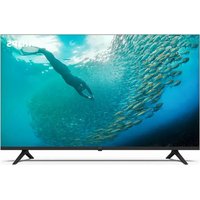
50PUS8919 - TV PHILIPS - Free user manual and instructions
Find the device manual for free 50PUS8919 PHILIPS in PDF.


User questions about 50PUS8919 PHILIPS
0 question about this device. Answer the ones you know or ask your own.
Ask a new question about this device
Download the instructions for your TV in PDF format for free! Find your manual 50PUS8919 - PHILIPS and take your electronic device back in hand. On this page are published all the documents necessary for the use of your device. 50PUS8919 by PHILIPS.
USER MANUAL 50PUS8919 PHILIPS
18 Assistant Google 63
19 Logiciels 64
text_image
1 2 3 NETFLIX prime video Disney+ TV Channels 4 5 6 7 8natural_image
Tropical beach scene with turquoise water under a blue sky with scattered clouds, no visible text or symbolsAvertissement
natural_image
Gray rectangular object with abstract shapes and a small icon labeled 'TV' (no readable text or symbols)text_image
Mobile device control panel interface with playback buttons and a speedometer display showing 60natural_image
Gray rectangular device with two vertical bars and a power button icon, no text or symbols presenttext_image
SAT TV SATflowchart
graph TD
    A["TV"] --> B["Digital Audio Out"]
    B --> C["Home Theatre System"]
    C --> D["OPTICAL"]
Casque
text_image
Headphones TV Headphones5.6. Appareil mobile
Duplication d'écran
text_image
QR code on a smartphone screen, likely for scanning to access digital contentwww.philips.com/c-w/country-selectorpage/tv/tv-remote-app.html
Transition diaporama
Transition diaporama
natural_image
Recycling symbol composed of five arrows forming a triangle (no text or labels)natural_image
Symbol of a trash bin crossed with two crossed lines and a solid rectangle below (no text or labels)natural_image
Symbol of a trash bin crossed with two crossed lines, representing no waste or restriction (no text present)text_image
HE NC Advance™ Covered by patents at patentlist.accessadvance.com25.3. AMD FreeSync Premium
text_image
dts play-fi25.5. DTS:X
open.source@tpv-tech.com
26.2. Licence open source
The Apache Portable Runtime Library provides a predictable and consistent interface to underlying platform-specific implementations, with an API to which software developers may code and be assured of predictable if not identical behavior regardless of the platform on which their software is built, relieving them of the need to code special-case conditions to work around or take advantage of platform-specific deficiencies or features. Source: https://github.com/apache/apr
bind (9.11.36)
BIND (Berkeley Internet Name Domain) is a complete, highly portable implementation of the Domain Name System (DNS) protocol. Source: https://github.com/isc-projects/bind9
busybox (1.31.1)
BusyBox combines tiny versions of many common UNIX utilities into a single small executable. It provides replacements for most of the utilities you usually find in GNU fileutils, shellutils, etc. The utilities in BusyBox generally have fewer options than their full-featured GNU cousins; however, the options that are included provide the expected functionality and behave very much like their GNU counterparts. BusyBox provides a fairly complete environment for any small or embedded system. Source: https://www.busybox.net/downloads/
binutils (2.31.510
The GNU Binutils are a collection of binary tools. The main ones are: ld - the GNU linker. as - the GNU assembler. Source: https://www.gnu.org/software/binutils/
bzip2 (1.0.6)
bzip2 is a free and open-source file compression program that uses the Burrows–Wheeler algorithm. It only compresses single files and is not a file archiver. It was developed by Julian Seward, and maintained by Mark Wielaard and Micah Snyder. Source: https://sourceware.org/bzip2/
c-ares (1.10.1)
c-ares is a C library for asynchronous DNS requests (including name resolves) Source: https://c-ares.org/
cario (1.16.0)
Cairo is a 2D graphics library with support for multiple
output devices. Currently supported output targets include the X Window System (via both Xlib and XCB), Quartz, Win32, image buffers, PostScript, PDF, and SVG file output. Experimental backends include OpenGL, BeOS, OS/2, and DirectFB. source https://www.cairographics.org/
dbus (1.11.2)
D-Bus is a simple system for interprocess communication and coordination. The "and coordination" part is important; D-Bus provides a bus daemon that does things like:
- notify applications when other apps exit
- start services on demand
- support single-instance applications
Source: https://github.com/freedesktop/dbus
e2fsprogs (1.43.3)
e2fsprogs (sometimes called the e2fs programs) is a set of utilities for maintaining the ext2, ext3 and ext4 file systems. Since those file systems are often the default for Linux distributions, it is commonly considered to be essential software
Source: http://e2fsprogs.sourceforge.net/
expat (2.2.9)
xml paser; Expat is an XML parser library written in C. It is a stream-oriented parser in which an application registers handlers for things the parser might find in the XML document (like start tags). An introductory article on using.
This piece of software is made available under the terms and conditions of the Expat license, which can be found below.
Source: http://expat.sourceforge.net/
fuse (2.9.7)
JBoss Fuse is an open source ESB with capabilities based on Apache Camel, Apache CXF, Apache ActiveMQ, Apache Karaf and Fabric8 in a single integrated distribution.
Source https://github.com/jboss-fuse/fuse
gdb (8.2.1)
GDB, the GNU Project debugger, allows you to see what is going on 'inside' another program while it executes -- or what another program was doing at the moment it crashed.
Source: https://www.sourceforge.org/gdb/
glibc (2.30.0)
Any Unix-like operating system needs a C library: the library which defines the "system calls" and other basic facilities such as open, malloc, printf, exit...The GNU C library is used as the C library in the GNU system and most systems with the Linux kernel. This piece of software is made available under the terms and conditions of the glibc license, which can be found below.
Source: http://www.gnu.org/software/libc/
gstreamer (1.18.3)
The GStreamer team is excited to announce a new major feature release of your favourite cross-platform multimedia framework!
Source: https://gstreamer.freedesktop.org/
libasound (1.1.8)
The Advanced Linux Sound Architecture (ALSA) provides audio and MIDI functionality to the Linux operating system. ALSA has the following significant features:
Efficient support for all types of audio interfaces, from consumer sound cards to professional multichannel audio interfaces.
Fully modularized sound drivers.
SMP and thread-safe design (PLEASE READ THIS). User space library (alsa-lib) to simplify application programming and provide higher level functionality. Support for the older Open Sound System (OSS) API, providing binary compatibility for most OSS programs. Source: https://www.alsa-project.org/wiki/Main_Page
Libcurl (7.79.1)
HTTP client; libcurl is a free and easy-to-use client-side URL transfer library, supporting FTP, FTPS, HTTP, HTTPS, SCP, SFTP, TFTP, TELNET, DICT, LDAP, LDAPS, FILE, IMAP, SMTP, POP3 and RTSP. libcurl supports SSL certificates, HTTP POST, HTTP PUT, FTP uploading, HTTP form based upload, proxies, cookies, user+password authentication (Basic, Digest, NTLM, Negotiate, Kerberos4), file transfer resume, http proxy tunneling and more!
This piece of software is made available under the terms and conditions of the Libcurl license, which can be found below.
Source: http://curl.haxx.se/
libevent (1.4.13)
The libevent API provides a mechanism to execute a callback function when a specific event occurs on a file descriptor or after a timeout has been reached. Furthermore, libevent also support callbacks due to signals or regular timeouts. source: https://libevent.org/
libjpeg-turbo (2.1.1)
libjpeg-turbo is a JPEG image codec that uses SIMD instructions (MMX, SSE2, AVX2, Neon, AltiVec) to accelerate baseline JPEG compression and decompression on x86, x86-64, Arm, and PowerPC systems, as well as progressive JPEG compression on x86 and x86-64 systems. On such systems, libjpeg-turbo is generally 2-6x as fast as libjpeg, all else being equal. On other types of systems, libjpeg-turbo can still outperform libjpeg by a significant amount, by virtue of its highly-optimized Huffman coding routines. In many cases, the performance of libjpeg-turbo rivals that of proprietary high-speed JPEG codecs.
Source: https://libjpeg-turbo.org/
libjpg (6b)
This library is used to perform JPEG decoding tasks. This piece of software is made available under the terms and conditions of the libjpg license, which can be found below.
Source: http://www.ijg.org/
libpng (1.0.1)
libpng -THE reference library for reading, displaying, writing and examining png Image Network Graphics. This piece of software is made available under the terms and conditions of the libpng license, which can be found below.
Source: http://sourceforge.net/projects/libpng/files/
libffi (3.2.1)
Compilers for high level languages generate code that follows certain conventions. These conventions are necessary, in part, for separate compilation to work. One such convention is the "calling convention". The "calling convention" is a set of assumptions made by the compiler about where function arguments will be found on entry to a function. A "calling convention" also specifies where the return value for a function is found.
Source: https://sourceware.org/libffi/
libjansson (2.13.1)
Jansson is a C library for encoding, decoding and manipulating JSON data. Its main features and design principles are:
Simple and intuitive API and data model
Comprehensive documentation
No dependencies on other libraries
Full Unicode support (UTF-8)
Extensive test suite
Source: https://github.com/akheron/jansson
libmicrohttpd (0.9.73)
GNU libmicrohttpd is a small C library that is supposed to make it easy to run an HTTP server as part of another application. GNU Libmicrohttpd is free software and part of the GNU project
Source:https://www.gnu.org/software/libmicrohttpd/
libupnp (1.6.10)
The portable SDK for UPnP™ Devices (libupnp) provides developers with an API and open source code for building control points, devices, and bridges that are compliant with Version 1.0 of the Universal Plug and Play Device Architecture Specification and support several operating systems like Linux, *BSD, Solaris and others.
Source: https://pupnp.sourceforge.io/
libuuid (1.3.0)
This library is free software; you can redistribute it and/or
modify it under the terms of the Modified BSD License.
The complete text of the license is available at the Documentation/licenses/COPYING.BSD-3 file Source:https://sourceforge.net/projects/libuuid/
Libxml2 (2.9.12)
The "libxml2" library is used in AstroTV as a support for the execution of NCL application. This library was developed for the GNOME software suite and is available under a "MIT" license.
Source: http://www.xmlsoft.org
linux\_kernel (4.19)
The Linux kernel is a mostly free and open-source,[11] monolithic, modular, multitasking, Unix-like operating system kernel. It was originally authored in 1991 by Linus Torvalds for his i386-based PC, and it was soon adopted as the kernel for the GNU operating system, which was written to be a free (libre) replacement for UNIX.
Source: https://www.kernel.org/
mbed TLS (2.26.0)
Mbed TLS is a C library that implements cryptographic primitives, X.509 certificate manipulation and the SSL/TLS and DTLS protocols. Its small code footprint makes it suitable for embedded systems.
Source: https://github.com/ARMmbed/mbedtls
ncurses (6.1)
The ncurses (new curses) library is a free software emulation of curses in System V Release 4.0 (SVr4), and more. It uses terminfo format, supports pads and color and multiple highlights and forms characters and function-key mapping, and has all the other SVr4-curses enhancements over BSD curses. SVr4 curses is better known today as X/Open Curses. Source: http://www.gnu.org/software/ncurses/
nghttp2 (1.6.3)
nghttp2 is an implementation of HTTP/2 and its header compression algorithm HPACK in C Source: https://nghttp2.org/
NTFS-3G (7.8)
NTFS-3G is an open source cross-platform implementation of the Microsoft Windows NTFS file system with read-write support. NTFS-3G often uses the FUSE file system interface, so it can run unmodified on many different operating systems. It is runnable on Linux, FreeBSD, NetBSD, OpenSolaris, BeOS, QNX, WinCE, Nucleus, VxWorks,
Haiku, MorphOS, and Mac OS X It is licensed under either the GNU General Public License or a proprietary license. It is a partial fork of ntfsprogs and is under active maintenance and development.
This piece of software is made available under the terms and conditions of the NTFS-3G Read/Write
Driver license, which can be found below.
Source: http://www.tuxera.com
openssl (1.1.1l)
OpenSSL is an open source implementation of the SSL and TLS protocols. The core library (written in the C programming language) implements the basic cryptographic functions and provides various utility functions. Wrappers allowing the use of the OpenSSL library in a variety of computer languages are available.
Source: http://www.openssl.org/
pcre (8.45)
The PCRE library is a set of functions that implement regular expression pattern matching using the same syntax and semantics as Perl 5. PCRE has its own native API, as well as a set of wrapper functions that correspond to the POSIX regular expression API. The PCRE library is free, even for building proprietary software.
https://www.pcre.org/
procps (ps, top) (3.3.15)
procps is the package that has a bunch of small useful utilities that give information about processes using the /proc filesystem.
The package includes the programs ps, top, vmstat, w, kill, free, slabtop, and skill.
Source: http://procps.sourceforge.net/index.html
SQLite3 (3.36.0)
SQLite is a in-process library that implements a self-contained, serverless, zero-configuration, transactional SQL database engine.
This piece of software is made available under the terms and conditions of the SQLite3 license, which can be found below.
Source: http://www.sqlite.org/
util-linux-ng (2.35.2)
Various system utilities.
Source: http://userweb.kernel.org/\~kzak/util-linux-ng/
wpa_supplicant (2.9)
wpa_supplicant is a WPA Supplicant for Linux, BSD, Mac OS X, and Windows with support for WPA and WPA2 (IEEE 802.11i / RSN). It is suitable for both desktop/laptop computers and embedded systems. Supplicant is the IEEE 802.1X/WPA component that is used in the client stations. It implements key negotiation with a WPA Authenticator and it controls the roaming and IEEE 802.11
authentication/association of the wlan driver.
Source: https://w1.fi/wpa_supplicant/
zlib (1.2.8)
The 'zlib' compression library provides in-memory compression and decompression functions, including
integrity checks of the uncompressed data.
This piece of software is made available under the terms and conditions of the zlib license, which can be found below.
Source: http://www.zlib.net/
Application Philips TV Remote 15
Arrêt programmé 50
Assistant Google 63
Aurora 46
Auto-diagnostic 5
É
All registered and unregistered trademarks are property of their respective owners.
Specifications are subject to change without notice.
Philips and the Philips Shield Emblem are registered trademarks of Koninklijke Philips N.V. and
are used under license.
This product has been manufactured and is sold under the responsibility of TP Vision Europe B.V., and TP Vision Europe B.V. is the warrantor in relation to this product.
2024© TP Vision Europe B.V. All rights reserved.
www.philips.com/welcome