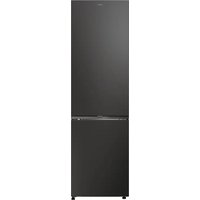
CMLS59EWI - Fridge CANDY - Free user manual and instructions
Find the device manual for free CMLS59EWI CANDY in PDF.


User questions about CMLS59EWI CANDY
0 question about this device. Answer the ones you know or ask your own.
Ask a new question about this device
Download the instructions for your Fridge in PDF format for free! Find your manual CMLS59EWI - CANDY and take your electronic device back in hand. On this page are published all the documents necessary for the use of your device. CMLS59EWI by CANDY.
USER MANUAL CMLS59EWI CANDY
natural_image
Line drawing of an open refrigerator with multiple shelves and doors (no text or symbols)INSTRUCTION MANUAL
LANGUAGES
Italiano 4
English......Error! Bookmark not defined.
Français 20
Español....28
Deutsch 36
Portuguese 44
Nederlands 52
Ελληνικά 60
Polski 68
Čeština 76
Italiano
text_image
Diagram of an open refrigerator with labeled compartments and icons for interior, exterior, and interior viewsFo2
text_image
Technical diagram showing a rectangular object with dimension annotations including 20 and a star symbol, likely representing a measurement or alignment.natural_image
Pure technical line drawing of a mechanical component with no text or symbols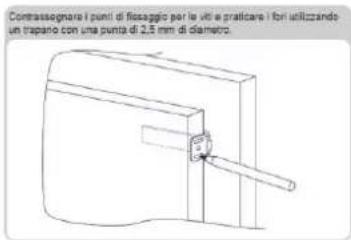
PROBLEMA CAUSA SOLUZIONE
Thank you for purchasing this product.
Before using your refrigerator, please carefully read this instruction manual in order to maximize its performance. Store all documentation for subsequent use or for other owners. This product is intended solely for household use or similar applications such as:
- the kitchen area for personnel in shops, offices and other working environments
- on farms, by clientele of hotels, motels and other environments of a residential type
- at bed and breakfasts (B & B)
- for catering services and similar applications not for retail sale.
This appliance must be used only for purposes of storage of food, any other use is considered dangerous and the manufacturer will not be responsible for any omissions. Also, it is recommended that you take note of the warranty conditions. Please, to obtain the best possible performance and trouble free operation from your appliance it is very important to carefully read these instructions. Failure to observe these instructions may invalidate your right to free service during the guarantee period.
SAFETY INFORMATION
This guide contains many important safety information. Please, we suggest you keep these instructions in a safe place for easy reference and a good experience with the appliance.
The refrigerator contains a refrigerant gas (R600a: isobutane) and insulating gas (cyclopentane), with high compatibility with the environment, that are, however, inflammable.

Caution: risk of fire
If the refrigerant circuit should be damaged:
- Avoid opening flames and sources of ignition.
Thoroughly ventilate the room in which the appliance is situated
WARNING!
- Care must be taken while cleaning/carrying the appliance to avoid touching the condenser metal wires at the back of the appliance, as you might injure your fingers and hands or damage your product.
-
This appliance is not designed for stacking with any other appliance. Do not attempt to sit or stand on top of your appliance as it is not designed for such use. You could injure yourself or damage the appliance.
-
Make sure that mains cable is not caught under the appliance during and after carrying/moving the appliance, to avoid the mains cable becoming cut or damaged.
- When positioning your appliance take care not to damage your flooring, pipes, wall coverings etc. Do not move the appliance by pulling by the lid or handle. Do not allow children to play with the appliance or tamper with the controls. Our company declines to accept any liability should the instructions not be followed.
- Do not install the appliance in humid, oily or dusty places, nor expose it to direct sunlight and to water.
- Do not install the appliance near heaters or inflammable materials.
- If there is a power failure do not open the lid. Frozen food should not be affected if the failure lasts for less than 20 hours. If the failure is longer, then the food should be checked and eaten immediately or cooked and then refrozen.
- If you find that the lid of the chest freezer is difficult to open just after you have closed it, don't worry. This is due to the pressure difference which will equalize and allow the lid to be opened normally after a few minutes.
- Do not connect the appliance to the electricity supply until all packing and transit protectors have been removed.
- Leave to stand for at least 4 hours before switching on to allow compressor oil to settle if transported horizontally.
- This freezer must only be used for its intended purpose (i.e. storing and freezing of edible foodstuff).
- Do not store medicine or research materials in the Wine Coolers. When the material that requires a strict control of storage temperatures is to be stored, it is possible that it will
deteriorate or an uncontrolled reaction may occur that can cause risks.
- Before performing any operation, unplug the power cord from the power socket.
- On delivery, check to make sure that the product is not damaged and that all the parts and accessories are in perfect condition.
- If in the refrigeration system a leak is noted, do not touch the wall outlet and do not use open flames. Open the window and let air into the room. Then call a service center to ask for repair.
- Do not use extension cords or adapters.
- Do not excessively pull or fold the power cord or touch the plug with wet hands.
- Do not damage the plug and/or the power cord; this could cause electrical shocks or fires.
- If the supply cord is damaged, it must be replaced by the manufacturer, its service agent or similarly qualified person in order to avoid a hazard.
- Do not place or store inflammable and highly volatile materials such as ether, petrol, LPG, propane gas, aerosol spray cans, adhesives, pure alcohol, etc. These materials may cause an explosion.
- Do not use or store inflammable sprays, such as spray paint, near the Wine Coolers. It could cause an explosion or fire.
- Do not place objects and/or containers filled with water on the top of the appliance.
- We do not recommend the use of extension leads and multi-way adapters.
- Do not dispose of the appliance on a fire. Take care not to damage, the cooling circuit/pipes of the appliance in transportation and in use. In case of damage do not expose the appliance
to fire, potential ignition source and immediately ventilate the room where the appliance is situated.
- The refrigeration system positioned behind and inside the Wine Coolers contains refrigerant. Therefore, avoid damaging the tubes.
- Do not use electrical appliances inside the food storage compartments of the appliance, unless they are of the type recommended by the manufacturer.
- Do not damage the refrigerant circuit.
- Do not use mechanical devices or other means to accelerate the defrosting process, other than those recommended by the manufacturer.
- Do not use electrical appliances inside the food storage compartments, unless they are of the type recommended by the manufacturer.
- Do not touch internal cooling elements, especially with wet hands, to avoid cracks or injuries.
- Maintain the ventilation openings in the appliance enclosure or in the built-in structure, free of obstruction.
- Do not use pointed or sharp-edged objects such as knives or forks to remove the frost.
- Never use hairdryers, electrical heaters or other such electrical appliances for defrosting.
- Do not scrape with a knife or sharp object to remove frost or ice that occurs. With these, the refrigerant circuit can be damaged, the spill from which can cause a fire or damage your eyes.
- Do not use mechanical devices or other equipment to hasten the defrosting process.
- Absolutely avoid the use of open flame or electrical equipment, such as heaters, steam cleaners, candles, oil lamps and the like in order to speed up the defrosting phase.
- Never use water wash the compressor position, wipe it with a dry cloth thoroughly after cleaning to prevent rust.
- It is recommended to keep the plug clean, any excessive dust residues on the plug can be the cause fire.
- The product is designed and built for domestic household use only.
- The guarantee will be void if the product is installed or used in commercial or non-residential domestic household premises.
- The product must be correctly installed, located and operated in accordance with the instructions contained in the User Instructions Booklet provided.
- The guarantee is applicable only to new products and is not transferable if the product is resold.
- Our company disclaims any liability for incidental or consequential damages.
- The guarantee does not in any way diminish your statutory or legal rights.
- Do not perform repairs on this Wine Coolers. All interventions must be performed solely by qualified personnel.
SAFETY CHILDREN!
- If you are discarding an old product with a lock or latch fitted to the door, ensure that it is left in a safe condition to prevent the entrapment of children.
- This appliance can be used by children aged from 8 years and above and by persons with reduced physical, sensory or mental capabilities or with a lack of experience and knowledge; provided that they have been given adequate supervision or instruction concerning how to use the appliance in a safe way and understand the hazards involved.
• Children should not play with the appliance. Cleaning and user
maintenance should not be made by children without supervision.
INSTALLATION
WARNINGS:
- Do not install the appliance in a damp or wet location as this could compromise the insulation and result in leakage.
Furthermore, on the exterior of the same, condensate could accumulate - Do not place the appliance in locations outside or near sources of heat or exposed to direct sunlight.
The appliance operates properly within the range of environmental temperatures indicated:
+10 +32'C for the climatic class SN
+16 +32'C for the climatic class N
+16 +38'C for the climatic class ST
+16 +43'C for the climatic class T
(See the nameplate of the product)
- Do not place containers with liquids on top of the appliance.
- Wait at least 8 hours after final placement before switching the appliance on.
Electrical connection
After shipping, place the appliance vertically and wait at least 8 hours before connecting it to the electrical system. Before inserting the plug into the electrical socket, make sure that:
• The socket is earthed and in compliance with the law.
- The socket can withstand the maximum power load of the appliance, as indicated on the nameplate of the refrigerator.
- The power supply voltage is within the amounts indicated on the nameplate of the refrigerator.
- The cord must not be folded or compressed.
- The cord must be checked regularly and replaced solely by authorized technicians.
- The manufacturer declines any liability whenever these safety measures are not respected.
Appliance start-up
Remove all wrapping/packaging present inside the appliance and clean with water and baking soda or neutral soap.
After the installation, wait 2 - 3 hours to allow time for the refrigerator to stabilize at normal working temperature, before placing fresh food inside. If the power cord becomes disconnected, wait at least five minutes before restarting the refrigerator/freezer. At this point, the appliance is ready for use.
OPERATION
Turning On/Off (no display)
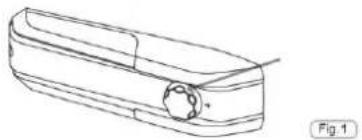
- The thermostat unit for control of the appliance is located inside of the refrigerator compartment (Fig. 1).
Rotate the thermostat knob of the thermostat beyond the "0" position. The light is on when the refrigerator door is open. Turning the knob to "0" completely turns off the product.
natural_image
Line drawing of a mechanical component with a circular opening and handle (no text or symbols)Temperature adjustment (no display)
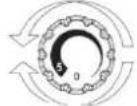
Fig. 2
- The temperature adjustment of the fridge is controlled by rotating the thermostat knob (Fig. 2).
Select the desired position: - For colder temperature in the refrigerator and in the freezer, by turning towards 5.
- For a less cold temperature in the refrigerator, rotate the thermostat knob in the direction of OFF.
| Position Conditions | |
| 1-2 Summer or ambient temperature between 25-35°C | |
| 3-4 Spring, autumn or ambient temperature between 15-25°C | |
| 5 Winter, or ambient temperature between 5-15°C | |
CONSERVATION
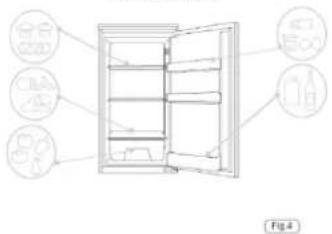
- To maintain the best flavour, nourishment and freshness of foods, it is advisable to store them in the refrigerator compartment as shown in Fig. 6 below, making sure to wrap them in aluminum or plastic sheets or in appropriate covered containers to avoid cross-contamination.
Refrigerator zone
Fruit / Vegetables
- To decrease fruit and vegetable moisture losses they must be wrapped in plastic materials such as, for example, films or bags and then inserted in the fruit/vegetable zone. In this way rapid deterioration is avoided.
FRIDGE ZONE
text_image
Diagram of a refrigerator with labeled parts including doors, bottles, and accessories, marked as Fig.4.Indicator of the temperature in the coldest zone (not all models)
Some models are equipped with an indicator of the temperature in the refrigerator compartment in the coldest zone, for you to be able to control the average temperature.
This symbol indicates the coldest zone of the refrigerator (Fig. 5).
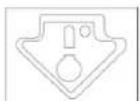
Fig 5
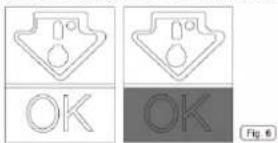
Check that on the indicator of the temperature, the word OK is clearly shown (Fig. 6). If the word does not appear, this means that the temperature is too high: adjust the temperature to a cooler setting and wait for about 10 hours. Recheck the indicator: if necessary, proceed with a new adjustment.
natural_image
Four technical diagrams showing a mechanical component with circular features, one labeled 'OK' (no text or symbols within diagrams)NOTE:
If large quantities of food are inserted or the refrigerator door frequently opened, it is normal for the indicator fails to show OK. Wait at least 10 h before adjusting the knob to a higher setting.
PRACTICAL RECOMMENDATIONS
Place food on the shelves in a homogeneous manner to allow air to circulate properly and to cool it.
- Avoid contact between the food and the far end walls of the refrigerator compartment.
- Do not introduce hot foods as they can cause deterioration of existing ones and increase energy consumption.
- Remove the wrappings of foods before inserting them.
- Do not put in dishes or other containers unless previously washed.
- Do not obstruct the cold air ventilator openings with food.
- Do not cover the glass shelf of the vegetable bin to allow for proper air circulation.
- In the case of prolonged power outage, keep the doors closed so that foods remain cold as long as possible.
- The installation of the appliance in a hot and humid location, with frequent door openings and storing large amounts of vegetables can cause the formation of condensate and affect the performance of the unit itself.
• To prevent excessive energy consumption, the frequent or prolonged opening of the doors is not recommended.
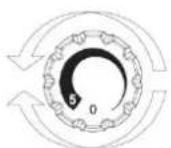
Fig.7
DEFROSTING
Defrosting the refrigerator compartment
During normal functioning, the refrigerator is automatically defrosted. There is no need to dry the drops of water present on the rear wall or to eliminate the frost (depending on functioning).
The water is conveyed to the rear part through the drain hole found there and the heat of the compressor causes it to evaporate.
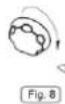
koregethadrainage pipe (Fig. 8) clean in the refrigerator compartment to keep it free of water.
Defrosting of the fridge compartment occurs automatically in this product.
A small amount of frost or drops of water on the back of the compartment when the fridge is working is normal. Make sure the water outlet is always clean and make sure foods do not touch the back or sides of the fridge compartment.
Please remove the salad drawer to reveal the rating plate. It includes all the data which will be required by the Customer Service team should a fault arise.
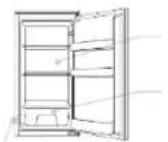
The most energy-saving configuration requires drawers, food box and shelves to be positioned in the product, please refer to the above pictures.
Important: if your ambient temperature is high, the appliance may operate continuously, thus building up excessive frost on the inner wall of the fridge. In this case, turn the fridge knob to a warmer setting (1-2).
MAINTENANCE AND CLEANING Lighting
LED lighting
The product is equipped with LED lights, please contact the Technical Assistance Service in case of replacement. Compared to traditional light bulbs, the LEDs last environmentally friendly.
Cleaning
NOTICE:
- Before each operation, remove the refrigerator plug from the power socket to prevent electric shocks.
- Do not pour water directly on the outside or inside of the refrigerator itself. This could lead to oxidation and damaging of the electrical insulation.
IMPORTANT:
To prevent cracking of the inside surfaces and plastic parts, follow these suggestions:
- Wipe away any food oils adhered to plastic components.
- The internal parts, gaskets and external parts can be cleaned with a cloth with warm water and baking soda or a neutral soap. Do not use solvents, ammonia, bleach or abrasives.
- Remove the accessories, for example, the shelves, from the refrigerator and from the door. Wash in hot soapy water. Rinse and thoroughly dry.
- The back of the appliance tends to accumulate dust which can be eliminated with the use of a vacuum cleaner, after having switched off and disconnected the appliance from the electrical outlet. This provides greater energy efficiency.
ENERGY SAVINGS
For better energy savings, we suggest:
- Installing the appliance away from heat sources and not exposed to direct sunlight and in a well ventilated room.
- Avoid putting hot food into the refrigerator to avoid increasing the internal temperature and therefore causing continuous functioning of the compressor.
- Do not excessively stuff foods so as to ensure proper air circulation.
- Defrost the appliance in case there is ice (see DEFROSTING) to facilitate the transfer of cold.
- In case of absence of electrical energy, it is advisable to keep the refrigerator door closed.
- Open or keep the doors of the appliance open as little as possible
- Avoid adjusting the thermostat to temperatures too cold.
- Remove dust present on the rear of the appliance (see CLEANING).
AVOIDING NOISES
During its operation, the refrigerator emits some absolutely normal noises, such as:
• HUMMING, the compressor is running.
- RUMBLINGS, RUSTLINGS and HISSING, the refrigerant is flowing through the tubes.
- TICKS and CLICKS, the operation shutdown of the compressor. Small measures to red uce the vibration noises:
- Containers touch each other: Avoid contact between containers and glass recipients.
- Drawers, shelves, bins vibrate: Check the proper installation of internal accessories.
NOTE:
The refrigerant gas produces noise even when the compressor is off; it is not a defect, it is normal.
If you hear a clicking sound inside the appliance, it is normal as due to expansion of the various materials.
REVERSIBILITY OF THE DOOR
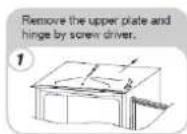
The doors of the appliance can be reversed so as to allow the opening to the right or left according to exigency.
NOTE:
- Inversion of the doors must be performed by qualified technical personnel. - Inversion of the doors is not covered by the warranty.
REVERSING THE OPENING OF THE DOOR PRODUCT
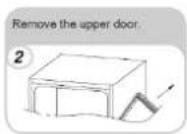
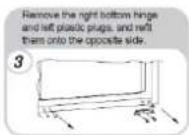
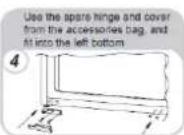
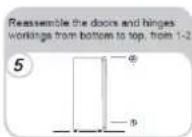
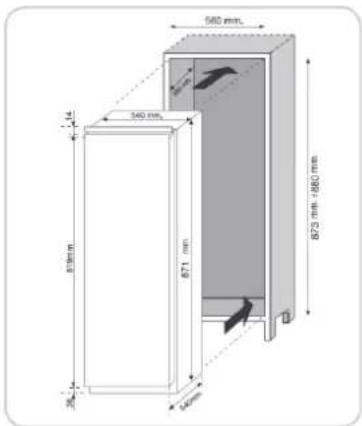
PRODUCT DIMENSIONS AND BUILT-IN COMPARTMENT
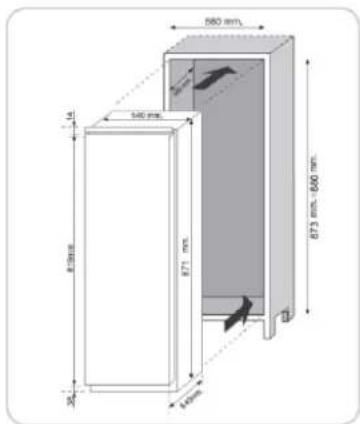
text_image
580 mm 540 mm 873 mm - 600 mm 871 mm 30 mmINSTALLATION OF THE APPLIANCE IN THE COLUMN
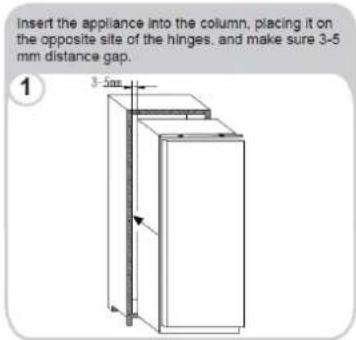
text_image
Insert the appliance into the column, placing it on the opposite site of the hinges, and make sure 3-5 mm distance gap. 3-5mm 1After ensuring the match between appliance door and column door, then screw the appliance upper part to the cabinet
2
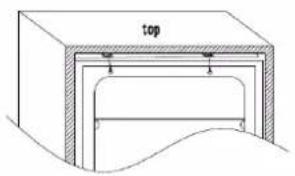
text_image
topScrew the appliance lower part.
3
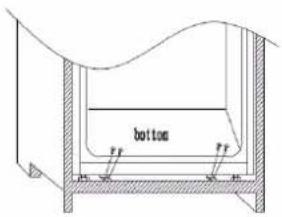
text_image
bottom pF pFFit the seal to the appliance, cut off the excessive part if necessary. Fit the bottom parts with plastic covers.
4
natural_image
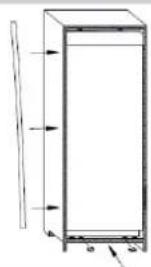
Pure technical diagram of a rectangular frame with internal arrows and dimension lines, no text or symbols present.COUPLING OF THE PANELS OF THE BUILT-IN COLUMN OF THE APPLIANCE DOORS
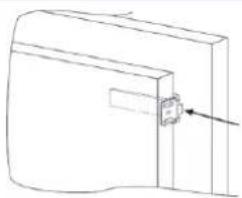
The appliance is equipped with coupling devices for the appliance doors with the column panels (loader slide).
Secure the slide in the inner part of the panel of the bulb-in column at the desired height and at approx. 20 mm. From the outer wire of the door.
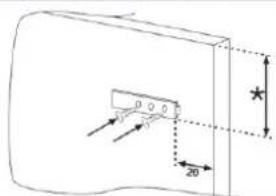
text_image
Technical diagram showing a 3D object with dimension annotations including 20 units and a star symbolOpen the doors of the built-in column and the fridge. Position the built-in loader in the slide, then fit it into the fridge door.
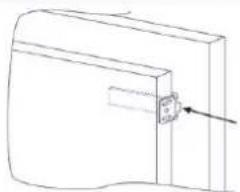
natural_image
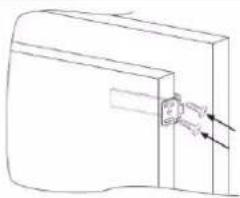
Simple line drawing of a mechanical component with an arrow pointing to a small component (no text or symbols)Mark the fixing points for the screws and drill with a bit of a diameter of 2.5mm.
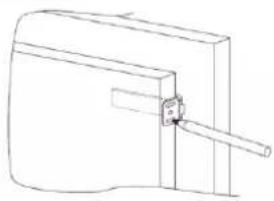
natural_image
Simple line drawing of a mechanical component with a handle and central pin (no text or symbols)Connect the appliance door to the cabinet panel keeping the loader slots as guidelines.
natural_image
Simple line drawing of a mechanical component with an arrow indicating direction (no text or symbols)PRECAUTIONS FOR THE CORRECT OPERATION
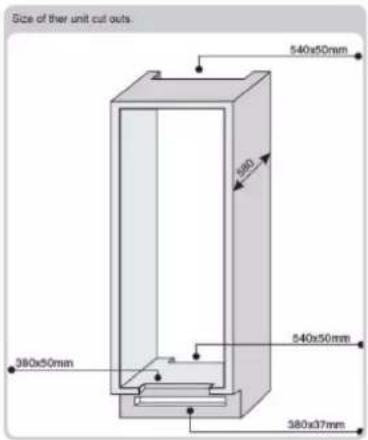
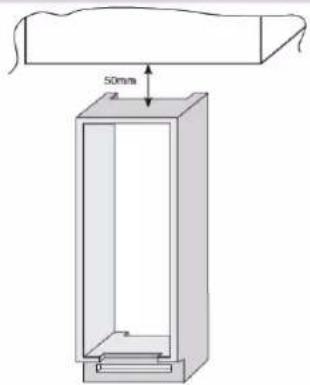
Once the product has been embedded, place the rear part of the column in contact with the wall so as to prevent access to the compressor compartment.
For the product to operate correctly it is essential to allow adequate air circulation so as to cool down the condenser located in the rear part of the appliance.
For this reason, the column must be equipped with a rear chimney, whose upper opening must not be blocked and with a front slot which will be covered with a ventilation grill.
text_image
Size of ther unit cut outs. 540x50mm 580 540x50mm 380x50mm 380x37mmRoom to leave between the unit and ceiling.
text_image
50mmSUSPENDING USE OF THE APPLIANCE
If the appliance is not to be used for a long time:
1) Turn the appliance OFF (see Operation).
2) Extract the plug or remove the safety device.
3) Clean the appliance
4) Leave the doors of the appliance open.
TROUBLESHOOTING
| PROBLEM | CAUSE | REMEDY |
| The inside illumination light bulb does not turn on. | Electricity absence. Door switch is blocked. | The power cord is not properly plugged in. Check whether the appliance is switched off. (see Temperature Adjustment). Ensure that there is a current in the house. Check that it is active. |
| The refrigerator and freezer do not sufficiently cool. | The doors are not closed. The doors are frequently opened Erroneous setting of the temperature. The refrigerator and freezer have been excessively filled. Surrounding temperature is too low. No electrical power. | Check that the door and gaskets close properly. Avoid unnecessary opening of the doors for a period of time. Check the temperature setting and, if it is possible, cool even more (see Temperature adjustment) Wait for the stabilization of the temperature of the refrigerator or freezer. Check that the ambient temperature is in accordance with what is indicated on the nameplate (see Installation). The power cord is not properly plugged in. Check whether the appliance is switched off (see Temperature adjustment) Ensure that in the home there is current. |
| The food in the refrigerator freezes. | Erroneous setting of the temperature. Food in contact with the back wall. The freezing of too much fresh food causes a lowering of the temperature of the refrigerator | Check the temperature setting (see Temperature Adjustment) and, if possible, decrease temperature setting. Separate the food from the back wall of the refrigerator. Do not exceed the maximum amount to be frozen (see Freezing). |
| The bottom of the refrigerator compartment is wet or droplets are present. | The drain tube could be clogged. | Clean the drain tube with a stick or the like to allow the discharge of water. |
| Presence of drops or water on the back wall of the refrigerator. | Normal operation of the refrigerator. | It is not a defect (see Defrosting). |
| Presence of water in the vegetable drawer. | Lack of air circulation. Vegetables and fruits with too much moisture. | Verify that your glass shell tray vegetables are not put foods that prevent air circulation. Wrap the fruit and vegetable materials plastic such as, for example, films, bags or containers. |
| The motor runs continuously. | The doors are not closed. The doors are opened frequently. Ambient temperature is very high. Thickness of frost than 3mm. | Make sure the doors are closed and if the seals close properly. Avoid unnecessary open ports for a certain period. Verify that the ambient temperature is in accordance with the specifications on the nameplate (see Installation). Set the display/thermostat a warmer temperature. Defrost the unit (see Defrosting). |
IF YOU ARE NOT SOLVED THE PROBLEM, CONTACT THE SERVICE CENTER, PLEASE GIVE THE TYPE OF FAULT AND THE INFORMATION ON THE PLATE OF THIS APPARATUS TO INSIDE THE REFRIGERATOR COMPARTMENT:
• The model of equipment.
• The number of series.
SCRAPPING OLD APPLIANCES
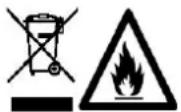
This appliance is marked according to the European directive 2012/19/EU on Waste Electrical and Electronic Equipment (WEEE).
WEEE contains both polluting substances (which can cause negative consequences for the environment) and basic components (which can be reused). It is important to have WEEE subjected to specific treatments, in order to remove and dispose properly all pollutants, and recover and recycle all materials.
Individuals can play an important role in ensuring that WEEE does not become an environmental issue; it is essential to follow some basic rules: WEEE should not be treated as household waste.
WEEE should be handed over to the relevant collection points managed by the municipality or by registered companies. In many countries, for large WEEE, home collection could be present.
In many countries, when you buy a new appliance, the old one may be returned to the retailer who has to collect it free of charge on a one-to-one basis, as long as the equipment is of equivalent type and has the same functions as the supplied equipment.
Conformity
By placing the mark C on this product, we are confirming compliance to all relevant European safety, health and environmental requirements which are applicable in legislation for this product.
text_image
Diagram of a refrigerator with labeled compartments and icons for interior, exterior, and storage areasFig4
RECOMMANDATIONS PRATIQUES
DIMENSIONS DU PRODUIT ET COMPARTIMENT ENCASTRE
text_image
560 mm 340 mm 873 mm - 1880 mm 871 mm 25 mm 14 mmINSTALLATION DE L'APPAREIL DANS LA COLONNE
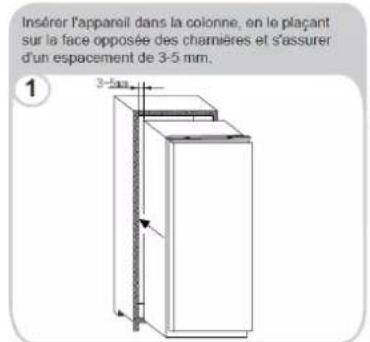
natural_image
Pure technical line drawing of a mechanical component with no text or symbolsnatural_image
Simple line drawing of a mechanical component with a lever and handle (no text or symbols)natural_image
Pure technical line drawing of a mechanical clamp or bracket (no text or symbols)PRECAUTIONS RELATIVES A UN FONCTIONNEMENT CORRECT
text_image
540x50mm 580 380x50mm 540x50mm 380x37mmtext_image
Diagram of an open refrigerator with labeled compartments and icons for cooking or storage.Fig.4
text_image
1 3-5mm 2mmnatural_image
Simple line drawing of a rectangular frame with arrows indicating direction and a small protrusion on the side (no text or symbols)PAINÉIS DE ACOPLAMENTO DA COLUNA INCLUÍDA NAS PORTAS DO APARELHO
text_image
Technical diagram showing a rectangular object with dimension annotations including 20 units and a star symbol, likely from an engineering or CAD context.natural_image
Pure technical line drawing of a mechanical component with no text or symbolsnatural_image
Simple line drawing of a mechanical component with a handle and central pin (no text or symbols)natural_image
Pure technical line drawing of a mechanical component with no text or symbolsnatural_image
Line drawing of a mechanical component with a knob and handle (no text or symbols)text_image
OK OK Aub. 6HINWEIS:
text_image
1 3.5mm 4mmtext_image
Technical diagram showing a rectangular object with dimension annotations including 20 and a marked feature with an asterisk.natural_image
Simple line drawing of a mechanical component with a small inset detail (no text or symbols)natural_image
Pure technical line drawing of a mechanical component without any text, numbers, or symbolsnatural_image
Pure technical line drawing of a mechanical component with no text or symbolsHINWEISE FÜR DEN KORREKTEN BETRIEB
text_image
540x50mm 600 380x50mm 540x50mm 380x37mmnatural_image
Line drawing of a door handle with a knob, labeled Fig.1 (no text or symbols on the diagram itself)Ajuste de temperatura (sem ecrã)
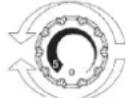
Fig. 2
PAINÉIS DE ACOPLAMENTO DA COLUNA INCLUÍDA NAS PORTAS DO APARELHO
natural_image
Simple line drawing of a mechanical component with a small inset detail (no text or symbols)natural_image
Simple line drawing of a mechanical component with a handle and mounting bracket (no text or symbols)natural_image
Pure technical line drawing of a mechanical assembly without any text, numbers, or symbolsnatural_image
Line drawing of a mechanical component with a knob and handle (no text or symbols)• GEBROM, de compressor is in werking.
text_image
Technical diagram showing a rectangular block with dimension annotations including 20 and star, and directional arrows indicating movement or force.Open de deuren van de inbou-kast en de koelkast. Plaat de inbou-lader in de slede en pas in de koelkastdeur.
natural_image
Simple line drawing of a mechanical component with a small inset detail (no text or symbols)natural_image
Pure technical line drawing of a mechanical component without any text, numbers, or symbolsnatural_image
Pure technical line drawing of a mechanical component with no text or symbolsVOORZORGEN VOOR DE JUISTE WERKING
text_image
Diagram of an refrigerator with labeled compartments and icons for storage, cleaning, and packagingEik. 4
text_image
Technical diagram showing a rectangular object with dimension annotations including 20 and an asterisk, likely representing a measurement or scale.natural_image
Line drawing of a mechanical component with a knob and handle, labeled 'Rys. 1' (no text or symbols on the diagram itself)natural_image
Four-panel diagram showing a mechanical part with two views and one blank, no text or symbols present.UWAGA:
natural_image
Simple line drawing of a rectangular container with a side rod and arrow indicators (no text or symbols)ŁĄCZENIE PANELI DRZWI ZABUDOWY Z DRZWIAMI URZĄDZENIA
natural_image
Technical line drawing of a mechanical component with a central fastener (no text or symbols)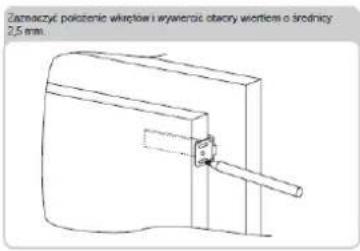
text_image
Wymiary wycicl. 540x50mm 580 380x60mm 340x50mm 280x37mm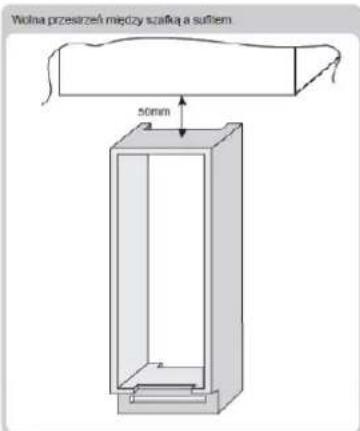
- farmy, v hotely, motely a jiné typy residenci
- noclehárny (B & B)
natural_image
Line drawing of a rectangular device with a knob and handle, labeled 'Obr. 1' (no other text or symbols)text_image
Diagram of an open refrigerator with labeled compartments and icons for food safety.Obr. 4
natural_image
Pure technical line drawing of a mechanical component with no text or symbolsnatural_image
Simple line drawing of a mechanical component with a handle and base (no text or symbols)natural_image
Pure technical line drawing of a mechanical component with no text or symbolsOPATŘENÍ PRO SPRÁVNOU FUNKCI
FOR appliances without a 4-star compartment: this refrigerating appliance is not suitable for freezing foodstuffs
FOR a free standing appliance: this refrigerating appliance is not intended to be used as a built-in appliance
FOR Wine Coolers: this appliance is intended to be used exclusively for the storage of wine
FOOD STORAGE
Position different food in different compartments according to be below table
| Refrigerator compartment | Type of food |
| Door or balconies of fridge compartment | ·Foods with natural preservatives, such as jams, juices, drinks, condiments.·Do not store perishable foods |
| Crisper drawers (salad drawer) | ·Fruits, herbs and vegetables should be placed separately in the crisper bin·Do not store bananas, onions, potatoes, garlic in the refrigerator |
| Fridge shelf – middle | ·Dairy products, eggs |
| Fridge shelf – top | ·Foods that do no need coocking, such as ready-to-eat foods, deli meats, leftovers. |
| Freezer drawer(s)/tray | ·Foods for long-term storage·Bottom drawer for raw meet, poultry, fish·Middle drawer for frozen vegetables, chips.·Top tray for ice cream, frozen fruit, frozen baked goods. |
- It's suggested to set the temperature at 4^ in the fridge compartment, and, whether possible, at -18^ in the freezer compartment.
- For most food categories, the longest storage time in the fridge compartment is achieved with colder temperatures. Since some particular products (as fresh fruits and vegetables) may be damaged with colder temperatures, it is suggested to keep them in the crisper drawers, whenever present. If not present, maintain an average setting of the thermostat.
- For frozen food, refer to the storage time written on the food packaging. This storage time is achieved whenever the setting respects the reference temperatures of the compartment (one-star -6°C, two stars -12°C, three stars -18°
POSITIONING
Install the appliance at a location where the ambient temperature corresponds to the climate class indicated on the rating plate of the appliance:
- Extended temperate (SN): ‘this refrigerating appliance is intended to be used at ambient temperatures ranging from 10 °C to 32 °C’
- Temperate (N): ‘this refrigerating appliance is intended to be used at ambient temperatures ranging from 16 °C to 32 °C’
- Subtropical (ST): ‘this refrigerating appliance is intended to be used at ambient temperatures ranging from 16 °C to 38 °C’
- Tropical (T): ‘this refrigerating appliance is intended to be used at ambient temperatures ranging from 16 °C to 43 °C’
AVAILABILITY OF SPARE PARTS
“Thermostats, temperature sensors, printed circuit boards and light sources are available for a minimum period of seven years after placing the last unit of the model on the market. Door handles, door hinges, trays and baskets for a minimum period of seven years and door gaskets for a minimum period of 10 year, after placing the last unit of the model on the market”.
GUARANTEE
Minimum guarantee is: 2 years for EU Countries, 3 years for Turkey, 1 year for UK, 1 year for Russia, 3 years for Sweden, 2 years for Serbia, 5 years for Norway, 1 year for Morocco, 6 months for Algeria, Tunisia no legal warranty required.
TECHNICAL ASSISTANCE
To contact the technical assistance, visit our website: https://corporate.haier-europe.com/en/ Under the section “website”, choose the brand of your product and your country. You will be redirected to the specific website where you can find the telephone number and form to contact the technical assistance
For further information about the product, please consult https://eprel.ec.europa.eu/ or scan the QR on the energy label supplied with the appliance