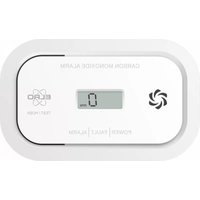
FC5003 - Fire Extinguisher ELRO - Free user manual and instructions
Find the device manual for free FC5003 ELRO in PDF.

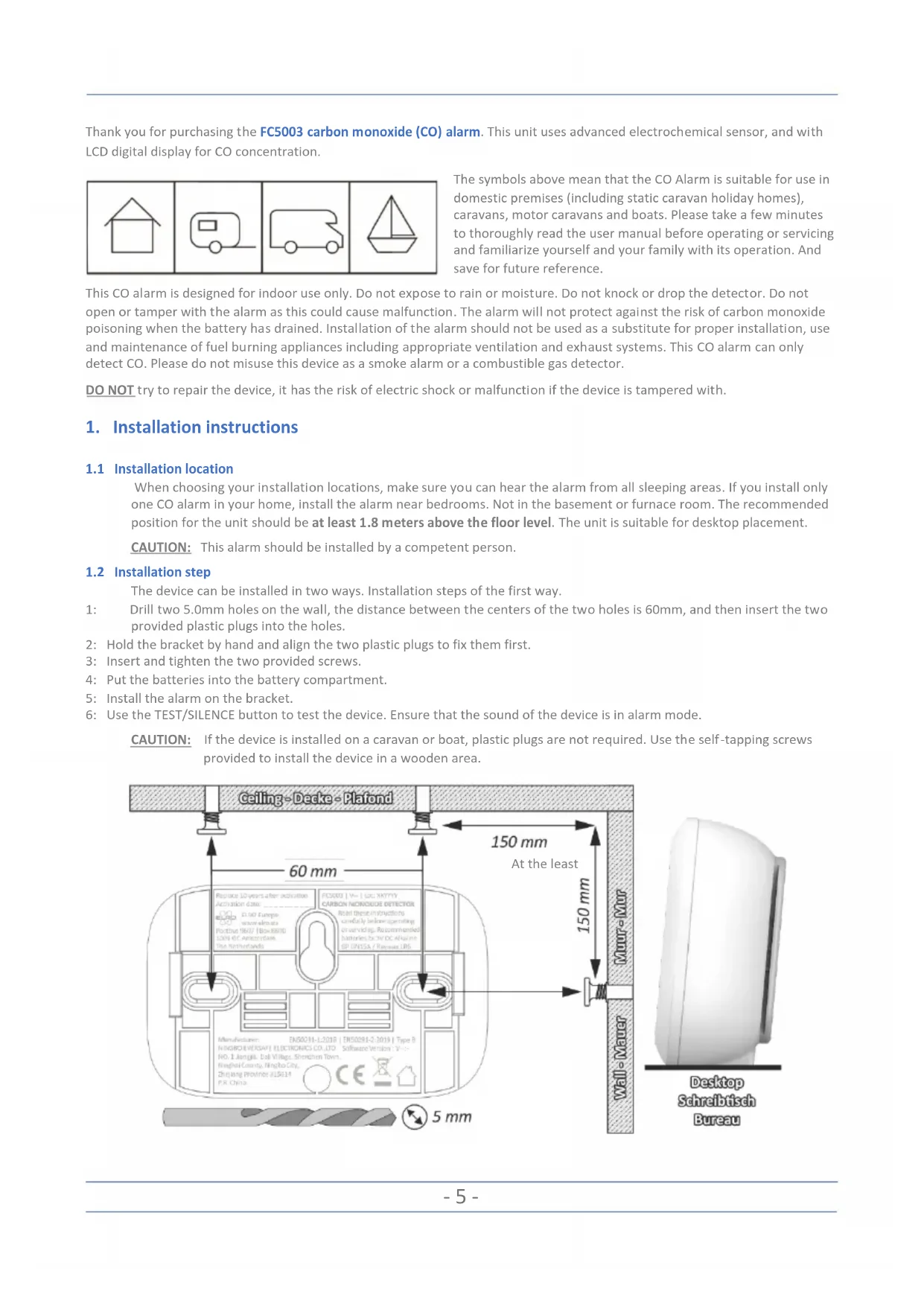


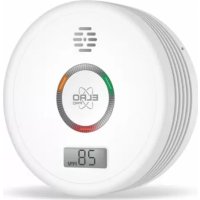
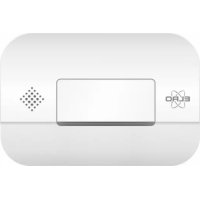
| Product Type | Carbon Monoxide (CO) Detector |
| Brand | Elro |
| Model | FC5003 |
| Standards | EN 50291-1:2018 / EN 50291-2:2019 |
| Device Type | Type B |
| Dimensions (L x H x D) | 120 x 73 x 34.2 mm |
| Net Weight | 100 ± 5 g |
| Power Supply | 3 V DC (2 AA alkaline batteries) |
| Recommended Batteries | Raymax LR6/GP GN15A (3 years) or Raymax LR6 Premium (10 years) |
| Sensor Type | Electrochemical |
| Product Lifespan | 10 years after manufacture |
| Alarm Thresholds | 30 ppm: no alarm before 120 min; 50 ppm: alarm between 60 and 90 min; 100 ppm: between 10 and 40 min; 300 ppm: within 3 min |
| Alarm Sound Level | ≥ 85 dB(A) at 3 meters |
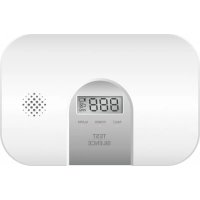
| Display | Digital LCD screen (CO concentration 0 to 999 ppm) |
| Operating Temperature | -10 °C to +40 °C |
| Operating Humidity | 25 % to 95 % RH |
| Maximum Detection Area | 40 m² per room |
| Installation | Wall, ceiling or on a desk (height ≥ 1.8 m recommended) |
| Main Functions | CO alarm, test/silence, alarm memory (7 days), LED indicators (green, yellow, red), end-of-life signal |
| Maintenance | Monthly cleaning with soft brush; weekly test; replace batteries once a year |
| Warranty | See www.elro.eu |
| Manufacturer Contact Number | info@elro.eu |
Frequently Asked Questions - FC5003 ELRO
User questions about FC5003 ELRO
0 question about this device. Answer the ones you know or ask your own.
Ask a new question about this device
Download the instructions for your Fire Extinguisher in PDF format for free! Find your manual FC5003 - ELRO and take your electronic device back in hand. On this page are published all the documents necessary for the use of your device. FC5003 by ELRO.
USER MANUAL FC5003 ELRO
English Manual Page 5 - 10
Home is not a place, it's a feeling
EN – Content
1. Installation instructions.... - 5 -
1.1 Installation location.... - 5 -
1.2 Installation step.... - 5 -
1.3 Recommended installation locations ...... - 6 -
2. Product Overview.... - 7 -
2.1 Power indicator.... - 7 -
2.2 Fault indicator.... - 7 -
2.3 ALARM indicator - 7 -
2.4 TEST/SILENCE button.... - 7 -
2.5 Alarm sounder - 7 -
2.6 LCD screen....-7-
3. Understanding your CO alarm.... - 7 -
3.1 Start up.... - 7 -
3.2 Normal operation.... - 8 -
3.3 CO alarm warning.... - 8 -
3.4 CO alarm warning silence - 8 -
3.5 Low battery voltage warning - 8 -
3.6 Low battery voltage warning silence - 8 -
3.7 Fault warning....-9-
3.8 Fault warning silence.... - 9 -
3.9 End of life warning - 9 -
3.10 Test the device....- 9 -
3.11 Weekly test.... - 9 -
3.12 Alarm memory.... - 9 -
4. What to do if the alarm sounds....- 10 -
5. Battery installation/replacement....- 10 -
6. General maintenance ....- 10 -
7. Carbon monoxide (CO) overview ...... - 11 -
7.1 Toxic effects....- 11 -
7.2 Chronic effects on high risk groups - 12 -
7.3 Normal COHb levels - 12 -
7.4 Tobacco smoking....- 12 -
8. Specification....- 12 -
9. Service and contact....- 13 -
Thank you for purchasing the FC5003 carbon monoxide (CO) alarm. This unit uses advanced electrochemical sensor, and with LCD digital display for CO concentration.
natural_image
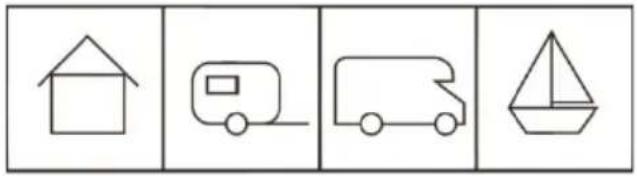
Four simple line drawings of houses, a van, a truck, and a sailboat in separate panels (no text or symbols)The symbols above mean that the CO Alarm is suitable for use in domestic premises (including static caravan holiday homes), caravans, motor caravans and boats. Please take a few minutes to thoroughly read the user manual before operating or servicing and familiarize yourself and your family with its operation. And save for future reference.
This CO alarm is designed for indoor use only. Do not expose to rain or moisture. Do not knock or drop the detector. Do not open or tamper with the alarm as this could cause malfunction. The alarm will not protect against the risk of carbon monoxide poisoning when the battery has drained. Installation of the alarm should not be used as a substitute for proper installation, use and maintenance of fuel burning appliances including appropriate ventilation and exhaust systems. This CO alarm can only detect CO. Please do not misuse this device as a smoke alarm or a combustible gas detector.
DO NOT try to repair the device, it has the risk of electric shock or malfunction if the device is tampered with.
1. Installation instructions
1.1 Installation location
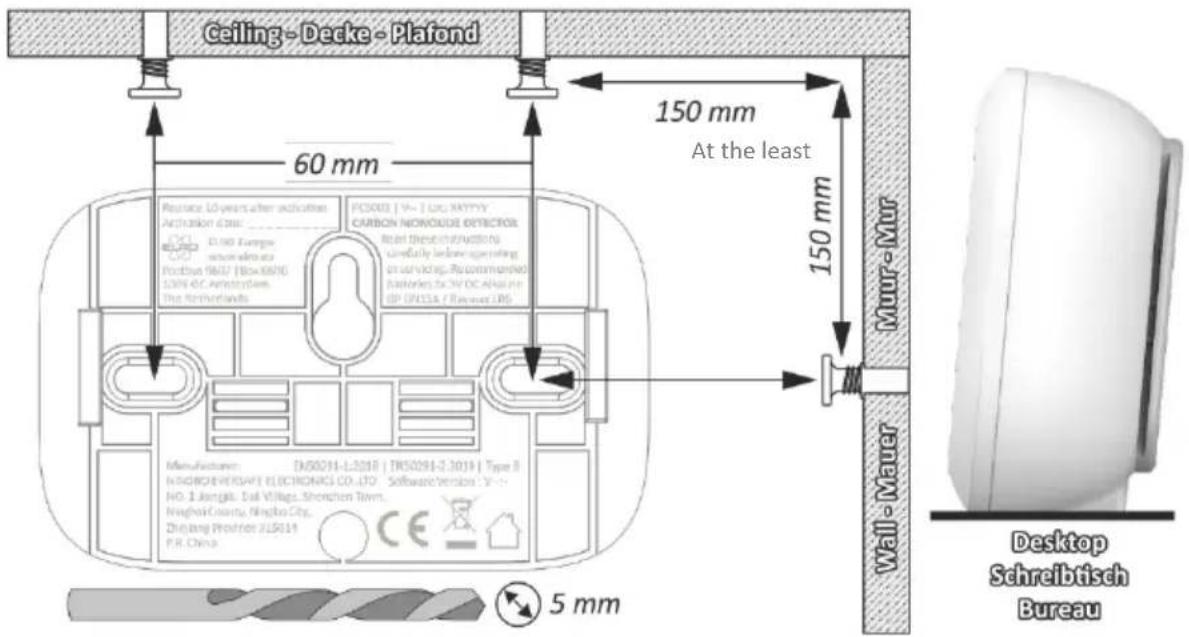
When choosing your installation locations, make sure you can hear the alarm from all sleeping areas. If you install only one CO alarm in your home, install the alarm near bedrooms. Not in the basement or furnace room. The recommended position for the unit should be at least 1.8 meters above the floor level. The unit is suitable for desktop placement.
CAUTION: This alarm should be installed by a competent person.
1.2 Installation step
The device can be installed in two ways. Installation steps of the first way.
1: Drill two 5.0mm holes on the wall, the distance between the centers of the two holes is 60mm, and then insert the two provided plastic plugs into the holes.
2: Hold the bracket by hand and align the two plastic plugs to fix them first.
3: Insert and tighten the two provided screws.
4: Put the batteries into the battery compartment.
5: Install the alarm on the bracket.
6: Use the TEST/SILENCE button to test the device. Ensure that the sound of the device is in alarm mode.
CAUTION: If the device is installed on a caravan or boat, plastic plugs are not required. Use the self-tapping screws provided to install the device in a wooden area.
1.3 Recommended installation locations
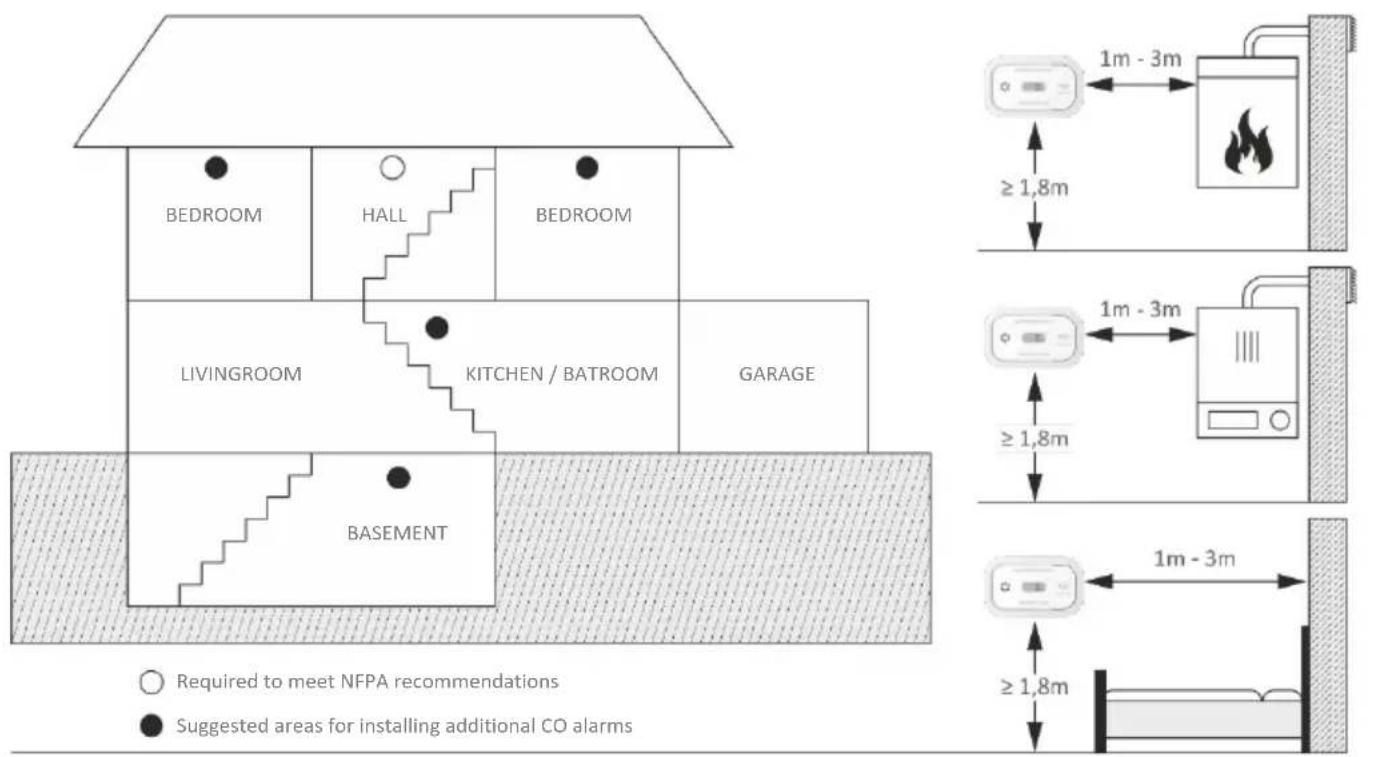
• Place out of the reach of children. Under no circumstance should children be allowed to handle the CO alarm.
• Install in a bedroom or hallway located close to the sleeping area. Take special care to verify the alarm can be heard in sleeping areas.
• It is recommended that a CO alarm be installed on each level of a multilevel home.
- Locate 1\~3 meter away from all fuel burning appliances.
- Placing at eye level allows for optimum monitoring of the red and green indicator lights.
- Ensure that all vents of the unit are unobstructed.
• Do not install in dead air spaces such as peaks of vaulted ceilings, or gabled roofs.
- Do not install in turbulent air from ceiling fans.
- Do not place near fresh air vents or close to doors and windows that open to the outside. Keep the CO alarm away from excessively dusty, dirty, or greasy areas such as kitchens, garages and furnace rooms.
• Dust, grease and household chemicals can affect the sensor.
- Keep out of damp and humid areas such as the bathroom.
- Avoid spraying aerosols near the CO alarm.
• Do not install in areas where the temperature is below-10°C or hotter than 40°C.
• Do not place behind curtains or furniture. CO must be able to reach the sensor for the unit to accurately detect CO.
Caravans & Boats
Caravans & boats have additional risks due to the presence of other vehicles, engines, generators or barbecues, however this does not change the basic guidance on locating the alarm. Caravans & boats should have an alarm in the same room as any fuel-burning appliance, located in accordance with advice above. If the caravan has a single living space, one alarm is sufficient. However, any sleeping accommodation which is in a separate room from the fuel-burning appliance should also contain an alarm.
2. Product Overview
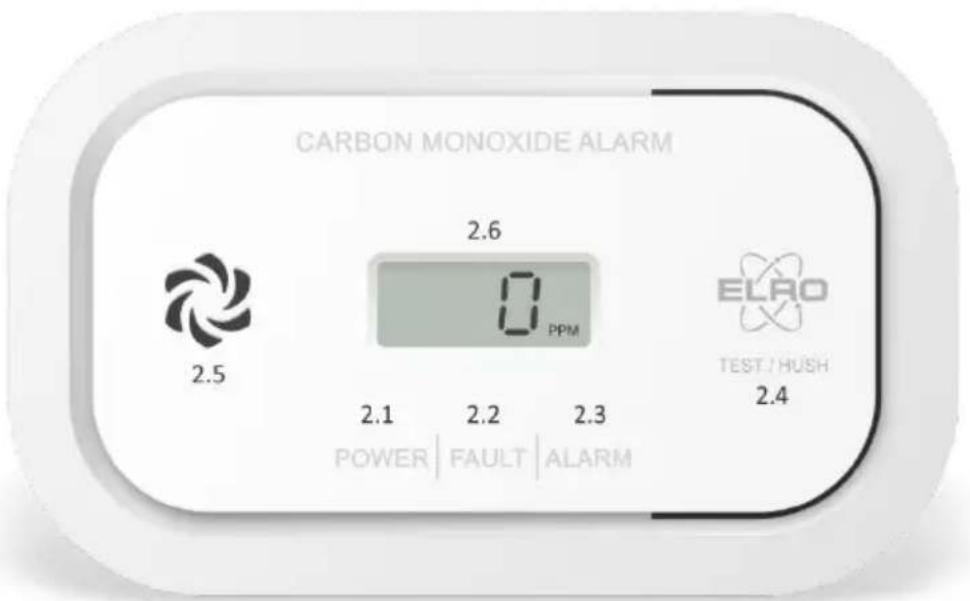
2.1 Power indicator
The POWER indicator (green LED) is used to indicate power status of the CO alarm. The POWER indicator flash every 40 seconds.
2.2 Fault indicator
The two most important considerations when positioning your alarm are:
- Not to place the alarm directly above a source of heat or steam.
- Positioning the alarm at a distance of 1-3 m from the nearest edge of the potential source.
- The FAULT indicator (yellow LED) is used to indicate fault or warning status of the CO alarm.
2.3 ALARM indicator
The ALARM indicator (red LED) is used to indicate alarm status of the CO alarm.
2.4 TEST/SILENCE button
The TEST/SILECNE button is used to test the unit. Press and hold to enable TEST function.
2.5 Alarm sounder
The alarm sounder is used to send out CO alarm warning and fault warning information.
2.6 LCD screen
Indicates CO concentration and alarm status.
3. Understanding your CO alarm
3.1 Start up
When first power on, the ALARM indicator (red), FAULT indicator (yellow) and POWER indicator (green) will flash once in turn, and then the buzzer will sound once, LCD will display for 4S. This is the power on prompt. Then the LCD screen will display the countdown of 56s, and the POWER indicator (green) will flash once every second.
This is preheated state, 60 seconds later the POWER indicator (green) flashing every 40 seconds indicates the unit is functioning properly. During the preheated state, LCD displays count down, when the countdown is "0", the product goes into normal operation.
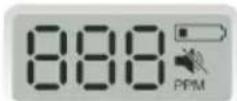
NOTE: The purpose of LCD full segment code display during power on prompt is to check whether the LCD screen is good or not.
NOTE: When the LCD is fully displayed, the "■" does not mean that the battery is low, the "◀" does not mean that the sound is muted, and "PPM" does not mean that there is dangerous carbon monoxide concentration around.
3.2 Normal operation
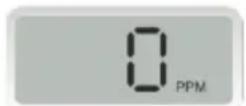
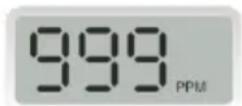
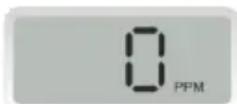
The POWER indicator (green) flashing once every 40 seconds. The LCD displays current CO concentration. CO concentration display range: 0\~999 PPM. If the CO concentration is under 23 PPM, the LCD will display "0 PPM".
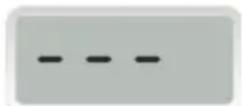
NOTE: When the CO concentration detects an ultra-high concentration and is detected for more than 30s, the LCD screen will display "----" until the alarm exits.
3.3 CO alarm warning
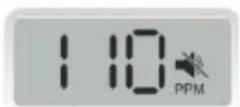
When the device detects a dangerous level of CO, the device will emit a loud alarm pattern. The alarm signal pattern is 4 beeps followed about 2.5 seconds of silence. The ALARM indicator (red) will flash the same pattern. This cycle repeats as long as a dangerous CO condition exists. Alarm sensitivity setting: Conforms to EN 50291-1:2018
30PPM : Without alarm before 120 minutes
50PPM : Alarm between 60 to 90 minutes
100PPM : Alarm between 10 to 40 minutes
300PPM : Alarm within 3 minutes
NOTE: Refer to "4. What to do if the alarm sounds" when you hear the sounds of the CO alarm warning.

3.4 CO alarm warning silence
During the device under CO alarm mode, pressing the TEST/SILENCE button, it will be paused alarm sound of the device about 10 minutes. The ALARM indicator (red) will keep flash as CO alarm mode, it indicates the device is running into the CO alarm silence mode.
NOTE: The audible alarm signal will reactivate about 10 minutes from the time the TEST/SILENCE button is operated where the concentration of CO surrounding the alarm remains at 50 PPM or greater.
NOTE: The audible alarm signal cannot to silence if the alarm at concentration above 200 PPM.
NOTE: The alarm silencing activation to once throughout a CO alarm period.
WARNING! Before enable feature of CO alarm warning silence, you should be confirmed that the alarm is due to dangerous levels of carbon monoxide and the dwelling should be ventilated.
3.5 Low battery voltage warning
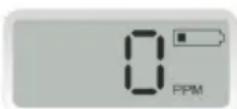
If the device chirps once every 40 seconds, with FAULT indicator (yellow) will be flash. It indicates the battery is low. The LCD displays always displays "☐".
NOTE: When the low battery voltage warning is occurred, the device has capable of producing a CO alarm signal for at least 4 min or 30 days of low battery voltage warning signal operation.
NOTE: The device will not protect against the risk of carbon monoxide poisoning when the battery has drained.
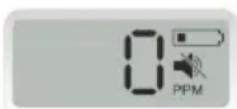
3.6 Low battery voltage warning silence
When the device is under the low battery warning, pressing the TEST/SILENCE button, it will enter the low battery voltage warning silence status for about 10 hours, meanwhile it will appear " 🔍" on LCD, and FAULT indicator (yellow) keep flashing.
NOTE: The silence feature of low battery voltage warning is temporary action to cancel warning sound effect, you need replace temporary action to cancel warning sound effect, you need to replace the battery as soon as possible.
3.7 Fault warning
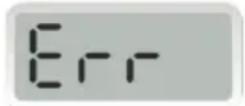
If the device chirps twice every 40 seconds with FAULT indicator (yellow) will be flash. It indicates the CO alarm is in malfunction condition. The LCD displays "Err", that means your CO alarm have no detecting function and no respond CO.
NOTE: Maybe the sensor is missing, replace the device immediately. Please contact us to more service.
3.8 Fault warning silence
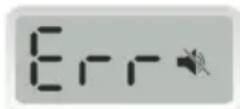
When the device is in a fault state, press the TEST/SILENCE button, it will enter the fault warning mute state for about 10 hours, while displaying " [REDACTED] on the LCD, and the FAULT indicator (yellow) remains flashing.
NOTE: The silence feature of fault warning is a temporary action to cancel warning sound effect, you need replace the device as soon as possible.
3.9 End of life warning
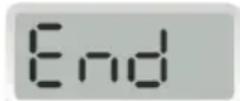
If the device chirps three times every 40 seconds with FAULT indicator (yellow) flash 3 times and the LCD displays 'End'. It indicates end of life of CO alarm. You need to immediately replace the CO alarm.
3.10 Test the device
When the device under normal operation status, you can test the device by TEST/SILENCE button, press and hold the TEST/SILENCE button, you should hear alarm sound pattern (<85dB) and with a corresponding ALARM indicator (red) flash. After the eight sound, the device will issuing a normal alarm volume ( ≥ 85dB). Test process will stop when release the button, but the alarm will ring for at least two cycles. The LCD displays current CO concentration during testing.
NOTE: After the TEST/SILENCE button is enabled, the alarm sounds and the red alarm light flashes. This does not indicate that CO is present.
NOTE: If the device is in failure state and end of life state, the device cannot be tested.
NOTE: Test the device every week! If at any time your device does not perform as described, replace it immediately.
3.11 Weekly test
Recommend test the alarm weekly by pressing the TEST/SILENCE button to ensure the normal operation of the equipment.
3.12 Alarm memory
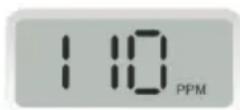
7 days alarm memory function. When the device detects CO and alarms, after the device exits the alarm, it will chirps once every 40 seconds with ALARM indicator (red) will be flash. And when the CO concentration <23 PPM, the LCD will displays "AL". After pressing the TEST/SILENCE button, the product will clear the alarm memory warning, and respond to the corresponding function of the button. Short press the button to display the maximum CO concentration recorded on the LCD for 4 seconds, press and hold the button to enter the test alarm state. Or 7 days later, the device will automatically clear the alarm memory prompt.
NOTE: Press and hold the TEST/SILENCE button during the display period to clear the maximum concentration value memorized and enter the test alarm state.

4. What to do if the alarm sounds
WARNING! Actuation of your CO alarm indicates the presence of Carbon Monoxide (CO) which can KILL YOU.
WARNING! Action of this device indicates the presence of dangerous levels of CO! CO can be fatal!
If the alarm sounds:
4.1 Keep calm and open all doors and windows to increase the rate of ventilation. Stop using all fuel burning appliances and ensure, if possible, that they are turned off, e.g. for gas appliances, isolate the emergency control valve;
4.2 If the alarm continues to be activated, then evacuate the premises. Leave the doors and windows open, and only reenter the building when the alarm has stopped. In multi occupancy and multistorey premises, ensure that all the occupants are alerted to the risk;
4.3 Get medical help for anyone suffering the effects of carbon monoxide poisoning, and advise that carbon monoxide inhalation is suspected;
4.4 Telephone the appropriate appliance servicing and/or maintenance agency or, when necessary, the relevant fuel supplier on their emergency number or the national Gas Emergency Service Provider, if appropriate, so that the source of carbon monoxide emissions can be identified and corrected. Unless the reason for the alarm is obviously spurious, do not use the fuel burning appliances again, until they have been checked and cleared for use by a competent person according to national regulations.
5. Battery installation/replacement
Once chirps with corresponding FAULT indicator (yellow LED) flashing once every 40 seconds indicates that the battery is low battery, you must replace with battery specified, please see "8. Specification" To install or replace the battery in unit, please perform the following steps:
5.1 Remove the device from the wall.
5.2 Remove the old battery and replace it with a new one.
5.3 Put the battery into the battery box.
5.4 Install the alarm back to the bracket.
5.5 Use the TEST/SILENCE button to test the alarm. If the test alarm is normal, it means that the device can work normally.
WARNING! Use only the battery specified. Use of different battery may have a detrimental effect on the CO alarm. A good safety measure is to replace the battery at least once a year.
NOTE: Constant exposure to high or low humidity or temperatures may reduce battery life.
CAUTION: Please replace new 2pcs same type batteries in the meantime.
CAUTION: Test the alarm for correct operation using the TEST/SILENCE button, whenever the battery is replaced!
6. General maintenance
To keep your CO alarm in good working order, please follow these simple steps:
6.1 Verify the unit's alarm sound and indicators operation by enable the TES T/SILENCE button once a week.
6.2 Remove the unit from the wall and clean the alarm cover and vents with a soft brush attachment once a month to remove dust and dirt.
6.3 Never use detergents or other solvents to clean the unit.
6.4 Avoid spraying air fresheners, hair spray, or other aerosols near the CO alarm.
6.5 Do not paint the unit. Paint will seal the vents and interfere with the sensor's ability to detect CO. Never attempt to disassemble the unit or clean inside. This action will void your warranty.
6.6 As soon as possible, place the CO alarm back in its proper location to assure continuous protection from carbon monoxide poisoning.
6.7 When household cleaning supplies or similar contaminants are used, the area should be ventilated.
6.8 A list of materials that may be expected to be found in recreational vehicles that may produce vapors or gases, e.g. oils, cleaning fluids, polishes, paints, greases, cooking operations, etc. which may affect the reliability of the apparatus in the short or long term.
WARNING! The following substances can affect the sensor and may cause false actions: methane, propane, isobutene, isopropanol, ethylene, benzene, toluene, ethyl acetate, hydrogen sulfide, sulfur dioxides, alcohol based products, paints, thinner, solvents, adhesives, hair sprays, after shaves, perfumes and some cleaning agents.
WARNING! Your CO alarm will not be operational and will not monitor for CO levels without battery.
WARNING! This apparatus is designed to protect individuals from the acute effects of carbon monoxide exposure. It will not fully safeguard individuals with specific medical conditions. If in doubt consult a medical practitioner.
7. Carbon monoxide (CO) overview
7.1 Toxic effects
Carbon monoxide (CO) is a colorless, odorless, nonirritating gas classified as a chemical asphyxiant and whose toxic action is a direct result of the hypoxia produced by a given exposure. CO is rapidly absorbed through the lungs, diffuses across the alveolar capillary membrane and is reversibly bound with hemoglobin as carboxyhemoglobin (COHb), however, a minute amount is present in the plasma. The affinity of hemoglobin for CO is over 200 times its affinity for oxygen. This reduces the oxygen carrying capacity of the blood, and has an effect on the dissociation of oxyhemoglobin, which further reduces the oxygen supply to the tissues. CO is chemically unchanged in the body and is eliminated in expired air. The elimination is determined by the same factors that applied during absorption. The half-life while breathing room air is 2 h 6.5 h depending on the initial COHb level. If the CO level in the inhaled air is constant, the level of COHb in the blood will approach an equilibrium (saturation) state after several hours. However, the rate at which the equilibrium is reached depends on many factors, e.g. lung ventilation rate (physical activity) and alveolar capillary transfer, cardiac parameters, blood hemoglobin concentration, barometric pressure, oxygen and carbon dioxide concentration in the inhaled air, but the two most important factors in determining the COHb level are the CO concentration and the duration of exposure. The effects of different saturation blood COHb levels on healthy adults are shown.
| % COHb | Effects |
| 0.3 – 0.7 | Normal range in non smokers due to endogenous CO production |
| 0.7 – 2.9 | No proven physiological changes |
| 2.9 – 4.5 | Cardio-vascular changes in cardiac patients |
| 4 – 6 | Usual values observed in smokers, impairment in psychomotor tests |
| 7 – 10 | Cardio vascular changes in non cardiac patients (increased cardiac output and coronary blood flow) |
| 10 – 20 | Slight headache, weakness, potential burden on foetus |
| 20 – 30 | Severe headache, nausea, impairment in limb movements |
| 30 – 40 | Severe headache, irritability, confusion, impairment in visual acuity, nausea, muscular weakness, dizziness |
| 40 – 50 | Convulsions and unconsciousness |
| 60 – 70 | Coma, collapse, death |
| Source | U.S. Environmental Protection Agency 1984 |
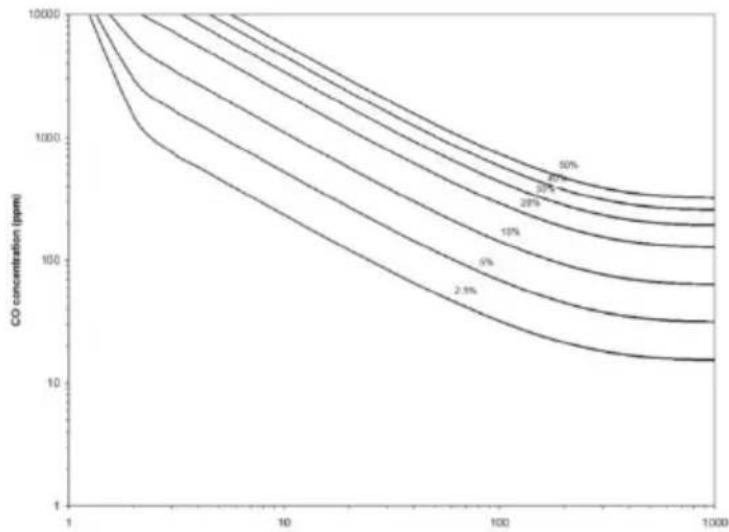
The relationship between the CO concentration and the duration of exposure can be calculated for a given \%COHb, by parameterizing the above factors. Figure 7.1 shows examples for a person undertaking light/moderate exercise.
line
| CO concentration (ppm) | Percentage | | ---------------------- | ---------- | | 1000 | 50% | | 1000 | 30% | | 1000 | 20% | | 1000 | 10% | | 100 | 5% | | 10 | 2.5% | | 1 | 5 |Figure 7.1 Relationship between CO concentration and exposure time for various %COHb (light/moderate exercise)
7.2 Chronic effects on high risk groups
Individuals with coronary artery disease exposed to low levels of CO show reduced ability to exercise and the time of onset of exercise induced angina pectoris in such patients exposed to low levels of CO is reduced. Carbon monoxide readily crosses the placental barrier and may endanger the normal development of the fetus. A number of high risk groups are particularly sensitive to the effects of CO because of various organ impairments or specific changes, mainly:
a) those whose oxygen carrying capacity is decreased due to anaemia or other haemoglobin disorders;
b) those with increased oxygen needs such as those encountered in fever, hyperthyroidism or pregnancy;
c) those with systemic hypoxia due to respiratory insufficiency;
d) those with heart disease and any vascular insufficiency.
World Health Organization guidance states that in order to protect non smoking, middle aged and elderly population groups with documented or latent coronary artery disease from acute ischemic heart attacks, and to protect the foetuses of non smoking pregnant women from untoward hypoxic effects, a COHb level of 2.5% should not be exceeded. The following WHO guideline values and periods of time weighted average exposures have been determined in such a way that the COHb level of 2.5% is not exceeded, even when a normal subject engages in light or moderate exercise:
100 mg/m ^3 (90 ppm) for 15 min;
60 mg/m ^3 (50 ppm) for 30 min;
30 mg/m ^3 (25 ppm) for 1 h;
10 mg/m ^3 (10 ppm) for 8 h.
7.3 Normal COHb levels
Under normal conditions, humans typically have low levels of COHb of between 0.3% and 0.7% present within the body. These levels are considered neither beneficial nor harmful.
7.4 Tobacco smoking
Tobacco smokers are exposed to significant concentrations of CO. In cigarette smokers, the COHb concentration varies between 5% 9%, while heavy cigar smokers may exceed 10%.
WARNING! Exposure to high levels of carbon monoxide can be fatal or cause permanent damage and disabilities.
WARNING! The device may not prevent the chronic effects of carbon monoxide exposure, and that the device will not fully safeguard individual is at special risk.
8. Specification
Model FC5003
Product standards: EN 50291 1:2018 / EN 50291 2:2019
Type of apparatus: Type B
Power supply:
3V (2*AA alkaline battery)
Recommend battery type:
Raymax LR6/GP GN15A (The normal service life is 3 years) Raymax LR6 Premium (The normal service life is 10 years)
Sensor type:
Electrochemical
Product service life:
10 years after manufacture
Sensitivity setting:
Conforms to EN 50291 1:2018 standard
30PPM Without alarm before 120 minutes
50PPM Alarm between 60 to 90 minutes
100PPM Alarm between 10 to 40 minutes
300PPM Alarm within 3 minutes
Standby current:
Operation ambient condition:
-10 \~ + 40°C, 25 \~ 95%RH
Storage/Transport ambient condition: -20 \~ +50°C, 25 \~ 95%RH
Alarm sound:
≥85dB(A) at 3m
Low battery warning silence:
About 10 hours about 10 hours
Installation location:
Ceiling, wall or desktop placement
Detection range:
Max. 40m^2 within a room
Size:
120 x 73 x 34.2 mm
Weight:
100 ± 5g (net)
NOTE: This CO alarm is designed to detect carbon monoxide gas from any source of combustion. It is not designed to detect any from any source of combustion. It is not designed to detect any other gas.
9. Service and contact
To ensure that we can provide our customers with the best possible service as quickly as possible, we ask you to consider the following:
Go to www.elro.eu to receive a quick answer to your question. Here you will find answers to frequently asked questions, detailed installation videos and the most recent version of a product manual. Can't resolve your question using the website? Leave a question via the product page or send an email to info@elro.eu we will help you as soon as possible. For the warranty conditions applicable to this product, please visit www.elro.eu
10. Symbols

Recycling and Disposal: The WEEE symbol indicates that this product and its batteries must be disposed of separately from household waste. When this product reaches the end of its service life, take it to a designated waste collection point nearby to ensure safe disposal or recycling. Protect the environment and human health, use natural resources responsibly!

Updates or new warmings might apply to the manual. Always check the most up to date manual on www.elro.eu before installing or reinstalling the product. Read the manual before use and keep it in a safe place for future use and maintenance.

Guarantee visit www.elro.eu

ELRO Europe | www.elro.eu
Postbus 9607 - Box E800
1006 GC Amsterdam - The Netherlands

natural_image
Four simple line drawings of houses, a van, a truck, and a sailboat (no text or symbols)1.1 Installationsort
line
| CO concentration (ppm) | Percentage | | ---------------------- | ---------- | | 1000 | 50% | | 1000 | 30% | | 1000 | 20% | | 1000 | 10% | | 100 | 5% | | 10 | 2.5% |natural_image
Four simple line drawings of houses, a van, a bus, and a sailboat in a row (no text or symbols)line
| CO concentration (ppm) | Label | | ---------------------- | ----- | | ~10000 | 50% | | ~1000 | 20% | | ~100 | 10% | | ~10 | 4% | | ~10 | 2.3% |natural_image
Four simple line drawings of houses, a van, a truck, and a sailboat in separate panels (no text or symbols)
- EN – Content
- Installation instructions.... - 5 -
- Product Overview.... - 7 -
- Understanding your CO alarm.... - 7 -
- What to do if the alarm sounds....- 10 -
- Battery installation/replacement....- 10 -
- General maintenance ....- 10 -
- Carbon monoxide (CO) overview ...... - 11 -
- Specification....- 12 -
- Service and contact....- 13 -
- Installation instructions
- Installation location
- Installation step
- Recommended installation locations
- Caravans & Boats
- Product Overview
- Power indicator
- Fault indicator
- ALARM indicator
- TEST/SILENCE button
- Alarm sounder
- LCD screen
- Understanding your CO alarm
- Start up
- Normal operation
- CO alarm warning
- CO alarm warning silence
- Low battery voltage warning
- Low battery voltage warning silence
- Fault warning
- Fault warning silence
- End of life warning
- Test the device
- Weekly test
- Alarm memory
- What to do if the alarm sounds
- Battery installation/replacement
- General maintenance
- Carbon monoxide (CO) overview
- Toxic effects
- Chronic effects on high risk groups
- Normal COHb levels
- Tobacco smoking
- Specification
- Service and contact
- Symbols
- Installationsort
Brand : ELRO
Model : FC5003
Category : Fire Extinguisher