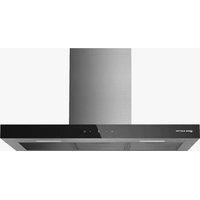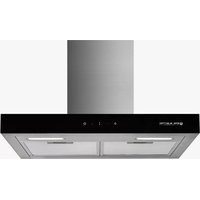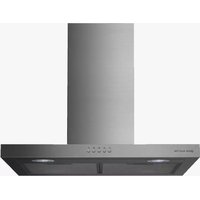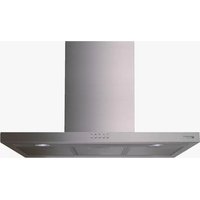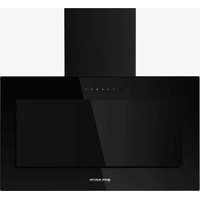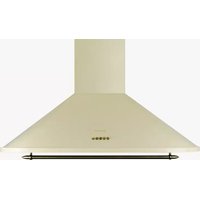
EMRH953RC - Basket EAS Electric - Free user manual and instructions
Find the device manual for free EMRH953RC EAS Electric in PDF.



| Product type | Wall-mounted decorative hood |
| Brand | EAS Electric |
| Model | EMRH953RC |
| Width | 95 cm |
| Installation | External extraction or recirculation with charcoal kit (optional) |
| Power supply | 220-240 V ~ 50/60 Hz |
| Electrical class | Class I (mandatory grounding) |
| Motor power | Not specified |
| Number of speeds | 3 speeds + intensive (15 min) |
| Lighting | Halogen bulbs (type G4, max 28 W) × 2 |
| Grease filters | Aluminium, dishwasher safe (every 2 months) |
| Charcoal filters | Optional, replace every 2-3 months (not supplied) |
| Minimum distance above hob | ≥ 65 cm |
| Material | Stainless steel |
| Approximate weight | Approximately 12 kg |
| Warranty | 3 years (Spain and Portugal) |
| Recommended maintenance | Clean grease filters every 2 months; replace charcoal filters if installed |
| Noise level | Not specified |
| Included accessories | Telescopic decorative flue, fixing screws |
| Electrical connection | Power cord with plug (depending on country) or direct connection |
Frequently Asked Questions - EMRH953RC EAS Electric
User questions about EMRH953RC EAS Electric
0 question about this device. Answer the ones you know or ask your own.
Ask a new question about this device
Download the instructions for your Basket in PDF format for free! Find your manual EMRH953RC - EAS Electric and take your electronic device back in hand. On this page are published all the documents necessary for the use of your device. EMRH953RC by EAS Electric.
USER MANUAL EMRH953RC EAS Electric
natural_image
Line drawing of a kitchen air conditioner unit with a chimney and ventilation slots (no text or symbols)EMRH653RN
EMRH653RC
EMRH953RN
EMRH953RC
text_image
QR code with embedded logo and text 'EAS ELECTRIC' in the centerEscanee para ver este manual en otros idiomas y actualizaciones Scan for manual in other languages and further updates Manuel dans d'autres langues et mis à jour Manual em outras línguas e actualizações
Contenido
text_image
Technical diagram of a cabinet or enclosure with labeled parts A and B, showing structural components and mounting hardware.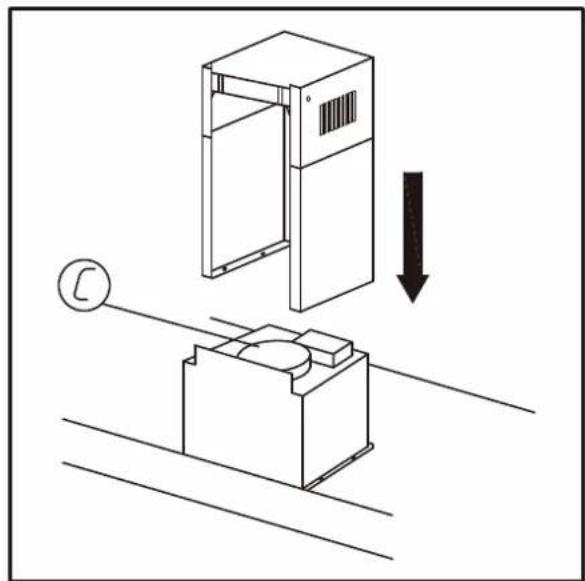
natural_image
Technical line drawing of a mechanical device with an open lid and a rotating base, showing directional arrows (no text or symbols)Fig.4 Fig.5
text_image
Diagram showing a hand holding a laptop with a magnified view of the screen, labeled with '000000' above.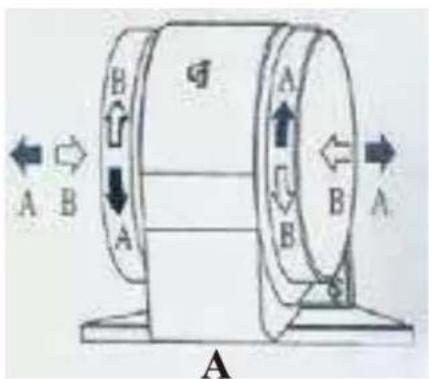
natural_image
Diagram of a mechanical device with an arrow indicating rotational motion, labeled 'B' (no text or symbols on the diagram itself)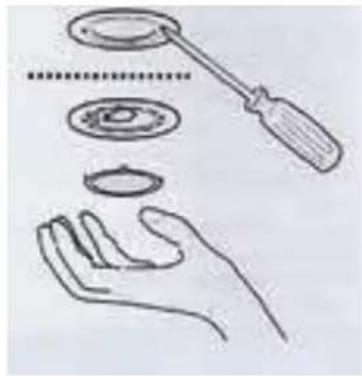
natural_image
Illustration of a hand holding three circular objects with a tool, no text or symbols presentFig.6 Fig.7
GENERAL
text_image
I II III A B C D ETECLAS DE FUNCIÓN
A = ON/OFF
B = VELOCIDAD I / OFF
C = VELOCIDAD II / OFF
D = VELOCIDAD III / OFF
E = LUZ
natural_image
Line drawing of a kitchen air conditioner unit with ventilation duct and door (no text or symbols)Fig.8
text_image
Close Open Open CloseFig.9
natural_image
Symbol of a trash bin crossed with no visible text or labelstext_image
Technical diagram of a cabinet with labeled parts A and B, showing structural components and mounting hardware.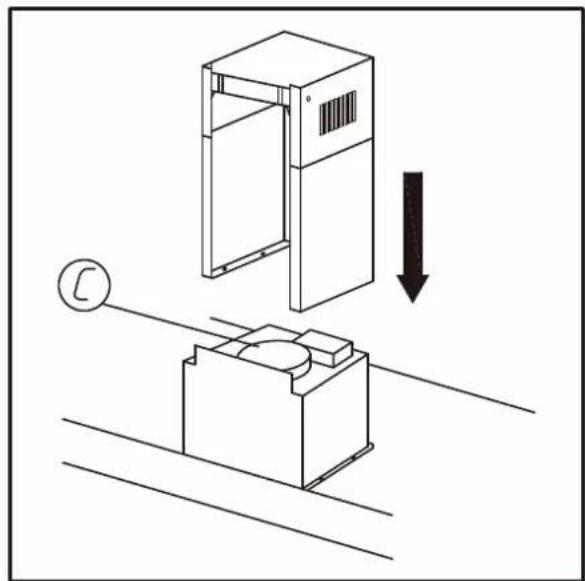
natural_image
Diagram of a mechanical device with an open lid and a rotating base, showing directional arrows (no text or symbols)Fig.4 Fig.5

text_image
Diagram showing a hand holding a laptop with a magnified view of the screen, labeled with '000000' above.
natural_image
Diagram of a mechanical device with an arrow indicating rotational motion, labeled 'B' (no text or symbols on the diagram itself)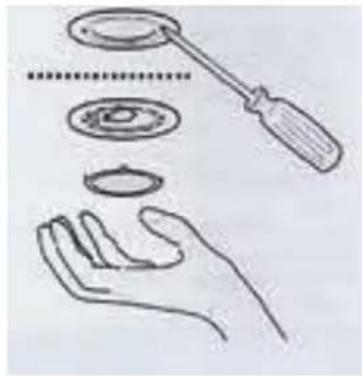
natural_image
Illustration of a hand holding three circular objects with a tool, no text or symbols presentFig.6 Fig.7
GENERAL
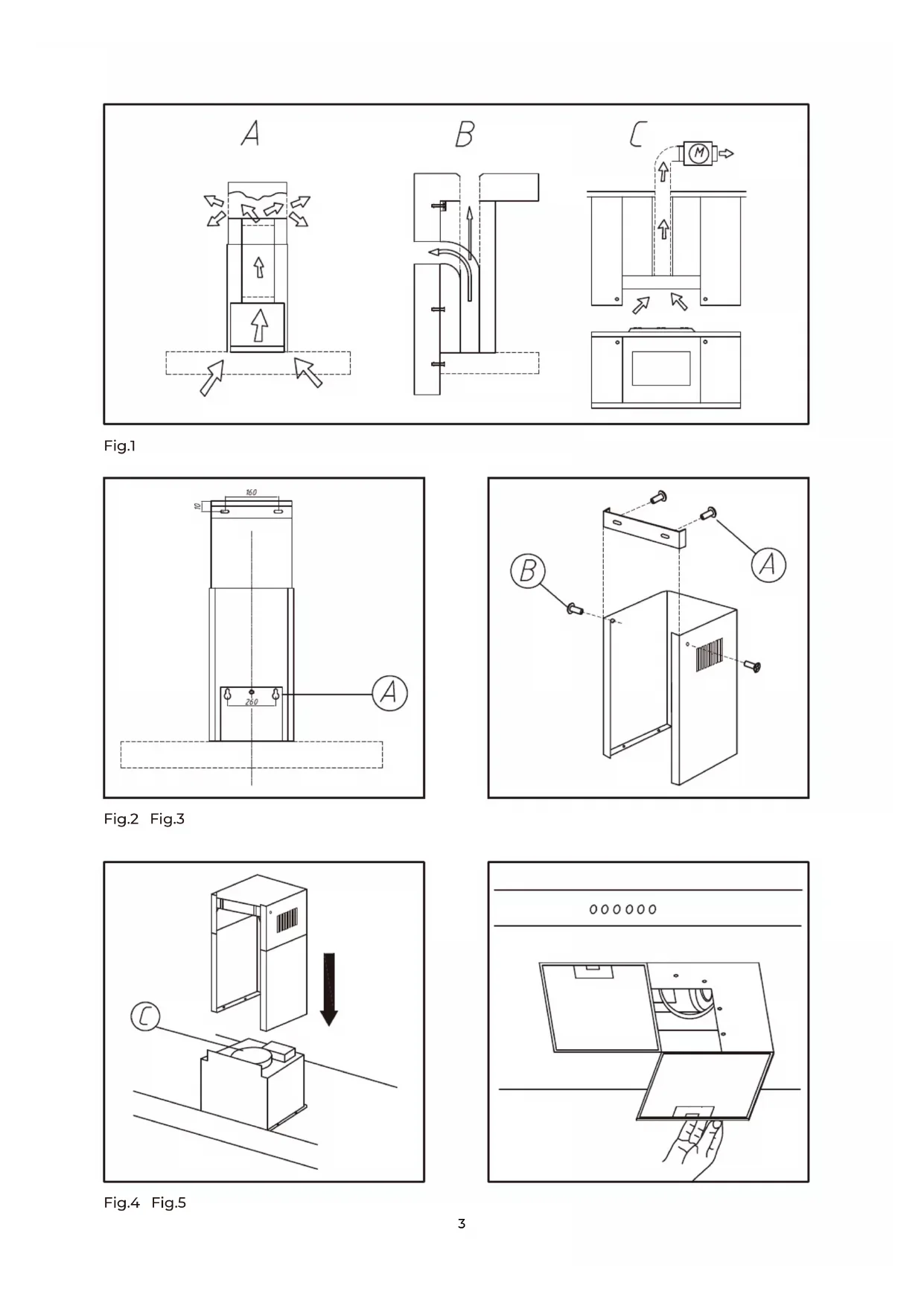
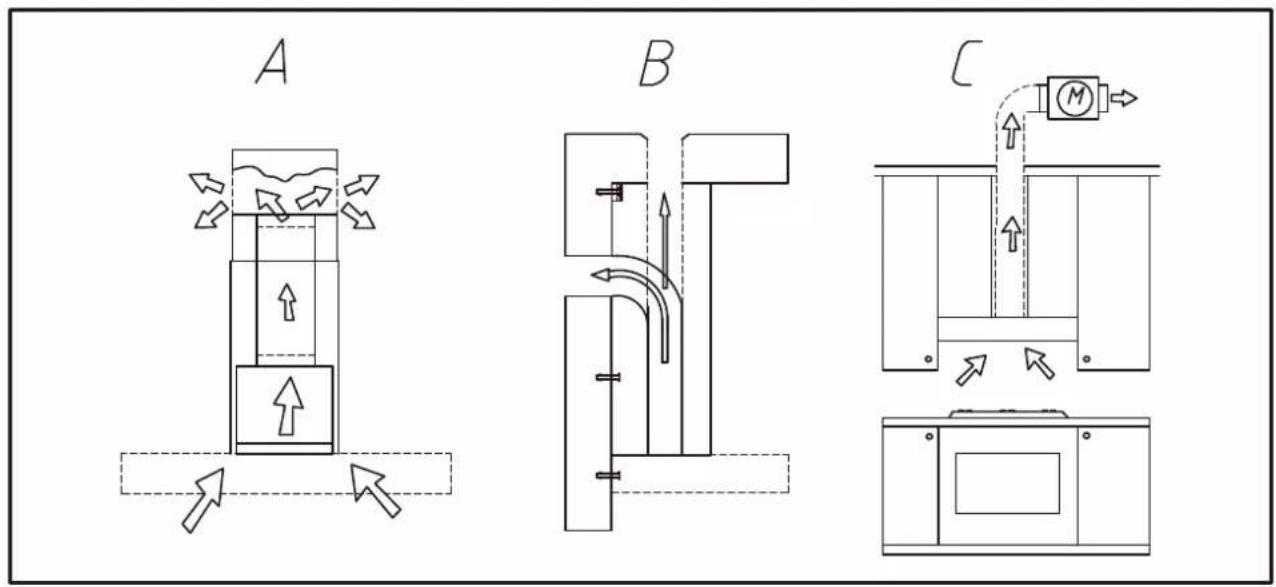
Carefully read the following important information regarding installation safety and maintenance. Keep this information booklet accessible for further consultations. EAS Electric Smart Technology S.L. will not be responsible for any damages due to disregarding these instructions or to any inappropriate use of this appliance. The appliance has been designed for use in the ducting version (air exhaust to the outside---Fig.1B), filtering version (air circulation on the inside---Fig.1A) or with external motor (Fig.1C).
SAFETY PRECAUTION
Please take note that when the cooker hood is operating simultaneous with an open fireplace or burner that depend on the air in the environment, the cooker hood may remove the air from the environment which a burner or fireplace need for combustion. The negative pressure in the environment must not exceed 4Pa (4x10 ^-5 bar). Provide adequate ventilation in the environment for a safe operation of the cooker hood. Follow the local laws applicable for external air evacuation.
Before connecting the model to the electricity network: Control the data plate (positioned inside the appliance) to ascertain that the voltage and power correspond to the network and the socket is suitable. If in doubt please ask a qualified electrician for help.
WARNING!
In certain circumstances electrical appliances may be a danger hazard.
A) Do not check the status of the filters while the cooker hood is operating.
B) Do not touch bulbs or adjacent areas, after prolonged use of the lighting installation.
C) Flambe cooking is prohibited underneath the cooker hood.
D) Avoid free flame, as it is damaging the filters and can cause fire hazard.
E) Constantly check food frying, the overheated oil may become a fire hazard.
F) Disconnect the electrical plug prior to any maintenance.
G) There shall be adequate ventilation in the room when the range hood is operating
H) There is a risk of fire if cleaning is not carried out in accordance with the instructions
I) If the supply cord is damaged, it must be replaced by the manufacturer or its service agent or a similarly qualified person
J) This appliance is not intended for use by persons (including children) with reduced physical, sensory or mental capabilities, or lack of experience and knowledge, unless they have been given supervision or instruction concerning use of the appliance by a person responsible for their safety.
K) Children should be supervised to ensure that they do not play with the appliance.
L) The air must not be discharged into a flue that is used for exhausting fumes from appliances burning gas or other fuels
M) The minimum distance between the supporting surface for the cooking vessels on the hob and the lowest part of the range hood shall be at least 65cm. The instructions for installation of the gas hob specify a greater distance has to be taken into account if requirement stated.
N) Regulation concerning the discharge of air has to be fulfilled.
INSTALLATION INSTRUCTIONS
Assembly and electrical connections must be carried out by specialized personnel.
Electric Connection
The appliance has been manufactured as class I, therefore earth cable is necessary. The connection to the mains is carried out as follows:
| IEC227 North America | ||
| L=live Brown | Black | |
| N=neutral Blue White | ||
| E=earth Green/Yellow Green | ||
If the plug is not provided, connect the electrical load as indicated on the description label. When a plug is provided, the cooker hood must be installed in order that the plug is easy to access.
An omnipolar switch with a minimum aperture of 3mm between contacts; in line with the electrical load and local standards, must be placed between the appliance and the network in the case of direct connection to the electrical network.
The minimum distance between the support surfaces of the cooking pots on the cooker top and the lowest part of the cooker hood must be at least 65 cm. If a connection tube composed of two parts is used the upper part must be placed outside the lower part.
Do not connect the cooker hood exhaust to the same conductor used to circulate hot air or for evacuating fumes from other appliances generated by other than an electrical source.
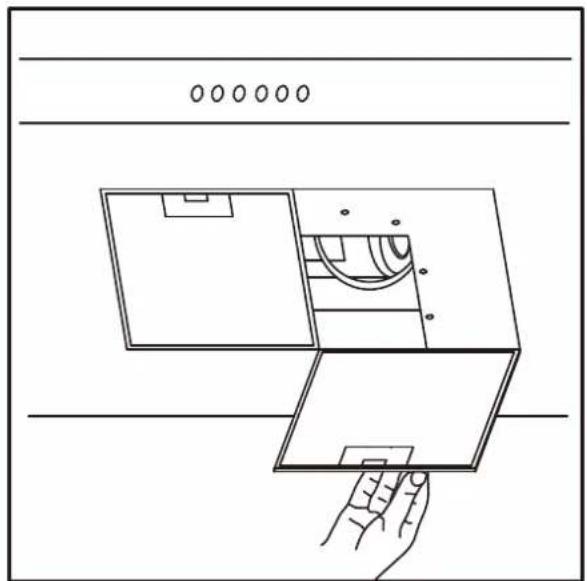
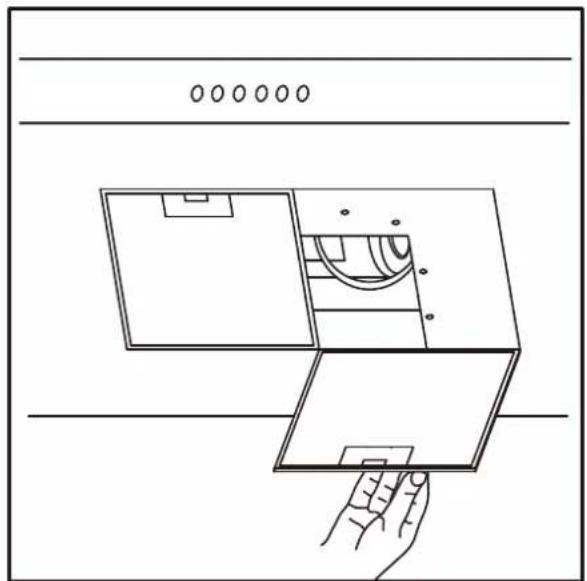
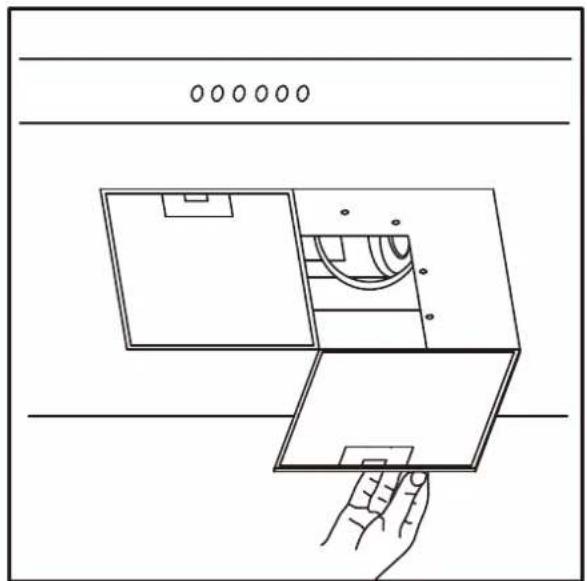
Before proceeding with the assembly operations, remove the anti-grease filter (s) (Fig.5) so that the unit is easier to handle.
In the case of assembly the appliance, in the suction version prepare the hole for evacuation of the air.
FIXING TO THE WALL
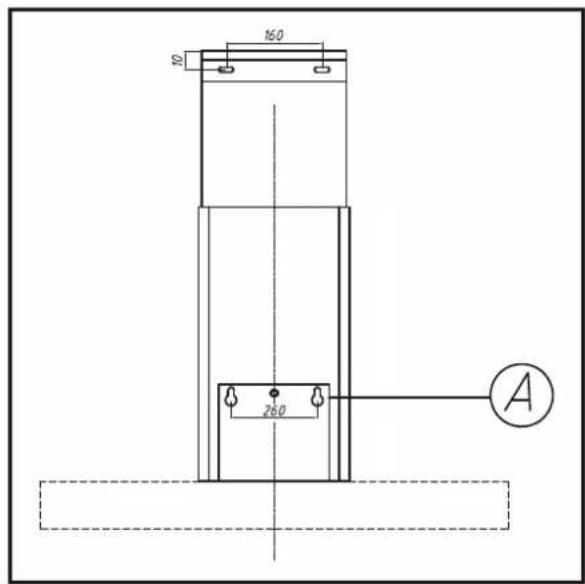
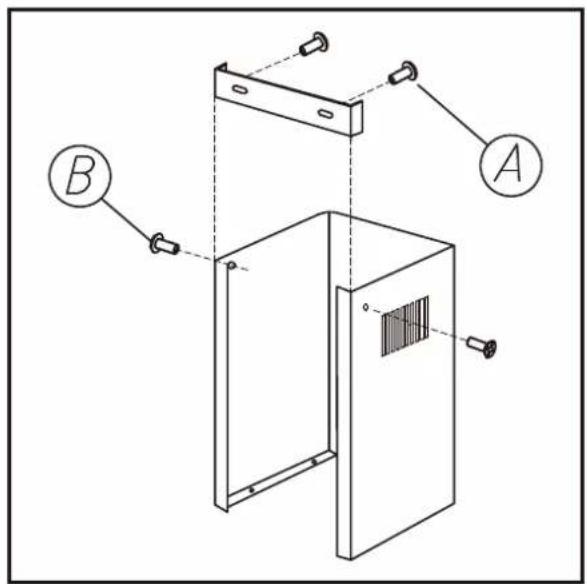
Drill the holes A respecting to the distances indicated (Fig.2). Fix the appliance to the wall and align it in horizontal position to the wall units. When the appliance has been adjusted, fix the hood using the screws A.
For the various installations use screws and screw anchors suited to the type of wall (e.g. reinforced concrete, plasterboard, etc.). If the screws and screw anchors are provided with the product, kindly check the screws are suitable for the type of wall in which the hood is to be fixed.
FIXING THE DECORATIVE TELESCOPIC FLUE
Arrange the electrical power supply within the dimensions of the decorative flue. If your appliance is to be installed in the ducting version or in the version with external motor, prepare the air exhaust opening. Adjust the width of the support bracket of the upper flue (Fig.3). Then fix it to the ceiling using the screws A (Fig.2) make sure that it is in line with your hood and respecting the distance from the ceiling indicated in Fig.2. Connect the flange C to the air exhaust hole using a connection pipe (Fig.4).
FILTERING VERSION
Install the hood and the two flues as described in the paragraph for installation of the hood in ducting version. To assemble the filtering flue refers to the instructions contained in the kit. If the kit is not provided, please order it from your dealer. The charcoal filters must be fitted in the ducting unit located inside the hood.
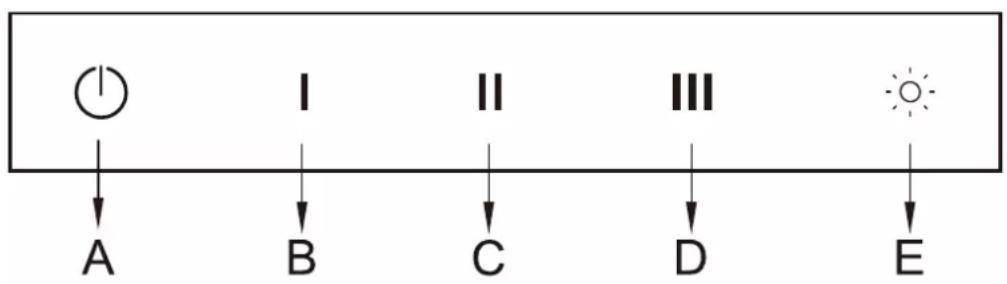
Control panel
text_image
I II III A B C D EFUNCTION KEYS:
A = OFF
B = SPEED I / OFF
C = SPEED II / OFF
D = SPEED III / OFF
E = LIGHT
If your appliance does not have the INTENSIVE speed function, press key A for two seconds and it will be activated for 15 minutes after which it will return to the previously set speed. If the function program of the unit is active the LED will flash.
By pressing any key except the key for the light, the hood will return immediately to its normal functioning.
USE AND MAINTENANCE
It is recommended to operate the appliance prior to cooking. It is recommended to leave the appliance in operation for 15 minutes after cooking is terminated in order to completely eliminate cooking vapors and odours.
The proper function of the cooker hood is conditioned by the regularity of the maintenance operations, in particular, the active carbon filter.
The anti-grease filters capture the grease particles suspended in the air, and are therefore subject to clogging according to the frequency of the use of the appliance.
In order to prevent fire hazard, it is recommendable to clean the filter at a maximum of 2 months by carrying out the following instructions:
- Remove the filters from the cooker hood and wash them in a solution of water and neutral liquid detergent, leaving to soak.
- Rinse thoroughly with warm water and leave to dry.
- The filters may also be washed in the dishwasher.
Please take note that the aluminum panels may alter in color after several washes.
Clean the fan and other surfaces of the cooker hood regularly using a clot moistened with denatured alcohol or non abrasive liquid detergent.
The illumination installation is designed for use during cooking and not fo prolonged general illumination of the environment. Prolonged use of the illumination installation notably reduces the duration of the bulb.
Use a one-edged screwdriver or any other appropriate tool to lift and remove the overhead light fixture. Replace the damaged lamp. Use only halogen lamps as the original specification, avoiding contact with hands. Return the light fixture to its position (snap fastening). (Fig. 7)
Replacement of the carbon filters (optional)

natural_image
Line drawing of a kitchen air conditioner unit with ventilation duct and fan (no text or symbols)Fig.8
text_image
Close Open Open CloseFig.9
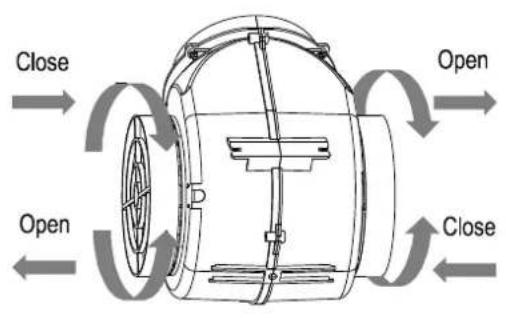
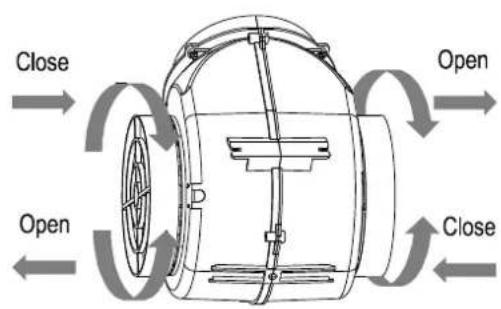
■ Remove the filters see Fig. 8.
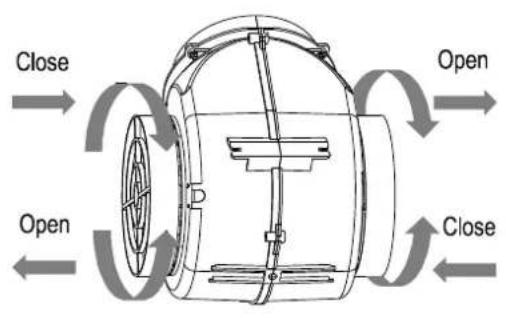
- The carbon filters are located at both end of the motor. Turn the carbon filters until they are locked. See Fig. 9.
■ Apply reverse procedure to remove the carbon filter.
- It should be replaced after approximately 2-3 months of use.
- The carbon filter cannot be washed or recycled.
- Carbon filter is not supplied with your appliance, it must be purchased separately.
Disposal of the appliances
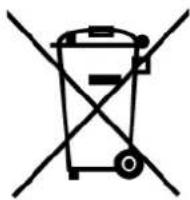

DISPOSAL: Do not dispose this product as unsorted municipal waste. Collection of such waste separately for special treatment is necessary.
The european directive 2012/19 /UE on wasted electrical and electronic equipments (WEEE), requires that household electrical appliances must not be disposed of in the normal unsorted municipal waste stream. appliances must be collected separately in order to optimize the recovery and recycling of the materials they contain, and reduce the impact on human health and the environment.
The crossed out “wheeled bin” symbol on the product reminds you of your obligation, that when you disposed of the appliances, it must be separately collected. Consumers should contact their local authority or retailer for information concerning the correct disposal of their old appliance.
TROUBLESHOOTING
| Problem Possible reason | on Solution | |
| Hood doesn't work | Electric supply | Check whether the plug is connected |
| Check whether the main switch is turned on | ||
| Poor airflow | Aluminum grease filters clogged | Clean the filters, assembly back when dry |
| Charcoal filters clogged | Replace the charcoal filters | |
| Motor running without air flow | Butterfly valve jammed Contact technician | |
| After running for a while, motor stop working | High temperature safety device activated | The kitchen is not sufficiently ventilated |
| The hood is being installed too near to the cooking stove | The hood must be least 65cm of distance from the stove | |
| Strong cooking smell | Charcoal filters do not install | In re-circulating mode, charcoal filters must be installed |
| Oil dripping onto stove | Aluminum grease filter saturated | Wash the aluminum grease filters |
| Whirring sound Fan blade | Blade problem Contact with technician | |
Contenu
4 GÉNÉRALITÉS
4 MESURES DE SÉCURITÉ
5 INSTALLATION
6 CONNEXION ÉLECTRIQUE
7 PANNEAU DE CONTRÔLE
8 UTILISATION ET ENTRETIEN
9 MISE AU REBUT
10 DÉPANNAGE
11 GARANTIE COMMERCIALE
flowchart
graph TD
    A["Diagram A"] --> B["Diagram B"]
    B --> C["Diagram C"]
    style A fill:#f9f,stroke:#333
    style B fill:#ccf,stroke:#333
    style C fill:#cfc,stroke:#333
Fig.1
text_image
160 10 260 AFig.2 Fig.3
text_image
Technical diagram of a cabinet or enclosure with labeled parts A and B, showing structural components and mounting hardware.
natural_image
Technical line drawing of a mechanical device with an open lid and a rotating base, showing directional arrows (no text or symbols)Fig.4 Fig.5
text_image
Diagram showing a hand holding a laptop with a magnified view of the screen, labeled with '000000' above.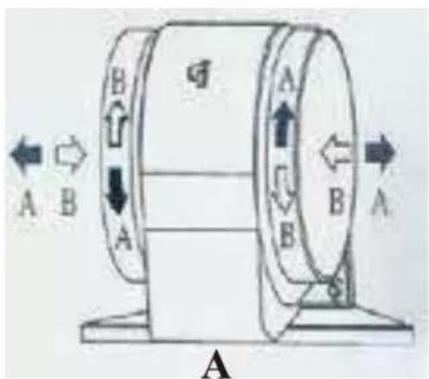
natural_image
Diagram of a mechanical device with an arrow indicating rotational motion, labeled 'B' (no text or symbols on the diagram itself)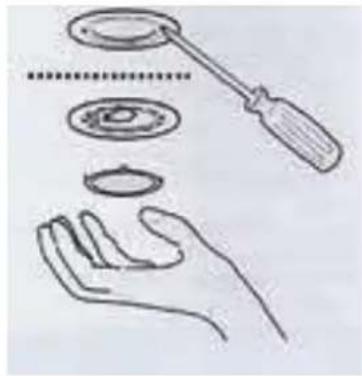
natural_image
Illustration of a hand holding three circular objects with a tool, no text or symbols presentFig.6 Fig.7
GÉNÉRALITÉS
text_image
I II III A B C D ETOUCHES DE FONCTION
A = ON/OFF
B = VITESSE I / OFF
C = VITESSE II / OFF
D = VITESSE III / OFF
E = LUMIÈRE
natural_image
Line drawing of a kitchen air conditioner unit with ventilation duct and door (no text or symbols)Fig.8
text_image
Close Open Open CloseFig.9
CONDITIONS DE LA GARANTIE
text_image
Technical diagram of a cabinet or enclosure with labeled parts A and B, showing structural components and mounting hardware.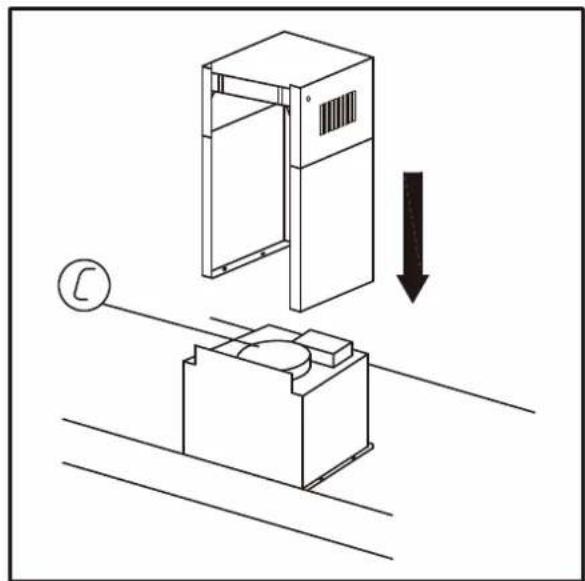
natural_image
Diagram of a mechanical device with an open lid and a rotating base, showing directional arrows (no text or symbols)Fig.4 Fig.5
text_image
Diagram showing a hand holding a laptop with a magnified view of the screen, labeled with '000000' above.
natural_image
Diagram of a mechanical device with an arrow indicating rotational motion, labeled 'B' (no text or symbols on the diagram itself)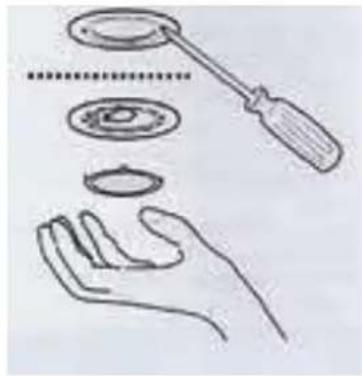
natural_image
Illustration of a hand holding three circular objects with a tool, no text or symbols presentFig.6 Fig.7
GENERAL
text_image
I II III A B C D ECHAVES DE FUNÇÃO
A = ON/OFF
B = VELOCIDADE I / DESLIGADO
C = VELOCIDADE II / DESLIGADO
D = VELOCIDADE III / DESLIGADO
E = LUZ
natural_image
Line drawing of a kitchen air conditioner unit with ventilation duct and door (no text or symbols)Fig.8

text_image
Close Open Open CloseFig.9
Scan for manual in other languages and further updates: