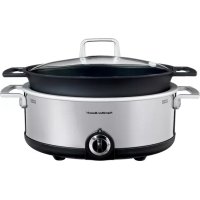
Premiere 33351 - Saucepan HAMILTON BEACH - Free user manual and instructions
Find the device manual for free Premiere 33351 HAMILTON BEACH in PDF.



| Product Type | Slow cooker (electric pot) with removable pot |
| Brand | Hamilton Beach |
| Model | Premiere 33351 |
| Power Supply | 120 V, 60 Hz, estimated 240 W |
| Pot Capacity | Approximately 6.5 liters (estimation) |
| Pot Material | Aluminum die-cast with non-stick coating |
| Lid Material | Glass with vent |
| Cooking Functions | Low, High, Keep Warm |
| Safety | Polarized plug, retractable cord, temperature fluctuation protection |
| Care and Cleaning | Pot dishwasher-safe (hand washing recommended), lid hand wash only, do not immerse base |
| Replacement Parts and Repairability | Removable pot, glass lid, silicone gasket (not replaceable as indicated), base (not detailed) |
| Warranty | 1 year limited |
| Use | Household use only, for food preparation and cooking |
Frequently Asked Questions - Premiere 33351 HAMILTON BEACH
User questions about Premiere 33351 HAMILTON BEACH
0 question about this device. Answer the ones you know or ask your own.
Ask a new question about this device
Download the instructions for your Saucepan in PDF format for free! Find your manual Premiere 33351 - HAMILTON BEACH and take your electronic device back in hand. On this page are published all the documents necessary for the use of your device. Premiere 33351 by HAMILTON BEACH.
USER MANUAL Premiere 33351 HAMILTON BEACH
Visit hamiltonbeach.com for delicious recipes, tips, and to register your product online!
Please call us – our friendly associates are ready to help. USA: 1.800.851.8900
Questions?
natural_image
Hamilton Beach electric cooktop with open lid and side handles (no visible text or symbols)Hamilton
Beach.
Stovetop-Safe Premiere Cookware Slow Cooker
When using electrical appliances, basic safety precautions should always be followed to reduce the risk of fire, electric shock, and/or injury to persons, including the following:
-
Read all instructions.
-
Do not touch hot surfaces. Use handles or knobs with oven mitts when cooking as they may be hot.
- To protect against electrical shock, do not immerse cord, plug, or base in water or other liquid.
- Close supervision is necessary when any appliance is used by or near children.
- Unplug from outlet when not in use and before cleaning. Allow to cool before putting on or taking off parts.
- Do not operate any appliance with a damaged cord or plug, or after the appliance malfunctions or is dropped or damaged in any manner. Call our toll-free customer service number for information on examination, repair, or adjustment.
-
The use of accessory attachments not recommended by the appliance manufacturer may cause injuries.
-
Do not use outdoors.
- Do not let cord hang over edge of table or counter, or touch hot surfaces, including stove.
- Do not place base on or near hot gas or an electric burner, or in a heated oven.
- Extreme caution must be used when moving an appliance containing hot oil or other hot liquids.
- To disconnect slow cooker, turn control knob to OFF; then remove plug from wall outlet.
- CAUTION: To prevent damage or shock hazard, do not cook in base. Cook only in removable stovetop-safe cookware.
- Avoid sudden temperature changes, such as adding refrigerated foods into heated stovetop-safe cookware.
- Do not use appliance for other than intended use.
SAVE THESE INSTRUCTIONS!
OTHER CONSUMER SAFETY INFORMATION
This product is intended for household use only.
This product is only intended for the preparation, cooking, and serving of foods. This product is not intended for use with any non-food materials or products.
WARNING! Shock Hazard: This appliance has a polarized plug (one wide blade) that reduces the risk of electric shock. The plug fits only one way into a polarized outlet. Do not defeat the safety purpose of the plug by modifying the plug in any way or using an adapter. If the plug does not fit, reverse the plug. If it still does not fit, have an electrician replace the outlet.
2
The length of the cord used on this appliance was selected to reduce the hazards of becoming tangled in or tripping over a longer cord. If a longer cord is necessary, an approved extension cord may be used. The electrical rating of the extension cord must be equal to or greater than the rating of the appliance. Care must be taken to arrange the extension cord so that it will not drape over the counter-top or tabletop where it can be pulled on by children or accidentally tripped over.
GLASS LID AND STOVETOP-SAFE COOKWARE: PRECAUTIONS AND INFORMATION
- Please handle lid and stovetop-safe cookware carefully to ensure long life.
- Avoid sudden, extreme temperature changes to the lid. For example, do not place a hot lid into cold water or onto a wet surface.
- Avoid hitting lid against faucet or other hard surfaces.
- Do not use lid if chipped, cracked, or severely scratched.
-
Do not use abrasive cleansers or metal scouring pads.
-
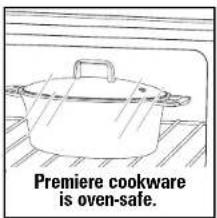
The lid and stovetop-safe cookware are ovenproof.
- Never heat stovetop-safe cookware when empty.
- Never place lid or stovetop-safe cookware in microwave or toaster oven.
- Never place lid directly on a burner or stovetop.
- Never use lid or stovetop-safe cookware under a broiler.
REMOVING GLASS LID AND STOVETOP-SAFE COOKWARE
When removing lid, tilt so that opening faces away from you to avoid being burned by steam.
The lid handles, base, and stovetop-safe cookware, as well as the sides of slow cooker base, all become very warm during cooking. Always use oven mitts when handling ANY part of the slow cooker during cooking.

Parts and Features
Stovetop-safe cookware capacity
For best results, fill the stovetop-safe cookware at least half-full but no more than one inch from the rim. If only half-filled, check for doneness 1 to 2 hours earlier than recipe time.


natural_image
Technical line drawing of a cord wrap component (no text or symbols)

How to Sear in Stovetop-Safe Cookware
Before First Use: Wash lid and stovetop-safe cookware in hot, soapy water. Rinse and dry.
NOTE: Do not use metal utensils when placing food in and removing food from stovetop-safe cookware.
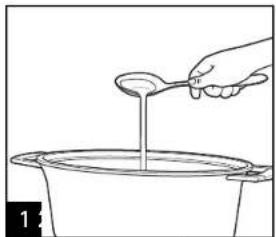
natural_image
Line drawing of a hand pouring liquid from a spoon into a basin (no text or symbols)Add oil to stovetop-safe cookware.

natural_image
Line drawing of a cooking pot on a stove burner (no text or symbols)Heat oil on stovetop over medium to high heat.
NOTICE: Do not heat stovetop-safe cookware when empty as cooking surface and/or stovetop-safe cookware may be damaged.
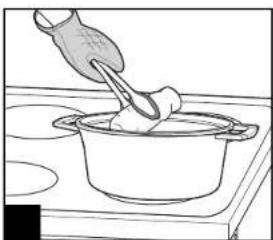
natural_image
Line drawing of a hand stirring a piece of food into a pot on an induction cooktop (no text or symbols)Place food to be seared into stovetop-safe cookware.

natural_image
Line drawing of hands holding a cooking pot (no text or symbols)When finished searing, follow recipe or carefully place stovetop-safe cookware in base. Proceed to How to Slow Cook section.

How to Slow Cook
Before First Use: Wash lid and stovetop-safe cookware in hot, soapy water. Rinse and dry.
NOTE: Do not use metal utensils when placing food in and removing food from stovetop-safe cookware.
⚠ WARNING Food Safety Hazard. Food must be hot enough to prevent bacterial growth before using Keep Warm setting. The Keep Warm setting should only be used after a recipe has been thoroughly cooked. Do not reheat food on Keep Warm setting. If food has been cooked and then refrigerated, reheat it on Low or High; then switch to Keep Warm. Visit foodsafety.gov for more information.

natural_image
Line drawing of a cooking pot with a lid pouring liquid from a pan (no text or symbols)
natural_image
Line drawing of a rice cooker with lid and side ports (no text or symbols)
natural_image
Line drawing of a cooking pot connected to an electrical outlet (no text or symbols)
natural_image
Line drawing of a cooking pot with a lid and side handles, showing a rotary knob (no text or symbols)
natural_image
Line drawing of a rice cooker with handle and side panel, no text or symbols presentNOTE: Lid vent hole will not affect cooking time.
Select Low or High. Do not cook on Keep Warm.
When cooking is finished, turn OFF or select Keep Warm.

Cleaning and Care
WARNING
Electrical Shock Hazard.
Disconnect power before cleaning.
Do not immerse cord, plug, or base in any liquid.

natural_image
Line drawing of a cooking pot connected to an electrical outlet (no text or symbols)
natural_image
Line drawing of hands holding a cooking pot (no text or symbols)Remove stovetop-safe cookware and let cool.
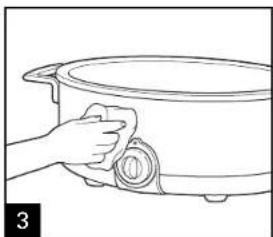
natural_image
Line drawing of a hand holding a cooking pot with a lid, no text or symbols present
natural_image
Simple line drawing of a bowl with handles, no text or symbols present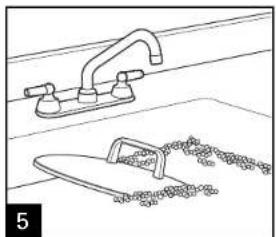
natural_image
Illustration of a faucet and a slide on a surface, no text or symbols presentWash lid in hot, soapy water.
Stovetop-safe cookware may be washed in dishwasher. However, to maintain nonstick and aluminum finishes, it is recommended to wash stovetop-safe cookware in hot, soapy water.
NOTICE: Do not use metal utensils or abrasive cleansers when cleaning stovetop-safe cookware's nonstick surface.
Tips for Slow Cooking
- The stovetop-safe cookware should be at least half-filled for best results. If only half-filled, check for doneness 1 to 2 hours earlier than recipe.
- Stirring is not necessary when slow cooking. Removing glass lid results in major heat loss and the cooking time may need to be extended. However, if cooking on High, you may want to stir occasionally.
- If cooking soups or stews, leave a 2-inch (5 cm) space between the top of the stovetop-safe cookware and the food so that the recipe can come to a simmer.
- Many recipes call for cooking all day. If your morning schedule doesn't allow time to prepare a recipe, do it the night before. Place all ingredients in stovetop-safe cookware, cover with lid, and refrigerate overnight. In the morning, simply place stovetop-safe cookware in slow cooker.
-
Do not use frozen, uncooked meat in slow cooker. Thaw any meat or poultry before searing or slow cooking.
-
Some foods are not suited for extended cooking in a slow cooker. Pasta, seafood, milk, cream, or sour cream should be added 2 hours before serving. Evaporated milk or condensed soups are perfect for slow cooking.
- The higher the fat content of meat, the less liquid is needed. If cooking meat with a high fat content, place thick onion slices underneath so meat will not sit on (and cook in) fat.
- Slow cookers allow for very little evaporation. If making your favorite soup, stew, or sauce, reduce liquid called for in original recipe. If too thick, liquid can be added later.
- If cooking a vegetable-type casserole, there will need to be liquid in the recipe to prevent scorching on the sides of stovetop-safe cookware.
- Lid vent hole will not affect cooking time. The vent hole may be used with a temperature probe to test food doneness. Visit foodsafety.gov for safe cooking temperature information.
Recipes
Visit hamiltonbeach.com for more delicious recipes, tips, and to register your product online!
For best results, fill the crock/cookware at least half-full but no more than one inch from rim.
Always follow package directions. Visit foodsafety.gov for more safe cooking temperature information.
Chicken Stew with Biscuits
8 boneless chicken breasts, cubed 1/3 cup (80 ml) butter, softened
2–4 tablespoons (30–60 ml) extra virgin olive oil, divided 3 tablespoons (45 ml) all-purpose flour
1 teaspoon (5 ml) salt 6 carrots, peeled and sliced
1/2 teaspoon (2.5 ml) fresh ground pepper 16-ounce (450 g) package frozen peas
2 large yellow onions, chopped 1/2 cup (125 ml) heavy cream
2 cups (500 ml) chicken stock, divided 12-18 refrigerator biscuits
- Season chicken cubes with salt and pepper.
- Heat 1 tablespoon (5 ml) olive oil in stovetop-safe cookware over medium heat and brown chicken cubes, in batches, on all sides.
Use additional olive oil between batches if necessary. Remove browned chicken from stovetop-safe cookware and set aside. - Add any remaining olive oil to stovetop-safe cookware and cook onions until translucent and slightly browned.
- Add chicken to onions in stovetop-safe cookware.
- Add 1 cup (250 ml) chicken stock and combine.
- Place thyme sprigs on top of mixture, cover, and place stovetop-safe cookware in slow cooker base. Cook on HIGH for 3 hours or LOW for 6 hours.
- Combine softened butter with flour.
- Remove stovetop-safe cookware from base and place on stovetop. Over medium heat, add butter/flour mixture and stir.
- Stir in remaining 1 cup (250 ml) of chicken stock and cook until stew is thickened.
- Remove from heat and stir in carrots.
- Return to slow cooker base and cook on HIGH for 30 minutes or LOW for 1 hour.
- Preheat oven to 375°F (190°C).
- Remove stovetop-safe cookware from base and place on stovetop. Over medium heat, add frozen peas and cream. Heat to boiling, remove from heat, and season to taste with salt and pepper.
- Place refrigerated biscuits on top of hot chicken stew.
- Place in preheated oven and bake, uncovered, for 25–30 minutes or until biscuits are browned and cooked through. Serve immediately.
Serves 12–15
Recipes (cont.)
Visit hamiltonbeach.com for more delicious recipes, tips, and to register your product online!
Pork Roast with Apples, Sage, and Rosemary
6–8 Granny Smith apples, peeled, cored, and cut into large pieces
1 tablespoon (5 ml) lemon juice
3–4 pound (1.34–1.8 kg) boneless or center rib pork roast
1/2–1 teaspoon (2.5–5 ml) salt
1/2 teaspoon (2.5 ml) pepper
1 tablespoon (15 ml) extra virgin olive oil
2 red onions, cut into wedges
1 fresh sage sprig
1 fresh rosemary sprig
- Toss apples with lemon juice. Set aside.
- Season roast with salt and pepper.
- Heat olive oil in stovetop-safe cookware over medium-high heat. Brown roast well on all sides and remove from heat. Remove roast from stovetop-safe cookware and set aside.
- Add 1/2 of onions to pan and stir to brown slightly with residual heat from stovetop-safe cookware.
- Place roast on top of onions in stovetop-safe cookware. Surround roast with apples and remaining onions.
- Place sage and rosemary sprigs on top of roast.
- Cover, place stovetop-safe cookware in base, and cook on HIGH for 4 hours or LOW for 7–8 hours.
- Discard rosemary and sage sprigs.
- Remove roast to serving platter and cover with foil to keep warm.
- Place stovetop-safe cookware with apple and onion mixture on stovetop over medium-high heat and bring to a boil. Reduce heat and simmer gently for approximately 10 minutes or until applesauce thickens. Stir occasionally. Slice pork roast and serve with applesauce.
Serves 10–12
Recipes (cont.)
Visit hamiltonbeach.com for more delicious recipes, tips, and to register your product online!
3–4 pounds (1.34–1.8 kg) chicken pieces
1/2–1 (2.5–5 ml) teaspoon salt
1/2 (2.5 ml) teaspoon fresh ground pepper
2 tablespoons (30 ml) extra virgin olive oil
2 yellow onions, chopped
1-1/2 24 oz. (750 m) jars pasta sauce
1 pound (450 g) fettuccini noodles
- Season chicken pieces with salt and pepper.
- Heat 1 teaspoon of olive oil in stovetop-safe cookware over medium-high heat.
- Brown seasoned chicken well on all sides, in batches if necessary.
- Remove chicken from stovetop-safe cookware and set aside.
- Add remaining olive oil to stovetop-safe cookware and cook onion until soft, about 3 minutes.
- Add chicken back to stovetop-safe cookware with onion.
- Pour pasta sauce over chicken.
- Cover, place stovetop-safe cookware on slow cooker base, and cook on HIGH for 4 hours or LOW for 8 hours.
- Cook pasta according to package directions.
Serve chicken and sauce with pasta.
Serves 8–10
Recipes (cont.)
Visit hamiltonbeach.com for more delicious recipes, tips, and to register your product online!
Beef Roast with Vegetables & Thyme Gravy
3-4 pound (1.34-1.8 kg) bottom round beef roast 8 baby white potatoes
1/2–1 teaspoon (2.5–5 ml) salt 3 carrots, sliced
1/2 teaspoon (2.5 ml) pepper 1/2 cup (125 ml) beef broth
2 tablespoons (30 ml) extra virgin olive oil 4 sprigs fresh thyme
1 large onion, cut in wedges 3/4 cup (175 ml) water
3 garlic cloves, smashed and peeled 1/4 cup (60 ml) all purpose flour
8 baby red potatoes 1 tablespoon (15 ml) butter, optional
-
Season beef roast with salt and pepper.
-
Heat olive oil in stovetop-safe cookware over medium-high heat and brown roast well on all sides. Remove from heat. Remove roast from stovetop-safe cookware and set aside.
- Place onion and garlic in stovetop-safe cookware and brown lightly with residual heat from stovetop-safe cookware.
- Place roast on top of onion and garlic in stovetop-safe cookware. Surround roast with potatoes and carrots.
- Pour broth over all and top with thyme sprigs.
- Cover, place stovetop-safe cookware on slow cooker base, and cook on HIGH for 4 hours or LOW for 8 hours.
- Remove roast to serving platter. Discard thyme sprigs. Using slotted spoon, remove vegetables to serving platter with roast. Cover with foil to keep warm.
- Place stovetop-safe cookware back on stovetop over medium heat and bring pan juices to a boil.
- Whisk together flour and water. Add to pan juices and simmer, stirring constantly until thickened.
- Season gravy to taste with salt and pepper. Finish by adding butter, if desired, stirring until melted. Serve gravy with roast and vegetables.
Serves 10–12
Troubleshooting
| PROBLEM | PROBABLE CAUSE |
| Food is undercooked. | Was food cooked on the Keep Warm setting? Do not cook on Keep Warm; always cook on Low or High heat settings.Was power interrupted?Did you select the Low heat setting but use a cooking time based on the High heat setting?Did you have the lid placed correctly on the slow cooker? |
| The food isn't done after cooking the amount of time recommended in my recipe. | This can be due to voltage variations (which are commonplace everywhere) or altitude. The slight fluctuations in power do not have a noticeable effect on most appliances; however, they can alter the cooking times in the slow cooker by extending the cooking times. Allow sufficient time and select the appropriate heat setting. You will learn through experience if a shorter or longer time is needed.NOTE: Lid vent hole will not affect cooking time. |
| My meal was overcooked. Why? | Was the stovetop-safe cookware at least half-full? The slow cooker has been designed to thoroughly cook food in a filled stovetop-safe cookware. If the stovetop-safe cookware is only half-filled, check for doneness 1 to 2 hours earlier than recipe time.Did you select correct number of hours based on cooking temperature (Low or High)?Foods will continue to increase in temperature after desired temperature has been reached.Was the stovetop-safe cookware used to brown foods on the stovetop and placed in base while still hot? If so, cooking time may be shortened. Check for doneness 30 minutes to 1 hour earlier than recipe time. |
Limited Warranty
This warranty applies to products purchased in the U.S. and Canada. This is the only express warranty for this product and is in lieu of any other warranty or condition.
This product is warranted to be free from defects in material and workmanship for a period of one (1) year from the date of original purchase. During this period, your exclusive remedy is repair or replacement of this product or any component found to be defective, at our option; however, you are responsible for all costs associated with returning the product to us and our returning a product or component under this warranty to you. If the product or component is no longer available, we will replace with a similar one of equal or greater value.
This warranty does not cover glass, filters, wear from normal use, use not in conformity with the printed directions, or damage to the product resulting from accident, alteration, abuse or misuse. This warranty extends only to the original consumer purchaser or gift recipient. Keep the original sales receipt, as proof of purchase is required to make a warranty claim. This warranty is void if the product is used for other than single-family household use.
We exclude all claims for special, incidental and consequential damages caused by breach of express or implied warranty. All liability is limited to the amount of the purchase price. Every implied warranty, including any statutory warranty or condition of merchantability or fitness for a particular purpose, is disclaimed except to the extent prohibited by law, in which case such warranty or condition is limited to the duration of this written warranty. This warranty gives you specific legal rights. You may have other legal rights that vary depending on where you live. Some states or provinces do not allow limitations on implied warranties or special, incidental or consequential damages, so the foregoing limitations may not apply to you.
To make a warranty claim, do not return this appliance to the store. Please call 1.800.851.8900 in the U.S. or 1.800.267.2826 in Canada or visit hamiltonbeach.com in the U.S. or hamiltonbeach.ca in Canada. For faster service, locate the model, type, and series numbers on your appliance.
CONSEILS DE SÉCURITÉ IMPORTANTS
natural_image
Line drawing of a hand pouring liquid from a spoon into a basin (no text or symbols)natural_image
Line drawing of a cooking pot on a stove burner (no text or symbols)natural_image
Line drawing of a hand stirring a pot on an induction cooktop (no text or symbols)natural_image
Line drawing of hands holding a cooking pot (no text or symbols)natural_image
Line drawing of a cooking pot with a lid pouring liquid from a pan (no text or symbols)
natural_image
Line drawing of a cooking pot with lid and side handles, no text or symbols present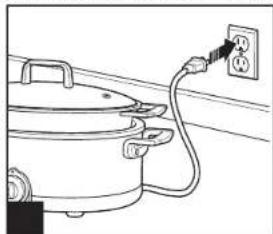
natural_image
Line drawing of a cooking pot connected to an electrical outlet (no text or symbols)
natural_image
Line drawing of a cooking pot with a lid and side handles, showing a rotary knob (no text or symbols)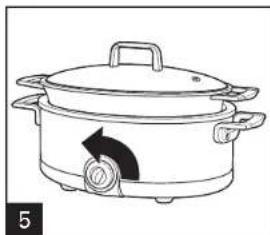
natural_image
Line drawing of a rice cooker with a side panel showing the lid and side knob (no text or symbols)natural_image
Line drawing of a cooking pot connected to an electrical outlet (no text or symbols)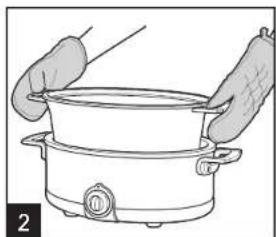
natural_image
Line drawing of hands holding a cooking pot (no text or symbols)
natural_image
Line drawing of a hand holding a cooking pot with a lid, no text or symbols present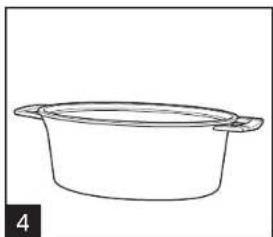
natural_image
Simple line drawing of a bowl with a side handle (no text or symbols)natural_image
Illustration of a kitchen sink with faucet and slide, showing surface texture (no text or symbols)natural_image
Line drawing of a hand pouring liquid into a basin (no text or symbols)natural_image
Line drawing of a cooking pot on an induction cooktop (no text or symbols)natural_image
Line drawing of a pot on a stovetop with a spatula, no text or symbols presentnatural_image
Line drawing of hands holding a cooking pot (no text or symbols)natural_image
Line drawing of a cooking pot with a lid pouring liquid from a pan (no text or symbols)
natural_image
Line drawing of a cooking pot with lid and side handles, no text or symbols presentnatural_image
Line drawing of a cooking pot connected to an electrical outlet (no text or symbols)
natural_image
Line drawing of a cooking pot with a lid and side handles, showing a rotary knob (no text or symbols)natural_image
Line drawing of a cooking pot with a side panel and rotary knob (no text or symbols)natural_image
Line drawing of a cooking pot connected to an electrical outlet (no text or symbols)
natural_image
Line drawing of hands holding a cooking pot with a lid, no text or symbols presentnatural_image
Line drawing of a hand holding a cooking pot with a lid, no text or symbols present
natural_image
Simple line drawing of a bowl with a lid, no text or symbols present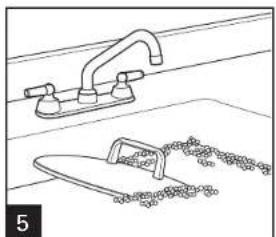
natural_image
Line drawing of two kitchen sink components: one with a faucet and one with a flat plate, both without any text or symbols.Col. Palmitas Polanco
Mixcoac MEXICO 03910 D.F.
Tel: 01 55 5563 8723 • Fax: 01 55 5615 1856
Nuevo Leon
natural_image
Empty rectangular frame with corner markers and dimension label '43' (no text or symbols beyond basic markings)840175900 SPnv03.qxd:Layout 1 11/24/08 9:35 AM Page 44



- SAVE THESE INSTRUCTIONS!
- OTHER CONSUMER SAFETY INFORMATION
- GLASS LID AND STOVETOP-SAFE COOKWARE: PRECAUTIONS AND INFORMATION
- REMOVING GLASS LID AND STOVETOP-SAFE COOKWARE
- Parts and Features
- Stovetop-safe cookware capacity
- How to Sear in Stovetop-Safe Cookware
- How to Slow Cook
- Cleaning and Care
- WARNING
- Electrical Shock Hazard.
- Tips for Slow Cooking
- Recipes
- Chicken Stew with Biscuits
- Recipes (cont.)
- Pork Roast with Apples, Sage, and Rosemary
- Beef Roast with Vegetables & Thyme Gravy
- Limited Warranty
- CONSEILS DE SÉCURITÉ IMPORTANTS
- Nuevo Leon
Brand : HAMILTON BEACH
Model : Premiere 33351
Category : Saucepan