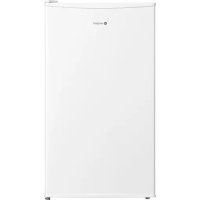
VPTMKV48W - Fridge Veripart - Free user manual and instructions
Find the device manual for free VPTMKV48W Veripart in PDF.


User questions about VPTMKV48W Veripart
0 question about this device. Answer the ones you know or ask your own.
Ask a new question about this device
Download the instructions for your Fridge in PDF format for free! Find your manual VPTMKV48W - Veripart and take your electronic device back in hand. On this page are published all the documents necessary for the use of your device. VPTMKV48W by Veripart.
USER MANUAL VPTMKV48W Veripart
Fridge freezer combination
| Climate classification N / ST | |
| Total storage volume 80L | |
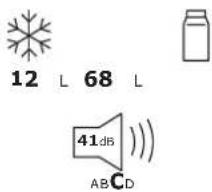
| Refrigerator storage volume 68L | |
| Freezer Compartment Volume 1 | 2L |
| Max lamp power MAX 2W | |
| Voltage | 220-240V~ |
| Frequency | 50Hz |
| Rated current | 0.6A |
| Energy Consumption E16 | 0.160kWh/24h |
| Energy Consumption E32 | 0.590kWh/24h |
| Refrigerant | R600a,25g |
| Insulating agent | Cyclopentane |
| Freezing capacity | 2kg/24h |
| Temperature rise value | 6h |
| Product code | 915978 |
Serial Number:
Batchcode:
Veripart is a registered trademark of Coolblue B.V.
Weena 664
3012CN, Rotterdam
The Netherlands
Made in China



ENERG

VPTMKV48W
Veripart
text_image
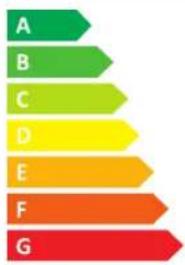
A B C D E F G
137 kWh/annum
text_image
12 L 68 L 41dB ABCD2014.2015
| Climate classification - | Klimaatklasse / Classification climatique / Klimaklassifizierung |
| Total storage volume - | Netto inhoud / Volume de stockage total / Gesamtspeichervolumen |
| Refrigerator storage volume - | Opslagvolume koelkast / Volume de stockage du réfrigérateur / Kühlschrank Speichervolumen |
| Freezer Compartment Volume - | Opslagvolume vriezer / Volume de stockage du congélateur / Gefrierschrank-Speichervolumen |
| Max lamp power - | Max lamp wattage / Puissance maximale de l'ampoule / Maximale Lampenleistung |
| Voltage - | Spanning / Tension / Spannung |
| Frequency - | Frequentie / Fréquence / Frequenz |
| Rated current - | Nominale spanning / Tension nominale / Nennspannung: |
| Energy Consumption E16 - | Energieverbruik van E16 / Consommation d'énergie de E16 / Energieverbrauch von E16 |
| Energy Consumption E32 - | Energieverbruik van E32/ Consommation d'énergie de E32 / Energieverbrauch von E32 |
| Refrigerant - | Koelmiddel / Réfrigérant / Kältemittel |
| Insulating agent - | Isolatiemiddel / Agent isolant / Isoliermittel |
| Freezing capacity - | Vriescapaciteit / Capacité de congélation / Gefriervermögen |
| Temperature rise value - | Temperatuurstijgingswaarde / Valeur de montée en température / Temperaturanstiegswert |
| Product code - | Productcode / Code produit / Produktcode |
INHOUDSOPGAVE
VOORWOORD
1. VEILIGHEID 5
1.1 VEILIGHEIDSWAARSCHUWINGEN EN -VOORSCHRIFTEN

!WAARSCHUWING!
text_image
E D F F Anatural_image
Simple black checkmark inside a whiteboard frame with no text or symbols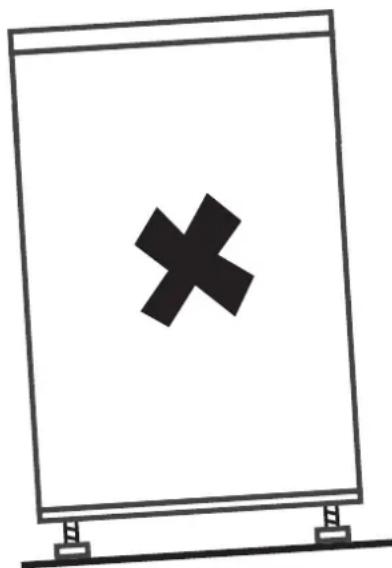
natural_image
Simple line drawing of a blank board with a black 'X' symbol on the front panel (no text or labels)7. Montage van accessoires
natural_image
Line drawing of a hand installing or adjusting a shelf panel on a metal shelf (no text or symbols)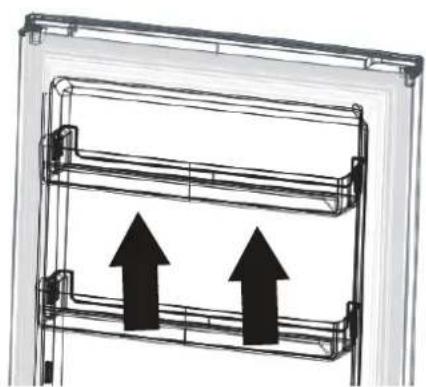
natural_image
Diagram of a refrigerator interior with two upward-pointing arrows indicating ventilation or movement (no text or symbols present)
3.1 DE DRAAIRICHTING VAN DE DEUR OMKEREN
Z
natural_image
Line drawing of a screwdriver with a pointed tip (no text or symbols)natural_image
Line drawing of a screwdriver with no text or symbolsnatural_image
Line drawing of an adjustable wrench with a handle and screw (no text or symbols)natural_image
Diagram showing two identical rectangular panels with mounting holes and a directional arrow indicating transformation (no text or symbols)text_image
Creative Commons recycling symbol with recycling icon and no disposal bin crossed out1.1 Safety warnings and regulations 35
1.2 Safety instructions: Installation 37
1.3 Safety instructions: use 39
2. PRODUCT FEATURES 40
3. INSTALLATION 42
3.1 Reverse the direction in which the door opens 45
4. USE 47
4.1 Setting the temperature 47
4.2 Tips for daily use 48
4.3 Saving energy 51
5. CLEANING AND MAINTENANCE 52
-
TROUBLESHOOTING 54
-
TAKING OUT OF SERVICE 57
-
SAFE DISPOSAL 58
FOREWORD
About this document
- This manual contains all information for the correct, efficient and safe use of the appliance.
- This manual is intended for the end user and/or buyer of this appliance.
- Make sure you have read and understood the instructions in this manual completely before installing or using the appliance. Keep this document for future use as long as you use and/or own the appliance.
- Coolblue B.V. cannot in any way be held liable for material or immaterial damage to you or to others, the appliance, your other belongings or belongings of others caused by not following the instructions in this manual.
- The warnings and safety instructions in this manual do not cover all possible circumstances and situations.
- If you contact our customer service, make sure you have the model number ready. The information can be found on the type plate or on the front of this manual.
Original instructions
This manual was originally written in Dutch. All other languages are translated documents. In the case of translation errors, the Dutch version is leading.
Symbols used
| SYMBOL DESCRIPTION | ||
 | DANGER! | Fire hazard and/or flammable materials |
 | WARNING! | Indicates a dangerous situation which, if not avoided, may result in serious immaterial damage to you or others. |
 | CAUTION! | Indicates a dangerous situation which, if not avoided, may result in slight immaterial damage to you or others. |
 | ATTENTION! | Indicates a situation related to material damage. |
 | NOTE | Indicates useful additional information. |
Copyright
The data depicted in this manual, including texts, photographs, graphic drawings, trademarks, (trade) names and logos, are the property of Coolblue B.V. and are protected by copyright, trademark law and/or any other intellectual property right, unless these data belong to a third party. You are never allowed to reproduce, transfer, distribute, store or make the contents of the manual available to third parties, in whole or in part, without the prior written consent of Coolblue B.V. and/or the third party to whom the data belong.

NOTE
- You can also find the latest version of this manual online, at www.coolblue.nl/en if you search for the article number.
Veripart contact details
Veripart is a registered brand of Coolblue B.V.
Customer service can be reached at:
www.coolblue.nl/en/customer-service
1. SAFETY:
1.1 SAFETY WARNINGS AND REGULATIONS


!WARNING!
- Keep the vents in the appliance housing open.
- Do not use mechanical devices, electrical appliances (such as a hairdryer or heater) or other means to defrost your refrigerator.
- Ensure that no components of the cooling circuit are damaged during transport and installation of the appliance (only in cases where the cooling circuit is freely accessible).
- Do not place electrical appliances in the food storage compartments of the refrigerator (such as ice cream machines) unless they are of a type expressly declared suitable by the manufacturer.
- When positioning the appliance, ensure that the power cable is not stuck or damaged.
- Do not use an extension lead or socket for this appliance.

CAUTION!
- Packaging with flammable gases or liquids may leak at low temperatures, do not store flammable gases or liquids in the appliance.
- Do not store containers containing flammable materials, propellant or explosive substances such as aerosols, refill cartridges for fire extinguishers, etc. in the appliance.
- Do not place carbonated or sparkling drinks in the freezer compartment.
- Do not remove objects from the freezer compartment if your hands are wet/damp as this may cause grazes or frostbite.
-
If you want to avoid forming a combustible gas-air mixture in the event of a leak in the cooling circuit, consider the size of the space in which the appliance is located and the amount of refrigerant used.
-
It is dangerous for people other than authorised technicians to carry out maintenance or repairs with cover plates removed. To avoid the risk of electric shocks, do not attempt to repair this appliance yourself.
- This appliance may be used by children from eight years of age and above and by persons with reduced physical, sensory or mental capabilities or lack of experience and knowledge, provided that they are under supervision or have been trained in the safe use of the appliance and that they understand the associated dangers.
! ATTENTION!
- This appliance is intended for domestic use and similar applications such as:
- staff kitchens in shops, offices and other work environments;
- farms and guests in hotels, motels, B&B and other residential environments;
- catering and similar non-retail applications.
- It is dangerous to change the characteristics or specifications of the appliance or to try to modify this product in any way.
- Food storage times recommended by the food manufacturer must be observed.
- Never pull the power cable to disconnect the plug from the socket. Always hold the plug firmly and pull it straight out of the socket.
1.2 SAFETY INSTRUCTIONS: INSTALLATION

DANGER!
Risk of fire / flammable materials.

! CAUTION!
- The appliance is heavy. Take care when handling and wear protective gloves and closed footwear.
- It is dangerous for persons other than authorised service technicians to carry out maintenance on electrical components (plug, power cable, compressor, etc.) or to carry out repairs with the cover plates removed. To avoid the risk of electric shocks, do not attempt to repair this appliance yourself.
- If you detect any damage to the appliance or the power cable, do not connect the appliance but contact the service department (see contact details on page 41).
- The power cable must be attached behind the appliance and must not be exposed or loose.
- Make sure that the power cable of the installed appliance is always easily accessible.
- This appliance requires a standard 220-240V 50Hz socket with 2-pole earthing. The power cable of this appliance is equipped with a 2-pole plug suitable for standard wall sockets with earthing to minimise the risk of electric shocks.
- On first installation (or after turning the door) wait at least four hours before connecting the appliance to the power. This allows the oil to flow back into the compressor.
- Ensure that air can circulate around the appliance.
- Pull the plug out of the socket before carrying out any actions on the appliance (e.g. turning the door).
- Incorrect use of the earthed plug may cause an electric shock.
-
This appliance is not intended for use as a built-in refrigerator.
-
The correct operation of the appliance can only be guaranteed if the specified temperature range is respected. If, as a result of another installation, the correct ventilation requirements are not met, the appliance will function correctly, but energy consumption may increase slightly.
- This appliance is not suitable for use with an inverter.
- Do not install the appliance near radiators, stoves, ovens or hobs.
- Do not install the appliance in direct sunlight.
- Do not install this appliance in spaces that are too damp or too cold.
- Do not expose the appliance to rain.
- The total volume of the space in which the appliance is installed divided by the amount of refrigerant of the appliance must not be less than 8 g/m ^3 . The amount of refrigerant contained in the appliance can be found on the type plate.
- The lamp supplied with this appliance is only for use in this appliance and is not intended for other applications.
- The appliance may not operate optimally if it is in a place where the ambient temperature is below the minimum or above the maximum of the temperature range for which the appliance is designed for a longer period of time. Please refer to the “Climate Range” table below.
Climate Range
The information about the climate range of the appliance is stated on the type plate. It indicates at which ambient temperature (or room temperature) the operation of the appliance is optimal (correct).
This type of refrigerator has climate range N, ST.
| CLIMATE RANGE PERMISSIBLE AMBIENT TEMPERATURE | |
| SN From +10°C to +32°C | |
| N From +16°C to +32°C | |
| ST | From +16°C to +38°C |
| T | From +16°C to +43°C |
1.3 SAFETY INSTRUCTIONS: USE
! CAUTION!
Observe the following instructions to avoid food contamination:
- When the door is open for a long time, the temperature in the compartments of the appliance can rise considerably.
- Clean surfaces that may come into contact with food and accessible drainage systems regularly.
- Store raw meat and fish in suitable containers in the appliance so that they do not come into contact with or drip on other foods.
- If the appliance remains empty for a long time, switch it off, clean and dry it and leave the door open to prevent mould forming in the appliance.
2. PRODUCT FEATURES
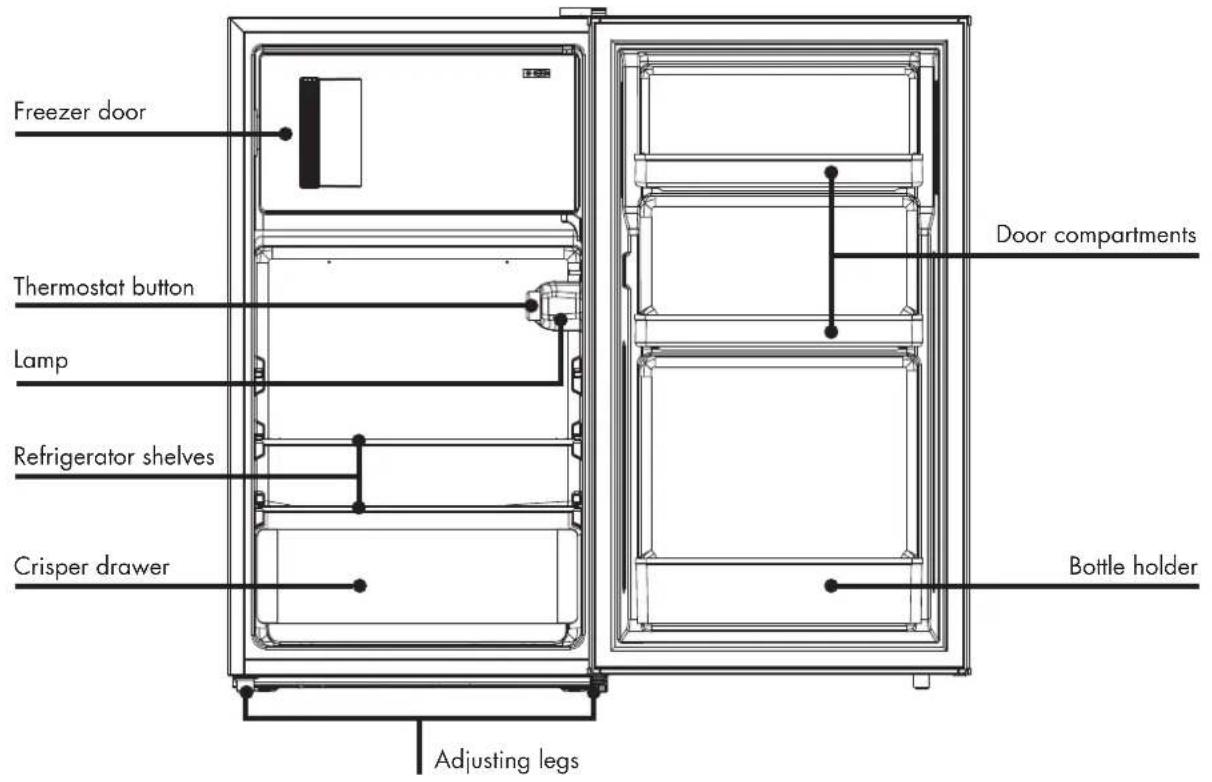
text_image
Freezer door Thermostat button Lamp Refrigerator shelves Crisper drawer Adjusting legs Door compartments Bottle holder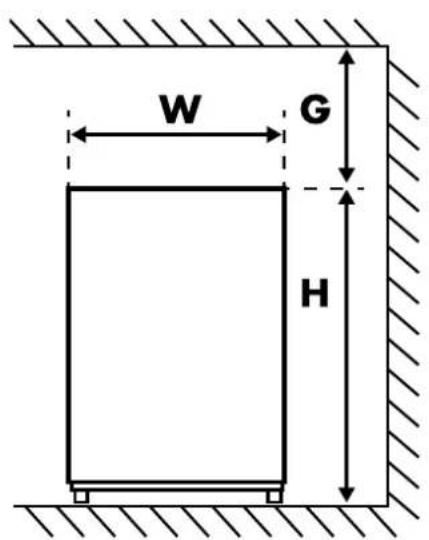
text_image
W G H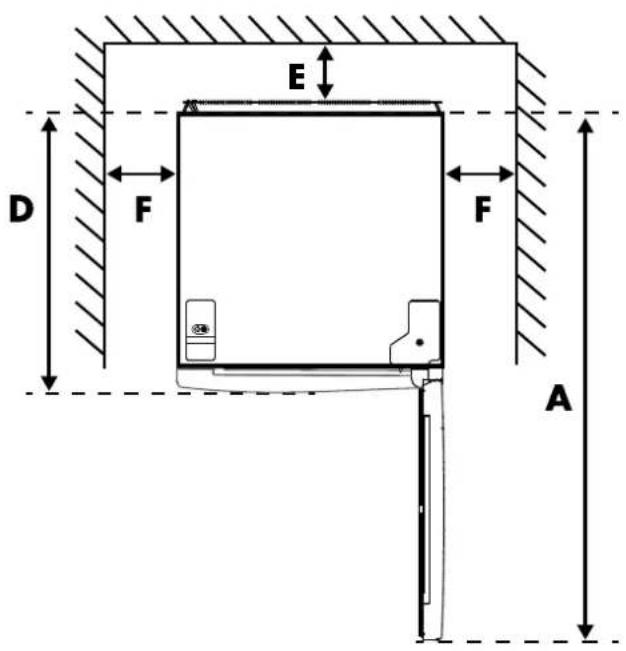
text_image
E D F F A• Figure 1. Front view • Figure 2. Top view
| WDHAEFG | ||||||
| 47,5cm | 44,5cm | 84,5cm | 92cm | min. 10cm | min. 10cm | min. 10cm |
*Figures 1 and 2 illustrate the space required for the appliance.
Does not contain freon
The freon-free refrigerant (R600a) and the environmentally friendly foam insulation (cyclopentane) used for the appliance do not affect the ozone layer and have a very small impact on global warming.

Guarantee
This appliance comes with a guarantee period of two years after purchase. For more information about the warranty conditions, go to www.coolblue.nl/en and search for the article number, or contact us at www.coolblue.nl/en/customer-service. In any case, you must have the purchase order with purchase and/or delivery date in order to be able to claim the guarantee.
Spare parts
Spare parts for this appliance are available. To order or find out more, visit www.coolblue.nl/en/customer-service.
Technical data and energy label
The technical data is indicated on the type plate on the inside of the appliance and on the energy label (both also printed on page 1). The QR code on the energy label provided with the appliance provides a web link to the information related to the appliance performance in the EU EPREL database. Keep the energy label for reference together with the user manual and any other documents provided with this appliance. It is also possible to find the same information in EPREL via the link https://eprel.ec.europa.eu and the model name and product number that can be found on the type plate of the appliance.
See link www.theenergylabel.eu for detailed information on the energy label.
| VERIPART CONTACT DETAILS | |
| Address: | Weena 664, 3012 CN, Rotterdam |
| Website | www.coolblue.nl/en/customer-service |
3. INSTALLATION
Before installing the refrigerator, carefully review the safety information (section 1).
1. Unpack
Remove the packaging materials and dispose of them properly. Check that the appliance is not damaged. Do not connect the appliance if it is damaged. Report any damage immediately to the salesperson via customer service. In that case, keep the packaging.
2. Wait
Wait four hours before connecting the appliance so the oil can flow back to the compressor.
3. Clean
Clean the interior and all internal accessories with lukewarm water and some neutral soap before first use to remove the typical smell of a brand new appliance. Dry everything carefully. Do not use solvents or abrasive powders; these will damage the coating
4. Location
The location where you place your appliance should be well ventilated and the air should not be too warm. Do not place the appliance near a heat source, such as a stove or boiler, and avoid direct sunlight, so as to guarantee the cooling effect and save on energy consumption. Do not place the appliance in a damp place so that it cannot rust and there is no leakage current.
5. Heat dissipation area
During operation, the appliance emits heat to the environment. Therefore there must be at least 10 cm clearance on the top, at least 10 cm on both sides and at least 10 cm at the back of the fridge (see page 40).
6. Installation of the appliance
- This appliance is not intended for use as a built-in refrigerator.
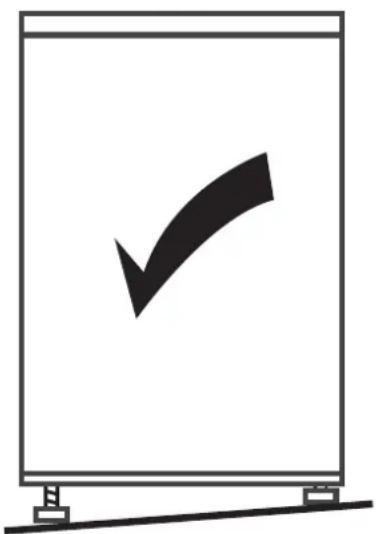
- Use the front adjusting legs to level the appliance. If the appliance is not level, it may affect the performance of the gasket seal or even lead to a failure of your appliance.
- It must be possible to disconnect the appliance from the mains power supply. The plug must therefore be easily accessible after installation.
- Place the appliance on a firm and flat surface (floor) so that it is stable, otherwise vibrations and noise may occur. When placing the refrigerator on floor coverings such as carpets, straw mats or polyvinyl chloride (PVC), place a solid sheet or cover under the appliance to prevent colour change due to heat dissipation.
- Before plugging in the power cable, check that the voltage and frequency of the type plate match your power supply network. The appliance must be earthed. The power cable is supplied with a contact for this purpose. If the socket is not earthed, connect the appliance to a separate earth according to current regulations and consult a qualified electrician.
natural_image
Simple black checkmark inside a whiteboard frame with no text or symbols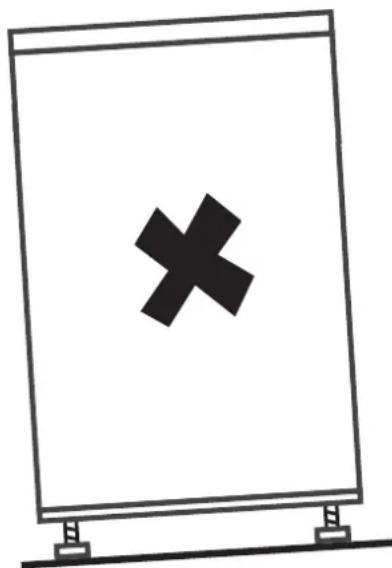
natural_image
Simple line drawing of a blank board with a black 'X' symbol on the left side (no text or labels)7. Mounting accessories
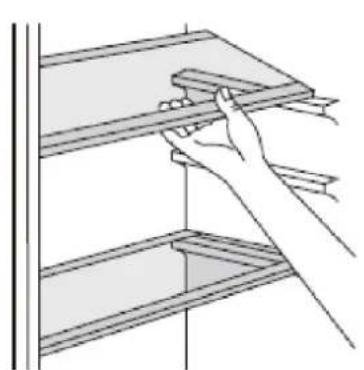
- Adjustable shelves
The walls of the appliance are equipped with a series of guide profiles so that the shelves can be inserted if desired.
- Installing the door compartments
To store food of different sizes, the door compartments can be set to different heights. Proceed as follows: gradually pull the compartment in the direction of the arrows until it comes loose and put it in the desired position.
natural_image
Line drawing of a hand installing or adjusting a shelf panel on a metal shelf (no text or symbols)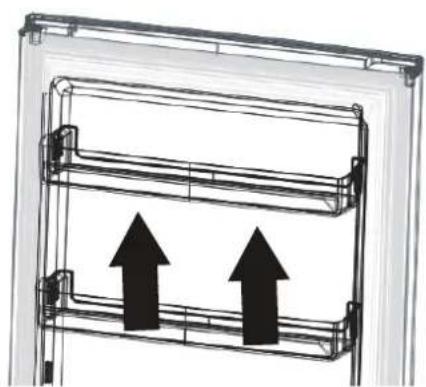
natural_image
Diagram of a refrigerator with two upward-pointing arrows indicating vertical motion (no text or symbols)
3.1 REVERSE THE DIRECTION IN WHICH THE DOOR OPENS
To remove the door, the appliance must be tilted backwards. We recommend doing this with two people. Rest the appliance on a firm surface so that it does not slip away as you reverse the door.
Keep all removed parts to remount the door later.
Do not lay the appliance down flat. This can damage the cooling system. If the appliance does have to be placed on its back or side for some time during this process, it must be able to stand upright for four hours before connecting it to prevent damage to the internal components.
Necessary tools:

natural_image
Line drawing of a screwdriver with a pointed tip (no text or symbols)• Crosshead screwdriver

natural_image
Line drawing of a screwdriver with no text or symbols- Flat head screwdriver
natural_image
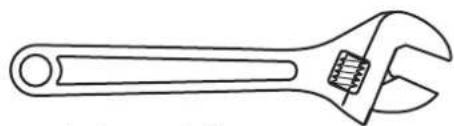
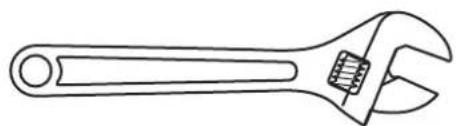
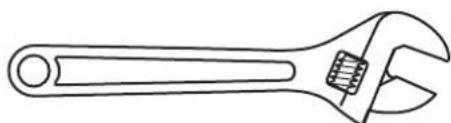
Line drawing of an adjustable wrench with a handle and screw (no text or symbols)- Adjustable spanner
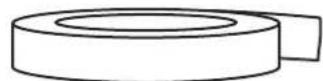
- Masking tape
! ATTENTION!
The freezer door direction cannot be changed and must remain in place.
text_image
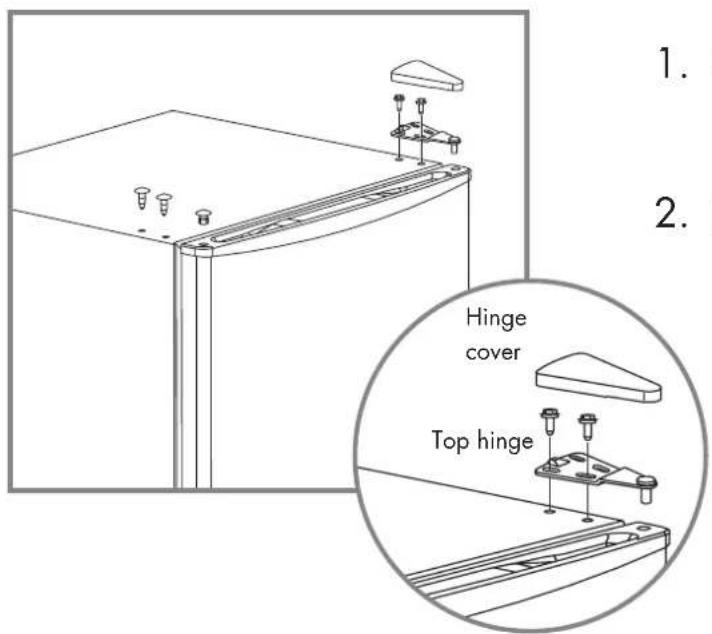
1. 2. Hinge cover Top hinge- Unplug and empty the appliance.
- Remove the hinge cover, screws and top hinge, and remove the cap and pins on the other side.
text_image
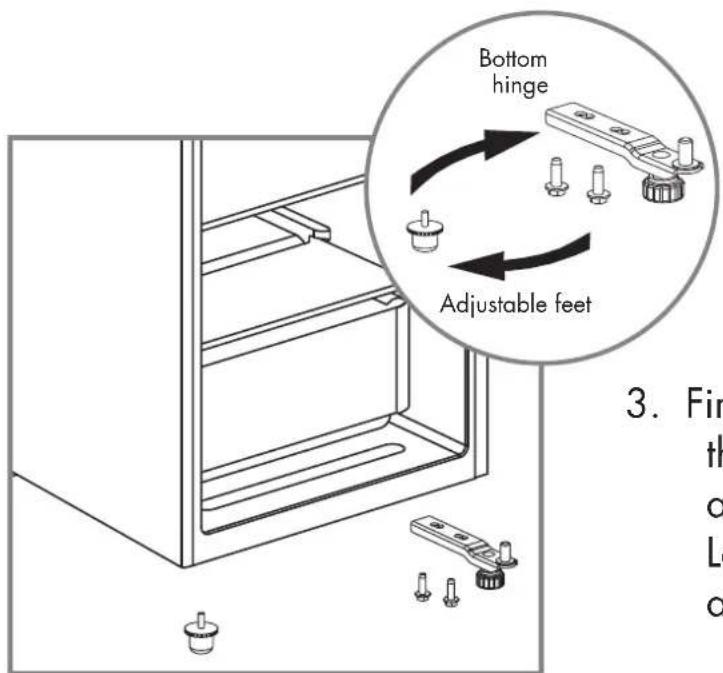
Bottom hinge Adjustable feet 3. Fir th o L o- First remove the door, then remove the lower-right hinge and the adjusting leg on the left-hand side. Lay the door on a soft surface to avoid scratches.
natural_image
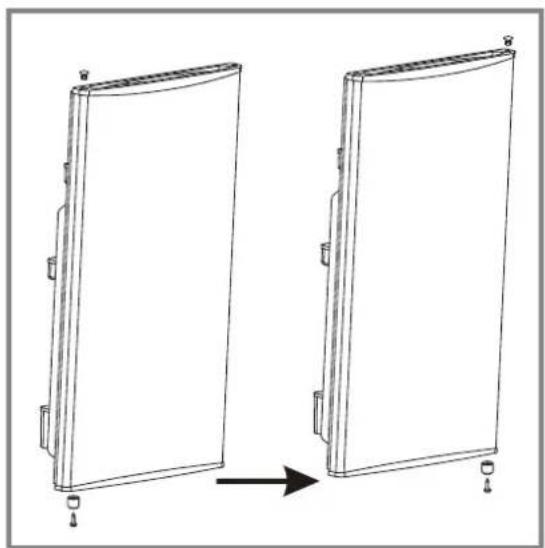
Diagram showing two identical rectangular panels with side connectors and a directional arrow indicating transformation (no text or symbols present)- Swap the positions of the lower hinge and the leveling feet and install them.
text_image
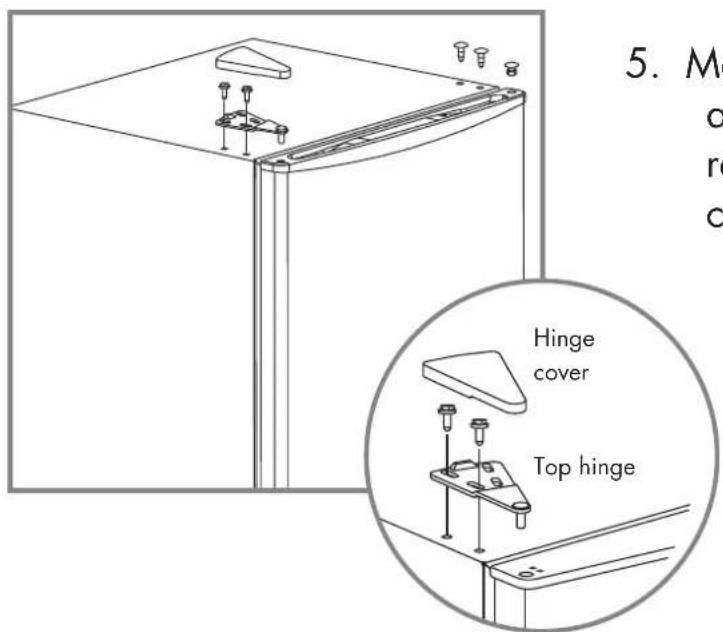
5. M o r c Hinge cover Top hinge- Mount the door on the bottom hinge and then mount the top hinge. Then remount the hinge cover, pins and cap in sequence.
4. USE
Carefully review the safety information (Section 1) before you start using the appliance.
三Z
4.1 SETTING THE TEMPERATURE
You can set the temperature of the appliance by turning the thermostat button.
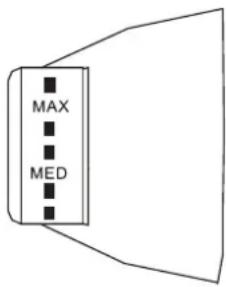
- The thermostat can be set to four positions: 'OFF', 'MIN', 'MED' and 'MAX'.
- Turn the knob to 'MIN' and the temperature increases.
- Turn the knob to 'MAX' and the temperature drops.
- The recommended setting is 'MED'.
- Turn the dial to 'OFF' to turn the appliance off.
text_image
MAX MED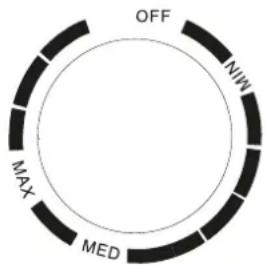
text_image
OFF N/W M/F MEDThe internal temperature of the appliance may vary due to the ambient temperature, the amount of products stored and the frequency with which the door is opened.

Note
The thermostat setting 'MAX' is suitable when the ambient temperature is below 16°C, but this can lead to ice formation if the appliance continues to run at such a setting for a long time below the normal ambient temperature, which is a normal phenomenon. In this case we recommend setting the appliance to a higher temperature (position 'MIN', 'MED') provided that the articles in the appliance allow this.
4.2 TIPS FOR DAILY USE
Compartments
- Due to the circulation of cold air in the appliance, the temperature in each part of the appliance is different. Therefore, different types of food should be placed in different places.
- Do not place the food close together as this hinders air circulation. Divide food into several compartments according to the table below:
| REFRIGERATOR COM-PARTMENTS | TYPE OF FOOD |
| Door compartments in the refrigerator compartment | Food with natural preservatives such as jam, juice, drink, spices.Do not store any products with a limited shelf life here. |
| Crisper drawer | Place fruit, herbs and vegetables separately in the crisper drawer.Do not put bananas, onions, potatoes or garlic in the refrigerator. |
| Refrigerator shelf - centre | Dairy products, eggs. |
| Refrigerator shelf - top | Food that does not require preparation such as ready meals, fine meats, leftovers. |
| Freezer Food for long storage. |
Shelves
To remove the shelf, lift it first and then pull it out. To put the shelf back in place, push it into place before lowering. Hold the shelf firmly when removing or replacing it and take care to avoid damage.
Cooling food
- Always refer to the expiry date of the products to know how long they can be stored.
- Pack food in resealable plastic bags, especially if it has a strong taste, and place on the glass shelves above the crisper drawer. Store food only one or at most two days in this way.
- Store raw meat and fish in appropriate food containers in the refrigerator so that it does not leak or come into contact with other foods.
- Do not place hot food or hot plastic parts in the appliance. Make sure it has cooled to room temperature before putting it in the appliance.
- Cooked food that has cooled sufficiently must be covered and can then be placed on any shelf.
- Do not place foods containing a lot of water too close to the back wall of the refrigerator to prevent them from freezing to the inner wall.
- It is best to clean and dry food before storing it in the appliance. It is advisable to store food in sealed packaging in the appliance. This prevents evaporation of water, which keeps fruit and vegetables fresh and also prevents odours.
Freezing food
- The freezer compartment is suitable for freezing fresh food and storing frozen food for a long time.
- The maximum amount of food that can be frozen in 24 hours is for this refrigerator: 2 kg.
- The freezing process takes 24 hours. Do not add any other food to freeze during this period.
-
Only freeze fresh and thoroughly cleaned foods.
-
Prepare the food in small portions so that it is soon completely frozen and can then be thawed in the desired amount.
- Pack the food in aluminium foil or freezer bags and make sure the packets are airtight.
- Do not allow fresh, non-frozen food to come into contact with food that has already been frozen, and prevent the temperature of the food that has already been frozen from rising.
- Lean foods are better and more durable than fatty foods; salt shortens the shelf life of food.
- Ice lollies, if eaten directly from the freezer, can cause frostbite.
- It is advisable to indicate the freezing date on each individual package in order to keep track of the shelf life.
- It is advisable to keep the time between buying the food and putting it in the freezer as short as possible.
Storing frozen food
On first use or after a long period of downtime. Run the appliance for at least two hours at the higher positions before putting products in the freezer compartment.

ATTENTION!
- The manufacturer's storage recommendations must be strictly followed. Please refer to the respective instructions.
- Do not keep the door open for too long; this can cause a sharp increase in temperature in the compartments of the appliance.
- Frozen food may not be refrozen after thawing.
- In the case of unexpected thawing, for example if a power failure lasts longer than the value specified in the technical properties under "temperature rise value", the thawed food must be consumed quickly or prepared immediately and then frozen again (after preparation).
4.3 SAVING ENERGY
- The most efficient use of energy is ensured in the configuration with the drawers in the lower part of the appliance and with the shelves evenly distributed. The position of the door trays does not affect energy consumption.
- Do not open the door or leave it open more often than necessary.
- Do not set the temperature too high to save energy unless the characteristics of the food require it.
- If the ambient temperature is high, the temperature control is set to a low temperature and the appliance is fully filled, the compressor can be on continuously, causing ice to form on the evaporator. In this case, set the temperature control to a higher temperature to defrost the evaporator and thus save energy.
- Ensure proper ventilation. Do not cover the vents or holes.
- Place frozen food in the fresh food compartment to defrost: the low temperature of the frozen food helps to cool the fresh food and thus saves energy.
- Replace the door gasket in good time to prevent poor door closing.
5. CLEANING AND MAINTENANCE
Before cleaning the appliance, carefully review the safety information (Section 1). For hygienic reasons, the inside of the appliance, including accessories, should be cleaned regularly.
! CAUTION!
- Remove the plug from the socket before cleaning. Never touch the plug with wet hands because of the risk of electric shocks and injury.
- Do not spill water directly onto the appliance to prevent rust, leakage and accidents.
- Do not put your hands in the bottom of the fridge as the sharp metal corners can cause scratches.
- Do not use water jets and steam to clean the appliance.
- To prevent damage, do not use a hard brush, steel brush, detergent, soap powder, alkaline detergent, benzene, petrol, acids, chlorine, abrasive powders, hot water or other corrosive or soluble substances to clean the cabinet surface, door gasket or plastic decorative parts.
- Do not use electrical appliances (such as a hairdryer or heater) to defrost your appliance.
Attention!
The electrical parts of the appliance may only be cleaned with a dry cloth.
Interior and exterior cleaning
- Food residues in the appliance can cause a bad smell. The appliance should therefore be cleaned regularly. The fresh food compartment is preferably cleaned monthly.
- Remove all shelves, fruit and vegetable compartment, bottle racks, cover plate, drawers, etc. and clean with a soft cloth or sponge moistened with warm water or a neutral detergent.
- If you are using cleaning agents, clean with a soft cloth or sponge, and wipe dry.
- Regularly remove the dust from the back panel and side plates of the appliance. Use a dry cloth for this (no water).
- If the appliance has been empty for a long time, turn it off, defrost, clean, dry and leave the door open to avoid mould forming in the appliance.
6. TROUBLESHOOTING
You can solve some problems easily yourself using the table below. Caution!
Attention!
- Before solving the problem, switch off the power supply.
- If the following descriptions do not solve your problem, please contact our customer service:
- Only a qualified electrician or authorised person may solve the faults not contained in this manual. Repairs carried out by unauthorised persons may cause injury and/or serious damage to persons and property.
www.coolblue.nl/en/customer-service
PROBLEM POSSIBLE CAUSE SOLUTIONS
| The appliance does not cool at all | - The temperature control knob is in the highest position.- The plug is not inserted properly.- There is no voltage on the socket.- The fuse is blown or defective.- The appliance is installed in a place where the ambient temperature is less than 16°C, such as a balcony, garage or storage room. | - Switch the thermostat to another position.- Insert the plug properly.- Open the door and check if lamp is on. If the lamp is off, there may be no voltage on the socket. Have the socket repaired by an electrician.- Check the fuse and replace if necessary.- Install the appliance in a protected location where the ambient temperature is higher than 16°C. If the appliance is installed in a room with too low a temperature, the internal cooling system may not operate correctly. |
| The door does not open easily. | - You tried to open the door immediately after closing. | - Wait a few seconds between closing and re-opening the door. |
| PROBLEM POSSIBLE CAUSE SOLUTIONS | ||
| Water runs over the back of the appliance | - During the automatic defrosting process, icing thaws against the back wall. | - Wipe up the water with a soft cloth. |
| Water enters the appliance | - Products prevent water from entering the water collection container.- The water collection channel is blocked. | - Ensure products do not touch the back wall.- Clean the water collection channel. |
| There is too much condensation on the back wall of the appliance. | - The door has been opened too often.- The door is not completely closed.- The stored food was not packed. | - Only open the door if necessary.- Make sure the door is completely closed.- Pack food in suitable material before putting it in the appliance. |
| There is water on the floor. | - The defrost water collection channel is not connected to the evaporator container above the compressor. | - Secure the defrost water collection channel to the evaporator container. |
| The appliance freezes or cools too much. | - The temperature is set too cold or the appliance is in the coldest position. | - Temporarily set the temperature control knob to a warmer position. |
| The temperature in the appliance is too low/high. | - The temperature is not set correctly.- The door is not closed properly.- The temperature of the food in the fridge is too high.- Many products are stored at the same time.- The door has been opened too often. | - Set a higher/lower temperature.- Find the cause of the door not closing properly, remove or move possible obstacles.- Allow the food to cool to room temperature before preserving.- Preserve fewer products at the same time.- Only open the door if necessary. |
| Strange smell in the refrigerator | - There is spoiled food in the fridge.- The appliance is not clean.- Food with a strong smell is present in the appliance. | - Throw away spoiled food.- Clean the appliance.- Pack food with a strong smell. |
| There is too much frost and ice. | - The door is not closed properly.- The door gasket is deformed or dirty.- The products are not packed correctly.- The temperature is set incorrectly.- The appliance is fully loaded and set to the lowest temperature.- The set temperature in the appliance is too low and the ambient temperature is too high. | - Find the cause of the door not closing properly, remove or move possible obstacles.- As a result, the door does not close properly. Clean the seal and repair the deformation. If necessary, replace the seal, contact customer service.- Pack the products better.- Please refer to Section 4.- Set a higher temperature. Please refer to Section 4.- Set a higher temperature. Please refer to Section 4. |
| The compressor works continuously. | - The temperature is set incorrectly.- Many products are placed at the same time.- The room temperature is too high.- The food placed in the appliance was too hot.- The door is not closed properly. | - Please refer to Section 4.- Wait a few hours and then check the temperature again.- Please refer to Section 4.- Allow food to cool to room temperature before storing.- See the previous section. |
| The lamp does not work. | - The lamp is broken.- The lamp is in the standby position. | - Please contact our customer service.- Close and open the door. |
| The side panels are hot. | - This is normal. The heat exchanger components are on the side. | |
7. TAKING OUT OF SERVICE
Switching off and storage
If the appliance will not be used for several months, first switch it off (turn the thermostat switch to OFF) and then pull the plug out of the socket.
• Make sure the appliance is completely thawed.
- Clean the inside thoroughly and wipe dry. To prevent the formation of odours and moulds, leave the door open: block it.
- Clean the door gasket groove with soap and water and wipe everything dry with a soft cloth.
- Do not use a hard brush, steel brush, detergent, soap powder, alkaline detergent, benzene, gasoline, acids, hot water or other corrosive or soluble substances to clean the appliance.
- Store the cleaned appliance in a dry, ventilated place, away from a heat source. Make sure the appliance is on a level surface and do not place heavy objects on top.
- The appliance in storage must not be accessible to children playing.
8. SAFE DISPOSAL
CAUTION!
Waste processing
- Refrigerants and the cyclopentane foam used for the appliance are flammable. When the appliance is disposed of, it must therefore be kept away from sources of fire and collected or returned to a qualified waste processing company.
- The appliance may not under any circumstances be incinerated to prevent damage to the environment or other damage.
- R-600a is used as a refrigerant in this appliance. Therefore, please contact local authorities regarding the safe disposal of this appliance.
text_image
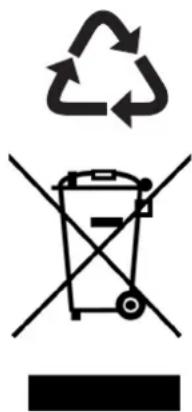
Creative Commons recycling symbol with recycling icon and no disposal binThe materials used in this appliance marked with this symbol are recyclable.
This marking indicates that this product should not be disposed of via household waste throughout the EU. In order to prevent damage to the environment or human health as a result of uncontrolled waste, it must be processed responsibly so that raw materials can be reused sustainably. Use the existing collection systems or contact the shop where you purchased the product if you want to dispose of the used product. There, the product is recycled in an environmentally friendly way.
- Old cooling appliances still have value. Responsible disposal ensures that valuable raw materials can be recycled. Of course, the appliance may not be disposed of with (domestic) residual waste, but it must be collected or returned to the environmental station of your municipal waste processing company.
- The refrigerants and insulation materials used in your appliance require special care. When draining, ensure that the pipes on the back of the appliance are not damaged.
- Avoid damaging the cooling unit, especially the heat exchanger.
- Information on how to dispose of old appliances and packaging correctly can be found at your local municipal waste processing company.

FR - NOTICE D'UTILISATION
COMBINÉ RÉFRIGÉRATEUR- CONGÉLATEUR

VPTMKV48W

veripart

TABLE DES MATIÈRES
AVANT-PROPOS
63
1. SÉCURITÉ 65
text_image
E D F F Anatural_image
Simple black checkmark inside a whiteboard frame with no text or symbols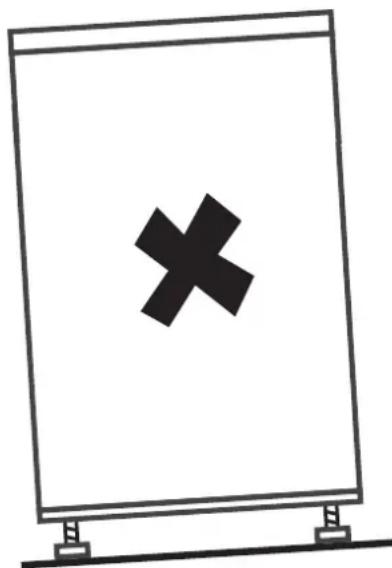
natural_image
Simple line drawing of a blank board with a black 'X' symbol on the left side (no text or labels)
natural_image
Line drawing of a hand installing or adjusting a shelf panel on a metal shelf (no text or symbols)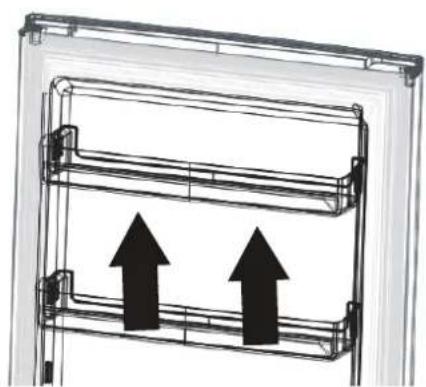
natural_image
Diagram of a refrigerator interior with two upward-pointing arrows indicating vertical motion (no text or symbols)
3.1 INVERSION DU SENS DE ROTATION DE LA PORTE
natural_image
Line drawing of a screwdriver with a pointed tip (no text or symbols)• Tournevis cruciforme

natural_image
Line drawing of a screwdriver with no text or symbols- Tournevis plat
natural_image
Line drawing of an adjustable wrench with a handle and screw (no text or symbols)natural_image
Diagram showing two identical rectangular panels with mounting holes and a directional arrow indicating transformation (no text or symbols)text_image
OFF MIN MAX MEDPROBLÈME CAUSE POSSIBLE SOLUTIONS
text_image
Creative Commons recycling symbol with recycling icon and crossed-out trash bintext_image
E D F F Anatural_image
Simple black checkmark inside a whiteboard frame with no text or symbols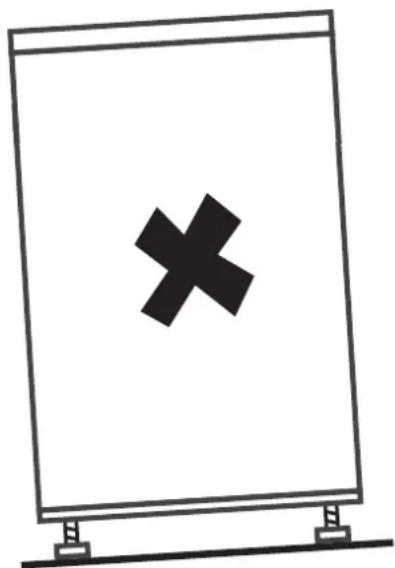
natural_image
Simple line drawing of a blank board with a black 'X' symbol on the front panel (no text or labels)
natural_image
Line drawing of a hand installing or adjusting a shelf panel on a metal shelf (no text or symbols)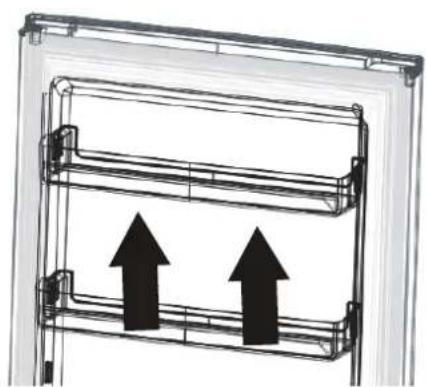
natural_image
Diagram of a refrigerator interior with two upward-pointing arrows indicating height or movement (no text or symbols present)
natural_image
Line drawing of a screwdriver with a pointed tip (no text or symbols)natural_image
Line drawing of a screwdriver with no text or symbols• Schraubendreher
natural_image
Line drawing of an adjustable wrench with a screw and handle (no text or symbols)natural_image
Diagram showing two identical rectangular panels with side connectors and a directional arrow indicating transformation (no text or symbols present)text_image
Creative Commons recycling symbol with recycling icon and no disposal binVeripart is a registered trademark
Weena 664
3012CN Rotterdam
The Netherlands
Made in China