ManualGo.com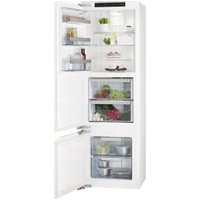
SCZ81800C0 - Fridge AEG - Free user manual and instructions
Find the device manual for free SCZ81800C0 AEG in PDF.



Download the instructions for your Fridge in PDF format for free! Find your manual SCZ81800C0 - AEG and take your electronic device back in hand. On this page are published all the documents necessary for the use of your device. SCZ81800C0 by AEG.
USER MANUAL SCZ81800C0 AEG
Thank you for choosing this AEG product. We have created it to give you impeccable performance for many years, with innovative technologies that help make life simpler features you might not find on ordinary appliances. Please spend a few minutes reading to get the very best from it. Visit our website for: Get usage advice, brochures, trouble shooter, service information: www.aeg.com/webselfservice Register your product for better service: www.registeraeg.com Buy Accessories, Consumables and Original spare parts for your appliance: www.aeg.com/shop
CUSTOMER CARE AND SERVICE
Always use original spare parts. When contacting our Authorised Service Centre, ensure that you have the following data available: Model, PNC, Serial Number. The information can be found on the rating plate. Warning / Caution-Safety information General information and tips Environmental information Subject to change without notice. www.aeg.com
21. SAFETY INFORMATION
Before the installation and use of the appliance, carefully read the supplied instructions. The manufacturer is not responsible for any injuries or damages that are the result of incorrect installation or usage. Always keep the instructions in a safe and accessible location for future reference.
1.1 Children and vulnerable people safety
- This appliance can be used by children aged 8 years and above and by persons with reduced capabilities provided that they have been given instruction and/or supervision regarding the safe use of the appliance and understand the potential hazards involved.
- Do not let children play with the appliance.
- Children shall not carry out cleaning and user maintenance of the appliance without supervision.
Keep all packaging away from children and dispose of it appropriately.
This appliance is intended to be used in household and similar applications such as: – Farm houses; staff kitchen areas in shops, offices and other working environments – By clients in hotels, motels, bed and breakfast and other residential type environments
- Keep ventilation openings, in the appliance enclosure or in the built-in structure, clear of obstruction.
- Do not use mechanical devices or other means to accelerate the defrosting process, other than those recommended by the manufacturer.
- Do not damage the refrigerant circuit.
- Do not use electrical appliances inside the food storage compartments of the appliance, unless they are of the type recommended by the manufacturer. ENGLISH 3• Do not use water spray and steam to clean the appliance.
- Clean the appliance with a moist soft cloth. Only use neutral detergents. Do not use abrasive products, abrasive cleaning pads, solvents or metal objects.
- Do not store explosive substances such as aerosol cans with a flammable propellant in this appliance.
- If the supply cord is damaged, it must be replaced by the manufacturer, its Authorised Service Centre or similarly qualified persons in order to avoid a hazard.
WARNING! Only a qualified person must install this appliance.
- Remove all the packaging and the transit bolts.
- Do not install or use a damaged appliance.
- Follow the installation instruction supplied with the appliance.
- Always take care when moving the appliance as it is heavy. Always use safety gloves and enclosed footwear.
- Make sure the air can circulate around the appliance.
- Wait at least 4 hours before connecting the appliance to the power supply. This is to allow the oil to flow back in the compressor.
- Do not install the appliance close to radiators or cookers, oven or hobs.
- The rear of the appliance must stand against the wall.
- Do not install the appliance where there is direct sunlight.
- Do not install this appliance in areas that are too humid or too colds, such as the construction appendices, garages or wine cellars.
- When you move the appliance, lift it by the front edge to avoid scratching the floor.
2.2 Electrical connection
WARNING! Risk of fire and electrical shock.
- The appliance must be earthed.
- Make sure that the electrical information on the rating plate agrees with the power supply. If not, contact an electrician.
- Always use a correctly installed shockproof socket.
- Do not use multi-plug adapters and extension cables.
- Make sure not to cause damage to the electrical components (e.g. mains plug, mains cable, compressor). Contact the Authorised Service Centre or an electrician to change the electrical components.
- The mains cable must stay below the level of the mains plug.
- Connect the mains plug to the mains socket only at the end of the installation. Make sure that there is access to the mains plug after the installation.
- Do not pull the mains cable to disconnect the appliance. Always pull the mains plug.
WARNING! Risk of injury, burns, electrical shock or fire. www.aeg.com4• Do not change the specification of this appliance.
- Do not put electrical appliances (e.g. ice cream makers) in the appliance unless they are stated applicable by the manufacturer.
- Be careful not to cause damage to the refrigerant circuit. It contains isobutane (R600a), a natural gas with a high level of environmental compatibility. This gas is flammable.
- If damage occurs to the refrigerant circuit, make sure that there are no flames and sources of ignition in the room. Ventilate the room.
- Do not let hot items to touch the plastic parts of the appliance.
- Do not put soft drinks in the freezer compartment. This will create pressure on the drink container.
- Do not store flammable gas and liquid in the appliance.
- Do not put flammable products or items that are wet with flammable products in, near or on the appliance.
- Do not touch the compressor or the condenser. They are hot.
- Do not remove or touch items from the freezer compartment if your hands are wet or damp.
- Do not freeze again food that has been thawed.
- Obey the storage instructions on the packaging of frozen food.
2.4 Care and cleaning
WARNING! Risk of injury or damage to the appliance.
- Before maintenance, deactivate the appliance and disconnect the mains plug from the mains socket.
- This appliance contains hydrocarbons in the cooling unit. Only a qualified person must do the maintenance and the recharging of the unit.
- Regularly examine the drain of the appliance and if necessary, clean it. If the drain is blocked, defrosted water collects in the bottom of the appliance.
WARNING! Risk of injury or suffocation.
- Disconnect the appliance from the mains supply.
- Cut off the mains cable and discard it.
- Remove the door to prevent children and pets to be closed inside of the appliance.
- The refrigerant circuit and the insulation materials of this appliance are ozone-friendly.
- The insulation foam contains flammable gas. Contact your municipal authority for information on how to discard the appliance correctly.
- Do not cause damage to the part of the cooling unit that is near the heat exchanger.
ON/OFF It is possible to change predefined sound of buttons by pressing together Mode and temperature colder button for a few seconds. Change is reversible.
1. Connect the mains plug to the power
display is off. The temperature indicators show the set default temperature. The alarm buzzer could operate after few seconds. To reset the alarm refer to "High temperature alarm". To select a different set temperature refer to "Temperature regulation". If "dEMo" appears on the display, refer to "Troubleshooting" .
1. Press the appliance ON/OFF for 5
seconds. The display switches off.
2. Disconnect the mains plug from the
3.5 Temperature regulation
Set the temperature of the appliance by pressing the temperature regulators. Default set temperature:
- -18°C for the freezer The temperature indicators show the set temperature. The set temperature will be reached within 24 hours. After a power failure the set temperature remains stored.
3.6 Switching on the fridge
To switch on the fridge it is enough to press the fridge temperature regulator. To switch on the fridge in the other way:
1. Press Mode until the corresponding
icon appears. The Fridge OFF indicator flashes.
2. Press OK to confirm.
The fridge OFF indicator goes off. To select a different set temperature refer to "Temperature regulation".
3.7 Switching off the fridge
1. Press Mode until the corresponding
icon appears. www.aeg.com 6The fridge OFF indicator and the fridge compartment indicator flash. The fridge temperature indicator shows dashes.
2. Press OK to confirm.
The fridge OFF indicator is shown.
3.8 High temperature alarm
An increase in the temperature in the freezer compartment (for example due to an earlier power failure) is indicated by flashing the alarm icon and freezer temperature indicators, and sounding of buzzer. Press any button. The buzzer switches off. The freezer temperature indicator shows the highest temperature reached for a few seconds, then displays the set temperature again. The alarm indicator continues to flash until the normal conditions are restored.
3.9 COOLMATIC function
If you need to insert a large amount of warm food, for example after doing the grocery shopping, we suggest activating the COOLMATIC function to chill the products more rapidly and to avoid warming the other food which is already in the refrigerator.
1. Press the Mode until the
corresponding icon appears. The COOLMATIC indicator flashes.
2. Press the OK to confirm.
The COOLMATIC indicator is shown. The COOLMATIC function shuts off automatically after approximately 6 hours. To switch off the function before its automatic end, repeat the procedure. The function switches off by selecting a different fridge set temperature.
3.10 LongFresh compartment
1. Press Mode until the corresponding
icon appears. The display shows 3. This is the default setting that ensures the most effective performance.
2. Press the temperature buttons on the
control panel to select necessary setting.
3. Press OK to confirm the setting.
The indicator returns to the fridge temperature setting in a few seconds. Setting Application 1-3 Meat and fish 4-5 Meat, fish, vegetables and fruit stored together
3.11 FROSTMATIC function
The FROSTMATIC function accelerates the freezing of fresh food and, at the same time, protects foodstuffs already stored from undesirable warming.
1. Press the Mode button until the
corresponding icon appears. The FROSTMATIC indicator flashes.
2. Press the OK button to confirm.
TheFROSTMATIC indicator is shown. This function stops automatically after 52 hours. To switch off the function before its automatic end repeat the procedure until the FROSTMATIC indicator goes off. The function switches off by selecting a different set temperature.
3.12 Door open alarm
An acoustic alarm will sound if the door is left open for a few minutes. The door open alarm conditions are indicated by:
- a flashing Alarm indicator;
- an acoustic buzzer. When normal conditions are restored (door closed), the alarm will stop. The buzzer can also be switched off by pressing any button. ENGLISH
73.13 ChildLock function
Activate the ChildLock function to lock the buttons from unintentional operation.
1. Press Mode until the corresponding
icon appears. The ChildLock indicator flashes.
2. Press OK to confirm.
The ChildLock indicator is shown. To deactivate the ChildLock function, repeat the procedure until the ChildLock indicator goes off.
3.14 MinuteMinder function
The MinuteMinder function is to be used to set an acoustic alarm at the preferred time, useful for example when a recipe requires to cool down food products for a certain period of time. It is also useful when a reminder is needed in order not to forget the bottles placed in the freezer for fast cooling.
1. Press Mode until the corresponding
icon appears. The MinuteMinder indicator flashes. The Timer shows the set value (30 minutes) for a few seconds.
2. Press the Timer regulator to change
the Timer set value from 1 to 90 minutes.
3. Press OK to confirm.
TheMinuteMinder indicator is shown. The Timer start to flash (min). At the end of the countdown the MinuteMinder indicator flashes and an audible alarm sounds. Press OK to switch off the sound and terminate the function. To switch off the function repeat the procedure until the MinuteMinder goes off. It is possible to change the time at any time during the countdown and at the end by pressing the Temperature colder button and the Temperature warmer button.
4.1 Cleaning the interior
Before using the appliance for the first time, the interior and all internal accessories should be washed with lukewarm water and some neutral soap to remove the typical smell of a brand- new product, then dried thoroughly. CAUTION! Do not use detergents or abrasive powders, as these will damage the finish.
WARNING! Refer to Safety chapters.
5.1 Positioning the door
shelves To permit storage of food packages of various sizes, the door shelves can be placed at different heights.
1. Gradually pull the shelf in the
direction of the arrows until it comes free.
2. Reposition as required.
www.aeg.com85.2 Movable shelves The walls of the refrigerator are equipped with a series of runners so that the shelves can be positioned as desired. For better use of space, the front half- shelves (A) can be placed under the rear ones. (B)
Do not move the glass shelf above the vegetable drawer to ensure correct air circulation.
5.3 Freezing fresh food
The freezer compartment is suitable for freezing fresh food and storing frozen and deep-frozen food for a long time. To freeze fresh food activate the FROSTMATIC function and place the food to be frozen in the freezer compartment. To freeze fresh food activate the FROSTMATIC function at least 24 hours before placing the food to be frozen in the freezer compartment. The maximum amount of food that can be frozen in 24 hours is specified on the rating plate, a label located on the inside of the appliance. The freezing process lasts 24 hours: during this period do not add other food to be frozen. When the freezing process is completed, return to the required temperature (see "FROSTMATIC Function"). In this condition, the refrigerator compartment temperature might drop below 0°C. If this occurs reset the temperature regulator to a warmer setting.
5.4 Storage of frozen food
When first starting-up or after a period out of use, before putting the products in the compartment let the appliance run at least 2 hours on the higher settings. WARNING! In the event of accidental defrosting, for example due to a power failure, if the power has been off for longer than the value shown in the technical characteristics chart under "rising time", the defrosted food must be consumed quickly or cooked immediately and then re- frozen (after cooling).
Deep-frozen or frozen food, prior to being used, can be thawed in the refrigerator compartment or at room temperature, depending on the time available for this operation. Small pieces may even be cooked still frozen, directly from the freezer: in this case, cooking will take longer.
5.6 LongFresh Compartment
The storage temperature and the relative humidity (between 45 and 90 %) provide optimal conditions for the storage of various kinds of food. To learn about the temperature settings in the LongFresh compartment please refer to the “LongFresh compartment setting” section LongFresh compartment is suitable for the storage of a variety of fresh food as it preserves its high nutritional values as well as high humidity level much longer in comparison to the regular refrigerator. ENGLISH 9The LongFresh compartment is also suitable for defrosting food. The thawed food can be stored up to two days.
5.7 Humidity control
Both drawers can be used according to the desired storage conditions independently of each other with lower or higher humidity. Regulation for each drawer is separate and is controlled using the slide valve at the front of the drawer.
- “Dry“: low air humidity - up to 50 % relative humidity This humidity level is reached when both sliders are set into this position and the ventilation openings are wide open.
- Humid“: high relative humidity - up to 90% This humidity level is reached when both sliders are set in this position and the ventilation openings are closed. Humidity is kept and can not escape.
5.8 Fresh food storage time in the LongFresh compartment
Type of food Air humidity adjustment Storage time Onion "dry” up to 5 months Butter “dry” up to 1 month Large pork cuts “dry” up to 10 days Beef, venison, small pork cuts, poultry “dry” up to 7 days Tomato sauce “dry” up to 4 days Fish, shellfish, cooked meat products “dry” up to 3 days Cooked seafood “dry” up to 2 days Salad, vegetables Carrots, herbs, Brussels sprouts, celery “humid” up to 1 month Artichokes, cauliflower, chicory, iceberg lettuce, en- dive, lamb’s lettuce, lettuce, leeks, radicchio “humid” up to 21 days Broccoli, Chinese leaves, kale, cabbage, radishes, Sa- voy cabbage “humid” up to 14 days Peas, kohlrabi “humid” up to 10 days www.aeg.com10Type of food Air humidity adjustment Storage time Spring onions, radishes, as- paragus, spinach “humid” up to 7 days Fruit Pears, dates (fresh), straw- berries, peaches “humid” up to 1 month Plums rhubarb, gooseberries “humid” up to 21 days Apples (not sensitive to cold), quinces “humid” up to 20 days Apricots, cherries “humid” up to 14 days Damsons, grapes “humid” up to 10 days Blackberries, currants “humid” up to 8 days Figs (fresh) “humid” up to 7 days Blueberries, raspberries “humid” up to 5 days Cakes containing cream and other kinds of pastry products can be stored in the LongFresh compartment for 2 or 3 days. Not to be placed in the LongFresh compartment:
- cold sensitive fruit which have to be stored at cellar or room temperature like pineapple, bananas, grapefruit, melons, mango, papaya, oranges, lemons, kiwi fruit.
- The types of food not mentioned above should be stored in the refrigerator compartment (e.g. all sorts of cheese, cold cuts, etc.) The level of air humidity in the drawers depends on the content of humidity in the stored food, vegetable and fruit and on the frequency of door opening The LongFresh compartment is also suitable for slow thawing of food. In this case the thawed food can be stored in the LongFresh compartment for up to two days.
- Pay attention to the freshness of the food, especially on the expiry date. Quality and freshness influence the storage time.
- The whole storage cycle time will depend on the preservation conditions made prior to the final storage in the fridge.
- Food, fruit or vegetables should always be packed or wrapped up before storage.
- Animal food always store packed and dry.
- Food rich in proteins will go bad quicker. This means seafood will spoil before fish which in turn will spoil before meat. While storing food in a LongFresh compartment storage time for that kind of food can be increased by up to three times as well without loss on quality.
- All food stored in a LongFresh compartment should be taken out of the drawers roughly 15-30 min before consumption, particularly fruit and vegetables to be consumed without any additional cooking process. ENGLISH 11Allowing fruit and vegetables to return to room temperature will improve the texture and flavour.
The refrigerator compartment is equipped with a device that allows for rapid cooling of foods and more uniform temperature in the compartment. This device activates by itself when needed, for example for a quick temperature recovering after door opening or when the ambient temperature is high. The DYNAMICAIR device stops when the door is open and restarts immediately after the door closing.
5.10 Ice-cube production
This appliance is equipped with one or more trays for the production of ice- cubes. Do not use metallic instruments to remove the trays from the freezer.
1. Fill these trays with water
2. Put the ice trays in the freezer
6.1 Normal operating sounds
The following sounds are normal during operation:
- A faint gurgling and bubbling sound from coils sound when refrigerant is pumped.
- A whirring and pulsating sound from the compressor when refrigerant is pumped.
- A sudden cracking noise from inside appliance caused by thermic dilatation (a natural and not dangerous physical phenomenon).
- A faint click noise from the temperature regulator when the compressor switches on or off.
6.2 Hints for energy saving
- Do not open the door frequently or leave it open longer than absolutely necessary.
6.3 Hints for fresh food
refrigeration To obtain the best performance:
- do not store warm food or evaporating liquids in the refrigerator
- do cover or wrap the food, particularly if it has a strong flavour
- position food so that air can circulate freely around it
6.4 Hints for refrigeration
- Meat (all types): wrap in a suitable packaging and place it on the glass shelf above the vegetable drawer. Store meat for at most 1-2 days.
- Cooked foods, cold dishes: cover and place on any shelf.
- Fruit and vegetables: clean thoroughly and place in a special drawer. Bananas, potatoes, onions www.aeg.com 12and garlic must not be kept in the refrigerator if not packed.
- Butter and cheese: place in a special airtight container or wrap in an aluminium foil or a polythene bag to exclude as much air as possible.
- Bottles: close with a cap and place on the door bottle shelf, or (if available) on the bottle rack.
6.5 Hints for freezing
To help you make the most of the freezing process, here are some important hints:
- the maximum quantity of food which can be frozen in 24 hours is shown on the rating plate;
- the freezing process takes 24 hours no further food to be frozen should be added during this period;
- freeze only top quality, fresh and thoroughly cleaned, foodstuffs;
- prepare food in small portions to enable it to be rapidly and completely frozen and to make it possible subsequently to thaw only the quantity required;
- wrap up the food in aluminium foil or polythene and make sure that the packages are airtight;
- do not allow fresh, unfrozen food to touch food which is already frozen, thus avoiding a rise in temperature of the latter;
- lean foods store better and longer than fatty ones; salt reduces the storage life of food;
- water ices, if consumed immediately after removal from the freezer compartment, can possibly cause the skin to be freeze burnt;
- it is advisable to show the freezing in date on each individual pack to enable you to keep tab of the storage time.
6.6 Hints for storage of frozen
food To obtain the best performance from this appliance, you should:
- make sure that the commercially frozen foodstuffs were adequately stored by the retailer;
- be sure that frozen foodstuffs are transferred from the foodstore to the freezer in the shortest possible time;
- not open the door frequently or leave it open longer than absolutely necessary;
- once defrosted, food deteriorates rapidly and cannot be refrozen;
- do not exceed the storage period indicated by the food manufacturer.
WARNING! Refer to Safety chapters.
7.1 General warnings
CAUTION! Unplug the appliance before carrying out any maintenance operation. This appliance contains hydrocarbons in its cooling unit; maintenance and recharging must therefore only be carried out by authorized technicians. The accessories and parts of the appliance are not suitable for washing in a dishwasher.
7.2 Periodic cleaning
CAUTION! Do not pull, move or damage any pipes and/or cables inside the cabinet. CAUTION! Take care of not to damage the cooling system. ENGLISH 13CAUTION! When moving the cabinet, lift it by the front edge to avoid scratching the floor. The equipment has to be cleaned regularly:
1. Clean the inside and accessories with
lukewarm water and some neutral soap.
2. Regularly check the door seals and
wipe clean to ensure they are clean and free from debris.
3. Rinse and dry thoroughly.
4. If accessible, clean the condenser
and the compressor at the back of the appliance with a brush. This operation will improve the performance of the appliance and save electricity consumption. The lowest shelf, dividing the cooler compartment from the compartment can be removed only for cleaning. To remove pull out the shelf straight. To make sure fully functionality of the LongFresh compartment the lowest shelf and cover plates must be put back in their original position after cleaning. The cover plates above the drawers in the compartment can be taken out for cleaning.
7.3 Defrosting of the
refrigerator Defrosting of the fridge compartment is automatic. The water that forms flows into a recipient on the compressor and evaporates. The recipient cannot be removed.
7.4 Defrosting the freezer
CAUTION! Never use sharp metal tools to scrape off frost from the evaporator as you could damage it. Do not use a mechanical device or any artificial means to speed up the thawing process other than those recommended by the manufacturer. A temperature rise of the frozen food packs, during defrosting, may shorten their safe storage life. About 12 hours prior to defrosting, set a lower temperature, in order to build up sufficient chill reserve for the interruption in operation. A certain amount of frost will always form on the freezer shelves and around the top compartment. Defrost the freezer when the frost layer reaches a thickness of about 3-5 mm.
1. Switch off the appliance, or pull out
electrical plug from the wall socket.
2. Remove any stored food, wrap it in
several layers of newspaper and put it in a cool place. WARNING! Do not touch frozen goods with wet hands. Hands can freeze to the goods.
3. Leave the door open.
In order to speed up the defrosting process, place a pot of warm water in the freezer compartment. In addition, remove pieces of ice that break away before defrosting is complete.
4. When defrosting is completed, dry
the interior thoroughly.
5. Switch on the appliance.
After three hours reload the previously removed food into the freezer compartment. www.aeg.com
147.5 Periods of non-operation
When the appliance is not in use for long periods, take the following precautions:
1. Disconnect the appliance from
appliance and all accessories.
4. Clean the appliance and all
5. Leave the door/doors open to
prevent unpleasant smells. WARNING! If you want to keep the appliance switched on, ask somebody to check it once in a while to prevent the food inside from spoiling in case of a power failure.
WARNING! Refer to Safety chapters.
8.1 What to do if...
Problem Possible cause Solution The appliance does not op- erate. The appliance is switched off. Switch on the appliance. The mains plug is not con- nected to the mains socket correctly. Connect the mains plug to the mains socket correctly. There is no voltage in the mains socket. Connect a different electrical appliance to the mains socket. Contact a qualified electrician. The appliance is noisy. The appliance is not sup- ported properly. Check if the appliance stands stable. Audible or visual alarm is on. The cabinet has been re- cently switched on or the temperature is still too high. Refer to "Door open alarm"or "High temperature alarm". The temperature in the ap- pliance is too high. Refer to "Door open alarm"or "High temperature alarm". The door is left open. Close the door. The temperature in the ap- pliance is too high. Contact a qualified electrician or contact the nearest Author- ised Service Centre. ENGLISH 15Problem Possible cause Solution A square symbol is shown in- stead of numbers on the Temperature Display. Temperature sensor prob- lem. Contact the nearest Author- ised Service Centre (the cool- ing system will continue to keep food products cold, but temperature adjustment will not be possible). The lamp does not work. The lamp is in stand-by. Close and open the door. The lamp does not work. The lamp is defective. Contact the nearest Author- ised Service Centre. The compressor operates continually. Temperature is set incor- rectly. Refer to "Operation". Many food products were put in at the same time. Wait some hours and then check the temperature again. The room temperature is too high. Refer to climate class chart on the rating plate. Food products placed in the appliance were too warm. Allow food products to cool to room temperature before stor- ing. The door is not closed cor- rectly. Refer to "Closing the door". The FROSTMATIC is switched on. Refer to "FROSTMATIC func- tion". The COOLMATIC is switched on. Refer to "COOLMATIC func- tion". The water drainage plug is not correctly positioned. Position the water drainage plug in the correct way. Food products are not wrapped properly. Wrap the food products bet- ter. Temperature is set incor- rectly. Refer to "Operation" . The compressor does not start immediately after pressing the FROSTMATIC, or after changing the tem- perature. This is normal, no error has occurred. The compressor starts after a period of time. The compressor does not start immediately after pressing the COOLMATIC, or after changing the tem- perature. This is normal, no error has occurred. The compressor starts after a period of time. www.aeg.com16Problem Possible cause Solution Water flows inside the refrig- erator. The water outlet is clog- ged. Clean the water outlet. Food products prevent that water flows into the water collector. Make sure that food products do not touch the rear plate. Water flows on the floor. The melting water outlet is not connected to the evaporative tray above the compressor. Attach the melting water out- let to the evaporative tray. Temperature cannot be set. The FROSTMATIC or COOLMATIC function is switched on. Switch off FROSTMATIC or COOLMATIC manually, or wait until the function resets auto- matically to set the tempera- ture. Refer to "FROSTMATIC or COOLMATIC function". dEMo appears on the dis- play. The appliance is in demon- stration mode. Keep the OK pressed for ap- proximately 10 seconds until a long sound is heard and dis- play shuts off for a short time. The temperature in the ap- pliance is too low/too high. The temperature regulator is not set correctly. Set a higher/lower tempera- ture. The door is not closed cor- rectly. Refer to "Closing the door". The food products' tem- perature is too high. Let the food products temper- ature decrease to room tem- perature before storage. Many food products are stored at the same time. Store less food products at the same time. The thickness of the frost is greater than 4-5 mm. Defrost the appliance. The door has been opened often. Open the door only if necessa- ry. There is no cold air circula- tion in the appliance. Make sure that there is cold air circulation in the appliance. If the advice does not lead to the desired result, contact the nearest Authorised Service Centre.
8.2 Replacing the lamp
The appliance is equipped with a longlife LED interior light. Only service is allowed to replace the lighting device. Contact your Authorised Service Centre. ENGLISH 178.3 Closing the door
1. Clean the door gaskets.
2. If necessary, adjust the door. Refer to
door gaskets. Contact the Authorised Service Centre.
Install the appliance in a dry, well ventilated indoors where the ambient temperature corresponds to the climate class indicated on the rating plate of the appliance. Climate class Ambient temperature SN +10°C to + 32°C N +16°C to + 32°C ST +16°C to + 38°C T +16°C to + 43°C Some functional problems might occur for some types of models when operating outside of that range. The correct operation can only be guaranteed within the specified temperature range. If you have any doubts regarding where to install the appliance, please turn to the vendor, to our customer service or to the nearest Authorised Service Centre.
9.2 Electrical connection
- Before plugging in, ensure that the voltage and frequency shown on the rating plate correspond to your domestic power supply.
- The appliance must be earthed. The power supply cable plug is provided with a contact for this purpose. If the domestic power supply socket is not earthed, connect the appliance to a separate earth in compliance with current regulations, consulting a qualified electrician.
- The manufacturer declines all responsibility if the above safety precautions are not observed.
- This appliance complies with the E.E.C. Directives.
9.3 Ventilation requirements
The airflow behind the appliance must be sufficient. 5 cm min. 200 cm
CAUTION! Refer to the assembly instructions for the installation.
There are some sounds during normal running (compressor, refrigerant circulation). www.aeg.com18BRRR!HISSS! CLICK! BLUBB! CRACK! SSSRR
Dimensions of the recess Height mm 1780 Width mm 560 Depth mm 550 Rising time Hours 24 Voltage Volts 230 - 240 Frequency Hz 50 The technical information is situated in the rating plate, on the external or internal side of the appliance and in the energy label.
12. ENVIRONMENTAL CONCERNS
Recycle the materials with the symbol . Put the packaging in applicable containers to recycle it. Help protect the environment and human health and to recycle waste of electrical and electronic appliances. Do not dispose appliances marked with the symbol with the household waste. Return the product to your local recycling facility or contact your municipal office. www.aeg.com20TABLE DES MATIÈRES