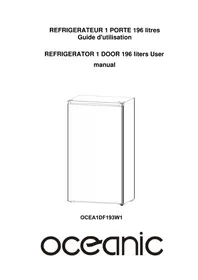
OCEA1DF193W1 - Refrigerator OCEANIC - Free user manual and instructions
Find the device manual for free OCEA1DF193W1 OCEANIC in PDF.


| Product type | Single-door refrigerator with freezer compartment |
| Brand | OCEANIC |
| Model | OCEA1DF193W1 |
| Total capacity | 196 liters |
| Dimensions (L x P x H) | 550 x 575 x 1232 mm |
| Net weight | 36.45 kg |
| Power supply | 220-240 V ~ 50 Hz |
| Climate class | ST (ambient temperature 16°C to 38°C) |
| Refrigerant gas | R600a (isobutane) 32 g |
| Installation type | Freestanding |
| Freezer star rating | 4 stars (****) – allows freezing |
| Interior lighting | LED (not user-replaceable) |
| Insulation | Cyclopentane |
| Door opening direction reversal | Possible (movable hinges) |
| Refrigerator defrosting | Automatic |
| Freezer defrosting | Manual (when frost layer reaches 10 mm) |
| Thermostat setting | Positions Min, Med, Max and OFF |
| Temperature indicator | Yes (coldest zone, displays "OK") |
| Adjustable feet | Yes (2 front feet) |
| Included accessories | Shelves, door bins, vegetable drawer, scraper |
| Safety | Mandatory grounding, child lock not mentioned |
| Warranty | 2 years (legal minimum), spare parts available for 4 years |
Frequently Asked Questions - OCEA1DF193W1 OCEANIC
User questions about OCEA1DF193W1 OCEANIC
0 question about this device. Answer the ones you know or ask your own.
Ask a new question about this device
Download the instructions for your Refrigerator in PDF format for free! Find your manual OCEA1DF193W1 - OCEANIC and take your electronic device back in hand. On this page are published all the documents necessary for the use of your device. OCEA1DF193W1 by OCEANIC.
USER MANUAL OCEA1DF193W1 OCEANIC
natural_image
Line drawing of a rectangular box with vertical supports and a flat top (no text or symbols)OCEA1DF193W1
oceanic
AVERTISSEMENTS ET CONSEILS DE SECURITE IMPORTANTS
- EN (translated from the original)
V. REGLER LA INDICATEUR DE TEMPERATURE
natural_image
Line drawing of a refrigerator front view showing the door, shelves, and side panel (no text or symbols)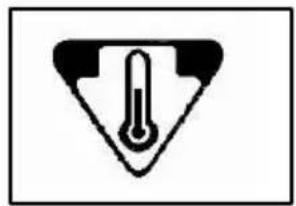
natural_image
Simple diagram of a thermometer inside a triangular frame (no text or symbols)natural_image
Symbol of a trash bin crossed with a diagonal line, no text or numbers presentIMPORTANT SAFETY WARNINGS AND TIPS
Read all instructions before using the appliance. Read this manual carefully before using the machine so that you know exactly what to do and what not to do.
It is very important that this guide be kept with the device for any further consultation. If this device were to be transferred to another person, make sure that the guide follows the device so that the new user can be informed of the operation of the device.
Improper use of the appliance can be dangerous, especially for children.
In this user guide, the following symbols are used:
 | Important information regarding your personal safety and how to avoid damage to the device |
 | General information and advice |
 | Environmental information |
 | Fire hazard |
 | Risk of electric shock |
 | Hot surfaces |
 | Do not cover the device |
SAFETY INSTRUCTION
-
This device may be used by children of at least 8 years of age and by persons with reduced physical, sensory or mental capacities or without experience or knowledge, if they (if they) are properly supervised (e)s or if they have been given instructions relating to the safe use of the appliance and the risks involved have been apprehended.
-
This appliance is intended for use in household applications.
-
This device may be used by children of at least 8 years of age and by persons with reduced physical, sensory or mental capacities or without experience or knowledge.
knowledge, if they are properly supervised or if they have been given instructions on the safe use of the device and if the risks involved have been apprehended. Children must not play with the device. Cleaning and user maintenance shall not be made by children without supervision.
-
Children should be supervised to ensure that they do not play with the appliance.
-
CAUTION: Keep ventilation openings in the appliance enclosure or in the built-in structure clear.
-
CAUTION: Do not use mechanical devices or other means to accelerate the defrosting process other than those recommended by the manufacturer.
-
CAUTION: Do not damage the refrigeration circuit.
-
CAUTION: Do not use electrical appliances inside the food storage compartment, unless they are of the type recommended by the manufacturer.
-
If the power cable is damaged, it must be replaced by the manufacturer, its after-sales service or similarly qualified persons in order to avoid any danger.
-
Do not store explosive substances such as aerosols containing flammable propellants in this device:
- Before throwing away your appliance, remove the door and leave the shelves in place so that children cannot easily play inside.
- Never allow children to operate or play with the appliance.
- Never clean appliance parts with flammable fluids. The fumes represent a fire hazard or can cause explosions.
- Do not store or use gasoline or other flammable gases or liquids in or near this appliance. Fumes can cause fire or explosion.
- Do not install this device in a place with extreme climatic conditions such as : insufficient ventilation, temperatures below 10 °C or above 43 °C.
- This product complies with current European safety standards for electrical devices. It has been subjected to long trials and meticulous tests to assess its safety and reliability.
Before connecting the appliance, check that the data on the rating plate correspond to those for your installation.
-
The packaging materials are recyclable, do not leave them in the environment, take them to a specialized center for recycling.
-
The electrical safety of this appliance is guaranteed only when it is connected to an electrical installation equipped with an earth plug in good condition, according to the standards in force. If in doubt, have the installation checked carefully by a qualified technician.
-
The use of this device, like that of any electrical device, implies observing certain fundamental rules:
-
Do not touch the appliance with wet or damp hands or feet;
- Do not pull on the power cable to disconnect the plug from the outlet; • Do not leave the device exposed to atmospheric agents;
- Do not allow the appliance to be used by children without
lack of supervision;
- Do not unplug or insert the plug into the socket with wet hands; before carrying out any cleaning or maintenance operation, disconnect the appliance from the power supply by unplugging the plug or by turning off the main switch of the installation;
- The socket must remain accessible after installation of the appliance.
- In the event of a breakdown or malfunction, switch off the device and do not damage it.
- The power outlet must always remain accessible after installation of the device.
-
CAUTION: Do not damage the refrigerant circuit. The refrigerant causes serious injury if splashed in the eyes. If this happens, go to the hospital immediately.
-
CAUTION: The ventilation openings, in the housing of the device or in the place of installation, must not be blocked under any circumstances.
-
CAUTION: Do not use an electrical appliance inside the food storage compartments of the appliance.
-
CAUTION: Do not use mechanical devices or other means to speed up the defrosting process.
-
Only an authorized technician can change the lamp in the event of a fault.
-
WARNING: When positioning the device, make sure the power cord is not trapped or damaged.
21.WARNING: Do not place mobile outlet sockets or portable power supplies on the back of the appliance.
22. Children between the ages of 3 and 8 are allowed to load and unload refrigeration devices.
23. To avoid food contamination, please observe the following instructions: - Prolonged opening of the door may cause a significant increase in temperature in the compartments of the appliance.
- Regularly clean surfaces that may come into contact with food and accessible drainage systems.
- Store raw meat and fish in suitable containers in the refrigerator, so that they do not come into contact with and do not drip on other foods.
- The two-star compartments for frozen products are suitable for storing frozen food, for storing or making ice cream and for making ice cubes.
- The one, two and three star compartments are not suitable for freezing fresh food.
- If the refrigeration appliance is left empty for long periods of time, turn it off, defrost, clean, dry and leave the door open to prevent mold growth in the appliance.
-
Place the appliance against a wall at a distance greater than or equal to 100 mm, make sure to leave a free space of at least 300 mm free space on the top of the refrigerator.
-
This refrigeration appliance is not intended to be used as a built-in appliance. Recommended storage time for frozen food in the freezer. These times vary depending on the type of food. Foods that you freeze can be stored for 1 to 12 months (minimum at -18 °C).
| Food | Storage time |
| Bacon, casseroles, milk | 1 month |
| Bread, ice cream, sausages, pies, prepared shellfish, oily fish | 2 months |
| Non-oily fish, shellfish, pizza, scones and muffins | 3 months |
| Ham, cakes, biscuits, beef and lamb chops, poultry pieces | 4 months |
| Butter, vegetables (blanched), eggs whole and yolks, cooked crayfish, minced meat (raw), pork (raw) | 6 months |
| Fruit (dry or in syrup), egg whites, beef (raw), whole chicken, lamb (raw), fruit cakes | 12 months |
- When freezing fresh food with an “best before / best before / best date” date, you must freeze it before that date expires.
- When freezing fresh foods with an “best before / best before / best date” date, you must freeze them before that date expires.
- Check that the food has not already been frozen. This is because frozen foods that have thawed completely should not be refrozen.
Once thawed, food should be eaten quickly.
• To prevent food spoilage due to the transfer of germs: Store unpackaged animal and plant products separately in drawers. This also applies to different kinds of meat.
- If food must be kept together due to lack of space: wrap it.
- Never store fruits and vegetables on a balcony with meat or fish.
| Food | Storage time |
| Butter | 90 days |
| Hard cheese | 110 days |
| Milk | 7 days |
| Sausages, cold cuts | 9 days |
| Meat | 7 days |
Refrigerant
Danger; risk of fire /
flammable materials
WARNING: When positioning the device, make sure that the power cord is not trapped or damaged.
WARNING: Do not place mobile multi- outlet bases or portable power supplies on the back of the device. The refrigerant gas contained in the circuit of this device is isobutane (R 600a), a low-polluting but flammable gas. When transporting and installing the appliance, take care not to damage any part of the refrigeration circuit.

Suitable for food
Information on the meaning of the conformity mark
The marking CE indicates that the product meets the main requirements of European Directives: 2014/35 / EU (Low Voltage), 2014/30 / EU (Electromagnetic Compatibility), 2011/65 / EU (Limitation of the use of certain substances in equipment electronic)
SOMMAIRE
Important safety warnings and tips -1-
I. Description of the device -19-
II. Technical characteristics -20-
III. Installation -21-
IV. Reversing the door opening direction -25-
V. Adjust the temperature indicator -26-
VI. Before first use -28-
VII. use -29-
VIII. Maintenance and cleaning -32-
IX. Troubleshooting -34-
X. Disposal -35-
XI. Guarantee -36-
This user guide is available in the following languages:
- FR (original version)
- EN (translated from the original)
Any other translation would be a translation of the original version.
This user guide, its possible modifications or any new version, is available on our website.
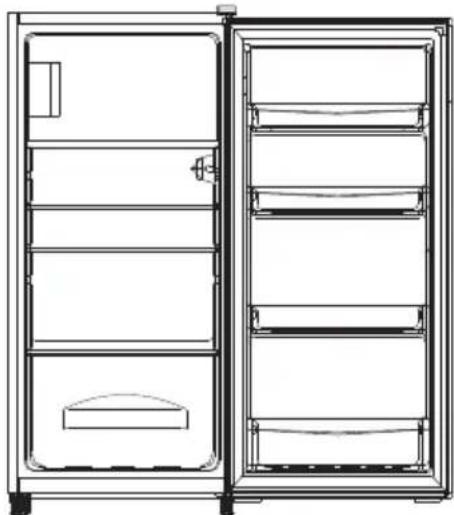
I. DESCRIPTION OF THE APPLIANCE
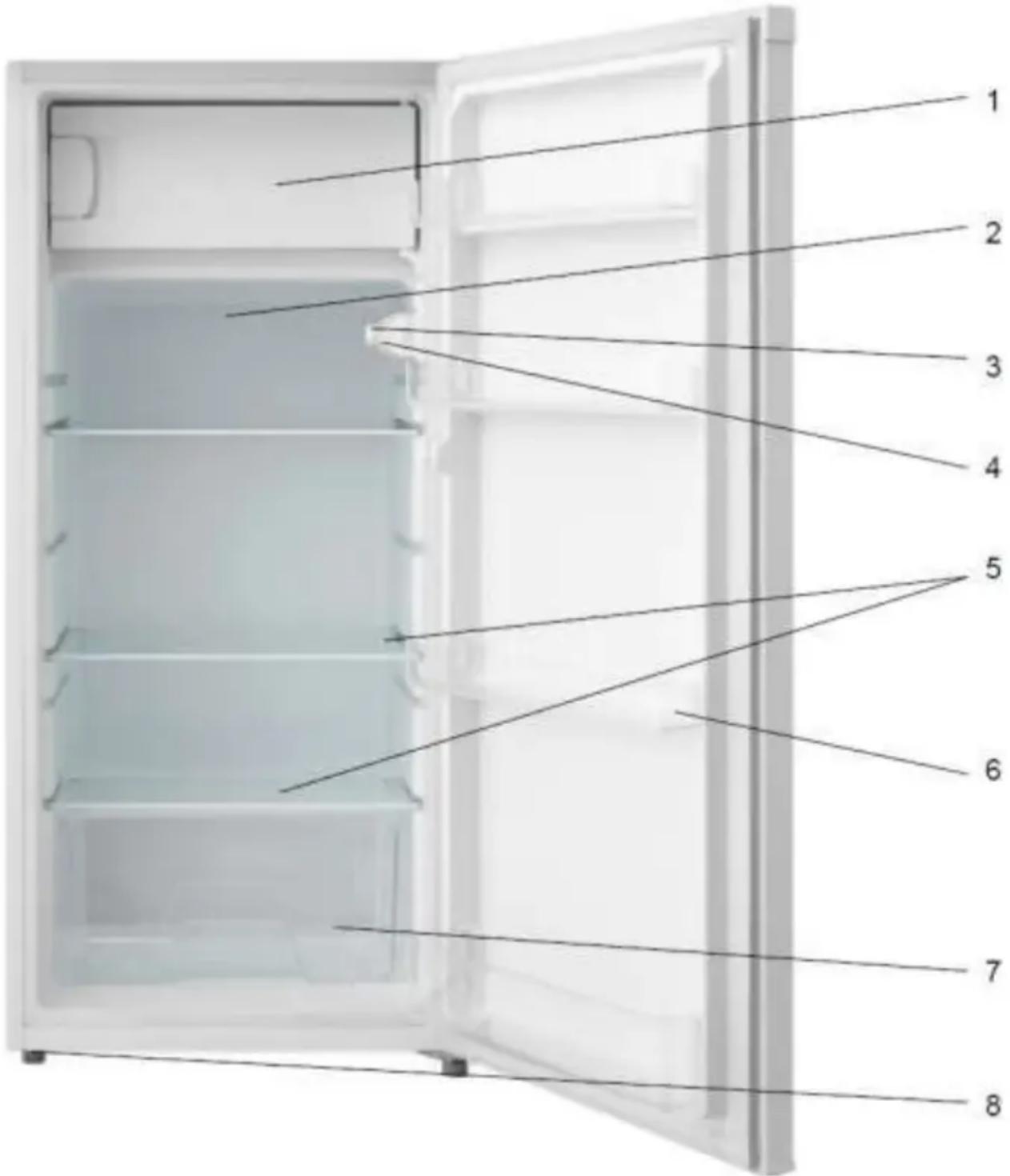
- Freezer compartment
- Refrigerator
- Lamp
-
Thermostat adjustment
-
Storage shelves
- Door shelves
- Vegetable drawer
- Adjustable feet
II. TECHNICAL CHARACTERISTICS
TECHNICAL DATA :
| Brand: | OCEANIC |
| Reference: OCEA1DF193W1 | |
| Model: | HS-255RN(S2N) |
| Power supply: 220-240V~ | |
| Frequency: 50Hz | |
| Dimensions WxDxH: 550 x 575 x 1232 mm | |
| Net weight: 36,45kg | |
| Installation type: Free-standing | |
| Refrigerant gas: R600a (32g) | |
| Insulator: Cyclopentane | |
ENERGY LABELING REGULATION DATA SHEET: 2019/2016 / EU
The product information sheet according to EU Regulation No. 2019/2016 The energy labeling of refrigerating appliances can be found under the URL or QR code indicated on the energy label.
URL: https://eprel.ec.europa.eu/qr/368258
III. INSTALLATION
- Move the refrigerator correctly:
Warning: This operation requires at least 2 people!
- Grasp it, from below, do not pull on the door or on the handle.
- Keep it vertical during transport. Don't knock it upside down. Do not tilt it more than 45°.
- Avoid any collision or violent impact.
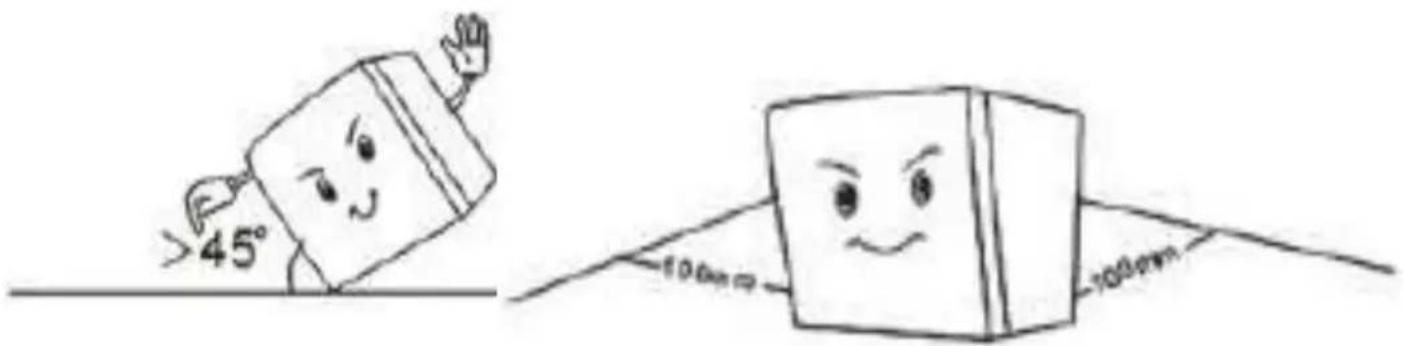
2. Install the refrigerator correctly:
- Install the refrigerator in a dry and ventilated place. Never place it near a heat source or expose it to direct sunlight.
- Install the refrigerator vertically on a hard, load-resistant base / floor. Use the adjustable feet to level it.
- Make sure to leave an air space of at least 100mm behind the refrigerator.
- For your safety, this refrigerator must be connected to a grounded outlet.
- Install the appliance away from heat sources. If the appliance is installed in a place of high temperature, under direct sunlight or near heat sources (radiators, heaters, stoves), the energy consumption will be higher.
- If possible, please respect the following minimum distances:
▶ 30 cm from stoves or stoves;
▶ 3 cm from electric and / or gas stoves.
- Attach the spacers (if supplied) to the rear of the condenser which is located at the rear of the device.
- In order to optimize the performance of the device, leave a space 5 cm on the top and make sure that the kitchen elements are far enough apart to allow good air circulation.
- Make sure that it is not unstable, by adjusting the front feet of the appliance if necessary.
- Clean all parts of the refrigerator with water and a mild detergent solution. Rinse thoroughly and dry with a soft cloth. (See chapter Cleaning).
- Place the accessories.
3. Electrical connection
- Please observe local regulations for making electrical connections.
- The voltage and the energy consumption are indicated on the nameplate which is located inside the appliance.
- Regulations require the device to be earthed. The manufacturer declines all responsibility for injuries to persons or animals resulting from failure to comply with these regulations.
- If the outlet and plug do not match, have the outlet replaced by a qualified electrician.
- Do not use extension cords or adapters.
Unplug the device
You can turn off the device by unplugging the power supply from the outlet or by using a two-pole switch on the outlet.
If this appliance, fitted with a magnetic closure, is intended to replace another fitted with a spring closure, we recommend that you render the latter unusable before discarding it. This will prevent children from locking themselves in and thus endangering their lives.
Location
- Place your appliance away from a heat source (heating, cooking, sunlight). For the correct operation of your device, the ambient temperature of the room must be between + 16 °C and + 38 °C (class ST). Outside of these limits; the device will no longer function normally. - Ensure good air circulation at the rear of the device, do not place it against a wall to avoid noise due to vibrations. Make sure that air circulates freely all around the device. Insufficient ventilation will cause malfunction and increased energy consumption.
- This appliance must be installed in such a way that the outlet remains accessible. Make sure after installing that it is not resting on the power cable.
- Level the appliance using the 2 adjustable feet.
Network connection
Your appliance is designed to operate under 230 volts single-phase. It must be connected to a wall socket fitted with an earth contact and protected by a 10 A fuse in accordance with standard NF C15-100 and the instructions of your electricity supplier.
Climate class
Information on the climatic class of the device can be found on the rating plate. It indicates at what ambient temperature (i.e. the ambient temperature, in which the device is operating) the device is operating optimally (appropriate).
| Climate class Permissible ambient temperature | |
| SN | from + 10 °C to + 32 °C |
| N | from + 16 °C to + 32 °C |
| ST | from + 16 °C to + 32 °C |
| T | from + 16 °C to + 43 °C |
For refrigeration devices with a climate class:
- extended temperate (SN): this refrigeration appliance is intended for use at ambient temperatures between 10 °C and 32 °C;
- temperate (N): this refrigeration appliance is intended for use at ambient temperatures between 16 °C and 32 °C;
- subtropical (ST): this refrigeration appliance is intended for use at ambient temperatures between 16 °C and 38 °C;
- tropical (T): this refrigeration appliance is intended for use at ambient temperatures between 16 °C and 43 °C;
Note: The limit values of the ambient temperature range for the climatic classes for which the refrigeration appliance is designed and the fact that the internal temperatures can be influenced by factors such as the location of the refrigeration appliance, the ambient temperature and how often the doors are opened, the setting of any temperature control device may need to be changed to account for these factors, if necessary.
Meaning of the labeling \* of freezers
- Freezers 1- (*), 2- (**), and 3 stars (***) are not suitable for freezing fresh food.
- 2 star (**) and 3 star (***) freezers are suitable for storing frozen food (pre-frozen) and ice cream or for making ice cream and ice cubes.
| COMPARTMENTS | STARS (*) | TARGET STORAGE TEMPERATURE | SUITABLE FOOD |
| FREEZER | (***)* | ≤ -18 °C | ➢Suitable for seafood (fish, shrimps, shellfish), freshwater and meat products.➢Recommended storage period: 3 months1 Suitable for freezing fresh food. |
| FREEZER | *** | ≤ -18 °C | ➢Suitable for seafood (fish, shrimps, shellfish), freshwater and meat products.➢Recommended storage period: 3 months1 Not suitable for freezing fresh food. |
| FREEZER | ** | ≤ -12 °C | ➢Suitable for seafood (fish, shrimps, shellfish), freshwater and meat products.➢Recommended storage period: 2 months1 Not suitable for freezing fresh food. |
| FREEZER | * | ≤ -6 °C | ➢Suitable for seafood (fish, shrimps, shellfish), freshwater and meat products.➢Recommended storage period: 1 month1 Not suitable for freezing fresh food. |
| 0*-COMPARTMENT | - | -6 °C - 0 °C | ➢Suitable for fresh meat products (pork, beef, chicken, etc.) and processed food consumed or processed within the same day or within the next three days after storage (max.).1 Not suitable for freezing food or for storing frozen food. |
IV. REVERSE OPENING SENSE DOOR
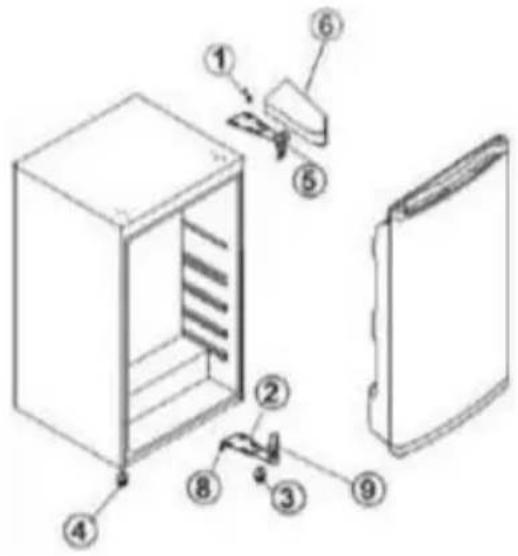
You can change the opening direction of your appliance door by moving the hinges. When reassembling, ensure that the door is aligned with the body and that the gasket adheres properly.
We remind you that changing the direction of opening the door must be done with the appliance unplugged.
Remove the plastic screw cover (6) and the screws (1) that hold the hinge upper (5) on the body. Remove the upper hinge (5).
➢ Lift and remove the door. Store there on a surface that does not risk spoil it.
Remove the screws (8) which hold the lower hinge (2). Remove the lower hinge (2).
➢ Unscrew the left foot (4) and screw the on the right side.
➢ Position and screw the lower hinge on the left side of the device.
➢ Position the door on the lower hinge (8). Make sure that the door fits entirely on the rod (9).
➢ Put the door in the 'closed' position. Put the upper hinge (5) in the new position and replace the screws (1). Be careful, before tightening the screws (1), check that the door is correctly aligned with the body.
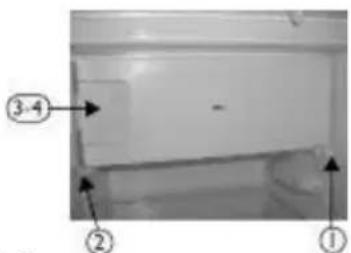
Changing the opening direction of the 4 \* freezer door
- Remove the screwed rod (1) at the bottom right.
- Remove the gate.
- Remove the hole cover (2) at the bottom left.
- Unscrew the 2 screws of the lock on the left (3-4).
- Remove the lock (3-4) and position it to the right, tighten.
- Position the gate in the new position, replace the screwed rod (1) on the left.
- Replace the hole cover (2) on the right.
V. SET THE INDICATOR TEMPERATURE
The interior temperature is regulated by the thermostat controlled by the button located on the outside of the appliance. The "Med" position corresponds to the coldest temperature. The temperature obtained inside the enclosure may vary depending on the conditions of use: location, ambient temperature, frequency of opening the door, quantity of food inside ...
The setting can be changed taking these conditions into account. In general, a medium setting in the "Min" position will allow you to obtain a compliant temperature; to obtain more or less cold, adjust the thermostat knob.
To stop the refrigerator to defrost without unplugging it, turn the thermostat knob to the left to the "OFF" position. A click is heard.
To help you adjust your appliance correctly, it is equipped with a temperature indicator placed in the coldest area. For the proper conservation of food in your refrigerator and especially in the coldest area, make sure that in the temperature indicator "OK" appears.
When the setting is OFF, the device is turned off. When the setting is "max", the compressor does not stop, the internal temperature of the refrigerator can be -2 °C \~ 4 °C / the freezer compartment can be -23 °C
Refrigerator compartment: Different foods, especially vegetables and fruits, have different storage temperatures. Storage time is 1 to 3 days. Freezer compartment: Min: 1 week, Med-Max: 1 month
Tips for saving energy:
- Let food cool before placing it in the appliance.
- Make sure that the food does not touch the back of the compartment (s).
- Make sure that the device has enough space around it. This will help reduce energy consumption and lower your electricity bills.
- Do not block the vents or grilles, for maximum energy efficiency.
- For efficient use of energy, respect the original position of all internal accessories (bins, drawers, shelves).
-
Do not open the doors frequently.
-
Don't leave the doors open for too long.
- Do not set the thermostat too cold.
- Place frozen products in the refrigerator to thaw them.
- Defrost the freezer when a thick layer of ice has accumulated.
natural_image
Line drawing of a double-door refrigerator with open doors and internal compartments (no text or symbols)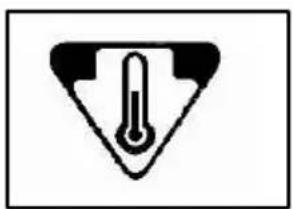
natural_image
Simple diagram of a thermometer inside a triangular frame (no text or labels)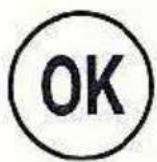
The symbol opposite indicates the location of the coldest area of your refrigerator. It defines the top of this area.
If "OK" does not appear, the average temperature in that area is too high. Set the thermostat to a cooler position.
Whenever the thermostat setting is changed, wait for the temperature inside the appliance to stabilize before making a new adjustment if necessary. Only change the thermostat position gradually and wait at least 12 hours before re-checking.
NOTE: after loading the appliance with fresh food or after repeated or prolonged opening of the door, it is normal that the inscription "OK" does not appear in the temperature indicator; wait at least 12 hours before readjusting the thermostat.
Transport and start-up
When transporting this device, take it by the base and gently tilt it up to 45^ maximum. Do not lift the appliance by the door handle. Do not place the device in a completely horizontal position or upside down. Push the refrigerator on the roller legs to move it.

Warning: After transporting the refrigerator, you must wait at least 8 hours before putting it into service.
1. Cleaning the device:
Clean all parts of the refrigerator with water and a mild detergent solution. Rinse it thoroughly and dry it with a soft cloth.
Note: The electrical parts of the device can only be cleaned with a dry cloth.
- Unpacking the device and disposal of the packing materials

- Remove all packing materials from around the device, as well protective items located inside the device compartments.
- The cardboard packaging and sheets of paper are recyclable.
They must be disposed of in the collection bins provided for this purpose.
- Materials bearing the symbol △ are recyclable:
PE <= polyethylene; >PS <= polystyrene; >PP <= polypropylene
This means that they can be recycled by depositing them in the appropriate collection containers.
- The other packaging elements (adhesive, fasteners, etc.) must be disposed of with household waste.
For more information: www.quefairedemesdechets.fr
VII. USE
Household refrigerators are intended only for domestic storage of fresh food and beverages as well as short-term storage of frozen products.
Food Safety
The increasing consumption of ready-made meals and other fragile foods makes it necessary to better control the temperature of food transport and storage:
- Store the most sensitive foods in the coldest area of the appliance, in accordance with the instructions in these instructions (chapter Temperature indicator).
- Limit the number of times the door is opened.
- Position the thermostat setting to obtain a lower temperature. This adjustment must be done gradually so as not to cause the food to freeze.
- Clean the inside of the refrigerator frequently.
Food storage
- You will obtain better preservation of your food if you place them in the cold zone best suited to their nature.
- The coldest area of the refrigerator is at the bottom of the appliance, at the top of the vegetable drawer.
- Location of food:
- On the shelves: cooked food, desserts and any food that needs to be eaten quickly, fresh cheeses, cold meats.
- On the vegetable drawer window: meat, poultry, fresh fish. Storage time of 1 to 2 days.
- In the vegetable drawer: vegetables and fruits.
- In the door: in the lower shelf: the bottles, then going up: low volume products (cream, yoghurts, etc.).
- Butter and eggs will be placed in the upper shelf.
For better food hygiene:
- Remove the packaging from the store before placing the food in the refrigerator. (For example packaging of yoghurt packs ...)
- Pack foods in appropriate food grade containers to prevent bacteria exchange between foods.
- Wait for the preparations to cool before storing them.
Freezer compartment
The freezer compartment allows the freezing of fresh products as well as the conservation of frozen products.
The quantity of food to be frozen must not exceed the quantity indicated on the nameplate. If the quantity to be frozen is greater than this value, it is still possible to freeze several times.
Freezing fresh produce
- Freeze only premium products after cleaning and preparing them if necessary.
- Let cooked meals cool to room temperature before placing them in the refrigerator.
- All products to be frozen must be packed in polyethylene bags, "special freezing" aluminum trays, plastic boxes. These packages must be airtight.
• Each pack should be proportionate to the importance of family consumption so that it can be used at one time. Small packages allow rapid and uniform freezing. - Do not freeze at one time a quantity of product greater than the freezing capacity of the appliance indicated on the nameplate.
- Thawed product should never be refrozen.
- Do not place soft drink bottles or cans in the freezer compartment, they could burst.
- Do not consume the popsicles straight out of the freezer compartment to avoid cold burns.
To freeze fresh products:
- Adjust the thermostat to obtain the lowest possible temperature without dropping a value below 0^ in the refrigerator.
- Do not open the freezer compartment door during the freezing operation.
Storage of frozen products
- Frozen products can be grouped together to leave free spaces for freezing.
- When buying a frozen product, make sure that the packaging is intact, that there is no trace of moisture, that it is not swollen, which would be a sign of the start of thawing.
- Observe the shelf life indicated by the manufacturer of frozen products.
- Avoid opening the door too often and only leave it open for as long as necessary. Increasing the temperature can reduce the shelf life of food.
Thawing
- Meats, poultry and fish must be thawed in the refrigerator to prevent the growth of bacteria. Other products can be thawed in ambient air.
- Small portions can be cooked right out of the refrigerator. Many ready-to-cook meals can also be cooked without prior thawing. Always follow the recommendations on the packaging.
- Bread and pastries can be defrosted in a hot oven.
- Microwaves can be used to defrost most foods. \~ Follow the advice in the instructions for these ovens.
In the event of a power failure, if the shutdown does not exceed the value, there is no risk of spoilage of frozen food.
However, do not open the door (the time it takes for the temperature to rise
can be significantly reduced if the device is lightly loaded). As soon as you notice the onset of thawing, the food should be eaten as quickly as possible. Never refreeze food that has been thawed.
VIII. MAINTENANCE AND CLEANING
Defrost
1. Refrigerator section
- The defrosting of your refrigerator is fully automatic and occurs each time the compressor stops. No intervention on your part is necessary.
- During operation, drops of condensation or ice appear on the rear wall.
- The water produced will flow through the drain hole and will be collected in the tank located on the compressor from where it will evaporate.
Important: Keep the drain hole and gutter clean to prevent clogging and water flow inside the cabinet.
2. Freezer compartment
The formation of frost inside the device cannot be avoided. Frost forms when moisture in the air comes into contact with the cold surfaces of the freezer compartment. Therefore, the door should only be opened when necessary. A thin layer of frost does not interfere with the operation of the appliance and can be removed with the squeegee.
When the layer of frost reaches ten millimeters, it is necessary to proceed to the complete defrosting. We recommend that you do this when the device is lightly loaded:
- Before defrosting, if the appliance is not empty, turn the thermostat knob to a cooler position so that the products are brought to very low temperature.
- Unplug the device.
- Take out the frozen products and keep them in a cool place by wrapping them in several sheets of newspaper or better still in insulated packaging (isothermal bags, plastic bubble sheets, etc.).
- Leave the door open.
- You can speed up defrosting by removing some of the frost using the squeegee and placing containers of hot water (max 60 °) inside.
Do not use sharp objects to scrape the frost or electric heating devices (hair dryers, radiators). The device could be irreparably damaged.
- After the frost has melted, wipe and dry the freezer compartment thoroughly.
- Plug it back in and wait an hour or two before filling it again.
Cleaning
- Before cleaning, unplug the appliance.
- Never use abrasive products or a sponge with a scraper for cleaning the interior or exterior of your appliance.
- Remove all the accessories (shelves, shelves, vegetable bins). Wash them in lukewarm water with a mild, odorless detergent (dishwashing liquid, for example), rinse with bleach and dry thoroughly.
- Wash the interior walls in the same way; pay particular attention to the shelf supports.
- Wash the door seal, also cleaning under the seal.
- Reconnect the device.
- Clean the freezer compartment every time you defrost.
- From time to time, dust off the condenser at the back of the appliance; An accumulation of dust may reduce the performance of the device.
In case of prolonged absence, empty and clean the appliance; keep the door ajar during non-use.
Replacing the light bulb
This device is made up of light-emitting diodes (LEDs). This type of diode cannot be changed by the consumer. The lifespan of these LEDs is sufficient for no change to be made.
If, however, and despite all the care taken in manufacturing the refrigerator, the LEDs are defective, please contact your After-Sales Service for any intervention.
IX. TROUBLESHOOTING
| Problem Solution | Cause |
| Nothing works (device does not start) | - Nothing works (the device does not start).- If there is current in the wall socket (possibly check by plugging in a small device, eg a hand blender, hair dryer, etc.). |
| Malfunctioning | - Check if the power cord is properly connected.- Make sure the thermostat is in the operating position. |
| The refrigeration system is not working well | - Set the thermostat to a lower value.- The refrigerator has been filled with (hot) food.- Frequent opening of the door.- The refrigerator is exposed to the sun or is located near a heat source.- Inadequate ventilation.- Door not properly closed (the door has collapsed, the seal may be worn or damaged). |
| Freezing food in the refrigerator | - Set the thermostat to a lower value.- Keep vegetables with a high water content away from the rear wall of the refrigerator. |
| Excessive noise | - Check whether the appliance is resting firmly on the floor, whether the operation of the refrigeration unit does not cause furniture or nearby objects to vibrate. Please ensure that all parts attached to the back wall can vibrate freely; if necessary, separate slightly, by bending them, the parts which touch this wall.- The appliance must be placed horizontally on firm ground, as this is the only way to guarantee an unobstructed circulation of the refrigerant and therefore optimum operation of the appliance.- The accessories in the refrigerator are incorrectly positioned. |
| Unpleasant odor | - Make sure that the food is hermetically packed.- Food preservation problem.- Clean the inside of the refrigerator. |
| Poor operation in winter | - The ambient temperature is too low. |
WARNING :
Do not obstruct the ventilation sections of the body and the various parts of the refrigerator.
WARNING :
For defrosting, do not use any tools or devices that accelerate defrosting other than those recommended by the manufacturer.
WARNING :
Do not damage the refrigerant circuit.
WARNING :
Do not put electronic products in the refrigerator.
Normal phenomena
Please check the phenomena described below before calling after-sales service:
| Problem Cause | |
| We hear a sound of liquid | This noise is normal. It is related to the circulation of the refrigerant during the operation or the rest of the compressor. |
| Metallic noise Noise of | injection molded insulation during expansion or removal. |
| Compressor noise when starting or stopping | This noise is normal during compressor operation, especially when starting and stopping. |
| Moisture outside or around the glass door | Slight traces of condensation may appear on the refrigerator on a very humid day. |
Remember that noises generated by the flow of refrigerant in its circuit are inevitable.
For any other problem with your appliance: contact the After-Sales Service.
X. DISPOSAL
natural_image
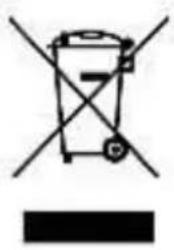
Simple line drawing of a trash bin with crossed lines indicating no waste or discharge (no text or symbols)This logo affixed to the product means that it is a device whose treatment as waste falls within the framework of directive 2012/19 / EU of 4 July 2012, relating to waste electrical and electronic equipment (WEEE). This means that this product must be taken care of by a selective collection system in accordance with the European directive cited above so that it can either be recycled or dismantled in order to reduce any impact on the environment.
Hazardous substances contained in electrical and electronic equipment can have potentially dangerous effects on the environment and human health.
Thus, at the end of this device's life, it must not be disposed of with unsorted municipal waste. Return and collection systems are made available to you by local authorities (waste reception centers) and distributors.
This device must not be thrown on the public highway.
You have an obligation to use the selective collection systems made available to you.

The warranty does not cover wear parts of the product, nor problems or damage resulting from:
- Surface deterioration due to normal wear and tear of the product;
- Defects or deterioration due to contact of the product with liquids and due to corrosion caused by rust or the presence of insects;
- Any unauthorized incident, abuse, misuse, modification, disassembly or repair;
- Any improper maintenance operation, use not in accordance with the instructions concerning the product or connection to an incorrect voltage;
- Any use of accessories not supplied or approved by the manufacturer.

The warranty will be void if the nameplate and / or serial er of the product is removed.
Product warranty and spare parts available
Under the terms of the manufacturer's warranty applicable to the location, the use of Customer Service is free. The minimum warranty period (manufacturer's warranty for private consumers) in the European Economic Area is 2 years according to the warranty terms applicable to the place. The warranty conditions do not affect any other rights or claims held by you under local law.
Detailed information about the warranty period and warranty conditions in your country are available from customer service, your dealer, or our website.
Original spare parts which function according to the relevant Ecodesign Directive can be obtained from customer service for a period of at least 4 years from the date your device is placed on the market in the European Economic Area.
For more technical specifications on the repair agent and to order replacement parts, please visit on: www.oceanic.eu
oceanic
OCEA1DF193W1_IM_FR-EN_092020
www.oceanic.eu

- oceanic
- AVERTISSEMENTS ET CONSEILS DE SECURITE IMPORTANTS
- REGLER LA INDICATEUR DE TEMPERATURE
- IMPORTANT SAFETY WARNINGS AND TIPS
- In this user guide, the following symbols are used:
- SAFETY INSTRUCTION
- Refrigerant
- Danger; risk of fire /
- flammable materials
- Suitable for food
- SOMMAIRE
- DESCRIPTION OF THE APPLIANCE
- TECHNICAL CHARACTERISTICS
- ENERGY LABELING REGULATION DATA SHEET: 2019/2016 / EU
- INSTALLATION
- Install the refrigerator correctly:
- Electrical connection
- Unplug the device
- Location
- Network connection
- Climate class
- For refrigeration devices with a climate class:
- Meaning of the labeling \* of freezers
- REVERSE OPENING SENSE DOOR
- Changing the opening direction of the 4 \* freezer door
- SET THE INDICATOR TEMPERATURE
- Tips for saving energy:
- Transport and start-up
- Cleaning the device:
- USE
- Food Safety
- Food storage
- For better food hygiene:
- Freezer compartment
- Freezing fresh produce
- To freeze fresh products:
- Storage of frozen products
- Thawing
- MAINTENANCE AND CLEANING
- Defrost
- Refrigerator section
- Freezer compartment
- Cleaning
- Replacing the light bulb
- TROUBLESHOOTING
- WARNING :
- DISPOSAL
- Product warranty and spare parts available
Brand : OCEANIC
Model : OCEA1DF193W1
Category : Refrigerator