DWPW2400 - Pressure washer DEWALT - Free user manual and instructions
Find the device manual for free DWPW2400 DEWALT in PDF.


| Product Type | Electric Pressure Washer |
| Brand | DEWALT |
| Model | DWPW2400 |
| Maximum Pressure | 2400 PSI |
| Nominal Water Flow | 1.1 GPM (gallons per minute) |
| Power Supply | 120 V~, 60 Hz, 13 A |
| Power Cord Length | 10.6 m (35 ft) |
| High Pressure Hose Length | 7.6 m (25 ft) |
| Water Inlet Pressure | 20 to 100 PSI |
| Water Supply | Cold Tap Water |
| Soap Consumption | 10% maximum |
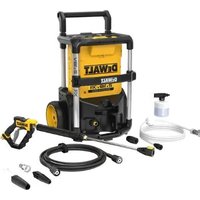
| Included Nozzles | Orange nozzle 15°, green nozzle 25°, white nozzle 40°, black turbo nozzle, soap nozzle |
| Electrical Protection | Ground Fault Circuit Interrupter (GFCI) integrated in plug |
| Safety | Trigger lock, grounding, automatic shut-off |
| Warranty | 3-year limited warranty, 1 year free maintenance contract, 90-day money-back guarantee |
| Storage Temperature | Above 4°C indoors |
| Recommended Maintenance | Regular cleaning of nozzle and soap reservoir, draining after use |
Frequently Asked Questions - DWPW2400 DEWALT
User questions about DWPW2400 DEWALT
0 question about this device. Answer the ones you know or ask your own.
Ask a new question about this device
Download the instructions for your Pressure washer in PDF format for free! Find your manual DWPW2400 - DEWALT and take your electronic device back in hand. On this page are published all the documents necessary for the use of your device. DWPW2400 by DEWALT.
USER MANUAL DWPW2400 DEWALT
Definitions: Safety Alert Symbols and Words
This instruction manual uses the following safety alert symbols and words to alert you to hazardous situations and your risk of personal injury or property damage.

ER: Indicates an imminently hazardous situation which, if not avoided, will result in death or serious injury.

IING: Indicates a potentially hazardous situation which, if not avoided, could result in death or serious injury.

ION: Indicates a potentially hazardous situation which, if not avoided, may result in minor or moderate injury.

without word) Indicates a safety related message.
NOTICE: Indicates a practice not related to personal injury which, if not avoided, may result in property damage.
Fig. A
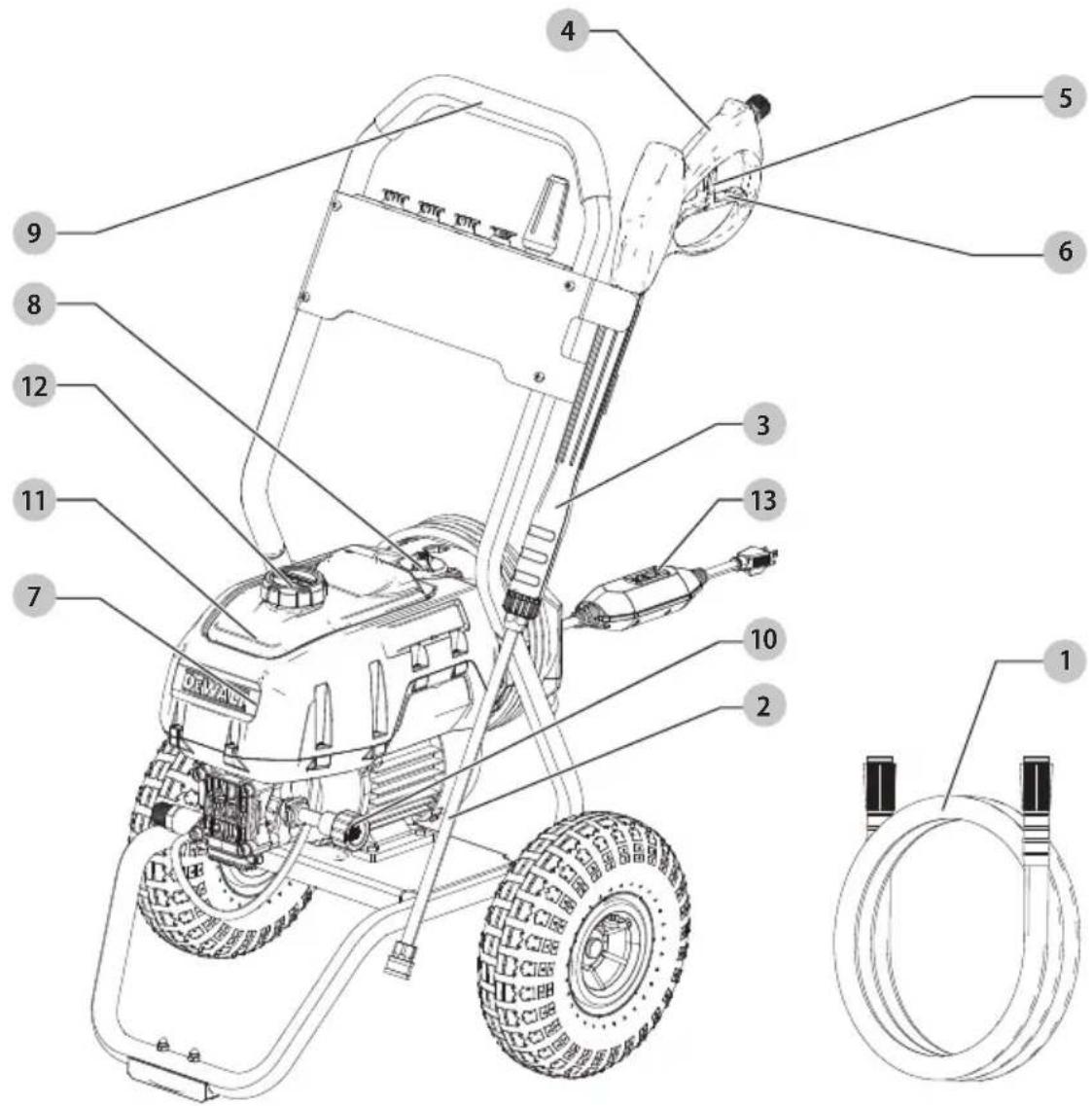
1 High pressure hose
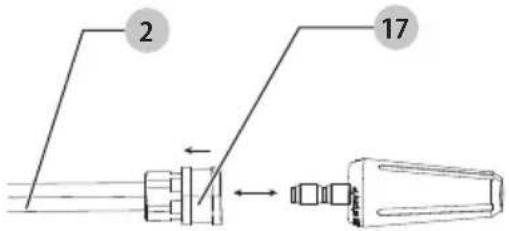
2 Spray wand
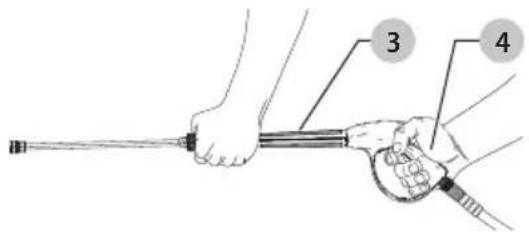
3 Spray handle
4 Spray handle grip
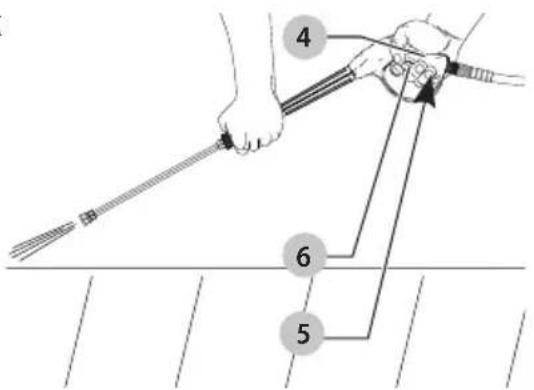
5 Trigger lock-off
6 Trigger
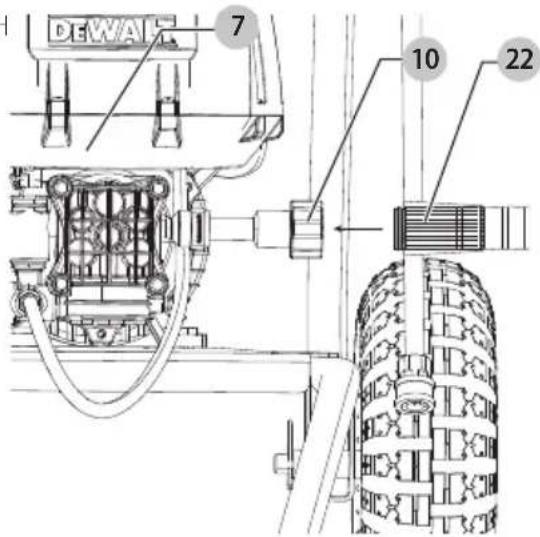
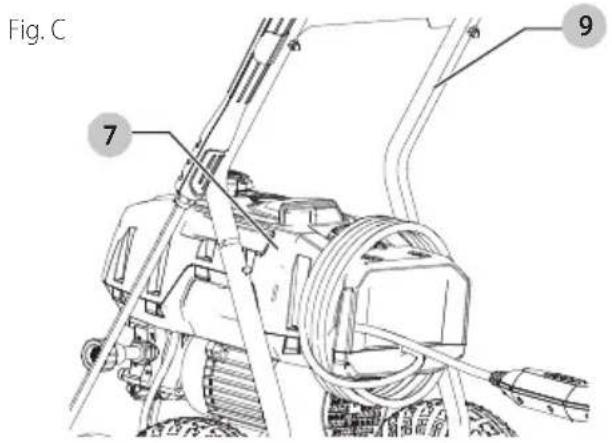
7 Pressure washer unit
8 On/Off switch
9 Handle
10 Garden hose water intake
11 Soap tank
12 Soap tank cap
13 GFCI plug
WARNING: Read all safety warnings and all instructions. Failure to follow the warnings and instructions may result in electric shock, fire and/or serious injury.

WARNING: To reduce the risk of injury, read the instruction manual.
If you have any questions or comments about this or any product, call DEWALT toll free at: (1-800-433-9258).
Electric Pressure Washer DWPW2400
IMPORTANT SAFETY INSTRUCTIONS
WARNING: When using this appliance, basic safety regulations should always be followed including the following:
- Read all the instructions before using the product.
• To reduce the risk of injury, close supervision is necessary when a product is used near children. - Know how to stop the product and bleed pressures quickly. Be thoroughly familiar with the controls.
- Stay alert – watch what you are doing.
- Do not operate the product when fatigued or under the influence of alcohol or drugs.
- Keep operating area clear of all persons.
- Do not overreach or stand on unstable support. Keep good footing and balance at all times.
- Follow the maintenance instructions specified in the manual.
- This product is provided with a ground fault circuit interrupter built into the power cord plug. If replacement of the plug or cord is needed, use only identical replacement parts.
WARNING: Risk of Injection or Injury—Do Not Direct Exchange Stream At Persons.
WARNING: Risk of Injection or Severe Injury – Keep Clear of Nozzle – Do Not Direct Discharge Stream at Persons – This Product Is To Be Used Only By Trained Operators.
SAVE THESE INSTRUCTIONS
WARNING: Please read this entire manual before attempting to assemble, operate or install the product.
WARNING: This unit was designed for specific applications. It should not be modified and/or used for any application other than that which it was designed.
NOTICE: Always store your pressure washer in a location where the temperature will not fall below 4 °C. freeze damage is not covered by the warranty.
WARNING: This product and its exhaust can expose you to chemicals including lead and lead compounds, and carbon monoxide, which are known to the State of California to cause cancer and birth defects or other reproductive harm. For more information go to www.P65Warnings.ca.gov.
- Do not touch plug or outlet with wet hands.
- Avoid accidental starts. Move switch on unit to OFF position before connecting or disconnecting cord to electrical outlets.
-
Water spray must never be directed towards any electric wiring or directly towards the pressure washer machine itself or fatal electric shock may occur.
-
Never carry your pressure washer by the cord. Do not pull on the cord to disconnect from the outlet.
- To prevent damage, the cord should not be crushed, placed next to sharp objects or near a heat source.
- Check power cords before using. Damaged cords can reduce performance of pressure washer or cause a fatal electrical shock
- The narrow pin point stream is very powerful. It is not recommended for use on painted surfaces, wood surfaces or items attached with an adhesive backing.
- Keep operating area clear of all persons and animals.
- Always use both hands when operating pressure washer to maintain complete control of the wand.
- Do not touch nozzle or water spray while operating. Never place hands in front of nozzle.
- Wear safety goggles while operating. Wear protective clothing and footwear to protect against accidental spraying.
- Disconnect power plug from the outlet when not in use and prior to the detaching of the high pressure hose.
- Never tie knots or kink the high pressure hose as damage could result. Inspect the high-pressure hose regularly. Replace the hose immediately if it is damaged, worn or shows any signs of cracks, bubbles, pinholes, or other leakage. Never grasp a high-pressure hose that is leaking or damaged.
- Do not operate or store this product in temperatures below 4 °C. Freeze damage is not covered by the warranty.
- Carefully observe all chemical instructions and warnings before using. Use only approved pressure washer cleaners. Do not use bleach, chlorine, or any cleaners containing acids. Always follow manufacturer's label recommendations for proper use of cleaners. Always protect eyes, skin and respiratory system from cleaners.
- The pressure washer should not be used in areas where gas vapors may be present. An electric spark could cause an explosion or fire.
- To minimize the amount of water getting into the pressure washer, the unit should be placed as far as possible from the cleaning site during operation.
- To prevent accidental discharge, the spray gun should be secured by locking the trigger when not in use.
- To allow free air circulation, the pressure washer should NOT be covered during operation.
- Never touch, grasp or attempt to cover a pinhole or similar water leak on the high-pressure hose. The stream of water IS under high pressure and WILL penetrate skin.
-
Use only hoses and accessories rated for pressure higher than your pressure washer's psi. Never use with any other manufacturer's accessories or components.
-
⚠ WARNING: RISK of Bursting.
| WHAT CAN HAPPEN HOW TO PREVENT IT | |
| Over inflation of tires could result in serious injury and property damage. | Use a tire pressure gauge to check the tires pressure before each use and while inflating tires; see the tire sidewall for the correct tire pressure.NOTE: Air tanks, compressors and similar equipment used to inflate tires can fill small tires similar to these very rapidly. Adjust pressure regulator on air supply to no more than the rating of the tire pressure.Add air in small increments and frequently use the tire gauge to prevent over inflation |
- Never defeat the safety features of this product.
- Do not operate machine with missing, broken or unauthorised parts.
- Never spray flammable liquids or use pressure washer in areas containing combustible dust, liquid, or vapors.
- DO NOT use an extension cord with this pressure washer.
GROUNDING INSTRUCTIONS
This product must be grounded. If it should malfunction or breakdown, grounding provides a path of least resistance for electric current to reduce the risk of electric shock. This product is equipped with a cord having an equipment-grounding conductor and a grounding plug. The plug must be plugged into an appropriate outlet that is properly installed and grounded in accordance with all local codes and ordinances.
DANGER: Improper connection of the equipment-grooding conductor can result in a risk of electrocution. Check with a qualified electrician or service personnel if you are in doubt as to whether the outlet is properly grounded. Do not modify the plug provided with the product – if it will not fit the outlet, have a proper outlet installed by a qualified electrician. Do not use any type of adaptor with this product.
GROUND FAULT CIRCUIT INTERRUPTER PROTECTION
This pressure washer is provided with a ground-fault circuit-interrupter (GFCI) built into the plug of the power-supply cord. This device provides additional protection from the risk of electric shock. Should replacement of the plug or cord become necessary, use only identical replacement parts that include GFCI protection.
Additional Safety Information
WARNING: Never modify the power tool or any part of damage or personal injury could result.
WARNING: ALWAYS use safety glasses. Everyday eyeglasses are NOT safety glasses. Also use face or dust mask if operation is dusty. ALWAYS WEAR CERTIFIED SAFETY EQUIPMENT:
• ANSI Z87.1 eye protection (CAN/CSA Z94.3),
• ANSI S12.6 (S3.19) hearing protection,
• NIOSH/OSHA/MSHA respiratory protection.
WARNING: Some dust contains chemicals known to state of California to cause cancer, birth defects or other reproductive harm. Some examples of these chemicals are:
• compounds in fertilizers,
• compounds in insecticides, herbicides and pesticides,
• arsenic and chromium from chemically treated lumber.
To reduce your exposure to these chemicals, wear approved safety equipment such as dust masks that are specially designed to filter out microscopic particles.
WARNING: Use of this tool can generate and/or adverse dust, which may cause serious and permanent respiratory or other injury. Always use NIOSH/OSHA approved respiratory protection appropriate for the dust exposure. Direct particles away from face and body.
WARNING: Always wear proper personal hearing protection that conforms to ANSI S12.6 (S3.19) during use. Under some conditions and duration of use, noise from this product may contribute to hearing loss.
CAUTION: When not in use, place tool on its side on a stable surface where it will not cause a tripping or falling hazard. Some tools will stand upright but may be easily knocked over.
• Air vents often cover moving parts and should be avoided. Loose clothes, jewelry or long hair can be caught in moving parts.
- An extension cord must have adequate wire size (AWG or American Wire Gauge) for safety. The smaller the gauge number of the wire, the greater the capacity of the cable, that is, 16 gauge has more capacity than 18 gauge. An undersized cord will cause a drop in line voltage resulting in loss of power and overheating. When using more than one extension to make up the total length, be sure each individual extension contains at least the minimum wire size. The following table shows the correct size to use depending on cord length and nameplate ampere rating. If in doubt, use the next heavier gauge. The lower the gauge number, the heavier the cord.
Minimum Gauge for Cord Sets
| Volts | Total Length of Cord in Feet (meters) | ||||
| 120 V 25 (7.6) | 50 (15.2) | 100 (30.5) | 150 (45.7) | ||
| 240 V 50 (15.2) | 100 (30.5) | 200 (61.0) | 300 (91.4) | ||
| Ampere Rating | American Wire Gauge | ||||
| More Than | Not More Than | ||||
| 0 6 18 | 16 16 14 | ||||
| 6 10 18 | 16 14 12 | ||||
| 10 12 | 16 16 14 12 | ||||
| 12 16 14 12 Not Recommended | |||||
English
The label on your tool may include the following symbols. The symbols and their definitions are as follows:
V volts
Hz.....hertz
min......minutes
- - - - or DC.....direct current
Class I Construction (grounded)
.../min.....per minute
BPM.....beats per minute
or AC/DC....alternating or direct current
ClassII Construction (double insulated)
n_0 .....no load speed n .....rated speed
± ....earthing terminal
⚠️......safety alert symbol
▲......visible radiation
...... avoid staring at light
......wearrespiratory protection
weareye protection
O....wearhearing protection
readall documentation
IPXX....IPsymbol
Motor
Be sure your power supply agrees with the nameplate marking. Voltage decrease of more than 10% will cause loss of power and overheating. These tools are factory tested; if this tool does not operate, check power supply.
Intended Use
This pressure washer is intended for cleaning boats, cars, decks, driveways, grills, house siding, motorcycles, patios, and outdoor furniture.
DO nOT use under wet conditions or in presence of flammable liquids or gases.
DO nOT let children come into contact with the tool. Supervision is required when inexperienced operators use this tool.
ASSEMBLY AND ADJUSTMENTS
WARNING: To reduce the risk of serious personal injury, turn unit off and disconnect it from power source before making any adjustments or removing/installing attachments or accessories.
An accidental start-up can cause injury.
Specifications
| Maximum Pounds per Square Inch 2,400 | |
| Rated Gallons per Minute* 1.1 | |
| Electrical Requirements 120V | AC ~60Hz, 13A |
| Electrical Cord 35 ft. (10.6 m) | |
| High Pressure Hose 25 ft. (7.6 m) | |
| Minimum Amp Source 15A | |
| Pressure of Inlet Water* 20-100 PSI | |
| Inlet Water Cold Tap | |
| Soap Consumption Rate 10% MAX | |
| *Water flow and maximum pressure ratings determined in accordance with CETA CPC-100. | |
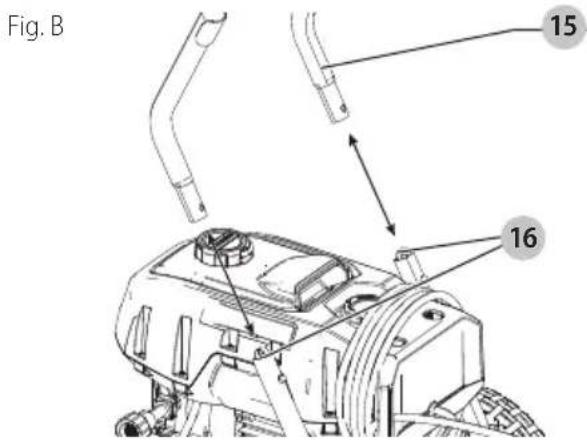
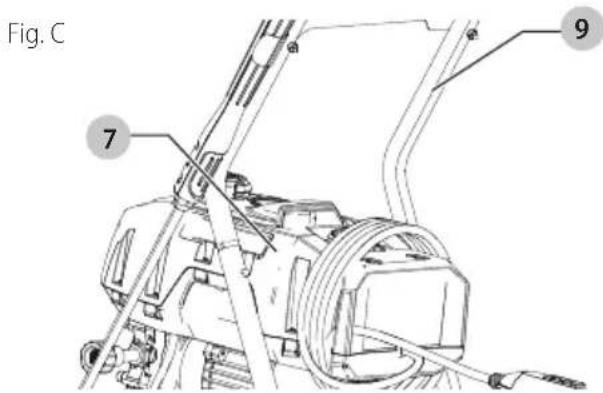
Assemble Frame Handle (Fig. A–C)
Your pressure washer is not fully assembled in the carton.
- To assemble the frame handle 9 to the pressure washer unit 7, line the upper poles 15 with the lower poles 16 so the detent pins snap into position.
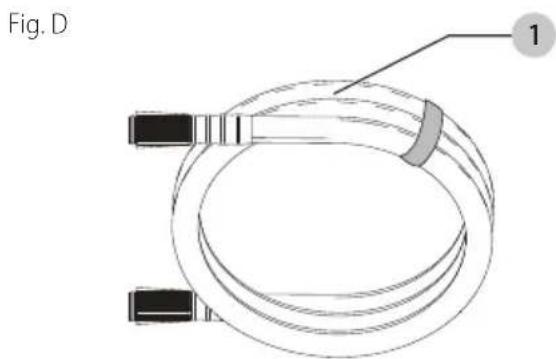
High Pressure Hose Storage (Fig. D)
- To store the high pressure hose 1 neatly coil the hose and secure it with the attached strap as shown in Fig. D.
natural_image
Diagram of a coiled cable or hose with two connectors and a labeled component (no text or symbols present)Attaching Spray Wand (Fig. E)
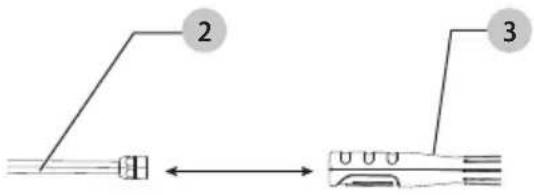
To connect the spray wand 2 to the spray handle 3, insert the end of the spray wand inside the spray handle and turn the spray wand clockwise until its firmly in working position.
Fig. E
Attaching High Pressure Hose (Fig. F–H)
NOTICE: Never pull water supply hose to move pressure washer. This could damage hose and/or pump inlet.
To connect the high pressure hose 1 to the spray handle 4, screw the hose collar 14 onto the inlet coupler 31.
To connect the high pressure hose to the pressure washer unit 7, screw the hose collar 14 onto the high pressure water outlet 32.
nOTE: Uncoil the high pressure hose before installation to prevent kinks.
nOTE: Avoid cross threading when installing the hose. Cross threading will cause leaks.
Attaching Garden Hose (Fig. H)
To connect a garden hose to the pressure washer unit 7, place the end of the garden hose 22 inside the water intake 10. Tighten the garden hose by hand.
Always disconnect the garden hose after usage.
NOTE: Before connecting the garden hose to the pressure washer unit, run water through the garden hose for thirty seconds to clear any debris from the mouth of the garden pressure hose.
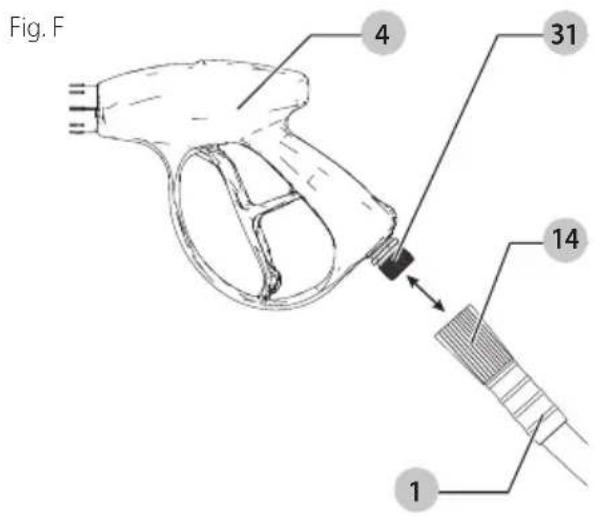
Fig. G
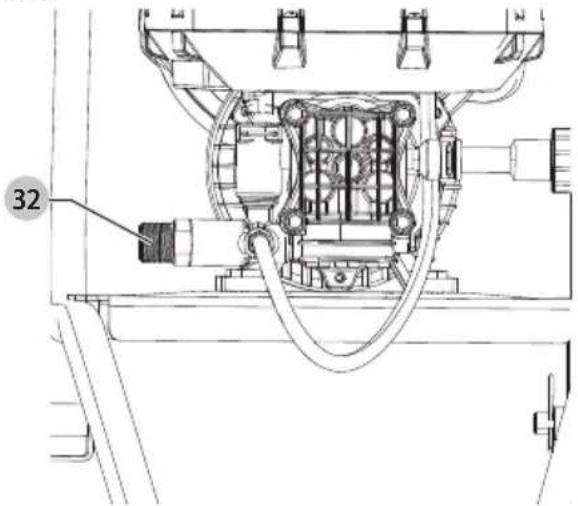
Fig. H
Attaching Nozzles (Fig. I)
DANGER: Risk of fluid injection. Do not direct discharge stream toward persons, unprotected skin, eyes or any pets or animals. Serious injury will occur.
WARNING: Flying objects could cause risk of serious injury. DO NOT attempt to change nozzles while pressure washer is running. Turn pressure washer unit off before changing nozzles.
To connect a nozzle to the spray wand 2, pull the quick connect collar 17 toward the spray wand and insert the appropriate nozzle. Release the quick connect collar to lock the nozzle in place.
To ensure nozzle is locked into place, give the nozzle a firm tug after the quick connect collar has locked into place.
Spray Tip Application
15° Orange Nozzle For brick or masonry.
25° Green Nozzle For vinyl siding.
40° White Nozzle For automotive washing.
Soap Nozzle For gentle wide area cleaning.
Black Turbo Nozzle For abrasive cleaning.
ENGLISH
Fig.1
OPERATION
WARNING: To reduce the risk of serious personal injury, turn unit off and disconnect it from power source before making any adjustments or removing/installing attachments or accessories.
An accidental start-up can cause injury.
Proper Hand Position (Fig. J)
WARNING: To reduce the risk of serious personal injury, ALWAYS use proper hand position as shown.
WARNING: To reduce the risk of serious personal injury, ALWAYS hold securely in anticipation of a sudden reaction.
Proper hand position requires one hand on the spray handle grip 4 and the other hand on the spray handle 3.
Fig. J
Test Ground-Fault Circuit-Interrupter (GFCI) Before Each Use (Flg. A)
This pressure washer is provided with a ground-fault circuit-interrupter (GFCI) built into the plug of the power-supply cord. This device provides additional protection from the risk of electric shock.
- Plug the Ground Fault Circuit Interrupter (GFCI) 13 into a working grounded outlet.
- The indicator at the top of the GFCI should turn green when product is ready to use.
- Press the "TEST" button (bottom). The green indicator should disappear.
- Press "RESET" button for use. Do not use if the above test fails.
WARNING: Risk of bursting. Use a tire pressure gauge to detect the tires pressure before each use and while inflating tires; see the tire sidewall for the correct tire pressure.
NOTE: Air tanks, compressors and similar equipment used to inflate tires can fill small tires similar to these very rapidly. Adjust pressure regulator on air supply to no more than the rating of the tire pressure. Add air in small increments and frequently use the tire gauge to prevent over inflation.
Pressure Washing
Preparing Surface for Cleaning
- Remove objects from the area which could create a hazard such as children's toys or outdoor furniture.
- Ensure that all doors and windows are closed tight. Protect all plants and trees in the adjacent area with a drop cloth ensuring that they will not be harmed by any overspray.
• Pre-rinse cleaning area with fresh water. - Use only detergents formulated for pressure washers.
• Always test detergent in an inconspicuous area before use.
Preparing Pressure Washer Unit for Use (Fig. A)
DANGER: Risk of fluid injection and laceration. When using the high-pressure setting, DO NOT allow the high-pressure spray to come in contact with unprotected skin, eyes, or with any pets or animals. Serious injury will occur.
CAUTION: Before operation:
- Connect the water supply to the pressure washer. For instructions on connecting the water supply to the pressure washer, please refer to Attaching Garden Hose under Assembly and Adjustments.
- Connect the high pressure hose to the pressure washer and the pressure wand. For instructions on connecting the high pressure hose to the pressure washer and pressure wand, please refer to Attaching High Pressure Hose under Assembly and Adjustments.
Preparing Spray Handle (Fig. K)
IMPORTANT: Before turning on the pressure washer unit, disengage the trigger lock-off 5 and squeeze the trigger 6. Hold the trigger for 30 seconds to purge the system of air. If air is still found in the water stream, continue to run water through the spray handle.
- Disengage the trigger lock-off 5.
- Squeeze the trigger 6.
Fig. K
Cleaning a Surface (Fig. A, L)
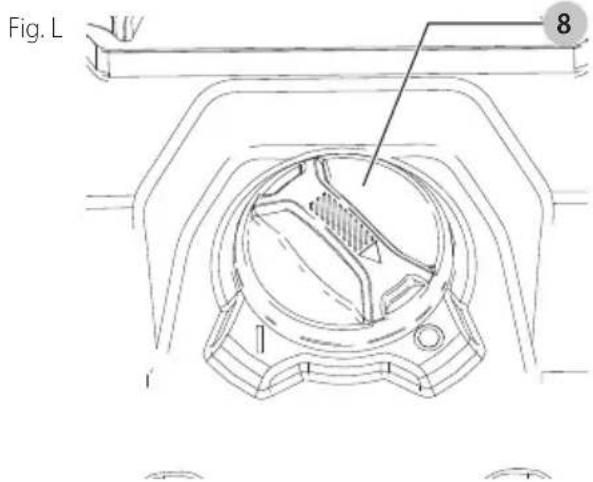
• To start the pressure washer, rotate the ON/OFF switch to the ON position..
- The best angle for spraying water against a cleaning surface is 45^ . Spraying head on tends to cause dirt particles to embed in the surface. When working on vertical surfaces, it is best to apply detergent starting at
the bottom and working upwards which will prevent the detergent from sliding down and causing streaks.
• To disengage the spray handle, release the trigger.
NOTE: Excessive pump pressure may be the result of a clogged nozzle or brass coupling. Always turn off the pressure washer unit and unplug the unit before attempting to unclog a nozzle or brass coupler.
Moving the Pressure Washer (Fig. A)
- Turn off the pressure washer unit 7 by rotating the ON/OFF switch 8 to the OFF position and then turn off the water supply.
- Point the spray wand 2 in a safe direction and pull the trigger 6 to release remaining water pressure.
- When the spray wand is completely empty, pull the pressure washer by the handle 9.
Shutdown (Fig. A)
- To stop the pressure washer, rotate the ON/OFF switch 8 to the OFF position and unplug the cord from the outlet.
- Turn off water at the faucet.
- Discharge residual pressure by squeezing the trigger 6 until no more water comes out of the spray wand 2.
- Engage the spray handle lock-off 5
- Disconnect the garden hose from the water intake 10.
- Disconnect the high pressure hose 1 from the high pressure water outlet 32 and drain hose.
MAINTENANCE
WARNING: To reduce the risk of serious personal injury, turn unit off and disconnect it from power source before making any adjustments or removing/installing attachments or accessories.
An accidental start-up can cause injury.
Cleaning
WARNING: Blow dirt and dust out of all air vents with dry air at least once a week. To minimize the risk of eye injury, always wear ANSI Z87.1 approved eye protection when performing this procedure.
WARNING: Never use solvents or other harsh chemicals for cleaning the non-metallic parts of the tool. These chemicals may weaken the plastic materials used in these parts. Use a cloth dampened only with water and mild soap. Never let any liquid get inside the tool; never immerse any part of the tool into a liquid.
Nozzle (Fig. A)
If the nozzle becomes clogged with foreign materials, such as dirt, excessive pressure may develop. If the nozzle becomes partially clogged or restricted, the pump pressure will pulsate. Clean the nozzle immediately using the nozzle cleaner.
- Shut off the pressure washer unit 7 and turn off the water supply.
- Pull trigger 6 on spray handle 3 to relieve any water pressure.
- Remove the nozzle from the spray wand 2 by pulling the quick connect collar 17 toward the spray wand.
- Using the spray tip cleaning tool, unclog any debris from the nozzle.
- Run water from a faucet or garden hose through the nozzle.
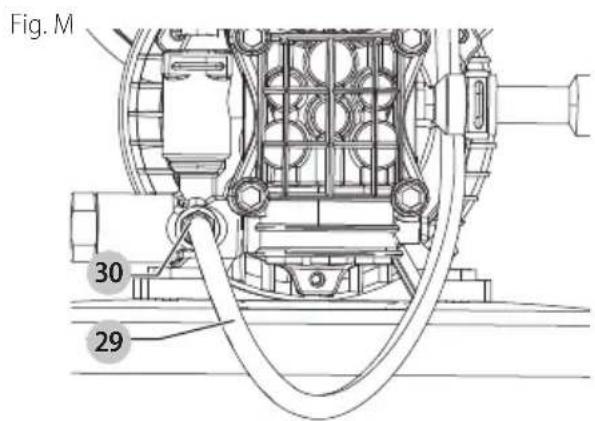
Soap Tank (M, N)
To clean the soap tank, decouple the hose from the pump.
- Shut off the pressure washer and turn off the water supply.
- Pull trigger on gun handle to relieve any water pressure.
- Decouple the soap tank hose 29 from the soap tank hose inlet 30.
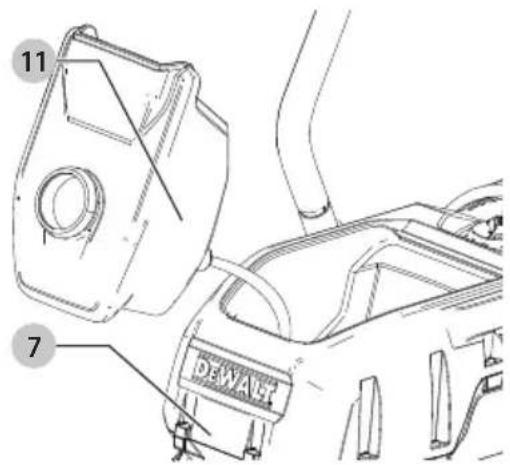
- Lift the soap tank 11 out of the pressure washer unit 7.
- To clean the soap tank 11, empty any remaining detergent back into its bottle. Use water from a garden hose to thoroughly rinse out the tank. Empty the tank and allow it to dry.
- Reinstall soap tank to pressure washer unit.
ENGLISH
Fig. N
Storage (Fig. O)
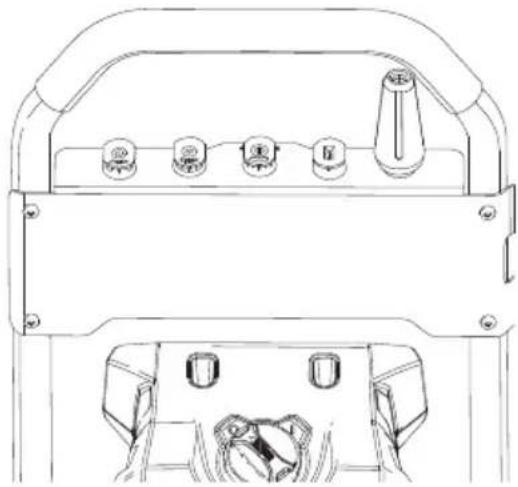
- Store in a dry, covered location above freezing temperature. STORE INDOORS.
• Always completely empty water from high pressure hose, pressure washer unit, spray wand, nozzles, soap tank, and pressure wand handle. - Nozzles can be stored on the cross member as shown in Fig. O.
Fig. O
natural_image
Technical line drawing of a mechanical device with labeled components (no text or symbols)Accessories
WARNING: Since accessories, other than those offered by DEWALT, have not been tested with this product, use of such accessories with this tool could be hazardous. To reduce the risk of injury, onlyDEWALT recommended accessories should be used with this product.
Recommended accessories for use with your tool are available at extra cost from your local dealer or authorized service center. If you need assistance in locating any accessory, please contact DEWALT call 1-800-4-DEWALT (1-800-433-9258) or visit our website: www.dewalt.com.
Repairs
WARNING: To assure product SAFETY and INABILITY, repairs, maintenance and adjustment (including power cord repairs, and brush inspection and replacement, when applicable) should be performed by a DEWALT factory service center or a
DEWALT authorized service center. Always use identical replacement parts.
Register Online
Thank you for your purchase. Register your product now for:
- WARRANTY SERVICE: Registering your product will help you obtain more efficient warranty service in case there is a problem with your product.
- CONFIRMATION OF OWNERSHIP: In case of an insurance loss, such as fire, flood or theft, your registration of ownership will serve as your proof of purchase.
- FOR YOUR SAFETY: Registering your product will allow us to contact you in the unlikely event a safety notification is required under the Federal Consumer Safety Act.
• Register online at www.dewalt.com
Three Year Limited Warranty
DEWALT will repair or replace, without charge, any defects due to faulty materials or workmanship for three years from the date of purchase. This warranty does not cover part failure due to normal wear or tool abuse. For further detail of warranty coverage and warranty repair information, visit www.dewalt.com or call 1-800-4-DEWALT (1-800-433-9258). This warranty does not apply to accessories or damage caused where repairs have been made or attempted by others. THIS LIMITED WARRANTY IS GIVEN IN LIEU OF ALL OTHERS, INCLUDING THE IMPLIED WARRANTY OF MERCHANTABILITY AND FITNESS FOR A PARTICULAR PURPOSE, AND EXCLUDES ALL INCIDENTAL OR CONSEQUENTIAL DAMAGES. Some states do not allow limitations on how long an implied warranty lasts or the exclusion or limitation of incidental or consequential damages, so these limitations may not apply to you. This warranty gives you specific legal rights and you may have other rights which vary in certain states or provinces. In addition to the warranty, DEWALT tools are covered by our:
1 YEAR FREE SERVICE
DEWALT will maintain the tool and replace worn parts caused by normal use, for free, any time during the first year after purchase.
90 DAY MONEY BACK GUARANTEE
If you are not completely satisfied with the performance of your DEWALT Power Tool or Nailer for any reason, you can return it within 90 days from the date of purchase with a receipt for a full refund – no questions asked.
LATIN AMERICA: This warranty does not apply to products sold in Latin America. For products sold in Latin America, see country specific warranty information contained in the packaging, call the local company or see website for warranty information.
FREE WARNING LABEL REPLACEMENT: If your warning labels become illegible or are missing, call 1-800-4-DEWALT (1-800-433-9258) for a free replacement.
TROUBLESHOOTING
WARNING: Risk of Unsafe Operation. Before servicing unit unplug or disconnect electrical supply, turn water supply off, discharge residual pressure, and engage spray handle lock-off.
PROBLEM CAUsE CORRECTiOn
| Motor does not start. Unit not plugged in. Plug in power cord. | ||
| ON/OFF switch is in the OFF position. Turn switch to the ON position. | ||
| Wand trigger not being squeezed. Squeeze trigger with switch in ON position. | ||
| GFCI tripped. Press reset button at GFCI on plug end of cord. | ||
| Unit does not reach high pressure. | Water faucet not fully turned on. Open water valve fully. | |
| Water inlet filter clogged. Remove filter and rinse to clean. | ||
| Nozzle worn. Contact | DrWALT customer service representative at 1-800-433-9258. | |
| Pump is sucking air. Check that hoses and fittings are air tight. Turn OFF machine and purge pump by squeezing trigger gun until a steady flow of water emerges from the nozzle. | ||
| Water supply restricted. Check water hose for kinks, leaks and blockage. | ||
| Output pressure varies high/low. | Not enough inlet water supply. | Turn water on full force - check hose for leaks and kinks. |
| Pump is sucking air. Check that hoses and fittings are air tight. Turn OFF machine and purge pump by squeezing trigger gun until a steady flow of water emerges from the nozzle. | ||
| Water inlet screen clogged. | To unclog, rinse OFF with water. | |
| Discharge nozzle is obstructed. Blow out or remove debris. | ||
| No detergent. | Detergent container is empty. | Add more detergent. |
| Detergent bottle or suction tube not properly connected. | Check connections. | |
| Detergent is too thick. | Use detergent recommended for use in pressure washers only. | |
| Filter on detergent suction tube is clogged. | Run warm water through filter to remove debris. | |
| Damaged or clogged detergent suction tube. | Remove obstruction or replace detergent suction tube. | |
| Discharge nozzle is obstructed. Blow out or remove debris. | ||
| Garden hose connection leaks. | Loose fittings. | Tighten fittings. |
| Missing/worn rubber washer. | Replace washer in hose adapter. | |
| Spray wand or extension leaks. | Spray wand not properly attached. | Insert the spray wand into the wand extension. Push in and turn to lock spray wand into place. |
| Broken O-ring. | Contact DeWALT customer service representative at 1-800-433-9258. | |
| Pump is excessively noisy. | Pump is sucking air. | Check that hoses and fittings are air tight. Turn OFF machine and purge pump by squeezing trigger gun until a steady flow of water emerges from the nozzle. |
| Water leaks from pump. | Loose fittings. | Check that all fittings are tight. |
| Water seals are damaged or worn. | Contact DeWALT customer service representative at 1-800-433-9258. | |
| Oil leaks. | Oil seals are damaged or worn. | Contact DeWALT customer service representative at 1-800-433-9258. |
| Motor buzzes but fails to run. | Supply voltage below minimum. | Verify that only the pressure washer is running on this circuit. |
| System has residual pressure. | Turn unit OFF, squeeze trigger on spray wand to release pressure, then turn unit ON. | |
| Voltage loss due to extension cord. | Do not use extension cord with this unit - plug directly into outlet. | |
| Cleaner not used for long periods. | Contact DeWALT customer service representative at 1-800-433-9258. | |
fabrication classe II (double isolation)
.../min......parminute
FRAnÇAis
natural_image
Diagram of a coiled cable or hose with two connectors and a labeled component (no text or symbols present)natural_image
Technical line drawing of a mechanical device with labeled ports and components (no text or symbols)FRANÇAIS
Accessoires
= = = or DC.....directcurrent
natural_image
Diagram of a coiled cable or hose with two connectors and a labeled component (no text or symbols present)natural_image
Technical line drawing of a mechanical device with multiple ports and a central knob (no text or symbols)Accesorios
Eje Central Lázaro Cárdenas No. 18 - Local (55) 5588 9377 D, Col. Obrera
MERIDA, YUC
Calle 63 #459-A - Col. Centro (999) 928 5038
MONTERREY, N.L.
Av. Francisco I. Madero 831 Poniente - Col. (818) 375 23 13 Centro
PUEBLA, PUE
17 Norte #205 - Col. Centro (222) 246 3714
QUERETARO, QRO
Av. San Roque 274 - Col. San Gregorio (442) 2 17 63 14
SAN LUIS POTOSI, SLP
DEWALT Industrial Tool Co. 701 East Joppa Road, Towson, MD 21286
Copyright © 2020
The following are trademarks for one or more DEWALT power tools: the yellow and black color scheme, the "D" shaped air intake grill, the array of pyramids on the handgrip, the kit box configuration, and the array of lozenge-shaped humps on the surface of the tool.