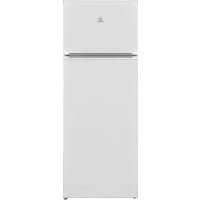
I55TM 4120 W 2 - Fridge INDESIT - Free user manual and instructions
Find the device manual for free I55TM 4120 W 2 INDESIT in PDF.



| Product type | Refrigerator-freezer |
| Brand | INDESIT |
| Model | I55TM 4120 W 2 |
| Dimensions (approx.) | W 55 cm x H 140 cm |
| Climate class | N (16 °C – 32 °C) |
| Refrigerant | R600a (isobutane) |
| Cooling technology | Less Frost |
| Refrigerator defrost | Automatic |
| Freezer defrost | Manual (use plastic spatula) |
| Temperature setting | Thermostat 5 positions (1-5, off at position ·) |
| Number of freezer stars | 4 stars (****) |
| Coldest zone | Above the vegetable drawer (indicated by a sticker) |
| Temperature indicator | Yes (shows OK if correct temperature) |
| Interior lighting | LED bulb (replacement by authorized service) |
| Power supply | 220-240 V ~ 50 Hz (standard plug) |
| Cleaning and maintenance | Soapy water, no abrasive products; clean condenser 1x/year |
| Safety | Do not damage the refrigeration circuit; do not use abrasive cleaners |
| Spare parts | 15 W bulb (for incandescent models), plastic spatula, ice tray |
| Repairability | Repairs by qualified technician only |
| Transport | Upright only; keep original packaging for moving |
Frequently Asked Questions - I55TM 4120 W 2 INDESIT
User questions about I55TM 4120 W 2 INDESIT
0 question about this device. Answer the ones you know or ask your own.
Ask a new question about this device
Download the instructions for your Fridge in PDF format for free! Find your manual I55TM 4120 W 2 - INDESIT and take your electronic device back in hand. On this page are published all the documents necessary for the use of your device. I55TM 4120 W 2 by INDESIT.
USER MANUAL I55TM 4120 W 2 INDESIT
Instructions for use
FRIGORÍFICO DE PUERTA DOBLE
Congelador - Nevera
ENGLISH Instructions for use Page 26
IpeiN 3noJ3BaHeTo Ha ypeia npoTeTe BnHMaTeJIHo Te3n yKa3aHn3a 6e30NaCHOCT.
IpbkTe Hn Ha yIO6HO MRCTO 3a 6bdeu n cnpaBkn.
B Te3n yka3aHnHa cAmn ypeD ca npedCTaBeHn BaxHn npeDynpexKDeHn 3a 6e3oNaChocTta, KOnto Tpr6Ba Da ce npOeTaT n Da Ce Cb6JIOdaBat BNHaR. PpOn3BOIDTeJIrOTKa3Ba BCRAkBA OTROBOPHOt pN HeCnA3BaHe Ha Te3n yka3aHn 3a 6e3oNaChocTta, BbB Bpb3Ka C HEnoDxOJa7a yNoTppe6a Ha ypeDa nIi HnPaBnHa HacTpoiKa Ha OprAHnte 3a ynpaBNeHne.
M Horo MaKn Dea (0-3 roJ. Tp6Ba da cTOrT daleu OT ypea. MaKn Dea (3-8 roJ. Tp6Ba da cTOrT daJeU OT ypea, OCBeH aKO He ca NOD NOCTOARHNO H6JIIODeHne. To3N ypeI MoKe Da ce n3NoL3Ba OT Deua Ha 8 rOnHH I NOrOJIeMn, KaKTo IOT JInCa C ORpaHnueHn FIn3NuCeKn, CETNBH ININ YMCtBeHN Bb3MOXHOCTN ININ C HeDOCTaTBueH ONIT IN No3HaHnCamo aKO Ca NOD HA3Op ININ Ca IM DaJeH NHCtpyKcUN 3a yNoTpe6aTa Ha ypeA no Be3OnaceH NaHH IN pa3Bnpat Bb3MOxHNTE OnacHOCTN. DecaTa He Tp6Ba Da cn INrpaT C ypeA. PoOnCTBaHeTO IN NOdPbXkata OT NOTpe6nteJ He Tp6Ba Da ce IN3BbPbWAOT Deua 6e3 Ha43Op.
IeuaHa Bb3pacT O3do8roHIMORa Da NOCTaBt Nn3BaXdaTnpOdyKTo OT XlaAnHn ypeiN.
N03BOJEA YNOTPEBA
BHIMAHHE:YpeIbTHe e npedHa3NaueH da ce n3No3Ba C BbHWeH TaMep NnC OTdEJHa CNCTema C DCNTaHcNHOynpaBJIeHne.
To3n ypeI e npedHa3HaueH 3a ynoTpe6a B DoMaUHN ycNoBn I NpO6Hn pInIOKeHn, KaTO: KxHn 3a CnyKnteIN B MaRa3HH, Oocn IN dpYrnpoTHN cpei; B CTOnaHCTBa;
OT KJIeHTN B XOTEJI, MOTeJI N IpyrIMecTa 3a HactaHBAHe.
To3n ypei He e npedHa3HaueH 3a npopecnoHaHa ynoTpe6a. He n3PON3BaIe To3n ypei Ha OTKpntO.
Kpykkata, n3noJ3BaHa B ypeDa, e cneuaJIHO npoeKTnpaHa 3a DOMaUHn ypeDN He e NOxOJa3a OCBETBAHe Ha NOMEueHnB DOMa (PerIamEnT ha EO 244/2009).
UpebTe npedHa3HaeH 3a ynoTpe6a Ha MeCTa, KbDeTo TemnepaTypaTa e B CJIeHNTE dHaNa30HN B CbOTBeTCTBNE C KImMaTHNIA KJaC, NOCOueH Ha Ta6eKkata C HOMHaJHNTe DaHHN. YpeBbT MoKe da He cyHKuOHnpa npabNlHO, aKO 6bJe OCTaBeH 3a PpOdbJxHTeJeH nepNoI npi TemnepaTypa, n3BbH yKa3aHnI dHaana3OH.
TemnepaTypa Ha OKolHaTa CpeDa 3a HopMaJIHa pa6Ota Ha ypeDa CnopeKlIMMaTnHnKlaC:
SN: 10^ C do 32°C
ST: 16^ C do 38 °C;
N: 16°C no 32°C
T: 16°C d0 43°C

To3n ypei He cblbpka xIopOoIyOpOBbIepOni (CFC). XlaIINHaTc nIcTeMa cblbpKa R600a (HC). YcIpoiCTBa c n3ObyTahn (R600a): n3ObyTaHbTe e npipoJen Ra3 6e3 Bb3dEInCTBne Bbpy OkolHaTcpeJa, Ho e 3aIaIIM. Iopadn ToBa ce yBepraIte, ye Tpb6nte Ha xJaIINHaTc nIcTeMa He ca NOBpeHn, Oco6eHO IO Bpeme Ha HeHOTo N3Ppa3BaHe.
I PEPDyPPEKDEHNE: BnMaBaTe Da He NOBpeDnte Tpb6nte Ha XlaJInHaTa CnCTema Ha ypea.
!PPEyPExKDEHNE:He 3anyBaIte BeHTnlaauOHnTe
OTBOPN B KOpnyca Ha ypeDa nIb VbB BrpaJeHaTa KOHCTpyKcIy.
!PPEyYPEXKDEHNE:
He n3noJ3BaIe MexaHnUHn,
eJeKTpueckN IJI N XmUneCKN
cpeIcTBA, pa3JIuHn OT
IpeOpbUbaHnte OT npOu3BOJNTeJI,
3a yckOpraBe Ha npOceCa Ha
06e3ckpeXaBaHe.
!PNEUYPEXJEHNE:He H3NoJ3BaITe N He NOCTaBnTe eJeKTPuYeCKn yCTpoNCTBa B OTDeJIeHnTa Ha ypeDa, aKO Te He ca OT BnDa, n3pNUHO ODo6peH OT PPOUN3BOIDNTeJI.
I PEPDyPPEKDEHNE:
YcTpoNCTBaTa 3aJeI N/INJn
DInCpeHcBpNTe 3aBOJa,KOINTO
He Ca DnpeKTHO CBbp3aHN KbM
BOIOChA6DnITeJIHaTa MPexKa, TpRbBa Da
Ce PJIHrT CaMo C nITeHbAo.
!PPEyYPEXKDEHNE:
ABTOMaTHHnTeJeOReHepaTopu n/ nnIINcneHcbpnte 3a BOna Tpr6Ba da 6bDat CbP3aHN KbM BOIOCha6nTeJHa MPexka, KOrTO NODaBA cAmO NITeHa BOda c HalaRaHe MeKdy O,17 u 0,81 MPa (1,7 u 8,1 bar).
He cbxpaHbAte n36yXnBn BeueCTBa KaTO KyTm C aepO30JN He NOCTaBnTe, HnTO n3PON3BaIte 6eH3nH nn Dpyr3aapanM MaTePnaJI N BbB nn B6n3oCT Do ypea.
He norglbuaTe cdbbpkaHneTo (HeTOKcUHO)Ha ONAKOBKNe 3aJeD (npn HAKON MOeJI). He KOnCympaTe JeDeEH N Ky6YeTa IIN JeDEHN 6N3aIKN BeDHaRa CNeI N3BaXdaHETo NM OT pPn3epa, TbJ KaTO TOBA MoKe Da PpeDN3BnKa CTydeHN N3rapHn.
3a npodykTn, npoeKtnpaHn 3a H3noJ3BaHe Ha Bb3dyWeH pNlTbp, HAMipaS ce NOd IOcTbNeH KaNaK Ha BeHTnlaTopa, pNlTbpBT BuHaRn Tp6Ba Da e NocTaBeH, KOraTO XlaDINHNKbT pa6OTn.
He cbxpaHbAaTe CTbKJIeHN KOHTeHepn, CbIbPkaun TeuHOCTN, B OTdeneHneTO Ha qpn3epa, TbN KaTO Te MORAT da ce cHynT. He 3akpnaBte BeHTnlaTopa (aKO nMa TaKbB) c XpaHn.
CneI nocTaBHeTo Ha xpaHn npOBepTe daJIb BpaTIne Ha OTdeJeHnra Ta ce 3aTBaprT do6pe, OcOBeHO Ta3n Ha cPn3epa.
!NobpeHnTe yIbTHHeHn TaP6Ba Da Ce NOpMeHrT Bb3MOxHO Ha-CKopo.
13no3BaTe OTdelenHneTo Ha XlaIINHka cMo 3a CbXpaHBAHe Ha npeCHn npOdyKTu, a OTdelenHneTo Ha oPn3epa cMo 3a CbXpaHBAHe Ha 3aMPa3eHN XpAHN, 3aMpa3raBe Ha npeCHn XpaH N npabeHe Ha JeDeHN Ky6yeta.
1N36BbIte CbXpaHbAHeTo Ha Heo6BNTxPahn B INPK KOHTaKT C BbTpEShHITe NOBbpXHOCTHa XlaDINHka IIN φpns3epa. YpeNTe MoKe Da pa3noJarAT cbC CneuJIH N OTdelenHn (OTdelenHe 3a Pecn XpaHn, KyTna 3a Hyla rpaDyca...). Ako He e yKa3aHo dpyro B CbOTBeTHa 6poWypa 3a npOdykTa, Te MOra Tda Ce OTcPaHbAT cbC 3aNa3BaHe Ha eKBbBaJeHTHInTe XapaKTePncTNI.
CAnHTaH Ce N3NoJ3Ba KaTo Ra30o6pa3yBau, aReHT B N3OlaUHOHaTa PnHa N e 3aNaJIM ra3.
I36poeHnte NO-dOly OTdEJIeHnHa ypeDa ca Hau-NOxOJaU 3aCbXpaHEnHe Ha ONpeJelen TINOBExpaHn, KaTO Ce NMa IpeBnDpa3JInuHTo pa3PpeJeHne HaTemNepaTypaTa B TAX:
-OTdelenHe Ha XlaaunHnka:
1) 1) Горна зона на OTделенеTo нахладиннka &с врata - умepeha Зона:За сьхалене Ha Трпчесkn ПLOДОBE, KOHсерВи, HanITКи, РИца, Тушни, MacLo, KOHФNTЮр
2) CpeHa 30Ha Ha OTdEJIeHHeTo Ha XlaIINHnKa - CTyDeHa 30Ha: 3a CbXpaHHeHne Ha CnpHe, MJIKO, MJIeHN IpoDyKTn, DeJIHKaTeCHN XpaHn, KUceJIO MJIKO
3)Долна 30на Ha OTделенeto Ha XlaДилнka -Ha-CTуdeHa 30Ha: 3a CBxpaHHe Na KOJIbAcN, DecepTN, MEco n pIb6a, YnI3KeiK, PpcaHa NaCTa, NOdKBaCeHa CMeTaHa, NeCTO/ CaIca, DomaSHo ПпИ�ТВeHn XpaHn, ClaДКИшc KpeM,pydINr N KpeMa CInpeHe
4) YeKMeJxke 3a nIoOBe & n 3eJIeHcyuB HaN- DOnHaTa YacT Ha OTdJIeHneTo Ha XJaIINHnKa: 3a CbXpaHeHne Ha nIoOBe N 3eJIeHcyu (C n3KIOUeHne Ha TpONNuEcKn nIoOBe)
5)Отделене HaЧильpa:В Това
Най-СтуденичekmedжecьхарнайТe
само мсои риба
-OTdeneHHe Ha cPn3epa:
OTdeneHneTo "3OHa 4 3Be3dNcKn (^**) e IoDxOJrO 3a 3aMpa3BaHe Ha XpaHNTeHNI PPOyKTN CbC CTaHHa TEMepaTypa n 3a CbXpaHEn He HA 3aMPa3EHn XpaHn, TbN KaTO TEMepaTypa ce pa3npedeJI npabHO B cIanoTO OTdelenHe. CpokBT Ha rOndocT Ha 3aKUpeHnTe 3aMPa3EHn XpaHn e NocOueH Ha ONaKOBkata m. Ta3n DaTa e OnpedelenHa B 3aBnCmOCT OT TIna Ha XpaHATA, KOrTO Ue Ce CbXpaHRA B bB fprzepa, 3aTOBa CLeDbA da CE cna3Ba. IppeHnTe XpaHn Tp6Ba Da CE cbXpaHraBt 3a CLeDNn nepnoD OT BpeMe: 1-3 Meceua 3a CnPHe, Yepynectu MeKOteJI, ClaOneI, WYHKa/HaJeHnU, MlRAKO, IppeHn HApNTKn; 4 Meceua 3a CTEKObE INI PbPxQOLn (ROBeXdN, arHeuKN, CBnHcKn); 6 Meceua 3a MacNo INI MaprapIN n pTNue MeCO (NIleWko, NyeuKO); 8-12 Meceua 3a pNoDoBE (c NsKJIoueHne Ha cHTpyCoBn), NeueHO MeCO (ROBeXdo, CBnHcKO, aRHeuKO), 3eJeHuU. 3a XpaHnTe, CBxpaHBAHn
B 30HaTa C 2 3Be3dNcKn, Cna3BaITe IocOueHn Ha OnaKOBKaTa CpOK Ha FOJHOCT.
3a n36yRbaHe Ha pa3BaJHHe Ha xpaHnTe cna3BaIte CJeDnTe yKa3aHn:
- OctabaryHTo Ha BpaTaTa OTBopeHa 3a
ПрдьлжИтеленпериОТВpeMe
Може Да ДовеДе ДЗнчITELH
Новшаванe Ha TemпepaТураТВ
OTДeЛЕнЯТа Ha ypeДa.
-ПоуностваиTe peябовно ПОвьрхнocHTиTe, KОТTO MOraT Да Влг3aT B KOHTaKT C XpaHnte И ДОCTьнНITE сИСТЕМ 3a ИЗТочВаHe.
-Почистовпгpe3eрьогпгteа BOДа,aKHe ca 6ил n3нол3Ванn B npOдьлжсене ha48 yaca;nychete BOda npe3 cnCTemata,Cbbp3aHa KbM BOdОнадaBaHETo,aKHe cTe n3TOчын BOДa BnpOдьлжсенe Ha5 dHn. - CbxpahraBae cypoBo meco np6a B IOxOAnu CbIOBe BXaINHnKa, TaKa Ye Da He BIn3aT B KOHTaKT C dpYrXpaHn INI Da IpOTeKaT Bbpxy TAX.
-OTdelenHnTa 3a 3ampa3eHxpaHn, MapKnpaHn C DBe 3Bc3dNCH, Ca NOxD0Jn 3a CbXpAHHe Ha IpeDvapntelHO 3ampa3eHxpaHn, CbXpAHHe N pPirotBHe Ha CnaOJeI n npabHe Ha Ky6yTeA JeI.
-He 3ampa3BaIte npecn XpaHn B OTdJeHnra, MapKnpaHn C eHa, DBe IIN TPN 3Be3DnUKN.
-AkoXlaIINHKnBTeOCTaBeH npa3eH 3a npoIbJxKnteIeH nepNoD OT BpeMe, N3KIOUcTe Ro, Obe3CKpeKeTe Ro, NOuNCTeTe rnoTnOndCyWeTe n OCTaBeTe BpaTaTa OTBOpEHa, 3a Da npedOTbPaTtE o6pa3yBaHeTo Ha PIIeCEH B Hero.
MOHTIPAHE
Bopabeheto mOHTaXbT ha ypeDa Tp6Ba da ce n3BbpwBat OT dBe IINIOBEue Jnca -Ima ONaCHOCT OT HapaHBAHNA. N3NoJ3BaITe npedna3HN
pbkabu3a pa30nakOBaHTo N MOHTaxa Ha ypea -Ima ONaCHOCT OT NOP3BaHn.
MOHTIpaHTo, BKNIOUHTeJIHO NOIaBaHTo Ha BOda (aKO e IprnloXIMO) n EJekTPnueCKOTO CBbP3BaHe n peMOHT TpR6Ba Da ce N3BbPWBAt OT KBaINΦuNpuH TexHKn. He nonpaBnTe n He IOmEnHnTe qactn OT ypeDa, aKO TOBa H e N3pNUHO NOCOeHO B pBKOBOCTBOTO Ha nOTpe6nTeJr. Na3eTe DeaTa DaJeYOT MRCTO, KbDeTo Ce N3BbPwBa MOHTaXbT. CNeJ KaTO pa3ONaKOBaTe ypeDa, nPOBepTe DaJIH He e NOBpeDen No BVpeMe Ha TpaHCnOpTnpaHTo. Pn np6nEMn Ce O6bPHeTe KbM TbProBeua INI KbM HaN6blN3KnA CEPBn3 3a CneInpoDAxK6eHo O6ClyXBAHe. CNeJ KaTO ypeDbT 6bJe MOHTIpaH, OTNaDbUHTe OT ONaKOBKaTa (PiactMaCa, CTnponop n Dp.) TpR6Ba Da cTOrT daley OT O6cera Ha Deca -IMA ONACHOCT OT 3aDyShaBaHe. YpeDbT TpR6Ba Da 6bJe IN3KJIuOyenOT 3axpaHBAHeto npeDi MOHTaJa -IMA ONACHOCT OT eJekTPnueCKn Udap. IIO BVpeMe Ha MOHTaKa BHIMaBaIte ypeDbT Da He NOBpeNi 3axpaHBAun Ka6eJ -IMA ONACHOCT OT eJekTPnueCKn Udap. BkIOUeTe ypeDa eDba CJeI 3aBbPWBaHe Ha MOHTaJa.
BHMaBaTe Da He NOBpeIte NOOBtE HAcTNkN (HaPnMep napKeTa),KOraTO npemecTbATE ypeDa. MoHTnpaTe ypeDa Bbpxu NOD, KOITo eIOCTaTbUHO 3dpaB 3a NODbPxKaHe Ha TeXeCTTa, IN HA MRCTo, NODxoJIo 3a pa3Mepa N yNoTpE6bata Ha ypeDa. Pn MOHTaxa Ce YBepeTe, Ye ypeBt He e 6JIn3O Do n3TOUHk HA TOnJIiHa IN ChETpTE KpaTeCa CE ONIPA TnBTHO Ha NODa, KaTO pRn HEo6XoDmOCr Hn HarLaceTe, IN CLeD TOBA nPoBepTe DaJIypeBt E HnBeJInpan 6e3yIpueHo C NOMOuTa Ha HnBeInp. N3uKaaiTe NOHe DBA Yaca, PpeDi DA BKJIouHTe ypeDa, 3a Da ce rapaHTnpa, Ye XlaINHaTa CNCTema e HaNbJHo
Функционалha.
!PPEyPPEKDEHNE:Korato NOCTaBTe ypeHa Ha MrcTOTo My,ce yBepeTe,Ye 3axpaHbauNt Ka6eI He e npITnCHa T NIN NOBpeDeH.
1PENEYNPEXKDEHNE:3a
n36raBaHe Ha onaCHOCT,Дьлжkaua
ceHa HeCTa6nHOCCT,IOCTaBHeTO
nIiФHKcnpaHTo Ha ypeDa Tp6Ba
daCe n3BbPwBA B CbOTBeTCTBne C
INCHtpyKcUNTe Ha npOn3BOdnteJI.
3a6paHEno e Da ce noCTabR
XlaIINHKnBT TaKa,Ye MeTaJHaTa
Tp6Ba Ha ra3Oba 6ytuNkA,MeTaJHn
Tp6n 3a Ra3 IInn BOda,IIn
eNeKTprueckn Ka6eI Na Ca B KOHTAKT
CbC 3aHaTa CTeHa Ha XlaIINHnKa
(HAMOTKaTa Ha KOHDeH3aTopa).
3a da ce rapaHTnpa noDxOJaBaBeHTnlaun, OCTaBeTe npocTpaHCTBOOT DBeTe CtpaHn HaJypeDa. Pa3cToHHeTO MeKdy 3aHaTa Yact Ha ypeDa n CTeHaTa 3aHero TpRbBa Da e 50 mm, 3a da ce H36erHe CbPnIKoCHOBehne C ropeuN NOBbPxHOCTn. HamaJIbaHeTo Ha TOBa PPOCTpaHCTBO ue yBEnuK KOHCymaunTa Ha eHeprna Ha npOdykTa.
IIO Bpeme Ha HnctaInpaHe HaypeMa I npEi Da rO CBbPKeTe KbMeJeKtpueeKaTa MpeXa, CBaJeTe 3axpaHbAsn Ka6eN OT KyKaTa Ha KOHdEh3aTopa.
PNEUINPEXDEHNOTHOCHOEJEKTP03AXPAHBAHETO
Tp6Ba da e Bb3MOxH0 ypeIbT Da ce n3KIOUcN OT 3aXpaHBAHeTO Upe3 n3BaXdaHe Ha uenCeHa, aKO e IOCTbNeH, INIype3 DOCTbNeH MHORONOLOCEH IpeBKNIOuYBaTeJ, MOHTnpaH CneI KOHTaKTA, KaKTo IN ypeIbT Da e 3a3eMeH B CbOTBeTCTBnC HauNoHaJIHnTE CTaHApTn 3a eJeKTPnuecka 6e3OnacHOCT.
He n3no3BaIte yIbJxNITeI, pa3KIOHHTeI C HRAKO IHe3da nn aanTepn. CneI moHTnpaHeTo
eJIeKtpnuecknte KOMNOHENTn He TpRbBa Da 6bDaT DoCTbNn 3a NotpeBnteHa. He n3noI3BaIte ypeHa, KOrato CTe C MOKpn IIN bOcN KpaKa. He n3noI3BaIte To3n ypei, aKO 3axpaHbAunrMy Ka6eI nn UenCeI e NOBpeDeH, aKO He pa6OTn npabNHO IIN aKO e 6II NOBpeH INI e Naanl.
Ako 3axpaHbauHT Ka6eI e NOBpeH, ToT Tp6Ba Da ce CMeH N cEHaKbTaKbB OT IpON3BOJNTeJI, HEROB cepBn3eH aReHT IIN JInce C DOCTaTBuHa KBaIIΦnKaUH, 3a Da Ce N36erHe OnaHa CnTuaUH, HApPIMep eJeKTPnueckn yIap.
!PPEyPEXEHE:He NOCTaBnTe pa3KIOHnTeJI C HAKoKo rHe3da IINI PpeHOCIMN 3axpaHBaun yctpoiCTBa B 3aHaTa YacT Ha ypeJa.
ПОЧИСТВАЕ И ПОДДРБЖKA
!PPEUYPEXKDEHNE:PpeuN3BbPbBaHeHaKaKBaTOIa6nloDeHOCTNOPOdRpKkaTaHayepa,ceybepeTe,YeToeIN3KIOueHHeeCBbp3aH KbM3axpaHbAHeTO;HNKORA HeN3NoJ3BaIte ypeu 3a NOuchTBaHe Cnapa-IMa ONaCHOCTOT eJeKTpuecknydap.
He n3no3BaIe abpa3nBn nI npy6n noocTbau CpeDCTBa, KaTO cnpeNoBE 3a npo3Opu, CTbprAkn, 3aNaIMM TeHOCTu, NoocTbau BAKCN, KOHcHTpnpaHn PpenapatN, 6eINHa nn PoNCtBaun CpeDCTBa, CbDbpxKaun NeTpOJHn PPOyKTu, Bbpy NactMacOBNTe qACTu, BbTpEshOCTTa uynbTHENrTa nn N30JaNArTa Ha BpaTnKata. He n3no3BaIte xapTneHn KbpN, CTbprAkn nn DpyrN rpy6n NOocTbaun CpeDCTBa.
N3XBbPJIaHE HA ONAKOBbHnTE MATEPNAJI
OnakOBbUHnT MaTePnAe 100% roDen 3apeuKlnpaHe n e MapKnpaH cbc CmBola 3apeuKlnpaHe
Pa3nHHTe OAnKOBbHm MaTePmaT Tp6Ba da 6bTaN3XBbPLeHH OTROBOPHO N B CbOTBeCTBne C HapeIbHTe Ha MeCTHHTe OprAHN 3a N3XBbPnHa He ATnAdbu.
N3XBbPJIaHE HA IOMAKHCKN EJEKTPOYPeIi
To3n ypee e npo3BveeH c MaTePnaH, roHN 3a peuKlnpaHe nJN 3a NOBtOpHO n3No13BaHe. Ppi n3xBbPnaHTo My cna3BaIte MeCTHnte pa3npoe6n 3a n3XBbPnaHne Ha OTNaDbU. 3a DonbHInTeHa HΦopMaua OTHOCO TpeTnpaHTo, ONo3OTBOPBaHTo n PeuKlnpaHTo Ha DOMaKnHcN eJeKTPOypeDi Ce o6bpHeTe KbM KOMNETHTHnte MeCTHn OprAHn, cnyk6bata 3a 6ntOBn OTnAbuN INn Mara3nHa, OTKbTeO CTe 3akynu NyeJa. To3n ypeE e MapKnpaH B c0TBETCTBne C DnpeKTNbA 2012/19/EC OTHOCO OTNaDbUHTE OT eJeKTpuecko n EJeKTPOHNO obOpyDaBe (WEEE). KaTO ce NorpnXhTe YpeDt Da 6bDe n3XbPnE H no npaBnEn Haun, Bne ue nomorHeTe 3a npedOTbPaTaBAHe Ha Bb3MOxHnTE HeraTUBH NocLeDCTBn 3a OKJHaTA
cpea n 3dpabeto Ha xopaTa.CmB0bT NOCTaBeH Ha N3deJIneTo Hn PnpDpyKabaunTe DOKyMeHTn, POKa3Ba, Ye To3n UpeJ He 6uBa da CE TpeTupa KATO 6ntOB OTnaIbK, a Tpr6Ba Da ce npede B CNEUAnN3UnpaH NyHKT 3a peuNKnPahe Ha eNEKtpuecko NeEeKTPoHNO O6OpyDbHe.
CbBETN3AIKOHOMNA EHEPTN
MOnTpaIte ypeBa C cyXo,do6pe npOBeTpNBO
nomeueHne,daJeU OT TOnJIINHH N3TOUHNu (HaNP.
pAuaTOp,rotBapcKa neYka n T.H.) n Ha MrcTo,
KoETO He e n3LOKeHO Ha npRA KcNbHueBa CBetNHa.
Ako e Heo6xOIMo, n3IOJ3BaIe NT0LAaONHnA
nlaCTnHa. 3a da ce rapaHTnpa npabInHaTa
BeHTnauz, cNeDbaIte MHCTpyKUnTe 3a MOHTnpaHe.
HeoctaTbUHata BeHTnauz B 3aHata Yact
Ha ypeDa yBeJIuHbA KoHCyMaunTa Ha eHepnI
n HamaJIbRa eEeKTUBHocTt Ha OXJaXdAHeTO.
YeCTOTO OTBapRHe Ha BpatNUkATA MoKe Da yBeJIuH
KOHcyMaunrHa ha eHepnI. BbTpeHnata TempepaTypa
Ha ypeDa N KOHCyMaunrHa Ha eHepnI MoKe Da ce
NoBIIne OE OKOIhata Tempeatypa, KaKTo IOT
pa3NOLOXeHHeTo Ha ypeDa. Pn HAcTpoBaNHeTo Ha
TempepatypaT Tp8Ba Da ce IMaT pPeDbN Te3N
ΦakTopn.CBeDeTe DO MINHMym OTBapRHeTO Ha
Bpata. Korato pa3MpazBaTe 3ampaeHn XpaHn, rN
noCTaBeTe B xJaDNlNHka.
Hnckata TemnepaTpa Ha 3ampa3eHnTe npOyKtn OXJaXda xpaHnTe B XJaUNHnka. OcTabete TOnnIte XpaHn HAnNTKn Da ce OxlaJrT, npeDn da rN noctabnte BypeDa.
I03nHnpaHTo Ha paTobete B xlaDnHnka He OKa3Ba BInrHne Bbpye eFeKTHBHO To 3nOJ3BaHe Ha eHepn. XpaHnte Tp6Ba Da ce NoCTaBt Ha paTobete NO TaKb HauHH, Ye da Ce rapaHTnp npAunHa UpkyuauHa Bb3dyx (XpaHnte He Tp6Ba Da ce Donnpat EHa B Dpyra N Tp6Ba Da ce OCTabRa pa3CToHnme MeKdy XpaHnte N 3aDnHaTa CTeHa).
Mokete da yBeJIuHrTe KanaUTeTa 3a cbXpaHeHne Ha 3ampa3eHN XpaHn, KaTO MaxHete KOUHnUte N paTb Stop Frost (ako mTaKaBb).
UymoBete, KOIto n3daba KOMnpecopbT no BpeMe Ha pa60ta, ca HopMaJIHn I He 6nBa Da Bn npTeChraBt.
PA3JIiUHnФYHKcIINBb3MOXHOCTN HA YPEDA
HOpmaun OTHOCHO TexHOJrTa Less Frost
ElaorapenHe Na KOnTpHnI n3napTeI, TexHOrnra LessFrost npedna rno-epeKTHBO OxJaKaHe, no-MaIka Heo6xOIMOC T OT o6e3ckpexkabaHe Ha pKa I NO-tBKBaBO IpocTpaHCTBO 3a cbxpaHeHne.
HactpoBaHe Ha TepMoCTata
TePMoCTaTbT Ha XlaIaIIHnK-ФpI3epa peryInpa aBTOMaTHUHO TEMpepatyPATA B OTeJIeHNrTa. Ype3 3aBbPtaHe Ha KInOHa OT noIOKeHne 1 Do 5 ce 3aIaBaT No-HnCKn TEMpepatypn.
Baxha 3a6eIekka: He ce onntBaIte da BbpTite KlnOua do noLoXeHne npEi1, Tb' KaTo nO To3n HauIN ue cnpTe ypeia.
1-2:3a cxbxpanenHe na xpaHn 3a KpaTbK nepnoB OOTJeIeHneTo Ha ppu3epa MoKe Da 3aJaTe KJIoua B IIOJoxEHe MEXdy MNHMmaJIHO n CpeJHO.
3-4: 3a cxbxaheHne Ha xpaHn 3a nbIbI nepNOB OTdJIeHHeTO Ha pnp3epa MoKe Da 3aJaTe KJIoua B cpeHNOJIOJXKeHne.
5: 3a 3ampa3raBaHe Ha npesH xpaH. YpeBt Ue pa60Tu No-dbIro BpMe. CneI DocTnraHe Ha JxenaHOTo CbCTOAHHe BbpHete KlnOHa HnpEINHnHa TnactpoiKa.
PpeynpekdeHn OTHoCno perynnpaHTo Ha TemnepaTypata
- OkolHaTa TEMnepaTpa, TEMnepaTpaTa Ha npraCHO cbxpaHeHata xpHa u YecToTata Ha OTbapHe Ha Bpata Ta BInrHa TEMnpaTpaTa B OTdeJeHneTo Ha XlaAnlHnka. Ako e Heo6xOdmo, IpomeHete HactpoiKaTa Ha TEMnepaTpata.
- He e npenopbuynteHNO xnaIINHKbT da paBOTu B nOmeueHnC OKoHa TempepaTypa, no-HnCKa ot 10^, TBKATO TOBa ige NOBIIRe Ha eFeKTUBHOCTTa My.
HactpoBbHeTo Ha TepMoCTaTa Tp6Ba Da ce N3BbPbBa, KaTo ce Ima npEbnKoJIko YeCTO Ce OTbaprT 3aTBaprT BpaTIne Ha XlaIINHka nΦpN3epa, KaKBO KOJInuCtBO XpaHn Ce CbxpaHBA B XlaIINHka, KaKTO pa60THata CpeDa n pa3noJoxKeHneTo Ha ypeDa.
CneBkNIOBaHe KbM 3axpaHbAHeTo XnaIINIKbT Tp6Ba Da paBoTI 24 Yaca 6e3 npeKbcBaHe c eI aIaNTipaHe KbM OKoJIHaTa TEMnepaTpya, 3a da e CnrypHo, Ye ce e OxaIIN HAnbInHO. Ppe3 To3n nepNo He OTbApYte YecTo BpaITHe Ha XlaIINHka N He NoCTABrYe TBbpJe MHOrO XpaHn B Hero.
BaaHrXnaIaIIHnK pa3nOla rCaYHKUN 3a 5-MNHyTHo 3a6abAHe C ue IpeDoTbPaTBAhe Ha NOBpeHa KaMnpecopa, Korato ro n3KlIOvBaTe u BKIOvBaTe, 3a da N3BbPUnTe daJeHa DeHocT, nIn npn cnpaHe H eNeKtpo3axpaHbAHeto. XnaIaIIHKnBT ige 3anoHne da pa60Tu HopMaJIHO cJeD 5 MNHyTN.
XnaHnKbTe npoeKtpaHa paobTu B cpea C OKJHa TEMnepaTpya, NocOeHa B CTaNapTIne B 3aBNCIMoCT OT KImMaTHUHN KlaC, HAnuCaH Ha INcOpMaUNHOHATA TaBeJIka. He ce npenopbYBa XnaHnHKbT da paobTu B cpea C OKJHa TEMnepaTpya N3BbH nocOeHaTa, 3a Da He ce HapywaBa efeKTNBHOCTTA Ha OXJaXdAHeTO. - YpeBt e npoeKtnpaH 3a nI3noI3BaHe B cpea C OKoJIHa TEMpepaTpya B dIana3OHa 16^ - 32^
| Климатчени Клас | OK. Temп. (℃) |
| SN: 0T 10 do 32°C | |
| ST: 0T 16 do 38°C; | |
| N: 0T 16 do 32°C | |
| T: 0T 16 do 43°C | |
PpHaJaJIeKHOCTN
ФорmaЗал徳
HantbIHeTeΦopMaTa3aJeDcB0daNnocTaBeTe BOTdJIeHNHeTOHaΦpU3epa.
Cne KaTO BOaTa e HAnbHNO 3aMpb3HaJa, MoKeTe Ja 3aBbPNTe fOpMaTa, KaKTo e NOKa3aHo NO-DOJy, 3a Da n3BaIITe Ky6HeTaJIeI.
Пл actmacobacbpranka
Cnei n3BecTeH nepnoD OT BpeMe B H4KOn 3OHN Ha OTDeJIeHHeTo Ha fPn3epa ue CE haTpyna ckpek. HatpynAHH T bB FpN3epa cKpeX Tpr6Ba Da ce OTCpaHbA nepNoDnUHO.AKO e Heo6xOdmo, n3no3BaTe npedoctabehata nlaactMacobc Tbpralka. He n3noI3BaIte ocTpIn MetaIIH npedmetn 3a npemaxBahe Ha ckpeka.
Te 6nxa MOrnI da npobua TxlaDINHNA KOHTyp I da npuHNA HENONpaBIMa NOBpeHa Ha ypeHa.
BcnuKo nOncaHn I NOKa3aHn ONCaHna Ha npHaJIeXHOCTNte MOrT da ce pa3JNUaBaT B 3aBNCIMOCT OT MoEla Ha ypeJa.
IocTabaHHe Ha xpaHn B ha-CTydeHaTa 3OHa Ha XlaAnlHnKa
3a Hau-do6po cIbxaHeneHa XpaHnTe rN nOCTaBnTe B Hau-nOxOJaTa 30Ha 3a oxlaKdaHe. Ha-cTydeHaTa 30Ha
ceHAMIPA TOUHO NaI YeKMeJKeTo Crisper.

3a da cte cnrypHn, ye TemnepaTypaTb Ta3n 30Ha e DocTaTbHc Hncka, yBepTe ce, ye paTbTe nocTaBeH Ha HNBOTo HA CmMBOJa, NOKa3aHn Ha NlIOCTpaunrTa.
OTdJIeHHe Ha XlaIaIIHnKa
- 3a orpahnuebahe Ha BlaJxHocTtA n NocJeBaIoo To HATpyuBaHe Ha cKpeX He NoCTabRyTe B XJaINNHKe TeHOCTH B He3aneUaTaHn CbDoBe. CkpeXbT O6NKHOBeHO Ce KOHcHTPnpa B Hau-CTyJeHInTe YAcTH Na H3napTeJI N CBpeMeTo 5e 6bJe Heo6xoIMNo NO-yeCTo Ob6cKpeXabaHe.
- Hikora He noctabra Te TOnnn XpaHn B XnaIINHka. Tonnte xpaHn Tpr6Ba da ce oxnaTn Ha cTnHa Temnepa-typa n Tpr6Ba Da ce nopeTn TaKa, Ye da Ce ocNpyn noxOJaTa u npKyaun Ha Bb3dyx B OTdeJeHneTo Ha XnaIINHka.
- Hnio B xnaDnHnka He 6Ba Da ce DOKocBa Do 3aHaT My CTHe, Tb KaTO TOBa ue IOBede IO ObaYBaHTo Ha cKpeX, a OnakOBknte Morat Da 3aJIenHAT 3a CTHeT. He OTbapNte BpaTaTa Ha XnaDnHnKa npeKaJNeHo YecTo.
- Pocabe MecoTo n noHcTeHaTa p6a (yBHTn B HauNoHOBn PnIKOBe nn CTpeu foJIO), KOHTo ue KOHCympaTe Cne1-2 dHn, BdoHaTata 0Ha Ha OTdeJeHHeTO Ha XnaDnHnKa (Ta3n HAd YekMeJKeTo crIsper), KOrTo e HaN-cTy- DeHa n ige rapaHTnpa Hau-Dobpn yCNOBn Ha cbxpaHene.
- MoXkeTe Da nocTaBnTe IIOIOBeTe N3eJIeHcyUHTe B YeKMeJxKeTo crIsper 6e3 Da rN onakObaTe.
OTdJIeHHe Ha pIn3epa
-Фпзерьт силльва 3a CBханге Na Дьлбоко 3ampa3eHи Иллзampa3eHxpaHn 3a Дьлгпрнod OTВpeMe n 3a npabehe Ha Ky6yeta led.
- 3a 3ampa3raBaHe Ha npechn XpaHc ce yBepeTe, Ye Bb3MOxHO Hai-rolma Yact OT NOBbpxHocTtHa XpaHaTa E B KOHTAKC OXJaXdaUaTa NOBbpxHocT.
- Ppechnte XpaHn He 6nBa Da ce DoKocBaat Do 3aMPa3eHnte, Tb' KaT O MOrat da rna pa3Mpa3rT.
Korato 3ampa3BaTe npesHn xpaHn (Meco, p6a n KaIMa), pa3deIe Tn Ha nopuzn, taKa Ye da rN 3nON3BaTe HABeIDhXk.
CneIpa3mpa3BaHeHa ypeIa noCTabeTe xpaHITe o6paTHo BbB 0p3epa I He 3abpaBnTe da rN KOHCympaTe Bb3MOXHO HAI-CKOPO.
- HnKora He NoctabRrTe TOnIIN XpaHn B OTdJeHeHneTo Ha cPp3epa. ToBa ige NobIRe IIOIo HA 3ampa3eHnTe XpaHn.
Korato cBxaHbAte 3aMpa3eHN XpaHn, BnHaN CneBaIe TBHMaTeHIO HNCTpyKunTe, DaEHN Ha OnaKOBKaTa IM, a BcnyaYue He e daDeHa INHOpMaUra, XpaHnte He 6nBa da ce cbxpaHbAT NO-DbIro OT 3 Meceua ot DaTata Ha 3aKyNyBaHe.
Korato KnyBaTe 3ampa3eHn XpaHn, BnHar n ce yBepraBaiTe, Ye Te ca cToJIn 3ampa3eHn Ha noDxOJaTa Tempea Tpya H onakOBkata IM e 3npaba.
3ampaehnTe xpaHn Tp6Ba Da ce npenacrB NOxOJaun CbIOBe, 3a Da ce noDlbpxka KaueCTBOTo Ha xpaHaTa, n Tp6Ba Da ce NoCTaBt BbB fpuNepBb3MOXHO Hai-6bp30.
- Ako no onakobkata Ha 3ampa3eHnte XpaHn Ce BnKdAT CneiOn OT Bnra Nn HeoBnHaNo HndyBaHe, BepoTHO XpaHnte Ca CToRn Ha HenoDxOJaTa TemnepaTpya N XpaHnteHnTe IM KaheCTBa ca Ce BNOwn.
CpokbT Ha rOIOCT Ha 3ampa3eHnTe XpaHn 3abncn OT TemnpaTypaT B NOMeHnETo, HAcTpoKaTa Ha TepMOcTATA, YecOTATA Ha OTbapHe Ha Bpata,TnHa Ha XpaHnTe N BpeMeTO, 3a KoEt O Ca bInI ppeHceHn OT MaRa3Ha Do Doma Bn. BnHar n CneDbaiTe INCTpyKuHnTe, OTNeUaTHn Ha ONaKOBKnTe Ha xpaHnTe, I He npBnuBaaiTe MAKcMJIHHN IOOCoEH cPOK Ha rOIOCT.
O6eKTe, Ye: aKO JeIaTe Da OTBOpTE BpTaTa Ha cPn3epa BeHara CneI KaTo CTe RaTbOpNII, TRe HMa Da ce OTBOp NleCHO. TOBa e HanbIHO HopMaHIO! CneI ypabHOBeCBAHe Ha ycNoBnTA BpTaTa Ue Ce OTbApN IecHO.
A. KÜHLSCHRANKFACH
B. GEFRIERFACH
IMPORTANT to be read and observed
Before using the appliance, read these safety instructions. Keep them nearby for future reference.
These instructions and the appliance itself provide important safety warnings, to be observed at all times. The manufacturer declines any liability for failure to observe these safety instructions, for inappropriate use of the appliance or incorrect setting of controls.
Very young children (0-3 years) should be kept away from the appliance. Young children (3-8 years) should be kept away from the appliance unless continuously supervised. Children from 8 years old and above and persons with reduced physical, sensory or mental capabilities or lack of experience and knowledge can use this appliance only if they are supervised or have been given instructions on safe use and understand the hazards involved. Children must not play with the appliance. Cleaning and user maintenance must not be carried out by children without supervision. Children aged from 3 to 8 years are allowed to load and unload refrigerating appliances.
PERMITTED USE
CAUTION: The appliance is not intended to be operated by means of an external switching device, such as a timer, or separate remote controlled system.
This appliance is intended to be used in household and similar applications such as: staff kitchen areas in shops, offices and other working environments; farm houses; by clients in hotels, motels, bed & breakfast and other residential
environments.
This appliance is not for professional use. Do not use the appliance outdoors.
The bulb used inside the appliance is specifically designed for domestic appliances and is not suitable for general room lighting within the home (EC Regulation 244/2009).
The appliance is designed for operation in places where the ambient temperature comes within the following ranges, according to the climatic class given on the rating plate. The appliance may not work properly if it is left for a long time at a temperature outside the specified range.
Climatic Class Amb. T. (^)
SN: From 10 to 32^
ST: From 16 to 38^
N: From 16 to 32^ C
T: From 16 to 43^
This appliance does not contain CFCs. The refrigerant circuit contains R600a (HC). Appliances with Isobutane (R600a): isobutane is a natural gas without environmental impact, but is flammable. Therefore, make sure the refrigerant circuit pipes are not damaged, especially when emptying the refrigerant circuit.
WARNING: Do not damage the appliance refrigerant circuit pipes.
WARNING: Keep ventilation openings, in the appliance enclosure or in the built-in structure, clear of obstruction.
WARNING: Do not use mechanical, electric or chemical
means other than those recommended by the Manufacturer to speed up the defrost process.
WARNING: Do not use or place electrical devices inside the appliance compartments if they are not of the type expressly authorised by the Manufacturer.
WARNING: Ice makers and/or water dispensers not directly connected to the water supply must be filled with potable water only.
WARNING: Automatic ice-makers and/or water dispensers must be connected to a water supply that delivers potable water only, with mains water pressure between 0.17 and 0.81 MPa (1.7 and 8.1 bar).
Do not store explosive substances such as aerosol cans and do not place or use gasoline or other flammable materials in or near the appliance.
Do not swallow the contents (nontoxic) of the ice packs (provided with some models). Do not eat ice cubes or ice lollies immediately after taking them out of the freezer since they may cause cold burns.
For products designed to use an air filter inside an accessible fan cover, the filter must always be in position when the refrigerator is in function.
Do not store glass containers with liquids in the freezer compartment since they may break. Do not obstruct the fan (if included) with food items.
After placing the food check that the door of compartments closes properly, especially the freezer door.
Damaged gaskets must be replaced as soon as possible.
Use the refrigerator compartment
only for storing fresh food and the freezer compartment only for storing frozen food, freezing fresh food and making ice cubes.
Avoid storing unwrapped food in direct contact with internal surfaces of the refrigerator or freezer compartments.
Appliances could have special compartments (Fresh Food Compartment, Zero Degree Box,...). Unless differently specified in the specific booklet of product, they can be removed, maintaining equivalent performances.
Pentane is used as blowing agent in the insulation foam and it is a flammable gas.
The most appropriate compartments of the appliance where specific types of food are to be stored, taking into account different temperature distribution in different compartments in the appliance, are as follows:
- Refrigerator compartment:
1) Upper area of the refrigerator compartment & door - temperature zone: Store tropical fruit, cans, drinks, eggs, sauces, pickles, butter, jam
2) Middle area of the refrigerator compartment - cool zone: Store cheese, milk, dairy food, deli food, yoghurt
3) Lower area of the refrigerator compartment - coldest zone: Store cold cuts, desserts, meat and fish, cheesecake, fresh pasta, sour cream, pesto/salsa, home-cooked food, pastry cream, pudding and cream cheese
4) Fruit & vegetable drawer at the bottom of the refrigerator compartment: Store vegetables and fruits (excluding tropical fruits)
5) Chiller compartment: Only store
meat and fish in the coldest drawer
- Freezer compartment:
4 star zone (^****) compartment is suitable for freezing foodstuffs from ambient temperature and for storing frozen food as the temperature is evenly distributed throughout the entire compartment.
Purchased frozen food has the storage expiration date stated on the packaging. This date takes into account the type of food being stored and therefore this date should be respected. Fresh food should be stored for the following time periods: 1-3 months for cheese, shellfish, ice cream, ham/sausage, milk, fresh liquids; 4 months for steak or chops (beef, lamb, pork); 6 months for butter or margarine, poultry (chicken, turkey); 8-12 months for fruits (except citrus), roast meat (beef, pork, lamb), vegetables. Expiration dates on the packaging of foods in the 2-star zone must be respected.
To avoid food contamination, please observe the following:
- Opening the door for long periods can cause a significant increase of the temperature in the compartments of the appliance.
- Regularly clean surfaces that may come into contact with food and accessible drainage systems.
- Clean water tanks if they have not been used for 48h ; flush the water system connected to a water supply if water has not been drawn for 5 days.
- Store raw meat and fish in suitable containers in the refrigerator, so that it does not come into contact with or drip onto other food.
-
Two-star frozen food compartments are suitable for storing pre-frozen food, storing or making ice cream and ice cubes.
-
Do not freeze fresh food in one, two or three-star compartments.
- If the refrigerating appliance is left empty for long periods, switch off, defrost, clean, dry, and leave the door open to prevent mould developing inside the appliance.
INSTALLATION
The appliance must be handled and installed by two or more persons - risk of injury. Use protective gloves to unpack and install - risk of cuts.
Installation, including water supply (if any), electrical connections and repairs must be carried out by a qualified technician. Do not repair or replace any part of the appliance unless specifically stated in the user manual. Keep children away from the installation site. After unpacking the appliance, make sure that it has not been damaged during transport. In the event of problems, contact the dealer or your nearest Aftersales Service. Once installed, packaging waste (plastic, styrofoam parts etc.) must be stored out of reach of children - risk of suffocation. The appliance must be disconnected from the power supply before any installation operation - risk of electric shock.
During installation, make sure the appliance does not damage the power cable - risk of fire or electric shock. Only activate the appliance when the installation has been completed.
Be careful not to damage the floors (e.g. parquet) when moving the appliance. Install the appliance on a floor or support strong enough to take its weight and in a place suitable for its size and use. Make sure the appliance is not near a heat source and that the four feet are stable and
resting on the floor, adjusting them as required, and check that the appliance is perfectly level using a spirit level. Wait at least two hours before switching the appliance on, to ensure that the refrigerant circuit is fully efficient.
WARNING: When positioning the appliance, ensure the supply cord is not trapped or damaged.
WARNING: To avoid a hazard due to instability, positioning or fixing of the appliance must be done in accordance with the manufacturer instructions.
It's forbidden to place the refrigerator in such way that the metal hose of gas stove, metal gas or water pipes, or electrical wires are in contact with the refrigerator back wall (condenser coil).
To guarantee adequate ventilation, leave a space on both sides and above the appliance. The distance between the rear of the appliance and the wall behind the appliance should be 50~mm to avoid access to hot surfaces. A reduction of this space will increase the Energy consumption of product.
Please remove the power cord from condenser hook during installation before connecting product to power supply.
ELECTRICALWARNINGS
It must be possible to disconnect the appliance from the power supply by unplugging it if plug is accessible, or by a multi-pole switch installed upstream of the socket in accordance with the wiring rules and the appliance must be earthed in conformity with national electrical safety standards.
Do not use extension leads, multiple sockets or adapters. The electrical components must not be accessible to the user after installation. Do not use the appliance when you are wet or barefoot. Do not operate this appliance if it has a damaged power cable or plug, if it is not working properly, or if it has been damaged or dropped.
If the supply cord is damaged, it must be replaced with an identical one by the manufacturer, its service agent or similarly qualified persons in order to avoid a hazard - risk of electric shock.
WARNING: Do not locate multiple portable socket-outlets or portable power supplies at the rear of the appliance.
CLEANING AND MAINTENANCE
WARNING: Ensure that the appliance is switched off and disconnected from the power supply before performing any maintenance operation; never use steam cleaning equipment - risk of electric shock.
Do not use abrasive or harsh cleaners such as window sprays, scouring cleansers, flammable fluids, cleaning waxes, concentrated detergents, bleaches or cleansers containing petroleum products on plastic parts, interior and door liners or gaskets. Do not use paper towels, scouring pads, or other harsh cleaning tools.
DISPOSAL OF PACKAGING MATERIALS
The packaging material is 100% recyclable and is marked with the recycle symbol
The various parts of the packaging must therefore be disposed of responsibly and in full compliance with local authority regulations governing waste disposal.
DISPOSAL OF HOUSEHOLD APPLIANCES
This appliance is manufactured with recyclable or reusable materials.
Dispose of it in accordance with local waste disposal regulations. For further information on the treatment, recovery and recycling of household electrical appliances, contact your local authority, the collection service for household waste or the store where you purchased the appliance. This appliance is marked in compliance with European Directive 2012/19/EU, Waste Electrical and Electronic Equipment (WEEE). By ensuring this product is disposed of correctly, you will help prevent negative consequences for the environment and human health.
The symbol on the product or on the accompanying documentation indicates that it should not be treated as domestic waste but must be taken to an appropriate collection centre for the recycling of electrical and electronic equipment.
ENERGY SAVING TIPS
Install the appliance in a dry, well ventilated room far away from any heat source (eg. radiator, cooker, etc.) and in a place not exposed directly to the sun. If required, use an insulating plate.
To guarantee adequate ventilation follow installation instructions.
Insufficient ventilation at the back of the product increases energy consumption and decreases cooling efficiency.
Frequent door opening might cause an increase in Energy Consumption.
The internal temperature of the appliance and the Energy Consumption may be affected also by the ambient temperature, as well as location of the appliance. Temperature setting should take into
consideration these factors. Reduce door opening to minimum.
When thawing frozen food, place it in the refrigerator. The low temperature of the frozen products cools the food in the refrigerator.
Allow warm food and drinks to cool down before placing in the appliance.
Positioning of the shelves in the refrigerator has no impact on the efficient usage of energy. Food should be placed on the shelves in such way to ensure proper air circulation (food should not touch each other and distance between food and rear wall should be kept).
You can increase storage capacity of frozen food by removing baskets and, if present, Stop Frost shelf.
Do not worry about noises coming from the compressor which are normal operation noises.
THE VARIOUS FUNCTION AND POSSIBILITIES
Information on Less Frost Technology
Thanks to the wrap around evaporator, LessFrost technology offers more efficient cooling, less manual defrost requirement, and more flexible storage room.
Thermostat setting
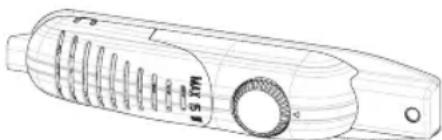
The fridge freezer thermostat automatically regulates the inside temperature of the compartments. By rotating the knob from position 1 to 5, colder temperatures can be obtained.
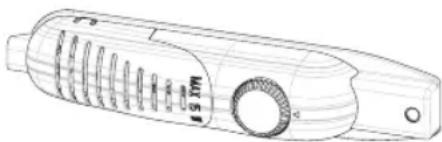
Important note: Do not try to rotate knob beyond 1 position it will stop your appliance.
1-2: For short-term storage of food in the freezer compartment, you can set the knob between the minimum and medium position.
3-4: For long-term storage of food in the freezer compartment, you can set the knob to the medium position.
5: For freezing fresh food. The appliance will work for longer. So, after the desired condition is reached, return the knob to the previous setting.
Warnings about Temperature Adjustments
- The ambient temperature, temperature of the freshly stored food and how often the door is opened, affects the temperature in the refrigerator compartment. If required, change the temperature setting.
- It is not recommended that you operate your fridge in environments colder than 10^ in terms of its efficiency.
- The thermostat setting should be done by taking into consideration how often the fresh food and freezer doors are opened and closed, how much food is stored in the refrigerator, and the environment in which the refrigerator is located.
- Your fridge should be operated up to 24 hours according to the ambient temperature without interruption after being plugged in to be completely cooled. Do not open doors of your fridge frequently and do not place much food inside it in this period.
- A 5 minute delaying function is applied to prevent damage to the compressor of your fridge, when you take the plug off and then plug it on again to operate it or when an energy breakdown occurs. Your fridge will start to operate normally after 5 minutes.
- Your fridge is designed to operate in the ambient temperature intervals stated in the standards, according to the climate class stated in the information label. It is not recommended that your fridge is operated in the environments which are out of the stated temperature intervals in terms of cooling efficiency.
- This appliance is designed for use at an ambient temperature within the 16^ - 32^ range.
| Climatic Class Amb. T. (℃) |
| SN: From 10 to 32 ℃ |
| ST: From 16 to 38 ℃; |
| N: From 16 to 32 ℃ |
| T: From 16 to 43 ℃ |
Accessories
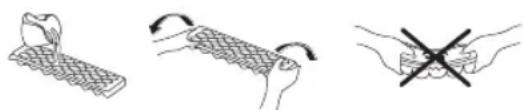
Ice tray
- Fill the ice tray with water and place in the freezer compartment.
After the water has completely turned into ice, you can twist the tray as shown below to remove the ice cubes.
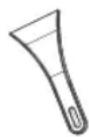
Plastic scraper
After a period of time frost will build up in certain areas in the freezer compartment. The frost accumulated in the freezer should be removed periodically. Use the plastic scraper provided if necessary. Do not use sharp metal objects for this operation.
They could puncture the refrigerator circuit and cause irreparable damage to the unit.
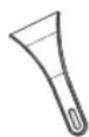
All written and visual descriptions in the accessories may vary according to the appliance model.
Putting food in the coldest area of the refrigerator

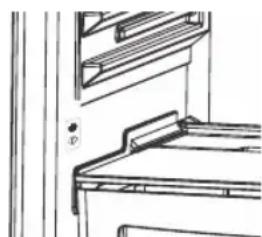
Your foods will be better stored if you put them in the most appropriate cooling area. The coldest area is just above the crisper.
To be sure to have a low temperature in this area, make sure the shelf is located at the level of this symbol, as shown in the illustration.
Temperature indicator (In some models)
In order to help you better set your refrigerator, we have equipped it with a temperature indicator located in the coldest area.
You can easily check that the temperature of the coldest area is appropriate: when the indicator shows "OK", it means the thermostat is set properly and the inside temperature is correct.
Since "OK" appears in black, it will be difficult to see this indication if the temperature indicator is badly lit. To be able to see this indication properly, there should be enough light.

If the "OK" symbol does not appear, it means that the temperature is too high: you will then have to modify the thermostat setting, and wait 12 hours before visually checking the temperature again.
NOTE: Following repeated openings (or prolonged opening) of the door or after putting fresh food into the appliance, it is normal for the indication "OK" not to appear in the temperature setting indicator. If there is an abnormal ice crystals build up (bottom wall of the appliance) on the refrigerator compartment evaporator (overloaded appliance, high room temperature, frequent door openings), put the temperature setting device on a lower position until compressor off periods are obtained again.
The upper limit of the coldest area is indicated by the lower side of the sticker (head of the arrow). The coldest area upper shelf must be at the same level with the arrow head. The coldest area is below this level.
As these shelves are removable, make sure they are always at the same level with these zone limits described on the stickers, in order to guarantee temperatures in this area.
Each type of food has an ideal conservation temperature and consequently a particular location to follow.
| Locations Products | |
| Upper shelves Cooked foods, desserts and all foods to be eaten fast enough | |
| Coldest area Meat, poultry, game and raw fish Maximum conservation tim e : 1 to 2 days. Fresh fruits, cooked pork meat. | |
| Crisper Fresh vegetables and fruits. | |
| Door-liner Door tays shall contain bottles at the bottom side and, in their upper parts, low volume and currently used products like yoghurt, fresh cream, etc. | |
| Butter, cooked cheese and eggs shall be introduced in appropriate holders. |
ARRANGING FOOD IN THE APPLIANCE
Refrigerator Compartment
- To reduce humidity and consequent increase of frost never place liquids in unsealed containers in the refrigerator. Frost tends to concentrate in the coldest parts of the evaporator and in time will require more frequent defrosting.
- Never place warm food in the refrigerator. Warm food should be allowed to cool at room temperature and should be arranged to ensure adequate air circulation in the refrigerator compartment.
- Nothing should touch on the back wall as it will cause frost and the packages can stick on the back wall. Do not open the refrigerator door too frequently.
- Arrange the meat and cleaned fish wrapped in packages or sheets of plastic) which you will use in 1-2 days, in the bottom section of the refrigerator compartment (that is above the risper) as this is the coldest section and will ensure the best storing conditions.
- You can put the fruits and vegetables into crisper without packing.
Freezer Compartment
- The use of freezer is, storing of deep-frozen or frozen foods for long periods of time and making ice cubes.
- To freeze fresh food, ensure that as much of the surface as possible of food to be frozen is in contact with the cooling surface.
- Do not put fresh food with frozen on side by side as it can thaw the frozen food.
- While freezing fresh foods (i.e. meat, fish and mincemeat), divide them in parts you will use in one time.
- Once the unit has been defrosted replace the foods into freezer and remember to consume them in as short period of time.
- Never place warm food in the freezer compartment. As it will disturb the frozen foods.
- For storing the frozen foods;the instructions shown on frozen food packages should always be followed carefully and if no information is provided food should not be stored for more than 3 months from the purchased date.
- When buying frozen foods ensure that these have been frozen at suitable temperatures and that the packing is intact.
- Frozen foods should be transported in appropriate containers to maintain the quality of the food and should be returned to the freezing surfaces of the unit in the shortest possible time.
- If a package of frozen food shows the sign of humidity and abnormal swelling it is probable that it has been previously stored at an unsuitable temperature and that the contents have deteriorated.
- The storage life of frozen foods depends on the room temperature, thermostat setting, how often the door is opened, the type of food and the length of time required to transport the product from the shop to your home. Always follow the instructions printed on the package and never exceed the maximum storage life indicated.
Not that; if you want to open again immediately after closing the freezer door, it will not be opened easily. It's quite normal! After reaching equilibrium condition, the door will be opened easily.
CLEANING AND MAINTENANCE
- Disconnect the unit from the power supply before cleaning.
- Do not clean the appliance by pouring water.
- Make sure that no water enters the lamp housing and other electrical components.
- The appliance should be cleaned periodically using a solution of bicarbonate of soda and lukewarm water.
- Clean the accessories separately with soap and water. Do not clean them in the dishwasher.
- Do not use abrasive products, detergents or soaps. After washing, rinse with clean water and dry carefully. When you have finished cleaning, reconnect the plugto the mains supply with dry hands.
- Never use flammable, explosive or corrosive material like thinner, gas, acid for cleaning.
- The condenser (black part with black wings at the rear of the appliance) should be cleaned using a vacuum cleaner or a dry brush at least once a year. This will help your appliance to operate more efficiently and will enable you to save energy.
- Make sure that no water contacts the electrical connections of the thermostat or internal lighting. Regularly check the door seal and clean it whenever necessary.
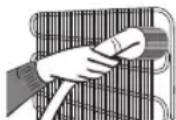
Defrosting
Refrigerator Compartment;
- Defrosting occurs automatically in refrigerator compartment during operation; the defrost water is collected by the evaporating tray and evaporates automatically.
- The evaporating tray and the defrost water drain hole should be cleaned periodically with defrost drain plug to prevent the water from collecting on the bottom of the refrigerator instead of flowing out.
- You can also pour 1/2 glass of the water to drain hole to clean inside.
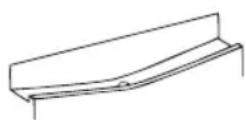
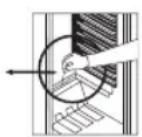
Freezer Compartment;
- The frost, accumulated in the freezer compartment, should be removed periodically. (Use the plastic scraper provided) The freezer compartment should be cleaned in the way as the refrigerator compartment, with the defrost operations of the compartment at least twice a year.
For this;
- The day before you defrost, set the thermostat dial to "5" position to freeze the foods completely.
- During defrosting, frozen foods should be wrapped in several layers of paper and kept in a cool place. The inevitable rise in temperature will shorten their storage life. Remember to use these foods within a relatively short period of time.
- Set thermostat knob to position “ · ” or unplug the unit; leave the door open until completely defrosted.
- To accelerate the defrosting process one or more basins of warm water can be placed in the freezer compartment.
- Dry the inside of the unit carefully and set the thermostat knob to MAX position.
Replacing The Light Bulb
To replace the bulb in freezer and fridge departments;
- Unplug your fridge.
- Remove the cover of the box from the claws using a screwdriver.
- Replace with a bulb of maximum 15 Watts.
4.nstall the cover. - Wait for 5 minutes before re-plugging and bring the thermostat to its original position.
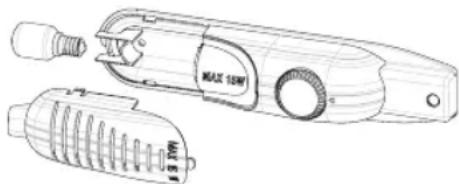
Replacing LED Lighting
If your refrigerator has LED lighting contact the help desk as this should be changed by authorized personnel only.
SHIPMENT AND REPOSITIONING
Transportation and changing of Installation position
- Original package and foam may be kept for re-transportation (optionally).
- You should fasten your fridge with thick package, bands or strong cords and follow the instructions for transportation on the package for re-transportation.
- Remove movable parts (shelves, accessories, vegetable bins etc.) or fix them into the fridge against shocks using bands during re-positioning and transportation.
Carry your fridge in the upright position.
Reversing the door opening direction
- It is possible to change the opening direction of your appliance's doors. If you want to do this, please contact your nearest authorized service.
BEFORE CALLING YOUR AFTER SALES SERVICE
If your refrigerator is not working properly, it may be a minor problem, therefore check the following, before calling an electrician to save time and money.
What to do if your refrigerator does not operate ;
Check that ;
- There is no power,
- The general switch in your home is disconnected,
- The thermostat setting is on “.” position,
- The socket is not sufficient. To check this, plug in another appliance that you know which is working into the same socket.
What to do if your refrigerator performs poorly ;
Check that:
- You have not overloaded the appliance ,
- The doors are closed perfectly,
- There is no dust on the condenser .
- There is enough place at the rear and side walls.
If there is noise ;
The cooling gas which circulates in the refrigerator circuit may make a slight noise(bubbling sound) even when the compressor is not running. Do not worry this is quite normal. If these sounds are different check that;
The appliance is well levelled,
- Nothing is touching the rear.
- The stuffs on the appliance are vibrating.
If there is water in the lower part of the refrigerator;
Check that ;
- The drain hole for defrost water is not clogged(Use defrost drain plug to clean the drain hole)
Recommendations
- W hile power cut, to prevent any compressor problem you should plug out the refrigerator. You should delay plugging in 5 - 10 minutes after you power supply. If you plug out the refrigerator for a reason you should wait at least 5 min to replug. It is important for avoiding damage to refrigerator's components.
- The cooling unit of your refrigerator is hidden in the rear wall. Therefore, water droplets or icing may occur on the rear surface of your fridge due to the operation of the compressor in specified intervals. This is normal. There is no need to perform a defrosting operation unless the icing is excessive.
- If you will not use your fridge for a long time (e.g. in summer holidays), put the thermostat to "·" position. After defrosting, clean your fridge and leave the door open to prevent humidity and smell. If the problem persists after you have followed all the instructions above, please consult to the nearest Authorised Service.
- The appliance you have purchased is designed for home type use and can be used only at home and for the stated purposes. It is not suitable for commercial or common use. If the consumer uses the appliance in a way that does not comply with these features, we emphasise that the producer and the dealer shall not be responsible for any repair and failure within the guarantee period.
Tips For Saving Energy
- Install the appliance in a cool, well ventilated room, but not in direct sunlight and not near heat source (radiator, cooker.. etc). Otherwise use an insulating plate.
- Allow ward food and drinks to cool down outside the appliance.
- When thawing frozen food, place it in the refrigerator compartment. The low temperature of the frozen food will help to cool the refrigerator compartment when it is thawing. So it causes energy saving. If the frozen food is put out, it causes wastage of energy.
- When placing, drinks and slips they must be covered. Otherwise humidity increases at the appliance. Therefore the working time gets longer. Also covering drinks and slips helps to save smell and taste.
- When placing food and drinks, open the appliance door as briefly as possible.
- Keep close the covers of any different temperature compartment in the appliance (crisper, chiller ...etc).
- Door gasket must be clean and pliable. Replace gaskets if worn.
- It is possible to store more food by removing freezer shelf. Energy consumption is declared with maximum load and without freezer shelf.
THE PARTS OF THE APPLIANCE AND THE COMPARTMENTS (TM 55 cm / 140cm)
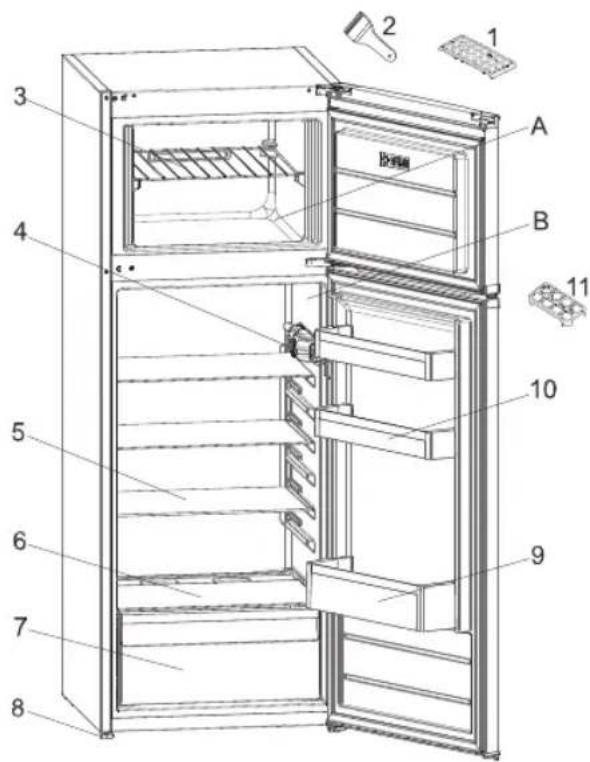
This presentation is only for information about the parts of the appliance. Parts may vary according to the appliance model.
A. FRIDGE COMPARTMENT
B. FREEZER COMPARTMENT
- Ice tray
- Plastic ice blade
- Freezer shelf
- Thermostat box
- Refrigerator shelves
-
Crisper cover
-
Crisper
- Levelling feet
- Bottle shelf
- Butter / Cheese shelves
- Egg holder
| Climatic Class Amb. T. (℃) |
| SN: From 10 to 32 ℃ |
| ST: From 16 to 38 ℃; |
| N: From 16 to 32 ℃ |
| T: From 16 to 43 ℃ |
Accessoires
Bac à glaçons
Compartment congélateur
Not that; if you want to open again immediately after closing the freezer door, it will not be opened easily. It's quite normal! After reaching equilibrium condition, the door will be opened easily.
NETTOYAGE ET ENTRETIEN
TRANSPORT ET DEPLACEMENT
If your refrigerator is not working properly, it may be a minor problem, therefore check the following, before calling an electrician to save time and money.
N: Ano' 16 εως 32 °C
| Climatic Class Amb. T. (℃) |
| SN: From 10 to 32 ℃ |
| ST: From 16 to 38 ℃; |
| N: From 16 to 32 ℃ |
| T: From 16 to 43 ℃ |
Accessori
- Koelkastcompartiment:
VOEDSEL SCHIKKEN IN HET APPARAAT
Koelkastcompartment
Diepvriescompartment
Koelkastcompartment:
Diepvriescompartment:
LIMPEZA E MANUTENÇÂO
BEZBEDNOSNA UPUTSTVA

- FRIGORÍFICO DE PUERTA DOBLE
- Congelador - Nevera
- N03BOJEA YNOTPEBA
- MOHTIPAHE
- PNEUINPEXDEHNOTHOCHOEJEKTP03AXPAHBAHETO
- ПОЧИСТВАЕ И ПОДДРБЖKA
- N3XBbPJIaHE HA ONAKOBbHnTE MATEPNAJI
- N3XBbPJIaHE HA IOMAKHCKN EJEKTPOYPeIi
- CbBETN3AIKOHOMNA EHEPTN
- PA3JIiUHnФYHKcIINBb3MOXHOCTN HA YPEDA
- HactpoBaHe Ha TepMoCTata
- PpeynpekdeHn OTHoCno perynnpaHTo Ha TemnepaTypata
- PpHaJaJIeKHOCTN
- ФорmaЗал徳
- Пл actmacobacbpranka
- IocTabaHHe Ha xpaHn B ha-CTydeHaTa 3OHa Ha XlaAnlHnKa
- OTdJIeHHe Ha XlaIaIIHnKa
- OTdJIeHHe Ha pIn3epa
- PERMITTED USE
- INSTALLATION
- ELECTRICALWARNINGS
- CLEANING AND MAINTENANCE
- DISPOSAL OF PACKAGING MATERIALS
- DISPOSAL OF HOUSEHOLD APPLIANCES
- ENERGY SAVING TIPS
- THE VARIOUS FUNCTION AND POSSIBILITIES
- Information on Less Frost Technology
- Thermostat setting
- Warnings about Temperature Adjustments
- Accessories
- Ice tray
- Plastic scraper
- Putting food in the coldest area of the refrigerator
- Temperature indicator (In some models)
- ARRANGING FOOD IN THE APPLIANCE
- Refrigerator Compartment
- Freezer Compartment
- Defrosting
- Refrigerator Compartment;
- Freezer Compartment;
- For this;
- Replacing The Light Bulb
- Replacing LED Lighting
- SHIPMENT AND REPOSITIONING
- Transportation and changing of Installation position
- Reversing the door opening direction
- BEFORE CALLING YOUR AFTER SALES SERVICE
- What to do if your refrigerator does not operate ;
- Check that ;
- What to do if your refrigerator performs poorly ;
- Check that:
- If there is noise ;
- If there is water in the lower part of the refrigerator;
- Recommendations
- Tips For Saving Energy
- THE PARTS OF THE APPLIANCE AND THE COMPARTMENTS (TM 55 cm / 140cm)
- Accessoires
- Bac à glaçons
- Compartment congélateur
- NETTOYAGE ET ENTRETIEN
- TRANSPORT ET DEPLACEMENT
- Accessori
- VOEDSEL SCHIKKEN IN HET APPARAAT
- Koelkastcompartment
- Diepvriescompartment
- Koelkastcompartment:
- Diepvriescompartment:
- LIMPEZA E MANUTENÇÂO
- BEZBEDNOSNA UPUTSTVA
Brand : INDESIT
Model : I55TM 4120 W 2
Category : Fridge