
ZFC 26 JD - Freezer ZANUSSI - Free user manual and instructions
Find the device manual for free ZFC 26 JD ZANUSSI in PDF.
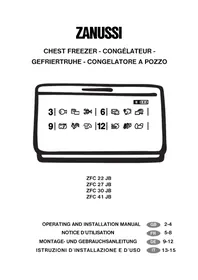

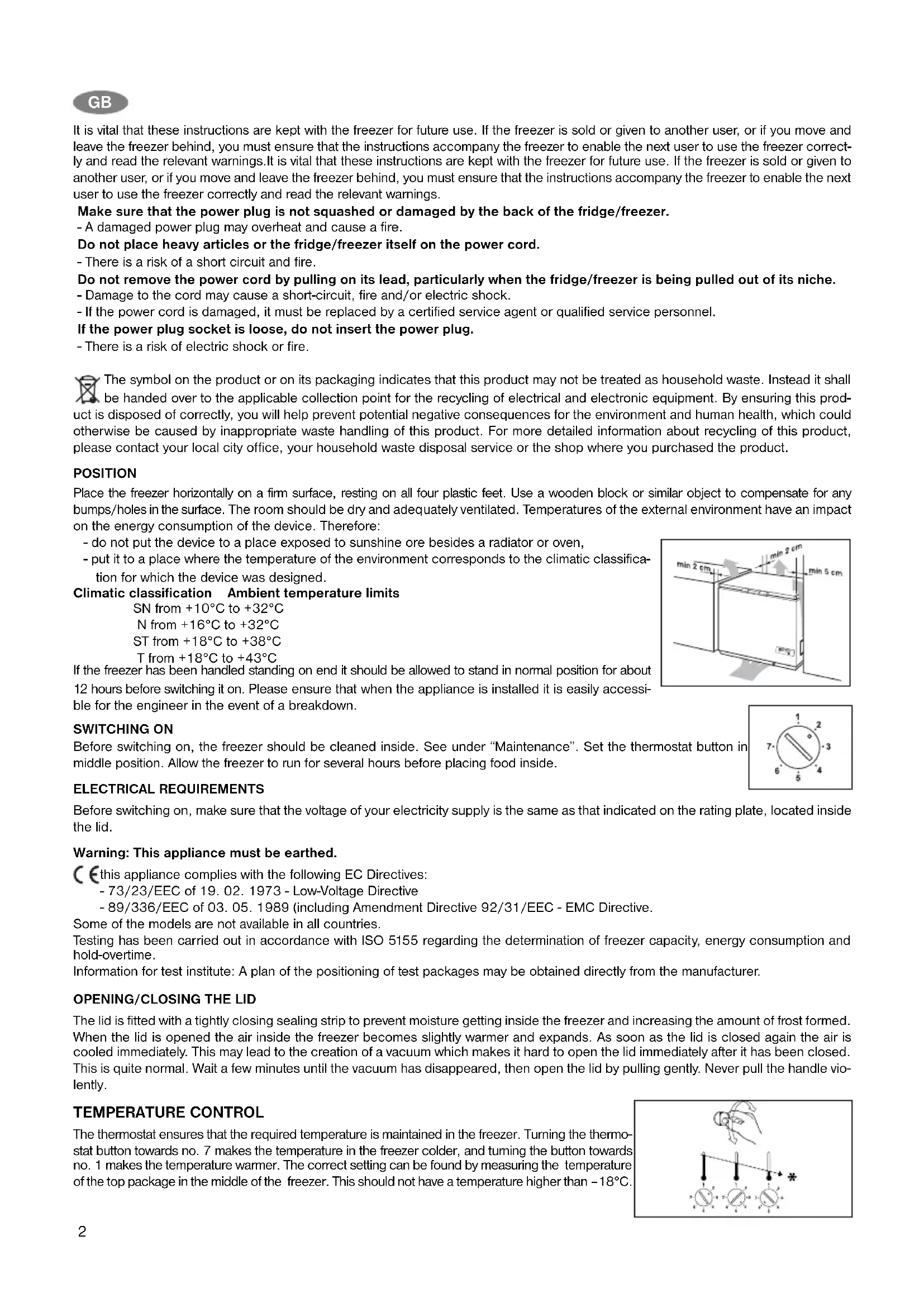


| Product type | Chest freezer |
| Brand | Zanussi |
| Model | ZFC 26 JD |
| Electrical supply | 230 V single-phase, 10 A |
| Climate class | SN, N, ST, T (from +10 °C to +43 °C) |
| Freezing temperature | -18 °C (adjustable from -9 °C to -18 °C) |
| Refrigerant | R600a (isobutane) |
| Defrost system | Manual |
| Interior light | Bulb 15 W max |
| Indicator lights | Green (on), Yellow (Super), Red (audible alarm) |
| Super function | Quick freezing |
| Security | Lock with key |
| Included accessories | Baskets, frost scraper |
| Insulation | CFC-free |
| Warranty | 24 months |
| Dimensions (L × P × H) | Not specified in the manual |
| Weight | Not specified |
| Noise level | Not specified |
Frequently Asked Questions - ZFC 26 JD ZANUSSI
User questions about ZFC 26 JD ZANUSSI
0 question about this device. Answer the ones you know or ask your own.
Ask a new question about this device
Download the instructions for your Freezer in PDF format for free! Find your manual ZFC 26 JD - ZANUSSI and take your electronic device back in hand. On this page are published all the documents necessary for the use of your device. ZFC 26 JD by ZANUSSI.
USER MANUAL ZFC 26 JD ZANUSSI
ZFC 22 JB
ZFC 27 JB
ZFC 30 JB
ZFC 41 JB
OPERATING AND INSTALLATION MANUAL
NOTICE D'UTILISATION
It is vital that these instructions are kept with the freezer for future use. If the freezer is sold or given to another user, or if you move and leave the freezer behind, you must ensure that the instructions accompany the freezer to enable the next user to use the freezer correctly and read the relevant warnings.
Make sure that the power plug is not squashed or damaged by the back of the fridge/freezer.
- A damaged power plug may overheat and cause a fire.
Do not place heavy articles or the fridge/freezer itself on the power cord.
- There is a risk of a short circuit and fire.
Do not remove the power cord by pulling on its lead, particularly when the fridge/freezer is being pulled out of its niche.
- Damage to the cord may cause a short-circuit, fire and/or electric shock.
- If the power cord is damaged, it must be replaced by a certified service agent or qualified service personnel.
If the power plug socket is loose, do not insert the power plug.
- There is a risk of electric shock or fire.
The symbol on the product or on its packaging indicates that this product may not be treated as household waste. Instead it shall be handed over to the applicable collection point for the recycling of electrical and electronic equipment. By ensuring this product is disposed of correctly, you will help prevent potential negative consequences for the environment and human health, which could otherwise be caused by inappropriate waste handling of this product. For more detailed information about recycling of this product, please contact your local city office, your household waste disposal service or the shop where you purchased the product.
POSITION
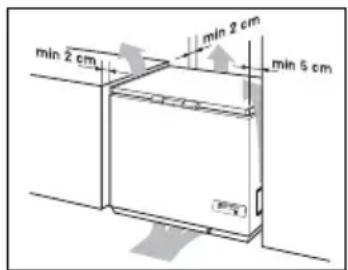
Place the freezer horizontally on a firm surface, resting on all four plastic feet. Use a wooden block or similar object to compensate for any bumps/holes in the surface. The room should be dry and adequately ventilated. Temperatures of the external environment have an impact on the energy consumption of the device. Therefore:
- do not put the device to a place exposed to sunshine ore besides a radiator or oven,
- put it to a place where the temperature of the environment corresponds to the climatic classification for which the device was designed.
Climatic classification Ambient temperature limits
SN from +10°C to +32°C
N from +16°C to +32°C
ST from +18°C to +38°C
T from +18°C to +43°C
If the freezer has been handled standing on end it should be allowed to stand in normal position for about 12 hours before switching it on. Please ensure that when the appliance is installed it is easily accessible for the engineer in the event of a breakdown.
SWITCHING ON
Before switching on, the freezer should be cleaned inside. See under "Maintenance". Set the thermostat button in middle position. Allow the freezer to run for several hours before placing food inside.

ELECTRICAL REQUIREMENTS
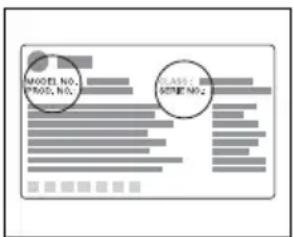
Before switching on, make sure that the voltage of your electricity supply is the same as that indicated on the rating plate, located inside the lid.
Warning: This appliance must be earthed.
CE: This appliance complies with the following EC Directives:
- 73/23/EEC of 19.02.1973 - Low-Voltage Directive
- 89/336/EEC of 03.05.1989 (including Amendment Directive 92/31/EEC) - EMC Directive.
Some of the models are not available in all countries.
Testing has been carried out in accordance with ISO 5155 regarding the determination of freezer capacity, energy consumption and hold-over time.
Information for test institute: A plan of the positioning of test packages may be obtained directly from the manufacturer.
OPENING/CLOSING THE LID
The lid is fitted with a tightly closing sealing strip to prevent moisture getting inside the freezer and increasing the amount of frost formed. When the lid is opened, the air inside the freezer becomes slightly warmer and expands. As soon as the lid is closed again, the air is cooled immediately. This may lead to the creation of a vacuum which makes it hard to open the lid immediately after it has been closed. This is quite normal. Wait a few minutes until the vacuum has disappeared, then open the lid by pulling gently. Never pull the handle violently.
TEMPERATURE CONTROL
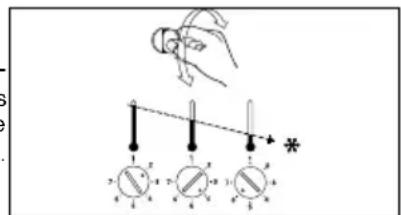
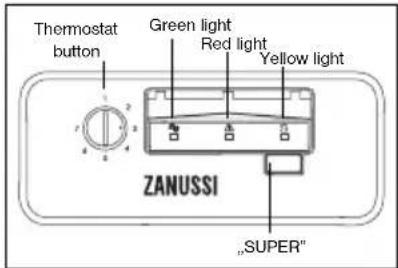
The thermostat ensures that the required temperature is maintained in the freezer. Turning the thermostat button towards no. 7 makes the temperature in the freezer colder, and turning the button towards no. 1 makes the temperature warmer. The correct setting can be found by measuring the temperature of the top package in the middle of the freezer. This should not have a temperature higher than -18°C.
CONTROL PANEL
The green light is illuminated as long as the freezer is connected. The yellow light is illuminated when the "Super" button is depressed. See under "Freezing". The red light is illuminated when the temperature in the freezer is higher than the thermostat setting (alarm).
The red alarm light can be due to: Insertion of a large amount of fresh food. The red alarm light will go out after a while. Opening the lid too long. The red alarm light will go out after a while. A defect in the system. See under "If something does not work".
CAPACITY
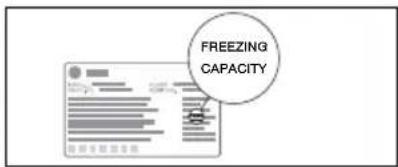
The freezing capacity of the freezer is stated on the data plate (kg/24 hours). Do not exceed the stated amount, as this will extend the freezing time. The data plate is located inside the lid.
IMPORTANT: The stated freezing capacity can be used to its full extent occasionally to freeze large amounts of fresh food. However, if the freezer is filled with large amounts of food for freezing every day, the capacity is reduced by about one-third.
LOCK
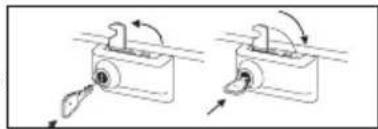
Insert the key into the lock and turn. The key can be removed. Remember to keep the key out of the reach of children.
BASKET
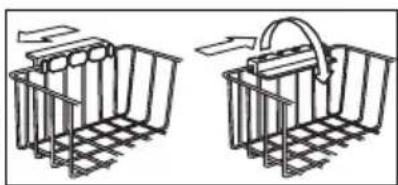
The baskets are designed for storing food that has already been frozen. The handles can be placed in two positions, as shown in the drawings. The baskets can either be placed inside the freezer or hung on the edge of the casing.
DEFROSTING
The formation of frost on the inside of freezers cannot be avoided. Frost forms when moisture in the air comes into contact with the cold surfaces of the freezer. Therefore, the lid should only be opened when necessary and never left open. A thin layer of ice or frost does not adversely affect the freezer's function and can be carefully removed using the provided scraper.
IMPORTANT: Never use a knife or any other sharp implement to remove frost.
When the frost or ice layer is 10-15 mm thick, the freezer should be defrosted. We suggest defrosting when there is little or no food inside. Switch off the power. Remove the contents, wrap them in newspapers, and leave them in a cold place. The defrosting speed can be increased by placing one or more bowls of hot (not boiling) water inside the freezer and closing the lid. Open the lid after a while and remove the layer of ice
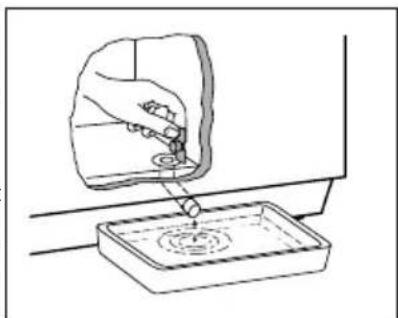
carefully. The defrost water can be collected in a bowl as shown in the drawing. Do not try to speed up defrosting using anything other than hot water, as this may damage the freezer. After defrosting, clean the inside of the freezer.
IMPORTANT: Remember to replace the plug in the drip water drain.
HOW TO CLEAN YOUR FREEZER INSIDE
Remove the plug from the mains socket and remove all loose accessories before cleaning the freezer. The best time to clean your freezer is after defrosting and before reconnecting the electricity supply. Use a damp cloth to clean your freezer. Use hot water and a mild, non-aromatic cleaning agent. After cleaning the freezer, clean the basket(s) before replacing them.
IMPORTANT: Never use strong cleaning agents, scouring powder, or strongly aromatic cleaning agents to clean the inside of your freezer, as this will damage the interior and leave a strong odor.
WHEN NOT IN USE
Disconnect the appliance from the electricity supply. Remove all goods from the freezer. Clean the freezer as described above. Leave the lid slightly open.
HOW TO CHANGE THE BULB
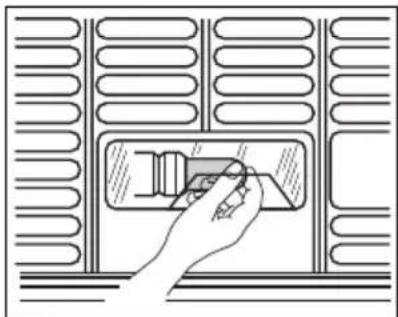
Before changing the bulb, isolate the appliance from the electricity supply. Apply pressure to remove the light glass as shown in the drawing. Unscrew the bulb and replace it with a new one (max. 15W). Then reconnect the electricity supply. Extra bulbs are available from your local Electrolux Service Centre.
IF YOUR FREEZER DOES NOT FUNCTION SATISFACTORILY
Check the following before calling for service staff:
| Defect: | Check if: | Possible cause: | Action: |
| Freezer not cold enough | Green light not on | Plug not connected correctly | Check plug and socket |
| Defect in switch or fuse | Check fuse, call electrician | ||
| Power failure | Wait until current returns | ||
| Green and red light on | Fresh food recently placed in freezer | Wait a couple of hours | |
| Lid open too long | Wait a couple of hours | ||
| Green light on, red light not on | Thermostat set too warm | Set thermostat colder | |
| Lot of frost and ice formed | Defrost freezer | ||
| Freezer too cold | Yellow light on | “Super” function active | Press “Super” button out |
| Yellow light not on | Thermostat set too cold | Set thermostat warmer | |
| Too much frost formed | Lid does not close completely | Lid in contact with goods in freezer | Re-arrange goods, check that lid closes correctly |
| Lot of moisture in the room | Moisture from washing machine, tumble-dryer, etc. | Move freezer to a room with less moisture, or air regularly | |
| Goods packed poorly | Lot of moisture from goods | Re-pack goods, see under “How to use” |
If you are still unable to solve the problem, summon the assistance of authorized service staff. Do not take any other steps. Incorrect procedure may cause personal injury or lead to additional defects. It is quite normal for the freezer to seem warm on the outside occasionally, owing to the heat generated by the freezing process. This heat also helps to prevent the formation of moisture on the outside of the appliance which could cause rust. If the freezer has been switched off briefly, the compressor may not start immediately when the current is re-connected. This is quite normal.
ACCESSORIES
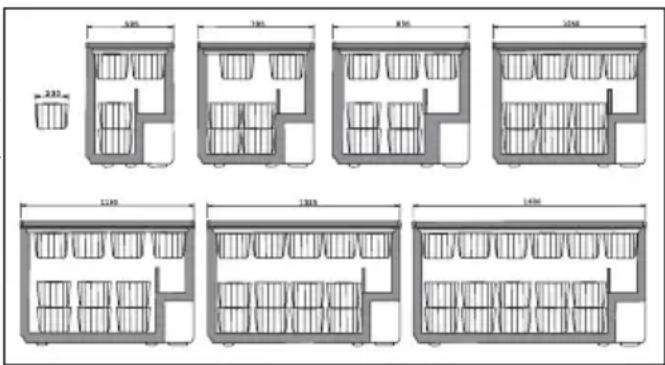
Spare baskets can be obtained from your local Service Centre. The illustrations on this page show how many baskets can be placed in the various freezer models. Measure the length of your freezer and find the appropriate illustration. The number above each illustration indicates its length in millimetres.
ZANUSSI STANDARD GUARANTEE CONDITIONS
This guarantee is in addition to your statutory and other legal rights which will not be excluded or in any way diminished by the return of this guarantee card. We, Zanussi Ltd., undertake that if within twelve months of the date of the purchase, this ZANUSSI appliance or any part thereof is proved to be defective by reason only of faulty workmanship or materials, the company will, at its option repair or replace the same FREE OF ANY CHARGE for labour, materials or carriage on condition that:
The appliance has been correctly installed and used only on the electricity supply stated on the rating plate.
The appliance has been used for normal domestic purposes only, and in accordance with the manufacturer's operating and maintenance instructions.
The appliance has not been serviced, maintained, repaired, taken apart or tampered with by any person not authorized by us. The appliance is still in the possession of the original purchaser.
All service work under this guarantee must be undertaken by a Zanussi Service Force Centre.
Home visits are made between 8.30am and 5.30pm Monday to Friday. Visits may be available outside these hours in which case a premium will be charged.
Any appliance or defective part replaced shall become the property of this company.
EXCLUSIONS
This guarantee does not cover:
Damage or calls resulting from transportation, improper use or neglect, the replacement of any light bulbs or removable parts of glass or plastic.
Costs incurred for calls to put right machines improperly installed or calls to machines outside the United Kingdom.
Appliances found to be in use within a commercial environment, plus those which are the subject of rental agreements.
Products of Zanussi manufacture which are NOT marketed by Zanussi Ltd.
EEC Countries - the standard guarantee is applicable but is subject to the owner's responsibility and cost to ensure the appliance meets the standards set by the country to which the product is taken. The Zanussi Company in the contrary concerned will be pleased to advise further. Sight of your purchase receipt will be required by them.
FR
CONTROL PANEL
DEFROSTING
REPLACING THE BULB
ACCESSORIES
DE
CONTROL PANEL
Caution!
DEFROSTING
Caution!
ACCESSORIES
WARRANTY CONDITIONS
ELECTROLUX HOUSEHOLD APPLIANCES GMBH
ADDRESS
HERZIGGASSE 9
A-1230 VIENNA
SALES TELEPHONE (01) 866 40-200
SALES FAX (01) 866 40-250
CUSTOMER SERVICE TELEPHONE (01) 866 40-333
CUSTOMER SERVICE FAX (01) 866 40-300
WIEN FN 98903 x DVR: 0595411
ARA LICENCE NO. 2702
UID: ATU 14758207
CONTROL PANEL
HOW TO DEFROST THE FREEZER
HOW TO THAW FOOD
RESERVES
- POSITION
- CLIMATIC CLASSIFICATION AMBIENT TEMPERATURE LIMITS
- SWITCHING ON
- ELECTRICAL REQUIREMENTS
- WARNING: THIS APPLIANCE MUST BE EARTHED
- OPENING/CLOSING THE LID
- TEMPERATURE CONTROL
- CONTROL PANEL
- CAPACITY
- LOCK
- BASKET
- DEFROSTING
- IMPORTANT: NEVER USE A KNIFE OR ANY OTHER SHARP IMPLEMENT TO REMOVE FROST
- HOW TO CLEAN YOUR FREEZER INSIDE
- WHEN NOT IN USE
- HOW TO CHANGE THE BULB
- IF YOUR FREEZER DOES NOT FUNCTION SATISFACTORILY
- ACCESSORIES
- ZANUSSI STANDARD GUARANTEE CONDITIONS
- EXCLUSIONS
- FR
- REPLACING THE BULB
- DE
- CAUTION
- WARRANTY CONDITIONS
- ELECTROLUX HOUSEHOLD APPLIANCES GMBH
- ADDRESS
- HOW TO DEFROST THE FREEZER
- HOW TO THAW FOOD
- RESERVES
Brand : ZANUSSI
Model : ZFC 26 JD
Category : Freezer