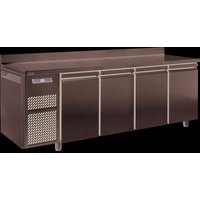
T72BTAR - Fridge MBM - Free user manual and instructions
Find the device manual for free T72BTAR MBM in PDF.



User questions about T72BTAR MBM
0 question about this device. Answer the ones you know or ask your own.
Ask a new question about this device
Download the instructions for your Fridge in PDF format for free! Find your manual T72BTAR - MBM and take your electronic device back in hand. On this page are published all the documents necessary for the use of your device. T72BTAR by MBM.
USER MANUAL T72BTAR MBM
INSTRUCTIONS FOR INSTALLATION AND USE
Translation from the original instruction manual
Please read the present instructions carefully before installation and use.

Se先进技术, methodologies and techniques used to produce the products or services.
Thank you for choosing one of our products.
The model you have chosen is a high performance product, featuring an advanced design and technology, high reliability and constructive quality.
We suggest you entrust its management and maintenance to trusted professionally qualified personnel using, when necessary, only original spare parts.
This manual contains important instructions and suggestions that must be followed for simpler installation and to ensure the best use of the appliance.
The Manufacturer:
To consult the the manufacturer data please refer to the identification plate on the appliance (internal compartment).
WE RESERVE THE RIGHT TO CHANGE SPECIFICATIONS WITHOUT NOTICE.
SYMBOLS USED IN THE MANUAL AND THEIR MEANING

WARNING
To indicate particular information.

BE CAREFUL
To indicate particularly important and delicate operations.

WARNING DANGER
To indicate actions that, if not performed correctly, may cause accidents of generic origin or malfunctions or material damage to the appliance; they therefore require particular attention and appropriate preparation.

WARNING ELECTRICAL HAZARD
To indicate actions that, if not performed correctly, may cause accidents of electrical origin; they therefore require particular attention and appropriate preparation.

IT IS FORBIDDEN
To indicate actions that MUST NOT be performed.
WARRANTY

BE CAREFUL
- The warranty is void if the appliance has been used without following the instructions given in this manual.
- The warranty is void if the customer independently, or by means of third parties not authorised by the manufacturer/authorised retailer, makes changes and/or attempts to repair the product.
- The product must be used only as indicated by the manufacturer. Any contractual or extra-contract liability of the manufacturer for any damage caused to people, animals or things by incorrect installation, setting or maintenance or by improper use is excluded.
- The warranty is limited to the repair or replacement ex-works of faulty pieces to ascertain material or machining defect.
- The replaced parts remain the property of the manufacturer and the cost of labour for the repair and the travel expenses of the personnel are charged to the customer, as well as shipping and transport costs.
- All other compensation is excluded and direct and/or indirect damages of any nature or type cannot be claimed.
- The electrical parts, consumables or anything that results as faulty due to improper use, negligence and incorrect use manoeuvres are not included.
- The warranty is void if the purchaser fails to comply with the due payments.
WARRANTY CERTIFICATE
Company.
Address:
Post Code: _ City: _
Province: Date of installation
MODEL:
SERIAL NUMBER:
INDEX
1 General information 48
1.1 General warnings and safety rules 48
1.2 Prohibitions 51
1.3 Intended use 52
1.4 Compliance 52
1.5 Description of the appliance 53
1.6 Identification 54
1.7 Structure 55
1.8 Technical specifications 55
2 Installation 56
2.1 Receiving the product 56
2.2 Unpacking 57
2.3 Installation premises
2.4 Correct positioning
2.5 Levelling
2.6 Electrical connection
3 Switching on and use 60
3.1 Preliminary operations 60
3.2 Correct use 60
3.3Userinterface-EV3B 62
3.3.1 Switching on/off 63
3.3.2 Locking/unlocking the keyboard 63
3.3.3 Operating setpoint configuration 63
3.3.4 Enabling manual defrost mode 64
3.3.5 Loading products 64
3.4 User interface - EVJ200 65
3.5 Equipment 67
3.5.1 Replacing a door with a drawer unit 67
4 Maintenance. 74
4.1 Preparing for maintenance operations 74
4.2 Clean the appliance internally and externally 75
4.3 Cleaning the gasket 75
4.4 Cleaning the condenser, refrigerator unit and evaporator 76
4.5 Extraordinary maintenance of the appliance 77
4.6 Preparing the appliance for a long period of inactivity 77
4.7 Request for and installation of optional accessories after purchase 77
5 Problems - Possible causes - Solutions 78
6 Disposal 81
7 Spare parts and service centre. 82
8 Annexes 83
8.1 Ann. 01 - Technical details of refrigerant gas 84
1 GENERAL INFORMATION
1.1 General warnings and safety rules

WARNING
- This manual is the property of the manufacturer and it is forbidden to reproduce or transfer its contents to third parties. All rights reserved. It is an integral part of the product; always make sure that it is supplied with the appliance, even in case of sale/transfer to another owner, so that it can be read by the user or by the personnel in charge of maintenance and repairs.
- Read this manual very carefully before using the appliance and to ensure that it is used safely.
- Do not neglect anything written in it and pay great attention to the highlighted messages. Respecting the rules and recommendations indicated, will help the user to make an appropriate and safe use of the appliance.
- The translation of the contents contained in the present manual into the Customer's language, is carried out with the utmost care. With the aim to avoid possible accidents to people or things due to an incorrect translation of the instructions, we recommend Customers not to perform operations or manoeuvres on the appliance. Whenever doubts or uncertainties arise regarding the operation to be performed please ask the Assistance Service for clarifications regarding the same instruction.
- In the case of loss of the present manual, request a new copy from the manufacturer.
- The manufacturer will not be held responsible for breakages, accidents or inconveniences of various nature due to non observance of instructions (or non application) of the rules contained in the present manual. The same applies to unauthorised modifications, and/or the use of unauthorised accessories.
- When the product is delivered, check that the supply is intact and if it does not comply with the order, contact your local retailer who sold the appliance.
- If the packaging is damaged, promptly report the inconvenience to the carrier and to the supplier of the product.

WARNING
- This appliance has been designed exclusively for the storage of products that are not potentially dangerous. It is not suitable for the storage of potentially dangerous foods.
- Do not use other accessories (shelves, runners, supports, etc.) other than those supplied with the appliance.
- The appliance is not intended to be installed and used in places exposed to atmospheric agents. Do not place the appliance near to sources of heat (ovens, gas/electricity rings, heating elements such as radiators or convectors etc.), nor expose it to direct sunlight to avoid overheating and reducing its efficiency.
- In case of doubts regarding the conditions and/or functions of the appliance and its parts, please contact your local retailer for further information.
- Do not use the appliance if you notice any faults and/or malfunctions not indicated in the paragraph "Problems - Possible causes - Solutions". In this case call for the services of a qualified technician. Do not attempt to carry out repairs by yourself.
- Control that the feeding network corresponds to the characteristics specified (see the identification plate on your appliance).
- Once the appliance has been commissioned, report any faults or malfunctions found to the supplier of the product.
- Periodically check that the power cable, plug and socket are intact. If the power cable is damaged, it can be replaced only by the manufacturer or by the local retailer who sold the appliance or by the personnel authorised to perform maintenance and repairs. Do not take the plug out of the socket by pulling the cable/wire.
- Make sure there is no danger of tripping over the mains cable and that no-one can get tangled up in it or tread on it.

WARNING
-
If the appliance is not used for a long period of time, perform at least the following operations:
-
remove the power cable plug from the socket. If the plug cannot be easily reached, it is advisable to disconnect the omnipolar switch connected to the socket the appliance is connected to
- empty it completely and clean the inside using a cloth dampened with water or neutral detergent
-
if necessary, in the following order, interrupt the electricity supply to the socket and then the connection to the appliance.
-
When the appliance is working, be careful when touching the internal steel surfaces with wet or damp hands, as skin may stick to particularly cold surfaces.
- Only use original spare parts or parts approved by the manufacturer to avoid damaging the product.
- Always perform the recommended clearing and maintenance interventions.
- In case of faults and/or breakages, request and use only the original spare parts recommended by the manufacturer.
- Any modifications, adaptations or other changes made to the appliances after they have been marketed does not require the manufacturer to make changes to previously sold appliances. Nor does it imply that the appliances and relevant user manual are below standard and/or inadequate.
- The instructions contained in this manual do not substitute but integrate the Employer's obligations with regard to respecting the legislation in force on norms of prevention and safety.
- These conditions are furthermore subject to respecting the directions related to a correct installation and electrical power supply and must be strictly met.
- The manufacturer will not be held responsible for breakages, accidents or inconveniences of various nature due to non observance of instructions (or non application) of the rules contained in the present manual. The same applies to unauthorised modifications, and/or the use of unauthorised accessories.
1.2 Prohibitions

IT IS FORBIDDEN
- Make changes to and/or attempt to repair the product. Any repair must be carried out by a qualified technician.
- Storage of flammable materials or explosive substances (for example aerosol containers with flammable propellant) inside or near the appliance.
- Use electrical appliances of any kind inside the food storage compartments.
-Leave the appliance exposed to atmospheric agents.
- Touch the appliance with wet or damp body parts and/or barefoot. In the event of a current leakage detectable when touching the metal parts of the appliance, disconnect the switch, unplug it from the power supply and contact an authorised retailer.
- Use of the appliance by children and people with reduced capabilities or without experience and specific knowledge unless they are assisted by qualified personnel responsible for their safety.
- Dispose of, or leave in the reach of children, the packaging materials which could become a source of danger. They must therefore be disposed of as established by the laws in force.
1.3 Intended use
The counter has been designed and developed to reach and maintain an internal temperature ideal for the preservation of food and confectionery products.
1.4 Compliance
This appliance has been designed and produced according to the guidelines and the relative norms, specified by the sector.
The instructions for use and the warnings contained in this manual, are supplied to protect the right of users in respect of the requirements in the guidelines: 2006/42/EC (Machinery Directive), 2014/35/EU (The low voltage Directive), 2014/30/EU (The electromagnetic compatibility Directive), relative to the safety of the appliance referred to in the CE declaration of conformity as follows.
| DICHIARAZIONE DI CONFORMITA DECLARATION OF CONFORMITY KONFORMITÄTserKLERUNG DECLARATION CE DECONFORMITE DECLARATION DE CONFORMIDAD | |
| Constituţie Mauțulăre / Hidrolear / Pârdunța / Fokloussi | DALMEC by DAL SANTO Srl |
| Mechanisms Testosterone Testicular Hormones Testosterone Testosterone | Armadio refrigerato / Refrigerated cabinet Armoire refrigerée / Köhlschrank |
| Mobilitat Szeged number / Salonen mäkiel/Maskale/Marceau | 20270041 |
| Modell / Model / Modell / Modell Antioxidant Activity/ Antioxidant Activity | PGCC070ANAF |
| Indica production/ production start / data production/ production end date / Production End Date | 2020 |
| Direktrare a priorità di diferto rilevire per secolo iniziabile / Registri e risole di valore genieti in manufattory Angolino/ Angolino/ Angolino/ Angolino/ Angolino/ Angolino/ Angolino/ Angolino/ Angolino/ Angolino/ Angolino/ Angolino/ Angolino/ Angolino/ Angolino/ Angolino/ Angolino/ Angolino/ Angolino/ Angolino/ Angolino/ Angolino/ Angolino/ Angolino/ Angolino/ Angolino/Angolino/ Angolino/ Angolino/ Angolino/ Angolino/ Angolino/ Angolino/ Angolino/ Angolino/ Angolino/ Angolino/ Angolino/ Angolino/ Angolino/ Angolino/ Angolino/ Angolino/ Angolino/ Angolino/ Angolino/ Angolino/ Angolino/ Angolino/ Angolino/ Angolino DESCRIPTIATION OF CONFORMITA / A LA DIRETTA COFFEE/ A L I A DIRETTA COFFEE/ A L I A DIRETTA COFFEE/ A L I A DIRETTA COFFEE/ A L I A DIRETTA COFFEE/ A L I A DIRETTA COFFEE/ A L I A DIRETTA COFFEE/ A L I A DIRETTA COFFEE/ A L I A DIRETTA COFFEE/ A L I A DIRETTA COFFEE DECIRALIZATION OF CONFORMITA / A LA DIRETTA COFFEE/ A L I A DIRETTA COFFEE/ A L I A DIRETTA COFFEE/ A L I A DIRETTA COFFEE/ A L I A DIRETTA COFFEE/ A L I A DIRETTA COFFEE/ A L I A DIRETTA COFFEE/ A L I A DIRETTA COFFEE/ 15.3.2020 DECIRALIZATION OF CONFORMITA / A LA DIRETTA COFFEE/ A L I A DIRETTA COFFEE/ A L I A DIRETTA COFFEE/ A L I A DIRETTA COFFEE/ A L I A DIRETTA COFFEE/ A L I A DIRETTA COFFEE/ A L I A DIRETTA COFFEE/ A L I A DIRETT A DECIRALIZATION OF CONFORMITA / A LA DIRETTA COFFEE/ A L I A DIRETTA COFFEE/ A L I A DIRETTA COFFEE/ A L I A DIRETTA COFFEE/ A L I A DIRETTA COFFEE/ A L I A DIRETTA COFFEE/ A L I A DIRETTA COFFEE/ A L I A DIRETTT A DECIRALIZATION OF CONFORMITA / A LA DIRETTA COFFEE/ A L I A DIRETTA COFFEE/ A L I A DIRETTA COFFEE/ A L I A DIRETTA COFFEE/ A L I A DIRETTA COFFEE/ A L I A DIRETTA COFFEE/ A L I A DIRETTA COFFEE/ A L I A DIRETTHA DECIRALIZATION OF CONFORMITA / A LA DIRETTA COFFEE/ A L I A DIRETTA COFFEE/ A L I A DIRETTA COFFEE/ A L I A DIRETTA COFFEE/ A L I A DIRETTA COFFEE/ A L I A DIRETTA COFFEE/ A L I A DIRETTA COFFEE/ A L I A DIRETTTA DECIRALIZATION OF CONFORMITA / A LA DIRETTA COFFEE/ A L I A DIRETTA COFFEE/ A L I A DIRETTA COFFEE/ A L I A DIRETTA COFFEE/ A L I A DIRETTA COFFEE/ A L I A DIRETTA COFFEE/ A L I A DIRETTA COFFEE/ A L I A DIRETT T DECIRALIZATION OF CONFORMITA / A LA DIRETTA COFFEE/ A L I A DIRETTA COFFEE/ A L I A DIRETTA COFFEE/ A L I A DIRETTA COFFEE/ A L I A DIRETTA COFFEE/ A L I A DIRETTA COFFEE/ A L I A DIRETTA COFFEE/ A L I A DIRETTAA DECIRALIZATION OF CONFORMITA / A LA DIRETTA COFFEE/ A L I A DIRETTA COFFEE/ A L I A DIRETTA COFFEE/ A L I A DIRETTA COFFEE/ A L I A DIRETTA COFFEE/ A L I A DIRETTA COFFEE/ A L I A DIRETTA COFFEE/ A L I A DIRETTAG DECIRALIZATION OF CONFORMITA / A LA DIRETTA COFFEE/ A L I A DIRETTA COFFEE/ A L I A DIRETTA COFFEE/ A L I A DIRETTA COFFEE/ A L I A DIRETTA COFFEE/ A L I A DIRETTA COFFEE/ A L I A DIRETTA COFFEE/ A L I A DIRETTTAG DECIRALIZATION OF CONFORMITA / A LA DIRETTA COFFEE/ A L I A DIRETTA COFFEE/ A L I A DIRETTA COFFEE/ A L I A DIRETTA COFFEE/ A L I A DIRETTA COFFEE/ A L I A DIRETTA COFFEE/ A L I A DIRETTA COFFEE/ A L I A DIRETTTG DECIRALIZATION OF CONFORMITA / A LA DIRETTA COFFEE/ A L I A DIRETTA COFFEE/ A L I A DIRETTA COFFEE/ A L I A DIRETTA COFFEE/ A L I A DIRETTA COFFEE/ A L I A DIRETTA COFFEE/ A L I A DIRETTA COFFEE/ A L I A DIRETTG DECIRALIZATION OF CONFORMITA / A LA DIRETTA COFFEE/ A L I A DIRETTA COFFEE/ A L I A DIRETTA COFFEE/ A L I A DIRETTA COFFEE/ A L I A DIRETTA COFFEE/ A L I A DIRETTA COFFEE/ A L I A DIRETTA COFFEE/ A L I A DIRETTGA DECIRALIZATION OF CONFORMITA / A LA DIRETTA COFFEE/ A L I A DIRETTA COFFEE/ A L I A DIRETTA COFFEE/ A L I A DIRETTA COFFEE/ A L I A DIRETTA COFFEE/ A L I A DIRETTA COFFEE/ A L I A DIRETTA COFFEE/ A L I A DIRETTCA DECIRALIZATION OF CONFORMITA / A LA DIRETTA COFFEE/ A L I A DIRETTA COFFEE/ A L I A DIRETTA COFFEE/ A L I A DIRETTA COFFEE/ A L I A DIRETTA COFFEE/ A L I A DIRETTA COFFEE/ A L I A DIRETTA COFFEE/ A L I A DIRETTLA DECIRALIZATION OF CONFORMITA / A LA DIRETTA COFFEE/ A L I A DIRETTA COFFEE/ A L I A DIRETTA COFFEE/ A L I A DIRETTA COFFEE/ A L I A DIRETTA COFFEE/ A L I A DIRETTA COFFEE/ A L I A DIRETTA COFFEE/ A L I A DIRETTAAA DECIRALIZATION OF CONFORMITA / A LA DIRETTA COFFEE/ A L I A DIRETTA COFFEE/ A L I A DIRETTA COFFEE/ A L I A DIRETTA COFFEE/ A L I A DIRETTA COFFEE/ A L I A DIRETTA COFFEE/ A L I A DIRETTA COFFEE/ A L I A DIRETTATA DECIRALIZATION OF CONFORMITA / A LA DIRETTA COFFEE/ A L I A DIRETTA COFFEE/ A L I A DIRETTA COFFEE/ A L I A DIRETTA COFFEE/ A L I A DIRETTA COFFEE/ A L I A DIRETTA COFFEE/ A L I A DIRETTA COFFEE/ A L I A DIRETTAAAA DECIRALIZATION OF CONFORMITA / A LA DIRETTA COFFEE/ A L I A DIRETTA COFFEE/ A L I A DIRETTA COFFEE/ A L I A DIRETTA COFFEE/ A L I A DIRETTTAA DECIRALIZATION OF CONFORMITA / A LA DIRETTA COFFEE/ A L I A DIRETTA COFFEE/ A L I A DIRETTA COFFEE/ A L I A DIRETTTAA DECIRALIZATION OF CONFORMITA / A LA DIRETTA COFFEE/ A L I A DIRETTA COFFEE/ A L I A DIRETTTAA DECIRALIZATION OF CONFORMITA / A LA DIRETTA COFFEE/ A L I A DIRETTA COFFEE/ A L I A DIRETTTAA DECIRALIZATION OF CONFORMITA / A LA DIRETTA COFFEE/ A L I A DIRETTA COFFEE/ A LORETE DECIRALIZATION OF CONFORMITA / A LA DIRETTA COFFEE/ A L I A DIRETTA COFFEE/ A L I A DIRETTTAA DECIRALIZATION OF CONFORMITA / A LA DIRETTA COFFEE/ A L I A DIRETTA COFFEE/ A L I A DIRETTTAA DECIRALIZATION OF CONFORMITA / A LA DIRETTA COFEE/ A L I A DIRETTA COFFEE/ A L I A DIRETTTAA DECIRALIZATION OF CONFORMITA / A LA DIRETTA COFFEE/ A L I A DIRETTA COFFEE/ A L I A DIRETTTAA DECIRALIZATION OF CONFORMITA / A LA DIRETTA COFFEE/ A L I A DIRETTA COFFEE/ A L I'A DIRETTTAA DECIRALIZATION OF CONFORMITA / A LA DIRETTA COFFEE/ A L I A DIRETTA COFFEE/ A L I'A DIRETTTAA DECIRALIZATION OF CONFORMITA / A LA DIRETTA COFFEE/ A L I A DIRETTA COFFEE/ A L I'A DIRETTTAA DECIRALIZATION OF CONFORMITA / A LA:DIRETTA COFFEE/ A L I A DIRETTA COFFEE/ A L I'A DIRETTTAA DECIRALIZATION OF CONFORMITA / A LA DIRETTA COFFEE/ A L I A DIRETTA COFFEE/ A L I'A DIRETTTAA DECIRALIZATION OF CONFORMITA / A LA DIRETTA COFFEE/ A L I A DIRETTA COFFEE/ A LORETE DECIRALIZATION OF CONFORMITA / A LA DIRETTA COFFEE/ A L I A DIRETTA COFFEE/ A LORETE DECIRALIZATION OF CONFORMITA / A LA DIRETTA COFFEE/ A L I A DIRETTA COFFEE/ A LORETE DECIRALIZATION OF CONFORMITA / A LA DIRETTA COFFEE/ A L I A DIRETTTAA DECIRALIZATION OF CONFORMITA / A LA DIRETTA COFFEE/ A L I A DIRETTTAA DECIRALIZATION OF CONFORMITA / A LA DIRETTA COFFEE/ A L I A DIRETTTAA DECIRALIZATION OF CONFORMITA / A LA DIRETTA COFFEE/ A L I A DIRETTTAA DECIRALIZATION OF CONFORMITA / A LA:DIRETTA COFFEE/ A L I A DIRETTTAA DECIRALIZATION OF CONFORMITA / A LA DIRETTA COFFEE/ A L I A DIRETTTAA DECIRALIZATION OF CONFORMITA / A LA DIRETTA COFFEE/ A L I A DIRETTTAA DECIRALIZATION OF CONFORMITA / A LA DIRETTA COFFEE/ A L I A DIRETTTAA DECIRALIZATION OF CONFORMITA / A LA DIRETTA COFFEE/ A L I A DIRETTTAA DECIRALIZATION OF CONFORMITA / A LA DIRETTA COFFEE/ A L I A DIRETTTAAA DECIRALIZATION OF CONFORMITA / A LA DIRETTA COFFEE/ A L I A DIRETTTAA DECIRALIZATION OF CONFORMITA / A LA DIRETTA COFFEE/ A L I A DIRETTTAA DECIRALIZATION OF CONFORMITA / A LA DIRETTA COFFEE/ A L I A DIRETTTAA DECIRALIZATION OF CONFORMITA / A LA:DIRETTA COFFEE/ A L I A DIRETTTAA DECIRALIZATION OF CONFORMITA / A LA DIRETTA COFFEE/ A L I A DIRETTTAA DECIRALIZATION OF CONFORMITA / A LA DIRETTA COFFEE/ A L I A DIRETTTAA DECIRALIZATION OF CONFORMITA / A LA DIRETTA COFFEE/ A L I A DIFETTAA DECIRALIZATION OF CONFORMITA / A LA DIRETTA COFFEE/ A L I A DIRETTTAA DECIRALIZATION OF CONFORMITA / A LA DIRETTA COFFEE/ A L I A DIRETTTAA DECIRALIZATION OF CONFORMITA / A LA DIRETTA COFFEE/ A L I A DIRETTTAA DECIRALIZATION OF CONFORMITA / BLOSUMNATUR DECIRALIZATION OF CONFORMITA / BLOSUMNATUR DECIRALIZATION OF CONFORMITA / BLOSUMNATUR DECIRALIZATION OF CONFORMITA / BLOSUMNATUR DECIRALIZATION OF CONFORMITA / BLOSUMNATUR DECIRALIZATION OF CONFORMITA / BLOSUMNATUR DECIRALIZATION OF CONFORMITA / BLOSUMNATUR DECIRUS DECIRUS DECIRUS DECIRUS DECIRUS DECIRUS DECIRUS DECIRUS DECIRUS DECIRUS DECIRUS DECIRUS DECIRUS DECIRUS DECIRUS DECIRUS DECIRUS DECIRUS DECIRUS DECIRUS DECIRUS DECIRUS DECIRUS DECIRUS DECIRUS DECIR US DECIRUS DECIRUS DECIRUS DECIRUS DECIRUS DECIRUS DECIRUS DECIRUS DECIRUS DECIRUS DECIRUS DECIRUS DECIRUS DECIRUS DECIRUS DECIRUS DECIRUS DECIRUS DECIRUS DECIRUS DECIRUS DECIRUS DECIRUS DECIRUS DECIRus DECIRUS DECIRUS DECIRUS DECIRUS DECIRUS DECIRUS DECIRUS DECIRUS DECIRUS DECIRUS DECIRUS DECIRUS DECIRUS DECIRUS DECIRUS DECIRUS DECIRUS DECIRUS DECIRUS DECIRUS DECIRUS DECIRUS DECIRUS DECIRUS DECIRUSS DECIRUS DECIRUS DECIRUS DECIRUS DECIRUS DECIRUS DECIRUS DECIRUS DECIRUS DECIRUS DECIRUS DECIRUS DECIRUS DECIRUS DECIRUS DECIRUS DECIRUS DECIRUS DECIRUS DECIRUS DECIRUS DECIRUS DECIRUS DECIRUS DECIRUX DECIRUS DECIRUS DECIRUS DECIRUS DECIRUS DECIRUS DECIRUS DECIRUS DECIRUS DECIRUS DECIRUS DECIRUS DECIRUS DECIRUS DECIRUS DECIRUS DECIRUS DECIRUS DECIRUS DECIRUS DECIRUS DECIRUS DECIRUS DECIRUS DECIRX DECIRUS DECIRUS DECIRUS DECIRUS DECIRUS DECIRUS DECIRUS DECIRUS DECIRUS DECIRUS DECIRUS DECIRUS DECIRUS DECIRUS DECIRUS DECIRUS DECIRUS DECIRUS DECIRUS DECIRUS DECIRUS DECIRUS DECIRUS DECIRUS DECIRIX DECIRUS DECIRUS DECIRUS DECIRUS DECIRUS DECIRUS DECIRUS DECIRUS DECIRUS DECIRUS DECIRUS DECIRUS DECIRUS DECIRUS DECIRUS DECIRUS DECIRUS DECIRUS DECIRUS DECIRUS DECIRUS DECIRUS DECIRUS DECIRUS DECIRIS DECIRUS DECIRUS DECIRUS DECIRUS DECIRUS DECIRUS DECIRUS DECIRUS DECIRUS DECIRUS DECIRUS DECIRUS DECIRUS DECIRUS DECIRUS DECIRUS DECIRUS DECIRUS DECIRUS DECIRUS DECIRUS DECIRUS DECIRUS DECIRUS DECIRUST DECIRUS DECIRUS DECIRUS DECIRUS DECIRUS DECIRUS DECIRUS DECIRUS DECIRUS DECIRUS DECIRUS DECIRUS DECIRUS DECIRUS DECIRUS DECIRUS DECIRUS DECIRUS DECIRUS DECIRUS DECIRUS DECIRUS DECIRUS DECIRUS DECIRUs DECIRUS DECIRUS DECIRUS DECIRUS DECIRUS DECIRUS DECIRUS DECIRUS DECIRUS DECIRUS DECIRUS DECIRUS DECIRUS DECIRUS DECIRUS DECIRUS DECIRUS DECIRUS DECIRUS DECIRUS DECIRUS DECIRUS DECIRUS DECIRUS DECIRUDS DECIRUS DECIRUS DECIRUS DECIRUS DECIRUS DECIRUS DECIRUS DECIRUS DECIRUS DECIRUS DECIRUS DECIRUS DECIRUS DECIRUS DECIRUS DECIRUS DECIRUS DECIRUS DECIRUS DECIRUS DECIRUS DECIRUS DECIRUS DECIRUS DECIRUSR DECIRUSR DECIRUSR DECIRUSR DECIRUSR DECIRUSR DECIRUSR DECIRUSR DECIRUSR DECIRUSR DECIRUSR DECIRUSR DECIRUSR DECIRUSR DECIRUSR DECIRUSR DECIRUSR DECIRUSR DECIRUSR DECIRUSR DECIRUSR DECIRUSR DECIRUSR DECIRUSR DECIRUSR DECIRusr DECIRUSR DECIRUSR DECIRUSR DECIRUSR DECIRUSR DECIRUSR DECIRUSR DECIRUSR DECIRUSR DECIRUSR DECIRUSR DECIRUSR DECIRUSR DECIRUSR DECIRUSR DECIRUSR DECIRUSR DECIRUSR DECIRUSR DECIRUSR DECIRUSR DECIRUSR DECIRUSR DECIRUSR DECIRISR DECIRUSR DECIRUSR DECIRUSR DECIRUSR DECIRUSR DECIRUSR DECIRUSR DECIRUSR DECIRUSR DECIRUSR DECIRUSR DECIRUSR DECIRUSR DECIRUSR DECIRUSR DECIRUSR DECIRUSR DECIRUSR DECIRUSR DECIRUSR DECIRUSR DECIRUSR DECIRUSR DECIRUSR DECIRUSD DECIRUSR DECIRUSR DECIRUSR DECIRUSR DECIRUSR DECIRUSR DECIRUSR DECIRUSR DECIRUSR DECIRUSR DECIRUSR DECIRUSR DECIRUSR DECIRUSR DECIRUSR DECIRUSR DECIRUSR DECIRUSR DECIRUSR DECIRUSR DECIRUSR DECIRUSR DECIRUSR DECIRUSR DECIRSR DECIRUSR DECIRUSR DECIRUSR DECIRUSR DECIRUSR DECIRUSR DECIRUSR DECIRUSR DECIRUSR DECIRUSR DECIRUSR DECIRUSR DECIRUSR DECIRUSR DECIRUSR DECIRUSR DECIRUSR DECIRUSR DECIRUSR DECIRUSR DECIRUSR DECIRUSR DECIRUSR DECIRUSR DECIRVR DECIRUSR DECIRUSR DECIRUSR DECIRUSR DECIRUSR DECIRUSR DECIRUSR DECIRUSR DECIRUSR DECIRUSR DECIRUSR DECIRUSR DECIRUSR DECIRUSR DECIRUSR DECIRUSR DECIRUSR DECIRUSR DECIRUSR DECIRUSR DECIRUSR DECIRUSR DECIRUSR DECIRUSR DECIRHR DECIRUSR DECIRUSR DECIRUSR DECIRUSR DECIRUSR DECIRUSR DECIRUSR DECIRUSR DECIRUSR DECIRUSR DECIRUSR DECIRUSR DECIRUSR DECIRUSR DECIRUSR DECIRUSR DECIRUSR DECIRUSR DECIRUSR DECIRUSR DECIRUSR DECIRUSR DECIRUSR DECIRUSR DECIRURS DECIRUSR DECIRUSR DECIRUSR DECIRUSR DECIRUSR DECIRUSR DECIRUSR DECIRUSR DECIRUSR DECIRUSR DECIRUSR DECIRUSR DECIRUSR DECIRUSR DECIRUSR DECIRUSR DECIRUSR DECIRUSR DECIRUSR DECIRUSR DECIRUSR DECIRUSR DECIRUSR DECIRUSR DECIRRUSR DECIRUSR DECIRUSR DECIRUSR DECIRUSR DECIRUSR DECIRUSR DECIRUSR DECIRUSR DECIRUSR DECIRUSR DECIRUSR DECIRUSR DECIRUSR DECIRUSR DECIRUSR DECIRUSR DECIRUSR DECIRUSR DECIRUSR DECIRUSR DECIRUSR DECIRUSR DECIRUSR DECIRUSR DECirUSR DECirUSR DECirUSR DECirUSR DECirUSR DECirUSR DECirUSR DECirUSR DECirUSR DECirUSR DECirUSR DECirUSR DECirUSR DECirUSR DECirUSR DECirUSR DECirUSR DECirUSR DECirUSR DECirUSR DECirUSR DECirUSR DECirUSR DECirUSR DECirUSR DECrUSR DECirUSR DECirUSR DECirUSR DECirUSR DECirUSR DECirUSR DECirUSR DECirUSR DECirUSR DECirUSR DECirUSR DECirUSR DECirUSR DECirUSR DECirUSR DECirUSR DECirUSR DECirUSR DECirUSR DECirUSR DECirUSR DECirUSR DECirUSR DECirUSR DECvirUSR DECirUSR DECirUSR DECirUSR DECirUSR DECirUSR DECirUSR DECirUSR DECirUSR DECirUSR DECirUSR DECirUSR DECirUSR DECirUSR DECirUSR DECirUSR DECirUSR DECirUSR DECirUSR DECirUSR DECirUSR DECirUSR DECirUSR DECirUSR DECirUSR DEC CirUSR DECirUSR DECirUSR DECirUSR DECirUSR DECirUSR DECirUSR DECirUSR DECirUSR DECirUSR DECirUSR DECirUSR DECirUSR DECirUSR DECirUSR DECirUSR DECirUSR DECirUSR DECirUSR DECirUSR DECirUSR DECirUSR DECirUSR DECirUSR DECirUSR DECcirUSR DECirUSR DECirUSR DECirUSR DECirUSR DECirUSR DECirUSR DECirUSR DECirUSR DECirUSR DECirUSR DECirUSR DECirUSR DECirUSR DECirUSR DECirUSR DECirUSR DECirUSR DECirUSR DECirUSR DECirUSR DECirUSR DECirUSR DECirUSR DECirUSR DECcrUSR DECirUSR DECirUSR DECirUSR DECirUSR DECirUSR DECirUSR DECirUSR DECirUSR DECirUSR DECirUSR DECirUSR DECirUSR DECirUSR DECirUSR DECirUSR DECirUSR DECirUSR DECirUSR DECirUSR DECirUSR DECirUSR DECirUSR DECirUSR DECirUSR DEClrUSR DECirUSR DECirUSR DECirUSR DECirUSR DECirUSR DECirUSR DECirUSR DECirUSR DECirUSR DECirUSR DECirUSR DECirUSR DECirUSR DECirUSR DECirUSR DECirUSR DECirUSR DECirUSR DECirUSR DECirUSR DECirUSR DECirUSR DECirUSR DECirUSR DECdirUSR DECirUSR DECirUSR DECirUSR DECirUSR DECirUSR DECirUSR DECirUSR DECirUSR DECirUSR DECirUSR DECirUSR DECirUSR DECirUSR DECirUSR DECirUSR DECirUSR DECirUSR DECirUSR DECirUSR DECirUSR DECirUSR DECirUSR DECirUSR DECirUSR DECerUSR DECirUSR DECirUSR DECirUSR DECirUSR DECirUSR DECirUSR DECirUSR DECirUSR DECirUSR DECirUSR DECirUSR DECirUSR DECirUSR DECirUSR DECirUSR DECirUSR DECirUSR DECirUSR DECirUSR DECirUSR DECirUSR DECirUSR DECirUSR DECirUSR DECitUSR DECirUSR DECirUSR DECirUSR DECirUSR DECirUSR DECirUSR DECirUSR DECirUSR DECirUSR DECirUSR DECirUSR DECirUSR DECirUSR DECirUSR DECirUSR DECirUSR DECirUSR DECirUSR DECirUSR DECirUSR DECirUSR DECirUSR DECirUSR DECirUSR DECitrUSR DECirUSR DECirUSR DECirUSR DECirUSR DECirUSR DECirUSR DECirUSR DECirUSR DECirUSR DECirUSR DECirUSR DECirUSR DECirUSR DECirUSR DECirUSR DECirUSR DECirUSR DECirUSR DECirUSR DECirUSR DECirUSR DECirUSR DECirUSR DECirUSR DECrirUSR DECirUSR DECirUSR DECirUSR DECirUSR DECirUSR DECirUSR DECirUSR DECirUSR DECirUSR DECirUSR DECirUSR DECirUSR DECirUSR DECirUSR DECirUSR DECirUSR DECirUSR DECirUSR DECirUSR DECirUSR DECirUSR DECirUSR DECirUSR DECirUSR DECjrUSR DECirUSR DECirUSR DECirUSR DECirUSR DECirUSR DECirUSR DECirUSR DECirUSR DECirUSR DECirUSR DECirUSR DECirUSR DECirUSR DECirUSR DECirUSR DECirUSR DECirUSR DECirUSR DECirUSR DECirUSR DECirUSR DECirUSR DECirUSR DECirUSR DECKirUSR DECirUSR DECirUSR DECirUSR DECirUSR DECirUSR DECirUSR DECirUSR DECirUSR DECirUSR DECirUSR DECirUSR DECirUSR DECirUSR DECirUSR DECirUSR DECirUSR DECirUSR DECirUSR DECirUSR DECirUSR DECirUSR DECirUSR DECirUSR DECirUSR DECkirUSR DECirUSR DECirUSR DECirUSR DECirUSR DECirUSR DECirUSR DECirUSR DECirUSR DECirUSR DECirUSR DECirUSR DECirUSR DECirUSR DECirUSR DECirUSR DECirUSR DECirUSR DECirUSR DECirUSR DECirUSR DECirUSR DECirUSR DECirUSR DECirUSR DECikrUSR DECirUSR DECirUSR DECirUSR DECirUSR DECirUSR DECirUSR DECirUSR DECirUSR DECirUSR DECirUSR DECirUSR DECirUSR DECirUSR DECirUSR DECirUSR DECirUSR DECirUSR DECirUSR DECirUSR DECirUSR DECirUSR DECirUSR DECirUSR DECirUSR DEcRUSR DEcRUSR DEcRUSR DEcRUSR DEcRUSR DEcRUSR DEcRUSR DEcRUSR DEcRUSR DEcRUSR DEcRUSR DEcRUSR DEcRUSR DEcRUSR DEcRUSR DEcRUSR DEcRUSR DEcRUSR DEcRUSR DEcRUSR DEc RUSR DEcRUSR DEcRUSR DEcRUSR DEcRUSR DEcRUSR DEcRUSR DEcRUSR DEcRUSR DEcRUSR DEcRUSR DEcRUSR DEcRUSR DEcRUSR DEcRUSR DEcRUSR DEcRUSR DEcRUSR DEcRUSR DEcRUSR DEcRRS DEcRUSR DEcRUSR DEcRUSR DEcRUSR DEcRUSR DEcRUSR DEcRUSR DEcRUSR DEcRUSR DEcRUSR DEcRUSR DEcRUSR DEcRUSR DEcRUSR DEcRUSR DEcRUSR DEcRUSR DEcRUSR DEcRUSR DEcRusrS DEcRUSR DEcRUSR DEcRUSR DEcRUSR DEcRUSR DEcRUSR DEcRUSR DEcRUSR DEcRUSR DEcRUSR DEcRUSR DEcRUSR DEcRUSR DEcRUSR DEcRUSR DEcRUSR DEcRUSR DEcRUSR DEcRUSR DEc RusrS DEcRUSR DEcRUSR DEcRUSR DEcRUSR DEcRUSR DEcRUSR DEcRUSR DEcRUSR DEcRUSR DEcRUSR DEcRUSR DEcRUSR DEcRUSR DEcRUSR DEcRUSR DEcRUSR DEcRUSR DEcRUSR DEcRUSR DEdRUSR DEdRUSR DEdRUSR DEdRUSR DEdRUSR DEdRUSR DEdRUSR DEdRUSR DEdRUSR DEdRUSR DEdRUSR DEdRUSR DEdRUSR DEdRUSR DEdRUSR DEdRUSR DEdRUSR DEdRUSR DEdRUSR DEdRUSR DEdlRUSR DEdlRUSR DEdlRUSR DEdlRUSR DEdlRUSR DEdlRUSR DEdlRUSR DEdlRUSR DEdlRUSR DEdlRUSR DEdlRUSR DEdlRUSR DEdlRUSR DEdlRUSR DEdlRUSR DEdlRUSR DEdlRUSR DEdlRUSR DEdlRUSR DEdlRUSR DEdRUSR DEdRUSR DEdRUSR DEdRUSR DEdRUSR DEdRUSR DEdRUSR DEdRUSR DEdRUSR DEdRUSR DEdRUSR DEdRUSR DEdRUSR DEdRUSR DEdRUSR DEdRUSR DEdRUSR DEdRUSR DEdRUSR DEdiRUSR DEdiRUSR DEdiRUSR DEdiRUSR DEdiRUSR DEdiRUSR DEdiRUSR DEdiRUSR DEdiRUSR DEdiRUSR DEdiRUSR DEdiRUSR DEdiRUSR DEdiRUSR DEdiRUSR DEdiRUSR DEdiRUSR DEdiRUSR DEdiRUSR DEdiRUSR DEdRUSR DEdRUSR DEdRUSR DEdRUSR DEdRUSR | |
1.5 Description of the appliance
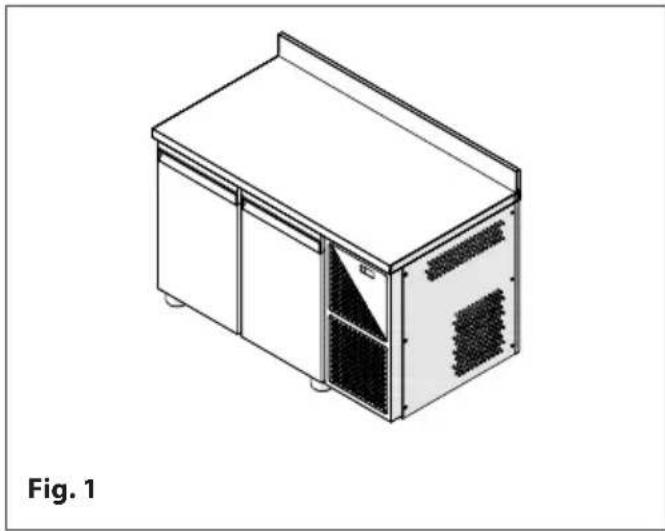
The counter with sink covered by this manual has been designed and developed to reach and maintain an internal temperature ideal for the preservation of food and confectionery products.
The table consists of:
-Pull-out monobloc refrigerated unit.
- Stainless steel internal and external structure. Rounded corners inside for easy cleaning. Automatic-closed doors with a magnetic seal. Insulation in polyurethane injected at high pressure (no CFC or HCFC).
- Digital control with NTC thermistor. Ventilated refrigeration with R290 gas. Automatic defrosting and evaporation of condensate.
- Removable, adjustable shelf runners. Height-adjustable stainless steel feet (with wheels on request). Professional, compact handle with innovative design.
-Extras: confectionery kit, internal light, glass doors, wheels kit, drawer units with drawers in three different heights, and splashback.
1.6 Identification
An identification label and CE marking (type 1 or type 2) is applied to each device. It contains the identification and technical/functional data.
It is securely attached inside the appliance on the right or left-hand side.
Depending on the year of manufacture, one of the two CE plates may be present.

BE CAREFUL
Tampering, removal, lack of the identification plate or other does not allow the safe identification of the product and will make any installation or maintenance operation to be performed difficult.
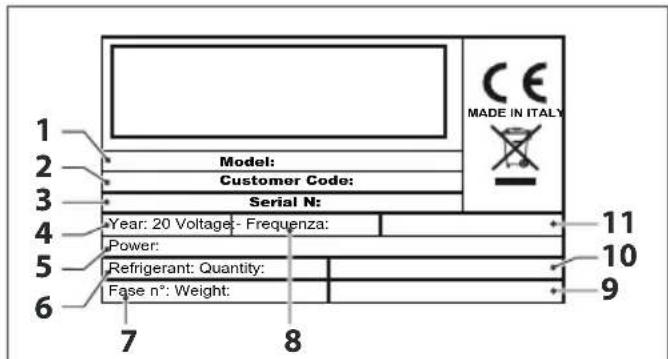
Type 1
Fig. 2
- Model
- Customer code
- Serial number
- Year
- Power
- Refrigerant
- Phase No.
- Voltage
- Weight
- Quantity
- Frequency
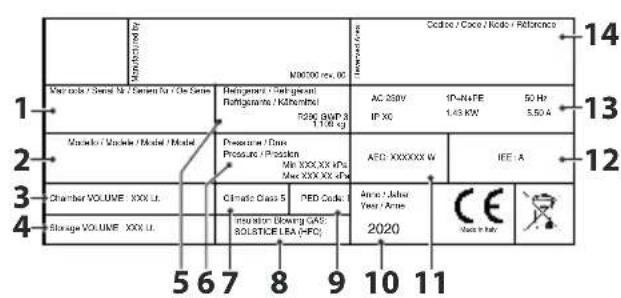
Type 2
Fig. 3
- Serial number
- Model
- Chamber volume
- Storage volume
- Refrigerant
- Pressure
- Climate class
- Gas insulation
- PED Class
- Year
- Annual consumption
- Energy class
- Machine technical data
- Customer code
1.7 Structure
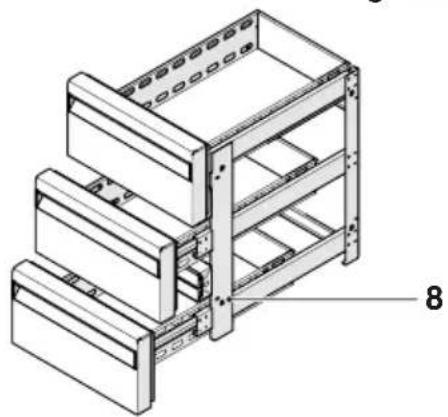
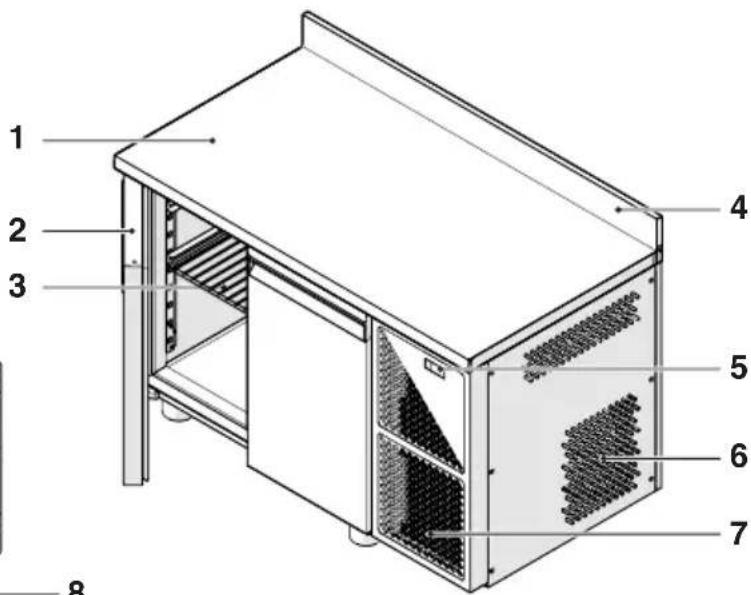
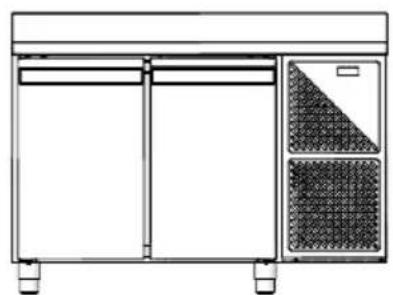
- Worktop (of choice)
- Door
- Shelves
- Splashback (of choice)
- Control panel
- Structure
- Condenser protection grid
- Drawer unit (optional)
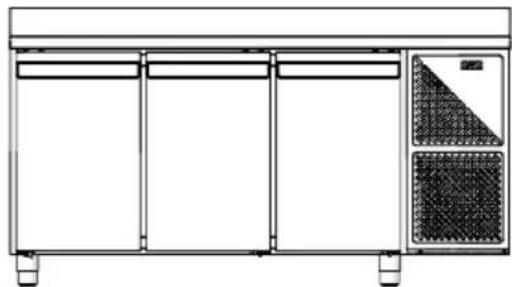
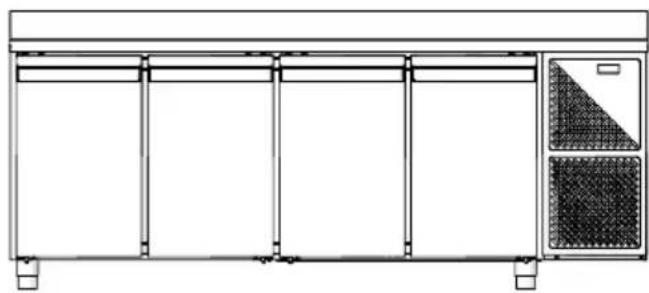
Fig. 4
1.8 Technical specifications
To consult the technical and operational data for the appliance, please refer to the identification plate on the appliance (internal compartment).
2 INSTALLATION
2.1 Receiving the product
The appliance is supplied in a single package and protected by cardboard packaging.
The installation, use and maintenance manual is supplied with the appliance, placed inside it.

WARNING
The manual is an integral part of the product; it is therefore recommended to read it before installing and starting the appliance and to store it with care for future reference or for when the product is transferred to another Owner or User.

IT IS FORBIDDEN
Do not dispose of, or leave in the reach of children, the packaging materials as they could become a source of danger. They must therefore be disposed of as established by the laws in force.
The appliance is moved on the pallet on which it is delivered. It must always be kept in a vertical position as indicated on the packaging.
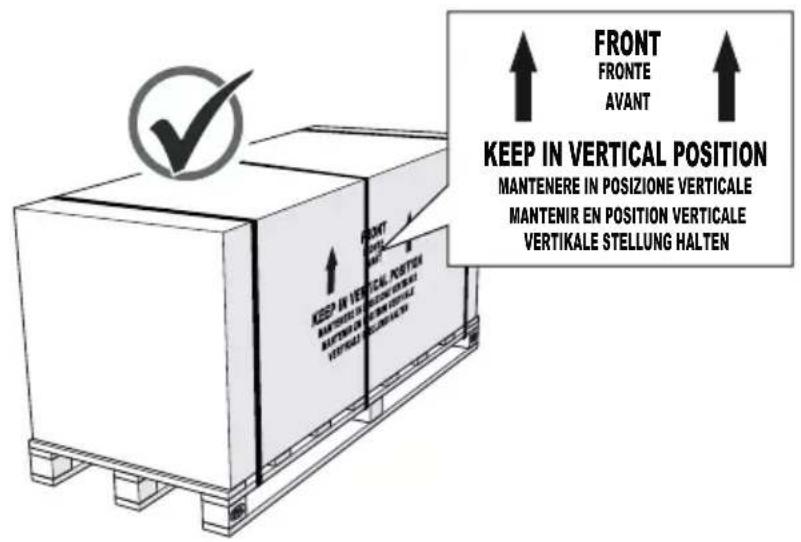
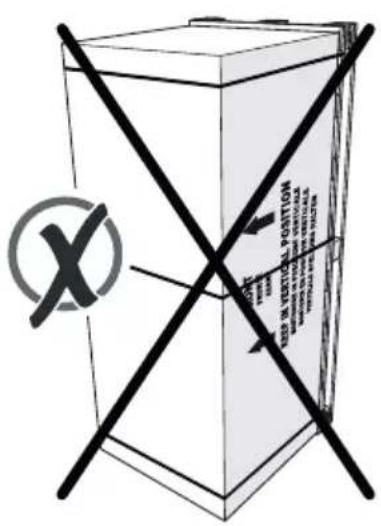
Fig. 5
The packaging can easily be transported on a forklift or other lifting device with a suitable capacity. These devices are used for unloading and for handling loads.

WARNING DANGER
The lifting and transport operations can be very dangerous if not carried out with the utmost care: therefore move all unauthorised people away from the area then clean, clear and delimit the transit area.
Before starting the lifting operations, make sure that:
with the forklift, the forks are inserted into the pallet on which the appliance is packaged in such a way that it is centred and its weight is well distributed;
the package must be lifted and handled with extreme caution, slowly and without jerky or sudden movements;
-while handling the appliance, if possible, the load must not be raised more than 10 / 15cm from the ground.
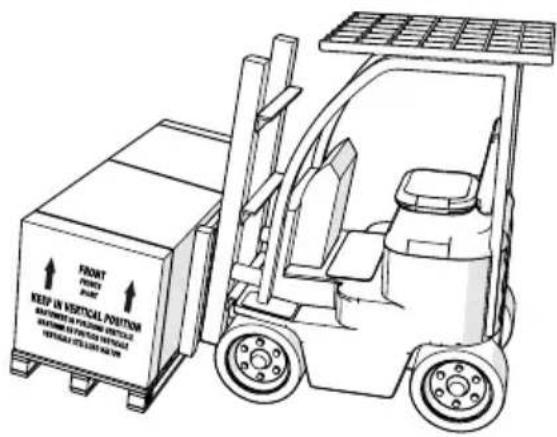
Fig. 6
2.2 Unpacking
The appliance is delivered with protective cardboard, polystyrene and nylon packaging. When in the vicinity of the place for installation:
- proceed to remove the packaging (straps, cardboard, protective polystyrene etc.) and transparent film on the stainless steel surfaces;
- lift the appliance with the forklift and remove the pallet underneath paying attention to carry out the manoeuvre with extreme caution, slowly, without sudden or jerky movements and without damaging the bottom of the appliance.

WARNING DANGER
Avoid leaving packaging materials at the reach of children or people incapable of handling these materials as they are potential sources of danger, therefore proceed to disposal of them in compliance with the current legislation in the country of installation.
After removing the packaging:
- from inside the appliance, remove all the documents and accessories supplied (bag with documentation and instructions for installation and use);
- make sure that the appliance conforms to what was specified at the moment of purchase or on the contract (type of appliance, accessories and anything else specifically stated);
- make sure that the appliance is integrate and does not have any faults, breakages, scratches or damaged parts - (in the case of certified damage- DO NOT USE the appliance and contact your retailer as soon as possible).
2.3 Installation premises
To guarantee the maximum efficiency of the appliance when in operation, it is essential to install it in a suitable place. Therefore it is necessary to make sure that the place of installation guarantees the following:
- a compliant electric system with earth and socket positioned near the appliance itself;
-sufficient air renewal, even when the room is closed; - the appliance must not be exposed to sun rays and/or other sources of heat (e.g. high density lighting, ovens or cooking rings, heating elements i.e. radiators or convector heaters etc...);
the space is sufficient to allow for easy access; - the environment is closed and inaccessible to people not authorised to use the appliance.
2.4 Correct positioning
Place the appliance on the ground on its four feet, to ensure maximum efficiency during operation.
We recommend resting the appliance against the rear wall, 100mm from any other furniture to the sides.
It is also essential to make sure that the air intakes of the condenser unit (1), on the front and bottom part of the appliance, are not in any way obstructed by furniture and/or foreign bodies.

WARNING DANGER
Do not cover the air vents of the condensing unit by placing in front of the appliance boxes, buckets etc. and/or by placing on the top towels or sheets that can dangle covering the air intakes.
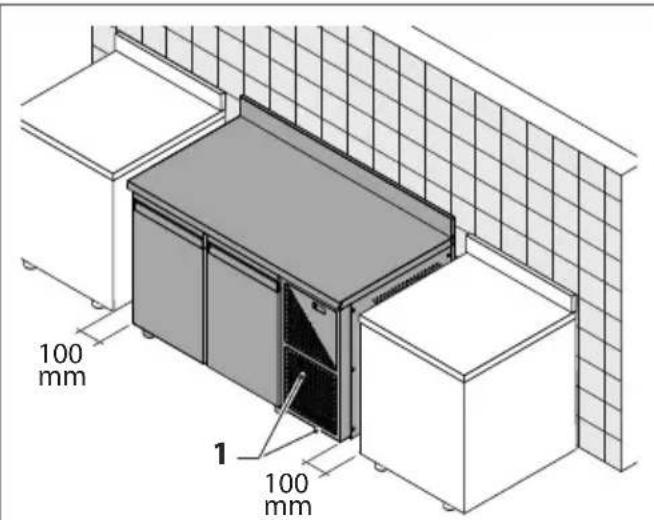
Fig. 7
2.5 Levelling
This procedure is necessary to guarantee the correct operation of the water drain for defrosting and washing (where present) and to avoid possible annoying vibrations of the motor.
Carry out the following in the order given:
- Use a spirit level to check the longitudinal and transversal levelling of the appliance; if necessary, act on the feet to adjust the level;
-Check the correct positioning of the condenser tray and its relative drainage pipe (where present).
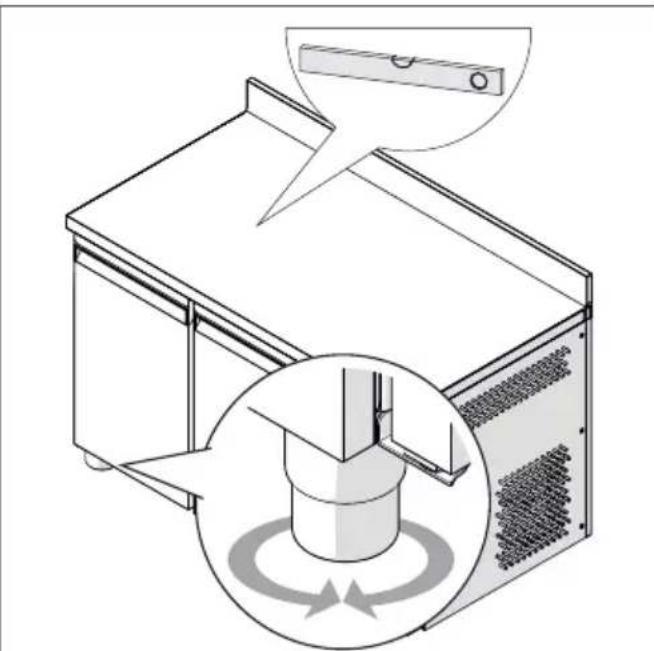
Fig. 8
2.6 Electrical connection
General rules
The appliance must be connected to the mains supply by an authorised and qualified person.
- The appliance must be PERMANENTLY connected to the mains supply by means of a CIRCUIT BREAKER which must be near the appliance and easily reachable by the operator.
- the circuit breaker must be certified by a Quality Certification Body (IMQ or equivalent) and must be indicated as the means for interrupting the electrical power supply to the appliance.
- The appliance leaves the factory already configured for 1 / N230V50Hz single phase voltage and comes complete with a power cable and its relative locking system.
- The user is obliged to install the power cable of the appliance in compliance with the legal safety standards of the territory where the appliance is installed.
- Make sure that the mains voltage value corresponds to that written on the CE declaration of conformity attached to the appliance.
- Make sure that the appliance power cable is intact. If it is damaged, it must be replaced by the manufacturer, by an authorised support service or by a qualified technician.
Electrical connection
The appliance is delivered with the cable without plug. The client's qualified technician will be responsible for correctly connecting the appliance to the mains supply.
- Connect the power cable of the appliance to a circuit breaker, never directly to the main line.
The mains frequency and voltage must correspond to those indicated on the identification plate of the appliance.
Check that the mains voltage at the socket is the nominal voltage +10% when the compressor is switched on.

BE CAREFUL
The appliance must be earthed. It is advisable to install a unipolar(or quadripolar) switch disconnecting device with a gap of at least 3mm upstream of the socket. This switch is mandatory when the load exceeds 1000W or when the appliance is connected directly without using the plug. It is advisable to use a circuit breaker with a high sensitivity differential to avoid switching off the entire system in case of a fault.
3 SWITCHING ON AND USE
3.1 Preliminary operations
Before starting the appliance, make sure that:
- the electrical system complies with the specific Regulations and has been made by professionally qualified personnel;
- the voltage of the appliance, indicated on the Technical Plate, corresponds to the line voltage in the power socket;
- there is a suitable earthing system and a bipolar mains switch with differential;
- the power socket is of a type suitable for receiving the plug of the appliance; do not use extensions or multi-adapters;
the power socket is easily accessible after installation;
- the installation premises meets the requirements of the Technical and Health Regulations and the Legislation in force.
3.2 Correct use
To ensure the maximum efficiency of the appliance, it is necessary to use it following these few but important precautions.
-
do not overload the racks: the maximum load capacity for each individual rack is 20Kq .
-
Arrange the products inside the appliance, taking care not to obstruct the free circulation of refrigerated air inside it. For this purpose, when products are arranged on the shelves, it is advisable to leave a gap of several centimetres between one product and another, so that the surfaces of each single product are exposed to the flow of refrigerated air, thus encouraging a rapid and uniform cooling.
-
Do not overload the shelves of the appliance, especially the shelves in proximity of the refrigeration air delivery and intake vents. There is a label on the inside, on the side of the shelf, which indicates the maximum load capacity.
-NEVER rest products against the rear wall or front door, to avoid obstructing or blocking the continuous flow of cold air.
Make sure the door of the appliance is correctly closed after each time it is opened.
- Limit door openings to the essential, to avoid continuous dispersion of cold air in the environment with the subsequent rise of temperature inside the appliance.
-Once products have been removed from the device, do not leave them in non-refrigerated areas for any length of time to avoid excessive loss of cold before putting them back in again.
- Cover or wrap the food before putting in the cabinet and avoid putting in hot food or steaming liquids.
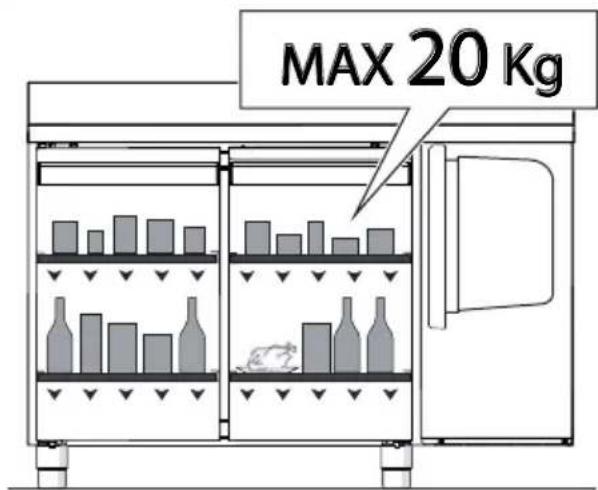
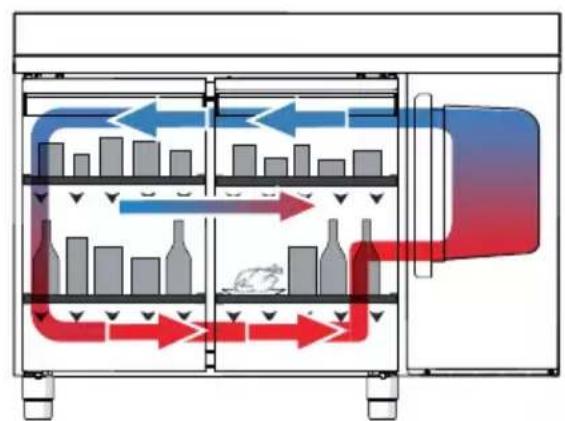
Fig. 9
Fig. 10

WARNING
Cold air comes out when the door of the cabinet is opened. Avoid opening the door during operation. If there is an increase in the number and length of times in which the door remains open, the level of efficiency of the appliance will be reduced and the ideal temperature inside it cannot be guaranteed.

WARNING
Leaving the door open for a long time or not closing it properly can cause ice to form inside and/or around the door seal.

WARNING
We remind you that the law on the conservation of products PROHIBITS the re-freezing or deep freezing of defrosted products.
3.3 User interface - EV3B
All operations for switching on the appliance and setting the operating temperature must carried out by the operator via the control panel located on the top part of the appliance.
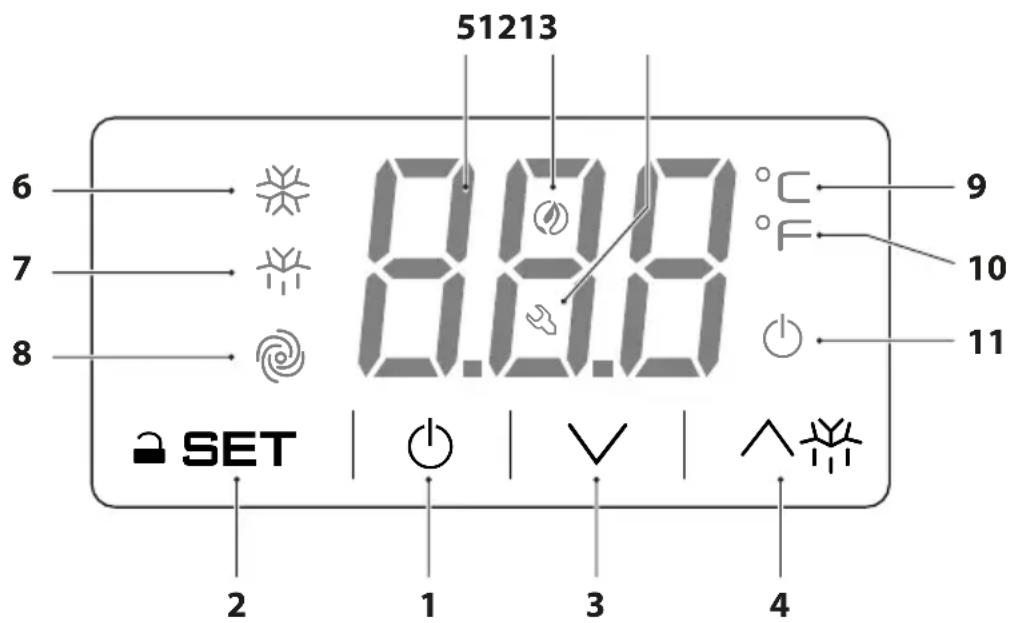
Fig. 11
| Number | Key Description | |
| 1 | Digital power button for the user interface device (controller). The controller can feature three operating modes:ON: the device is powered and on; the utilities can be turned onStand-by: the device is powered but the software is off; the utilities are off.OFF: the device is not powered; the utilities are off. | |
| 2 | SET | Device configuration/operation parameters access function key. During setting/modification operations, pressing the SET key confirms/saves the value input. |
| 3 | √ | Device operation parameters navigation function key (down). During the setting phase, pressing the DOWN key decreases the set value by one unit. |
| 4 | Device operation parameters navigation function key (up). During the setting phase, pressing the UP key increases the set value by one unit. | |
| 5 | Temperature/warning display. This displays the internal temperature of the appliance in real time. Any active (or flashing) LEDs provide further information on the operating status of the appliance (see the controller datasheet for instructions and the LED key). | |
| Number | LED Description | |
| 6 | ※ | When it lights up GREEN, this means that the compressor is running |
| 7 | ※ | When it lights up ORANGE, this means that defrosting is in progress (if any) |
| 8 | ◎ | When it lights up GREEN, this means that the evaporator fan is running (where present) |
| 9 | °C | This indicates degrees in °C |
| 10 | °F | This indicates degrees in °F |
| 11 | ◎ | It lights up RED when the ⊙ key is pressed to switch the appliance off |
| 12 | ◎ | When it lights up, this means that the "low power" function is active |
| 13 | ◎ | When it lights up, this means there is an alarm in progress |
3.3.1 Switching on/off
Make sure that the keypad is not locked and that there are no procedures running.
-
Press and hold the key for 4 seconds: the LED will flash, then it will turn off/on.
-
If the device is on, during normal operation the temperature of the cell will be displayed.
- If the device is off, the display will be turned off; the LED will be switched on.
If the "low power" mode is in progress, the display will be off and the LED will be on.
3.3.2 Locking/unlocking the keyboard
To lock the keyboard:
-Make sure that there are no procedures running.
- Do not use the device for 30 seconds: "Lco" will appear on the display for 2 s and the keypad will lock automatically.
To unlock the keyboard:
- Press and hold a key for 1 s: "UnL" will appear on the display for 1 s.
3.3.3 Operating setpoint configuration
Make sure that the keypad is not locked and that there are no procedures running.
- Press the SET key: the LED will flash.
- Press the or key within 15 seconds. (See also parameters r1 and r2 on the datasheet)
- Press the SET key or do not use the device for 15 s: the LED will switch off, then the device will exit the procedure.
To exit the procedure before the end:
- Press the key (any changes will not be saved).
You can also set the working setpoint via the SP parameter (see datasheet).
3.3.4 Enabling manual defrost mode
Make sure that the keypad is not locked and that there are no procedures running.
- Press and hold the key for 4 seconds to start the manual defrost cycle.
Note: if the evaporator probe serves as a defrosting probe (i.e. if parameter P4 is set to 1 - see datasheet) and if, when defrosting is activated, the evaporator temperature is above the temperature set under parameter d2 (see datasheet), defrosting will not be activated.
3.3.5 Loading products

IMPORTANT
Wait until the desired set temperature on the control panel has been reached before loading products into the appliance.
- For maximum appliance efficiency, load the products following the instructions given in the section "Correct use".
3.4 User interface - EVJ200
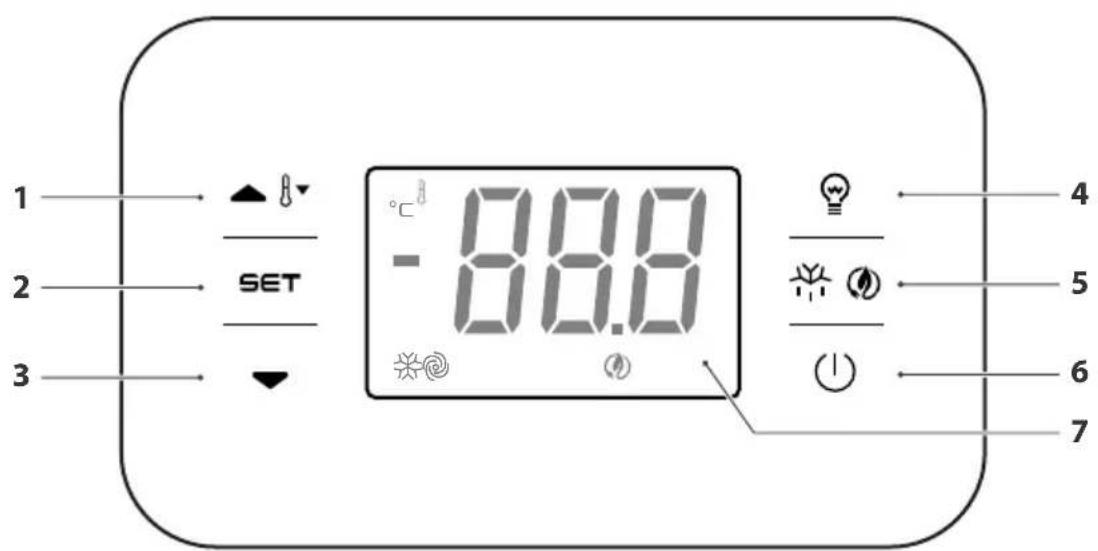
Fig. 12
| 1 | 8 | Device operation parameters navigation function key (up). During the settings phase, pressing the key increases the set value by one unit. If pressed for 2 consecutive seconds, the key will start the overcooling or overheating cycle. |
| 2 | SET | Unblocking the keyboard and access key to the operating set point of the device. During setting/ modification operations, pressing the key confirms/saves the value input. |
| 3 | √ | Device operation parameters navigation function key (down). During the settings phase, pressing the key decreases the set value by one unit. |
| 4 | Pressing the key switches the light in the cell on or off. | |
| 5 | ↑ | Pressing the key for 2 consecutive seconds starts the defrost cycle. |
| 6 | Digital power button for the user interface device (controller). The controller can feature three operating modes: ON: the device is powered and on; the utilities can be turned on. Stand-by: the device is powered but the software is off; the utilities are off. OFF: the device is not powered; the utilities are turned off. | |
| 7 | Temperature/warning display: when the device is turned on and during the normal operating cycle, the internal temperature of the appliance is shown in real time. Any active (or flashing) LEDs provide further information on the operating status of the device (see technical data sheet of the controller for instructions and meaning of the LEDs). | |
Switching the appliance on/off
- Make sure that the keyboard is not locked and that no procedure is in progress;
- press the key for 2 s: the display will switch off/on.
If the device is on, during normal operation the temperature of the cell will be displayed. If the device is off, the display will be turned off; the red LED will be switched on.
Locking/unlocking the keyboard
To lock the keyboard:
-Make sure that no procedures are in progress;
- do not operate for 30 s: "Loc" will appear on the display for 2 s and the keyboard will be locked automatically.
To unlock the keyboard:
- Touch a key for 1 s: "UnL" will appear on the display for 1 s.
Operating setpoint configuration
- Make sure that the keyboard is not locked and that no procedure is in progress;
- press the key SET: the LED will flash
- use the keys ∧ and within 15 s to configure the parameter;
- confirm with the key SET or do not use for 15 s: the LED will switch off and then, the device will exit the procedure.
To exit the procedure without confirming the change, press the key
Enabling manual defrost mode
- Make sure that the keyboard is not locked and that no procedure is in progress;
- press the key 艹 for 2 s. to start the manual defrost program.

WARNING
Defrosting is done automatically and/or in manual mode if conditions allow.
On positive temperature counters, defrosting will be carried out then the compressor and forced ventilation are switched off.
On negative temperature cabinets, defrosting will be done with a heating element and when the fans are stopped.
3.5 Equipment

WARNING
When necessary, mechanical parts must be replaced with original spare parts.
Do not use under any circumstances, tools or instruments that can scratch or cut the surfaces leading to
the formation of rust on the damaged parts over time.
3.5.1 Replacing a door with a drawer unit
Drawer units (optional) can be mounted on the counters instead of one or more doors.
There are three types of drawer units:
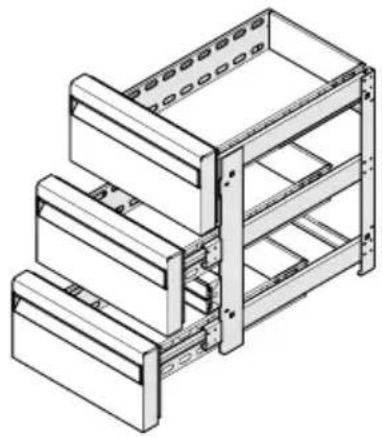
123
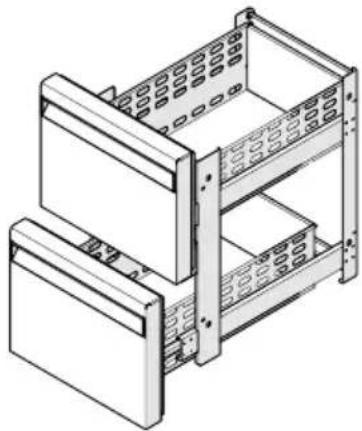
O
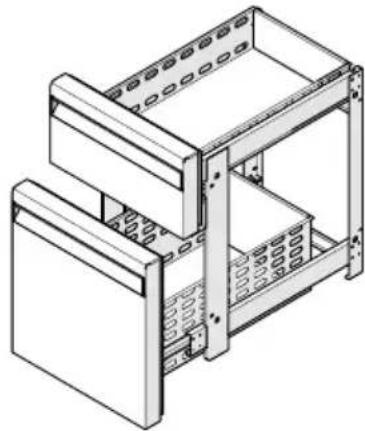
O
Fig. 13
| Number | Type | Dimensions (mm) W x D x H | Packaging (mm) W x D x H | Net weight (kg) | Gross weight (kg) |
| 1 | 3 x 1/3 430 x 625 x 685 450 x 660 x 770 | 30 24 | |||
| 2 | 2 x 1/2 430 x 625 x 685 450 x 660 x 770 | 18 24 | |||
| 3 | 1/3 + 2/3 430 x 625 x 685 450 x 660 x 770 | 0 18 24 |
To replace a door with a drawer unit, follow the instructions below:
-
Disconnect the appliance from the electrical power supply.
-
Make sure there are no products inside the appliance. Empty it, if necessary.
-Remove the shelves (1).
-Remove the screw (2) on the bottom hinge (3).
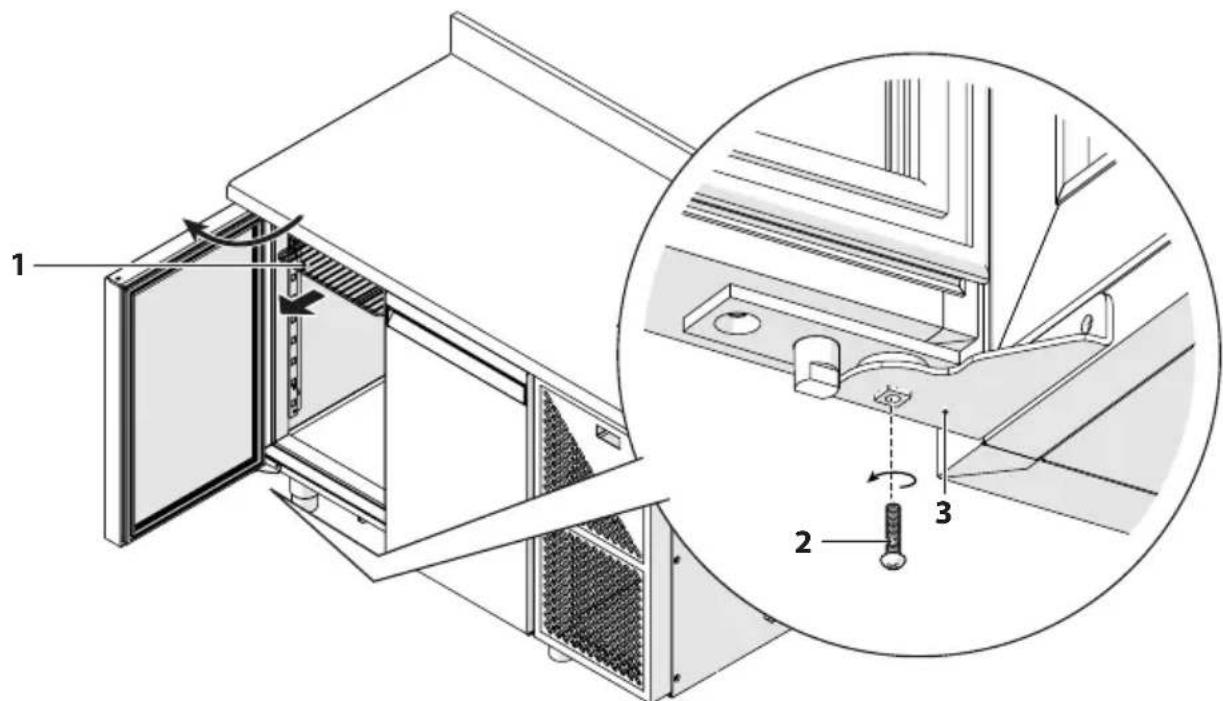
Fig.14
-Remove the screws (4) blocking the upper hinge.
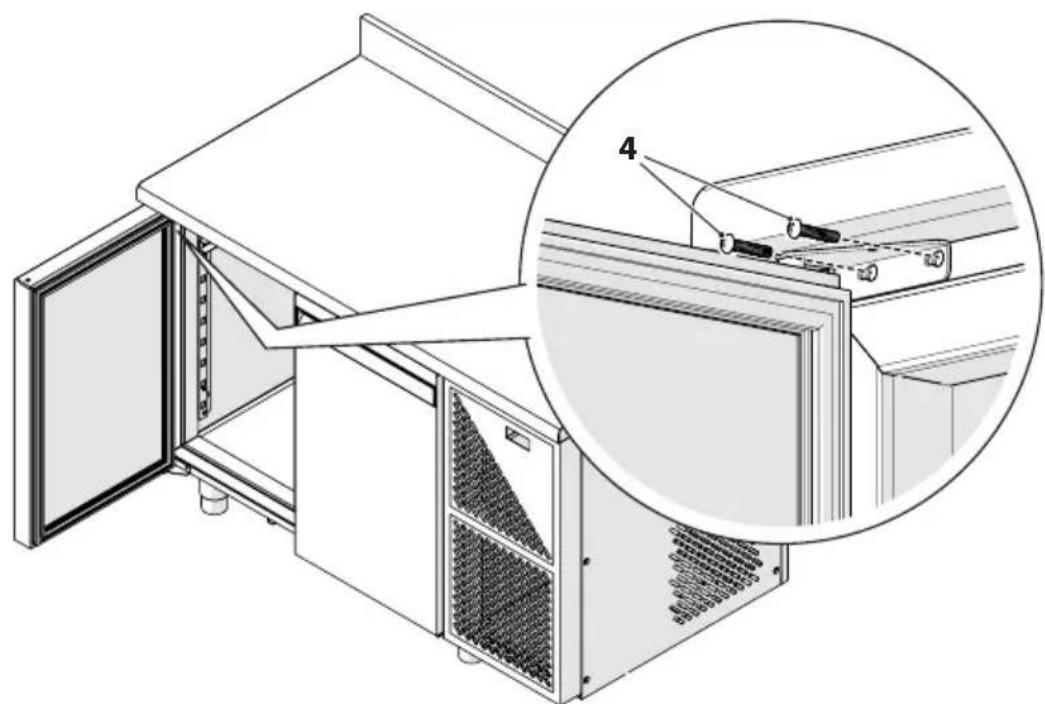
Fig.15
- Lift and slightly tilt the door to extract it from the bottom hinge, then remove it.
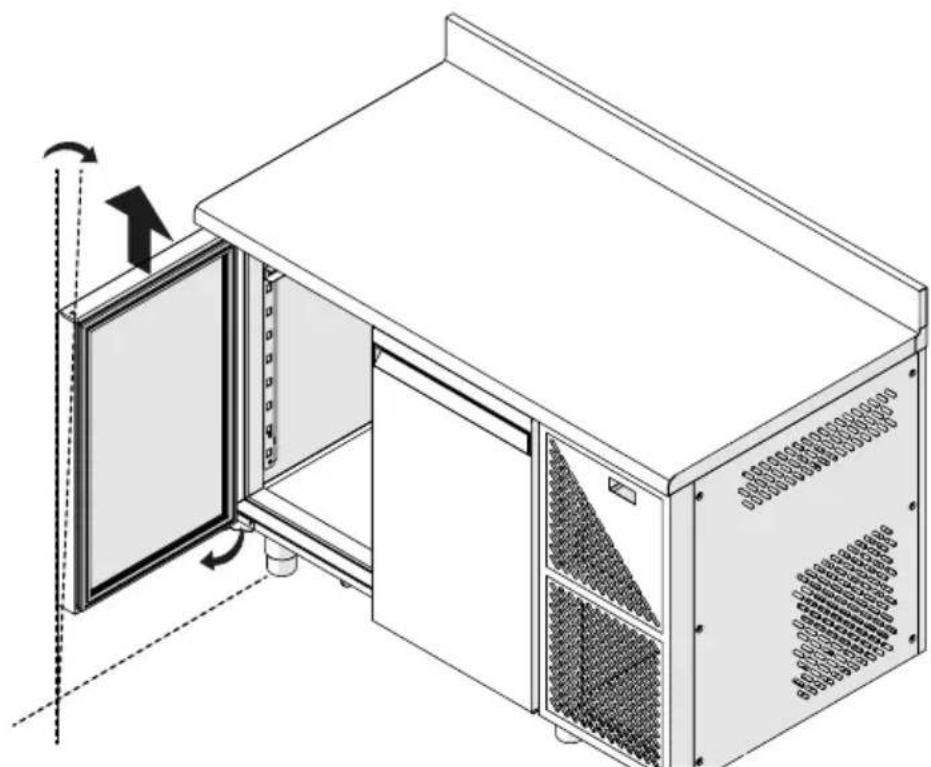
Fig.16
- Remove the bottom hinge (3) from the table frame by removing the two screws (4).
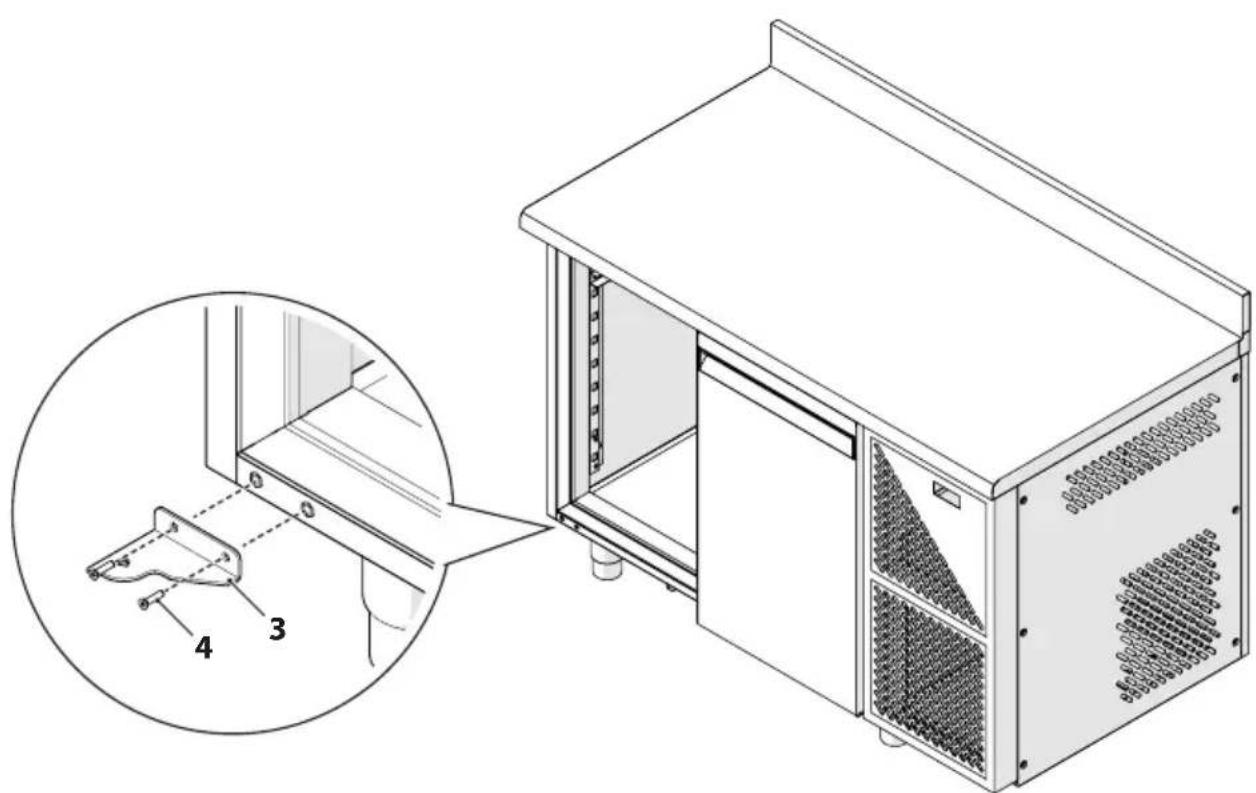
Fig. 17
- Remove any tray support guides (5) from the table by unhooking them from the support brackets (6).
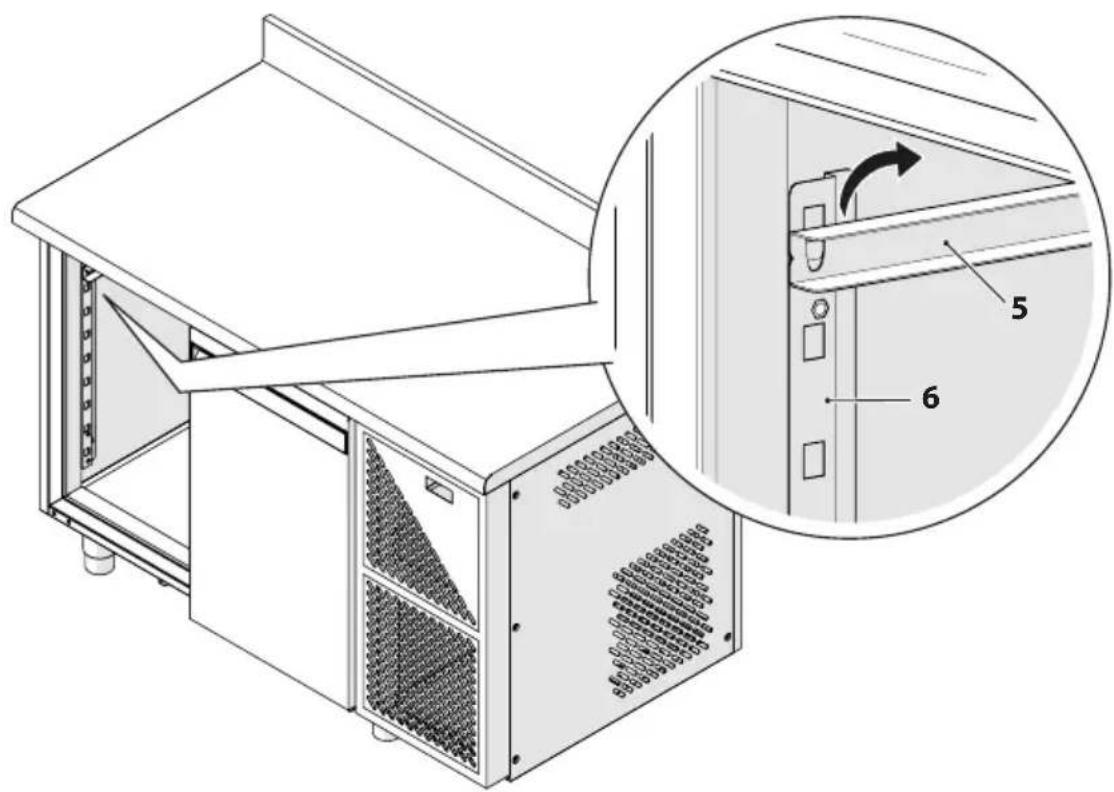
Fig.18
-Remove all the drawers (7) from the drawer-unit frame (8).
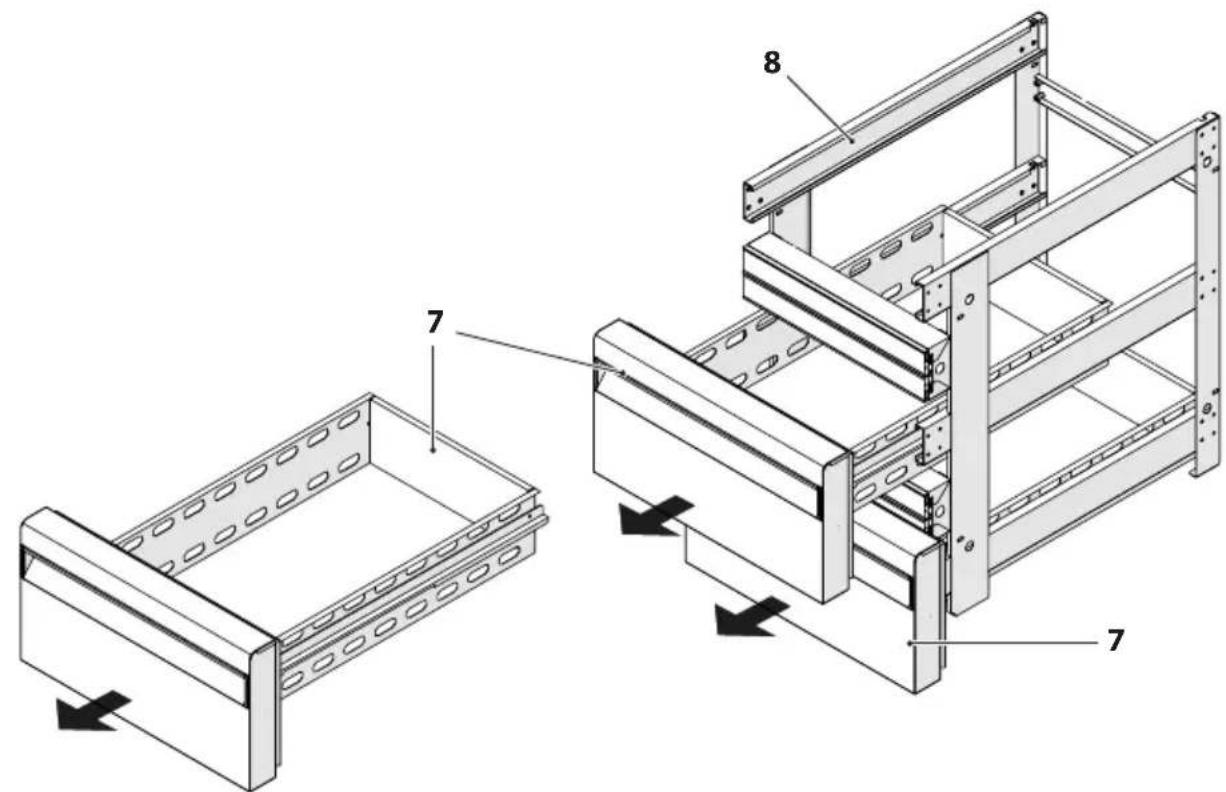
Fig.19
- Insert the drawer-unit frame (8) inside the table until it reaches the bottom of the compartment.
- Lock the drawer-unit frame to the table structure (9) using 8 screws (10).
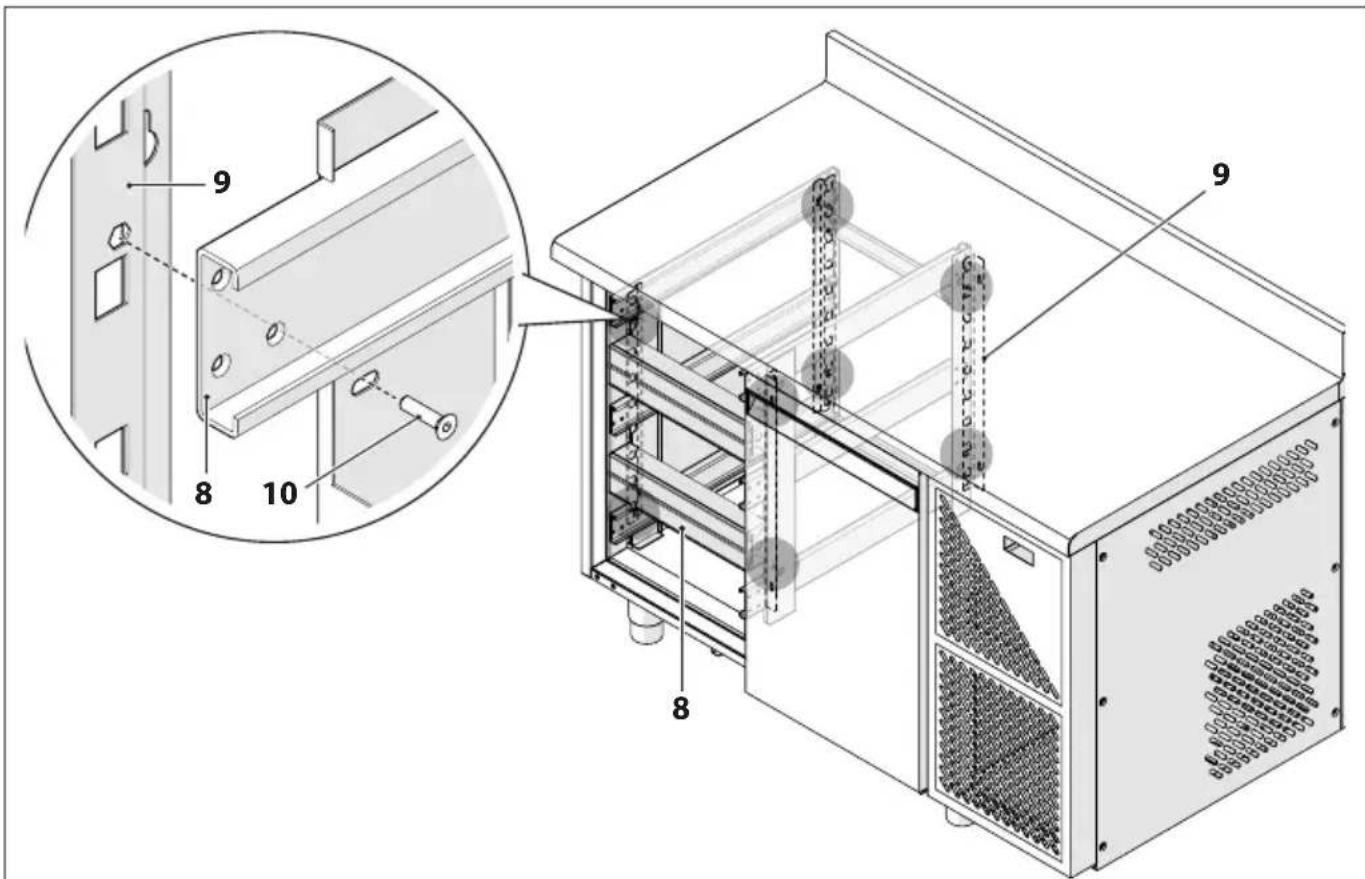
Fig. 20
-Fasten four screws (10) with lock nuts (11).
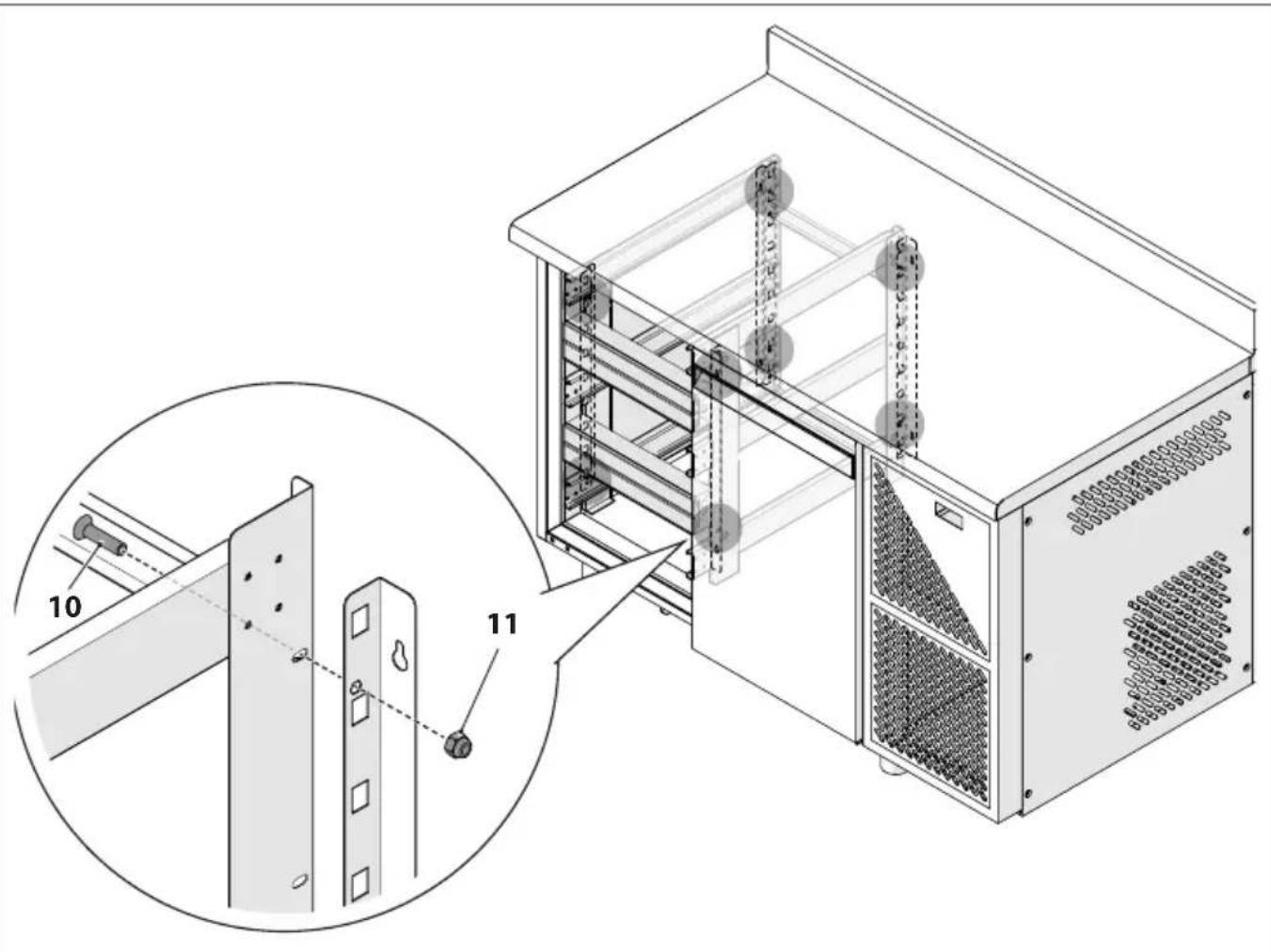

Fig. 21
WARNING
If the drawer unit is installed instead of one of the central table doors, all eight screws must be locked with nuts.
-Position the drawers, taking care to insert them in the guides.
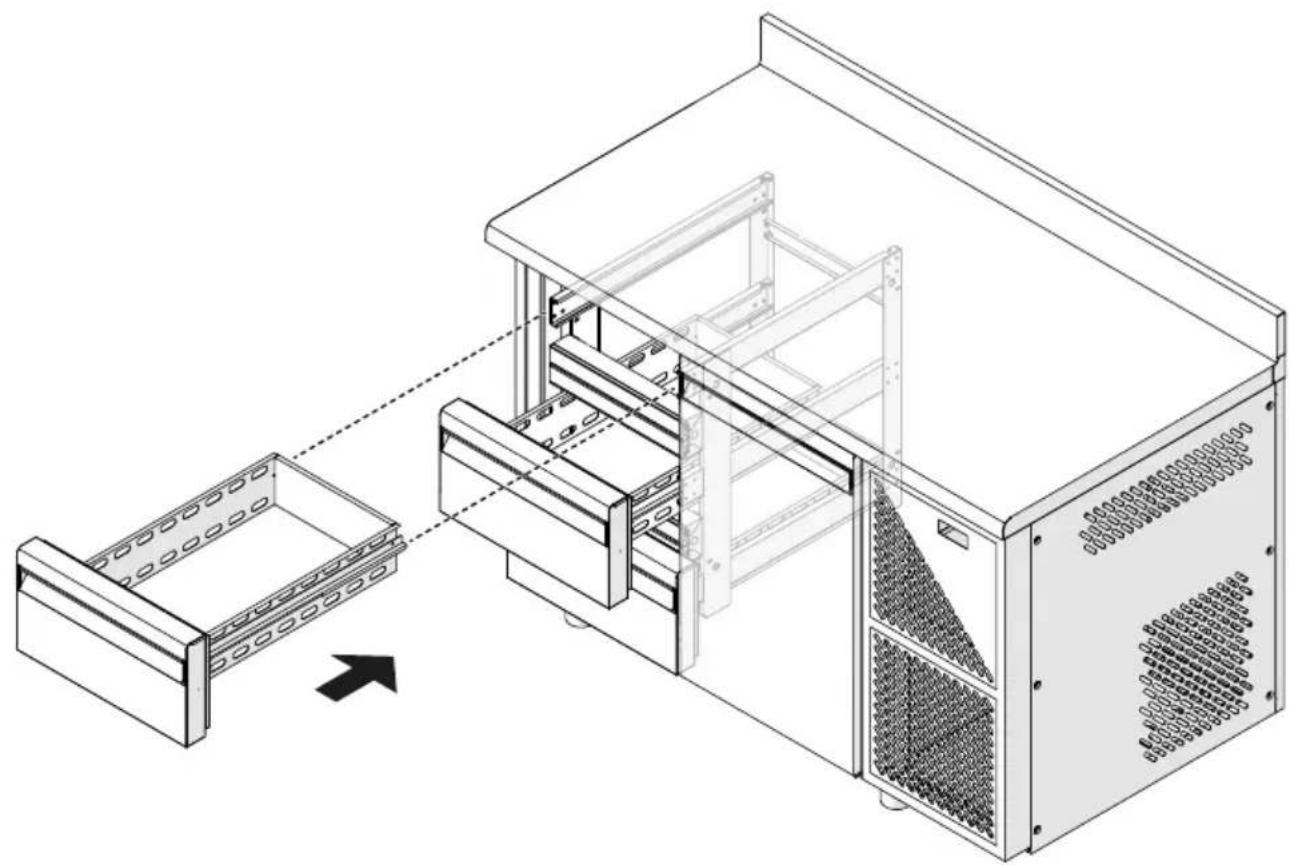
Fig. 22
4 MAINTENANCE
Routine maintenance work covers all operations to keep the various parts of the refrigerated cabinet clean and operational and must be carried out regularly or when deemed necessary, whenever a decrease in the refrigerating performance of the appliance is noted.
As these operations deal with normal cleaning, they are usually carried out by the user (himself/herself).

WARNING DANGER
- For safety reasons we would like to remind you that all cleaning and maintenance operations must be carried out with the appliance switched off and disconnected from the mains. Turn the switch connecting to the mains to the "OFF" position. With appliances equipped with a plug, remove the plug from the socket.
- Do not remove the safety warnings or the machine's labels; in case of repairs, if even one of them is found to be missing, the machine is considered out of warranty.
- Do not try to change the parameters yourself. This operations must be performed only by the manufacturer or by qualified personnel.
- Do not try to replace the electronic and/or mechanical parts yourself.
- Only qualified personnel can make replacements, changes and perform extraordinary maintenance operations.
-NEVER clean the mechanical parts while they are moving.
- NEVER clean the electrical parts when the machine is powered. For any type of cleaning and/or maintenance operation, we recommend using latex gloves.
4.1 Preparing for maintenance operations
For the appliance to work correctly, bearing in mind that it is designed to preserve food, whether wrapped or not, it is essential to keep all its parts (inside walls, shelves, base and runners) clean at all times. We generally advise the following for cleaning operations:
disconnect the appliance from the electrical power supply;
do not use direct and high pressure water jets to wash the inside and outside of the machine;
do not use solvents, abrasive detergents, products with acid pH (vinegar) or chlorine-based substances (bleach, muriatic acid, etc.) or otherwise toxic for cleaning or in the vicinity of the appliance;
use only warm water and neutral soap, or products expressly permitted by the hygiene regulations in force in the country of installation for cleaning catering equipment; rinse with clean water and dry with a soft cloth.
Recommended cleaning operations and maintenance
Before use
- Remove the protective film inside and outside the appliance; clean the appliance and all its accessories using warm water and neutral soap, or products expressly permitted by the hygiene regulations in force in the country of installation for cleaning catering equipment; rinse with clean water and dry with a soft cloth.
Daily
-
Carefully clean the outside of the appliance.
-
Carefully clean the inside of the door around the gasket (see the item "Cleaning the gasket").
Weekly
- Clean all the inside parts of the appliance (inside walls, shelves, base and runners).
Monthly
- Carefully clean the condenser and the refrigerating unit (see the item "Cleaning the condenser, refrigerator unit and evaporator").
Annually
- Carefully clean the evaporator and the fans (see the item "Cleaning the condenser, refrigerator unit and evaporator").
4.2 Clean the appliance internally and externally
- Carefully clean all the surfaces of the appliance with a soft sponge and neutral detergent.
- The detergent must not contain chlorine and must be non-abrasive. Before use, dilute the detergent if necessary according to the instructions on the label.
- Leave the detergents for the time recommended by the manufacturer.
Rinse thoroughly the inner and outer walls of the appliance using a sponge and clean, lukewarm water.
Dry carefully using a sponge or a dry, clean cloth.

WARNING DANGER
Do not use under any circumstances, tools or instruments that can scratch or cut the surfaces leading to the formation of rust on the damaged parts over time.
4.3 Cleaning the gasket
The cleanliness of the door sealing gasket (1) is essential in ensuring the highest performance of the device in your possession. Product residue, dust and/or ice crystals that may deposit or form on the gasket must be constantly removed to guarantee the hermetic closure of the device and thus avoid dispersion of the cold air.
To clean the gasket use a soft cloth or sponge and lukewarm water with a non-abrasive detergent.
The gasket can be removed from its place for more accurate cleaning.
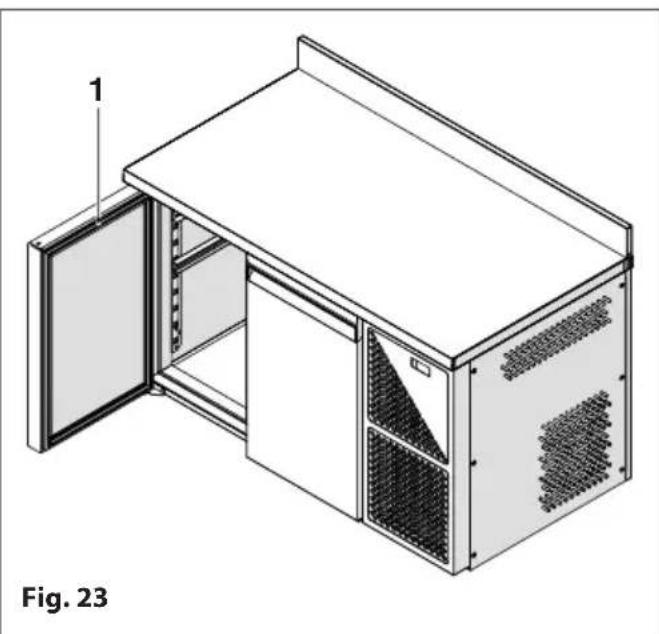
Fig. 23

BE CAREFUL
Make sure that the gasket is dried after cleaning it.
4.4 Cleaning the condenser, refrigerator unit and evaporator
To clean the condenser, refrigeration unit and evaporator, follow the procedure below:
-disconnect the power plug
-
Unscrew the two screws (1) holding the refrigeration-unit access panel in place
-
Tilt the panel slightly and remove it by pulling it downwards
To clean the condenser, refrigeration unit and evaporator, follow the procedure below:
-disconnect the power plug
- Unscrew the two screws (1) holding the refrigeration-unit access panel in place
-Tilt the panel slightly and remove it by pulling it downwards
- Use a vacuum cleaner and a soft bristled brush to remove any dust that has accumulated on the condenser, taking care to clean the fins carefully
-if you find dust deposits difficult to reach with the vacuum cleaner and/or brush, use compressed air to remove them from the affected parts
-then use a damp sponge to clean in the gaps and, finally, dry the clean parts completely using a soft dry cloth.
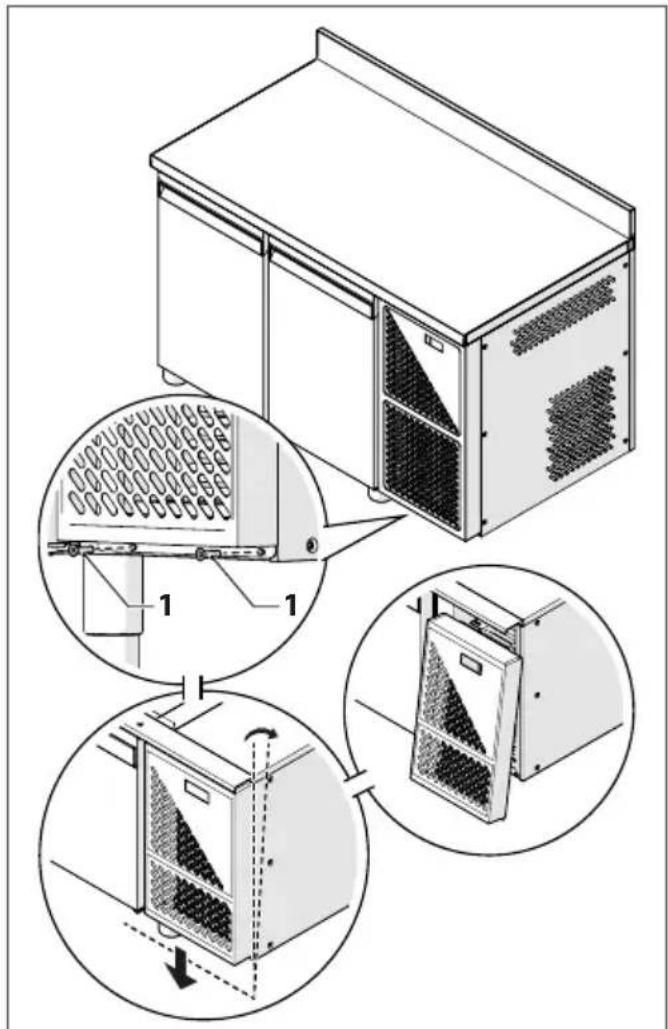
Fig.24

WARNING DANGER
While cleaning, never use metal and/or sharp objects that may damage the components.
- While cleaning, we recommend using protective gloves as accidental contact with the condenser fins may cause cuts and grazes.
4.5 Extraordinary maintenance of the appliance
All the operations not contemplated under the heading "Ordinary Maintenance" are to be considered "Extraordinary Maintenance" and must be carried out exclusively by qualified staff on the client's premises or in authorized service centres.
We advise you to ask your retailer for a periodical maintenance contract which includes all the operations required to check the correct operation and replacement of parts subject to wear over time and which fall into the category of "extraordinary maintenance work".
At least once a year, it is advisable to get specialised technicians to check:
-the correct operation of the cooling unit;
the correct pressure of the refrigerant gas;
- the perfect and safe operation of the electrical system; Should it be necessary to clean the electrical parts, use only a dry cloth to remove any impurities;
- any replacements of mechanical parts must be carried out using original spare parts.
4.6 Preparing the appliance for a long period of inactivity
In case of a long period of inactivity, to keep the appliance in the best conditions do the following:
- with appliances equipped with a plug, remove the plug from the socket
- empty and clean the appliance (see the item "Clean the appliance internally and externally");
-ventilate the rooms regularly.
4.7 Request for and installation of optional accessories after purchase
If after purchase the application of one or more optional accessories becomes necessary:
- Request the original accessories from your retailer or the nearest sales point
- when this is necessary, the installation must be carried out by "qualified staff" or "technicians" from the nearest service centre.
5 PROBLEMS - POSSIBLE CAUSES - SOLUTIONS
This paragraph deals with the most probable problems that may occur before switching on the appliance and during its operation.
If the appliance does not start or if it stops during operation, before calling the customer service department, please perform the following checks; the following pages indicate the correct procedures which in some cases are sufficient to solve small inconveniences of a technical/functional nature which can occur.
| CAUSE SOLUTION | |
| The appliance does not start | |
| The differential power supply switch is deactivated. Turn | the differential to the "ON" position. |
| Plug not inserted into the socket. Plug not inserted correctly into the socket. | Insert the plug into the socket correctly. |
| Existing electrical system not suitable for the machine voltage. | Check that the electrical system has the voltage required for the operation of the appliance; see the CE identification plate on the back. |
| The digital control instrument of the appliance is not working. | Check the integrity of the digital controller. Check the electrical connections of the instrument (the check must be performed by a qualified technician). |
| The appliance has difficulty in reaching and/or maintaining the set temperature | |
| The set temperature is too low. | Check that the parameters set correspond to your temperature requirements. |
| Temperature probes broken or faulty. Check the integrity | of the temperature probes. |
| There are refrigerant gas or fluid leaks. | Identify the leak and close it (get a specialised technician to perform the check and repair). |
| The condenser fins are covered with dust. | Clean the condenser (refer to the section "Cleaning the condenser, refrigerator unit and evaporator"). |
| Evaporator covered with dust. | Clean the condenser (refer to the section "Cleaning the condenser, refrigerator unit and evaporator"). |
| Internal fan not working. | Check the integrity of the fan. Check the electrical connections of the fan (the check must be performed by a qualified technician). |
| The sealing gasket on the doors is dirty and as a result, does not close hermetically. | Clean the door gasket and remove any dirt and/or ice residues. |
| Loss of cooling power caused by frequent and/or prolonged opening of the door. | Follow the instructions (see the item "Intended use") and check that the system works properly. Check that there are no obstructions in the air vents. |
| The appliance is too noisy | |
| The appliance has not been positioned perfectly level. If the appliance is not perfectly levelled, vibrations may be created. | Level the appliance properly (see the item "Correct positioning"). |
| The appliance touches other parts/objects that cause acoustic resonances. | Position the appliance in such a way that it does not touch other parts/objects. |
| In some cases, due to incorrect installation, the internal fans may be out of phase. | Call a technician to check the operation of the fans. |
| Some parts of the machine are not secured properly. | Make sure that all the mechanical parts in the base of the appliance are secured properly. |
| During operation condensation and ice frequently form on the walls and on the door | |
| The door is not closed properly. | Check that nothing is blocking the door. Close it properly. |
| Frequent and/or prolonged opening of the door. | Follow the instructions (see the item "Intended use") and check that the system works properly. |
| The temperature setting dial is not working properly | |
| The electric wiring is faulty and/or slack. | Check the electrical connections of the instrument (the check must be performed by a qualified technician). |
| The electricity supply is subject to sudden voltage surges greater than ±10%. | Call a technician to check the mains electricity supply. |
If after following the advice and performing the checks indicated the problem persists, contact our company and report:
-the type of problem;
- the serial number of the appliance and the date of manufacture, which you can find at the back of the appliance or on the use and maintenance manual.
The alarms are shown in the bottom row of the regulator:
| ALARM EXPLANATION | |
| Probes error | Sensor open or in short circuit, incorrect sensor type or incorrect connection |
| Probe 1 Error | Regulation probe not working. Heat regulation is suspended, cold regulation is timed by the compressor |
| Probe 2 Error | Humidity probe not working, humidify and dehumidify regulation suspended. For saturation, the regulator applies a time delay before generating an alarm. |
| Probe 3 Error | 3a probe not working. If the probe is configured as a defrost probe, the end of defrost becomes time-based only. If configured as a condensation probe, the condenser fan will follow the compressor. If configured as an auxiliary probe, the AUX relay will turn off. |
| MINIMUM TEMP. If the temperature exceeds the pre-set range | range of values |
| MAXIMUM TEMP. If the temperature exceeds the pre-set | range of values |
| TEMPERATURE ALARM DELAYS | The alarms are delayed in the following cases: start-up normal operation from end of defrost during door opening from door closing |
| LOW HUMIDITY ALARM If the humidity exceeds the pre-set range | set range of values |
| HIGH HUMIDITY ALARM If the humidity exceeds the pre-set range | set range of values |
| HUMIDITY ALARM DELAYS The humidity alarms can be delayed | |
| NO POWER ALARM (and check RTC) | With the clock active, it is recorded and signalled if it exceeds the delay |
| RTC ALARM | Appears after about 1 minute if the EVIF23TSX clock module or EVLINK module is removed, or if the battery is low |
| DOOR OPEN ALARM | Generated if the door is open for longer than the maximum pre-set time |
| "MULTIFUNCTION" ALARM Generated by the multifunction input | input |
| "THERMAL PROT. 1" ALARM | Generated if the multifunction input goes into thermal protection |
| PRESSURE SWITCH ALARM The pressure switch is blocked | |
| CONDenser OVERHEATED ALARM The condenser has overheated and is blocked | |
| COMPRESSOR BLOCKED DUE TO HIGH CONDENSATION ALARM | The compressor is blocked due to high condensation |
If after following the advice and performing the checks indicated the problem persists, contact our company and report:
-the type of problem;
- the serial number of the appliance and the date of manufacture, which you can find at the back of the appliance or on the use and maintenance manual.
6 DISPOSAL
At the end of the service life of the appliance, do not dispose of it into the environment. It can be provisionally stored as "special waste" while waiting for ecological disposal by a company specialised in environmental protection.
The laws on waste disposal vary from country to country and those imposed by the laws and authority where the demolition and disposal will take place, must be observed. In general, it is necessary to return the equipment to specialised centres for collection/demolition.
To decommission, dismantle, store and then dispose of the materials the appliance is made of, follow the procedures indicated below.
DECOMMISSIONING: disconnect the appliance from the electrical power supply. Make the appliance unusable in view of its disposal; remove all existing latches or bolt-locks to ensure no-one remains trapped inside.
DISMANTLING: the dismantling operations must be carried out by qualified personnel. Dismantle the appliance taking care to separate and group the materials it is made of according to their chemical nature (steel, glass, plastic, etc...). The compressor contains lubricating oil and refrigerant which can be recovered and reused and main of the other components of the appliance are special waste similar to urban waste.
STORAGE if the appliance is stored outdoors waiting for disposal, cover it with plastic sheeting, to prevent bad weather conditions such as rain and dampness from corroding the structure, causing rust and oxidation.
DISPOSAL: the waste material produced must be disposed of according to the laws and regulations of the country in which the appliance has been installed. For the treatment and disposal of these materials consult and/or commission a company specialised in waste disposal.
MANUFACTURER'S NOTE:
The manufacturer declares that the design, development and construction of the appliance have been carried out in conformity with the laws regarding the reduction of the use of dangerous substances, in particular with reference to electrical appliances and electronic devices (WEEE) in favour of the environment to protect the health of workers, the intervention of subjects who are involved in the installation of the use of and the disposal of its products (manufacturers, distributors, consumers and operators involved in waste disposal-WEEE).
Disposal of the appliance (European Directive 2012/19/EU)
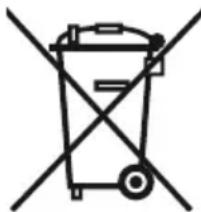

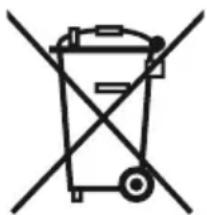
Electrical and electronic equipment coming from professional appliances or classified as professional waste must not be disposed of with normal urban waste at the end of their service life, but they must be disposed of, according to law, in compliance with directives 2012/19/EU and the Italian Legislative Decree 49/2014. Ask your retailer if they can collect or replace it, in case the product is replaced with a similar one. Although your product is designed ad built to minimise its impact on the environment and on health, it contains components that, if managed incorrectly, can be harmful. Your role as a purchaser, in managing the equipment at the end of its service life, is essential to reduce the impact of waste on the environment and on health and to promote the recycling chain. The symbol (crossed-out bin) shown here and also featured on your appliance, means that the latter, at the end of its service life, must not be disposed of as normal urban waste, but it must be managed, according to law, as electrical and electronic waste. Each country can also establish specific rules to comply with when dealing with electrical and electronic waste. Before disposing of the appliance, consult the regulations in force in your country.
Pay particular attention to the correct disposal methods of all the components of the packaging.

IT IS FORBIDDEN
Dispose of the product with urban waste.
7 SPARE PARTS AND SERVICE CENTRE
The use of original spare parts guarantees the operation and efficiency over time of your appliance. Original spare parts are available at:
The manufacturer's CUSTOMER SERVICE;
STORE where the appliance was purchased;
Your nearest authorised SPARE PARTS AND SERVICE CENTRE
To facilitate the identification of spare parts and speed up their delivery, and to avoid unpleasant and expensive errors, when ordering spare parts, please provide the following information:
-NAME OF APPLICANT (correct address, company name);
- IDENTIFICATION DATA of the appliance (see model and serial number on the CE identification plate on your appliance);
-PLACE OF DESTINATION OF GOODS;
-MEANS OF TRANSPORTATION OF GOODS;
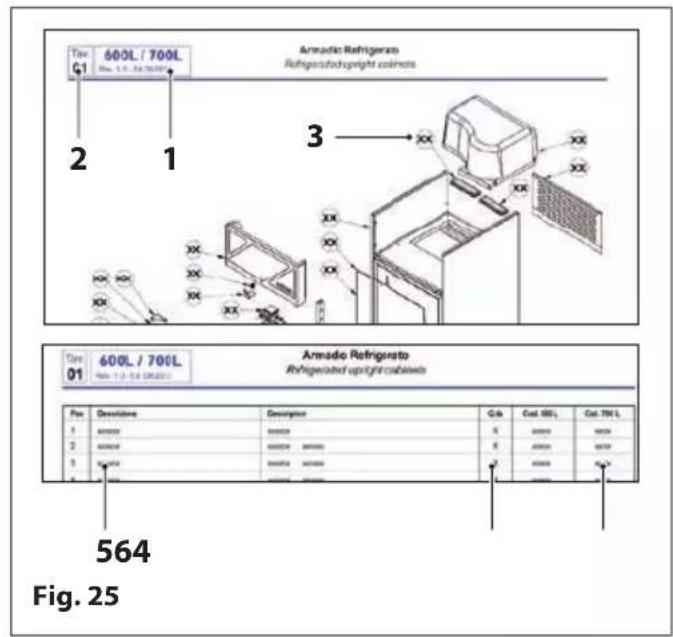
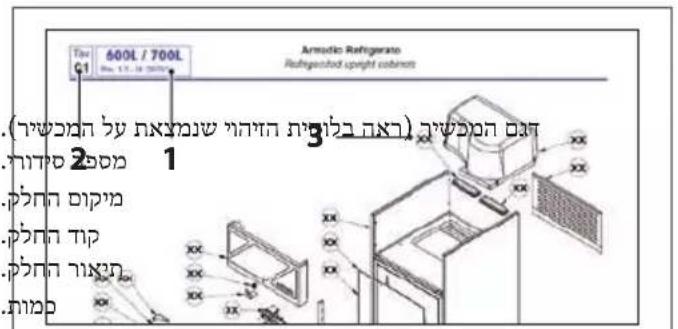
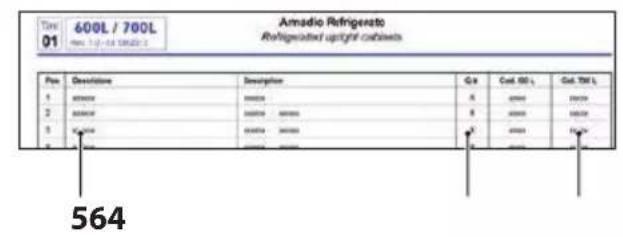
- IDENTIFICATION DATA OF SPARE PARTS (provide a detailed description or request illustrations of the appliance and relative form to order the spare parts which will be supplied to you).
If the chosen service centre supplies you with the necessary documents and relevant order form for the spare parts required, the information to be indicated on the order form is the following:
- MACHINE MODEL - (See CE identification plate on the appliance)
- TABLE NUMBER
- ITEM POSITION
- ITEM CODE
- ITEM DESCRIPTION
- QUANTITY
8 ANNEXES
Ann. 01 Technical specifications of the refrigerant gas
A concise technical specification of the refrigerant gas used, including safety instructions and emergency treatment is supplied as an integral part of this manual.
For further and more specific information about the refrigerant gas used in the appliance in your possession, refer to the safety specifications supplied separately among the documents.
Ann.02 Technical specifications
For all the data referring to the characteristics and technical specifications of the appliance you have purchased, please refer to your contract and the general Product Catalogue where you will find all the technical and functional specifications of your appliance.
Ann. 03 CE Declaration of Conformity
The declaration of conformity can be found among the documents delivered to the customer at the moment of purchase or installation of the appliance (if foreseen).
8.1 Ann. 01 - Technical details of refrigerant gas
REFRIGERANT GAS FREON R134a
Freon R134a
dangerous substance
Tetrafluoroethane (HFC 134a) 100%
Appearance: Colourless liquid gas
Smell: Slightly like ether
GWP:1300
REFRIGERANT GAS R290 (propane)
Propane R290
Inflammable gases, category 1 (H220)
Propane 100%
Appearance: Colourless liquid gas
Smell: Often odorised. Sweet-smell
ing. Barely noticeable in low concentrations.
GWP:

WARNING DANGER
Before carrying out any operation, you must read and carefully follow the instructions outline in the user manual.
Any support work on units charged with R290 refrigerant should only be carried out by expert personnel and trained in the procedures for managing R290 gas. The work must be carried out by personnel designated by the manufacturer or distributor that sold the product.
Only use suitable components; if the components need replacing, it is important to use original spare parts approved for the specific use.
HAZARD IDENTIFICATION
Inhaling for prolonged time can produce anaesthetic effects. Elevated exposure can cause abnormal heart beats and sudden death. Nebulization of the product or splashes of the product can cause burning from frost to the eyes or skin.
FIRST AID

In an emergency case contact the number 118 or another emergency service available in the territory.
To give first aid adopt the following measures:
+nhaling a high concentration can cause suffocation. The symptoms can include loss of movement and/or consciousness. The victim may not realise he/she is suffocating. Wearing the breathing apparatus, move the victims to a ventilated area, make them lie down and keep them warm. Provide artificial respiration only if the victim is not breathing. Seek immediate medical assistance.
-
Contact with the skin: thaw the affected parts with water, remove contaminated clothing very carefully because in case of burns it can stick to the skin. In the case of contact with the skin wash immediately with plenty of lukewarm water. Visit a doctor should irritations or reddening of the skin take place.
-
Contact with eyes: Wash eyes immediately using plenty of running water for at least 15 minutes or with eye solutions keeping the eyes wide-open. Seek immediate medical assistance.
Ingestion: unlikely exposure. If it does occur, do not induce vomiting. If the injured person is conscious, make him/her drink 200-300 ml of water. Seek immediate medical assistance.
Main symptoms: suffocation.
- Requires immediate medical assistance or specialist treatment symptomatic or support therapy when indicated. Do not administer adrenaline or so called Sympathomimetic drugs or similar after exposure because of the risk of heart arrhythmia or subsequent heart failure.
EINLEITUNG
5 ANOMALIES - CAUSES POSSIBLES - SOLUTIONS
PJ.02 Specifications techniques
Aspect: Gaz liquide incolore
Aspect: Gaz liquide incolore
:an npn n npb w nn nnnn
nynnnn nnnn nn nnnn nn nnnn nn nnnn nn nnnn nn nnnn nn nnnn nn nnnn nn nnnn nn nnnn nn nnnn nn nnnn nn nnnn nn nnnn nn nnnn nn nnnn nn nnnn nn nnnn nn nnnn nn nnnn nn nnnn nn nnnn nn nnnn nn nnnn nn nnnn nn nnnn
n nn nyn nn pynn nn npnn nn nn nn
nivn ay y n np a np nny nny nny nny nny nny nny nny nny nny nny nny nny nny nny nny nny nny nny nny nny nny nny nny nny nny nny nny nny nny nry
nynny pyin .nnn b oinnn 00yynwn mn npt 15 ynnn ny nwn by nn ny nyn - nynny pyn .p200-300 1nk npwn ,nana ybn onk .nnpn nnnn nn nnnn nn nnnn
y y -p:
nnn n nn nnn nnn nnn nnn nnn nnn nnn nnn nnn nnn nnn nnn nnn nnn nnn nnn nnn nnn nnn nnn nnn nnn nnn nnn nnn nnn nnn nnn nnn nnn nnn nnn nnn nnn nnn nnn nnn nnn nnn nnn nnn nnn nnn nnn nnn nnn nnn nnn nnn nnn nann
8.1 nnn
R134a7n7n7n7n
1
HFC 134a) 100% )
y-ynn
nxbpnn
1300:GWP
R134a7x7
(1)R290777
(H220) 1 nupop np
R290
100%
y-non nui:
wnn npnpnnny
.
:
::GWP
nnnnn nn nnae nee nee nee nee nee
wnnnn nn nnnnn
n np y won oyn by nay
yynn nn by ynnn n R290
yannn nnyn. R290 nnnny
yann by in nn by wapw yipwn
nbnna nwn nn;nnn nn
wnwovnnnwnwnwnwn,
.

mabn axpa mynb nmb nbby nna na nna nna nna nna nna nna nna
n 1000000000000000000000000000000000000000
ynnn,ynpa -y,ynnn,nynn nynnn nn nynnn ony nynn wovn,ynnn npn by nn

257
8 n
nnp 1000000000000000000000000000000000000000000
y
.
nnpoe npnn nnnn nn nnnn nnnn nnnn nnnn nnnn nnnn nnnn nnnn nnnn nnnn nnnn nnnn nnnn nnnn nnnn nnnn nnnn nnnn nnnn nnnn nnnn nnnn nnnn nnnn nnnn nnnn nnnn nnnn nnnn nnnn nnnn nnnn nnnn nnnn
.
02+
an anan anan anan anan anan anan anan anan anan anan anan anan anan anan anan anan anan anan anan anan anan
wnn nn nnnn nn nnnn
CEnnn nn 03+
(wnn ox) npnn nn n npyn npnn npnn npnn npnn npnn npnn

(2012/19/UE nnnn npnp np) nn p
n nn n nn nn nn nn nn nn nn nn nn nn nn nn nn nn nn nn nn nn nn nn nn nn nn nn nn nn nn nn nn nn nn nn nn nn nn nn nn nn nn nn nn nn nn nn nn nn nn nn nn nn nn nn nn nn nn nn nn nn nn nn nn nn nn nn nn nn nn nn nn nn nn nn nn nn nn nn nn nn nn nn nn nn nn nn nn nn nn nn nn nn nn nn nn nn nn nn nn nn nn nn.
710X
nni ni nni ony np nn p

7n7n
n nn nnnnnnnnnnnnnnnnnnnnnnnnnnnnnnnnnnnnnnnnnnnnnnnnnnnnnnnnnnnnnnnnnnnnnnnnnnnnnnnnnnnnnnnnn
mynnn -nwnb
nnnnn -;wnon
nx nnnn nn nnnn nn nnnn nn nnnn nn nnnn nn nnnn
:0000000000000000
(wnn nn nnn by oynn nn nn nnn)wnn nn
-;(n)
-;mbw
-wn
n nn nnnn nn nnnn nn nnnn nn nnnn nn nnnn nn nnnn nn nnnn nn nnnn nn nnnn nn nnnn nn nnnn nn nnnn nn nnnn nn nnnn nn nnnn nn nnnn nn nnnn nn nnnn nn nnnn nn nnnn nn nnnn nn nnnn nn nnnn nn nnnn nn nnnn nn nannn nn nannn nn nannn nn nannn nn nannn nn nannn nn nannn nn nannn nn nannn nn nannn nn nannn nn nannn nn nannn nn nannn nn nannn nn nannn nn nannn nn nannn nn nannn nn
.(00)
6n
n nnnn nn nnnn nnnn nnnn nnnn nnnn nnnn nnnn nnnn nnnn nnnn nnnn nnnn nnnn nnnn nnnn nnnn nnnn nnnn nnnn nnnn nnnn nnnn nnnn nnnn nnnn nnnn nnnn nnnn nnnn nnnn nnnn nnnn nnnn nnnn
.1970 p10
nnaa nno pio by oann npnnn nnwnan anan nanan anan anan anan anan anan anan
nno n no nnnn nn nnnn nn nnnn
n nn nnn nn nnn nnn nnn nnn nnn nnn nnn nnn nnn nnn nnn nnn nnn nnn nnn nnn nnn nnn nnn nnn nnn nnn nnn nnn nnn nnn nnn nnn nnn nnn nnn nnn nnn nnn nnn nnn nnn nnn nnn nnn
nnn nnnnnnnnnnnnnnnnnnnnnnnnnnnnnnnnnnnnnnnnnnnnnnnnnnnnnnnnnnnnnnnnnnnnnnnnnnnnnnnnnnnnnnnnnnnnnnnnnnnnnnnnnnnnnnn
.
n n) nn nn nn nn nn nn nn nn nn nn nn nn nn nn nn nn nn nn nn nn nn nn nn nn nn nn nn nn nn nn nn nn nn nn nn nn nn nn nn nn nn nn nn nn nn nn nn nn nn nn nn nn nn nn nn nn nn nn nn nn nn nn nn nn nn nn nn nn nn nn nn nn nn nn nn nn nn nn nn nn nn nn nn nn nn nn nn nn
n 1
nynynnnn nn nnnnnnnnnnn
y 1
mnnn nn nnnnnnnnnnn
ynnn knx nno ninn pbi y noyn npnn nny noyn npnn nny noyn npnn n
nniin nniy yab mnnnnnnnnnnnnnnnnnnnnnnnnnnnnnnnnnnnnnnnnnnnnnnnnnnnn
:
Dn nn nnnnnnnnnnnnnnnnnnnnnnnnnnnnnnnnnnnnnnnnnnnnnnnnnnnnnnnnnnnnnnnnnnnnnnnnnnnnnnnnnnnnnnnnnnnnnnnnn
nniynn nnnn nn nnnn nn nnnn nn nnnn (WEEE) nnnnnnnnnnnnnnnnn
.(WEEE-nnnn nnnn nnnynnn nn,nnnnn,nnn) nnnn nn nnnn nn
ninnnnnnnnnnnnnn
| הכלה | |
| הכלה��―הכלה��―הכלה��―הכלה��―הכלה��―הכlege��―הכlege��―הכlege��―הכlege��―הכlege��―הכlege��―הכlege��―הכlege��―הכlege��―הכlege��―הכlege��―הכlege��―הכlege��―הכlege��―הכlege��―הכlege��―הכlege��―הכlege��―הכlege��―הכlege��―הכilege��―הכlege��―הכlege��―הכlege��―הכlege��―הכlege��―הכlege��―הכlege��―הכlege��―הכlege��―הכlege��―הכlege��―הכlege��―הכlege��―הכlege��―הכlege��―הכlege��―הכlege��―הכlege��―הכlege��―הכration �(1) | "''" |
| הכlege��―הכlege��―הכlege��―הכlege��―הכlege��―הכlege��―הכlege��―הכlege��―הכlege��―הכlege��―הכlege��―הכlege��―הכlege��―הכlege��―הכlege��―הכlege��―הכlege��―הכlege��―הכlege��―הכlege��---" | "''" |
| "''" | "''" |
| "''" | "''" |
| "''" | "''" |
| "''" | "''" |
| "''" | "''" |
| "''" | "''" |
| "''" | "''" |
| "''" | "''" |
| "''" | "''" |
| "''" | "''" |
| " ''" | "''" |
| "''" | "''" |
| "''" | "''" |
| "''" | "''" |
| "''" | "''" |
| "''" | "''" |
| "''" | "''" |
| "''" | "''" |
| "''" | "''" |
| "''" | "''" |
| """" | "''" |
| "''" | "''" |
| "''" | "''" |
| "''" | "''" |
| "''" | "''" |
| "''" | "''" |
| "''" | "''" |
| "''" | "''" |
| "''" | "''" |
| "''" | "''" |
| " """ | "''" |
| " """ | "''" |
| " """ | "''" |
| " """ | "''" |
| " """ | "''" |
| " """ | "''" |
| " """ | "''" |
| " """ | "''" |
| " """ | "''" |
| " """ | "''" |
| " " | "''" |
| " " | "''" |
| " " | "''" |
| " " | "''" |
| " " | "''" |
| " " | "''" |
| " " | "''" |
| " " | "''" |
| " " | "''" |
| " " | "''" |
| " " | "''" |
| " " |
y n nn nn nn nn nn nn nn nn nn nn nn nn nn nn nn nn nn nn nn nn nn nn nn nn nn nn nn nn nn nn nn nn nn nn nn nn nn nn nn nn nn nn nn nn nn nn nn nn nn nn nn nn nn nn nn nn nn nn nn nn nn nn nn nn nn nn nn nn nn nn nn nn nn nn nn nn nn nn nn nn nn nn nn nn nn nn nn nn nn nn nn nn nn nn nn nn nn nn nn nn
;npnn no
nannnnn nnnnnnnnnnnnnnnnnnnnnnnnnnnnnnnnnnnnnnnnnnnnnnnnnnnnnnnnnnnnnnnnnnnnnnnnnnnnnnnnnnnnnnnnnnnnnnn
"nnn nnnn nnnn nnnn nnnn nnnn nnnn nnnn nnnn nnnn nnnn nnnn nnnn nnnn nnnn nnnn nnnn nnnn nnnn nnnn nnnn nnnn nnnn nnnn nnnn nnnn nnnn nnnn nnnn nnnn nnnn nnnn nnnn nnnn nannn nnnn nnnn nnnn nnnn nnnn nnnn nnnn nnnn nnnn nnnn nnnn nnnn nnnn nnnn nnnn nnnn nnnn nnnn nnnn nnnn nnnn nnnn nnnn nnnn nnnn nnnn nnnn nnnn nnnn nnnn nnnn nnnn nnn
nnpy ynb nwn oynn
-;nnp
-;nnn
n nnn nn nnn nnn nnn nnn nnn nnn nnn nnn nnn nnn nnn nnn nnn nnn nnn nnn nnn nnn nnn nnn nnn nnn nnn nnn nnn nnn nnn nnn nnn nnn nnn nnn nnn nnn nnn nnn nnn nnn
4.6
xnnn nn nnnn nn nnnnnnnnnnnnnnnnnnnnnnnnnnnnnnnnnnnnnnnnnnnnnnnnnnnnnnnnnnnnnnnnnnnnnnnnnnnnnnnnnnnnnnnnnnn
-ynnnn
;(wwnbnnnnnp)wnn npn
一
nnn nnb oynnnn bn b npnn nnp
000000000000000000000000000000000000000
-72N
nynnnnnnnnnnnnnnnnnnnnnnnnnnnnnnnnnnnnnnnnnnnnnnnnnnnnnnnnnnnnnnnnnnnnnnnnnnnnnnnnn
4.4
n nn nnnnnnnnnnnnnnnnnnnnnnnnnnnnnnnnnnnnnnnnnnnnnnnnnnnnnnnnnnnnnnnnnnnnnnnnnnnnnnnnnnnnnnnnnnnnnnnnnnnnnnnnnnn
-bwnnny
-nnn
-
nynnnn npnnnnnnp nnnn nn nnn
:
mny ennnn n by bnn nn n, mnnn nn
#
"na" bwnn nn n nn nnn nnn nnn nnn nnn nnn nnn nnn nnn nnn nnn nnn nnn nnn nnn nnn nnn nnn nnn nnn nnn nnn nnn nnn nnn nnn nnn nnn nnn nnn nnn nnn nnn nnn nnn nnn nnn nnn nnn nnn
nnnnnn nnnn, npn nn nnnn ne nnnn nnnn nnnn nnnn nnnn nnnn nnnn nnnn nnnn nnnn nnnn nnnn nnnn nnnn nnnn nnnn nnnn nnnn nnnn nnnn nnnn nnnn nnnn nnnn nnnn nnnn nnnn nnnn nnnn nnnn nnnn nnnn nnnn nnnn

.0000
.7
.177nXn npnn
.
npu nnuynny bwnnn nbn nn wann npnnnpn 1k bwn npnn npnn npnn npnn - opnb nneonwnn, nne nee npnnn
4.1 npnn
nnp) npbn by nwn,nnna nnnn nn nnnnnn nn nnnn
bnnn nnnn nn nnnn
;wnbnwn npn nn pn -
wnn nn nnnnnnnnnnnnnnnnnnnnnnnnnnnnnnnnnnnnnnnnnnnnnnnnnnnnn
b(n,nnaan,)n(y)nnpHoynnnpnn
jnnn nn nnnnnnnnnnnnnnnnnnnnnnnnnnnnnnnnnnnnnnnnnnnnnnnnnnnnnnnnnnnnnnnnnnnnnnnnnnnnnnnnnnnnnnnnnnnnnnnnnnnnnnn
n nn nnnnnnnnnnnnnnnnnnnnnnnnnnnnnnnnnnnnnnnnnnnnnnnnnnnnnnnnnnnnnnnnnnnnnnnnnnnnnnnnnnnnnnnnnnnnnnnnnnnnnnn
non no on y w on o on y hwn
nivn npnn nniy
w#
1000000000000000000000000000000000000000000
nnon ony won np on y noh .wnon npnn nynnnn nn nnnn
.7wn 7n nn npnn n
"nnn nn nnnn nn nnnn nn nnnn nn nnnn
.
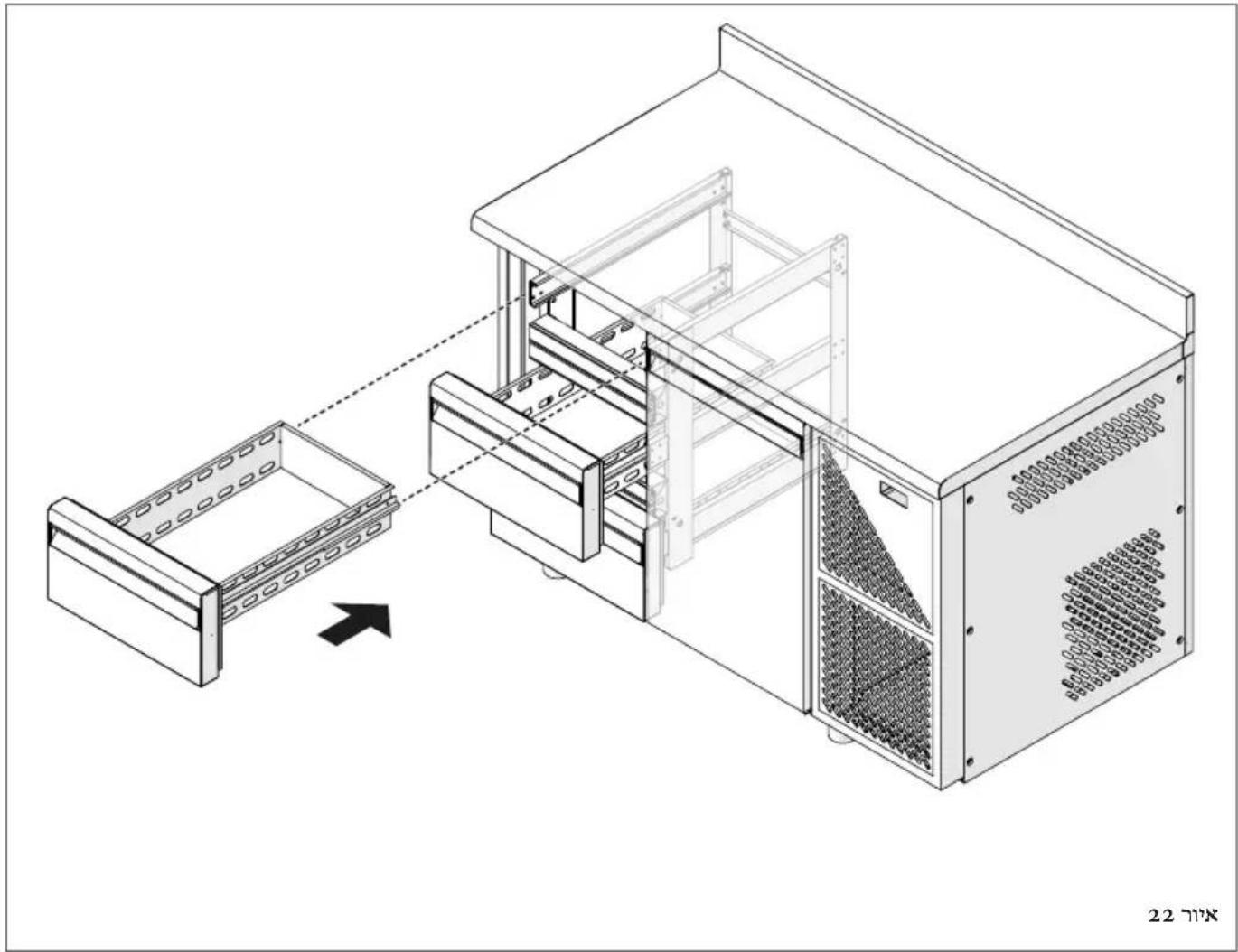
-.(11)
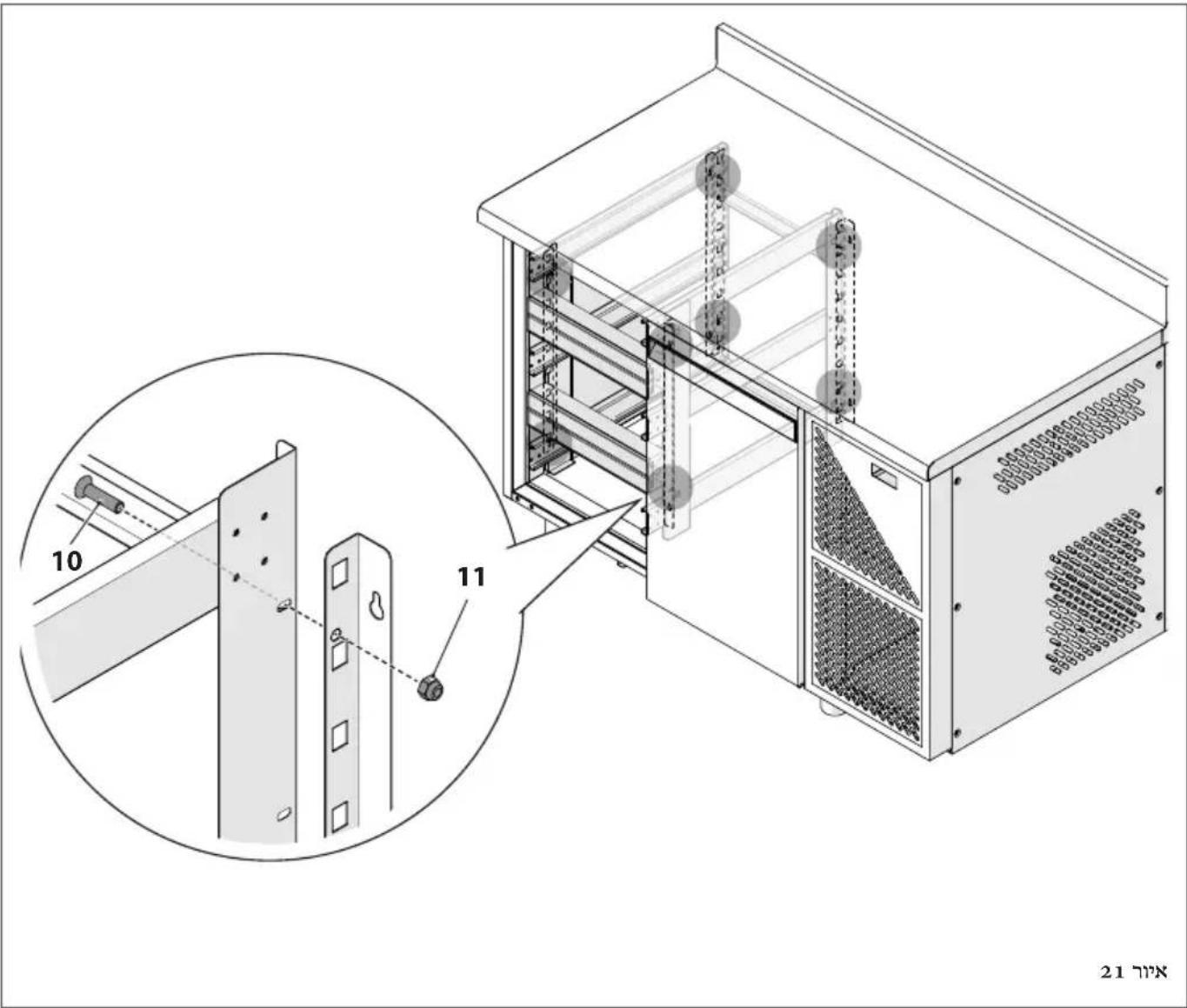
nnnnnnnnnnnnnnnnnnnnnnnnnnnnnnnnnnnnnnnnnnnnnnnnnnnnnnnnnnnnnnnnnnnnnnnnnnnnnnnnnnnnnnnnnnnnnnnnnnnnnnnnnnnnnnnnnnnnnnn

.1717
(10) 8 (9) n nn nn nn nn nn

non,nyn npn by nnnnnn nnb nnnn nn nnnn nn nnnn nn
.05nnn

3.5.1
nnnn nnnn nn nnnn by (bnx) nnnn
mnnn n 3
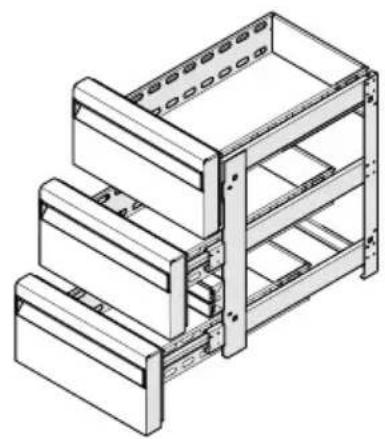
123
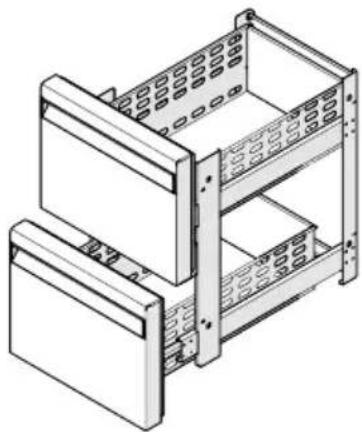
O

O
137
| ('p) ִרַבִר ( 'p) ִרַבִר | ( 'p" ) ִרַבִר הכלה X 归乎 X 归乎 | ( 'p" ) ִרַבִר הכלה X 归乎 X 归乎 | ( 'p" ) ִרַבִר הכECH X 归乎 X 归乎 | ( 'p" ) ִרַבִר הכECH X 归乎 X 归乎 | ( 'p" ) ִרַבִר הכECH X 归乎 X 归乎 |
| 24 30 430X 660 x 770 430X 625 x 68 | 5 1/3x 3 | 1 | |||
| 24 18 430X 660 x 770 430X 625 x 68 | 5 x 1/2 2 | 2 | |||
| 24 18 430X 660 x 770 430X 625 x 68 | 5 2/3 + 1/3 | 3 |
wnn
:wnn nn bny
-nnx
"uynn nn 2 ynn "Loc": n 30 nn
:
"UnL"nnn nn nn nn by n
7777777
-nnn
ann 1n n, SET np by n
15 1
xynnnn,pannnn,non ntn nn 15 wnnn bnyan bn,panbn SET npnp nywnn nn
.
y7 y7y7n7y7n
-7nX7n
nnnnnnaa nnaa 2 7
Xn nn nnnnnnnnnnnnnnnnnnnnnnnnnnnnnnnnnnnnnnnnnnnnnnnnnnnnnnnnnnnnnnnnnnnnnnnnnnnnnnnnnnnnnnnnnnnnnnnnnnnnnnnnnnnnnnnnnnnnnnnnnnnnnnnnnnnnnnnnnnn

3.4 EVJ2
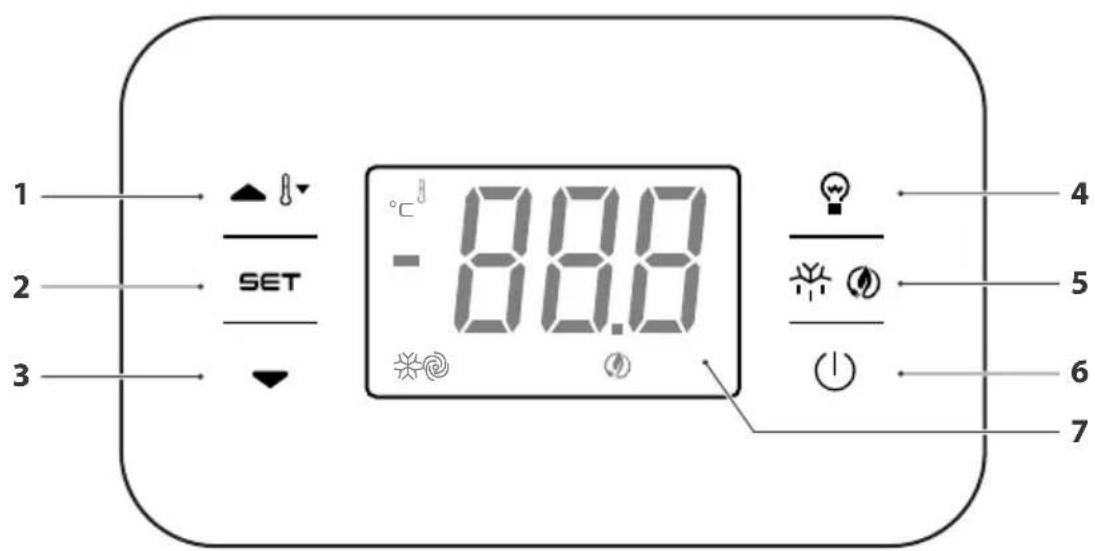
127
p/pan tonn:nn 2 wab 7on by nnn
nnnnnnnnnnnnnnnnnnnnnnnnnnnnnnnnnnnnnnnnnnnnnnnnnnnnnnnnnnnnnnnnnnnnnnnnnnnnnnnnnnnnnnnnnnnnnnnnnnnnnnnnnnn
pnt 017yaxn;nnnynn,ynnnn
3.3.4
nynnnnnnnnnnnnnnnnnnnnnnnnnnnnnnnnnnnnnnnnnnnnnnnnnnnnnnnnnnnnnnnnnnnnnnnnnnnnnnnnnnnnnnnnnnnnnnn
nnnnnnnnn nn nyn 4 wabwpan by ynb
nnn nn nyn (n 1- P4 nnnn nn) nn nn nn nn nn nn nn nn nn nn nn nn nn nn nn nn nn nn nn nn nn nn nn nn nn nn nn nn nn nn nn nn nn nn nn nn nn nn nn nn nn nn nn nn nn nn nn nn nn nn nn nn nn nn nn nn nn nn nn nn nn nn nn nn nn nn nn nn nn nn nn nn
bynn n nn nni (noovnn) d noan nyxnxnyipw mnnn bn
3.3.5
wnnnn nnnnnnnnnnnnnnnnnnnnnnnnnnnnnnn

"10000000" np0000000000000000000000000000000000000000
pnn/na n nn,annn 4 wpon by pnn
一.
. npnnn ;n nn nnnnnnnnnnnnnnn
nnn n nn nn nn nn nn nn nn nn nn nn nn nn nn nn nn nn nn nn nn nn nn nn nn nn nn nn nn nn nn nn nn nn nn nn nn nn nn nn nn nn nn nn nn nn nn nn nn nn nn nn nn nn nn nn nn nn nn nn nn nn nn nn nn nn nn nn nn nn nn nn nn nn nn nn nn nn nn nn nn nn nn nn nn nn
3.3.2
:wnn nn bww
一
nwnn nnnnnn 2 100 "Lco" nn nn nn by: nnn 30 nn nn
:
nNn nnn "UnL" anon nn np by:nnn nnnn nee
nany
nynnnnnnnnnnnnnnnnnnnnnnnnnnnnnnnnnnnnnnnnnnnnnnnnnnnnnnnnnnnnnnnnnnnnnnnnnnnnnnnnnnnnnnnnnnnnn
anannn ann nnn: a SET wpa by nnbb
wn by nyn npn npn mna bn nnnn nn nnnn
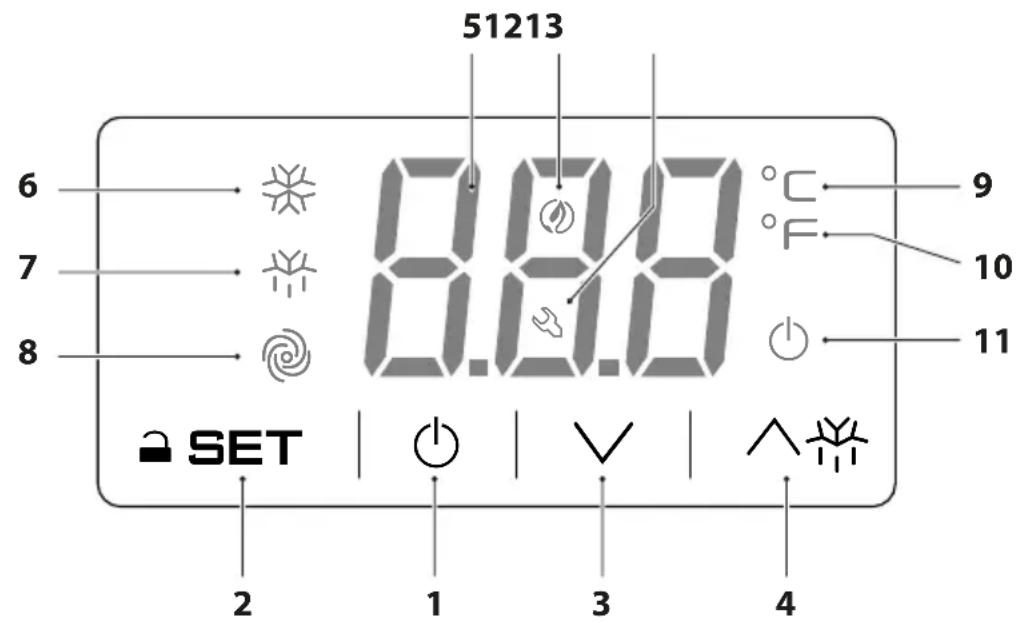
117X
| הכלה | הכלה | |
| .(ה...)הכלה/pה........../ה........../ה........../ה........../...;...;...;...;...;...;...;...;...;...;...;...;...;...;...;...;...;...;...;...;...;...;...;...;...;...;...;...;...;...;...;...;...;...;...;...;...;...;...;...;...;...;...;...;...;...;...;...;...;...;... | (●) | 1 |
| ./ה........../ה........../ה........../...;...;...;...;...;...;...;...;...;...;...;...;...;...;...;...;...;...;...;...;...;...;...;...;...;...;...;...;...;...;...;...;...;...;...;...;...;...;...;...;...;...;...;...;...; ...SET;...;...;...;...;...;...;...;...;...;...;...;...;...;...;...;...;...;...;...;...;...;...;...;...;...;...;...;...;...;...;...;...;...;...;...;...;...;...;...;...;...;...;...;...;...;...;...;...;...; ...SET;...;...;...;... SET | 2 | 2 |
| ,......;......;......;......;......;......;......;......;......;......;......;......;......;......;......;......;......;......;......;......;......;......;......;......;......;......;......;......;......;......;......;......;......;......;......;......;......;......;......;......;......;......;......;......;......;......;......;......;......;......;...... ......;......;......;......;......;......;......;......;......;......;......;......;......;......;......;......;......;......;......;......;......;......;......;......;......;......;......;......;......;......;......;......;......;......;......;......;......;......;......;......;......;......;......;......;......;......;......;......;......;......; ......;......;......;......;......;......;......;......;......;......;......;......;......;......;......;......;......;......;......;......;......;......;......;......;......;......;......;......;......;......;......;......;......;......;......;......;......;......;......;......;......;......;......;......;...... ......;......;......;......;...... ......;...... ...... ...... ...... ...... ...... ...... ...... ...... ...... ...... ...... ...... ...... ...... ...... ...... ...... ...... ...... ...... ...... ...... ...... ...... ...... ...... ...... ...... ...... ...... ...... ...... ...... ...... ...... ...... ...... ...... ...... ...... ...... ...... ...... ...... ...... ...... ...... ...... ...... ....... ...... ...... ...... ...... ...... ...... ...... ...... ...... ...... ...... ...... ...... ...... ...... ...... ...... ...... ...... ...... ...... ...... ...... ...... ...... ...... ...... ...... ...... ...... ...... ...... ...... ...... ...... ...... ...... ...... ...... ...... ...... ...... ...... ...... ...... ...... ...... ...... ...... ...... |
nnn nn nnnn nn nnnn nn nnnn nn nnnn nn nnnn nn nnnn nn nnnn nn nnnn nn nnnn nn nnnn nn nnnn nn nnnn nn nnnn nn nnnn nn nnnn nn nnnn nn nnnn nn nnnn nn nnnn nn nnnn nn nnnn nn nnnn nn nnnn nn nnnn nn nnnn nn
n nn nnnnnnnnnnnnnnnnnnnnnnnnnnnnnnnnnnnnnnnnnnnnnnnnnnnnnnnnnnnnnnnnnnnnnnnnnnnnnnn
X
3.1 nayn
TNTNn nn n
-;700
-bwnn y
-nnnby
; (x) 100 np wwnn nn nnnn nn nnnn
-npnn
. pinb nx
3.2 1
nnnnn nnnn nn nnnn nn nnnn nn nnnn nn nnnn nn
.00000000000000000000000000000000000000000000000000
3 nab yannn np (yip-ynx) wip-n pnnnyn nn kn npwn npwn npwn npwn npwn npwn npwn npwn npwn npwn npwn npwn npwn npwn npwn npwn npwn npwn npwn npwn npwn npwn npwn npwn npwn npwn npwn npwn npwn npwn npwn npwn npwn npwn npwn npwn npwn npwn npwn npwn npwn npwn npwn npwn npwn npwn npwn npwn npwn npwn npww

2.4
mny nanyn by nynn by ywn nn npn
100nnnnn nn by ynnnnnnnnnnnn
nnpnn (1)wn nn nnn nnn nnn nnn nnn nnn nnn nnn nnn nnn nnn nnn
.0710712
#
y by nayn nn nnnn nn no mo 1nnn nn y n/naon nnnn nnnn no knoip nnnn no moob oov nannn noo
mnnn
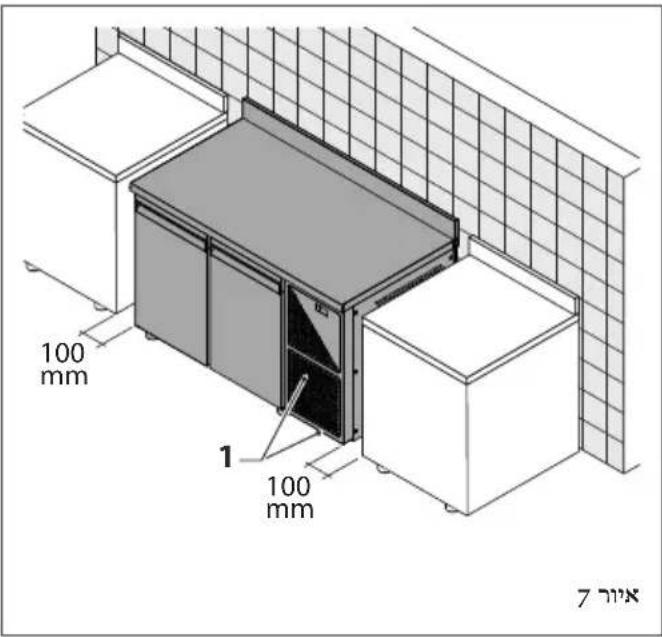
nwn nn npnn nnn nnn nnn nnn nnn nnn nnn nnn nnn nnn nnn nnn nnn nnn nnn nnn nnn nnn nnn nnn nnn nnn nnn nnn nnn nnn nnn nnn nnn nnn nnn nnn nnn nnn nnn nnn nnn nnn nnn nnn nnn nnn nnn nnn nnn nnn nnn nnn nnn
. sin sn sb
770 5
n nn nnnnnnnnnnnnnnnnnnnnnnnnnnnnnnnnnnnnnnnnnnnnnnnnnnnnnnnnnnnnnnnnnnnnnnnnnnnnnnnnnnnnnnnnnnnnnnnnnnnnnnnnnnnnnnnnnnnnnnnnnnnnnnnnnnnnnnnnnnnnnnnnnnnnnnnnnnn
2.5 7
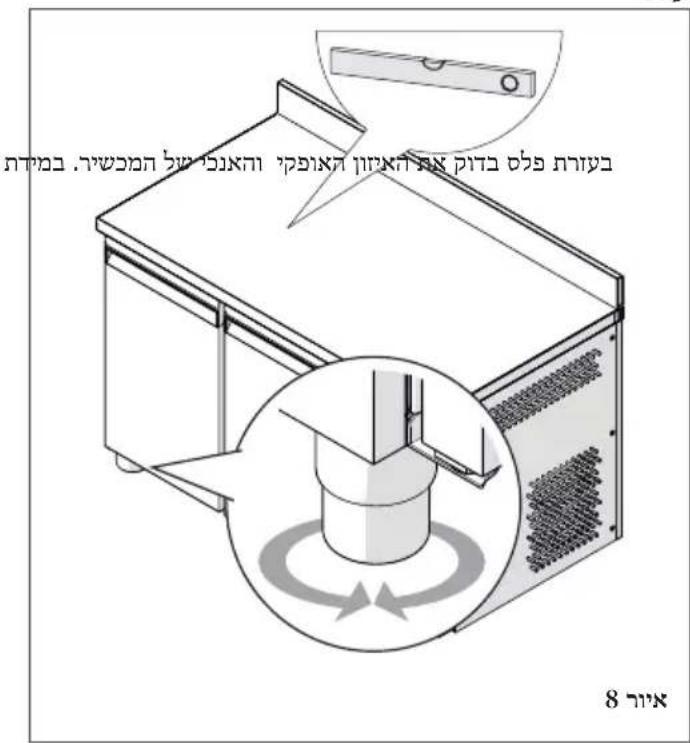
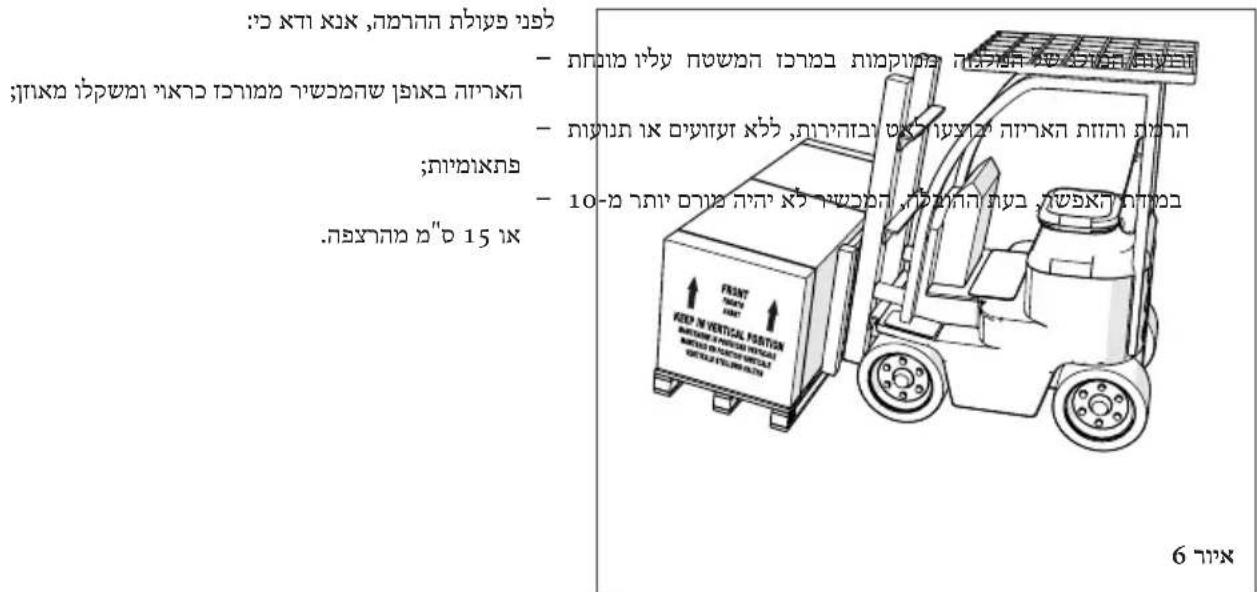
2.2 77
nnpnn npnn nnn nnn nnn nnn nnn nnn nnn nnn nnn nnn nnn nnn nnn nnn nnn nnn nnn nnn nnn nnn nnn nnn nnn nnn nnn nnn nnn nnn nnn nnn nnn nnn nnn nnn nnn nnn nnn nnn nnn nnn nnn nnn nnn nnn nnn nnn nnn nnn nnn nnn
nnn nnnnnnnnnnnnnnnnnnnnnnnnnnnnnnnnnnnnnnnnnnnnnnnnnnnnnnnnnnnnnnnnnnnnnnnnnnnnnnnnnnn
n nn nnnn nnnn nnnn nnnn nnnn nnnn nnnn nnnn nnnn nnnn nnnn nnnn nnnn nnnn nnnn nnnn nnnn nnnn nnnn nnnn nnnn nnnn nnnn nnnn nnnn nnnn nnnn nnnn nnnn nnnn nnnn nnnn nnnn nnnn nnne
2.3 npn
1 npnn nnpn nn npn npn npn npn npn npn npn npn npn npn npn npn npn npn npn npn npn npn npn npn npn npn npn npn npn npn npn npn npn npn npn npn npn npn npn npn npn npn npn npn npn npn npn npn npn npn npn npn npn npn np
nnnnnnnnnnnnnnnnnnnnnnnnnnnnnnnnnnnnnnnnnnnnnnnnnnnnnnnnnnnnnnnnnnnnnnnnnnnnnnnnnnnnnnnnnnnnn
.1n nnn nn nn nn nn nn nn nn nn nn nn nn nn nn nn nn nn nn nn nn nn nn nn nn nn nn nn nn nn nn nn nn nn nn nn nn nn nn nn nn nn nn nn nn nn nn nn nn nn nn nn nn nn nn nn nn nn nn nn nn nn nn nn nn nn nn nn nn nn nn nn nn nn nn nn nn nn nn nn nn nn nn nn
n nnnn nn nnnn nnnn nnnn nnnn nnnn nnnn nnnn nnnn nnnn nnnn nnnn nnnn nnnn nnnn nnnn nnnn nnnn nnnn nnnn nnnn nnnn nnnn nnnn nnnn nnnn nnnn nnnn nnnn nnnn nnnn nnnn nnnn nnnn nnnn
.0nn nn nnnn 1 0yab innayn nn noyn mnynn

710X
nnnn nn nnnn nn nnnn nn nnnn nn nnnn nn nnnn nn nnnn nn
.
nyn by nnnn nn nn nn nn nn nn nn nn nn nn nn nn nn nn nn nn nn nn nn nn nn nn nn nn nn nn nn nn nn nn nn nn nn nn nn nn nn nn nn nn nn nn nn nn nn nn nn nn nn nn nn nn nn nn nn nn nn nn nn nn nn nn nn nn nn nn nn nn nn nn nn nn nn nn nn nn nn nn nn nn nn nn nn nn nn nn
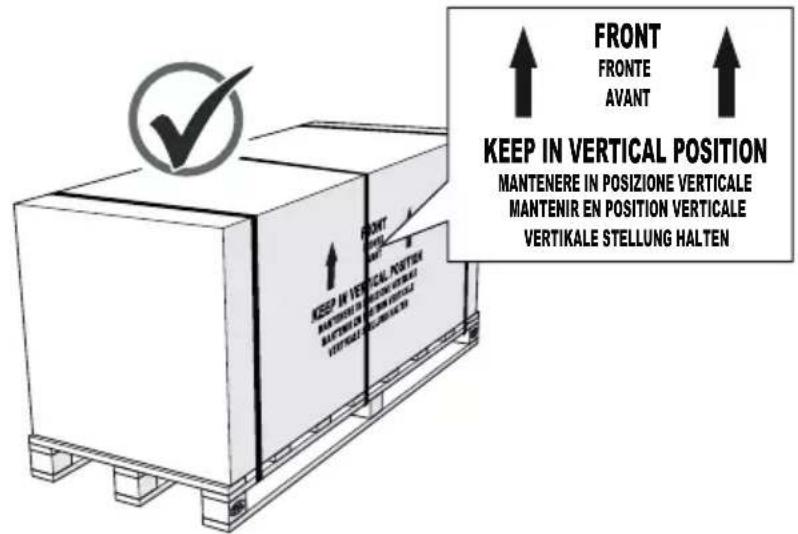
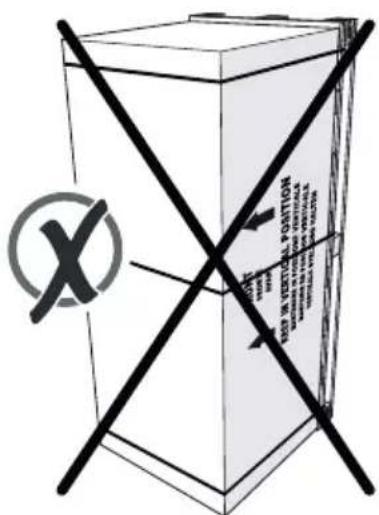
57
.
nno nnn
yipnnn nn nnnn noynnnn nn nnnn nn nnnnnnnnnnn
nbnn bbon nx onnnb mps, nssn nn

1.7
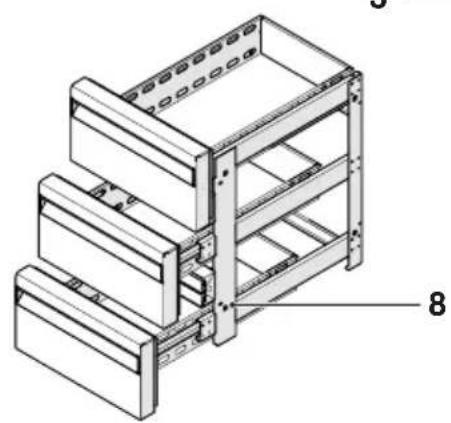
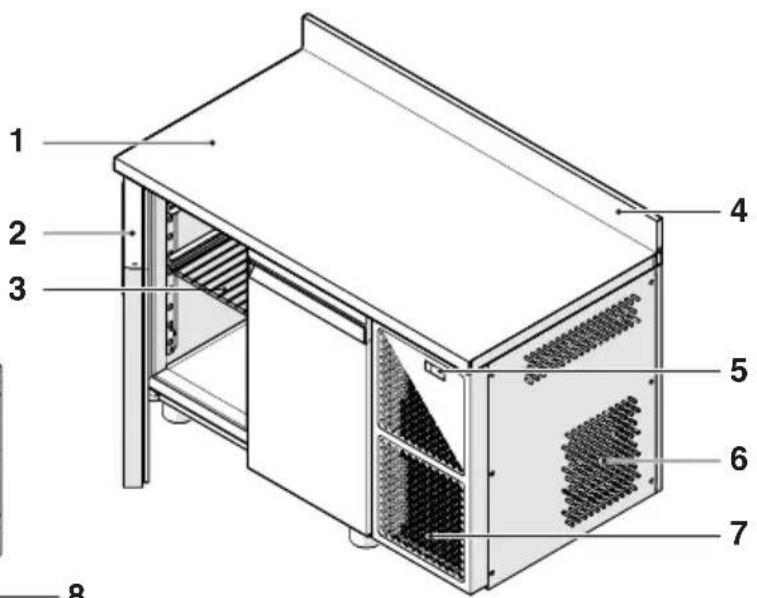
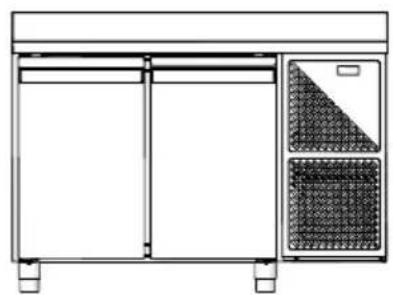
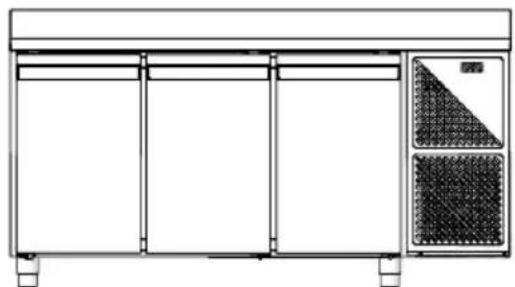
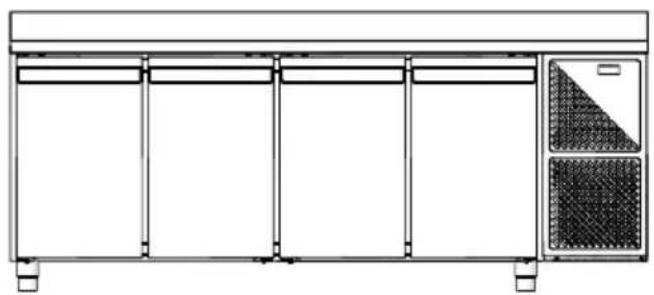
4
1.8 y
(wnn) won byw nnn nmb my, won b onipnn an nnna
1.6
. 100000000000000000000000000000000000000000000000000000000000000000000
w

n nn nnnn nnnn nnnn nnnn nnnn nnnn nnnn
(wnn) won by nnn nnn y, won b oynnn nn nnn
wn nn nnnn nn nnnn nnnn nnnn
118 1

1
aaii jai i aai ai aai ai aai ai aai ai aai ai aai ai aai ai aai ai aai ai aai ai aai ai aai ai aai ai aai ai aai ai aai ai aai ai aai ai aai ai aai ai aai ai aai ai aai ai aai ai aai ai aai ai aai ai aai ai aai ai aai ai aai ai aai ai aai ai aai ai
1.3a aal ylll 1.2aaal jss sgs 1! b3e gilol wail lai yall gao aggagagagagagagagagagagagagagagagagagagagagagagagagagagagagagagagagagag
15 15
y
Jgao jgaoall 100 Jj 15 100 g jxll Jlal jg jxll Jxll Jxll
aal 300-200 a15g aagb j51 gaii y dla Jao
auiyj 一
Jj j 1
Laiai) 1aii iia joo uo jol o go. dai lui jao
8.1
R134a 2j
an + 1 = 2an2a_n
R134a j
HFC 134a) 100% gjgjgjgjgjgjgj
(UE/19)2012 3g3g34.0g31) 34.0g34.0g34.0g34.0g34.0g34.0g34.0g34.0g34.0g34.0g
$$ - \therefore (J _ {a} \cup J _ {b} \cup $$
$$ \left. \right.\left. \right.\left. \right.\left. \right.\left. \right.\left. \right.\left. \right.\left. \right.\left. \right.\left. \right.\left.\left.\left.\left.\left.\left.\left.\left.\left.\left.\left.\left.\left.\left.\left.\left.\left.\left.\left.\left.\left.\left.\left.\left. \text {j} g a l l\right)\right]\right]\right]\right]\right]\right]\right]\right]\right]\right]\right]\right]\right]\right]\right]\right]\right]\right]\right]\right]\right]\right]\right] $$
aaii aig jiaai Jaaai yjaiy jaiy jaiy jaiy jaiy jaiy
aal aal yll lal aal oaa aal aal aal aal aal aal aal aal aal aal aal aal aal aal aal
Lgjgb Jaaol aaiall aaiil jll 100
$$ - \therefore \omega_ {1} = \omega_ {2} $$
21 21 21 21 21 21 21 21 21 21 21 21 21 21 21 21 21 21 21 21 21 21 21 21
aol jie gbiu wiy i j yaiSuljy daiwll Jiuwll ciue -
4.6 a g
jllgill jolal jolal jolal jolal jolal jolal
$$ - _ {i j k l} $$
jLgUaJbG aIbIaJIbIaJIbIaJIbIaJIbIaJIbIaJIbIaJIbIaJIbIaJIbIaJIbIaJIbIaJIbIaJIbIaJIbIaJIbIaJIbIaJIbIaJIbIaJIbIaJIbIaJIbIaJIbIaJIbIaJIbIaJIbIa
$$ - \cdot p _ {1} a _ {2} b _ {3} c _ {4} d _ {5} $$
4.7 LsJgcl
aaii aaiy bai y jaiy i jaiy g aaiy g aaiy aaiy aaiy
一
-2y2115x
- -100000000000000000000000000000000000000000
Jaiy jao yag aaljy paoa aagll allo ay
3aay uay ayall y cagaaol oolgog aylgs baa so prnaii
1uaj uay aubz jao yag ao aaslo jg5
g/ g auiy gull ausl plauow lgl yag gll cya yag wg 1s
aueb1 eay jao laill ybgabbl agy biaill pdoanl ol a
Iole aadil ojy g ggl gclrall y abg cnae aebra -
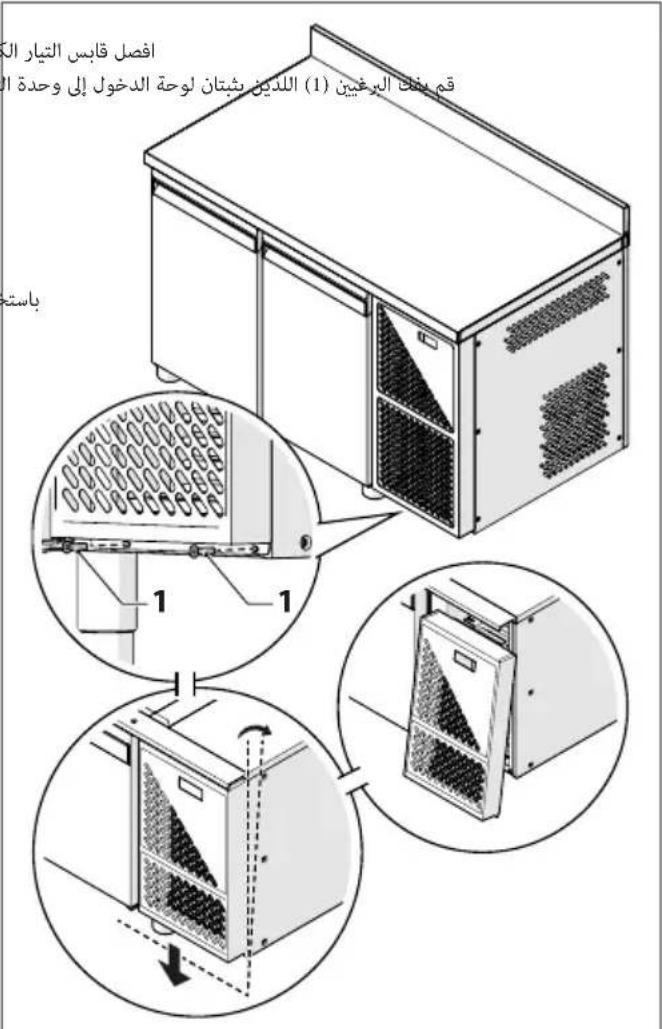
24
1 1

EgJU5
.(jyjyjyjyjyjyjyjyjyjyjyjyjyjyjyjyjyjyjyjyjyjyjyjyjyjyjyjyjyjyjyjyjyjyjyjyjyjyjyjyjyjyjyjyjyjyjyjyjyjyj y
4.2 jLw a
$$ 1 2 0 - \cdot y l a s s c i d e $$
$$ \lim _ {y \rightarrow + \infty} \frac {\sin^ {2} y}{\cos^ {2} y} = \frac {\sin^ {2} y}{\cos^ {2} y} $$
$$ i a b i s a r l l j a d g o g b i c g g b j l g b j l a t i x i t a b i s b i e $$
$$ \begin{array}{l} \therefore \text {d i f f} \quad \text {s l i g h t a g e} \quad \text {a d i f f} \quad \text {s l i p s t r i b u l y} \quad \text {j l o w} \quad \text {a d i f f} \quad \text {l o w} \quad \text {a l l} \quad \text {j l o w} \quad \text {l o w} \quad \text {a l l} - \ - \dot {c} \dot {a} \dot {b} \dot {c} \dot {a} \dot {b} \ \end{array} $$
jao
g 10000000000000000000000000000000000000000000

yuljao aaloo
Jgallie y jol (1) yolal glal pok oog a bla de bla
Iygl g/9 jolgs qibl l, sijjgoy gll jgal aks ales gai
Jn no jaywly gill! jell og 6k u jkgl jll
.ogll agllb wgiog jgal pakyl jkdo
Sgoy jlr clog giaowl jno abg g aclab dabpdaa. gao all dao cabi
.ajlgae nclabio ge
Lttia fahbi cblt laqno no gail dl alj!
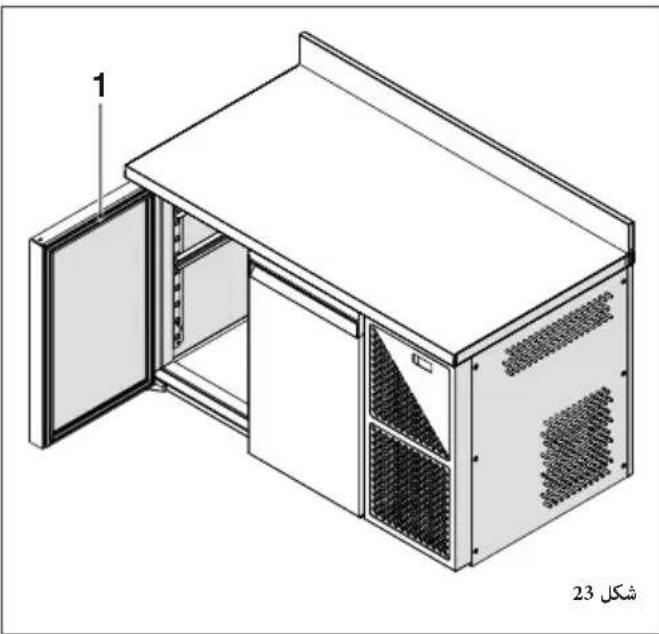
jdooll
aaii jao aai iie aia jai gannai jao 5ti

4dai
a 1000000000000000000000000000000000000000000
| x^ | = 1| x| .
auii piuunbi Ig jSglulal oio jlaabai lclse 1

aaiiae gbi aaiyaii jaaai i 100000000000000000000000000000000000000000000000000000000
jai jia jia jia jia jia jia jia jia jia jia jia jia jia jia jia jia jia jia jia jia jia jia jia jia jia jia jia jia jia jia jia jia jia jia jia jia jia jia jia jia jia jia jia jia jia jia jia jia jia jia j
a 1000000000000000000000000000000000000000000
d( x,y) = d( x_0,y) = | y|
.ajilwlljwl
- x Q. x^2 - 4x + 3 = 0
Ss11 100000000000000000000000000000000000000000000
zihai liu xiaotian
aill aill jll jll) 11000 gao de bao all poab o ab xg od ab adn caii jao daa jao jao jao
ailll llaiai yu plalay pai pae g. dabi (yj) jolg, qall
jgl jie juiy61 1
y
j 100000000000000000000000000000000000000000000000000
aoceli wolabai bao g aabi
4.4.5.6.1 aIaIIg aIbIaII IuIaI
1
a aal g aalg aag e 100 y c gaaal cglttly g Jyao jlog jle cie cai tll gag jgal a bia p: aegj g jgal Jd d aggol a gl al y p -
· s.15
jlaa aaaa aaaa aaaa
aaiy jia aaii aai i 10
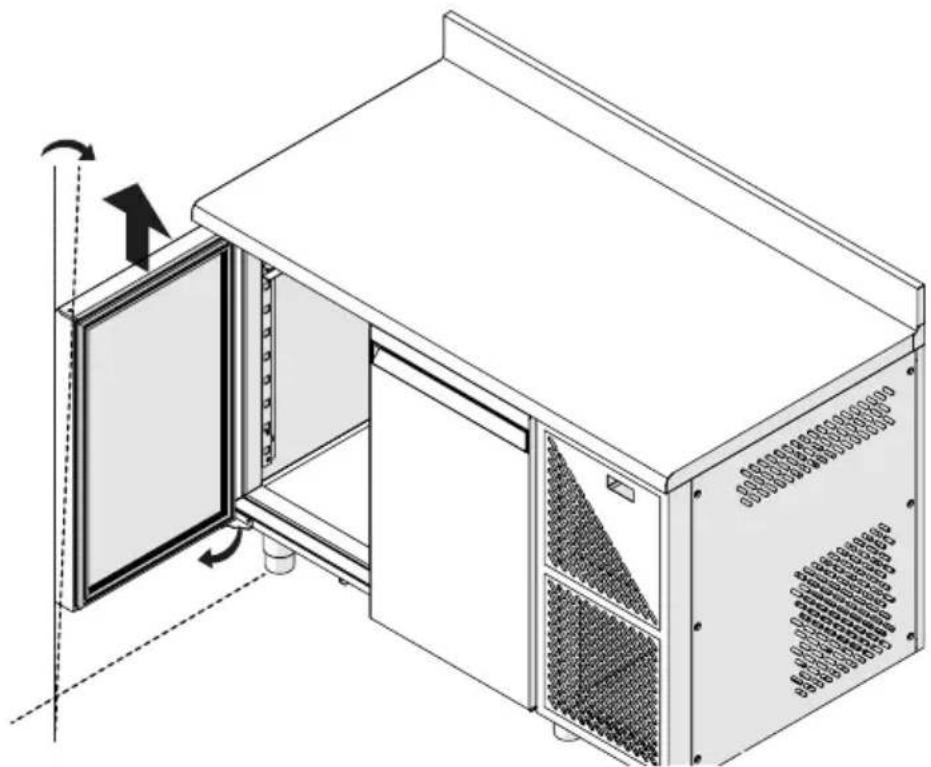
16
(4)
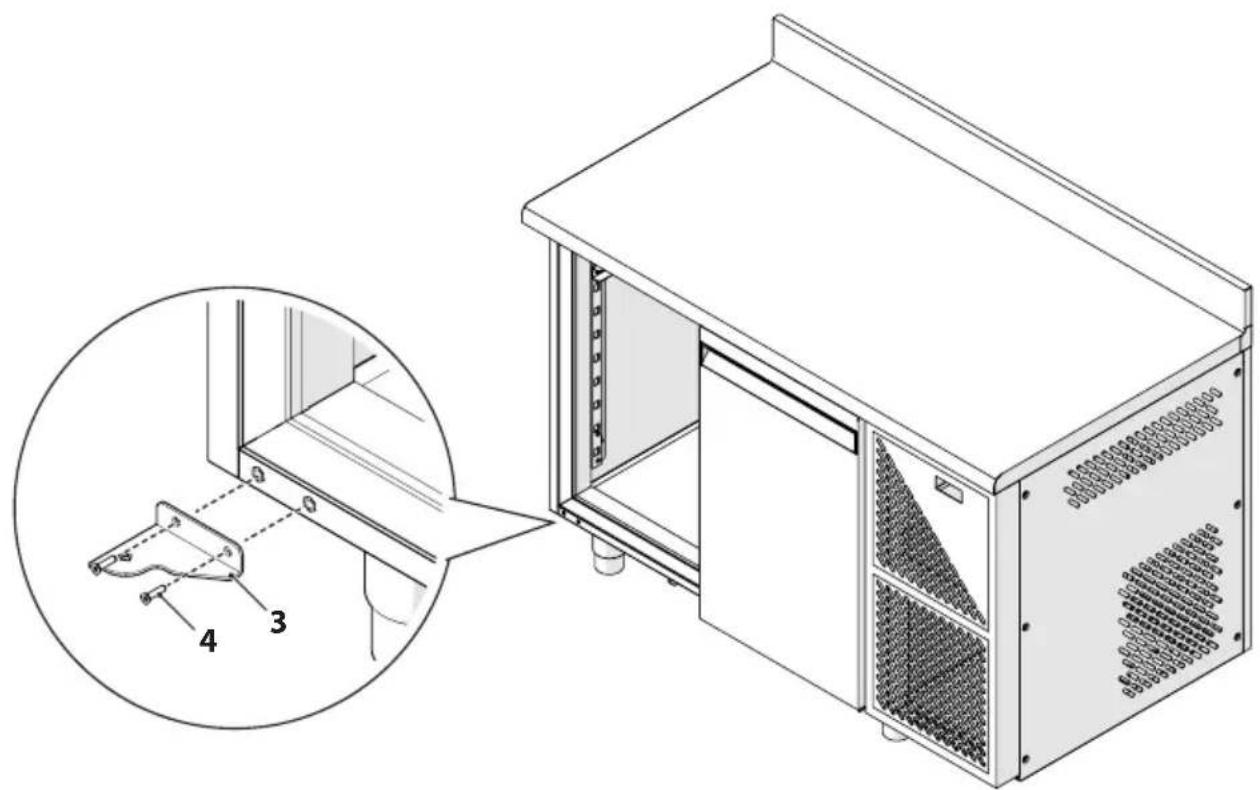
17
auiu cuiu yiy jg 1yjdegeoo yu
$$ \begin{array}{l} - \therefore \sqrt {3} \vert 1, \sqrt {3}, \ - d i a \vert_ {4 0} \ \therefore (1) \dot {a} \dot {b} _ {j} ^ {i} \ - (3) \bar {a} _ {i} \dot {L} _ {i i} \ \end{array} $$
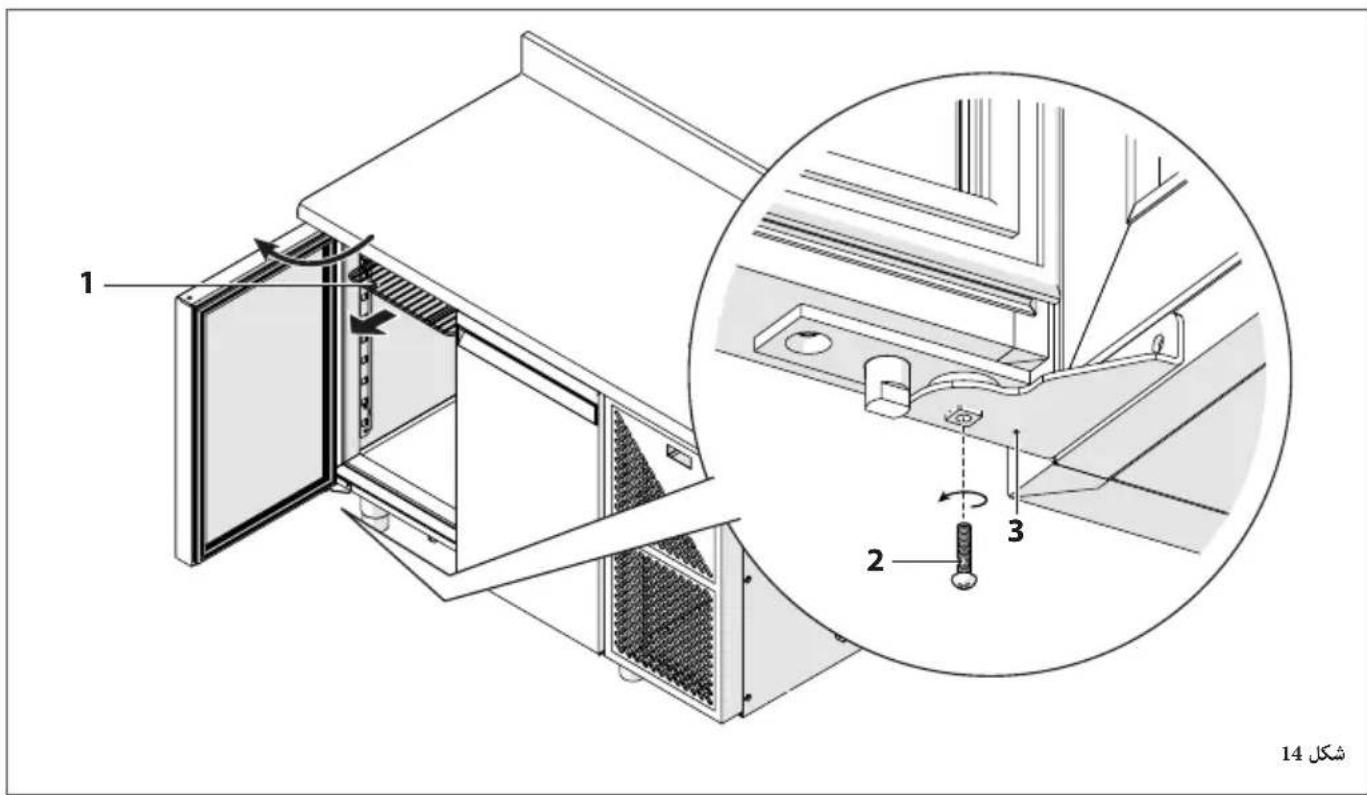
-8gBll
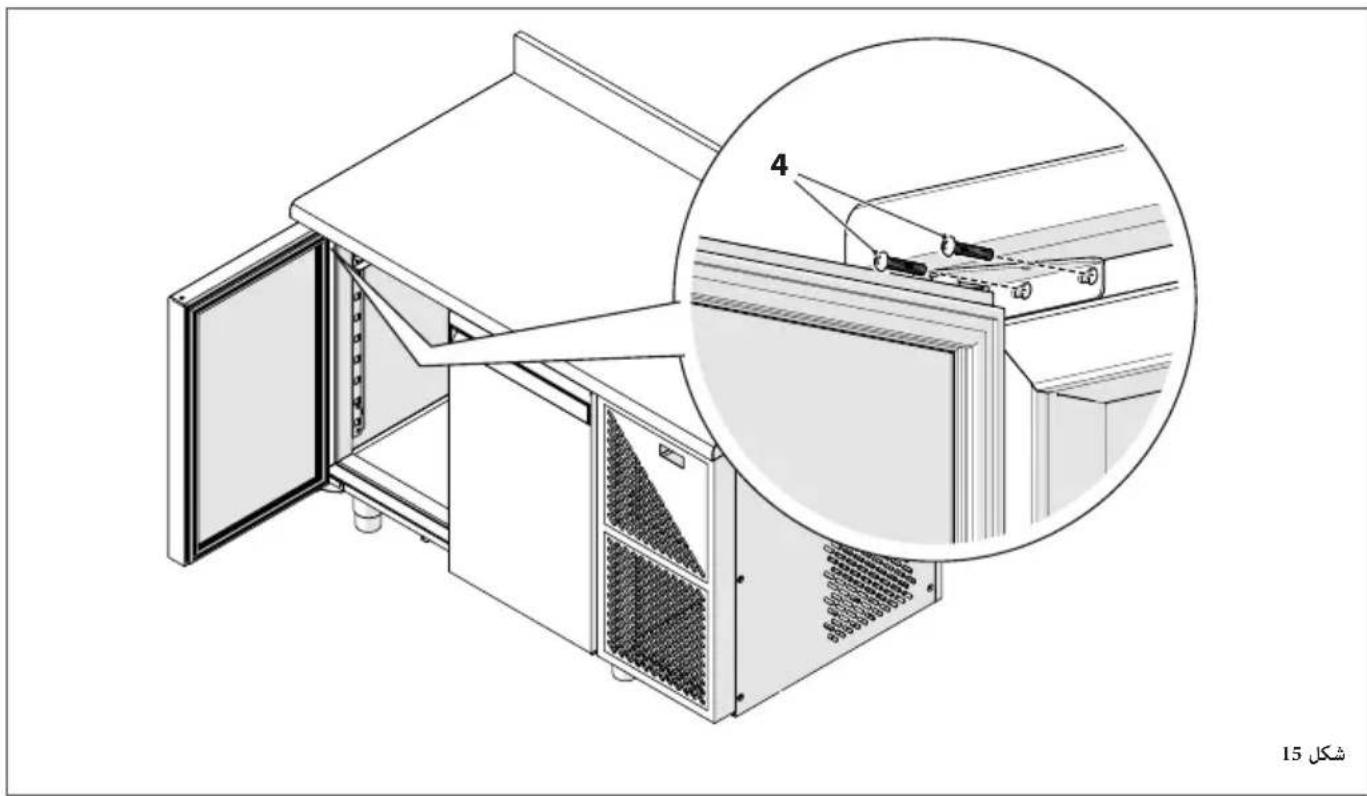
3.5
aIyI yIyI yIyI yIyI yIyI yIyI yIyI yIyI yIyI yIyI yIyI yIyI yIyI yIyI yIyI yIyI yIyI yIyI yIyI yIyI y

3.5.1 2j
y 3 1 1 1 1 1 1 1 1 1 1 1 1 1 1 1 1 1 1 1 1 1
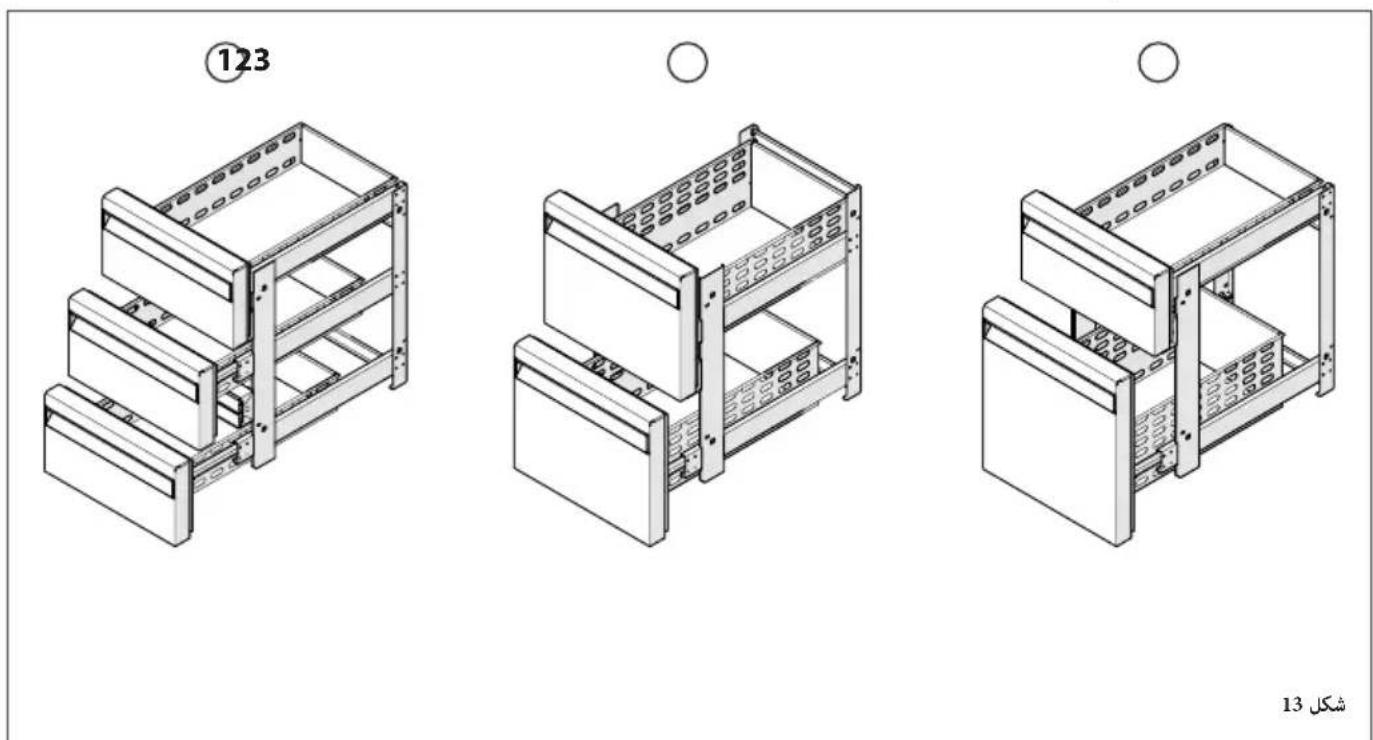
| \( (pp) \) \( p \) | \( (pp) \) \( p \) | \( (pp) \) \( p \) | \( (pp) \) \( p \) | \( (pp) \) \( p \) |
| \( (pp) \) \( p \) | \( (pp) \) \( p \) | \( (pp) \) \( p \) | ||
| \( 2430450\times 660 \) | \( <770430\times 625\times 6853/1\times 3 \) | |||
| \( 2418450\times 660 \) | \( <770430\times 625\times 6852/x12 \) | |||
| \( 2418450\times 660 \) | \( <770430\times 625\times 6853/23+/1 \) |
zilabla 20g zilb/
$$ \because \mathrm {a l l} \mathrm {a l b} \mathrm {d a g} \mathrm {l} \mathrm {d a} \mathrm {a l} $$
$$ : 0 i \dots a $$
$$ \text {i} \text {i} \text {i} \text {i} \text {i} \text {i} \text {i} \text {i} \text {i} \text {i} \text {i} \text {i} \text {i} \text {i} \text {i} \text {i} \text {i} \text {i} \text {i} \text {i} \text {i} $$
$$ \therefore \text {l a l} \text {l a l} \text {a g} \text {l a l} \text {a g} \text {l a l} $$
$$ . (1) \delta \text {a l g} \text {a l g} \text {a l g} \text {a l g} \text {a l g} \text {a l g} \text {a l g} \text {a l g} \text {a l g} \text {a l g} \text {a l g} \text {a l g} \text {a l g} \text {a l g} \text {a l g} \dots $$
$$ (S e t p o i n t) J a s s b i w y w w b a i b a i b a $$
$$ \therefore \text {l o s} \text {l i n e} \text {i n t h e} \text {j e f f} \text {i n t h e} \text {j e f f} \text {i n t h e} \text {j e f f} \text {i n t h e} \text {j e f f} \text {i n t h e} \text {j e f f} \text {i n t h e} \text {j e f f} \text {i n t h e} \text {j i n t h e} \text {j e f f} \text {i n t h e} \text {j e f f} \text {i n t h e} \text {j i n t h e} $$
$$ \text {货} \quad \text {g a l l} \quad \text {f r e e} \quad \text {f r e e} \quad \text {f r e e} \quad \text {f r e e} \quad \text {f r e e} \quad \text {f r e e} \quad \text {f r e e} \quad \text {f r e e} \quad \text {f r e e} \quad \text {f r e e} \quad \text {f r e c} $$
$$ \left. \right.\left. \right.\left. \right.\left. \right.\left. \right.\left.\left.\left.\left.\left.\left.\left.\left.\left.\left.\left.\left.\left.\left.\left.\left.\left.\left.\left.\left.\left.\left.\left.\left.\left.\left.\left.\left.\left.\right.\right.\right.\right.\right.\right.\right.\right.\right.\right.\right.\right.\right.\right.\right.\right.\right.\right.\right.\right.\right.\right.\right.\right.\right.\right.\right.\right.\right. $$
$$ \therefore \text {i} _ {j} = \text {i} _ {j} \text {i} _ {j} \text {i} _ {j} \text {i} _ {j} \text {i} _ {j} \text {i} _ {j} \text {i} _ {j} \text {i} _ {j} \text {i} _ {j} \text {i} _ {j} \text {i} _ {j} \text {i} _ {j} $$
$$ (1) j j l l d e b a c k o l, c y l l a s s i n g S f g g g (g) l a w. $$
$$ a _ {i j} a _ {j i} b _ {i j} a _ {j i} b _ {i j} \dots a _ {i j} a _ {j i} \dots a _ {i j} $$
$$ \therefore \text {o l o l} \text {i o d} \text {j e t} \text {o f} \text {j e t} \text {f a c e} \text {f a c e} \text {f a c e} \text {f a c e} \text {f a c e} \text {f a c e} \text {f a c e} \text {f a c e} \text {f a c e} \text {f a c e} \text {f a c e} \text {f a c e} \text {f a c e} \text {\dots} $$
$$ \frac {1}{2} \times 1 0 0 = \frac {1}{2} \times 1 0 0 = 1 0 0 $$
a a a a a a a a a a a a a a a a a a a a a a a a a a a a a a a a a a a a a a a a a a a
2g1sblalabagaoIblllalljg a1315a1e 1

3.4 EVJ200 -
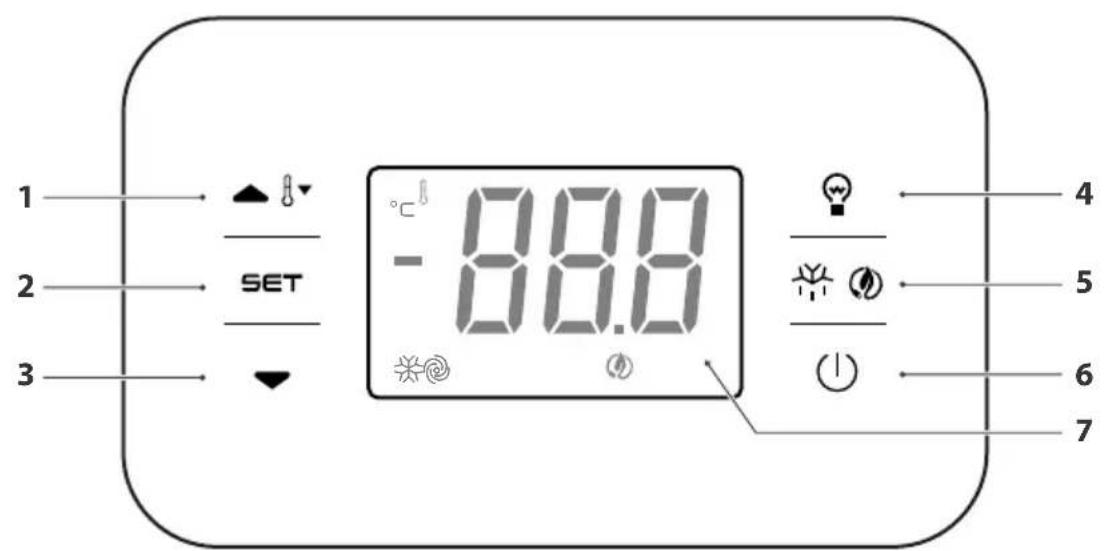
12
| .(overheating) √λ √λ √λ √λ √λ √λ √λ √λ √λ √λ √λ √λ √λ √λ √λ √λ √λ √λ √λ √λ √λ √λ √λ √λ √λ √λ √λ √λ √λ √λ √λ √λ √λ √λ (√λ √λ √λ √λ √λ √λ √λ √λ √λ √λ √λ √λ √λ √λ √λ √λ √λ √λ √λ √λ √λ √λ √λ √λ √λ √λ √λ √λ √λ √λ √λ √λ √λ ∨ √λ √λ √λ √λ √λ √λ √λ √λ √λ √λ √λ √λ √λ √λ √λ √λ √λ √λ √λ √λ √λ √λ √λ √λ √λ √λ √λ √λ √λ √λ √λ √λ √λ ⊥ √λ √λ √λ √λ √λ √λ √λ √λ √λ √λ √λ √λ √λ √λ √λ √λ √λ √λ √λ √λ √λ √λ √λ √λ √λ √λ √λ √λ √λ √λ √λ √λ √λ∅ √λ √λ √λ √λ √λ √λ √λ √λ √λ √λ √λ √λ √λ √λ √λ √λ √λ √λ √λ √λ √λ √λ √λ √λ √λ √λ √λ √λ √λ √λ √λ √λ √λ∩ √λ √λ √λ √λ √λ √λ √λ √λ √λ √λ √λ √λ √λ √λ √λ √λ √λ √λ √λ √λ √λ √λ √λ √λ √λ √λ √λ √λ √λ √λ √λ √λ √λ∪ √λ √λ √λ √λ √λ √λ √λ √λ √λ √λ √λ √λ √λ √λ √λ √λ √λ √λ √λ √λ √λ √λ √λ √λ √λ √λ √λ √λ √λ √λ √λ √λ √λ∉ √λ √λ √λ √λ √λ √λ √λ √λ √λ √λ √λ √λ √λ √λ √λ √λ √λ √λ √λ √λ √λ √λ √λ √λ √λ √λ √λ √λ √λ √λ √λ √λ √λ | △ | 1 | |
| .(j,j,j,j,j,j,j,j,j,j,j,j,j,j,j,j,j,j,j,j,j,j,j,j,j,j,j,j,j,j,j,j,j,j,j,j,j,j,j,j,j,j,j,j,j,j,j,j,j,j,j,j,j,j,j,j,j,j,j,j,j,j,j,j,j,j,j,j,j,j,j,j,j,j,j,j,j,j,j,j,j,j,j,j,j,j,j,j,j,j,j,j,j,j,j,j,j,j,j,j,j.j,j,j,j,j,j,j,j,j,j,j,j,j,j,j,j,j,j,j,j,j,j,j,j,j,j,j,j,j,j,j,j,j,j,j,j,j,j,j,j,j,j,j,j,j,j,j,j,j,j,j,j,j,j,j,j,j,j,j,j,j,j,j,j,j,j,j,j,j,j,j,j,j,j,j,j,j,j,j,j,j,j,j,j,j,j,j,j,j,j,j,j,j,j,j,j,j,j,j,j(j) | 2 | 2 | |
| . | √ | 3 | |
| . | 4 | 4 | |
| . | 5 | 5 | |
| .(p,q,r,s) p q r s t u v w e b o g a b i l y w e b o g a b i l y w e b o g a b i l y w e b o g a b i l y w e b o g a b i l y w e b o g a b i l y w e b o g a b i l y w e b o g a b i l y w e b o g a b i l y w e b o g a b i l y w e b o g a b i l 1/2(ON) √λ √λ √λ √λ √λ √λ √λ √λ √λ √λ √λ √λ √λ √λ √λ √λ √λ √λ √λ √λ √λ √λ √λ √λ √λ √λ √λ √λ √λ √λ √λ √λ √lambda √λ √λ √λ √λ √λ √λ √λ √λ √λ √λ √λ √λ √λ √λ √λ √λ √λ √λ √λ √λ √λ √λ √λ √λ √λ √λ √λ √λ √λ √λ √λ √λ √λ (Stand-by) √λ √λ √λ √λ √λ √λ √λ √λ √λ √λ √λ √λ √λ √λ √λ √λ √λ √λ √λ √λ √λ √λ √λ √λ √λ √λ √λ √λ √λ √λ √λ √λ √ λ √λ √λ √λ √λ √λ √λ √λ √λ √λ √λ √λ √λ √λ √λ √λ √λ √λ √λ √λ √λ √λ √λ √λ √λ √λ √λ √λ √λ √λ √λ √λ √λ √λ ± √λ √λ √λ √λ √λ √λ √λ √λ √λ √λ √λ √λ √λ √λ √λ √λ √λ √λ √λ √λ √λ √λ √λ √λ √λ √λ √λ √λ √λ √λ √λ √λ √λ �(OFF) √λ √λ √λ | 6 | ||
| LED (a) a) a) a) a) a) a) a) a) a) a) a) a) a) a) a) a) a) a) a) a) a) a) a) a) a) a) a) a) a) a) a) a) a) a) a) a) a) a) a) a) a) a) a) a) a) a) a) a) a) a) | 7 | ||
jololololololololololololololololololololololololololololololololololololololololololol
i 1
aalil 10g/(ab):yolb 10
aai 1j aai jx g sll lgl jgll J
13go jgss 1 gull aaiu jao gao gao gaoaalj jao jao 151
3.3.4 a
aaiy i 1 aaii y j 1 g y d alg aeg aagj j no s -
1 1 1 1 1 1 1 1 1 1 1 1 1 1 1 1 1 1 1 1 1 1 1 1 1 1 1 1 1 1 1 1 1
3.3.5
jolal 3 100g 3 11 1 1 1 1 1 1 1 1 1 1 1 1 1 1 1 1 1 1 1
pL

a 1
$$ \bullet \text {a} _ {\text {a}} \text {l l E D} \quad \text {a} _ {\text {a}} \text {b} _ {\text {a}} \text {j} _ {\text {a}} \text {g} _ {\text {a}} \text {c} _ {\text {a}} \text {j} _ {\text {a}} \text {a} _ {\text {a}} \text {a} _ {\text {a}} \text {a} _ {\text {a}} \text {a} _ {\text {a}} \text {a} _ {\text {a}} \text {j} _ {\text {a}} \text {j} _ {\text {a}} \text {j} _ {\text {a}} \text {j} _ {\text {a}} \text {j} _ {\text {a}} \text {j} _ {\text {a}} \text {j} _ {\text {a}} \text {j} _ {\text {a}} \text {j} _ {\text {a}} \text {j l s l o l 1 3} - $$
$$ \text {④} \quad \text {a l l L E D} \quad \text {d i s t a n g e} \quad \text {g a b i l i a l} \quad \text {j u b b i l y} \quad \text {i n t e r n a l} \quad \text {j u b b i l y} \quad \text {i n t e r n a l} \quad \text {j u b b i l y} \quad \text {i n t e r n a l} \quad \text {j u b b i l y} \quad \text {i n t e r n a l} \quad \text {j u b b i l y} \quad $$
3.3.2 1ab1 a
$$ : \because \mathrm {a l l} \mathrm {d} \mathrm {a g} \mathrm {j} \mathrm {a d} \mathrm {j} $$
$$ - \cdot \omega \omega \gamma \omega \omega \gamma $$
$$ \left. \right.\left. \right.\left. \right.\left. \right.\left. \right.\left. \right.\left. \right.\left. \right.\left. \right.\left. \right.\left. \right.\left. \right.\left. \right.\left. \right.\left. \right.\left. \right.\left. \right.\left. \right.\left. \right.\left. \right.\left. \right.\left. \right.\left. \right.\left. \right.\left. \right.\left. \right.\left. \right.\left. \right.\left. \right.\left. \right.\left. \right.\left. \right.\left. \right.\left. \right. \text {的} 3 0 0 0 0 0 0 0 0 0 0 0 0 0 0 0 0 0 0 0 0 0 0 0 0 0 0 0 0 0 0 0 0 0 0 0 0 0 0 0 0 0 0 0 0 0 0 0 0 0 0 1 2 g l a w g l a w g l a w g l a w g l a w g l a w g l a w g l a w g l a w g l a w g l a w g l a w g l a w g l a w g l a w g l a w g l a w g l a w g l a w g l a w g l a w g l a w g l a w g l a w g l a w g l a l o f t h e r e s u r e m e n t i s t i c d i s t i c d i s t i c d i s t i c d i s t i c d i s t i c d i s t i c d i s t i c d i s t i c d i s t i c d i s t i c d i s t i c d i s t i c d i s t i c d i s t i c d i s t i c d i s t i c d i s ti c d i s t i c d i s t i c d i s t i c d i s t i c d i s t i c d i s t i c d i s t i c d i s t i c d i s t i c d i s t i c d i s t i c d i s t i c d i s t i c d i s t i c d i s t i c d i s t i c d i S T E L D A L D A L D A L D A L D A L D A L D A L D A L D A L D A L D A L D A L D A L D A L D A L D A L D A L D A L D A L D A L D A L D A L D A L D A L D A L D A L D A L D A L D A L D A L D A L D A L D A L D A $$
$$ : \mathrm {q u a l a l} 2 0 g \mathrm {l a s s} $$
$$ \therefore \Delta D G _ {1} A B D \sim \Delta D B ^ {\prime} U N L ^ {\prime} \because A D L _ {1} A B L _ {1} J O J S W: \Delta D G _ {2} A B D \sim \Delta D B ^ {\prime} j j s l d e b d o 1 - $$
(Setpoint) 3.3.3
$$ . a l l y i o d e j a n t i a l w a r d o f 1 o p t 1 g i j a d y a d a l x e c u l a b l y o f j o s t - $$
$$ \text {. 费} \quad \text {a d i l L E D} \quad \text {a b j a g i w :} \quad \text {S E T} \quad \text {j j l} \quad \text {d e f} $$
$$ (a _ {i j} a _ {i j}) \text {a r 2 g r l} (j) _ {i j} (l) _ {i j} (l) _ {i j} (l) _ {i j} (l) _ {i j} (l) _ {i j} (l) _ {i j} (l) _ {i j} (l) _ {i j} (l) _ {i j} (l) _ {i j} (l) _ {i j} (l) _ {i j} = $$
$$ \therefore \text {e l l} \text {j o j a l l} \text {c h i c l e} \text {d i s t} \text {a n d} \text {f a r s} \text {a l l} \text {L E D} \text {a t} \text {g a b i a n}: \text {a t} 1 5 \text {a t} \text {g a b i a n}: \text {g a b i a n}: \text {S E T} \text {j o j a l l} \text {d i s t} $$
$$ \therefore \vert y _ {2} - y _ {1} \vert \vert \vert y _ {1} \vert \vert \vert y _ {2} \vert \vert \vert y _ {3} \vert \vert \vert y _ {3} \vert \vert \vert y _ {4} \vert $$
$$ . (L a s) > g \cup {a, b, c, d, e, f, g } ① \cup {j, l, m, n, o, p, q, r, s } $$
$$ \left. \right. \cdot \left(\frac {1}{2} \text {a l l} \text {d i f f} \text {j e t}\right) S P \quad \int_ {\mathcal {S}} \int_ {\mathcal {S}} \int_ {\mathcal {S}} \int_ {\mathcal {S}} \int_ {\mathcal {S}} \int_ {\mathcal {S}} \int_ {\mathcal {S}} \int_ {\mathcal {S}} \int_ {\mathcal {S}} \int_ {\mathcal {S}} \int_ {\mathcal {S}} \int_ {\mathcal {S}} d x d y d z d r d s d t d u d v d w d x d y d z d r d s d t d u d v d w d x d y d z d r d s d t d u d v d w d x d y d z d r d s d t d u d v d w d x d y d z d r d s d t d u d v d w d x d y d z d r d s d t d u d v d w d x d y d z d r d $$
3.3 EV3B
jglal jgall aajd ldo sbo gbl aad all sall ggt jybi jno jaydl iagl kclg bgsll cldas abt al
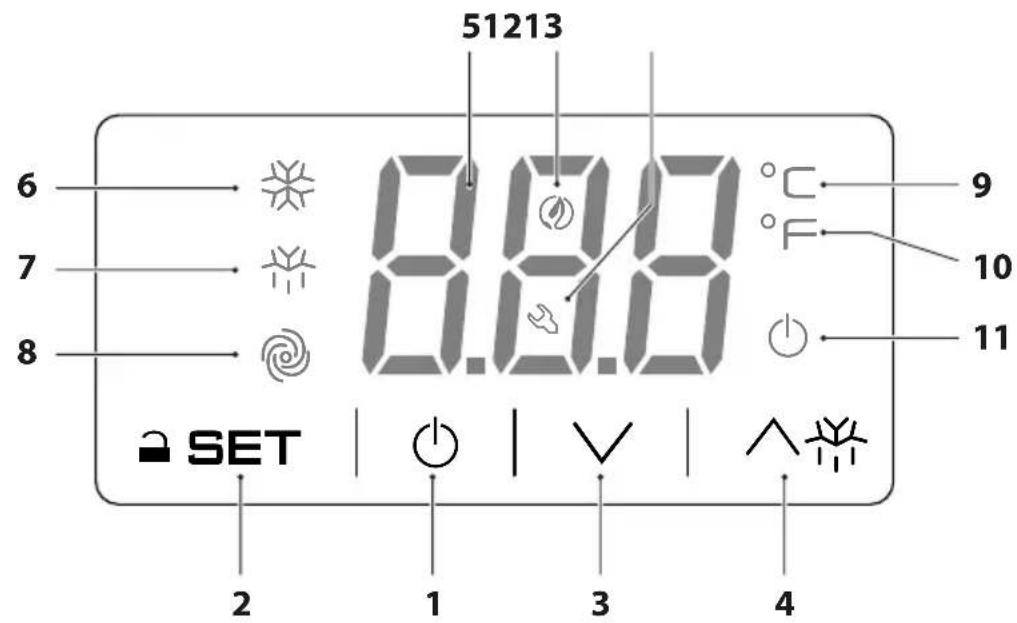
11
| الإستعمال | الإستعمال | |
| .(عaultر) محيى بعس وعaultر عaultر.(عaultر) محيى بعس/عaultر(عaultر) محيى بعس/عaultر(عaultر) محيى بعس/عaultر(عaultر) محيى بعس/عaultر(عaultر) محيى بعس/عaultر(عaultر) محيى بعس/عaultر(عaultر) محيى بعس/عaultر(عaultر) محيى بع�/عaultر(عaultر) محيى بعس/عaultر(عaultر) محيى بعس/عaultر(عaultر) محيى بعس/عaultر(عaultر) محيى بعس/عaultر(عaultر) محيى بعس/عaultر(عaultر) محيى بعس/عaultر(عaultر)ملاويت/عaultر(عaultر) محيى بعس/عaultر(عaultر) محيى بعس/عaultر(عaultر) محيى بعس/عaultر(عaultر) محيى بعس/عaultر(عaultر) محيى بعس/عaultر(عaultر) محيى بعس/عaultر(عaultر) mلاويت/عaultر(عaultر) محيى بعس/عaultر(عaultر) محيى بعس/عaultر(عaultر) mلاويت/عaultر(عaultر) محيى بعس/عaultر(عaultر) محيى بعس/عaultر(عaultر) mلاويت/عaultر(عaultر) mحيى بعس/عaultر(عaultر) mحيى بعس/عaultر(عaultر) m钢板/鉛 | 1 | |
| .(عaultر) محيى بعس/عaultر(عaultر) محيى بعس/عaultر(عaultر) محيى بعس/عaultر(عaultر) محيى بعس/عaultر(عaultر) محيى بعس/عaultر(عaultر) م钢板/鉛/鉬/鉻/鉬/鉬/鉬/鉬/鉬/鉬/鉬/鉬/鉬/鉬/鉬/鉬/鉬/鉬/鉬/鉬/鉬/鉬/鉬/鉬/鉬/鉬/鉬/鉬/鉬/鉬/鉬/鉬/鉬/鉬/鉬/鉬/鉬/鉬 | 2 | |
| .(عaultر) محيى بعس/عaultر(عaultر) محيى بعس/عaultر(عaultر) م钢板/鉛/鉬/鉻/鉬/鉬/鉬/鉬/鉬/鉬/鉬/鉬/鉬/鉬/鉬/鉬/鉬/鉬/鉬/鉬/鉬/鉬 | 3 | |
| .(عaultر) محيى بعس/عaultر(عaultر) م钢板/鉛/鉬/鉻/鉬/鉬/鉬/鉬/鉬/鉬/鉬/鉬/鉬/鉬/鉬/鉬/鉬/鉬/鉬/鉬/鉬/鉬/鉬/鉬/鉬/鉬/鉬 | 4 | |
| .(عaultر) م钢板/鉛/鉬/鉻/鉬/鉬/鉬/鉬/鉬/鉬/鉬/鉬/鉬/鉬/鉬/鉬/鉬/鉬/鉬/鉬/鉬/鉬/鉬/鉬/鉬/鉬/鉬/鉬/鉬/鉬/鉬/鉬 | 5 |
Jlalll aLSSI Jaaas pI Lgtaa dlaa Cggg BbIy Iaag yd jia . Jaiyai Jaiyai bay bgyjaiy jayai ayaiy jayai ayaiy
Jalw laaepd p 1111111111111111111111
3 p1u
3.1 a
l_( 1) : y = - 43x^2 + 83x + 4 y = - 43x + 4
Ligo Joao Jao pBb jag aegill ciaolgallabiyyssAaii ai
aaii aiaaa 100000000000000000000000000000000000000
$$ - \therefore d s _ {\Delta A B C} = 1 $$
sdoa aag oog g alb! clog piay y. jolly wlll laiw wioe ggi jao zedal j
$$ - i _ {i} \omega_ {j} j u $$
aaii aaiiaaiaaaiaaaiaaaiaaaaaaaaaaaaaaaaaaaaaaaaaaaaaaaaaaaaaaaaaaaaaaaaaaaaaaaaaaaaaaaaaaaaaaaaaaaaaaaaaaaaaaaaaaaaaaaaaaaaaaaaaaaaaaaaaaaaaaaaaaaaaaaaaaa aa
3.2
cblbcllgljyololccs ygrall jao aJg Jgall gaaill alalll jao jao .aui cui 1g aaii aagbi
g 20 g jS
10 10 10 10 10 10 10 10 10 10 10 10 10 10 10 10 10 10 10 10 10 10 10 10 10 10 10 10 10 10 10
aaii i 10000000000000000000000000000000000000000000
b#g yag g aagag aagag agaagag aagag aagag aagag aagag aagag aagag
y yolal yll de sogio g jolal jull de ciaabg y 1j y -
a a a a a a a a a a a a a a a a a a a a a a a a a a a a a a a a a a a a a a a a a a a a a a a a a a a a a a a a a a a a a a a a a a a a a
jU
a 10%+
jdl
J 1000 JgjLg jie golj 112

2.4
aai i 1
100 100 100 100
(1)aolgolglaolaln 100
#
g j 1000000000000000000000000000000000000000000000000000000000000000000

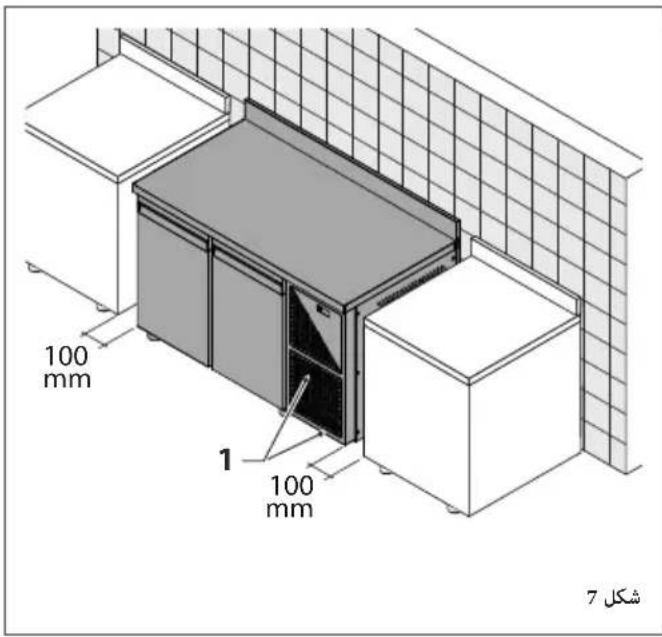
J 1000000000000000000000000000000000000000000000000
1
Jol jol jol jol jol jol jol jol jol jol jol jol jol jol jol jol jol jol jol jol jol jol jol jol jol jol jol jol jol jol jol jol jol jol jol jol jol jol jol jol jol jol jol jol jol jol jol jol jol jol jol
100
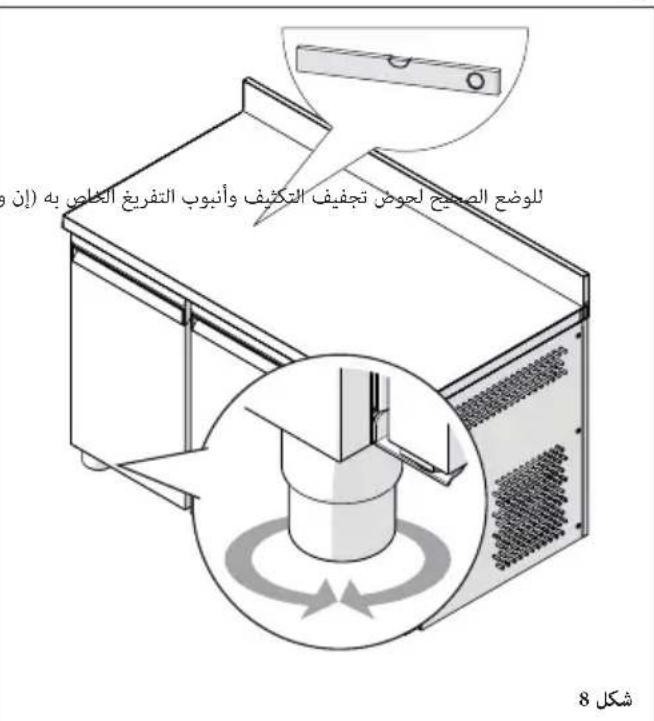
L 100 L 100 L 100 L 100 L 100 L 100 L 100 L 100 L 100 L 100 L 100 L 100 L 100 L 100 L 100 L 100 L 100 L 100 L 100 L 100 L 100
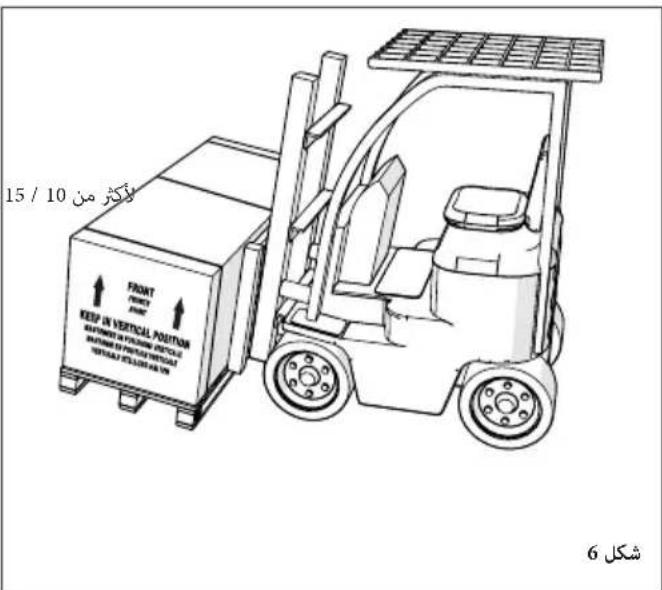
2.2
ggt ggtggtt aabtt t 10000000000000000000000000000000000000
dalln aeggiabl gdeagogglgllalg (ell yllgllg jxjyglg jyjgllg)
oue 1000000000000000000000000000000000000000000000000000
jbs 4
y

:
: (pduuulg yll cull g jil g lgl jgl gdl) d a aalb oolg 15 jlaa jdo joc
a a a a a a a a a a a a a a a a a a a a a a a a a a a a a a a a a a
1.4 a.b
aaiiaai iay aioi 15 1000 g yao gao gao gao gao gao gao gao gao gao
gj 2014/35 CE/2006/42 gj 1 j 1
y 10000000000000000000000000000000000000000000000000000000000000000
ED = 2
:abibl
:
S OBC = S COD + S_ BOC
:
Lgog JwJ 3 aodcui jgoj
.0000000000000000

jdl
JU 1

jbs
Jg 1 Jg 1 Jg 1 Jg 1 Jg 1 Jg 1 Jg 1 Jg 1 Jg 1 Jg 1 Jg 1 Jg 1
Lulio J. J. J. J. J. J. J. J. J. J. J. J. J. J. J. J. J. J. J. J. J. J. J. J. J. J. J. J. J. J. J. J. J. J. J. J. J. J. J. J. J. J. J. J. J. J. J. J. J. J. J. J.Lu

3.1.2.3.4.5.6.7.8.9.10
I 1

joo
Laiie gie Jilulj oJyJol

40
joll
(1j0000000000000000000000000000000000000000000000000000000000
aab So So aaioc o 1y Cuiis yj kbi
1
iL
Jd Cuiill 0a yai jai
yinni nnnn nn