
Boulevard - Car seat BRITAX - Free user manual and instructions
Find the device manual for free Boulevard BRITAX in PDF.


| Product Type | Child Car Seat |
| Brand | Britax |
| Model | Boulevard |
| Maximum Child Weight (Rear-Facing) | 13.6 kg (30 lb) |
| Maximum Child Weight (Forward-Facing) | 29.5 kg (65 lb) |
| Maximum Child Height | 124.5 cm (49 in) |
| Minimum Child Weight | 2.3 kg (5 lb) |
| Seat Dimensions (approx.) | 50 x 45 x 66 cm (L x W x H) |
| Seat Weight (approx.) | 11 kg (25 lb) |
| Power Source | None (Mechanical) |
| Main Features | Rear-facing and forward-facing installation, 5-point harness, HUGS chest pads, adjustable headrest, Versa-Tether anchor strap, lower anchor system (LATCH), infant body cushion, recline adjustment |
| Care and Cleaning | Hand wash cover in cold water with mild soap; sponge clean shell and harness; do not use bleach or machine |
| Safety | Complies with federal standards CMVSS 213 and 213.1; certified for air travel |
| Available Replacement Parts | Cover, harness buckle, LATCH attachments, anchor strap, HUGS chest pads |
| Warranty | One-year limited warranty against defects in materials and workmanship |
| Use | Vehicle and aircraft |
Frequently Asked Questions - Boulevard BRITAX
User questions about Boulevard BRITAX
0 question about this device. Answer the ones you know or ask your own.
Ask a new question about this device
Download the instructions for your Car seat in PDF format for free! Find your manual Boulevard - BRITAX and take your electronic device back in hand. On this page are published all the documents necessary for the use of your device. Boulevard by BRITAX.
USER MANUAL Boulevard BRITAX
Warnings 2
Important Notes 4
Certification 5
Registration. 5
Important Harness Adjustments 6
Child Seat Features.
Vehicle Compatibility
Incompatible Vehicle Seat Belts 10
Vehicle Buckle Positions 11
Vehicle Seating Positions. 11
Installation: Rear-facing
Lower Universal Anchorage System (LUAS) Installation 12
Lap-Shoulder Belt Installation 14
Lap-Belt Installation 16
Installation: Forward-facing
Lower Universal Anchorage System (LUAS) Installation 18
Lap-Shoulder Belt Installation 20
Lap-Belt Installation 22
Installation: Aircraft 24
Installation: Versa-Tether
Safety Information 25
Using the Versa-Tether 26
Tether Connector Strap 27
Energy-Absorbing Tether 28
Child Seat Functions
Switching the LCS Connectors 29
Storing the LCS Connectors 30
Recline Adjustment 30
Infant Body Pillow. 30
Chest Clip 31
IUGS Chest Pads 31
Harness Buckle 32
Adjusting the Harness Height 33
Securing Your Child 34
Care and Maintenance 36
Warranty 40
2009 Britax Child Safety, Inc. All rights reserved. Printed in U.S.A P363600 R1:05.09
This product and its components are subject to change without notice.

WARNING!
DEATH or SERIOUS INJURY CAN OCCUR:
Use only with children who weigh between 2.3 - 29.5 kg (5 - 65 lbs) and whose height is between 45.7 and 124.5 cm (18 - 49 in.).
Use rear-facing for children who weigh between 2.3 -13.6 kg (5 - 30 lbs) and whose height is between 45.7 and 81.3 cm (18 - 32 in.).
Place this child seat in a rear-facing position when using it with an infant - weighing less than 9.1kg (20 lbs) or is less than one year of age.
Use forward-facing for children who weigh between 9.1 - 29.5 kg (20 - 65 lbs) and whose height is between 73.7 - 124.5 cm (29 - 49 in.).
- Forward-facing use recommended only after 1 year of age AND 9.1kg (20 lbs).
- Child seat must be in the recline position when installed rear-facing.
- Child seat must be in the upright position when installed in forward-facing mode with children who weigh more than 15.1 kg (33 lbs).
Child seat is for use only in a forward-facing vehicle seat equipped with a lower universal anchorage system or with a vehicle seat belt.
Adjust the belts provided with this child seat so they fit snugly around your child. A snug strap should not allow any slack. It lies in a relatively straight line without sagging. It does not press on the child's flesh or push the child's body into an unnatural position.
Secure the tether strap provided with this child seat.
The child seat must be secured to the vehicle by means of a lower connector system if it is installed in a seating position that is equipped with a lower universal anchorage system or by means of a vehicle seat belt if it is installed in a seating position that is not equipped with a lower universal anchorage system, and by means of a tether strap, as shown in the installation instructions. Use of the tether strap is required forward-facing and is optional rear-facing.
Follow all instructions on the child seat labels and in this user guide.
- Register your child seat with the manufacturer, Britax Child Safety, Inc. by visiting www.BritaxUSA.com/registration, OR complete and return the registration card that was shipped with this child seat.
-
HUGS chest pads must be used in forward-facing mode. Removal of HUGS is optional only for rear-facing mode.
-
To prevent injury due to deterioration or hidden damage, discontinue use of a child seat that is older than six years or has been in a moderate or severe crash. See Serial Number and Manufactured Date Label located on child seat (page 9).
- This child seat must not be used in the home, in boats, or other non-certified applications.
- Based on crash statistics, Britax recommends that parents select the back seat as the safest location for a properly installed child seat. Please study Vehicle Compatibility on pages 10-11 to ensure your child's safety and consult your vehicle owner's manual.
- Secure this child seat even when it is not occupied. In a crash, an unsecured child seat may injure vehicle occupants.
- When using in a vehicle with air bags, refer to your vehicle owner's manual for child seat installation instructions and precautions.
- Never use the harness or harness adjuster straps to lift or carry this child seat. Doing so could cause damage to harness adjuster and webbing. Always carry this child seat by its shell or tether strap.
- The primary protection for occupants of a vehicle in a collision is the body of the vehicle itself; a child seat will not protect a child when a vehicle is seriously impacted. However, correctly installed, a child seat will substantially improve chances for survival in most crashes. Make sure all users fully understand the correct ways to use this child seat in a vehicle.
- Refer to your vehicle owner's manual or contact the vehicle manufacturer for the maximum weight rating for their LUAS anchors. Use vehicle belt (not LCS connectors) for installations with children who weigh more than the vehicle LUAS anchor limit. Unless specified otherwise by the vehicle manufacturer, assume a 18.1 kg (40 lb) child is the vehicle LUAS anchor limit.
- The use of non-Britax Child Safety, Inc., covers, inserts, toys, accessories, or tightening devices is not approved by Britax. Their use could cause this child seat not perform as intended in a crash.
Safety Information Safe
Important Notes
Verify that the child seat is securely installed and the harness is properly adjusted around the child each time the child seat is used.
Adjust the harness to fit the clothes the child is wearing. Remove bulky coats and/or jackets before putting the child in child seat.
Cover the child seat when the vehicle is parked in direct sunlight. Parts of child seat could become hot enough to burn a child.
Store the child seat in a safe place when it is not being used. Avoid - placing heavy objects on top of it.
Do not leave children alone in a vehicle, even for a short time.
Do not, except as described in this booklet, attempt to disassemble any part of the child seat or change the way the harness or vehicle's seat belts are used.
Do not leave loose objects, e.g. books, bags, etc., in the back of a vehicle. In the event of a sudden stop, loose objects will keep moving, potentially causing serious injuries.
Do not leave folding vehicle seats unlatched or unsecured. In the event of a sudden stop, a loose seat back could cause the child seat not to perform as intended.
Do not allow children to play with this child seat.
Do not use anything to raise the child seat off the vehicle seat except as described in these instructions. In a crash, this could cause the child seat not to perform as intended.
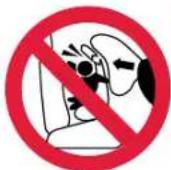
WARNING! DO NOT place child seat rear-facing in the front seat of a vehicle with a passenger air bag unless deactivated. DEATH or SERIOUS INJURY can occur. See your vehicle owner's manual for child seat installation instructions. The back seat is the safest place for children 12 and under.
Certification
This child seat system conforms to all applicable Federal Motor Vehicle Safety Standards (CMVSS 213 and 213.1). This child seat is certified for use in motor vehicles and aircraft.
Registration
Child seats can be recalled for safety reasons. You must register this child seat to be reached in a recall. Send your name, address, and the child seat's model number and manufacturing date to Britax Child Safety, Ltd., P.O Box 7289, RPO Brunswick Square, Saint John NB E2L 9Z9, or call 1-888-427-4829, or register online at www.BritaxUSA.com/ registration.
Serial Number:
Batch Number:
Date of Manufacture:
Safety Information
Important Harness Adjustments
Britax recommends all infants ride rear-facing until they have reached at least 1 year of age and weigh at least 9.1kg (20 lbs). That means that if your infant reaches 9.1kg (20 lbs) before her first birthday, she should remain rear-facing at least until she turns 1 year old. It is best for children to ride rear-facing to the highest weight or height allowed by the manufacturer.
Rear-Facing
Use rear-facing only with children:
who weigh between 2.3 - 13.6kg (5-30 lbs) and
the top of the child's head is at least 2.5cm (1 in.) below the top of the child seat shell (Fig.A) and
the harness straps are at or slightly below the child's shoulders.
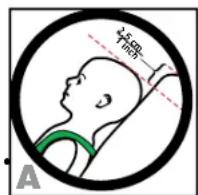
If the child cannot be secured within these requirements because the child exceeds height or weight requirements, review the forward-facing guidelines on page 7. If the child cannot be secured within these requirements because the child is too small, selection of a different child seat (such as an infant carrier) may be required.
IMPORTANT: See Adjusting the Harness Height on page 33.
WARNING!
Do NOT use the child seat rear-facing if any of the following apply:
- the child is less than 2.3kg (5 lbs) in weight or
the child exceeds 13.6kg (30 lbs) in weight or - the top of the head is less than 2.5cm (1 in.) from the top of the child seat shell (Fig. A) or
- the harness straps are above the child's shoulders.
Safety Information
Forward-Facing
Use forward-facing only with children:
who are at least one year of age and
who weigh between 9.1 - 29.5 kg (20 - 65 lbs) and who are 124.5cm (49 in.) or less in height
the top of the child's ears are below the top of the child seat shell and
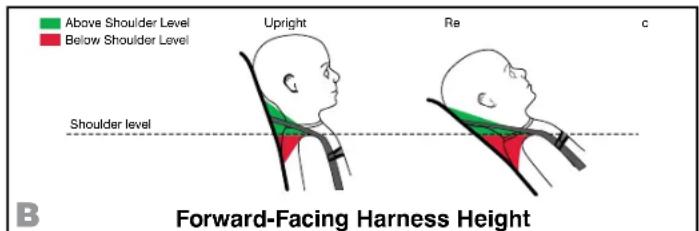
the harness straps are at or above the child's shoulders, parallel to - level ground (Fig. B).
IMPORTANT: When using forward-facing recline mode, it may become necessary to adjust the harness to a higher height than would be used when the seat is upright.
See Adjusting the Harness Height on page 33.
WARNING!
Do NOT use the child seat forward-facing if any of the following apply:
- the child is less than one year of age or
- the child is less than 9.1kg (20 lbs) in weight or
- the child exceeds 29.5kg (65 lbs) in weight or
- the child exceeds 124.5 cm (49 in.) in height or
- the top of the ears are above the top of the child seat shell or
- the harness straps are below the child's shoulders, parallel to level ground (Fig. B)
Child Seat Features
Child Seat Features
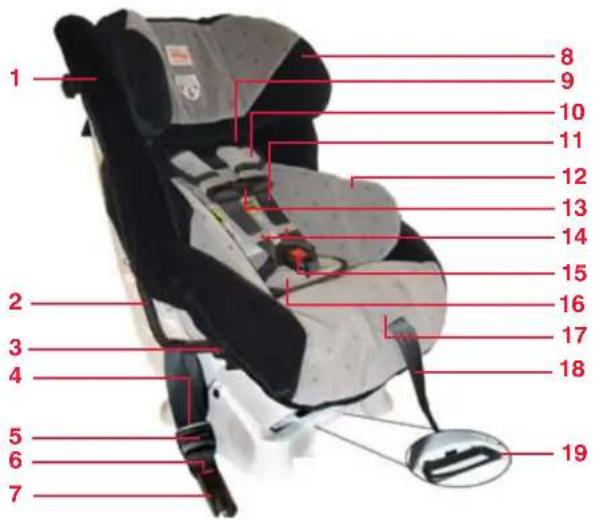
Cover1
LCS Bar2
Rear-Facing Lock-Off3
LCS Adjuster Release Button4
LCS Adjuster 5
LCS Connector Release Button6
LCS Connector 7
(stored under cover)
Head Restraint8
Harness Slot9
Comfort Pad10
Harness11
Infant Body Pillow12
Chest Clip13
HUGS™ (Harness Ultra Guard 14
System) Chest Pads
Harness Buckle15
Belly Pad16
17 Harness Adjuster Lever (under flap)
18 Harness Adjuster Strap
19 Recline Handle
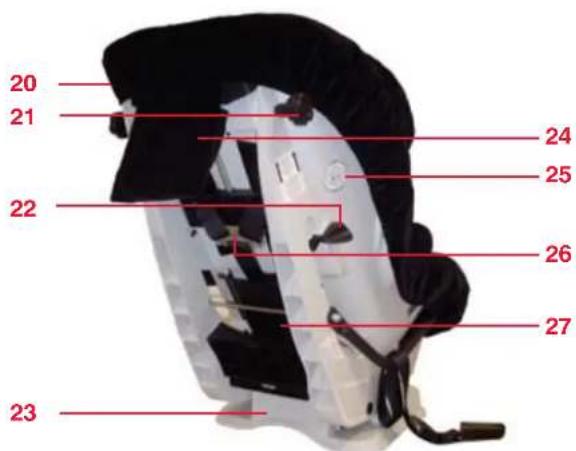
20 Serial Number and Manufactured Date Label (under cover)
21 Head Restraint Adjustment Knob 22 Forward-Facing Lock-Off
23 Base
24 Versa-Tether (Tether Strap) in pouch
25 National Safety Mark Harness Yoke26
27 Belt Guard
IMPORTANT: When not in use, this user guide should be stored under the cover. DO NOT discard the foam inserts found under the cover.
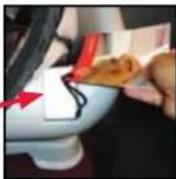
Incompatible Vehicle Seat Belts

WARNING! The following
types of vehicle seat belts are
NOT compatible with this child seat:
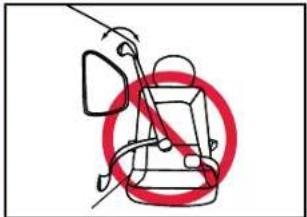
Vehicle seat belts with top 1 or bottom anchor points on the vehicle door
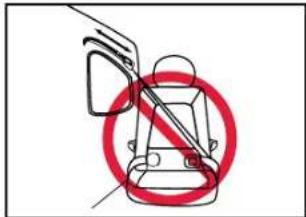
Motorized, automatic 2 vehicle seat belts
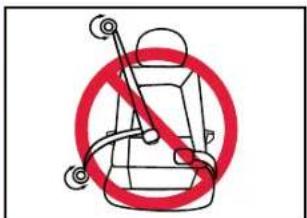
Lap-shoulder belts that 3 have a separate retractor each for the lap section and shoulder section
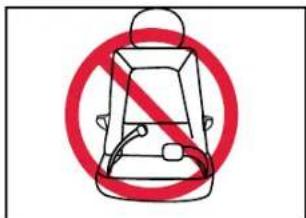
Lap belts forward of the 4 vehicle seat bight
Lap belts that have a retractor that locks only 5 in case of a sudden stop (emergency locking retractor or ELR)
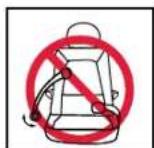
Vehicle Buckle Positions

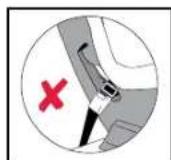
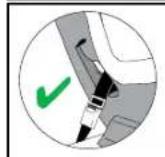
WARNING! The position of the cie seat belt buckle can adversely affect the lity of the child seat.
If the buckle lies near the incorrect position ( when the vehicle seat belt is tightened, try fitting the child seat in another seating position in the vehicle OR consult your vehicle owner's manual to see if you can lower the vehicle buckle position by twisting the vehicle buckle stalk. If it is not possible to achieve the correct position ( for the buckle, then another seating position MUST be used.
Vehicle Seating Positions

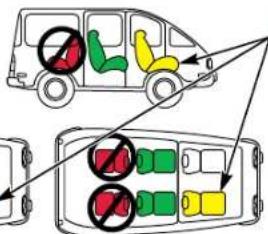
WARNING! Some vehicles have no seating positions which are compatible with this child seat or any other child seat. If in doubt, contact the vehicle manufacturer for assistance.
Forward-facing vehicle seats MUST be used with this child seat. Side-facing or rear-facing seats CANNOT be used. See diagram below.
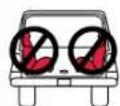
WARNING!
DO NOT place a child seat rear-facing in the front seat of a vehicle with a passenger air bag unless deactivated. DEATH or SERIOUS INJURY can occur. See your vehicle owner's manual for child seat installation instructions. The back seat is the safest place for children 12 and under.
Installation: Rear-Facing
Installation: Rear-Facing
Lower Universal Anchorage System (LUAS) Installation
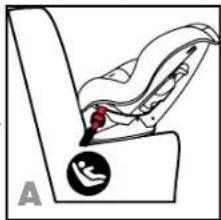
Figure A illustrates a rear-facing LUAS installation.
Verify that your vehicle is equipped with LUAS - anchors. If LUAS anchors are not available, you must use the vehicle belt installation methods
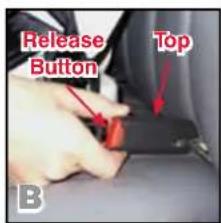
IMPORTANT: LCS connectors must be in an upright position (as shown in figure B) and the strap should be tight and not twisted to ensure proper installation.
If stored, remove the LCS connectors from the 1 storage slots under the cover (see page 30) and route through their adjacent rear-facing belt slots to the outside of child seat.
2 Press and hold the first LCS adjuster release button, then pull the LCS strap to full length. Repeat for the remaining LCS connector.
3 Recline the child seat and place rear-facing on the vehicle seat. This child seat must be in the reclined position when installed rear-facing. See Decline Adjustment on page 30.
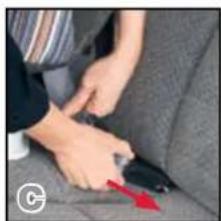
4 Attach one LCS connector to its adjacent vehicle LUAS anchor (Fig. C) in the upright position (Fig. B).
- An audible click confirms attachment.
- Ensure that the LCS strap is not twisted.
Tip: You may need to turn the front of the child seat toward you for easier access to the vehicle LUAS anchor.
5 Attach the remaining LCS connector to its adjacent vehicle LUAS anchor in the upright position.
NOTE: If an audible click is not heard when connecting either LCS connector, the LCS strap may be twisted, or there may be debris in the LCS connector. Correct either situation before continuing with the installation process. It may be necessary to switch the LCS connectors (page 29) if ANY of the following conditions exist:
LCS connector is not in an upright position (Fig. B).
LCS strap is twisted.
An audible click is NOT heard when the LCS connector and LUAS anchor are connected.
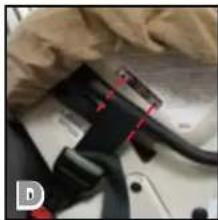
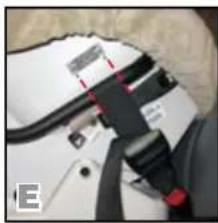
Align each LCS strap on the LCS bar with the 6 "LCS Strap Here Rear-Facing" label on each side of the child seat. (Figs. D and E).
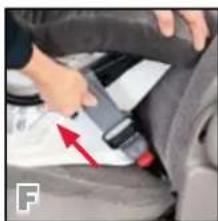
Push the child seat firmly into the vehicle seat 7 while pulling each LCS strap tight (Fig. F).
Verify that all connections are secure, the LCS 8 strap is aligned to the "LCS Strap Here Rear-Facing" label on each side of the child seat, and that the child seat is stable.
The child seat is secure when it cannot be moved more than 2.5cm (1 in.) front-to-back or side-to-side at the belt path. If the child seat is not secure, repeat the procedure or use an alternate seating location.
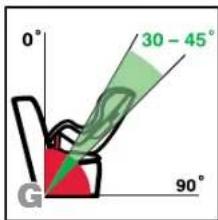
When properly installed in the rear-facing position, the back angle of the child seat should be 30^ - 45^ from vertical (not to exceed 45^ ) when the car is parked on a level surface (Fig. G).
If necessary, the proper recline angle can be achieved by placing a rolled towel or pool noodle in the seat bight to level the child seat's base.
WARNING! Do not raise the child seat off the front edge of the vehicle seat. This could cause your child seat not to perform as intended.
Rear-facing installation can be improved by the use of the Versa-Tether. See pages 25-28.
Installation: Rear-Facing
Installation: Rear-Facing
Lap-Shoulder Belt Installation
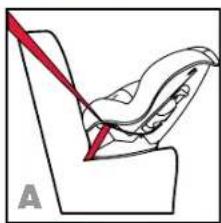
Figure A illustrates a rear-facing, lap-shoulder belt installation.
When not in use, always store the LCS • connectors in the storage slots. See page 30.
Recline the child seat and place it rear-1 facing on the vehicle seat. This child seat must be in the recline position when installed rear-facing. See Recline Adjustment on page 30.
Lift the cover to open the rear-facing lock-off 2 farthest from where the vehicle belt will be buckled (Fig. B).
Pull the vehicle belt out, then pass it 3 under the LCS bar and through the rear-facing belt slot (Fig. C).
The vehicle belt can be routed over or under cover.
4 Route the vehicle belt across seat then through the opposite rear-facing belt slot and under the LCS bar.
IMPORTANT: The vehicle belt must rest behind the child seat buckle strap.
5 Verify that the vehicle belt is not twisted, position the lap belt portion through the open lock-off, then buckle (Fig. D).
6 Push the child seat firmly into the vehicle seat while removing slack first from the lap portion of the vehicle belt, then the shoulder portion (Fig. E).
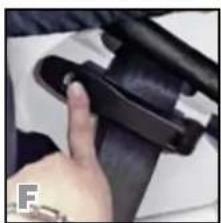
7 Position both sections of the vehicle belt through the open lock-off, tighten belt, close the lock-off arm (Fig. F) and replace the cover.
The lock-off is properly closed when a click is heard.
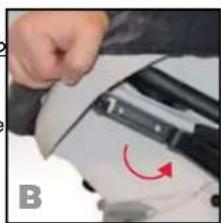
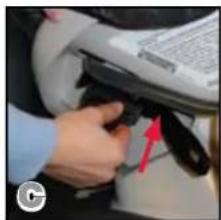
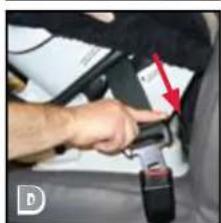
To prevent damage, never extend the lock-off arm beyond its normal open position and always keep the lock-off closed when it is not in use.
Pre-crash locking vehicle seat belts will lock in one of two places: the latch plate or the retractor. If your vehicle seat belt system includes a pre-crash locking feature, use of the lock-offs is not required as long as the vehicle seat belt is locked. Check your vehicle owner's manual to determine how to lock your vehicle seat belt system when installing a child restraint.
Verify that vehicle belt is tight and that the 8 child seat is secure.
The child seat is secure when it cannot be moved more than 2.5cm (1 in.) front-to-back or side-to-side at the belt path. If the child seat is not secure, repeat the procedure or use an alternate seating location.
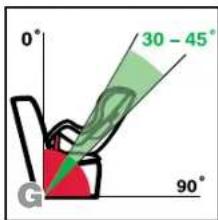
When properly installed in the rear-facing position, the back angle of the child seat should be 30^ - 45^ from vertical (not to exceed 45^ ) when the car is parked on a level surface (Fig. G).
If necessary, the proper recline angle can be achieved by placing a rolled towel or pool noodle in the seat bight to level the child seat's base.
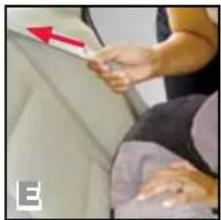
WARNING! Do not raise the child seat off the front edge of the vehicle seat. This could cause your child seat not to perform as intended.
- Rear-facing installation can be improved by the use of the Versa-Tether. See pages 25-28.
Installation: Rear-Facing
Installation: Rear-Facing
Lap-Belt Installation
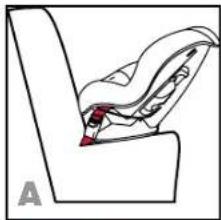
Figure A illustrates a rear-facing, lap-belt installation.
When not in use, always store the LCS • connectors in the storage slots. See page 30.
Recline the child seat and place it rear-1 facing on the vehicle seat. This child seat must be in the recline position when installed rear-facing. See Recline Adjustment on page 30.
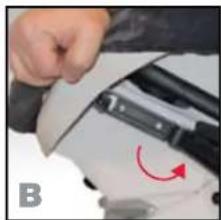
Lift the cover and open the rear-facing lock-2 off farthest from where the vehicle belt will be buckled (Fig. B).
Pull the vehicle belt out, then pass it 3 under the LCS bar and through the rear-facing belt slot (Fig. C).
The vehicle belt can be routed over or under cover.
Route the vehicle belt across the child seat 4 then through the opposite rear-facing belt slot and under the LCS bar.
IMPORTANT: The vehicle belt must rest behind the child seat buckle strap.
Verify that the vehicle belt is not twisted, 5 position the lap belt portion through the open lock-off, then buckle (Fig. D).
Push the child seat firmly into the vehicle seat while removing slack from the vehicle belt. Tighten the belt, close the lock-off arm and 7 replace the cover (Fig. E).
The lock-off is properly closed when a click is heard.
To prevent damage, never extend the lock-off arm beyond its normal open position and always keep the lock-off closed when not in use.
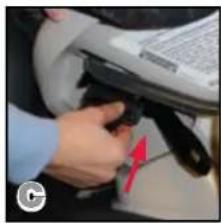
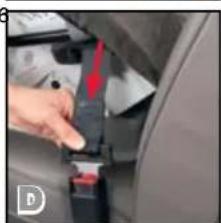
Pre-crash locking vehicle seat belts will lock in one of two places: the latch plate or the retractor. If your vehicle seat belt system includes a pre-crash locking feature, use of the lock-offs is not required as long as the vehicle seat belt is locked. Check your vehicle owner's manual to determine how to lock your vehicle seat belt system when installing a child restraint.
8 Verify that vehicle belt is tight, locked, and that the child seat is secure.
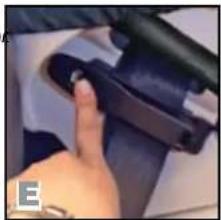

WARNING! Do not install this seat in a non-locking, two-point Emergency Locking Retractor (ELR) vehicle belt.
The child seat is secure when it cannot be moved more than 2.5cm (1 in.) front-to-back or side-to-side at the belt path. If the child seat is not secure, repeat the procedure or use an alternate seating location.
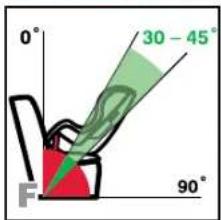
When properly installed in the rear-facing position, the back angle of the child seat should be 30^ - 45^ from vertical (not to exceed 45^ ) when the car is parked on a level surface (Fig. F). If necessary, the proper recline angle can be achieved by placing a rolled towel or pool noodle in the seat bight to level the child seat's base.

WARNING! Do not raise the child seat off the front edge of a vehicle seat. This could cause your child seat not to perform as intended.
- Rear-facing installation can be improved by the use of the VersaTether. See pages 25-28.
Installation: Forward-Facing
Installation: Forward-Facing
Lower Universal Anchorage System (LUAS) Installation
Figure A illustrates a forward-facing LUAS installation.
Verify that your vehicle is equipped with LUAS anchors. If LUAS anchors are not available, you must use vehicle belt installation methods.
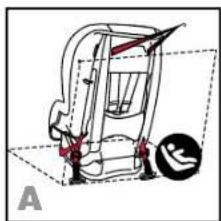
WARNING!
This child seat must not be used forward-facing for children less than one year of age OR who weigh less than 9.1kg (20 lbs).
This child seat must be in full upright position when installed forward-facing for children who weigh more than 15.1 kg (33 lbs).
Always use the Versa-Tether when the child seat is installed forward-facing. Check your vehicle owner's manual for approved tether anchor locations.
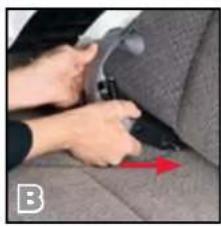
If stored, remove the LCS connectors from the storage slots under the cover (see page 30) and route through their adjacent rear-facing belt slots to the outside of child seat.
Press and hold the first LCS adjuster release 2 button, then pull the LCS strap to full length. Repeat for the remaining LCS connector.
Remove the Versa-Tether from the pouch and 3 place it up and over the child seat back.
Place the child seat forward-facing on the vehicle seat.4
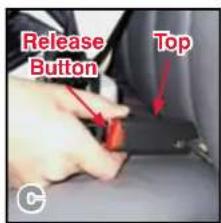
Tip: You may need to raise or remove the vehicle head restraint to achieve best fit of the child seat.
Attach one LCS connector to its adjacent vehicle LUAS anchor (Fig. B) 5 in the upright position (Fig. C).
An audible click confirms attachment.
Ensure that the LCS strap is not twisted.
NOTE: If an audible click is not heard when connecting either LCS connector, the LCS strap may be twisted, or there may be debris in the LCS connector. Correct either situation before continuing with the installation process. It may be necessary to switch the LCS connectors as shown on page 29 if ANY of the following conditions exist:
the LCS connector is not in an upright position as shown in figure C.
the LCS strap is twisted.
An audible click is NOT heard when the LCS connector and the LUAS anchor are connected.
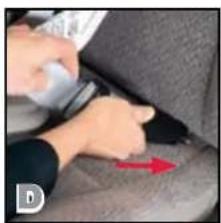
Attach the remaining LCS connector to its 6 adjacent vehicle LUAS anchor (Fig. D) in an upright position (Fig. C).
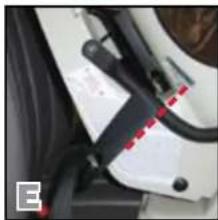
7 Align each LCS strap on the LCS bar with the "LCS STRAP ON OR ABOVE LINE FORWARD-FACING" label on each side of the child seat (Fig. E).
TIP:Gradually tighten each LCS strap and keep the LCS strap webbing from sliding down on the LCS bar.
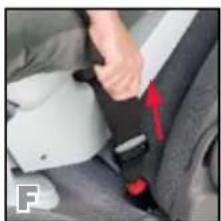
8 Push the child seat firmly into the vehicle seat while pulling each LCS strap tight (Fig. F).
9 Attach the Versa Tether hook to the vehicle's designated tether anchor for the chosen seating position. Remove all slack
from the tether to secure. Store excess webbing in the tether pouch. See pages 25-28.
10 Verify that all connections are secure and that the child seat is stable.
- The child seat is secure when it cannot be moved front-to-back or side-to-side more than 2.5cm (1 in.) at the belt path. If the child seat is not secure, repeat the installation process or use an alternate seating location.
Installation: Forward-Facing
Installation: Forward-Facing
Lap-Shoulder Belt Installation
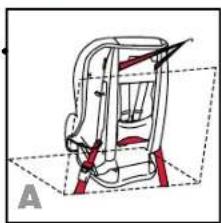
Figure A illustrates a forward-facing lap-shoulder belt installation.
When not in use, always store the LCS • connectors in the storage slots. See page 30.

WARNING!
- This child seat must not be used forward-facing for children less than one year of age OR who weigh less than 9.1 kg (20 lbs).
- This child seat must be in full upright position when installed forward-facing for children who weigh more than 15.1kg (33 lbs).
Always use the Versa-Tether when the child seat is installed forward-facing. Check your vehicle owner's manual for approved tether anchor locations.
Remove the Versa-Tetherfrom the pouch and place it up and over the child seat back.
Place the child seat forward-facing on the 2 vehicle seat. Ensure the bottom of the child seat base is in full contact with the vehicle seat.
TIP: You may need to raise or remove the vehicle head restraint to achieve best fit of the child seat.
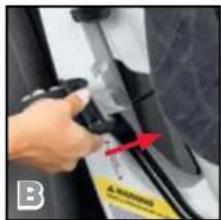
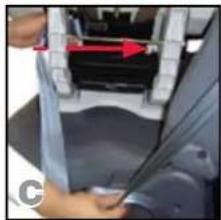
Rotate the lock-off lever to open the forward-3 facing lock-off farthest from where the vehicle belt will be buckled. Pull vehicle belt out, then pass it 4 over the LCS bar, through the forward-facing belt path, then over the LCS bar on the opposite side (Fig.B).
TIP: Turning the back of the child seat toward you can make routing the vehicle belt easier (Fig. C).

Verify that the vehicle belt is not twisted and 5 is routed over the LCS bars, then buckle (Fig. D).
Push the child seat firmly into the vehicle 6 seat while removing slack first from the lap portion of the vehicle belt, then the shoulder portion (Fig. E).
Hold the shoulder belt tight, then rotate 7 the lock-off until the vehicle belt is secured (Fig. F).
Pre-crash locking vehicle seat belts will lock in one of two places: the latch plate or the retractor. If your vehicle seat belt system includes a pre-crash locking feature, use of the lock-offs is not required as long as the vehicle seat belt is locked. Check your vehicle owner's manual to determine how to lock your vehicle seat belt system when installing a child restraint.
8 Attach the Versa-Tether hook to the designated tether anchor for the chosen seating position. Remove all slack from the tether to secure. Store excess webbing in the tether pouch. See pages 25-28.
9 Verify that the vehicle belt is tight and the child seat is secure.
- The child seat is secure when it cannot be moved front-to-back or side-to-side more than 2.5cm (1 in.) at the belt path. If the child seat is not secure, repeat this proceed seating location.
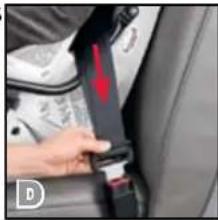
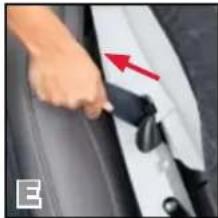
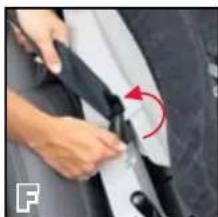
Installation: Forward-Facing Installation: Forward-Fa
Lap-Belt Installation
Figure A illustrates a forward-facing, lap-belt installation.
When not in use, always store the LCS connectors in the storage slots. See page 30.

WARNING
This child seat must not be used forward. - facing for children less than one year of age OR who weigh less than 9.1 kg (20 lbs).
This child seat must be in full upright position when installed forward-facing for children who weigh more than 15.1 kg (33 lbs).
Always use the Versa-Tether when the child seat is installed forward-facing. Check your vehicle owner's manual for approved tether anchor locations.
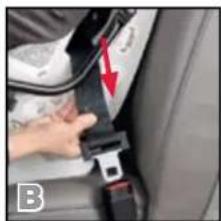
Remove the Versa-Tetherfrom the pouch and place it up and over the child seat back. Place the child seat forward-facing on the 2 vehicle seat. Ensure the bottom of the child seat base is in full contact with the vehicle seat.
TIP:You may need to raise or remove the vehicle head restraint to achieve best fit of the child seat
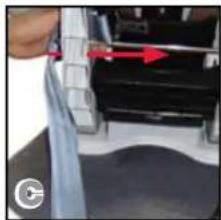
Pull the vehicle belt out, then pass it 3 under the LCS bar, through the forward-facing belt path, then under the LCS bar on the opposite side (Fig. B).
TIP: Turning the back of the child seat toward you can make routing the vehicle belt easier (Fig. C).
Verify that the vehicle belt is not twisted, is 4 routed under the LCS bars, then buckle (Fig. B).
Push the child seat firmly into the vehicle 5 seat while removing slack from the vehicle belt (Fig. C).
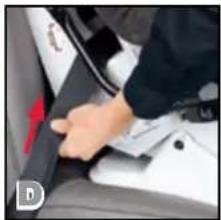

WARNING!
with a non-locking, two-point Emergency Locking Retractor (ELR) vehicle belt.
6 Attach the Versa-Tether hook to the designated tether anchor for the chosen seating position. Remove all slack from the tether to secure. Store excess webbing in the tether pouch. See pages 25-28.
7 Verify that the vehicle belt is tight, locked and the child seat is secure.
- The child seat is secure when it cannot be moved front-to-back or side-to-side more than 2.5cm (1 in.) at the belt path. If the child seat is not secure, repeat this procedure or use an alternate seating location.
Installation: Aircraft
Installation: Versa-Tether

This child seat is certified for aircraft use. Most airlines in Canada and the U.S. will allow the use of a child seat as long as it is labeled as an approved child seat for airline use and fits properly on the aircraft seat. Contact the airline about their policy prior to traveling.
The FAA recommends that a child weighing up to 18.1kg (40 lbs) use a certified, harnessed child seat while traveling on an aircraft.
Install your child seat in a window seat to avoid blocking the aisle.
If the aircraft lap belt is too short, ask the flight attendant for a belt extender.
Rear-Facing Installation
For rear-facing aircraft installation (Fig. A), follow Rear-Facing Lap-Belt Installation instructions on pages 16-17.
To aid installation on aircraft, open the rear-facing lock-offs to allow routing of large buckles.
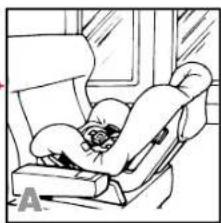
Forward-Facing Installation
For forward-facing aircraft installation (Fig. B), follow Forward-Facing Lap-Belt Installation instructions on pages 22-23.
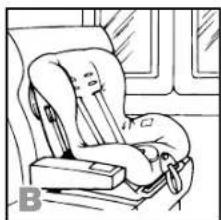
Safety Information

WARNING!
When using the child seat in forward-facing mode, attach the Versa-Tether only to tether anchors designated by the vehicle manufacturer as tether anchorage points. Use of other locations is not approved or permitted.
- Do NOT modify the vehicle without advice from the vehicle manufacturer if a tether anchor is not available.
IMPORTANT:
If your vehicle does not currently have a tether anchor attachment, refer to your vehicle owner's manual or contact the vehicle manufacturer for assistance.
For vehicles manufactured January 1989 through August 2000 equipped with vehicle manufacturer designated tether anchorage locations consisting of a hole or threaded hole, tether anchorage hardware is available upon request - at no cost - by contacting Britax Consumer Services at 1-888-427-4829.
Installation: Versa-Tether
Installation: Versa-Tether
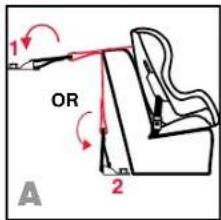
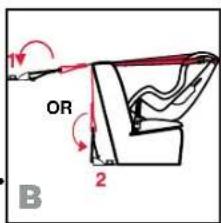
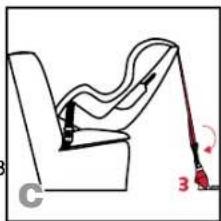
Using the Versa-Tether
Consult your vehicle owner's manual for 1 designated tether anchorage locations.
Locate the tether on the rear of the child 2 seat and remove the tether from the pouch. Place the tether up and over the child seat 3 back.
Install the child seat using the LCS system 4 or the vehicle seat belts according to the instructions in this manual.
Tilt the tether release tab then pull to fully 5 extend the tether strap into a "V" shape. Locate the hook on the strap and attach 6 the tether hook to the vehicle's designated tether anchor.
See figure A for a forward-facing installation. See figures B and C for a rear-facing installation.
IMPORTANT: The tether should be hooked over, not under, the vehicle tether anchor.
Pull the tether adjuster strap to remove all 7 slack. Roll up excess webbing and store in tether pouch.
Verify there is tension in the tether strap and 8 that child seat is properly secured.
The child seat is secure when it cannot be moved front-to-back or side-to-side more than 2.5cm (1 in.) at the belt path.
Tether Connector Strip
NOTE: Britax child seats are shipped with the tether connector strap attached to the Versa-Tether hook. When not in use with rear-facing installations that have designated tether anchors or forward-facing installations, store the tether connector strap in the tether pouch.

WARNING! Only use the tether connector strap for facing tether installation when there is NOT a designated vehicle anchor.
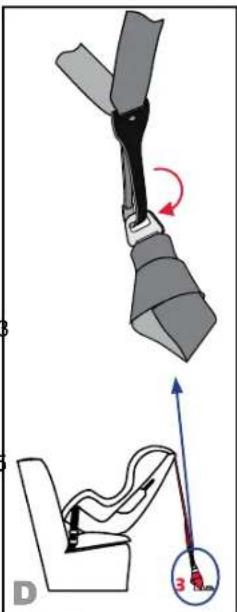
Because every vehicle model is different, sometimes you cannot find a location to properly anchor the tether. Use the tether connector strap to assist in creating an anchor point (Fig. D).
Find a fixed vehicle anchor point that is 1 bolted to the floor.
If you cannot find an acceptable 2 location to create an anchor point, contact the vehicle manufacturer to identify a suitable tether connection point.
Route the tether connector strap around 3 the fixed vehicle anchor point.
Take the metal D-ring and thread it 4 through the webbing loop on the other end of the tether connector strap.
Pull the metal D-ring all the way through 5 until the tether connector strap is tight around the metal anchor.
Use the D-ring as an attachment point 6 for hook on tether strap.
Installation: Versa-Tether
Child Seat Functions
Energy-Absorbing Tether Switching the LCS Connectors
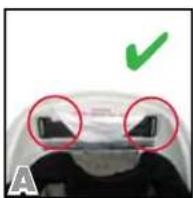
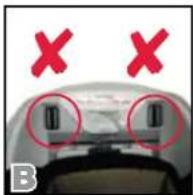
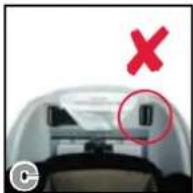
The energy-absorbing Versa-Tether was designed to enhance the performance of the child seat tether. By introducing a staged release of the tether webbing, the forward movement of the child seat is delayed while reducing the amount of energy transferred to the child seat during a crash. A secondary benefit of the energy-absorbing Versa-Tether is to help indicate when the child seat has been involved in a moderate or severe crash and replacement of the child seat is necessary.
Figure A shows the tether when the child seat is acceptable for continued use (provided the child seat has not been involved in a crash). The colored stitching will be intact and the webbing will be looped inside the shell.
Figures B and C show the tether when the child seat is unacceptable for continued use. If any of the loops have pulled through the back side of the shell and/or any of the colored stitching has been released on either side, the child seat is no longer acceptable for use. Discontinue use of the child seat.
IMPORTANT: Regardless of whether loops have pulled through the back side of the shell and the colored stitching has been released, discontinue use of the child seat if it has been involved in a moderate or severe crash.
NOTE: Child seats are shipped from Britax with the LCS connectors in the storage slots and configured for rear-facing mode.
The LCS connectors will properly connect with the LUAS anchors in the vehicle only when the connectors are correctly aligned and the harness is not twisted.
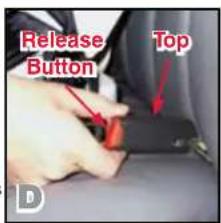
To ensure the LCS connector is properly aligned with the vehicle's LUAS anchor, the connector's red release button should face away from vehicle seat back, and the larger of the two connector sections is on top (Fig. D).
Lift the front of cover to access the LCS 1 connector.
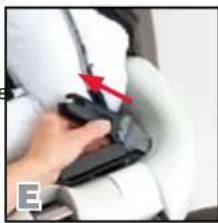
Slide both connectors through the rear-2 facing belt slots to the center of the child seat so both connectors are on the front side of the child seat (Fig. E).
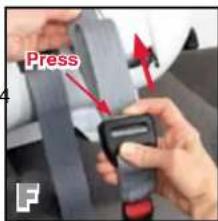
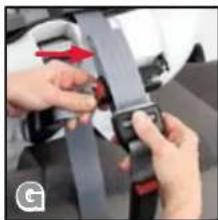
Loosen the loop on one connector (Fig. F).3 Thread the other connector through the loop 4 created in step 3 to switch positions (Fig. G). Slide each connector through the 5 appropriate rear-facing belt slot to opposite side of the child seat.
Replace the cover and continue with the 6 installation procedure.
Storing the LCS Connectors
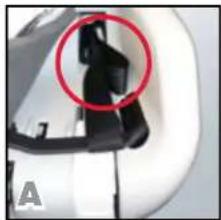
When the LCS connector is not in use, lift the cover to access the LCS storage slots (Fig. A). Fold the LCS adjuster and the connector, then slide each set into the adjacent slot.
NOTE: Child seats are shipped from Britax with the LCS connectors in the storage slots.
Recline Adjustment
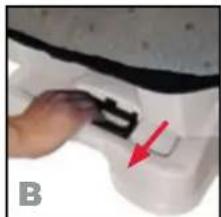
Pull the recline handle (Fig. B) then slide the child seat shell into the desired position. Release the recline handle, then verify the child seat has locked into position.

WARNING!
This child seat must not be used forward-facing for children less than one year of age OR who weigh less than 9.1 kg (20 lbs).
This child seat must be in full upright position when installed forward-facing for children who weigh more than 15.1 kg (33 lbs).
NOTE: It will be necessary to loosen the tether, vehicle seat belt, and/or LCS strap before adjusting the recline position. The tether, vehicle seat belt, and/or LCS strap must be properly re-tightened after adjusting the recline position.
Infant Body Pillow
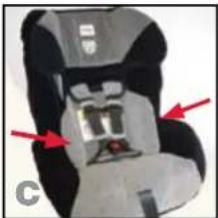
The Infant Body Pillow is designed to provide better fit and comfort for infants using this child seat. For additional side support, fold the side flaps inward (Fig. C).
NOTE: Remove the Infant Body Pillow after child can sit comfortably in the child seat without additional support.
Chest Clip
Fastening the Chest Clip
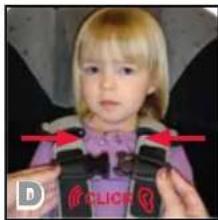
Fasten the chest clip by pushing the two halves together until a positive click is heard (Fig. D).
Releasing the Chest Clip
Squeeze the middle tabs together (Fig. E).1 Pull the two pieces apart.2
Adjusting the Chest Clip
Slide the chest clip up or down (Fig. F) on 1 the harness so it is positioned at the middle of the child's chest, level with the child's armpits.
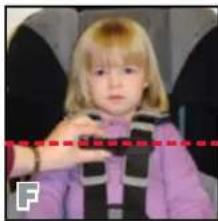
Slide the HUGS2 chest pads and comfort pads to a comfortable location for the child.
HUGS™ Chest Pads

WARNING HUGS chest pads can be installed for forward-facing use. Aval of HUGS is optional only for rear- ing use.

Harness Buckle
Fastening the Harness Buckle
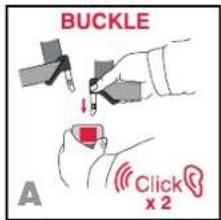
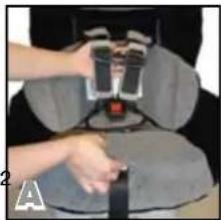
Hold the harness buckle with one hand.1 Use your other hand to insert one buckle 2 tongue at a time into the harness buckle (Fig.A).
A proper connection is confirmed with an . audible click after inserting each buckle tongue.
Releasing the Harness Buckle
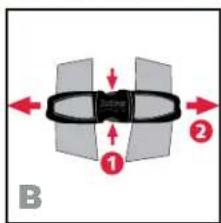
Brace the rear of the harness buckle with 1 one hand.
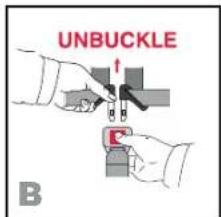
Use your thumb to press the release button 2 and slide both buckle tongues to remove from the buckle (Fig. B).
IMPORTANT: Periodically clean the harness buckle to ensure safe operation. See page 39.
Adjusting the Harness Height
IMPORTANT: See Important Harness Adjustments on pages 6-7 for instructions on proper harness fit based on your child's height and weight.
Loosen the harness by lifting the harness 1 adjuster lever while pulling the harness straps forward as far as possible.
Rotate the head restraint adjustment knob 2 on either side of the child seat to raise or lower the head restraint and harness (Fig. C)
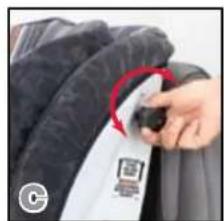
NOTE: DO NOT force the head restraint adjustment knob in either direction. If the knob is difficult to turn, the head restraint may be at maximum or minimum height, the harness may be tight, or the child's weight is pressing against the head restraint cover.
Securing Your Child
Securing Your Child
Buckling and Tightening the Harness
Loosen the harness by lifting the harness 1 adjuster release lever located on the front of the child seat while pulling both shoulder straps forward (Fig. A).
Release the chest clip by squeezing the tabs 2 and sliding the pieces apart (Fig. B).
Unfasten the harness buckle by pressing the 3 release button and sliding the tongues out.
Move the harness straps to the side of the 4 child seat.
Use the harness holders located on the. straps and both sides of the cover to aid in holding the straps.
IMPORTANT: Remove bulky coats and/or jackets before putting the child in child seat. Adjust the harness to fit the clothes the child is wearing.
5 Place child in the child seat.
6 Position harness straps around the child and fasten harness buckle (Fig. C) and chest clip (Fig. D).
-
Proper connection of the harness buckle is confirmed with an audible click after inserting each buckle tongue.
-
If the buckle will not fasten with an audible click after insertion of each buckle tongue, the harness buckle or adjuster area may be clogged with food, drink or other debris that needs to be removed. See page 39 for cleaning instructions.
7 Slide the HUGS chest pads down towards the buckle.
Gently pull up on the harness straps to 8 tighten lap section of the harness which should fit across the child's upper thighs.
Important checklist before tightening the harness:
Check for proper harness height (see pages 6-7).
Remove slack from around the child's upper thighs.
Remove slack between the HUGS chest pads and the buckle.
Slowly pull the adjuster strap 9 until the harness is snug around the child (Fig. E).
A snug strap should not allow any slack. It lies in a relatively straight line without sagging. It does not press on the child's flesh or push the child's body into an unnatural position.
You should not be able to pinch excess webbing at the shoulder once the harness is properly secured.
Position the chest clip at the middle of the 10 child's chest, level with the child's armpits (Fig. F).
Verify that the harness is not twisted and the child is properly secured.
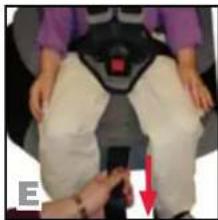
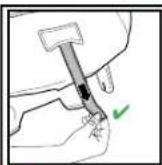
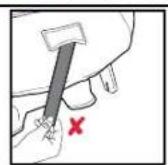
Pull the harness adjuster away from the child seat to tighten. Do not pull sideways.
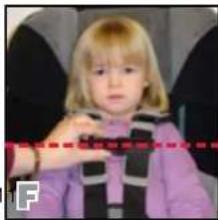
IMPORTANT: Always pull on the harness after securing the child to ensure the buckle tongues are secure in the harness buckle.
Cover Removal Cleaning the Cover

WARNING! Do not take apart the harness. Never remove buckle tongues from the harness. They cannot be reattached. removal. If reassembled incorrectly, the child seat may not form as intended.
Remove the infant body pillow.1
2 Loosen the harness by lifting the harness adjuster lever while pulling both shoulder straps forward as far as possible.
3 Release the chest clip and unbuckle the harness.
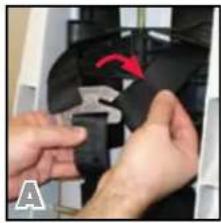
4 Unhook the shoulder straps from the harness yoke on the rear of the child seat (Fig. A).
5 Pull the upper harness straps through the head restraint and cover to the front of the child seat.
6 Recline the child seat.
7 Locate the metal buckle strap retainer on the bottom of the child seat.
8 Pull the retainer away from the child seat to loosen.
9 Turn the retainer so the short side will fit through the slot in the child seat shell (Fig. B).
10 Push the retainer through the slots in the shell and cover, to the top of the child seat.
11 Remove the head restraint portion of the cover. Remove the energyabsorbing foam from the head restraint and set aside. * Be careful not to damage the energy-absorbing foam.
12 Pull the lower harness straps, buckle tongues, HUGS chest pads, and chest clip through the lower slots in cover.
13 Remove the entire cover from the child seat.
Care and Maintenance Care
HAND WASH using cold water and mild soap.
LINE or LIE-FLAT DRY to prevent the cover from shrinking.
DO NOT· bleach, machine wash, machine dry or iron.
Refitting the Cover
To refit the cover, reverse the directions on page 36. Make sure that the shoulder straps are not twisted, and are properly threaded through the chest clip, HUGS™ chest pads, cover, foam, and shell.
Cleaning the Shell
SPONGE CLEAN using warm water and mild soap.
TOWEL DRY
DO NOT use solvents or abrasive cleaners.
Cleaning the Harness
SPONGE CLEAN using warm water and mild soap.
TOWEL DRY
- DO NOT bleach, machine wash, machine dry, iron, or disassemble the harness.
Cleaning the Harness Adjuster
Periodically check the adjuster area to be sure it is clean and free of food, drink or other debris. If debris is present, it must be removed to prevent interference with the adjuster mechanism.
BRUSH AWAY LOOSE DEBRIS using a soft-bristled brush.
SPONGE CLEAN using warm water and a mild soap.
TOWEL DRY
DO NOT use solvents, abrasive cleaners or disassemble the harness.
Care and Maintenance
Care and Maintenance
Harness Buckle Removal
Recline the child seat.1
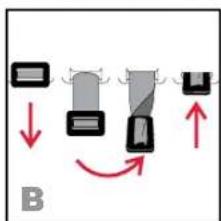
Locate the metal buckle strap retainer on the bottom of the child seat.
Pull the retainer away from the child seat to 3 loosen.
Turn the retainer so the short side will fit 4 through the slot in the child seat shell (Fig. A).
Push the retainer through the slots in the 5 shell and cover, to the top of the child seat.
Re-threading the Harness Buckle
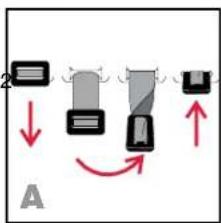
Locate the slot in cover and shell for the harness buckle.1
Turn the buckle retainer so the short side will fit through the slot in 2 the cover and the child seat shell (Fig. A).
Push the retainer through the slots in the shell and cover, to the 3 bottom of the child seat.
Pull the harness buckle away from the child seat until tight and 4 verify the strap is not twisted and the release button is facing outward.
Cleaning the Harness Buckle
If a child eats and drinks while in the child seat, the harness buckle may need to be periodically checked and cleaned of any food, drink or other debris.
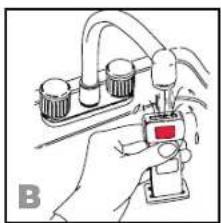
REMOVE BUCKLE as described above. RINSE THOROUGHLY using warm water (Fig.B).
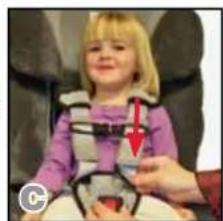
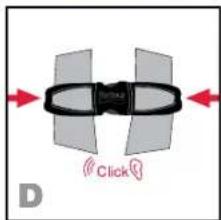
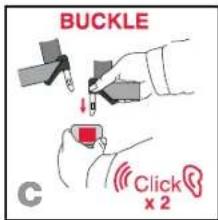
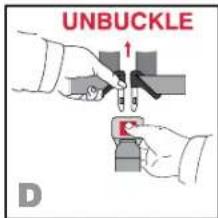
TEST THE HARNESS BUCKLE by fastening (Fig. C) and unfastening (Fig. D) until a click is heard after inserting each buckle tongue. If either click is not heard, repeat cleaning procedure.
TOWEL DRY
- DO NOT lubricate, use solvents, abrasive cleaners, soap or other household detergents.
This child seat was manufactured by Britax Child Safety, Inc. Britax® warrants this product to the original retail purchaser as follows:
LIMITED ONE-YEAR WARRANTY
This product is warranted against defective materials or workmanship for one year from the date of original purchase. Proof of purchase is required. The exclusive remedy for this warranty is that Britax will, at its option, provide repair or replacement components for this product. Britax reserves the right to discontinue or change fabrics, parts, models or products, or to make substitutions.
To make a claim under this warranty, contact Britax Consumer Services at 1-888-427-4829 or write to us using the address on the back cover of this booklet. Proof of purchase is required.
PLEASE COMPLETE AND MAIL THE OWNER REGISTRATION CARD WITHIN (30) DAYS OF PURCHASE OR VISIT WWW.BRITAXUSA.COM/ REGISTRATION.
WARRANTY LIMITATIONS
This warranty does not include damages which arise from negligence, misuse or use not in accordance with the product instruction.
The use of non-Britax Child Safety, Inc., covers, inserts, toys, accessories, or tightening devices is not approved by Britax. Their use could cause this child seat to fail Federal Motor Vehicle Safety Standards or not perform as intended in a crash. Their use automatically voids the Britax warranty.
LIMITATION OF DAMAGES
The warranty and remedies as set forth above are exclusive and in lieu of all others, oral or written, express or implied. In no event will Britax, or the retailer selling this product, be liable for any damages, including incidental or consequential damages, arising out of the use or inability to use this product.
LIMITATIONS OF WARRANTYES AND OTHER WARRANTY TERMS AND PROVINCIAL LAWS
Any implied warranties, including implied warranties of merchantability and fitness for a particular purpose, shall be limited to the duration and terms of the express written warranty. Some provinces do not allow limitations on how long an implied warranty lasts or the exclusion or limitation of incidental or consequential damages, so the above limitations may not apply. This warranty gives you specific legal rights, and you may have other rights, which vary from province to province. Neither Britax, nor the retailer selling this product, authorizes any person to create for it any other warranty, obligation, or liability in connection with this product.


Table des matieres
2009 Britax Child Safety, Inc. All rights reserved. Printed in U.S.A P363600 R1:05.09
Double Check Car Seat-to-Vehicle Installation :
Check that the lower connector or vehicle seat belt connections to the vehicle are tight and secure.
Verify the car seat cannot be moved front-to-back or side-to-side more than 2.5 cm (1 in.) at the belt path.
Double Check Child-to-Car Seat Installation :
Tug on the buckle to ensure a proper connection.
☑ Confirm harness straps are snug and over both shoulders and hips. You should not be able to pinch excess harness strap webbing at the child's shoulder.
Make sure the chest clip is properly fastened and positioned in the middle of the child's chest at armpit level.
Manufactured in Charlotte, NC, USA
Fabrique a Charlotte, NC, USA
Britax Child Safety, Ltd.
PO.Box 7289
RPO Brunswick Square.
Saint John NB E2L'9Z9.
A Britax Childcare Group
Limited company

- Child Seat Features.
- Vehicle Compatibility
- Installation: Rear-facing
- Installation: Forward-facing
- Installation: Versa-Tether
- Child Seat Functions
- WARNING!
- Safety Information Safe
- Important Notes
- Certification
- Registration
- Safety Information
- Important Harness Adjustments
- Rear-Facing
- Forward-Facing
- Child Seat Features
- Incompatible Vehicle Seat Belts
- WARNING! The following
- Vehicle Buckle Positions
- Vehicle Seating Positions
- Lower Universal Anchorage System (LUAS) Installation
- Lap-Shoulder Belt Installation
- Lap-Belt Installation
- Installation: Forward-Facing Installation: Forward-Fa
- WARNING
- Installation: Aircraft
- Rear-Facing Installation
- Forward-Facing Installation
- IMPORTANT:
- Using the Versa-Tether
- Tether Connector Strip
- Energy-Absorbing Tether Switching the LCS Connectors
- Storing the LCS Connectors
- Recline Adjustment
- Infant Body Pillow
- Chest Clip
- Fastening the Chest Clip
- Releasing the Chest Clip
- Adjusting the Chest Clip
- HUGS™ Chest Pads
- Harness Buckle
- Fastening the Harness Buckle
- Releasing the Harness Buckle
- Adjusting the Harness Height
- Securing Your Child
- Buckling and Tightening the Harness
- Important checklist before tightening the harness:
- Cover Removal Cleaning the Cover
- Refitting the Cover
- Cleaning the Shell
- Cleaning the Harness
- Cleaning the Harness Adjuster
- Care and Maintenance
- Harness Buckle Removal
- Re-threading the Harness Buckle
- Cleaning the Harness Buckle
- LIMITED ONE-YEAR WARRANTY
- PLEASE COMPLETE AND MAIL THE OWNER REGISTRATION CARD WITHIN (30) DAYS OF PURCHASE OR VISIT WWW.BRITAXUSA.COM/ REGISTRATION.
- WARRANTY LIMITATIONS
- LIMITATION OF DAMAGES
- LIMITATIONS OF WARRANTYES AND OTHER WARRANTY TERMS AND PROVINCIAL LAWS
- Table des matieres
- Double Check Car Seat-to-Vehicle Installation :
- Double Check Child-to-Car Seat Installation :
Brand : BRITAX
Model : Boulevard
Category : Car seat