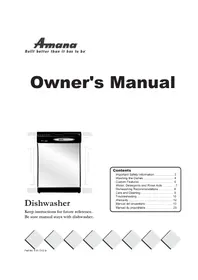
ADW662EAS - Dishwasher AMANA - Free user manual and instructions
Find the device manual for free ADW662EAS AMANA in PDF.



| Product Type | Dishwasher |
| Brand | AMANA |
| Model | ADW662EAS |
| Wash Cycles | Sensor Clean, Pots & Pans, Normal Wash, Light Wash, Rinse Only |
| Options | High Temp Wash, High Temp Rinse, Heated Dry, Delay/Resume, Control Lock |
| Control Type | Electronic Touch Controls |
| Tub Material | Stainless Steel |
| Upper Rack | Removable with fold-down shelf (Tin Shelf) |
| Lower Rack | With fold-down tines |
| Silverware Basket | Removable with covered section |
| Detergent Dispenser | Yes, two compartments |
| Rinse Aid Dispenser | Yes, adjustable with window indicator |
| Filtration System | Filter at bottom of tub |
| Waste Disposer | Integrated |
| Control Lock | Yes |
| Warranty | 1 year full, lifetime on tub, limited 2-5 years on some parts |
| Spare Parts | Available by order at 1-800-843-0304 |
| Water Consumption | 4 to 10 gallons (15 to 38 L) per cycle depending on program |
Frequently Asked Questions - ADW662EAS AMANA
User questions about ADW662EAS AMANA
0 question about this device. Answer the ones you know or ask your own.
Ask a new question about this device
Download the instructions for your Dishwasher in PDF format for free! Find your manual ADW662EAS - AMANA and take your electronic device back in hand. On this page are published all the documents necessary for the use of your device. ADW662EAS by AMANA.
USER MANUAL ADW662EAS AMANA
Keep instructions for future reference. Be sure manual stays with dishwasher.
Contents
Important Safety Information 3
Washing the Dishes 4
Custom Features 6
Water, Detergents and Rinse Aids 7
Dishwashing Recommendations 8
Care and Cleaning 9
Troubleshooting 10
Warranty 12
Thank you for buying an Amana® dishwasher!
Please take the time to complete the registration card and return promptly. If registration card is missing, call Amana Consumer Affairs Department. When contacting Amana, provide product information from serial plate found on the inside right edge of the dishwasher:
Model Number
Manufacturing (P) Number
Serial Number (S/N)
Purchase Date
Dealer Name
Dealer Address
Dealer Phone
Keep this manual and your sales receipt together in a safe place for future reference or if warranty service is required.
For answers to questions or to locate an authorized servicer, call 1-800-843-0304. Warranty service must be performed by an authorized servicer. Amana Appliances also recommends contacting an authorized servicer if service is required after warranty expires.
Questions on cleaning or usage? Refer to Product Assistance at www.amana.com Or call Consumer Affairs at 1-800-843-0304
Asur^T Extended Service Plan
Amana Appliances offers long-term service protection for this new dishwasher. Azure™ Extended Service Plan, covering functional parts, labor, and travel charges, is specially designed to supplement a strong warranty. Call 1-800-528-2682 for information.
Parts and Accessories
Purchase replacement parts and additional accessories by phone. To order accessories for your Amana product, call 1-800-843-0304.
Save Time and Money
If something seems unusual, please check Troubleshooting section, which is designed to help you solve problems before calling service. If you have a question, write or call us (include model number and daytime phone number) at:
Consumer Affairs Department
Amana Appliances
2800-220thTrail
Amana, Iowa 52204
Ph# 1-800-843-0304
What You Need to Know about Safety Instructions Warning and Important Safety Instructions appearing in this manual are not meant to cover all possible conditions and situations that may occur. Common sense, caution, and care must be exercised when installing, maintaining, or operating dishwasher
Always contact your dealer, distributor, service agent, or manufacturer about problems or conditions you do not understand.
Recognize Safety Symbols, Words, Labels

DANGER
DANGER—Immediate hazards which WILL result in severe personal injury or death

WARNING
WARNING—Hazards or unsafe practices which COULD result in severe personal injury or death.

CAUTION
CAUTION—Hazards or unsafe practices which COULD result in minor personal injury or product or property damage.
IMPORTANT SAFETY INFORMATION

WARNING
To avoid risk of fire, electric shock, serious injury, or death when using your dishwasher, follow these basic precautions:
- Read all instructions before using the dishwasher.
- Use the dishwasher only for its intended function.
- Disconnect electrical power to dishwasher before attempting to service.
- To avoid electrical shock hazard, the sides and back must be enclosed and the front panels must be attached before electrical power is applied to the dishwasher. Refer to the installation instructions for proper grounding procedures.
- Connect to a properly rated, protected and sized power supply circuit to avoid electrical overload.
- Children should never be permitted to operate, or play in, with, or around this dishwasher.
- To reduce the risk of injury when loading items to be washed, sharp or pointed items should be located with the handles up. Also, load sharp items so they are not likely to damage the door seal.
- Be careful not to touch the heating element on the bottom of the tub during or at the completion of a cycle. It may be hot.
- Use only detergents and rinse additives designed for an automatic dishwasher. Never use soap, laundry detergent, or hand washing detergent in your dishwasher. Keep these products out of reach of children.
- Do not sit, stand on or abuse the door or dish racks of the dishwasher.
- Under certain conditions, hydrogen gas may be produced in a hot-water system that has not been used for two weeks or more. HYDROGEN GAS IS EXPLOSIVE. If the hot-water system has not been used for such a period, before using the dishwasher turn on all hot-water faucets and let the water flow from each for several minutes. This will release any accumulated hydrogen gas. As the gas is flammable, do not smoke or use an open flame during this time.
- Do not wash plastic items unless marked "dishwasher safe" or the equivalent. For plastic items not so marked, check the manufacturer's recommendations.
- Do not tamper with controls.
- To prevent accidental child entrapment and suffocation risk, always remove the door to the washing compartment when removing an old dishwasher from service or discarding it.
- Use caution when unloading the dishwasher. Dishes will be hot if unloaded shortly after a cycle has completed.
Proper disposal of your appliance:
Important: Child entrapment and suffocation are not problems of the past. Junked or abandoned appliances are still dangerous—even if they sit "just for a few days". If you are getting rid of your old appliance:
- Remove dishwasher door completely from unit.
- Keep shelves or racks in place so that children may not easily climb inside.
SAVE THESE INSTRUCTIONS
Washing the Dishes
1. Prepare dishes for washing
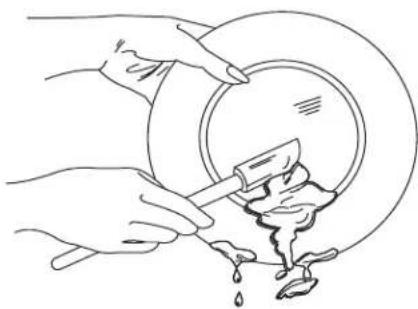
- Scrape off bones or large food particles. Remove excessive quantities of greasy/oily substances.
- Scrape or soak items with burnt on foods as they require more energy than the rest of the load to clean.
- Scrape off tomato based food soils.
- If connected to a food waste dispenser, make certain the dispenser is empty before starting the dishwasher. This allows proper draining
- Mustard, mayonnaise, vinegar, lemon and other acidic foods can cause rust or discoloration on stainless steel. Rinse these pieces as soon as possible.
- Starch from foods like potatoes, pasta, rice and oatmeal require more energy to clean than the rest of the load.
2. Load lower rack
To ensure best cleaning:
- Place all items in the racks so they are separated and facing the center of the racks.
- Wedge flat, lightweight items next to the silverware basket or along the sides and back of the racks.
- Load items so they do not rest over the wash tower located in the center of the lower rack
- Avoid blocking the upper and lower spray arms by not allowing items to extend beyond the racks.
Large items may be placed in any convenient location in this rack. - Keep soiled surfaces facing the center of the rack.
- The back of this rack accommodates a row of dinner plates or two rows of smaller plates. Serving bowls and large pans fit across the front of the rack or on the left side.
- Folding tines (some models) located on the right side, provide loading flexibility for large-shaped items.
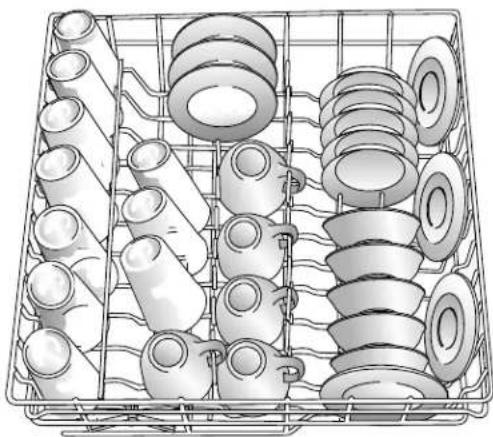
3. Load upper rack
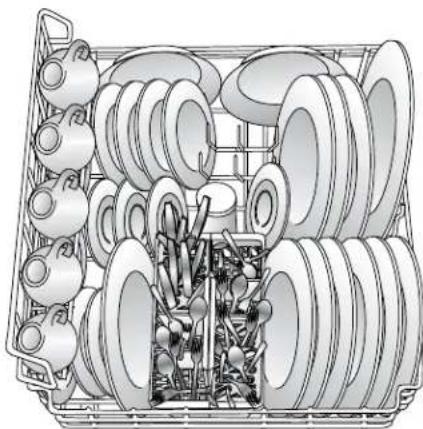
- This rack is designed to hold glasses, cups, small plates, bowls, cookware, etc.
- Small plates or bowls should be loaded with soiled surfaces facing the center of the rack.
- The twin shelf (select models) on the right side of the upper rack folds up or down. Fold it down to hold long-handled knives, spatulas and spoons or short items like cups or juice glasses. Fold it up for taller items like bowls, plates, etc.
- Place glasses in any row of the upper rack for proper cleaning and rinsing. Do not load glasses over tines.
- Upper rack can be removed when tall or oversized items need to be loaded into the lower rack.
Washing the Dishes (cont'd)
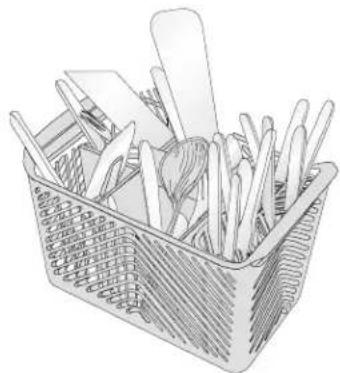
4. Load Silverware Basket
- For best cleaning results, prevent items from nesting together by placing some items in the basket with handles up and some with handles down.
- Load knives, handles up, through the slots in the covered section when closed (select models).
- Be sure that thin, finely pointed items do not extend through the basket. This could block the lower wash arm.
- Small, lightweight items like baby spoons and plastic measuring spoons should be placed in the covered section (select models) of the basket for washing.
5. Check rinse aid dispenser
Regular use of a rinse aid improves drying, reduces spotting and filming, and reduces moisture left on the dishwasher interior.
6. Add dishwashing detergent
Use detergent designed specifically for use in an automatic dishwasher. Be sure it is fresh and stored in a cool, dry place (not under the sink).
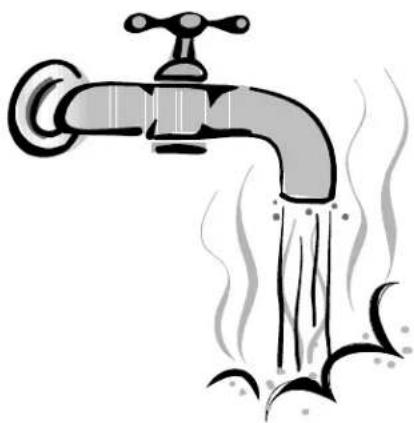
7. Run hot water & check food dispenser
Before starting the dishwasher, turn on the hot water faucet and let it run until the water is hot. This assures that the initial fill of water is hot.
If connected to a food waste dispenser, make certain the dispenser is empty before starting the dishwasher.
8. Close door
After loading the dishwasher and adding detergent, close the dishwasher by pressing the door until the latch clicks.
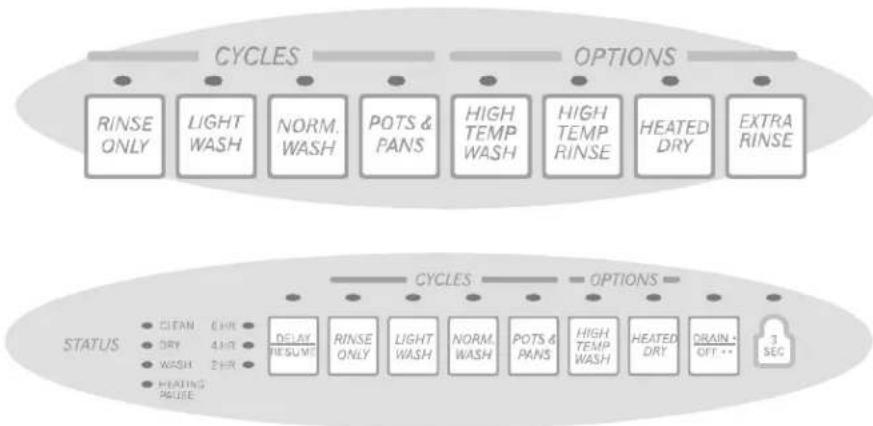
9. Select wash cycle
To start the dishwasher, firmly press the desired cycle and options pads. After a pause, the fill will begin. To prevent unplanned cycle or option changes, these selections are 'locked in' after 1 minute. The indicator lights for the selected cycle and options will glow. To cancel an option, press the pad again, to cancel a cycle, press the DRAIN/OFF pad.

"Forget something?"
For best cleaning, the forgotten item should be added early in the cycle.
- Press the Delay/Resume pad or unlatch the door.
- Wait for the water circulation to stop.
- Open the door and add the item.
- Close and latch the door.
- If Delay/Resume was pushed, push it again to restart the dishwasher
- After five seconds, the cycle resumes automatically at the point of interruption.

CAUTION
To avoid risk of personal injury when opening dishwasher door during a cycle, wait a few seconds to allow cold air to slowly expand inside dishwasher. Dishwasher may be hot.
Custom Features

If These Features are Different from Yours
These features are intended to show the variety that is available
in the product line. If your dishwasher does not have all the options that are shown, it is not a mistake. The information provided applies to several of the models in the product line.
Delay/Resume
The Delay/Resume option can be used to automatically start the cycle at a later time, such as during off-peak hours for reduced energy cost or to reduce daytime heat buildup in the home.
To set up a delay:
- Select the appropriate cycle and options for the load.
- Press the Delay/Resume pad until the desired amount of delay time is selected. The delay time will begin counting down when the pad is released.
- The Delay/Resume indicator light will remain lit until the delay time has counted down.
- The cycle will automatically start as soon as the delay time expires.
Indicator Lights
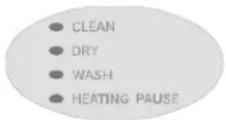
The CLEAN light illuminates at the end of the cycle and remains lit until the door has been open for 30 seconds continuously.
The DRY light illuminates during the entire dry period and goes out when the cycle is completed.
The WASH light illuminates during all rinse and wash portions of the cycle.
The HEATING PAUSE light illuminates when the cycle is being extended to heat the water.
Sensor Clean
Amana recommended cycle choice for all day-to-day soil types.
Normal dishloads vary from day to day. Sensor clean is recommended because it selects the number of fills and wash time best suited for the soil level of each load. Depending on the number of fills required water usage ranges from 4 to 10 gallons.
NOTE: If Delay/Resume is chosen without selecting a cycle and/or options, the dishwasher will select the last cycle used. (It will not remember the Rinse Only cycle.)

Control Lock Option
The control touchpads can be locked to prevent unwanted use. If this feature is activated between cycles, the dishwasher cannot be operated until the controls are unlocked. If desired, the controls can be locked after a cycle or delay has started.
NOTE: This option does not lock the door, only the dishwasher controls.
Setting the control lock:
- Press the pad for three seconds.
- An indicator light above the pad will illuminate when the controls are locked.
To cancel:
- Press the pad for three seconds.
- The indicator light will go off.
NOTE: If a cycle or option pad is pressed after the controls have been locked, the indicator light above the Control Lock pad will flash five times.
High Temp Wash
Use High Temp Wash when washing loads with hard-to-remove food soils. High Temp Wash can be selected with any cycle, except Rinse Only. Depending on which cycle is being used, selecting
High Temp Wash adds fills, heat and/or wash time to the wash cycle.
For baked-on, dried-on soils, select Pots and Pans along with High Temp Wash option. The use of an enzyme detergent is recommended
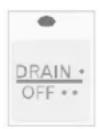
Drain/Off
To drain the dishwasher and then turn it off, press Drain/Off once. Press
Drain/Off twice to turn the dishwasher off without draining.
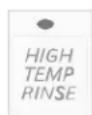
High Temp Rinse
High Temp Rinse provides a water temperature check in the main wash and also in the final rinse cycle. If necessary, the heating element will turn on and the cycle will be extended to heat water to
the proper temperature.
Select High Temp Rinse with any cycle (except Rinse Only) to assure proper hot water temperature and to enhance drying results.
Water, Detergents and Rinse Aids
How Much Detergent to Use
Too little detergent results in poor cleaning, hard water filming/spotting and poor drying. Too much detergent can cause permanent etching/cloudiness.
Use a detergent designed specifically for use in an automatic dishwasher. Other types (laundry, hand soap, etc.) will cause oversudsing. Be sure to use fresh detergent and store it in a cool, dry place (not under the sink). The amount of detergent to use depends on the water hardness measured in grains per gallon* (gpg) and the amount of soil on the dishes. Generally detergent amounts should be increased for harder water and heavier soil. Refer to the following chart for detergent usage recommendations.
If the water hardness is 13 gpg or harder, it is difficult to achieve good results with any dishwasher. The solution is a mechanical water softener to improve water quality, detergent effectiveness, and to protect the dishwasher parts from the damage that hard water deposits may cause.
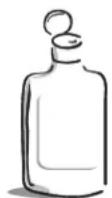
Rinse Aids
Regular use of a rinse aid improves drying, reduces spotting and filming, and reduces moisture left on the dishwasher interior.
Your dishwasher features an automatic rinse aid dispenser located near the detergent cups in the door.
The clear window in the center of the dispenser cap allows you to see if there is rinse aid in the reservoir. When the window is colored, there is rinse aid in the dispenser. When the window becomes clear, it is time to refill the dispenser. Check the dispenser monthly.
| Water Hardness* | Soil Residue | Detergent amount** (teaspoons) |
| Soft (0-4 gpg) | Light Soil 5 | |
| Normal Soil 6 | ||
| Heavy Soil 8 | ||
| Medium (5-9 gpg) | Light Soil 7 | |
| Normal Soil 8 | ||
| Heavy Soil 10 | ||
| Hard (10-12 gpg) | Light Soil 9 | |
| Normal Soil 10 | ||
| Heavy Soil 12 |
To add rinse aid to the dispenser, turn the cap counterclockwise to open. Remove the cap and pour liquid rinse aid into the opening. Replace the cap and turn it clockwise.
Hot Water
For best results, the incoming water temperature should be 120 - 140^
Check the water temperature by turning on the hot water faucet nearest the dishwasher and letting it run into a glass in the sink. Place a candy thermometer in the glass and check the temperature once it has stopped rising. If it is below 120^ have a qualified person raise the water heater setting.
If the outside temperature is unusually low, or if your water travels a long distance from the water heater to the dishwasher, you may want to turn on the hot water faucet at the sink and allow it to run until the water is hot. This assures that the initial fill of water is hot.
Dishwashing Recommendations
Most tableware, cookware and flatware can safely be washed in your dishwasher. If you have any doubts about an item, check with the manufacturer.
Dishwasher Safe Items
| Material | Usually Safe | Special | Instructions |
| Aluminum | Yes, except anodized | High water temperature and detergents may affect finish. | |
| Cast Iron | No Seasoning | will be removed, iron will rust. | |
| China or Stoneware | No, if antique or hand-painted | Always check manufacturer's recommendation before washing. Antique, hand-painted or over-the-glaze patterns may fade. Gold leaf may discolor. | |
| Crystal | No, if antique or delicate crystal | Always check manufacturer's recommendation before washing. Some types of leaded crystal may etch with repeated washings. | |
| Furnace Filters | Not recommended May leave a dingy deposit or stain on dishwasher interior. | ||
| Glass | Yes Milkglass | can yellow with repeated dishwasher washings. | |
| Gold-Plated Flatware | No | Will discolor. | |
| Pewter, Tin | No Not considered dishwasher safe. | ||
| Plastics | Yes, top rack | Always check manufacturer's recommendation before washing. Plastics vary in their capacity to withstand high water temperatures and detergents. Disposable plastic items are not dishwasher safe for this reason. | |
| Stainless Steel | Yes | Run a Rinse Only cycle if not washing immediately. Prolonged contact with foods containing salt, vinegar, milk products or juice could damage finish. | |
| Sterling silver Silver plate | No, if has commercial 'darkening' | Always check manufacturer's recommendation before washing. Run a Rinse Only cycle if not washing immediately. Prolonged contact with food containing salt, acid or sulfide (eggs, mayonnaise and seafood) could damage finish. Commercial 'darkening' may be removed by detergent. | |
| Wooden Item | No Wood may warp, crack or discolor. | ||
Removing the Upper Rack
The upper rack can be removed when tall or oversized items need to be loaded into the lower rack.
NOTE: Avoid resting items over the center wash tower.
To remove:
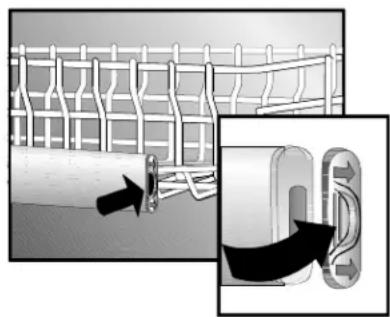
- Roll the upper rack 1/3 to 1/2 of the way out.
- Remove the plastic rack stop from the end of each track. To remove each plastic rack stop, push inward (toward the rack) on the ridged area of the rack stop. The rack stop will snap open and can be easily removed by pulling straight out. Take care to support the track while removing rack stops.
- Roll the rack all the way out of the track and remove from the dishwasher.
- Reverse the above procedure to replace the upper rack into the dishwasher.
Care and Cleaning
General Dishwasher Care:
The dishwasher interior is normally self-cleaning. Periodically check the bottom of the dishwasher tub to see if any large particles have not gone through the strainer portion of the module.
Wipe the edge of the inner door liner to remove any food soil splashes which occurred during loading.
The color from some tomato-based food soils has been known to occasionally adhere to today's dishwasher tubs, causing a temporary discoloration. To help prevent this, when washing a load of dishes soiled with tomato sauce:
- Scrape excess tomato-based food soils off of dishes, prior to loading. Do not prewash the dishes, however.
- Run the Pots and Pans cycle.
The front of the dishwasher can be cleaned with a soft damp cloth and liquid spray cleaner. Do not use abrasive powders or cleaning pads.
For a strong odor try placing baking soda in both sides of the detergent cup. Select Light Wash and allow the water to circulate for about 10 minutes. Interrupt the cycle by unlatching the door and let it stand overnight. Restart the dishwasher by latching the door and allow it to complete the
cycle. You can also try a citric acid containing dishwasher cleaning product such as Glisten (Part No. R0131566) or a commercially available dishwasher cleaning product.

WARNING
To avoid risk of burns, allow heating element to cool before cleaning the interior.

Storage
Fill both detergent cups with a fresh-scented dishwasher detergent
or baking soda and select the Normal Wash cycle. Allow the dishwasher to complete the cycle. Then turn the water supply off and drain the dishwasher. To drain:
- Press the Drain/Off pad once.
- Operate the drain twice to ensure most of the water is removed.
- Last, disconnect the electrical supply and prop open the door.
Cleaning Stainless Steel (some models)
Stainless steel appliances have been factory finished for high shine and luster. To maintain this quality appearance:
DO USE:
- Warm soapy water for routine cleaning.
- Dry with soft, clean cloth.
- For heavy soil, ONLY a stainless steel cleaner designed for kitchen appliance use.
DO NOT USE:
- Abrasive powders or liquids
- Citrus based cleaners
Ammonia - Steel wool pads
- Abrasive cloths
Oven cleansers - Acidic or vinegar based cleaners

Citric Acid
To prevent damage to the finish of your stainless steel appliance, do not
allow mustard, tomato juice, marinara sauce, or other citrus based sauces or products to remain on stainless steel surface. Citric acid permanently discolors stainless steel.
Damage to stainless steel finish due to improper use of cleaning products, or using non-recommended cleaning products, is not covered under warranty. For stainless steel cleaner, call our Consumer Affairs division at (800) 843-0304 and request part number 31960801.
Troubleshooting
You may save time and money by checking items below before calling for service. List includes common concerns that are not the result of defective workmanship or materials. If your question is not explained below, contact Amana Consumer Affairs Department at 800-843-0304 or at www.amana.com.
TOPIC POSSIBLE CAUSE SOLUTION
NOISE
| Dishwasher seems noisy | Water valve hiss during fill Normal. | |
| Water circulation Normal. | ||
| Ticking sound Normal. From timer | ||
| Thumping sound | Normal. May be a wash arm bumping an item that extends beyond the rack. Rearrange. | |
| Chopping or grinding sounds | Normal. May be heard as the internal food dispenser chops up hard items like fruit seeds, nuts, etc. | |
| Humming Normal. Occurs during the drain. | ||
| Snap noise | Normal. Noise is the detergent cup lid hitting the door liner when the dishwasher door is opened at the end of a cycle. | |
| Improper installation Verify dishwasher installation is correct. | ||
OPERATION

| Detergent cup is not empty | Incomplete cycle Allow cycle to complete. | |
| Dispenser is blocked by a utensil | Move utensil. | |
| Stale, old detergent Use fresh detergent stored in a cool, dry place. | ||
| Cycle takes too long | Low water temperature Verify incoming water temperature is 120-140°F (49-60°C) | |
| Dishwasher has an odor | Dishes being held in dishwasher Run dishes through a Rinse Only cycle. | |
| New smell | Normal. Will dissipate with use. | |
| Improper draining | See Troubleshooting-Water. | |
| Lingering scent | Use baking soda in both detergent cups and run through a Light Wash cycle. Interrupt 10 minutes into wash cycle and allow water to stand overnight. Restart the dishwasher by latching the door and allow cycle to complete. You can also try a citric acid containing dishwasher cleaning product such as Glisten (part no R0131566) or a commercially available dishwasher cleaning product. | |
| Food soil remains on dishes | Low water temperature | Check water temperature. Water temperature needs to be at least 120°F (49°C).Run hot water at sink before starting dishwasher. Select High Temp Wash if available. |
| High water hardness | Check water hardness and adjust detergent amount accordingly. | |
| Stale, old detergent Use fresh detergent stored in a cool, dry place. | ||
| Improper cycle | Select proper cycle for the soil level. | |
| Improper loading | Load items so they do not block the wash arms or center tower.Load the utensil basket with some handles up and some down to prevent nesting.Do not place glasses over tines. | |
| Burnt on residue | Prior to loading, scrape off burnt on foods and wipe the starchy film from utensils used with pasta, rice and oatmeal. These soils require more energy than the rest of the load to clean. | |
| Glasses are cloudy/spotted | No rinse aid | Use a rinse aid. |
| Low water temperature Verify incoming water temperature is 120-140°F (49-60°C). | ||
| Hard water | See Stains and Films. | |
| Etching | See Stains and Films. | |
Troubleshooting (cont'd)
OPERATION (cont'd)
| Stains | Multiple causes See Stains and Films. | |
| WATER | ||
| Dishwasher leaks | Not level Check that the dishwasher is level. Refer to Installation Instructions. | |
| Too much detergent | Suds can cause the dishwasher to overflow.See Water, Detergents and Rinse Aids. | |
| Too much rinse aid. | Be sure the rinse aid lid is securely attached and is not leaking.See Water, Detergents and Rinse Aids. | |
| Dishwasher will not drainWater in tub bottom | Food waste disposer Check for | food obstruction in the drain or disposer. |
| Knock-out plug | Be sure the knock-out is removed from disposer inlet.Refer to Installation Instructions. | |
| Siphoning | Be sure the drain hose is elevated at least 32" so water cannot siphon back into the tub. | |
| Kinked drain hose Make sure drain | ain hose is straight. | |
| Dishwasher won't fill | Water supply Be sure the water is turned on. | |
| Unlatched door Be sure door is | atched securely. | |
| Kinked inlet hose Check inlet hosed for a kink. | ||
| Clogged water valve Check water valve inlet for sediment and clean if necessary. | ||
| Items not properly driedMoisture is present onthe interior after the drycycle | Low water temperature | Check water temperature.Water temperature needs to be at least 120°F (49°C).Run hot water at sink before starting dishwasher SELECT High Temp Wash if available. |
| Normal function | Water droplets may form on the interior as a part of the drying process.Plastic and Teflon items are difficult to dry because the porous surface tends to collect water droplets. Towel drying may be necessary.Glasses with concave bottoms hold water and require towel drying. | |
| No rinse aid Always use a rinse aid. | ||
| Heated Dry is not selected Select Heated Dry | ||
| Not enough detergent | Increase detergent amount to match the water hardness.See Water, Detergent and Rinse Aids section. | |
| Improper loading | Load dishwasher properly. See Washing the Dishes. | |
Stains and Films
| Stain | Removal or Prevention |
| Iron deposits (yellow, brown or orange film) | RoVer Rust Remover (part no. R0131565) can be used to remove rust. Do not use RoVer along with dishwasher detergent. Fill both cups with RoVer and complete a Normal Wash cycle. Follow with a short wash cycle using a dishwasher detergent. |
| Aluminum marks (gray or black marks) | Aluminum utensils or pans can leave marks when they rub against other items. Leave a slight space between items. |
| Discoloration of plastics or dishwasher tub | Color from tomato sauces may adhere to the tub. If light staining has occurred, leave the door open to oxidize the stain away. For removal of heavier stains, try a citric acid containing dishwasher cleaning product such as Glisten (part no. R0131566). Change dishwasher detergent and be sure to use a dishwasher detergent that contains chlorine to better fight staining. |
| Pitting of stainless steel | No treatment. Avoid mixing stainless steel and silver utensils. Remove food soils as quickly as possible. From the stainless steel. Prolonged adhesion, especially with an acid based food, can cause discoloration or pitting. |
| Cloudy/Spotted | Confirm the cloudiness is removable by soaking the item in white vinegar for approximately 5 minutes. If removed, the problem is due to hard water. Adjust detergent amount being used to match water hardness. Be sure detergent is fresh, stored properly and is a high quality brand. |
| If cloudiness is not removable, it is etching. This is an erosion of the surface of the glassware and can be caused by water that is too hot, from using too much detergent or by prewashing. Detergent needs food soil to act upon. If etching has occurred, the glassware is permanently damaged. To prevent further etching, adjust the detergent amount to match the water hardness, stop prewashing, and be sure incoming water temperature is not greater than 140°F (60°C). Use water heating options only when incoming water temperature is below 120°F (49°C). |
Amana Warranty
Full ONE Year Warranty
Amana Appliances will repair or replace, including related labor and travel, any part (f.o.b. Amana, Iowa) which has proved to fail due to workmanship or materials.
Full LifETIME Warranty
At any time following the date of the original retail purchase, should the tub develop a water leak in normal home use, the dishwasher itself will be replaced free of charge. At any time following the date of original retail purchase, should the door liner develop a water leak in normal home use, repair or replacement of the door liner will be made free of charge.
Limited Warranty
Second through Fifth Year
After one year from the date of original retail purchase, Amana will provide a free part (f.o.b. Amana lowa), as listed below, to replace any part that fails due to a defect in materials or workmanship. The owner will be responsible for paying all other costs including labor, mileage, and transportation.
- Any parts of the wash system for all models, including the complete power assembly, soil sensor, center spray nozzle, spray arms, top wash arm hose, and motor.
- Computer Touch Control models only—any microprocessor and touch pad assemblies.
- All models against rust, including exterior cabinet and front panels of convertible models, the exterior front panels and accessory side panels of built-in models, and premium nylon coated racks (available on select models).
What is not covered by these warranties
- Replacement of household fuses, resetting of circuit breakers, or correction to household wiring or plumbing.
- Normal product maintenance and cleaning.
- Products with original serial numbers removed, altered, or not readily determined.
- Products purchased for commercial, industrial, rental, or leased use.
- Products located outside of the United States or Canada.
- Premium service charges, if the servicer is requested to perform service in addition to normal service or outside normal service hours or area.
Adjustments after the first year. -
Repairs resulting from the following:
-
Improper installation or maintenance.
Any modification, alteration, or adjustment not authorized by Amana. - Accident, misuse, abuse, fire, flood, or acts of nature.
- Connections to improper electrical current, voltage supply or water supply.
- Use of improper pans, containers, or accessories that cause damage to the product.
To Receive Warranty Service
Service must be performed by an authorized Amana service representative. To schedule service, contact the Amana dealer where you purchased your appliance or contact Amana Appliances Factory Service.
Amana Appliances Factory Service
1-800-628-5782
For more information,
Amana Appliances Consumer Services
Amana Appliances
2800 220th Trail
Amana, Iowa 52204
1-800-843-0304
When contacting Amana Appliances please include the following information:
- Your name, address, and telephone number.
- Model number and serial number of your appliance.
- The name and address of your dealer and the date of purchase.
A clear description of the problem.
Proof of purchase (sales receipt).
IN NO EVENT SHALL AMANA BE LIABLE FOR INCIDENTAL OR CONSEQUENTIAL DAMAGES.
This warranty gives you specific legal rights, and you may have others which vary from state to state. For example, some states do not allow the exclusion or limitation of incidental or consequential damages, so this exclusion may not apply to you.
Consumer Affairs Department
Amana Appliance
2800-220thTrail
Amana, Iowa 52204
PROBLEMA CAUSA POSIBLE SOLUCION
RUIDO
FUNCTIONAMENTO
EN NINGUN CASO AMANA APPLIANCES SERA RESPONSABLE POR DANOS EMERGENTES NI INCIDENTALES.
Consumer Affairs Department
Amana Appliances
2800-220hTrail
Amana, Iowa 52204
États-Unis
Tél: 1-800-843-0304
Levoyant CLEAN (nettoyage)sallume

- Contents
- Thank you for buying an Amana® dishwasher!
- AsurT Extended Service Plan
- Parts and Accessories
- Save Time and Money
- Recognize Safety Symbols, Words, Labels
- DANGER
- WARNING
- CAUTION
- IMPORTANT SAFETY INFORMATION
- Proper disposal of your appliance:
- SAVE THESE INSTRUCTIONS
- Washing the Dishes
- Prepare dishes for washing
- Load lower rack
- Load upper rack
- Washing the Dishes (cont'd)
- Load Silverware Basket
- Check rinse aid dispenser
- Add dishwashing detergent
- Run hot water & check food dispenser
- Close door
- Select wash cycle
- "Forget something?"
- Custom Features
- If These Features are Different from Yours
- Delay/Resume
- To set up a delay:
- Indicator Lights
- Sensor Clean
- Control Lock Option
- Setting the control lock:
- To cancel:
- High Temp Wash
- Drain/Off
- High Temp Rinse
- Water, Detergents and Rinse Aids
- How Much Detergent to Use
- Rinse Aids
- Hot Water
- Dishwashing Recommendations
- Removing the Upper Rack
- To remove:
- Care and Cleaning
- General Dishwasher Care:
- Storage
- Cleaning Stainless Steel (some models)
- DO USE:
- DO NOT USE:
- Citric Acid
- Troubleshooting
- TOPIC POSSIBLE CAUSE SOLUTION
- NOISE
- OPERATION
- Troubleshooting (cont'd)
- Amana Warranty
- Full ONE Year Warranty
- Full LifETIME Warranty
- Limited Warranty
- Second through Fifth Year
- What is not covered by these warranties
- To Receive Warranty Service
- Amana Appliances Consumer Services
- When contacting Amana Appliances please include the following information:
- PROBLEMA CAUSA POSIBLE SOLUCION
- RUIDO
- EN NINGUN CASO AMANA APPLIANCES SERA RESPONSABLE POR DANOS EMERGENTES NI INCIDENTALES.
Brand : AMANA
Model : ADW662EAS
Category : Dishwasher