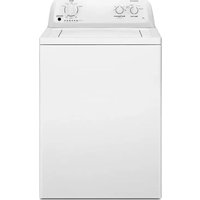
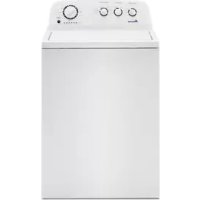
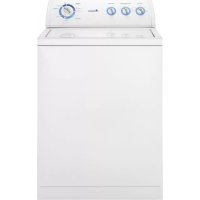
NAV3330EWW - Washing machine AMANA - Free user manual and instructions
Find the device manual for free NAV3330EWW AMANA in PDF.


| Product Type | Top Load Washing Machine |
| Brand | Amana |
| Model | NAV3330EWW |
| Power Supply | 120 V, 60 Hz, grounding required |
| Number of Cycles | 5 cycles: Quick Wash, Ultra Handwash, Handwash, Regular, No Iron Fabrics |
| Water Levels | Mini, Small, Medium, Large, Super Plus |
| Wash Temperatures | Hot/Cold, Warm/Warm, Warm/Cold, Cold/Cold (with A.T.C.) |
| Additional Options | Extra Rinse, Cycle End Signal, Quick Faucet |
| Built-in Dispensers | Liquid bleach and fabric softener dispenser |
| Safety | Automatic lid stop, overflow protection system, grounding required |
| Routine Maintenance | Control panel cleaning, cabinet, interior (periodic bleach), self-cleaning lint filter |
| Parts Warranty | Full 1-year warranty, limited 2-year parts, 5-year motor, 10-year transmission and outer basket, lifetime inner basket |
| After-Sales Service | Contact Maytag Services at 1-866-587-2002 (Canada) or via http://www.amana.com |
| Materials | Painted steel cabinet, stainless steel inner basket |
| Control System | Cycle selector knob with Off positions, automatic temperature control (A.T.C.) |
Frequently Asked Questions - NAV3330EWW AMANA
User questions about NAV3330EWW AMANA
0 question about this device. Answer the ones you know or ask your own.
Ask a new question about this device
Download the instructions for your Washing machine in PDF format for free! Find your manual NAV3330EWW - AMANA and take your electronic device back in hand. On this page are published all the documents necessary for the use of your device. NAV3330EWW by AMANA.
USER MANUAL NAV3330EWW AMANA
Using the Controls 4-6

Special Features 7

Care & Cleaning 8

Storing the Washer 8

Troubleshooting 9-10

Service & Warranty 11
Installer: Please leave this manual with this appliance.
Consumer: Please read and keep this manual for future reference. Keep sales receipt and/or canceled check as proof of purchase.
Model Number
Serial Number
Date of Purchase
If you have questions, call:
Amana Customer Assistance
1-800-843-0304 U.S.A.
1-866-587-2002 Canada
Internet: http://www.amana.com
U.S. Customers using TTY for deaf, hearing impaired or speech impaired, call 1-800-688-2080.
In our continuing effort to improve the quality and performance of our appliances, it may be necessary to make changes to the appliance without revising this guide.
For service information, see page 11.
What You Need to Know About Safety Instructions
Warning and Important Safety Instructions appearing in this manual are not meant to cover all possible conditions and situations that may occur. Common sense, caution and care must be exercised when installing, maintaining or operating appliance.
Always contact your dealer, distributor, service agent or manufacturer about problems or conditions you do not understand.
Recognize Safety Symbols, Words, Labels
WARNING
WARNING - Hazards or unsafe practices which COULD result in severe personal injury or death.
CAUTION
CAUTION - Hazards or unsafe practices which COULD result in minor personal injury.
WARNING
Toreduce the risk of fire, explosion, electric shock, or personal injury when using your washer, follow basic safety precautions, including the following:
- Read all instructions before using the appliance.
- As with any equipment using electricity and having moving parts, there are potential hazards. To use this appliance safely, the operator should become familiar with the instructions for operation of the appliance and always exercise care when using it.
- Do not install or store this appliance where it will be exposed to the weather.
- Install and level washer on a floor that can support the weight.
-
This appliance must be properly grounded. Never plug the appliance cord into a receptacle which is not grounded adequately and in accordance with local and national codes. See installation instructions for grounding this appliance.
-
To avoid the possibility of fire or explosion:
a. Do not wash items that have been previously cleaned in, washed in, soaked in, or spotted with gasoline, dry-cleaning solvents, other flammable or explosive substances as they give off vapors that could ignite or explode. Hand wash and line dry any items containing these substances.
Any material on which you have used a cleaning solvent, or which is saturated with flammable liquids or solids, should not be placed in the washer until all traces of these liquids or solids and their fumes have been removed.
These items include acetone, denatured alcohol, gasoline, kerosene, some liquid household cleaners, some spot removers, turpentine, waxes and wax removers.
b. Do not add gasoline, dry-cleaning solvents, or other flammable or explosive substances to the wash water. These substances give off vapors that could ignite or explode.
c. Under certain conditions, hydrogen gas may be produced in a hot water system that has not been used for two weeks or more. HYDROGEN GAS IS EXPLOSIVE. If the hot water system has not been used for such a period, before using a

Safety
washing machine or combination washer-dryer, turn on all hot water faucets and let the water flow from each for several minutes. This will release any accumulated hydrogen gas. As the gas is flammable, do not smoke or use an open flame during this time.
- Do not reach into the appliance if the tub or agitator is moving.
- Do not allow children or pets to play on, in, or in front of the appliance. Close supervision is necessary when the appliance is used near children and pets.
- Do not tamper with controls.
- Do not repair or replace any part of the appliance or attempt any servicing unless specifically recommended in published user-repair instructions that you understand and have the skills to carry out.
- Unplug power supply cord before attempting to service your washer.
-
The agitator should not be removed. If the agitator is removed, it must be replaced by pushing down completely and the locking screw tightened before the washer is operated.
-
Store laundry aids and other material in a cool, dry place where children cannot reach them.
- Do not wash or dry items that are soiled with vegetable or cooking oil. These items may contain some oil after laundering. Due to the remaining oil, the fabric may smoke or catch fire by itself.
- Do not use chlorine bleach and ammonia or acids (such as vinegar or rust remover) in the same wash. Hazardous fumes can form.
- Do not machine wash fiberglass materials. Small particles can stick to fabrics washed in following loads and cause skin irritation.
- Before the appliance is removed from service or discarded, remove the door to the washing compartment.
- Inlet hoses are subject to damage and deterioration over time. Check the hoses periodically for bulges, kinks, cuts, wear or leaks and replace them every five years.
Operating Tips
Detergent
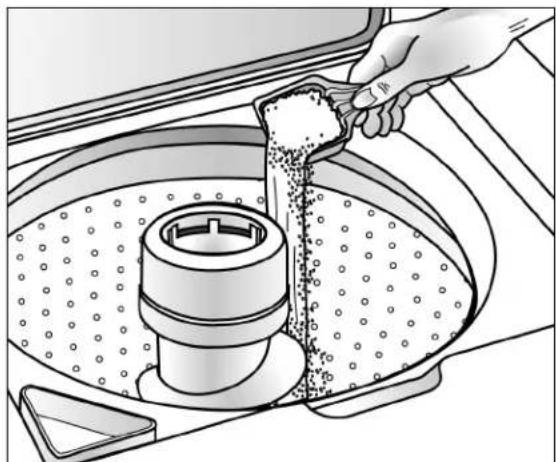
- Use either liquid or granular laundry detergent. For best results, be sure detergent is added to the washer BEFORE the load and be sure the wash water is above 60^ F.
- Use the correct amount of detergent for the load size, soil level and water conditions. Use more detergent if you have hard water and very soiled loads.
If you have soft water or a lightly soiled load, use less detergent. (See manufacturer's instructions.)
- Wipe up any detergent spills on the washer.
Loading
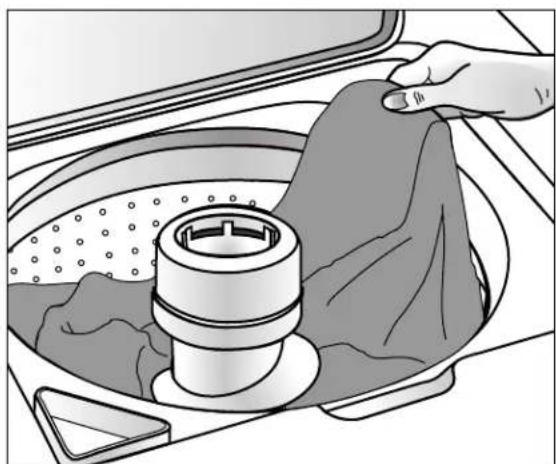
- Put dry, unfolded clothes loosely in the tub, up to the top row of holes for a maximum load.
- Do not wrap large items like sheets around the agitator.
- Mix large and small items for best circulation. Wash bulky items like blankets separately.
- W hen laundering no iron items or items of delicate construction, washable woolens or loosely knit items, never use less than the MEDIUM water level setting. This will minimize shrinkage, wrinkling and pulling of seams.
- F or best results add the detergent to the washtub before adding the load.
- Close lid carefully to avoid slamming.
Additional tips
- During the spin, it is possible for the load to become unevenly distributed in the tub. If this happens, push in the control knob, open the lid, redistribute the load, close the lid and pull out the control knob. The spin will resume at the point it was interrupted.
- T he washer will pause briefly throughout each cycle. These pauses are normal.
-
T his washer is designed so that it will not spin or agitate when the lid is open. It will, however, fill with the lid open so water is available for pretreating stains or diluting fabric softener.
-
If you open the lid during a spin cycle, the washer will stop. When the lid is closed and the control dial pulled out, the washer will continue the cycle at the point it was interrupted.
For detailed information on sorting, pretreating stains, etc., see the enclosed Laundering Tips brochure.
STEP 1
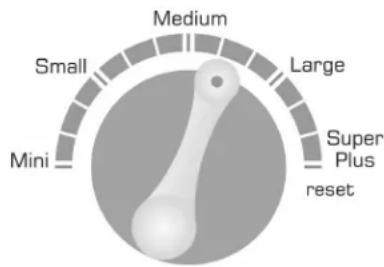
Select Load Size
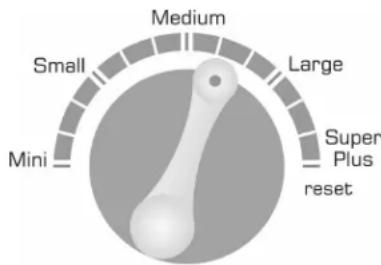
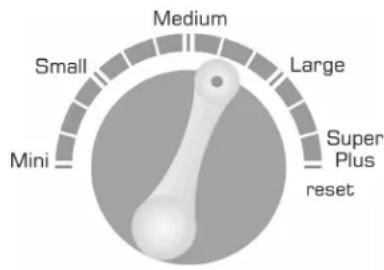
Determine the selected setting based on clothes load size.
On select models, the infinite control allows you to select a specific setting or anywhere in between.
It may become necessary, due to bulky fabrics, to adjust the water level after agitation begins. To adjust the water level, turn the control to reset and then back to the desired setting.
Note
- Items must circulate freely for best results.
| WATER LEVEL SETTING | LOAD SIZE |
| Mini 1/4 Full | |
| Small (select models) | 1/4 – 1/3 Full |
| Medium 1/3 – 1/2 | Full |
| Large 1/2 – 3/4 | Full |
| Super Plus 3/4 Full | – Full |
STEP 2
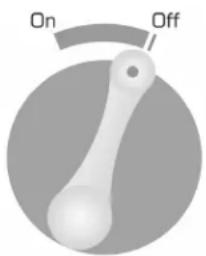
Extra Rinse (if desired)
Provides an additional rinse near the end of the cycle to more completely remove laundry additives, perfumes, etc.
STEP 3
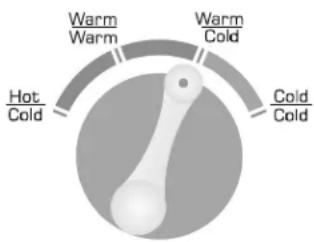
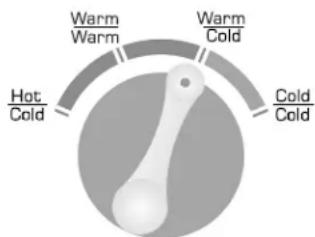
Select Wash/Rinse Temperature
Your washer provides you with a choice of hot, warm or cold water for washing and cold or warm water (select models) for rinsing.
Automatic Temperature Control (A.T.C.) (select models) provides the optimal wash water temperature for cleaning. To save energy, this washer will regulate wash water temperatures by mixing hot and cold water to reach the proper water temperature.
cont.
Control features vary by model.
Load Size WATER LEVEL
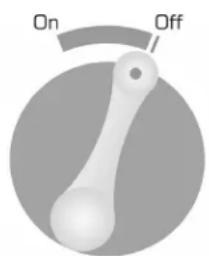
Extra Rinse
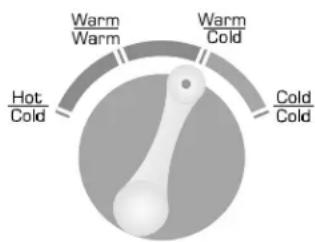
Temperature WASH/INSE
Note
- In wash water temperatures below 60^ , detergents do not dissolve well or clean well.
STEP 3 (continued)
Control features vary by model.
| WASH/RINSE L TEMPS | OAD TYPE |
| Hot/Cold | White and heavily soiled, color-fast items |
| Warm/Warm Moderately soiled, colored items | |
| Warm/Cold | Moderately soiled, colored items; most no iron items |
| Cold/Cold | Brightly colored, lightly soiled items; washable woolens |
| These settings feature Automatic Temperature Control: | |
| ATC Hot/Cold, ATC Warm/Cold | Saves energy by adding cold water to the hot water from your water heater. Provides optimum cleaning at lower temperatures. |
| ATC Cold/Cold | May add hot water to the incoming cold water as the washer fills. This assures that the water will be warm enough to properly activate detergent. |
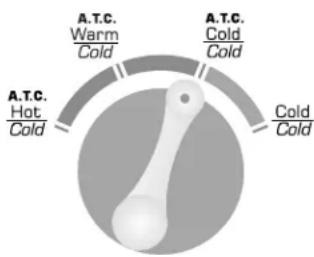
Temperature WASH/RINSE Automatic Temperature Control
STEP 4
Signal - End of Cycle (select models)
The end of cycle signal will sound once the cycle is completed.
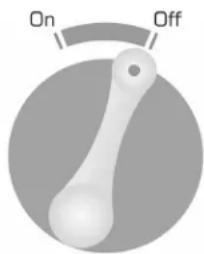
Signal END OF CYCLE
Using the Controls
STEP 5
Select Cycle
Toselect a cycle, push the control dial IN and turn until the pointer is at the soil level needed for the wash load.
Quick Wash (select models)
This cycle is designed to refresh clothing. QUICK WASH should only be used for small loads with little to no soil and minimal water level. Use no more than a teaspoon of detergent.
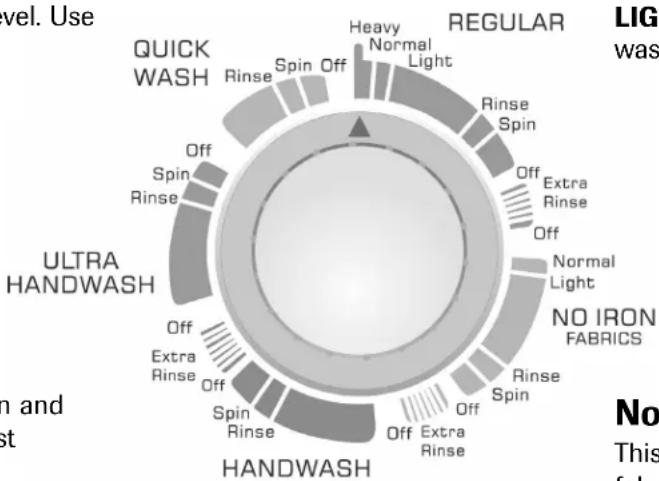
Ultra Handwash
(select models)
Intermittent slowest agitation and soak to gently wash the most delicate items.
Handwash
Intermittent slow agitation and soak for delicate fabrics needing slow spin speed because of clothing construction.
Regular Cycle
Regular Cycle is used for normal, sturdy fabrics and uses the following settings:
HEAVY: approximately 15 minutes of wash time.
NORMAL: approximately 12 minutes of wash time.
LIGHT: approximately 9 minutes of wash time.
No Iron Fabrics
This cycle is designed for sturdy fabrics needing a slower spin speed to reduce wrinkling, such as dress shirts and dress pants.
NORMAL: approximately 12 minutes of wash time.
LIGHT: approximately 9 minutes of wash time.
STEP 6
Pull Control Dial Out to Start
You may stop the washer at any time by simply pushing the control dial IN. Therefore it is possible to obtain a non-agitated soak or to shorten, skip or repeat any part of a cycle. The control dial must be pushed IN (off position) when you change the setting.
See Laundering Tips for proper washing procedures, stain removal, and special laundering situations.
Special Features
Bleach Dispenser
The dispenser automatically dilutes liquid chlorine bleach before it reaches your wash load. To use, follow these steps:
- Measure liquid chlorine bleach carefully, following the instructions on the bottle.
- Add the bleach to the dispenser before adding the load. Avoid splashing or over-filling the dispenser.
Note
- Never pour undiluted liquid chlorine bleach directly onto the load or into the wash tub. It is a powerful chemical and can cause fabric damage, such as tearing or color loss, if not used properly.
- If you prefer to use color-safe, non-chlorine bleach, pour it into the wash tub with your detergent. Do not pour non-chlorine bleaches into the bleach dispenser.
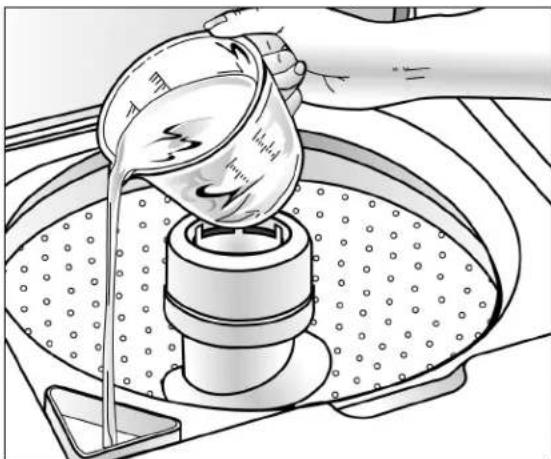
Pour liquid chlorine bleach into bleach dispenser.
Fabric Softener Dispenser
This dispenser automatically releases liquid fabric softener at the proper time during the cycle. To use, follow these steps:
- Pour a measured amount of desired liquid into the dispenser to fill line only.
- If liquid comes below line, add warm water.
Note
- Do not stop the washer during the first spin. This will cause the dispenser to empty too soon.
- Never pour fabric softener directly on the load. It will leave spots and stains.
- Use the dispenser for liquid fabric softeners only.
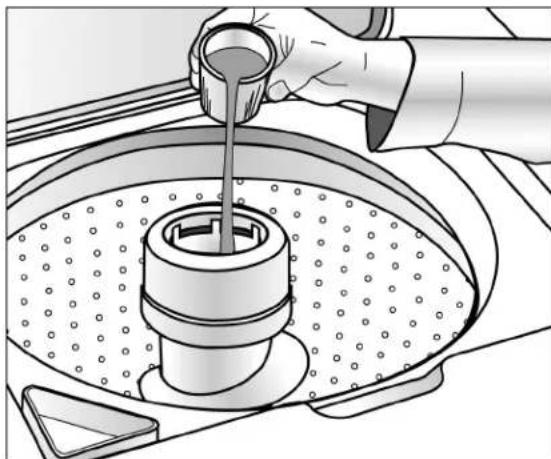
Pour liquid fabric softener into cup and dilute with warm water.
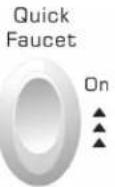
Quick Facet (select models)
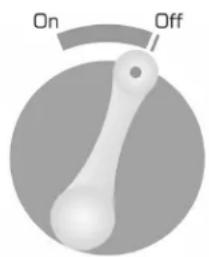
Provides a flow of water when holding the switch in the "On" position.

Care & Cleaning
Turn off the water faucets after finishing the day's washing. This will shut off the water supply to the washer and prevent the unlikely possibility of damage from escaping water.
Use a soft cloth to wipe up all detergent, bleach or other spills as they occur.
Clean the following as recommended:
Control Panel - clean with a soft, damp cloth and glass cleaner. Do not use abrasive powders or cleaning pads.
Cabinet - clean with soap and water followed with an appliance wax, if desired.
Lint Filter - it is self-cleaning and requires no maintenance. The filter is located under the agitator
on the bottom of the
washtub. During the wash and rinse portion of the cycle, lint is collected on the filter. Then during the spin and drain the filter is cleaned automatically.
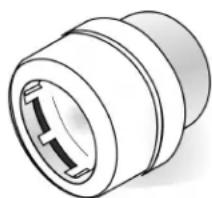
Fabric Softener Dispenser
If it is necessary to clean the dispenser:
- Pull the dispenser off of the top of the agitator.
- Soak for one hour in sink or container in hot water and dishwashing liquid.
- Hold hands over top and bottom of dispenser and shake to loosen buildup.

Storing the Washer
Washers can be damaged if water is not removed from hoses and internal components before storage. Prepare the washer for storage as follows:
- Select Regular, Light, and add one cup of chlorine bleach OR white vinegar to a full load of water without clothes. Run the washer through a complete cycle.
Note
-
Do not mix bleach and vinegar in the same wash. Hazardous fumes can form.
-
Rinse with clean, hot water.
- Repeat process if necessary.
- Replace dispenser on agitator.
Do not use dishwashing liquid inside the washer. Oversudsing can occur.
Interior - hard water deposits may be removed, if needed, using a recommended cleaner labeled washer safe.
The interior of the washer should be cleaned periodically to remove dirt, soil, odor or bacteria residue that may remain in the washer as a result of washing clothes. We recommend taking the following steps every 60 to 120 days to clean and freshen your washer interior. The frequency with which the washer should be cleaned and freshened depends on factors such as usage, the amount of dirt, soil or bacteria being run through your washer, or the use of cold water.
To clean and freshen the washer interior:
- Add a measured amount of chlorine bleach to the bleach dispenser, following package directions.
- Add 1/4 cup of detergent to the tub.
- Run the washer through a complete cycle using hot water.
-
Repeat the process if necessary.
-
T urn the water faucets off and disconnect the inlet hoses.
- Advance the cycle control knob to Spin and lower the drain hose to eliminate any water that may be in the drain hose.
- Disconnect the washer from the electrical supply and leave the washer lid open to let air circulate inside the tub.
For problem laundry solutions (i.e. fabric damage, residue, tangling) and special laundry care procedures, see the enclosed Laundering Tips brochure.
| Won't Fill | Plug cord into live electrical outlet. Check fuse or reset circuit breaker. Turn the control knob to proper cycle and pull knob out to start the washer. Turn both faucets on fully. Straighten inlet hoses. Disconnect hoses and clean screens. Hose filter screens may be plugged. |
| Won't Agitate | Check fuse or reset circuit breaker. Make sure the lid is completely closed. Turn the control knob to proper cycle and pull knob out to start the washer. Close lid and pull knob out to start the washer. For your safety, washer will not agitate or spin unless the lid is closed. Pauses are normal. Wait and see if the washer will start again. |
| Won't Spin or Drain | Check fuse or reset circuit breaker. Straighten drain hoses. Eliminate kinked hoses. If there is a home drain restriction, call for drain service. Close lid and pull knob out to start the washer. For your safety, washer will not agitate or spin unless the lid is closed. If drain height is over 15 feet, water may not be completely removed. Suds lock - caused by too much suds. Rewash without detergent. Use correct amount of a low-sudsing detergent. |
| Load is Wet | Unevenly distributed load. Redistribute the load, close the lid and pull knob out. Check for leveling. Be sure water level is acceptable for load size. A normal spin speed is recommended for heavy loads like jeans or towels, or if the drain height is over six feet. |
| Stops | Plug cord into live electrical outlet. Check fuse or reset circuit breaker. Turn the control knob to proper cycle and pull knob out to start the washer. Close lid and pull knob out to start the washer. For your safety, washer will not agitate or spin unless lid is closed. This may be a pause or soak period in the cycle. Wait briefly and it may start. |
| Leaks Water | Make sure hose connections are tight. Make sure end of drain hose is correctly inserted and secured to drain facility. Avoid extended soaking - soak for 30 minutes or less. Avoid overloading. |
| Is Noisy | Be sure washer is leveled properly as outlined in installation manual. Weak floors can cause vibration and walking. Be sure rubber feet are installed on leveling legs. Operating sounds will vary depending on agitation speed. |
| Fills with the Wrong Temperature Water | ·Turn both faucets on fully. ·If equipped with a temperature selector knob, be sure it is set directly on a temperature setting and not between settings. ·Make sure temperature selection is correct. ·While the washer is filling, you may notice just hot and/or just cold water entering the tub when cold or warm wash temperatures are selected. This is a normal function of the automatic temperature control feature as the washer determines the temperature of the water. ·If Auto Temperature Control is selected, cold water may feel warmer than cold water from the tap. (See page 4). ·Make sure hoses are connected to correct faucets and inlet connections. Be sure water supply is regulated correctly. Flush water line before filling washer. ·Check the water heater. It should be set to deliver a minimum 120° F (49° C) hot water at the tap. Also check water heater capacity and recovery rate. ·Disconnect hoses and clean screens. Hose filter screens may be plugged. |
| Cycle Selector Advances Through Off | ·Extra Rinse is selected. |
Washer Warranty
Full One-Year Warranty
For one (1) year from the date of original retail purchase, any part which fails in normal home use will be repaired or replaced free of charge.
Limited Warranty
After the first year from date of original retail purchase, through the time periods listed below, the parts designated below which fail in normal home use will be repaired or replaced free of charge for the part itself, with the owner paying all other costs, including labor, mileage, transportation, trip charge and diagnostic charge, if required.
Second Year - All parts.
Third Through Fifth Year - The drive motor.
Third Through Tenth Year - All parts of the transmission assembly, the outer tub.
Third Through Lifetime - The inner wash basket.
Additional Limited Warranty Against Rust-Through - Should an exterior cabinet, including the lid, rust through during the one-year period starting from the date of retail purchase, repair or replacement will be made free of charge. After the first and through the tenth year, repair or replacement will be made free of charge for the part itself, with the owner paying all other costs, including labor, mileage, transportation, trip charge and diagnostic charge, if required.
Please Note: This full warranty and the limited warranty apply when the washer is located in the United States or Canada. Washers located elsewhere are covered by the limited warranty only, including parts which fail during the first two years.
Canadian Residents
This warranty covers only those appliances installed in Canada that have been listed with the Canadian Standards Association unless the appliances are brought into Canada due to transfer of residence from the United States to Canada.
The specific warranties expressed above are the ONLY warranties provided by the manufacturer. This warranty gives you specific legal rights, and you may also have other rights that vary from state to state.
What is Not Covered By These Warranties:
- Conditions and damages resulting from any of the following:
a. Improper installation, delivery or maintenance.
b. Any repair, modification, alteration, or adjustment not authorized by the manufacturer or an authorized servicer.
c. Misuse, abuse, accidents or unreasonable use.
d. Incorrect electric current, voltage or supply.
e. Improper setting of any control.
-
Warranties are void if the original serial numbers have been removed, altered or cannot be readily determined.
-
Products purchased for commercial or industrial use.
-
The cost of service or service call to:
a. Correct installation errors.
b. Instruct the user on the proper use of the product.
c. Transport the appliance to the servicer.
- Consequential or incidental damages sustained by any person as a result of any breach of these warranties.
Some states do not allow the exclusion or limitation of consequential or incidental damages, so the above exclusion may not apply.
To Obtain Warranty Service
Tolocate an authorized service company in your area, contact the dealer from whom your appliance was purchased; or call Maytag Services ^SM , Amana Customer Assistance. Should you not receive satisfactory warranty service, please call or write:
Maytag Services
Attn: CAIR Center
P.O.Box 2370
Cleveland, TN 37320-2370
U.S. 1-800-843-0304
Canada 1-866-587-2002
U.S. Customers using TTY for deaf, hearing impaired or speech impaired, call 1-800-688-2080.
Note
- W hen contacting Maytag Service, Amana Customer Assistance about a service problem, please include the following:
a. Your name, address and telephone number;
b. Model number and serial number (found on the back center of the control panel) of your appliance;
c. Name and address of your dealer and the date the appliance was purchased;
d. A clear description of the problem you are having;
e. Proof of purchase.
Use & Care Guides, service manuals and parts catalogs are available from Maytag Services SM, Amana Customer Assistance.
Amana®
Laveuse
Amana Customer Assistance
1-800-843-0304 U.S.A.
1-866-587-2002 Canada
Load Size WATER LEVEL
Extra Rinse
Temperature WASH/INSE
Remarque
Amana Customer Assistance
Load Size WATER LEVEL
Extra Rinse
PASO 2
Selezione Extra Rinse (enjuague adicional)
Temperature WASH/INSE
Recuerde
- What You Need to Know About Safety Instructions
- Recognize Safety Symbols, Words, Labels
- WARNING
- CAUTION
- Safety
- Operating Tips
- Detergent
- Loading
- Additional tips
- STEP 1
- Select Load Size
- Note
- STEP 2
- Extra Rinse (if desired)
- STEP 3
- Select Wash/Rinse Temperature
- STEP 3 (continued)
- STEP 4
- Signal - End of Cycle (select models)
- Using the Controls
- STEP 5
- Select Cycle
- Quick Wash (select models)
- Ultra Handwash
- (select models)
- Handwash
- Regular Cycle
- No Iron Fabrics
- STEP 6
- Pull Control Dial Out to Start
- Special Features
- Bleach Dispenser
- Fabric Softener Dispenser
- Quick Facet (select models)
- Care & Cleaning
- Storing the Washer
- To clean and freshen the washer interior:
- Washer Warranty
- Full One-Year Warranty
- Limited Warranty
- Canadian Residents
- What is Not Covered By These Warranties:
- To Obtain Warranty Service
- Amana®
- Laveuse
- Remarque
- PASO 2
- Selezione Extra Rinse (enjuague adicional)
- Recuerde
Brand : AMANA
Model : NAV3330EWW
Category : Washing machine