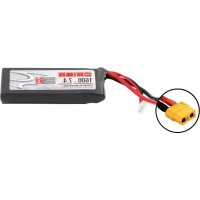
ORI60144 - Battery Team Orion - Free user manual and instructions
Find the device manual for free ORI60144 Team Orion in PDF.



User questions about ORI60144 Team Orion
0 question about this device. Answer the ones you know or ask your own.
Ask a new question about this device
Download the instructions for your Battery in PDF format for free! Find your manual ORI60144 - Team Orion and take your electronic device back in hand. On this page are published all the documents necessary for the use of your device. ORI60144 by Team Orion.
USER MANUAL ORI60144 Team Orion
MANUEL D'INSTRUCTIONS
INSTRUCTION MANUAL
Congratulations for the purchase of this engine. This engine has been projected, developed and tested in cooperation with the best drivers in the world. The most advanced technologies and materials have been used to achieve the best performance and reliability.
In order to get the best performance and reliability, read this manual carefully before using the engine. Always follow the safety precautions.
IMPORTANT NOTICE
Always remember:
- This engine is not a toy but a high-performance engine; misuse can result in injury to you or others.
- This engine has been developed for use on a RC model car exclusively.
- During and right after engine operation, keep children out of reach of the model car and engine.
SAFETY PRECAUTIONS
As owner and user you are responsible for the safe and proper use of the engine. We encourage utmost care and prudence when you use the engine.
Always be aware of the following dangers.
Failure to comply with one of following points can lead to serious injuries to the user or to others!

Poisoning warning! The fuel used to power the engine is toxic. Store it in a safe location out of the reach of children. In the event of ingestion or contact with the eyes, immediately wash with water and refer to a doctor.

Poisoning warning! Don't operate the engine in closed spaces. As with full size cars, exhaust gases are toxic and asphyxiating (combustion residues, carbon monoxide). Operate the engine in open spaces only.

Fire warning! Fuel is highly flammable; do not smoke while handling it. Keep the fuel away from heat sources or open flames.

Burn warning! When running, the engine produces considerable heat, in particular near the cooling head and the exhaust. Don't touch the engine or any of its parts until it has completely cooled down.

Injury warning! While assembling, adjusting and servicing the engine, use proper tools and screw-drivers.

High noise levels caution! Install a proper exhaust system; exposition to high noise levels can damage hearing.
OPERATING PRECAUTIONS
Failure to comply with one of following points can lead to serious damage to the engine. Warranty doesn't extend to these cases.
- Assemble the engine following instructions and suggestions; use proper tools.
- Before starting the engine, always check for correct tightening of screws and nuts (in particular those related to joints and removable parts, such as the carburetor retainer); loose or missing screws are a
frequent reason of engine damage or erratic function.
- Avoid contact between battery or radio wires and rotating parts.
- To stop the engine, close the throttle and stop the fuel flow by squeezing the fuel pipe while the engine is idling.
- When starting the engine, avoid flooding the engine with too much fuel, as it can damage the engine with hydraulic locking. If the engine is flooded, remove the glow plug, interrupt the fuel flow and spin the engine by hand to eliminate the excess fuel. Cover the engine head with a cloth to avoid fuel from spraying out into your eyes.

When the piston is near to top dead center (TDC) and in cold conditions, it can be difficult to spin the engine. This is normal; the liner has a slightly conical shape which attains perfect geometry when the engine is running at optimal temperature.
GENERAL INFORMATION
FUEL
Only use fuel specifically formulated for RC car engines. This type of fuel is generally available in model shops and contains a nitromethane percentage ranging from 10% to 25% . During engine break-in, use fuel with 16% nitromethane content. Once the break-in procedure is completed (and only if needed) you can use fuel with higher nitromethane content.
Be aware that high nitromethane content improves engine performance but also affects the glow plug and engine longevity.

Warning! Typical model car fuels are toxic; avoid ingestion and contact with the eyes.
AIR FILTER
Use and proper care of the air filter are essential for engine longevity and performance. Soak the air filter with a good quality oil, such as the one usually supplied with the filter.
Without the air filter, dust and dirt can enter the engine, possibly damaging the engine.

Always use an air filter when running the engine.
CARBURETOR
The carburetor supplied with the engine is pre-set for the break-in procedure. After the break-in procedure is completed, it must be adjusted for normal use conditions.
Carburetors have 4 adjustments available:
High speed needle, top screw: adjusts the fuel flow when the throttle is fully opened. Turning this needle clockwise, you will lean out the mixture; turning counter clockwise you make the mixture richer.
Low speed needle, screw at the end of carburetor slide: tunes acceleration from idle, regularizes the idling. Turning this needle clockwise, you lean out the low speed mixture. Turning counter clockwise you make the mixture richer.
Idle screw, the small screw on the side at an angle: Stops the carburetor slide from closing completely, sets the engine idling. Turning this needle clockwise increases the idle RPM; turning it counter clockwise decreases the idle RPM. This screw and the low speed needle are to be used together to adjust the engine idling.
Spray bar, on the back of the carburetor: sets the engine torque in normal use. If you are not a very experienced user, we recommend that you leave this at the factory setting or move it no more than a half turn with respect to the original position.

Always check that the fuel supply circuit is perfectly sealed.
Always tune the engine with small adjustments; engines are highly sensitive to carburetion settings.
GLOW PLUG
Engines are sensitive to the glow plug type and weather conditions. We suggest you to always use Team Orion glow plugs to achieve the best performance and a stable running. Install the glow plug carefully. Use a proper tool when you change the glow plug, make sure the glow plug is correctly inserted into the thread before tightening it.
Check the glow plug and filament regularly; unexpected engine stalling or irregular running can be caused by the oxidation or wear of the filament. The spiral shaped filament must have a bright silver colour (and glow brilliant orange when connected to glow starter).
A broken, impacted or missing filament is a serious condition which requires thorough inspection of the engine. The loss of the spiral filament can be caused by the mixture being too
lean or the engine running too hot. Top end needle is screwed too far in. The engine needs more fuel.
If not corrected, a damaged glow plug or filament issue will lead to permanent damage to the engine.
There are two kinds of glow plugs - standard and turbo; the choice depends on the engine type and application.
EXHAUST SYSTEM
The exhaust system has two functions: it helps to reach the best performance and reduces the noise levels produced by the engine. We suggest that you only use original Team Orion exhaust systems.
While assembling, be careful to align all the parts correctly. Any mechanical stress on the exhaust system connections will cause a leak. Exhaust leaks will cause inconsistent performance and will make the engine difficult to tune.

Regularly check all the parts and substitute them if they are damaged or worn.
OPERATING INSTRUCTIONS
ENGINE INSTALLATION
Before installing the engine on the model car, check that the engine mount is flat. Flatness avoids distortions and deformations. It also allows the best heat dissipation through the chassis.
Mount the engine so that the spur gear and the pinion are aligned and that the gear mesh is adequate; connect the fuel line and the pressure line. Tighten the motor mount screw; tighten the carburetor retainer once it is aligned with the linkage.
Check the throttle linkage and verify that the carburetor if fully opening and closing and that the movement is free of any mechanical binding.

The piston in a cold engine will be hard to move and will almost get stuck near the top dead center: this is normal. The fit between the piston and liner has been designed to ensure optimal performance when higher
temperatures are reached during normal running. Once the engine is warm, the piston will move much more freely.
STARTING THE ENGINE

Running the engine without an air filter can seriously damage the engine.
Fill the tank with adequate fuel. Connect the tank to the carburetor.
When starting the engine for the first time, plug the exhaust tip with a rag and rotate the crankshaft by hand a few times without using the glow plug igniter. This will draw fuel into the engine and lubricate it before starting it.
Then, with the carburetor in the idle position, connect the glow plug igniter, wait for about 2 seconds and start the engine.

It's possible during engine startup to have an hydraulic lock of the engine, due to flooding. Flooding happens when the cylinder fills up with too much fuel. If the engine is flooded, remove the glow plug, stop the flow of fuel to the engine and operate the engine by hand to eliminate the fuel excess. Be careful to cover the head with a cloth to avoid fuel spraying into eyes.
If the startup problems persist, check the following points:
- Is the glow plug igniter charged and functional? Check the batteries.
-
Is the glow plug filament incandescent and functional? Check the filament for damage.
-
Does the fuel reach the carburetor? Check the tank and the connecting pipe.
- Is the engine flooded? Remove excess fuel using the procedure explained above.
BREAK-IN
An engine is a complex mechanical device. In order to get the best performance from the engine, a break-in procedure for all the internal and moving parts is absolutely necessary. A proper break-in will greatly improve the longevity and performance of the engine. Break-in will take some time to complete, but the benefits are worth the time spent.
Always make adjustments in small increments during break-in: this is an important mind-set to conform to, especially when operating a new engine. Internal parts must be properly lubricated and reach the correct temperature before delivering maximum power. Using a lean fuel mixture or running the engine at high RPM during break-in will irremediably decrease its lifespan and performance.
Follow this procedure for a proper break-in:
- Start the engine and let it run at idle for a complete fuel tank. The idling must be stable: if the RPM rise, open the idle screw of 1/4 turn; if the RPM decrease, close the idle screw 1/4 turn.
After the first tank, let the engine cool down, making sure the piston is not in the top dead center position. -
Move to a track, the goal is to operate the engine in realistic conditions, where the engine cooling is made by the air flowing over the head. Avoid the engine reaching high RPM. The engine sound should be of a low pitch, similar to that of a four-stroke engine. Smoke and unburned fuel should exit from the pipe. If the RPM rise too high at 80% throttle, immediately slow down and open the top end needle in 1/4 turn increments until lower RPM are achieved. Continue running this way for 0.5L (500cc) of fuel, but avoid running at full throttle for a long time.
-
Once you have run 0.5L (500cc) through the engine, you can close the top end screw to achieve up to 80% of normal engine performance, and run the engine for 0.25L (250cc) fuel with higher RPM. Always make sure you see plenty of white smoke coming from the exhaust during this time.
- In the last phase (carburetion optimization) you can reach 90% of normal performance. Avoid engine overheating, which implies power loss. In this case, slow down immediately and open the top end screw of 1/4 turn.

During the break-in procedure the engine should maintain a regular idling and plenty of smoke should come from the exhaust pipe.
PRE-CARBURETION
Correct carburetion of a car model engine requires patience and engine knowledge. Continuous trials and small incremental adjustments contribute to your experience and ability. Internal combustion engines are indeed difficult to tune; if you have persistent problems or don't feel confident, don't hesitate and ask your retailer for hints and suggestions.

CAUTION: adjust only one needle at a time; tune the engine with small incremental adjustments. As you get closer to optimal performance, use 1/12 of a turn for incremental adjustments of the needles.
Start and get the engine warm. Keeping the model stationary and secured, follow this procedure to adjust the needles:
- To adjust the top end needle: fully open the throttle. The engine should reach 80% power and stabilize. If the engine RPM rise too much, close the throttle and
open the top end needle 14 turn at a time; repeat the procedure till you achieve the best result. On the other hand, if the engine is flooded and makes a deep-toned roar (like a four-stroke engine), close the top end needle 14 turn at a time until a good result is achieved.
- To adjust the idle: open and release the throttle. If the engine stalls, tighten the idle screw until the idling is stable. On the other hand, if the idling is too high, loosen the idle screw until you reach a constant idling.
- To adjust the bottom end: fully open the throttle and release it quickly. If the engine idles for 2-3 seconds and then the RPM further decrease, the low end is too rich. Close the low end needle in small increments until the idling lasts for about 10-20 seconds. If the engine idles for 2-3 seconds and then the RPM suddenly rise, the low end is too lean: open the bottom end needle in small increments until the desired result above is achieved.

Adjusting the idle can affect the bottom end setting. Check the setting again and if necessary, repeat the above procedure.
FINAL CARBURETION ON TRACK
The final adjustments have to be made on the track. If the pre-carburetion has been properly done, only small changes are needed.
To achieve the best performance, adjust the top end needle with small increments, repeating the operation until the engine accelerates in a progressively and reaches the highest RPM quickly. When the theoretical perfect tuning is achieved, we suggest to open the top end needle of 1/8 turn to limit max temperature. This can help avoid a too lean mixture and in the long term a possible shortening of the engine lifespan.
Power loss and no visible smoke from the exhaust pipe are signs of bad carburetion. Slow down and revise the top end
needle adjustment by opening it another 1/8 turn. Correct carburetion delivers good acceleration and produces a sharp roar at high RPM, with some smoke exiting the exhaust pipe.

Carburetion depends on weather conditions, glow plug characteristics, fuel type and exhaust system. Each time one of these parameters changes, open the top end needle 14 turn and tune it again on track.

When the engine stalls, high temperature affects the carburetor and changes the idling stability, especially when the idling is too low. The engine tune will be back to normal after a few laps, when the temperature reaches normal levels again.
SHUTTING OFF THE ENGINE
When you are done using the engine, disconnect the feeding pipe and let the engine idle until the fuel inside the engine is completely depleted.

Don't leave unburned fuel inside the engine for long periods of time. The nitromethane of the fuel can promote corrosion of internal parts.
MAINTENANCE

Lack of engine maintenance will lead to premature wear and engine failure.
Racing engines are very precise machines. Correct use and maintenance are essentials for a long life.
Our Warranty doesn't cover malfunctions or failures due to improper maintenance
Racing engines reach 40,000 RPM, therefore the stresses on the moving parts are extreme.
We suggest that you regularly check and verify the following:
- The wear of the crankshaft and the play between the conrod bushing and the crankshaft pin;
- If the compression is adequate.
Compare these characteristics with the ones of a brand new engine after break-in. If you have doubts on how to evaluate the results, ask your retailer for hints and suggestions.
Mechanical problems are often caused by:
Poor fuel quality
- Improperly maintained or installed air filter
- Excessive wear of moving parts
Each of the above points requires regular checking and maintenance.
When using the engine in racing conditions, we recommend that you replace the following every 5 litres of fuel:
- The conrod, as it's one of the most stressed parts in the engine
- The ball bearings, as they are highly delicate
To replace the parts, ask an experienced user with proper tools and skills, or ask your retailer.
WARRANTY
Team Orion guarantees this product to be free from manufacturing and workmanship defects. No liability will be accepted for any damage or injury resulting from the use of this product. By the act of operating this product, the user accepts all resulting liability. The warranty covers all manufacturing defects of any engine part which appear the first time the engine is started. The Warranty covers all the parts, with the exception of parts subject to wear and to ordinary maintenance such as conrod, bearings, crankshaft, and silicone gaskets. Warranty does not cover damage caused by improper engine use, improper or lack of maintenance, failure to comply with the instructions supplied with the product, use of poor quality fuel or use of non original accessories