14743 - Dishwasher KENMORE - Free user manual and instructions
Find the device manual for free 14743 KENMORE in PDF.



| Product Type | Built-in dishwasher |
| Brand | Kenmore |
| Model | 14743 (665.1474*) |
| Dimensions (W x H x D) | Approx. 60 x 85 x 60 cm (standard) |
| Weight | Approx. 45-50 kg (estimate) |
| Power supply | 120 V, 60 Hz, 15 A (single phase) |
| Capacity | 10 to 12 place settings |
| Wash programs | SmartWash® HE, Pots & Pans, Normal Wash, Express Wash, Quick Rinse |
| Wash options | TurboZone®, High Temp, Sani Rinse, Smart Dry™, Top Rack Only, 4 Hour Delay |
| Filtration system | ULTRACLEAN™ triple filtration, removable filters |
| Wash arms | Lower 360° PowerWash® arm and upper arm |
| Tub material | Stainless steel (lifetime warranty against rust-through leakage) |
| Detergent dispenser | With main wash and pre-wash compartment |
| Rinse aid dispenser | Capacity 150 ml, adjustable |
| Racks | Adjustable-height upper rack, lower rack with fold-down tines, removable cutlery basket |
| Safety features | Control lock, overflow protection, grounding |
| Noise level | Not specified, but quiet technology |
| Water consumption | From 2.1 to 5.3 gallons (8 to 20 liters) depending on program |
| Program duration | From 18 minutes (rinse) to 3h23 (Pots & Pans) |
| Maintenance | Monthly filter cleaning, use of affresh® cleaner recommended |
| Warranty | 1 year parts and labor, 2 years parts, 5 years racks, lifetime stainless steel tub |
Frequently Asked Questions - 14743 KENMORE
User questions about 14743 KENMORE
0 question about this device. Answer the ones you know or ask your own.
Ask a new question about this device
Download the instructions for your Dishwasher in PDF format for free! Find your manual 14743 - KENMORE and take your electronic device back in hand. On this page are published all the documents necessary for the use of your device. 14743 by KENMORE.
USER MANUAL 14743 KENMORE
Toronto, Ontario, Canada M5B 2C3
www.sears.ca

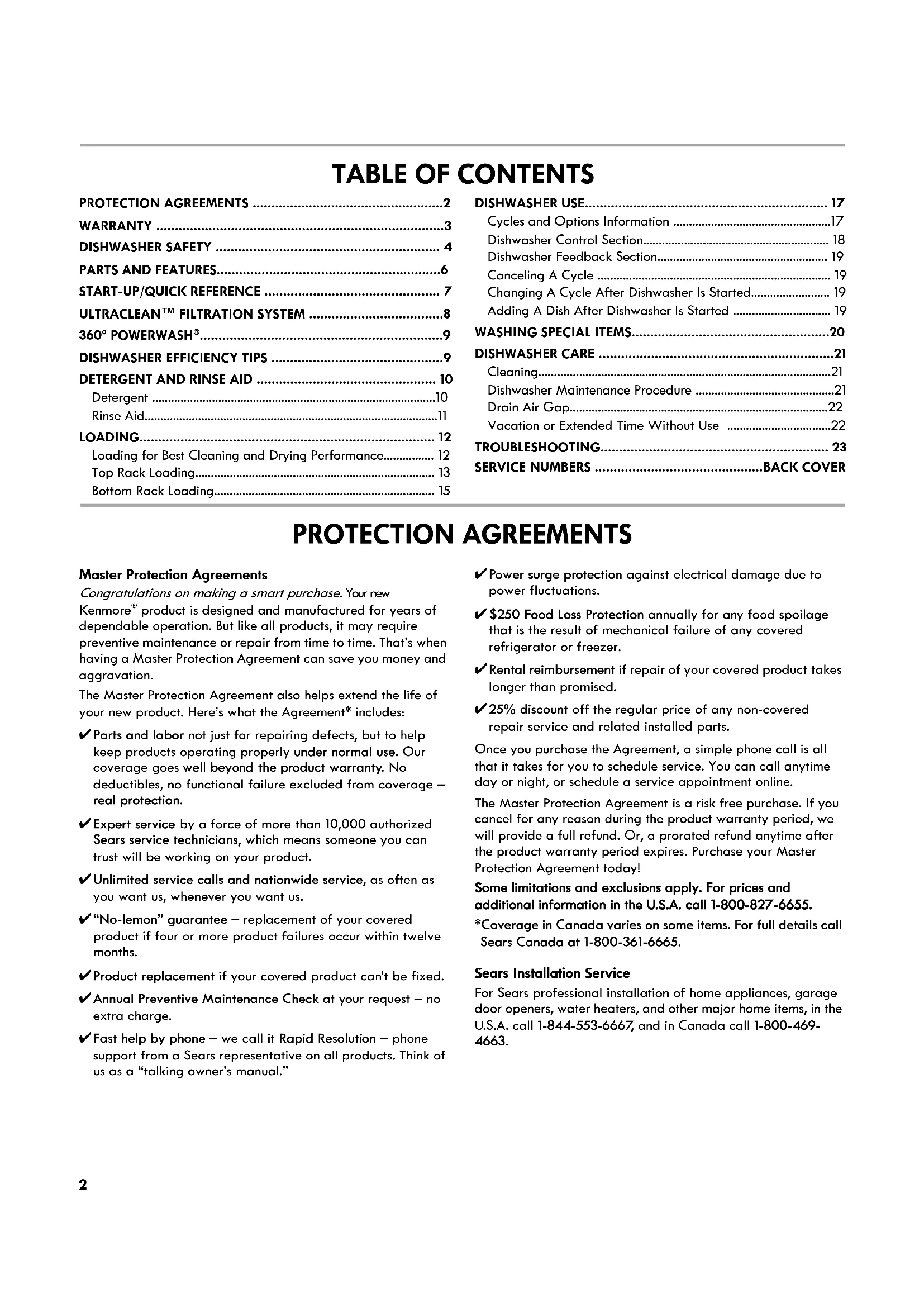
TABLE OF CONTENTS
PROTECTION AGREEMENTS ......2
WARRANTY ....3
DISHWASHER SAFETY 4
PARTS AND FEATURES....6
START-UP/QUICK REFERENCE 7
DETERGENT AND RINSE AID 10
Detergent 10
Rinse Aid....11
LOADING....12
Loading for Best Cleaning and Drying Performance.... 12
Top Rack Loading.... 13
Bottom Rack Loading.... 15
DISHWASHER USE....17
Cycles and Options Information ....17
Dishwasher Control Section.... 18
Dishwasher Feedback Section.... 19
Canceling A Cycle 19
Changing A Cycle After Dishwasher Is Started.... 19
Adding A Dish After Dishwasher Is Started 19
WASHING SPECIAL ITEMS....20
DISHWASHER CARE 21
Cleaning....21
Dishwasher Maintenance Procedure 21
Drain Air Gap....22
Vacation or Extended Time Without Use 22
TROUBLESHOOTING.... 23
SERVICE NUMBERS ....BACK COVER
PROTECTION AGREEMENTS
Master Protection Agreements
Congratulations on making a smart purchase. Your new Kenmore® product is designed and manufactured for years of dependable operation. But like all products, it may require preventive maintenance or repair from time to time. That's when having a Master Protection Agreement can save you money and aggravation.
The Master Protection Agreement also helps extend the life of your new product. Here's what the Agreement* includes:
√ Parts and labor not just for repairing defects, but to help keep products operating properly under normal use. Our coverage goes well beyond the product warranty. No deductibles, no functional failure excluded from coverage – real protection.
√ Expert service by a force of more than 10,000 authorized Sears service technicians, which means someone you can trust will be working on your product.
√ Unlimited service calls and nationwide service, as often as you want us, whenever you want us.
√ "No-lemon" guarantee – replacement of your covered product if four or more product failures occur within twelve months.
√ Product replacement if your covered product can't be fixed.
√ Annual Preventive Maintenance Check at your request – no extra charge.
√ Fast help by phone – we call it Rapid Resolution – phone support from a Sears representative on all products. Think of us as a “talking owner’s manual.”
√ Power surge protection against electrical damage due to power fluctuations.
√ \$250 Food Loss Protection annually for any food spoilage that is the result of mechanical failure of any covered refrigerator or freezer.
√ Rental reimbursement if repair of your covered product takes longer than promised.
√ 25% discount off the regular price of any non-covered repair service and related installed parts.
Once you purchase the Agreement, a simple phone call is all that it takes for you to schedule service. You can call anytime day or night, or schedule a service appointment online.
The Master Protection Agreement is a risk free purchase. If you cancel for any reason during the product warranty period, we will provide a full refund. Or, a prorated refund anytime after the product warranty period expires. Purchase your Master Protection Agreement today!
Some limitations and exclusions apply. For prices and additional information in the U.S.A. call 1-800-827-6655.
*Coverage in Canada varies on some items. For full details call Sears Canada at 1-800-361-6665.
Sears Installation Service
For Sears professional installation of home appliances, garage door openers, water heaters, and other major home items, in the U.S.A. call 1-844-553-6667, and in Canada call 1-800-469-4663.
KENMORE ELITE LIMITED WARRANTY
WITH PROOF OF SALE the following warranty coverage applies when this appliance is correctly installed, operated and maintained according to all supplied instructions. In all cases replacement units or parts are warranted only for the unexpired portion of the warranty period from the original date of sale.
FOR ONE YEAR from the date of sale this appliance is warranted against defects in material or workmanship. A defective appliance will receive free repair or replacement at option of seller.
FOR TWO YEARS from the date of sale all parts of this appliance are warranted against defects in material or workmanship. If a part is defective within the first year, a new part will be supplied and installed at no charge. If a part is defective after the first year, a new part will be supplied but not installed at no charge. You are responsible for the labor cost of part installation after the first year from the date of sale.
FOR FIVE YEARS from the date of sale, all parts of the upper or lower dish rack are warranted against rust due to defects in material or workmanship. If a rack part rusts from defects within the first year, a new part will be supplied and installed at no charge. If a rack part rusts from defects after the first year, a new part will be supplied but not installed at no charge. You are responsible for the labor cost of part installation after the first year from the date of sale.
FOR AS LONG AS IT IS USED from the date of sale, the stainless steel tub and inner door panel of this appliance are warranted against leaks due to rust-through. If a tub or panel rusts through within the first year, a new part will be supplied and installed at no charge. If a tub or panel rusts through after the first year, a new part will be supplied but not installed at no charge. You are responsible for the labor cost of part installation after the first year from the date of sale.
For warranty coverage details to obtain free repair or replacement, visit the web page: www.kenmore.com/warranty
All warranty coverage applies for only 90 DAYS from the sale date in the United States, and is void in Canada, if this appliance is ever used for other than private household purposes.
This warranty covers ONLY defects in material and workmanship, and will NOT pay for:
- Expendable items that can wear out from normal use, including but not limited to filters, belts, bags or screw-in base light bulbs.
- A service technician to clean or maintain this appliance, or to instruct the user in correct appliance installation, operation and maintenance.
- Service calls to correct appliance installation not performed by Sears authorized service agents, or to repair problems with house fuses, circuit breakers, house wiring, and plumbing or gas supply systems resulting from such installation.
-
Damage to or failure of this appliance resulting from installation not performed by Sears authorized service agents, including installation that was not in accord with electrical, gas or plumbing codes.
-
Damage to or failure of this appliance, including discoloration or surface rust, if it is not correctly operated and maintained according to all supplied instructions.
- Damage to or failure of this appliance, including discoloration or surface rust, resulting from accident, alteration, abuse, misuse or use for other than its intended purpose.
- Damage to or failure of this appliance, including discoloration or surface rust, caused by the use of detergents, cleaners, chemicals or utensils other than those recommended in all instructions supplied with the product.
- Damage to or failure of parts or systems resulting from unauthorized modifications made to this appliance.
- Service to an appliance if the model and serial plate is missing, altered, or cannot easily be determined to have the appropriate certification logo.
Disclaimer of implied warranties; limitation of remedies
Customer's sole and exclusive remedy under this limited warranty shall be product repair or replacement as provided herein. Implied warranties, including warranties of merchantability or fitness for a particular purpose, are limited to one year on the appliance, two years on appliance parts, five years on dish racks, and for as long as used on the tub and inner door panel, or the shortest period allowed by law. Seller shall not be liable for incidental or consequential damages. Some states and provinces do not allow the exclusion or limitation of incidental or consequential damages, or limitation on the duration of implied warranties of merchantability or fitness, so these exclusions or limitations may not apply to you.
This warranty applies only while this appliance is used in the United States or Canada*.
This warranty gives you specific legal rights, and you may also have other rights which vary from state to state.
* In-home repair service is not available in all Canadian geographical areas, nor will this warranty cover user or servicer travel and transportation expenses if this product is located in a remote area (as defined by Sears Canada Inc.) where an authorized servicer is not available.
Sears Brands Management Corporation Hoffman Estates, IL 60179
Sears Canada Inc.
Toronto, Ontario, Canada M5B 2C3
DISHWASHER SAFETY
Your safety and the safety of others are very important.
We have provided many important safety messages in this manual and on your appliance. Always read and obey all safety messages.

This is the safety alert symbol.
This symbol alerts you to potential hazards that can kill or hurt you and others.
All safety messages will follow the safety alert symbol and either the word “DANGER” or “WARNING.” These words mean:
! DANGER
WARNING
You can be killed or seriously injured if you don't immediately follow instructions.
You can be killed or seriously injured if you don't follow instructions.
All safety messages will tell you what the potential hazard is, tell you how to reduce the chance of injury, and tell you what can happen if the instructions are not followed.
IMPORTANT SAFETY INSTRUCTIONS
WARNING: When using the dishwasher, follow basic precautions, including the following:
- Read all instructions before using the dishwasher.
■ Use the dishwasher only for its intended function.
■ Use only detergents or rinse agents recommended for use in a dishwasher, and keep them out of the reach of children.
■ When loading items to be washed:
1) Locate sharp items so that they are not likely to damage the door seal; and
2) Load sharp knives with the handles up to reduce the risk of cut-type injuries. - Do not wash plastic items unless they are marked "dishwasher safe" or the equivalent. For plastic items not so marked, check the manufacturer's recommendations.
■ Do not touch the heating element during or immediately after use.
■ Do not operate the dishwasher unless all enclosure panels are properly in place.
■ Do not tamper with controls.
■ Do not abuse, sit on, or stand on the door, lid, or dish racks of the dishwasher.
■ To reduce the risk of injury, do not allow children to play in or on the dishwasher.
■ Under certain conditions, hydrogen gas may be produced in a hot water system that has not been used for two weeks or more. HYDROGEN GAS IS EXPLOSIVE. If the hot water system has not been used for such a period, before using the dishwasher turn on all hot water faucets and let the water flow from each for several minutes. This will release any accumulated hydrogen gas. As the gas is flammable, do not smoke or use an open flame during this time.
■ Remove the door or lid to the washing compartment when removing an old dishwasher from service or discarding it.
SAVE THESE INSTRUCTIONS
State of California Proposition 65 Warnings:
WARNING: This product contains one or more chemicals known to the State of California to cause cancer.
WARNING: This product contains one or more chemicals known to the State of California to cause birth defects or other reproductive harm.
WARNING
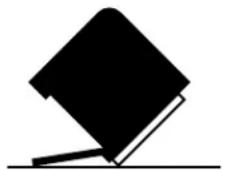
Tip Over Hazard
Do not use dishwasher until completely installed.
Do not push down on open door.
Doing so can result in serious injury or cuts.
WARNING

Electrical Shock Hazard
Electrically ground dishwasher.
Connect ground wire to green ground connector in terminal box.
Do not use an extension cord.
Failure to follow these instructions can result in death, fire, or electrical shock.
■ Install where dishwasher is sheltered from the elements.
Avoid possible rupture of fill valve from freezing. Such ruptures are not covered by the warranty. See the "Vacation or Extended Time Without Use" section.
■ Install and level dishwasher on a floor that will hold the weight, and in an area suitable for its size and use.
■ Remove all shipping plugs from hoses and connectors (such as the cap on the drain outlet) before installing. See Installation Instructions for complete information.
GROUNDING INSTRUCTIONS
■ For a grounded, cord-connected dishwasher:
The dishwasher must be grounded. In the event of a malfunction or breakdown, grounding will reduce the risk of electric shock by providing a path of least resistance for electric current. The dishwasher is equipped with a cord having an equipment-grounding conductor and a grounding plug. The plug must be plugged into an appropriate outlet that is installed and grounded in accordance with all local codes and ordinances.
WARNING: Improper connection of the equipment-grounding conductor can result in a risk of electric shock. Check with a qualified electrician or service representative if you are in doubt whether the dishwasher is properly grounded. Do not modify the plug provided with the dishwasher; if it will not fit the outlet, have a proper outlet installed by a qualified electrician.
■ For a permanently connected dishwasher:
The dishwasher must be connected to a grounded metal, permanent wiring system, or an equipment-grounding conductor must be run with the circuit conductors and connected to the equipment-grounding terminal or lead on the dishwasher.
SAVE THESE INSTRUCTIONS
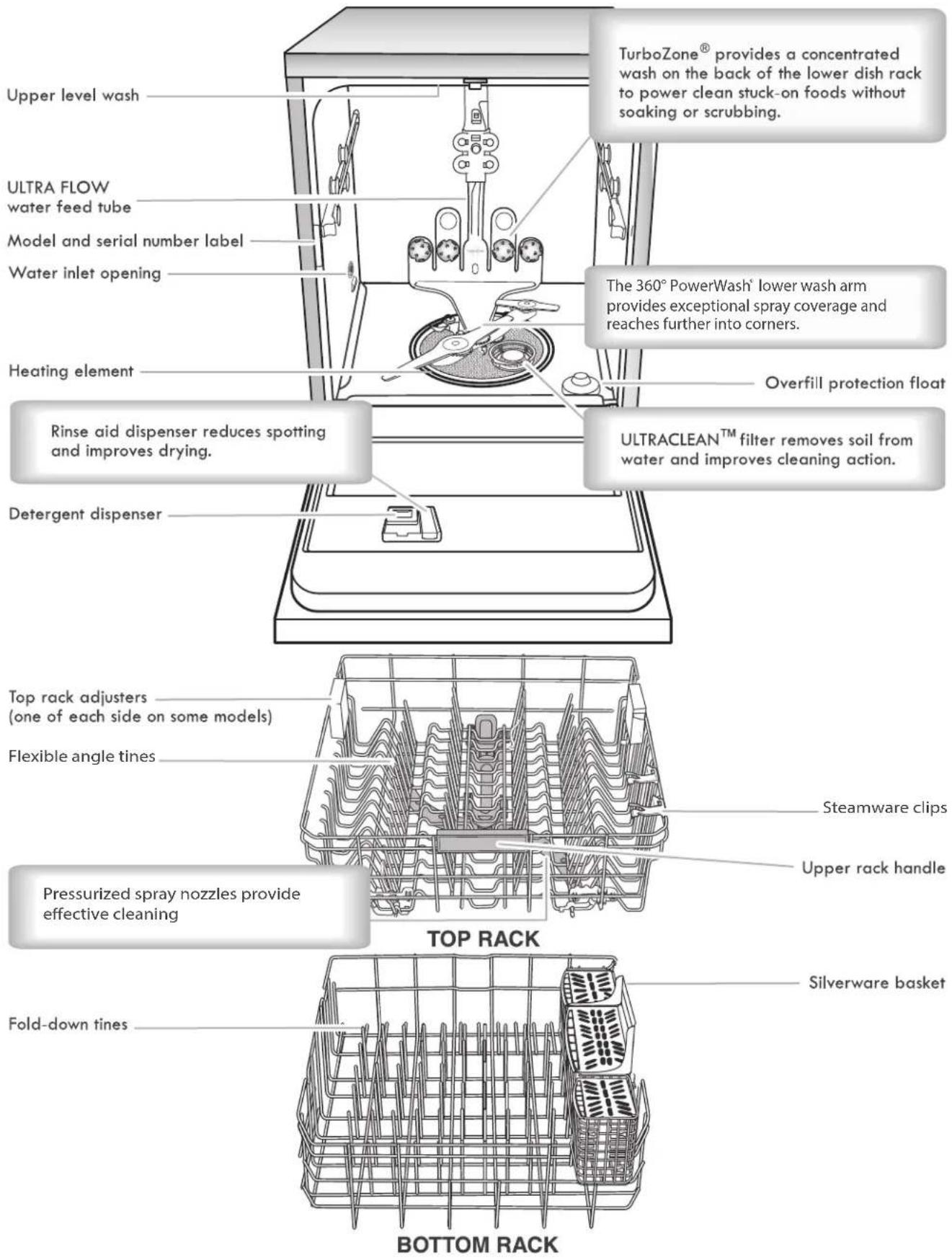
PARTS AND FEATURES
START-UP/QUICK REFERENCE
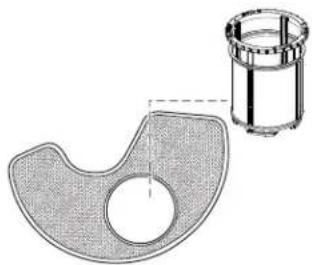
ULTRACLEAN™ removable filters provide peak performance.
Cleaning the filters periodically helps keep the dishwasher working at peak performance. The filters can be found at the bottom center of your dishwasher. See "Ultraclean™ Filtration System" for information on removing and maintaining the filters.
natural_image
Technical illustration of a mechanical component with a cylindrical housing and a curved mechanical part (no text or symbols)Drying - Rinse Aid is essential.
You must use a drying agent such as rinse aid for good drying performance (sample included). Rinse aid along with the Smart Dry option will provide best drying and avoid excessive moisture in the dishwasher interior.
natural_image
Line drawing of a hand holding a device with a slide and control panel (no text or symbols visible)|○ Smart Dry |
Express Wash - When you need fast results.
High Efficiency dishwashers run longer to save water and energy just as driving a car slower saves on gas. When you need fast results, the Express Wash will clean your dishes using slightly more water and energy. For improved drying, select the Smart Dry option to add additional time to dry.
SmartWash ^® cycle
SmartWash ^® H E provides improved results using only the amount of water and energy needed. The SmartWash ^® H E and Pots & Pans cycles are recommended for tough soil.
TurboZone® loading
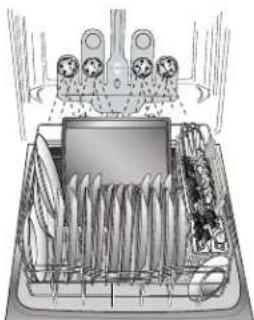
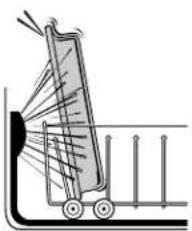
When the TurboZone® option is selected, it provides a concentrated wash on the back of the lower dish rack for hard-to-clean dishes. Place these dishes with the soiled surface of the dish toward the TurboZone® spray nozzles in the lower rack of the dishwasher.

Turbo Zone
Press START/RESUME every time you add a dish.
To start and resume a cycle, close the door and press START/RESUME.
IMPORTANT: If anyone opens the door (as, to add a dish, even during the Delay Hours option), the door must be closed and the Start/Resume button must be pressed each time.

Detergent Dosing
It is possible to use too much detergent in your dishwasher. This can lead to etching of your dishes. See "Detergent and Rinse Aid" to determine the amount of detergent needed based on your water hardness. Using high quality dishwasher detergent tablets or packs have been proven better than powder, liquid or gel detergents to reduce filming on your dishes.
Your dishwasher has the latest technology in dishwasher filtration. This triple filtration system minimizes sound and optimizes water and energy consumption while providing superior cleaning performance. Throughout the life of your dishwasher, the filter will require maintenance to sustain peak cleaning performance.
The triple filter system consists of 2 parts, an upper filter assembly and a lower filter.
■ The upper filter assembly keeps oversized items and foreign objects, along with very fine food particles out of the pump.
■ The lower filter keeps food from being recirculated onto your dishware.
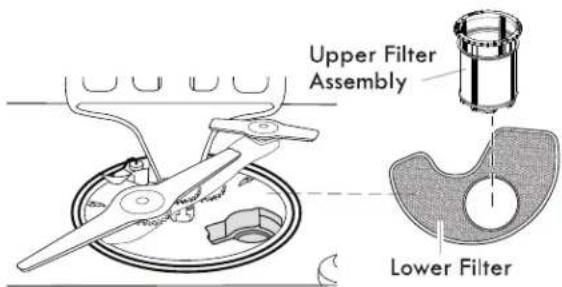
In order to provide improved cleaning performance we suggest a monthly filter maintenance by removing and inspecting both the upper and the lower filter for any soils. Based on your dishwashing habits, cleaning of the filters may be required more or less often than what is indicated in the chart below.
The filters may need to be cleaned when:
■ Visible objects or soils are on the Upper Filter Assembly.
■ There is degradation in cleaning performance (that is, soils still present on dishes).
■ Dishes feel gritty to the touch.
Removing and maintaining the filters is very easy. The chart below shows the recommended cleaning frequency.
Recommended time interval to clean your filter.
| Number of Loads Per Week | If you wash before loading | If you scrape and rinse before loading | If you only scrape before loading* | If you do not scrape or rinse before loading |
| 8-12 Once | per year Every four months | Every two months Every two weeks | ||
| 4-7 Once | per year Once per year Every four months Once per month | |||
| 1-3 Once | per year Once per year Twice per year Every two months | |||
*This is the manufacturer's recommendation: By only scraping your dishes before loading them you save considerable water, energy, personal time and effort.
Very Hard Water
If you have hard water (above 15 grains), clean your filter at least once per month. Buildup of white residue on dishwasher surfaces indicates hard water. You may bring your water samples to Sears to check hardness level. For tips on removing spots and stains, see "Troubleshooting" section.
Filter Removal Instructions
- Turn the Upper Filter Assembly 14 turn counterclockwise and lift out.
- Grasp the Lower Filter in the circular opening, lift slightly, and pull forward to remove.
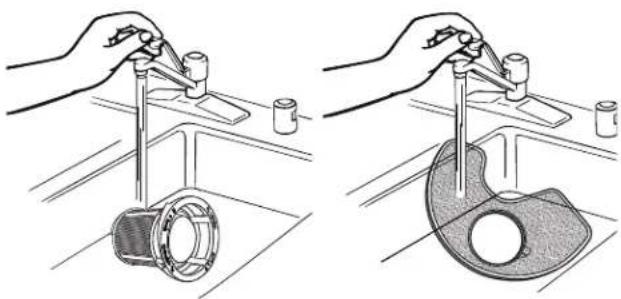
- Clean the filters as shown below.
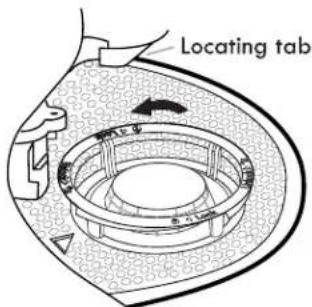
To remove Upper Filter Assembly
Cleaning Instructions
IMPORTANT: Do not use wire brush, scouring pad, etc., as they may damage the filters.
Rinse filter under running water until most soils are removed. If you have hard-to-remove soils or calcium deposits from hard water, a soft brush may be required.
natural_image
Two technical illustrations showing hands operating a mechanical component with a circular housing and a handle (no text or symbols present)Filter Reinstallation Instructions
- Noting the previous illustrations, place the Lower Filter under the Locating Tabs in the bottom of the dishwasher so the round opening for the Upper Filter Assembly lines up with the round opening in the bottom of the tub.
- Insert the Upper Filter Assembly into the circular opening in the Lower Filter.
- Slowly rotate the filter clockwise until it drops into place. Continue to rotate until the filter is locked into place. If the filter is not fully seated (still turns freely), continue to turn the filter clockwise until it drops and locks into place.
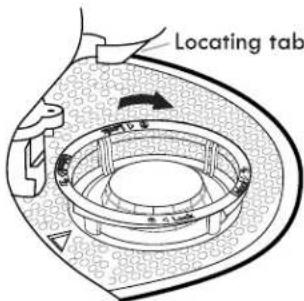
To replace Upper Filter Assembly
IMPORTANT: To avoid damage to dishwasher, do not operate your dishwasher without the ULTRACLEAN™ filters properly installed. Be sure the Lower Filter is securely in place and the Upper Filter Assembly is locked into place. If the Upper Filter Assembly turns freely, it is not locked into place.
360° POWERWASH®
The 360° POWERWASH ^® lower wash arm provides exceptional spray coverage and reaches further into corners.
DISHWASHER EFFICIENCY TIPS
Hot water dissolves and activates the dishwasher detergent. Hot water also dissolves grease on dishes and helps glasses dry spot-free. For best dish washing results, water should be 120^ F ( 49^ C) as it enters the dishwasher. Loads may not wash as well if the water temperature is too low.
Additional efficiency tips:
■ To save water, energy and time, only scrape dishes. Do not rinse dishes before putting them into the dishwasher.
■ Use a delay feature to run your dishwasher during off-peak hours. Local utility providers recommend avoiding heavy usage of energy at certain times of day.
■ During the summer, run your dishwasher at night. This reduces daytime heat buildup in the kitchen.
■ Use a rinse aid to improve drying.
DETERGENT AND RINSE AID
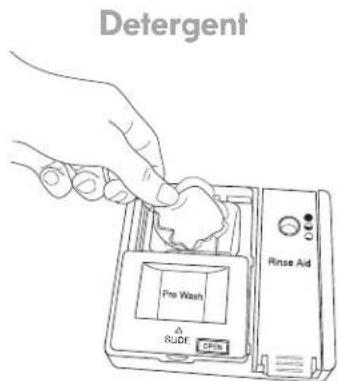
NOTE: If you do not plan to run a wash cycle soon, run a rinse cycle. Do not use detergent.
■ Use automatic dishwasher detergent only. Add powder, liquid or tablet detergent just before starting a cycle.
■ Fresh automatic dishwasher detergent results in better cleaning. Store tightly closed detergent container in a cool, dry place.
Premeasured Detergents
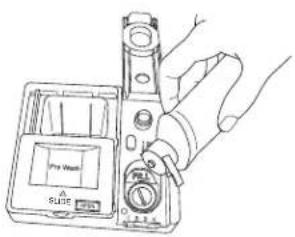
Many detergents now come in premeasured forms (gel packs, tablets, or powder packs). These forms are suitable for all hardness and soil levels. Always place premeasured detergents in main compartment of the dispenser and slide lid to close.
Place selected detergent in the dispenser. Place finger, as shown, and slide lid closed. Press firmly until it clicks.

Push OPEN, as shown, and the lid will slide open.
Using high quality dishwasher detergent tablets or packs has been proven better than powder, liquid or gel detergents at reducing filming on dishes. Using tablets and packs over time will start to reduce or eliminate white film. Also, by using a rinse aid you can minimize repeat buildup of white film.
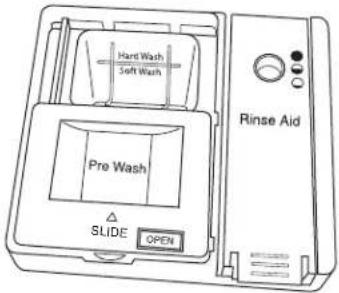
Powders and Gels
| Water Hardness | Soil Level | Pre-Wash Compartment* | Main Wash Compartment |
| Soft(0-4 grains per U.S. gallon) | Light None “Soft” fill line | ||
| Normal None “Soft” fill line | |||
| Heavy Full “Soft” fill line | |||
| Medium(5-9 grains per U.S. gallon) | Light None “Soft” fill line | ||
| Normal Full “Soft” fill line | |||
| Heavy Full Full** | |||
| Hard(10-14 grains per U.S. gallon) | Light Full Full** | ||
| Normal Full Full** | |||
| Heavy Full Full** | |||
*The prewash compartment is on top of the sliding door of the dispenser.
**A full main wash compartment contains 2 Tbsp. (30 ml)
IMPORTANT: Extremely hard water mineral deposits (15 grains per U.S. gallon or more) can cause damage to your dishwasher and make it difficult to achieve good results. A water softener is recommended to avoid damage and achieve good results. You may bring your water samples to Sears to check hardness level.
NOTE: Follow instructions on the package when using other dishwasher detergent types.
Rinse Aid
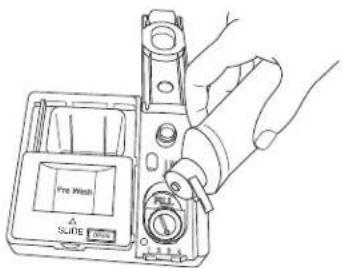
IMPORTANT: Your dishwasher is designed to use rinse aid. The use of rinse aids greatly improves drying by allowing water to drain from the dishes after the final rinse. They also keep water from forming droplets that can dry as spots or streaks.
Filling the dispenser
The dispenser holds 5 oz (150 mL) of rinse aid. Under most conditions this will last 1 to 3 months.
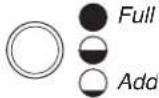
- To add rinse aid open the rinse dispenser lid by gently pushing in the center of the lid with your thumb and pulling up on the edge.
- Pour rinse aid into the opening until the dispenser is full. Do not overfill.
- Clean up any spilled rinse aid. Spilled rinse aid can create excessive suds.
- Then, close the dispenser by pushing down gently on the lid. NOTE: Indicator reads correct fill level when door is completely opened.
Rinse Aid Setting
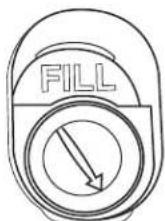
Your rinse aid dispenser is adjustable. For most water conditions, the factory setting will give good results. If you have hard water and notice calcium buildup on your dishware, you may want to try a higher setting. If you notice foam in your dishwasher, use a lower setting.
1 2 3 4
To adjust the setting
Turn the arrow adjuster to a higher setting to increase the amount of rinse aid.
LOADING
Loading for Best Cleaning and Drying Performance
- Angle dirtiest dish surfaces downward and allow space for water to flow up through each rack and between dishware.

natural_image
Technical line drawing of a mechanical component with multiple blades and internal structure (no text or symbols)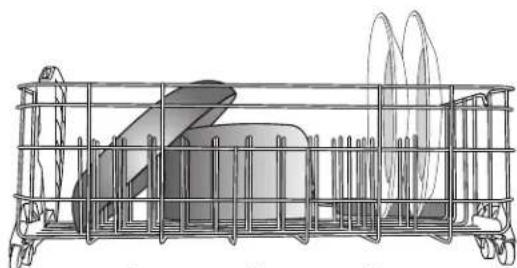
natural_image
Technical line drawing of a mechanical device inside a wire cage (no text or symbols)Separating allows water flow.
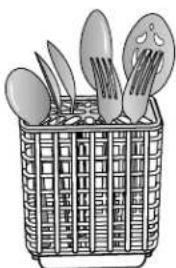
- For best silverware cleaning use the slots in the covers to keep items separated.
natural_image
Illustration of a woven basket containing cutlery including spoons and spoons (no text or symbols)Separated
- Use TurboZone® option with your dirtiest items facing toward the lower back.
natural_image
Illustration of a kitchen sink with utensils and a showerhead (no text or symbols)Soil facing TurboZone® spray jets
- Angle concave surfaces such as the bottom of coffee cups to allow water to drain and improve drying performance.
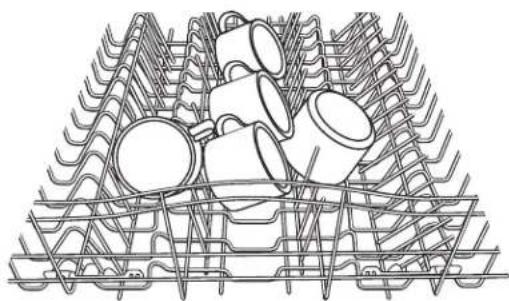
natural_image
Technical line drawing of a mechanical assembly with no visible text or symbolsAngled surfaces
- Check that nothing is blocking the upper or lower spray arms. The lower spray arm is motorized and does not spin freely.
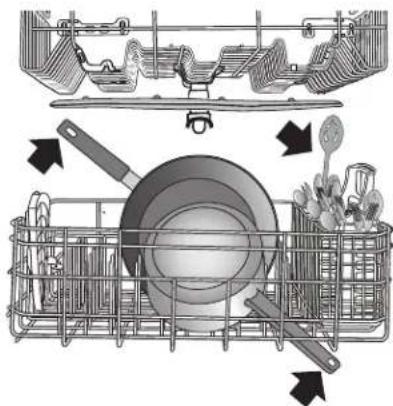
natural_image
Diagram of a kitchen appliance with a fan, pan, and kitchen utensils (no text or labels)- Place cups and glasses in the rows between tines.
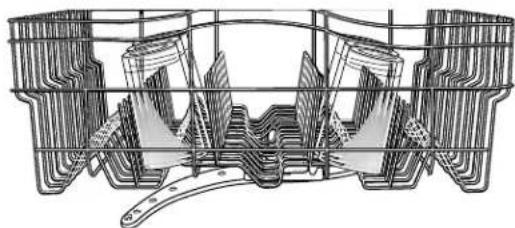
natural_image
Technical line drawing of a mechanical component with internal layered structure (no text or symbols)Top Rack Loading
Loading Recommendations
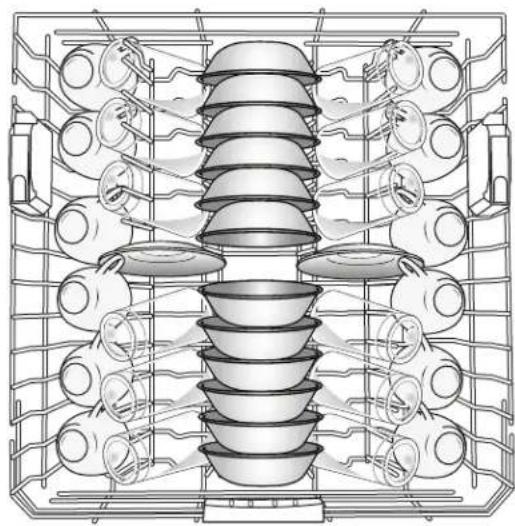
Place cups and glasses in the rows between tines. Placing them over the tines can lead to breakage and water spots. To avoid damage to your delicate items, be sure china, crystal, stemware and other similar items do not touch during dishwasher operation. Load lightweight and dishwasher-safe plastic items only in the top rack.
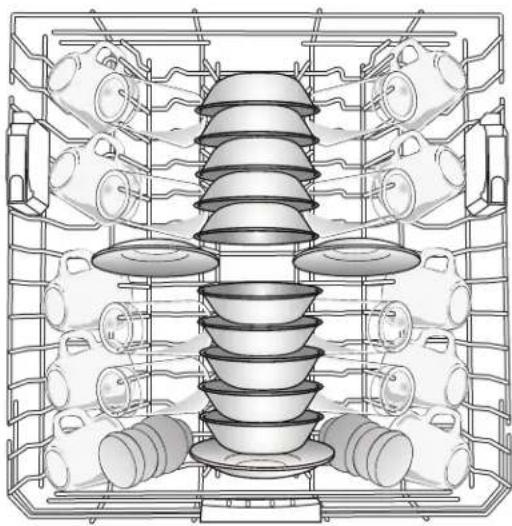
natural_image
Technical line drawing of a multi-tiered electrical insulator assembly (no text or symbols)10 place setting load 12 place setting load
natural_image
Technical line drawing of a mechanical or electrical component assembly (no text or symbols)Deluxe Adjustable 2-position Rack
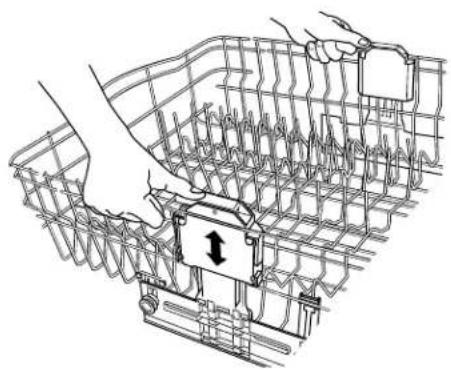
You can raise or lower the top rack to fit tall items in either the top or bottom rack. Adjusters are located on each side of the top rack. Raise the top rack to accommodate glasses up to 9" (22 cm) in the top rack and plates up to 11 ½" (29 cm) in the bottom rack. Lower the top rack nearly 2" to accommodate taller glasses.
- To raise, lift rack until both sides are at the same height and lock.
- To lower, depress both tabs on rack adjusters, as shown, and lower.
natural_image
Line drawing of a hand operating a container with arrows indicating movement (no text or symbols)Flexible Angle Tines
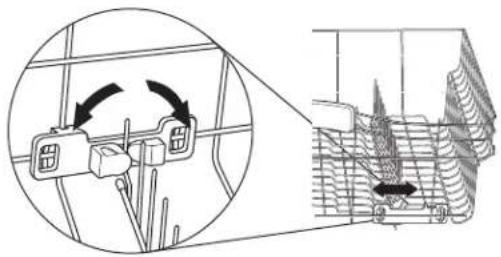
The row of tines on the left-hand and right-hand sides of the top rack can be adjusted to make room for a variety of dishes.
natural_image
Diagram showing a mechanical device with rotating arrows and a wire mesh structure (no text or symbols)Stemware Clips
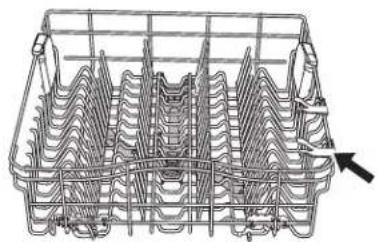
Use the stemware clips to hold stemware more securely.
natural_image
Line drawing of a wire basket with multiple curved internal structures and a black arrow pointing to one (no text or symbols)Stemware clips
Removable Top Rack
The removable rack allows you to wash larger items such as pots, roasters, and cookie sheets in the bottom rack.
IMPORTANT: Remove dishes prior to removing the top rack from dishwasher.
To remove the rack
- To gain access to the track stops, pull the upper rack forward about halfway out of the tub.
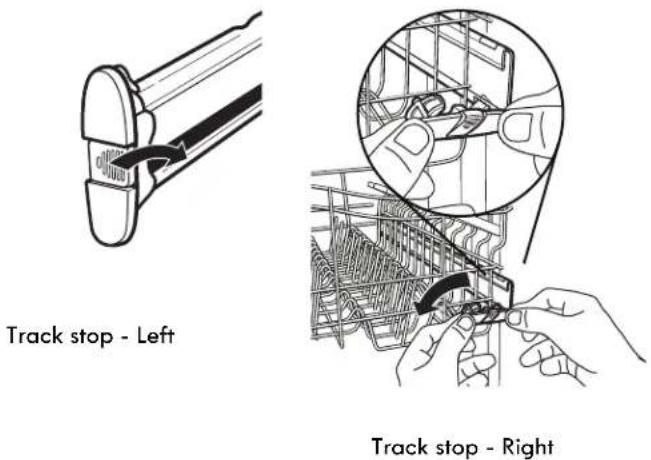
- Press on the edge of the ridged area on the track stop while tipping the track stop toward the center of the dishwasher. This action releases a small retaining tab that locks the track stop to the track. (See Track stop - Left) NOTE: It is helpful to use two hands. Take special note of the orientation of the track stops
- With the retaining tab released pull the track stop straight toward the opposite track to remove it.
- After removing both track stops, carefully pull the top rack out of the tracks by rolling it toward you.
- Replace the track stops by coming up from under the track and slipping the track stop into the lower slot of the track (See Track stop - Right) and rotate the track stop into place. Then press on the edge of the ridged area while pushing the track stop straight toward the track. This action locks the retaining tab back into place.
- Test the track stop by pulling it toward the opposite track to ensure that it is locked in place.
To replace the rack
- Gently pull the tracks forward in dishwasher until they stop. Remove track stops. (See steps 1-3 above)
- Place the back wheels on each side of the rack into the track and roll the rack into the tracks, but do not push the rack all the way into the tub.
- Insert front rack wheels on each side of the rack into the track.
- Slide the rack into the dishwasher.
- Replace the track stops by coming up from under the track and slipping the track stop into the lower slot of the track (See Track stop - Right) and rotate the track stop into place. Then press on the edge of the ridged area while pushing the track stop straight toward the track. This action locks the retaining tab back into place.
- Test the track stop by pulling it toward the opposite track to ensure that it is locked in place.
IMPORTANT: Be sure that the track stops are locked in place and cannot be easily removed. They keep the rack from coming out of the track.
Bottom Rack Loading
Loading Recommendations
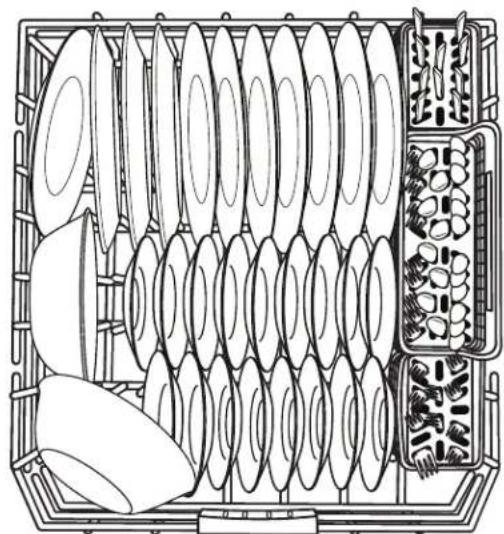
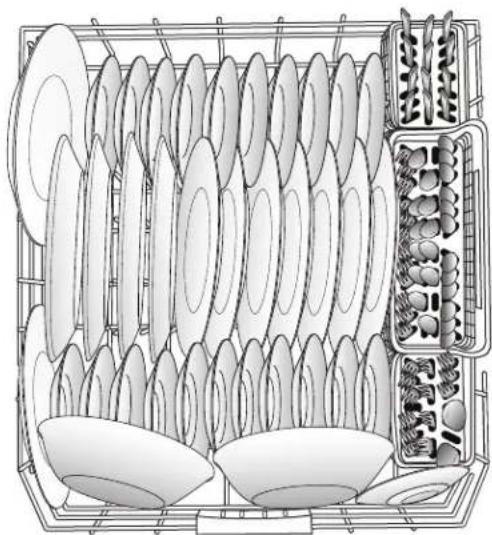
The bottom rack is best suited for plates, pans, casseroles, and utensils. See recommended loading patterns shown.
Load small items in the bottom rack only if they are secured in place.
Load plates, soup bowls, etc., between tines.
Load bowls securely between the rows of tines. Ensure that there is space between dishes so that the spray will reach all surfaces. Load heavily soiled items facing the spray.
NOTE: Ensure that detergent dispenser is not blocked by tall items such as cookie sheets or cutting boards placed at the left-hand front of rack. See "Start Up/Quick Reference" section.
natural_image
Technical line drawing of a multi-tiered mechanical assembly with rollers and a tray (no text or symbols)10 place setting load 12 place setting load
natural_image
Diagram of a multi-tiered food processing machine with plates and abutishes (no text or labels)Fold-Down Tines
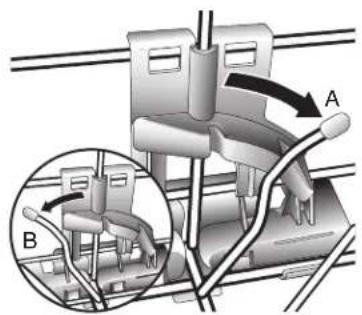
You can fold down one row of tines at the back of the bottom rack in order to accommodate larger dishware.
Keep this fine row in the 60° position (A) when using the TurboZone® option.
IMPORTANT: When moving the tine row to the flat position, fold the tine row toward the front of the dishwasher (B).
TurboZone ^® Loading
IMPORTANT: For proper performance, only one row of items may face the TurboZone ^® spray jets.
You must select the TurboZone® wash option to utilize this wash feature.
Load pans, casserole dishes, etc., with the soiled surfaces facing the TurboZone ^® spray jets. TurboZone ^® wash area is located at the back of the lower dish rack.
Place the fold-down tine row in the 60° position when using the TurboZone® option.
Back of
dishwasher
natural_image
Diagram of a vehicle with wheels and exhaust lines, no text or symbols present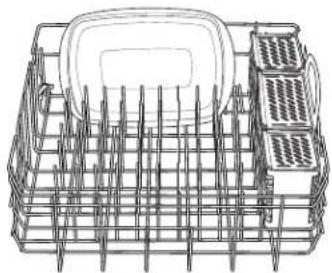
natural_image
Line drawing of a wire cage with a tray and side-mounted dish (no text or symbols)Loading Tall Items
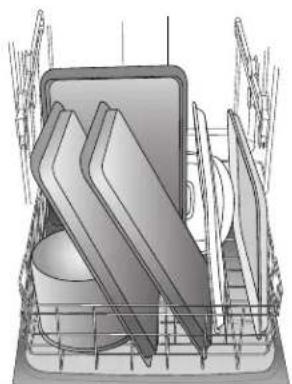
You can wash larger items such as pots, roasters, and cookie sheets in the bottom rack by removing the top rack. See "Top Rack Loading" section.
natural_image
Illustration of a smartphone with multiple screens and a grid base, no text or symbols presentSplittable Silverware Basket (on some models)
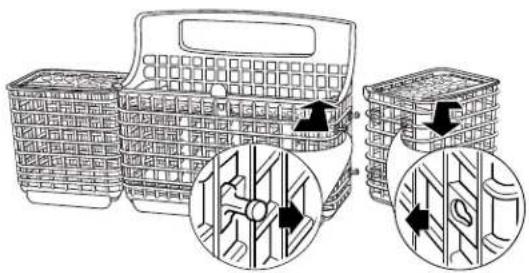
Your new silverware basket can be split into three segments.
Removing one segment will increase your capacity in the TurboZone® (on some models) loading area.
You can remove the covered side baskets to place in the top rack. Use for small delicate items such as baby bottle caps, nipples and small baking utensils, etc.
natural_image
Line drawing of a woven basket with internal mechanical components, shown in two views (no text or symbols)Loading Silverware
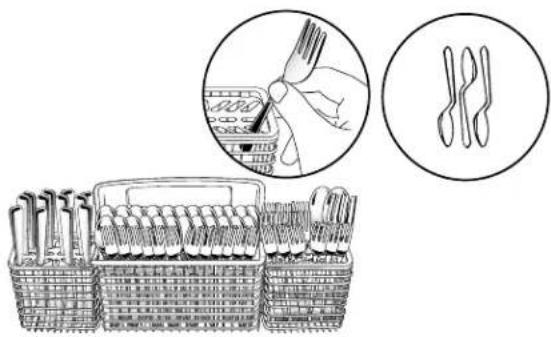
Use suggested loading patterns, as shown, to better clean your silverware.
Use the slots in the covers to keep your silverware separated for optimum wash. See illustration at right.
NOTE: If your silverware does not fit into the designated slots, flip the covers up and mix silverware types to keep them separated. Load knives down, forks up, and alternate spoons, as illustrated, for best cleaning results.
natural_image
Illustration of a food kit with a fork, a magnified view of its tip, and a basket of utensils (no text or symbols)DISHWASHER USE
Cycles and Options Information
| CYCLES | ||||||||||||||||||||||||||||||||||||||||||||||||||||||||||||||||||||||||||||||||||||||||||||||||||||||||||||||
| ○ Smart Wash % | ○ Pots & Pans | ○ Normal Wash | ○ Express Wash | ○ Quick Rinse | ||||||||||||||||||||||||||||||||||||||||||||||||||||||||||||||||||||||||||||||||||||||||||||||||||||||||||
| OPTIONS | ||||||||||||||||||||||||||||||||||||||||||||||||||||||||||||||||||||||||||||||||||||||||||||||||||||||||||||||
| Cycles Estimated Wash | Time* Displayed: H:MM | Range of Water Usage Gallons (Liters) |
| SmartWash ^®HE cycleThe most advanced and versatile cycle. This cycle senses the soil amount and toughness of soil. This cycle is optimized to achieve outstanding cleaning with minimal water and energy. | 2:30 | 3.4 to 5.3(14.0 to 19.9) |
| Pots & PansWorks best on your toughest items, such as casseroles with baked-on food residue. Use with TurboZone ^® option (on some models) to get the best baked-on soil cleaning. | 3:23 | 4.2(16.0) |
| Normal WashThis cycle with only the Smart Dry option selected, and without other options selected, is recommended to completely wash and dry a full load of normally soiled dishes. The energy usage label is based on this cycle and option combination. | 2:21 | 2.7 to 5.3(10.1 to 19.9) |
| Express WashTo save water and energy, High Efficiency dishwashers use advanced filtration which may result in longer cycle times (in some cases over 2 hours). When you need fast results, the Express Wash cycle will clean your dishes using slightly more water and energy. Then, towel dry dishes for immediate use. Select Smart Dry if you want to add a drying option. | 1:00 | 4.2(16.0) |
| Quick RinseUse for rinsing dishes, glasses, and silverware that will not be washed right away.Do not use detergent. | 0:18 | 2.1(8.1) |
*This is the approximate cycle time obtained with 120°F (49°C) hot water available at the dishwasher. Increases in time result from low temperature of the incoming water.
**The maximum additional water used for any combination of options is 4.8 gal. (18.2 L).
| Options | Can be selected with | What it does | Added time to cycle | Added Water ** Gallons (Liters) |
| TurboZone®Directs water into your casserole or other dishes to eliminate the need for soaking and scrubbing of dirty, baked on food soils. For your toughest items, use the TurboZone®option with the Pots & Pans cycle. See loading information. | SmartWash ^® ^H_E Pots & PansNormal Wash | Directs all of the cleaning power of the dishwasher to the TurboZone®area during certain times in the wash cycle. | 0:05 to 2:00 | 0 to 2.6(0 to 9.8 |
| High TempRaises main wash temperature to improve cleaning for loads containing tough, baked-on food. | SmartWash ^® ^H_E Pots & PansNormal Wash | Raises the main wash temperature from 120°F (49°C) to 140°F (60°C). | 0:05 to 0:13 | 0 to 2.6(0 to 9.8 |
| Sani RinseSanitizes dishes and glassware in accordance with NSF International NSF/ANSI Standard 184 for Residential Dishwashers. Certified residential dishwashers are not intended for licensed food establishments. Only sanitizing cycles have been designed to meet the requirements of the NSF/ANSI 184 performance standard for soil removal and for sanitization efficacy. There is no intention, either directly or indirectly, that all cycles on a NSF/ANSI 184 certified dishwasher meet the NSF/ANSI 184 performance standard for soil removal and for sanitization efficacy.The Sani Rinse indicator indicates at the end of the cycle whether the Sani Rinse option was successfully completed. If the indicator does not activate, it is probably due to the cycle being interrupted. | SmartWash ^® HEPots & PansNormal WashTop Rack Only | Increases the main wash temperature from 120°F (49°C) to 140°F (60°C) and the final rinse from 140°F (60°C) to 155°F (68°C). | 0:05 to 1:01 | 0 to 2.6(0 to 9.8 |
| Smart DryTurns the heat element on at the end of the wash cycle. Use rinse aid with or without the Smart Dry option for best drying results. Plastic items are less likely to deform when loaded in the top dish rack. | Available with any cycle except Quick Rinse | Turns the heat element on at the end of the wash cycle. | 0:08 to 0:46 | 0 |
| Top Rack OnlyFor added convenience, use for washing a small load of dishes in the top rack to help keep the kitchen continuously clean. | Available with any cycleCannot be used with TurboZone ^® option | Slightly faster wash for smaller loads | Saves up to 0:07 | 0 |
Dishwasher Control Section
4 Hour Delay
Use this option to run your dishwasher during off-peak hours. Local utility providers recommend using energy during off-peak hours when possible.
To delay the start:
- Select a wash cycle and options.
- Press the 4 HOUR DELAY button.
- Press START/RESUME.
NOTE: Anytime the door is opened for more than 5 seconds (such as, to add a dish), the Start/Resume button must be pressed again to resume the delay countdown.
Control Lock Option
Use the Control Lock option to avoid unintended use of the dishwasher between cycles. When Locked is lit, all buttons are disabled. The dishwasher door can still be opened/closed while the controls are locked.
To turn on Control Lock:
Press and hold TOP RACK ONLY for 3 seconds. Locked will light. If you press any pad while your dishwasher is locked, the light flashes 3 times.
NOTE: The dishwasher cannot start if the control is locked.
To turn off Control Lock:
NOTE: You may need to disable Sleep Mode by pressing either START/RESUME or CANCEL/DRAIN, or by opening and closing the door before you are able to turn off Control Lock.
Press and hold TOP RACK ONLY for 3 seconds. The light turns Off.
Dishwasher Feedback Section
Indicator Lights
The indicators will inform you if you are able to add a dish to the cycle after it has started. They will inform you if the dishwasher cycle is running or complete and sanitized. They will also inform you if the control is locked.
Selecting Cycles and Options
- To repeat the same cycle/options used on previous cycle, press START/RESUME once to show which selections you used. Press START/RESUME again and close the door within 3 seconds to run the cycle. If the door is not closed in time the dishwasher will beep several times and will not start.
- To start a new cycle, select the desired options, then press START/RESUME and close the door within 3 seconds to run the cycle. If the door is not closed in time the dishwasher will beep several times and will not start. Not all options are available for every cycle. If an invalid option is selected for a given cycle, the lights will flash.
Turning OFF/ON the Sound
Press and hold HIGH TEMP for 3 seconds to toggle sound On and Off. The sound will not deactivate for cycle interruption or service required messages.
Canceling A Cycle
- Open the door slightly to stop the cycle. Wait for the spraying action to stop before completely opening the door.
- Press and hold the CANCEL/DRAIN button until the Cancel/Drain light turns on.
- Close the door. The dishwasher starts a drain cycle if water remains in bottom of dishwasher. Let the dishwasher drain completely. The Cancel/Drain light turns off after 2 minutes.
Changing A Cycle After Dishwasher Is Started
You can interrupt a cycle and restart your dishwasher from the beginning using the following procedure.
- Open the door slightly to stop the cycle. Wait for the spraying action to stop, then open the door completely.
- If the Add a Dish indicator is lit you may add items to the load.
- Press START/REESUME.
- Press and hold CANCEL/DRAIN twice to reset the control.
- Select new cycles and options.
Adding A Dish After Dishwasher Is Started
- Open the door slightly to stop the cycle. Wait for the spraying action to stop, then open the door completely.
- If the Add a Dish indicator is lit you may add items to the load.
- Press START/RESUME.
- Close the door. The door must be closed within 3 seconds of pressing Start/Resume, or the dishwasher will beep several times and the cycle will not resume.
If you have doubts about washing a particular item, check with the manufacturer to see if it is dishwasher safe.
| Material Dishwasher Safe? Comments | ||
| Aluminum | Yes | High water temperature and detergents can affect finish and color of aluminum. |
| Disposable Aluminum | No | Do not wash disposable aluminum pans in the dishwasher. These might shift during washing and transfer black marks to dishes and other items. |
| Bottles and Cans | No | Wash bottles and cans by hand. Labels attached with glue can loosen and clog the wash system and reduce washing performance. |
| Cast Iron | No | Seasoning will be removed and then will rust. |
| China/Stoneware | Yes | Always check manufacturer's recommendations before washing. Antique, hand-painted, or over-the-glaze patterns may fade. Gold leaf can discolor or fade. |
| Crystal | Yes | Always check manufacturer's recommendations before washing. Some types of leaded crystal can etch with repeated washing. |
| Gold No Gold-colored flatware will discolor. | ||
| Glass | Yes | Milk glass material yellows with repeated dishwasher washing. |
| Hollow-Handle Knives | No | Handles of some knives are attached to the blade with adhesives which can loosen if washed in the dishwasher. |
| Pewter, Brass, Bronze, and Copper | No High water temperatures and detergent can discolor or pit the finish. | |
| Disposable Plastics | No | Cannot withstand high water temperatures and detergents. |
| Plastics | Yes | Always check manufacturer's recommendations before washing. Plastic items may vary in their ability to withstand high temperatures and detergents. It is recommended that lightweight items such as lids and butter dishes be placed in the upper rack only. Sturdy items such as coolers and high-chair trays may be placed in the lower rack. When washing plastic items in the lower rack, it is recommended not to use the Heated Dry option. |
| Stainless Steel | Yes | Run a rinse cycle if not washing immediately. Prolonged contact with food containing salt, vinegar, milk products, or fruit juice can damage finish. |
| Sterling Silver or Silver Plate | Yes | Run a rinse cycle if not washing immediately. Prolonged contact with food containing salt, acid, or sulfide (eggs, mayonnaise, and seafood) can damage finish. Do not wash Sterling Silver silverware with Stainless Steel silverware because electrolytic action will discolor and pit the metals where they touch. |
| Tin | No Not recommended | |
| Wooden Ware | No | Wash by hand. Always check manufacturer's instructions before washing. Untreated wood can warp, crack, or lose its finish. |
| Large Casserole Section | Yes | There may be certain casserole dishes that may not fit in front of the TurboZone® feature in the back of the lower dish rack. Adjust the tines as necessary to load the large dishes. |
DISHWASHER CARE
Cleaning
Cleaning the exterior
natural_image
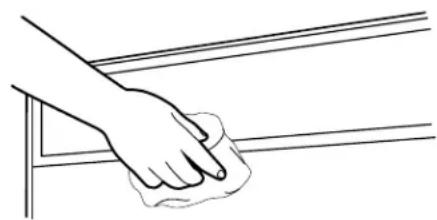
Line drawing of a hand cleaning a wall with a cloth (no text or symbols)In most cases, regular use of a soft, damp cloth or sponge and a mild detergent is all that is necessary to keep the outside of your dishwasher looking nice and clean. If your dishwasher has a stainless steel exterior, a stainless steel cleaner is recommended.
Cleaning the interior
natural_image
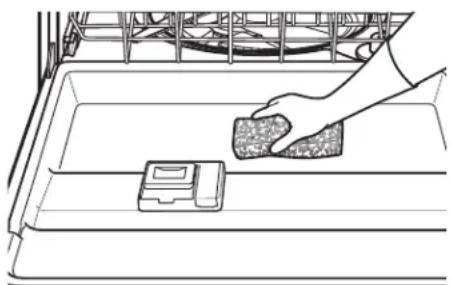
Line drawing of a hand placing a stone on a kitchen counter with a tray and sink (no text or symbols)Hard water minerals can cause a white film to build up on the inside surfaces, especially just beneath the door area.
Do not clean the dishwasher interior until it has cooled. You may want to wear rubber gloves. Do not use any type of cleanser other than dishwasher detergent because it may cause foaming or sudsing.
To clean interior:
Make a paste with powdered dishwasher detergent on a damp sponge and clean.
OR
Use liquid automatic dishwasher detergent and clean with a damp sponge.
OR
See the vinegar rinse procedure in "Cloudy or spotted dishware" in "Troubleshooting" section.
NOTE: Run a normal cycle with dishwasher detergent after cleaning the interior.
Dishwasher Maintenance Procedure
To help avoid hard water residue in your dishwasher, use affresh ^®† dishwasher cleaner (recommended) once a month as part of routine maintenance. affresh ^® dishwasher cleaner is effective in all dishwasher brands.
IMPORTANT:
- Read these instructions and the instructions found on the affresh® product package completely before beginning the cleaning process.
Removal of Hard Water/Filming: Recommended use of a monthly maintenance product such as affresh® Dishwasher Cleaner Part Number W10282479. You may purchase the part online: www.searspartsdirect.com or searsoutlet.com.
- Load your dishwasher (preferably with dishes affected by filming/hard water).
■ Place tablet in main wash compartment of detergent dispenser or in the bottom of the tub.
■ Select cycle/option best for heavily soiled dishes and start dishwasher.
NOTE: Recommended to use a premeasured detergent tablet or pack for regular daily use.
natural_image
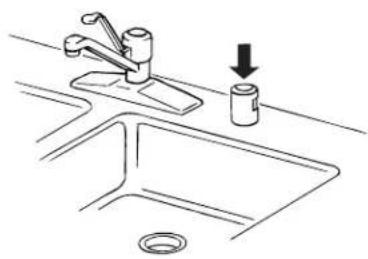
Line drawing of a kitchen sink with faucet and drain, showing a downward arrow indicating a drop (no text or symbols)To clean the drain air gap
Drain Air Gap
Some state or local plumbing codes require the addition of a drain air gap between a built-in dishwasher and the home drain system. Check the drain air gap when your dishwasher is not draining well.
The drain air gap is usually located on top of the sink or counter top near the dishwasher. To order a drain air gap, please call 1-884-553-6667. Ask for Part Number 300096. You may also purchase the part online: www.searspartsdirect.com.
NOTE: The drain air gap is an external plumbing device that is not part of your dishwasher. The warranty provided with your dishwasher does not cover service costs directly associated with the cleaning or repair of the external drain air gap.
Clean the drain air gap periodically to ensure proper drainage of your dishwasher. With most types, you lift off the chrome cover. Unscrew the plastic cap. Then check for any soil buildup. Clean if necessary.
Vacation or Extended Time Without Use
To reduce the risk of property damage
If you will not be using the dishwasher during the summer months, turn off the water and power supply to the dishwasher.
■ Make sure the water supply lines are protected against freezing conditions. Ice formations in the supply lines can increase water pressure and damage your dishwasher or home. Damage from freezing is not covered by the warranty.
■ When storing your dishwasher in the winter, avoid water damage by having your dishwasher winterized by authorized service personnel.
TROUBLESHOOTING
CHECK THESE POINTS TO HELP SAVE YOU TIME AND MONEY.
| PROBLEM SOLUTION | |
| DISHWASHER DOES NOT RUN | NOTE: It is normal for the dishwasher to repeatedly pause several times during a cycle.If the Start/Resume light is blinking, close the door and push START/RESUME.Be sure the door is closed and latched.Check that there is not an interference with large casserole dishes and the wash system at the back of the dishwasher. Adjust loading as necessary to ensure door is closed and latched.Be sure you have selected a cycle. See “Cycles and Options Information.”Be sure there is power to the dishwasher. A circuit breaker or fuse may have tripped.If lights other than Start/Resume blink and the unit will not run, you will need to call for service. |
| DETERGENT REMAINS IN THE DISPENSER OR TABLET IS ON BOTTOM OF TUB | Check for dishware such as cookie sheets, cutting boards, or large containers, etc., that may be blocking the detergent dispenser from opening properly.Be sure your detergent is fresh and lump free.Be sure the cycle has completed (green light is on). If it has not completed, you will need to resume the cycle by closing the door and pressing START/RESUME. |
| CYCLE RUNS TOO LONG NOTES: | ■ To use less water and reduce energy consumption you will encounter cycles that typically run for up to 3 hours.■ A water heater setting of 120^ ( 49^ ) is best. The dishwasher will delay longer while heating cooler water.■ Some options will add time to the cycle. See “Cycles and Options Information” section. The Smart Dry option adds 12 hour.Try the Express Wash cycle.Run the hot water at a faucet close to the dishwasher before selecting and starting the cycle. |
| DISHWASHER NOT DRYING | NOTE: Plastic and items with nonstick surfaces are difficult to dry because they have a porous surface which tends to collect water droplets. Towel drying may be necessary.Use of rinse aid along with the Heated Dry option is needed for proper drying.Proper loading of items can affect drying. (See specific loading instructions within this guide.) Glasses and cups with concave bottoms hold water. This water may spill onto other items when unloading.■ Unload the bottom rack first.■ Locate these items on the more slanted side of the rack for improved results. |
| WILL NOT FILL Be sure the water | is turned on to the dishwasher.Check that the float is free from obstructions. See “Parts and Features.”Check for suds in the dishwasher. If foam or suds are detected, the dishwasher may not operate properly or may not fill with water. |
| WATER REMAINS IN THE TUB/WILL NOT DRAIN | Be sure the cycle has completed (the green light is on). If it has not, you will need to resume the cycle by closing the door and pressing START/RESUME.If dishwasher is connected to a food waste disposer, be sure the knockout plug has been removed from the disposer inlet.Check for kinks in the drain hose.Check for food obstructions in the drain or disposer.Check your house fuse or circuit breaker. |
| HARD WATER(WHITE RESIDUE ON DISHWASHER INTERIOR OR GLASSWARE) | NOTE: Extremely hard water mineral deposits can cause damage to your dishwasher and make it difficult to achieve good cleaning. You may bring water samples to Sears to check your water hardness level. A water softener is strongly recommended if your hardness is 15 grains or more. If a water softener is not installed, the following steps may help:Use a cleaner designed for dishwashers once per month. See the “Dishwasher Maintenance Procedure” section.Clean the ULTRACLEANTM filters at least once per month.Always use a rinse aid.Always use a high-quality, fresh detergent.Use a detergent booster/water softener additive designed for dishwashers. |
| ODORS | NOTE: If the dishwasher is not used daily, you can run a rinse cycle with the partial load until a full load is ready to run, or use the Top Rack Only option for partial loads.Run a vinegar rinse through the dishwasher by putting 2 cups (500 mL) of white vinegar in an upright glass measuring cup in the lower rack. Run a normal cycle with the Heated Dry option turned off. Do not use detergent.The dishwasher may not be draining properly. See “Water remains in the tub/will not drain” in “Troubleshooting.” |
| NOISY NOTES: | ■ Surging sounds can occur periodically throughout the cycle while the dishwasher is draining.■ Normal water valve hissing may be heard periodically.■ A normal snap sound may be heard when the detergent dispenser opens during the cycle and when the door is opened at the end of the cycle.■ Improper installation will affect noise levels.Be sure the filters are properly installed.A thumping sound may be heard if items extend beyond the racks and interfere with the wash arms. Readjust the dishware and resume the cycle. |
| FOOD SOILS REMAIN ON DISHES | Be sure the dishwasher is loaded correctly. Improper loading can greatly decrease the washing performance (see “Loading for Best Cleaning and Drying Performance”.Check filter to ensure it is properly installed. Clean it if needed. See “Cleaning Instructions” in “ULTRACLEANTM Filtration System” for details.Select the proper cycle and option for the type of soils. The Pots Pans cycle with the TurboZone®(on some models) option can be used for tougher loads.Be sure the incoming water temperature is at least 120°F (49°C).Use the proper amount of fresh detergent. More detergent is needed for heavier-soiled loads and hard water conditions.Scrape food from dishes prior to loading (do not prerinse). |
| DID NOT SANITIZE | If the Sani Rinse indicator light is blinking, the load is NOT sanitized. The cycle was interrupted in the final rinse, or your water heater is set too low. Set your water heater to 120°F (49°C). |
| DAMAGE TO DISHWARE | Improper loading can cause dishes to become chipped or damaged. See specific loading instructions within this guide. |
| BLINKING LIGHTS | If Start/Resume or any status lights are blinking and the dishwasher will not run, close the door and push START/RESUME. If the dishwasher still will not run, call service at 1-844-553-6667. |
| CLOUDY OR SPOTTED DISHWARE (AND HARD WATER SOLUTION) | NOTES:■ Liquid rinse aid is necessary for drying and to reduce spotting.■ Use the correct amount of detergent.Confirm that the cloudiness is removable by soaking the item in white vinegar for 5 minutes. If the cloudiness disappears, it is due to hard water. Adjust the amount of detergent and rinse aid.See “Hard Water (White Residue On Dishwasher Interior Or Glassware)” in “Troubleshooting.”If it does not come clear, it is due to etching (see below).Be sure the incoming water temperature is set at 120^ ( 49^ ).Try using the High Temp and Sani Rinse options.To remove spotting, run a vinegar rinse through the dishwasher.■ Wash and rinse the affected dishware and load into dishwasher. Remove all silverware and metal items. Put 2 cups (500 mL) of white vinegar in a glass measuring cup in the lower rack.Run a normal cycle with the Heated Dry option turned off. No detergent is needed. |
| ETCHING (PERMANENT CLOUDINESS) | This is an erosion of the surface of the glassware and can be caused by a combination of: water that is too hot, from using too much detergent with soft water or by pre-washing. Detergent needs food soil to act upon. If etching has occurred, the glassware is permanently damaged. To avoid further etching, adjust the detergent amount to match the water hardness, stop pre-washing, and use water heating options only when incoming water temperature is below 120^ ( 49^ ). |
| LEAKING WATER Be sure dishwasher has been installed properly and is level.Suds can cause the dishwasher to overflow. Measure the detergent accurately and use only detergents designed for use in a dishwasher. Less detergent is needed in soft water. Try another brand of detergent if sudsing continues.To avoid rinse aid leaking from the dispenser, be sure the lid is securely attached and avoid overfilling. | |
| TUB IS DISCOLORED NOTES: | ■High iron content in the water can discolor the tub.■Tomato-based foods can discolor the tub or dishware.■A citrus-based cleaner can be used to clean. |
ÍNDICE
natural_image
Technical illustration of a mechanical component with a cylindrical shaft and a flanged part (no text or symbols)natural_image
Two technical illustrations showing hands operating a mechanical component with a flange and a circular component (no text or symbols present)natural_image
Technical line drawing of a mechanical fan or impeller assembly (no text or symbols)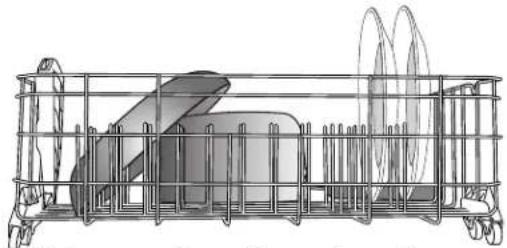
natural_image
Technical line drawing of a mechanical device with internal components and external rollers (no text or symbols)natural_image
Illustration of a woven basket containing cutlery and spoons (no text or symbols)Separados
natural_image
Illustration of a kitchen sink with fish and utensils, no text or symbols presentnatural_image
Line drawing of a grid structure with multiple circular components, no text or symbols presentnatural_image
Technical line drawing of a mechanical component with internal layered structure (no text or symbols)natural_image
Technical line drawing of a multi-tiered electrical insulator assembly (no text or symbols)natural_image
Technical line drawing of a mechanical assembly with insulators and housing (no text or symbols)natural_image
Line drawing of a mechanical assembly with hands operating a component (no text or symbols)natural_image
Diagram showing mechanical assembly with rotating components and a close-up of a wire mesh structure (no text or symbols)natural_image
Technical line drawing of a mechanical component with internal channels and a black arrow indicating a specific feature (no text or symbols present)Parrilla superior removable
natural_image
Technical line drawing of a multi-tiered mechanical assembly with rollers and clamps (no text or symbols)natural_image
Diagram of a multi-tiered kitchen appliance with plates, bowls, and a tray (no text or labels)Puntas plegables
Carga para TurboZone®
natural_image
Illustration of a kitchen sink with multiple kitchen utensils and a tray (no text or symbols)natural_image
Line drawing of a woven basket with internal mechanical components, shown in two views (no text or symbols)natural_image
Illustration of a basket with cutlery and a magnified inset showing hand holding a fork, alongside a close-up of the basket (no text or symbols)USO DE LA LAVAVAJILLAS
natural_image
Line drawing of a hand cleaning a window with a cloth (no text or symbols)natural_image
Line drawing of a hand placing a stone block into a drawer with a plastic clip nearby (no text or symbols)natural_image
Line drawing of a kitchen sink with faucet and sink, showing a drop in the drain (no text or symbols)Toronto, Ontario, Canada M5B 2C3
SÉCURITÉ DU LAVE-VAISSELLE
natural_image
Technical illustration of a mechanical component with a cylindrical housing and a curved part (no text or symbols)natural_image
Technical diagram of a mechanical device with internal components and motion lines, no visible text or symbolsTurbo Zone
natural_image
Two technical illustrations showing hands operating a mechanical component with a circular base and a curved component (no text or symbols present)natural_image
Technical line drawing of a mechanical component with multiple blades and a central frame (no text or symbols)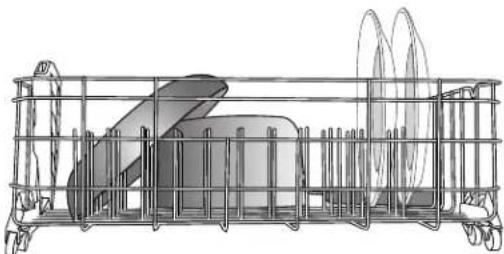
natural_image
Technical line drawing of a mechanical assembly with rollers and a housing (no text or symbols)natural_image
Illustration of a woven basket containing various food items including spoons and spoons (no text or symbols)Séparés
natural_image
Diagram of a kitchen appliance with utensils and a tray, no visible text or symbolsnatural_image
Line drawing of a grid with multiple cups and a bowl, no text or symbols presentSurfaces inclinées
natural_image
Technical line drawing of a mechanical component with internal cavities and mounting brackets (no text or symbols)natural_image
Technical line drawing of a multi-tiered electrical insulator assembly (no text or symbols)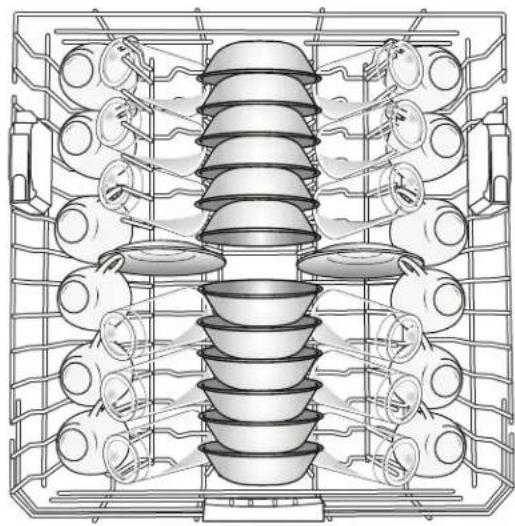
natural_image
Technical line drawing of a mechanical assembly with insulators and housing (no text or symbols)natural_image
Line drawing of a mechanical assembly with hands operating a component (no text or symbols)natural_image
Diagram showing mechanical components with directional arrows, no text or symbols presentnatural_image
3D wireframe model of a basket-like structure with internal grid patterns and an arrow pointing to one side (no text or symbols)natural_image
Pure mechanical component diagram without any text, numbers, or symbolsnatural_image
Illustration of a hand using a tool to adjust or install a wire mesh structure, with an inset showing hand positioning and a curved arrow indicating rotation (no text or symbols present)natural_image
Technical line drawing of a multi-tiered mechanical assembly with no visible text or symbolsnatural_image
Diagram of a multi-tiered kitchen appliance with plates, bowls, and an abacus (no text or labels)Tiges rabattables
Chargement TurboZone®
natural_image
Illustration of a shopping cart with wheels and a fan, no text or symbols present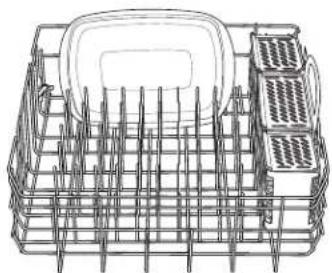
natural_image
Line drawing of a multi-tiered wire cage with a tray and side-mounted dish (no text or symbols)Chargement de grands articles
natural_image
Illustration of a kitchen sink with multiple kitchen utensils arranged in a rack (no text or symbols visible)natural_image
Line drawing of a woven basket with internal components and directional arrows indicating movement (no text or symbols)natural_image
Illustration of a kitchen utensil kit with hand holding chopsticks, showing magnified view (no text or symbols)UTILISATION DU LAVE-VAISSELLE
natural_image
Line drawing of a hand cleaning a window with a cloth (no text or symbols)natural_image
Line drawing of a hand placing a stone block into a drawer with a plastic clip nearby (no text or symbols)natural_image
Line drawing of a kitchen sink with faucet and sink, showing a drop in the drain (no text or symbols)For Sears Home Services in-home repair of all Kenmore major appliances.
For the replacement parts, accessories and Use & Care Guides that you need to do-it-yourself.
For professional installation of major home appliances and items like air conditioners and water heaters.
1-844-553-6667
www.kenmore.com
In Canada 1-800-469-4663
www.sears.ca
Call anytime for the location of your nearest Sears Parts & Repair Service Center
1-800-488-1222 (U.S.A.)
1-800-469-4663 (Canada)
To purchase a protection agreement on a serviceable product: 1-800-827-6655 (U.S.A.) 1-800-361-6665 (Canada)