ManualGo.com
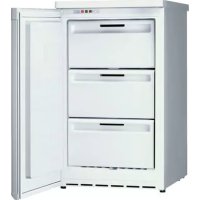
GI11VAD30H - Freezer SIEMENS - Free user manual and instructions
Find the device manual for free GI11VAD30H SIEMENS in PDF.



Download the instructions for your Freezer in PDF format for free! Find your manual GI11VAD30H - SIEMENS and take your electronic device back in hand. On this page are published all the documents necessary for the use of your device. GI11VAD30H by SIEMENS.
USER MANUAL GI11VAD30H SIEMENS
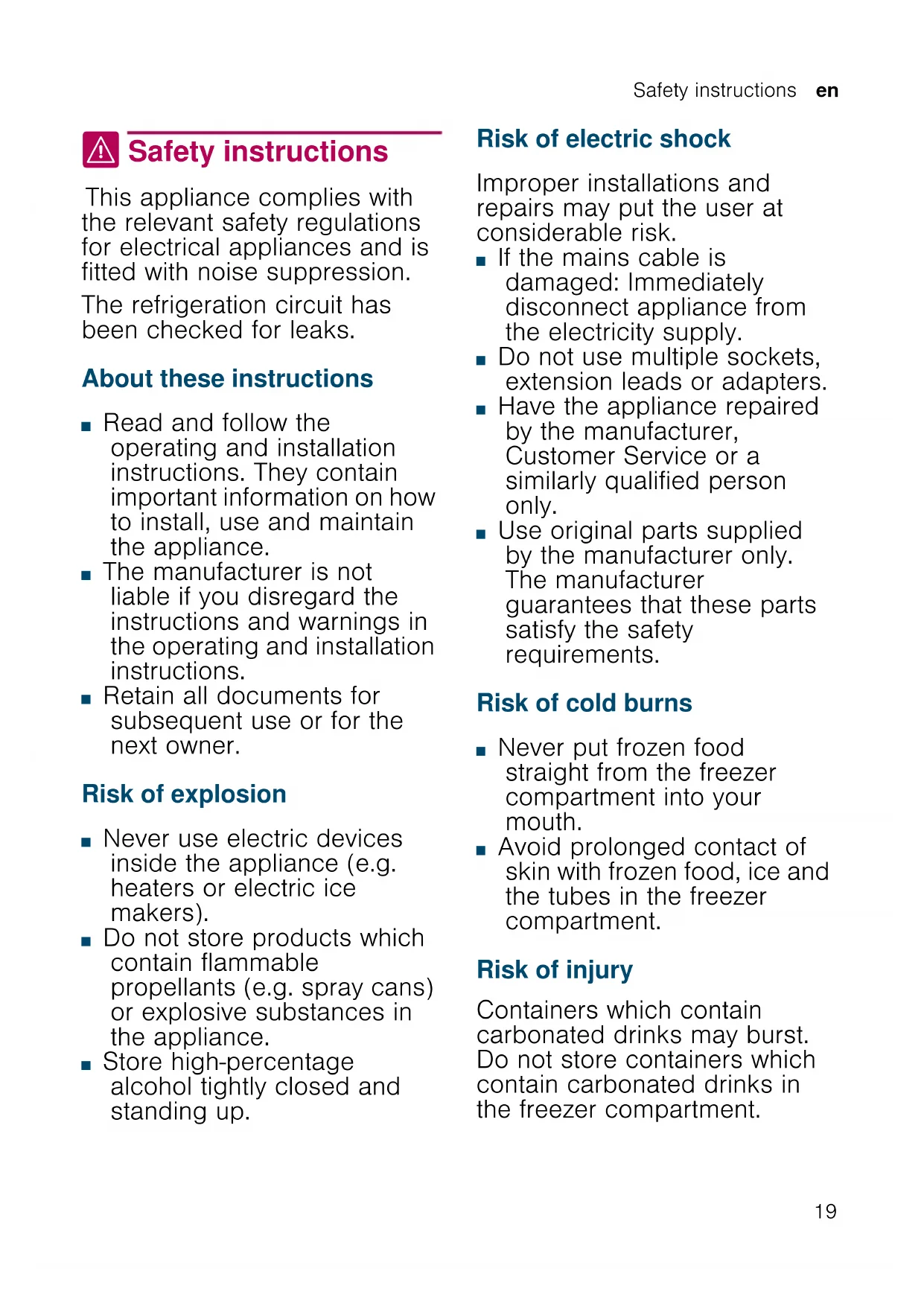
( Safety instructions Safety instructions This appliance complies with the relevant safety regulations for electrical appliances and is fitted with noise suppression. The refrigeration circuit has been checked for leaks. About these instructions ■ Read and follow the operating and installation instructions. They contain important information on how to install, use and maintain the appliance. ■ The manufacturer is not liable if you disregard the instructions and warnings in the operating and installation instructions. ■ Retain all documents for subsequent use or for the next owner. Risk of explosion ■ Never use electric devices inside the appliance (e.g. heaters or electric ice makers). ■ Do not store products which contain flammable propellants (e.g. spray cans) or explosive substances in the appliance. ■ Store high-percentage alcohol tightly closed and standing up. Risk of electric shock Improper installations and repairs may put the user at considerable risk. ■ If the mains cable is damaged: Immediately disconnect appliance from the electricity supply. ■ Do not use multiple sockets, extension leads or adapters. ■ Have the appliance repaired by the manufacturer, Customer Service or a similarly qualified person only. ■ Use original parts supplied by the manufacturer only. The manufacturer guarantees that these parts satisfy the safety requirements. Risk of cold burns ■ Never put frozen food straight from the freezer compartment into your mouth. ■ Avoid prolonged contact of skin with frozen food, ice and the tubes in the freezer compartment. Risk of injury Containers which contain carbonated drinks may burst. Do not store containers which contain carbonated drinks in the freezer compartment.en Safety instructions
Danger due to refrigerants The tubes of the refrigeration circuit convey a small quantity of an environmentally friendly but flammable refrigerant (R600a). It does not damage the ozone layer and does not increase the greenhouse effect. If refrigerant escapes, it may injure your eyes or ignite. ■ Do not damage the tubes. If the tubes are damaged: ■ Keep naked flames and ignition sources away from the appliance. ■ Ventilate the room. ■ Switch off the appliance and pull out the mains plug. ■ Call the after-sales service. Avoiding placing children and vulnerable people at risk At risk are: ■ Children, ■ People who have limited physical, mental or sensory abilities, ■ People who have inadequate knowledge concerning safe operation of the appliance. Measures: ■ Ensure that children and vulnerable people have understood the hazards. ■ Children or vulnerable people must be supervised by a responsible person when using the appliance. ■ Only children from 8 years and above may use the appliance. ■ Supervise children while the appliance is being cleaned or maintained. ■ Never allow children to play with the appliance. Risk of suffocation ■ If the appliance features a lock: keep the key out of the reach of children. ■ Keep children away from the packaging and its parts. Damage To prevent damage: ■ Do not stand or support yourself on the base, runners or doors. ■ Keep plastic parts and door seals free of oil and grease. ■ Pull the mains plug – not the power cord. Weight When installing and transporting the appliance, note that it may be very heavy. ~ "Installation location" on page 22Intended use en
8 Intended use I nt ended use Use this appliance ■ only for freezing food and making ice. ■ only in the home and in the home environment. ■ only according to these operating instructions. This appliance is intended for use up to a maximum height of 2000 metres above sea level. 7 Environmental protection Envi r onment al pr ot ec t i on Packaging All materials are environmentally safe and recyclable: ■ Dispose of packaging in an environmentally friendly manner. ■ Please ask your dealer or inquire at your local authority about current means of disposal. Old appliances Valuable raw materials can be reclaimed by recycling old appliances. :Warning Children may become locked in the appliance and suffocate! ■ To prevent children from climbing in, leave shelves and containers in the appliance. ■ Keep children away from the redundant appliance. Caution! Refrigerant and harmful gases may escape. Do not damage the tubes of the refrigerant circuit and insulation.
1. Remove the mains plug.2. Sever the power cord.3. Have the appliance disposed of
professionally. This appliance is labelled in accordance with European Directive 2012/19/EU concerning used electrical and electronic appliances (waste electrical and electronic equipment - WEEE). The guideline determines the framework for the return and recycling of used appliances as applicable throughout the EU. 5 Installation and connection Instal l ati on and connect i on Contents of package After unpacking all parts, check for any damage in transit. If you have any complaints, contact the dealer from whom you purchased the appliance or our after-sales service. ~ "Customer service" on page 33 The delivery consists of the following parts: ■ Built-in appliance■ Interior fittings (depending on model)■ Installation material■ User manual■ Installation instructions■ Customer service booklet■ Warranty enclosure■ Information on the energy consumption and noises en Installation and connection
- Technical specifications Refrigerant, cubic capacity and further technical specifications can be found on the rating plate. ~ "Getting to know your appliance" on page 24 Installing the appliance Installation location The more refrigerant an appliance contains, the larger the room must be in which the appliance is situated. Leaking refrigerant can form a flammable gas-air mixture in rooms which are too small. The room must be at least 1 m³ per 8 g of refrigerant. The amount of refrigerant in your appliance is indicated on the rating plate inside the appliance. ~ "Getting to know your appliance" on page 24 The weight of the appliance may be up to 40 kg depending on the model. Permitted room temperature The permitted room temperature depends on the climatic class of the appliance. Information on the climatic class can be found on the rating plate. ~ "Getting to know your appliance" on page 24 The appliance is fully functional within the permitted room temperature. If an appliance of climatic class SN is operated at colder room temperatures, the appliance will not be damaged up to a room temperature of +5 °C. Cavity depth A cavity depth of 56 cm is recommended for the appliance. If the cavity depth is smaller – at least 55 cm – the energy consumption increases slightly. Side by-side installation It is only possible to install appliances side by side with a gap of at least 15 cm. Over and under installation You can install an additional refrigerator above your appliance. Climatic category Permitted room temperature SN +10 °C p. 32
- °C N +16 °C p. 32
- °C ST +16 °C p. 38
- °C T +16 °C °CInstallation and connection en p. 43
Tips for saving energy If you follow the instructions below, your appliance will use less power. Note: The arrangement of the features does not affect the energy consumption of the appliance.
Installing the appliance Keep the appliance out of direct sunlight. The appliance must cool less frequently at low ambient temperatures and therefore consumes less power. Install the appliance as far away as possible from heating elements, cooker and other heat sources: 3 cm to electric or gas cookers. 30 cm to an oil or solid-fuel cooker. Note: If this is not possible, attach an insulating plate between the appliance and heat source. Select an installation location at a room temperature of approx. 20 °C. Use a cavity depth of 56 cm. Caution! Risk of burns! Individual parts of the appliance become hot during operation. Touching these parts may result in burns. The air on the rear panel of the appliance does not warm up so intensely. The appliance consumes less power if the warm air can escape. Do not cover or block the ventilation openings. Ventilate the room daily. Using the appliance Open the appliance door only briefly. The air in the appliance does not warm up so intensely. The appliance must cool less frequently and therefore consumes less power. Transport purchased food in a cool bag and place quickly in the appliance. Allow warm food and drinks to cool down before placing in the appliance. Thaw frozen food in the refrigerator compartment in order to utilise the low temperature of the frozen food. Always leave a space between the food and the rear panel. The air can circulate and the air humidity will remain constant. The appliance must cool less fre- quently and therefore consumes less power. Pack food airtight. Vacuum the back of the appliance once a year. The air on the rear panel of the appliance does not warm up so intensely. The appliance consumes less power if the warm air can escape. Do not cover or block the ventilation openings.en Getting to know your appliance
Before using your appliance for the first time
1. Remove information material,
adhesive tape and protective film.
2. Clean the appliance.
~ "Cleaning" on page 31 Electrical connection Caution! Do not connect the appliance to electronic energy saver plugs. Note: You can connect the appliance to mains-controlled and sine-controlled inverters. Mains-controlled inverters are used for photovoltaic systems which are connected directly to the national grid. Sine-controlled inverters must be used for isolated applications. Isolated applications, e.g. on ships or in mountain lodges, which are not connected directly to the national grid.
1. After installing the appliance, wait at
least 1 hour before connecting it to prevent damaging the compressor.
2. Connect the appliance via a
correctly installed socket. The socket must comply with the following data: Outside Europe: Check whether the indicated current type of the appliance corresponds with the values of your power supply. Appliance specifications are on the rating plate. ~ "Getting to know your appliance" on page 24
3. Connect the appliance to a socket
near the appliance. The socket must also be freely accessible following installation of the appliance. :Warning Risk of electric shock! If the length of the mains cable is inadequate, never use multiple sockets or extension leads.Instead, please contact Customer Service for alternatives.
- Getting to know your appliance Ge t t i n g to know your appl i ance Fold out the last page with the diagrams. The appliance and diagrams may differ according to features. Appliance ~ Fig. !
- Not all models. Socket with 220 V ... 240 V Conductor 50 Hz Fuse 10 A ... 16 A (...@ Controls H Frozen food container P Frozen food container (large) X* Freezer calendar ` Shelf h Rating plateGetting to know your appliance en
Controls ~ Fig. " Interior fittings (not all models) Shelf ~ Fig. # You can vary the shelf: ■ Pull out and remove the shelf. Container ~ Fig. $ You can remove the container: ■ Pull out the container all the way, lift at the front and remove. Freezer calendar ~ Fig. !/X* The freezer calendar indicates the maximum storage duration in months at a constant temperature of –18 °C. Ice cube tray You can make ice cubes:
1. Fill the ice cube tray 3/4 full with
water and place in the freezer compartment. Note: If the ice cube tray is stuck to the freezer compartment, loosen with a blunt implement only (e.g. spoon handle).
2. To loosen the ice cubes, twist the ice
cube tray slightly or hold briefly under flowing water. Ice pack In the event of a power failure or a fault: ■ The ice pack delays the warming of the stored frozen food. Note: The longest storage time is obtained by placing the ice pack on the food in the top compartment. You can take out the ice pack for temporarily keeping food cool, e.g. in a cool bag. ( Button # Switches the appliance on or off. 0 Freezer compartment temperature display Indicates the set temperature in °C. 8 super display Lights up if super freezing is switched on. @ Button °C freezer compartment Sets the temperature of the freezer compartment.en Operating the appliance
1 Operating the appliance Oper at i ng the appl i anc e Switching on the appliance
1. Press the # button.
The appliance begins to cool.
2. Set the required temperature.
~ "Setting the temperature" on page 26 Operating tips ■ After the appliance has been switched on, it may take several hours until the set temperatures have been reached. Do not put in any food until the selected temperature has been reached. ■ The sides of the housing are partly heated slightly. This prevents condensation in the area of the door seal. ■ If the freezer compartment door cannot be immediately re-opened after it has been closed, wait until the resulting low pressure has equalised. Switching off and disconnecting the appliance Switching off the appliance ■ Press the # button. The appliance no longer cools. Disconnecting the appliance If you do not use the appliance for a prolonged period:
1. Press the # button.
The appliance no longer cools.
3. Clean the appliance.
4. Leave the appliance open.
Setting the temperature Recommended temperature Freezer compartment ■ Keep pressing the button °C until the display indicates the required temperature. Super freezing Automatic super freezing Automatic super freezing automatically switches on when warm food is placed in the freezer. With automatic super freezing the freezer compartment cools to a much lower temperature than for normal mode. Super freezing freezes food quickly right through to the centre. Note: When automatic super freezing is switched on, the super display lights up and increased operating noise may occur. Once the automatic super freezing has finished, the appliance automatically switches to normal mode. Manually cancelling automatic super freezing: ■ Keep pressing °C button until the freezer compartment temperature display indicates the required temperature. Freezer compartment: –18 °CAlarm en
Manual super freezing Manual super freezing cools the freezer compartment as cold as possible. Switch on super freezing mode, e.g.: ■ to freeze food solid as quickly as possible ■ 4 ... 6 hours before freezing food weighing 2 kg or more ■ to use the max. freezing capacity ~ "Maximum freezing capacity" on page 28 Note: When super freezing is switched on, increased operating noises may occur. After approx. 2 ^ days the appliance switches to normal operation. To switch super freezing on/off: ■ Press the °C button. If super freezing is switched on, the display super lights up. M Alarm Al ar m Door alarm The door alarm (continuous signal) switches on if the appliance door is open for longer than one minute. ■ Close the door or press the °C button. The warning signal is switched off. Temperature alarm If the freezer compartment becomes too warm, the temperature alarm (intermittent signal) switches on. Caution! During the thawing process, bacteria may occur and spoil the frozen food Do not refreeze thawing or thawed food. Refreeze food only after cooking. Do not store the frozen produce for the max. storage period. Note: The alarm may be actuated without risk to the frozen food in the following cases: ■ The appliance is switching on. ■ Large quantities of fresh food are put in. ■ The freezer compartment door has been open too long. To switch the warning signal off: ■ Press the °C button. The display once again indicates the set temperature.en Freezer compartment
W Freezer compartment Fr eezer compar t ment The freezer compartment is suitable for: ■ storing frozen food■ making ice cubes■ freezing food The temperature can be set from –16 °C ... –24 °C. The freezer compartment can be used to store perishable foods long-term almost without any noticeable reduction in quality, as the low temperatures considerably slow down or stop deterioration. Appearance, flavour and all valuable ingredients are largely retained. Long-term storage of food should be at –18 °C or lower. The time between putting fresh food in the freezer compartment and it freezing solid depends on the following factors: ■ set temperature■ type of food■ amount of food in the freezer compartment ■ quantity and type of storage Freezing smaller amounts of food Place the food: ■ in the top frozen food container■ starting from the outer right■ over a wide area The food will freeze most quickly this way. Maximum freezing capacity The maximum freezing capacity indicates the quantity of food which can be frozen solid within 24 hours. Information on the max. freezing capacity can be found on the rating plate. ~ "Getting to know your appliance" on page 24 To use the maximum freezer capacity, switch on Super freeze 24 hours before placing the fresh food in the freezer compartment. Prerequisites for max. freezing capacity
1. Approx. 24 hours before inserting
fresh produce: switch on super freezing. ~ "Manual super freezing" on page 27
2. Take the container out of the freezer
compartment and stack the food directly on the shelves and on the floor of the freezer compartment.
3. First fill the upper compartment with
food. This is where the food will freeze most quickly. Fully utilising the freezer volume To place the maximum quantity of frozen food in the freezer compartment: ■ remove all fittings.■ Store food directly on the shelves and on the floor of the freezer compartment.Freezer compartment en
Purchasing frozen food ■ Ensure the packaging is not damaged. ■ Do not exceed the minimum sell-by date. ■ The temperature in the supermarket freezer must be –18 °C or lower. ■ If possible, transport frozen food in a cool bag and place quickly in the freezer compartment. Note when loading products ■ Freeze large quantities of food in the top compartment. This is where the food will freeze especially quickly and gently. ■ Distribute food in the compartments or frozen food containers. ■ Do not bring food which is to be frozen into contact with frozen food. If required, restack frozen food in the frozen food containers. ■ Important for unrestricted air circulation in the appliance: push in frozen food container all the way. Freezing fresh food Freeze only fresh and undamaged food. Food which is boiled, fried or baked is more suitable for freezing than food which is raw. Before freezing food, make preparations appropriate to the food in order to retain the best possible nutritional value, flavour and colour: ■ Vegetables: wash, chop, blanch. ■ Fruit: wash, pit and perhaps peel, possibly add sugar or ascorbic acid solution. Information on how to do this can be found in the relevant literature. Suitable for freezing ■ Baked goods ■ Fish and seafood ■ Meat ■ Poultry and game ■ Vegetables, fruit and herbs ■ Eggs without shells ■ Dairy products, e.g. cheese, butter and quark ■ Ready meals and leftovers, e.g. soups, stews, cooked meat and fish, potato dishes, soufflés and desserts Not suitable for freezing ■ Types of vegetables which are usually eaten raw, e.g. lettuce or radishes ■ Unpeeled or hard boiled eggs ■ Grapes ■ Whole apples, pears and peaches ■ Yoghurt, soured milk, sour cream, creme fraiche and mayonnaise Packing frozen food The correct type of packaging and material selection are decisive factors in the retention of the product quality and prevent the development of freezer burn.
1. Place food in packaging.
3. Pack food airtight to prevent it from
losing flavour and drying out.
4. Label packaging with contents and
date of freezing. Suitable packaging: ■ Plastic film ■ Tubular film made of polyethylene (PE) ■ Aluminium foil ■ Freezer containersen Defrosting
Suitable locks: ■ Rubber bands■ Plastic clips■ Cold-resistant adhesive tape Not suitable packaging: ■ Wrapping paper■ Greaseproof paper■ Cellophane■ Refuse bags and used shopping bags Shelf life of frozen food at –18 °C Thawing frozen food The thawing method must be adjusted to the food and application in order to retain the best possible product quality. Thawing methods: ■ in the refrigerator compartment (especially suitable for animal-based foods such as fish, meat, cheese, quark) ■ at room temperature (bread)■ in the microwave (food for immediate consumption or immediate preparation) ■ in the oven/cooker (food for immediate consumption or immediate preparation) Caution! Do not refreeze thawing or thawed food. You can only refreeze the food when it has been used for a ready-to-eat meal (boiled or fried). The frozen food can no longer be stored for the maximum duration. = Defrosting De f r o s t i n g Freezer compartment As the frozen food may not start thawing, the freezer compartment does not defrost automatically. A layer of hoarfrost in the freezer compartment impairs refrigeration of the frozen food and increases power consumption. ■ Remove the layer of frost regularly! Caution! Avoid any damage to the pipes of the refrigeration circuit. If refrigerant escapes, it may injure your eyes or ignite. ■ Do not scrape off hoarfrost or ice with a knife or pointed object. Proceed as follows:
1. Switch on the super freezing approx.
4 hours before defrosting. This means that the food reaches very low temperatures and it can be stored for longer at room temperature.
2. Remove the frozen food and place
temporarily in a cool location.
3. Switch off the appliance.
process: place a pan of hot water on a trivet in the freezer compartment.
6. Wipe up the condensation water with
7. Wipe the freezer compartment dry.
8. Switch on the appliance.
9. Put the frozen food back into the
appliance. Fish, sausage, ready meals and cakes and pastries: up to 6 months Meat, poultry: up to 8 months Fruit, vegetables: up to 12 monthsCleaning en
D Cleaning Cl e a n i n g Caution! Avoid damaging the appliance and the fittings. ■ Do not use abrasive, chloride or acidic cleaning agents or solvents. ■ Do not use scouring or abrasive sponges. The metallic surfaces may corrode. ■ Never clean the shelves or containers in the dishwasher. The parts may become deformed. Proceed as follows:
1. Switch off the appliance.
3. Take out the food and store
in a cool location. Place an ice pack (if available) onto the food.
5. Clean the appliance with a soft cloth,
lukewarm water and a little pH-neutral washing-up liquid.
6. Wipe the door seal with clear water
and dry thoroughly with a cloth.
7. Reconnect and switch on appliance
and place food into it. Cleaning the equipment To clean, take the variable parts out of the appliance. ~ "Interior fittings" on page 25 > Noises No i s e Normal noises Note: When automatic or manual super freezing is switched on, increased operating noises may occur. Droning: A motor is running, e.g. refrigerating unit, fan. Bubbling, buzzing or gurgling: Refrigerant is flowing through the tubes. Clicking: Motor, switches or solenoid valves are switching on and off. Preventing noises Appliance is not level: Align appliance using a spirit level. If required, place a little packing underneath. Containers, shelves or storage compartments wobble or stick: Check the removable fittings and re-insert if required.en Faults – what to do?
3 Faults – what to do? Fau l t s – wh a t to do? Before you call customer service, use this table to check whether you can rectify the fault yourself.
Temperature differs greatly from the set value. Switch off appliance for 5 minutes. ~ "Switching off and disconnecting the appliance" on page 26 If the temperature is too warm, check temperature again after a couple of hours. If the temperature is too cold, check temperature again on the following day. Displays do not illuminate. The mains plug has not been inserted properly. Connect the mains plug. The fuse has tripped. Check the fuses. The power has failed. Check whether the power is on. The display flashes and the warning signal sounds. Press the °C button. The alarm is switched off. Appliance door is open. Close the appliance door. Ventilation openings have been covered. Clear the ventilation openings. Large quantities of fresh food were placed into the appliance. Do not exceed maximum freezing capacity. Appliance is not cooling, display and lighting are lit. Showroom mode switched on. Start the appliance self-test. ~ "Appliance self-test" on page 33 When the programme has ended, the appliance switches over to normal operation.Customer service en
4 Customer service Cu s t o mer ser vi ce If you are unable to rectify the fault, please contact our customer service. We will always find an appropriate solution in order to avoid unnecessary visits by engineers. The contact information for your nearest customer service can be found here or on the enclosed customer service list. When calling, please state the product number (E-Nr.) and the production number (FD) which can be found on the rating plate. ~ "Getting to know your appliance" on page 24 Trust the expertise of the manufacturer. You can therefore be sure that the repair is carried out by trained service technicians who carry original spare parts for your domestic appliances. Appliance self-test Your appliance features a self-test programme which displays the fault which your customer service can rectify.
1. Switch off the appliance and wait
2. Switch on the appliance.
3. Within the first 10 seconds after
switching on, press and hold the °C button for 3 to 5 seconds until -24 °C lights up on the freezer compartment temperature display and an audible signal sounds. The self-test starts when the temperature displays are lit up in succession. While the self-test is running, a long audible signal sounds in the meantime. ■ If 2 audible signals sound after the end of the self-test and the set temperature is once again displayed, your appliance is OK. ■ If 5 audible signals sound and the display flashes super for 10 seconds, notify Customer Service. When the programme has ended, the appliance switches over to normal operation. Note: If the freezer compartment was warm before the self-test, the temperature alarm (intermittent signal) switches on. Repair order and advice on faults Contact information for all countries can be found on the enclosed customer service list. Guarantee Detailed information on the warranty period and warranty conditions in your country are available from your customer service, your dealer and on our website. GB 0344 892 8999 Calls charged at local or mobile rate. IE 01450 2655 0.03 € per minute at peak. Off peak 0.0088 € per minute. US 866 447 4363 toll-freefr