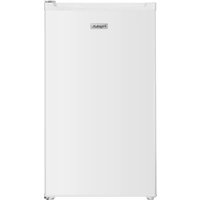
MB40V - Freezer FRIGELUX - Free user manual and instructions
Find the device manual for free MB40V FRIGELUX in PDF.


Frequently Asked Questions - MB40V FRIGELUX
User questions about MB40V FRIGELUX
0 question about this device. Answer the ones you know or ask your own.
Ask a new question about this device
Download the instructions for your Freezer in PDF format for free! Find your manual MB40V - FRIGELUX and take your electronic device back in hand. On this page are published all the documents necessary for the use of your device. MB40V by FRIGELUX.
USER MANUAL MB40V FRIGELUX
To ensure proper use of this appliance and your safety, please read the following instructions entirely before operating this appliance.
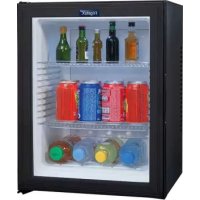
This refrigerated showcase is exclusively designed for beverage storage.
1. INSTRUCTIONS DE SECURITE GENERALE
1. GENERAL SAFETY INSTRUCTIONS
For your own safety and for the proper utilisation of the appliance, read this manual carefully, including the warnings and recommendations, before installing the appliance and using it for the first time. In order to avoid damage to the appliance and/or personal injury, persons using the appliance should be fully familiar with its operation and safety functions. Keep these recommendations close to the appliance, for future reference, and ensure that the document is transferred with the appliance if it is sold or in the case of moving. This will ensure optimum operation of the appliance.
To avoid any risk of injury, keep this manual. The manufacturer declines any liability whatsoever in the case of operating/handling errors concerning the appliance.
Safety of children and other vulnerable persons
- This appliance shall not be used by people (including children under 8 years old) whose physical, mental or sensory abilities are diminished or who do not have the necessary experience or knowledge, unless they are placed under the surveillance of a person responsible for their security and aware of the risks involved.
- The cleaning and maintenance of this device should not be carried out by unsupervised children.
- Keep all packaging out of the reach of children, to avoid any risk of suffocation.
- If you decide to scrap the appliance, disconnect it from the wall socket, cut the connection cable (as close to the appliance as possible) and remove the door in order to prevent children playing with it, with the resulting risk of electric shock or being trapped inside.
- Keep the appliance and its power cable out of reach of children under 8 years old.
Children must be under supervision to ensure they do not play with the appliance.
Children between 3 and 8 can load and unload the appliance.
General safety
CAUTION — Never store inflammable substances, such as aerosols, inside the appliance, as they could leak or release fluids.
CAUTION — A damaged power cable should be immediately replaced by the manufacturer or by a qualified retailer, in order to avoid any risk of electric shock.
CAUTION - Keep the ventilation openings well open and ensure that air can circulate by keeping enough space between the appliance and walls.
CAUTION - Do not damage the refrigerating circuit.
CAUTION - Do not use electrical appliances inside the compartment, unless they are tolerated by the manufacturer.
CAUTION - The refrigerating and insulating systems contain inflammable gases. When the
appliance is scrapped, it should be deposited at an accredited collection centre. Do not expose the appliance to fire.
CAUTION - Refrigerating appliance without 4 stars compartment are not suitable for freezing foodstuffs.
CAUTION - This appliance is intended to be used in household and similar applications such as:
✓ staff kitchen areas in shops, offices and other working environments;
farm houses and by clients in hotels, motels and other residential type environments;
bed and breakfast type environments;
catering and similar non-retail applications.
Refrigerating fluid
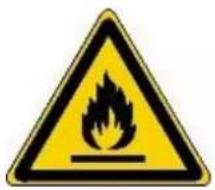
The refrigerating circuit in the appliance uses refrigerating isobutane (R600a), which is a natural gas respectful of the environment but highly inflammable. When transporting or installing the appliance, ensure that no element of the refrigerating circuit is damaged. The refrigerating fluid (R600a) is inflammable.
Caution: Fire risk
If the refrigerating circuit is damaged:
- Avoid open flames or any source of heat.
- Ensure that the room in which the appliance is installed is well ventilated.
It is dangerous to change the specification of the appliance in any way whatsoever.
Damage to the power cable may cause a short circuit and/or electric shock.
Electrical safety
We decline any liability in case of incidents caused by poor electrical installation.
- Do not extend the power cable. Do not use an extension cable, adapter, or multi-way socket.
- Check that the wall socket is not damaged. A wall socket in poor condition may cause the appliance to overheat and explode.
- Check that the wall socket used for the appliance is properly accessible.
- Never pull on the power cord.
- Ensure that the appliance is always electrically earthed.
- If the wall socket is loose, do not connect the cable, as there is a risk of electric shock or fire.
- Do not use the appliance if the interior lighting cover is not installed.
- Disconnect the appliance before replacing the light bulb (in case of a LED light, please refer to the chapter "Change the light bulb").
- The appliance operates on a single phase 220 240V / 50Hz power supply. The appliance must be connected to an earthed wall socket, in accordance with applicable recommendations.
- Do not attempt to replace a damaged power cord, contact your after-sales service.
- The power socket must be easily accessible but out of reach of children. In case of doubt, contact your installation technician.
- When positioning the appliance, ensure that the power cord is not pinched or damaged.
Daily utilisation
- Do not store inflammable substances or fluids inside the appliance. This would create a risk of explosion.
- Do not operate other electrical equipment inside the appliance (mixers, whirling rotor for ice cream, etc.).
- When disconnecting the appliance, grip the plug firmly and do not pull on the cable.
- Do not expose the appliance to direct sunlight.
- Keep the appliance away from candles, luminaires and open flames, in order to avoid fire risk.
The appliance is heavy. Be careful when moving it. Do not tilt it more than 45^
If your appliance is equipped with castors, remember that these are only designed to facilitate minor movements. Do not move the appliance over long distances. - Do not lean or climb on the appliance or its elements.
- In order to avoid falling objects and to prevent damage to the appliance, do not overload the compartments of the appliance.
It is intended to be used exclusively for the beverage storage.
Caution! Cleaning and servicing
Before carrying out servicing, switch off the power supply and disconnect the appliance.
- When cleaning the appliance, do not use metal objects, steam systems, volatile fluids, organic solvents or abrasive substances.
- Do not use sharp or pointed objects to remove ice. Use a plastic scraper.
Important information concerning installation!
- To ensure proper electrical connection, follow the recommendations given in the present manual.
-
Unpack the appliance and visually check that it is not damaged. Do not connect a damaged appliance. Inform your retailer or point of sale of any damage. In such a case, keep the packaging.
It is recommended that the appliance be allowed to settle for at least 4 hours before connecting the electrical power supply, so that the compressor fluid feed is correct. -
Proper air circulation is necessary to avoid overheating. To ensure sufficient ventilation, observe the installation recommendations provided.
- In order to avoid fire risk, wherever possible, ensure that the appliance is not in contact with walls or with any hot element (compressor, condenser). Observe the installation recommendations.
The appliance should not be placed close to radiators or cooking plates or gas rings. - Check that electrical sockets remain accessible when the appliance is installed.
POWER SAVING
To limit the electricity consumption of your appliance:
Install it in an appropriate place (see "Installation instructions").
- Leave the doors open as little time as possible.
- Do not put warm items into the appliance.
- To ensure that the appliance operates properly, clean the condenser regularly (see "Care and maintenance").
- Regularly inspect the door seals and ensure that they are still closing properly. If this is not the case, contact your after-sales service.
Trouble shooting
Any electrical work should be carried out by a qualified and skilled technician.
The appliance should be repaired by an accredited repair centre, using only manufacturer's original spare parts.
Aesthetic and functional spare parts in accordance with REGULATION (EU) 2019/2024 (Annex II, point 2.), are available for after sales service network and end users for a maximum period of 8 years from the date of end of commercialisation on the market of the last unit. The list of spare parts and the procedure for ordering them (professional access / end user access) are available on the following website: www.interfroidservices.fr or by post at the following address: Interfroid Services, 143 Bd Pierre Lefauchex 72230 ARNAGE.
For other functional spare parts not specified in EU regulation 2019/2024, they are available for a period of 7 years.
The manufacturer's warranty is 1 year for functional parts.
R600A
Safety instructions
!Caution: Do not obstruct the ventilation grills on the appliance.
Caution: Do not use mechanical means or any other means to speed up the de-icing process. De-ice only as recommended by the manufacturer.
Caution: Do not store explosive substances, such as aerosol cans containing an inflammable propellant, in the appliance.
!Caution: Do not damage the refrigerating circuit in the appliance.
Caution: The refrigerating units use isobutane (R600a), and therefore should not be placed close to ignition sources (for example, electrical contacts that are exposed or open contacts that could be closed by the refrigerating fluid in the event of a leak). The refrigerating fluid type is specified on the power cabinet identification plate.
Caution: Do not use electrical equipment in the compartments of the appliance, unless they are of the type authorized by the manufacturer.
This appliance meets the requirements of all applicable European directives and their amendments.

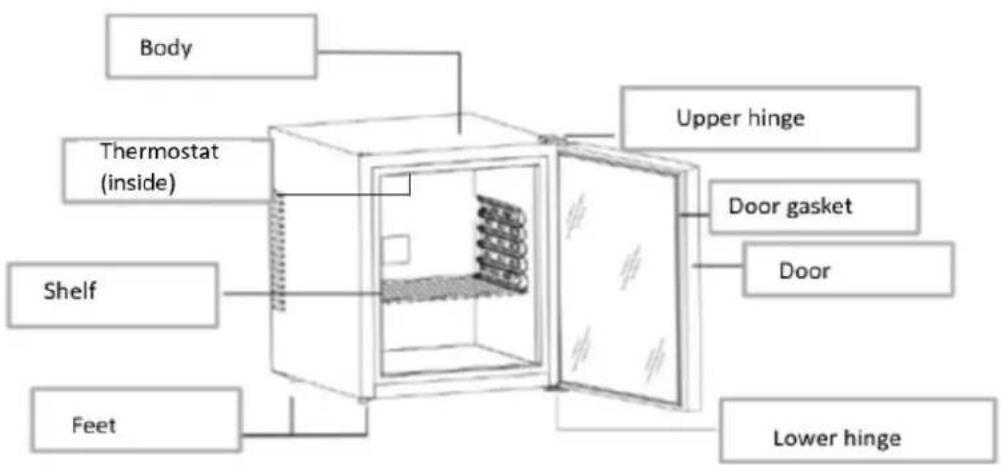
2.PRODUCT DESCRIPTION
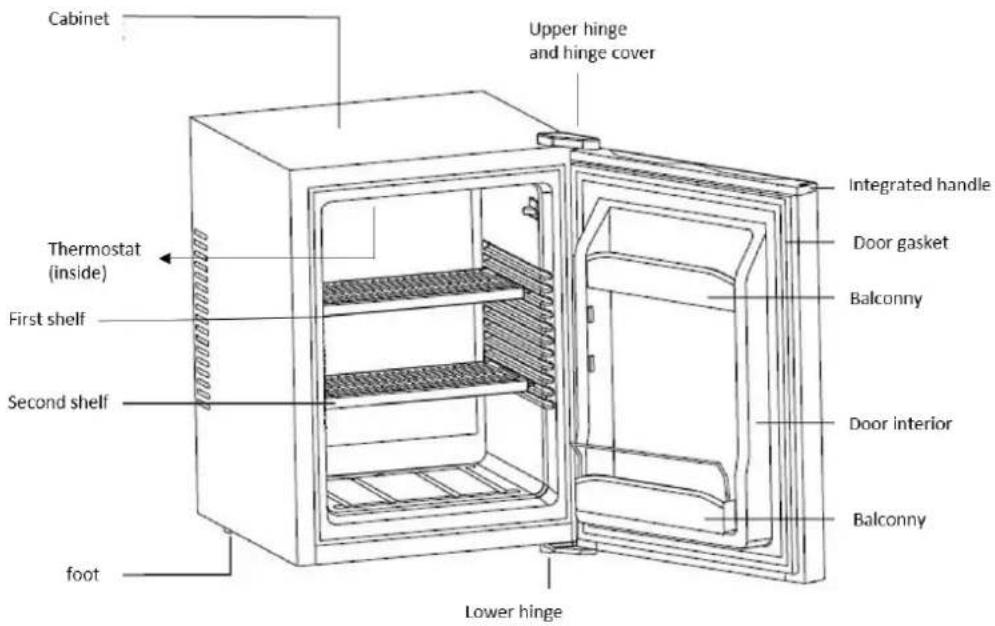
MB40
MB40V
To find out more about your product, consult the online EPREL database. As defined in Commission Delegated Regulation (EU) 2019/2016, all information relating to this refrigeration appliance is available on the EPREL Base (European Product Database for energy labeling). This database enables you to consult the information and technical documentation of your refrigeration appliance. You can access the EPREL Database by scanning the QR code on the energy label of your appliance or by going directly to: www.ec.europa.eu and searching the reference of your refrigeration appliance.
3. INSTALLATION INSTRUCTIONS
Location
When selecting a position for your appliance you should make sure the floor is flat and firm, and the room is well ventilated. Avoid locating your appliance near a heat source, e.g., cooker, boiler or radiator. Also, avoid direct sunlight in out-buildings or terraces/outside seating areas. If you are placing your equipment in an out-building such as a garage or annex ensure that it is placed above the damp course, otherwise condensation will occur on the appliance's cabinet. Never place the appliance in a wall recessed or into fitted cabinets or furniture when it is working, the metal grid at the back may become hot and the sides warm. Make sure you leave enough space around the appliance so the air can circulate.
Let your device breathe. Heat is released from the walls so it is important to leave enough space around the appliance so the air can circulate.
When install a Heat pipe Refrigerator, ventilation should be considered seriously, please refer to the following: There should be left at least 200~cm^3 for ventilation The distance between wall and refrigerator side should be at least 20mm The bottom should be left at least 50mm for air flowing air passing through must not be preheated The following four pictures show four installation ways: Entire cooling system should be considered in the ventilation.
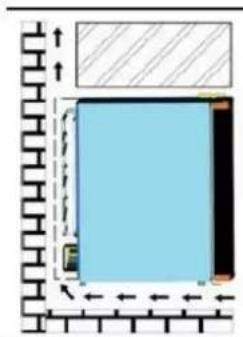
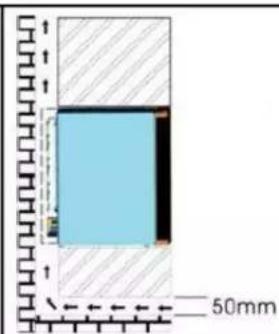
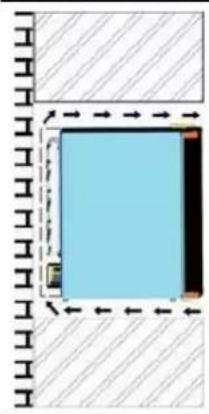
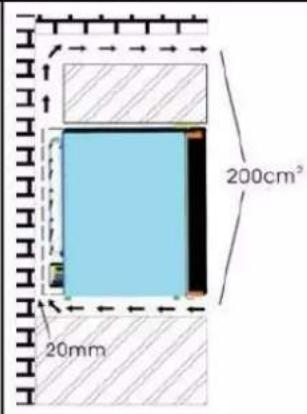
Do not place directly on the ground. Provide suitable stand.
This refrigerating appliance is not intended to be used as a built-in appliance.
Recommendation combination:
The following combination of drawers, baskets, and shelves is recommended for energy to be used as efficiently as possible by the refrigeration unit.
The shelves placed in factory mode is the most efficient use of energy for the refrigerating appliances.
Cleaning before use
Wipe the inside with a weak solution of bicarbonate of soda. Then rinse with warm water using a damp sponge or cloth. Wash the baskets and shelves in warm soapy water and dry completely before placing them back.
Before plugging in
Check that you have a socket which is compatible with the plug supplied with the appliance. The refrigerator must be connected to a properly earthed socket in line with relevant valid country regulations before operating. Check the data label (which is on the side of the refrigerator) for voltage and frequency corresponds to your local one; If not, don't plug your cable into the socket.
The coolant fluid needs time to settle. If the appliance is switched off at any time, wait 30 minutes before switching back on to allow the coolant fluid to settle.
Before filling your appliance
The refrigerator will have better performance at ambient of 20-25 degree; We suggest the refrigerator be powered off if the ambient temperature is lower than 10 degrees. After plugging the appliance, allow the unit to cool down for 2-3 hours before placing beverage into the refrigerator compartment. Ventilation is very important for this kind thermoelectric refrigerator; The inside PCB will be broken easily if the ventilation is bad; It will also reduce the life of the refrigerator.
Food preservation and storage.
The storage of foodstuffs must comply with the regulatory conservation temperatures established by the National Agency for Food, Environmental and Occupational Health Safety (ANSES). Failure to comply with these storage temperatures involves risks of poisoning and food waste.
| Refrigerator compartments | Type of food |
| Door or balconies of fridge compartment | ·Foods with natural preservatives, such as jams,juices, drinks, condiments. ·Do not store perishable foods. |
| Crisper drawer (salad drawer) | ·Fruits, herbs and vegetables should be placed separately in the risper bin. ·Do not store bananas, onions, potatoes, garlic in the refrigerator. |
| Fridge shelf – middle | ·Dairy products, eggs |
| Fridge shelf – top | ·Foods that do not need cooking, such as ready-to-eat foods, deli meats, leftovers. |
Under the recommended setting, the best shelf life is no more than 3 days in the refrigerator and 3 months in the freezer (4 stars); The better storage time may reduce other parameters.
| Storage conditions | ||||
| Compartment | Type of compartment | T°C mini | T°C maxi | T°C consigne |
| Compartment for non-frozen food | Compartment for fresh food | 0 | 8 | 4 |
| Compartment for highly perishable food | Compartment for highly perishable food | -3 | 3 | 2 |
| Compartment for frozen food | No star and ice making | s.o. | 0 | 0 |
| 1 star | s.o. | -6 | -6 | |
| 2 stars | s.o. | -12 | -12 | |
| 3 stars | s.o. | -18 | -18 | |
| 4 stars | s.o. | -18 | -18 | |
Failure to comply with these storage temperatures involves risks of poisoning and food waste. For optimal conservation of foodstuffs, it is recommended to adjust the temperatures of the compartments as below:
| Compartments TYPE | Target storage temp.[℃] | Appropriate food | |
| 1 | Fridge | +2≤+8 | Eggs, cooked food, packaged food, fruits and vegetables, dairy products, cakes, drinks and other foods are not suitable for freezing. |
| 2 | Freezer | ≤-18 | Seafood (fish, shrimp, shellfish), freshwater aquatic products and meat products (recommended for 3 months, the longer the storage time, the worse the taste and nutrition), suitable for frozen fresh food. |
| 3 | Freezer | ≤-18 | Seafood (fish, shrimp, shellfish), freshwater aquatic products and meat products (recommended for 3 months, the longer the storage time, the worse the taste and nutrition), are not suitable for frozen fresh food. |
| 4 | Freezer | ≤-12 | Seafood (fish, shrimp, shellfish), freshwater aquatic products and meat products (recommended for 2 months, the longer the storage time, the worse the taste and nutrition), are not suitable for frozen fresh food |
| 5 | Freezer | ≤-6 | Seafood (fish, shrimp, shellfish), freshwater aquatic products and meat products (recommended for 1 months, the longer the storage time, the worse the taste and nutrition), are not suitable for frozen fresh food. |
| 6 | 0-star compartment | -6≤0 | Fresh pork, beef, fish, chicken, some packaged processed foods, etc. (Recommended to eat within the same day, preferably no more than 3 days). Partially encapsulated processed foods (non-freezable foods) |
| 7 | Chill | 2≤+3 | Fresh/frozen pork, beef, chicken, freshwater aquatic products, etc.(7 days below 0℃ and above 0℃ is recommended for consumption within that day, preferably no more than 2 days). Seafood (less than 0 for 15 days, it is not recommended to store above 0℃) |
| 8 | Fresh Food | 0≤+4 | Fresh pork, beef, fish, chicken, cooked food, etc. (Recommended to eat within the same day, preferably no more than 3 days) |
| 9 | Wine | +5≤+20 | red wine,white wine,sparkling wine etc. |
4. USE INSTRUCTIONS
The temperature control is located on the top of the refrigerator inside.
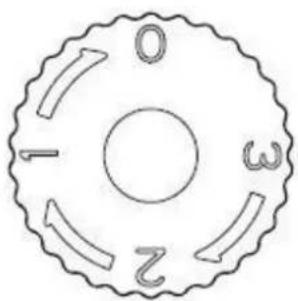
To control the internal temperature, adjust the control knob according to the ambient temperature or purpose of use.
Appliance thermostat has three settings. The appliance assures that temperature is maintained as long as it is in operation and that it is used in normal conditions of use. The temperature inside the appliance can be influenced by many factors: ambient temperature, sun exposure, number of door's opening and amount of food stored... The slight changes in temperature are perfectly normal.
To turn the refrigerator off, turn the temperature control to "0".
MB40
The first time you put your appliance into operation, set the thermostat to "2" and let it run empty for 4 hours before storing food for it to cool sufficiently.
Setting 1: Refrigerator compartment average temperature 13 to 17^
Setting 2: Refrigerator compartment average temperature 8 to 12^
Setting 3: Refrigerator compartment average temperature 5 to 7^
When the surrounding temperature is 25^ and the cellar has no load, it will take 3,5 hours to decrease the cellar's temperature from 25^ to 12^ .
The cellar is recommended to be designed at 12^ .
The energy consumption is 0.444kWh / 24h . If the setting temperature is higher than 12^ , the energy consumption will be lower. If the setting temperature is lower than 12^ , the energy consumption will be higher.
MB40V
The first time you put your appliance into operation, set the thermostat to "3" and let it run empty for 4 hours before storing food for it to cool sufficiently.
Setting 1: Refrigerator compartment average temperature 16 to 20^
Setting 2: Refrigerator compartment average temperature 14 to 16^
Setting 3: Refrigerator compartment average temperature 10 to 14^
When the surrounding temperature is 25^ and the cellar has no load, it will take 3,5 hours to decrease the cellar's temperature from 25^ to 12^ .
The cellar is recommended to be designed at 12^
The energy consumption is 0.268kWh / 24h . If the setting temperature is higher than 12^ , the energy consumption will be lower. If the setting temperature is lower than 12^ , the energy consumption will be higher.
NOTE:
- Turning the temperature control to "0" position stops the cooling cycle but does not shut off the power to the refrigerator.
If the unit is unplugged, lost power, or turned off; you must wait 3 to 5 minutes before - Restarting the unit. If you attempt to restart before this time delay, the refrigerator will not start.
- If you choose to change the thermostat setting, adjust thermostat control by one numerical increment at a time. Allow several hours for temperature to stabilize between adjustments.
Do not leave the door open for too long so that the indoor temperature does not rise too much.
5. CARE AND MAINTENANCE
Defrost
The appliance applies automatic defrosting system, so there is no need to defrost it manually
Cleaning inside the appliance
Clean regularly surfaces that can come in contact with drink and accessible drainage systems.
Before maintenance, switch off the appliance and disconnect the mains plug from the mains socket. After defrosting you should clean the appliance internally with a weak solution of bicarbonate of soda. Then rinse with warm water using a damp sponge or cloth and wipe dry. Wash the baskets in warm soapy water and ensure they are completely dry before placing them back. Condensation will form on the back wall of the appliance; however, it will normally run down into the drain hole.
Cleaning outside the appliance
Before maintenance, switch off the appliance and disconnect the mains plug from the mains socket. Use standard non-abrasive detergent diluted in warm water to clean the outside.
The grille of the condenser at the back of the appliance and the adjacent components can be vacuumed using a soft brush attachment.
Do not use harsh cleaners, scouring pads or solvents to clean any part of the appliance.
Moving the unit
- Location
Do not place your equipment near a heat source, for example. Stove, boiler or radiator. Also, avoid direct sunlight.
When selecting a location for your appliance you should make sure the floor is flat and firm, and the room is well ventilated. An average ambient temperature must be observed. This temperature is specific according to the climatic class of the device:
N: This refrigerating appliance is intended to be used at ambient temperatures ranging from 16^ to 32^ .
- Do not turn on the appliance for 30 minutes
After any movement, it must not be connected for 30 minutes. This time allows the coolant to adjust.
Turn off your appliance
If the unit is not likely to operate for a long period of time:
- Remove all items from your appliance.
- Switch off the appliance by setting the thermostat to position "0".
- Unplug the appliance.
Clean it thoroughly. - Keep the door open to prevent odors from rising.
Changing the light bulb
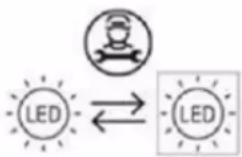
This appliance consists of light-emitting diodes (LEDs). This type of diode cannot be changed by the consumer. The lifetime of these LEDs is normally sufficient for no change to be made. If, however, and despite all the care taken during the manufacture of your appliance, the LEDs were defective, please contact your after-sales service for any intervention.
Changing the Swing Hinge
The unit is delivered to you with the door opening from the left side. Should you desire to reverse the opening direction, please follow the below instructions. All the hinge can be used for left or right swing, except for MB40, please find an additional left upper hinge in the bag of the user manual for installation as below: -Pull out the three screws from right hinge. -Remove the hinge (upper and lower) away. -Install the door in suitable position with hinges, use three self-screws to fix them.
6. TROUBLESHOOTING GUIDE
Sometimes you may come cross minor problems that is most cases do not require a service call and can be easily eliminated. The problem may have resulted from improper handling and/or installation of the appliance. Please refer to the below trouble-shooting guide to assist you in identifying the problem. If the problem still persists after completing these checkpoints, contact the closest authorized service agent in your area for assistance.
| PROBLEM | POSSIBLE CAUSE |
| Refrigerator does not operate | Not plugged in. The circuit breaker tripped or a blown fuse. |
| Refrigerator does not operate. | The room temperature is hotter than normal. The door is opened too often. The door is not closed completely. The temperature control is not set correctly. The door gasket does not seal properly. The refrigerator does not have the correct clearances. Abnormal voltage. |
| The light does not work. | Not plugged in. The circuit breaker tripped or a blown fuse. The LED light has burned out. |
| Vibrations. | Check to assure that the refrigerator is level. |
| The door will not close properly. | The refrigerator is not level. The door was reversed and not properly installed. The gasket is dirty. The shelves, bins, or baskets are out of position. |
7. ENVIRONMENT
This appliance is marked according to the European directive 2019/290/CE on Waste Electrical and Electronic Equipment (WEEE). By ensuring this product is disposed of correctly, you will help prevent potential negative consequences

for the environment and human health, which could otherwise be caused by inappropriate waste handling of this product.
The symbol on the product, or on the documents accompanying the product, the Crossed-Out Wheelie Bin, indicates that this appliance may not be treated as household waste. Instead it shall be handed over to the applicable collection point for the recycling of electrical and electronic equipment, or, if you are buying an equivalent product, to the retailer of the new product.
The user is responsible for taking the appliance to the appropriate collection center at the end of its useful life. Selective and appropriate collection for the recycling of no longer used appliances and their disposal and destruction in an environmentally friendly manner, helps to prevent potential negative effects on the environment and health, and encourages the recycling of materials used to make the product.
For more detailed information about treatment, recovery and recycling of this product, please contact your local authority, your household waste disposal service or the retailer where you purchased the product.
8. WARNING
As we continuously improve our products for the benefit of our customers, we reserve the right to modify technical characteristics without notice.
Warranties for FRIGELUX brand products are offered exclusively by selected retailers. No part of these instructions may be considered as a supplementary guarantee.
FRIO ENTREPRISE cannot be held liable for errors or technical or editorial omissions in this document.
Non-binding document.