
NS998UL - Juicer KUVINGS - Free user manual and instructions
Find the device manual for free NS998UL KUVINGS in PDF.

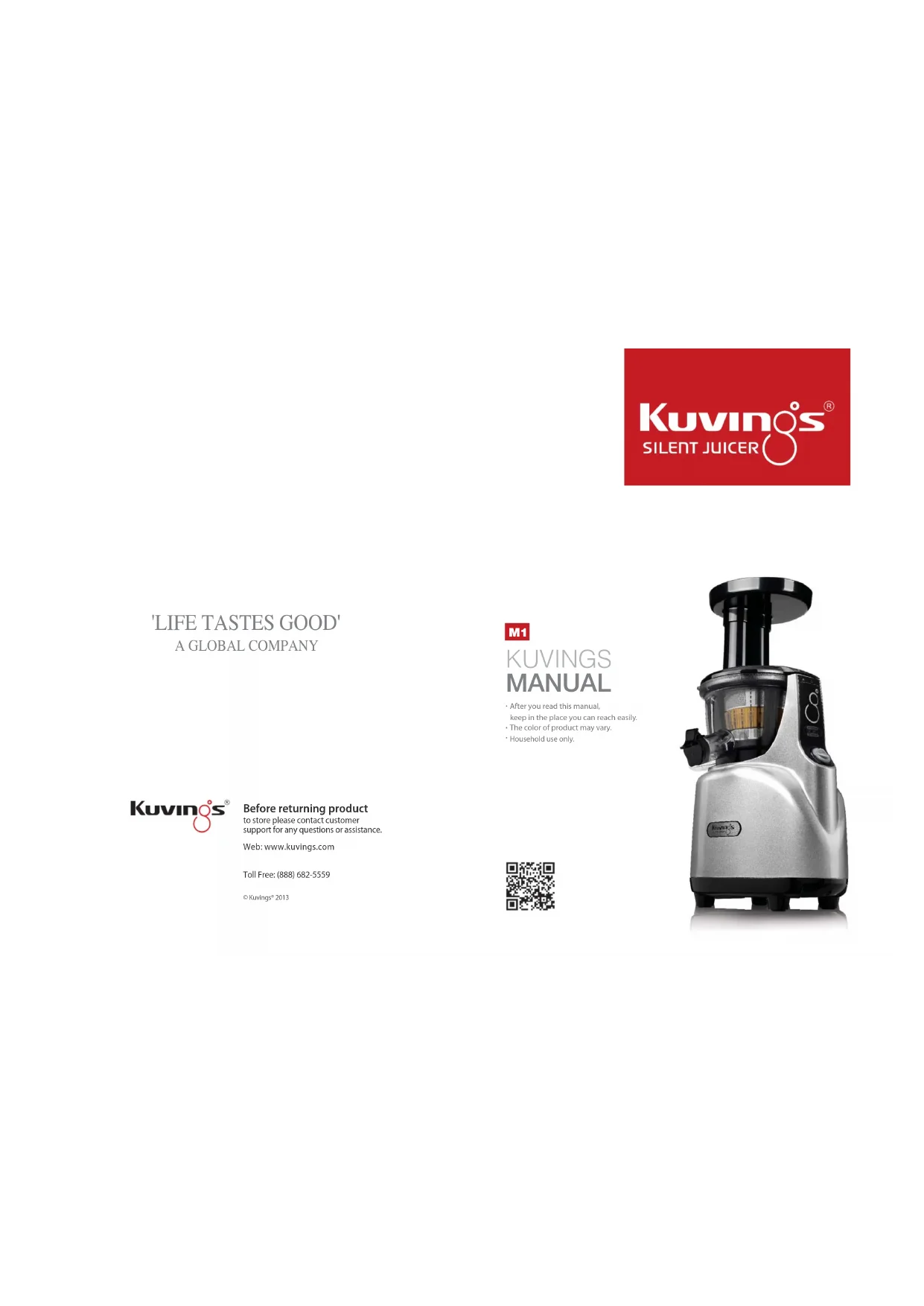

| Product type | Slow juicer |
| Brand | Kuvings |
| Model | NS998UL |
| Dimensions (W x D x H) | 228 x 208 x 414 mm |
| Weight | 6.5 kg |
| Power supply | 120 V, 60 Hz, 240 W |
| Extraction type | Low speed (slow press) |
| Maximum continuous operation capacity | 30 minutes |
| Recommended cooling time | 30 minutes |
| Control functions | Forward, reverse, stop |
| Smart cap | For mixing and quick rinse |
| Built-in safety | Shutdown if incorrect assembly, overload protection |
| Extraction bowl material | BPA-free plastic (assumed) |
| Removable parts | Hopper, lid, bowl, pulp collector, cap, jug, rotation brush, strainer, auger, pusher |
| Cleaning | Immediate water wash after use, detachable silicone parts |
| Included cleaning tools | Cleaning brush and strainer cleaning tool |
| Use | Household only |
| Manufacturer | NUC Electronics Co., Ltd. |
| Available spare parts | Auger, strainer, rotation brush |
Frequently Asked Questions - NS998UL KUVINGS
User questions about NS998UL KUVINGS
0 question about this device. Answer the ones you know or ask your own.
Ask a new question about this device
Download the instructions for your Juicer in PDF format for free! Find your manual NS998UL - KUVINGS and take your electronic device back in hand. On this page are published all the documents necessary for the use of your device. NS998UL by KUVINGS.
USER MANUAL NS998UL KUVINGS
Before returning product
to store please contact customer support for any questions or assistance.
Toll Free: (888) 682-5559
© Kuvings® 2013
M1
KUVINGS MANUAL
• After you read this manual,
keep in the place you can reach easily.
• The color of product may vary.
• Household use only.
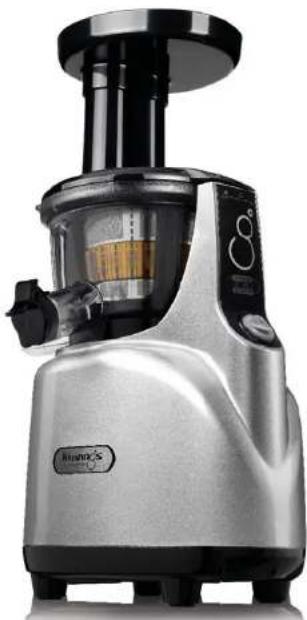
natural_image
Exterior view of a modern stainless steel sandwich maker (no visible text or symbols)
CONTENTS
04 Important Safeguards
05 Safety Warning
06 Parts
08 How to Assemble
10 How to Operate
12 Tips on Operation
13 Tips on Ingredient
14 Ingredients Preparation
16 How to Disassemble and Clean
18 How to Clean Silicone Parts
19 How to Use the Cleaning Tool
20 Troubleshooting Q&A
22 Specifications
Read all Instructions Before Use
IMPORTANT SAFEGARDS SAFETY WARNING
IMPORTANT SAFEGUARDS
When using electrical appliances, basic safety precautions should always be followed
- Read all instructions.
- To protect against risk of electrical shock do not put motor base in water or other liquid.
- Close supervision is necessary when any appliance is used by or near children.
- Unplug from outlet when not in use before putting on or taking off parts and before cleaning.
- Avoid contacting moving parts.
- Do not operate any appliance with a damaged cord or plug or after the appliance malfunctions or damaged in any manner. Return appliance to the customer support for examination and/or repair.
- The use of attachments not recommended or sold by the manufacturer may cause fire, electric shock or injury.
- Do not use outdoors.
- Do not let cord hang over edge of table or counter.
- Always make sure drum lid is closed securely in place before motor is turned on. Do not open the drum lid while juicer is in operation.
- Be sure to turn switch to OFF position after each use of your Julcer. Make sure the motor stops completely before disassembling.
- Do not put fingers or other objects into the feeding tube during operation. If food becomes lodged, use pusher or another piece of fruit or vegetable to push it down. When this method does not work, turn the motor off and disassemble juicer to remove the remaining food.
- Do not use the appliance if the rotation wiper is damaged.
- Do not operate without the pulp cup in place.
- Do not alter or modify the appliance in anyway.
- Do not use the appliance for anything other than its intended purpose as described in the manual.
- The appliance should be used for limited period of time.
SAVE THESE INSTRUCTIONS
- This appliance is for household use only. Please follow the instructions in the manual carefully. (The appliance cannot be covered under the manufacturer's warranty if the product is used in a way not intended by the manufacturer or commercially.)
- Save the instruction manual for future reference.
- If the appliance is given as a gift, please include the manual with the product.
The following precautions are provided to ensure the safety of the user. Please carefully read through the precautions and exercise care when using the appliance.

Warning: This label warns of the risk of death or severe injuries.

Caution: This label warns of the risk of injuries or appliance damage.

Prohibited

Do not disassemble Must take action.


Unplug the power cord when not in use.

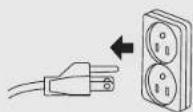
Do not put fingers or other objects in to the feeding tube while it is in operation;
*It may cause injury.

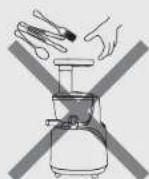
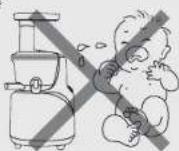
Do not keep or operate the appliance near infants or toddlers;
*It may injure them.
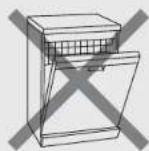
Do not put the juicer parts in the dishwasher or extremely hot water; *The parts may wear faster.


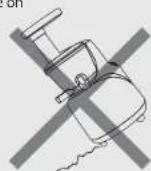
Do not use the appliance on
an uneven surface; * It may cause a malfunction if the appliance tips over,
Do not use any hazardous chemicals to clean the appliance; ^x It may change the color of the appliance or result in a fire.



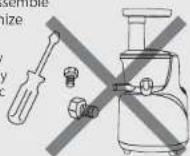
Do not repair, disassemble the base, or customize the appliance;
* The appliance may not operate properly causing fire, electric shock, or injury.

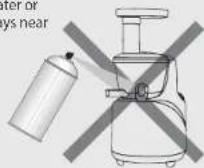
Do not spray water or flammable sprays near the appliance;
* It may cause an explosion or electrical shock.

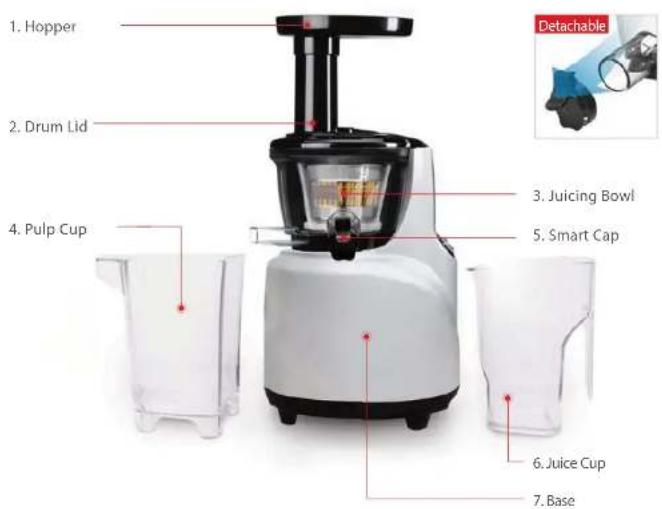
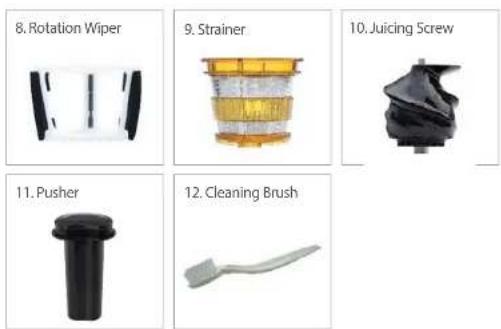
PARTS
* The products illustrated/photographed in this booklet may vary slightly from the actual product.
flowchart
graph TD
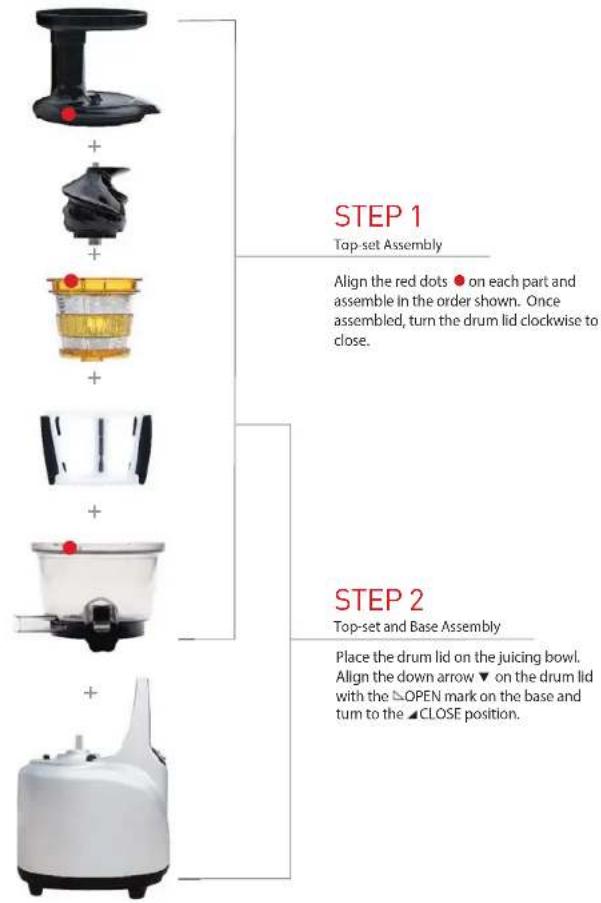
    A["Top-set Assembly"] --> B["Step 1: Align the red dots on each part and assemble in the order shown. Once assembled, turn the drum lid clockwise to close."]
    B --> C["Step 2: Place the drum lid on the juicing bowl. Align the down arrow on the drum lid with the △OPEN mark on the base and turn to the ▲CLOSE position."]
HOW TO ASSEMBLE
STEP 1
Top-set Assembly
Check Before Operating
- Wash the parts before first use.
- Ensure that the compression silicone and silicone ring are assembled properly.
1
Firmly insert the compression silicone into the slot below the pulp spout.
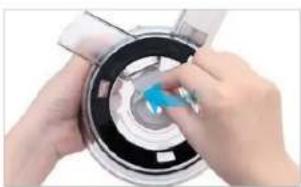
natural_image
Close-up of hands holding a mechanical component with a blue tool, no visible text or symbolsNote | The Juicer may leak if not assembled properly.
2
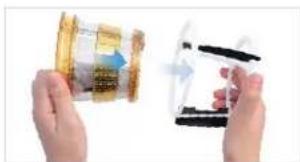
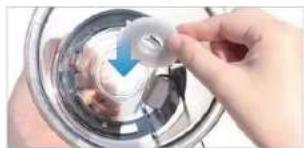
Assemble the strainer into the rotation wiper then place this assembly in to the juicing bowl ensuring the red dot ● on the strainer is aligned with the red dot ● on the juicing bowl.
natural_image
Two hands holding a small object with a blue arrow pointing to it, next to a transparent container (no text or symbols visible)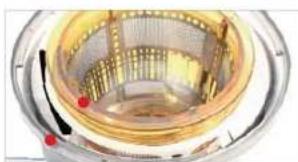
natural_image
Close-up of a metallic mechanical component with internal structure and red indicator lights (no visible text or symbols)3
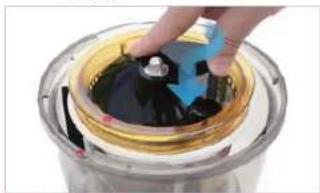
Place the juicing screw into the strainer. Turn and press down on it until it clicks into place.
natural_image
Close-up of a hand placing a small object onto a metallic container with dark liquid (no text or symbols visible)Note | The juicing screw needs to be locked in place in order to close the drum lid.
4
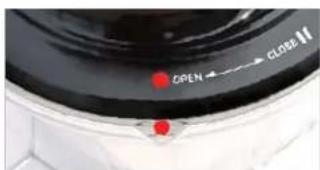
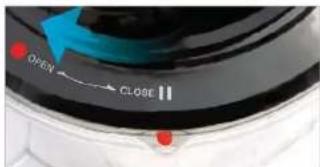
Place the drum lid on to the juicing bowl aligning the red dot ● on the drum lid with the red dot ● on the juicing bowl. Turn clockwise to close, aligning the red dot ● on the drum lid with the close mark ■.
8
STEP 2
Top-set and Base Assembly
5
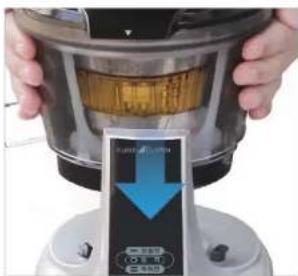
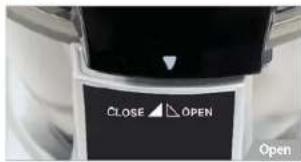
Place the drum lid on the juicing bowl. Align the down arrow ▼ on the drum lid with the △OPEN mark on the base and turn to the ▲CLOSE position.
natural_image
Close-up of hands holding a kitchen appliance with a digital display showing a blue downward arrow (no text or symbols visible)6
Open/Close mark on the top-set.

Note | Juicer will not operate if parts are not assembled properly.
7
Place the pulp cup under the pulp spout and place the juice cup under the juice spout as shown in the illustration..
Silicone Parts
Silicone parts are washable. Properly assemble after washing.
natural_image
Close-up of hands adding a blue arrow to a container with food inside (no visible text or symbols)- Push in the silicone ring with the smaller surface facing down.
natural_image
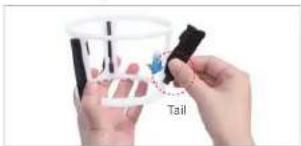
Hand holding a small object with a black tag and a dotted line labeled 'Tail' (no other text or symbols visible)- Insert into the slot with the tail pointing down as shown in the illustration.
9
HOW TO OPERATE
STEP 1 After preparing the ingredients, plug the power cord into a wall outlet.
Note | Do not touch the power cord with wet hands. It may cause electrical shock, short-circuit, or fire.
- Check the safety of the wall outlet.
STEP 2 Press the FORWARD button to operate.
Note | • Forward: Pulls down and slowly masticates the ingredients.
- Reverse: Pushes the ingredients back up to dislodge them.
If the ingredients become jammed in the screw and the drum lid does not open, press the OFF button. Then press and hold the REVERSE button until the ingredients become dislodged. Repeat REVERSE - OFF - FORWARD as often as needed to achieve the desired result.
If the juicer stops during operation:
Switch the button to OFF position then press and hold the REVERSE button until the Ingredients become dislodged. Repeat REVERSE - OFF - FORWARD as needed.
FORWARD: Pulls down the food OFF: Stops the operation REVERSE: Pushes the food back up

flowchart
graph TD
    A["OFF"] --> B["1"]
    B --> C["2"]
    C --> D["3"]
    D --> E["4"]
    style A fill:#f9f,stroke:#333
    style B fill:#ccf,stroke:#333
    style C fill:#cfc,stroke:#333
    style D fill:#fcc,stroke:#333
    style E fill:#cff,stroke:#333
Note | • REVERSE: Pushes the ingredients back up to dislodge them. The REVERSE button only works while holding down the switch.
- Switch OFF ensuring that the juicer comes to a complete stop. Then press REVERSE. Hold the REVERSE button for 2-3 seconds and release. Repeat as needed. Let the juicer stop completely before using the REVERSE button to prevent malfunction.
- If the juicer does not work after these steps, disassemble and clean the parts before operating the juicer again.
STEP 3 Insert the prepared ingredients one piece at a time.
Note | · Prepare ingredients for optimal extraction.
» Tough and fibrous ingredients: Cut to 1/2-1 inch wide and 2 inches long.
» Fibrous leafy vegetables (celery, kale, etc.); Cut the stems into 2 inch pieces and bundle up the leafy part as you insert them into the juicer.
» Remove hard seeds or pits in fruits,
» When juicing frozen fruits, completely thaw before juicing.
- If large quantities of ingredients are put into the feeding tube, it can cause the juicer to stop.
- Insert the ingredients one piece at a time.
STEP 4 Use the smart cap to make mixed juices, stop juice from dripping, or rinse between different juices.
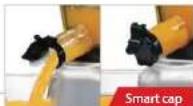
Tip | • Juicing with the smart cap closed creates various mixed juice creations when different fruits and vegetables, milk, banana, beans etc. are selected.
• After juicing, close the smart cap to stop the juice from dripping, especially when disassembling the juicing bowl off the base.
- When making different juices quickly rinse away any leftover flavors by running a glass of water in the juicer with the smart cap closed.
Note | • Leave the smart cap open when juicing ingredients that create excessive foam during extraction, (e.g. apples, celery).
- Pay close attention when operating with the smart cap closed. Juice may overflow if the juice collected in the juicing bowl exceeds its capacity marked on the bowl.
STEP 5 After juice and pulp are completely extracted, switch the unit OFF.
Note | • If the remaining ingredients in the juicing bowl have not been extracted completely, the drum lid may not open easily. After each extraction, run the juicer for an additional 30 seconds to let the juicer extract the remaining pulp.
- When the drum lid is stuck, press the REVERSE - OFF - FORWARD button in this order; switching back and forth 2 or 3 times to dislodge the ingredients. Then place hands on top of the drum lid and firmly press down while simultaneously turning the drum lid counter clockwise to open.
» Depending on the ingredients, pour water down the feeding tube to rinse out the interior of the juicing bowl and then attempt to remove the drum lid.
TIPS ON OPERATION TIPS ON INGREDIENTS
- Operating the juicer without ingredients can cause damage to the screw.
- Do not continuously operate the juicer for more than 30 minutes.
This can damage the motor from overheating.
After continuous use, let the juicer rest for 30 minutes to cool down before starting another session.
- Do not put fingers or other objects into the feeding tube. Always use provided pusher when needed.
If other objects are inserted into the feeding tube during operation, such materials can get stuck and damage the juicer parts and/or cause injury.
- Do not put dried or hard ingredients like whole grains, fruits with hard seeds or ice into the juicer.
These may damage the juicer parts (e.g. juicing bowl, juicing screw, and strainer).
- Beans or grains can be used if soaked overnight or boiled.
- Fruits with pits and hard seeds (e.g. nectarines, peaches, mangoes and cherries) must be pitted before juicing.
-
When using frozen fruits with small seeds such as grapes, completely thaw before inserting them into the juicer.
-
Do not use ingredients containing excessive amounts of vegetable oil or animal fat. Do not use the juicer to extract vegetable oil from ingredients.
If vegetable/animal oil gets on the juicing screw, it may reduce performance and even damage the part. - Do not reinsert the extracted pulp into the juicer. This can cause the juicer to stop or cause the drum lid not to open.
- After juicing ingredients with seeds like grapes, thoroughly clean all the crevices on the bottom of the juicing screw.
Juicer damage due to owner negligence or from not following the instructions in the owner's manual will void the warranty service.
DO NOT put the following ingredients into the juicer:
Hard seeds

Peach, nectarines, apricot, plum, mango, etc. Remove hard seeds from the ingredients before juicing.
Hard or inedible skins

Pineapple, melon, mango, orange, etc. Peel the skins from the ingredients before juicing.
Frozen fruits or ice
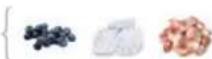
Frozen strawberry, blueberry, raspberry, etc. Completely thaw frozen fruits before juicing. Do not use ice.
Vegetable/animal oil
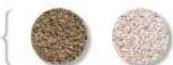
Sesame seed, butter, margarine, etc. Do not extract ingredients containing vegetable or animal oil. This can reduce performance and even damage the juicer.
Others
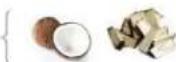
Coconut, sugarcane, whole grains, etc. Do not extract ingredients with no water content.
Experience the best quality juice by understanding each ingredient's characteristics and knowing the optimal way of handling the ingredients.
Kuvings Gentle Slow Juicer is an innovative product that uses patented slow-speed masticating technology to efficiently extract the juice from ingredients. The juicer is designed to obtain the best result from ingredients with fi rm composition and with high water content. For best result, each ingredient should be prepared and extracted depending on its characteristics and properties.

INGREDIENTS PREPARATION
| Before Operating: | · Before Operating: If the juicer is jammed or if the drum lid does not open, press the REVERSE button and hold until it becomes dislodged.Repeat REVERSE-OFF-FORWARD as needed.· Continue operating the juicer until all the ingredients in the juicing bowl are extracted. The drum lid may not open easily if there is a lot of pulp remaining in the juicer.· Every ingredient yields different amounts of juice. |
| Juice Yield: | · For the optimal extraction and maximum juice yield, cut the ingredients following the guidelines given in this section.· Insert ingredients slowly monitoring how the ingredients are extracted. The juice yield may vary depending on the juicing speed. |
Soft fruits and vegetables (e.g. oranges, tomatoes):
Tip | It is recommended that the extracted juice be consumed within 48 hours after extracting. Depending on the density of the ingredients the extracted juice can gradually show layers over time.

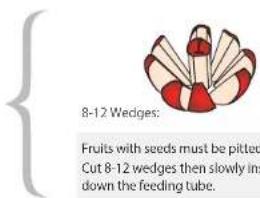
PREPARATION TIPS:
- Cut 8-12 wedges.
EXTRACTION TIP:
- Slowly insert the ingredients one piece at a time.
- Use the pusher to push the ingredients down the feeding tube. (The pusher also helps prevent juice from spraying out of the feeding tube when extracting ingredients with high water content)
- Leave the smart cap open when juicing ingredients that create excessive foam during extraction. Foam can accumulate if operated with the smart cap closed. If there is an excessive amount of foam, use a mesh strainer to separate it from the juice.
| How to Use the Smart Cap: | Juicing with the smart cap closed allows mixed juice creations with different fruits, vegetables and liquids.After juicing, close the smart cap to block excess juice from dripping, especially when disassembling the juicing bowl off the base.When making different juices quickly rinse away any leftover flavors by running a glass of water in the juicer with the smart cap closed.Leave the smart cap open when juicing ingredients that create excessive foam during extraction (e.g. apples, celery).Pay close attention when operating the juicer with the smart cap closed. Juice may overfl ow if the juice collected in the juicing bowl exceeds its capacity marked on the juicing bowl. |
| Adjusting the amount of pulp in the juice: | Depending on the ingredient, you may get extra pulp in the juice when juicing continuously.To reduce the amount of pulp, disassemble the top-set and wash frequently. |
Hard fruits and vegetables (e.g. carrots, potato):
Tip | Slice hard fruits and vegetables in to thin pieces and then extract slowly.

PREPARATION TIPS:
- Slice the ingredients 1 inch thick or cut 1 inch wide and 2-6 inches long.
• Soak hard ingredient like carrots and ginger in cold water prior to juicing.
EXTRACTION TIP:
- Slowly insert the ingredients one at a time.
- Pace the juicing speed ensuring each ingredient is thoroughly extracted.
• To maximize the juice yield, juice with ingredients with high water content.
HOW TO DISASSEMBLE AND CLEAN
* The products illustrated/photographed in this booklet may vary slightly from the actual product.

Switch OFF and unplug the power cord from the wall outlet.
Note
- Extract all the remaining pulp in the juicing bowl before stopping the juicer.
- For easier clean up, operate the juicer for an additional 30 seconds after the juice is extracted.
- When the drum lid is stuck, press the REVERSE - OFF - FORWARD button in this order, switching back and forth 2 to 3 times to dislodge. Then place hands on top of the drum lid and firmly press down simultaneously turning the drum lid counter clockwise to open.

Turn the drum lid counter clockwise to open.
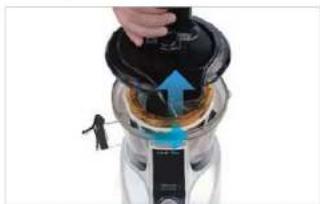
natural_image
Close-up of a kitchen appliance with a hand pressing down on a black lid, showing a blue upward arrow and a small figurine nearby (no text or symbols visible)Note
When moving the appliance, do not lift by grabbing the feeding tube. Always lift the appliance by grabbing the base or handle.

Turn the top-set counter clockwise and lift off the base.
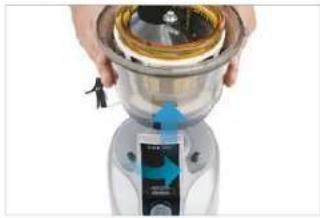
natural_image
Close-up of hands operating a kitchen appliance with blue arrows indicating motion (no visible text or symbols)
Remove the juicing screw, strainer and rotation wiper unit from the juicing bowl. Clean with provided brush.
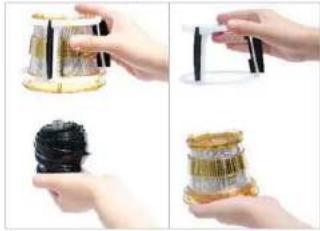
natural_image
Four-panel image showing hands holding small cylindrical objects with black and gold beads, no text or symbols visible.Note |
- Immediately clean the juicer after each use. If remaining residue in the juicer dries up, it can make disassembling and clean-up difficult. The excess build up can cause poor performance in future uses.
- For easier disassembly, place the top-set in the sink and run the water through from the top of the top-set.
- Thoroughly dry the bottom of the juicing screw where it connects to the metal cylinder shaft on the base.

Place the juicing bowl under running water and unplug the compression silicone to clean the pulp spout.
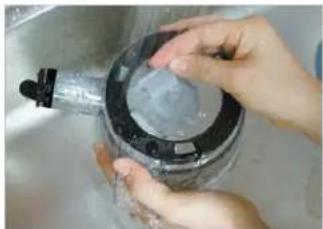
natural_image
Close-up of hands cleaning a circular mechanical component with a tool, no visible text or symbolsTip
- Soak the juicing bowl in a solution of warm water with baking soda or little bit of bleach to clean the excess build up.

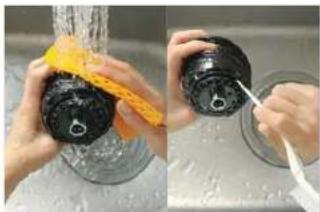
Under running water, clean the outside of the juicing screw with a dish scrub. Use the tip of the cleaning brush to push out any residue in the crevices on the bottom of the juicing screw.
natural_image
Two-panel photo showing hands cleaning a black cylindrical object with a yellow tool, no visible text or symbolsTip
- Thoroughly clean the juicing screw ensuring that the juicing screw is clean without any residue.
• Completely dry before using.
Note
• After juicing ingredients with seeds, make sure to thoroughly clean the bottom crevice of the juicing screw. If this area isn't properly cleaned, it can affect the balance between the juicing screw and the strainer and damage the parts.

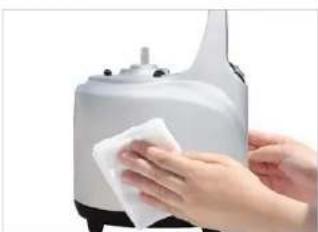
Clean the base with a soft damp towel and dry.
natural_image
Close-up of hands cleaning a white industrial machine with a cloth (no visible text or symbols)Note
- If the towel is dripping wet, make sure to squeeze out the excess liquid before using it on the juicer.
Quick Rinsing

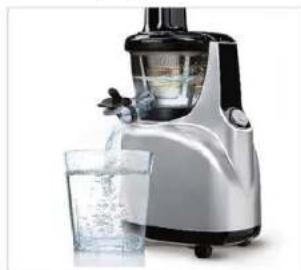
With the smart cap closed, fi ll the juicing bowl with water and turn on the juicer.

natural_image
Close-up of a white handover machine with black handle and white interior, pouring liquid from a glass container (no text or symbols visible)
Let it run for a moment. Open the smart cap and let the water run out of the juicing bowl.
natural_image
Modern white and black blender with clear liquid, next to a glass of water (no text or symbols visible)Tip
- It is not necessary to completely clean the juicer in between making multiple juices during a single juicing session.
- When finished with juicing, always disassemble and clean thoroughly between juicing sessions to prevent residue buildup.
HOW TO CLEAN SILICONE PARTS
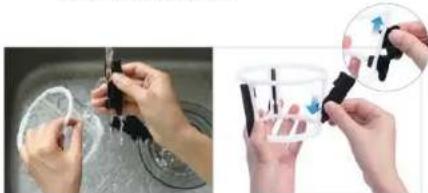
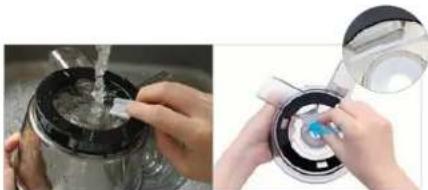
Tip | TipClean the rotation wiper under running water.
Thoroughly dry after cleaning. Before assembling the top-set, ensure that the compression silicone and silicone ring are firmly inserted.
Note | If the compression silicone and silicone ring are not firmly inserted, juice may leak from the bottom of the juicing bowl.
natural_image
Two-step photo showing hands cleaning a sink with a water filter and holding a plastic cup; inset shows close-up of hand holding black clip (no text or symbols)Silicone Brush
Pull out the silicone brush from the rotation wiper to clean. After cleaning, insert into the slot with the tail pointing down as shown in the illustration.
natural_image
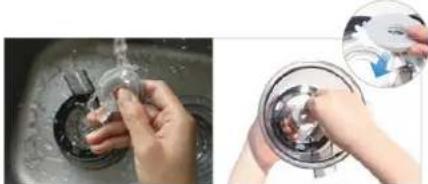
Two-step photo showing hands using a digital lens to clean a glass jar and a mechanical component (no text or symbols visible)Compression Silicone
Unplug to clean. After cleaning, firmly insert into the slot below the pulp spout.
natural_image
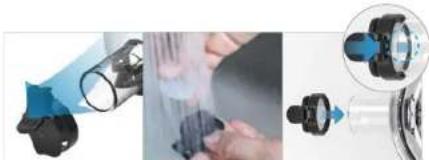
Two-step photo showing hands washing a sink in a basin and cleaning a metal bowl with a small container (no text or symbols visible)Silicone Ring
Remove the silicone ring from the juicing bowl to clean. After cleaning, push in the silicone ring with the smaller surface facing down.
natural_image
Three-panel image showing mechanical components: a blue-handled device, a close-up of a transparent component, and a close-up of a cylindrical component (no visible text or symbols)Smart Cap
Remove from the juice spout to clean. After cleaning, attach the smart cap to the smart cap silicone on the juice spout.
HOW TO USE THE CLEANING TOOL
* The products illustrated/photographed in this booklet may vary slightly from the actual product.
The cleaning tool makes clean-up quick and easy. Completely dry after cleaning.
Note | Use the included cleaning brush to remove hard to reach bits after using the cleaning tool.
1 Hold the cleaning tool with one hand and insert the strainer into the cleaning tool. Note | Insert the strainer until you hear a click.
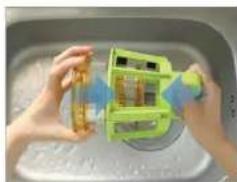
natural_image
Person cleaning a kitchen sink with a green plastic container and blue filter (no text or symbols visible)2 Under running water, rotate the cleaning tool and the strainer in opposite directions to clean.
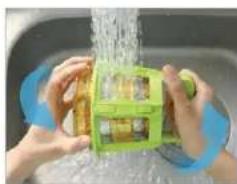
natural_image
Person washing a green plastic container with water being poured into it (no text or symbols visible)3 Thoroughly rinse the inside and outside of the strainer under running water.
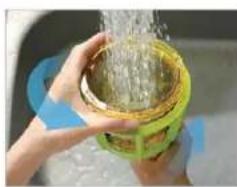
natural_image
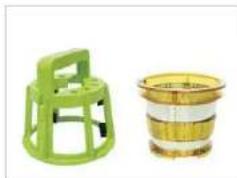
Person pouring water from a green plastic container into a yellow container (no text or symbols visible)4 After cleaning, remove the strainer from the cleaning tool. Dry before storing.
natural_image
Two green plastic components: a green frame and a yellow cylindrical container (no text or symbols visible)TROUBLESHOOTING Q&A
■ When there is no power to the juicer:
- Check if the power cord is properly plugged in.
- Check if the drum lid and the juicing bowl are properly assembled.
- Check if the top-set and the base are properly assembled.
- Juicer will not operate if parts are not assembled properly.
■ Low juice yield:
- Different ingredients hold different amounts of fluid that will yield different amounts of juice.
- If the ingredients are not fresh, they may contain reduced amounts of fluid, which will yield less juice.
- Check if the compression silicone is firmly inserted.
- If the ingredient itself has low water content, it may help to soak it in water before juicing.
- If juicing ingredients with small seeds, after a few servings, it may reduce the juice yield. For best result, disassemble and wash the top-set in between juicing.
- If there is seed residue on the bottom of the strainer, this can affect juicer performance and the overall juice yield.
■ There is too much pulp in the juice:
- When continuously juicing, and depending on the ingredient, the juice may contain a lot of fine pulp.
- To reduce the fine pulp, clean the top-set frequently and extract the pulp.
- Use a mesh strainer and put the juice through it to collect the unwanted pulp.
- If the strainer and the screw are damaged and affecting the juicer's performance, it is recommended the parts be replaced.
*The lifetime of each part may vary depending on length and method of use and ingredients extracted.
• If too many ingredients are inserted at the same time, it may cause the juicer to stop frequently. This can lead to pulpy juice. Insert the ingredients slowly and few at a time.
■ The drum lid will not close:
- Make sure the juicing screw is pushed all the way in to the strainer in order for the drum lid to close properly.
- If the juicing screw is not properly in position, the drum lid may not close.
■ Odd noise from the juicer:
- Check if the parts are assembled correctly. Try reassembling the parts and listen for the odd noise.
- Do not start the juicer unless there are ingredients and/or liquid in it.
- Operating the juicer without ingredients can cause damage to the screw.
- If the juicer is operated without ingredients or liquid, the noise level can increase and also can lead to damage.
- The friction noise from the juicing screw and the strainer will disappear when ingredients are inserted into the juicer.
- If the noise occurs when ingredients are inserted into the juicer, check the size of the ingredients. Do not insert anything over 1 inch in thickness.
• Depending on the type of ingredients, the dimensions can be smaller. - The noise can occur if the juicer is operated on an uneven or slanted surface. Place the juicer on a horizontally fl at surface when operating.
■ The extracted pulp is very moist:
- During the very beginning of extraction, the pulp can be more moist.
- Depending on the ingredient's condition, the extracted pulp can be affected; especially when the ingredient is not fresh, the juice can be extracted with the pulp.
■ During operation, the juicing bowl shakes.
• The juicing screw and the strainer are set up to crush and squeeze the ingredients. It is normal for the juicing screw and the strainer to vibrate.
- If the ingredient contains strong fiber, the vibration from the top-set may be stronger.
■ During juicing, the juicer stopped:
- Check the power cord and make sure it is plugged in correctly.
- Check that all the parts are correctly assembled.
• If too many ingredients are inserted at one time, this can cause the juicer to stop. - When the juicer stops because there are too many ingredients inserted in it, press the REVERSE - OFF - FORWARD button in this order, switching back and forth 2 to 3 times.
- The reverse setting will push the ingredients up, and the forward setting will pull the ingredients down.
• If the juicer stops due to the overload protection, let the juicer cool for 30 minutes to 2 hours before juicing again. - If there are hard seeds within the ingredients, remove them before juicing. Hard seeds can damage the juicer.
■ Layers of separation in the juice:
- Depending on the density of the ingredients, the extracted juice may show layers of different juices. It is different from separation due to oxidation caused by juicing with a high-speed juicer.
■ The drum lid is stuck:
• After juicing, let the juicer operate for another 30 seconds to extract the remaining pulp.
- If there is too much pulp in the top-set, this can cause the drum lid to not open. In this situation, press the REVERSE OFF - FORWARD button in this order, switching back and forth 2 to 3 times.
- Pour water down the feeding tube to rinse out the insides and then try opening the drum lid.
■ Juice dripping down the body of the base:
- If the compression silicone on the bottom of the juicing bowl is not plugged in correctly, the juice may seep out on to the juicer base. Before assembling the parts, check and make sure the compression silicone is plugged in correctly.
Is it possible to juice ingredients with tough fiber?
- Ingredients like celery or ginger contain long fi bers that may wrap around the juicing screw and affect the juicer's performance. When juicing fi brous ingredients, do not collect more than 1 lb. of juice. After collecting this quantity or less, clean the top-set completely before juicing again.
■ Discoloration of the plastic parts:
• After juicing, if the juicer is not cleaned right away, the remaining pulp inside the top-set can dry up which can make disassembling and cleaning hard. This can also affect the juicer's performance and color.
- Ingredients that are rich in carotenoids such as carrots and spinach may dye plastic parts. When the parts are dyed with carotenoids, rub vegetable oil in to the dyed areas and use mild detergent to clean.
- Vegetable oil should only be used during clean-up for parts that are discolored. Do not use vegetable oil on the juicing screw or the strainer. If vegetable oil or oil from animal fat gets on the juicing screw or the strainer, this can affect the juicer's performance and may result in damaged parts.
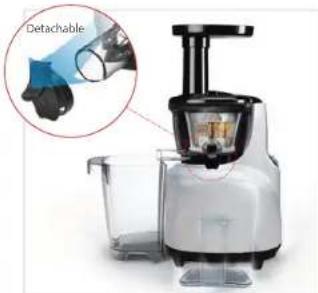
• The silicone pieces on the top-set can be detached to be thoroughly cleaned.
■ Using for purposes other than juicing:
- This juicer is designed to juice ingredients like fruits and vegetables.
- Do not use the juicer for extracting vegetable oil.
- Do not juice ingredients with high contents of vegetable/animal oil.
- If vegetable/animal oil gets on the juicing screw or the strainer, this can affect the performance of the juicer and could result in damaged parts.
SPECIFICATIONS
| Product | Juicer |
| Model | NS-995UL, NS-996UL, NS-997UL, NS-998UL, UL-100, UL-110, UL-100B, ULC-112NB, ULC-121NB, ULC-122NB, UL-100M, UL-110M, UL-100MB, UL-110MB, ULC-112YB, ULD-111NB, ULD-112NB, ULD-115NB, ULD-111YB, ULD-112YB, ULD-115YB |
| Voltage | AC120V, 60Hz |
| Power Consumption | 240W |
| Maximum Use | Less than 30 min |
| Weight | 14.3 lbs (6.5kg) |
| Dimension | 9 x 8.2 x 16.3 inch (228 x 208x 414 mm) |
| Manufacturer | NUC Electronics Co., Ltd. |
| Type | Low Speed |

M1
KUVINGS MANUEL
natural_image
Silver Kevens' 500ml kitchen brush rester with black handle and white top (no visible text or symbols)
TABLE DES MATIERES
RECOMMANDATIONS IMPORTANTES
natural_image
Close-up of hands holding a small blue component inside a mechanical housing (no visible text or symbols)natural_image
Two hands holding a transparent plastic bag with a yellow and black design, showing internal components (no text or symbols visible)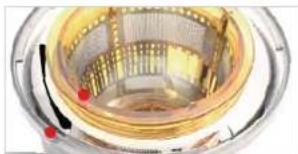
natural_image
Close-up of a metallic mechanical component with internal structure and red indicator lights (no visible text or symbols)natural_image
Close-up of a hand pressing down on a dark liquid in a glass container (no text or symbols visible)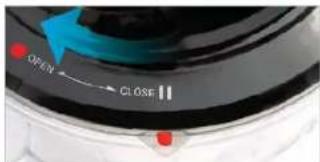
natural_image
Close-up of hands operating a kitchen appliance with a blue downward arrow indicating a drop or reduction (no visible text or symbols)
natural_image
Close-up of hands adding a blue arrow to a food item inside a kitchen bowl (no visible text or symbols)* The products illustrated/photographed in this booklet may vary slightly from the actual product.
natural_image
Close-up of a kitchen blender with a hand pressing down on the lid and blue arrows indicating action (no text or symbols visible)natural_image
Close-up of a hand pressing down on a metallic device with blue arrows indicating motion (no text or symbols visible)natural_image
Four-panel image showing hands holding small, dark, and gold objects with black cylindrical bodies (no text or symbols visible)natural_image
Close-up of hands holding a transparent cylindrical device with a black handle, partially submerged in a metal bowl (no visible text or symbols)natural_image
Two-step photo showing hands cleaning a black mechanical component with a yellow tool, no text or symbols visiblenatural_image
Close-up of hands cleaning a white cloth on a white industrial machine (no text or symbols visible)natural_image
Close-up of a white hand mixer with liquid pouring from a glass container (no text or symbols visible)natural_image
Modern white and silver juice maker with clear glass beside it, no visible text or symbolsnatural_image
Two-step photo showing hands cleaning a water surface and adding a small container with black fragments (no text or symbols visible)Brosse en silicone
natural_image
Two-step photo showing hands using a digital lens to clean a glass jar and a mechanical component (no text or symbols visible)Silicone de compression
natural_image
Two-step photo showing hands washing a sink in a basin and cleaning a metal bowl with a small container (no text or symbols visible)Anneau de silicone
natural_image
Three-panel image showing mechanical components: a blue plastic component, a close-up of a transparent container, and a close-up of a cylindrical device (no visible text or symbols)Bouchon intelligent
* The products illustrated/photographed in this booklet may vary slightly from the actual product.