
FT2 410 - Refrigerator TEKA - Free user manual and instructions
Find the device manual for free FT2 410 TEKA in PDF.
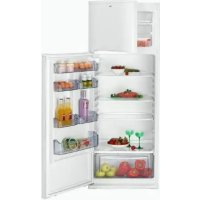



| Product type | Refrigerator with freezer compartment |
| Brand | Teka |
| Model | FT2 410 |
| Power supply | 220-240 V ~ 50 Hz |
| Climate class | T (16 °C to 43 °C) |
| Temperature setting | Rotary thermostat (positions 1 to 5) |
| Refrigerator defrosting | Automatic |
| Freezer defrosting | Manual (plastic scraper provided) |
| Included accessories | Ice tray, plastic scraper, bottle barriers, egg rack, butter and cheese compartment, egg shelf, bottle rack |
| Interior lighting | Bulb ≤ 15 W |
| Refrigerant gas | R600a (isobutane, flammable) |
| Minimum installation distances | 15 cm above, 2 cm on sides, 50 cm from heat sources |
| Changing door opening direction | Possible (consult an authorized service) |
| Cleaning and maintenance | Warm water and baking soda; clean condenser twice a year |
Frequently Asked Questions - FT2 410 TEKA
User questions about FT2 410 TEKA
0 question about this device. Answer the ones you know or ask your own.
Ask a new question about this device
Download the instructions for your Refrigerator in PDF format for free! Find your manual FT2 410 - TEKA and take your electronic device back in hand. On this page are published all the documents necessary for the use of your device. FT2 410 by TEKA.
USER MANUAL FT2 410 TEKA
Safety Instructions 2 Safety warnings 3 Installing and Operating your Fridge 4 Before Using your Fridge 4
THE VARIOUS FUNCTION AND POSSIBILITIES 5
Thermostat Setting 5 Accessories 6 Ice tray 6 Bottle holder 6
ARRANGING FOOD IN THE APPLIANCE 6
Refrigerator Compartment 6 Freezer Compartment 6
CLEANING AND MAINTENANCE 8
Defrosting 9 Replacing The Light Bulb 10
SHIPMENT AND REPOSITIONING 10
Repositioning the Door 10
BEFORE CALLING YOUR AFTER SALES SERVICE 11
THE PARTS OF THE APPLIANCE AND THE COMPARTMENTS.....12
PART - 1. BEFORE USING THE APPLIANCE
Safety Instructions
- If the model contains R600a - see name plate under refrigerant (the coolant isobutane), a natural gas that is very environmentally friendly but also combustible. When transporting and installing the unit, care must be taken to ensure that none of the refrigeration circuit components become damaged. In the event of damage, avoid naked flames or ignition sources and ventilate the room in which the unit is placed for a few minutes.
Warning: Keep ventilation openings in the appliance enclosure or in the structure for building in, clear of obstruction.
- Do not use mechanical devices or other artificial means to accelerate the defrosting process.
- Do not use electrical appliances in the refrigerator or freezer compartment of the appliance.
- If this appliance is to replace an old refrigerator with a lock; break or remove the lock as a safety measure before storing it, to protect children while playing might lock themselves inside.
- Old refrigerators and freezers contain insulation gases and refrigerant, which must be disposed of properly. Entrust the disposal of a scrap unit categorically to competence of your local waste disposal service and contact your local authority or your dealer if you have any questions. Please ensure that the pipe of work of your refrigerating unit does not get damaged prior to being picked-up by the relevant waste disposal service.
Important note:
Please read this booklet before installing and switching on this appliance. The manufacturer assumes no responsibility for incorrect installation and usage as described in this booklet.
Conformity Information
- Tropical Class is defined for the environment temperatures between 16°C and 43°C in accordance with the TS EN ISO 15502 Standards.
- The appliance is designed in compliance with the EN15502, IEC60335-1 / IEC60335-2-24, 2004/108/EC standards.
- The appliance complies with the "EEE" Regulation.
Safety warnings
Notice: Do not use mechanical devices or other artificial methods to quicken to the defrosting. Do not use electrical devices on the food storage areas of your appliance. Keep the ventilation areas of your appliance open. Do not damage your fridge's refrigerant circuit.
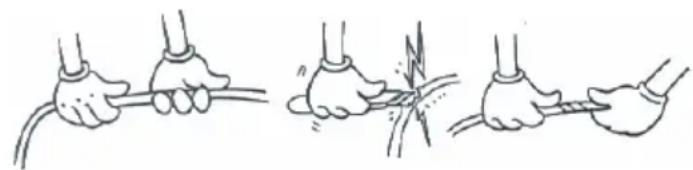
- Do not use multiple receptacles or extension cord.
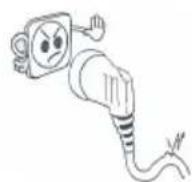
- Do not plug in damaged, torn or old plugs.
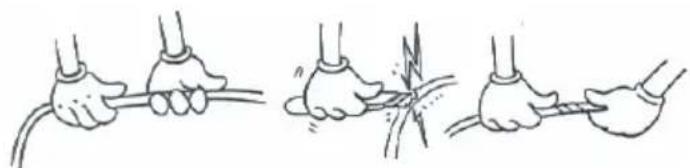
- Do not pull, bend or damage the cord.
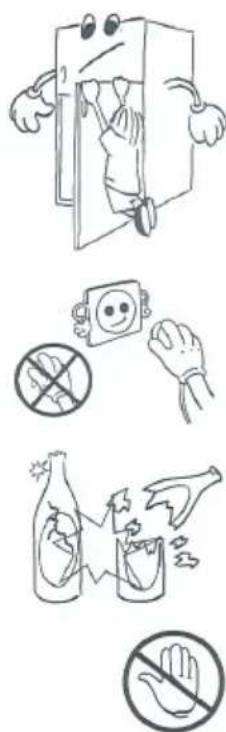
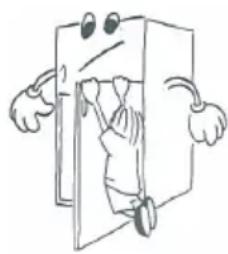
- This appliance is designed for use by adults. Do not allow children to play with the appliance or let them hang over the door.
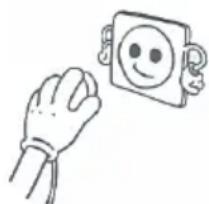
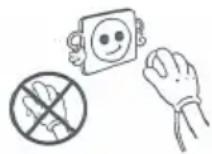
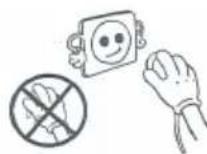
- Do not plug in or unplug the appliance with wet hands to prevent electrocution!
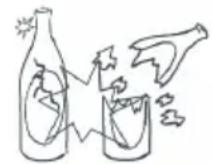
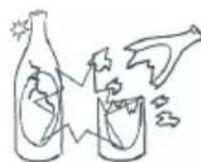
- Do not place glass bottles or beverage cans in the freezer compartment. Bottles or cans may explode.
- Do not place explosive or flammable material in your fridge for your safety. Place drinks with higher alcohol content vertically and with their necks tightly closed in the fridge compartment.
- When taking ice made in the freezer compartment, do not touch it; ice may cause ice burns and/or cuts.
- Do not touch frozen goods with wet hands! Do not eat ice cream or ice cubes immediately after taking them out of the freezer compartment!
- Do not re-freeze frozen goods after they have thawed. This may cause health issues such as food poisoning.
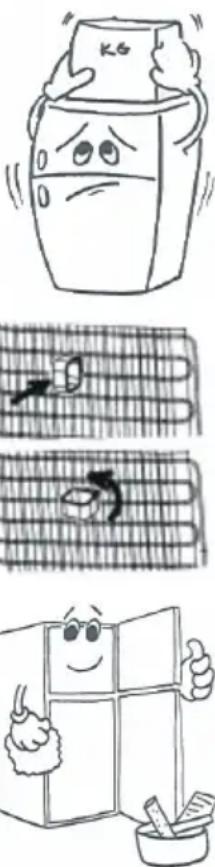
- Do not cover the body or top of the fridge with lace. This affects the performance of your fridge. Secure the accessories inside the fridge during transportation to prevent damage to them.
- Your fridge is not intended for use by physically, mentally, or sensibly handicapped people or by people with less experience and knowledge (including children). These people may be allowed to use the appliance under the supervision of a responsible person giving necessary instructions. You should supervise children to prevent them from playing with the appliance.
- The power cord should be replaced by an authorized technician when it is damaged.
Installing and operating your fridge
- Before making the connection to the power supply, ensure that the voltage on the nameplate corresponds to the voltage of the electrical system at your home.
- The operating voltage for your fridge is 220-240 V at 50 Hz.
- The mains cord of your fridge has a grounded plug. This plug should be used with a grounded receptacle that has a 16 ampere fuse minimum. If you don't have a receptacle conforming to this, please have it installed by a qualified electrician.
- We do not take responsibility for damages that occur due to ungrounded usage.
- Place your fridge in a place that it would not be exposed to direct sunlight.
- Your appliance should be at least 50 cm away from stoves, ovens and heater cores, and should be at least 5 cm away from electrical ovens.
- It should never be used outdoors or left under the rain.
- Fit the plastic wall spacers to the condenser at the back of the refrigerator in order to prevent cleaning to the wall for good performance.
- When your fridge is placed next to a deep freezer, there should be at least 2 cm between them to prevent humidity on the outer surface. Do not place anything on your fridge, and install your fridge in a suitable place so that at least 15 cm is available on the upper side.
- If you will place your fridge next to your kitchen cabinets, leave a space of 2 cm between them.
- Install the distance adjustment plastic (the part with black vanes at the rear) by turning it 90 degrees to prevent the condenser from touching the wall.
- The adjustable front legs should be stabilized in an appropriate height to allow your fridge operate in a stable and proper way. You can adjust the legs by turning them clockwise (or in the opposite direction). This should be done before placing food in the fridge.
- Before using your fridge, wipe all parts with warm water added with a tea spoonful of sodium bicarbonate, and then rinse with clean water and dry. Place all parts after cleaning.
Before using your fridge
- When it is operated for the first time or after transportation, keep your fridge in the upright position for 3 hours and plug it on to allow efficient operation. Otherwise, you may damage the compressor.
- Your fridge may have a smell when it is operated for the first time; the smell will fade away when your fridge starts to cool.
PART - 2. THE VARIOUS FUNCTION AND POSSIBILITIES
Thermostat Setting
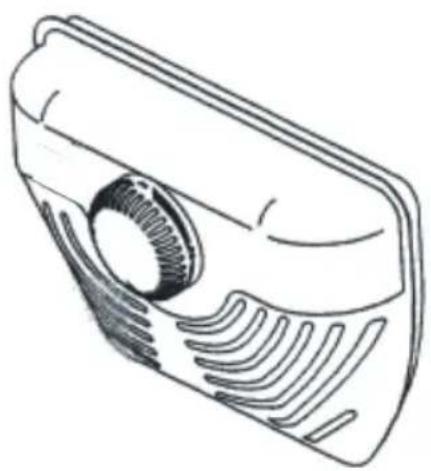
- The thermostat automatically regulates the inside temperature of the refrigerator and freezer compartments. By rotating the knob from position 1 to 5, colder temperatures can be obtained. The "0" position indicates that the thermostat is closed and no cooling will be available.
- For short-term storage of food in the freezer compartment, you can set the knob between positions 1 and 3.
- For long-term storage of food in the freezer compartment, you can set the knob to positions 3-4.
Note that the ambient temperature, the temperature of freshly stored food, and how often the door is opened affect the temperature in the refrigerator compartment. If required, change the temperature setting.
If your fridge is not cooling enough:
Your fridge is designed to operate in the ambient temperature intervals stated in the standards, according to the climate class stated on the information label. We do not recommend operating your fridge outside the stated temperature limits in terms of cooling effectiveness.
| Climate Class | Ambient Temperature (℃) |
| T | Between 16 and 43 (℃) |
| ST | Between 16 and 38 (℃) |
| N | Between 16 and 32 (℃) |
| SN | Between 10 and 32 (℃) |
Accessories
Ice tray
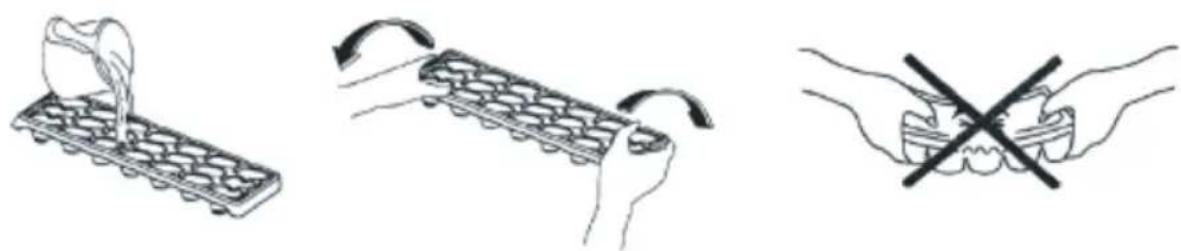
- Fill the ice tray with water and place it in the freezer compartment.
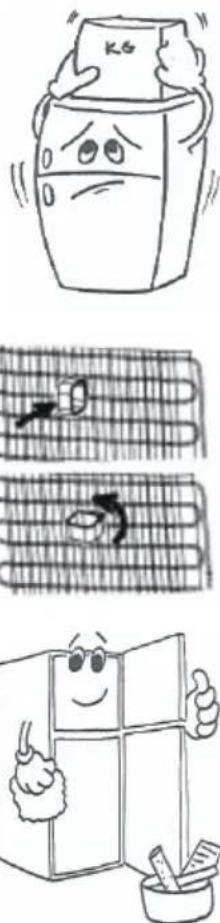
- After the water has completely turned into ice, you can twist the tray as shown below to get the ice cubes.
Bottle holder (for some models)
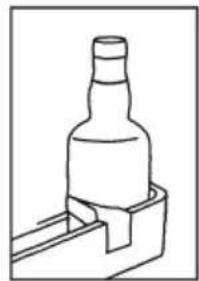
To prevent bottles from slipping or falling over, you can use the bottle holder. You can also prevent noise that may occur when you open or close the door.

PART - 3. ARRANGING FOOD IN THE APPLIANCE
Refrigerator Compartment
- To reduce humidity and consequent increase of frost, never place liquids in unsealed containers in the refrigerator. Frost tends to concentrate in the coldest parts of the evaporator and in time will require more frequent defrosting.
- Never place warm food in the refrigerator. Warm food should be allowed to cool at room temperature and should be arranged to ensure adequate air circulation in the refrigerator compartment.
- Nothing should touch the back wall as it will cause frost and the packages can stick on the back wall. Do not open the refrigerator door too frequently.
- Arrange the meat and cleaned fish wrapped in packages or sheets of plastic) which you will use in 1-2 days, in the bottom section of the refrigerator compartment (that is above the crispener) as this is the coldest section and will ensure the best storing conditions.
- You can put the fruits and vegetables into crisper without packing.
Freezer Compartment
- The use of freezer is, storing of deep-frozen or frozen foods for long periods of time and making ice cubes.
- To freeze fresh food, ensure that as much of the surface as possible of food to be frozen is in contact with the cooling surface.
- Do not put fresh food with frozen on side by side as it can thaw the frozen food.
- While freezing fresh foods (i.e. meat, fish and mincemeat), divide them in parts you will use in one time.
- Once the unit has been defrosted replace the foods into freezer and remember to consume them in as short period of time.
- Never place warm food in the freezer compartment, as it will disturb the frozen foods.
- For storing frozen foods, the instructions shown on frozen food packages should always be followed carefully. If no information is provided, food should not be stored for more than 3 months from the purchase date.
- When buying frozen foods, ensure that they have been frozen at suitable temperatures and that the packaging is intact.
- Frozen foods should be transported in appropriate containers to maintain the quality of the food and should be returned to the freezing surfaces of the unit in the shortest possible time.
- If a package of frozen food shows signs of humidity and abnormal swelling, it is probable that it has been previously stored at an unsuitable temperature and that the contents have deteriorated.
- The storage life of frozen foods depends on the room temperature, thermostat setting, how often the door is opened, the type of food, and the length of time required to transport the product from the shop to your home. Always follow the instructions printed on the package and never exceed the maximum storage life indicated.
Note that if you want to open the freezer door again immediately after closing it, it will not open easily. This is quite normal! After reaching equilibrium condition, the door will open easily.
PART - 4. CLEANING AND MAINTENANCE
- Make sure to unplug the fridge before starting to clean it.
- Do not wash your fridge by pouring water on it.
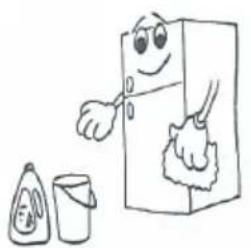
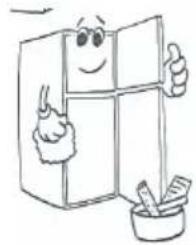
- You can wipe the inner and outer sides with a soft cloth or a sponge using warm and soapy water.
- Remove the parts individually and clean with soapy water. Do not wash them in a washing machine.
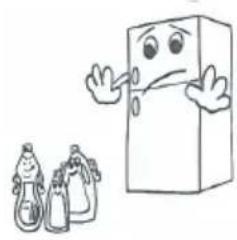
- Never use flammable, explosive, or corrosive materials like thinner, gas, or acid for cleaning.
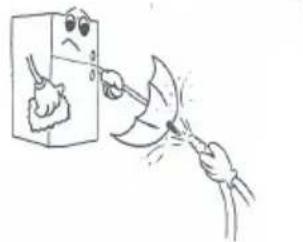
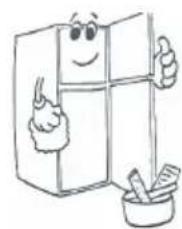
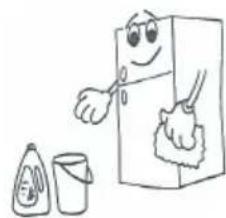
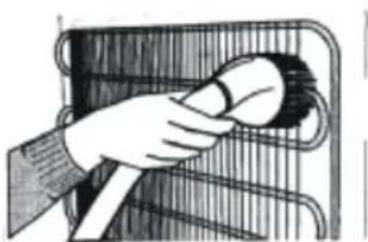
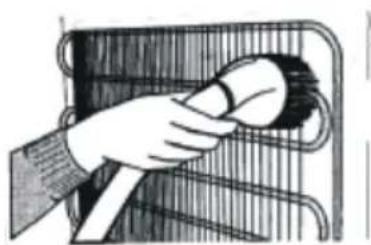
- You should clean the condenser with a broom at least once a year in order to provide energy saving and increase productivity.
Make sure that your fridge is unplugged while cleaning.
Defrosting
Refrigerator Compartment;
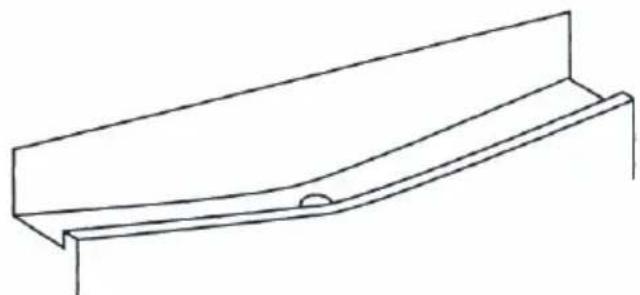
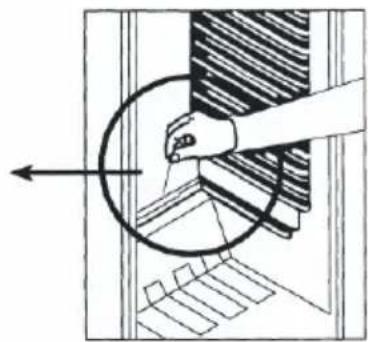
- Defrosting occurs automatically in the refrigerator compartment during operation; the defrost water is collected by the evaporating tray and evaporates automatically.
- The evaporating tray and the defrost water drain hole should be cleaned periodically with the defrost drain plug to prevent water from collecting on the bottom of the refrigerator instead of flowing out.
- You can also pour 1/2 glass of water into the drain hole to clean inside.
Freezer Compartment;
The frost accumulated in the freezer compartment should be removed periodically. (Use the plastic scraper provided.) The freezer compartment should be cleaned in the same way as the refrigerator compartment, with defrost operations at least twice a year.
For this:
- The day before you defrost, set the thermostat dial to "5" position to freeze the foods completely.
- During defrosting, frozen foods should be wrapped in several layers of paper and kept in a cool place. The inevitable rise in temperature will shorten their storage life. Remember to use these foods within a relatively short period of time.
- Set the thermostat knob to position "0" or unplug the unit; leave the door open until completely defrosted.
- To accelerate the defrosting process, one or more basins of warm water can be placed in the freezer compartment.
- Dry the inside of the unit carefully and set the thermostat knob to MAX position.
Replacing The Light Bulb
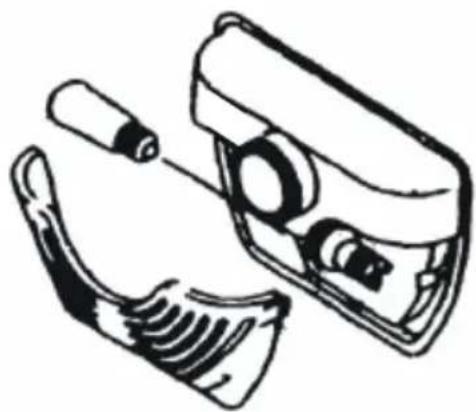
To replace the bulb in the freezer and fridge compartments:
1- Unplug your fridge. 2- Remove the cover of the box from the claws using a screwdriver. 3- Replace with a bulb of maximum 15 Watts. 4- Install the cover. 5- Wait for 5 minutes before re-plugging and bring the thermostat to its original position.
PART-5. SHIPMENT AND REPOSITIONING
- Original package and foam may be kept for re-transportation (optionally).
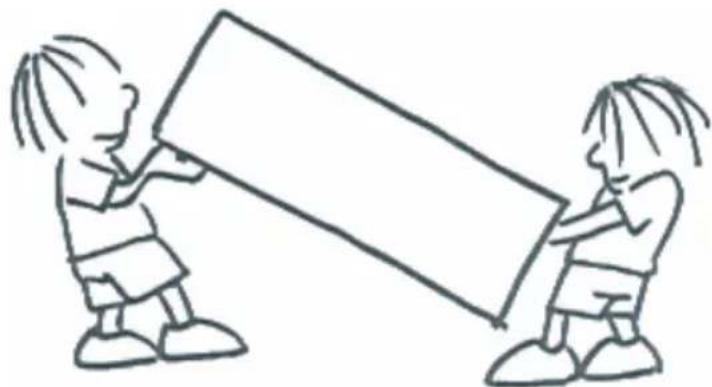
- You should fasten your fridge with thick package, bands or strong cords and follow the instructions for transportation on the package for re-transportation.
- Remove movable parts (shelves, accessories, vegetable bins etc.) or fix them into the fridge against shocks using bands during re-positioning and transportation.
- Carry your fridge in the upright position.
Repositioning the Door (For Some Models)
You can reposition the doors of your fridge. Contact nearest Authorized service for this.
PART - 6. BEFORE CALLING YOUR AFTER SALES SERVICE
If your refrigerator is not working properly, it may be a minor problem, therefore check the following, before calling an electrician to save time and money.
What to do if your refrigerator does not operate ;
Check that ;
There is no power, - The general switch in your home is disconnected, - The thermostat setting is on "0" position, - The socket is not sufficient. To check this, plug in another appliance that you know which is working into the same socket.
What to do if your refrigerator performs poorly ;
Check that ;
- You have not overloaded the appliance,
- The doors are closed perfectly,
- There is no dust on the condenser,
- There is enough space at the rear and side walls.
If there is noise:
The cooling gas that circulates in the refrigerator circuit may make a slight noise (bubbling sound) even when the compressor is not running. Do not worry, this is quite normal. If these sounds are different, check that:
The appliance is well leveled - Nothing is touching the rear. - The items on the appliance are vibrating.
If there is water in the lower part of the refrigerator:
Check that:
The drain hole for defrost water is not clogged (Use the defrost drain plug to clean the drain hole).
Recommendations
- In order to increase space and improve the appearance, the "cooling section" of this appliance is positioned inside the back wall of the refrigerator compartment. When the appliance is running, this wall is covered with frost or water drops, depending on whether the compressor is running or not. Do not worry. This is quite normal. The appliance should be defrosted only if an excessively thick layer forms on the wall.
- If the appliance is not used for a long time (for example, during the summer holidays), defrost and clean the refrigerator, leaving the door open to prevent the formation of mildew and smell.
- To stop the appliance completely, unplug it from the main socket (for cleaning and when the doors are left open).
THE PARTS OF THE APPLIANCE AND THE COMPARTMENTS
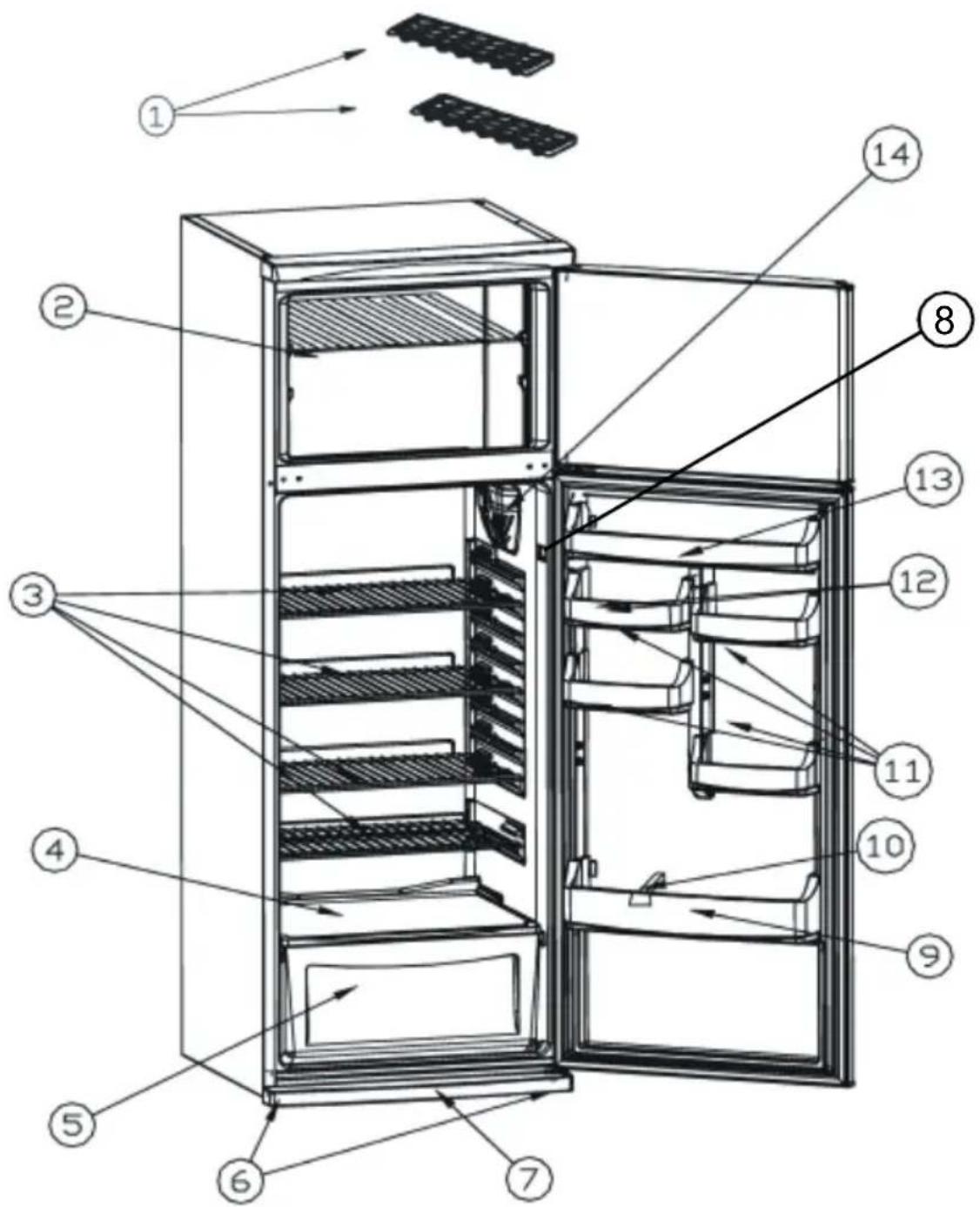
This presentation is only for information about the parts of the appliance. Parts may vary according to the appliance model.
1) ICE TRAY 2) FREEZER SHELF 3) REFRIGERATOR SHELF 4) CRISPER COVER 5) CRISPER 6) LEVELING FEET 7) KICK PLATE
IPIN KAAESETE TO TMHMA TEXNIKHES EYHPETHSE 82
TA MEPH THE ΣΥΣKEYHΣ KAI OI ΘΑΛAMOI 84
MEPOs1 PIPIN AIO TH XPHEH THE ΣYKEYH
Eiokc Oynyies
If your appliance contains R600a - check the data plate inside the refrigerator (the refrigerant), it is a flammable gas which is safe for the environment but also flammable. When transporting the unit, be careful not to damage any of the parts of the refrigeration circuit. In case of damage, avoid open flames or sources of ignition and ventilate the room where the unit is placed. If this appliance is to replace an old refrigerator, remove the door as a safety measure before disposing of it, to protect children from being trapped inside while playing. - Old refrigerators and freezers contain insulation materials and refrigerants that must be removed in an appropriate manner. Make sure that the pipes of your refrigerator are not damaged.
IMPORTANT NOTE
Read this manual before installing and putting the appliance into operation. The manufacturer is not liable for any damage resulting from misuse.
Recommendations
Warning: Do not use mechanical devices or other means to accelerate the defrosting process. Do not use electrical appliances in the food storage compartments of the appliance. Keep the appliance's air vents unobstructed. Do not damage the refrigerant circuit of the refrigerator.
Do not use extension cords or power strips that may cause overheating. Do not connect the appliance to a poorly maintained or damaged power outlet.
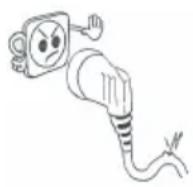
Keep children away and supervise them. Do not allow children to play with the appliance. Children must not sit on the drawers or hang from the refrigerator door. Do not touch the power supply with wet hands. Do not use any sharp metal objects to remove frost from the freezer. Sharp metal objects can puncture the circuit and cause irreparable damage to the appliance. Use the provided plastic scraper. Do not place liquids (bottles, cans, or aerosol cans) in the freezer, especially those containing flammable gas, as they may explode during operation. Beverages with high alcohol content should be stored upright and tightly closed in the refrigerator. Do not touch frozen foods, especially with wet hands, as they may cause burns or injury. Do not plug in or unplug the appliance with wet hands. The appliance is not intended for use by persons (including children) with reduced physical, sensory, or mental capabilities, or lack of experience and knowledge, unless they have been given supervision or instruction concerning use of the appliance by a person responsible for their safety. Children must be supervised to ensure they do not play with the appliance. - If the power cord is damaged, it must be replaced by the manufacturer, its service agent, or a similarly qualified person.
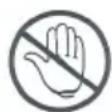
Installation and Placement of the Appliance
- The appliance must be connected to 220-240V and 50Hz.
- Before connecting the appliance to the power supply, make sure that the voltage on the label matches the voltage of the electrical system in your home.
If the plug does not fit the socket in your home, have the socket replaced by a qualified electrician (minimum 16 A).
BEFORE CALLING THE TECHNICAL SERVICE
If your refrigerator is not working properly, it may be due to a minor issue. Therefore, before calling an electrician, check the following to save time and money.
Check if the refrigerator is plugged in.
Check that:
- There is no power outage. The main circuit breaker of the house has not tripped.
- The thermostat is not set to "0". The plug is correctly and firmly connected to the socket. The socket is working. To check this, connect another appliance that you know works to the same socket.
What to do if your refrigerator is not working properly?
Check that:
ACTb 1. IPEd NcNoJIb3OBAHnEM
IpaBnJa TexHnKn 6e3OnacHoCTn
- If the model is charged with R600a (see the nameplate, indicated on the factory plate), the refrigerant gas is isobutane, it must be remembered that it is harmless to the environment, but is a flammable substance. During transportation and installation of the device, it is necessary to ensure that none of the components of the cooling system are damaged. In case of damage, avoid open flames or sources of ignition and ventilate the room for a few minutes. Attention: the installation location of the appliance must be well ventilated, clean it and remove obstacles for ventilation.
- Do not use mechanical devices or other artificial methods to accelerate the defrosting process.
- Do not use electrical appliances inside the refrigerator or freezer compartments.
- If the purpose of purchasing this refrigerator is to replace an old refrigerator with a lock, break or remove the lock as a precaution before disposing of it, in order to prevent children from being trapped inside the refrigerator.
- Old models of refrigerators and freezers contain insulating gases and refrigerants that must be disposed of properly. Disposal of the used appliance is strictly within the competence of your local waste disposal service. Consult with your local authorities or with your dealer if you have any questions. Please ensure that the working parts of your appliance are not damaged before handing it over for waste disposal.
IMPORTANT NOTE:
Please read this instruction manual before installing and switching on the refrigerator. The manufacturer is not responsible for incorrect installation and operation of the refrigerator contrary to the rules given in this instruction manual.
Information on standards compliance
- Tropical class is defined for ambient temperatures between 16°C and 43°C in accordance with standards TS EN ISO 15502. The refrigerator is designed in accordance with standards EN 15502, IEC 60335-1 / IEC 60335-2-24, 2004/108/EC.
- The refrigerator complies with "EEE" regulations.
Recommendations
Attention! Do not use mechanical or other devices to accelerate the freezing process. Do not use electrical appliances inside the compartments for storing food products. Keep the ventilation openings of the appliance unobstructed. Do not damage the cooling circuit of the refrigerator.
Do not use adapters or extension cords that may cause overheating and fire. Do not connect old/damaged wires. Do not twist or bend the wires.
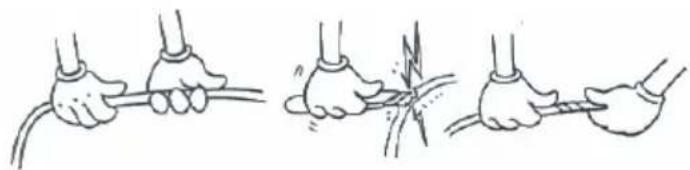
Do not use the appliance outdoors. Do not use it in any case on wet surfaces or hang it on the door. Do not use sharp metal objects to remove ice from the freezer; they may puncture the evaporator and cause damage that is not repairable. Use the supplied plastic scraper. - Do not turn on the appliance with wet hands. Do not place containers (glass bottles or metal containers) with liquids, especially carbonated liquids, in the freezer, as they may cause the container to break during freezing. - Bottles with a high alcohol content must be well sealed and placed in the refrigerator in a vertical position. Do not touch the cooling surfaces, especially with wet hands, as you may get burned or frostbitten. Do not eat ice just removed from the freezer. - This household appliance is not intended for use by persons (including children) with reduced physical, sensory or mental capabilities, or by persons lacking experience and knowledge, unless they do so under the supervision of those responsible for their safety or after instruction in the use of the appliance by such persons. Ensure that children do not play with the household appliance. In case of damage to the power cord, its replacement must be carried out by the manufacturer, its service agent, or an authorized person.
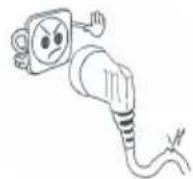
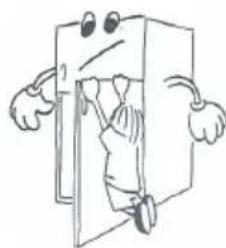
INSTALLATION AND SWITCHING ON
- Connect the appliance to 220-240V and 50 Hz.
- Before switching on the appliance, make sure that the voltage on the nameplate matches the voltage of your home electrical network.
- If the socket does not match the plug of the refrigerator, replace the plug with a suitable one (at least 16 A).
Insert the plug into a socket with effective grounding. If the socket is not connected to grounding, we recommend using the help of an electrician.
- The manufacturer is not responsible for the impossibility of connecting the grounding as described in this booklet.
- Do not place the appliance under direct sunlight.
Do not use it outdoors or under the rain.
Place the refrigerator away from heat sources and in a well-ventilated place. The refrigerator must be located at a distance of at least 50 cm from radiators, gas or coal stoves, and 5 cm from electric stoves.
Free space from the top edge must be at least 15 cm.
Do not place heavy objects or many objects on the appliance.
- If the appliance is installed next to another refrigerator or freezer, keep a minimum distance of 2 cm to avoid condensation.
- The appliance must be securely placed on the floor. Use the two front adjustable feet to compensate for floor unevenness.
The exterior surface of the appliance and accessories inside must be washed with a mild detergent; the interior surface with a solution of baking soda dissolved in warm water. After drying, insert all accessories.
Before switching on
To prevent bottles from slipping or falling, you can use the bottle holder. You can also prevent noise from opening or closing the door.
Section 3. PLACEMENT OF FOOD IN THE REFRIGERATOR
Refrigerator compartment
To reduce humidity and frost, never place liquids in unsealed containers in the refrigerator. Frost tends to accumulate on the coldest parts of the evaporator and over time this will require more frequent defrosting.
Never place warm food in the refrigerator. Warm food should be cooled to room temperature and placed to ensure adequate air circulation in the refrigerator compartment.
Nothing should touch the back wall as this may cause frost and packaging may stick to the back wall. Do not open the refrigerator door too often.
Place meat and fresh fish (wrapped in packaging or plastic wrap) that you will use within 1-2 days in the lower section of the refrigerator compartment (above the drawer or produce bin) as this is the coldest area and provides the best storage conditions.
Do not place hot food in the freezer before it has cooled down.
Freezer compartment
- The freezer is used for storing frozen and deep-frozen products for a long time and for making ice cubes. For freezing fresh products, make sure that the maximum surface area of the product to be frozen is in contact with the cooling surface. Do not place fresh products next to frozen products as this may thaw the frozen products. When freezing fresh products (e.g., meat, fish, fruit), divide them into portions for single use.
- After defrosting the appliance, place the products in it and try to use them within a short period.
- Never place warm products in the freezer, as this will damage the frozen products. For storing frozen products, always follow the instructions on the packaging of the frozen products, and in the absence of information, do not store them for longer than three months from the date of purchase.
- When buying frozen products, make sure they were frozen at the appropriate temperature and that the packaging is not damaged. Frozen products should be transported in special containers to maintain quality and should be placed in the freezer as soon as possible.
- If the packaging of frozen products shows moisture or excessive swelling, it may have been stored at an incorrect temperature and the contents may have deteriorated. The storage time of frozen products depends on the room temperature, thermostat settings, frequency of door opening, type of products, and the time needed to transport products from the shop to your home. Always follow the instructions printed on the packaging and never exceed the maximum storage time indicated.
PART 4. CLEANING AND CARE
- Before cleaning, disconnect the appliance from the power supply.
Do not wash the appliance with running water.
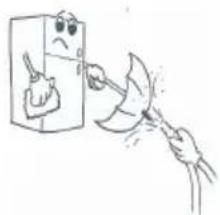
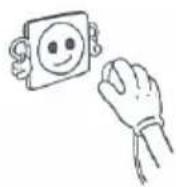
The refrigerator compartment should be cleaned periodically with a solution of bicarbonate of soda in warm water.
Wash the accessories separately with soapy water. Do not wash them in the dishwasher.
Do not use abrasive cleaners or solvents. After washing, rinse with clean water and dry thoroughly. After cleaning, connect the appliance to the power supply with dry hands.
You should clean the condenser with a brush at least twice a year to ensure energy efficiency and increased performance.
Defrosting
Freezer compartment;
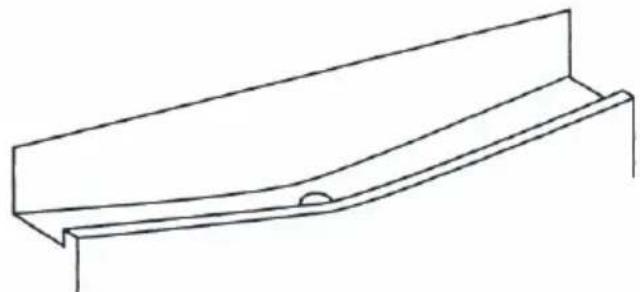
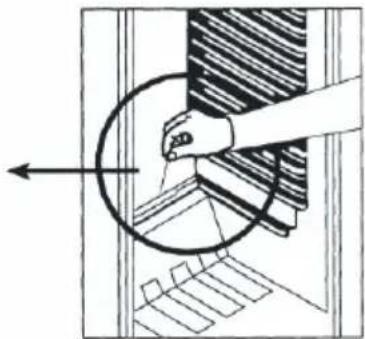
Defrosting occurs automatically in the freezer compartment during operation; the defrosted water is collected in the evaporating tray and evaporates automatically. - The evaporating tray and the drain hole for defrosted water must be cleaned periodically with the defrosting hole brush to prevent water from freezing on the refrigerator floor and overflowing. You can also pour 1/2 cup of water into the drain hole for internal cleaning.
Freezer compartment;
Defrosting the freezer compartment should be done periodically. (Use the supplied plastic scraper) The freezer compartment is also cleaned like the refrigerator compartment, with defrosting performed less than once a year.
For this;
One day before defrosting, set the thermostat to the MAX ("5") position for complete freezing of products. During defrosting, frozen products must be wrapped in several layers of paper and placed in a cold place. The inevitable rise in temperature will shorten their storage time. Use them within a short period - Set the thermostat knob to the "0" position or disconnect the appliance from the mains; leave the door open until fully defrosted. - To speed up the defrosting process, you can place one or more bowls of hot water in the freezer compartment. - Dry the interior of the appliance and set the thermostat to the MAX position.
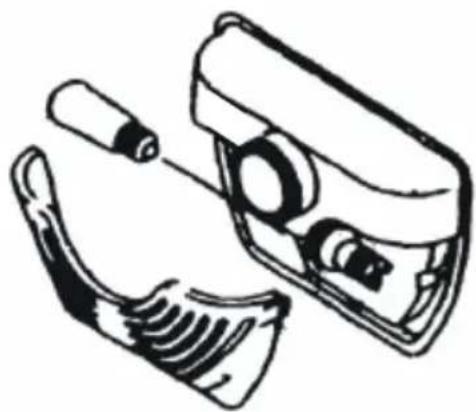
Replacing the lamp
When replacing the refrigerator compartment lamp;
- Disconnect the appliance from the mains,
- Press the clips on the edges of the lamp cover, and remove the lamp cover.
- Replace the lamp with a new one of no more than 15W.
- Install the lamp cover and after 5 minutes plug the appliance into the mains.
Part 5.
TRANSPORTATION AND CHANGE OF INSTALLATION POSITION
Transportation and change of installation position
The door handle - this is not a defect; if necessary, it can be removed. - When transporting the appliance, secure the door with adhesive tape. When transporting, follow the rules on the packaging. - Before transporting or changing the installation position, all movable parts (e.g., shelves, drawers...) must be removed or secured with tape to avoid shaking.
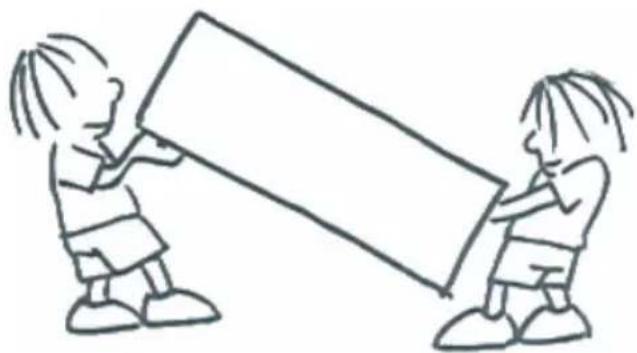
Changing the door opening direction (on some models)
If you need to change the door opening direction, contact your local after-sales service.
PART 6. BEFORE CALLING AFTER-SALES SERVICE
If your refrigerator does not work properly, it may be a minor problem, so check the following before calling a technician to save time and money.
What to do if the refrigerator does not work:
Check that:
- There is no electricity.
- The circuit breaker in your home is tripped.
- The thermostat is set to position "0".
- The plug may not fit the socket. To check, plug another appliance into the same socket to see if it works.
What to do if the refrigerator works poorly:
Check that:
- You have not overloaded the appliance, the door closes properly, there is no dust on the condenser.
- There is sufficient distance from the rear and side walls.
The refrigerant gas circulating in the refrigerator's piping can create an unintentional sound (a gurgling noise) even when the compressor is running. Do not worry, this is normal. If the sounds differ, check that;
- The appliance is properly installed
- and that it is not touching other objects. Place items on the refrigerator at a distance.
If water accumulates at the bottom of the refrigerator;
Check that;
The drain hole for defrost water is not clogged (use the defrosting cord to clean the drain hole).
Recommendations
- To increase the area and improve the appearance, the "cooling section" of this appliance is located inside the rear wall of the refrigerator compartment. During operation, this wall is covered with frost or water droplets, depending on whether the compressor is running. Do not worry, this is completely normal. Defrosting is only required in cases of very thick frost formation on the wall. - If the appliance is not used for a long time (for example during summer holidays), defrost and clean the refrigerator, leaving the door open to prevent the formation of odors. - To completely stop the appliance, disconnect it from the main socket (for cleaning, and then leave the doors open).
PART 7. DETAILS OF THE APPLIANCE
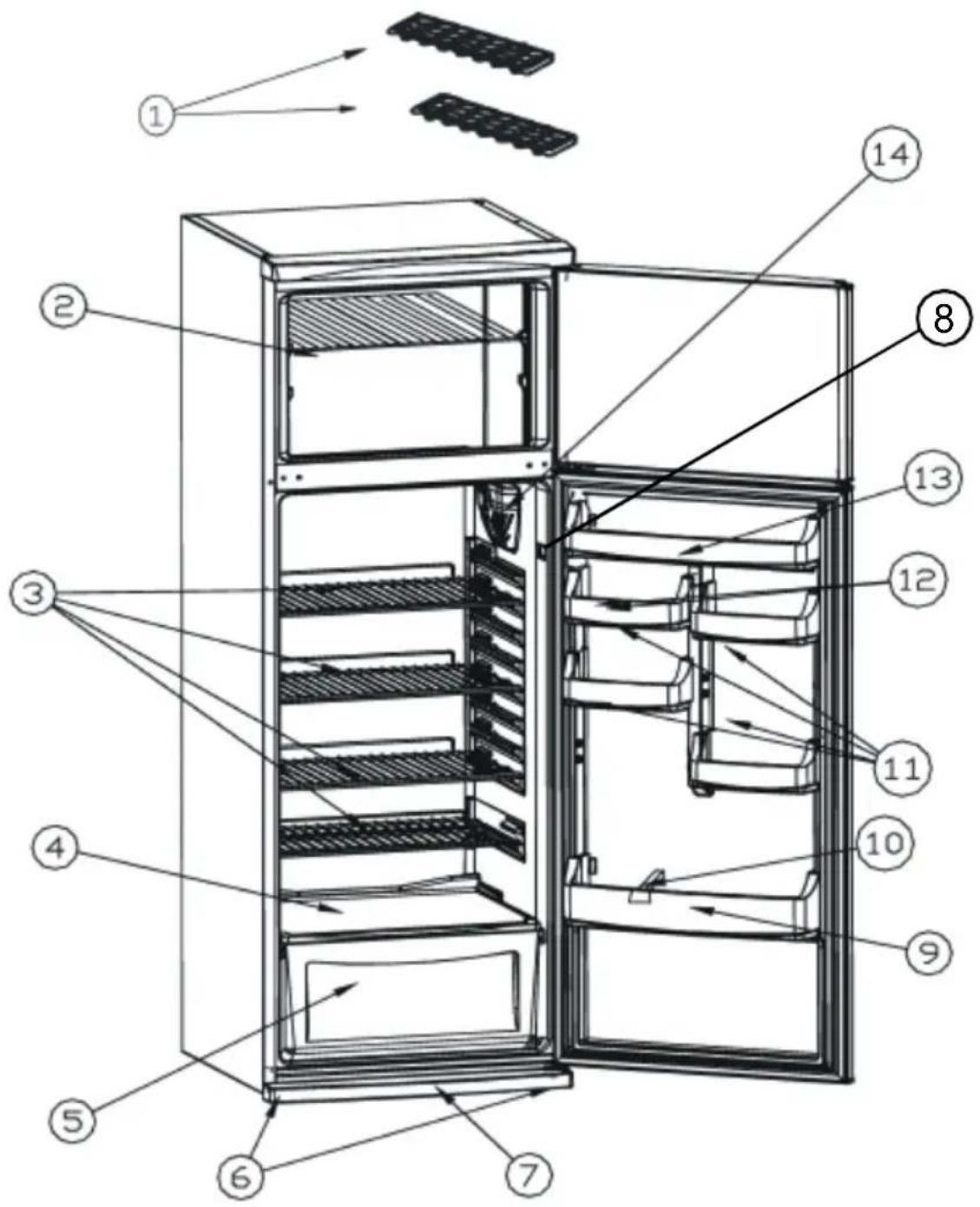
The purpose of this document is exclusively to provide information about the components of the device. Components depend on the device model.
1) FREEZER COMPARTMENT 2) FREEZER SHELF 3) REFRIGERATOR SHELF 4) LID OF THE PRODUCT BOX 5) PRODUCT BOX 6) BRACKET 7) PROTECTIVE PLATE
8) LAMP SWITCH 9) SHELF FOR BOTTLES 10) BOTTLE HOLDER 11) SHELF FOR EGGS 12) EGG HOLDER 13) SHELF FOR CHEESE AND BUTTER 14) THERMOSTAT BOX
CONTENTS
BEFORE USING YOUR REFRIGERATOR 98
39011 Santander (Spain)
Tel.: +34 942 355050
Fax: +34 942 347694
mail@teka.com

www.teka.com
35708 Haiger (Germany)

- THE VARIOUS FUNCTION AND POSSIBILITIES
- ARRANGING FOOD IN THE APPLIANCE
- CLEANING AND MAINTENANCE
- SHIPMENT AND REPOSITIONING
- BEFORE CALLING YOUR AFTER SALES SERVICE
- THE PARTS OF THE APPLIANCE AND THE COMPARTMENTS
- PART - 1. BEFORE USING THE APPLIANCE
- SAFETY INSTRUCTIONS
- IMPORTANT NOTE
- CONFORMITY INFORMATION
- SAFETY WARNINGS
- INSTALLING AND OPERATING YOUR FRIDGE
- BEFORE USING YOUR FRIDGE
- PART - 2. THE VARIOUS FUNCTION AND POSSIBILITIES
- THERMOSTAT SETTING
- IF YOUR FRIDGE IS NOT COOLING ENOUGH
- ACCESSORIES
- ICE TRAY
- BOTTLE HOLDER (FOR SOME MODELS)
- PART - 3. ARRANGING FOOD IN THE APPLIANCE
- REFRIGERATOR COMPARTMENT
- FREEZER COMPARTMENT
- PART - 4. CLEANING AND MAINTENANCE
- DEFROSTING
- FOR THIS
- REPLACING THE LIGHT BULB
- PART-5. SHIPMENT AND REPOSITIONING
- REPOSITIONING THE DOOR (FOR SOME MODELS)
- PART - 6. BEFORE CALLING YOUR AFTER SALES SERVICE
- WHAT TO DO IF YOUR REFRIGERATOR DOES NOT OPERATE
- CHECK THAT
- WHAT TO DO IF YOUR REFRIGERATOR PERFORMS POORLY
- IF THERE IS NOISE
- IF THERE IS WATER IN THE LOWER PART OF THE REFRIGERATOR
- RECOMMENDATIONS
- IPIN KAAESETE TO TMHMA TEXNIKHES EYHPETHSE
- TA MEPH THE ΣΥΣKEYHΣ KAI OI ΘΑΛAMOI
- MEPOS1 PIPIN AIO TH XPHEH THE ΣYKEYH
- EIOKC OYNYIES
- INSTALLATION AND PLACEMENT OF THE APPLIANCE
- BEFORE CALLING THE TECHNICAL SERVICE
- CHECK IF THE REFRIGERATOR IS PLUGGED IN
- WHAT TO DO IF YOUR REFRIGERATOR IS NOT WORKING PROPERLY
- ACTB 1. IPED NCNOJIB3OBAHNEM
- IPABNJA TEXHNKN 6E3ONACHOCTN
- INFORMATION ON STANDARDS COMPLIANCE
- INSTALLATION AND SWITCHING ON
- BEFORE SWITCHING ON
- SECTION 3. PLACEMENT OF FOOD IN THE REFRIGERATOR
- PART 4. CLEANING AND CARE
- REPLACING THE LAMP
- PART
- TRANSPORTATION AND CHANGE OF INSTALLATION POSITION
- CHANGING THE DOOR OPENING DIRECTION (ON SOME MODELS)
- PART 6. BEFORE CALLING AFTER-SALES SERVICE
- WHAT TO DO IF THE REFRIGERATOR DOES NOT WORK
- WHAT TO DO IF THE REFRIGERATOR WORKS POORLY
- IF WATER ACCUMULATES AT THE BOTTOM OF THE REFRIGERATOR
- PART 7. DETAILS OF THE APPLIANCE
- CONTENTS
- BEFORE USING YOUR REFRIGERATOR
Brand : TEKA
Model : FT2 410
Category : Refrigerator