ManualGo.com
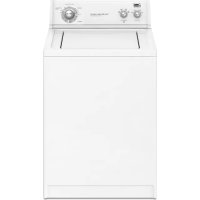
3LWTW4840YQ - Washing machine WHIRLPOOL - Free user manual and instructions
Find the device manual for free 3LWTW4840YQ WHIRLPOOL in PDF.



Download the instructions for your Washing machine in PDF format for free! Find your manual 3LWTW4840YQ - WHIRLPOOL and take your electronic device back in hand. On this page are published all the documents necessary for the use of your device. 3LWTW4840YQ by WHIRLPOOL.
USER MANUAL 3LWTW4840YQ WHIRLPOOL
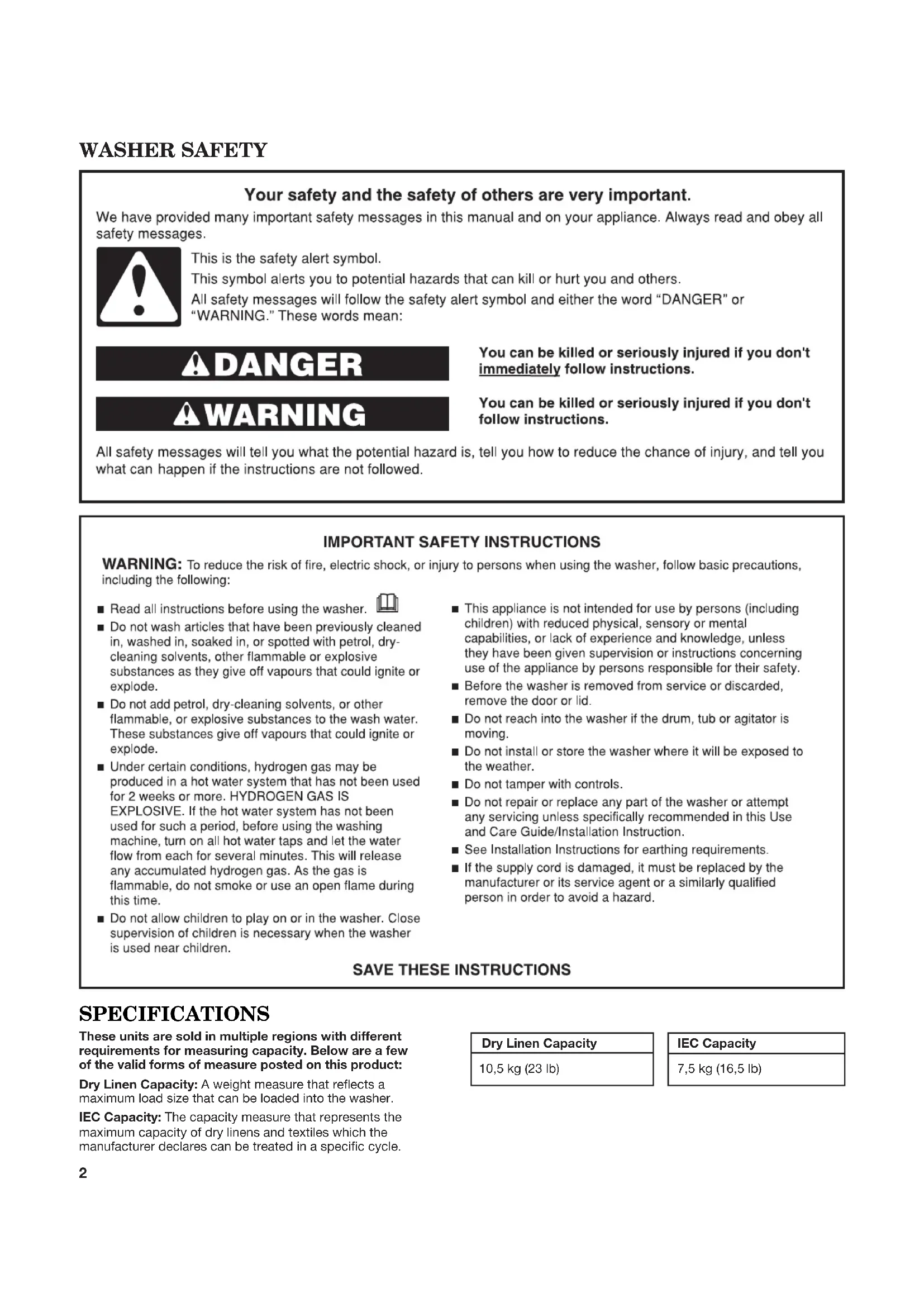
WASHER SAFETY SPECIFICATIONS These units are sold in multiple regions with different requirements for measuring capacity. Below are a few of the valid forms of measure posted on this product: Dry Linen Capacity: A weight measure that reects a maximum load size that can be loaded into the washer. IEC Capacity: The capacity measure that represents the maximum capacity of dry linens and textiles which the manufacturer declares can be treated in a specic cycle. Dry Linen Capacity IEC Capacity 10,5 kg (23 lb) 7,5 kg (16,5 lb)3 Lid Locked To allow for higher spin speeds, the lid will lock and the Lid Locked light will turn on. When this light is lit, the lid is locked and cannot be opened. When this light is blinking, the washer is paused. When this light is off, the lid can be opened. After a cycle is started, the lid locks, unlocks, and locks again. If you need to open the lid to add a garment after this point, you must press START/PAUSE/UNLOCK and wait for the lid to unlock. The lid will only unlock after washer movement has stopped. Depending on when in the cycle you try to pause, it may take several seconds to several minutes for the lid to unlock. Sensing This washer will perform a series of spins to check for load balance. When a load is started, it may take 2–3 minutes before water begins to enter the basket. During this time, a series of clicks and a whirring noise signal that sensing technology is determining if there is an off-balance load. IMPORTANT:
- Washer will not operate if the lid is open.
- Washer will not begin to ll with water until the lid is closed, locked, and the sensing process is complete. This delay in ll could take 2–3 minutes.
- Fabric Softener Added option must be selected "Yes" to ensure fabric softener dispenses at the correct time. Sounds At different stages of the wash cycle, you may hear sounds and pauses that are different from those of your previous washer. For example, you may hear a clicking and hum at the beginning of the cycle as the lid lock goes through a self-test. There will be different kinds of hum- ming and whirring sounds as the agitator tests for load balance or moves the load. And, sometimes, you may hear nothing at all as the washer allows time for clothes to soak. Spray Rinse Select cycles default to a spray rinse. During these cycles, you will hear water enter the washer as the tub spins, allowing the rinse water to penetrate clothes. Check the “Cycle Guide” for details. WHAT’S NEW UNDER THE LID? Your new washer will operate differently than your past agitator-style washer.4
CONTROL PANEL AND FEATURES
LOAD SIZE Select the setting most suitable for your load. Small will add a low amount of water for smaller loads and Super or Large will add the most amount of water for large or bulky loads. Items need to move freely. Tightly packing can lead to poor cleaning performance, and may increase wrinkling and tangling. TEMPERATURE Temperature Control senses and maintains uniform water temperatures by regulating incoming hot and cold water. Select a wash temperature based on the type of fabric and soils being washed. For best results and following the garment label instructions, use the warmest wash water safe for your fabric.
- Warm and hot water will be cooler than what your previous washer provided.
- Even in a cold and cool water wash, some warm water may be added to the washer to maintain a minimum temperature.
OPTIONS The following options may be added to most cycles. EXTRA RINSE This option can be used to automatically add a second rinse to most cycles.
FABRIC SOFTENER ADDED-YES
This option must be selected if using fabric softener during a cycle. It ensures that fabric softener is added at the correct time in the rinse for even distribution. FABRIC SOFTENER ADDED with EXTRA RINSE This option turns on both the Fabric Softener and the Extra Rinse options.
Use the Wash Cycle knob to select available cycles on your washer. Turn the knob to select a cycle for your laundry load. See “Cycle Guide” for detailed descriptions of cycles.
Not all features and options are available on all models. Appearance may vary.
Press to start the selected cycle; press again to pause the cycle and unlock the lid. NOTE: If the washer is spinning, it may take several minutes to unlock the lid. Press and hold for 3 seconds to cancel a cycle.
CYCLE STATUS LIGHTS INDICATOR
The Cycle Status Lights show the progress of a cycle. At each stage of the process, you may notice sounds or pauses that are different from traditional washers. FILL When the START/Pause/Unlock button is pressed, the washer will rst perform a self-test on the lid lock mechanism. You will hear a click, and the lid will unlock briey before locking again. The washer will use spins to check for load balance. These spins may take several minutes before water is added to the washer. You may hear the hum of the spins before lling. This is normal. WASH You will hear the agitator moving the load. The motor sounds may change at different stages in the cycle. The wash time is determined by the selected soil level. RINSE You will hear sounds similar to the wash cycle as the washer rinses and moves the load. You may hear the motor turning on briey (short hum) to move the basket while lling. Fabric softener will be added if the Fabric Softener Added-Yes option was selected. Some cycles use spray rinsing. After draining and spinning out wash water, the washer will continue to spin and spray in rinse water for the entire rinse time.
SPIN The washer spins the load at increasing speeds for proper water removal, based on the selected cycle and spin speed. DONE Once the cycle is complete, this light will come on. Remove the load promptly for best results. LID LOCKED To allow for higher spin speeds, the lid will lock and the Lid Locked light will turn on. When this light is lit, the lid is locked and cannot be opened. When this light is blinking, the washer is paused. When this light is off, the lid can be opened. If you need to open the lid, press START/Pause/Unlock. The lid will unlock once the washer movement has stopped. This may take several minutes if the load was spinning at high speed. Press START/Pause/ Unlock again to resume the cycle.6 CYCLE GUIDE Items to wash: Cycle: Temperature*: Spin Speed: Cycle Details: Machine-wash silks, lingerie, washable wools Delicate Low No-iron fabrics, cottons, perm press, linens, synthetics Cottons, linens, sheets, and mixed garment loads Lightly-soiled no-iron fabrics and synthetics Large items such as sheets, sleeping bags, small comforters, jackets, small washable rugs Sturdy fabrics, colorfast items, towels, jeans Heavily soiled fabrics Casual Regular Normal Regular Casual Light Bulky Items Normal Heavy Soak Use this cycle to wash lightly soiled garments indicating “Machine Washable Silks” or “Gentle” cycle on the care label. Place small items in mesh garment bags before washing. This cycle features a spray rinse. Use this cycle to wash loads of no-iron fabrics such as sport shirts, blouses, casual business clothes, permanent press, and blends. Use this cycle for normally soiled cottons and mixed fabric loads. This cycle features a spray rinse. Use this cycle to wash lightly-soiled loads of no-iron fabrics such as sport shirts, blouses, casual business clothes, permanent press, and blends. Use this cycle to wash large items such as jackets and small comforters. The washer will ll with enough water to wet down the load before the wash portion of the cycle begins, and uses a higher water level than other cycles. Use this cycle for heavily soiled or sturdy items. This cycle uses spray rinses only. Use this cycle for cleaning the interior of the washer. See "Washer Care." Use this cycle to soak small spots of set in stains on fabrics. The washer will use intermittent agitation and soaking. After time has expired, water will drain, but the washer will not spin. Cycle is complete. Hot Warm Cool Cold Hot Warm Cool Cold Hot Warm Cool Cold Hot Warm Cool Cold Hot Warm Cool Cold Hot Warm Cool Cold Low High Low Low High No Spin For best fabric care, choose the cycle that best ts the load being washed. Not all cycles and options are available on all models. Lightweight cotton fabrics Normal Light Use this cycle for lightly soiled mixed loads. This cycle features a spray rinse. Hot Warm Cool Cold High Hot Warm Cool Cold NOTE: Be sure to select Fabric Softener Added-Yes, if adding fabric softener to load. *All rinses are cold. Swimsuits and items requiring rinsing without detergent Rinse & Spin Combines a rinse and high speed spin for loads requiring an additional rinse cycle or to complete a load after power interruption. Also use for loads that require rinsing only. Cold rinse only High Dripping wet or hand-washed items Drain & Spin This cycle uses a spin to shorten drying times for heavy fabrics or special-care items washed by hand. Use this cycle to drain washer after cancelling a cycle or completing a cycle after a power failure. High N/A Heavily soiled fabrics Super Wash Hot Warm Cool Cold High Provides maximum wash time and action for tough stains and soils. Use this cycle for heavily soiled or sturdy items.7
- Empty pockets. Loose change, buttons, or any small object can pass under the agitator and become trapped, causing unexpected sounds.
- Sort items by recommended cycle, water temperature, and colorfastness.
- Separate heavily soiled items from lightly soiled.
- Separate delicate items from sturdy fabrics.
- Do not dry garments if stains remain after washing, because heat can set stains into fabric.
- Treat stains promptly.
- Close zippers, fasten hooks, tie strings and sashes, and remove non-washable trim and ornaments.
- Mend rips and tears to avoid further damage to items during washing. Helpful Tips:
- When washing water-proof or water-resistant items, load evenly.
- Use mesh garment bags to help avoid tangling when washing delicate or small items.
- Turn knits inside out to avoid pilling. Separate lint-takers from lint-givers. Synthetics, knits, and corduroy fabrics will pick up lint from towels, rugs, and chenille fabrics. NOTE: Always read and follow fabric care label instructions to avoid damage to your garments.
1. Sort and prepare your laundry
Add a measured amount of detergent into the bottom of the washer basket before adding clothes. If using an Oxi or color-safe bleach laundry boost product, add to the bottom of the washer basket, as well. IMPORTANT: Follow the manufacturer’s instructions to determine the amount of detergent to use.
5. Add fabric softener to dispenser
(on some models) Pour a measured amount of liquid fabric softener into dispenser; always follow manufacturer’s directions for correct amount of fabric softener based on your load size. Dilute liquid fabric softener by lling the dispenser with warm water until liquid reaches the underside of the rim. See max ll line arrows. Then select Fabric Softener Added-Yes option or Fabric Softener Added with Extra Rinse option. IMPORTANT: Fabric Softener Added option must be selected to “Yes” to ensure proper distribution at correct time in cycle. Adding Liquid Fabric Softener Manually to Wash Load During the nal rinse, wait until the washer has completed lling, press the START/Pause/Unlock button to pause the washer. Lift the lid and add the measured recommended amount of liquid fabric softener. Do not allow liquid fabric softener to spill, splash, drip, or run into the basket or on load. Do not use more than the recommended amount. Close the lid and press the START/Pause/Unlock button again to start the washer. IMPORTANT: Fabric Softener Added option must be selected to “Yes” to ensure proper distribution of the fabric softener during the rinse portion of the cycle.
4. Add liquid chlorine bleach
to dispenser Do not overll, dilute, or use more than 236 mL (1 cup). Do not use color-safe bleach or Oxi products in the same cycle with liquid chlorine bleach. Load garments in loose heaps evenly around basket wall. For best results, do not pack the load tightly. Do not wrap large items such as sheets around the agitator; load them in loose piles around the sides of the basket. Try mixing different sized items to reduce tangling. IMPORTANT: Do not tightly pack or force items into washer. Items need to move freely for best cleaning and to reduce wrinkling and tangling.
3. Load laundry into washer
MAX FILL Turn cycle knob to choose your wash cycle. For more information, see “Cycle Guide”.
Appearance may vary. Liquid Chlorine Bleach9 Wash Temp Hot Some cold water is added to save energy. This will be cooler than your hot water heater setting. Warm Some cold water will be added, so this will be cooler than what your previous washer provided. Cool Warm water may be added to assist in soil removal and to help dissolve detergents. Cold This is the temperature from your faucet. If your tap cold water is very cold, warm water may be added to assist in soil removal and help dissolve detergent. Suggested Fabrics
8. Select TEMPERATURE
Once you select a cycle, select the desired wash temperature by turning the Temperature knob to the appropriate setting based on your load. All rinses are tap cold. NOTE: Always read and follow fabric care label instructions to avoid damage to your garments.
10. Press START/Pause/Unlock
to begin wash cycle Press the START/Pause/Unlock button to start the wash cycle. Filling is delayed for several minutes while load balance is sensed. When the cycle has nished, the DONE indicator will light. Promptly remove garments after cycle has completed to avoid odor, reduce wrinkling, and rusting of metal hooks, zippers, and snaps. Unlocking the lid to add garments If you need to open the lid to add 1 or 2 missed garments: Press START/Pause/Unlock; the lid will unlock once the washer movement has stopped. This may take several minutes if the load was spinning at high speed. Then close lid and press START/Pause/Unlock again to restart the cycle. If lid is left open for more than 10 minutes, the water will pump out automatically. Delay in water fill Filling is delayed for 2 to 3 minutes to check for load unbalance. You will hear the hum of the spin prior to lling. This is normal operation. Select the desired cycle options. If you are using fabric softener, be sure to select one of the Fabric Softener Added options. Whites and pastels Durable garments Heavy soils Bright colors Moderate to light soils Colors that bleed or fade Light soils Dark colors that bleed or fade Light soils
9. Select options (on some models)
Select the load size setting most suitable for your load. Small will add a low amount of water for smaller loads and Super will add the most amount of water for large or bulky loads. Items need to move freely.
Appearance may vary. Appearance may vary. Appearance may vary.10 Operate your washer only when you are home. If moving, or not using your washer for a period of time, follow these steps:
1. Unplug or disconnect power to washer.
2. Turn off water supply to washer, to avoid ooding due
to water pressure surge.
IMPORTANT: To avoid damage, install and store washer where it will not freeze. Because some water may stay in hoses, freezing can damage washer. If storing or moving during freezing weather, winterize your washer. To winterize washer:
1. Shut off both water faucets; disconnect and drain water
2. Put 1 qt. (1 L) of R.V.-type antifreeze in basket and run
washer on RINSE & SPIN cycle for about 30 seconds to mix antifreeze and remaining water.
3. Unplug washer or disconnect power.
NON-USE AND VACATION CARE
Replace inlet hoses after 5 years of use to reduce the risk of hose failure. Periodically inspect and replace inlet hoses if bulges, kinks, cuts, wear, or leaks are found. When replacing your inlet hoses, mark the date of replacement on the label with a permanent marker.
WASHER MAINTENANCE WASHER CARE Recommendations to Help Keep Your Washer Clean and Performing at its Best
1. Always follow the detergent manufacturer’s instructions
regarding the amount of detergent to use. Never use more than the recommended amount because that may increase the rate at which detergent and soil residue accumulate inside your washer, which in turn may result in undesirable odor.
2. Use warm and hot wash water settings sometimes (not
exclusively cold water washes), because they do a better job of controlling the rate at which soils and detergent accumulate.
3. Always leave the washer lid open between uses to help
dry out the washer and prevent the buildup of odor- causing residue. Cleaning Your Top Loading Washer Read these instructions completely before beginning the routine cleaning processes recommended below. This Washer Maintenance Procedure should be performed, at a minimum, once per month or every 30 wash cycles, whichever occurs sooner, to control the rate at which soils and detergent may otherwise accumulate in your washer. Cleaning the Inside of the Washer To keep your washer odor-free, follow the usage instructions provided above, and use this recommended monthly cleaning procedure: Recommended Cycle for Cleaning the Washer Refer to the “Cycle Guide” for the optimal cycle for cleaning the inside of the washer. Use this liquid chlorine bleach as described below. Begin procedure
1. Chlorine Bleach Procedure:
a. Open the washer lid and remove any clothing or items. b. Add 236 mL (1 cup) of liquid chlorine bleach to the bleach compartment. NOTE: Use of more liquid chlorine bleach than is recommended above could cause washer damage over time. c. Close the washer lid. d. Do not add any detergent or other chemical to the washer when following this procedure. e. Select the cycle recommended for cleaning the inside of the washer. f. Press the START/PAUSE/UNLOCK button to start the cycle. NOTE: For best results, do not interrupt cycle. If cycle must be interrupted, press START/PAUSE/UNLOCK once or twice [depending on model]. After the cycle has stopped, run a RINSE and SPIN cycle to rinse cleaner from washer. WASHER CARE (cont.) Cleaning the Dispensers After a period of using your washer, you may nd some residue buildup in the washer’s dispensers. To remove residue from the dispensers, wipe them with a damp cloth and towel dry. Do not attempt to remove the dispensers or trim for cleaning. The dispensers and trim are not removable. If your model has a dispenser drawer, however, remove the drawer and clean it before or after you run the Clean Washer cycle. Use an all-purpose surface cleaner, if needed. Cleaning the Outside of the Washer Use a soft, damp cloth or sponge to wipe away any spills. Use only mild soaps or cleaners when cleaning external washer surfaces. IMPORTANT: To avoid damaging the washer’s nish, do not use abrasive products.11
TRANSPORTING YOUR WASHER
1. Shut off both water faucets. Disconnect and drain water
2. If washer will be moved during freezing weather, follow
Winter Storage Care directions before moving.
3. Disconnect drain from drain system and drain any
remaining water into a pan or bucket. Disconnect drain hose from back of washer.
4. Unplug power cord.
5. Place inlet hoses and drain hose inside washer basket.
6. Drape power cord over edge and into washer basket.
7. Place packing tray from original shipping materials back
inside washer. If you do not have packing tray, place heavy blankets or towels into basket opening. Close lid and place tape over lid and down front of washer. Keep lid taped until washer is placed in new location.
REINSTALLING/USING WASHER AGAIN
To reinstall washer after non-use, vacation, winter storage, or moving:
1. Refer to “Installation Instructions” to locate, level, and
2. Before using again, run washer through the following
recommended procedure: To use washer again:
1. Flush water pipes and hoses. Reconnect water inlet hoses.
Turn on both water faucets.
2. Plug in washer or reconnect power.
3. Run washer through Normal Heavy cycle to clean washer
and remove antifreeze, if used. Use half the manufacturer’s recommended amount of detergent for a medium-size load.12 First try the solutions suggested here to possibly avoid the cost of a service call. If you experience Possible Causes Solution Feet may not be in contact with the oor and locked. Front and rear feet must be in rm contact with oor, and washer must be level to operate properly. Jam nuts must be tight against the bottom of the cabinet. Check oor for exing or sagging. If ooring is uneven, a 19 mm (3/4") piece of plywood under your washer will reduce sound. See “Level the Washer” in Installation Instructions. Load could be unbalanced. Load dry items in loose heaps evenly around basket wall. Adding wet items to washer or adding more water to basket could unbalance washer. Wash smaller loads to reduce imbalance. Do not tightly pack. Avoid washing single items. Use Normal Regular cycle and Super or Large Load Size for oversized, non-absorbent items such as comforters or poly-lled jackets. Empty pockets before washing. Loose items such as coins could fall between basket and tub or may block pump. It may be necessary to call for service to remove items. It is normal to hear metal items on clothing such as metal snaps, buckles, or zippers touch against the basket. Objects caught in washer drain system. Clicking or metallic noises Gurgling or humming It is normal to hear the pump making a continuous humming sound with periodic gurgling or surging as nal amounts of water are removed during the Drain & Spin cycles. Washer may be draining water. Check the following for proper installation or see “Using Your Washer” section. Washer may not be level. Vibration or Off-Balance Noises TROUBLESHOOTING Washer not level. Water may splash off basket if washer is not level. Check that load is not unbalanced or tightly packed. Fill hoses not attached tightly. Tighten ll-hose connection. Make sure all four ll hose at washers are properly seated. Drain hose connection. Pull drain hose from washer cabinet and properly secure it to drainpipe or laundry tub. Do not place tape over drain opening. Check household plumbing for leaks or clogged sink or drain. Water can back up out of a clogged sink or drainpipe. Check all household plumbing for leaks (laundry tubs, drain pipe, water pipes, and faucets.) Fill hose washers. Check the following for proper installation: Improper loading can cause basket to be out of alignment and cause water to splash off tub. See “Using Your Washer” for loading instructions. Washer not loaded as recommended. Water Leaks Washer not performing as expected Washer won’t run or ll, washer stops working or wash light remains on (indicating that the washer was unable to ll appropriately) Check for proper water supply. Both hoses must be attached and have water owing to inlet valve. Both hot and cold water faucets must be turned on. Check that inlet valve screens have not become clogged. Check for any kinks in inlet hoses, which can restrict water ow. Humming You may hear the hum of the sensing spins after you have started the washer. This is normal. Sensing spins will take several minutes before water is added to the washer. Fill light is on.13 If you experience Possible Causes Solution Normal washer operation. Lid must be closed for washer to run. Washer will pause during certain phases of cycle. Do not interrupt cycle. Washer spins the dry load for several minutes before lling to determine if load is balanced. You may hear the hum of the spins. This is normal. Plug power cord into an earthed outlet. Do not use an extension cord. Ensure there is power to outlet. Reset a tripped circuit breaker. Replace any blown fuses. NOTE: If problems continue, contact an electrician. Check proper electrical supply. Washer may be tightly packed. Remove several items, rearrange load evenly in basket, and add detergent. Close lid and press START/Pause/Unlock. Do not add more than 1 or 2 additional items after cycle has started to avoid tightly packing or unbalancing. First try the solutions suggested here to possibly avoid the cost of a service call. Washer not performing as expected (cont.) Use a cycle with a low spin speed. Cycles with lower spin speeds remove less water than cycles with high spin speeds. Use the recommended cycle/speed spin for your garment. To remove extra water in the load, select Drain & Spin. Load may need to be rearranged to allow even distribution of the load in the basket. Small items may have been caught in pump or between basket and tub, which can slow draining. Empty pockets and use garment bags for small items. Washer not draining/ spinning, loads are still wet, or spin light remains on (indicating that the washer was unable to pump out water within 10 minutes) The washer may be tightly packed or unbalanced. Tightly packed or unbalanced loads may not allow the washer to spin correctly, leaving the load wetter than normal. Evenly arrange the wet load for balanced spinning. Select the Drain & Spin cycle to remove excess water. See “Using Your Washer” for loading recommendations. Check plumbing for correct drain hose installation. Drain hose extends into standpipe farther than 114 mm (4.5"). Check drain hose for proper installation. Use drain hose form and securely attach to drainpipe or tub. Do not tape over drain opening. Lower drain hose if the end is higher than 2.4 m (96") above the oor. Remove any clogs from drain hose. Washer won’t run or ll, washer stops working or wash light remains on (indicating that the washer was unable to ll appropriately) (cont.) Too much detergent causing suds to slow or stop draining and spinning. Always measure and follow detergent directions for your load. To remove extra suds, select Rinse & Spin. Do not add detergent. TROUBLESHOOTING14 If you experience Possible causes Solution Incorrect or wrong wash or rinse temperatures Check for proper water supply. Make sure hot and cold inlet hoses are not reversed. Both hoses must be attached to both washer and faucet, and have both hot and cold water owing to inlet valve. Check that inlet valve screens are not clogged. Remove any kinks in hoses. This washer uses cooler wash and rinse water temperatures than your previous washer. This includes cooler hot and warm washes. Load not rinsed Check for proper water supply. Washer not performing as expected (cont.) Energy saving controlled wash temperatures. Make sure hot and cold inlet hoses are not reversed. Both hoses must be attached and have water owing to the inlet valve. Both hot and cold water faucets must be on. Inlet valve screens on washer may be clogged. Remove any kinks in the inlet hose. Using too much detergent. The suds from too much detergent can keep washer from operating correctly. Always measure detergent and follow detergent directions based on load size and soil level. Washer not loaded as recommended. The washer is less efcient at rinsing when load is tightly packed. Load garments in loose heaps evenly around the basket wall. Load with dry items only. Use cycle designed for the fabrics being washed. Add only 1 or 2 additional garments after washer has started. The high spin speeds combined with air ow during the nal spin can cause items near the top of the load to develop dry spots during the nal spin. This is normal. High speed spins extract more moisture than traditional top-load washers. Dry spots on load after cycle TROUBLESHOOTING Add an Extra Rinse to the selected cycle. Heavy sand, pet hair, lint, and detergent or bleach residues may require additional rinsing. Sand, pet hair, lint, etc. on load after washing Load is tangling Washer not loaded as recommended. See “Using Your Washer” section. Select a cycle with a slower wash action and spin speed; however, items will be wetter than those using a higher speed spin. See the “Cycle Guide” to match your load with the best cycle. Load garments in loose heaps evenly around the basket wall. Reduce tangling by mixing types of load items. Use the recommended cycle for the type of garments being washed. Not cleaning or removing stains Washer is less efcient at cleaning when load is tightly packed. Load garments in loose heaps evenly around the basket wall. Load with dry items only. Add only 1 or 2 additional garments after washer has started. Washer not loaded as recommended. Adding detergent on top of load. Add detergent, oxi products, and color-safe bleach to the bottom of the basket before adding the load items. Using too low a load size/water level selection. Choose a load size (water level) that matches the load being washed. Using too low a load size/water level selection. Choose a load size (water level) that matches the load being washed. First try the solutions suggested here to possibly avoid the cost of a service call.15 If you experience Possible Causes Solution First try the solutions suggested here to possibly avoid the cost of a service call. Using too much detergent. Not using correct cycle for fabric type. Not using dispensers. Not washing like colors together. The suds from too much detergent can keep washer from operating correctly. Always measure detergent and follow manufacturer’s directions based on load size and soil level. Use a higher soil level cycle option and warmer wash temperature to improve cleaning. Use Heavy cycle for tough cleaning. See the “Cycle Guide” to match your load with the best cycle. Use dispensers to avoid chlorine bleach and fabric softener staining. Load dispensers before starting a cycle. Select Fabric Softener Added-Yes when using fabric softener. Do not add products directly onto load. Wash like colors together and remove promptly after the cycle is complete to avoid dye transfer. Washer not performing as expected (cont.) Clogged dispenser. Incorrect dispenser operation Fabric damage Sharp items were in pockets during wash cycle. Empty pockets, zip zippers, and snap or hook fasteners before washing to avoid snags and tears. Strings and straps could have tangled. Tie all strings and straps before starting wash load. Items may have been damaged before washing. Mend rips and broken threads in seams before washing. Fabric damage can occur if load is tightly packed. Load garments in loose heaps evenly around the basket wall. Load with dry items only. Use cycle designed for the fabrics being washed. Add only 1 or 2 additional garments after washer has started. Monthly maintenance not done as recommended. See “Washer Care” in Washer Maintenance. Unload washer as soon as cycle is complete. Be sure to measure correctly. Always follow the manufacturer’s directions. See “Washer Care” section. Odors Liquid chlorine bleach may have been added incorrectly. Do not pour liquid chlorine bleach directly onto load. Wipe up bleach spills. Undiluted bleach will damage fabrics. Do not use more than recommended by manufacturer. Do not place load items on top of bleach dispenser when loading and unloading washer. Garment care instructions may not have been followed. Always read and follow garment manufacturer’s care label instructions. See the “Cycle Guide” to match your load with the best cycle. Using too much detergent. Not cleaning or removing stains (cont.) Use only liquid chlorine bleach in the bleach dispenser. Use only fabric softener in the fabric softener dispenser. TROUBLESHOOTING The lid is not closed. Lid locked light is ashing A cycle was stopped or paused using the Start/Pause/Unlock button. Close the lid. The washer will not start or ll with the lid open. The washer may still be spinning. The lid will not unlock until the basket has stopped spinning. This may take several minutes if washing large loads or heavy fabrics.16
Fabric Softener Added ﺭﺎﻴﺧ ﺪﻳﺪﺤﺗ ﺐﺠﻳ •