ManualGo.com
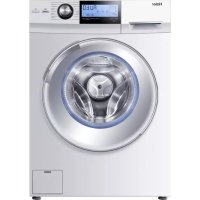
 HNS1460TVEFD - Machine à laver HAIER - Free user manual and instructions
Find the device manual for free HNS1460TVEFD HAIER in PDF.


Download the instructions for your Machine à laver in PDF format for free! Find your manual HNS1460TVEFD - HAIER and take your electronic device back in hand. On this page are published all the documents necessary for the use of your device. HNS1460TVEFD by HAIER.
USER MANUAL HNS1460TVEFD HAIER
Dimensions (H x P x L mm)
DESCRIPTION This diagram may be slightly different from the layout of the washing machine you have just purchased due
PROGRAMMA Max. Voorinstelling 2 3 1 Aanbevolen was
Te bleken in koud water
End ¬ Programma is voltooid.
¬ De fi lter is verstopt.
de wascyclus is voltooid.
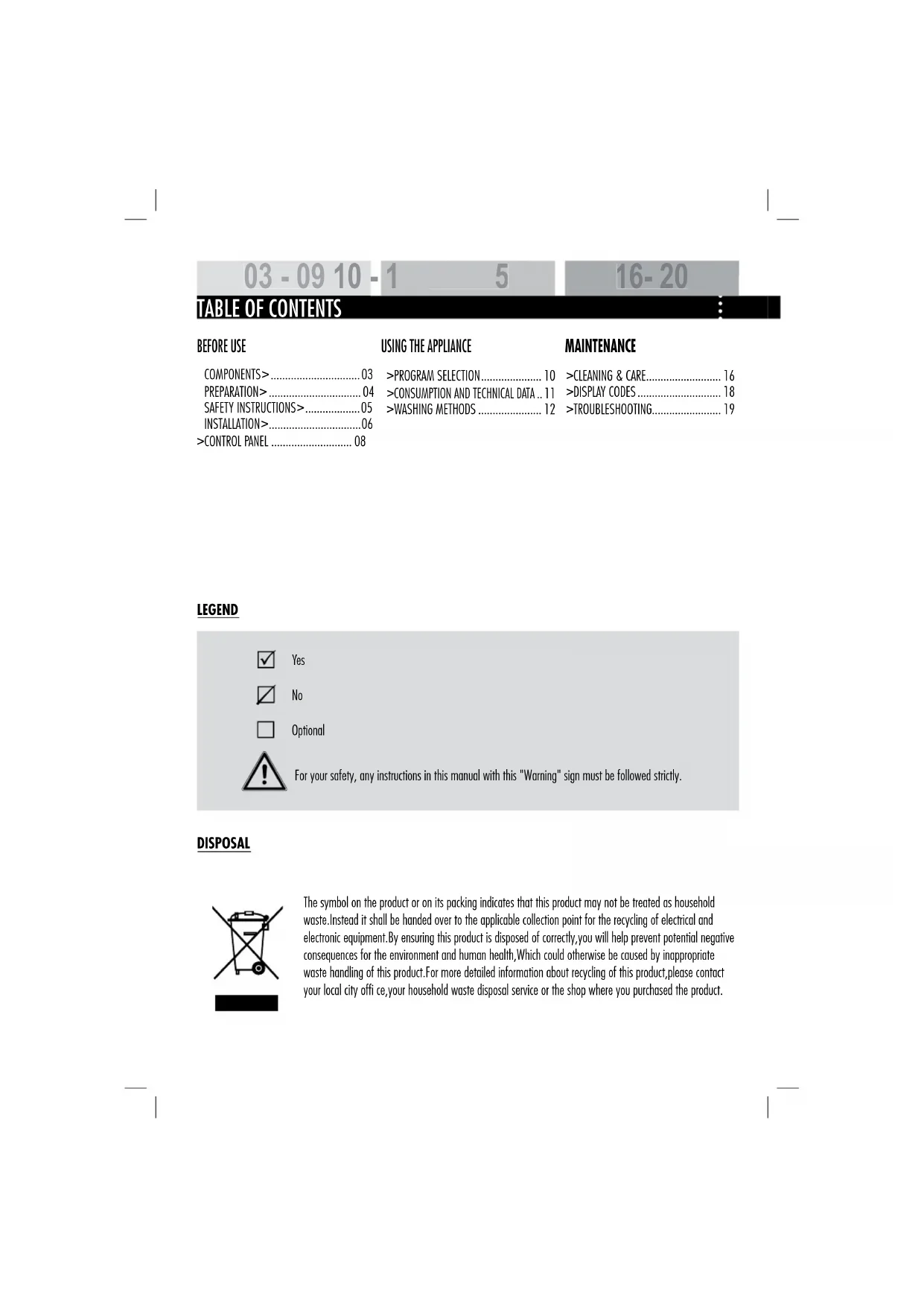
6WDUW3DXVH AUTOMATIC DRUM WASHING MACHINE USER MANUAL HNS1460TVE-FDTABLE OF CONTENTS The symbol on the product or on its packing indicates that this product may not be treated as household
waste.Instead it shall be handed over to the applicable collection point for the recycling of electrical and
electronic equipment.By ensuring this product is disposed of correctly,you will help prevent potential negative
consequences for the environment and human health,Which could otherwise be caused by inappropriate
waste handling of this product.For more detailed information about recycling of this product,please contact
your local city offi ce,your household waste disposal service or the shop where you purchased the product.
LEGEND DISPOSAL For your safety, any instructions in this manual with this "Warning" sign must be followed strictly.
WASHING METHODS> 12
BEFORE US E COMPONENTS THANKS FOR PURCHASING A HAIER PRODUCT Please read these instructions carefully before using this appliance. The instructions contain important information which will help you
get the best out of the appliance and ensure safe and proper installation, use and maintenance.
Keep this manual in a convenient place so you can always refer to it for the safe and proper use of the appliance.
If you sell the appliance, give it away, or leave it behind when you move house, make sure you also pass on this manual so that the
new owner can become familiar with the appliance and safety warnings.
ACCESSORIES Check the accessories and literature in accordance with this list:
BEFORE USE PREPARING THE MACHINE Remove all the packing materials to prevent unsteadiness, including the polystyrene base. Upon
opening the package, water drops may be seen on the plastic bag and the porthole. This is normal
phenomenon resulting from water tests in the factory.
DESCRIPTION This diagram may be slightly different from the layout of the washing machine you have just
purchased due to technical improvements.
PREPARATION Control panelDoor handleWork topWasher doorDetergent distribution drawerBottom coverPrewash'HOD\7HPSHUDWXUH 6SLQ6WDUW3DXVH S1
T1 Drain hoseWater inlet valvePower cordBock coverBock cover screwsTransportation bolts0
BEFORE US E SAFETY INSTRUCTIONS DO ...
... Make sure that the transport bolt are removed.
... Use a separate earthed socket for the power supply.
... Make sure that the plug is accessible.
... Hold the plug and not the electric cable when
unplugging the power supply.
... Make sure that the fuses in the power circuit are rated
... Keep away from heat sources and direct sun light to
prevent plastic and rubber components from aging.
... Make sure that the power cord is not caught under or
in the appliance and avoid damage to the power cable.
... Check that hose joints and connections are fi rm and no
water can leak. If joints are loose or there is leakage, turn off the
water supply and refi x. Do not use the washing machine until the
hoses are properly fi xed.
... Pull up zips and fi x loose threads to prevent the items
from being entangled. If necessary, put small items into a net bag
... Turn off the machine after each wash program and
switch it off at the mains to save electricity and for safety. Wipe
clean the lower part of the porthole.
... Keep the door slightly open when the washing machine
is not in use to prevent formation of odours.
... Let the power cord be replaced by the manufacturer, his
service agent or other accordingly qualifi ed persons, in case it is
... Ensure that the appliance is not used by persons
with reduced physical, sensory or mental capabilities, lack of
experience and knowledge without supervision or instruction by a
person responsible for their safety.
... Supervise children to ensure that they do not play with
or damp hands or feet.
... Use fl ammable detergent or dry cleaning agent.
... Use any fl ammable sprays in close vicinity to the
... Remove or insert the plug in the presence of fl ammable
... Allow children or infi rm persons to play with the appliance
or packing materials.
... Install the appliance outdoors in a damp place, or in an
area which may be prone to water leaks such as under or near a
sink unit. In the event of a water leak allow the machine to dry
... Place the washing machine directly on a carpet, or close
to a wall or furniture.
... Touch the washer door during the washing process - it
...Place heavy objects or sources of heat or damp on top
... Hot wash foam rubber or sponge-like materials.
... Open the detergent distribution drawer during the wash
... Force the washer door open. The door is fi tted with a
self-lock device and will open shortly after the washing procedure
... Open the washer door if the water level is visibly
... Cover the washing machine with plastic cover so that
inside dampness cannot be kept in.
BEFORE SWITCHING THE APPLIANCE ON FOR THE FIRST TIME DURING DAILY USE OF THE APPLIANCE06
BEFORE USE ADJUSTING THE BOTTOM COVER When open the shrink package,you will fi nd a calcium plastic board
which is laid on the top of washing machine as shown in fi g.1.The
board is used for reducing noise by pasting it under the cabinet
when setting as shown in fi g.2.
DISMANTLE THE TRANSPORTATION BOLTS The transportation bolts are designed for clamping anti-vibration components
inside of the washing machine during the transportation process.
Remove the back cover.1.
Remove the three bolts on the rear side and take out the synthetic 2.
stabilisers from within the machine.
Replace the back cover.3.
Fill the holes left by the bolts with blanking plugs.4.
1.When you replace the back cover,the convexity must face to
outside, and you have to insert the back cover from the two
gaps as shown in fi g.3.
2.Keep the transportation bolts and synthetic stabilisers
in a safe place for later use.
INSTALLATION ADJUSTING THE WASHING MACHINE There are adjustable feet under the bottom of the washing machine. Before use, they should be
adjusted so that the machine is level. This will minimise vibrations and thus noise during use. It will also
reduce wear and tear. We recommend using a spirit level to level the appliance.The fl oor should be as
stable and fl at as possible.
1. Connect the nut on the inlet hose to the connector on the water
2. Apply inlet hose to a water tap with cold, fresh water.
Note: Use the hose-set supplied with the appliance. Old
hose-sets should not be reused.
1. Use the drain hose bracket to keep the end of the drain hose retained
and prevent the outfl ow of water. Don't extend the length of the drain
hose; if an extended hose is required, please consult a serviceman.
2. The height of the drainage outlet must be 80-100 cm. Fix the drain
hose to the clip at the back of the washing machine to prevent it from
Note: The drain hose should not be submerged in water
and should be securely fixed and leak-free. If the drain
hose is placed on the ground or if the pipe is at a height of
less than 80cm, the washing machine will continuously drain while being filled (self-siphoning).
CONNECTING TO THE POWER SUPPLY Before connecting to the power supply, check:
¬ The socket is adequate for the maximum power of the washing machine
(For safety, fuses in the power circuit should be rated for no less than 15A).
¬ The voltage should meet the requirement.
¬ The power outlet should be capable of accepting the washing machine plug.
¬ Connect the machine to an earthed socket outlet.
E Washing temperature button
G Detergent distribution drawer
E+F: Combination for keyboard lock
A ¬ Program knob _By turning the knob clockwise/counterclockwise, the required program can be selected. There are
11 programs available. After a program is selected, the corresponding light will go on.
B ¬ Power Switch _ Press this button to switch on the washing machine. Press it again to switch it off.
_ When the washing machine is connected to the power socket and a program is selected, lightly
touch this button to start operation. During a wash cycle, touch it lightly ,operation will stop and
the digits on the screen start blinking. Touch it again to resume operation. To cancel a wash program
during a wash cycle, touch this button, when the digits on the screen start blinking, press the Power
switch, the program will be cancelled.
_ Touch this button lightly to select the desired speed. When a speed is set, it will be displayed on
Note: Different water temperatures and spinning speeds can be set for different
laundries. Wash using the default settings if there is no special requirement.
_ Touch this button lightly, the washing temperature will be displayed on the
screen. Select a temperature according to the type of laundry.
BEFORE US E F ¬ Delay Button Touch this button lightly, the washing machine will start operation after a period of time
and the corresponding indicator will go on. The range is 0.5-24 hours; each touch of this
button increases a half hour. After the button is set, press the Start/Pause button to start
countdown of the set time (the time is displayed on the screen until the program ends).
Note:The delay time must be longer than the program time;otherwise,the
washing machine will start the wash program directly.
_Open the drawer, three compartments can be
Compartment 1: Prewash detergent
Compartment 2: Detergent for programs 1 to 8
Compartment 3: Softener, conditioning agent, perfume, etc.
H ¬ Display _Information as remaining wash time, temperature and speed setting and error messages will be
Note: After power is switched on, the display will go on and the remaining
wash time decreases. As the water pressure and temperature may differ, the
remaining time maybe adjusted accordingly. When the laundry is not balanced
during spinning, the time may be automatically prolonged. These are normal
E+F ¬ Combination for
E+F: Combination for keyboard lock
After a programme is started,press these two keys simultaneously, the sign "LOCK" and the remaining
washing time are displayed on the LED alternately. Now all the function keys except the Power switch
can be locked. Press the key combination again to cancel this function.
3 ¬ Synthetic - - to 60 °C 40 °C Fast colour synthetic 1000 rpm
5 ¬ Cashmere - - to 40 °C 40 °C Cashmere fabrics 600 rpm
6 ¬Silk - - to 40 °C 40 °C Silk fabrics 400 rpm
7 ¬ Quick - - to 40 °C 40 °C Medium-soil 1000 rpm
8 ¬ Wash - - to 60 °C 40 °C Medium-soil
Attention: This program
consists only main wash,
without rinse and spin.
Medium-soil 1000 rpm
1 Detergent compartment for prewash mode
2 Detergent compartment
3 Compartment for softener and
USING THE APPLIANCE CONSUMPTION AND TECHNICAL DATA TECHNICAL DATA CONSUMPTION TABLE The wash cycle times are intended as a guide only. The actual time used may vary due to different water pressure, initial water
EN 60456 test program / Energy label program with Cotton 60°C and max. spin speed.
HNS1460TVE-FD Power source
Max. working current (A) 10
APPLIANCE U SING THE WASHING METHODS POWER SUPPLY Connect the washing machine to the power supply (220V to 240V~/50Hz).
WATER CONNECTION Turn on the tap. The water must be clean and clear.
Note: Before use, check for leakage in the joints between the tap and the inlet hose
by turning on the tap.
PREPARING THE LAUNDRY
¬ Sort out clothes according to fabric (cotton, synthetics, wool or silk) and to how dirty they are.
¬ Separate white clothes from coloured ones. Wash them fi rst by hand to check if they fade or run.
¬ Empty pockets (keys, coins, etc.) and remove the harder decorative objects (e.g. brooches).
Attention: Small parts (like buttons, etc) may lead to repair work which user has to
pay by themselves and can cause damage in the machine.
¬ Garments without hems, underwear, fi nely woven textile such as fi ne curtains are to be put into wash
bag (it is better not to wash them in a washing machine).
¬ Close zippers and hooks, make sure the buttons are sewn on tightly and place small items such as
socks, belts, bras, etc. in the wash bag.
Unfold large pieces of fabric such as bed sheets, bedspreads, etc.
¬ Turn shirts inside out.
This washing machine is for domestic use only. If the machine is use for commercial purpose the guarantee
will not be valid anymore.Do not use it for purposes other than that for which it was designed. Follow the
instructions given on the label of each garment and wash only machine-washable garments.
USING THE APPLIANCE LOADING THE MACHINE Open the washer door, put in the laundry piece by piece. Close the door tightly.
¬ When fi rst using the washing machine, let it run unloaded for one program to prevent the laundry from
being tainted by oil or dirty water from the washing machine. Before washing you should run the machine
without laundry, but with detergent, with 60°C programm.
¬ Do not overload the washing machine.
SELECTING DETERGENT The washing effi ciency and the performance is determined by the quality of detergent used. Special non-
foaming detergent produces good washing results. Use specifi c detergents for synthetic and woollen goods.
Do not use dry cleaning agents such as trichloroethylene and similar products.
Note: Do not add more detergent than needed. Please follow the dosage
recommendation on the detergent package.
ADDING DETERGENT Slide out the detergent drawer and put the required detergent and softening agent into the corresponding
compartments. Push back the drawer gently. (Refer to the instructions on the drawer)
¬ For prewashing program, detergent should be added to both compartments 1 and 2.
For other programs, do not add detergent to compartment 1.
¬ Use liquid detergent according to the instructions on its package. Do not use liquid detergent if the
prewash mode or "Start delay" is selected.
¬ Do not overuse softener; otherwise, it will damage the artifi cial fi bers.
SELECTING PROGRAM To get the best washing results, an appropriate washing program should be selected according to the
laundry type. Please turn the program knob to select the right program.
SELECTING FUNCTIONAL Select the required options. (Refer to the "Control panel" pages 08 and 09)
APPLIANCE U SING THE SETTING WASHING TEMPERATURE Press repeatevely the temperature button until the desired temperature is selected or the symbol "--"
for no water heating.
SETTING SPIN SPEED Press and hold down the speed button until the desired speed is selected or the symbol "0" is
selected for no spin. See "Operational functions" on the "Control panel" pages (08 and 09) for
selecting temperature and spin speed. It is advisable to select the recommended value.
WASHING Press the Start/Pause button. The washing machine will operate according to the preset programs.
The washing machine will stop operation automatically when a washing cycle ends. The "End" sign
will appear on the display. Open the washer door and take out the laundry.
AFTER WASHING Turn off the water supply and unplug the power cord. Open the washer door to prevent formation of
moisture and odours. Let the door open while not used.
TIPS FOR SAVING ENERGY Collect clothes for one full wash load.1.
Avoid overloading the washing machine.2.
Prewash only heavily soiled clothes.3.
Reduce the amount of detergent or choose standard or delicate wash programs for slightly soiled clothes.4.
Choose a proper washing temperature. Modern detergents can wash with very good result already in lower temperature than 5.
60°C. Only use higher temperature than 60°C for heavily soiled laundry.
Follow the dosage recommendation on the detergent package to avoid using too much detergent.6.
USING THE APPLIANCE Bed sheet (single) Cotton Approximately 800g
Blanket Wool Approximately 3000g
Blended fabric clothes / Approximately 800g
Jackets Cotton Approximately 800g
Jeans / Approximately 800g
Overalls Cotton Approximately 950g
Ladies Pyjamas / Approximately 200g
Shirts / Approximately 300g
Socks Blended fabrics Approximately 50g
T-Shirts Cotton Approximately 300g
Underwear Blended fabrics Approximately 70g
LOAD REFERENCE CARE CHART Resistant material
Bleachable in cold water
Iron at 200 °C Iron at 150 °C Iron at 100 °C Don't iron
Dry cleaning with any solvent
Dry cleaning with pericloride
Dry cleaning with aviation fuel
Dry on clothes hanger
Tumble dry, normal heat
Tumble dry, reduced heat
MAINTENAN CE CLEANING & CARE AFTER WASHING Turn off the water supply and pull out electricity plug after each wash.
Open the washer door to prevent formation of moisture and odours. If
the washing machine is left idle for a long period, drain the water in
the machine and replace the drain hose.
CLEANING THE DETERGENT DRAWER Clean the detergent distribution drawer regularly.
Swing out the drawer, fl ush it clean with water and then replace it.
CLEANING THE MACHINE Unplug the machine during cleaning and maintenance. Use a soft cloth
dampened with soap liquid to clean the machine case and rubber components. Do not use organic chemicals or corrosive solvents.
CLEANING THE FILTER Clean the fi lter once a month:
1. Open the bottom cover.
2.Remove the fi lter by turning counterclockwise.
3.Flush the fi lter clean with running water.
4.Replace the fi lter by turning clockwise and
1.The filter must be in place, or it may lead to leakage.
2.Place a container under the drain pump filter, to collect any excess water that may come out of the drain
pump when the filter is removed.
2.M AINTENAN C E WATER INLET VALVE AND INLET VALVE FILTER To prevent blockage to the water supply by ingress of foreign substances, clean the water inlet valve and
inlet valve fi lter regularly.
MOVING THE MACHINE If the machine is to be moved to a distant location, replace the
transportation bolts removed before installation to prevent damage
Remove the blanking plugs.1.
Remove the back cover2.
Insert the synthetic stabilisers and the transportation bolts.3.
Tighten the bolts with a spanner.4.
Replace the back cover.5.
LONG PERIODS OF DISUSE If the washing machine is left idle for a long period, pull out the electrical plug and turn off the water
supply. Open the washer door to prevent formation of moisture and odours. Let the door open while not
MAINTENAN CE DISPLAY CODES DISPLAY CODES AND SPECIAL FUNCTIONS
¬ Control panel lock function: Press the "Delay" and the "Temperature" buttons simultaneously for 3 seconds after starting a program.
It can no longer be changed by operating buttons or knobs. To unlock press the "Delay" and "Temperature" buttons again for 3
¬ Power-off memory function: In case of abrupt power failure or the need to cut off the power during a program cycle, the present
settings will be saved and the preset operation will resume when the power is on again.
¬ To cancel a program
Press the "Start/Pause" button, then switch off the power and the program is automatically cancelled. Turn the program selector
again to choose another program.
Alarm sound can be cancelled if it is needed,Please follow the instruction as below:
Switch on the washing machine and turn the program knob to spin cycle,then press the delay button and spin speed button
and hold on for 3 seconds.The "bEEP oFF" will be displayed on the screen which indicates that alarm sound has been
cancelled. To operate the above steps again,the display will show "bEEP on" and the alarm sound can be recovered.
CODES CAUSES SOLUTIONS Err1 ¬ Door is not properly shut. _ Shut the door properly.
Err2 ¬ Drainage error, water not emptied within 6
_ Clean the fi lter and check the drain hose for blockage. If error
still exists, please contact the maintenance personnel.
Err3 ¬ Temperature sensor not properly connected or
_ Contact the maintenance personnel.
¬ Heater error (Appears at the end of a cycle).
_ Reduce load and then start washing again. If problem still
exists, please contact the maintenance personnel.
Err5 ¬ Water level not met in 8 minutes.
¬The height of the drain hose is below 80 cm.
¬ The drain hose is in water.
_Make sure that tap is turned on, and water pressure is normal.
If problem still exists, please contact the maintenance personnel.
_ Install drain hose within 80-100 cm of height.
_ Make sure the drain hose is not in water.
Err7 ¬ Motor overheat protection or damage. _ Contact the maintenance personnel.
Err8 ¬ Water exceeds protective level. _ Contact the maintenance personnel.
End ¬ End of wash cycle.
1:25 ¬The remaining time is 1 hour 25 minutes.
Unb ¬ After the last rinsing cycle fi nishes, spining fails
completely due to an imbanlance of the laundry.
_ Redistribute laundry to banlance the drum.M AINTENAN C E TROUBLESHOOTING TROUBLESHOOTING The following circumstances do not constitute problems. Do not contact the Service Center until the problem has been confi rmed.
PROBLEM CAUSES SOLUTIONS Washing machine fails to
¬ Poor connection to the power supply.
¬ The washer door is not properly closed.
¬ Machine has not been switched on.
_ Check connection to the power supply.
_ Check the power supply.
_ Close the washer door properly.
_ Make sure the machine is switched on.
Washing machine cannot be
¬ The "Start/Pause" button is not pressed.
¬ Water tap is not turned on.
¬ Water pressure is less than 0,03 MPa.
¬ The inlet hose is kinked.
¬ Water supply failure.
¬ The program knob is not properly set.
¬ The washer door is not properly closed.
¬ The inlet hose fi lter is blocked.
_ press the "Start/Pause" button.
_ Turn on the water tap.
_ Check water pressure.
_ Check the inlet hose.
_ Ensure the water supply.
_ Set the program knob properly.
_ Close the washer door properly.
_ Unblock the inlet hose fi lter.
Machine is draining while
¬ The height of the drain hose is below 80 cm.
¬ The drain hose is in water.
_ Install drain hose within 80-100 cm of height.
_ Make sure the drain hose is not in water.
Drainage failure. ¬ Drain hose is blocked.
¬ Drain hose end is higher than 100 cm above
¬ The fi lter is blocked.
_ Unblock the drain hose.
_ Make sure the drain hose end is lower than
100 cm above fl oor level.
_ Unblock the fi lter.
Strong vibration while
¬ Not all transportation bolts have been removed.
¬ Washing machine is located on an uneven
surface or is not level.
¬ Machine load is over 6 kg.
_ Remove all transportation bolts.
_ Make sure the washing machine is on
an even surface and levelled.
_ Reduce amount of laundry in the drum.
Operation stops before
completing wash cycle.
¬ Water or electricity failure. _ Check the power supply.
Operation stops for a period
of time. ¬ Washing machine gives an error message. _ Check display codes.
Excessive foam in the
drum, which is spilled to the
distribution drawer.
¬ The detergent is not a low-foaming type or for
¬ Excessive use of detergent.
_ Check if your detergent is appropriate.
_ Reduce amount of detergent in the distribution
Automatic adjustment of the
¬ The washing program duration will be adjusted
according to the initial water temperature.
_ This is normal and doesn't affect the
Spinning fails ¬ Unbalance of the laundry _ Add clothes or run a spinning program again.