ManualGo.com
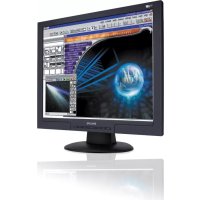
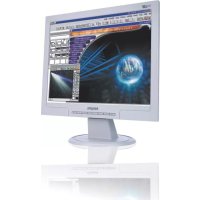
190S6FB - Moniteur PHILIPS - Free user manual and instructions
Find the device manual for free 190S6FB PHILIPS in PDF.


Download the instructions for your Moniteur in PDF format for free! Find your manual 190S6FB - PHILIPS and take your electronic device back in hand. On this page are published all the documents necessary for the use of your device. 190S6FB by PHILIPS.
USER MANUAL 190S6FB PHILIPS
file:///D|/My%20Documents/dfu/A9/french/190s6/SAFETY/saf_troub.htm (3 of 3)2005-06-08 1:52:24 PMRegulatory Information
Regulatory Information
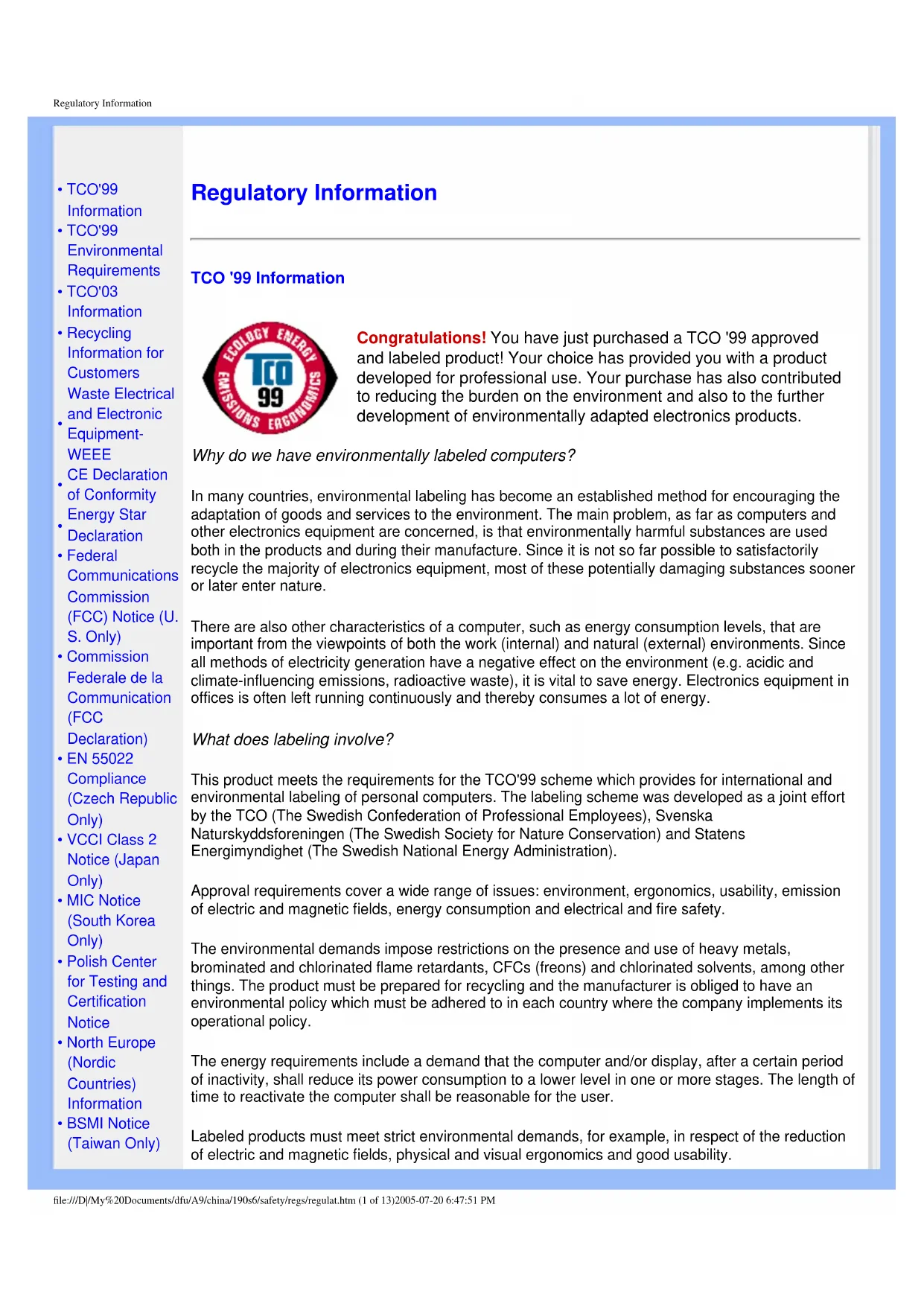
Congratulations! You have just purchased a TCO '99 approved
and labeled product! Your choice has provided you with a product
developed for professional use. Your purchase has also contributed
to reducing the burden on the environment and also to the further
development of environmentally adapted electronics products.
Why do we have environmentally labeled computers?
In many countries, environmental labeling has become an established method for encouraging the
adaptation of goods and services to the environment. The main problem, as far as computers and
other electronics equipment are concerned, is that environmentally harmful substances are used
both in the products and during their manufacture. Since it is not so far possible to satisfactorily
recycle the majority of electronics equipment, most of these potentially damaging substances sooner
or later enter nature.
There are also other characteristics of a computer, such as energy consumption levels, that are
important from the viewpoints of both the work (internal) and natural (external) environments. Since
all methods of electricity generation have a negative effect on the environment (e.g. acidic and
climate-influencing emissions, radioactive waste), it is vital to save energy. Electronics equipment in
offices is often left running continuously and thereby consumes a lot of energy.
What does labeling involve?
This product meets the requirements for the TCO'99 scheme which provides for international and
environmental labeling of personal computers. The labeling scheme was developed as a joint effort
by the TCO (The Swedish Confederation of Professional Employees), Svenska
Naturskyddsforeningen (The Swedish Society for Nature Conservation) and Statens
Energimyndighet (The Swedish National Energy Administration).
Approval requirements cover a wide range of issues: environment, ergonomics, usability, emission
of electric and magnetic fields, energy consumption and electrical and fire safety.
The environmental demands impose restrictions on the presence and use of heavy metals,
brominated and chlorinated flame retardants, CFCs (freons) and chlorinated solvents, among other
things. The product must be prepared for recycling and the manufacturer is obliged to have an
environmental policy which must be adhered to in each country where the company implements its
The energy requirements include a demand that the computer and/or display, after a certain period
of inactivity, shall reduce its power consumption to a lower level in one or more stages. The length of
time to reactivate the computer shall be reasonable for the user.
Labeled products must meet strict environmental demands, for example, in respect of the reduction
of electric and magnetic fields, physical and visual ergonomics and good usability.
file:///D|/My%20Documents/dfu/A9/china/190s6/safety/regs/regulat.htm (1 of 13)2005-07-20 6:47:51 PMRegulatory Information
Below you will find a brief summary of the environmental requirements met by this product. The
complete environmental criteria document may be ordered from:
Email (Internet): development@tco.se
Current information regarding TCO'99 approved and labeled products may also be obtained via
the Internet, using the address: http://www.tco-info.com/
RETURN TO TOP OF THE PAGE Environmental Requirements
Flame retardants are present in printed circuit boards, cables, wires, casings and housings. Their
purpose is to prevent, or at least to delay the spread of fire. Up to 30% of the plastic in a computer
casing can consist of flame retardant substances. Most flame retardants contain bromine or chloride,
and those flame retardants are chemically related to another group of environmental toxins, PCBs.
Both the flame retardants containing bromine or chloride and the PCBs are suspected of giving rise
to severe health effects, including reproductive damage in fish-eating birds and mammals, due to the
bio-accumulative* processes. Flame retardants have been found in human blood and researchers
fear that disturbances in fetus development may occur.
The relevant TCO'99 demand requires that plastic components weighing more than 25 grams must
not contain flame retardants with organically bound bromine or chlorine. Flame retardants are
allowed in the printed circuit boards since no substitutes are available.
Cadmium is present in rechargeable batteries and in the color-generating layers of certain computer
displays. Cadmium damages the nervous system and is toxic in high doses. The relevant TCO'99
requirement states that batteries, the color-generating layers of display screens and the electrical or
electronics components must not contain any cadmium.
Mercury is sometimes found in batteries, relays and switches. It damages the nervous system and is
toxic in high doses. The relevant TCO'99 requirement states that batteries may not contain any
mercury. It also demands that mercury is not present in any of the electrical or electronics
components associated with the labeled unit.
file:///D|/My%20Documents/dfu/A9/china/190s6/safety/regs/regulat.htm (2 of 13)2005-07-20 6:47:51 PMRegulatory Information
The relevant TCO'99 requirement states that neither CFCs nor HCFCs may be used during the
manufacture and assembly of the product. CFCs (freons) are sometimes used for washing printed
circuit boards. CFCs break down ozone and thereby damage the ozone layer in the stratosphere,
causing increased reception on earth of ultraviolet light with increased risks e.g. skin cancer
(malignant melanoma) as a consequence.
Lead can be found in picture tubes, display screens, solders and capacitors. Lead damages the
nervous system and in higher doses, causes lead poisoning. The relevant TCO'99 requirement
permits the inclusion of lead since no replacement has yet been developed.
* Bio-accumulative is defined as substances which accumulate within living organisms.
** Lead, Cadmium and Mercury are heavy metals which are bio-accumulative.
RETURN TO TOP OF THE PAGE TCO'03 Information
(Optional, only available for TCO'03 version)
The display you have just purchased carries the TCO'03 Displays label.
This means that your display is designed, manufactured and tested
according to some of the strictest quality and environmental requirements
in the world. This makes for a high performance product, designed with
the user in focus that also minimizes the impact on our natural
Some of the features of the TCO'03 Display requirements.
● Good visual ergonomics and image quality in order to improve the working environment for
the user and to reduce sight and strain problems. Important parameters are luminance,
contrast, resoluction, reflectance, colour rendition and image stability.
● Energy-saving mode after a certain time-beneficial both for the user and the environment
file:///D|/My%20Documents/dfu/A9/china/190s6/safety/regs/regulat.htm (3 of 13)2005-07-20 6:47:51 PMRegulatory Information
● The product must be prepared for recycling and the manufacturer must have a certified
environmental management system such as EMAS or ISO 14 000
❍ chlorinated and brominated flame retardants and polymers
❍ heavy metals such as cadmium, mercury and lead.
The requirements included in this label have been developed by TCO Development in co-operation
with scientists, experts, users as well as manufacturers all over the world. Since the end of the
1980s TCO has been involved in influencing the development of IT equipment in a more user-
friendly direction. Our labelling system started with displays in 1992 and is now requested by users
and IT-manufacturers all over the world.
For more information, please visit
www.tcodevelopment.com
RETURN TO TOP OF THE PAGE Recycling Information for Customers
Philips establishes technically and economically viable objectives to optimize the environmental
performance of the organization's product, service and activities.
From the planning, design and production stages, Philips emphasizes the important of making
products that can easily be recycled. At Philips, end-of-life management primarily entails
participation in national take-back initiatives and recycling programs whenever possible, preferably in
cooperation with competitors.
There is currently a system of recycling up and running in the European countries, such as The
Netherlands, Belgium, Norway, Sweden and Denmark.
In U.S.A., Philips Consumer Electronics North America has contributed funds for the Electronic
Industries Alliance (EIA) Electronics Recycling Project and state recycling initiatives for end-of-life
electronics products from household sources. In addition, the Northeast Recycling Council (NERC) -
a multi-state non-profit organization focused on promoting recycling market development - plans to
implement a recycling program.
In Asia Pacific, Taiwan, the products can be taken back by Environment Protection Administration
(EPA) to follow the IT product recycling management process, detail can be found in web site www.
For help and service, please contact Consumers Information Center or F1rst Choice Contact
Information Center in each country or the following team of Environmental specialist can help.
Mr. Job Chiu - Environment manager
file:///D|/My%20Documents/dfu/A9/china/190s6/safety/regs/regulat.htm (4 of 13)2005-07-20 6:47:51 PMRegulatory Information
Philips Electronics Industries (Taiwan) Ltd, Monitor Business Unit
E-mail: job.chiu@philips.com
Tel: +1 865 521 4322
RETURN TO TOP OF THE PAGE Waste Electrical and Electronic Equipment-WEEE Attention users in European Union private households
This marking on the product or on its packaging illustrates that, under European
Directive 2002/96/EG governing used electrical and electronic appliances, this product may not be
disposed of with normal household waste. You are responsible for disposal of this equipment
through a designated waste electrical and electronic equipment collection. To determine the
locations for dropping off such waste electrical and electronic, contact your local government office,
the waste disposal organization that serves your household or the store at which you purchased the
RETURN TO TOP OF THE PAGE CE Declaration of Conformity
Philips Consumer Electronics declare under our responsibility that the product is in conformity with
the following standards
- EN60950-1:2001 (Safety requirement of Information Technology Equipment)
- EN55022:1998 (Radio Disturbance requirement of Information Technology Equipment)
- EN55024:1998 (Immunity requirement of Information Technology Equipment)
- EN61000-3-2:2000 (Limits for Harmonic Current Emission)
- EN61000-3-3:1995 (Limitation of Voltage Fluctuation and Flicker)
following provisions of directives applicable
- 73/23/EEC (Low Voltage Directive)
- 89/336/EEC (EMC Directive)
- 93/68/EEC (Amendment of EMC and Low Voltage Directive)
and is produced by a manufacturing organization on ISO9000 level.
file:///D|/My%20Documents/dfu/A9/china/190s6/safety/regs/regulat.htm (5 of 13)2005-07-20 6:47:51 PMRegulatory Information
The product also comply with the following standards
- ISO9241-3, ISO9241-7, ISO9241-8 (Ergonomic requirement for Visual Display)
- ISO13406-2 (Ergonomic requirement for Flat panels)
- GS EK1-2000 (GS specification)
- prEN50279:1998 (Low Frequency Electric and Magnetic fields for Visual Display)
- MPR-II (MPR:1990:8/1990:10 Low Frequency Electric and Magnetic fields)
- TCO'99, TCO'03 (Requirement for Environment Labelling of Ergonomics, Energy, Ecology and
Emission, TCO: Swedish Confederation of Professional Employees) for TCO versions
RETURN TO TOP OF THE PAGE Energy Star Declaration
190S6FG/190S6FB/190S6FS This monitor is equipped with a function for saving energy which supports the VESA Display
Power Management Signaling (DPMS) standard. This means that the monitor must be
connected to a computer which supports VESA DPMS to fulfill the requirements in the NUTEK
specification 803299/94. Time settings are adjusted from the system unit by software.
NUTEK VESA State LED Indicator Power Consumption
Normal operation ON (Active) Green < 34 W (typ.)
OFF (Sleep) Amber < 1 W Switch Off Off < 1 W As an ENERGY STAR
Partner, PHILIPS has determined that this product
guidelines for energy efficiency.
We recommend you switch off the monitor when it is not in use for quite a long time.
RETURN TO TOP OF THE PAGE Federal Communications Commission (FCC) Notice (U.S. Only)
file:///D|/My%20Documents/dfu/A9/china/190s6/safety/regs/regulat.htm (6 of 13)2005-07-20 6:47:51 PMRegulatory Information
This equipment has been tested and found to comply with the limits for a Class B
digital device, pursuant to Part 15 of the FCC Rules. These limits are designed to
provide reasonable protection against harmful interference in a residential
installation. This equipment generates, uses and can radiate radio frequency energy
and, if not installed and used in accordance with the instructions, may cause harmful
interference to radio communications. However, there is no guarantee that
interference will not occur in a particular installation. If this equipment does cause
harmful interference to radio or television reception, which can be determined by
turning the equipment off and on, the user is encouraged to try to correct the
interference by one or more of the following measures:
● Reorient or relocate the receiving antenna.
● Increase the separation between the equipment and receiver.
● Connect the equipment into an outlet on a circuit different from that to which the receiver is
● Consult the dealer or an experienced radio/TV technician for help.
Changes or modifications not expressly approved by the party responsible for
compliance could void the user's authority to operate the equipment.
Use only RF shielded cable that was supplied with the monitor when connecting this monitor to a
To prevent damage which may result in fire or shock hazard, do not expose this appliance to rain or
file:///D|/My%20Documents/dfu/A9/china/190s6/safety/regs/regulat.htm (7 of 13)2005-07-20 6:47:51 PMRegulatory Information
RETURN TO TOP OF THE PAGE EN 55022 Compliance (Czech Republic Only)
RETURN TO TOP OF THE PAGE VCCI Notice (Japan Only)
This is a Class B product based on the standard of the Voluntary Control Council for Interference
(VCCI) for Information technology equipment. If this equipment is used near a radio or television
receiver in a domestic environment, it may cause radio Interference. Install and use the equipment
according to the instruction manual.
Class B ITE RETURN TO TOP OF THE PAGE
file:///D|/My%20Documents/dfu/A9/china/190s6/safety/regs/regulat.htm (8 of 13)2005-07-20 6:47:51 PMRegulatory Information
MIC Notice (South Korea Only)
Please note that this device has been approved for non-business purposes and may be used in any
environment, including residential areas.
RETURN TO TOP OF THE PAGE Polish Center for Testing and Certification Notice
The equipment should draw power from a socket with an attached protection circuit (a three-prong
socket). All equipment that works together (computer, monitor, printer, and so on) should have the
same power supply source.
The phasing conductor of the room's electrical installation should have a reserve short-circuit
protection device in the form of a fuse with a nominal value no larger than 16 amperes (A).
To completely switch off the equipment, the power supply cable must be removed from the power
supply socket, which should be located near the equipment and easily accessible.
A protection mark "B" confirms that the equipment is in compliance with the protection usage
requirements of standards PN-93/T-42107 and PN-89/E-06251.
file:///D|/My%20Documents/dfu/A9/china/190s6/safety/regs/regulat.htm (9 of 13)2005-07-20 6:47:51 PMRegulatory Information
RETURN TO TOP OF THE PAGE North Europe (Nordic Countries) Information
Placering/Ventilation
file:///D|/My%20Documents/dfu/A9/china/190s6/safety/regs/regulat.htm (10 of 13)2005-07-20 6:47:51 PMRegulatory Information
file:///D|/My%20Documents/dfu/A9/china/190s6/safety/regs/regulat.htm (11 of 13)2005-07-20 6:47:51 PMRegulatory Information
RETURN TO TOP OF THE PAGE End-of-Life Disposal
Your new monitor contains materials that can be recycled and reused. Specialized companies can
recycle your product to increase the amount of reusable materials and to minimize the amount to be
Please find out about the local regulations on how to dispose of your old monitor from your local
(For customers in Canada and U.S.A.)
This product may contain lead and/or mercury. Dispose of in accordance to local-state and federal
For additional information on recycling contact www.eia.org (Consumer Education Initiative)
WARNING - THIS APPLIANCE MUST BE EARTHED.
This apparatus is supplied with an approved
moulded 13A plug. To change a fuse in this type
of plug proceed as follows:
1. Remove fuse cover and fuse.
2. Fit new fuse which should be a BS 1362 5A,A.
S.T.A. or BSI approved type.
3. Refit the fuse cover.
If the fitted plug is not suitable for your socket
outlets, it should be cut off and an appropriate 3-
file:///D|/My%20Documents/dfu/A9/china/190s6/safety/regs/regulat.htm (12 of 13)2005-07-20 6:47:51 PMRegulatory Information
pin plug fitted in its place.
If the mains plug contains a fuse, this should
have a value of 5A. If a plug without a fuse is
used, the fuse at the distribution board should
not be greater than 5A.
Note: The severed plug must be destroyed to
avoid a possible shock hazard should it be
inserted into a 13A socket elsewhere.
How to connect a plug
The wires in the mains lead are coloured in
accordance with the following code:
BLUE - "NEUTRAL" ("N")
1. The GREEN AND YELLOW wire must be
connected to the terminal in the plug which is
marked with the letter "E" or by the Earth symbol
or coloured GREEN or GREEN AND YELLOW.
2. The BLUE wire must be connected to the
terminal which is marked with the letter "N" or
3. The BROWN wire must be connected to the
terminal which marked with the letter "L" or
Before replacing the plug cover, make certain
that the cord grip is clamped over the sheath of
the lead - not simply over the three wires.
RETURN TO TOP OF THE PAGE
file:///D|/My%20Documents/dfu/A9/french/190s6/INSTALL/CONNECT.HTM (3 of 3)2005-06-08 1:52:38 PMLe Socle
file:///D|/My%20Documents/dfu/A9/french/190s6/INSTALL/BASE.HTM (1 of 3)2005-06-08 1:52:38 PMLe Socle
file:///D|/My%20Documents/dfu/A9/french/190s6/INSTALL/BASE.HTM (2 of 3)2005-06-08 1:52:38 PMLe Socle
file:///D|/My%20Documents/dfu/A9/french/190s6/INSTALL/BASE.HTM (3 of 3)2005-06-08 1:52:38 PMPour commencer
6. Choisir "Display a list of all the drivers in a specific location, so you can select the driver
7. Choisir "Display a list of all the drivers in a specific location, so you can select the driver
7. Choisir "Display a list of the known drivers for this device so that I can choose a specific
Consumer Electronics.
Switzerland 02 2310 2116
Shevchenko street 32
Phone:(01)-8000 111001 (toll free)
MEXICO Consumer Information Centre
Col. Industrial Vallejo
Level 1, 65 Epping Rd
NEW ZEALAND Philips New Zealand Ltd.
Avenue Kawran Bazar C/A Dhaka-1215
CHINA SHANGHAI Rm 1007, Hongyun Building, No. 501 Wuning road,
Unit A, 10/F. Park Sun Building
254-D Dr. A Besant Road, Worli
CALCUTTA Customer Relation Centre
7 justice Chandra Madhab Road
INDONESIA Philips Group of Companies in Indonesia
Philips Authorised Service Center,
39, Garden Road, Saddar,
Authorized Philips Service Center
13F, No. 3-1 Yuan Qu St., Nan Gang Dist.,
THAILAND Philips Electronics (Thailand) Ltd.
26-28th floor, Thai Summit Tower
1768 New Petchburi Road
Khwaeng Bangkapi, Khet Huaykhwang