
WD1702RJV2 - Washer dryer SAMSUNG - Free user manual and instructions
Find the device manual for free WD1702RJV2 SAMSUNG in PDF.


| Product type | Washer-dryer |
| Brand | SAMSUNG |
| Model | WD1702RJV2 |
| Washing capacity | 7 kg |
| Drying capacity | 5 kg |
| Maximum spin speed | 1200 rpm |
| Energy efficiency class | A+++ |
| Annual water consumption | 9 900 L |
| Annual energy consumption | 200 kWh |
| Noise level (washing) | 54 dB(A) |
| Noise level (spinning) | 74 dB(A) |
| Dimensions (W x D x H) | 60 x 55 x 85 cm |
| Weight | 65 kg |
| Wash programs | 15 programs (Cotton, Synthetic, Delicate, Wool, Quick 15', etc.) |
| Special functions | Delay start, Child lock, Drum clean, Steam option (EcoBubble) |
| Power supply voltage | 220-240 V ~ 50 Hz |
| Nominal power | 2000 W |
| Power cord length | 1.5 m |
| Maintenance and cleaning | Regular cleaning of the lint filter, detergent drawer, and door gasket |
| Safety | Anti-overflow system, child lock, secure door |
| Spare parts and repairability | Available on the SAMSUNG website; repairability index of 7.5/10 |
Frequently Asked Questions - WD1702RJV2 SAMSUNG
User questions about WD1702RJV2 SAMSUNG
0 question about this device. Answer the ones you know or ask your own.
Ask a new question about this device
Download the instructions for your Washer dryer in PDF format for free! Find your manual WD1702RJV2 - SAMSUNG and take your electronic device back in hand. On this page are published all the documents necessary for the use of your device. WD1702RJV2 by SAMSUNG.
USER MANUAL WD1702RJV2 SAMSUNG
How to use 27
- Option menu 28
Devices
How to use 29
- Option menu 30
Watching
Basic
- Basic connection 31
- Selecting channel 34
Information banner 36 - Subtitle 38
- Last view 39
-
Off Timer 40
Energy saving functions 41 -
Adjusting time 43
Language 44
External equipment
External connection 45
- Watching external input 49
- Operating with TV's remote control 51
- HDMI features 53
HDMI HDR Setting 55
- Valid input signals 56
For best picture
Viewing Mode 57
- Aspect 59
- Aspect Control Signal 60
- Basic settings 62
- Ambient Sensor 63
HDR Brightness Setting 64
- Noise reduction settings 65
Advanced Settings 66
- Option Settings 70
- Screen Settings 73
- Copy Adjustment 74
For best audio
Sound mode 75
- Basic settings 76
Volume settings 78
Voice Guidance Settings 80
Audio Description 81
Advanced settings 82
TV Guide
Using TV Guide 85
- Timer Programming 87
Teletext
Viewing Teletext 89
- Teletext mode 91
- Teletext Character Set 92
Tuning and editing channels
- Setting menu 93
·Channel List Editor 94
Favours Editors 97 - Auto Setup 99
- Manual Tuning 102
- Update Channel List 105
- Signal Condition 106
Other settings 107 - Selectable satellites 108
Recording
USB HDD setup
Preparations 109
- Setting for USB HDD 111
Recording current programme
One Touch Recording 113
- REW LIVE TV 114
Timer Programming
- Setting Timer Programming 116
- Editing Timer Programming 118
- Note 119
Technical information
- USB HDD 120
Media Player
Using Media Player
Information 121
- Selecting device / mode 123
Network device 125
Easy ListView
- Selecting file 126
- Filtering files 128
Mix Folder View
- Selecting file 129
- Filtering files 131
- Sorting files 132
Playback
-Playback 133
- Slideshow Settings 135
Video Setup 137
Audio output settings 138
Recorded TV mode
- Selecting content 139
- Watching recorded TV 140
Grouping content 142 - Deleting content 143
Chapter List 144
Audio output settings 145
Connected device
Device handling caution 146
- USB devices 147
Supported format
- Photo format 148
Video format 149
Music format 152
Network
Internet content
Information 153
- Selecting internet content 154
- Note 155
DLNA
In-House streaming 156
Using DLNA 158
Network connections
- Internet connection 159
DLNA connection 160 - Note 163
Network settings
Network Connection 164
- Custom - Wireless 166
- Custom - Wired 169
- Custom - Wireless Access Point 171
Network Status 172
TV Name 173
- TV Remote App Settings 174
Network Link Settings 176
- File Sharing Settings 178
- Mirroring Settings 179
Control4 Settings 180
- Software Update 181
- New Software Message 182
- Terms of Service and Settings 183
Photos
- Selecting file 184
Viewing photo 185
Using Slideshow 186
Videos
- Selecting file 187
- Watching video 188
Video Setup 190
Audio output settings 192
Music
- Selecting file 193
Playing music 194
Music Setup 195
Supported format
· Photo format 196
Video format 197
Music format 200
Functions
Mirroring
How to use 201
- Mirroring Settings 202
DVB-via-IP
DVB-via-IP client connection 203
DVB-via-IP Server Selection 205
· Note 206
VIERA Link "HDAVI Control™"
· Summary of VIERA Link 207
Preparations 212
- Easy playback 213
·Power on Link 214
·Power off Link 215
- Standby Power Save 216
- Intelligent Auto Standby 217
VIERALinkControl 218
- Speaker Selection 220
· Note 221
Child Lock
Using Child Lock 222
PIN number 223
Parental Rating 224
Data Service Application
Using Data Service Application 225
- Privacy Setting 226
· Note 227
Common Interface
- Caution 228
Using Common Interface 229
Shipping Condition
Shipping Condition 230
Updating the TV Software
Information 231
- Auto update 232
- Manual update 233
Setting characters
Using Numeric buttons 234
Keyboard
- Keyboard 235
Settings
Setting menu
How to use 236
Picture
Viewing Mode 238
- Basic settings 239
- Ambient Sensor 240
HDR Brightness Setting 241
- Noise reduction settings 242
Advanced Settings 243
Option Settings 244
- Screen Settings 246
- PICTURE Button Setting 247
- Copy Adjustment 248
- Reset to Defaults 249
Sound
Mode 250
- Basic settings 251
Volume settings 252
Voice Guidance Settings 253
Audio Description 254
Advanced settings 255 - Reset to Defaults 256
Network
Network Connection 257
Network Status 258
- TV Name 259
- TV Remote App Settings 260
·Network Link Settings 261
- File Sharing Settings 262
- Mirroring Settings 263
- Control4 Settings 264
- Other settings 265
Timer
- Off Timer 266
Timer Programming 267
· Time Zone 268 - Auto Standby 269
- No signal Power off 270
Setup
- Eco Navigation 271
- USB Device Setup 272
- Recording Setup 273
Child Lock 274 - Tuning Menu 275
Language 277 - Display Settings 278
HDMI HDR Setting 279
Common Interface 280
VIERA Link Settings 281
Data Service Application 282
·System Menu 283
- Other Settings 284
Support
Help menu
Using Help menu 285
FAQs
- Picture 286
- Digital TV 288
- Analogue TV 290
Sound 291
HDMI 292
Network 293 - Other 295
Detailed information 297
Maintenance
· Care and Cleaning 298
Meaning of signs

Letters enclosed in brackets indicate remote control buttons.
Menu :
Letters in cyan indicate on-screen display items.

References in this eHELP
You can jump to the page by pressing OK while the cursor is on the references.
Operation guide
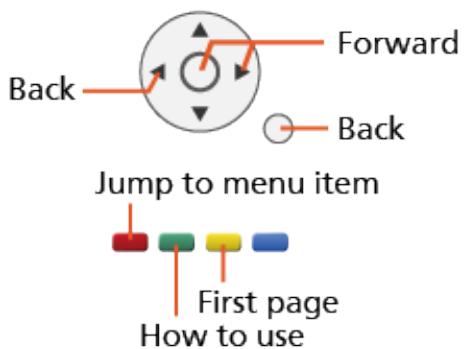
= Note =
- Design and specifications are subject to change without notice.
- The images shown in this eHELP are for illustrative purposes only.
- This eHELP covers all models, however, some features may not be available on certain models.
- Refer to the paper manual and the actual menu in the TV etc. to confirm your model's features.
Read first
Before use
Licence
Even if no special notation has been made of company or product trademarks, these trademarks have been fully respected.
DVB and the DVB logos are trademarks of the DVB Project.
DiSEqC™ is a trademark of EUTELSAT.
DLNA®, the DLNA Logo and DLNA CERTIFIED™ are trademarks, service marks, or certification marks of the Digital Living Network Alliance.
The terms HDMI and HDMI High-Definition Multimedia Interface, and the HDMI Logo are trademarks or registered trademarks of HDMI Licensing Administrator, Inc. in the United States and other countries.
HDAVI Control™ is a trademark of Panasonic Corporation.
Manufactured under license from Dolby Laboratories.
Dolby, Dolby Audio, and the double-D symbol are trademarks of Dolby Laboratories.
Text-To-Speech Powered by Dragon
2002-2018 Nuance Communications, Inc. All rights reserved.
"PlayReady" is a trademark registered by Microsoft. Please be aware of the following.
(a) This product contains technology subject to certain intellectual property rights of Microsoft. Use or distribution of this technology outside of this product is prohibited without the appropriate license(s) from Microsoft.
(b) Content owners use Microsoft PlayReady™ content access technology to protect their intellectual property, including copyrighted content. This device uses PlayReady technology to access PlayReady-protected content and/or WMDRM-protected content. If the device fails to properly enforce restrictions on content usage, content owners may require Microsoft to revoke the device's ability to consume PlayReady-protected content. Revocation should not affect unprotected content or content protected by other content access technologies.
Content owners may require you to upgrade PlayReady to access their content.
If you decline an upgrade, you will not be able to access content that requires the upgrade.
This product incorporates the following software:
(1) the software developed independently by or for Panasonic Corporation,
(2) the software owned by third party and licensed to Panasonic Corporation,
(3) the software licensed under the GNU General Public License, Version 2.0 (GPL V2.0),
(4) the software licensed under the GNU LESSER GENERAL PUBLIC LICENSE Version 2.1 (LGPL V2.1), and/or,
(5) open sourced software other than the software licensed under the GPL V2.0 and/or LGPL V2.1.
The software categorized as (3) - (5) are distributed in the hope that it will be useful, but WITHOUT ANY WARRANTY, without even the implied warranty of MERCHANTABILITY or FITNESS FOR A PARTICULAR PURPOSE. Please refer to the detailed terms and conditions thereof shown in the "Software Licence" menu on this product.
At least three (3) years from delivery of this product, Panasonic will give to any third party who contacts us at the contact information provided below, for a charge no more than our cost of physically performing source code distribution, a complete machine-readable copy of the corresponding source code covered under GPL V2.0, LGPL V2.1 or the other licenses with the obligation to do so, as well as the respective copyright notice thereof.
Contact Information: cdrequest@unipf.jp
The source code and the copyright notice are also available for free in our website below.
http://www.unipf.jp/dl/EUIDTV18/
Features
Home
"Home" is a gateway to the TV programmes, applications and connected devices.
It provides you an easy way to access all the features.

Home > Home > Information
DVB-via-IP
This TV has DVB-via-IP client function and can connect to DVB-via-IP server or SAT>IP compatible servers to receive broadcast streaming.

Functions > DVB-via-IP > DVB-via-IP client connection
Easy Mirroring
You can watch and display images of other devices (smartphone, etc.) on the TV screen using a mirroring function. You can also start the mirroring function from the other devices without operating the TV.

Functions > Mirroring > How to use
Home
Home
Information
"Home" is a gateway to the TV programmes, applications and connected devices.
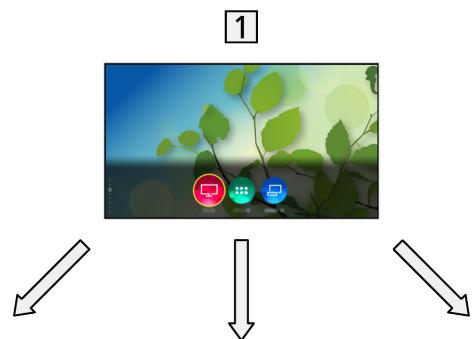
Home is displayed by pressing HOME and it provides you an easy way to access all the features as shown below (example).

2
3
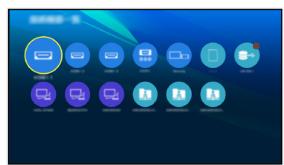
4
1 Home
Live TV
- Gateway to TV programmes


Home > Live TV
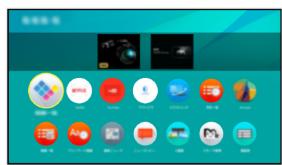
3 Apps
- Gateway to various applications (internet content, etc.)

Home >Apps
4 Devices
- Gateway to connected devices (HDMI equipment, USB device, network device, etc.)

Home > Devices
= Note =
- Be sure to update the software when a software update notice is displayed on the TV screen. If the software is not updated, you may not be able to use Home. You can update the software later manually.

Network > Network settings > Software Update
From Home, you can access all the features such as TV programmes, applications and connected devices.
- Display Home with HOME.
(Example)
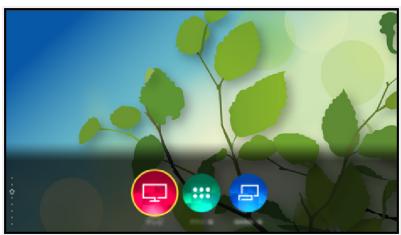
- Press / to display the tabs which provide you with the relevant programme information, recommended content, etc.
- A broadband network environment is required to use internet services.

Network > Network connections > Internet connection
-
Select Live TV / Apps / Devices and press OK to access.
-
To watch full-screen TV, select Live TV.
(Example)

= Note =
- Design and specifications are subject to change without notice.
Search
You can search for content from various sources.
-
Display Home with HOME.
-
Press to select Search and press OK to access.
-
A search history may be displayed and you can select it for keyword search.
To delete the search history
1) Select Search or a keyword and press OPTION.
2) Select Delete all histories / Delete a history and press OK.
- Follow the on-screen instructions.
Setting
You can set up Home, tabs, etc.
- Display Home with HOME.
- Press repeatedly to display the setting tab.
- Select one of the following items and press OK to access.
Tab Settings / Enable Auto Pin / Disable Auto Pin
- Follow the on-screen instructions.
Tab Settings
Edits the tabs of Home.
Enable Auto Pin / Disable Auto Pin
Selects whether to automatically add a shortcut for a feature frequently used on Home.
You can add a shortcut for a frequently used feature on Home.
- Display Home with HOME.
- Select Live TV / Apps / Devices and press OK to access.
- Select a feature (TV programme / application / device).
- Display the option menu with OPTION.
- Select Pin to HOME and press OK to set.
-
Select the position to add on Home.
-
To remove a shortcut from Home, set Unpin from HOME.
Home > Home > Option menu
Option menu
You can customise Home.
- Display the option menu with OPTION.
- Select one of the following items and press OK to access.
Unpin from HOME / Move
- Set the item and press OK to store.
Unpin from HOME
Removes a shortcut from Home.
Move
Arranges the position of the icons.
Live TV
How to use
Live TV is a gateway to the TV programmes.
- Display Home with HOME.
- Select Live TV.
(Example)
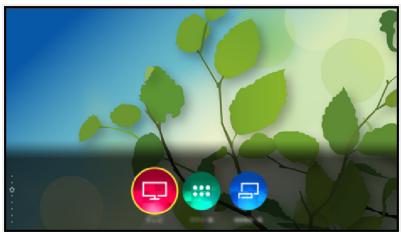
- Press OK to access.
(Example)

For details of watching TV

Watching > Basic
- To add a shortcut icon

Home > Home > Pin to HOME
Option Menu
Confirm or change the current status.
-
Display the image full-screen to use this function.
-
Display the option menu with OPTION.
- Select one of the following items and press OK to access.
Pin to HOME / Voice Guidance Settings / Audio Type / Multi Video / Multi Audio / Dual Audio / Sub Channel / Subtitle Language / Teletext Character Set / Teletext Language / MPX / Volume Correction
-
The function items vary depending on the TV mode and country you select.
-
Set the item and press OK to store.
Pin to HOME
Adds a shortcut for a frequently used feature on Home.
Home > Home > Pin to HOME
Voice Guidance Settings
Guidance settings for visually impaired users
Watching > For best audio > Voice Guidance Settings
Audio Type
Set to Audio Description if the programme has Audio Description service, then you will hear an additional audio track to describe events on screen (if available).
- For DVB
- To adjust the volume for Audio Description
Watching > For best audio > Audio Description
Multi Video
Selects from a group of multiple videos (if available).
- This setting is not memorised and it returns to the default setting once you exit the current programme.
- For DVB
Multi Audio
Selects between alternative language or Audio Description for sound tracks (if available).
- This setting is not memorised and it returns to the default setting once you exit the current programme.
- For DVB
Dual Audio
Selects stereo / monaural (if available).
- For DVB
Sub Channel
Selects the multifeed programme - sub channel (if available).
- For DVB
Subtitle Language
Selects between alternative subtitle languages or types (if available).
- This setting is not memorised and it returns to the default setting once you exit the current programme.
- For DVB
Teletext Character Set
Sets the teletext language font.

Watching > Teletext > Teletext Character Set
Teletext Language
Selects between alternative teletext languages (if available).
- This setting is not memorised and it returns to the default setting once you exit the current programme.
- For DVB
MPX
Selects multiplex sound mode (if available).

Watching > For best audio > Advanced settings
For Analogue
Volume Correction
Adjusts the volume of each individual channel or input mode.
Apps
How to use
Various applications (internet content, etc.) can be accessed easily from Apps.
- Display Home with HOME.
- Select Apps and press OK to access.
(Example)
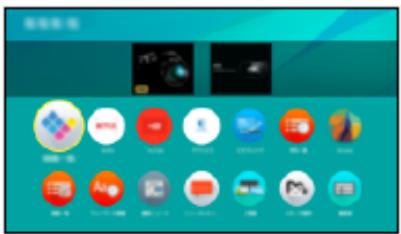
- To exit Apps
EXIT
- To add a shortcut icon
Home > Home > Pin to HOME
- You can assign a favourite application to MY APP of the TV's remote control.
Home >Apps > Option menu
- Select an application and press OK to access.
- Follow the on-screen instructions.
= Note =
- Design and specifications are subject to change without notice.
- Internet apps are provided by their respective service providers, and may be changed, interrupted, or discontinued at any time.
- A broadband network environment is required to fully use this function.
Option menu
- Display the option menu with OPTION.
- Select one of the following items and press OK to access.
Pin to HOME / Set as My App / Move / Lock / Unlock / Uninstall / Show Info.
- Set the item and press OK to store.
Pin to HOME
Adds a shortcut for a frequently used feature on Home.

Home > Home > Pin to HOME
Set as My App
Assigns your favourite application to MY APP of the TV's remote control.
- is displayed on the assigned application.
- To change the assignment, set Set as My App while the cursor is on another application.
Move
Arranges the position of the applications.
Lock, Unlock
Locks / unlocks a specific application to restrict access (if available).
- Child Lock PIN number is required to access to locked application.

Functions > Child Lock > PIN number
Uninstall
Deletes an application from Apps (if available).
Show Info.
Displays the information about the selected application.
Devices
How to use
Connected devices (HDMI equipment, USB device, network device, etc.) can be accessed easily from Devices.
- Display Home with HOME.
- Select Devices and press OK to access.
(Example)
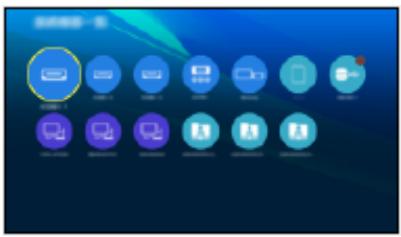
- To exit Devices
EXIT
- To add a shortcut icon
Home > Home > Pin to HOME
-
Select a device and press OK to access.
-
For external equipment
Watching > External equipment
- For USB device, network device for Media Player
Media Player > Using Media Player
- For network equipment for DLNA
Network > DLNA
- For mirroring function
Functions > Mirroring
= Note =
- Design and specifications are subject to change without notice.
Option menu
- Display the option menu with OPTION.
- Select one of the following items and press OK to access.
Pin to HOME / Accessibility / Switch to Component / Switch to Video / Show Info.
- Set the item and press OK to store.
Pin to HOME
Adds a shortcut for a frequently used feature on Home.
Home > Home > Pin to HOME
Accessibility
Guidance settings for visually impaired users
Watching > For best audio > Voice Guidance Settings
Switch to Component / Switch to Video
You can select COMPONENT and VIDEO in AV.
Show Info.
Displays the information about the selected device.
Watching
Basic
Basic connection
Please ensure that the unit is disconnected from the mains socket before attaching or disconnecting any cables.
- External equipment and cables shown are not supplied with this TV.
Satellite dish
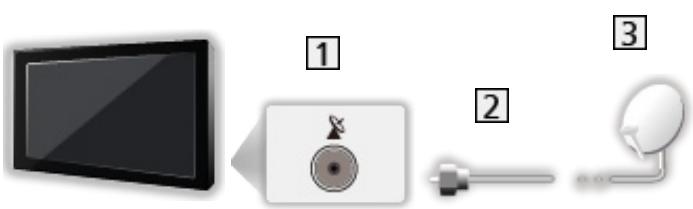
1 Satellite terminal
2 Satellite cable
3 Satellite dish
- For DVB-S
- To ensure your satellite dish is correctly installed, please consult your local dealer. Also consult the received satellite broadcasting companies for details.
- Selectable satellites and dish alignment to tune DVB-S channels

Watching > Tuning and editing channels > Selectable satellites
Aerial
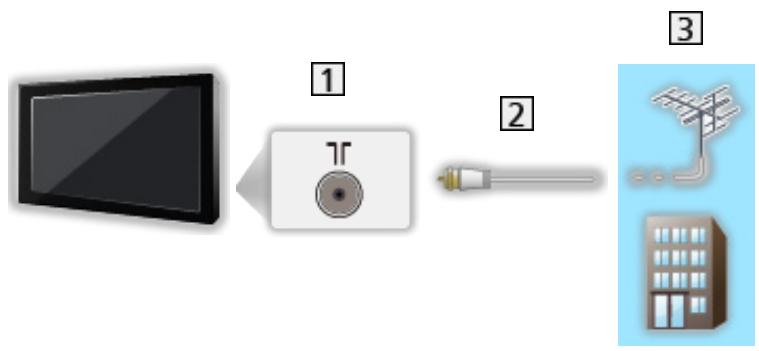
1 Terrestrial / cable terminal
RF cable
3 Terrestrial aerial / Cable
- For DVB-C, DVB-T, Analogue
DVD Recorder / Blu-ray Recorder, etc.
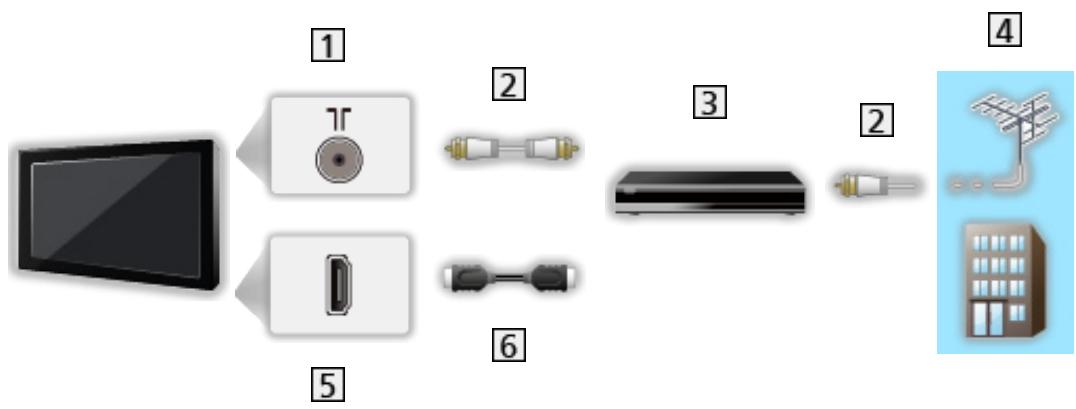
1 Terrestrial / cable terminal
RF cable
DVD Recorder / Blu-ray Recorder, etc.
4 Terrestrial aerial / Cable
5 HDMI terminal
6 HDMI cable
Set top box
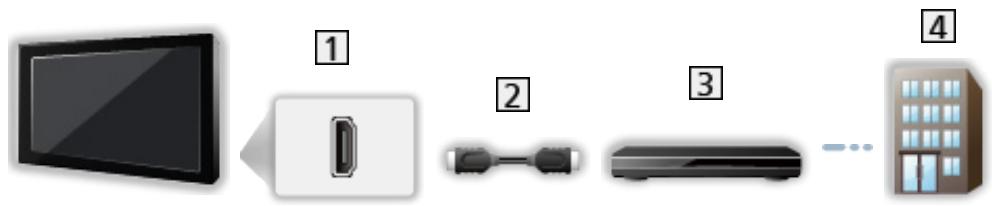
1 HDMI terminal
2 HDMI cable
3 Set top box
4 Cable
= Note =
- For details of DVB-via-IP connections

Functions > DVB-via-IP
- For details of VIERA Link connections

Functions > VIERA Link “HDAVI ControlTM” > Summary of VIERA Link
- Please also read the manual of the equipment being connected.
- Keep the TV away from electronic equipment (video equipment, etc.) or equipment with an infrared sensor, otherwise distortion of image / sound may occur or operation of other equipment may be affected.
- Use a fully wired HDMI compliant cable.
- Check the terminal type and cable plugs are correct for connection.
Selecting channel
- Select the mode with TV.
DVB-S / DVB-C / DVB-T / DVB-via-IP / Analogue
-
Selectable modes vary depending on the channels stored.
-
Select a channel with Channel Up / Down or Numeric buttons.
- Press Numeric buttons to select a channel position with 2 or more-digit (e.g. 399, press 3 9 9).
To select a channel from the channel list
- Display the channel list with OK.
-
Select a channel from the list and press OK to watch.
-
To sort channel names in alphabetical order
(red)
To change the category
(blue)
To select a channel using information banner
- Display information banner with if it is not displayed.
- Select a channel and press OK to watch while the banner is displayed.

Watching > Basic > Information banner
To select a channel using TV Guide
- Display TV Guide with GUIDE.
-
Select the current programme and press OK to access.
-
The current programme is displayed on the top left of the screen.
-
Select View and press OK to watch.

Watching > TV Guide > Using TV Guide
- Not valid in Analogue
To watch pay-TV
- For details of the encrypted channels

Functions > Common Interface > Using Common Interface
- Consult the operator / broadcaster or CI module manufacturer for more information and conditions of the services.
Display information banner with
- Also appears when changing a channel.
(Example)
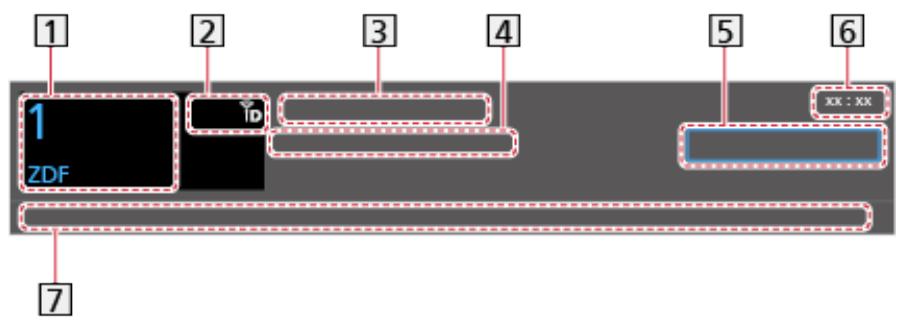
1 Channel position and name
Channel type (Radio, HDTV, etc.) / Encrypted channel (☑) / TV mode (☑, ☑, ☐, ☑)
3Programme
4 Start time / End time (except Analogue)
Channel position, etc. (Analogue)
Progress time indicator of the selected programme (except Analogue)
5 Category
- To change the category (DVB)
1) Display the category list with (blue).
2) Select the category and press OK to change.
6 Current time
7 Features available / message meanings
Bad signal:
Poor quality TV signal
DD, DD+, HE-AAC:
Dolby Audio (Dolby Digital, Dolby Digital Plus) or HE-AAC audio track AD:
Audio Description service available
- This function can aid visually-impaired viewers by providing an additional audio track to describe events on screen.

Watching > For best audio > Audio Description
图:
Subtitle service available
图:
Teletext service available
MLTI 1
Multiple audio available
MULI
Multiple video available
MLT
Multiple audio and video available
Stereo, Mono:
Audio mode
D:
Data service (Hybrid Broadcast Broadband TV application) available
Functions > Data Service Application > Using Data Service Application
1-90:
Off Timer remaining time
Watching > Basic > Off Timer
- To confirm another tuned channel
△/
- To watch the channel listed in the banner
OK
Information on the next programme (DVB)
- Extra information (DVB)
i
-
Press again to hide the banner.
-
To hide the banner
EXIT
- To adjust banner timeout, set Banner Display Timeout.
1) Display the menu with MENU.
2) Select Setup > Display Settings > Banner Display Timeout and press OK to access.
3) Set the item and press OK to store.
Display / hide subtitles (if available) with STTL.
- To select the preferred language for DVB subtitles (if available), set Preferred Subtitles.
Watching > Basic > Language
- To select the preferred subtitle type
1) Display the menu with MENU.
2) Select Setup > Display Settings > Preferred Subtitle Type and press OK to access.
3) Select Standard / Hard of Hearing and press OK to set.
-
Hard of Hearing provides aids in understanding and enjoyment with DVB subtitles (depending on the broadcaster).
-
Preferred Subtitles 1 / 2 in Language are given priority.
Watching > Basic > Language
= Note =
- If you press STTL in Analogue, the TV switches to teletext service and calls up a favourite page. Press EXIT to return to TV mode.
Last view
Switch to a previously viewed channel or input mode easily with LAST VIEW.
- Press again to return to the current view.
= Note =
- Switching channel may not be available depending on the condition.
- Watching less than 10 seconds is not reflected in the previously viewed channel or input mode.
Off Timer
Switch to TV Standby mode automatically after a fixed period.
- Display the menu with MENU.
- Select Timer > Off Timer and press OK to access.
- Select the time in 15-minute increments and press OK to set.
90 / 75 / 60 / 45 / 30 / 15 / Off (minutes)
- To cancel, set to Off or turn the TV off.
- The remaining time is displayed on the bottom right of the screen.
- The remaining time will flash on the screen when less than 3 minutes.
Energy saving functions
The TV can be eco-friendly using energy-saving functions.
The TV goes into Standby mode in the following conditions:
- Eco Navigation is set to Set to Eco.
- Off Timer is active.
Watching > Basic > Off Timer
- No operation is performed for 4 hours while Auto Standby is set to On.
- No signal is received and no operation is performed for 10 minutes while No signal Power off is set to On.
= Note =
- This function does not affect the recording.
Auto Standby
- Display the menu with MENU.
- Select Timer > Auto Standby and press OK to access.
- Select On / Off and press OK to set.
Auto Standby
(On / Off)
Automatically turns the TV to Standby mode for energy saving when no operation is performed for 4 hours.
- Automatic input switching with the connected equipment affects this function and time-count resets.
- A notification message will appear 3 minutes before going into Standby mode.
- Changing the default configuration may result in higher energy consumption of the product.
No signal Power off
- Display the menu with MENU.
- Select Timer > No signal Power off and press OK to access.
- Select On / Off and press OK to set.
No signal Power off
(On / Off)
Automatically turns the TV to Standby mode to prevent unnecessary power consumption when no signal is received and no operation is performed for 10 minutes.
- A notification message will appear 3 minutes before going into Standby mode.
Eco Navigation
Automatically sets the TV to the most suitable energy-saving mode.
The concerned items and their current settings are displayed. Select Set to Eco to set them to the energy-saving settings at once.
- Display the menu with MENU.
- Select Setup > Eco Navigation and press OK to access.
-
Select Set to Eco and press OK to set.
-
Auto Standby and No signal Power off are active when Eco Navigation is set to Set to Eco.
Radio Mode
Sets the timer for turning off the screen automatically when a radio channel is selected.
- Display the menu with MENU.
- Select Setup > Display Settings > Radio Mode and press OK to access.
- Select the time and press OK to set.
20 / 15 / 10 / 5 / Off (seconds)
- Sound is active even if the screen is turned off. This function is effective in reducing power consumption when listening to a radio channel.
- Press any buttons except Standby On / Off switch, Volume Up / Down and MUTE to turn the screen on.

- Not valid in Analogue
Adjusting time
Adjusts the time data.
- Display the menu with MENU.
- Select Timer > Time Zone and press OK to access.
-
Set the item and press OK to store.
-
The time data are corrected based on GMT.
- The availability of this function depends on the country and TV mode you select.
Language
- Display the menu with MENU.
- Select Setup > Language and press OK to access.
- Select one of the following items and press OK to access.
OSD Language / Preferred Audio 1 / 2 / Preferred Subtitles 1 / 2 / Preferred Teletext
- Set the item and press OK to store.
OSD Language
Changes language for on-screen displays.
Preferred Audio 1 / 2
Selects the first and second preferred language for DVB multi audio (depending on the broadcaster).
Preferred Subtitles 1 / 2
Selects the first and second preferred language for DVB subtitles (depending on the broadcaster).
- To display subtitles
Watching > Basic > Subtitle
Preferred Teletext
Selects the preferred language for DVB teletext service (depending on the broadcaster).
External equipment
External connection
These diagrams show our recommendations for connection of your TV to various pieces of equipment. For other connections, consult the instructions for each piece of equipment.
- For details of basic connection

Watching > Basic > Basic connection
- Check the terminal type and cable plugs are correct for connection.
- External equipment and cables shown are not supplied with this TV.
HDMI equipment
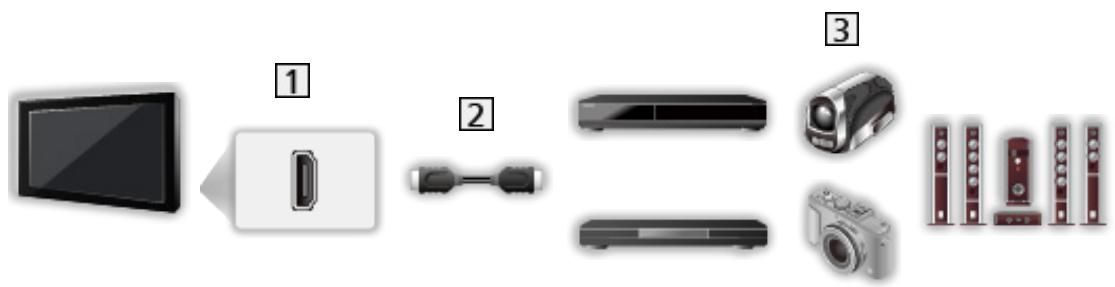
1 HDMI terminal
HDMI cable
3 Recorder / Player / Set top box / Camcorder / Amplifier with speaker system
= Note =
- Use a fully wired HDMI compliant cable.
- For details of VIERA Link connections

Functions > VIERA Link “HDAVI ControlTM” > Summary of VIERA Link
- Use HDMI2 to connect the TV to an amplifier which has ARC (Audio Return Channel) function.
AV devices
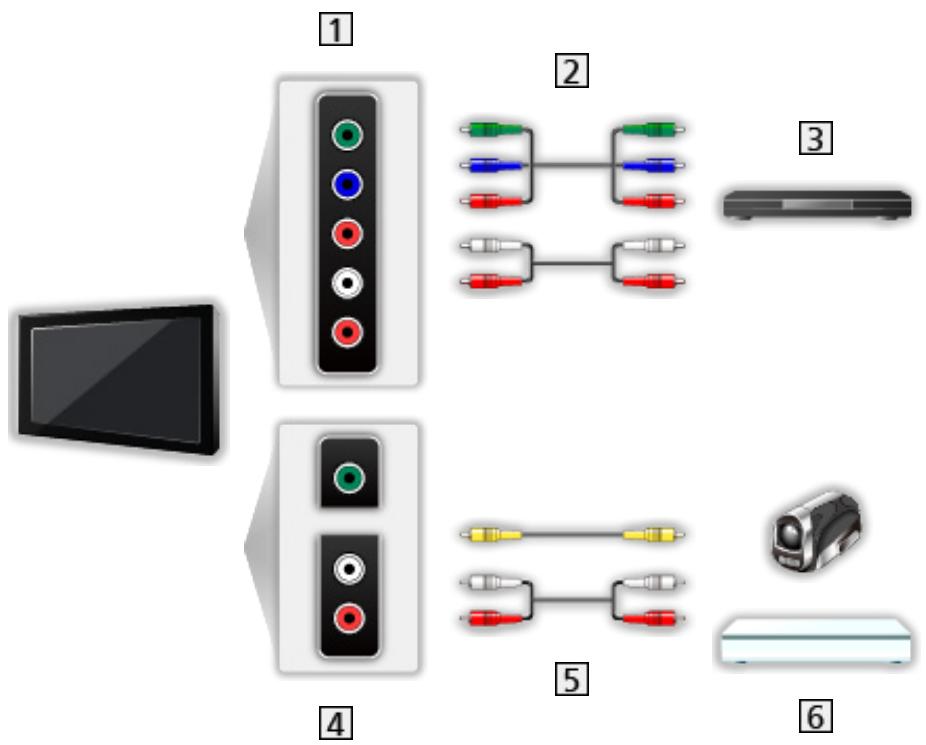
1 AV (COMPONENT) terminals
2 Component cables
DVD Player, etc.
4 AV (VIDEO) terminals
5 Composite cables
6 Camcorder / Game equipment
USB devices
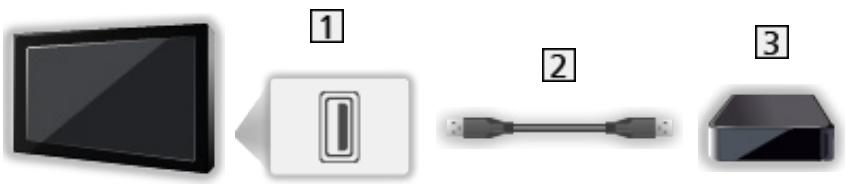
1 USB port
2 USB cable
3 USB HDD, etc.
= Note =
- It is recommended to connect the device to the TV's USB port directly.
- You cannot use two or more of the same kind of USB devices simultaneously except USB Flash Memory or USB HDD.
- Use USB 2 port for connecting the USB HDD.
- Some USB devices or USB HUB may not be used with this TV.
- You cannot connect any devices by using USB card reader.
■ Listening with external speakers
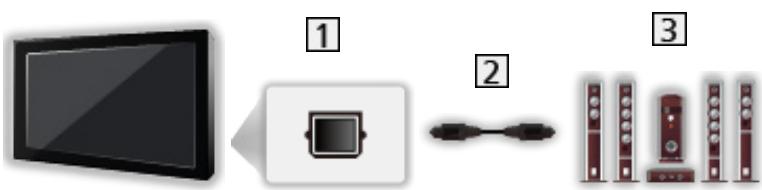
DIGITAL AUDIO
2 Optical digital audio cable
3 Amplifier with speaker system
- To enjoy multi-channel sound from external equipment (e.g. Dolby Audio (Dolby Digital) 5.1ch), connect the equipment to the amplifier. For information about the connections, read the manuals of the equipment and amplifier.
- To select the sound output to adjust volume, set TV Speaker Setting.
Headphones
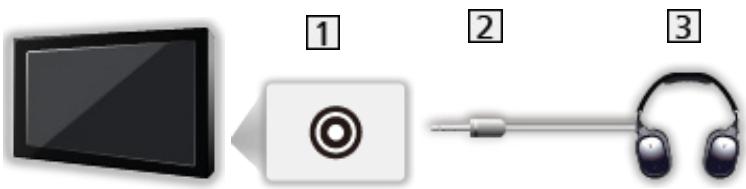
1 Headphone jack
3.5 mm stereo mini plug
3 Headphones
- To adjust volume, set Headphone Volume.

Watching > For best audio > Volume settings
- To select the sound output to adjust volume, set TV Speaker Setting.

Watching > For best audio > Volume settings
Watching external input
Connect the external equipment (VCR, DVD, etc.) and you can watch through the input.
- Display the input selection menu with AV.
-
Select the input mode connected to the equipment and press OK to watch. (The selected mode is displayed on the top left of the screen.)
-
You can also select the input pressing AV. Press repeatedly until the desired input is selected.
-
You can select COMPONENT and VIDEO in AV.
-
You can label or skip each input mode. Skipped inputs will not be displayed when AV is pressed. (Input Labels)
- The remote control is capable of operating the content or external equipment.
Watching > External equipment > Operating with TV's remote control
- To return to TV mode

= Note =
- If the external equipment has an aspect adjustment function, set it to 16:9.
- For details, read the manual of the equipment or ask your local dealer.
Input Labels
- Accessing the input labels list allows you to change the input name or skip the input if unconnected, improving identification and selection in the Input Selection banner.
Watching > Basic > Information banner
- Display the menu with MENU.
- Select Setup > Display Settings > Input Labels and press OK to access.
-
Set the item and press OK to set.
-
To name each input mode freely, select User input and set characters (maximum 10 characters).
- To skip the input mode, select Skip.
Playing Time Display
Set to On to display a time period of continuous use in Game Mode on the top right of the screen every 30 minutes.
- Display the menu with MENU.
- Select Setup > Display Settings > Playing Time Display and press OK to access.
-
Select On / Off and press OK to set.
-
This function is available when Game Mode is set to On.
Operating with TV's remote control
You can operate the content in Media Player / media server, recording functions or the connected equipment with the following buttons of this TV's remote control.
:
Playback (VCR / DVD / video content)
:
Stop the operations
:
Rewind, view the picture rapidly in reverse (VCR)
Skip to the previous track, title or chapter (DVD / video content)
:
Rewind, view the picture rapidly in reverse (VCR)
Search backward (DVD / video content)
:
Fast-forward, view the picture rapidly forward (VCR)
Skip to the next track, title or chapter (DVD / video content)
:
Fast-forward, view the picture rapidly forward (VCR)
Search forward (DVD / video content)
1
Pause / Resume
Press and hold to play at slow speed (DVD)
:
One Touch Recording

Recording > Recording current programme > One Touch Recording
How to change the code
Each Panasonic product has its own remote control code. Change the code according to the product for operation.
- Press and hold Standby On / Off switch during the following operations.

- Enter the appropriate code as follows with Numeric buttons.
- Codes for each product and features
70: DVD Recorder, DVD Player, Blu-ray Disc Player
71: Player theatre, Blu-ray Disc theatre
72: VCR
73 (default):
Using in USB HDD recording, Media Player, DLNA features or VIERA Link
- Press to change.
= Note =
- Confirm if the remote control works correctly after changing the code.
- The codes may be reset to defaults if batteries are replaced.
- Some operations may not be available depending on the equipment.
HDMI features
HDMI (high-definition multimedia interface) is the world's first complete digital consumer AV interface complying with a non-compression standard.
HDMI allows you to enjoy high-definition digital images and high-quality sound by connecting the TV to external equipment.
HDMI-compatible equipment * with an HDMI or DVI output terminal, such as a DVD player, a set top box or game equipment, can be connected to the HDMI terminal using a fully wired HDMI compliant cable.

⇒ Watching > External equipment > External connection
*: The HDMI logo is displayed on HDMI-compliant equipment.
Applicable HDMI features
- Input audio signal:
2ch LPCM, Dolby Audio (Dolby Digital, Dolby Digital Plus)
- Audio settings can be made on HDMI Audio Format in the Sound Menu.

Watching > For best audio > Advanced settings
- Input video signal:
Matches the output setting of the digital equipment.

⇒ Watching > External equipment > Valid input signals
- VIERA Link (HDAVI Control 5)

Functions > VIERA Link "HDAVI ControlTM" > Summary of VIERA Link
- Content Type
Audio Return Channel
-
Audio Return Channel (ARC) is a function to send digital sound signals via an HDMI cable.
-
For HDMI2
DVI connection
If the external equipment has only a DVI output, connect to the HDMI terminal via a DVI to HDMI adaptor cable. When using the DVI to HDMI adaptor cable, connect the audio cable to the audio input terminal (use COMPONENT /VIDEO audio terminals).
- Enquire HDMI adaptor cable at your local digital equipment retailer shop.
= Note =
- Audio settings can be made on HDMI Audio Format / HDMI Input in the Sound Menu.

Watching > For best audio > Advanced settings
- If the connected equipment has an aspect adjustment function, set the aspect ratio to "16:9".
These HDMI connectors are "type A". - These HDMI connectors are compatible with HDCP (High-Bandwidth Digital Content Protection) copyright protection.
- Equipment having no digital output terminal may be connected to the input terminal of component or video to receive analogue signals.
- This TV incorporates HDMI™ technology.
HDMI HDR Setting
- Display the menu with MENU.
- Select Setup > HDMI HDR Setting and press OK to access.
- Set the item and press OK to store.
HDMI HDR Setting
(On / Off)
Set to On when the HDR device is connected to the TV.
- Please turn Off this function if the image looks unnatural. This may occur in some cases such as compatibility with the connected device or source images.
- Image may disappear for a few seconds when the setting is changed.
- For HDMI
= Note =
- Supporting HDR does not increase the peak brightness capabilities of the TV panel.
- The ability to send a non 4K HDR signal via HDMI depends fully on the playback device.
- The majority of 4K Blu-ray discs require HDCP2.2 on TV to play back HDR, whereas the HDMI input on this TV support only HDCP1.4; accordingly not all HDR contents are guaranteed to be enjoyed on the TV.
COMPONENT, HDMI
| Signal name | COMPONENT | HDMI |
| 525 (480) / 60i, 60p | ○ | ○ |
| 625 (576) / 50i, 50p | ○ | ○ |
| 750 (720) / 60p, 50p | ○ | ○ |
| 1 125 (1 080) / 60i, 50i | ○ | ○ |
| 1 125 (1 080) / 60p, 50p, 24p | ○ |
○: Applicable input signal
= Note =
- Signals other than above may not be displayed properly.
- The above signals are reformatted for optimal viewing on your display.
For best picture
Viewing Mode
- Display the menu with MENU.
- Select Picture > Viewing Mode and press OK to access.
- Select the mode and press OK to set.
Viewing Mode
(Dynamic / Normal / Cinema / True Cinema / Custom / Sport / Game)
Selects your favourite picture mode for each input.
Dynamic:
Improves contrast and sharpness for viewing in a bright room.
Normal:
Normal use for viewing in a normal lighting condition.
Cinema:
Improves the performance of contrast, black and colour reproduction for watching a film in a darkened room.
True Cinema:
Reproduces the original image quality precisely without any revision.
Custom:
Adjusts each menu item manually to suit your favourite picture quality.
Sport:
Improves picture quality for watching sports, etc.
- The sound mode is automatically set to Stadium when Viewing Mode is set to Sport. To cancel the linkage of the sound and viewing mode, set Sport Link to Off.

Watching > For best audio > Basic settings
Game:
Improves picture quality for playing games, etc.
- For HDMI, AV (COMPONENT / VIDEO)
- Game Mode is automatically set to On when Viewing Mode is set to Game.

Watching > For best picture > Option Settings
- The following items can be adjusted and stored for each mode.
Backlight / Contrast / Brightness / Colour / Tint / Sharpness / Colour Temperature / Vivid Colour / Adaptive Backlight Control / Ambient Sensor / HDR Brightness Setting / Noise Reduction / MPEG Remaster / Dynamic Range Remaster / Clear Motion - This function can be memorised respectively for input or TV mode.
To change the viewing mode with PICTURE
You can change the viewing mode easily only by pressing PICTURE.
- Display Viewing Mode with PICTURE.
-
Select the mode and press OK to set.
-
You can also change the mode by pressing PICTURE.
(Press repeatedly until you reach the desired mode.)
- To set the viewing mode selection
1) Display the menu with MENU.
2) Select Picture > PICTURE Button Setting and press OK to access.
3) Select the viewing mode to set.
Changes the aspect ratio (image size).
To change the aspect ratio manually
- Display the menu with MENU.
- Select Picture > Screen Settings and press OK to access.
- Select Aspect and press OK to access.
- Set the item and press OK to store.
Auto:
The best ratio is selected automatically according to the "Aspect Control Signal".

Watching > For best picture > Aspect Control Signal
16:9:
Directly displays the image at 16:9 without distortion (anamorphic).
4:3:
Displays the image at the standard 4:3 without distortion.
Zoom:
Displays a 16:9 letterbox or 4:3 image without distortion.
= Note =
- Display the image full-screen to use this function completely.
- Aspect mode can be memorised separately for SD (Standard definition) and HD (High definition) signals.
- Aspect cannot be changed in teletext service.
-
Aspect is fixed to 16:9 in the following conditions:
-
Game Mode is set to On.
Aspect Control Signal
Programmes usually contain an "Aspect Control Signal". (Widescreen signal, Control signal through HDMI terminal)
In Auto mode, aspect mode will appear in the top left of the screen if a Widescreen signal (WSS) or a Control signal through HDMI terminal is found. The aspect switches to the appropriate ratio.

Watching > For best picture > Aspect
Available conditions
- Satellite terminal (WSS only)
Valid input signal format:
DVB-S
- Terrestrial / cable terminal (WSS only)
Valid input signal format:
DVB-C
DVB-T / DVB-T2
PAL B, G, H, I, D, K
SECAM B, G, L, L', D, K
Invalid input signal format:
PAL 525/60 6.5 MHz
PAL 525/60 6.0 MHz
PAL 525/60 5.5 MHz
M.NTSC 6.5 MHz
M.NTSC 6.0 MHz
M.NTSC 5.5 MHz
AV (VIDEO) terminals
Valid input signal format:
PAL
SECAM
PAL 525/60*
M.NTSC*
NTSC*
*: Control signal through HDMI terminal only
- AV (COMPONENT) terminals (WSS only)
Valid input signal format:
625 (576) / 50i, 50p
Invalid input signal format:
525 (480) / 60i, 60p
750 (720) / 60p, 50p
1 125 (1 080) / 60i, 50i
HDMI terminal
Valid input signal format:
525 (480) / 60i, 60p
625 (576) / 50i, 50p
750 (720) / 60p, 50p
1 125 (1 080) / 60i, 50i
1 125 (1 080) / 60p, 50p, 24p
- HDMI terminal does not receive WSS signal.
= Note =
- If the screen size looks unusual when a widenscreen-recorded programme is played back on a VCR, adjust the tracking of the VCR. Read the manual of the VCR.
Basic settings
- Display the menu with MENU.
- Select Picture and press OK to access.
- Select one of the following items and press OK to access.
Backlight / Contrast / Brightness / Colour / Tint / Sharpness / Colour Temperature / Vivid Colour / Adaptive Backlight Control / Dynamic Range Remaster / Clear Motion
- Set the item and press OK to store.
Backlight, Contrast, Brightness, Colour, Tint, Sharpness
Adjusts the levels of these options according to your personal preference.
Colour Temperature
Sets the overall colour tone of the picture (bluer - redder).
Vivid Colour
(On / Off)
Automatically adjusts colours to vivid ones.
Adaptive Backlight Control
Automatically controls the level of backlight according to the images.
Dynamic Range Remaster
(On / Off)
Enhances bright areas of the image closer to the original luminance making improved picture impact.
-
Not valid in the following conditions:
-
Adaptive Backlight Control is set to Off.
- Contrast Control is set to Off.
HDR video signal
Clear Motion
(On / Off)
Makes the moving pictures clearer by controlling the level of backlight.
- Not valid for photo content
Ambient Sensor
- Display the menu with MENU.
- Select Picture > Ambient Sensor and press OK to access.
- Select On / Off and press OK to set.
Ambient Sensor
(On / Off)
Automatic Brightness Control function
Adjusts picture settings automatically depending on ambient lighting condition.
- Not valid for HDR video signal
HDR Brightness Setting
- Display the menu with MENU.
- Select Picture > HDR Brightness Setting and press OK to access.
- Select one of the following items and press OK to access.
HDR Auto Brightness / HDR Brightness Enhancer
- Set the item and press OK to store.
HDR Auto Brightness
(On / Off)
Automatically enhances the luminance when watching an HDR video in a bright environment.
HDR Brightness Enhancer
Adjusts the luminance when watching an HDR video in a bright environment.
= Note =
- Supporting HDR does not increase the peak brightness capabilities of the TV panel.
- The ability to send a non 4K HDR signal via HDMI depends fully on the playback device.
- The majority of 4K Blu-ray discs require HDCP2.2 on TV to play back HDR, whereas the HDMI input on this TV support only HDCP1.4; accordingly not all HDR contents are guaranteed to be enjoyed on the TV.
Noise reduction settings
- Display the menu with MENU.
- Select Picture > Noise Reduction / MPEG Remaster and press OK to access.
- Set the item and press OK to store.
Noise Reduction
(Auto / Max / Mid / Min / Off)
Reduces unwanted picture noise.
- Not valid in the following conditions:
1080p Pixel Direct is set to On.
- Game Mode is set to On.
MPEG Remaster
(Auto / Max / Mid / Min / Off)
Reduces flicker noise in contoured parts of a picture and block noise.
- Not valid in the following conditions:
1080p Pixel Direct is set to On.
- Game Mode is set to On.
Advanced Settings
You can adjust and set up the detailed picture settings when Viewing Mode is set to Cinema, True Cinema or Custom. The settings in True Cinema or Custom can be stored for each input.

Watching > For best picture > Viewing Mode
- Select the input mode with AV or TV.
- Display the menu with MENU.
- Select Picture > Viewing Mode and press OK to access.
- Select the mode and press OK to set.
Cinema / True Cinema / Custom
Adjust the detailed picture settings
- Display the menu with MENU.
- Select Picture > Advanced Settings and press OK to access.
- Select one of the following items and press OK to access.
Contrast Control / Colour Gamut / White Balance / Colour Management / Gamma / Reset to Defaults
- Set the item and press OK to store.
Contrast Control
Contrast Control
(Custom / Auto / Off)
Automatically adjusts the detailed contrast settings. Select Custom to set Contrast Control Setting manually.
Contrast Control Setting
Adaptive Gamma Control:
Adjusts the gamma curve to make the image brighter.
Black Expander:
Gradually adjusts the shades of black.
Clear White Effect:
Makes the white area clearer.
Reset to Defaults:
Reset items for Contrast Control Setting.
Colour Gamut
Colour Gamut
(Auto / Normal / Native)
Reproduces image colour precisely according to the colour gamut standards.
Auto:
Automatically adjusts the colour gamut according to the input signal.
Normal:
Displays colours according to the colour gamut.
Native:
Displays deep colours by expanding the colour gamut to its maximum.
- Not valid for photo content
White Balance
R-Gain / G-Gain / B-Gain
Adjusts the white balance of bright red / green / blue areas.
R-Cutoff / G-Cutoff / B-Cutoff
Adjusts the white balance of dark red / green / blue areas.
More Detailed Adjustment
Adjusts more detailed items for White Balance.
Input Signal Level:
Adjusts the input signal level.
R-Gain / G-Gain / B-Gain:
Adjusts the detailed white balance of bright red / green / blue areas.
Reset to Defaults:
Reset items for More Detailed Adjustment.
Reset to Defaults
Resets White Balance to the default settings.
Colour Management
R-Hue / R-Saturation / R-Luminance
Adjusts the picture hue / saturation / luminance of red areas.
G-Hue / G-Saturation / G-Luminance
Adjusts the picture hue / saturation / luminance of green areas.
B-Hue / B-Saturation / B-Luminance
Adjusts the picture hue / saturation / luminance of blue areas.
More Detailed Adjustment
Adjusts more detailed items for Colour Management.
C-Hue / M-Hue / Y-Hue:
Adjusts the picture hue of cyan / magenta / yellow areas.
C-Saturation / M-Saturation / Y-Saturation:
Adjusts the saturation of cyan / magenta / yellow areas.
Reset to Defaults:
Reset items for More Detailed Adjustment.
Reset to Defaults
Resetts Colour Management to the default settings.
Gamma
Gamma
Switches the gamma curve.
- Please note the numerical values are reference for the adjustment.
More Detailed Adjustment
Adjusts more detailed items for Gamma.
Input Signal Level:
Adjusts the input signal level.
Gain:
Adjusts the gain of gamma for selected signal level.
Reset to Defaults:
Reset items for More Detailed Adjustment.
Reset to Defaults
Reset s Gamma to the default settings.
Reset to Defaults
Reset to Defaults
Resets Advanced Settings to the default settings.
Option Settings
Some features are not available on all models. Available menu items are displayed on your TV screen.
- Display the menu with MENU.
- Select Picture > Option Settings and press OK to access.
- Select one of the following items and press OK to access.
Game Mode / Film Cadence Mode / 1080p Pixel Direct / HDMI Content Type / HDMI EOTF Type / EOTF Type / HDMI RGB Range / AV Colour System / 3D-COMB
- Set the item and press OK to store.
Game Mode
(On / Off)
Provides suitable images for fast response signals when playing games.
- Not valid in TV mode
- To display a continuous record of time spent using Game Mode, set Playing Time Display.
Film Cadence Mode
(Auto / On / Off)
Improves vertical resolution for movie images.
- This function is available for interlaced signals (except in Network services or when Game Mode is set to On).
1080p Pixel Direct
(On / Off)
Reproduces the original image quality in detail for 1080p (HDMI) input signal.
HDMI Content Type
(Photos / Auto / Off)
Adjusts the picture settings of each HDMI input according to the selected content type.
Auto:
Automatically adjusts the picture settings according to the received HDMI content if the connected equipment supports HDMI Content Type.
- To set the availability of each content type for Auto mode, select Auto Detail Setting.
- For HDMI
HDMI EOTF Type
(Auto / Traditional gamma / HLG / PQ)
Selects the EOTF type for each HDMI input. Set to Auto for general use.
- For HDMI
EOTF Type
(Auto / Traditional gamma / HLG / PQ)
Selects the EOTF type of broadcast or video content.
It works correctly only when the signal corresponds to each EOTF type. Set to Auto for general use.
- Automatically switches to Auto for broadcast each time another input / channel is selected.
- For DVB, video content
HDMI RGB Range
(Auto / Full / Normal)
Adjusts the black level of the image for each HDMI input.
- When the black level is not suitable, select Full.
- For HDMI
AV Colour System
(Auto / PAL / SECAM / M.NTSC / NTSC)
Selects optional colour system based on video signals.
For AV (VIDEO)
3D-COMB
(On / Off)
Makes still or slow moving pictures more vivid.
- Occasionally, while viewing still or slow moving pictures, colour patterning may be seen. Set to On to display sharper and more accurate colours.
- For PAL / NTSC signal reception in TV mode or from composite connection
Screen Settings
- Display the menu with MENU.
- Select Picture > Screen Settings and press OK to access.
- Select one of the following items and press OK to access.
Aspect / 16:9 Overscan / Zoom Adjustments / Screen Display
- Set the item and press OK to store.
Aspect
Changes the aspect ratio (image size).

Watching > For best picture > Aspect
16:9 Overscan
(On / Off)
Selects the screen area displaying the image for 16:9 aspect.
On:
Enlarges the image to hide the edge of the image.
Off:
Displays the image in the original size.
- Set to On if noise occurs on the edge of the screen.
- This function can be memorised for SD (Standard definition) and HD (High definition) signals respectively.
-
Not valid in the following conditions:
-
Photo content
- Game Mode is set to On.
Zoom Adjustments
Adjusts the vertical position and size when aspect is set to Zoom.
Screen Display
(On / Off)
Turns the screen off when you select Off.
- This function is effective in reducing power consumption when listening to the sound without watching the TV screen.
- Press any buttons (except Standby On / Off switch) to turn the screen on.
Copy Adjustment
Copies the picture settings of True Cinema or Custom to those of the other input mode or Viewing Mode.
- Display the menu with MENU.
- Select Picture > Copy Adjustment > Destination Viewing Mode / Destination Input and press OK to access.
- Select the destination to copy to and press OK to set.
- Select Copy Start and press OK to copy.
-
When a confirmation screen is displayed, select Yes and press OK to set.
= Note = -
Option Settings and Screen Settings are not copied.
For best audio
Sound mode
- Display the menu with MENU.
- Select Sound > Mode and press OK to access.
- Select the mode and press OK to set.
Mode
(Standard / Music / Speech / Stadium / User)
Selects your favourite sound mode for each input.
Standard:
Provides the suitable sound quality for all types of scenes.
Music:
Improves sound quality for watching music videos, etc.
Speech:
Improves sound quality for watching news, drama, etc.
Stadium:
Improves sound quality for watching sports, etc.
- The sound mode is automatically set to Stadium when Viewing Mode is set to Sport. To cancel the linkage of the sound and viewing mode, set Sport Link to Off.

Watching > For best audio > Basic settings
User:
Adjusts the sounds manually using the equaliser to suit your favourite sound quality.
- The following items can be adjusted and stored for each mode.
Bass / Treble / Surround / Bass Boost
- For the User mode, Equaliser is available in the Sound Menu instead of Bass and Treble. Select Equaliser and adjust the frequency.

Watching > For best audio > Basic settings
- This function is effective only for the sound from TV speakers.
Basic settings
Some features are not available on all models. Available menu items are displayed on your TV screen.
- Display the menu with MENU.
- Select Sound and press OK to access.
- Select one of the following items and press OK to access.
Bass / Treble / Equaliser / Balance / Surround / Bass Boost / Sport Link
- Set the item and press OK to store.
Bass
Adjusts level to enhance or minimise lower, deeper sound output.
Treble
Adjusts level to enhance or minimise sharper, higher sound output.
Equaliser
Adjusts the frequency level to suit your favourite sound quality.
- This function is available when Mode is set to User.
- Select the frequency and adjust the frequency level.
- To enhance the bass sound, raise the level of the lower frequency. To enhance the treble sound, raise the level of the higher frequency.
- To reset the levels of each frequency to the default settings, select Reset to Defaults and press OK.
- This function is effective only for the sound from TV speakers.
Balance
Adjusts volume level of right and left speakers.
Surround
(Cinema surround Pro / Cinema surround / Stadium surround / Off)
Selects surround sound settings.
Cinema surround Pro:
Provides a more progressive sound for watching a film by improving spatial effects.
Cinema surround:
Provides a suitable sound for watching a film by improving spatial effects.
Stadium surround:
Provides a dynamic sound for watching sports by improving spatial effects.
- This function is effective only for the sound from TV speakers.
Bass Boost
(On / Off)
Enhances the effect of bass sounds.
- This function is effective only for the sound from TV speakers.
Sport Link
(On/Off)
Automatically sets the sound mode to Stadium when Viewing Mode is set to Sport.
Volume settings
- Display the menu with MENU.
- Select Sound and press OK to access.
- Select one of the following items and press OK to access.
Speaker Selection / TV Speaker Setting / Headphone Volume / Auto Gain Control / Volume Correction / Clear Sound Adjustment
- Set the item and press OK to store.
Speaker Selection
(TV / Home Cinema)
Enables controlling the theatre speaker with this TV's remote control by pointing at the TV's signal receiver.
TV:
TV speakers are active.
Home Cinema:
The sound is delivered from theatre speakers. Player theatre, Bluray Disc theatre or Amplifier will be automatically turned on if it is in Standby mode.
- The sound of TV speakers is mute. When the equipment is turned off, TV speakers will be activated.
- You can use Volume Up / Down and MUTE.

- This function is available when the theatre speakers supporting VIERA Link function is connected to this TV.
TV Speaker Setting
(TV Speaker / Headphone / Off)
Selects the sound output to adjust volume.
Sound from TV speaker turns off when Headphone or Off is selected.
Headphone Volume
Adjusts the volume of headphones.
Auto Gain Control
(On/Off)
Automatically regulates large sound level differences between channels and inputs.
Volume Correction
Adjusts the volume of each individual channel or input mode.
Clear Sound Adjustment
(On / Off)
If the sound from TV speakers is unclear due to installation environment, On is recommended.
- This function is effective only for the sound from TV speakers.
Voice Guidance Settings
- Display the menu with MENU.
- Select Sound > Voice Guidance Settings and press OK to access.
- Select one of the following items and press OK to access.
Voice Guidance / Speed / Volume / Language / User Level / Web Browser
- Set the item and press OK to store.
Voice Guidance
(On / Off)
Set to On to enable voice guidance of the basic features (on-screen messages, etc.) for visually impaired users.
Speed
(Fast / Normal / Slow)
Selects the readout speed for the voice guidance.
Volume
(Max / Mid / Min)
Selects the volume for the voice guidance.
Language
Changes language for the voice guidance.
- All languages may not be available. When the selected language is not supported, Language is set to English automatically.
User Level
(Beginner / Expert)
Selects the level of morbidity for the voice guidance.
Web Browser
(On / Off)
Set to On to enable voice guidance of the network content in web browser function.
= Note =
- Voice guidance function may not correspond exactly.
Audio Description
- Display the menu with MENU.
- Select Sound > Audio Description and press OK to access.
- Select one of the following items and press OK to access.
Preferred Audio Type / Volume
-
Set the item and press OK to store.
-
For DVB
Preferred Audio Type
(Audio Description / Standard)
Narration settings for visually impaired users
Set to Audio Description to activate the narration sound track when available on the broadcast.
- The availability of audio description sound track is indicated by AD in the information banner.
Volume
Adjusts the volume for Audio Description.
Advanced settings
- Display the menu with MENU.
- Select Sound and press OK to access.
- Select one of the following items and press OK to access.
MPX / Audio Preference / SPDIF Selection / HDMI Audio Format / PCM Optical Level / SPDIF Delay / HDMI Input
- Set the item and press OK to store.
MPX
Selects multiplex sound mode (if available).
Stereo:
Use this normally.
Mono:
When stereo signal cannot be received
M1 / M2:
Available while mono signal is transmitted
- For Analogue
Audio Preference
(Auto / Multichannel / Stereo / MPEG)
- Selectable options vary depending on the country you select.
Selects the initial setting for audio tracks.
Auto:
Automatically selects the audio tracks if a programme has two or more tracks. The priority is given in the following order - Dolby Audio (Dolby Digital Plus), HE-AAC, Dolby Audio (Dolby Digital), MPEG.
Multichannel:
The priority is given to multi-channel audio track.
Stereo:
The priority is given to stereo (2ch) audio track.
MPEG:
The priority is given to MPEG.
-
Dolby Audio (Dolby Digital, Dolby Digital Plus) is the method of coding digital signals developed by Dolby Laboratories. Apart from stereo (2ch) audio, these signals can be multi-channel audio.
-
HE-AAC is a perceptual coding method used to compress digital audio for efficient storage and transmission.
- MPEG is an audio compression method that compresses audio to the smaller size without any considerable loss of audio quality.
- Dolby Audio (Dolby Digital Plus) and HE-AAC are the technologies for HD (High definition) programmes.
- For DVB
SPDIF Selection
(Auto / PCM / Dolby Audio)
Selects the initial setting for digital audio output signal from DIGITAL AUDIO and HDMI2 (ARC function) terminals.
- SPDIF is a standard audio transfer file format.
Auto:
Dolby Audio (Dolby Digital, Dolby Digital Plus) and HE-AAC multi-channel are output as Dolby Digital Bitstream. MPEG is output as PCM.
PCM:
Digital output signal is fixed to PCM.
Dolby Audio:
Dolby Audio (Dolby Digital, Dolby Digital Plus), HE-AAC and AAC are output as Dolby Digital Bitstream or Dolby Digital Plus Bitstream.
- ARC (Audio Return Channel) is a function of digital audio output using HDMI cable.
- For DVB, video content


Media Player >Playback >Audio output settings

Network > Videos > Audio output settings
HDMI Audio Format
(Auto / Bitstream / PCM)
Selects the audio format for the HDMI input signal.
Auto:
When the TV speakers are active, audio format is fixed to PCM. When the sound is delivered from theatre speakers, audio format is fixed to Bitstream.
Bitstream:
Dolby Audio (Dolby Digital, Dolby Digital Plus) is output as Dolby Audio Bitstream. Other digital audio output signals are output as PCM.
PCM:
Digital audio signal is output as PCM.
PCM Optical Level
Adjusts the audio level of PCM output from DIGITAL AUDIO and HDMI2 (ARC function) terminals to equalise with that of the other audio types.
SPDIF Delay
Adjusts the delay time of the sound output from DIGITAL AUDIO and HDMI2 (ARC function) terminals if the sound does not synchronise the image.
- For DVB
HDMI Input
(Digital / Analogue)
Selects to fit the input signal.

Watching > External equipment > HDMI features
Digital:
When sound is carried via the HDMI cable connection
Analogue:
When sound is not carried via the HDMI-DVI adaptor cable connection
- For HDMI
TV Guide
Using TV Guide
TV Guide - Electronic Programme Guide (EPG) provides an on-screen listing of the programmes currently broadcast and the forthcoming broadcasts over the next seven days (depending on the broadcaster).
-
Not valid in Analogue
-
Select the mode with TV.
DVB-S / DVB-C / DVB-T / DVB-via-IP
-
Display TV Guide with GUIDE.
-
Press OPTION to change the layout. (Landscape / Portrait)
-
View Landscape to see several channels.
- View Portrait to see one channel by time.
- The availability of this function depends on the country you select. (Example)
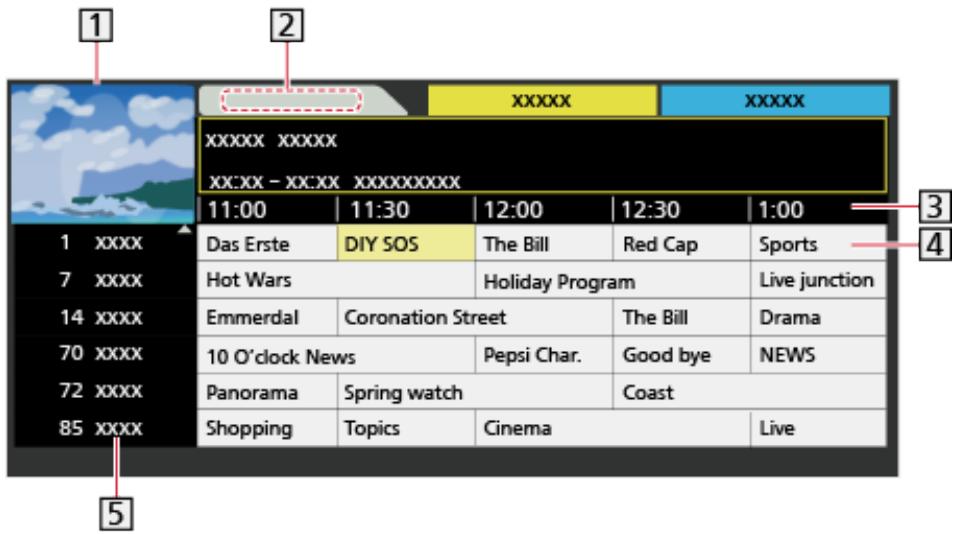
1 TV screen
Date
Time
4 Programme
5 Channel position and name
- To watch the programme
1) Select the current programme and press OK to access.
- The current programme is displayed on the top left of the screen.
2) Select View and press OK to watch.
- To use Timer Programming

Watching > TV Guide > Timer Programming
- To the previous day
(red)
- To the next day
(green)
- To search programme titles and view a list of the searched programmes (if available)
1) Display the search list with (yellow).
2) Select Search and press OK to access.
3) Enter characters with Cursor buttons or Numeric buttons, and press OK to set.

4) Press (green) to start searching.
- All the programme titles including the word you set are listed.
-
Searching without any characters lists all programmes including current programmes.
-
To view a channel list of the selected category
1) Display the category list with (blue).
2) Select the category and press OK to view.
- To list favourite channels, set Favourites Editor.

Watching > Tuning and editing channels > Favourites Editor
- To view more details of the programme
1) Select the programme.
2) Press to view.
-
Press again to return to TV Guide.
-
To exit TV Guide

= Note =
- When this TV is turned on for the first time, or the TV is switched off for more than a week, it may take some time before TV Guide is completely shown.
Timer Programming
This function allows you to select programmes that you want to record to the USB HDD.
- Display TV Guide with GUIDE.
-
Select the forthcoming programme and press OK to access.
-
You can also set a timer event pressing .
- To check / change / cancel a timer event

Recording > Timer Programming > Editing Timer Programming
- LED turns to orange in Standby mode when Timer Programming is set.
- To return to TV Guide
BACK/RETURN
- If you select the current programme, a confirmation screen asking whether you want to watch or record the programme appears. Select Timer Programming and press OK to set USB HDD Rec. to record from the time you finish the timer event setting.
- is displayed on the TV Guide screen if Timer Programming is set from TV Guide.
- Depending on the country you select, you can set Signal Supported Recording (see below).
= Note =
- Not valid in Analogue
- Timer Programming only works reliably if correct time information is received via the signal from the broadcaster or service provider.
- No other channels can be selected while recording of Timer Programming is in progress.
- When recording programmes to the USB HDD, be sure to format the USB HDD and enable it to record in USB Device Setup.

Recording > USB HDD setup
■ Signal Supported Recording
Signal Supported Recording is Timer Programming which is controlled by information from the TV Guide; if programme start and end times are changed by the broadcaster, the timer event will follow the change. Note that Signal Supported Recording only works reliably if correct information is received from broadcasters.
-
The availability of this function depends on the country and TV mode you select.
-
Guide is displayed on the timer event if Signal Supported Recording is set.
= Note =
- If you edit the start time or end time of a signal supported recording event by more than 10 minutes, it will no longer follow the broadcaster's changes to the start or end time. The start and end times will become fixed.
Teletext
Viewing Teletext
-
Switch to teletext with TEXT.
-
Displays the index page (content varies depending on the broadcaster).
- Current / sub page numbers are displayed on the top left of the screen.
-
Time / date is displayed on the top right of the screen.
Colour bar is displayed on the bottom of the screen. -
Select the page with Cursor buttons, Numeric buttons or (coloured buttons).

- To adjust contrast
1) Press MENU three times to display Contrast.
2) Adjust and press OK to set.
- To exit teletext
EXIT
■ Reveal hidden data
- Press MENU.
-
Reveal with (red).
-
Press again to hide.
To view a favourite page stored
Press STTL to view a favourite page.
- Call up the page stored on (blue). (List mode)
- Factory setting is "P103".
■ FULL / TOP / BOTTOM
- Press MENU.
- Press (green) to change the layout.
Watch TV and teletext in two windows at once
-
Press MENU twice.
-
Set Picture and text to On / Off.
-
Operations can be made only in teletext screen.
■ Store frequently viewed pages in the colour bar (List mode)
- Press (coloured buttons) while the page is displayed.
-
Press and hold OK.
-
The stored page number changes to white.
- To change stored pages
1) Press


(coloured buttons) to change.
2) Enter a new page number with Numeric buttons.
3) Press and hold OK.
View sub page
The number of sub pages is displayed on the top of the screen. Press / to view sub page. (Only when teletext has more than one page.)
- The number of sub pages varies depending on the broadcaster (up to 79 pages).
- Searching may take time while you are watching TV.
- To view a specific sub page
1) Press MENU.
2) Press (blue).
3) Enter the 4-digit number (e.g. P6, press 0 0 0 6).
Teletext services are the text information provided by the broadcaster.
-
The features may vary depending on the broadcaster.
-
Display the menu with MENU.
- Select Setup > Display Settings > Teletext and press OK to access.
- Select TOP (FLOF) / List and press OK to set.
TOP mode (For TOP text broadcasting)
TOP is a particular improvement of the standard teletext service that results in an easier search and effective guide.
- Fast overview of the teletext information available
- Easy to use step-by-step selection of the topical subject
- Page status information on the bottom of the screen
Available page up / down
(red) / (green)
- To select among subject blocks
(blue)
- To select next subject within the subject block
(yellow)
(After the last subject, it moves to the next subject block.)
■ FLOF (FASTEXT) mode (For FLOF (FASTEXT) broadcasting)
In FLOF mode, four differently coloured subjects are situated on the bottom of the screen.
To access more information about one of these subjects, press the appropriate coloured button.
This facility enables fast access to information on the subjects shown.
■ List mode
In List mode, four differently coloured page numbers are situated on the bottom of the screen. Each of these numbers can be changed and stored in the TV's memory.
Teletext Character Set
Selects teletext language font.
- Display the menu with MENU.
- Select Setup > Display Settings > Teletext Character Set and press OK to access.
- Select the font and press OK to set.
West:
English, French, German, Greek, Italian, Spanish, Swedish, Turkish, etc.
East1:
Czech, English, Estonian, Lettish, Rumanian, Russian, Ukrainian, etc.
East2:
Czech, Hungarian, Lettish, Polish, Rumanian, etc.
Tuning and editing channels
Setting menu
You can retune channels, edit channel lists, create your favourite channel lists, etc.
- Select the mode with TV.
DVB-S / DVB-C / DVB-T / DVB-via-IP / Analogue
- Display the menu with MENU.
- Select Setup > Tuning Menu and press OK to access.
DVB-S Tuning Menu / DVB-C Tuning Menu / DVB-T Tuning Menu / DVB- via-IP Tuning Menu / Analogue Tuning Menu
-
The menu name varies depending on the TV mode.
-
Select one of the functions and press OK to access.
Channel List Editor / Favourites Editor / Auto Setup / Manual Tuning / Update Channel List / Favourite Network / New Channel Message / Service Replacement / Signal Condition / Attenuator / Add TV Signal
- The function items vary depending on the TV mode and country you select.
Edit DVB channels
You can edit the list of All DVB Channels by adding / deleting and moving channels.
-
Channels not in all DVB channels list cannot be displayed except in this function.
-
Select Channel List Editor and press OK to access.
-
To swap / move the channel position
1) Press (green) to edit.
2) Set the new position with Cursor buttons or Numeric buttons, and press (green) to store.

- To delete the channel
(blue)
- To delete all channels
(yellow)
- To add channel
1) Select a channel from Channels Found.
2) Press OK to add it to All DVB Channels.
- To sort channel names in alphabetical order
(red)
- To add all channels to the list (if available)
1) Press (yellow).
2) Press (green) to add all (depending on the broadcaster).
- To add consecutive channels to the list at once (if available)
1) Press (yellow).
2) Make the channel block and press OK to add.
- To change the category of Channels Found
(blue)
- Press BACK/RETURN and OK to store.
To exchange channel list (DVB-S)
1) Display the menu with MENU.
2) Select Setup > Other Settings > Exchange Channel List and press OK to access.
3) Follow the on-screen instructions.
- During the operation, remove USB devices other than the USB Flash Memory used for this function.

Settings > Setup > Other Settings
■ Skip unwanted Analogue channels
You can hide (skip) unwanted channels. The hidden channels cannot be displayed except in this function.
- Select Channel List and press OK to access.
- Select a channel.
- Press OK to set Reveal / Hide (skip).
:Reveal
:Hide (skip)
- To reveal all channels (if available)

(yellow)
■ Edit Analogue Channels
- To swap / move the channel position (if available)
1) Press (green) to edit.
2) Set the new position with Cursor buttons and press (green) to store.

- To retune each channel (Manual Tuning)

- To rename the channel name
1) Press (blue) to edit.
2) Enter characters (maximum 5 characters) with Cursor buttons or Numeric buttons, and press OK to set.

3) Press BACK/RETURN to store.
= Note =
- If a VCR is connected only with the RF cable in Analogue, edit VCR.
■ List favourite DVB channels
Create your favourite channel lists from various broadcasters (up to 4:
Favourites 1 to 4).
The favourites lists are available for switching in the information banner and the TV Guide screen.
Watching > Basic > Information banner
Watching > TV Guide > Using TV Guide
- Select Favourites Editor and press OK to access.
-
Select a channel to list from all DVB channels.
-
appears when the channel is encrypted.
- To display other favourites
(green)
- To sort channel names in alphabetical order
(red) -
To change the category
(blue) -
Press OK to add it to favourites list.
-
To add all channels to the list (if available)
1) Press (yellow).
2) Press (green) to add all.
- To add consecutive channels to the list at once
1) Press (yellow).
2) Make the channel block and press OK to add.
- Press BACK/RETURN and OK to store.
Edit DVB favourites list
You can edit the favourites list while the cursor is on the channel in the favourites list.
- To move the channel
1) Select the channel.
2) Press (green).
3) Select the new position with Cursor buttons.

4) Press (green) to store.
- To delete the channel
1) Select the channel.
2) Press (blue) to delete.
-
Press (yellow) to delete all channels.
-
To name the favourites
1) Press (red).
2) Enter characters (maximum 10 characters) with Cursor buttons or Numeric buttons, and press OK to set.

3) Press BACK/RETURN to store.
Automatically retunes the channels received in the area.
- This function is available if channel tuning is already performed.
- Only the selected mode is retuned. All the previous tuning settings are erased.
- Child Lock PIN number is required to retune locked channels.
Functions > Child Lock > PIN number
- If tuning has not been done completely, set Manual Tuning.
→ Watching > Tuning and editing channels > Manual Tuning
DVB-S
- Select Antenna System and press OK to access.
- Select One LNB / MiniDiSEqC / DiSEqC 1.0 / Single Cable and press OK to set.
One LNB:
Compatible with single LNB.
MiniDiSEqC:
Up to 2 LNBs can be controlled.
DiSEqC 1.0:
Up to 4 LNBs can be controlled.
Single Cable:
When using the Single Cable router, up to 32 user bands are available.
- You can receive several satellites if you have DiSEqC control antenna system.
-
This TV supports DiSEqC Version 1.0.
-
Select LNB Configuration and press OK to access.
- Select LNB / Satellite and set.
1) Set LNB first.
- If you set to One LNB, LNB is not selectable.
- If you set to MiniDiSEqC or Single Cable, select from LNB AA and AB.
- If you set to DiSEqC 1.0, select from LNB AA, AB, BA and BB.
2) Set Satellite for the selected LNB.
-
Select No Satellite if you do not know the connected satellite. (Available satellite is searched in Auto Setup.)
-
Select User defined to set Test Transponder Frequency manually.
- If you set to Single Cable, additional settings are required. Set SingleCable Version, User Band, User Band Frequency and PIN (depending on the Single Cable router you use). For details, read the manual of the Single Cable router.

Watching > Tuning and editing channels > Selectable satellites
- Press BACK/RETURN to store.
- Select Auto Setup and press OK to access.
- Select Search Mode / Scan Mode and press OK to access.
-
Set the item and press OK to store.
-
Scan Mode
Quick:
Scans the suitable frequency for the selected satellite.
Full:
Scans the whole frequency range.
-
After settings, select Start scan and press OK to search.
-
A confirmation screen is displayed and press OK to start Auto Setup. (Settings are made automatically.)
-
When the operation is completed, the channel at the lowest position will be displayed.
DVB-C, DVB-T, Analogue
- Select Auto Setup and press OK to access.
-
Set DVB-C Auto Setup Settings and press OK to store. (DVB-C)
-
Scan Mode
Quick:
Scans the suitable frequency in your country.
Full:
Scans the whole frequency range.
- Normally set Frequency, Symbol Rate and Network ID to Auto. If Auto is not displayed or if necessary, enter each value specified by your cable provider with Numeric buttons.
-
After settings, select Start scan and press OK to search.
-
A confirmation screen is displayed and press OK to start Auto Setup. (Settings are made automatically.)
-
When the operation is completed, the channel at the lowest position will be displayed.
DVB-via-IP
- Ensure the network connections and network settings are completed.
Functions > DVB-via-IP > DVB-via-IP client connection
Network > Network settings
- Select Auto Setup and press OK to access.
- A confirmation screen is displayed and press OK to access.
- Select a server from Server List.
-
Select Client Settings and press OK to access.
-
Select Unicast Environment to use in a home network.
-
Select Multicast Environment to use in multi family housing units, hotel, hospital, etc. (All servers are selected automatically.)
-
Select Search Channels and press OK to access.
-
Set DVB-via-IP Search Mode and select Start Auto Setup.
-
Set DVB-via-IP configuration to tune DVB channels.
- When the operation is completed, the channel at the lowest position will be displayed.
Auto Setup using the buttons on the TV
- Press and hold INPUT/OK/HOLD for MENU button for 3 seconds to display the menu.
-
Set Auto Setup with following control panel buttons.
-
Move the cursor / select from a range of options / select the menu item
- Access the menu / store settings after adjustments have been made or options have been set with INPUT/OK/HOLD for MENU button
Manual Tuning
- Normally use Auto Setup or Update Channel List to retune DVB channels.
- If tuning has not been done completely or for adjusting the direction of the aerial or dish, use this function. (DVB)
- All DVB channels found are added to Channel List Editor.
DVB-S
-
Please consult the received satellite broadcasting companies for the setting.
-
Select Transponder Frequency / Symbol Rate / Polarisation / Modulation / Service ID and set with Cursor buttons or Numeric buttons.

- Select Start scan and press OK to search.
DVB-C
- Enter the frequency with Numeric buttons.
-
Normally set Symbol Rate and Service ID to Auto.
-
Select Start scan and press OK to search.
DVB-T
-
Select a channel and adjust frequency for each channel.
-
Set where the level of Signal Quality becomes the maximum.
-
Press OK to search.
Analogue
Set Analogue channel manually after Auto Setup.
- Set Sound System and Colour System, and then perform this function. Normally set Colour System to Auto.
SC1: PAL B, G, H / SECAM B, G
SC2: PALI
SC3: PAL D, K / SECAM D, K
- F: SECAM L, L'
- Select the channel position with Numeric buttons.
- Select the channel with Channel Up / Down.

- Set Manual Tuning.
-
Select Store and press OK to set.
-
Use Fine Tuning to make small adjustments to the tuning of an individual programme (affected by weather conditions, etc.).
- If a VCR is connected only with the RF cable, select channel position 0.
DVB-via-IP (DVB-S)
-
Please consult the received satellite broadcasting companies for the setting.
-
Select Transponder Frequency / Symbol Rate / Polarisation / Modulation / FEC / Service ID and set with Cursor buttons or Numeric buttons.

- Select Start scan and press OK to search.
DVB-via-IP (DVB-C)
- Select Frequency / Bandwidth / Modulation Type / Symbol Rate / FEC / Service ID and set with Cursor buttons or Numeric buttons.

-
Normally set Symbol Rate to Auto.
-
Select Start scan and press OK to search.
DVB-via-IP (DVB-T)
- Select Frequency / Bandwidth / Modulation / FEC / Service ID and set with Cursor buttons or Numeric buttons.

- Select Start scan and press OK to search.
= Note =
- For details of DVB-via-IP connections

Functions > DVB-via-IP > DVB-via-IP client connection
- Not valid when Client Settings is set to Multicast Environment (DVB-via-IP)
Update Channel List
By updating the DVB channel list, you can add new channels, delete removed channels or change channel names and positions automatically.
- The channel list is updated while keeping your settings in Channel List Editor, Favourites Editor, Child Lock, etc.
- Depending on the signal condition, the update may not work properly.
- To update DVB-S channels, set Search Mode and Scan Mode before updating.
1) Select Search Mode / Scan Mode and press OK to access.
2) Set each item and press OK to store.
3) After settings, select Start scan and press OK to search.
= Note =
- Not valid when Client Settings is set to Multicast Environment (DVB-via-IP)
Signal Condition
Selects a channel and checks the signal condition with indicators.
- A good Signal Strength is not an indication of suitable signal reception.
Vertical lines show the maximum signal value of the selected channel. - To change the channel

- For DVB
Other settings
Favourite Network
Selects your favourite network for each broadcaster (only available in some countries).
For DVB-C, DVB-T
New Channel Message
Selects whether to give a notification message when a new DVB channel is found or not.
- When a notification message appears, you can perform Update Channel List pressing OK.
- Not valid in DVB-via-IP
Service Replacement
(On / Off)
Set to On to display a message to switch to the available service (only available in some countries).
- For DVB-C, DVB-T
Attenuator
(On/Off)
Automatically reduces the DVB-C signal to avoid the interference.
- If the DVB-C signal is too strong, interference may occur. In this case, set to On to weaken the signal automatically.
Add TV Signal
Adds the TV mode.
- Allows you to add any TV mode which was skipped during initial Auto Setup.
- Selectable satellites and dish alignment to tune DVB-S channels
To ensure your satellite dish is correctly installed, please consult your local dealer.
Also please consult the received satellite broadcasting companies for details.
-
Intelsat at 85.2° East
-
Hot Bird at 13° East
ABS 1 at 75° East
- Eutelsat at 10° East
Express at 53° East
Eutelsat at 9° East
- Intelsat at 45° East
Eutelsat at 7° East
Turksat at 42° East
-
Astra at 4.8° East
-
Hellas at 39 ° East
Thor at 0.8° West / Intelsat at 1° West
-
Eutelsat at 36° East
-
Amos at 4° West
-
Eutelsat at 33° East
Eutelsat at 5° West
Astra at 28.2° East
-
Eutelsat at 7° West
-
Badr at 26 ° East
Eutelsat at 8° West
Eutelsat at 25.5° East
Eutelsat at 12.5° West
Astra at 23.5° East
- Telstar at 15° West
Eutelsat at 21.5° East
SES at 22° West
Astra at 19.2° East
-
Intelsat at 24.5° West
-
Eutelsat at 16° East
-
Hispasat at 30 ° West
Recording
USB HDD setup
Preparations
You can record the digital TV programmes to the connected USB HDD and enjoy playing back in various ways.
- Prepare the USB HDD for the exclusive use of recording with this TV.
- Connect the USB HDD to the USB 2 port with the USB cable.
- Be sure to connect the USB HDD to the mains socket.
- To remove the USB HDD safely from the TV, perform Safely remove USB in USB Device Setup.

Recording > USB HDD setup > Setting for USB HDD
- Check the terminal type and cable plugs are correct for connection.

1 USB port
2 USB cable
3 USB HDD
4 Mains socket
= Caution =
-
All data in the USB HDD will be erased in the following cases:
-
When formatting the USB HDD with this TV

Recording > USB HDD setup > Setting for USB HDD
-
When formatting the USB HDD to use on PC, etc.
-
When the TV is repaired due to a malfunction, you may have to format the USB HDD again with this TV to use it. (All data will be erased after formatting.)
-
To use the USB HDD with your PC after recording with this TV, format it again on your PC. (Special operations or tools may be necessary to format on your PC. For details, read the manual of the USB HDD.)
-
The data recorded on the USB HDD with this TV can only be played back on this TV. You cannot play back its content with another TV (including the TV of the same model number) or any equipment.
- Do not turn the TV off, pull out the mains plug or remove the USB HDD during operation (formatting, recording, etc.). Doing so may cause malfunction of the device or damage the recorded data. (An electric outage may also be a cause of malfunction.)
= Note =
- Analogue TV programme cannot be recorded on the USB HDD.
- The data broadcasting (MHEG, etc.), radio broadcasting are not recorded, and also the recording function does not work during the period without any signal.
- Not all the programmes can be recorded depending on the broadcaster and service provider.
- Depending on the network condition, recording function may not work properly in DVB-via-IP.
- You cannot copy the recorded TV programmes of the USB HDD.
- For details of the USB HDD

Recording > Technical information > USB HDD
Format and set up the USB HDD with this TV in order to use it for recording.
All the USB devices recognised as a mass storage device are listed.
- Please note that USB HDD will be formatted and all data in it will be erased after this setup.
- Before setting, connect the USB HDD and be sure to turn on the USB HDD.

Recording > USB HDD setup > Preparations
- Display the menu with MENU.
- Select Setup > USB Device Setup and press OK to access.
-
Select the USB HDD for recording and press OK to start setup.
-
Some USB HDD may not be displayed.
- To display information of the highlighted device

- When the caution and confirmation screen for using USB HDD is displayed, select Yes and press OK to proceed.
-
When a confirmation screen of USB HDD name is displayed, select Yes and press OK to set.
-
The name for the USB HDD is created automatically. If you want to edit the name, select Yes.
1) Enter characters with Cursor buttons or Numeric buttons, and press OK to set.

2) Press BACK/RETURN to store.
-
When a confirmation screen to enable USB HDD for recording is displayed, select Yes and press OK to set.
-
If another formatted USB HDD for recording already exists, this confirmation screen will be displayed to switch to enable this USB HDD for recording.
Mode of the USB HDD
: The USB HDD is available for recording / playing back.
Only one USB HDD on the list is available for recording.
: The USB HDD is available for playing back.
- To change the mode

- To edit USB HDD name

- To format

- To remove the USB HDD safely from the TV

= Note =
- You can only select one USB HDD for recording at a time.
- You cannot change the settings for the USB HDD while recording is in progress.
Recording current programme
One Touch Recording
Records the current programme to the USB HDD immediately.
- Confirm the remote control code is "73".

Watching > External equipment > Operating with TV's remote control
- Display the menu with MENU.
- Select Setup > Recording Setup > One Touch Recording and press OK to access.
- Select the maximum recording time 30 / 60 / 90 / 120 / 180 (minutes) and press OK to set.
To start One Touch Recording
Press to start.
- Other channels cannot be selected while recording is in progress.
To stop recording in progress
Press to stop.
To play back or delete the recorded content
Recorded TV programmes can be played back in Media Player.
- Display Home with HOME
- Select Devices and press OK to access.
- Select USB HDD for recording and press OK to access.

Media Player > Recorded TV mode
- Even if One Touch Recording is in progress, you can play back all the content. (Depending on the USB HDD, playback may not be possible or the recording may not work properly during playback.)
Records the current programme to the USB HDD constantly within the maximum recordable time.
- Confirm the remote control code is "73".

Watching > External equipment > Operating with TV's remote control
- Display the menu with MENU.
- Select Setup > Recording Setup > REW LIVE TV and press OK to access.
-
Select Auto to start REW LIVE TV.
-
When you select Auto, recording will start automatically.
- This recording may not start if another recording is in progress, TV signal condition is bad or there are no images displayed.
To operate REW LIVE TV
- To pause

- To search backward (up to 90 minutes)

- After pausing or searching backward, the following buttons are available for operation.
: Search backward
D:Searchforward
: Return to the current programme
OK:Playback/Pause
: Search backward / Search forward
: Pause / Resume
:Playback
: Return to the current programme
To stop REW LIVE TV
-
Display the menu with MENU.
-
Select Setup > Recording Setup > REW LIVE TV and press OK to access.
-
Select Off to stop REW LIVE TV.
-
If you stop REW LIVE TV, the recorded content for REW LIVE TV will be deleted.
-
REW LIVE TV is stopped and the recorded content is deleted automatically in the following conditions: (Even if REW LIVE TV stops for the following conditions, as long as the setting is Auto, a new recording starts automatically in a condition that makes the recording available.)
-
Other channels selected
- Locked channel selected
Invalid channel selected - No TV signal
External input selected - When the full-screen application (TV Guide, Media Player, eHELP, etc.) is launched
- When the TV enters Standby or is turned off
- When another recording starts
Timer Programming
Setting Timer Programming
This function allows you to select programmes that you want to record to the USB HDD.
-
Not valid in Analogue
-
Select the mode with TV.
DVB-S / DVB-C / DVB-T / DVB-via-IP
- Display the menu with MENU.
- Select Timer > Timer Programming and press OK to access.
- Press OK to start making the settings.
USB HDD Rec.:
Records the programme to the USB HDD.
-
Select and set the item (channel, date, start time, end time).
-
4 and 7 can also be entered with Numeric buttons.
(Example)
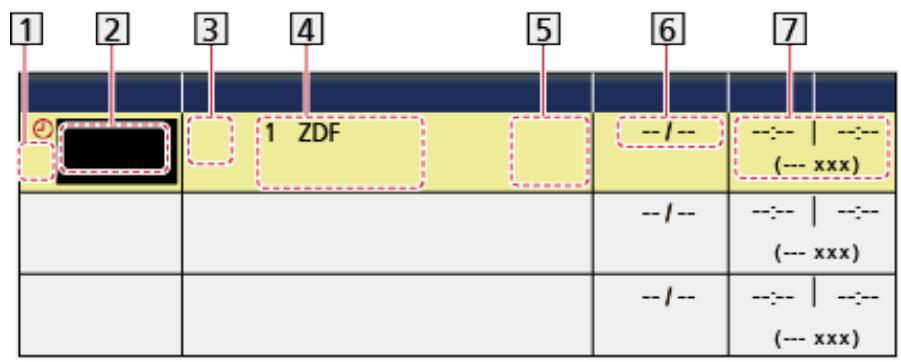
1: Overlapped timer events
Function (USB HDD Rec.)
3 TV mode
DVB-S
DVB-C
DVB-T
DVB-via-IP
- You cannot change the mode within the menu.
4 Channel position, channel name, etc.
5 Guide: Signal Supported Recording (if available)
Watching > TV Guide > Timer Programming
Date
- Daily Sun-Sat: Sunday to Saturday
- Daily Mon-Sat: Monday to Saturday
- Daily Mon-Fri: Monday to Friday
- Weekly Sun / Mon / Tue / Wed / Thu / Fri / Sat: Same time on the same day every week
7 Start time / End time / Duration (automatic display)
Guide: Signal Supported Recording (if available)
Watching > TV Guide > Timer Programming
6. Store with OK.
Editing Timer Programming
- Display the menu with MENU.
- Select Timer > Timer Programming and press OK to access.
-
Select the event.
-
To change a timer event

- Correct as necessary.
Recording > Timer Programming > Setting Timer Programming
- To delete a timer event
1) Press (red).
2) Press OK to delete.
To play back or delete the recorded content
Recorded TV programmes can be played back in Media Player.
- Display Home with HOME.
- Select Devices and press OK to access.
- Select USB HDD for recording and press OK to access.
Media Player > Recorded TV mode
TV Guide may also be used to set timer event.

Watching > TV Guide > Timer Programming
- Timer Programming can store up to 15 events.
- Timer Programming only works reliably if correct time information is received via the signal from the broadcaster or service provider.
- For recording using Timer Programming, the TV must be either on or in Standby.
- No other channels can be selected while recording of Timer Programming is in progress.
- Recording an encrypted (copy-protected) programme may not be possible.
- Depending on the network condition, recording function may not work properly in DVB-via-IP.
-
When the start time comes, the channel will be switched automatically and the video and audio signals will be output. 2 minutes before the start time, a reminder message appears if you are watching TV.
-
To remove the message and start the programming, press OK.
-
To cancel the programming, press EXIT.
-
LED turns to orange in Standby mode when Timer Programming is set.
- “!” identifies that two or more timer events are overlapped. As for the overlapped recording events, the first event starts and finishes as programmed. The next event can then start.
- The recording of Timer Programming automatically changes the channel to the programmed channel a few seconds before the start time.
- For details of the USB HDD

Recording > Technical information
USB HDD
(for recording the digital TV programmes with this TV)
- The capacity of USB HDD that works with this TV is from 160 GB to 6 TB.
- Connect the USB HDD to the mains socket to record and play back properly with this TV.
- Use the USB HDD formatted with this TV.

Recording > USB HDD setup > Setting for USB HDD
- Regarding performance, not all USB HDDs are guaranteed.
= Note =
Data modified with a PC may not be displayed.
- Do not remove the device while the TV is accessing data. Otherwise this can damage the device or TV.
- Do not touch the pins on the device.
- Do not subject the device to a high pressure or impact.
- Insert the device in the correct direction. Otherwise this can damage the device or TV.
- Electrical interference, static electricity, or erroneous operation may damage the data or device.
Media Player
Using Media Player
Information
Media Player allows you to enjoy photo, video or music recorded on the USB Flash Memory / network device, and content recorded with this TV to the formatted USB HDD.
(Example)
Easy ListView:
Still pictures / moving pictures recorded with digital camera or digital video camera are played back.
Mix Folder View:
All files grouped by folder are displayed.
Recorded TV mode:
(For exclusive USB HDD) TV programmes recorded on the USB HDD with this TV are played back.
- During the operation, audio signal is output from DIGITAL AUDIO and HDMI2 (ARC function) terminals. But no video signals are output. To use HDMI2 with ARC function, connect an amplifier that has ARC function and set to use theatre speakers.

Functions > VIERA Link "HDAVI ControlTM"
- Pictures may not appear correctly on this TV depending on the recording equipment used.
- Displaying may take some time when there are many files and folders.
- Partially degraded files may be displayed with reduced resolution.
- Picture setting may not work depending on the condition.
- Folder and file names may be different from those on the digital camera or digital video camera used.
- To insert or remove the USB Flash Memory
Ensure alignment is straight and complete when inserting or removing.
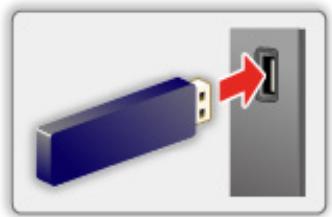
- To remove the USB Flash Memory safely from the TV, perform Safely remove USB in USB Device Setup.
1) Display the menu with MENU.
2) Select Setup > USB Device Setup and press OK to access.
3) Select the device and press (yellow) to set.
= Note =
- To connect the USB HDD
Recording > USB HDD setup
- Check the terminal type and devices are correct for connection.
- For details of the devices
Media Player > Connected device
- For details of supported file formats
Media Player > Supported format
- Insert the USB Flash Memory to the TV.
Media Player > Using Media Player > Information
- To play back content in the USB HDD, ensure the connection and settings are completed.
Recording > USB HDD setup
- To play back content in the network device, ensure the connection and settings are completed.
Media Player > Using Media Player > Network device
- Display Home with HOME.
- Select Devices and press OK to access.
-
Select the device (USB Flash Memory / USB HDD / network device) and press OK to access.
-
When a confirmation screen about the network device is displayed, enter User / Password to access.
-
Select Easy List View / Mix Folder View / Recorded TV and press OK to access.
Easy ListView
Media Player > Easy ListView
Mix Folder View
Media Player > Mix Folder View
Recorded TV
Media Player > Recorded TV mode
- The thumbnail view is displayed.
(Example)
- To display / hide information of the highlighted content

= Note =
- Recorded TV is available for content recorded on the USB HDD with this TV.
- Select the appropriate device and content for playing back each file.
- You can use the following buttons during playback. Confirm the remote control code is "73".


Watching > External equipment > Operating with TV's remote control
You can enjoy photo, video or music stored in the network devices.
- To enable this function, connect this TV to your home network.

Network > Network connections

Network > Network settings
How to set User / Password
- Display the menu with MENU.
- Select Network > File Sharing Settings > Network Device List and press OK to access.
- Select the network device and press OK to access.
- Enter User / Password with Cursor buttons or Numeric buttons, and press OK to set.

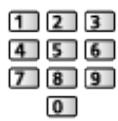
- Press BACK/RETURN to store.
-
To register the new network device, set Server Name / Shared Folder. For details, read the manual of the equipment.
-
Select Register and press OK to set.
-
To delete the registered device, select Delete and press OK to set.
= Note =
- Regarding performance, not all servers are guaranteed.
- Up to 48 devices can be registered.
Easy ListView
Selecting file
Still pictures / moving pictures recorded with digital camera or digital video camera are played back.
Select the file in the thumbnail view and press OK to start playback.
- If a file or folder is edited or renamed by digital camera, digital video camera, PC, etc., the thumbnail may not be displayed properly.
: Error display
To sort by month
1) Display the option menu with OPTION.
2) Select Calendar and press OK to access.
- The preview will start when the title / scene is highlighted in the thumbnail view if it supports a preview. To turn off the preview, set Video Preview to Off.
1) Display the option menu with OPTION.
2) Select and press OK to access.
3) Select Video Setup > Video Preview and press OK to access.
4) Select On / Off and press OK to set.
- Images may not be displayed for an instant in the thumbnail view. Set the preview Off to solve this.
-
This function is available in the thumbnail view.
-
For details of supported file formats

Media Player > Supported format
- To play back the file

Media Player >Playback >Playback
Settings
- Display the option menu with OPTION.
- Select and press OK to access.
- Select one of the following items and press OK to access.
Play Select / Repeat / Shuffle
- Set the item and press OK to store.
Play Select
Settings for playback file selection
Repeat
(Folder / File Repeat / Off)
Playback repeat
Folder:
Playback repeat within the selected folder
File Repeat:
Playback repeat of the selected one file
Shuffle
(On / Off)
Files are played back at random.
Filtering files
You can filter the files as the content type. (Photo / Video)
- Display the option menu with OPTION.
- Select Filter and press OK to access.
- Select Photo / Video and press OK to set.
- Select OK and press OK to change.
To select the music file

Media Player > Mix Folder View > Filtering files
Mix Folder View
Selecting file
Displays the thumbnail of all files which are grouped by folder.
Select the folder / file and press OK to start playback.
: Error display
- The preview will start when the title / scene is highlighted in the thumbnail view if it supports a preview. To turn off the preview, set Video Preview to Off.
1) Display the option menu with OPTION.
2) Select and press OK to access.
3) Select Video Setup > Video Preview and press OK to access.
4) Select On / Off and press OK to set.
- Images may not be displayed for an instant in the thumbnail view. Set the preview Off to solve this.
-
This function is available in the thumbnail view.
-
For details of supported file formats

Media Player > Supported format
- To play back the file

Media Player >Playback >Playback
Settings
- Display the option menu with OPTION.
- Select and press OK to access.
- Select one of the following items and press OK to access.
Play Select / Repeat / Shuffle
- Set the item and press OK to store.
Play Select
Settings for playback file selection
Repeat
(Folder / File Repeat / Off)
Playback repeat
Folder:
Playback repeat within the selected folder
File Repeat:
Playback repeat of the selected one file
Shuffle
(On / Off)
Files are played back at random.
Filtering files
You can filter the files as the content type. (Photo / Video / Music)
- Display the option menu with OPTION.
- Select Filter and press OK to access.
- Select Photo / Video / Music and press OK to set.
- Select OK and press OK to change.
Sorting files
You can sort the files in alphabetical / date order.
- Display the option menu with OPTION.
- Select Sort and press OK to access.
- Select Alphabet(A...Z) / Alphabet(Z...A) / Date(1...9) / Date(9...1) and press OK to change.
Playback
Playback
Photo playback
:
To the previous photo
:
To the next photo
Stop
OK:
Switch the playback mode (Single view / Slideshow).
(blue) :
Rotate
i:
Display / hide the operation guide.
BACK/RETURN :
Return to thumbnail.
Video / Music playback
:
Rewind
:
Fast forward
Stop
OK:
Pause (displays the time seek bar) / Playback
- To jump to the specified time point
1) Display the time seek bar with OK.
2) While the time seek bar is displayed
Press /
Search approx. 10 seconds
Press and hold / :
Search rapidly
3) Jump to the specified time point with OK.
(red) :
To the previous title / scene / track
(green) :
To the next title / scene / track
i:
Display / hide the operation guide.
BACK/RETURN :
Return to thumbnail.
= Note =
- To set Repeat / Shuffle for playback

Media Player > Easy ListView > Selecting file

Media Player > Mix Folder View > Selecting file
Slideshow Settings
Set up the settings for Photo mode.
- Display the option menu with OPTION.
- Select Slideshow Settings with OK.
- Select one of the following items and press OK to access.
Screen Mode / Interval / Back Ground Music
- Set the item and press OK to store.
Screen Mode
(Normal / Zoom)
Selects enlarged or normal viewing.
- Depending on the photo size, the photo may not be fully enlarged to fill the screen (e.g. portrait style picture).
Interval
(Long / Normal / Short)
Selects slideshow interval.
Back Ground Music
(Off / Type1 / Type2 / Type3 / Type4 / Type5 / User / Auto)
Selects the background music during Photo mode.
Type1 - 5:
Music files installed on this TV at the factory settings are played back.
Auto:
Music files stored in the current device are played back.
- If there is no available music data, no sound is played back.
User:
Music files in the device registered by yourself are played back.
- If no music files have been registered or the device which had registered music files is removed, no sound is played back.
To register music
1) Select the music file and press OK to access.
- Depending on the condition of the device, select folders until you reach the desired music file.
2) Select File / Folder and press OK to set.
File:
The selected music file is registered.
Folder:
All the music files in the folder which contains the selected music file are registered.
= Note =
- Picture quality may be degraded depending on the slideshow setting.
- Picture setting may not work depending on the slideshow setting.
Video Setup
Set up the settings for Video mode.
- Display the option menu with OPTION.
- Select Video Setup with OK.
- Select one of the following items and press OK to access.
Multi Audio / Dual Mono Audio / Subtitle Settings
-
Menu items and selectable options vary depending on the content.
-
Set the item and press OK to store.
Multi Audio, Dual Mono Audio
Selects for selectable sound tracks (if available).
- It may take several seconds to change the sound.
- This function is available during playback.
Subtitle Settings
Sets the subtitle setting.
- This function is available during playback.
Subtitle:
Display / hide subtitles (if available).
Subtitle Text:
Selects the font type to display subtitles correctly (if available).
Subtitle Text Size:
Selects the font size of subtitles.
Subtitle Text Colour:
Selects the colour of subtitles.
Subtitle Text Position:
Adjusts the position of subtitles on the screen.
Subtitle Text Delay:
Adjusts the delay time for the subtitles.
Audio output settings
You can enjoy the multi-channel sound via an amplifier connected to DIGITAL AUDIO or HDMI2 (ARC function) terminal.
- To confirm or change the current sound status

Media Player >Playback > Video Setup
- Display the menu with MENU.
- Select Sound > SPDIF Selection and press OK to access.
- Select Auto / PCM / Dolby Audio and press OK to set.
SPDIF Selection
(Auto / PCM / Dolby Audio)
Selects the initial setting for digital audio output signal from DIGITAL AUDIO and HDMI2 (ARC function) terminals.
- SPDIF is a standard audio transfer file format.
Auto:
Dolby Audio (Dolby Digital, Dolby Digital Plus) and HE-AAC multi-channel are output as Dolby Digital Bitstream. MPEG is output as PCM.
PCM:
Digital output signal is fixed to PCM.
Dolby Audio:
Dolby Audio (Dolby Digital, Dolby Digital Plus), HE-AAC and AAC are output as Dolby Digital Bitstream or Dolby Digital Plus Bitstream.
- ARC (Audio Return Channel) is a function of digital audio output using HDMI cable.
Recorded TV mode
Selecting content
- For exclusive USB HDD
- To play back content in the USB HDD, ensure the connection and settings are completed.
→ Recording > USB HDD setup
-
Content list of the selected device is displayed in Recorded TV mode.
-
Remaining capacity of the selected device is displayed on the top right. (This value may not be accurate depending on the condition.)
- Content list is displayed as All or Not Viewed.
All:
All the recorded TV programmes are listed.
Not Viewed:
Content not played back yet are listed.
- Icons are displayed.
Content not played back yet (Once you play back the content, this icon will disappear.)
: Protected content cannot be deleted.
: Currently recording (You can play back this recording content.)
: Group of content
-
Select the content and press OK to start playback.
-
If you have stopped the last playback halfway, a confirmation screen may be displayed to select whether to start from where you stopped last time or from the beginning.
-
If the content has multiple programmes with different parental ratings, the highest restriction is applied to the content. Once you unlock the restriction, all the programmes in the content can be played back.
-
For details of supported file formats
Media Player > Supported format > Video format
■Playback
- To operate playback
: Manual skip
- Press to skip forward approx. 30 seconds.
- Press and hold to skip backward approx. 15 seconds.
: Rewind
:Fastforward
: Stop
OK : Pause (displays the time seek bar) / Playback
- To jump to the specified time point
1) Display the time seek bar with OK.
2) While the time seek bar is displayed
Press / :
Search approx. 10 seconds
Press and hold / :
Search rapidly
3) Jump to the specified time point with OK.
- To display / hide the operation guide and information banner

- To repeat between the starting point “A” and finishing point “B”
(blue)
(Set “A” and “B” in order.)
- The points are reset by pressing again or by other operations.
To the previous / next chapter
(red) / (green)
-
A recorded content is automatically divided into chapters (approx. 5 minutes for each).
-
To change aspect

Watching > For best picture > Aspect
- To display the subtitle (if available)

- To confirm or change the current status (if available)

Home > Live TV > Option Menu
- To return to list
BACK/RETURN
Grouping content
- Select the content to edit and press (blue) to tick in the content list.
- Display the option menu with OPTION.
- Select Create Group / Release Group / Exclude from Group / Change Protect Status and press OK to set.
Create Group:
Create a group of content. Select and tick all the desired content, and then select Create Group.
Release Group:
Select the created group to release, and then select Release Group. (To release several groups at once, tick all the desired groups.)
Exclude from Group:
Select the group and press OK to display the grouped content. To exclude specific content from the group, tick it and then select Exclude from Group. (To exclude some of the content at once, tick all the desired content.)
Change Protect Status:
Select the content to protect from deletion, and then select Change Protect Status. Perform the same way to cancel the protection. (To change the status of some of the content at once, tick all the desired content.)
Deleting content
- Select the content to edit and press (blue) to tick in the content list.
- Delete the content with (red).
- When a confirmation screen is displayed, select Yes and press OK to set.
Chapter List
You can start playback from the chapter list you select.
- Display the chapter list with (yellow).
- Select the chapter and press OK to start playback.
= Note =
- The chapter list is not displayed while the selected content is being recorded.
- Depending on the recorded programmes, some playback operations may not work properly.
Audio output settings
You can enjoy the multi-channel sound via an amplifier connected to DIGITAL AUDIO or HDMI2 (ARC function) terminal.
- To confirm or change the current sound status

Media Player >Playback > Video Setup
- Display the menu with MENU.
- Select Sound > SPDIF Selection and press OK to access.
- Select Auto / PCM / Dolby Audio and press OK to set.
SPDIF Selection
(Auto / PCM / Dolby Audio)
Selects the initial setting for digital audio output signal from DIGITAL AUDIO and HDMI2 (ARC function) terminals.
- SPDIF is a standard audio transfer file format.
Auto:
Dolby Audio (Dolby Digital, Dolby Digital Plus) and HE-AAC multi-channel are output as Dolby Digital Bitstream. MPEG is output as PCM.
PCM:
Digital output signal is fixed to PCM.
Dolby Audio:
Dolby Audio (Dolby Digital, Dolby Digital Plus), HE-AAC and AAC are output as Dolby Digital Bitstream or Dolby Digital Plus Bitstream.
- ARC (Audio Return Channel) is a function of digital audio output using HDMI cable.
Connected device
Device handling caution
Data modified with a PC may not be displayed.
- Do not remove the device while the TV is accessing data. Otherwise this can damage the device or TV.
- Do not touch the pins on the device.
- Do not subject the device to a high pressure or impact.
- Insert the device in the correct direction. Otherwise this can damage the device or TV.
- Electrical interference, static electricity, or erroneous operation may damage the data or device.
- Back up the recorded data at regular intervals to prevent data deterioration, data damage or erratic operation of the TV. Panasonic is not liable for any deterioration or damage of recorded data.
- It is recommended to connect the device to the TV's USB port directly.
- Some USB devices or USB HUB may not be used with this TV.
- You cannot connect any devices using a USB card reader.
USB Flash Memory
USB Flash Memory format:
FAT16, FAT32 or exFAT
- USB HDDs formatted on a PC are not guaranteed to work in Media Player.
USB HDD
- The capacity of USB HDD that works with this TV is from 160 GB to 6 TB.
- Connect the USB HDD to the mains socket to record and play back properly with this TV.
- Use the USB HDD formatted with this TV.

Recording > USB HDD setup > Setting for USB HDD
- Regarding performance, not all USB HDDs are guaranteed.
Supported format
Photo format
Supported Photo formats
JPEG (.jpg, .jpeg)
Sub-sampling:
4:4:4, 4:2:2, 4:2:0
Image resolution (pixel):
8 × 8 to 30719 × 17279
- DCF and EXIF standards
- Progressive JPEG is not supported.
= Note =
- Some files may not be played back even if they fulfil these conditions.
- Some files may not be played back correctly depending on the resolution, etc.
- Do not use multi-byte characters or other special codes for file names.
- Connected devices may become unusable with this TV if the file or folder names are changed.
Supported Video formats
AVI (.avi)
Video codec:
H.264, MPEG1, MPEG2, MPEG4, VC-1, WMV9
Audio codec:
AAC, ADPCM, Dolby Audio (Dolby Digital, Dolby Digital Plus), HE-AAC, LPCM, MP3, WMA, WMA Pro
- MP4 (.f4v, .m4v, .mp4)
Video codec:
H.264, H.265 (HEVC), MPEG1, MPEG2, MPEG4
Audio codec:
AAC, Dolby Audio (Dolby Digital, Dolby Digital Plus), HE-AAC, MP3
-
This TV supports this container recorded with Panasonic products. For details, read the manual of the products.
-
MKV (.mkv)
Video codec:
H.264, H.265 (HEVC), MPEG1, MPEG2, MPEG4
Audio codec:
AAC, Dolby Audio (Dolby Digital, Dolby Digital Plus), HE-AAC, MP3, Vorbis
- ASF (.asf, .wmv)
Video codec:
MPEG4, VC-1, WMV9
Audio codec:
AAC, Dolby Audio (Dolby Digital, Dolby Digital Plus), HE-AAC, LPCM, MP3, WMA, WMA Pro
-
Copy-protected files cannot be played back.
-
FLV (.flv)
Video codec:
H.264
Audio codec:
AAC, MP3
3GPP (.3gp, .3g2)
Video codec:
H.264, MPEG4
Audio codec:
AAC, HE-AAC
PS (.mod, .mpg, .mpeg, .vob, .vro)
Video codec:
H.264, MPEG1, MPEG2, VC-1
Audio codec:
AAC, Dolby Audio (Dolby Digital, Dolby Digital Plus), HE-AAC, LPCM, MP3
TS (.mts, .m2ts, .tp, .trp, .ts, .tts)
Video codec:
H.264, H.265 (HEVC), MPEG1, MPEG2, VC-1
Audio codec:
AAC, Dolby Audio (Dolby Digital, Dolby Digital Plus), HE-AAC, MP3
WebM (.webm)
Video codec:
VP9
Audio codec:
Vorbis
Supported Subtitles formats
-
MicroDVD, SubRip, TMPlayer (.srt, .sub, .txt)
-
The video file and subtitles text file are inside the same folder, and the file names are the same except for the file extensions.
-
If there are more than one subtitles text files inside the same folder, they are displayed in the following order of priority:“.srt”,“.sub”,“.txt”.
= Note =
- Some files may not be played back even if they fulfil these conditions.
- Some files may not be played back correctly depending on the resolution, frame rate condition, etc.
- Some subtitles or chapter functions may not be available.
- Do not use multi-byte characters or other special codes for file names.
- Connected devices may become unusable with this TV if the file or folder names are changed.
- Supported formats are different in Media Player and media server.
Supported Music formats
- MP3 (.mp3)
-
AAC / Apple Lossless (.m4a)
-
Copy-protected files cannot be played back.
-
FLAC (.flac)
WMA / WMA Pro (.wma) -
Copy-protected files cannot be played back.
-
LPCM (.wav)
= Note = -
Some files may not be played back even if they fulfil these conditions.
- Do not use multi-byte characters or other special codes for file names.
- Connected devices may become unusable with this TV if the file or folder names are changed.
Network
Internet content
Information
You can access some specific websites supported by Panasonic, and enjoy internet content such as videos, games, communication tools, etc. from Apps. (Example)
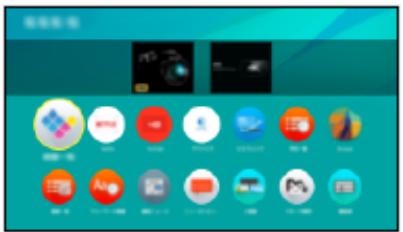
- A broadband network environment is required to use this function. Ensure the network connections and network settings are completed.
Network > Network connections
Network > Network settings
1. Display Apps with APPS.
- For details of Apps

⇒ Home >Apps
-
Depending on the usage conditions, it may take a while to read all the data.
-
Select the desired item and press OK to access.
(Example)
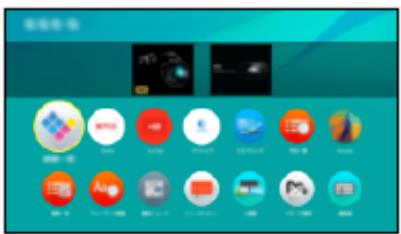
- To exit Apps
EXIT
- You can connect a keyboard for character input in the applications. You can also use the keyboard for TV operation.

Functions > Keyboard
- If you cannot access the internet content, check the network connections and settings.

Network > Network connections

Network > Network settings
- Design and specifications are subject to change without notice.
- Not all the features of the websites are available.
- Be sure to update the software when a software update notice is displayed on the TV screen. If the software is not updated, you may not be able to use Apps. You can update the software later manually.

Network > Network settings > Software Update
- The services through Apps are operated by their respective service providers and such service may be discontinued either temporarily or permanently without notice. Therefore, Panasonic will make no warranty for the content or the continuity of the services.
- Content may not be available depending on the country you select.
- Content may be presented in specific languages.
- Depending on the connection environment, the internet connection may be slow or may not be successful.
DLNA
In-House streaming
This TV is a DLNA Certified™ product.
DLNA® (Digital Living Network Alliance) is a standard that makes DLNA Certified digital electronics easier and more convenient to use on a home network. To learn more, visit www.dlna.org.
- To enable this function, connect this TV to your home network.

Network > Network connections

Network > Network settings
■Playback of sharing content stored in the media server
Store photo, video or music content into the DLNA Certified media server connected to your home network. And then you can enjoy the content on this TV.
(Example)
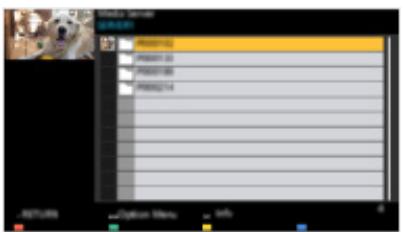
- For details of watching and operating content on this TV

Network > DLNA > Using DLNA
- For details of supported file formats

Network > Supported format
■Playback of sharing content on this TV with the DMC (Digital Media Controller) network equipment
You can enjoy content stored in the media server by controlling with the DMC network equipment connected to your home network.
- To use this function with your smartphone or PC, set TV Remote App Settings of this TV.
Network > Network settings > TV Remote App Settings
And you need to install the application for controlling this TV on your smartphone.
Support > FAQs > Detailed information
For the operations, refer to the support information of the application.
- Sharing the content of this TV with another piece of network equipment
You can enjoy the content of this TV with another network equipment connected to your home network.
Available content:
- Photo, video or music content of this TV
Available network equipment:
DLNA Certified TV
- Smartphone, etc.
- To use this function with your smartphone, you need to install the application for controlling this TV on your smartphone.
Support > FAQs > Detailed information
For the operations, refer to the support information of the application.
- To use this function with another DLNA Certified TV, set Network Link Settings of this TV.
Network > Network settings > Network Link Settings
- Only 1 piece of other equipment can share the content of this TV.
= Note =
- This function is not available when the TV is turned off with Mains Power On / Off switch.
To use DLNA® features, ensure the preparations of the media server, network connections and network settings are completed.
Network > DLNA > In-House streaming
Network > Network connections
Network > Network settings
- Display Home with HOME.
- Select Devices and press OK to access.
-
Select the media server and press OK to access.
-
To display / hide information of the highlighted media server
1) Display the option menu with OPTION.
2) Select Show Info. and press OK to access.
- Select the file and press OK to access.
(Example)
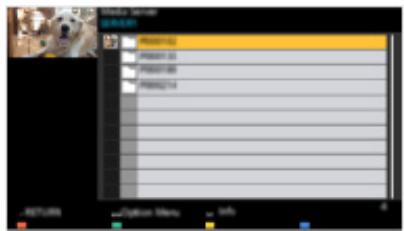
Depending on the condition of media server, you may need to select the folder before selecting the file.
- To display / hide information of the highlighted file

= Note =
- Non-playable files are also listed but cannot be selected.
- You can use the following buttons during playback. Confirm the remote control code is "73".

Watching > External equipment > Operating with TV's remote control
Network connections
Internet connection
A broadband network environment is required to use internet services.
- If you do not have any broadband network services, please consult your retailer for assistance.
- Dial-up internet connections cannot be used.
- Required speed (effective): at least 1.5 Mbps for SD (Standard Definition) and 6 Mbps for HD (High Definition) picture quality, respectively. If the transfer speed is not enough, content may not be played back properly.
■ Wireless connection
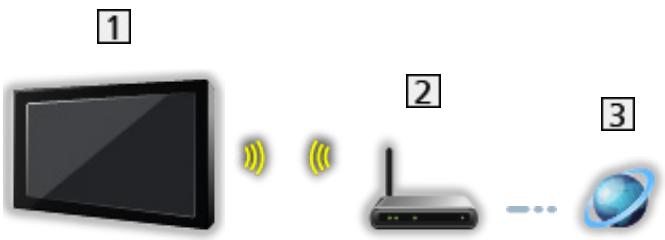
Built-in wireless LAN (Rear of the TV)
2 Access point
3 Internet environment
■ Wired connection
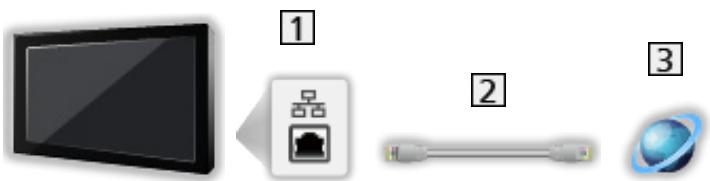
1 ETHERNET terminal
2 LAN cable (Shielded)
- Use Shielded Twist Pair (STP) LAN cable.
3 Internet environment
To use DLNA features, you need a home network environment and you can operate the features without a broadband network environment.
- A broadband network environment is required to use internet services.


Network > Network connections > Internet connection
■ Wireless connection (For DLNA and internet service)
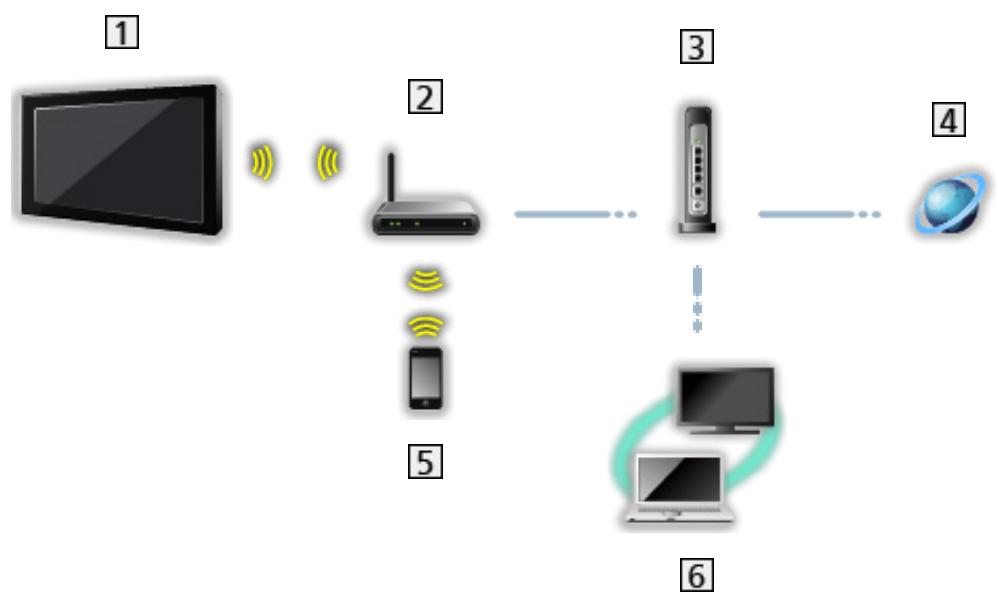
1 Built-in wireless LAN (Rear of the TV)
2 Access point
Hub / Router
4 Internet environment
5 Smartphone, etc.
DLNA Certified media server (PC, etc.)
■ Wired connection (For DLNA and internet service)
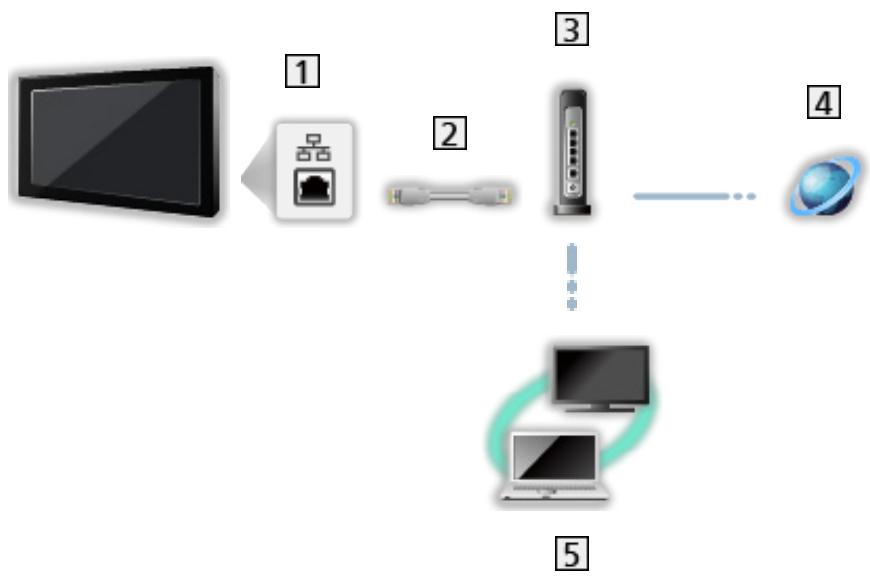
1 ETHERNET terminal
2 LAN cable (Shielded)
- Use Shielded Twist Pair (STP) LAN cable.
Hub / Router
4 Internet environment
DLNA Certified media server (PC, etc.)
■ Wireless connection (For DLNA)
1


2


1 TV
- To use the TV as a wireless access point

Network > Network settings > Custom - Wireless Access Point
2 DLNA Certified media server (PC, etc.)
3 Smartphone, etc.
Note
- Ensure to use a LAN straight cable.
- Set up and connect equipment required for the network environment. You cannot make such settings on this TV. Read the manual of the equipment.
- If your modem has no broadband router functions, use a broadband router.
- If your modem has broadband router functions but there are no vacant ports, use a hub.
- Ensure that the broadband routers and hubs are compatible with 10BASE-T / 100BASE-TX.
- If you use the equipment compatible only with 100BASE-TX, category 5 or later LAN cables are required.
- Contact your Internet Service Provider (ISP) or telecommunications company for further assistance regarding the network equipment.
- Confirm the terms and conditions of the contracts with your Internet Service Provider (ISP) or telecommunications company. Depending on the contracts, additional fees may be charged or multiple connections to the internet may be impossible.
- Turn the TV off with Mains Power On / Off switch, then turn it on again when changing or making the network connection again.
- Depending on the network condition, the content may not be played back properly.
- For details of DVB-via-IP connections

Functions > DVB-via-IP > DVB-via-IP client connection
Network settings
Network Connection
Ensure the connections are completed before starting network setup.

Network > Network connections
Quick setup - Wireless
- Display the menu with MENU.
-
Select Network > Network Connection and press OK to access.
-
Confirm the encryption key, settings and position of your access point before starting setup. For details, read the manual of the access point.
-
Select Quick setup and press OK to access.
-
When the LAN cable is connected, wired setup will be done automatically.
-
Select your desired access point and press OK to access.
-
Available Wireless Networks are displayed automatically.
: Encrypted access point
- For WPS(Push button)
1) Select Easy setup with Push button and press OK to access.
2) Press the WPS button on the access point until the light flashes.
3) Connect the TV with the access point with OK.
WPS: Wi-Fi Protected SetupTM
- If the connection fails, check the settings and positions of your access point. And then, follow the on-screen instructions.
-
It is recommended to select the encrypted access point.
-
Enter the encryption key of the access point and press OK to set.
-
You can set characters using Numeric buttons.
-
Press BACK/RETURN to store.
-
Automatically setup is done and Network Status is displayed.

Network > Network settings > Network Status
-
Select Exit and press OK to set.
-
To set manually

Network > Network settings > Custom - Wireless
Quick setup - Wired
- Display the menu with MENU.
- Select Network > Network Connection and press OK to access.
- Select Quick setup and press OK to access.
- Automatically setup is done and Network Status is displayed.

Network > Network settings > Network Status
-
Select Exit and press OK to set.
-
To set manually

Network > Network settings > Custom - Wired
= Note =
- To deactivate wireless, set Easy Mirroring to Off and confirm the network connection type is set to Wired.
Ensure the connections are completed before starting network setup.
Network > Network connections
-
Display the menu with MENU.
-
Select Network > Network Connection > Custom > Wireless and press OK to access.
-
Confirm the encryption key, settings and position of your access point before starting setup. For details, read the manual of the access point.
-
Select your desired access point and press OK to access.
-
Available Wireless Networks are displayed automatically.
: Encrypted access point
- For WPS(Push button)
1) Press (red).
2) Press the WPS button on the access point until the light flashes.
3) Connect the TV with the access point with OK.
WPS: Wi-Fi Protected Setup™
- If the connection fails, check the settings and positions of your access point. And then, follow the on-screen instructions.
For WPS(PIN)
1) Press (green).
2) Enter the PIN code to the access point.
3) Connect the TV with the access point with OK.
- For Manual
1) Press (yellow).
2) You can set up SSID, security settings and encryption key manually.
3) Follow the on-screen instructions and set manually.
- To search access points again
(blue)
- To display / hide information of the highlighted access point
i
-
It is recommended to select the encrypted access point.
-
Enter the encryption key of the access point and press OK to set.
-
You can set characters using Numeric buttons.
-
Press BACK/RETURN to store.
-
IP/DNS Settings is displayed.
Acquire IP Address / Acquire DNS Address
- Auto is recommended.
- Available settings are displayed automatically.
- To set manually, select and set IP Address / Subnet Mask / Default Gateway / DNS Address.
Proxy Settings
- It is not required for normal household use.
- Some internet services may not be available depending on the proxy setting.
Proxy:
This is the address of the relay server which is connected between the browser and the target server to send data to the browser.
1) Select Proxy and press OK to access.
2) Enter the address with Cursor buttons or Numeric buttons, and press OK to set.

3) Press BACK/RETURN to store.
Proxy Port:
This number is also specified by the provider with the proxy address.
1) Select Proxy Port.
2) Enter the number with Numeric buttons.
3) Press BACK/RETURN to store.
- Select Network Status and press OK to access.

Network > Network settings > Network Status
- Select Exit and press OK to set.
Ensure the connections are completed before starting network setup.

Network > Network connections
- Display the menu with MENU.
- Select Network > Network Connection > Custom > Wired and press OK to access.
- IP/DNS Settings is displayed.
Acquire IP Address / Acquire DNS Address
- Auto is recommended.
- Available settings are displayed automatically.
- To set manually, select and set IP Address / Subnet Mask / Default Gateway / DNS Address.
Proxy Settings
- It is not required for normal household use.
- Some internet services may not be available depending on the proxy setting.
Proxy:
This is the address of the relay server which is connected between the browser and the target server to send data to the browser.
1) Select Proxy and press OK to access.
2) Enter the address with Cursor buttons or Numeric buttons, and press OK to set.

3) Press BACK/RETURN to store.
Proxy Port:
This number is also specified by the provider with the proxy address.
1) Select Proxy Port.
2) Enter the number with Numeric buttons.
3) Press BACK/RETURN to store.
- Select Network Status and press OK to access.

Network > Network settings > Network Status
- Select Exit and press OK to set.
= Note =
- To deactivate wireless, set Easy Mirroring to Off and confirm the network connection type is set to Wired.
You can use the TV as a wireless access point and connect the network equipment without an access point.
-
Confirm the PIN code, network settings of the equipment before starting setup. For details, read the manual of the equipment.
-
Display the menu with MENU.
- Select Network > Network Connection > Custom > Wireless Access Point and press OK to access.
-
Select Connect to device in WPS and press OK to access.
-
To set manually, select Change settings (see below).
-
Select and set WPS(Push button) / WPS(PIN) and press OK to access.
WPS(Push button):
Set up the equipment for WPS(Push button). For details, read the manual of the equipment.
WPS(PIN):
Enter the PIN code of the equipment.
- If the connection fails, check the settings and positions of the equipment. And then, follow the on-screen instructions.
Change settings
You can set up Network Name(SSID), Encryption key, Wireless type and Channel setting method manually.
Follow the on-screen instructions and set manually.
- Set Reset settings to reset the items for Change settings.
= Note =
- You cannot connect the internet service while the TV is set to Wireless Access Point.
- You can connect up to 7 devices. But the transfer rate varies according to communication environment or the numbers of connected equipment.
- To confirm the current network settings

Network > Network settings > Network Status
- Ensure the equipment to connect supports WPS for this setup.
WPS: Wi-Fi Protected Setup™
Network Status
Displays and checks the network status (MAC Address, current network settings, etc.).
- Display the menu with MENU.
- Select Network > Network Status and press OK to access.
- Automatically testing is done and Network Status is displayed.
Try Again:
Performs automatic testing of the network connection for the TV and displays the current status again.
Status Details:
Displays the detailed network status (SSID, security settings, etc.).
- For information about the network connection, select Help.
TV Name
Sets your favourite name for this TV.
- Display the menu with MENU.
- Select Network > TV Name and press OK to access.
-
Enter characters and press OK to set.
-
This name is used as the name of this TV on the screen of the other network equipment.
- When you use two or more TVs in your network environment, set the names of the TVs for each.
TV Remote App Settings
Sets to control the TV with the equipment (smartphone, etc.) connected to your network.
- Display the menu with MENU.
- Select Network > TV Remote App Settings and press OK to access.
- Select one of the following items and press OK to access.
TV Remote / Powered On by Apps / Networked Standby / Home Streaming / Device to upload contents / Delete All Pairings
- Set the item and press OK to store.
TV Remote
(On / Off)
Enables controlling the TV from the network equipment (smartphone, etc.).
Powered On by Apps
(On / Off)
Enables turning the TV on from the network equipment (smartphone, etc.).
- Depending on the network condition, you may have to turn the TV on with Standby On / Off switch of the TV's remote control.
- Changing the default configuration may result in higher energy consumption of the product.
- LED turns to orange in Standby mode when Powered On by Apps is set to On.
Networked Standby
(On / Off)
Enables turning the TV on via the LAN cable or wireless LAN using a wake-up message sent from the network equipment in the home network.
- Changing the default configuration may result in higher energy consumption of the product.
Home Streaming
(Always / Only when powered on)
Enables sharing the TV programme and content of this TV with the network equipment (smartphone, etc.) in the home network.
- Changing the default configuration may result in higher energy consumption of the product.
- LED turns to orange in Standby mode when Home Streaming is set to Always.
Device to upload contents
Selects device to upload content from the network equipment (smartphone, etc.).
Delete All Pairings
Delete the pairing information for all paired devices.
= Note =
- This function is not available when the TV is turned off with Mains Power On / Off switch.
- You need to install the application for controlling this TV on your smartphone.

Support > FAQs > Detailed information
For the operations, refer to the support information of the application.
- Depending on the network condition, this function may not be available.
- Depending on the area, this function may not be available. For details, consult your local Panasonic dealer.
Network Link Settings
Sets to control the TV with devices connected to the network.
- Display the menu with MENU.
- Select Network > Network Link Settings and press OK to access.
- Select one of the following items and press OK to access.
DLNA Server / Registration Type / Remote Device List
- Set the item and press OK to store.
DLNA Server
(On / Off)
Enables sharing the content of this TV with the network equipment (DLNA Certified TV, etc.).
- To use this function with another TV, select the name of this TV from the DLNA server list of another TV, and then select the content to share. Also read the manual of another TV.
- To use this function with your smartphone, you need to install the application for controlling this TV on your smartphone.

Support > FAQs > Detailed information
For the operations, refer to the support information of the application.
- Changing the default configuration may result in higher energy consumption of the product.
- LED turns to orange in Standby mode when DLNA Server is set to On.
Registration Type
(Auto / Manual)
Selects the type to restrict the access to this TV for each piece of equipment on the home network.
Auto:
All available equipment on the home network is accessible (maximum 16 pieces of equipment).
Manual:
Sets the restrictions for each piece of equipment in Remote Device List.
Remote Device List
Lists the equipment accessible to this TV on the home network.
= Note =
- Depending on the area, this function may not be available. For details, consult your local Panasonic dealer.
File Sharing Settings
Network Device List
Lists the accessible network devices to play back the content in Media Player.

Media Player > Using Media Player > Network device
Mirroring Settings
Settings for the mirroring function

Functions > Mirroring > Mirroring Settings
Control4 Settings
Settings for the Control4 function
- Display the menu with MENU.
- Select Network > Control4 Settings and press OK to access.
- Select Control4 Discovery / Send Identify and press OK to access.
- Set the item and press OK to store.
Control4 Discovery
(On / Off)
Enables Control4 mode.
Send Identify
Sends identifying message to Control4 controller.
- This function is available when Control4 Discovery is set to On.
= Note =
- For details of the settings and operations, consult your local Control4 dealer.
Software Update
Accesses the specific website to update the TV's software if any updates are available.
- Display the menu with MENU.
- Select Network > Software Update and press OK to access.
-
Follow the on-screen instructions.
-
A broadband network environment is required to use this function.
New Software Message
Selects whether to give a notification message when new software is found via network or not.
- Display the menu with MENU.
- Select Network > New Software Message and press OK to access.
- Select On / Off and press OK to set.
Terms of Service and Settings
Displays the terms of service and settings.
- Display the menu with MENU.
- Select Network > Terms of Service and Settings and press OK to access.
- Follow the on-screen instructions.
Photos
Selecting file
Ensure the preparations of the media server, network connections and network settings are completed.
Network > DLNA > In-House streaming
Network > Network connections
Network > Network settings
- Display Home with HOME.
- Select Devices and press OK to access.
-
Select the media server and press OK to access.
-
To display / hide information of the highlighted media server
1) Display the option menu with OPTION.
2) Select Show Info. and press OK to access.
-
Select the file and press OK to access.
-
Depending on the condition of media server, you may need to select the folder before selecting the file.
- To display / hide information of the highlighted file
i
= Note =
- Non-playable files are also listed but cannot be selected.
■Playback
To operate Single view
: To the previous photo
: To the next photo
: Stop (return to list)
OK : Slideshow
- To display / hide the operation guide
i
To rotate 90°
(blue)
- To return to list
BACK/RETURN
Using Slideshow
- Select the file from the thumbnail of photos for the first view.
-
Start Slideshow with (red) and OK.
-
To display / hide the operation guide

- To pause (return to Single view)

- To return to list

■ Slideshow Settings
Set up the settings for photo file operations on this TV.
- Display the option menu with OPTION.
- Select Slideshow Settings and press OK to access.
- Select one of the following items and press OK to access.
Interval / Repeat / Back Ground Music
- Set the item and press OK to store.
Interval
(Long / Normal / Short)
Selects slideshow interval.
Repeat
(On/Off)
Slideshowhow repeat
Back Ground Music
(Off / Type1 / Type2 / Type3 / Type4 / Type5)
Selects the background music during Photo mode.
Videos
Selecting file
Ensure the preparations of the media server, network connections and network settings are completed.

Network > DLNA > In-House streaming

Network > Network connections

Network > Network settings
- Display Home with HOME.
- Select Devices and press OK to access.
-
Select the media server and press OK to access.
-
To display / hide information of the highlighted media server
1) Display the option menu with OPTION.
2) Select Show Info. and press OK to access.
-
Select the file and press OK to access.
-
Depending on the condition of media server, you may need to select the folder before selecting the file.
- To display / hide information of the highlighted file

= Note =
- Non-playable files are also listed but cannot be selected.
■Playback
If you have stopped the last playback halfway, a confirmation screen may be displayed to select whether to start from where you stopped last time or from the beginning.
To operate playback
: Manual skip (if available)
- Press to skip forward approx. 30 seconds.
:Rewind
:Fastforward
: Stop
OK : Pause (displays the time seek bar / slow playback) / Playback
- To jump to the specified time point
1) Display the time seek bar with OK.
2) While the time seek bar is displayed
Press / : Search approx. 10 seconds Press and hold / : Search rapidly
3) Jump to the specified time point with OK.
- To display / hide the operation guide and information banner
i
- To the previous content
(red)
- To the next content
(green)
To change aspect
1) Display the menu with MENU.
2) Select Picture > Screen Settings > Aspect and press OK to access.
3) Select the mode and press OK to set.
Aspect1:
Displays the content in original size.
Aspect2:
Displays the content enlarged without distortion.
-
Aspect cannot be changed depending on the content.
-
To return to list
BACK/RETURN
Video Setup
Set up the settings for video file operations on this TV.
- Display the option menu with OPTION.
- Select Video Setup and press OK to access.
- Select one of the following items and press OK to access.
Video Preview / Multi Audio / Dual Audio / Dual Mono Audio / Repeat / Subtitle Settings
-
Menu items and selectable options vary depending on the content.
-
Set the item and press OK to store.
Video Preview
(On / Off)
Sets to start the preview of the title or scene in the thumbnail view.
- Images may not be displayed for an instant in the thumbnail view. Set the preview Off to solve this.
Multi Audio, Dual Audio, Dual Mono Audio
Selects for selectable sound tracks (if available).
- It may take several seconds to change the sound.
- This function is available during playback.
Repeat
(On / Off)
Playback repeat within the selected file
Subtitle Settings
Sets the subtitle setting.
- This function is available during playback.
Subtitle:
Display / hide subtitles (if available).
Subtitle Text:
Selects the font type to display subtitles correctly (if available).
Subtitle Text Size:
Selects the font size of subtitles.
Subtitle Text Colour:
Selects the colour of subtitles.
Subtitle Text Position:
Adjusts the position of subtitles on the screen.
Subtitle Text Delay:
Adjusts the delay time for the subtitles.
Audio output settings
You can enjoy the multi-channel sound via an amplifier connected to DIGITAL AUDIO or HDMI2 (ARC function) terminal.
- To confirm or change the current sound status

Network > Videos > Video Setup
- Display the menu with MENU.
- Select Sound > SPDIF Selection and press OK to access.
- Select Auto / PCM / Dolby Audio and press OK to set.
SPDIF Selection
(Auto / PCM / Dolby Audio)
Selects the initial setting for digital audio output signal from DIGITAL AUDIO and HDMI2 (ARC function) terminals.
- SPDIF is a standard audio transfer file format.
Auto:
Dolby Audio (Dolby Digital, Dolby Digital Plus) and HE-AAC multi-channel are output as Dolby Digital Bitstream. MPEG is output as PCM.
PCM:
Digital output signal is fixed to PCM.
Dolby Audio:
Dolby Audio (Dolby Digital, Dolby Digital Plus), HE-AAC and AAC are output as Dolby Digital Bitstream or Dolby Digital Plus Bitstream.
- ARC (Audio Return Channel) is a function of digital audio output using HDMI cable.
= Note =
- During the operation, audio signal is output from DIGITAL AUDIO and HDMI2 (ARC function) terminals. But no video signals are output. To use HDMI2 with ARC function, connect an amplifier that has ARC function and set to use theatre speakers.

Functions > VIERA Link "HDAVI Control™"
Music
Selecting file
Ensure the preparations of the media server, network connections and network settings are completed.

Network > DLNA > In-House streaming

Network > Network connections

Network > Network settings
- Display Home with HOME.
- Select Devices and press OK to access.
-
Select the media server and press OK to access.
-
To display / hide information of the highlighted media server
1) Display the option menu with OPTION.
2) Select Show Info. and press OK to access.
-
Select the file and press OK to access.
-
Depending on the condition of media server, you may need to select the folder before selecting the file.
- To display / hide information of the highlighted file

= Note =
- Non-playable files are also listed but cannot be selected.
■Playback
- To operate playback
:Rewind
:Fastforward
: Stop
OK : Pause (displays the time seek bar) / Playback
- To jump to the specified time point
1) Display the time seek bar with OK.
2) While the time seek bar is displayed
Press / :
Search approx. 10 seconds
Press and hold / :
Search rapidly
3) Jump to the specified time point with OK.
- To display / hide the operation guide
i
- To the previous track
(red)
- To the next track
(green)
- To return to list
BACK/RETURN
Music Setup
Set up the settings for music file operations on this TV.
- Display the option menu with OPTION.
- Select Music Setup > Repeat with OK.
- Select Off / Folder / One and press OK to set.
Folder:
Playback repeat within the selected folder
One:
Playback repeat of the selected one file
Supported format
Photo format
Supported Photo formats
JPEG (.jpg, .jpeg)
Sub-sampling:
4:4:4, 4:2:2, 4:2:0
Image resolution (pixel):
8 × 8 to 30719 × 17279
- DCF and EXIF standards
- Progressive JPEG is not supported.
= Note =
- Some files may not be played back even if they fulfil these conditions.
- Do not use multi-byte characters or other special codes for file names.
- Connected devices may become unusable with this TV if the file or folder names are changed.
Supported Video formats
AVI (.avi)
Video codec:
H.264, MPEG1, MPEG2, MPEG4, VC-1, WMV9
Audio codec:
AAC, ADPCM, Dolby Audio (Dolby Digital, Dolby Digital Plus), HE-AAC, LPCM, MP3, WMA
- MP4 (.f4v, .m4v, .mp4)
Video codec:
H.264, H.265 (HEVC), MPEG1, MPEG2, MPEG4
Audio codec:
AAC, Dolby Audio (Dolby Digital, Dolby Digital Plus), HE-AAC, MP3
-
This TV supports this container recorded with Panasonic products. For details, read the manual of the products.
-
MKV (.mkv)
Video codec:
H.264, H.265 (HEVC), MPEG1, MPEG2, MPEG4
Audio codec:
AAC, Dolby Audio (Dolby Digital, Dolby Digital Plus), HE-AAC, MP3, Vorbis
- ASF (.asf, .wmv)
Video codec:
MPEG4, VC-1, WMV9
Audio codec:
AAC, Dolby Audio (Dolby Digital, Dolby Digital Plus), HE-AAC, LPCM, MP3, WMA
-
Copy-protected files cannot be played back.
-
FLV (.flv)
Video codec:
H.264
Audio codec:
AAC, MP3
3GPP (.3gp, .3g2)
Video codec:
H.264, MPEG4
Audio codec:
AAC, HE-AAC
PS (.mod, .mpg, .mpeg, .vob, .vro)
Video codec:
MPEG1, MPEG2
Audio codec:
Dolby Audio (Dolby Digital), LPCM
TS (.mts, .m2ts, .tp, .trp, .ts, .tts)
Video codec:
H.264, H.265 (HEVC), MPEG1, MPEG2
Audio codec:
AAC, Dolby Audio (Dolby Digital, Dolby Digital Plus), HE-AAC
WebM (.webm)
Video codec:
VP9
Audio codec:
Vorbis
Supported Subtitles formats
-
MicroDVD, SubRip, TMPlayer (.srt, .sub, .txt)
-
The video file and subtitles text file are inside the same folder, and the file names are the same except for the file extensions.
-
If there are more than one subtitles text files inside the same folder, they are displayed in the following order of priority:“.srt”,“.sub”,“.txt”.
= Note =
- Some files may not be played back even if they fulfil these conditions.
- Some subtitles or chapter functions may not be available.
- Do not use multi-byte characters or other special codes for file names.
- Connected devices may become unusable with this TV if the file or folder names are changed.
- Supported formats are different in Media Player and media server.
Supported Music formats
- MP3 (.mp3)
- AAC / Apple Lossless (.m4a)
-
Copy-protected files cannot be played back.
-
FLAC (.flac)
WMA (.wma) -
Copy-protected files cannot be played back.
-
LPCM (.wav)
= Note = -
Some files may not be played back even if they fulfil these conditions.
- Do not use multi-byte characters or other special codes for file names.
- Connected devices may become unusable with this TV if the file or folder names are changed.
Functions
Mirroring
How to use
You can watch and display images of other devices (smartphone, etc.) on the TV screen using a mirroring function.
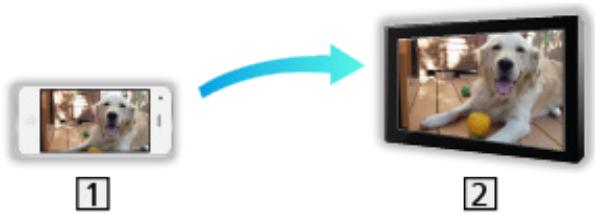
1 Smartphone, etc.
2 TV
- Display Home with HOME.
- Select Devices and press OK to access.
- Select Mirroring and press OK.
-
Follow the on-screen instructions.
-
Pairing information of the device (smartphone, etc.) is registered once you use this function.
Easy Mirroring
You can also start the mirroring function from the other devices (smartphone, etc.) when Easy Mirroring is set to On.

Functions > Mirroring > Mirroring Settings
- You cannot use Easy Mirroring function while the TV is set to Wireless Access Point.

Network > Network settings > Network Status
= Note =
- This function is available with the other devices (smartphone, etc.) supporting the mirroring function. For details, refer to the operating instructions of the devices.
Mirroring Settings
You can set items for the mirroring function.
- Display the menu with MENU.
- Select Network > Mirroring Settings and press OK.
- Select one of the following items and press OK to access.
Easy Mirroring / Powered On by Easy Mirroring / Delete All Pairings
- Set the item and press OK to store.
Easy Mirroring
(On / Off)
Enables starting the mirroring function from the other devices (smartphone, etc.) without operating the TV.
- To deactivate wireless, set Easy Mirroring to Off and confirm the network connection type is set to Wired.

Network > Network settings > Network Status
- Not valid when the TV is set to Wireless Access Point
Powered On by Easy Mirroring
(On / Off)
Enables turning on the TV automatically when the mirroring function is activated from the other devices (smartphone, etc.).
- Changing the default configuration may result in higher energy consumption of the product.
- Use the mirroring function to turn on the TV only when you can see the status of the TV.
- Register the devices (smartphone, etc.) before using this function.
- LED turns to orange in Standby mode when Powered On by Easy Mirroring is set to On.
Delete All Pairings
Delete the pairing information for all paired devices.
DVB-via-IP
DVB-via-IP client connection
This TV has DVB-via-IP client function and can connect to DVB-via-IP server or SAT>IP compatible servers to receive broadcast streaming.
Please ensure that the unit is disconnected from the mains socket before attaching or disconnecting any cables.
- It is recommended to connect to DVB-via-IP server with a LAN cable.
■ Wired connection
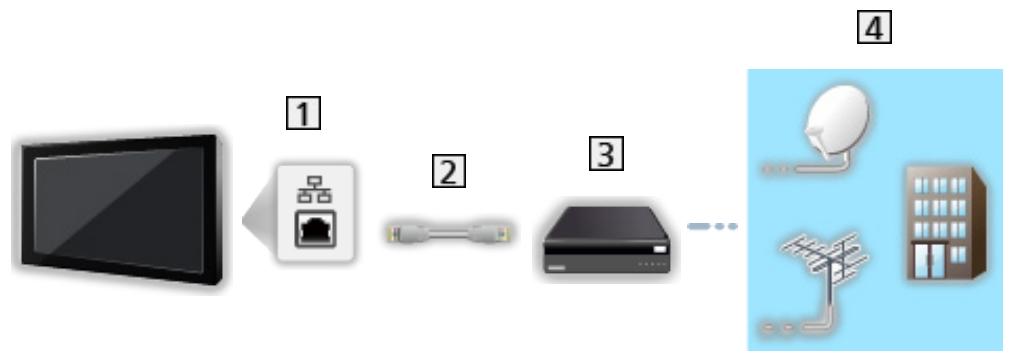
1 ETHERNET terminal
2 LAN cable (Shielded)
- Use Shielded Twist Pair (STP) LAN cable.
DVB-via-IP server
4 Satellite dish / Terrestrial aerial / Cable
■ Wireless connection
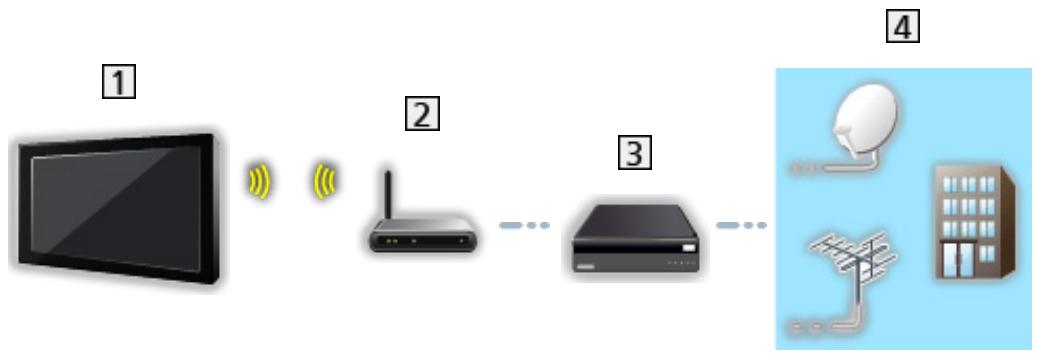
1 Built-in wireless LAN (Rear of the TV)
2 Access point
DVB-via-IP server
4 Satellite dish / Terrestrial aerial / Cable
= Note =
- External equipment and cables shown are not supplied with this TV.
- Check the terminal type and cable plugs are correct for connection.
- Due to network conditions or certain broadcaster restrictions, this function may not be available.
- To confirm the current network settings

Network > Network settings > Network Status
- For information about the connections, read the manual of the DVB-via-IP server.
Preparations
- Ensure the network connections and network settings are completed.

Functions > DVB-via-IP > DVB-via-IP client connection

Network > Network settings
- Ensure the server settings are completed. For details, read the manual of DVB-via-IP server.
DVB-via-IP Server Selection
- Display the menu with MENU.
- Select Setup > Tuning Menu > Add TV Signal and press OK to access.
- Select DVB-via-IP and press OK to access.
- Select Start Auto Setup and press OK to access.
- Select a server from Server List and press OK to set.
-
Select Client Settings and press OK to access.
-
Select Unicast Environment to use in a home network.
-
Select Multicast Environment to use in multi family housing units, hotel, hospital, etc. (All servers are selected automatically.)
-
Select Search Channels and press OK to access.
-
Set DVB-via-IP Search Mode and select Start Auto Setup.
-
Set DVB-via-IP configuration to tune DVB channels.
- When the operation is completed, the channel at the lowest position will be displayed.
= Note =
- If tuning has not been done completely, set Manual Tuning.

⇒ Watching > Tuning and editing channels > Manual Tuning
- Due to network conditions or certain broadcaster restrictions, this function may not be available.
- In case you install the DVB-via-IP client in multicast environment, please consult your professional dealer or server manufacturer.
Note
- Due to network conditions or certain broadcaster restrictions, this function may not be available.
- This function is not available when the TV is turned off with Mains Power On / Off switch.
- Please also read the manual of DVB-via-IP server.
VIERA Link “HDAVI Control™”
Summary of VIERA Link
Enjoy additional HDMI Inter-Operability with Panasonic products which have "HDAVI Control™" function.
ViERA Link (HDAVI Control) connects the TV and the equipment with ViERA Link function, and enables easy control, playback, energy saving, creating home theatre, etc. without complicated settings. Connections to the equipment (DVD Recorder, HD Video Camera, Player theatre, Amplifier, etc.) with HDMI cable allow you to interface them automatically. These features are limited to models incorporating "HDAVI Control" and "ViERA Link".
- This TV supports "HDAVI Control 5" function.
- Some functions are not available depending on the equipment's version of HDAVI Control. Confirm the connected equipment's version of HDAVI Control.
- VIERA Link "HDAVI Control" is a unique function that we have developed and added based on the control functions provided by HDMI which is an industry standard known as HDMI CEC (Consumer Electronics Control). As such, its operation with other manufacturers' product that supports HDMI CEC cannot be guaranteed.
- VIERA Link features may be available even with other manufacturers' equipment supporting HDMI CEC.
- Please refer to individual manuals for other manufacturers' product supporting VIERA Link function.
- About applicable Panasonic product, consult your local Panasonic dealer.
ViEra Link (HDMI connection)
- Use a fully wired HDMI compliant cable.
- Connect the equipment supporting VIERA Link to the TV's HDMI terminal via an HDMI cable.
About HDMI cable for connecting Panasonic HD Video Camera or LUMIX Camera, read the manual of the equipment.
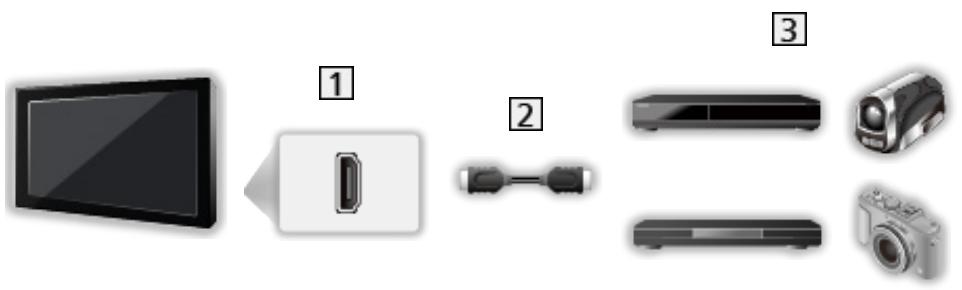
1 HDMI terminal
2 HDMI cable
3 Equipment with VIERA Link function (DVD Recorder / DVD Player / Bluray Disc Player / HD Video Camera / LUMIX Camera)
Available features (HDMI connection)
DVD Recorder / DVD Player / Blu-ray Disc Player
- Easy playback
Power on Link
Power off Link - Standby Power Save*2
- Intelligent Auto Standby*2
- VIERA Link Control*1
HD Video Camera / LUMIX Camera
- Easy playback
Power on Link
Power off Link - VIERA Link Control*1
*1: For equipment which has "HDAVI Control 2 or later" function.
*2: For equipment which has "HDAVI Control 4 or later" function.
ViEra Link (HDMI and Audio out connections)
- Use a fully wired HDMI compliant cable.
- Connect the equipment supporting VIERA Link to the TV's HDMI terminal via an HDMI cable.
- Use the optical digital audio cable for audio output from the TV.
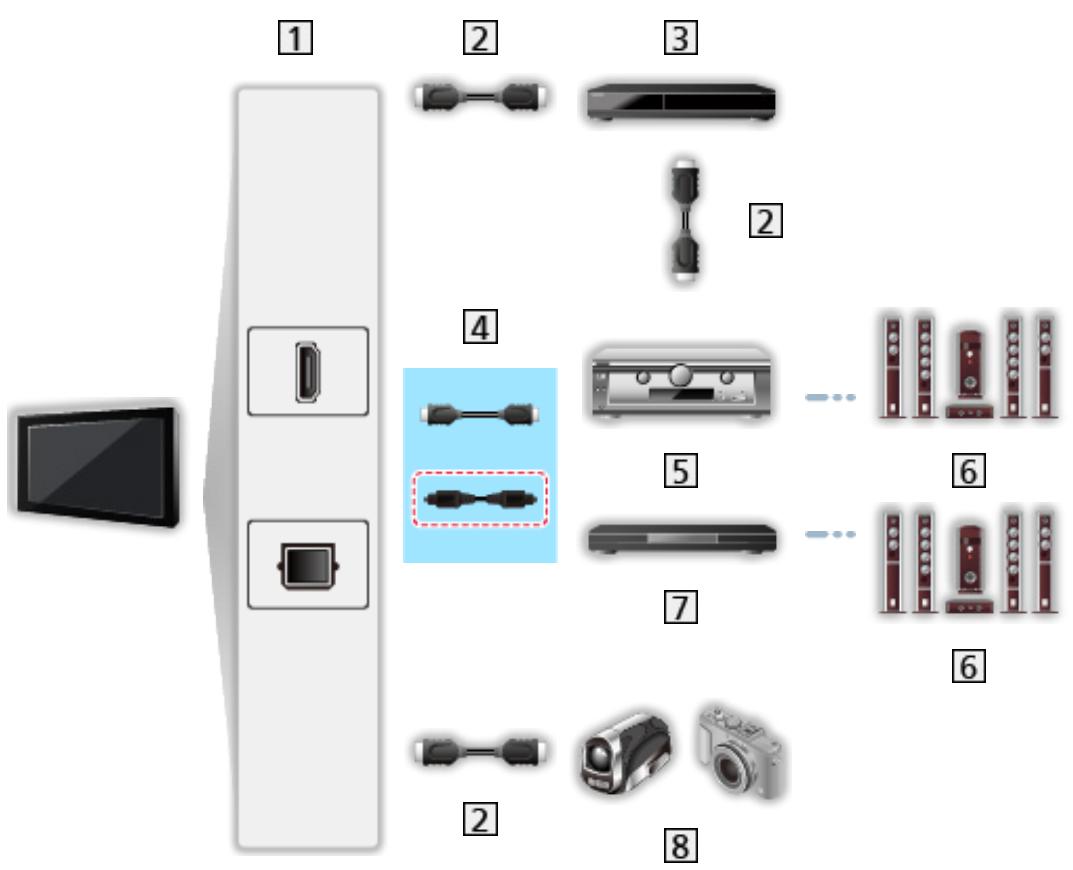
1 HDMI terminal / DIGITAL AUDIO
2 HDMI cable
DVD Recorder with VIERA Link function
4 HDMI cable (Optical digital audio cable*)
5 Amplifier with VIERA Link function
6 Speaker system
Player theatre / Blu-ray Disc theatre with VIERA Link function
8 HD Video Camera / LUMIX Camera with VIERA Link function
*: If the connected equipment has "HDAVI Control 5" function, you do not have to use this audio cable (Optical digital audio cable). In this case, connect the equipment to the TV's HDMI2 terminal via an HDMI cable.
Available features (HDMI and Audio out connections)
Player theatre
- Easy playback*3
Power on Link - Power off Link
- Intelligent Auto Standby24
- VIERA Link Control*1
- Speaker Selection
Blu-ray Disc theatre
- Easy playback*3
Power on Link
Power off Link - Standby Power Save*2
- Intelligent Auto Standby24
- VIERA Link Control*1
- Speaker Selection
Amplifier
- Power off Link
- Intelligent Auto Standby*2
- Speaker Selection
1: For equipment which has "HDAVI Control 2 or later" function.
2 : For equipment which has "HDAVI Control 4 or later" function.
: While playing a disc
4: Except for watching a disc
■ VIERA Link Control of compatible equipment
The following is the maximum number of compatible equipment that can be controlled by VIERA Link Control. This includes connections to equipment already connected to the TV.
For example, DVD Player connected to Amplifier which is connected to the TV via an HDMI cable.

Functions > VIERA Link "HDAVI ControlTM" > VIERA Link Control
- Recorder:
Maximum 3
- Player:
Maximum 3 (DVD Player, Blu-ray Disc Player, HD Video Camera, LUMIX Camera, Digital Camera, Player theatre, Blu-ray Disc theatre, etc.)
Audio system:
Maximum 1 (Player theatre, Blu-ray Disc theatre, Amplifier, etc.)
Tuner:
Maximum 4 (Set top box, etc.)
- Connect the equipment supporting VIERA Link.
- For details of VIERA Link connections

Functions > VIERA Link “HDAVI ControlTM” > Summary of VIERA Link
- Use a fully wired HDMI compliant cable.
- Set up the connected equipment. Read the manual of the equipment.
- Set VIERA Link to On in the Setup Menu.
-
Set up the TV. After connection, turn the equipment on and then switch the TV on. Select the HDMI input from Input Selection with AV and make sure that an image is displayed correctly. (This setup should be done each time the following conditions occur.)
-
First time operation
- Adding or reconnecting equipment
- Changing setup
Easy playback
Automatic input switching - When the connected equipment is operated, the input mode is switched automatically.
Power on Link
Set Power on Link to On in VIERA Link Settings to use this function.
When the connected equipment is operated, the TV is automatically turned on. (Only when the TV is in Standby mode.)
Power off Link
Set Power off Link to On in VIERA Link Settings to use this function.
When the TV is set to Standby mode, the connected equipment is also automatically set to Standby.
- This function will work even if the TV enters Standby mode automatically by auto power standby function.
Standby Power Save
Set Standby Power Save to On in VIERA Link Settings to use this function.
The power consumption of the connected equipment in Standby mode is controlled higher or lower in synchronisation with the TV on / off state to reduce the consumption.
When the TV is set to Standby mode, the connected equipment is automatically set to Standby and the power consumption of the connected equipment is automatically minimised.
When the TV is turned on, the connected equipment is still in Standby mode, but the power consumption is increased to quickly start the connected equipment.
- This function is effective if the connected equipment can change the power consumption in Standby mode and is set to higher consumption.
- This function works when Power off Link is set to On.
Intelligent Auto Standby
Set Intelligent Auto Standby to On in VIERA Link Settings to use this function.
When the TV is on, non-used connected equipment goes into Standby mode automatically to reduce the power consumption. For example, when the input mode is switched from HDMI or when Speaker Selection is changed to TV (except for watching a disc).
- This function may not work properly depending on the connected equipment. In this case, set to Off.
You can control some functions of the connected equipment with this TV's remote control by pointing at the TV's signal receiver.
- Display Apps with APPS.
- Select VIERA Link and press OK to access.
- Select VIERA Link Control and press OK to access.
- Select one of the following items and press OK to access.
Recorder / Player / Home Cinema / Video Camera / LUMIX / Digital Camera / Other
(The menu of the accessed equipment is displayed. The input mode is changed automatically.)
- The displayed item may vary depending on the connected equipment.
- Home Cinema means Player theatre, Blu-ray Disc theatre or Recorder theatre.
-
Other means Tuner set top box.
-
Follow the on-screen instructions to operate the menu of the equipment.
-
Confirm the remote control code is "73".

Watching > External equipment > Operating with TV's remote control
- To display the operation guide
OPTION
(If other manufacturers' product is accessed, Setup / Contents Selection menu may be displayed.)
- Available TV's remote control buttons depend on the connected equipment.
If multiple recorders or players are connected
Each recorder / player is numbered. The number is given from the TV's lower number of HDMI terminal connected to the same type of equipment. For example, when two recorders are connected to HDMI1 and HDMI2, the recorder connected to HDMI1 is displayed as Recorder1, and the recorder connected to HDMI2 is displayed as Recorder2.
If you access non-VIERA Link equipment
The type of the connected equipment is displayed. Although you can access the connected equipment, you cannot operate it. Use the remote control of the connected equipment.
= Note =
- If you cannot operate the equipment, check the settings and the equipment.

Functions > VIERA Link “HDAVI ControlTM” > Summary of VIERA Link
- Some operations may not be available depending on the equipment. In this case, use the remote control of the connected equipment.
- For details of the operations for the connected equipment, read the manual of the equipment.
Speaker Selection
You can control the theatre speaker with this TV's remote control by pointing at the TV's signal receiver.
- Display Apps with APPS.
- Select VIERA Link and press OK to access.
- Select Speaker Selection and press OK to access.
- Select TV / Home Cinema and press OK to set.
TV:
TV speakers are active.
Home Cinema:
The sound is delivered from theatre speakers. Player theatre, Bluray Disc theatre or Amplifier will be automatically turned on if it is in Standby mode.
- The sound of TV speakers is mute. When the equipment is turned off, TV speakers will be activated.
- You can use Volume Up / Down and MUTE.

Multi-channel sound
If you want to enjoy the multi-channel sound (e.g. Dolby Audio (Dolby Digital) 5.1ch) via an Amplifier, connect it with an HDMI cable and Optical digital audio cable, and then select Home Cinema. If your Amplifier has the "HDAVI Control 5" function, you only need to connect it with an HDMI cable to the TV's HDMI2 terminal.
To enjoy multi-channel sound from DIGA Recorder, connect an HDMI cable from the DIGA Recorder to the Amplifier.
= Note =
- If you cannot operate the equipment, check the settings and the equipment.

Functions > VIERA Link “HDAVI ControlTM” > Summary of VIERA Link
- Some operations may not be available depending on the equipment.
Note
- These functions may not work properly depending on the connected equipment.
- Image or sound may not be delivered for the first few seconds when the input mode is switched.
- "HDAVI Control 5" is the newest standard for HDAVI Control compatible equipment. This standard is compatible with conventional HDAVI equipment.
To confirm the HDAVI Control version of this TV

Support >Help menu >Using Help menu
Child Lock
Using Child Lock
You can lock specific channels / AV input terminals to restrict access to them. When the locked channel / input is selected, a message appears. Enter the PIN number to watch.
- Display the menu with MENU.
- Select Setup > Child Lock and press OK to access.
- Enter the PIN number (4 digits) with Numeric buttons.
- Enter the PIN number twice at first setting.
- Make a note of the PIN number in case you forget it.
-
"0000" may be stored as the default PIN number depending on the country you select.
-
Select Child Lock List and press OK to access.
-
Select the channel / input and press OK to lock.
-
appears when the channel / input is locked.
To cancel
1) Select the locked channel / input.
2) Press OK.
- To sort channel names in alphabetical order

- To lock all

- To cancel all locks

- To jump to the head of the next channel / input group

Show Adult App
Set to Off to lock specific applications to restrict access to them (if available).
= Note =
- For internet content
PIN number
You can change the PIN number.
- Select Change PIN and press OK to access.
- Enter a new PIN number twice with Numeric buttons.
123
456
7 8 9
0
= Note =
- Setting Shipping Condition erases the PIN number and all settings.
Parental Rating
To watch the DVB programme that has rating information on the selected age, enter the PIN number (depending on the broadcaster).
- Select Parental Rating and press OK to access.
-
Select an age for the restriction of programmes and press OK to set.
-
The availability of this function depends on the country you select.
= Note =
- Setting Shipping Condition erases the PIN number and all settings.
Data Service Application
Using Data Service Application
You can enjoy Hybrid Broadcast Broadband TV application that may be provided via digital broadcasting as interactive data services.
- Display the menu with MENU.
- Select Setup > Data Service Application > Service and press OK to access.
- Select Auto Start / Manual Start / Off for each channel.
Auto Start:
Automatically starts the application.
Manual Start:
Starts the application by pressing (red).
- To sort channel names in alphabetical order
(red)
- To set Auto Start for all channels
(green)
- To disable the service for all channels
(yellow)
- To set Manual Start for all channels
(blue)
-
Press BACK/RETURN to store.
-
A notification message will appear when the application is available. Follow the on-screen instructions.
- is displayed on the information banner if the programme has Hybrid Broadcast Broadband TV application.

Watching > Basic > Information banner
- To terminate the running application. (The default application may start immediately.)
EXIT
Privacy Setting
- Display the menu with MENU.
- Select Setup > Data Service Application > Privacy Setting and press OK to access.
- Select Low / High / Custom and press OK to set.
To change the privacy settings manually
You can set up the detailed privacy settings when Privacy Setting is set to Custom.
Store Cookie
(On / Off)
Enables storing the technical information that a data service application leaves into the TV in order to recognise to use it again.
Delete Cookie
Deletes all of technical information left by a data service application.
Do Not Track Setting
Sets to notify websites and some applications about tracking your browsing activities.
Mode1:
Notifies websites that you want to be tracked.
Mode2:
Notifies websites that you do not want to be tracked.
Mode3:
Sends no configuration information about tracking.
Allow Unique Device ID
(On / Off)
Sends identifying ID of this TV for the data service application.
Reset Unique Device ID
ResetstheidentifyingIDofthisTV.
Note
- A broadband network environment is required to fully use Hybrid Broadcast Broadband TV application. Ensure the network connections and network settings are completed.
Network > Network connections
Network > Network settings
- Not all the data services are available depending on the country, area and broadcaster.
- Depending on the connection environment, the internet connection may be slow or may not be successful.
- Operations may vary depending on the broadcaster. Follow the on-screen instructions.
- On-screen instructions may not correspond to the remote control buttons.
Common Interface
Caution
If the encrypted message is displayed on the screen, the correct Common Interface (CI) Module and smart card that are required for this service are not inserted.
■ How to insert CI module and smart card
- Turn the TV off with Mains Power On / Off switch whenever inserting or removing the CI module.
- If a smart card and a CI module come as a set, first insert the CI module, then insert the smart card into the CI module.
- Insert or remove the CI module completely in the correct direction as shown.
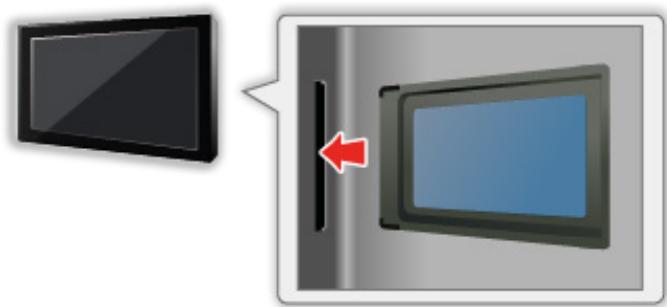
- Remove the CI module from the TV when placing the TV facing upward. This may cause damages to the CI module and CI slot.
= Note =
- There might be some CI modules in the market with older firmware versions that do not work fully interoperable with this new CI+ v1.4 TV. In this case, please contact your content provider.
The Common Interface Module menu provides access to software contained in Common Interface (CI) Modules.
- This function may not be available in some countries or regions.
- Video and audio signals may not be output depending on the broadcast or service.
Although CI module may enable you to view some services, this TV does not guarantee all services (e.g. encrypted pay-TV channels). Please use only the broadcaster-approved CI module. Consult the operator / broadcaster or CI module manufacturer for more information and conditions of the services.
Insert the CI module (optional)
- Normally encrypted channels will appear. (Viewable channels and their features depend on the CI module.) If encrypted channels do not appear, take the following steps.
-
For details, read the manual of the CI module, or check with the content provider.
-
Select the mode with TV.
DVB-S / DVB-C / DVB-T
- Display the menu with MENU.
- Select Setup > Common Interface and press OK to access.
-
Select Slot 1:, press OK and follow the on-screen instructions.
-
To enter the CICAM PIN number, select Option Settings.
- On-screen instructions may not correspond to the remote control buttons.
Shipping Condition
Shipping Condition
ResetstheTVtoitsoriginalcondition(i.e.no channels tuned in).
All settings other than USB Device Setup are reset (channels, picture, sound settings, etc.).
- Display the menu with MENU.
-
Select Setup > System Menu > Shipping Condition and press OK to access.
-
Child Lock PIN number is required depending on the country. If you have forgotten your changed PIN, input "6969" as the PIN number.

Functions > Child Lock > PIN number
- When a confirmation screen is displayed, select Yes and press OK to set.
-
Follow the on-screen instructions.
-
Auto Setup automatically starts.
= Note =
- To retune TV channels only (e.g. after moving house), set Auto Setup.

Watching > Tuning and editing channels > Auto Setup
Updating the TV Software
Information
A new version of software may be released for download to enhance the performance or operations of the TV.
If there is an update available and the channel has the update information, a notification message is displayed.
- To install new software, select Standby / Now and press OK to set.
Standby:
Installs new software in standby condition.
Now:
Installs new software now.
Auto update
You can update new software automatically.
- Display the menu with MENU.
- Select Setup > System Menu > System Update > Auto Update Search in Standby and press OK to access.
-
Select the time and press OK to set.
-
If any software updates are available, a notification message will appear. To install new software, select Standby / Now and press OK to set.
Standby:
Installs new software in standby condition.
Now:
Installs new software now.
- If System Update is performed, the software will be updated (TV functions may be changed). If you do not want to do so, set Auto Update Search in Standby to Off.
- The automatic updating cannot be performed in the following conditions:
– TV turned off with Mains Power On / Off switch
- Recording is in progress.
DVB-via-IP
= Note =
- Download may take a few hours.
- During software download and update, DO NOT switch off the TV.
- A notification message may be a reminder. In this case, schedule information (the date when the new version can be used) will appear. You can set the reservation for update. The update will not start when the TV is off.
Manual update
You can update new software manually.
- Display the menu with MENU.
- Select Setup > System Menu > System Update > System Update Search Now and press OK to access.
- Searches for an update (for several minutes) and displays a corresponding message if any.
- Download with OK.
= Note =
- Download may take a few hours.
- During software download and update, DO NOT switch off the TV.
Setting characters
Using Numeric buttons
You can enter characters for free input items using Numeric buttons.
Press Numeric buttons repeatedly until you reach the desired character.
1 : . @ / 1 ! : # + - * _ ( ) “ % & ? , ; = $ [ ] ~ < > { } | ^ \w
2:abc2ABC
3:def3DEF
4:ghi4GHI
5:jk15JKL
6:mno6MNO
7:p qrs7PQRS
8:tu v 8 T U V
9:wxyz9WXYZ
0 : Space 0
- The character is set automatically if you leave for 1 second.
- You can also set the character pressing OK or other Numeric buttons less than 1 second.
- The characters may vary depending on the input item.
Keyboard
Keyboard
- Keyboards requiring the drivers are not supported.
- To change the language type, set USB Keyboard Layout.
1) Display the menu with MENU.
2) Select Setup > System Menu > USB Keyboard Layout and press OK to access.
3) Select the language and press OK to set.
- Characters may not be displayed correctly on the TV screen depending on the connected keyboard or the keyboard layout setting.
- Some of the keys of keyboards may correspond to the operation of the remote control.
| Keyboard | Remote Control |
| ↑/↓/←/→ | △/▽/◁/▷ |
| Enter | OK |
| Backspace | BACK/RETURN |
| Esc | EXIT |
| 0-9/Character | Numeric buttons |
| F1 | HOME |
| F2 | APPS |
| F3 | MENU |
| F4 | AV |
| F5/F6 | Channel Down / Up |
| F7/F8 | Volume Down / Up |
| F9/F10/F11/F12 | Coloured buttons |
Settings
Setting menu
How to use
Various menus allow you to make settings for the picture, sound, and other functions.
- Display the menu with MENU.
- Displayed items vary depending on the input signal.
- Select the menu and press OK to access.
-
Select the items and press OK to access.
-
Only available items can be selected.
-
You can also access from eHELP pressing (red) at each item (if available).
-
You can select from among alternatives with / and press OK to set.
- You can adjust using the slide bar with / and press OK to set.
- You can go to the next screen with OK.
- You can enter names or numbers freely for some items.
1) Enter characters one by one with Cursor buttons and press OK to set.

- You can set characters using Numeric buttons.


Functions > Setting characters > Using Numeric buttons
2) Press BACK/RETURN to store.
-
To reset the settings
-
To initialise picture or sound settings only, select Reset to Defaults in the Picture Menu or Sound Menu.
- To initialise all settings, select Shipping Condition.


Functions > Shipping Condition
- To exit the menu screen
EXIT
- To return to the previous screen
BACK/RETURN
= Note =
- Menu items and selectable options vary depending on the mode (TV mode, Media Player, Network services, etc.).
- Depending on the model, the initial setting value of Viewing Mode may differ between Home and Shop even when selecting the same viewing mode.
The setting value can be adjusted by pressing MENU and selecting Picture.
Using control panel buttons
- Press and hold INPUT/OK/HOLD for MENU button for 3 seconds to display the menu.
-
Select and set with following control panel buttons.
-
Move the cursor / select from a range of options / select the menu item / adjust levels
- Access the menu / store settings after adjustments have been made or options have been set with INPUT/OK/HOLD for MENU button
Picture
Viewing Mode
Selects your favourite picture mode for each input.

Watching > For best picture > Viewing Mode
Basic settings
Backlight, Contrast, Brightness, Colour, Tint, Sharpness
Adjusts the levels of these options according to your personal preference.

Watching > For best picture > Basic settings
Colour Temperature
Sets the overall colour tone of the picture (bluer - redder).

Watching > For best picture > Basic settings
Vivid Colour
Automatically adjusts colours to vivid ones.
Watching > For best picture > Basic settings
Adaptive Backlight Control
Automatically controls the level of backlight according to the images.

Watching > For best picture > Basic settings
Dynamic Range Remaster
Enhances bright areas of the image closer to the original luminance making improved picture impact.

Watching > For best picture > Basic settings
Clear Motion
Makes the moving pictures clearer by controlling the level of backlight.

Watching > For best picture > Basic settings
Ambient Sensor
Automatic Brightness Control function
Adjusts picture settings automatically depending on ambient lighting condition.

Watching > For best picture > Ambient Sensor
HDR Brightness Setting
You can adjust and set up the details of HDR brightness.

Watching > For best picture > HDR Brightness Setting
Noise Reduction
Reduces unwanted picture noise.

Watching > For best picture > Noise reduction settings
MPEG Remaster
Reduces flicker noise in contoured parts of a picture and block noise.

Watching > For best picture > Noise reduction settings
Advanced Settings
You can adjust and set up the detailed picture settings.

Watching > For best picture > Advanced Settings
Option Settings
Some features are not available on all models. Available menu items are displayed on your TV screen.
Game Mode
Provides suitable images for fast response signals when playing games.

Watching > For best picture > Option Settings
Film Cadence Mode
Improves vertical resolution for movie images.

Watching > For best picture > Option Settings
1080p Pixel Direct
Reproduces the original image quality in detail for 1080p (HDMI) input signal.

Watching > For best picture > Option Settings
HDMI Content Type
Adjusts the picture settings of each HDMI input according to the selected content type.

Watching > For best picture > Option Settings
HDMI EOTF Type
Selects the EOTF type for each HDMI input. Set to Auto for general use.

Watching > For best picture > Option Settings
EOTF Type
Selects the EOTF type of broadcast or video content.

Watching > For best picture > Option Settings
HDMI RGB Range
Adjusts the black level of the image for each HDMI input.

Watching > For best picture > Option Settings
AV Colour System
Selects optional colour system based on video signals.

Watching > For best picture > Option Settings
3D-COMB
Makes still or slow moving pictures more vivid.

Watching > For best picture > Option Settings
Aspect
Changes the aspect ratio (image size).

Watching > For best picture > Aspect
16:9 Overscan
Selects the screen area displaying the image for 16:9 aspect.

Watching > For best picture > Screen Settings
Zoom Adjustments
Adjusts the vertical position and size when aspect is set to Zoom.
Watching > For best picture > Screen Settings
Screen Display
Turns the screen off when you select Off.

Watching > For best picture > Screen Settings
PICTURE Button Setting
Sets the viewing mode selection when pressing PICTURE.

Watching > For best picture > Viewing Mode
Copy Adjustment
Copies the picture settings of True Cinema or Custom to those of the other input mode or Viewing Mode.

Watching > For best picture > Copy Adjustment
Reset to Defaults
ResetsthecurrentPictureViewingModetothedefaultsettings.
Sound
Mode
Selects your favourite sound mode for each input.

Watching > For best audio > Sound mode
Bass
Adjusts level to enhance or minimise lower, deeper sound output.

Watching > For best audio > Basic settings
Treble
Adjusts level to enhance or minimise sharper, higher sound output.

Watching > For best audio > Basic settings
Equaliser
Adjusts the frequency level to suit your favourite sound quality.

Watching > For best audio > Basic settings
Balance
Adjusts volume level of right and left speakers.

Watching > For best audio > Basic settings
Surround
Selects surround sound settings.

Watching > For best audio > Basic settings
Bass Boost
Enhances the effect of bass sounds.

Watching > For best audio > Basic settings
Sport Link
Automatically sets the sound mode to Stadium when Viewing Mode is set to Sport.

Watching > For best audio > Basic settings
Speaker Selection
Enables controlling the theatre speaker with this TV's remote control by pointing at the TV's signal receiver.


Watching > For best audio > Volume settings
TV Speaker Setting
Selects the sound output to adjust volume.

Watching > For best audio > Volume settings
Headphone Volume
Adjusts the volume of headphones.

Watching > For best audio > Volume settings
Auto Gain Control
Automatically regulates large sound level differences between channels and inputs.

Watching > For best audio > Volume settings
Volume Correction
Adjusts the volume of each individual channel or input mode.

Watching > For best audio > Volume settings
Clear Sound Adjustment
If the sound from TV speakers is unclear due to installation environment, On is recommended.

⇒ Watching > For best audio > Volume settings
Voice Guidance Settings
Voice Guidance
Set to On to enable voice guidance of the basic features (on-screen messages, etc.) for visually impaired users.

Watching > For best audio > Voice Guidance Settings
Speed
Selects the readout speed for the voice guidance.

Watching > For best audio > Voice Guidance Settings
Volume
Selects the volume for the voice guidance.

Watching > For best audio > Voice Guidance Settings
Language
Changes language for the voice guidance.

Watching > For best audio > Voice Guidance Settings
User Level
Selects the level of morbidity for the voice guidance.

Watching > For best audio > Voice Guidance Settings
Web Browser
Set to On to enable voice guidance of the network content in web browser function.

Watching > For best audio > Voice Guidance Settings
Preferred Audio Type
Narration settings for visually impaired users

Watching > For best audio > Audio Description
Volume
Adjusts the volume for Audio Description.

Watching > For best audio > Audio Description
MPX
Selects multiplex sound mode (if available).

Watching > For best audio > Advanced settings
Audio Preference
Selects the initial setting for audio tracks.

Watching > For best audio > Advanced settings
SPDIF Selection
Selects the initial setting for digital audio output signal from DIGITAL AUDIO and HDMI2 (ARC function) terminals.

Watching > For best audio > Advanced settings
HDMI Audio Format
Selects the audio format for the HDMI input signal.

Watching > For best audio > Advanced settings
PCM Optical Level
Adjusts the audio level of PCM output from DIGITAL AUDIO and HDMI2 (ARC function) terminals to equalise with that of the other audio types.

Watching > For best audio > Advanced settings
SPDIF Delay
Adjusts the delay time of the sound output from DIGITAL AUDIO and HDMI2 (ARC function) terminals if the sound does not synchronise the image.

Watching > For best audio > Advanced settings
HDMI Input
Selects to fit the input signal.

Watching > For best audio > Advanced settings
Reset to Defaults
ResetsthecurrentSoundModetothedefaultsettings.
Network
Network Connection
Sets the network setting to use this TV in your network environment.

Network > Network settings > Network Connection
Network Status
Displays and checks the network status (MAC Address, current network settings, etc.).

Network > Network settings > Network Status
Sets your favourite name for this TV.

Network > Network settings > TV Name
TV Remote App Settings
Sets to control the TV from network equipment (smartphone, etc.).

Network > Network settings > TV Remote App Settings
Network Link Settings
Sets to control the TV with devices connected to the network.

Network > Network settings > Network Link Settings
File Sharing Settings
Network Device List
Lists the accessible network devices to play back the content in Media Player.

Media Player > Using Media Player > Network device
Mirroring Settings
Settings for the mirroring function

Functions > Mirroring > Mirroring Settings
Control4 Settings
Settings for the Control4 function

Network > Network settings > Control4 Settings
Software Update
Checks for available software updates from the Panasonic website.

Network > Network settings > Software Update
New Software Message
Selects whether to give a notification message when new software is found via network or not.

Network > Network settings > New Software Message
Terms of Service and Settings
Displays the terms of service and settings.

Network > Network settings > Terms of Service and Settings
Timer
Off Timer
Sets the duration of time until the TV automatically goes into Standby mode.

Watching > Basic > Off Timer
Timer Programming
Sets a timer to record forthcoming programmes.

Recording > Timer Programming > Setting Timer Programming
Time Zone
Adjusts the time data.

Watching > Basic > Adjusting time
Auto Standby
Automatically turns the TV to Standby mode for energy saving when no operation is performed for 4 hours.

Watching > Basic > Energy saving functions
No signal Power off
Automatically turns the TV to Standby mode to prevent unnecessary power consumption when no signal is received and no operation is performed for 10 minutes.

Watching > Basic > Energy saving functions
Setup
Eco Navigation
Automatically sets the TV to the most suitable energy-saving mode.

Watching > Basic > Energy saving functions
USB Device Setup
Formats the USB HDD or safely removes USB device.

Recording > USB HDD setup > Setting for USB HDD
Recording Setup
Settings for the recording feature of the USB HDD

⇒ Recording > Recording current programme > One Touch Recording

⇒ Recording > Recording current programme > REW LIVE TV
Applies access control for channels or inputs to prevent unwanted access.

Functions > Child Lock > Using Child Lock
Tuning Menu
Channel List Editor
You can edit the channel list by adding / deleting and moving channels.
Watching > Tuning and editing channels > Channel List Editor
Favourites Editor
Creates a list of favourite channels.
→ Watching > Tuning and editing channels > Favourites Editor
Auto Setup
Automatically searches for receivable channels.
→ Watching > Tuning and editing channels > Auto Setup
Manual Tuning
Searches for channels manually.
Watching > Tuning and editing channels > Manual Tuning
Update Channel List
Updates the channel list while keeping your settings.
Watching > Tuning and editing channels > Update Channel List
Favourite Network
Selects your favourite network for each broadcaster (only available in some countries).
→ Watching > Tuning and editing channels > Other settings
New Channel Message
Selects whether to give a notification message when a new channel is found or not.
Watching > Tuning and editing channels > Other settings
Service Replacement
Set to On to display a message to switch to the available service (only available in some countries).
Watching > Tuning and editing channels > Other settings
Signal Condition
Checks the signal condition.

Watching > Tuning and editing channels > Signal Condition
Antenna System
Sets the antenna system to use plural LNBs for receiving several satellites.

Watching > Tuning and editing channels > Auto Setup
LNB Configuration
Selects the satellite for each LNB.

Watching > Tuning and editing channels > Auto Setup
Attenuator
Automatically reduces the DVB-C signal to avoid the interference.

Watching > Tuning and editing channels > Other settings
Add TV Signal
Adds the TV mode.

Watching > Tuning and editing channels > Other settings
= Note =
- The settings in Tuning Menu are applicable only for the selected TV mode. The menu name varies depending on the TV mode. (DVB-S Tuning Menu / DVB-C Tuning Menu / DVB-T Tuning Menu / DVB-via-IP Tuning Menu / Analogue Tuning Menu)
OSD Language
Changes language for on-screen displays.

Watching > Basic > Language
Preferred Audio 1 / 2
Selects the first and second preferred language for DVB multi audio (depending on the broadcaster).

Watching > Basic > Language
Preferred Subtitles 1 / 2
Selects the first and second preferred language for DVB subtitles (depending on the broadcaster).

Watching > Basic > Language
Preferred Teletext
Selects the preferred language for DVB teletext service (depending on the broadcaster).

Watching > Basic > Language
Display Settings
Preferred Subtitle Type
Selects the preferred subtitle type.

Watching > Basic > Subtitle
Teletext
Selects teletext display mode.

Watching > Teletext > Teletext mode
Teletext Character Set
Selects teletext language font.
Watching > Teletext > Teletext Character Set
Input Labels
Accessing the input labels list allows you to change the input name or skip the input if unconnected, improving identification and selection in the Input Selection banner.

Watching > External equipment > Watching external input
Banner Display Timeout
Sets how long the information banner stays on screen.

Watching > Basic > Information banner
Playing Time Display
Set to On to display a time period of continuous use in Game Mode on the top right of the screen every 30 minutes.

Watching > External equipment > Watching external input
Radio Mode
Sets the timer for turning off the screen automatically when a radio channel is selected.

Watching > Basic > Energy saving functions
Notification
(On / Off)
Displays a notification message.
Set to On when the HDR device is connected to the TV.

Watching > External equipment > HDMI HDR Setting
Common Interface
Sets to watch encrypted channels, etc.

Functions > Common Interface > Using Common Interface
VIERA Link
Sets to use VIERA Link functions.
Functions > VIERA Link “HDAVI ControlTM” > Preparations
Power on Link
Sets to use Power on Link functions.
Functions > VIERA Link “HDAVI ControlTM” > Power on Link
Power off Link
Sets to use Power off Link functions.
Functions > VIERA Link “HDAVI ControlTM” > Power off Link
Standby Power Save
Controls the connected equipment to reduce power consumption in Standby.
Functions > VIERA Link “HDAVI ControlTM” > Standby Power Save
Intelligent Auto Standby
Makes non-watched or non-used connected equipment go into Standby mode to reduce the power consumption.
Functions > VIERA Link “HDAVI ControlTM” > Intelligent Auto Standby
Service
Sets to use Hybrid Broadcast Broadband TV application.

Functions > Data Service Application > Using Data Service Application
Privacy Setting
Settings for the privacy in the interactive data services

Functions > Data Service Application > Privacy Setting
System Menu
USB Keyboard Layout
Selects the language that your USB Keyboard supports.

Functions > Keyboard > Keyboard
Shipping Condition
Resetssall settings to the original condition.

Functions > Shipping Condition > Shipping Condition
System Update
Downloads new software to this TV.
Functions > Updating the TV Software > Auto update
Licence Menu
Displays the software licence information.
Power Save
(On / Off)
Reduces brightness of the picture to economise on power consumption.
Exchange Channel List
Exports / Imports DVB-S Channel List settings using the USB device to share the same settings with another TV which has the same function.

Watching > Tuning and editing channels > Channel List Editor
Support
Help menu
Using Help menu
- Display the menu with MENU.
- Select Help and press OK to access.
- Select TV Self Test / System Information / Device Information and press OK to access.
TV Self Test
Makes a diagnosis of picture or sound problems.
Follow the on-screen instructions.
System Information
Displays the system information of this TV.
Device Information
Displays the device information of this TV.
FAQs
Picture
Before requesting service or assistance, please follow these simple guides to solve the problem. Also makes a diagnosis of picture problem in TV Self Test.

Support > Help menu > Using Help menu
If the problem still persists, please contact your local Panasonic dealer for assistance.
Auto aspect
- Auto aspect is designed to provide you with the best ratio to fill the screen.

Watching > For best picture > Aspect Control Signal
- Set Aspect in the Picture Menu if you want to change the aspect ratio manually.

Watching > For best picture > Aspect
Black and white picture
- Check that the output of the external equipment matches the input of the TV.
Chaotic image, noisy
- Set Noise Reduction and MPEG Remaster in the Picture Menu to remove noise.

Watching > For best picture > Noise reduction settings
- Check nearby electrical equipment (car, motorcycle, fluorescent lamp).
No image is displayed
- Check the correct input mode is selected.
- Check the setting of AV (COMPONENT / VIDEO) in Input Selection to match the signal being output by the external equipment.
Watching > External equipment
- Is Backlight, Contrast, Brightness or Colour in the Picture Menu set to the minimum?
Watching > For best picture > Basic settings
- Check all required cables and connections are firmly in place.
Blurry or distorted image (no sound or low volume)
- Reset channels.
Watching > Tuning and editing channels > Auto Setup
There may be red, blue, green and black spots on the screen
- This is a characteristic of liquid crystal panels and is not a problem. The liquid crystal panel is built with very high precision technology giving you fine picture details. Occasionally, a few non-active pixels may appear on the screen as a fixed point of red, green, blue or black. Please note this does not affect the performance of the panel.
Before requesting service or assistance, please follow these simple guides to solve the problem.
If the problem still persists, please contact your local Panasonic dealer for assistance.
Block noise, frozen or disappearing image occurs / Some channels cannot be tuned
- Check the position, direction and connection of the aerial or dish.
- Check Signal Condition. If the level of Signal Quality is low, the DVB signal is weak. Connecting the aerial to the TV directly may improve signal quality than connecting the aerial through the equipment (Set top box, DVD, etc.).

Watching > Tuning and editing channels > Signal Condition

Watching > Basic > Basic connection
- Weather conditions affect signal reception (heavy rain, snow, etc.), in particular in poor reception areas. Even during good weather, the high pressure can cause poor reception of some channels.
- Due to the digital reception technologies involved, quality of the digital signals may be relatively low in some cases, despite good reception of analogue channels.
- Check the network connections and settings (DVB-via-IP).

Functions > DVB-via-IP

Network > Network settings
- Turn the TV off with Mains Power On / Off switch, then turn it on again.
DVB-S Auto Setup cannot be done completely
- Check connections and dish alignment.

Watching > Basic > Basic connection
- If the problem persists, consult your local dealer.
Faulty dish message appears
- The satellite cable may be short-circuited or there may be connection problems of the cable. Check the cable and connection and then turn the TV off with Mains Power On / Off switch, and turn it on again.
- If the message persists, consult a dish installer for checking the dish and cable.
No programmes shown on TV Guide
- Check the digital transmitter.
- Adjust the direction of the aerial or dish to another transmitter installed nearby.
Analogue TV
Before requesting service or assistance, please follow these simple guides to solve the problem.
If the problem still persists, please contact your local Panasonic dealer for assistance.
White spots or shadow image (ghosting) occurs / Some channels cannot be tuned
- Check the position, direction and connection of the aerial.
- Weather conditions affect signal reception (heavy rain, snow, etc.), in particular in poor reception areas. Even during good weather, the high pressure can cause poor reception of some channels.
- Turn the TV off with Mains Power On / Off switch, then turn it on again.
- If the problem persists, consult your local dealer or service provider for the availability of services.
Sound
Before requesting service or assistance, please follow these simple guides to solve the problem. Also makes a diagnosis of sound problem in TV Self Test.

Support >Help menu >Using Help menu
If the problem still persists, please contact your local Panasonic dealer for assistance.
No sound is produced.
- Is "Sound mute" active? Press MUTE to switch sound mute on or off.
Is the volume set to the minimum? - Check connections and setting of external equipment.

Watching > External equipment
- Ensure that Speaker Selection is set to TV.

Watching > For best audio > Volume settings

Functions > VIERA Link “HDAVI Control™” > Speaker Selection
- Ensure that TV Speaker Setting is set to TV Speaker.

Watching > For best audio > Volume settings
Sound level is low or sound is distorted
Sound signal reception may be poor.
- Set MPX in the Sound Menu to Mono. (Analogue)

Watching > For best audio > Advanced settings
Before requesting service or assistance, please follow these simple guides to solve the problem.
If the problem still persists, please contact your local Panasonic dealer for assistance.
Sound is unusual
- Check the setting of HDMI Audio Format in the Sound Menu to match the audio signal from the connected equipment.
Watching > For best audio > Advanced settings
- Check the HDMI Input setting in the Sound Menu.
Watching > For best audio > Advanced settings
- If digital sound connection has a problem, select analogue sound connection.
Watching > External equipment > HDMI features
Pictures from external equipment are unusual when the equipment is connected via HDMI
- Check the HDMI cable is connected properly.
Watching > External equipment > External connection
-
Turn the TV and equipment off, then turn them on again.
-
Check an input signal from the equipment.
Watching > External equipment > Valid input signals
- Use equipment compliant with EIA/CEA-861/861D.
Network
Before requesting service or assistance, please follow these simple guides to solve the problem.
If the problem still persists, please contact your local Panasonic dealer for assistance.
Cannot connect to the network
- Check the LAN cable or wireless LAN is connected properly.
Network > Network connections
- Check the connections and settings.
Network > Network connections
Network > Network settings
-
Check the network equipment and network environment.
-
The router may not be set to issue IP address automatically. If the network administrator prefers to allocate an IP address, set an IP address manually.
Network > Network settings
- The router may be using MAC address filtering (security setting). Confirm the MAC Address of this TV and set the router to use it.
Network > Network settings > Network Status
- If the problem persists, consult your Internet Service Provider or telecommunications company.
Cannot select the file during DLNA operations
- Is media server of the connected equipment prepared?
Network > DLNA > In-House streaming
- Check applicable data format.
Network > Supported format
- Check the settings of Network Link Settings.
Network > Network settings > Network Link Settings
Cannot operate internet content
- Check the connections and settings.

Network > Network connections > Internet connection

Network > Network settings
- The server or connected line may be busy now.
Other
Before requesting service or assistance, please follow these simple guides to solve the problem.
If the problem still persists, please contact your local Panasonic dealer for assistance.
VIERA Link function does not work and an error message appears
- Check the connections.
Functions > VIERA Link “HDAVI ControlTM” > Summary of VIERA Link
- Turn the connected equipment on and then switch the TV on.
Functions > VIERA Link “HDAVI ControlTM”
Parts of the TV become hot
- Parts of the TV may become hot. These temperature rises do not pose any problems in terms of performance or quality.
Overcurrent error message appears
- The connected USB device may cause this error. Remove the device and turn the TV off with Mains Power On / Off switch, then turn it on again.
- Check foreign objects are not inside the USB port.
An error message appears
- Follow the message's instructions.
- If the problem persists, contact your local Panasonic dealer or the authorised service centre.
LED does not turn to red in Standby mode
-
LED turns to orange in Standby mode in the following conditions:
-
Recording is in progress.
Timer Programming is set. - DLNA Server is set to On.
- Powered On by Apps is set to On.
Home Streaming is set to Always. - Powered On by Easy Mirroring is set to On.
When pushed with a finger, the display panel moves slightly and makes a noise
- There is a little gap around the panel to prevent damage to the panel. This is not a malfunction.
Detailed information
Support information about the application, optional devices, operation, etc. may be found on the following website.
http://panasonic.jp/support/global/cs/tv/ (English only)
Maintenance
Care and Cleaning
First, remove the mains plug from the mains socket.
Display panel, Cabinet, Pedestal
Regular care:
Gently wipe the surface of the display panel, cabinet, or pedestal by using a soft cloth to remove dirt or fingerprints.
For stubborn dirt:
(1) First clean the dust from the surface.
(2) dampen a soft cloth with clean water or diluted neutral detergent (1 part detergent to 100 parts water).
(3) Wring out the cloth firmly. (Please note, do not let liquid enter the TV inside as it may lead to product failure.)
(4) Carefully wipe moisten and wipe away the stubborn dirt.
(5) Finally, wipe away all the moisture.
= Caution =
- Do not use a hard cloth or rub the surface too hard, otherwise this may cause scratches on the surface.
- Take care not to subject the surfaces to insect repellent, solvent, thinner or other volatile substances. This may degrade surface quality or cause peeling of the paint.
- The surface of the display panel is specially treated and may be easily damaged. Take care not to tap or scratch the surface with your fingernail or other hard objects.
- Do not allow the cabinet and pedestal to make contact with a rubber or PVC substance for a long time. This may degrade surface quality.
Mains plug
- Wipe the mains plug with a dry cloth at regular intervals. Moisture and dust may lead to fire or electrical shock.


- DEVICES
- WATCHING
- BASIC
- EXTERNAL EQUIPMENT
- FOR BEST PICTURE
- FOR BEST AUDIO
- TV GUIDE
- TELETEXT
- TUNING AND EDITING CHANNELS
- RECORDING
- USB HDD SETUP
- RECORDING CURRENT PROGRAMME
- TIMER PROGRAMMING
- TECHNICAL INFORMATION
- MEDIA PLAYER
- USING MEDIA PLAYER
- EASY LISTVIEW
- MIX FOLDER VIEW
- PLAYBACK
- RECORDED TV MODE
- CONNECTED DEVICE
- SUPPORTED FORMAT
- NETWORK
- INTERNET CONTENT
- DLNA
- NETWORK CONNECTIONS
- NETWORK SETTINGS
- PHOTOS
- VIDEOS
- MUSIC
- FUNCTIONS
- MIRRORING
- DVB-VIA-IP
- VIERA LINK "HDAVI CONTROL™
- CHILD LOCK
- DATA SERVICE APPLICATION
- COMMON INTERFACE
- SHIPPING CONDITION
- UPDATING THE TV SOFTWARE
- SETTING CHARACTERS
- KEYBOARD
- SETTINGS
- SETTING MENU
- PICTURE
- SOUND
- TIMER
- SETUP
- SUPPORT
- HELP MENU
- FAQS
- MAINTENANCE
- MEANING OF SIGNS
- MENU
- OPERATION GUIDE
- NOTE
- READ FIRST
- BEFORE USE
- LICENCE
- FEATURES
- HOME
- EASY MIRRORING
- INFORMATION
- SEARCH
- SETTING
- TAB SETTINGS
- ENABLE AUTO PIN / DISABLE AUTO PIN
- OPTION MENU
- LIVE TV
- HOW TO USE
- PIN TO HOME
- VOICE GUIDANCE SETTINGS
- AUDIO TYPE
- MULTI VIDEO
- MULTI AUDIO
- DUAL AUDIO
- SUB CHANNEL
- SUBTITLE LANGUAGE
- TELETEXT CHARACTER SET
- TELETEXT LANGUAGE
- MPX
- VOLUME CORRECTION
- APPS
- EXIT
- SET AS MY APP
- MOVE
- LOCK, UNLOCK
- UNINSTALL
- SHOW INFO
- ACCESSIBILITY
- BASIC CONNECTION
- SATELLITE DISH
- AERIAL
- SET TOP BOX
- SELECTING CHANNEL
- TO SELECT A CHANNEL FROM THE CHANNEL LIST
- TO SELECT A CHANNEL USING INFORMATION BANNER
- TO SELECT A CHANNEL USING TV GUIDE
- TO WATCH PAY-TV
- STEREO, MONO
- 1-90
- LAST VIEW
- OFF TIMER
- ENERGY SAVING FUNCTIONS
- AUTO STANDBY
- (ON / OFF)
- NO SIGNAL POWER OFF
- ECO NAVIGATION
- RADIO MODE
- ADJUSTING TIME
- LANGUAGE
- OSD LANGUAGE
- PREFERRED AUDIO 1 / 2
- PREFERRED SUBTITLES 1 / 2
- PREFERRED TELETEXT
- EXTERNAL CONNECTION
- HDMI EQUIPMENT
- AV DEVICES
- USB DEVICES
- LISTENING WITH EXTERNAL SPEAKERS
- HEADPHONES
- WATCHING EXTERNAL INPUT
- INPUT LABELS
- PLAYING TIME DISPLAY
- OPERATING WITH TV'S REMOTE CONTROL
- :
- 1
- HOW TO CHANGE THE CODE
- HDMI FEATURES
- APPLICABLE HDMI FEATURES
- DVI CONNECTION
- HDMI HDR SETTING
- VIEWING MODE
- DYNAMIC
- NORMAL
- CINEMA
- TRUE CINEMA
- CUSTOM
- SPORT
- GAME
- TO CHANGE THE VIEWING MODE WITH PICTURE
- TO CHANGE THE ASPECT RATIO MANUALLY
- AUTO
- 16:9
- 4:3
- ZOOM
- ASPECT CONTROL SIGNAL
- AVAILABLE CONDITIONS
- BASIC SETTINGS
- AMBIENT SENSOR
- HDR BRIGHTNESS SETTING
- HDR AUTO BRIGHTNESS
- HDR BRIGHTNESS ENHANCER
- NOISE REDUCTION SETTINGS
- ADVANCED SETTINGS
- ADJUST THE DETAILED PICTURE SETTINGS
- CONTRAST CONTROL
- CONTRAST CONTROL SETTING
- COLOUR GAMUT
- NATIVE
- WHITE BALANCE
- R-GAIN / G-GAIN / B-GAIN
- R-CUTOFF / G-CUTOFF / B-CUTOFF
- MORE DETAILED ADJUSTMENT
- INPUT SIGNAL LEVEL
- RESET TO DEFAULTS
- COLOUR MANAGEMENT
- GAMMA
- OPTION SETTINGS
- GAME MODE
- FILM CADENCE MODE
- 1080P PIXEL DIRECT
- HDMI CONTENT TYPE
- HDMI EOTF TYPE
- EOTF TYPE
- HDMI RGB RANGE
- AV COLOUR SYSTEM
- 3D-COMB
- SCREEN SETTINGS
- ASPECT
- 16:9 OVERSCAN
- ZOOM ADJUSTMENTS
- SCREEN DISPLAY
- COPY ADJUSTMENT
- SOUND MODE
- MODE
- STANDARD
- SPEECH
- STADIUM
- USER
- BASS
- TREBLE
- EQUALISER
- BALANCE
- SURROUND
- CINEMA SURROUND PRO
- CINEMA SURROUND
- STADIUM SURROUND
- BASS BOOST
- SPORT LINK
- VOLUME SETTINGS
- SPEAKER SELECTION
- (TV / HOME CINEMA)
- TV
- HOME CINEMA
- TV SPEAKER SETTING
- HEADPHONE VOLUME
- AUTO GAIN CONTROL
- CLEAR SOUND ADJUSTMENT
- VOICE GUIDANCE
- SPEED
- (FAST / NORMAL / SLOW)
- VOLUME
- (MAX / MID / MIN)
- USER LEVEL
- (BEGINNER / EXPERT)
- WEB BROWSER
- AUDIO DESCRIPTION
- PREFERRED AUDIO TYPE
- AUDIO PREFERENCE
- MULTICHANNEL
- STEREO
- MPEG
- SPDIF SELECTION
- (AUTO / PCM / DOLBY AUDIO)
- PCM
- DOLBY AUDIO
- HDMI AUDIO FORMAT
- (AUTO / BITSTREAM / PCM)
- BITSTREAM
- PCM OPTICAL LEVEL
- SPDIF DELAY
- HDMI INPUT
- DIGITAL
- ANALOGUE
- USING TV GUIDE
- BACK/RETURN
- SIGNAL SUPPORTED RECORDING
- VIEWING TELETEXT
- WATCH TV AND TELETEXT IN TWO WINDOWS AT ONCE
- STORE FREQUENTLY VIEWED PAGES IN THE COLOUR BAR (LIST MODE)
- VIEW SUB PAGE
- TOP MODE (FOR TOP TEXT BROADCASTING)
- FLOF (FASTEXT) MODE (FOR FLOF (FASTEXT) BROADCASTING)
- LIST MODE
- WEST
- EAST1
- EAST2
- EDIT DVB CHANNELS
- SKIP UNWANTED ANALOGUE CHANNELS
- EDIT ANALOGUE CHANNELS
- LIST FAVOURITE DVB CHANNELS
- EDIT DVB FAVOURITES LIST
- DVB-S
- DVB-C, DVB-T, ANALOGUE
- AUTO SETUP USING THE BUTTONS ON THE TV
- MANUAL TUNING
- DVB-C
- DVB-T
- DVB-VIA-IP (DVB-S)
- DVB-VIA-IP (DVB-C)
- DVB-VIA-IP (DVB-T)
- UPDATE CHANNEL LIST
- SIGNAL CONDITION
- OTHER SETTINGS
- FAVOURITE NETWORK
- NEW CHANNEL MESSAGE
- SERVICE REPLACEMENT
- ATTENUATOR
- (ON/OFF)
- ADD TV SIGNAL
- SELECTABLE SATELLITES AND DISH ALIGNMENT TO TUNE DVB-S CHANNELS
- PREPARATIONS
- ONE TOUCH RECORDING
- TO START ONE TOUCH RECORDING
- TO STOP RECORDING IN PROGRESS
- TO PLAY BACK OR DELETE THE RECORDED CONTENT
- TO OPERATE REW LIVE TV
- TO STOP REW LIVE TV
- SETTING TIMER PROGRAMMING
- STORE WITH OK
- EDITING TIMER PROGRAMMING
- USB HDD
- (EXAMPLE)
- FUNCTIONS > VIERA LINK "HDAVI CONTROLTM
- TO INSERT OR REMOVE THE USB FLASH MEMORY
- HOW TO SET USER / PASSWORD
- SELECTING FILE
- REPEAT
- SHUFFLE
- FILTERING FILES
- ERROR DISPLAY
- PLAY SELECT
- SORTING FILES
- PHOTO PLAYBACK
- VIDEO / MUSIC PLAYBACK
- SLIDESHOW SETTINGS
- SCREEN MODE
- (NORMAL / ZOOM)
- INTERVAL
- BACK GROUND MUSIC
- TYPE1 - 5
- VIDEO SETUP
- MULTI AUDIO, DUAL MONO AUDIO
- SUBTITLE SETTINGS
- SUBTITLE
- SUBTITLE TEXT
- SUBTITLE TEXT SIZE
- SUBTITLE TEXT COLOUR
- SUBTITLE TEXT POSITION
- SUBTITLE TEXT DELAY
- AUDIO OUTPUT SETTINGS
- SELECTING CONTENT
- GROUPING CONTENT
- CREATE GROUP
- RELEASE GROUP
- EXCLUDE FROM GROUP
- CHANGE PROTECT STATUS
- DELETING CONTENT
- CHAPTER LIST
- DEVICE HANDLING CAUTION
- USB FLASH MEMORY
- PHOTO FORMAT
- SUPPORTED PHOTO FORMATS
- SUPPORTED VIDEO FORMATS
- SUPPORTED SUBTITLES FORMATS
- DISPLAY APPS WITH APPS
- IN-HOUSE STREAMING
- PLAYBACK OF SHARING CONTENT STORED IN THE MEDIA SERVER
- PLAYBACK OF SHARING CONTENT ON THIS TV WITH THE DMC (DIGITAL MEDIA CONTROLLER) NETWORK EQUIPMENT
- SHARING THE CONTENT OF THIS TV WITH ANOTHER PIECE OF NETWORK EQUIPMENT
- INTERNET CONNECTION
- WIRELESS CONNECTION
- WIRED CONNECTION
- WIRED CONNECTION (FOR DLNA AND INTERNET SERVICE)
- WIRELESS CONNECTION (FOR DLNA)
- 1 TV
- NETWORK CONNECTION
- QUICK SETUP - WIRELESS
- QUICK SETUP - WIRED
- ACQUIRE IP ADDRESS / ACQUIRE DNS ADDRESS
- PROXY SETTINGS
- PROXY
- PROXY PORT
- WPS(PIN)
- CHANGE SETTINGS
- NETWORK STATUS
- TRY AGAIN
- STATUS DETAILS
- TV NAME
- TV REMOTE APP SETTINGS
- TV REMOTE
- POWERED ON BY APPS
- NETWORKED STANDBY
- HOME STREAMING
- DEVICE TO UPLOAD CONTENTS
- DELETE ALL PAIRINGS
- NETWORK LINK SETTINGS
- DLNA SERVER
- REGISTRATION TYPE
- (AUTO / MANUAL)
- MANUAL
- REMOTE DEVICE LIST
- FILE SHARING SETTINGS
- NETWORK DEVICE LIST
- MIRRORING SETTINGS
- CONTROL4 SETTINGS
- SEND IDENTIFY
- SOFTWARE UPDATE
- NEW SOFTWARE MESSAGE
- TERMS OF SERVICE AND SETTINGS
- USING SLIDESHOW
- VIDEO PREVIEW
- MULTI AUDIO, DUAL AUDIO, DUAL MONO AUDIO
- MUSIC SETUP
- POWERED ON BY EASY MIRRORING
- DVB-VIA-IP CLIENT CONNECTION
- DVB-VIA-IP SERVER SELECTION
- VIERA LINK “HDAVI CONTROL™
- SUMMARY OF VIERA LINK
- VIERA LINK (HDMI CONNECTION)
- AVAILABLE FEATURES (HDMI CONNECTION)
- VIERA LINK (HDMI AND AUDIO OUT CONNECTIONS)
- AVAILABLE FEATURES (HDMI AND AUDIO OUT CONNECTIONS)
- PLAYER THEATRE
- BLU-RAY DISC THEATRE
- AMPLIFIER
- VIERA LINK CONTROL OF COMPATIBLE EQUIPMENT
- EASY PLAYBACK
- POWER ON LINK
- POWER OFF LINK
- STANDBY POWER SAVE
- INTELLIGENT AUTO STANDBY
- OPTION
- IF MULTIPLE RECORDERS OR PLAYERS ARE CONNECTED
- IF YOU ACCESS NON-VIERA LINK EQUIPMENT
- MULTI-CHANNEL SOUND
- USING CHILD LOCK
- SHOW ADULT APP
- PIN NUMBER
- PARENTAL RATING
- USING DATA SERVICE APPLICATION
- AUTO START
- MANUAL START
- PRIVACY SETTING
- TO CHANGE THE PRIVACY SETTINGS MANUALLY
- STORE COOKIE
- DELETE COOKIE
- DO NOT TRACK SETTING
- MODE1
- MODE2
- MODE3
- ALLOW UNIQUE DEVICE ID
- RESET UNIQUE DEVICE ID
- CAUTION
- HOW TO INSERT CI MODULE AND SMART CARD
- INSERT THE CI MODULE (OPTIONAL)
- AUTO UPDATE
- STANDBY
- NOW
- MANUAL UPDATE
- USING NUMERIC BUTTONS
- USING CONTROL PANEL BUTTONS
- COLOUR TEMPERATURE
- VIVID COLOUR
- ADAPTIVE BACKLIGHT CONTROL
- DYNAMIC RANGE REMASTER
- CLEAR MOTION
- NOISE REDUCTION
- MPEG REMASTER
- PICTURE BUTTON SETTING
- TIME ZONE
- USB DEVICE SETUP
- RECORDING SETUP
- TUNING MENU
- CHANNEL LIST EDITOR
- FAVOURITES EDITOR
- AUTO SETUP
- ANTENNA SYSTEM
- LNB CONFIGURATION
- DISPLAY SETTINGS
- PREFERRED SUBTITLE TYPE
- BANNER DISPLAY TIMEOUT
- NOTIFICATION
- VIERA LINK
- SERVICE
- SYSTEM MENU
- USB KEYBOARD LAYOUT
- SYSTEM UPDATE
- LICENCE MENU
- EXCHANGE CHANNEL LIST
- USING HELP MENU
- TV SELF TEST
- SYSTEM INFORMATION
- DEVICE INFORMATION
- AUTO ASPECT
- BLACK AND WHITE PICTURE
- CHAOTIC IMAGE, NOISY
- NO IMAGE IS DISPLAYED
- BLURRY OR DISTORTED IMAGE (NO SOUND OR LOW VOLUME)
- THERE MAY BE RED, BLUE, GREEN AND BLACK SPOTS ON THE SCREEN
- DVB-S AUTO SETUP CANNOT BE DONE COMPLETELY
- FAULTY DISH MESSAGE APPEARS
- NO PROGRAMMES SHOWN ON TV GUIDE
- ANALOGUE TV
- NO SOUND IS PRODUCED
- SOUND LEVEL IS LOW OR SOUND IS DISTORTED
- SOUND IS UNUSUAL
- CANNOT CONNECT TO THE NETWORK
- CANNOT SELECT THE FILE DURING DLNA OPERATIONS
- CANNOT OPERATE INTERNET CONTENT
- OTHER
- VIERA LINK FUNCTION DOES NOT WORK AND AN ERROR MESSAGE APPEARS
- PARTS OF THE TV BECOME HOT
- OVERCURRENT ERROR MESSAGE APPEARS
- AN ERROR MESSAGE APPEARS
- LED DOES NOT TURN TO RED IN STANDBY MODE
- DETAILED INFORMATION
- CARE AND CLEANING
- DISPLAY PANEL, CABINET, PEDESTAL
- MAINS PLUG
Brand : SAMSUNG
Model : WD1702RJV2
Category : Washer dryer