ManualGo.com
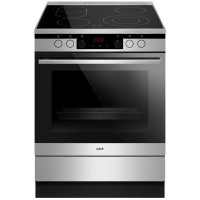
SHC11508G - Cooker AMICA - Free user manual and instructions
Find the device manual for free SHC11508G AMICA in PDF.



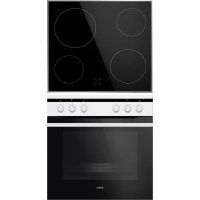
Download the instructions for your Cooker in PDF format for free! Find your manual SHC11508G - AMICA and take your electronic device back in hand. On this page are published all the documents necessary for the use of your device. SHC11508G by AMICA.
USER MANUAL SHC11508G AMICA
DEAR CUSTOMER, The cooker is exceptionally easy to use and extremely efficient. After reading the instruction manual, operating the cooker will be easy. Before being packaged and leaving the manufacturer, the cooker was thoroughly checked with regard to safety and functionality. Before using the appliance, please read the instruction manual carefully. By following these instructions carefully you will be able to avoid any problems in using the appliance. It is important to keep the instruction manual and store it in a safe place so that it can be consulted at any time. It is necessary to follow the instructions in the manual carefully in order to avoid possible accidents. Caution! Do not use the cooker until you have read this instruction manual. The cooker is intended for household use only. The manufacturer reserves the right to introduce changes which do not affect the operation of the appliance.
Safety instructions . Installation Operation. Baking in the oven -— practical hints Test dishe Cleaning and maintenanc Technical data.
Warning: The appliance and its accessible parts become hot
during use. Care should be taken to avoid touching heating elements. Children less than 8 years of age shall be kept away unless continuously supervised. This appliance can be used by children aged from 8 years and above and persons with reduced physical, sensory or mental capabilities or lack of experience and knowledge if they have been given supervision or instruction concerning use of the appliance in a safe way and understand the ha- zards involved. Children shall not play with the appliance. Cleaning and user maintenance shall not be made by chil- dren without supervision.
Warning: Unattended cooking on a hob with fat or oil can
be dangerous and may result in fire. NEVER try to extinguish a fire with water, but switch off the appliance and then cover flame e.g. with a lid or a fire blanket.
Warning: Danger of fire: do not store items on the cooking
Warning: If the surface is cracked, switch off the appliance
to avoid the possibillity of electric shock. During use the appliance becomes hot. Care should be taken to avoid touching heating elements inside the oven. Accessible parts may become hot during use. Young children should be kept away.
Warning: Do not use harsh abrasive cleaners or sharp metal
scrapers to clean the oven door glass since they can scratch the surface, which may result in shattering of the glass.
Warning: Ensure that the appliance is switched off before re-
placing the lamp to avoid the possibillity of electric shock. You should not use steam cleaning devices to clean the appliance. Danger of burns! Hot steam may escape when you open the oven door. Be careful when you open the oven door during or after cooking. Do NOT lean over the door when you open it. Please note that depending on the temperature the steam can be invisible.
SAFETY INSTRUCTIONS © Always keep children away from the cooker. While in operation direct contact with the cooker may cause burns! © Ensure that small items of household equipment, including connection leads, do not touch the hot oven or the hob as the insulation material of this equipment is usually not resistant to high temperatures. e Do not leave the cooker unattended when frying. Oils and fats may catch fire due to overheating or boiling over. e Do not allow the hob to get soiled and prevent liquids from boiling over onto the surface of the hob. This refers in particular to sugar which can react with the ceramic hob and cause irreversible damage. Any spillages should be cleaned up as they happen. e Do not place pans with a wet bottom on the warmed up heating zones as this can cause irreversible changes to the hob (irremovable stains). e Use pans that are specified by the manufacturer as designed for use with a ceramic hob. © _lfany defects, deep scratches, cracks or chips appear on the ceramic hob, stop using the cooker immediately and contact the service centre. © Do not switch on the hob until a pan has been placed on it. e Do not use pans with sharp edges that may cause damage to the ceramic hob. e Do not look directly at the halogen heating zones (not covered by a pan) when they are warming Up. e Do not put pans weighing over 15 kg on the opened door of the oven and pans over 25 kg on the hob. e Do not use harsh cleaning agents or sharp metal objects to clean the door as they can scratch the surface, which could then result in the glass cracking. e Do not use the cooker in the event of a technical fault. Any faults must be fixed by an appropriately qualified and authorised person. © _Inthe event of any incident caused by a technical fault, disconnect the power and report the fault to the service centre to be repaired. © The rules and provisions contained in this instruction manual should be strictly observed. Do not allow anybody who is not familiar with the contents of this instruction manual to operate the cooker. © The appliance has been designed only for cooking. Any other use (for example for heat- ing) does not comply with its operating profile and may cause danger.
Using energy in a respon- sible way not only saves money but also helps the environment. So let's save energy! And this is how you can do it: eUse proper pans for cooking. Pans with thick, flat bases can save up to 1/3 on electric energy. Remember to cover pans if possible otherwise you will use four times as much energy! eMatch the size of the saucepan to the surface of the heating zone. A saucepan should never be smaller than a heating zone. eEnsure heating zones and pan bases are clean. Soils can prevent heat transfer — and repeat- edly burnt-on spillages can often only be removed by products which cause damage to the environment. e Do not uncover the pan too often (a watched pot never boils!). Do not open the oven door unnecessarily often. Switch offthe oven in good time and make use of residual heat. For long cooking times, switch off heating zones 5 to 10 minutes before finishing cook- ing. This saves up to 20% on energy. Only use the oven when cooking larger dishes. Meat of up to 1 kg can be prepared more economically in a pan on the cooker hob. eMake use of residual heat from the oven. Ifthe cooking time is greater than 40 minutes switch off the oven 10 minutes before the end time. Important! When using the timer, set appropriately shorter cooking times according to the dish being prepared. @Only grill with the ultrafan after closing the oven door. eMake sure the oven door is properly closed. Heat can leak through spillages on the door seals. Clean up any spillages immediately. eDo not install the cooker in the direct ity of refrigerators/freezers. Otherwise energy consumption increases unnecessarily.
UNPACKING During transportation, protec- tive packaging was used to protect the appliance against any damage. After unpack- ing, please dispose of all elements of packaging in a way that will not cause dam- age to the environment. All materials used for packaging the appli- ance are environmentally friendly; they are 100% recyclable and are marked with the appropriate symbol. Caution! During unpacking, the packag- ing materials (polythene bags, polystyrene pieces, etc.) should be kept out of reach of children.
DISPOSAL OF THE APPLIANCE
Old appliances should not sim- ply be disposed of with normal household waste, but should be delivered to a collection and recycling centre for electric and electronic equipment. A symbol shown on the product, the in- struction manual or the packag- ing shows that it is suitable for recycling. Materials used inside the appliance are recyclable and are labelled with information concerning this. By recycling materials or other parts from used devices you are making a significant contribution to the protection of our environment. Information on appropriate disposal centres for used devices can be provided by your local authority.
Ceramic hob: Cooker fittings: Grill grate (drying rack) Roasting tray* Sideracks* “optional
INSTALLATION Mounting the overturning prevention Installing the cooker bracket. © The kitchen should be dry and airy and have effective ventilation according to the existing technical provisions. The bracket is mounted to prevent overtur- ning of the cooker. When the overturning prevention bracket is installed, a child who climbs on the oven door will not overturn the © The room should be equipped with a ven- " appliance. tilation system that pipes away exhaust fumes created during combustion. This system should consist of a ventilation grid or hood. Hoods should be installed according to the manufacturer's instruc- tions. The cooker should be placed so as to ensure free access to all control elements. © Coating or veneer used on fitted furniture must be applied with a heat resistant adhesive (100°C). This prevents surface deformation or detachment of the coat- ing. If you are unsure of your furniture's heat resistance, you should leave ap- proximately 2 cm of free space around the cooker. The wall behind the cooker should be resistant to high temperatures. During operation, its back side can warm up to around 50°C above the ambient temperature. © The cooker should stand on a hard, even floor (do not put it on a base). Cooker, height 850 mm A=60 mm e Bef tart using th ker it should efore you start using the cooker it shoul B=103 mm be leveled, which is particularly important for fat distribution in a frying pan. To this purpose, adjustable feet are accessible after removal of the drawer. The adjust- ment range is +/- 5 mm. Cooker, height 900 mm A=104 mm B=147 mm
INSTALLATION Electrical connection Warning! All electrical work should be carried out by a suitably qualified and authorised electrician. Noalterations or wilful changes in the electric- ity supply should be carried out. Fitting guidelines The cooker is manufactured to work with three-phase alternating current (400V 3N-50HZ). The voltage rating of the cooker heating elements is 230V. Adapting the cooker to operate with one-phase current is possible by apropriate bridging in the connec- tion box according to the connection diagram below. The connection diagram is also found on the cover of the connection box. Remem- ber that the connection wire should match the connection type and the power rating of the cooker. The connection cable must be secured in a strain-relief clamp. Warning! Remember to connect the safety circuit to the connection box terminal marked with ©). The electricity supply for the cooker must have a safety switch which enables the power to be cut off in case of emergency. The distance between the working contacts of the safety switch must be at least 3 mm. Before connecting the cooker to the power supply it is important to read the informa- tion on the data plate and the connection diagram.
INSTALLATION CONNECTION DIAGRAM Caution! Voltage of heating elements 230V Caution! In the event of any connection the safety Recommen- wire must be connected to the © PE terminal ded type of connection lead 1 For 230 V earthed one-phase connection, bridges connect 1-2-3 HOSW.F3G4 terminals and 4-5 terminals, safety wire to @). 2 | For 400/230 V earthed two-phase connection, bridges connect 2-3 ter- HOSVV.F462,5 minals and 4-5 terminals, the safety wire to @). 3 | For 400/230V earthed three-phase connection, bridges connect 4-5 ter- minals, phases in succession 1,2 and 3, earth to 4-5, the safety wire to ©). HOSVV-F5G1,5 LAZR, L2SS, L3=T, N=earth terminal, PE= safety wire terminal
OPERATION Before first use @Remove packaging, empty the drawer, clean the interior of the oven and the hob. eTake out and wash the oven fittings with warm water and a little washing-up liquid. eSwitch on the ventillation in the room or open a window. @Heat the oven (to a temperature of 250°C, for approx. 30 min.), remove any stains and wash carefully; the heating zones of the hob should be heated for around 4 min. without a pan. Important! In ovens equipped with the electronic pro- grammer, the time “0.00” will start flashing in the display field upon connection to the power supply. The programmer should be set with the cur- rent time. (See Electronic programmer). the current time is not set operation of the oven is impossible.
OPERATION Controlling the heating zones of the ceramic hob. Choice of cookware Choose a pan with a diameter that is at least as large as the heating zone. For roasting tins there is a special widened heating zone of 140x250. Do not use pans with a concave or convex base. Always remember to put a proper cover on the pan. We recommend the use of pans with thick, even bases. If the heating zones and pans are solied it is impossible to make full use of the heat.
WRONG The heating zones have different levels of heat. The level of heat can be adjusted gradually by turning the appropriate knob to the right or left. Heat level selection 0 Switch off Q MIN. Warming up 1 Stewing vegetables, slow cooking Q Cooking soups, larger dishes 2 Slow frying . Grilling meat, fish 3 MAX. Fast heating up, fast cooking, frying
OPERATION Switching on the wider heating zone* Important! Only switch on a heating zone by turning the knob clockwise. Turning the knob in the opposite direction can cause damage to the switch. With the settings 0 @ 1 e 2 @ 3 the knob operates the internal heating zone and it is possible to smoothly control the amount of heat transferred to a pan. Turning the knob temporarily to the position marked D causes the external heating zone to be switched on. From that point, you can smoothly control the amount of heat trasferred to a pan by both heating zones (internal and external) as the internal switch will switch both zones off only after the knob is set to position 0. “optional
Zone heating indicator Ifthe temperature of a heating zone exceeds 50°C this is signalled by an indicator which lights up for that zone. When the heating indicator lights up it warns the person using the cooker against touching a hot heating zone. For about 5 to 10 minutes after a heating zone is switched off it will still have residual heat that can be used, for example to warm up or keep dishes warm without switching on another heating zone. Zone heating indicator
@Press button 1, then the display will show eset the time using buttons 3 and 2. 7 seconds after the time has been set the new data will be saved. Caution! Ifthe correct time is not set then proper opera- tion of the oven is not possible. “optional
Timer The timer can be activated at any time, re- gardless of the status of other functions. The timer can be set for from 1 minute to up to 23 hours and 59 minutes. To set the timer you should: Press button 1, then the display will show flashing A, TISINT L'aLL
æset the timer using buttons 3 and 2. The time set is shown on the display and the signal function A is on. ePress button 1, 2 or 3 in order to switch off the signal, the signal function will go out and the display will show the current time. Caution! If the alarm signal is not turned off manually, it will be turned off automatically after approx. 7 minutes.
OPERATION Semi-automatic operation If the oven is to be switched off at a given time, then you should: eSet the oven function knob and the tem- perature regulator knob to the setting at which you want the oven to operate. ePress button 1 until the display will show: dur
eSetthe required time using buttons 3 and 2, Within a range from 1 minute to 10 hours. The set time will be introduced to the memory after approx. 7 seconds and the display will show AUTO function. When the set time has passed the oven is switched off automatically, the alarm signal is activated and the signal function AUTO flashing again; eSet the oven function knob and the tem- perature regulator knob to the switched-off position. ePress button 1, 2 or 3 in order to switch off the signal; the signal function will go out and the display will show the current time. Caution! In ovens equipped with one control knob, the oven function knob is integrated with the temperature regulator knob. Automatic operation Ifthe oven is to be switched on for a specified period of time and switched off at a fixed hour then you should set the operation time and the operation end time: Press button 1 until the display will show:
< ok Set the required time using the buttons 3 and 2 within a range from 1 minute to 10 hours. Press button 1 until the display will show: ‘Set the switch-off time (operation end time) using buttons 3 and 2, which is limited to a period of 23 hours and 59 minutes from the current time. eSet the oven function knob and the tem- perature regulator knob to the setting at which you want the oven to operate.
OPERATION The function AUTO is now on; the oven will start operating from the point when the differ- ence between the set operation end time and the operation duration time occurs (e.g. the operation time is set to 1 hour, the operation end time is set to 14.00, so the oven will start working automatically at 13.00). When the oven reaches the operation end time it will switch off automatically, the alarm will be activated and the function AUTO will start flashing again. @Set the oven function knob and the tem- perature regulator knob to the switched-off position. ePress button 1, 2 or 3 in order to switch off the alarm; the function AUTO will go out and the display will show the current time. Cancel settings Timer and automatic function settings may be cancelled at any time. Cancel automatic function settings: epress buttons 2 and 3 simultaneously, Cancel timer settings: epress button 1 to select timer settings, @press buttons 2 and 3 again, Change the timer beeps The tone of the timer beeps may be changed as follows: epress buttons 2 and 3 simultaneously, eselect “tone” function with the 1 button, the display panel will start to blink: Dé 1! En M 1! < OK > e with the 2 button press the appropriate buttons from 1 to 3 to select the option you wish.
OPERATION Oven functions and operation. Oven with conventional heating (including top + bottom heaters) The oven can be warmed up using the bottom and top heaters, as well as the grill. Operation of the oven is controlled by the oven function knob — to set a required function you should turn the knob to the selected position,
as well as the temperature regulator knob to set a required function you should turn the knob to the selected position.
The oven can be switched off by setting both of these knobs to the position “@”/‘0”. Possible settings of the oven function knob 0 Ovenis off Grill heater on Setting the knob to this position al- lows dishes to be grilled on the grate. AAA Top heater on Setting the knob to this postion allows the oven to be heated only with the top heater switched on, e.g. use for final baking from above.
Bottom heater on When the knob is set to this position the oven is heated using only the bot- tom heater. Use for e.g. final baking from the bottom. Bottom and top heaters on Setting the knob to this position allows the oven to be heated con- ventionally. Separate oven lighting By setting the knob to this posi- tion the lighting inside the oven is switched on, e.g. use when washing the oven chamber. ECO Heating This is an optimised heating function designed to save energy when pre- paring food. At this knob position, the oven lighting is off. L R Switching on the oven is indicated by two signal lights, R, L, turning on. The R light turned on means the oven is working. lfthe L light goes out, it means the oven has reached the set temperature. |f a recipe recommends placing dishes in a warmed-up oven, this should be not done before the L light goes out for the first time. When baking, the Llight will temporarily come on and go out (to maintain the temperature inside the oven). The R sig- nal light may also turn on at the knob position of “oven chamber lighting”.
OPERATION Oven with automatic air circula- tion (including a fan and top and bottom heaters) The oven can be warmed up using the bottom and top heaters, as well as the grill. Operation of the oven is controlled by the oven function knob — to set a required function you should turn the knob to the selected position, as well as the temperature regulator knob — to set a required function you should turn the knob to the selected position. The oven can be switched off by setting both of these knobs to the position “@”/‘0”. Caution! When selecting any heating func- tion (switching a heater on etc.) the oven will only be switched on after the temperature has ben set by the temperature regulator knob.
© Ovenis off Rapid Preheating Top and bottom heater, roaster and fan on. Use to preheat the oven. ce) Defrosting Only fan is on and all heaters are off.
Fan and combined grill on When the knob is turned to this posi- tion, the oven activates the combined grill and fan function. In practice, this function allows the grilling process to be speeded up and an improvement in the taste of the dish. You should only use the grill with the oven door shut. Enhanced roaster (super roaster) In this setting both roaster and top heater are on. This increases tem- perature in the top part of the oven's interior, which makes it suitable for browning and roasting of larger por- tions of food.
Roaster on. Roasting is used for cooking of small portions of meat: steaks, schnitzel, fish, toasts, Frankfurter sausages, (thickness of roasted dish should not exceed 2-3 cm and should be turned over during roasting).
OPERATION Bottom heater on When the knob is set to this position the oven is heated using only the bottom heater. Baking of cakes from the bottom until done (moist cakes with fruit stuffing). Top and bottom heaters on Set the knob in this position for co- nventional baking. This setting is ideal for baking cakes, meat, fish, bread and pizza (it is necessary to preheat the oven and use a baking tray) on one oven level. Top heater, bottom heater and fan are on. This knob setting is most suitable for baking cakes. Convection baking (recommended for baking). When the functions have been selected but the temperature knob is set to zero only the fan will be on. With this function you can cool the dish or the oven chamber. Independent oven lighting Set the knob in this position to light up the oven interior. ECO Heating This is an optimised heating function designed to save energy when pre- paring food. At this knob position, the oven lighting is off.
Switching on the oven is indicated by two signal lights, R, L, turning on. The R light turned on means the oven is working. lfthe L light goes out, it means the oven has reached the set temperature. |f a recipe recommends placing dishes in a warmed-up oven, this should be not done before the L light goes out for the first time. When baking, the Llight will temporarily come on and go out (to maintain the temperature inside the oven). The R sig- nal light may also turn on at the knob position of “oven chamber lighting”.
OPERATION Use of the grill The grilling process operates through infrared rays emitted onto the dish by the incandes- cent grill heater. In order to switch on the grill you need to: ob to the position marked © Heat the oven for approx. 5 minutes (with the oven door shut). © _Inserta tray with a dish onto the appropri- ate cooking level; and if you are grilling on the grate insert a tray for dripping on the level immediately below (under the grate). © Close the oven door. For grilling with the function grill and com- bined grill the temperature must be set to 210°C, but for the function fan and grill it must be set to a maximum of 190°C. Warning! When using function grill it is rec- ommended that the oven door is closed. When the grill is in use accessible parts can become hot. It is best to keep children away from the oven.
BAKING IN THE OVEN - PRACTICAL HINTS Baking © we recommend using the baking trays which were provided with your cooker; it is also possible to bake in cake tins and trays bought elsewhere which should be put on the drying rack; for baking it is better to use black trays which conduct heat better and shorten the baking time; © _ shapes and trays with bright or shiny surfaces are not recommended when using the conventional heating method (top and bottom heaters), use of such tins can result in undercooking the base of cakes; © when using the ultra-fan function it is not necessary to initially heat up the oven chamber, for other types of heating you should warm up the oven chamber before the cake is inserted; © before the cake is taken out of the oven, check ifit is ready using a wooden stick (if the cake is ready the stick should come out dry and clean after being inserted into the cake); © after switching off the oven it is advisable to leave the cake inside for about 5 min.; © _ temperatures for baking with the ultra-fan function are usually around 20 — 30 degrees lower than in normal baking (using top and bottom heaters); © the baking parameters given in Table are approximate and can be corrected based on your own experience and cooking preferences; ©_ifinformation given in recipe books is significantly different from the values included in this instruction manual, please apply the instructions from the manual. Roasting meat © cook meat weighing over 1 kg in the oven, but smaller pieces should be cooked on the gas burners. e use heatproof ovenware for roasting, with handles that are also resistant to high temperatures; © _ when roasting on the drying rack or the grate we recommend that you place a baking tray with a small amount of water on the lowest level of the oven: © _itis advisable to turn the meat over at least once during the roasting time and during roasting you should also baste the meat with its juices or with hot salty water — do not pour cold water over the meat.
BAKING IN THE OVEN - PRACTICAL HINTS ECO Heating © ECO Heating an optimised heating function designed to save energy when preparing food. © You cannot reduce the cooking time by setting a higher temperature; preheating the oven is not recommended. © Do not change the temperature setting and do not open the oven door during cooking. Recommended setting for ECO Heating Type Oven Temperature Level Time of functions in minutes dish / — ° a n [1 C E à © ==] 180 - 200 2-3 25-40" = Ex PA es) 180 - 200 2-3 25-407 pa ES IX eo 190-210 2-3 25 - 1002 YJ 200 - 220 2 90 - 120 LS . = 1602 CS) = 200 - 220 2 90 - 160 <I 180 - 200 2 80 - 1007
‘ Recommended for baking under 40 minutes. 2 Recommended for baking more than 1 Kg of meat.
BAKING IN THE OVEN - PRACTICAL HINTS ECO Heating © ECO Heating an optimised heating function designed to save energy when preparing food. © You cannot reduce the cooking time by setting a higher temperature; preheating the oven is not recommended. © Do not change the temperature setting and do not open the oven door during cooking. Recommended setting for ECO Heating Type oven Temperature Level Time of functions in minutes dish — ° « LD c €) ©)
BAKING IN THE OVEN - PRACTICAL HINTS Oven with conventional heating (including top + bottom heaters) Type of Type Temperature Level Time dish of heating Te . (re 1] €) O) EE © 160 - 200 2-3 30-50
LAN O 160-170 3 25-402
© = 220-240 2 15-25 «| O 210 - 220 2 45-60 Y © 225 - 250 2 120-150 © 160 - 230 2 90 - 120 <I O 160 - 180 2 45-60 & O 190 - 210 2 40-50 The times are apply to dish that is placed into a cold oven. For the preheated oven, the times should be reduced by about 5-10 minutes. ’Preheat 2 Baking smaller items Note: The figures given in Tables are approximate and can be adapted based on your own experience and cooking preferences.
BAKING IN THE OVEN - PRACTICAL HINTS Oven with automatic air circulation (including a fan and top and bottom heaters) Type of Type Temperature Level Time dish of heating {min.) neat na € 3 70 == © 160 - 200 2-3 30-50 == 150 3 25-35 PA O 160 - 170 3 25-407
LAN 155 - 170 ° 3 25-407
© O 220 - 240 2 15-25 «| O 210 - 220 2 45-60 A 190 2-3 60-70 D 210 4 14-18 Y 225-250 2 120 - 150 ©) 160 - 230 2 90 - 120 y] 180 - 190 2 70-90 <J 160 - 180 2 45-60 & 190 - 210 2 40-50 & 170 - 190 3 40-50 The times are apply to dish that is placed into a cold oven. For the preheated oven, the times should be reduced by about 5-10 minutes. ‘’Preheat 2Baking smaller items Note: The figures given in Tables are approximate and can be adapted based on your own experience and cooking preferences.
TEST DISHES. According to standard EN 60350-1. Baking Type ofdish | Accessory Level Type Temperature | Baking of heating CC) time 2 {min.) Baking tray 3 O 160-170 | 25-402 Baking tray 3 155-1701 | 25-402 Small cakes Baking tray 3 155-1707 | 25-40% 2+4 Baking tray | 2-baking tray 155-1700 | 25-507 Roasting tray_ | or roasting tray
Baking tray 3 150-160 | 30-402 Baking tray 3 150-1701 | 25-352 Shortbread Baking tray 3 150-1707 | 25-352 2+4 Baking tray | 2-baking tray 160-1750 | 25-352 Roasting tray_ | or roasting tray
Wire rack + Fatless sponge | black baking Len Lago take “in 3 O 170-180 30-45 diameter 26cm Wire rack + 2 | Plack baking black baking | is Placed - = 200 ® _70 Apple pie ins ste e dia O 180 - 200 50 - 70 diameter 20cm | k night, front left ‘’Preheat, do not use Rapid preheat function. 2The times are apply to dish that is placed into a cold oven. For the preheated oven, the times should be reduced by about 5-10 minutes.
TEST DISHES. According to standard EN 60350-1. Grilling Type of dish | Accessory Level Type | Temperature of heating €c) vntebreag | Wirerack 4 250 toast °es Wire rack 4 250? 2-3 rate Day 4 - wire rack 1st side 10 - 15 Beorburgers | cer | S-ro8sing 250 DRE drops) y Preheat for 5 minutes, do not use Rapid preheat function. 2 Preheat for 8 minutes, do not use Rapid preheat function. Roasting Type ofdish | Accessory Level Type | Temperature Time of heating €c) {min.) Wire rack + | 3 rerack roasting ray | 4 _soasting 180 - 190 70-90 (to gather on drops) y Whole chicken Wirerak* | 2. ire rack roasting ray | 4 _soasting 180 - 190 80 - 100 (to gather on drops) y The times are apply to dish that is placed into a cold oven. For the preheated oven, the times should be reduced by about 5-10 minutes.
CLEANING AND MAINTENANCE
By ensuring proper cleaning and mainte- nance of your cooker you can have a sig- nificant influence on the continuing fault-free operation of your appliance. Before you start cleaning, the cooker must be switched off and you should ensure that all knobs are set to the “e”/“0” posi- tion. Do not start cleaning until the cooker has completely cooled. Ceramic hob © The hob should be cleaned regularly after each use. |f possible, it is recommended that the hob is washed while still warm (after the heating zone indicator goes off). Do not allow the hob to get heavily stained; particualrly from burnt-on spill- ages from boiled over liquids. When cleaning do not use cleaning agents with a strong abbrasive effect, such as e.g. scouring powders contain- ing an abrasive, abrasive compounds, abrasive stones, pumice stones, wire brushes and so on. They may scratch the hob surface, causing irreversible dam- age. Large spillages that are firmly stuck to the hob can be removed by a special scraper; but be careful not to damage the ceramic hob frame when doing this.
Caution! The sharp blade should always be protected by adjusting the cover (just push it with your thumb). Injuries are pos- Sible so be careful when using this instru- ment — keep out of reach of children. © Appropriate light cleaning or washing products are recommended, such as e.g. any kind of liquids or emulsions for fat removal. If the recommended products are not available, it is advisable to use a solution of warm water with a little wash- ing-up liquid or cleaning products for stainless steel sinks.
CLEANING AND MAINTENANCE
Oven Replacement of the oven light bulb © The oven should be cleaned after every In order to avoid the possibility of an use. When cleaning the oven the lighting should be switched on to enable you to see the surfaces better. The oven chamber should only be washed with warm water and a small amount of washing-up liquid. Steam cleaning: - pour 250ml of water (1 glass) into a bowl placed in the oven on the first level from the bottom, - close the oven door, - set the temperature knob to 50°C, and the function knob to the bottom heater position Q, - heat the oven chamber for approximately 30 minutes, - open the oven door, wipe the chamber inside with a cloth or sponge and wash us- ing warm water with washing-up liquid. Caution! Possible moisture or water residues under the cooker can result from steam cleaning. After cleaning the oven chamber wipe it dry. Caution! Do not use cleaning products contain- ing abrasive materials for the cleaning and maintenance of the glass front panel. electric shock ensure that the appliance is switched off before replacing the bulb. © Setall control knobs to the position “@”’/“0” and disconnect the mains plug, © _unscrew and wash the lamp cover and then wipe it dry. © _unscrew the light bulb from the socket, replace the bulb with a new one — a high temperature bulb (300°C) with the follow- ing parameters: - voltage 230 V - power 25 W - thread E14. Oven light bulb © Screwthe bulb in, making sure it is prop- erly inserted into the ceramic socket. © Screw in the lamp cover.
CLEANING AND MAINTENANCE
© Ovens in cookers marked with the letter D are equipped with easily removable wire shelf supports. To remove them for washing, pull the front catch, then tilt the support and remove from the rear catch. Installing wire shelf supports
CLEANING AND MAINTENANCE
Removing the inner panel Door removal 1. Using a flat screwdriver unhook the up- per door slat, prying it gently on the sides In order to obtain easier access to the oven (fig. B). chamber for cleaning, itis possible to remove 2. Pull the upper door slat loose. (fig. B, C) the door. To do this, tilt the safety catch part of the hinge upwards (fig. A). Close the door lightly, lift and pull it out towards you. In order to fit the door back on to the cooker, do the inverse. When fitting, ensure that the notch of the hinge is correctly placed on the protrusion of the hinge holder. After the door is fitted to the oven, the safety catch should be carefully lowered down again. Ifthe safety catch is not set it may cause damage to the hinge when closing the door.
Tilting the hinge safety catches
CLEANING AND MAINTENANCE
Pull the inner glass panel from its seat (in the lower section of the door). fig. D, D1. Clean the panel with warm water with some cleaning agent added. Carry out the same in reverse order to reassemble the inner glass panel. Its smooth surface shall be pointed up- wards. Important! Do not force the upper strip in on both sides of the door at the same time. In order to correctly fit the top door strip, first put the left end of the strip on the door and then press the right end in until you hear a “click”. Then press the left end in until you hear a “click”.
Removal of the internal glass panel. 3 glass panel.
Removal of the internal glass panel. 2 glass panel.
CLEANING AND MAINTENANCE
Regular inspections Caution! All repairs and regulatory activities should be carried out by the ap- propriate service centre or by an appropriately authorised fitter. Besides keeping the cooker clean, you should: © carry out periodic inspections of the con- trol elements and cooking units of the cooker. After the guarantee has expired you should have a technical inspection of the cooker carried out at a service centre at least once every two years, © fix any operational faults, © carry out periodical maintenance of the cooking units of the cooker.
OPERATION IN CASE OF EMERGENCY
In the event of an emergency, you should: © switch off all working units of the cooker © disconnect the mains plug e callthe service centre © some minor faults can be fixed by referring to the instructions given in the table below. Before calling the customer support centre or the service centre check the following points that are presented in the table.
PROBLEM REASON ACTION
1. The appliance does not | Break in power supply. Check the household fuse
work. box: if there is a blown fuse replace it with a new one.
2. The programmer display is | The appliance was discon- | Set the current time
flashing “0.00”. nected from the mains or (see ‘Use of the programmer). there was a temporary power cut.
3. The oven lighting does not | The bulb is loose or damaged. | Tighten up or replace the
work. blown bulb (see ‘Cleaning and Maintenance”).
SHC 902 010 E SHC 11506 /1 R SHC 11507 /1 PI SHC 11508 /1 G) Voltage rating 230/400V - 50 Hz Power rating 7,8 kW I 9,5 kW Cooker dimensions H/W/D 85 x 50 x 60 cm The product meets the requirements of European standards EN 60335- 1; EN60335-2-6. The data on the energy labels of electric ovens is given according to standard EN 60350-1 / IEC 60350-1. These values are defined with a standard workload a with the functions active: bottom and top heaters (conventional heating) and fan assisted heating (forced air heating), if these functions are available. The energy efficiency class was assigned depending on the function available in the product in accordance with the priority below: Forced air circulation ECO (ring heater + fan) Forced air circulation ECO (bottom heater + top + roaster + fan) Conventional mode ECO (bottom heater + top) ECO During energy consumption test, remove the telescopic runners (if the product is fitted with any). Certificate of compliance CE The Manufacture hereby declares that this produet complies with the general requirements pursuant to the following European Directives. © The Low Voltage Directive 2014/35/EC, © Electromagnetic Compatibility Directive 2014/30/EC, © ErP Directive 2009/125/EC, and therefore the product has been marked with the C € symbol and the Declaration of Conformity has been issued to the manufacturer and is available to the competent authorities regulating the market.