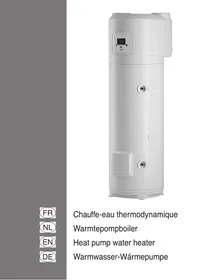
USER MANUAL AQUANEXT PLUS 3079058 CHAFFOTEAUX
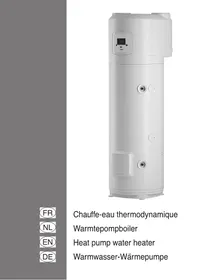
Chauffe-eau thermodynamique
Warmtepompboiler
Heat pump water heater
- EN 16147 ;
- 2014/C 207/03 - transitional methods of measurement and calculation
4.4 Raccordement hydraulique
We wish to thank you for having purchased the heat pump water heater. We hope that it meets your expectations and may offer you optimal service coupled with maximum energy saving for many years to come.
Our group invests a lot of time, energy and economic resources in creating innovative solutions aimed at reducing the energy consumption of its products.
Your choice shows sensibility and awareness towards reducing energy consumption, an issue directly related to environmental protection. Our constant commitment to creating innovative and efficient products coupled with your responsible behaviour in the rational use of energy both actively contribute to safeguarding the environment and natural resources.
Store this manual with care; it is intended to provide information, warnings and suggestions on the correct use and maintenance of the appliance, so that you may fully appreciate all its qualities. Our technical assistance centre closest to you is at your complete disposal for answering any of your queries.
INTRODUCTION
This manual is intended for final users of the heat pump water heater and plumbers responsible for the latter installation. Failure to observe the indications contained in this manual shall void the warranty.
This manual is an integral and essential part of the appliance. It must be stored with care by the user and should always be passed on to new owners or users of the appliance, and/or when the latter is transferred to another system.
In order to ensure correct and safe use of the appliance, both installer and user, each for his/her respective requirements, must read the instructions and precautions contained in this manual carefully, as they provide important safety indications concerning installation, use and maintenance of the appliance.
This manual is divided into four distinct sections:
- SAFETY WARNINGS
This section contains the safety precautions to be observed.
- GENERAL INFORMATION
This section contains useful general information relating to the description of the appliance and its technical features, besides information on the symbols, units of measurement and technical terms used. This section includes the water heater's technical data and dimensions.
- TECHNICAL INFORMATION FOR INSTALLERS
This section is intended for installers. It contains all the indications and instructions that professionally qualified personnel must observe in order to ensure optimal installation of the appliance.
- OPERATING AND MAINTENANCE INSTRUCTIONS FOR THE USER
This section is intended for final users and contains all the information necessary for operating the appliance correctly and for assisting the user in carrying out regular checks and maintenance operations on the appliance.
The manufacturer reserves the right to modify the data and contents of this manual without prior notice, with the aim of improving the quality of the relative products.
To facilitate understanding of the contents herein, given that the manual is published in multiple languages and is valid for use in several countries, all the illustrations are grouped in the final pages and are common to the various languages.
TABLE OF CONTENTS
SAFETY WARNINGS
GENERAL INFORMATION
| 1. | GENERAL INFORMATION |
| 1.1 | Description of the symbols used |
| 1.2 | Field of application |
| 1.3 | Instructions and technical norms |
| 1.4 | Product certifications |
| 1.5 | Packaging and supplied accessories |
| 1.6 | Transport and handling |
| 1.7 | Identification of the appliance |
| 2. | TECHNICAL FEATURES |
| 2.1 | Operating principle |
| 2.2 | Construction features |
| 2.3 | Overall dimensions |
| 2.4 | Electrical diagram |
| 2.5 | Technical data table |
| TECHNICAL INFORMATION FOR INSTALLERS |
| 3. | WARNINGS |
| 3.1 | Installer qualification |
| 3.2 | Implementing the instructions |
| 3.3 | Safety regulations |
| 4. | INSTALLATION |
| 4.1 | Location of the appliance |
| 4.2 | Positioning on the ground |
| 4.3 | Air supply connections |
| 4.4 | Hydraulic connections |
| 4.5 | Electrical connections |
| 5. | INITIAL START UP |
| OPERATING AND MAINTENANCE INSTRUCTIONS FOR THE USER |
| 6. | WARNINGS |
| 6.1 | Initial start-up |
| 6.2 | Recommendations |
| 6.3 | Safety regulations |
| 6.4 | Recommendations for prevention of Legionella growth |
| 7. | INSTRUCTIONS FOR USE |
| 7.1 | Control panel description |
| 7.2 | Turning the water heater on/off |
| 7.3 | Setting the temperature |
| 7.4 | Mode of operation |
| 7.5 | Time setting |
| 7.6 | Information menu |
| 7.7 | Installer menu |
| 7.8 | Antifreeze |
| 7.9 | Default settings |
| 7.10 | Number of showe available |
| 7.11 | Faults diagnostics |
| 8. | MAINTENANCE |
| 8.1 | Draining the appliance |
| 8.2 | Routine maintenance |
| 8.3 | Troubleshooting |
| 8.4 | Routine maintenance performed by users |
| 8.5 | Water heater disposal |
ILLUSTRATIONS
SAFETY WARNINGS
CAUTION
- This manual is an integral part of the product. Keep it with care with the appliance, and hand it on to the next user/owner in case of change of property.
- Read the instructions and warnings in this manual carefully, they contain important information regarding safe installation, use and maintenance.
- The appliance must be installed and commissioned by a qualified technician in accordance with local legislation and health and safety regulations. All power circuits must be shut off before you open the terminal block.
- DO NOT use the appliance for any other than its specified use. The manufacturer is not liable for damage resulting from improper or incorrect use or failure to observe the instructions given in this manual.
- Incorrect installation can result in damage to property and injury to persons and animals; the manufacturer is not liable for the consequences.
- Do not leave the packaging materials (staples, plastic bags, expanded polystyrene, etc.) within the reach of children - they can cause serious injury.
- The appliance may not be used by persons under 8 years of age, with reduced physical, sensory or mental capacity, or lacking the requisite experience and familiarity, unless under supervision or following instruction in the safe use of the appliance and the hazards attendant on such use. DO NOT permit children to play with the appliance. User cleaning and maintenance may not be done by unsupervised children.
- DO NOT touch the appliance when barefoot or if any part of your body is wet.
- Any repairs, maintenance, plumbing and electrical connections must be done by qualified technicians using original spare parts only. Failure to observe the above instructions can compromise the safety of the appliance and relieves the manufacturer of any liability for the consequences.
- The hot water temperature is regulated by a thermostat which also acts as a re-armable safety device to prevent dangerous overheating.
- The electrical hookup must be done as indicated in this manual.
-
If the appliance is equipped with a power cord, the latter may only be replaced by an authorised service centre or professional technician.
-
It is mandatory to screw on to the appliance's water intake pipe a suitable device against overpressure; this device must not be tampered with and must be made to operate frequently in order to check that it is not blocked and to remove any limescale. In countries which acknowledge EN 1487, the appliance's water intake pipe must be equipped with a safety device compliant with said standard; it must be calibrated to a maximum pressure of 0.7 MPa, including at least a cock, check valve, safety valve and hydraulic load cut-out.
- It is normal that water drips from the overpressure safety device or from the EN 1487 safety unit when the appliance is heating. For this reason one must install a drain, open to the air, with a continuously downwards sloping pipe, in an area not subject to subzero temperatures. A condensate drain should also be connected to the same pipe with a special coupling.
- Make sure you drain the appliance when it is out of service in an area subject to subzero temperatures. Drain as described in the appropriate chapter.
- Water heated to over 50° C can cause immediate serious burns if delivered directly to the taps. Children, disabled persons and the aged are particularly at risk. We recommend installing a thermostatic mixer valve on the water delivery line.
- Do not leave flammable materials in contact with or in the vicinity of the appliance.
- The appliance is not supplied with batteries. Where these are required, only use the battery kit made by the manufacturer. Carefully observe the polarity when fitting. At the end of their life, dispose of batteries in accordance with applicable legislation using dedicated containers. Disconnect the appliance from the mains power supply when fitting or removing batteries.
1.1 Description of the symbols used
In terms of installation and operation safety, the symbols described in the table below are used in order to stress the importance of the relative risk warnings:
| Symbol | Description |
 | Failure to comply with this warning may result in injury topersonsor, in some cases, death. |
 | Failure to comply with this warning may result in serious damage toproperty and plants or injury to animals. |
 | It is mandatory to comply with the general and appliance-specific safety measures. |
1.2 Field of application
This appliance is intended for hot water production for domestic use or similar, at temperatures below boiling point. The appliance must be hydraulically connected to a domestic water supply line and to a power supply network. Exhaust ducts may be used for the entry and discharge of processed air.
It is forbidden to use of the appliance for uses other than those specified. Any alternative use of the appliance constitutes improper use and is prohibited; in particular, the appliance may not be used in industrial cycles and/or installed in environments exposed to corrosive or explosive materials. The manufacturer shall not be held liable for any damage due to faulty installation, improper use or uses deriving from behaviour that is not reasonably predictable, and incomplete or careless implementation of the instructions contained in this manual.
 | This appliance should not be operated by individuals (including children) with reduced physical or sensory abilities, or by inexperienced or unskilled individuals, unless adequately supervised and trained regarding use of the appliance by persons responsible for their own safety. Children must be supervised by persons responsible for their safety so as to ensure that they do not use the appliance as a toy. |
1.3 Instructions and technical norms
The purchaser pays for the appliance's installation, which must be carried out by qualified personnel only, in conformity with national regulations in force and any provisions emitted by local authorities or bodies responsible for public health, and in accordance with the specific manufacturer indications contained in this manual.
The manufacturer is responsible for the product's conformity to the relevant construction directives, laws and regulations in force at the time the product is first commercialised. The designer, installer and user are each exclusively responsible, in their respective fields, for knowing and observing the legal requirements and technical regulations concerning the design, installation, operation and maintenance of the appliance. Any reference to laws, regulations or technical specifications contained in this manual is purely for information purposes; any new laws introduced or modifications to existing laws are not in any way binding on the manufacturer towards third parties. It is necessary to ensure that the power supply network to which the product is connected complies with the EN 50160 norm (under penalty of warranty invalidation). Relative to France, ensure that installation complies with the NFC 15-100 norm.
The tampering of product integral parts and/or supplied accessories invalidates the warranty.
1.4 Product certifications
The CE marking of the appliances attests its conformity to the following EC Directives, of which it satisfies the essential requisites:
- 2006/95/EC on electrical safety (EN/IEC 60335-1; EN/IEC 60335-2-21; EN/IEC 60335-2-40);
- 2004/108/EC on electromagnetic compatibility (EN 55014-1; EN 55014-2; EN 61000-3-2; EN 61000-3-3);
- RoHS2 2011/65/EU on restriction of use on certain hazardous substances in electrical and electronic equipment (EN 50581).
- Commission Regulation (EU) no. 814/2013 on ecodesign (no. 2014/C 207/03 - transitional methods of measurement and calculation)
Verification of performance is carried out through the following technical regulations:
This product complies with:
- REACH Regulation 1907/2006/EC;
- Commission Delegated Regulation (EU) no. 812/2013 (labelling)
1.5 Packaging and supplied accessories
The appliance is anchored to a wooden pallet and is protected with polystyrene top cover, wooden edge protectors, and external cardboard; all the materials are recyclable and eco-compatible.
The following accessories are included:
- Belt for handling the water heater (to be removed once the product is installed);
- Connection pipe for condensation water;
- One 3/4" dielectric coupling and joint;
- Instruction manual and warranty documents;
- Energy label and product fiche;
- 2 adapters for ∅150 and ∅160 ducts.
1.6 Transport and handling
Upon delivery of the product, check that the latter has not been damaged during transport and that no signs of damage appear on the packaging. In the event of damages, immediately notify any claims to the forwarder.
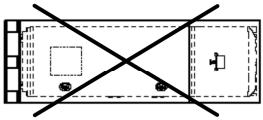
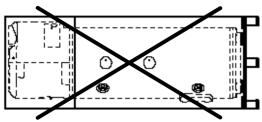
WARNING! The appliance should be handled and stored in a vertical position. The product may be handled in a horizontal position only for short distances, while resting on the rear end indicated; in this case, wait at least 3 hours before starting the appliance once it has been correctly repositioned in a vertical position and/or installed; this is to ensure that the lubricating oil inside the refrigeration circuit is suitably distributed and to avoid damages to the compressor.
The packaged appliance may be handled either manually or with the aid of a forklift truck, while ensuring that the above indications are observed. It is advisable to keep the appliance in its original packaging until installing it in its chosen location, particularly when construction work is under way on-site.
Upon removing the packaging, check whether the appliance is intact and that no parts are missing. In the event of defects or missing components, notify the dealer within the time limits specified by the law.
WARNING! Keep the packaging elements out of the reach of children, as they are potentially dangerous.
When transporting or handling the appliance after the initial start-up, observe the aforementioned indication concerning the allowed tilt angle and ensure that all water has been drained from the tank. Should the original packaging be missing, provide an adequate protection for the appliance to prevent any damages, for which the manufacturer shall not be held liable.
| Allowed positions | Non-allowed positions |
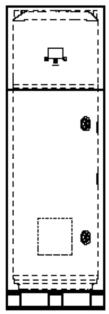 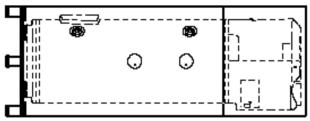 | 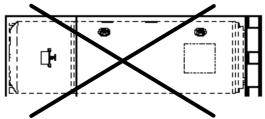 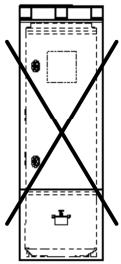   |
1.7 Identification of the appliance
The main information for identifying the appliance is contained on the adhesive data plate located on the water heater casing.
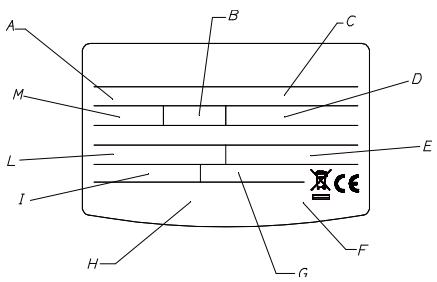
| A | Model |
| B | Tank capacity |
| C | Sserial no. |
| D | Power supply voltage. frequency. maximum absorbed power |
| E | Max./min. pressure of the refrigeration circuit |
| F | Tank protection |
| G | Absorbed power – heating element mode |
| H | Marks and symbols |
| I | Max./min. power in heat pump mode |
| L | Type of refrigerant and charge |
| M | Maximum tank pressure |
2. TECHNICAL FEATURES
2.1 Operating principle
The efficiency of a heat pump cycle is measured by the Coefficient of Performance (COP), i.e. the ratio between the energy supplied to the appliance (in this case, the heat transferred to the water to be heated) and the electrical energy used (by the compressor and the appliance's auxiliary devices). The COP varies according to the type of heat pump and to its relative conditions of operation.
For example, a COP value equal to 3 indicates that for every 1 kWh of electrical energy used, the heat pump supplies 3 kWh of heat to the medium to be heated, of which 2 kWh are extracted from the free source.
2.2 Construction features (Refer to fig. 14).
| 1 | Fan | 11 | Middle NTC temperature probe |
| 2 | Hot gas valve | 12 | Top NTC temperature probe (hot water) |
| 3 | Safety pressure switch | 13 | Hermetic rotary compressor |
| 4 | Electronic expansion valve | 14 | Lateral connections |
| 5 | Evaporator inlet NTC temperature probe | 15 | Pressure transducer |
| 6 | Electronic box | 16 | Low pressure outlet |
| 7 | Bottom NTC temperature probe (heating element zone) | 17 | Air NTC temperature probe |
| 8 | Electric heating element | 18 | Compressor suction NTC temperature probe |
| 9 | Impressed current anode | 19 | Evaporator filter |
| 10 | Condensate drain pipe | 20 | Evaporator |
2.3 Overall dimensions (Rifer to fig. 2).
| A | Inlet cold water 3/4" pipe | G | Recirculation 3/4" pipe (SYS version only) |
| B | Outlet hot water 3/4" pipe | H | Sheath for bottom probe (S2) (SYS version only) |
| C | Condensate drainage connection | |
| D | Auxiliary circuit 3/4" inlet pipe (SYS version only) | |
| E | Auxiliary circuit 3/4" outlet pipe (SYS version only) | |
| F | Sheath for upper probe (S3) (SYS only version) | |
| 1 | Power supply (220-230V 50Hz) | 13 | Impressed current anode |
| 2 | Mainboard (motherboard) | 14 | Bottom NTC temperature probe (heating element zone) |
| 3 | Interface board (display or HMI) | 15 | Middle NTC temperature probe |
| 4 | Connection board | 16 | Top NTC temperature probe (hot water) |
| 5 | Hermetic rotary compressor | 17 | Safety pressure switch |
| 6 | Operation condenser (15μF 450V) | 18 | Batteries (4x1,2V AA rechargeable) |
| 7 | Hot gas valve | 19 | Electronic expansion valve |
| 8 | Fan | 20 | Filter |
| 9 | Earth pole | 21 | HC-HP signal (EDF) - cable not supplied with the product |
| 10 | Pressure transducer | 22 | PV/SG signal - cable not supplied with the product |
| 11 | Air/Evaporator/Suction NTC temperature probes | 23 | AUX signal - cable not supplied with the product |
| 12 | Electric heating element (1500 + 1000 W) | |
2.5 Technical data table
| Description | Unit of measurement | 200 | 250 | 250 SYS |
| Rated tank capacity | I | 200 | 250 | 245 |
| Insulation thickness | mm | ≈ 50 |
| Type of internal tank protection | | Enamelling |
| Type of corrosion protection | | Titanium impressed current anode + disposable magnesium anode |
| Maximum operating pressure | MPa | 0,6 |
| Diameter of hydraulic connections | II | G 3/4 M |
| Diameter of condensate drainage connection | mm | 14 |
| Diameter of air exhaust/intake pipes | mm | 150-160-200 |
| Minimum water hardness | °F | 12 |
| Minimum conductivity of the water | μS/cm | 150 |
| Weight when empty | kg | 90 | 95 | 115 |
| Heating bottom circuit exchange surface | m2 | - | - | 0,65 |
| Max water temperature with external integration | °C | - | - | 75 |
| Heat pump |
| Average electrical power consumption | W | 700 |
| Max. electrical power consumption | W | 900 |
| Quantity of R134a refrigerant fluid | kg | 1,3 |
| Max. pressure of refrigerating circuit (low-pressure side) | MPa | 1 |
| Max. pressure of refrigerating circuit (high-pressure side) | MPa | 2,4 |
| Max. water temperature with heat pump | °C | 62 |
| EN 16147 |
| COP (A) | | 3,05 | 3,35 | 3,14 |
| Heating time (A) | h:min | 04:30 | 05:23 | 05:29 |
| Heating energy consumption (A) | kWh | 2,934 | 3,552 | 3,718 |
| Max. amount of hot water in a single intake Vmax (A), delivered at 55°C | I | 273 | 346 | 345 |
| Pes (A) | W | 23 | 22 | 24 |
| Tapping (A) | | L | XL | XL |
| 812/2013 – 814/2013 (B) |
| Qelec (B) | kWh | 3,825 | 5,690 | 6,066 |
| wh (B) | % | 126,1 | 137,0 | 128,5 |
| Mixed water at 40°C V40 (B) | I | 273 | 346 | 345 |
| Temperature setting (B) | °C | 55 | 55 | 55 |
| Annual electricity consumption (average climatic condition) (B) | kWh/year | 812 | 1223 | 1303 |
| Load prifile (B) | | L | XL | XL |
| Indoor sound power level (°C) | dB(A) | 55 | 55 | 55 |
| Heating element |
| Heating element power | W | 1500+1000 |
| Max. water temperature with heating element | °C | 75 |
| Max. current consumption | A | 11,36 |
| Power supply |
| Voltage / max. power consumption (A) | V / W | 220-240 single-phase / 2500 |
| Frequency | Hz | 50 |
| Protection rating | | IPX4 |
| Air side |
| Standard air flow rate (automatic modulating control) | m3/h | 650 |
| Available static pressure | Pa | 110 |
| Minimum volume of room of installation (°C) | m3 | 30 |
| Minimum ceiling height of room of installation (°C) | m | 1,940 | 2,200 | 2,200 |
| Min. temperature of room of installation | °C | 1 |
| Max. temperature of room of installation | °C | 42 |
| Minimum air temperature (w.b. at 90% r.h.) (D) | °C | -7 |
| Maximum air temperature (w.b. at 90% r.h.) (D) | °C | 42 |
(A) Values obtained with external air temperature of 7° C and relative humidity at 87%, inlet water temperature of 10° C and set temperature of 55° C (according to the provisions set forth in EN 16147). Rigid ∅200 ducted product, as per fig. 4.
(B) Values obtained with external air temperature of 7° C and relative humidity at 87%, inlet water temperature of 10° C and set temperature of 55° C (according to the provisions set forth in 2014/C 207/03 - transitional methods of measurement and calculation). Rigid ∅200 ducted product, as per fig. 4.
(C) Values obtained from average results of three tests carried out with external air temperature of 7° C and relative humidity at 87%, inlet water temperature of 10° C and temperature set according to the provisions set forth in 2014/C 207/03 - transitional methods of measurement and calculation and EN 12102). Rigid ∅200 ducted product, as per fig. 4
(D) Value that ensures correct operation and eases maintenance if the product is not ducted. Correct operation of the product is nevertheless ensured up to a minimum height of 2,090 m, as long as the accessory grilles are used.
(E) Outside the operating temperature range of the heat pump, heating of the water is ensured by the integration.
Data collected from a significant number of products.
Additional energy data are shown on the Product Sheet (Attachment A) that is an integral part of this manual. Products which do not have the label and data sheet required for boiler/solar power configurations pursuant to regulation 812/2013 may not be used in such installations.
3. WARNINGS
3.1 Installer qualification
WARNING! The installation and initial start-up of the appliance must be performed by qualified personnel in compliance with the national regulations in force regarding installation, and in conformity with any regulations issued by local authorities and public health bodies.
The water heater is supplied with a sufficient amount of R134a refrigerant for its operation. This refrigerant fluid does not damage the atmosphere's ozone layer, is not flammable and does not cause explosions; however any maintenance activities or work on the refrigerant circuit must exclusively be carried out by authorised personnel with the suitable equipment.
3.2 Implementing the instructions
WARNING! Incorrect installation can harm persons or animals and damage possessions; the manufacturer shall not be held liable for any damage in such cases.
The installer is required to observe the instructions outlined in this manual.
Once installation is complete, it is the installer's duty to inform and instruct the user on how to operate the water heater and carry out the main operations correctly.
3.3 Safety regulations
Refer to Paragraph 1.1 under the section GENERAL INFORMATION for the description of the symbols used in the table below.
| Ref. | Warning | Type of risk | Symbol |
| 1 | Protect connection piping and cables so as to avoid them being damaged. | Electrocution caused by exposure to live wires. |  |
| Flooding due to water leaking from damaged pipes. |  |
| 2 | Make sure the installation site and any systems to which the appliance must be connected fully comply with the regulations in force. | Electrocution from contact with live wires that have been incorrectly installed. |  |
| Damage to the appliance caused by improper operating conditions. |  |
| 3 | Use manual tools and equipment that are suitable for the intended use (in particular, ensure that the tool is not worn and that the handle is intact and securely fixed); use them correctly and prevent them falling from a height. Put them safely back in place after use. | Personal injury caused by flying splinters or fragments, inhalation of dust, knocks, cuts, puncture wounds and abrasions. |  |
| Damage to the appliance or surrounding objects caused by falling splinters, knocks and incisions. |  |
| 4 | Use electrical equipment that is suitable for the intended use; use the equipment correctly, keep passages clear of the power supply cable, prevent the equipment falling from a height, disconnect and put back in place after use. | Personal injury caused by flying splinters or fragments, inhalation of dust, knocks, cuts, puncture wounds and abrasions. | [7WZY] |
| Damage to the appliance or surrounding objects caused by falling splinters, knocks and incisions. |  |
| 5 | Descale the components, in accordance with the instructions of the safety data sheet included with the product used, while ventilating the room and wearing protective clothing; avoid mixing different products and protect the appliance and surrounding objects. | Personal injury caused by acidic substances coming into contact with skin or eyes; inhaling or swallowing harmful chemical agents. |  |
| Damage to the appliance or surrounding objects due to corrosion caused by acidic substances. |  |
| 6 | Make sure that any portable ladders are securely positioned, that they are sufficiently resistant, that the steps are intact and not slippery, that these do not move around when someone climbs on them and that someone supervises at all times. | Personal injury caused by falling from a height or cuts (stepladders shutting accidentally). |  |
| 7 | Make sure that the work area has adequate hygiene and health conditions in terms of lighting, ventilation and the solidity of relevant structures. | Personal injury caused by knocks, stumbling etc. |  |
| 8 | Wear individual protective clothing and equipment during all work phases. | Personal injury caused by electrocution, falling splinters or fragments, inhalation of dust, shocks, cuts, puncture wounds, abrasions, noise and vibration. |  |
| 9 | All operations inside the appliance must be performed with the necessary caution in order to avoid sudden contact with sharp parts. | Personal injury caused by cuts, puncture wounds and abrasions. |  |
| 10 | Before handling, empty all components which may contain hot water and perform bleeding where necessary. | Personal injury caused by burns. |  |
| 11 | Make all electrical connections using suitably-sized conductors. | Fire caused by overheating due to electrical current passing through undersized cables. |  |
| 12 | Protect the appliance and all areas in the vicinity of the work area using suitable material. | Damage to the appliance or surrounding objects caused by falling splinters, knocks and incisions. |  |
| 13 | Handle the appliance with care, while using suitable protection equipment. Use the appropriate handling belt. | Damage to the appliance or surrounding objects caused by shocks, knocks, incisions and crushing. |  |
| 14 | Arrange materials and equipment in such a way as to make handling easy and safe, and avoid the formation of any piles which could give way or collapse. | Damage to the appliance or surrounding objects caused by shocks, knocks, incisions and crushing. |  |
| 15 | Reset all safety and control functions affected by any work performed on the appliance and make sure that they operate correctly before restarting the appliance. | Damage or shutdown of the appliance caused by out-of-control operation. |  |
4. INSTALLATION

WARNING! Observe the general warnings and safety instructions listed in the previous paragraphs and strictly adhere to the indications therein contained.
4.1 Location of the appliance
WARNING! Prior to starting any installation activities, ensure that the location where the water heater is to be installed satisfies the following requirements:
a) In the event of water heaters without an air exhaust duct, the room of installation should have a volume of no less than 30 m3 and must be adequately ventilated. Avoid installing the appliance in rooms which may favour frost build-up. Do not install the product in a room containing an appliance that requires air to function (e.g. an open-chamber gas boiler, open-chamber gas water heater, etc.) unless otherwise indicated by local law. The product's safety and performance levels are not guaranteed in the event of outdoor installation.
b) The appliance's air exhaust and/or extraction duct (if present) must have access to the outside from the point where the appliance is installed. The connections for the air exhaust and aspiration ducts are located on the upper part of the appliance;
c) Ensure that the installation site and the electrical and hydraulic systems to which the appliance must be connected fully comply with the regulations in force;
d) The chosen site must have, or must be suitable to house, a single-phase 220-240 V \~ 50 Hz power supply socket;
e) The chosen site must be suitable to house a condensate drainage outlet connected to the lateral of the appliance with a suitable siphon;
f) The chosen site must ensure that the appropriate safety distances from the wall and ceiling can be observed, for the appliance to operate properly and to facilitate maintenance operations (refer to fig. 5);
g) that installation of the ducts allows maintenance operations on the evaporator filter (refer to fig. 6);
h) that the plan allows a perfectly vertical operating position (refer to. fig. 2);
i) The chosen site must conform to the appliance's IP protection rating (protection against the penetration of liquids) as specified by the regulations in force;
j) The appliance must not be exposed to direct sunlight, even when windows are present;
k) The appliance must not be exposed to particularly aggressive substances such as acidic vapours, dust or gas-filled environments;
I) The appliance must not be directly installed on telephone lines that are unprotected against overvoltage;
m) The appliance must be installed as close as possible to the points of use to limit heat dispersion along the piping;
n) The air aspirated by the product must be free of dust, acicid vapours and solvents.
In the event of non-ducted installation, observe the distances from the walls as indicated in specific picture in Fig. 7.
4.2 Positioning on the ground
Refer to Fig. 8:
1) Once the suitable installation position has been located, remove the packaging and remove the fixings visible on the pallet where the product is based.
2) Using the appropriate belt, remove the product from the pallet.
3) Fix the feet on the ground (through the appropriate holes) using suitable screws and rawlplugs; after positioning the appliance, remove the fabric belt by loosening the relative bolts.
4.3 Air supply connections
Please bear in mind that using air from heated environments may hamper the building's thermal performance.
There is one connection for the air intake and one for the air exhaust on the rear side of the appliance. It is important to not remove (except for not canalized installation, fig. 7) or tamper the two grilles.
The outlet air may reach temperatures that are 5-10°C lower compared to that of the inlet air and, if not ducted, the temperature of the room of installation may drop sensibly. If operation by exhaust or intake to the outside (or another room) of the treated air by the heat pump is foreseen, suitable ducting must be used for air passage. Ensure that the ducting is connected and fastened securely to the product to prevent accidental disconnections and annoying noises.
We recommend installing the ducted product as shown in figure 4.
The minimum height for a ducted installation is shown in figure 5.
In the event of a ducted product, allow a minimum distance between the product and the ducts to allow for the removal of the evaporator filter (ref. fig. 6).
In the event of a ducted product with rigid pipes, during installation take all the necessary measures to ensure maintenance operations can be carried out (fig.4, 5 and 6).
In the event of a non-ducted product, in order to avoid by-passes between the air intake and outlet, replace the grilles on the product with accessory grilles (code 3078095 where not supplied), or do not remove the grilles on the product and fit a curve in the delivery pipe (ref. figure 7).
WARNING: Do not use outdoor grills resulting in high losses, such as anti-insect grilles. The grids used should allow good air flow, the distance between the inlet and outlet air should not be less than 50cm.
Protect pipes from the external wind. The expulsion of air in the chimney is allowed only if the draft is appropriate, is also required periodic maintenance of the barrel, and chimney accessories.
The total static pressure loss due to installation is calculated by adding the loss of the single installed components; this sum must be lower than the static pressure of the fan (par. 2.5)

WARNING! A type of canalization not suitable affects product performance and significantly increases the heating time!
4.4 Hydraulic connections
Before using the product, we recommend filling its tank with water and draining it completely so as to remove the residual impurities.
Connect the water heater inlet and outlet to pipes or pipe fittings that can withstand the operating pressure and temperature of the hot water, which may reach 75° C. It is not advisable to use materials that cannot withstand such temperatures. The dielectric union fitting with joint (supplied with the product) must be applied to the hot water outlet pipe, prior to performing the connection.
Screw a “T” fitting identified by a blue collar onto the appliance’s water inlet pipe. It is mandatory to screw on said fitting a cock for draining the product with a tool on one side, and a suitable device against overpressure on the other side.

In countries which acknowledge EN 1487 It is mandatory to fit a safety group onto the appliance's water inlet pipe. The device must comply with the EN 1487 standard and must have a maximum pressure of 0.7 Mpa (7 bar). Moreover, it must at least include the following components: a cut-off valve, a non-return valve, a control mechanism for the non-return valve, a safety valve and a water pressure shut-off device.

The accessory part codes are:
- 1/2" hydraulic safety device (for products with 1/2" diameter inlet pipe) → code 877084;
- 3/4" hydraulic safety device (for products with 3/4" diameter inlet pipe) → code 877085;
- Syphon 1" → code 877086.
Some countries may require the use of alternative safety devices, as required by local law; the installer must check the suitability of the safety device he tends to use. Do not install any shut-off device (valve, cock, etc.) between the safety device and the heater itself.
The device's relief outlet must be connected to a relief pipe with a diameter no less than that of the appliance's connection (3/4"), with the aid of a siphon creating an air gap of at least 20 mm to allow for visual inspection; this is to prevent any harm to persons and animals or damage to objects should the device activate and for which the manufacturer shall not be held liable. Use a flexible pipe to connect the pressure safety device inlet to the cold water system pipe, using a cut-off valve if necessary. Additionally, a water discharge pipe must be fitted to the outlet in case the drainage tap is opened.
Avoid overtightening the pressure safety device and do not tamper with it.
It is normal for water to trickle from the pressure safety device during the heating phase; for this reason, it is necessary to connect the outlet, which must always be left exposed to the atmosphere, to a drainage pipe that slopes downwards and towards an area not subject to frost. It is advisable to also connect the condensate outlet to the same pipe, through the connection located on the bottom side of the water heater.
The appliance must not operate with water hardness levels below 12° F; on the other hand ( >25° F), it is advisable to use a suitably calibrated and monitored water softener in the event of particularly hard water; in this event, the residual hardness must not fall below 15° F.
The SYS versions have a 3/4 "G coupling for recirculation of the hydraulic system (if present).
The SYS version coil has two 3/4 "G couplings, upper (inlet) and lower (outlet), on which to connect an auxiliary source (fig.15).
WARNING! It is advisable to carefully wash the system's pipes in order to remove any residues of screw thread, welding or dirt which may hamper the correct operation of the appliance.
4.5 Electrical connections
| Cable | Max current |
| Permanent power supply (cable supplied with the appliance) | 3G 1.5mm 2 | 16A |
| EDF signal (cable not supplied with the appliance) | H05V2V2-F 2G min. 0.75mm 2 | 2A |
| PV/SG signal (cable not supplied with the appliance) | H05V2V2-F 2G min. 0.75mm 2 | 2A |
| AUX signal (cable not supplied with the appliance) | H05V2V2-F 2G min. 0.75mm 2 | 2A |
WARNING:
Before you get access to terminals, all supply circuits must be disconnected
| WARNING:Is forbidden remove covers and do maintenance and / or electrical connections by unqualified personnel |
The appliance is supplied with a power supply cable (should the latter need to be replaced, use only original spare parts supplied by the manufacturer).
It is advisable to carry out a check on the electrical system to verify conformity to the regulations in force. Verify that the electrical system can suitably withstand the water heater's maximum power consumption values (refer to the data plate), in terms of the size of the cables and their conformity to the regulations in force. It is forbidden to use multiple outlet sockets, extension cables or adaptors. It is forbidden to use piping from the water, heating and gas systems for earthing the appliance.
Prior to operating the machine, make sure that the electricity mains voltage conforms to the value indicated on the appliance's data plate. The manufacturer of the appliance shall not be held liable for any damage caused by failure to earth the system or due to anomalies in the electric power supply. To disconnect the appliance from the mains, use a bipolar switch complying with all applicable CEI-EN regulations in force (minimum distance between contacts 3 mm, switch preferably equipped with fuses).
The appliance must comply with the European and national standards, and must be protected by a 30mA RCD.
The main circuit board on the appliance is fitted with an earth contact for operating purposes only, not for safety purposes.
| PERMANENT ELECTRICAL CONNECTION |
| Fig. 9 | Use this configuration whenever users do not have a two-tier electricity rate.The water heater will always be connected to the power supply network to ensure 24h operation. |
| ELECTRICAL CONNECTION WITH DUALPOWER SUPPLY |
| Fig. 10 | If you have a dual electrical power supply and a suitable meter, during the hours when the product is not powered protection from corrosion via impressed current anode is ensured by rechargeable batteries that must be inserted as they are not supplied with the product. (see figure 1) |
| ELECTRICAL CONNECTION WITH DUALPOWER SUPPLY AND HC-HP SIGNAL |
| Fig. 11 | Offers the same cost advantages compared to the two-tier rate configuration but, additionally, it allows for obtaining rapid heating thanks to the BOOST mode that activates heating even with the HP rate.1) Connect a bipolar cable to the appropriate signal contacts on the meter.2) Connect the signal bipolar cable (B) to the special EDF connector “SIG1” inside the electrical box to the right of the product (pierce the rubber pads to obtain a section suitable for its passage).WARNING: The EDF signal has a voltage of 230V.3) Enable the HC-HP function with the P7 parameter on the installer’s menu. (See paragraph 7.7). |
| AUXILIARY CONNECTION |
| Fig. 12 | · If you have an FV system to be connected or an available SG signal, you can connect a bipolar cable from the inverter or the SG signal cable (one in alternative to the other) to the electrical box on the right hand side of the product (secure the cable into the dedicated cabling sheath). Connect said cable (C) to the “SIG2” connector and enable the PV (P9) or SG (P18) function on the installer’s menu (see paragraph 7.7).Caution: 230 V signal.· Only for SYS models, if you have an auxiliary heat generator (boiler) and you want to replace the integration performed by the heating element with it, you can connect a bipolar cable (D) from the heat generator (if enabled) to the electrical box on the right hand side of the product (secure the cable into the dedicated cabling sheath). Connect the cable to the “AUX” connector and set the P8 parameter on 3 via the installer’s menu (see paragraph 7.7). |
| Fig. 15 | In the event of connection of the SYS version to the boiler/stove, it is advisable to use upper sensor slot S3.In the event of connection of the SYS versions to the solar control unit (lower heat exchanger), the lower sensor slot on its own (S2) or both sensor slots (S2) and (S3) may be used. |
5. INITIAL START-UP
Once the appliance is connected to the hydraulic and electric systems, the water heater must be filled with water from the domestic water supply network. In order to fill the water heater, it is necessary to open the central tap of the domestic network supply and the nearest hot water tap, while making sure that all the air in the tank is gradually expelled.
The product is not supplied with batteries.
In the event of installation with batteries, use 4 type NiMh, AA, 1.2V, 2100 mAh minimum, rechargeable batteries with a minimum of 1000 recharging cycles and a minimum operating temperature of 55°C (use batteries supplied from the manufacturer's catalogue). These should be inserted carefully observing the correct polarity, in the special seat inside the front casing that is accessible by removing only the external frame (fig. 1). These will ensure correct operation of the impressed current anode also during any electrical power cuts. The appliance will automatically recharge them.
OPERATING AND MAINTENANCE INSTRUCTIONS FOR THE USER
6. WARNINGS
6.1 Initial start-up

WARNING! The installation and initial start-up of the appliance must be performed by qualified personnel in compliance with the national regulations in force regarding installation, and in conformity with any regulations issued by local authorities and public health bodies.
In all cases, the company performing the work must carry out checks to verify the safety and correct operation of the entire system.
Before starting the water heater, check that the installer has completed all of his operations. Make sure you fully understand the installer's explanations on operation of the water heater and correct performance of the appliance's main operations.
6.2 Recommendations
In the event of a malfunction and/or faulty operation, turn the appliance off and do not attempt any repairs, but contact qualified personnel. Only original spare parts must be used and any repairs must be carried out exclusively by qualified personnel. Failure to comply with the above-mentioned recommendations may jeopardise the appliance's safety and void the manufacturer's liability. In the event of prolonged inactivity of the water heater, it is advisable to carry out the following:
- Disconnect the appliance from the power supply or, if a switch is mounted upstream from the appliance, turn the switch itself to the "OFF" position.
- Close all taps of the domestic water supply system.
- Empity the product as shown par. 8.1
WARNING! Hot water at temperatures above 50° C running from taps may immediately cause serious burns. Children, the disabled and the elderly run a greater risk in this regard. Therefore, it is advisable to use a thermostatic mixing valve connected to the appliance's water outlet pipe.
CAUTION If the display shows the icon to the side, it means that the water temperature has reached a temperature more than 6° C above the temperature set.

It is mandatory to have a mixing valve in the SYS models.
CAUTION! (only for SYS versions) Ensure that the temperature detected by the S2, S3 sensors of the auxiliary source's control unit, inside the water heater, do not exceed 75° C. fig.15.
6.3 Safety regulations
Refer to paragraph 1.1 for the description of the symbols used in the table below.
| Ref. | Warning | Type of risk | Symbol |
| 1 | Do not perform operations that involve removing the appliance from its housing. | Electrocution due to exposure to live components. |  |
| Flooding caused by water leaking from disconnected piping. |  |
| 2 | Do not leave objects lying on the appliance. | Personal injury caused by the object falling off the appliance as a result of vibrations. |  |
| Damage to the appliance or any underlying items caused by the object falling off as a result of vibrations. |  |
| 3 | Do not climb onto the appliance. | Personal injury caused by the appliance falling down. | [S32A] |
| Damage to the appliance or any underlying objects caused by the appliance detaching from its fixing brackets and falling. |  |
| 4 | Do not perform any operations that involve opening the appliance. | Electrocution due to exposure to live components. Personal injury caused by burns due to overheated components, or wounds caused by sharp edges or protrusions. |  |
| 5 | Do not damage the power supply cable. | Electrocution from non-insulated live wires. |  |
| 6 | Do not climb onto chairs, stools, ladders or unstable supports to clean the appliance. | Personal injury caused by falling from a height or cuts (stepladders shutting accidentally). |  |
| 7 | Do not attempt to clean the appliance without first switching it off, removing the plug or turning the external switch to the OFF position. | Electrocution due to exposure to live components. | [S6DA] |
| 8 | Do not use the appliance for any purpose other than normal household operation. | Damage to the appliance caused by operation overload. Damage to objects caused by improper use. |  |
| 9 | Do not allow children or inexperienced persons to operate the appliance. | Damage to the appliance caused by improper use. |  |
| 10 | Do not use insecticides, solvents or aggressive detergents to clean the appliance. | Damage to plastic or painted parts. |  |
| 11 | Avoid placing any objects and/or appliance beneath the water heater | Damage due to possible water leakage. |  |
| 12 | Do not drink the water of condensation | Injury from positioning |  |
6.4 Recommendations for prevention of Legionella growth (based on European standard CEN/TR 16355)
Legionella are small rod shaped bacteria which are a natural constituent of all fresh waters.
Legionaries' disease is a serious pneumonia infection caused by inhaling the bacteria Legionella pneumophilia or other Legionella species. This bacterium is frequently found in domestic, hotel and other water systems and in water used for air conditioning or air cooling system. Hence the main intervention against the condition is prevention, through control of the organism in water systems.
The European standard CEN/TR 16355 gives recommendations for good practice concerning the prevention of Legionella growth in drinking water installations but existing national regulations remain in force.
General recommendations
"Conditions for Legionella growth". The following conditions encourage Legionella growth:
- water temperature between 25 °C and 50 °C. To restrict the growth of Legionella bacteria, the water temperature shall be in a range that the bacteria will not grow or have minimum growth, wherever possible. Otherwise, it is necessary to disinfect a drinking water installation by means of a thermal treatment;
- stagnation of the water. To avoid long periods of stagnation, the water in every part of the drinking water installation should be used or flushed at least weekly;
- nutrients, biofilm and sediment within the installation including water heaters, etc. Sediment can support the growth of Legionella bacteria and it should be removed on a regular basis from e.g. storage systems, water heaters, non-flown through expansion vessels (e.g. once a year).
Regarding to this storage water heater, if
1) the product is switched-off for a period of time [months] or
2) the water temperature is constantly maintained between 25° C and 50° C,
the Legionella bacteria could growth inside the tank. In these cases, to restrict the Legionella growth, it is necessary to perform the so called "thermal disinfection cycle".
This storage water heater is sold with a software that, if it is enabled, carry out a "thermal disinfection cycle" to restrict the Legionella growth inside the tank.
This cycle complies with the hot water installations and relevant recommendations for Legionella prevention specified in the following Table 2 of the CEN/TR 16355.
Table 2 - Types of hot water installation
| Hot and cold water separately | Mixed hot and cold water |
| No storage | Storage | No storage upstream of mixing valves | Storage upstream of mixing valves | No storage upstream of mixing valves |
| No circulation of hot water | With circulation of hot water | No circulation of hot water | With circulation of hot water | No circulation of hot water | With circulation of hot water | No circulation of mixed water | With circulation of mixed water | No circulation of mixed water | With circulation of mixed water |
| Rif. In Allegato C | C.1 | C.2 | C.3 | C.4 | C.5 | C.6 | C.7 | C.8 | C.9 | C.10 |
| Temp. | - | ≥ 50°Ce | In the storage water heatera | ≥ 50°Ce | Thermal disinfectiond | Thermal disinfectiond | In the storage water heatera | ≥ 50°Ce Thermal disinfectiond | Thermal disinfectiond | Thermal disinfectiond |
| Ristagno | - | ≤ 3 lb | - | ≤ 3 lb | - | ≤ 3 lb | - | ≤ 3 lb | - | ≤ 3 lb |
| Sedimento | - | - | Removec | Removec | - | - | Removec | Removec | - | - |
| a. Temperature ≥ 55°C the whole day or at least 1h per day ≥ 60°C .b. The volume of water contained in the pipework between the circulation system and the tap which has the greatest distance to the system.c. Remove the sediment from the storage water heater in accordance with the local conditions but at least once a year.d. Thermal disinfection for 20 min at a temperature of 60°C , for 10 min at 65°C or for 5 min at 70°C at every draw-off point at least once a week.e. The water in the circulation loop shall be not less than 50°C .- No requirement. |
This electronic storage water heater is sold with a thermal disinfection cycle function not enabled for default; as a consequence, if, for any reason, one of the above said “Conditions for Legionella growth” could occur; it’s hardly recommended to enable such function by following the instructions mentioned in this booklet [see par. 7.7].
However, this thermal disinfection cycle is not able to destroy any Legionella bacteria in the storage tank; so, if this function is then disenabled, Legionella bacteria growth might re-take place again.
Note: when this software carries out the thermal disinfection treatment, the energy consumption of the storage water heater is expected to increase.
Warning: when this software has been carrying out the thermal disinfection treatment, water temperature can cause severe burns instantly. Children, disabled and elderly are at highest risk of being scalded. Feel water before bathing or showering.
7. INSTRUCTIONS FOR USE
7.1 Control panel description
Refer to Fig 1.
| 1 | Batteries support | 4 | Knob/set button |
| 2 | Display | 5 | Led |
| 3 | ON/OFF | 6 | MODE |
The control panel, constructed in a simple and rational way, comprises two buttons and a central knob.
In the upper section, a DISPLAY shows the set temperature or the detected temperature, while in bottom section other specific indications such as the operation mode signal, fault codes, settings and information of the product's condition.
7.2 Turning the water heater on/off
Turning the appliance on: simply press the ON/OFF button to turn the water heater on.
The DISPLAY visualises the “set” temperature and operation mode, while the HP symbol and/or heating element symbol indicate the operation of the heat pump and/or heating element respectively.
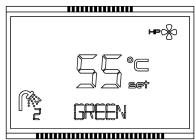
Turning the appliance off: simply press the ON/OFF button to turn the water heater off, only “OFF” appears on the display. The protection against corrosion is still ensured (in case HC-HP contact works, insert rechangeable batteries, see figure 1 and par. 5), while the product will automatically ensure that the temperature of the water in the tank does not fall below 5°C.
7.3 Setting the temperature
The desired temperature for the hot water (T SET POINT) can be set by turning the knob clockwise or anti-clockwise (the visualised temperature will flash temporarily).
To visualise the current temperature of the water in the tank, press and release the knob; the relative value will appear for 8 seconds then the set temperature will reappear once again.
The temperatures that can be obtained in the heat pump mode vary between 50° C and 55° C, by factory default setting, and 40° C- 55° C, by varying the setting on the installer menu (P13).
The maximum temperature that can be obtained with the heating element is 65° C, by factory default setting where expected, and 75° C, by varying the setting on the installer menu (P11).
7.4 Mode of operation
In normal operating conditions, the “mode” button can be used to vary the operating mode through which the water heater reaches the set temperature. The selected mode will be visualised on the line below the temperature.
| If the heat pump is active, the following symbol will appear: | |
| If the heating element or integration (P8=3) are active, the following symbol will appear: | |
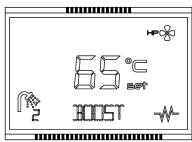
- GREEN: the water heater uses only the heat pump to ensure maximum energy saving. This function is recommended for air temperatures higher than 0° C during heating and for normal operation. The maximum temperature that can be reached depends on the value of the P13 parameter ( 51° C- 62° C) – refer to Paragraph 7.7. For air conditions outside the pump's operating range, the integration is enabled (except for P8=2). The integration is always enabled in case of anti-Legionella and antifreeze.
- AUTO: this default function is disabled, to make it selectable set the P8 parameter value to 1 or 3. The water heater learns how to reach the desired temperature in a limited number of hours, with rational use of the heat pump and, only if necessary, of the integration. The maximum number of hours used depends on the P14 parameter - TIME_W (See paragraph 7.7), that is set by default at 8 hours. (recommended during the winter to ensure better comfort). The integration is always enabled in case of anti-Legionella and antifreeze.
- BOOST: by enabling this mode the water heater simultaneously uses the heat pump and the integration to reach the desired temperature in the least time possible. Once the temperature has been reached, operation returns to the previous mode. This mode is not selectable when the P8 parameter value is 2.
- BOOST2 (P5 can be enabled on the installer's menu): this default function is disabled, to make it selectable set the P8 parameter value to 1 or 3. By enabling this mode the water heater simultaneously uses the heat pump and the integration to reach the desired temperature in the least time possible. Compared to Boost, the Boost2 mode is always enabled, even after reaching the set temperature. The integration is always enabled in case of anti-Legionella and antifreeze.
- VOYAGE (to be activated through the installer menu P3): studied for situations in which users are absent from the appliance's operating location; this mode allows for programming the number of days of absence, during which the water heater will remain turned off. The appliance will activate only to supply hot water on the day of arrival; protection against corrosion will continue to be guaranteed while the product will automatically ensure that the temperature of the water in the tank does not fall below 5°C. Press the "mode" button until selecting the VOYAGE mode, turn the knob to set the number of days ("days") then press the knob to confirm. The display will only
visualise the number of days that remain until the product's reactivation. Once this time has elapsed, the unit will switch back to the previous mode. In the event of an electric connection with a day/night contactor or with HC-HP signal, the number of nights of absence must be specified, taking into account that the product only operates during the night. If, for example, you leave home on Saturday morning and return on Sunday of the following week, on Saturday morning you should set the device to 8 days of absence in order to have hot water ready for your return on Sunday.
- PROGRAM (P4 can be enabled on the installer's menu): two programs are available, P1 and P2, that can be enabled individually or combined together throughout the day (P1+P2). The appliance can enable the heating phase to reach the chosen temperature at the pre-set hour, giving priority to the heating with the heat pump and, only if necessary, with the integration according to the following combinations:
For P8=0 the integration is enabled only when the conditions are outside the heat pump's operating range.
For P8=1 and 3 the integration is enabled simultaneously with the heat pump when requested.
For P8=2 the integration is never enabled.
The integration is always enabled in case of anti-Legionella and antifreeze.
Press “mode” to select the desired Program mode (P1/P2/P1+P2), turn the knob to set the desired temperature, press the knob to confirm, turn the knob to set the desired time and press to confirm; in P1+P2 mode the information for both of the programs can be set.
For electrical connection with HC/HP signal dual power supply you can program heating of the water at any time of the day.
This function requires you to set the current time, see following paragraph.
Warning: to ensure comfort for operation in P1+P2 mode with times that are very close together, it is possible that the water temperature is higher than the temperature set.
| Factory settings |
| TEMPERATURA IMPOSTATA PROGRAMMA P1 | 55°C |
| ORARIO IMPOSTATO PROGRAMMA P1 | 06:00 |
| TEMPERATURA IMPOSTATA PROGRAMMA P2 | 55°C |
| ORARIO IMPOSTATO PROGRAMMA P2 | 18:00 |
7.5 Time setting
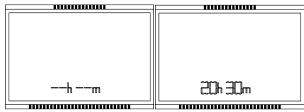
Setting the time is required if the PROGRAM mode is enabled. Once it is enabled, turn the knob to the current time and press to confirm. It can also be set with the L0 parameter by selecting it and setting the current time by turning the knob (the P4 function must be ON).
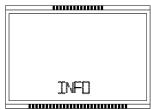
The information menu allows for visualising data for monitoring the product.
To enter the menu, press the relative knob and hold for 5 seconds.
Turn the knob to select the parameters L0, L2, L3 ... L27
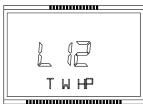
Upon reaching the desired parameter, press the knob to visualise its value. Press the knob or "MODE" button to return to the parameter selection area once again.
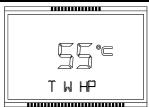
| To exit the information menu, press the “mode” button(the appliance will ensure that the menu is automatically exited after the latter has been idle for 10 minutes). |
| Parameter | Name | Parameter description |
| L0 | TIME | Time of the day (visible only if P4 is ON) |
| L1 | SW MB | Mainboard Software Version |
| L2 | SW HMI | Display Software Version |
| L3 | ENERGY | Energy consumption in kWh (*) (**) |
| L4 | ANTI_B | Displays whether the anti-Legionella function is enabled |
| L5 | HC-HP | Displays whether the HC-HP function is enabled |
| L6 | HE_SET | Displays the HE_SET status |
| L7 | SILENT | Displays whether the silent function is enabled |
| L8 | PV MODE | Displays which PV function is enabled |
| L9 | SG MODE | Displays whether the SG function is enabled |
| L10 | T W PV | Displays the temperature to be reached with the PV function |
| L11 | T_A_HP | Air temperature below which the heat pump does not work |
| L12 | T W HP | Temperature that will be reached with only the heat pump |
| L13 | T W 1 | Heating element unit sensor 1 temperature detected |
| L14 | T W 2 | Heating element unit sensor 2 temperature detected |
| L15 | T W 3 | Intermediate sensor temperature detected |
| L16 | T W 4 | Dome sensor temperature detected |
| L17 | T AIR | Environmental air sensor temperature detected |
| L18 | T EVAP | Evaporator sensor temperature detected |
| L19 | T ASP | Displays the intake temperature |
| L20 | P ASP | Displays the intake pressure |
| L21 | T SH | Overheating temperature |
| L22 | HP HYST | Compressor hysteresis temperature |
| L23 | HP h | Heat pump operating times (**) |
| L24 | HE h | Heating element operating times (**) |
| L25 | HP ON | Number of compressor start-up cycles (**) |
| L26 | TIME_W | Number of accepted power supply times |
| L27 | T AB | Displays the anti-Legionella set-point temperature |
* The values shown may differ from actual values based on mains power supply voltage and frequency.
** The values are updated either every 24 hours or when switching to battery operation or when an error occurs.

CAUTION: THE FOLLOWING PARAMETERS MUST BE ADJUSTED BY QUALIFIED PERSONNEL.
Some product settings can be modified on the installer's menu. The key symbol is displayed.
To enter the menu, keep the knob pressed for 5 seconds then scroll the parameters of the "L - INFO" menu until reaching "P0 CODE".
After entering the code (illustrated in the table that follows), turn the knob to select the parameters P0, P2, P3 ... P20.
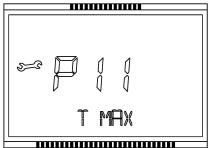
Upon reaching the parameter to be modified, press the knob to visualise the parameter's value then turn the knob to set the desired value.
To return to the parameter selection area, press the knob to store the entered parameter or press "mode" (or wait 10 seconds) to exit without storing the entered value.
To exit the installer menu, press the “mode” button (the appliance will ensure that the menu is automatically exited after the latter has been idle for 10 minutes).
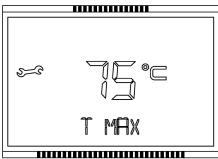
| Parameter | Name | Parameter description | Range | Factory settings |
| Min | Max |
| P0 | CODE | Code entering to access the installer menu. The number 222 appears on the display: turn the knob until reaching number 234 then press the knob. It will then be possible to access the installer menu. | 0 | 299 | 222 |
| P1 | RESET | Re-set the factory parameters. | 0 | 1 | OFF |
| P2 | ANTI_B | Anti-Legionella protection. | OFF | ON | OFF |
| P3 | VOYAGE | See chap. 7.4. | OFF | ON | OFF |
| P4 | PROG | See chap. 7.4. | OFF | ON | OFF |
| P5 | BOOST2 | See chap. 7.4. | OFF | ON | OFF |
| P6 | SILENT | Set silent mode. | OFF | ON | OFF |
| P7 | HC-HP | Operation with dual power supply. | OFF | ON | OFF |
| P8 | HE_SET | Manage the operating modes. | 0 | 3 | 0 |
| P9 | PV MODE | Modify the operating modes based on the presence of the PV signal. | 0 | 3 | 0 |
| P10 | T W PV | It is the desired temperature when PV is in production. | 55 | 75 | 62 |
| P11 | T MAX | Adjustment of the maximum temperature reachableA value set higher allows you to take advantage of the larger quantity of hot water. | 65 | 75 | 65 |
| P12 | T MIN | Adjustment of the minimum temperature reachableA value set lower allows you more operating economy if you have economical hot water consumption. | 40 | 50 | 50 |
| P13 | T W HP | It is the achievable temperature with only the heat pump. | 51 | 62 | 55 |
| P14 | TIME_W | Number of accepted power supply times. | 5 | 24 | 8 |
| P15 | HP HYST | Compressor hysteresis temperature. | 4 | 15 | 8 |
| P16 | T_A_HP | Air temperature below which the compressor does not work. | -7 | 20 | -7 |
| P17 | TANK_LT | Product capacity (do not modify). | - | - | - |
| P18 | SG MODE | Operation with SG signal. | 0 | 1 | 0 |
| P19 | ERRORS | Faults history (read-only value). | - | - | - |
| P20 | T AB | Anti-Legionella set-point temperature | 60 | 75 | 60 |
P2 parameter – Anti legionnaire's disease protection
If enabled, the water heater automatically performs the anti-Legionella protection function. The water temperature must remain higher or equal to 55° C all day or higher or equal to 60° C for at least 1 hour. These temperatures can cause burns, so we recommend you use a thermostatic mixer. The anti-Legionella function is enabled via this parameter; the temperature to be reached is settable via the P20 parameter and the hysteresis via the P15 parameter. Suggesting to set the P20 parameter at 60° C and the P15 parameter at 4° C. During the cycle of antilegionella will be displayed “ANTI_B” alternately to the mode of operation, once the cycle is done the set temperature remains the original one.
In the event that is enabled the two-tier rate signal HC-HP, the function will take place during the economic tariff. To stop press "on/off".
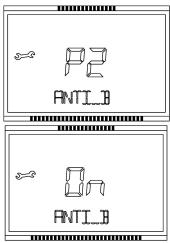
P6 parameter - Silent
This function reduces the sound level (performance can vary from those declared). It can be enabled via the P6 parameter on the installer's menu. When enabled, the image to the right appears on the display.

P7 parameter – Operation with two-tier electricity rate
To be able to operate also on appliances with a two-tier rate system, the control logic calculates the number of average hours a day during which the power supply is available in the economy mode (HC). For activating this function turn on P7 parameter.
A self-learning function ensures that the appliance reaches the pre-set temperature in the time range during which the economy rate applies; the maximum limit of hours is determined by the P14 TIME_W parameter; after the initial start-up (or after switching off the hardware), the default setting is 8 hours. In order to optimize the self-learning function it is advisable to set AUTO mode.
P8 parameter (for details see paragraph 7.4)
The P8 parameter allows you to manage the product's different operating modes. It can have values of 0, 1, 2, 3.
STANDARD (value 0 - default): only the GREEN, BOOST, VOYAGE (if enabled with P3) and PROGRAM (if enabled with P4) modes can be selected with the "mode" button; the integration is by the electric heating element that operates according to the mode selected.
HE ON (value 1): the GREEN, AUTO, BOOST, BOOST2, VOYAGE (if enabled with P3) and PROGRAM (if enabled with P4) modes, i.e. all available modes, can be selected with the "mode" button; the integration is by the electric heating element that operates according to the mode selected.
COMBI (value 2): only the GREEN, VOYAGE (if enabled with P3) and PROGRAM (if enabled with P4) modes can be selected with the "mode" button. Integration to the heat pump is not provided; the electric heating element always operates in the event of anti-Legionella and antifreeze. It is advised to perform a pre-heating of inlet water to combi boiler made by the heat pump (see fig. 16).
SYSTEM (value 3): the GREEN, AUTO, BOOST, BOOST2, VOYAGE (if enabled with P3) and PROGRAM (if enabled with P4) modes, all available modes can be selected with the "mode" button; the integration is by the external auxiliary heat generator where it is correctly connected both hydraulically (see fig. 15 – B or C) and electronically (see paragraph 4.5 and fig. 12) to the product. It is advised when it is available auxiliary heat generator which is able to replace the electrical resistance for integration function (only for SYS models).
P9 parameter - Photovoltaic function
If you have a photovoltaic system, you can set the product to optimise use of the electricity produced. After having done the electrical connections as described in paragraph 4.5 fig. 12 and set the P9 parameter to other than 0, when the SIG2 signal is detected, the current operating mode is automatically modified as follows:
STANDARD (value 0 - default): the operating mode of the previously described procedures is not modified.

PV GREEN (value 1): the PV icon is displayed (see figure to the side). When the signal from the inverter is present, the name of the selected mode alternates with the text PV GREEN. The product will reach the set temperature (the most between T SET POINT and T W PV), with only the heat pump (max 62°C).
PV HE (value 2): the PV icon is displayed (see figure to the side). When the signal from the inverter is present, the name of the selected mode alternates with the text PV HE. The product will reach the set temperature (the highest between T SET POINT and T W PV), operating with only the heat pump up to 62°C and subsequently with the heating element (1500 W).
PV BOOST (value 3): the PV icon is displayed (see figure to the side). When the signal from the inverter is present, the name of the selected mode alternates with the text PV BOOST. The product will reach the set temperature (the highest between T SET POINT and T W PV), operating both with only the heat pump and the heating element (1000 W) up to 62°C and subsequently with only the heating element (1500 W).
There must be the SIG2 signal for at least 5 minutes to enable the photovoltaic function (once the product starts a cycle, it will operate for at least 30 minutes).
If parameter P18 is active, function P18 is automatically deactivated when the photovoltaic function is activated.
P18 parameter - SG function
If you have an SG signal, you can connect the signal cable as described in chapter 4.5 fig. 12 and when the P18 function is enabled the SG icon will be displayed. Once you have received the SIG2 signal for at least 5 minutes (once the product starts a cycle, it will operate for at least 30 minutes), the name of the selected mode alternates with the text SG ON and the current operating mode is automatically modified by thermostating the product to the temperature set
(the highest between T SET POINT and T W PV), operating with only the heat pump (max 62°C).
If parameter P9 is active, function P9 is automatically deactivated when the SG function is activated.

P19 parameter - Errors
This is a read-only parameter that shows the history of the last 10 errors; it is accessible only by the technical assistance. The number (3 digits) indicates the occurred error code whilst the error number is represented in the lower string in chronological order (max 10 errors - the number 10 indicates the most recent occurred error).
7.8 Anti-frost function
When the product is supplied with power and there is no hot water demand, if the water temperature in the tank goes below 5° C, the heater coil (1000 W) is activated automatically to heat the water to 16° C. With P8=3 the function is performed by the integrated circuit.
7.9 Defrost
The defrost function is activated when the heat pump has been working for at least 20 minutes, the detected air temperature is below 15° C and the evaporator temperature is decreasing rapidly. When the defrost cycle is running, the icon to the side is displayed.

7.10 Number of showers available
The icon to the side shows the estimated number of showers remaining, based on hot water availability. One shower is calculated as: 40 L at 40° C. Press the knob to view the value.

7.11 Errors diagnostics
As soon as a fault occurs, the appliance enters into the fault mode while the display emits flashing signals and visualises the error code. The water heater will continue supplying hot water provided the fault affects only one of two the heating units, by activating the heat pump or heating element.
If the fault involves the heat pump, the symbol "HP" will flash on the screen, while the heating element symbol will flash if the fault involves this component. If both components are affected, both symbols will flash.
If the product shows an error signal, switch the appliance off and then on with the ON/OFF button (without batteries); if the error signal persists, contact the technical assistance.

CAUTION: Before intervening on the product by following the indications below, check the correct electrical connection of the components to the mainboard and the correct position of the NTC sensors in their seats.
| Error code | Cause | Heating element operation | Heat pump operation | What to do |
| Encoding of heat pump circuit codes |
| 110 | Air/Evaporator/Intake NTC sensor; short circuit or open circuit | ON | OFF | Replace the component |
| 111 | Air/Evaporator/Intake NTC sensor: decalibration | ON | OFF | Replace the component |
| 121 | No coolant (R134a) | ON | OFF | Recover the residual gas, find the leak in the cooling circuit and repair it; empty the cooling circuit and recharge with 1300 grams of coolant |
| 131 | Compressor start capacitor: KO | ON | OFF | Replace the start capacitorIf the error persists, recover the residual gas and replace the compressor; empty the cooling circuit and recharge with 1300 grams of coolant |
| 141 | Fan: KO | ON | OFF | Replace the component |
| 142 | Evaporator filter: obstruction | ON | OFF | Clean the evaporator filter and the air ductsIf the error persists, check compliance of the air duct specifications |
| 143 | High pressure drop in air ducts | ON | OFF | Check compliance of the air duct specificationsIf the error persists, clean the evaporator filter and the air ducts |
| 151 | Pressure switch: decalibration | OFF | OFF | Replace the componentIf the error persists, download 300 gr. of R134a refrigerant gas from cooling circuit. |
| 171 | Pressure transducer: decalibration | ON | OFF | Replace the componentIf the error persists, recover the residual gas, find the leak in the cooling circuit and repair it, empty the cooling circuit and recharge with 1300 grams of coolant |
| 181 | Electronic expansion valve: KO | ON | OFF | Replace the coil of the componentIf the error persists, recover the residual gas and replace the component; empty the cooling circuit and recharge with 1300 grams of coolant |
| Encoding of domestic water circuit codes |
| 210 | High NTC sensor (hot water): short circuit or open circuit | ON | OFF | Replace the component |
| 220 | Medium NTC sensor: short circuit or open circuit | ON | ON | Replace the component |
| 230 | Low NTC sensor (heating element zone): short circuit or open circuit | OFF | OFF | Replace the component |
| 231 | Low NTC sensor (heating element zone): safety intervention (1st level) | OFF | OFF | Replace the mainboard |
| 232 | Low NTC sensor (heating element zone): safety intervention (2nd level) | OFF | OFF | Replace the mainboard |
| 240 | Impressed current anode: short circuit | OFF | OFF | Replace the component |
| 241 | Impressed current anode: open circuit | OFF | OFF | Check the presence of water inside the productIf the error persists, replace the component |
| Encoding of electronic circuit codes |
| 310 | ON/OFF repeated | OFF | OFF | Wait 15 minutes before unblocking the product with the ON/OFF button |
| 321 | Mainboard: internal fault | OFF | OFF | Replace the component |
| 331 | Mainboard-display wiring: no communication | OFF | OFF | Replace the mainboard-display communication wiringIf the error persists, replace the mainboard and display. |
8. MAINTENANCE (for authorized personnel)

WARNING! Observe the general warnings and safety instructions listed in the previous paragraphs and strictly adhere to the indications therein contained.
All maintenance operations and interventions should be performed by qualified personnel (i.e. with the necessary requirements as outlined in the applicable norms in force).
After routine or extraordinary maintenance, we recommend filling the appliance's tank with water and draining it completely to remove any residual impurities.
8.1 Draining the appliance
The appliance must be drained if left inactive in a room subject to frost.
When necessary, empty the appliance as follows:
- Permanently disconnect the appliance form the mains electricity.
- Close the shut-off valve, if installed, or the central tap of the domestic water supply network.
- Open the hot water tap (washbasin or bathtub).
- Open the cock on the safety device (in countries which acknowledge EN 1487) or the special cock installed on the "T" fitting, as described in paragraph 4.4.
8.2 Routine maintenance
Partial obstruction of the evaporator filter causes a reduction in product performance. We therefore recommend cleaning the filter to remove any dust or obstructions at least once a year. The filter can be extracted using the appropriate clip above the casings (fig. 17). Clean the filter with water and mild soap.
Verify that the external terminal of the air exhaust duct, and the duct itself, are not obstructed or have not deteriorated. Ensure that the condensate water runs out in a suitable drain and make sure the discharge is made without hindrance.
Check and clean canalizations and grills.
8.3 Troubleshooting
| Problem | Possible reason | What to do |
| Water comes out cold or insufficiently warm | Low temperature set | Increase the temperature set for the outlet water. |
| Device functioning errors | Check for errors on the display and act in the way specified on the chart "Faults". |
| No electrical connection, disconnected or damaged wirings | Check the voltage at the supply terminals, verify the integrity and connections of the cables. |
| Absence of HC/HP signal (if the product is installed with the HC/HP signal cable) | Try to put the product in "Boost" mode, if is ok in this way, check the connection of the meter, check the integrity of the HC/HP cable. |
| Malfunctioning of the timer for two-tier rate (if the product is installed in this configuration) | Check the operation of the contactor day / night and that the set time is enough to heat water. |
| Insufficient air flow to the evaporator. | Clean the grilles and ducts regularly. |
| Product off | Check availability of electricity, turn on the product. |
| Usage of a large amount of hot water when the product is heating up phase. |
| Probe error | Control the presence, even if occasional E5. |
| The water is boiling (with the possible presence of steam from the taps) | High level of scaling of the boiler and components | Turn off the power, drain the unit, remove the sheath of the resistance and remove lime scale inside the boiler, be careful not to damage the enamel of the boiler and the sheath resistance. Repackage the product as in the original configuration, it is recommended to replace the flange gasket. |
| Probe error | Control the presence, even if occasional E5. |
| Reduced functioning of the heat pump, semi-permanent operation of the electrical resistance | Air temperature out of range | Depending from the climatic conditions. |
| "Time W" value too low | Set a parameter for lower temperature or a longer unit of "Time W". |
| Installation done not in accordance with electric voltage (too low) | Provide a proper Electric voltage. |
| Evaporator clogged or frozen | Check the cleaning of the evaporator. |
| Problems with the heat pump circuit | Make sure that there are no errors on the display. |
| Are not yet past 8 days by:-First Time installation.-Change of the parameter Time-W.-No power from mains in absence of batteries or exhausted batteries. |
| Insufficient flow of hot water | Leaks or obstructions by the water circuit | Verify that there are no leaks along the circuit, check the integrity of the deflector pipe, the integrity of incoming cold water pipe and hot water pipe. |
| Overflowing water by the the safety valve | A drip of water by the device should be considered normal during the heating | If you want to avoid the drip, install an expansion vessel on the plant supply.If leakage continues during the period of no heating, check the calibration of the device and the pressure of the water network. Caution: Do not obstruct the hole for evacuation of the device! |
| Increase of the noise | Presence of obstructive elements inside | Check the components in movement, clean the fan and the other parts who can generate noise or vibrations. |
| Components vibration | Check the components fixed with screws, be sure that the screws are tight. |
| Problems of visualization or display off | Damage or disconnection of the wiring connecting electronic board and interface board | Check the integrity of the connection, check the operation of electronic boards. |
| No power from mains in absence of batteries or exhausted batteries. | Check if there is electric mains supply and check the conditions of the batteries. |
| Bad odor coming from the the product | Absence of a siphon or siphon empty | Provide a siphon, with the proper quantity of water. |
| Abnormal or excessive consumption than expected | Loss or partial obstructions of the refrigerant circuit | Start your product in heat pump mode, use a leak detector for R134a to verify that there are no leaks. |
| Bad environmental conditions or improper installation | |
| Partially clogged evaporator | Check the cleanliness of the evaporator grid and ducts. |
| Incorrect installation | |
| Other | | Contact the technical support. |
8.4 Routine maintenance performed by users
It is advisable to rinse out the appliance after each routine or extraordinary maintenance intervention.
The pressure safety device must be operated regularly to verify that it is not clogged and to remove any limescale deposits.
Check that the condensate drainage pipe is not obstructed.
Check the perfect cleaning of grids and ducts.
In case of using, the batteries must be replaced every year or in case of losses. Make sure that they are correctly disposed of and exclusively replace them with 4 NiMh, AA,-type, rechargeable batteries, minimum 2100 mAh, rminimun 1000 recharge cycles, minimum working temperature of 55°C (use batteries supplied from the manufacturer's catalogue) observe the polarities as illustrated in the battery housing. See fig. 1. The appliance should be unplugged when you remove the batteries.
8.5 Water heater disposal
The appliance contains R134a-type refrigerant gas which must not be released into the atmosphere. In case of permanent decommissioning of the water heater, ensure that disposal procedures are carried out by qualified personnel only.

The barred bin symbol on the appliance and its packaging indicates that the product must be scrapped separately from other waste at the end of its service life. The user must therefore hand the equipment over to a sorted waste disposal facility for electro-technical and electronic equipment at the end of its service life. Alternatively, the equipment may be returned to the retailer at the time of purchase of a new equivalent type of appliance. Electronic equipment of size less
than 25 cm can be handed over to any electronics equipment retailer whose sales area is at least 400 m 2 for disposal free of charge and without any obligation to purchase new product.
Sorted waste collection for recycling, treatment and environmentally compatible scrapping contributes to the prevention of damage to the environment and promotes reuse/recycling. For more detailed information on the collection systems available, contact the local waste disposal service or the shop where the product was purchased.
The appliance is not provided with rechargeable batteries, but if you use them they must be removed and put into a specific container before disposing of the appliance. The batteries seat is behind the front frame.
15
![graph TD A["SYS"] --> B["S3 MAX 75°C"] B --> C["IN"] C --> D["A"] C --> E["B"] C --> F["C"] G["S2 MAX 75°C"] --> H["OUT"] I["75°C"] --> J["Control Valve"] K["175°C"] --> L["Pressure Gauge"] M["175°C"] --> N["Signal Line"]](/content/2024/11/207185/images/d13c2b74cce413765c0445504198a77760c73eb95d00a05a797d0f78f823e8e0.jpg)
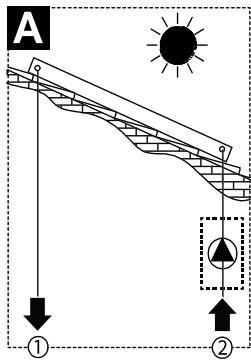
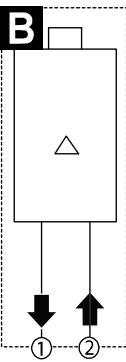
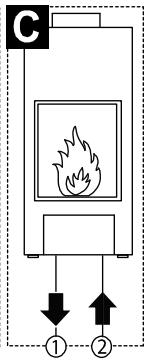
16
![graph TD A["Top Panel"] --> B["Downward Flow"] B --> C["Tank 1"] B --> D["Tank 2"] C --> E["Bottom Panel"] D --> F["Bottom Panel"] E --> G["Valve"] F --> H["Valve"] G --> I["Control Unit"] H --> I I --> J["Output"]](/content/2024/11/207185/images/cd23b2869b9feb68a1685d074e7197c4dfd424ed1dcb8db516fbe52fd2252525.jpg)
17
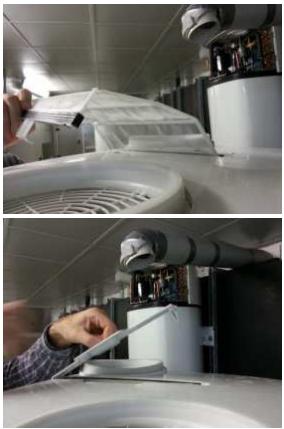
WE MAKE USE OF
RECYCLED PAPER