
P6053CDTX - Lawn mower PARTNER - Free user manual and instructions
Find the device manual for free P6053CDTX PARTNER in PDF.


| Product type | Petrol lawn mower |
| Brand | PARTNER |
| Model | P6053CDTX |
| Cutting width | 53 cm |
| Engine type | 4-stroke petrol engine |
| Engine power | Approx. 5 HP |
| Fuel | Unleaded petrol |
| Tank capacity | Approx. 1 L |
| Cutting height | Adjustable, from 25 to 75 mm |
| Cutting system | Rotary blade |
| Grass collector type | Rigid grass collector (capacity approx. 60 L) |
| Main functions | Mowing, collecting, mulching possible |
| Dimensions (L x W x H) | Approx. 140 x 60 x 100 cm |
| Weight | Approx. 35 kg |
| Starting | Manual recoil start |
| Safety | Engine stop by releasing handle, blade guard |
| Maintenance | Cleaning the deck, blade sharpening, engine oil change, air filter and spark plug replacement |
| Spare parts | Replacement blade, spark plug, air filter, belt |
| Repairability | Repairability index estimated at 8/10 |
| General information | User manual provided, 2-year warranty |
Frequently Asked Questions - P6053CDTX PARTNER
User questions about P6053CDTX PARTNER
0 question about this device. Answer the ones you know or ask your own.
Ask a new question about this device
Download the instructions for your Lawn mower in PDF format for free! Find your manual P6053CDTX - PARTNER and take your electronic device back in hand. On this page are published all the documents necessary for the use of your device. P6053CDTX by PARTNER.
USER MANUAL P6053CDTX PARTNER
Lawn mower with petrol engine - 53 cm blade
Self-propelled lawn mower
The present manual constitutes an integral part of the product and it should be kept for all future reference.
We wish to thank you for choosing our lawn mowers. We are confident that the high quality of our machine will meet with your satisfaction and appreciation and that your lawn mower will give you long-lasting service. Before starting to use your machine, make sure to read with care this manual, which has been purposely drawn up to provide you with all the necessary information for proper use, in compliance with basic safety requirements.
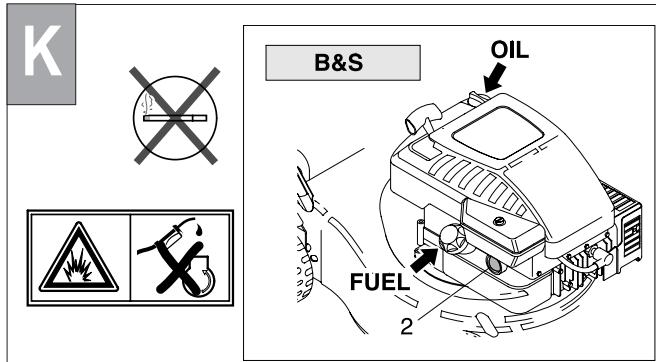
Risk of explosion! Do not top up with fuel with engine running.
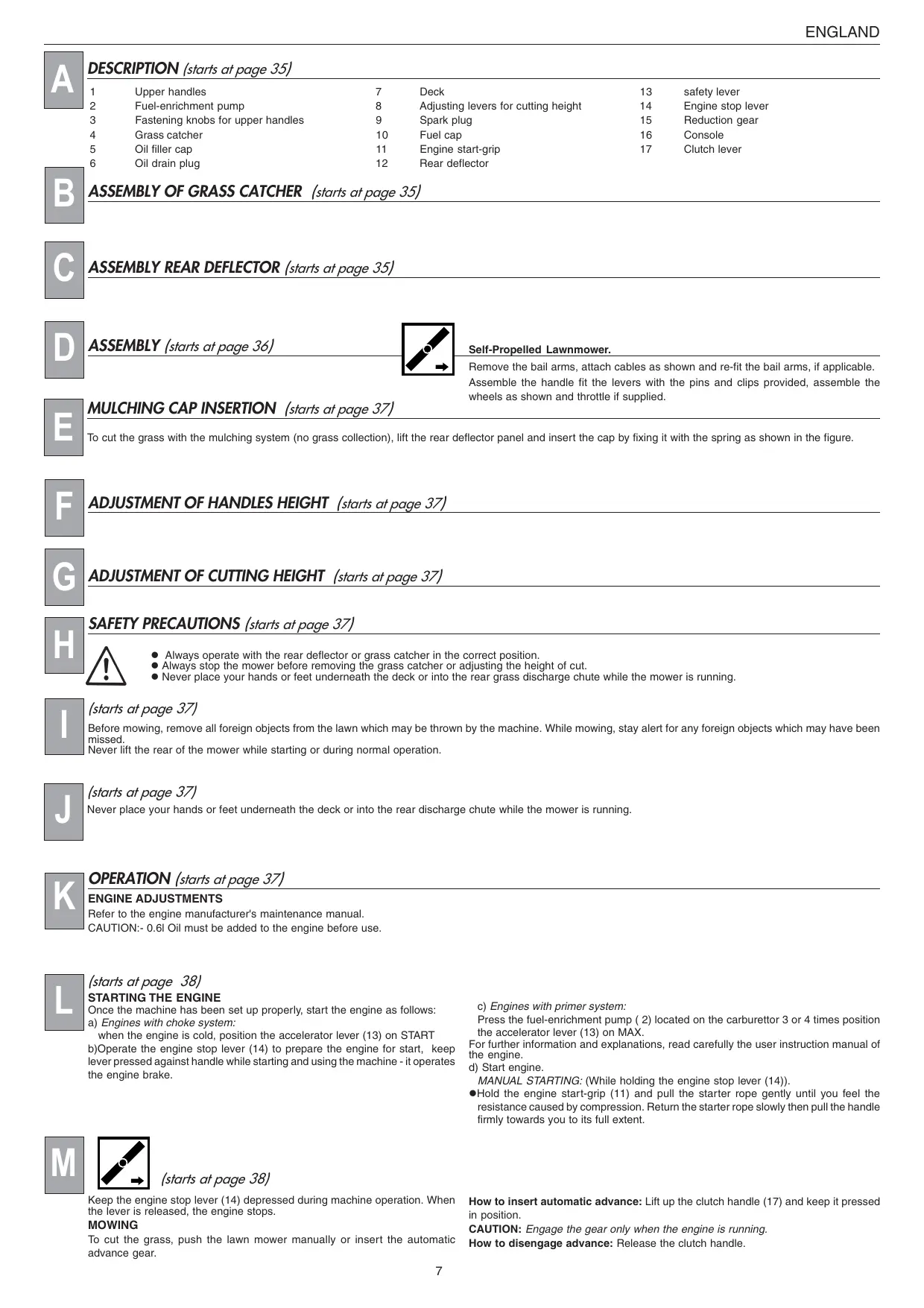
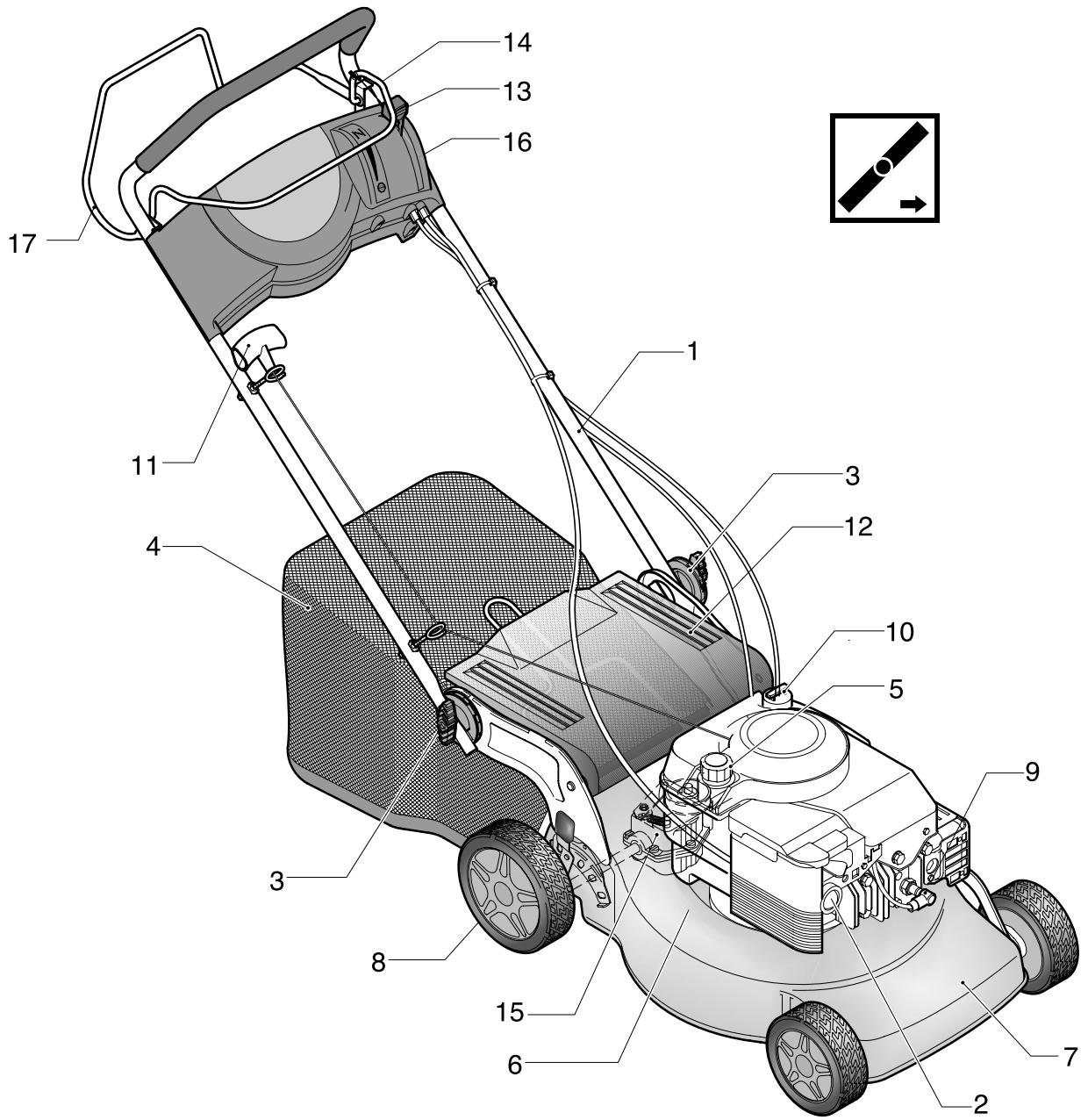
| 1 | Upper handles | 7 | Deck | 13 | safety lever |
| 2 | Fuel-enrichment pump | 8 | Adjusting levers for cutting height | 14 | Engine stop lever |
| 3 | Fastening knobs for upper handles | 9 | Spark plug | 15 | Reduction gear |
| 4 | Grass catcher | 10 | Fuel cap | 16 | Console |
| 5 | Oil filler cap | 11 | Engine start-grip | 17 | Clutch lever |
| 6 | Oil drain plug | 12 | Rear deflector |
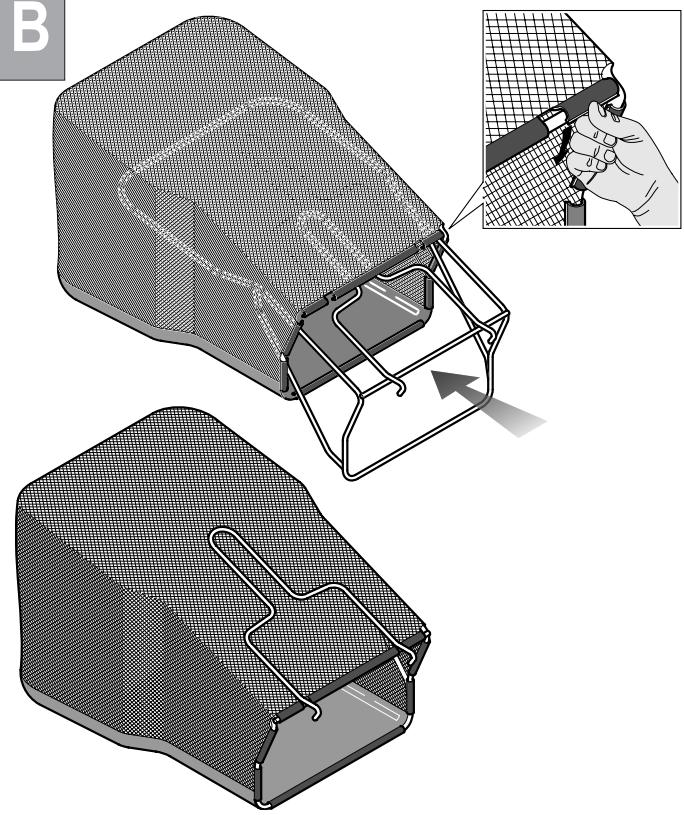
B
ASSEMBLY OF GRASS CATCHER (starts at page 35)

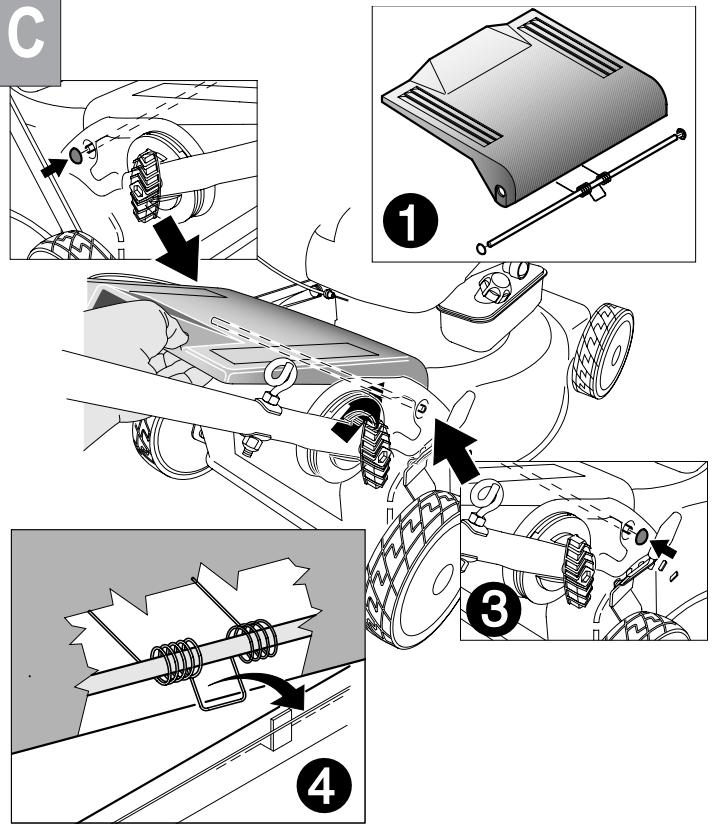
ASSEMBLY REAR DEFLECTOR (starts at page 35)

ASSEMBLY (starts at page 36)

Self-Propelled Lawnmower.
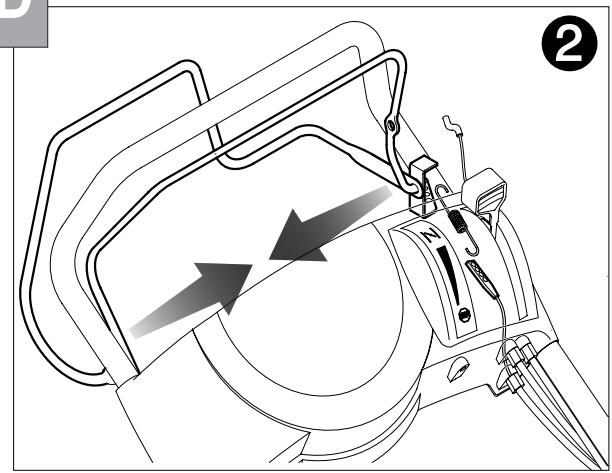
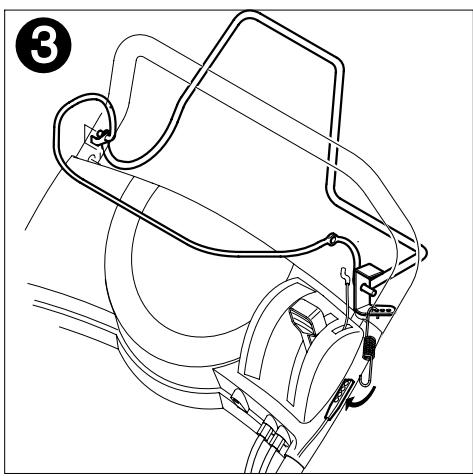
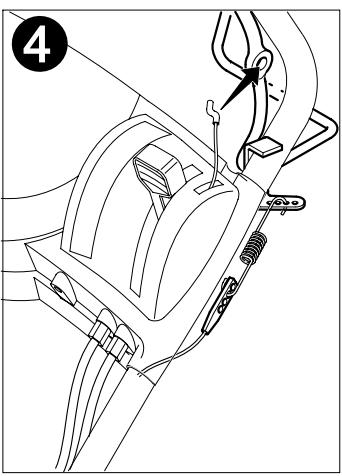
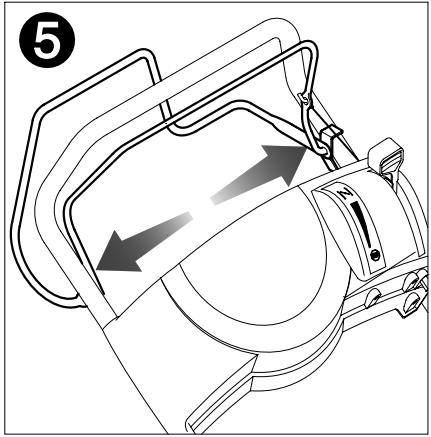
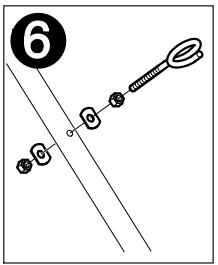
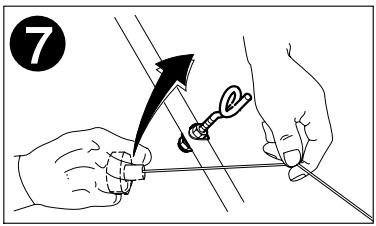
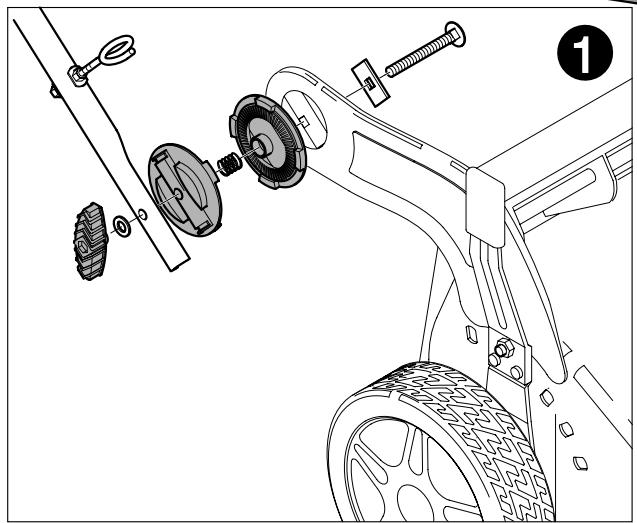
Remove the bail arms, attach cables as shown and re-fit the bail arms, if applicable. Assemble the handle fit the levers with the pins and clips provided, assemble the wheels as shown and throttle if supplied.
E
MULCHING CAP INSERTION (starts at page 37)
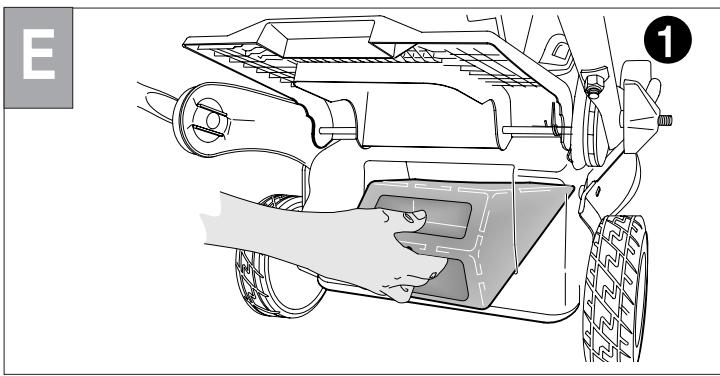
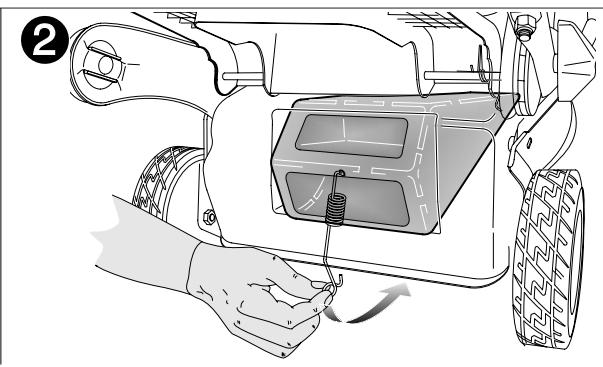
To cut the grass with the mulching system (no grass collection), lift the rear deflector panel and insert the cap by fixing it with the spring as shown in the figure.

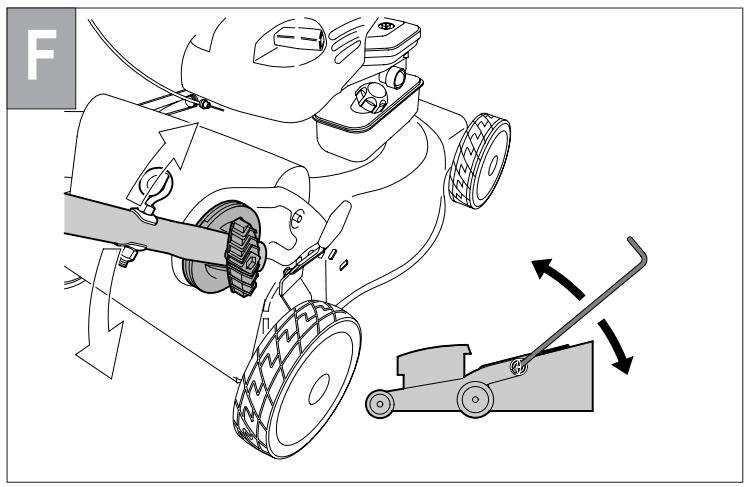
ADJUSTMENT OF HANDLES HEIGHT (starts at page 37)

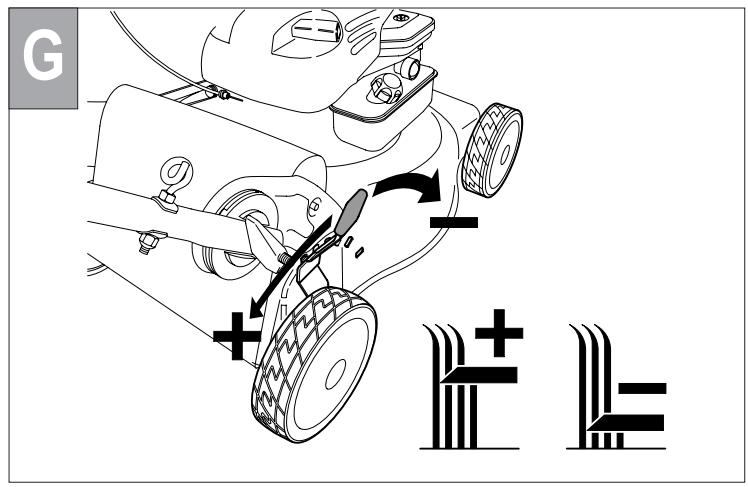
ADJUSTMENT OF CUTTING HEIGHT (starts at page 37)

SAFETY PRECAUTIONS (starts at page 37)


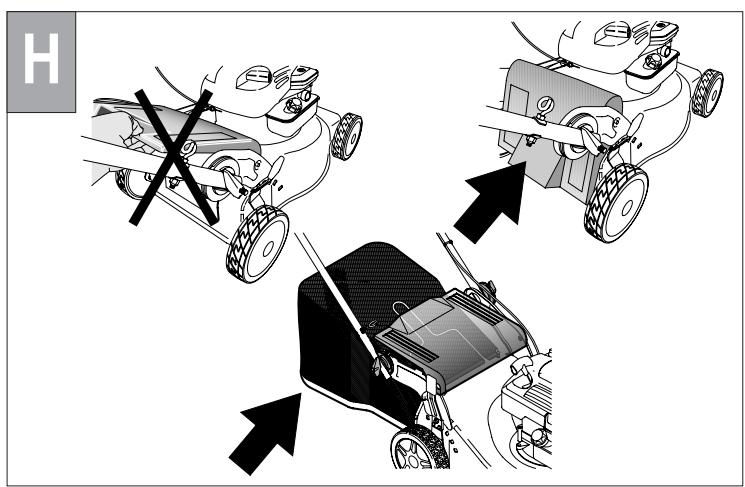
● Always operate with the rear deflector or grass catcher in the correct position.
● Always stop the mower before removing the grass catcher or adjusting the height of cut.
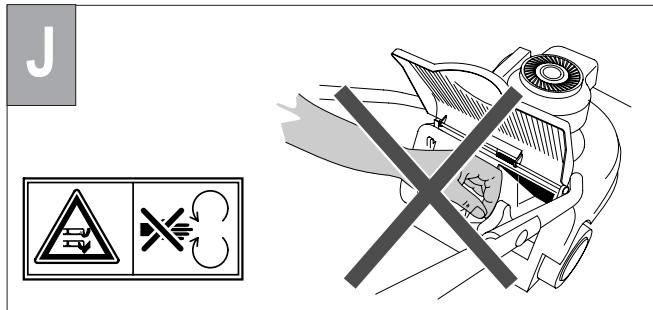
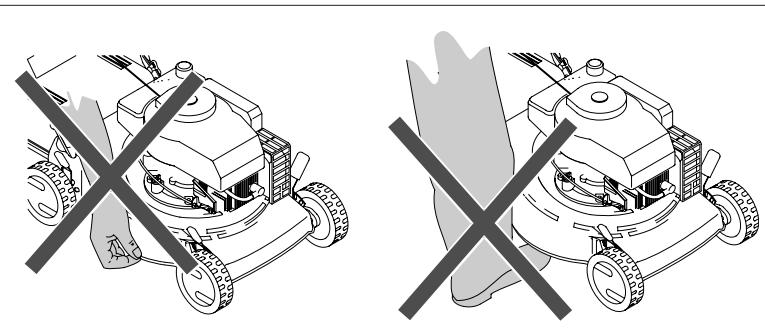
● Never place your hands or feet underneath the deck or into the rear grass discharge chute while the mower is running.
(starts at page 37)
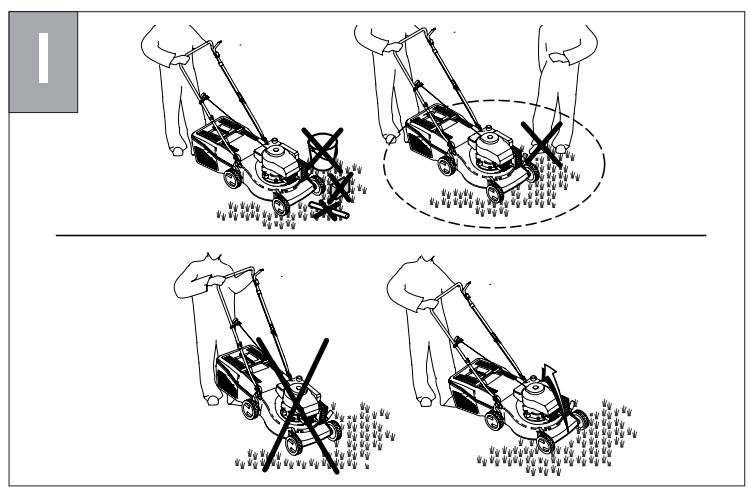
Before mowing, remove all foreign objects from the lawn which may be thrown by the machine. While mowing, stay alert for any foreign objects which may have been missed.
Never lift the rear of the mower while starting or during normal operation.

(starts at page 37)
Never place your hands or feet underneath the deck or into the rear discharge chute while the mower is running.

OPERATION (starts at page 37)
ENGINE ADJUSTMENTS
Refer to the engine manufacturer's maintenance manual.
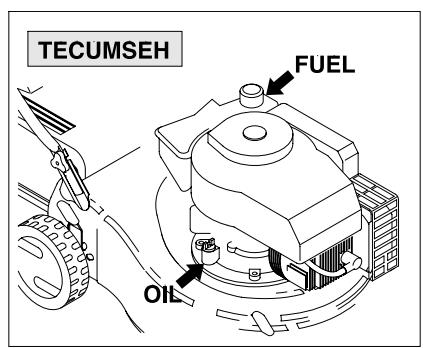
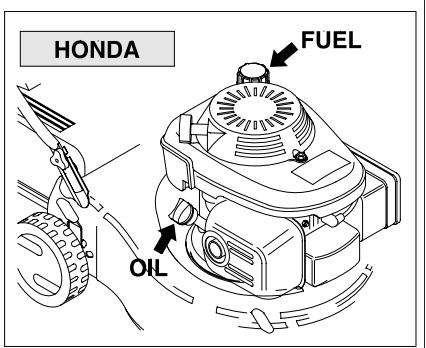
CAUTION:- 0.6l Oil must be added to the engine before use.

(starts at page 38)
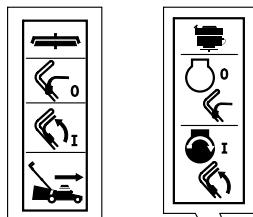
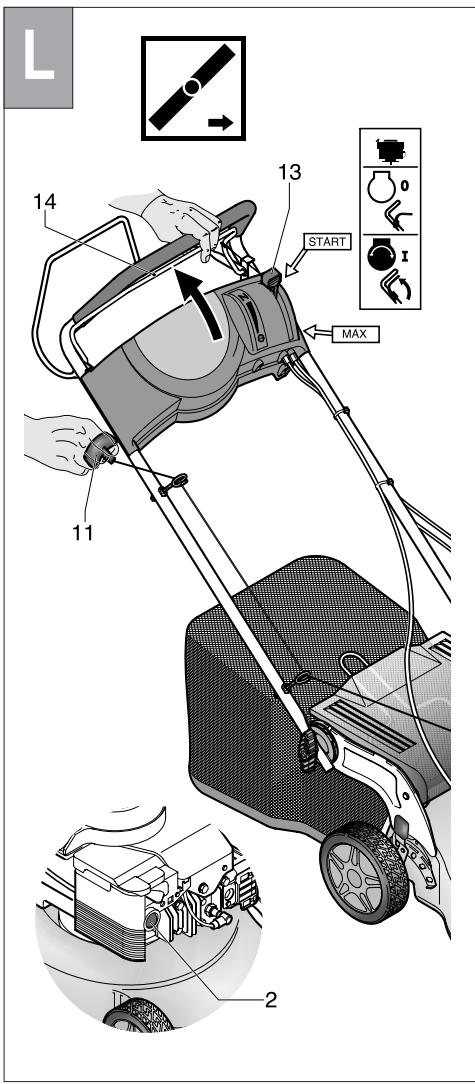
STARTING THE ENGINE
Once the machine has been set up properly, start the engine as follows:
) Engines with choke system:
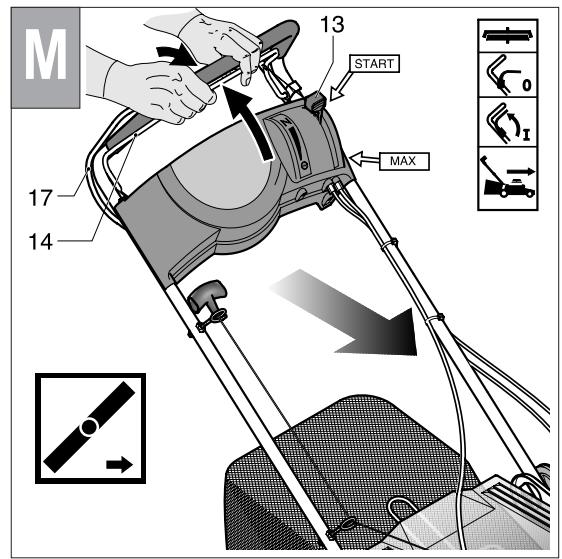
when the engine is cold, position the accelerator lever (13) on START b)Operate the engine stop lever (14) to prepare the engine for start, keep lever pressed against handle while starting and using the machine - it operates the engine brake.


(starts at page 38)
Keep the engine stop lever (14) depressed during machine operation. When the lever is released, the engine stops.
MOWING
To cut the grass, push the lawn mower manually or insert the automatic advance gear.
c) Engines with primer system:
Press the fuel-enrichment pump (2) located on the carburettor 3 or 4 times position the accelerator lever (13) on MAX.
For further information and explanations, read carefully the user instruction manual of the engine.
d) Start engine.
MANUAL STARTING: (While holding the engine stop lever (14)).
- Hold the engine start-grip (11) and pull the starter rope gently until you feel the resistance caused by compression. Return the starter rope slowly then pull the handle firmly towards you to its full extent.
How to insert automatic advance: Lift up the clutch handle (17) and keep it pressed in position.
CAUTION: Engage the gear only when the engine is running.
How to disengage advance: Release the clutch handle.

(starts at page 38)
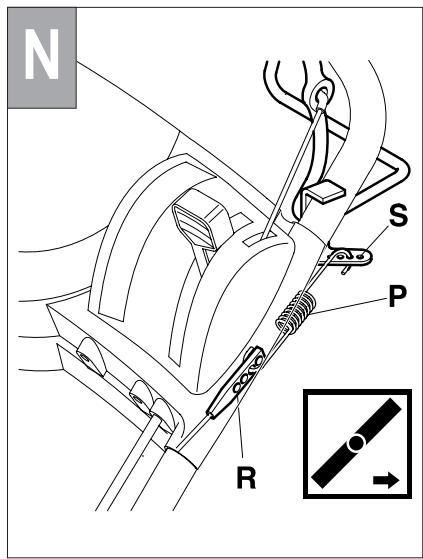
Important: If, when you press the clutch lever, the automatic advance gear does not engage, the clutch cable should be adjusted by inserting the spring (P) in one of the subsequent holes in the plate (R) (or in the hole "S").

AUTOMATIC ADVANCEMENT (starts at page 38)
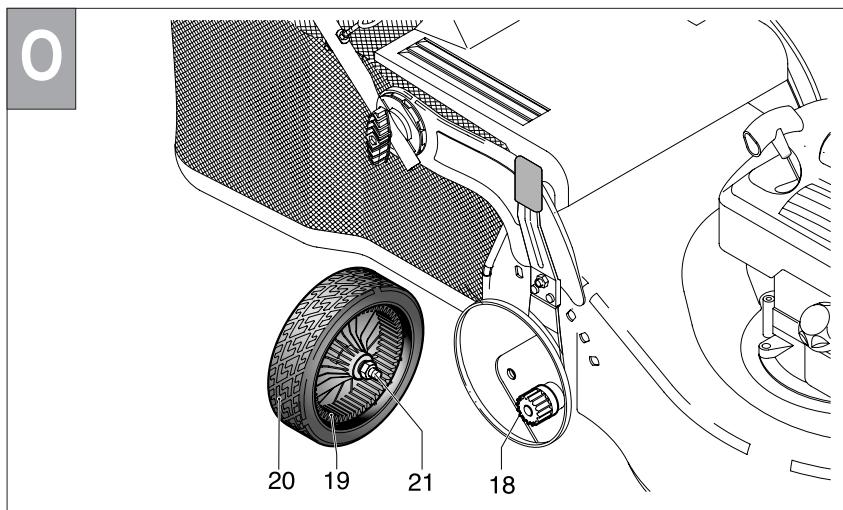
Periodically check the automatic advance assembly and make sure to keep it clean. In particular, the pinion (18) and the gear (19) must be kept perfectly clean. To carry out this check, you must remove the wheel (20) by unscrewing the screw (21).
SAFETY RULES
Training
a) Persons under 16 years of age and persons who are not familiar with the user instructions must not use the lawn mower.
b) The operator is responsible for the safety of other people in the working area. Keep children and domestic animals at a safe distance when the lawn mower is in use.
c) This machine is to be used exclusively for cutting natural grass. Never use the mower for other purposes (e.g., for flattening out bumps in the ground, such as mole-hills or ant-hills).
d) Work only when there is sufficient light.
e) Before mowing, remove all foreign objects from the lawn which may be thrown by the machine. While mowing, stay alert for any foreign objects which may have been missed.
Setting up and operating the lawn mower
a) When mowing, wear strong footwear (boots or heavy shoes) and long trousers.
b) Before you start mowing, make sure that the blade and blade fixing screw are securely fastened.
If the blade is damaged, it must be replaced.
c) Turn off the engine, wait until the blade has stopped and remove the spark plug cap before:
● transporting, lifting or moving the machine away from the working area;
● carrying out maintenance or cleaning, or when carrying out any operation on the blade;
● adjusting the cutting height;
● leaving the machine unattended.
Caution! The blade starts turning as soon as the
engine is started
d)Caution! The fuel is highly inflammable:
- Store fuel in containers specifically designed for this purpose.
● Refuel outdoors only and do not smoke while refuelling. - Fill up the fuel tank before starting the engine. Under no circumstances open the fuel tank cap or add petrol when the engine is running or when it is still hot.
- If the petrol has overflowed, do not under any circumstances start up the engine. Move the mower away from the area where fuel has bean spilt and avoid any source of possible ignition until the petrol fumes have dissipated.
- Replace the fuel tank cap and tighten it down firmly.
e) Do not operate the engine in a confined space where dangerous carbon monoxide fumes can collect..
f) When mowing, never run; you must always walk.
g) Exercise extreme caution when turning or when pulling the lawn mower towards you.
h) Particular precautions must be taken when mowing on slopes or downhill stretches:
- Use appropriate antislip footwear.
● Always be sure of your footing.
● Mow across the face of slopes, never up or down.
● Take great care when changing direction.
- Do not mow on excessively steep slopes.
i) Never use the lawn mower unless the guards and safety devices (e.g. deflector, grass catcher) are securely in position and in good condition.
j) Ensure that the grass catcher and deflector are correctly located. failure to do so may result in foreign objects being ejected by the blade.
k) For reasons of safety, the engine must never exceed
the speed. (r.p.m.) indicated on the label.
I) Take care when starting the engine and be sure to follow the user instructions. Never place your hands or feet underneath the deck or into the rear discharge chute while the engine is running.
m) Never lift the rear of the mower while starting the engine or during normal operation.
n) If the blade happens to hit any obstacle, stop the engine at once and remove the spark plug cap. Then get an expert to examine the blade.
Maintenance and storage
a) Make sure that all nuts, bolts, and screws are kept well tightened to keep the mower in a safe operating condition.
b) Never leave the machine with fuel in the tank within an enclosed area where the fuel vapours could reach naked flames or sparks.
c) Allow the engine to cool before storing in any enclosure.
d) Keep the engine, silencer, battery compartment and petrol tank free from grass, leaves and excess lubricant, in order to reduce the danger of fire.
e) Frequently check the grass catcher for wear or deterioration
f) For safety reasons, be sure to replace worn-out or damaged parts in due time.
g) If the fuel tank has to be drained, it is essential that this be done outdoor.
h) Assemble the blades following the corresponding instructions and use only blades bearing the maker's name or the trademark of the manufacturer or supplier and marked with the reference number.
i) To protect hands during disassembly or assembly of the blades, it is absolutely essential to wear suitable protective gloves.

MAINTENANCE (starts at page 38)

Caution! Switch off the motor and disconnect the spark plug before undertaking any maintenance work.
- For a four stroke engine, check the oil level and change the oil when dirty. For further explanation, see ENGINE INSTRUCTION BOOK.
- Frequently check the mower and ensure that all grass deposits are removed from beneath the deck.
- Never clean the mower by pouring water over it: this may seriously damage the electrical system.
●Take care, the exhaust muffler may be very hot. - Frequently remove the wheel screws clean with petroleum and oil before replacing. Ball bearings must be greased before remounting.
●Frequently check the blade for damage.
●The lawn mower must be checked by a SERVICE DEALER.
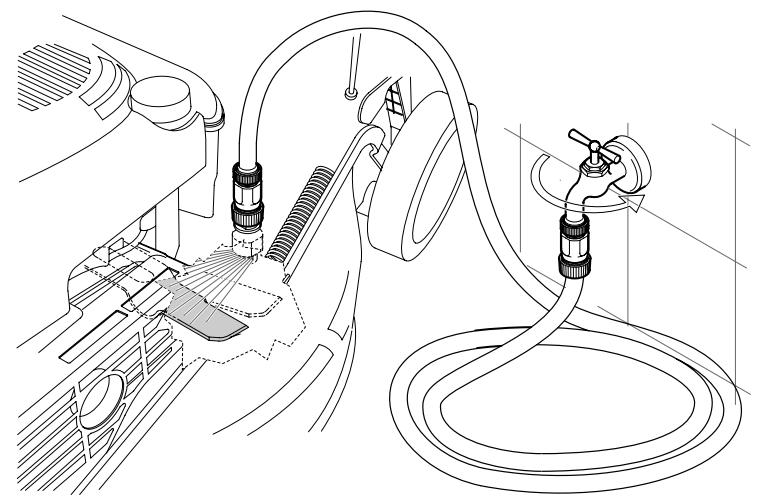
●Cleaning under the bodywork
With machine at a standstill and off.
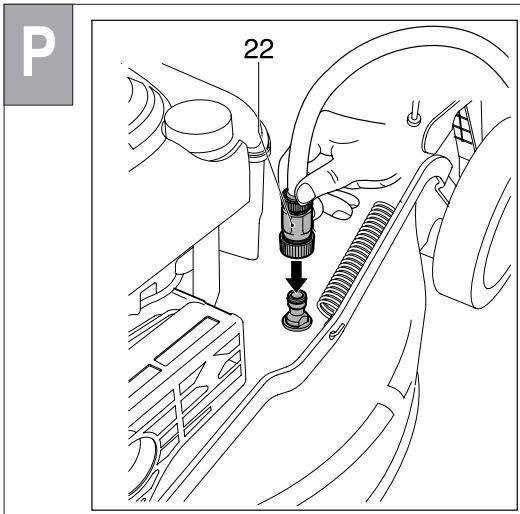
- Attach fitting (22) on the deck to the water supply tap. Turn on the tap.
- start up the motor (blade in rotation), allowing it to warm up for a few minutes.
- at the end of cleaning switch off the motor, turn off the tap, detach the tube from the deck connection.

BLADE (starts at page 38)
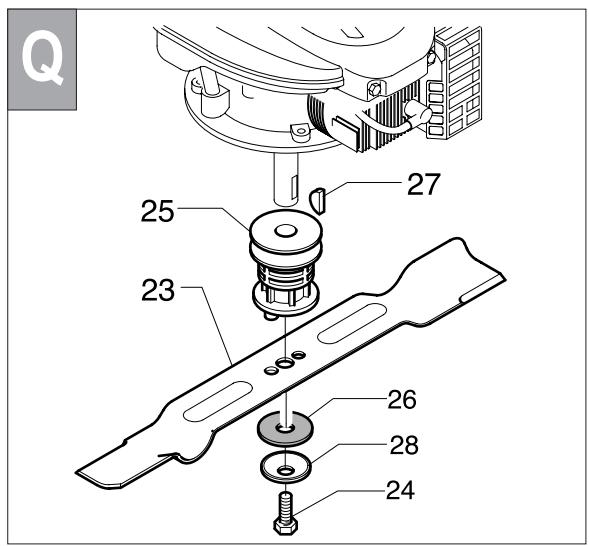
●To remove the blade (23) unscrew the screw (24).
- Check the conditions of the blade-support (25), the washer (26), the key (27) and the washer (28) and replace any parts which are damaged.
- When reassembling, make sure that the key (27) is correctly seated in the shaft and that the cutting edges face in the direction of the engine rotation. The blade screw (24) must be torqued to 5,34 Kgm (52,4 Nm).
A
B
D

Brand : PARTNER
Model : P6053CDTX
Category : Lawn mower