 ManualGo.com
POSEIDON 7 - Pressure washer NILFISK - Free user manual and instructions
Find the device manual for free POSEIDON 7 NILFISK in PDF.


Download the instructions for your Pressure washer in PDF format for free! Find your manual POSEIDON 7 - NILFISK and take your electronic device back in hand. On this page are published all the documents necessary for the use of your device. POSEIDON 7 by NILFISK.
USER MANUAL POSEIDON 7 NILFISK
Important safety notes
Before starting the cleaner 4° Operation and Use
Applications and methods
After using the cleaner
Intended use. Operating elements. Transport. Setting up the cleaner Connections . Switching on the cleaner Pressure regulation Using cleaning agent General Information... Some typical cleaning tasks… Switching off the cleaner Disconnecting supply lines. Rolling up the electrical lead Storing accessories … Storing the cleaner (below 0°C) Maintenance plat Maintenance work . Recycling the cleaner Guarantee … Technical data EU Declaration of Conformity.
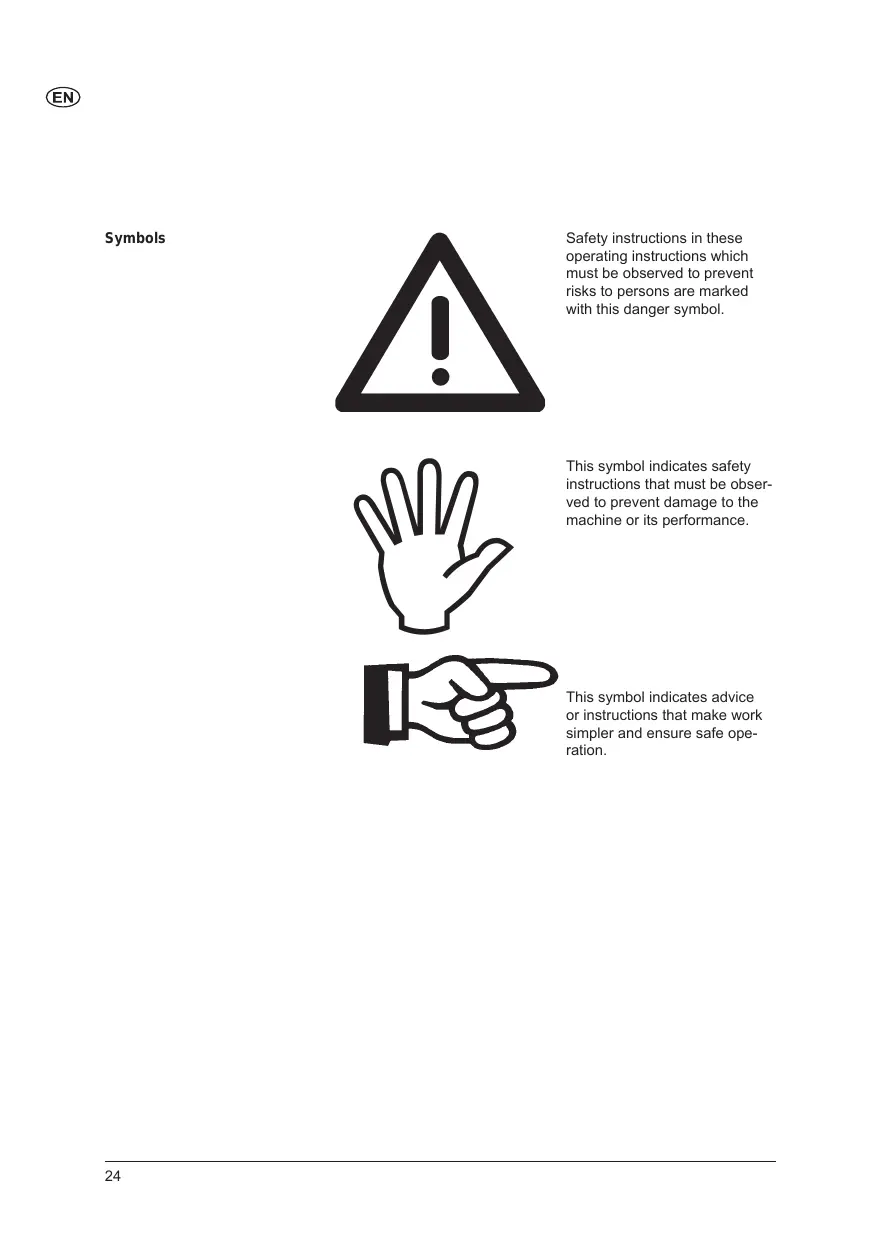
Symbols Safety instructions in these operating instructions which must be observed to prevent risks to persons are marked with this danger symbol This symbol indicates safety instructions that must be obser- ved to prevent damage to the machine or its performance. This symbol indicates advice or instructions that make work simpler and ensure safe ope- ration.
1 Important safety notes Before using the high-pressure cleaner, be sure to also read the enclosed operating instructions and keep them within reach at all times. The high-pressure cleaner may only be used by persons instruc- ted in its use and who have been expressly autho- rised to do so. General Use of the high-pressure cleaner is subject to the applicable local regulations. In addition to the operating instructions and the binding accident prevention regulations in the country of use, the generally recognised rules for safe working must also be observed Any method of use endangering the safety of persons or equip- ment is forbicden. Before use Before use, check that the high- pressure cleaner is in a safe and proper condition. Plugs and connectors of mains power leads must be at least splash water-proof. Inspect the main power lead at regular intervals for damage and/ or ageing Use the high-pressure cleaner only when the mains power lead is in a safe condition. {risk of electric shock if dama- ged!) Operate the cleaner only in an upright position! Important notes: Do not connect the cleaner di- rectly to the public drinking water mains (observe DIN 1988 and EN 1717) A connection is permitted, howe- ver: + brief to a pipe interrupter with moving section + with a free outlet Water may also be drawn from an open container or from a well or surface water not intended for the drinking water supply. Please use suction set for this. Ensure that neither dirty water nor liquids containing solvents are sucked in. Please observe the regulations and provisions applicable in your country. Before putting the high- pressure cleaner into service, carry out a visual check of all the major components. High-pressure jets can be dange- rous if misused. The jet must not be directed at persons, animals, live electrical equipment or the cleaner itself. During operation of the cleaner, recoil forces are produced at the spraying device ad, when the spray lance is held at an angle, a torque is also created. The spraying device must therefore be held firmiy in both hands. isk of injury! Do not direct the jet towards yourself or towards other per- Sons in order to clean clothes or footwear. Do not use the cleaner when other people without protective clothing are in the working area. Check that cleaning will not result in dangerous substances (e.g asbestos, oil) being washed off the object to be cleaned and harming the environment. Do not clean delicate parts made of rubber, fabric, etc. with the round jet. Hold the nozzle at a distance of at least 15 cm when cleaning with the high-pressure flat jet Although extremely easy to operate, children should not be allowed to use the cleaner. Do not use the high-pressure hose for lifting loads. Do not continue to use the clea- ner if the mains power lead or high-pressure hose is damaged. Ensure an adequate air ciroula- tion. Do not cover the cleaner or operate it in inadequately ventila- ted rooms! Ifthe overload protection device tips (motor cuts out), release the trigger of the spray gun, insert the trigger locking device and turn the ONJOFF switch to positi- on .0”. Allow the cleaner to cool down for at least 3 minutes! Store the cleaner where it will not be exposed to frost! Never operate the cleaner wit- hout water. Even brief shortages of water result in severe damage to the pump seals. The pressure-bearing parts of this high-pressure cleaner have been manufactured in accordance with $ 9 of the Ger- man Pressure Vessels Ordinance and successfully subjected to a pressure test.
Operation Do not damage the mains power lead (e.g. by driving over it, pulling or crushing it). Remove the plug from the plug socket directly at the plug (not by pulling or tearing at the mains power lead). Maintenace and repair CAUTION! Always remove the plug from the mains plug socket before cleaning or carrying out main- tenance work on the cleaner. Carry out only the maintenance operations described in the ope- rating instructions. Use only original Alto spare parts. Do not make any technical modi- fications to the high-pressure cleaner. CAUTION! High-pressure hoses, fitings and couplings are important for the safety of the cleaner. Use only. high-pressure parts approved by the manufacturer! CAUTION! Failure to observe these instruc- tions can endanger your safety. Please contact the Alto service department or an authorised specialist work-shop for all other maintenance or repair work! Electrical equipment Check the rated voltage ofthe high-pressure cleaner before connecting it to the mains power supply. Ensure that the voltage specified on the rating plate corresponds to the local mains. supply voltage: Cleaners intended for commer- cial use must be equipped with a mains power lead type H 07 RN-F by a qualified electrician. The mains power lead must not differ from the version specified by the manufacturer and may only be changed by an electri- cian. If your 3-phase cleaner was sup- lied without a plug, have it fitted with a suitable 3-phase plug with protective conductor contact by an electrician The mains power lead must not differ from that specified by the manufacturer. We strongly recommend that the power supply to the high-pres- sure cleaner be connected via a residual-current circuit breaker which interrupts the power supply either if the leakage current to earth exceeds 30 mA for 30 ms or which contains an earth testing cireuit. If an extension lead is used, plea- se observe the minimum cross- section of the lead Lead length Cross section
bis 20 20 bis 50 25 If an extension lead is used, all live parts (plug, cable, plug socket) must be located so that the protection class ,watertight is ensured. This can also be achie- ved by protecting the lead CAUTION! Unsuitable extension leads can represent a source of danger. CAUTION! Never spray electrical equipment with water: Danger for persons, danger of short-cirouit! The cleaner may only be connec- ted to a correctly installed plug socket. Testing The cleaner conforms to the Guidelines for Liquid Spray Jet Devices”. The high- pressure cleaner must be sub- jected to a safety examination in accordance with the «Accident Prevention Regulations for Working with Liquid Spray Jet Devices" as required, but at least every 12 months, by an autho- rised inspector. After all repairs or modifications to electrical equipment, the pro- tective conductor resistance, the insulation resi- stance and the leakage current must be measured Furthermore, a visual inspection ofthe mains power lead, a volta- ge and current measurement and à function test must be carried out. Our after-sales service technicians are at your disposal as authorised inspectors. The complete Accident Pre- vention Regulations for Working with Liquid Spray Jet Devices” are available from the Carl Heymanns Verlag KG, Luxem- burger Strasse 449, 50939 Cologne or from the appropriate association of em- ployers’ liabilty insurances. Safety device Unacceptably high pressure is fed back without residual pres- sure via a bypass line into the intake line of the pump when the safety device is tripped. The safe- ty device is set and sealed at the factory and must not be adjusted.
Description Intended use This high-pressure cleaner has Chapter 5 describes the use of been designed for professional the high-pressure cleaner for use in various cleaning jobs. = agriculture Always use the cleaner as = _ transport industry described in these operating = food industry instructions. Any other use = construction industry, may damage the cleaner or the etc. surface to be cleaned or may result in severe injury to per- sons. Operating elements 1 Push handle 2 Spray gun 3 Electrical lead 4 Holder for spray pipe and high-pressure hose 5 High-pressure hose 6 Fastening screw 7 Spray pipe 8 Parking brake 9 High-pressure hose connection 10 Water connection and water inlet filter 11 Oil level gauge 12 Pressure gauge 13 Main switch s ous
&æ 3 Before starting the cleaner
Transport Setting up the cleaner The cleaner is easy to transport thanks to its large wheels. For safe transportation in and on vehicles we recommend that you use belts and the parking brake to secure the cleaner so that it cannot slip or fall over. CAUTION! Never lift the cleaner alone {weight = 70 kg). Always ask a second person to help. If you transport the cleaner and its accessories at or below O(C, we recommend the use of anti- freeze as described in chapter
Before using the cleaner for the first time, check it carefully to detect any faults or damage.
2. In the event of any damage
contact your Alto dealer immediately.
Fold back the push handle and lock it with the fastening screws.
Check whether the oil level is between the minimum and maximum marks. If neces- sary, add oil (see chapter
9.3 for type of oil)
4 Operation and Use 41 Connections
4.1.1 Connecting the spray
pipe to the spray gun
4.12 Connecting the high-
pressure hose and the water hose
1. Pull the blue quick-release
grip of the spray gun for- wards and lock it by turning it to the left.
Insert the nipple of the spray pipe into the quick-release connection and tum the blue quick-release grip to the right.
Pull the spray pipe (or other accessory) forwards to check that itis securely attached to the spray gun. NOTE! Always remove any dirt from the nipple before connecting the spray pipe to the spray gun. Connect the high-pressure hose with the quick-release connection to the high-pres- sure connection. NOTE! The maximum permissible wor- King pressure and temperature are printed on the high-pressu- re hose. Use max. 50 m hose.
2. Before connecting the water
hose to the cleaner, rinse the water hose briefly to pre- vent sand and other dirt from entering into the cleaner.
Use the quick-release con- nection to attach the water hose to the water connec- tion.
4.13 Electrical connection
42 Switching on the cleaner Switching on the cleaner when it is connected to a water supply
NOTE! See chapter 9.3 for required quantity of water and water pressure. In the case of poor water quality (sand, etc.), we recommend that a fine water filter is fited in the water inlet. We recommend the use of a textlle-reinforced water hose with a nominal diameter of min. 3/4" (19 mm) and a length of min. 6m. The cleaner should be fitted with a preliminary water tank if itis used with + hot water or + high-pressure hoses longer than 10 mor + permanent pipe installations. CAUTIO Connect the cleaner only to an electrical installation that com- plies with regulations. Follow the safety instructions in
1. Plug the cleaner into the
2. Unlock the spray gun and
3. Fastthe safety catch even
during short pauses.
cleaner when it is connected to open tanks (suction mode) 43 Pressure regulation 44 Using cleaning agents Cleaning agents can be added by means of the cleaning agent injector (optional accessory)
1. Dilute cleaning agent accor-
ding to the manufacturer's instructions.
Set the pressure to the lowest setting on the spray pipe. NOTE! Operate the spray gun several times at short intervals to vent the system. The cleaner switches off auto- matically twenty seconds after the spray gun has been closed To start the cleaner again, ope- rate the spray gun
1. Before connecting the suc-
tion hose to the cleaner, fil the hose with water.
3. Unlock the spray gun and
operate it. The cleaner automatically swit- ches of after pauses of more than five minutes.
4. To start the cleaner again,
operate the main switch again Max. suction height = 3 m Tum the tist grip on the spray unit: = clockwise (+) for high pres- sure —anticlockwise (-) for low pressure
3. The amount of cleaning
agent that is drawn in can be regulated by tuning the dosing valve of the injector {optional accessory) CAUTION! Never allow cleaning agent to dry on the surface to be clea- ned as this may cause damage.
5.15 High Water Flow or
High Pressure Efficient high pressure cleaning is achieved by following a few guidelines, combined with your own personal experience of specific cleaning tasks. Acces- sories and detergents, when correctly chosen, can increase Incrusted or thick layers of dirt can be loosened or softened up by a period of soaking. This is for example an ideal method within agriculture — for examp- le, within pig sties. The ideal soaking method can be achie- ved via use of foam or simple alcaline detergent. Let the Application Foam or detergent should be applied onto dry surfaces so that the chemical product is in direct contact with the dirt. Detergents are applied from bottom to top, for example on a car bodywork, in order Detergents are more effec- tive at higher temperatures. Greases, oils and fats can be broken down more easily at higher temperatures also. In order to break down tough layers of din, additional mecha- nical effect may be required. Special lances and rotary or wash brushes offer this supple- High pressure is not always the best solution and high pressure may damage surfaces. The cleaning effect also depends upon water flow. Pressure levels of around 100 bar may be sufficient for vehicle cleaning {in association with hot water). & 5 Applications and methods the efficiency of your pressure washer. Here is some basic information about cleaning, product lie on the dirty surfaces for around 30 minutes before pressure washing. The result will be a much quicker high pressure cleaning process. to avoid “super clean” areas, where the detergent collects in higher concentration and Streams downwards. Let the detergent react several minutes before cleaning off. Proteins can be cleaning at temperatures of around 60°C. Oil, pollution and grease can be cleaning between 70° and 90° C (Poseidon max. 85°C). mentary effect that cuts through dirt. Use a brush to cut through e.g. traffic film. Higher flow levels give the pos- sibilty to rinse and flush away large amounts of dirt easily.
5.2 Some typical cleaning tasks
Task Accessories Method Stables Pig Pens, Sties Chemical Foam Injec- tors Soaking — apply foam to all surfaces (bottom to top) and wait for approx 30 minutes. Foam lance 2. Remove the dir from surfaces with the high pres- Cleaning of Powerspeed lance sure lance or chosen accessory. Again, clean from walls, floors and | Floor Cleaner bottom to top on vertical surfaces. equipment Powerlift lance 3. To flush away large quantties of dirt, change to lowr pressure mode and use the higher flow to push Disinfection Detergents away the dirt. Universal 4. Use recommended disinfectant products and me- Alkafoam thods to ensure hygiene. Only apply disinfectants once the dirt has been fully removed. Disinfectant DES 3000 Machinery Standard lance 1. Apply detergent to vehicle or equipment surfaces in Tractors, ploughsl etc. Detergent injection Powerspeed lances Curved lances and underchassis washers Brushes order to soften up dirt and grime. Apply from bottom to top.
2. Proceed with cleaning using the high pressure
lance. Clean again from bottom to top. Use acces- sories to clean in difficult to reach places.
3. Clean fragile areas such as motors, rubber at lower
pressure levels to avoid damage.
Task Accessories Method Vehicle body- | Standard lance 1. Apply detergent to vehicle or equipment surfaces in work Detergent injection order to soften up dirt and grime. Apply from bot- Curved lances and underchassis washers Brushes Detergents Aktive Shampoo Aktive Foam Sapphire Super Plus Aklive Wax Allosil RimTop tom to top. In cases of particularly dirty vehicles, pre-spray with a product such as Alosil in order to remove traces of insects etc, then rinse at low pres- sure and apply normal car cleaning detergent. Let detergents setle for 5 minutes before cleaning of. Metallic surfaces can be cleaned using RimTop.
2. Proceed with cleaning using the high pressure
lance. Clean again from bottom to top. Use ac- cessories to clean in difficult to reach places. Use brushes in order to add a mechanical cleaning effect. Short lances can help for cleaning of motors and wheel arches. Curved lances or undercarriage washers can be valuable for the cleaning of car underchassis and wheel arches. . Clean fragile areas such as motors, rubber at lower pressure levels to avoid damage.
4. Apply a liquid wax using the pressure washer in
order to protect the bodywork from pollution.
523 Bu ings and Equipment Task Accessories Method General sur- | Foaminjectors Stan- | 1. Apply thick foam over the surfaces to be cleaned. faces dard lance Apply on dry surfaces. Apply from top to bottom on Curved lances vertical surfaces. Let the foam act for up to 30 minu- Metallic equip- | Tank cleaning heads tes for the optimal effect ment 2. After this time, clean down with the high pressure Detergents lance or relevant accessory. Use high pressure to intensive dislodge large amounts of incrusted dirt or grime. J25 Multi Use lower pressure and high water volume in order Combi Akive to rapidly flush away loose dirt and rinse surfaces. Alkafoam 3. Apply DES 3000 disinfectant once the surfaces are perfectiy clean. Disinfectant DES 3000 Areas covered by amounts of loose dirt, such as animal remains in slaughterhouses, can be removed by using high water flow to flush away the dirt to evacuation pits or drains. Tank cleaning heads can be used to clean barrels, vats, mixing tanks etc. Cleaning heads may be hydraulically or electrically powered and give the possibility for auto- matic cleaning without a constant user. Rusted or Wet Sandblasting 1. Connect the sandblasting lance to the pressure damages sur- | equipment washer and place the suction tube in the sand. faces prior to 2. Always wear protective equipment during sandbla- treatment sting.
3. Spray the surfaces to be treated with the mix of
water and sand. Rust, paint etc will be stripped off.
4. Following sandblasting, protect surfaces against rust
(metal) or rot (wood). These are merely several examples of cleaning tasks that can be solved by a pressure washer in as- sociation with accessories and detergents. Each cleaning task is different, so please consult your local dealer or ALTO representative in order to discuss the best solution for your own cleaning problem.
After using the cleaner Switching off the cleaner Disconnecting supply lines Rolling up the electrical lead Storing accessories Tum the main switch to posi- tion 0
Operate the spray gun until the cleaner is depressuri- zed.
Insert the safety catch Pull out the plug from the electrical socket.
Remove the water hose from the cleaner. Risk of tripping! To prevent accidents, always carefully roll up the electrical lead
1. Roll up the electrical lead as
illustrated Hang the spray pipe and the high-pressure hose in their holders.
1. Store the cleaner in a dry
room without danger of frost. CAUTION! Ifthe high-pressure cleaner is stored in a room with tempera- tures around or below O(C, anti- freeze should be drawn into the pump beforehand:
1. Remove the water inlet hose
Switch on the cleaner with the main switch in position M. Switch off the cleaner after max. 3 minutes.
4. Connect the suction hose to
the water inlet of the cleaner and place it in a tank contai- ning anti-freeze.
Switch on the cleaner with the main switch in position
Hold the spray gun over the tank containing anti-freeze and operate it to start suc- tion.
7. During suction operate
the spray gun two or three times.
8. Liftthe suction hose from
the tank containing anti-free- 2e and operate the spray gun to pump off the remai- ning anti-freeze.
9. Switch off the cleaner.
10.To avoid any risks, store the cleaner temporarily in a heated room before using it again.
7 Maintenance 7.1. Maintenance plan Every six months Weekly or 500 operating | As required hours
7.2.1 Clean water filter Q
7.2.2 Clean high-pressure nozzle Q
7.2.3 Check oi level Q
7.2.1 Clean water filter
7.2.2 Clean high-pressure
nozzle Awater filter is fitted on the water inlet to prevent large par- ticles of dirt from entering into the pump. Ablocked nozzle causes ex- cessive pump pressure. lt must therefore be cleaned immedi- ately.
1. Unscrew the quick-release
Remove the filter and rinse it. Replace damaged filer. Switch off the cleaner.
Remove the spray pipe
Clean the nozzle with the Alto cleaning needle. CAUTIO! Use the cleaning needie only when the spray pipe has been removed
4. Rinse the spray pipe with
water from the nozzle side
7.2.3 Checking the oil level
7.2.4 Changing the oil
1. Check whether the oi level
is between the minimum and maximum levels. Add oil if necessary (see chapter 9.3 for type of oil) Before changing the oil, allow the cleaner to become warm Remove the panel by uns- crewing the two screws on the side. Loosen the hose clamp (A). Remove the hose from the hose nipple (B). Detach the check pipe (C) from the holder. Allow the oil to drain into a suitable container (min. 1 1 capacity) and dispose of oil in compliance with regulati- ons. Hang the check pipe (C) in its holder again.
9. Fill pump with fresh oi (see
9.3 for oi type and quantity).
10.Check the oi level (see
11.Screw in the hose nipple, attach the hose and secure it using the hose clamp. 12.Attach the panel. a 20 D
CAUTION! Special pump oil is required if the cleaner is used near food. Please consult your Allo dealer.
Air in the system High-pressure nozzle blok- ked/worn Pressure control on the spray pipe is not set correct-
Vent the system by opera- ‘ing the spray gun several times at short intervals. If necessary, operate the clea- ner for a Short time without the high-pressure hose connected Clean/replace the high-pres- sure nozzle Set the required working pressure Pressure fluctuations
Pump draws in air (only possible in suction mode) Lack of water Water inlet hose is too long or its cross-section too small Lack of water caused by blocked water filter Lack of water because max. permissible suction height has not been heeded Check that the suction set is air-tight Open the tap Use specified water inlet hose Clean the water filter in the water connection (never work without water filter) See instructions The motor does not start when the cleaner is switched on The plug is not inserted pro- per, ie. there is no current The mains fuse is switched off Check the plug, lead and switch and if necessary have them replaced by a trained electrician Switch on the mains fuse
Fault Cause Remedy When the cleaner is switched on the motor buzzes without starting The mains voltage is too low or there is a phase failure. The pump is blocked or frozen Incorrect cross-section or length of the extension lead Have the electrical connec- tion checked Contact the Alto customer service Use lead with correct cross- section or length The motor switches off The switch is in position ‘M' and the cleaner has not been used for more than 5 minutes The overload protection has been activated due to over- heating or overloading of the motor High-pressure nozzle is dirty. Operate the main switch again Check that the mains voit- age and the cleaner voltage are the same. Switch off the cleaner and allow it to cool for at least 3 minutes Change the high-pressure nozzle When a cleaning agent injector (optional accessory) is used, cleaning agent is not supplied
Injector is dirty or suction hose is blocked Cleaning agent tank is em- pty The twist grip on the spray pipe is not set to low pressu-
Clean Fillthe cleaning agent tank ‘Turn the twist grip on the spray pipe anti-clockwise as far as possible
9.1 Recycling the cleaner AN Ifthe cleaner is discarded,
L make it unusable immediately
1. Unplug the cleaner and cut
the electrical lead The cleaner contains valu- able materials that should be recycled. Contact your local waste disposal site. If you have any queries, please contact your local authorities or your nearest dealer.
9.2 Guarantee Our general terms and conditi-
ons apply to the guarantee and warranty. Changes in line with technical innovation reserved.