
TEW-654TR, TEW-658BRM - Wireless Router TRENDNET - Free user manual and instructions
Find the device manual for free TEW-654TR, TEW-658BRM TRENDNET in PDF.


| Product type | ADSL2/2+ wireless N 300 Mbps modem router |
| Model | TEW-658BRM (also TEW-654TR) |
| Dimensions (approx.) | 180 x 120 x 30 mm |
| Weight (approx.) | 300 g |
| Power supply | 12V DC, 1A power adapter |
| Max wireless speed | 300 Mbps (802.11n) |
| Frequency bands | 2.4 GHz |
| Wireless standards | IEEE 802.11b/g/n |
| ADSL standards | ADSL2/2+ (compatible with ADSL) |
| LAN ports | 4 RJ-45 10/100 Mbps ports |
| ADSL port | 1 RJ-11 port |
| Wireless security | WEP, WPA-PSK, WPA2-PSK (AES) |
| ATM encapsulation | LLC or VCMUX |
| VPI/VCI settings | Configurable (0-255 for VPI, 32-65535 for VCI) |
| WAN protocols | PPPoE, PPPoA, IPoA, IPoEoA, CIP (RFC-1577) |
| Network functions | NAT, DHCP server, ATM QoS, VLAN, DNS |
| Management | Web interface (http://192.168.10.1) |
| Package contents | Router, power adapter, RJ-45 cable, RJ-11 cable, quick installation guide, CD-ROM |
| Minimum requirements | Computer with web browser, active DSL connection |
| Approval | CE, compliant with directives 1999/5/EC and 2009/125/EC |
| Open source software | Contains GPL/LGPL components, source code available on TRENDnet website |
Frequently Asked Questions - TEW-654TR, TEW-658BRM TRENDNET
User questions about TEW-654TR, TEW-658BRM TRENDNET
0 question about this device. Answer the ones you know or ask your own.
Ask a new question about this device
Download the instructions for your Wireless Router in PDF format for free! Find your manual TEW-654TR, TEW-658BRM - TRENDNET and take your electronic device back in hand. On this page are published all the documents necessary for the use of your device. TEW-654TR, TEW-658BRM by TRENDNET.
USER MANUAL TEW-654TR, TEW-658BRM TRENDNET
natural_image
Abstract logo with a blue sphere inside concentric white rings (no text or symbols)TRENDNET®
natural_image
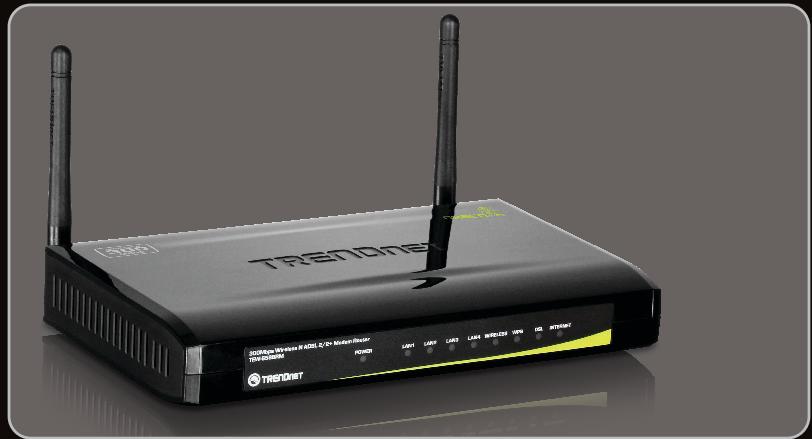
Exterior view of a black TRENDS network router with two antennas and control buttons (no visible text or symbols on the device body)natural_image
Exterior view of a black wireless router with two antennas and a control panel (no visible text or symbols)1. PPPoE (RFC-2516 PPP over Ethernet)
2. PPPoA (RFC-2364 PPP over ATM)
• VPI: ____ (0\~255)
• VCI: ____ (32\~65535)
• Encapsulation (LLC or VCMUX)
• ATMQoS (UBR, CBR, VBR-nrt, VBR-rt)
- Intercommunication PPPoE (Activer/Désactiver)
- Etat de la connexion (Activer/Désactiver)
- IP Address: ____. ____. ____
• NAT (Activer/Désactiver)
- As system default route (Current setting : pppoe) (Setup → Interent Setup)
3. IPoA (RFC-1483 Routed)
• VPI: ____ (0\~255)
- VCI: ____ (32\~65535)
• Encapsulation (LLC or VCMUX)
• ATMQoS (UBR, CBR, VBR-nrt, VBR-rt)
6. Mode pont (RFC-1483 Bridged)
• VPI: ____ (0\~255)
- VCI: ____ (32\~65535)
• Encapsulation (LLC or VCMUX)
• ATMQoS (UBR, CBR, VBR-nrt, VBR-rt)
- Débit crête de la connexion: ____ (0\~6000 cellules/s)
- Nombre maximum de cellules transmises simultanément (Maximum Burst Size): ____ (0-65535 Cellules)(VBR-nrt/VBR-rt ATMQoS uniquement)
- Débit soutenu: ____ (0\~65535 cellules) (VBR-nrt/VBR-rt ATMQoS uniquement)
natural_image
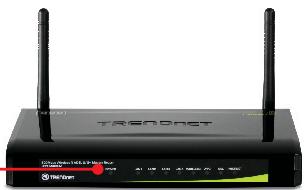
Black TRACONET wireless router with two antennas and a red indicator light (no visible text or symbols on the device body)Remarque:
Remarque:
Remarque:
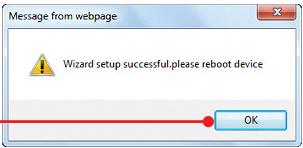
- Cliquez sur OK.
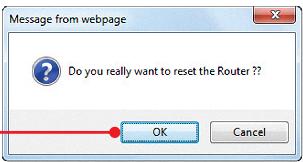
- Cliquez sur OK.
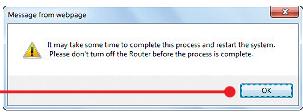
- Cliquez sur OK.
-
I typed http://192.168.10.1 in my Internet Browser's Address Bar, but an error message says "The page cannot be displayed." How can I get into the TEW-658BRM's web configuration page?
-
Check your hardware settings again by following the instructions in section 2.
- Make sure the Power, LAN and Wireless lights are lit.
- Make sure your TCP/IP settings are set to Obtain an IP address automatically (see the steps below).
- If you are still having issues reset the TEW-658BRM. To reset the TEW-658BRM, take a pin or paperclip and press the reset button on the back of the Wireless Modem for 15 seconds. Then let go.
Windows 7
- Go into the Control Panel, click Network and Internet, click Network and Sharing Center, click Change Adapter Settings and then right-click the Local Area Connection icon and then click Properties.

Local Area Connection
Identifying
NVIDIA nf
Disable
Status
Diagnose
Bridge Connections
Create Shortcut
Delete
Rename
Properties
Obtain an IP address automatically
○ Use the following IP address:
IP address:
Subnet mask:
Default gateway:
- Click Internet Protocol Version 4(TCP/IPv4) and then click Properties. Then click on Obtain an IP address automatically.
Windows Vista
- Go into the Control Panel, click Network and Internet, click Network and Sharing Center, click Manage Network Connections and then right-click the Local Area Connection icon and then click Properties.

Local Area Connection
Identifying
NVIDIA n8
Disable
Status
Diagnose
Bridge Connections
Create Shortcut
Delete
Rename
Properties
Obtain an IP address automatically
○ Use the following IP address:
IP address:
Subnet mask:
Default gateway
- Click Internet Protocol Version 4(TCP/IPv4) and then click Properties. Then click on Obtain an IP address automatically.
Windows XP/2000
- Go into the Control Panel, double-click the Network Connections icon and then right-click the Local Area Connection icon and then click Properties.

Local Conne
Disable
Status
Repair
Bridge Connections
Create Shortcut
Delete
Rename
Properties
Obtain an IP address automatically
○ Use the following IP address:
IP address:
Subnet mask:
Default gateway
- Click Internet Protocol (TCP/IP) and then click Properties. Then click on Obtain an IP address automatically.
2. All the settings are correct, but I cannot make a wireless connection to the Modem. What should I do?
- Double check that the Wireless LED on the Modem is lit.
- Power cycle the Modem. Unplug the power to the Modem. Wait 15 seconds, then plug the power back in.
- Contact the manufacturer of your wireless network adapter. Make sure the wireless network adapter is configured with the proper SSID. The default SSID of the TEW-658BRM is TRENDnet658. If you have enabled any encryption on the Wireless Modem, make sure to configure the wireless network adapter with the same encryption key.
- Please refer to the Wireless tips section if you continue to have wireless connectivity problems.
3. All the settings are correct, but I am having problems going to the Internet. What should I do?
- Double check that the LED's on the Modem are correctly lit. Please refer to the LED behavior chart.
- Make sure your DSL Internet connection settings and account information are correct
- Make sure that you're DSL account is active
- Power cycle the Modem. Unplug the power to the Modem. Wait 15 seconds, then plug the power back in.
4. I forgot my login password. What should I do?
Take a pin or paperclip and press the reset button on the back of the Wireless Modem for 15 seconds. Then let go. This will return all settings to factory default. The default user name and password is admin.
- LED behavior
| LED | Activity | Status |
| Power | Off | Device is off |
| On (solid) | Device is on | |
| LAN 1-4 | Off | No active device is connected |
| On (solid) | Active device is connected, no activity | |
| On (blinking) | Active device is connected with activity (data transfers) | |
| Wireless | Off | Wireless network turned off |
| On (blinking) | Wireless network is on | |
| WPS | Off | WPS feature is inactive |
| On (blinking) | WPS authentication in process | |
| On (solid) | WPS authentication process complete | |
| DSL | Off | RJ-11 cable disconnected |
| On (blinking) | DSL authentication in process, data transfer activity | |
| On (solid) | DSL authentication process complete | |
| Internet | Off | No DSL authentication |
| On (blinking) | Internet data transfer activity | |
| On (solid) | Internet connection ready |
If you still encounter problems or have any questions regarding the TEW-658BRM, please contact TRENDnet's Technical Support Department.
The following are some general wireless tips to help minimize the impact of interference within an environment.
Assign your network a unique SSID
Do not use anything that would be identifying like “Smith Family Network”. Choose something that you would easily identify when searching for available wireless networks.
Do not turn off the SSID broadcast
The SSID broadcast is intended to be on and turning it off can cause connectivity issues. The preferred method of securing a wireless network is to choose a strong form of encryption with a strong and varied encryption key.
Note: after setting up the SSID, encryption type and encryption key/passphrase, please make a note of them for future reference. You will need this information to connect your wireless computers to the wireless router/access point.
Change the channel
Most wireless access points and routers are defaulted to channel 6. If you have a site survey tool that will display the channels you can plan your channel selection around neighboring access points to minimize interference from them. If your site survey tool does not display the channel try using channels 1 or 11.
Change the channel bandwidth
If you are using 802.11n you should be securing the network with WPA2-AES security.
Note: Due to Wi-Fi certification considerations if you choose WEP, WPA or WPA2-TKIP encryption this device may operate in legacy wireless mode (802.11b/g). You may not get 802.11n performance as these forms of encryption are not supported by the 802.11n specification.
Avoid stacking hardware on top of each other to prevent overheating issues
Maintain enough free space around the hardware for good ventilation and airflow. There should also be plenty of free space around the antennas to allow the wireless signal to propagate. Please also make sure that the wireless hardware is not placed in any type of shelving or enclosures.
There are a number of other environmental factors that can impact the range of wireless devices.
-
Adjust your wireless devices so that the signal is traveling in a straight path, rather than at an angle. The more material the signal has to pass through the more signal you will lose.
-
Keep the number of obstructions to a minimum. Each obstruction can reduce the range of a wireless device. Position the wireless devices in a manner that will minimize the amount of obstructions between them.
-
Building materials can have a large impact on your wireless signal. In an indoor environment, try to position the wireless devices so that the signal passes through less dense material such as dry wall. Dense materials like metal, solid wood, glass or even furniture may block or degrade the signal.
- Antenna orientation can also have a large impact on your wireless signal. Use the wireless adapter's site survey tool to determine the best antenna orientation for your wireless devices.
- Interference from devices that produce RF (radio frequency) noise can also impact your signal. Position your wireless devices away from anything that generates RF noise, such as microwaves, HAM radios, Walkie-Talkies and baby monitors.
- Any device operating on the 2.4GHz frequency will cause interference. Devices such as 2.4GHz cordless phones or other wireless remotes operating on the 2.4GHz frequency can potentially drop the wireless signal. Although the phone may not be in use, the base can still transmit wireless signals. Move the phone's base station as far away as possible from your wireless devices.
If you are still experiencing low or no signal consider repositioning the wireless devices or installing additional access points. The use of higher gain antennas may also provide the necessary coverage depending on the environment.
Director of Technology
Position / Title

Signature
GPL/LGPL General Information
This TRENDnet product includes free software written by third party developers. These codes are subject to the GNU General Public License ("GPL") or GNU Lesser General Public License ("LGPL"). These codes are distributed WITHOUT WARRANTY and are subject to the copyrights of the developers. TRENDnet does not provide technical support for these codes. The details of the GNU GPL and LGPL are included in the product CD-ROM.
Please also go to (http://www.gnu.org/licenses/gpl.txt) or (http://www.gnu.org/licenses/lgpl.txt) for specific terms of each license.
The source codes are available for download from TRENDnet's web site (http://trendnet.com/downloads/list_gpl.asp) for at least three years from the product shipping date.
You could also request the source codes by contacting TRENDnet.
20675 Manhattan Place, Torrance, CA 90501, USA. Tel: +1-310-961-5500 Fax: +1-310-961-5511
This equipment has been tested and found to comply with FCC and CE Rules. Operation is subject to the following two conditions:
(1) This device may not cause harmful interference.
(2) This device must accept any interference received. Including interference that may cause undesired operation.


Waste electrical and electronic products must not be disposed of with household waste. Please recycle where facilities exist. Check with you Local Authority or Retailer for recycling advice.

NOTE: THE MANUFACTURER IS NOT RESPONSIBLE FOR ANY RADIO OR TV INTERFERENCE CAUSED BY UNAUTHORIZED MODIFICATIONS TO THIS EQUIPMENT. SUCH MODIFICATIONS COULD VOID THE USER'S AUTHORITY TO OPERATE THE EQUIPMENT.
ADVERTENCIA
Product Warranty Registration
Please take a moment to register your product online. Go to TRENDnet's website at http://www.trendnet.com/register
- TRENDNET®
- PPPoE (RFC-2516 PPP over Ethernet)
- PPPoA (RFC-2364 PPP over ATM)
- IPoA (RFC-1483 Routed)
- Mode pont (RFC-1483 Bridged)
- Remarque:
- Windows 7
- Windows Vista
- Windows XP/2000
- All the settings are correct, but I cannot make a wireless connection to the Modem. What should I do?
- All the settings are correct, but I am having problems going to the Internet. What should I do?
- I forgot my login password. What should I do?
- Assign your network a unique SSID
- Do not turn off the SSID broadcast
- Change the channel
- Change the channel bandwidth
- Avoid stacking hardware on top of each other to prevent overheating issues
- There are a number of other environmental factors that can impact the range of wireless devices.
- GPL/LGPL General Information
- ADVERTENCIA
- Product Warranty Registration
Brand : TRENDNET
Model : TEW-654TR, TEW-658BRM
Category : Wireless Router