
ZFC11JE - Freezer ZANUSSI - Free user manual and instructions
Find the device manual for free ZFC11JE ZANUSSI in PDF.
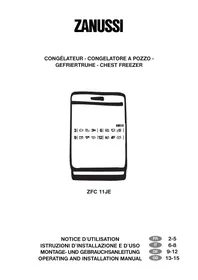



| Product type | Chest freezer |
| Brand | ZANUSSI |
| Model | ZFC11JE |
| Climate class | SN, N, ST, T (from +10°C to +43°C) |
| Power supply | 230 V single phase, 10 A |
| Energy consumption | Variable depending on setting and environment |
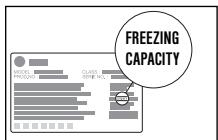
| Freezing capacity | Indicated on the rating plate (kg/24h) |
| Temperature adjustment | Mechanical thermostat |
| Temperature range | -18°C to -9°C (depending on setting) |
| Defrosting | Manual, recommended when frost >10-15 mm |
| Tank material | Enameled steel or resistant plastic |
| Lid gasket | Magnetic seal |
| Grounding | Mandatory according to standard NF C 15.100 |
| Included accessories | Frost scraper |
| Warranty | 2 years (parts and labor) |
| Installation type | On a flat and solid floor, away from sunlight and heat sources |
| Routine maintenance | Interior cleaning: mild odorless detergent; exterior: soapy water |
| Country of manufacture | Not specified (probably Europe) |
Frequently Asked Questions - ZFC11JE ZANUSSI
User questions about ZFC11JE ZANUSSI
0 question about this device. Answer the ones you know or ask your own.
Ask a new question about this device
Download the instructions for your Freezer in PDF format for free! Find your manual ZFC11JE - ZANUSSI and take your electronic device back in hand. On this page are published all the documents necessary for the use of your device. ZFC11JE by ZANUSSI.
USER MANUAL ZFC11JE ZANUSSI
OPERATING AND INSTALLATION MANUAL
FR 2-5
6-8
DE 9-12
GB 13-15
WARNINGS AND ADVICE
- Make sure that the power plug is not squashed or damaged by the back of the fridge/freezer.
- A damaged power plug may overheat and cause a fire.
- Do not place heavy articles or the fridge/freezer itself on the power cord.
- There is a risk of a short circuit and fire.
- Do not remove the power cord by pulling on its lead, particularly when the fridge/freezer is being pulled out of its niche.
- Damage to the cord may cause a short-circuit, fire and/or electric shock.
- If the power cord is damaged, it must be replaced by a certified service agent or qualified service personnel.
- If the power plug socket is loose, do not insert the power plug.
- There is a risk of electric shock or fire.
REFRIGERANT
Your appliance contains an environmentally friendly gas called isobutane (R600a) as refrigerant, which is nevertheless flammable. During transportation and installation of the appliance, be sure that none of the components of the cooling circuit become damaged. If any part of the cooling circuit is damaged: avoid naked flames and sources of ignition; thoroughly ventilate the room in which the appliance is installed.
DISPOSAL
Appliance Packaging Information: All materials are environmentally sound! They can be dumped or burned at an incinerating plant without danger! About the materials: The plastics can be recycled and are identified as follows:
PE< for polyethylene, e.g., the outer covering and the bags in the interior.
PS< for polystyrene foam, e.g., the pads, which are all free of chlorofluorocarbon.
The carton parts are made from recycled paper and should be disposed of at a waste-paper recycling collection location. Disposal of old Appliances: For environmental reasons, refrigeration appliances must be disposed of properly. This applies to your old appliance, and - at the end of its service life - for your new appliance as well.
Warning! Before disposing of old appliances, make them inoperable. Remove plug from mains, sever the power cable, remove or destroy any snap or latch closures. This eliminates the danger that playing children lock themselves into the appliance (danger of suffocation!) or place themselves into other life-endangered situations.
Disposal
The appliance may not be disposed of with domestic waste or bulky refuse. The refrigerating circuit may not be damaged. Information concerning collection schedules or locations can be obtained from the disposal authorities or town hall.
The symbol on the product or on its packaging indicates that this product may not be treated as household waste. Instead, it shall be handed over to the applicable collection point for the recycling of electrical and electronic equipment. By ensuring this product is disposed of correctly, you will help prevent potential negative consequences for the environment and human health, which could otherwise be caused by inappropriate waste handling of this product. For more detailed information about recycling of this product, please contact your local city office, your household waste disposal service, or the shop where you purchased the product.
POSITION
Place the freezer horizontally on a firm surface, resting on all four plastic feet. Use a wooden block or similar object to compensate for any bumps/holes in the surface. The room should be dry and adequately ventilated. Temperatures of the external environment have an impact on the energy consumption of the device. Therefore: do not put the device in a place exposed to sunshine or beside a radiator or oven; put it in a place where the temperature of the environment corresponds to the climatic classification for which the
device was designed.
| Climatic classification | Ambient temperature limits |
| SN | from +10°C to +32°C |
| N | from +16°C to +32°C |
| ST | from +18°C to +38°C |
| T | from +18°C to +43°C |
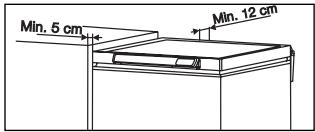
If the freezer has been handled standing on end, it should be allowed to stand in the normal position for about 12 hours before switching it on. Please ensure that when the appliance is installed, it is easily accessible for the engineer in the event of a breakdown.
ELECTRICAL REQUIREMENTS
Before switching on, make sure that the voltage of your electricity supply is the same as that indicated on the rating plate, located inside the lid.
Warning: This appliance must be earthed.
This appliance complies with the following EC Directives:
- 73/23/EEC of 19.02.1973 - Low-Voltage Directive
- 89/336/EEC of 03.05.1989 (including Amendment Directive 92/31/EEC) - EMC Directive
Some of the models are not available in all countries. Testing has been carried out in accordance with ISO 5155 regarding the determination of freezer capacity, energy consumption, and hold-over time. Information for test institutes: A plan of the positioning of test packages may be obtained directly from the manufacturer.
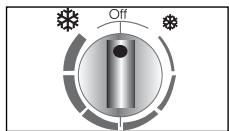
Close the top of the freezer box installed in accordance with specifications, then connect the equipment to the mains as specified above. At this time, electric components inside will be energized. Adjust the knob of the temperature regulator to the center, rotating clockwise. After a weak clicking, the cooling compressor will start together with slight vibration and noise.
TEMPERATURE CONTROL
The thermostat ensures that the required temperature is maintained in the freezer. Turning the thermostat button towards "●" makes the temperature in the freezer colder, and turning the button towards "●" makes the temperature warmer. The correct setting can be found by measuring the temperature of the top package in the middle of the freezer. This should not have a temperature higher than -18°C.
OPENING/CLOSING THE LID
The lid is fitted with a tightly closing sealing strip to prevent moisture from getting inside the freezer and increasing the amount of frost formed. When the lid is opened, the air inside the freezer becomes slightly warmer and expands. As soon as the lid is closed again, the air is cooled immediately. This may lead to the creation of a vacuum which makes it hard to open the lid immediately after it has been closed. This is quite normal.
Wait a few minutes until the vacuum has disappeared, then open the lid by pulling gently. Never pull the handle violently. The top has closed and opened positions. Movement over the open position of the top (about 95 degrees) can cause damage.
FREEZING
It is important that fresh food placed in the freezer is frozen quickly, and that the food already in the freezer is heated as little as possible. If more than 3-4 kg of food is to be frozen: Turn the thermostat button to the coldest setting "●". The freezer will now run continuously, creating a sufficient reserve of the temperature required. Turn the thermostat button 6-24 hours before placing new food in the freezer, depending on how much food is to be frozen. Place the food in the freezer and leave the thermostat set at "●" for about 24 hours more. Then turn the thermostat button back again. The freezer will return to normal storage temperature. If you forget to turn the thermostat button back, the freezer will not be damaged by running at this setting for some time - but energy will be wasted.
BASKET
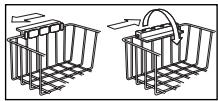
The baskets are designed for the storage of food which has already been frozen.
STORAGE
Frozen food can be stored anywhere inside the freezer, but should be kept at least 5 mm below the top edge. Never exceed the maximum storage time for purchased frozen food. When you buy frozen food, make sure that it has been stored at the correct temperature. Do not buy products which have wet or damaged packaging. Place purchased products in your freezer as quickly as possible. We recommend using an insulated bag to bring such products home with you. Never place bottles, warm objects, or fizzy drinks in the freezer.
FREEZING
Only use fresh food of the best quality. Cool hot dishes to room temperature as quickly as possible before placing them in the freezer. Wrap food carefully in freezer foil, or use the special freezer boxes or bags which are on the market. Divide food into small portions before freezing - this ensures that freezing is more rapid, and means that you only need to defrost the amount needed for immediate consumption. Remember that defrosted food must not be re-frozen. However, dishes which have been made using defrosted food may be frozen. Mark the freezer packaging with the date of freezing. We recommend keeping a record of the contents of your freezer. If freezing is too slow, the quality of the food being frozen deteriorates. Consequently, do not freeze larger amounts than stated in the freezer's data plate. If you wish to freeze food several days in a row, the maximum freezing capacity stated per day is reduced by about one-third. As far as possible, keep the lid closed during freezing. If you know nothing about home freezing, we recommend that you purchase a book containing advice and guidelines.
DEFROSTING
In general, food should not be defrosted at room temperature, as this increases the risk of bacteria growth. It is best to defrost large portions of meat or poultry in the refrigerator, and this also applies to food that is to be consumed as is (e.g., fruit, butter, and sliced meat). Small portions of food can be cooked straight from the freezer. Many ready-to-cook dishes can also be cooked without defrosting. Always observe the instructions on the product packaging. Bread tastes good when defrosted in a moderate oven. Microwave ovens can be used for rapid defrosting of most frozen foods. Observe the instructions for use of the microwave oven concerned.
The formation of frost on the inside of freezers cannot be avoided. Frost forms when moisture in the air comes into contact with the cold surfaces of the freezer. Consequently, the lid should only be opened when necessary, and it should never be left open. A thin layer of ice or frost does not adversely affect the function of the freezer and can be removed carefully using the scraper provided.
IMPORTANT! Never use a knife or any other sharp implement to remove frost.
When the frost or ice layer is 10-15 mm thick, the freezer should be defrosted. We suggest that you defrost your freezer when there is little or no food inside. Switch off the current. Remove the contents of the freezer, wrap them in newspapers, and leave them in a cold place. The speed of defrosting can be increased by placing one or more bowls of hot (not boiling) water inside the freezer and closing the lid. Open the lid after a while, and remove the layer of ice carefully. Do not try to speed up defrosting by using anything other than hot water, as this may damage the freezer. After defrosting, clean the inside of the freezer.
HOW TO CLEAN YOUR FREEZER INSIDE
Remove the plug from the mains socket, and remove all loose accessories before cleaning the freezer. The best time to clean your freezer is after defrosting and before the electricity supply is connected again. Use a damp cloth to clean your freezer. Use hot water and a mild, non-aromatic cleaning agent. After cleaning the freezer, clean the basket/baskets before replacing them.
IMPORTANT! Never use strong cleaning agents, scouring powder, or strongly aromatic cleaning agents to clean the inside of your freezer, as this will damage the inside and leave a strong smell.
EXTERNAL CLEANING
Wash the outer cabinet with warm soapy water. Do NOT use abrasive products.
WHEN NOT IN USE
Disconnect the appliance from the electricity supply. Remove all goods from the freezer. Clean the freezer as described above. Leave the lid slightly open.
IF YOUR FREEZER DOES NOT FUNCTION SATISFACTORILY
Check the following before calling for service staff:
| Defect: | Check if: | Possible cause: | Action: |
| Freezer not cold enough | Temperature of stored foods increases (becomes hotter). | Plug not connected correctly | Check plug and socket |
| Defect in switch or fuse | Check fuse, call electrician | ||
| Power failure | Wait until current returns | ||
| Too much frost formed | Lid does not close completely | Lid in contact with goods in free-zer | Re-arrange goods, check that lid closes correctly |
| Lot of moisture in the room | Moisture from washing machine, tumble-dryer, etc. | Move freezer to a room with less moistu-re, or air regularly | |
| Goods packed poorly | Lot of moisture from goods | Re-pack goods, see under "How to use" |
If you are still unable to solve the problem, summon the assistance of authorised service staff. Do not take any other steps. Incorrect procedure may cause personal injury or lead to additional defects. It is quite normal for the freezer to seem warm on the outside occasionally, owing to the heat generated by the freezing process. This heat also helps to prevent the formation of moisture on the outside of the appliance which could cause rust. If the freezer has been switched off briefly, the compressor may not start immediately when the current is re-connected. This is quite normal.
IN THE CASE OF A POWER FAILURE OR BREAKDOWN
The hold-over period mentioned in the "Technical Specification" section of this book refers to an estimated time the freezer temperature will take to rise to an unacceptable level for keeping frozen foods.
Providing the period of power failure or breakdown does not exceed the hold-over period there will be no risk of damage to the frozen food, providing you do not open the lid during this period.
If the freezer is only half full or the lid is opened this will reduce the hold-over time.
After the breakdown period you are recommended to check the condition of food to ensure it has not started to thaw. Frozen food must NOT be re-frozen once it has thawed out. The following guidelines should assist you.
Ice cream: Once thawed should be discarded.
Fruits & Vegetables: If soft should be cooked and used up.
Breads & Cakes: Can be re-frozen without danger.
Shellfish: Should be refrigerated and used up quickly.
Cooked Dishes: ie. casseroles should be refrigerated and used up.
Large Pieces of Meat: Can be re-frozen providing there are still ice crystals remaining within them.
Small Joints: Should be cooked and can then be re-frozen as cooked dishes.
Chicken: Should also be cooked and re-frozen as a cooked dish.
| Warranty | For each product we provide a two-year guarantee from the date of purchase or delivery to the consumer (with a guarantee certificate, invoice or sales receipt serving as proof). The guarantee covers the costs of materials, labour and travel. |
| The guarantee will lapse if the operating instructions and conditions of use are not adhered to, if the product is incorrectly installed, or in the event of damage caused by external influences, force majeure, intervention by third parties or the use of non-genuine components. |
- WARNINGS AND ADVICE
- REFRIGERANT
- DISPOSAL
- POSITION
- ELECTRICAL REQUIREMENTS
- TEMPERATURE CONTROL
- OPENING/CLOSING THE LID
- FREEZING
- BASKET
- STORAGE
- DEFROSTING
- IMPORTANT! NEVER USE A KNIFE OR ANY OTHER SHARP IMPLEMENT TO REMOVE FROST
- HOW TO CLEAN YOUR FREEZER INSIDE
- EXTERNAL CLEANING
- WHEN NOT IN USE
- IF YOUR FREEZER DOES NOT FUNCTION SATISFACTORILY
- IN THE CASE OF A POWER FAILURE OR BREAKDOWN
Brand : ZANUSSI
Model : ZFC11JE
Category : Freezer