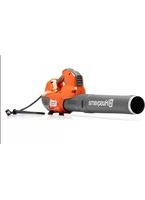
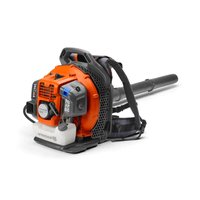
536LiBX - Blower HUSQVARNA - Free user manual and instructions
Find the device manual for free 536LiBX HUSQVARNA in PDF.


| Product Type | Battery-powered backpack blower |
| Brand | Husqvarna |
| Model | 536LiBX |
| Power Source | Li-ion battery (36V) |
| Weight | 10.6 kg (23.4 lbs) |
| Max Air Speed | 40 m/s |
| Max Air Volume | 12 m³/min (430 cfm) |
| Sound Level (guaranteed) | 96 dB(A) |
| Vibration Level (front/rear handle) | 3.8 m/s² |
| Recommended Battery | Husqvarna BLi200, BLi300 |
| Battery Runtime (BLi300) | Approx. 45 min (high speed) |
| Charger | Husqvarna QC300, QC500 |
| Harness | Backpack frame with padded straps |
| Main Functions | Blowing leaves, grass, debris; clearing snow |
| Variable Speed | Yes, cruise control |
| Maintenance | Clean air intake; check battery contacts; store in dry place |
| Safety Features | Two-hand operation; lock-off button; low vibration handles |
| Spare Parts Available | Nozzle, battery, charger, harness |
| Repairability | Modular design; serviceable at authorized dealers |
| General Information | Designed for efficient, cordless operation; low noise and emissions |
Frequently Asked Questions - 536LiBX HUSQVARNA
User questions about 536LiBX HUSQVARNA
0 question about this device. Answer the ones you know or ask your own.
Ask a new question about this device
Download the instructions for your Blower in PDF format for free! Find your manual 536LiBX - HUSQVARNA and take your electronic device back in hand. On this page are published all the documents necessary for the use of your device. 536LiBX by HUSQVARNA.
USER MANUAL 536LiBX HUSQVARNA
Please read the operator's manual carefully and make sure you understand the instructions
before using the machine.

natural_image
Simple line drawing of an open book enclosed in a circle (no text or symbols)English
Symbols on the machine:
Translation of the original Swedish operating instruction.
WARNING! The blower can be dangerous! Careless or incorrect use can result in serious or fatal injury to the operator or others. It is extremely important that you read and understand the contents of the operator's manual. Please read the operator's manual carefully and make sure you understand the instructions before using the machine.

Always wear:
• Approved hearing protection
• Approved eye protection
A breathing mask should be used when there is a risk of dust.

This product is in accordance with applicable EC directives.

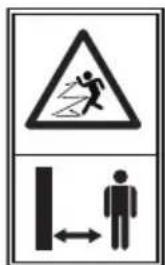
The blower operator must ensure that no people or animals come closer than 15 metres. When several operators are working at the same site a safety distance of at least 15 metres must be in effect.

The blower can forcibly throw objects that can bounce back. This can result in serious eye injuries if the recommended safety equipment is not used.
Symbols on the product or its packaging indicate that this product cannot be handled as domestic waste. This product must be deposited at an appropriate recycling facility. (Applies to Europe only)
Direct current.

Keypad
- Activate and deactivate button
- Throttle adjuster
• Temporary increase of airflow 'Boost' - Warning indicator

natural_image
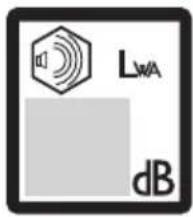
Simple line drawing of a device with three circular components and warning symbols (no text or labels)Noise emission to the environment according to the European Community's Directive. The machine's emission is specified in the Technical data chapter and on the label.
Symbols on the battery and/or on the battery charger:
This product must be deposited at an appropriate recycling facility. (Applies to Europe only)

Fail-safe transformer

Use and store battery charger only indoors.

Double insulation

Other symbols/decals on the machine refer to special certification requirements for certain markets.
Symbols in the operator's manual:
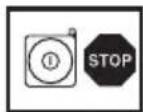
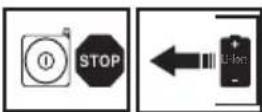
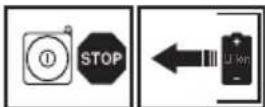
The machine is turned on and off by pressing the on and stop button. Always remove the battery to prevent the machine being started by accident.
Always wear approved protective gloves.
Regular cleaning is required.
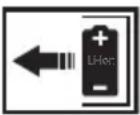
Remove the battery. IMPORTANT! Always remove the battery to prevent the machine being started by accident.


The following symbols and decals are present on the blower, battery and battery charger:


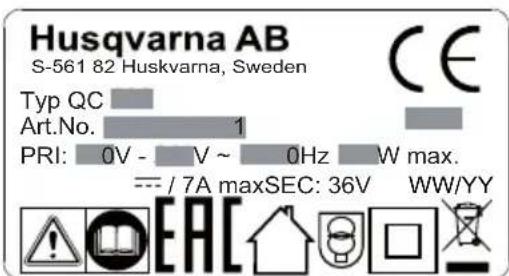
CONTENTS
Contents Note the following before
KEY TO SYMBOLS
Symbols on the machine: 2
Symbols on the battery and/or on the battery charger: 2
Symbols in the operator's manual: 2
CONTENTS
Contents 4
Note the following before starting: 4
INTRODUCTION
Dear Customer, 5
WHAT IS WHAT?
What is what? 6
GENERAL SAFETY PRECAUTIONS
General power tool safety warnings ...... 7
Personal protective equipment 8
Battery and battery charger 8
Machine's safety equipment 10
ASSEMBLY
Assembly of the blower 11
Adjusting the harness 11
BATTERY HANDLING
Battery 12
Battery charger 12
Transport and storage 13
Disposal of the battery, battery charger and machine 13
STARTING AND STOPPING
Check before starting 14
Connect battery to the machine 14
Starting and stopping 14
WORKING TECHNIQUES
General working instructions 16
MAINTENANCE
Inspection and maintenance 18
Troubleshooting schedule 19
Maintenance schedule 20
TECHNICAL DATA
Technical data 21
EC Declaration of Conformity 22
starting:
Please read the operator's manual carefully.

WARNING! Long-term exposure to noise can result in permanent hearing impairment. So always use approved hearing protection.

WARNING! Under no circumstances may the design of the machine be modified without the permission of the manufacturer. Always use original accessories. Non-authorized modifications and/or accessories can result in serious personal injury or the death of the operator or others.

WARNING! A blower is a dangerous tool if used carelessly or incorrectly and can cause serious, even fatal injuries. It is extremely important that you read and understand the contents of this Operator's manual.
Husqvarna AB has a policy of continuous product development and therefore reserves the right to modify the design and appearance of products without prior notice.
The machine is only designed for blowing lawns, pathways, asphalt roads and the like.
INTRODUCTION
Dear Customer,
Congratulations on your choice to buy a Husqvarna product! Husqvarna is based on a tradition that dates back to 1689, when the Swedish King Karl XI ordered the construction of a factory on the banks of the Husqvarna River, for production of muskets. The location was logical, since water power was harnessed from the Huskvarna River to create the water-powered plant. During the more than 300 years in existence, the Husqvarna factory has produced a lot of different products, from wood stoves to modern kitchen appliances, sewing machines, bicycles, motorcycles etc. In 1956, the first motor driven lawn mowers appeared, followed by chain saws in 1959, and it is within this area Husqvarna is working today.
Today Husqvarna is one of the leading manufacturers in the world of forest and garden products, with quality as our highest priority. The business concept is to develop, manufacture and market motor-driven products for forestry and gardening, as well as for the building and construction industry. Husqvarna's aim is also to be at the front edge for ergonomics, usability, security and environmental protection. That is the reason why we have developed many different features to add to our products within these areas.
We are convinced that you will appreciate with great satisfaction the quality and performance of our product for a very long time to come. The purchase of one of our products gives you access to professional help with repairs and service whenever this may be necessary. If the retailer who sells your machine is not one of our authorised dealers, ask for the address of your nearest service workshop.
It is our wish that you will be satisfied with your product and that it will be your companion for a long time. Think of this operator's manual as a valuable document. By following its content (usage, service, maintenance, etc), the life span and the second-hand value of the machine can be extended. If you sell this machine, make sure that the operators manual is passed on to the buyer.
Thank you for using a Husqvarna product.
Husqvarna AB has a policy of continuous product development and therefore reserves the right to modify the design and appearance of products without prior notice.
WHAT IS WHAT?

What is what?
1 Blower nozzle
2 Keypad
3 Throttle trigger
4 Handle
5 Support eyes for harness (536LiB, 536LiBX)
6 Supports
7 Activate and deactivate button
8 Warning indicator (ERROR LED)
9 Temporary increase of airflow, Boost
10 Throttle adjuster
11 Cord
12 Battery charger
13 Power on and warning indicator
14 Battery release buttons
15 Battery
16 Warning indicator (ERROR LED)
17 Battery indicator button
18 Battery status
19 Operator's manual
20 Harness (536LiB)
21 Harness, hip pad (536LiBX)
General power tool safety warnings

WARNING!
Read all safety warnings and all instructions. Failure to follow the warnings and instructions may result in electric shock, fire and/or serious injury.
IMPORTANT! Save all warnings and instructions for future reference.
Please read the operator's manual carefully and make sure you understand the instructions before using the machine.
Check before starting
- Inspect the working area. Remove all loose objects, such as stones, broken glass, nails, steel wire, string, etc. that could be thrown out.
• Always remove the battery to prevent the machine being started by accident. Always remove the battery before any maintenance on the machine. - Before using the machine and after any impact, check for signs of wear or damage and repair as necessary.
- Only use original spare parts.
- The machine operator must ensure that no people or animals come closer than 15 metres while working. When several operators are working in the same area the safety distance should be at least 15 metres.
- Carry out an overall inspection of the machine before use. See the maintenance schedule.
Personal safety
- Stay alert, watch what you are doing and use common sense when operating a power tool. Do not use a power tool while you are tired or under the influence of drugs, alcohol or medication. A moment of inattention while operating power tools may result in serious personal injury.
- Keep bystanders away.
- This appliance is not intended for use by person (including children) with reduced physical, sensory or mental capabilities, or lack of experience and knowledge, unless they have been given supervision or instruction concerning use of the appliance by a person responsible for their safety. Children should be supervised to ensure that they do not play with the appliance.
-
Never allow children or other persons not trained in the use of the machine and/or the battery to use or service it. Local laws may regulate the age of the user.
-
Keep unauthorised persons at a distance. Children, animals, onlookers and helpers should be kept outside the safety zone of 15 metres. Stop the machine immediately if anyone approaches.
- Store the equipment in a lockable area so that it is out of reach of children and unauthorized persons.
- Dress properly. Do not wear loose clothing or jewellery. Keep your hair, clothing and gloves away from moving parts. Loose clothes, jewellery or long hair can be caught in moving parts.
- Never use the machine if you are tired, if you have drunk alcohol, or if you are taking medication that could affect your vision, your judgement or your coordination.
- Wear personal protective equipment. See instructions under the "Personal protective equipment" heading.
• Always remove the battery when passing the machine to another person. - Keep in mind that it is you, the operator that is responsible for not exposing people or their property to accidents or hazards.
Power tool use and care
- Never use a machine that has been modified in any way from its original specification. Never use the machine near explosive or flammable materials.
- Never use a machine that is faulty. Carry out the safety checks, maintenance and service instructions described in this manual. Some maintenance and service measures must be carried out by trained and qualified specialists. See instructions under the Maintenance heading.
- Only use original spare parts.
• Always ensure that ventilation openings are kept clear of debris. - All covers, guards and handles must be fitted before starting.
- Only use the machine in daylight or in other well-lit conditions.
- Never use the machine in bad weather, for instance in fog, in rain, damp or in wet locations, strong winds, intense cold, risk of lightning, etc. Extremely hot weather may cause overheating of the machine.
- If the machine starts vibrating abnormally, stop the machine and remove the battery.
- Walk, never run.
Always use common sense
It is not possible to cover every conceivable situation you can face. Always exercise care and use your common sense. Avoid all situations which you consider to be beyond your capability. If you still feel uncertain about operating procedures after reading these instructions, you should consult an expert before continuing.
GENERAL SAFETY PRECAUTIONS
Important

WARNING! This machine produces an electromagnetic field during operation. This field may under some circumstances interfere with active or passive medical implants. To reduce the risk of serious or fatal injury, we recommend persons with medical implants to consult their physician and the medical implant manufacturer before operating this machine.

WARNING! Never allow children to use or be in the vicinity of the machine. Since the machine is easy to start, children may be able to start it if they are not kept under full surveillance. This can mean a risk of serious personal injury. Therefore disconnect the battery when the machine is not under close supervision.
Personal protective equipment
IMPORTANT!
A blower is a dangerous tool if used carelessly or incorrectly and can cause serious, even fatal injuries. It is extremely important that you read and understand the contents of this Operator's manual.
You must use approved personal protective equipment whenever you use the machine. Personal protective equipment cannot eliminate the risk of injury but it will reduce the degree of injury if an accident does happen. Ask your dealer for help in choosing the right equipment.
WARNING! Listen out for warning signals or shouts when you are wearing hearing protection. Always remove your hearing protection as soon as the motor stops.
HEARING PROTECTION
Wear hearing protection that provides adequate noise reduction.

natural_image
Line drawing of a mechanical device with no visible text or symbolsEYE PROTECTION
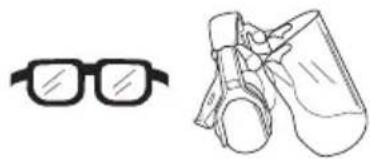
Always wear approved eye protection. If you use a visor then you must also wear approved protective goggles. Approved protective goggles must comply with the ANSI Z87.1 standard in the USA or EN 166 in EU countries.
natural_image
Simple line drawings of glasses and accessories (no text or symbols)CLOTHING
Wear clothes made of a strong fabric and avoid loose clothing that can catch on twigs and branches. Always wear heavy, long pants. Do not wear jewellery, shorts sandals or go barefoot. Secure hair so it is above shoulder level.
FIRST AID KIT
Always have a first aid kit nearby.

Battery and battery charger
This section describes the battery and battery charger safety for your battery product.
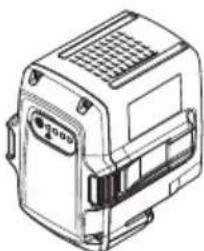
Only use Husqvarna original batteries for Husqvarna products and only charge them in an original battery QC charger from Husqvarna. The batteries are software encrypted.
Use only a Husqvarna original BLi battery in your machine.
Battery safety
The rechargeable Husqvarna batteries, BLi, are exclusively used as a power supply for the relevant Husqvarna cordless appliances. To avoid injury, the battery must not be used as a power source for other devices.
natural_image
Technical line drawing of a mechanical device with no visible text or symbols
WARNING! Protect the battery from direct sunlight, heat or open flame. There is a risk the battery may explode if it is thrown into an open fire. There is a risk of burns and/or chemical burns.
GENERAL SAFETY PRECAUTIONS

WARNING! Avoid all skin contact with battery acid. Battery acid may cause skin irritation, burns or corrosive injuries. If you get acid in your eyes, do not rub but flush your eyes with plenty of water for at least 15 minutes. See a doctor. You must wash any exposed skin with copious amounts of water and soap in case of incidental contact.

WARNING! Never connect the battery terminals to keys, coins, screws or other metal as this may short-circuit the battery. Never insert objects into the battery's air vents.
Unused batteries must be kept away from metal objects such as nails, coins, jewellery. Do not try to disassemble or crush the battery
- Use the battery in surroundings where temperatures are between 0ircC and 40ircC .
- Do not expose the battery to microwaves or high pressure.
- Never clean the battery or the battery charger with water. See instructions under the Maintenance heading.
- Store the battery out of reach of children.
- Protect the battery from rain and wet conditions.
Battery charger safety
Only use Chargers, Husqvarna QC, for charging the Husqvarna replacement batteries, BLi.

natural_image
Line drawing of a handheld electronic device with a cable (no text or symbols)
WARNING! Minimise the risk of electric shock or short circuit as follows:
Never insert any object into the charger's cooling slots.
Do not try to dismantle the battery charger.
Never connect the charger terminals to metal objects as this can short circuit the battery charger.
Use approved and intact wall sockets.

WARNING! Do not use the battery charger close to corrosive or flammable materials. Do not cover the battery charger. Pull out the plug to the battery charger in the event of smoke or fire. Remember the risk of fire.
- Regularly check that the battery charger connection wire is intact and that there are no cracks in it.
- Never carry the battery charger using the cord and never pull out the plug by pulling the cord.
- Keep all cables and extension leads away from water, oil and sharp edges. Make sure the cable is not jammed in doors, fences or the like. Otherwise it can cause the charger to become live. Inspect extensions cords periodically and replace if damaged.
Do not use:
- a faulty or damaged battery charger or never use a faulty, damaged or deformed battery.

natural_image
Technical line drawing of a mechanical component with two circular arrows indicating rotation or movement (no text or symbols)Do not charge:
• non-rechargeable batteries in the battery charger or use them in the machine.
• the battery in the battery charger outdoors.
• the battery in the rain or in wet conditions.
• the battery in direct sunlight.
Use the battery charger only when the surrounding temperature is between 5 °C and 40 °C. Use the charger in an environment which is well ventilated, dry and free from dust.
GENERAL SAFETY PRECAUTIONS
Machine's safety equipment
This section describes the machine's safety equipment, its purpose, and how checks and maintenance should be carried out to ensure that it operates correctly. See the "What is what?" section to locate where this equipment is positioned on your machine.
The life span or the runtime of the machine can be reduced and the risk of accidents can increase if machine maintenance is not carried out correctly and if service and/or repairs are not carried out professionally. If you need further information please contact your nearest service workshop.
IMPORTANT!
All servicing and repair work on the machine requires special training. This is especially true of the machine's safety equipment. If your machine fails any of the checks described below you must contact your service agent. When you buy any of our products we guarantee the availability of professional repairs and service. If the retailer who sells your machine is not a servicing dealer, ask him for the address of your nearest service agent.

WARNING! Never use a machine with faulty safety equipment. The machine's safety equipment must be checked and maintained as described in this section. If your machine fails any of these checks contact your service agent to get it repaired.
Keypad
Make sure the machine is switched on or off when the activate/deactivate button (1) is pressed and held (>1 sec.). The green LED (2) is lit or turned off.
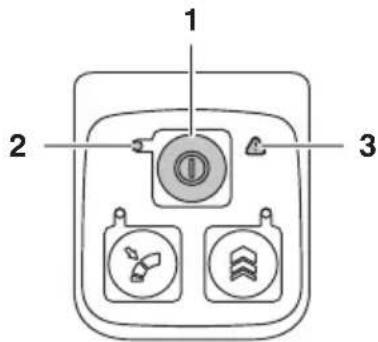
Flashing warning indicator (3) and green LED (2) is lit could indicate that:
- it is not possible to apply full power and, at the same time, activate the machine. Release the power trigger and the machine is active.
If the warning symbol (3) flashes, it indicates that the machine is too hot and the machine deactivates. When the machine is restored to normal temperature it is again ready to run and you can activate the machine.
Solid red warning light (3) indicates service.
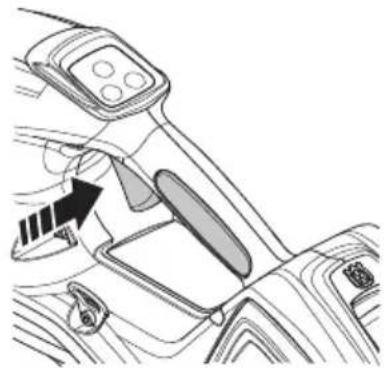
Throttle trigger
Make sure the throttle operates easily.
natural_image
Interior view of a car gear shift lever mechanism (no text or symbols visible)
WARNING! This machine is renowned for its low vibration load. Overexposure to vibration can lead to circulatory damage or nerve damage in people who have impaired circulation. Contact your doctor if you experience symptoms of overexposure to vibration. These symptoms include numbness, loss of feeling, tingling, pricking, pain, loss of strength, changes in skin colour or condition. These symptoms normally appear in the fingers, hands or wrists.
ASSEMBLY
Assembly of the blower
Connect the blower and tube.
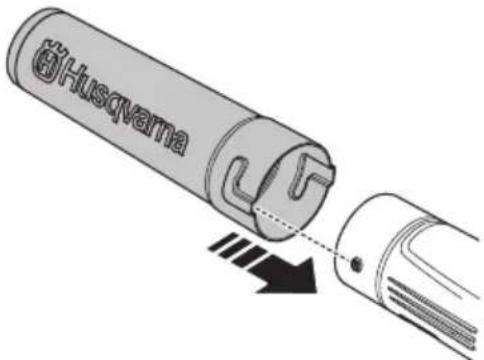
Push the tubes together and turn so that they lock together.

Adjusting the harness
- Insert the hip pad straps through the fastenings in the harness for the backpack battery.

natural_image
Technical line drawing of a mechanical assembly with no visible text or symbols- Adjust the harness for the best working position.
BATTERY HANDLING
Battery
The display shows the battery capacity and if there are any problems with the battery. The battery capacity is displayed for 5 seconds after the machine is switched off or the battery indicator button is pressed. The warning symbol on the battery is lit when an error has occurred. See fault codes.
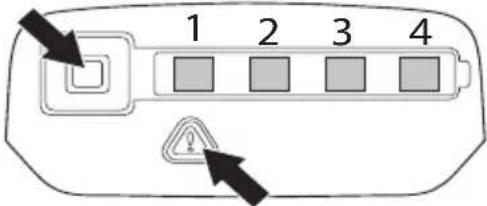
| LED lights Battery status | |
| All LEDs are lit Fully charged (75-100%). | |
| LED 1, LED 2, LED 3 are lit. | The battery is 50%-75% charged. |
| LED 1, LED 2 are lit. | The battery is 25%-50% charged. |
| LED 1 is lit. | The battery is 0%-25% charged. |
| LED 1 flashes. | The battery is empty. Charge the battery. |
536LiBX
Battery capacity is displayed with three digital numbers on the machine and with LEDs on the backpack battery.

Battery charger

WARNING! Risk of electric shock and short circuiting. Use approved and intact wall sockets. Make sure that the cable is not damaged. Replace cable if it appears to be damaged in any way.
Connect the battery charger
- Connect the battery charger to the voltage and frequency specified on the rating plate. Put the
electric plug in a earthed socket-outlet. The LED on the battery charger flashes green once.

natural_image
Line drawing of a portable electronic device with a cable extending from its side (no text or symbols)- The battery will not be charged if the battery temperature is over 50 °C. In that case the battery charger will actively cool down the battery.
Connect the battery to the battery charger.
Regularly check that the battery charger and the battery are intact. See instructions under the Maintenance heading.
The battery must be charged before using it the first time. The battery is only 30% charged when delivered.
NOTE!
See separate manual for instructions on how to charge the backpack battery.
- Put the battery in the battery charger. Make sure that the battery is connected to the battery charger.

natural_image
Line drawing of a computer mouse with an arrow pointing to the top panel (no text or symbols present)- The green charging light on the charger is lit when the battery is connected to the battery charger.
- When all LEDs are lit the battery is fully charged.

- Pull out the plug. Never jerk the power supply cable to disconnect it from the wall socket.
- Remove the battery from the battery charger.
Charging status
Lithium-ion batteries can be charged at whatever charging level. The charging process can be cancelled or started whatever the battery's charge level is. The battery is not damaged. A fully charged battery will not lose its charge even when the battery is left in the charger.
BATTERY HANDLING
The battery will not be charged if the battery temperature is over 50 °C.

| LED display Charging status | |
| LED 1 flashes. | The battery is 0%-25% charged. |
| LED 1 is lit, LED 2 flashes. | The battery is 25%-50% charged. |
| LED 1, LED 2 are lit, LED 3 flashes. | The battery is 50%-75% charged. |
| LED 1, LED 2, LED 3 are lit, LED 4 flashes. | Battery is 75%-100% charged |
| LED 1, LED 2, LED 3, LED 4 are lit. | When all the LEDs are lit on the battery, it is fully charged. |
Transport and storage

• The contained lithium-ion batteries are subject to the Dangerous Goods Legislation requirements.
- For commercial transports e.g. by third parties, forwarding agents, special requirement on packing and labeling must be observed.
- For preparation of the item being shipped, consulting an expert for hazardous material is required. Please also observe possibly more detailed national regulations.
- Tape or mask off open contacts and pack up the batteriy in such a manner that it cannot move around in the packing.
- A discharged battery must be charged before storing. A discharged battery that is stored without charging can be damaged. The backpacks must be charged to at least 50% (3 LEDs) to secure the function after e.g. winter storage.
- Secure the machine during transport.
• Always remove the battery for storage or transport.
- Store the battery and the battery charger in a dry, moisture-free and frost-free space.
• To prevent accidents, ensure that your battery is not connected to the machine when stored.
- Do not store the battery in places where static electricity can occur. Never store the battery in a metal box.
- Store the battery where the temperature is between 5 °C and 25 °C and never in direct sunlight.
• Make sure the battery is charged to 30% - 50% before storing for long periods. - Store the battery charger only in an enclosed and dry space.
- Be sure to store the battery separate from the battery charger. Store the equipment in a lockable area so that it is out of reach of children and unauthorized persons.
- Ensure the machine is cleaned and that a complete service is carried out before long-term storage.
Disposal of the battery, battery charger and machine
Symbols on the product or its packaging indicate that this product cannot be handled as domestic waste. It must instead be submitted to an appropriate recycling station for the recovery of electrical and electronic equipment.
By ensuring that this product is taken care of correctly, you can help to counteract the potential negative impact on the environment and people that can otherwise result through the incorrect waste management of this product. For more detailed information about recycling this product, contact your municipality, your domestic waste service or the shop from where you purchased the product.

Check before starting

- Check the motor for dirt and cracks. Clean off grass and leaves from the engine using a brush. Gloves should be worn when necessary.
- Check that the machine is in perfect working order. Check that all nuts and screws are tight.
- Only use the machine for the purpose it was intended for.
Connect battery to the machine
- Make sure to use fully charged batteries. Use only a Husqvarna original battery in your machine. See technical data.
436LiB, 536LiB
- Insert the battery in the machine. The battery should slide easily into the battery holder on the machine. If the battery does not slide in easily, it is not being inserted correctly.

natural_image
Technical line drawing of a car interior showing two views of the dashboard with a directional arrow indicating movement (no text or symbols present)- Press on the lower part of the battery and push it in as far as it will go into the battery compartment. The battery will lock itself into place when you hear a click. Make sure the latches snap in place properly.

natural_image
Illustration of a hand inserting a device into a housing component (no text or symbols visible)536LiBX
- Connect the adapter cable from the machine to the backpack battery.

natural_image
Diagram of a handheld device connected to a cable with connectors, showing wiring and connector details (no text or symbols present)- Fasten the battery cable in the attachments on the harness.
- Backpack battery must be carried on the back while usage.
Starting and stopping


WARNING! Make sure no unauthorised persons are in the working area. Otherwise there is a risk of serious personal injury. The safety distance is 15 meters.
Starting
436LiB, 536LiB
- Turn on the machine. Press and hold the start button (>1 sec.) until the green LED is lit.

- Use the power trigger to control the speed.
536LiBX
After switching the backpack battery on, there is a startup time of about 4 seconds (software booting). During that time, you can hear the fans inside the backpack battery blowing and a green LED on the battery is blinking. When the LED is lit green on the battery, you can start to use the machine.
- Turn on the machine. Press and hold the start button (>1 sec.) until the green LED is lit.
- Use the power trigger to control the speed.
STARTING AND STOPPING
Stopping
- Stop the machine by releasing the throttle and pressing the deactivation button.
436LiB, 536LiB
- Remove the battery from the machine by pressing the two release buttons and pulling out the battery.

natural_image
Technical diagram of a mechanical component with arrows indicating parts (no readable text or symbols)536LiBX
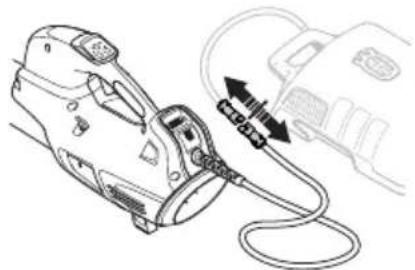
- Shut down the battery and unplug the battery cable.
natural_image
Diagram of a handheld device connected to a cable with arrows indicating cable routing (no text or symbols present)Battery switches off automatically when not used for longer time (30 min approx). To restart, switch on power switch (10).
IMPORTANT! Always remove the battery to prevent the machine being started by accident.
WORKING TECHNIQUES
General working instructions
IMPORTANT! This section considers basic safety rules when working with blowers. If you encounter a situation where you are uncertain how to proceed you should ask an expert. Contact your dealer or your service workshop. Avoid all usage which you consider to be beyond your capability. Working with blowers is recommended for leaves or small branches only.
Show consideration to persons in your surroundings by avoiding using the machine at unsuitable times, such as late in the evening or early in the morning. Make sure local regulations and ordinances are followed. Read through and follow the simple directions so that you disturb your surroundings as little as possible.
- Use the blower with the lowest possible throttle. It is seldom necessary to use full throttle, and many work procedures can be done at half throttle. A lower throttle means less noise and less dust, and it is also easier to keep control over the rubbish collected together/moved.
- Use a rake or a brush to release rubbish stuck to the ground.
- Hold the opening of the blower as close to the ground as possible.
- Observe your surroundings. Direct the blower away from people, animals, play areas, and cars etc.
- Minimise the blowing time by lightly wetting dusty areas or using spray equipment.
- Be aware of the wind direction. Work with the wind to make your work easier.
- If the machine starts vibrating abnormally, stop the machine and remove the batteries.
• Using the blower to move large piles is time consuming and creates unnecessary noise. - Clean up afterwards. Make sure that you have not blown rubbish into someone's garden.
- Walk with the machine, do not run.
Basic safety rules

- No unauthorised persons or animals may be present in the working area, which is 15 metres.
- The powerful currents of air can move objects at such a speed that they can bounce back and cause serious eye injuries.

natural_image
Illustration of a person using a chainsaw to spray or spray near a display board (no text or symbols present)- Do not direct the air jet towards people or animals.
- Stop the engine before assembling or dismantling accessories or other parts.
- Do not use the machine in bad weather, such as dense fog, heavy rain, strong wind, intense cold, etc. Working in bad weather is tiring and can lead to dangerous conditions, e.g. slippery surfaces.
- Make sure you can move and stand safely. Check the area around you for possible obstacles (roots, rocks, branches, ditches, etc.) in case you have to move suddenly. Take great care when working on sloping ground.

natural_image
Line drawing of a person using a chainsaw to cut tree branches (no text or symbols)- Do not overreach. Keep proper footing and balance at all times.
- Keep all parts of your body away from hot surfaces.
- Never put the machine down with the product activated unless you have it in clear sight.
WORKING TECHNIQUES
- The blower must not be used while on a ladder or scaffolding.

natural_image
Line drawing of a worker using a power tool on a ladder, crossed by a diagonal line (no text or symbols)- CAUTION! Do not use the machine unless you are able to call for help in the event of an accident.
Basic working techniques

WARNING! Watch out for thrown objects. Always wear eye protection. Stones, rubbish, etc. can be thrown up into the eyes causing blindness or serious injury. Keep unauthorised persons at a distance. Children, animals, onlookers and helpers should be kept outside the safety zone of 15 m. Stop the machine immediately if anyone approaches.
Throttle settings control
The speed of the air jet is regulated by means of the throttle. Select the speed best suited for respective tasks.
• Determine the desired airflow using the throttle.
- Press in the throttle position setting on the keypad.
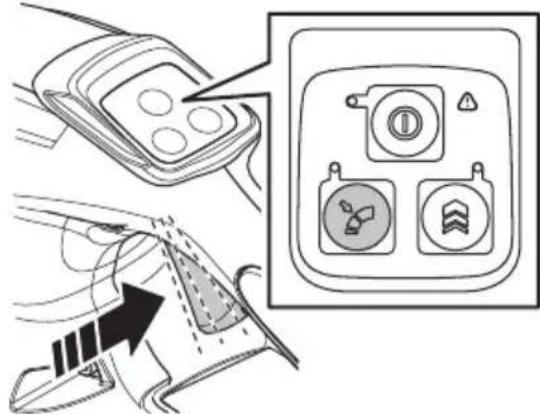
- Depress the throttle fully to obtain the desired air speed.
The blower retains the latest throttle position setting in memory if the machine is shut down or when the battery is removed from the machine.
Temporary increase of airflow 'Boost'
A temporary increase in airflow, 'Boost', is used only on occasions when leaves and trash is stuck or when the normal airflow is not sufficient. In most cases, normal airflow is sufficient. An increase in airflow is used mainly for brief measures.
Press the Boost button on the keypad to temporarily raise the airflow. Maximum continuous Boost is 5 seconds.

natural_image
Simple line drawing of a device with three circular icons and a central button (no text or symbols)If raised airflow, Boost, is used continuously for longer than 5 seconds, the airflow will return to its original level. The activation indicator (LED lamp) for the Boost function will flash until the Boost function is available again.
MAINTENANCE
Inspection and maintenance


WARNING! Always remove the battery before any maintenance on the machine.
IMPORTANT! Never clean the battery or the battery charger with water. Strong cleaning agents can damage the plastic.
All servicing and repair work on the machine requires special training. This is especially true of the machine's safety equipment. If your machine fails any of the checks described below you must contact your service agent. When you buy any of our products we guarantee the availability of professional repairs and service. If the retailer who sells your machine is not a servicing dealer, ask him for the address of your nearest service agent. Only use original spare parts.

natural_image
Technical line drawing of two handheld devices connected by a cable, showing wiring and mounting points (no text or symbols)Check that the air intake is not blocked on all sides of the machine, for example, by leaves or rubbish. A clogged air intake reduces the machine's blowing capacity and increases the engine's working temperature, which can result in engine failure. Stop the engine and remove the object.

natural_image
Line drawing of a cable connector with a circular arrow indicating no change or dislocation (no text or symbols)Regularly check that the battery charger and the battery are intact.

natural_image
Technical line drawing of a mechanical component with two circular arrows indicating rotation or assembly (no text or symbols)Cleaning
Clean the machine after use. If the battery connector on the machine is dirty, clean it by blowing them with compressed air or use a soft brush.
Make sure the battery and battery charger are clean and that the terminals on the battery and the battery charger are always clean and dry before the battery is placed in the battery charger.

natural_image
Line drawing of a rectangular electronic component with internal slots and a central square top (no text or symbols)Keep the battery guide tracks clean. Clean plastic parts with a clean and dry cloth.
MAINTENANCE
Troubleshooting schedule
Troubleshooting takes place from the keypad.
Keypad
| Keypad Possible faults Possible action | ||
| Green activate LED flashing. Low battery voltage. Charging the battery | ||
| Error LED flashes. | The power trigger and the activate button are pressed at the same time. | Release the power trigger and the machine is active. |
| Temperature deviation. Allow the machine to cool down. | ||
| The machine does not start Dirt in battery connectors. | Clean with compressed air or a soft brush. | |
| Error LED is lit with red light. Service | Contact your service agent. | |
Troubleshooting the battery and/or the battery charger during charging.
Troubleshooting does not include the backpack battery, refer to separate manual.
Battery
| LED display Possible faults Possible action | ||
| Green activate LED flashing. Low battery voltage. Charge the battery. | ||
| Error LED flashing | The battery is discharged. Charge the battery. | battery. |
| Temperature deviation. | Use the battery in surroundings where temperatures are between 0 °C and 40 °C. | |
| Over voltage. | Check that the mains voltage corresponds with that stated on the rating plate on the machine. | |
| Remove the battery from the battery charger. | ||
| Error LED is lit Cell difference too much (1V). Contact your service agent. | ||
Battery charger
| LED display Possible faults Possible action | ||
| Error LED flashing Temperature deviation. | Use the battery charger only when the surrounding temperature is between 5 °C and 40 °C. | |
| Error LED is lit | Contact your service agent. |
Maintenance schedule

WARNING! Always remove the battery before any maintenance on the machine.
The following is a list of the maintenance steps that must be performed on the machine. Most of the items are described in the Maintenance section. The user must only carry out the maintenance and service work described in this Operator's Manual. More extensive work must be carried out by an authorized service workshop.
| Maintenance | Daily maintenance | Weekly maintenance | Monthly maintenance |
| Clean the outside of the machine with a clean and dry cloth. Never use water. | X | ||
| Keep the handle dry and free of grease and oil. X | |||
| Make sure that the activate and deactivate button works correctly and is not damaged. | X | ||
| Make sure the throttle is functioning properly with regard to safety. | X | ||
| Check that nuts and screws are tight. X | |||
| Check that the battery is intact. X | |||
| Check the battery's charge. X | |||
| Check that the release buttons on the battery works and locks the battery into the machine. | X | ||
| Check that the battery charger is intact and functional. X | |||
| Check that all couplings, connections and cables are intact and free from dirt. | X | ||
| Check the connections between the battery and the machine and also check the connection between battery and the battery charger. | X |
TECHNICAL DATA
Technical data
436LiB 536LiB 536LiBX
Motor
| Motor type | BLDC (brushless) 36V | BLDC (brushless) 36V | BLDC (brushless) 36V |
Weight
Weight with battery, kg 3,7 3,7 -
Default battery BLi150 -
Battery runtime (80% of max. speed)
Default battery BLi150, min 26 21 -
Backpack battery BLi940x, min - - 145
Backpack battery BLi520, min -- 78
Noise emissions
(see note 1)
Sound power level, measured dB (A) 95 97 92
Sound power level, guaranteed LWA dB (A) 96 98 93
Noise levels
(see note 2)
Equivalent sound pressure level at the operator's ear, measured according to EN ISO 11203 and ISO 22868, 81 82 79 dB(A):
Vibration levels
(see note 3)
Vibration levels at handles, measured according to ISO 22867, m/s 2 0,7 0,5 0,40
Fan performance
| Air flow with standard nozzle, m3/min | 11,0 | 11,6 | 12,1 |
| Max. air velocity with blower nozzle, m/s: | 47 48 49 |
Use only a Husqvarna original BLi battery in your machine.
Use only QC330 when charging the backpack battery.
| Approved chargers for the specified batteries, BLi. | ||
| Battery charger | QC120 | QC330 |
| Mains Voltage, V 220-240 | 100-240 | |
| Frequency, Hz | 50-60 | 50-60 |
| Power,W | 125 | 330 |
Note 1: Noise emissions in the environment measured as sound power ( LWA ) in conformity with EC directive 2000/14/EC. The difference between guaranteed and measured sound power is that the guaranteed sound power also includes dispersion in the measurement result and the variations between different machines of the same model according to Directive 2000/14/EC.
Note 2: Reported data for equivalent sound pressure level for the machine has a typical statistical dispersion (standard deviation) of 3 dB (A).
Note 3: Reported data for equivalent vibration level has a typical statistical dispersion (standard deviation) of 2 m/s2 .
EC Declaration of Conformity (Applies to Europe only)
436LiB, 536LiB
Husqvarna AB, SE-561 82 Huskvarna, Sweden, tel +46-36-146500 declares that the battery garden blower Husqvarna 436LiB, 536LiB with serial numbers dating 2016 and onwards (the year is clearly stated on the rating plate, followed by the serial number) comply with the requirements of the COUNCIL'S DIRECTIVE:
- of May 17, 2006 "relating to machinery" 2006/42/EC.
- of February 26, 2014 "relating to electromagnetic compatibility" 2014/30/EU.
- of May 8, 2000 "relating to the noise emissions in the environment" 2000/14/EC.
- of June 8, 2011 on the "restriction of use of certain hazardous substances" 2011/65/EU.
The following standards have been applied: EN 60335-1:2012+A11:2014, (IEC 60335-2-100:2002), EN ISO 14982:2009, CISPR12:2007+A1:2009
SMP Svensk Maskinprovning AB has verified agreement to the council's directive 2000/14/EG, Annex V. The certificates have the numbers: 01/012/006 - 436LiB, 01/012/007 - 536LiB
For information relating to noise emissions, see the Technical data chapter.
Huskvarna, 22 August 2016

Lars Roos, Development manager (Authorized representative for Husqvarna AB and responsible for technical documentation.)
536LiBX
Husqvarna AB, SE-561 82 Huskvarna, Sweden, tel +46-36-146500 declares that the battery garden blower Husqvarna 536LiBX with serial numbers dating 2016 and onwards (the year is clearly stated on the rating plate, followed by the serial number) comply with the requirements of the COUNCIL'S DIRECTIVE:
- of May 17, 2006 "relating to machinery" 2006/42/EC.
- of February 26, 2014 "relating to electromagnetic compatibility" 2014/30/EU.
- of May 8, 2000 "relating to the noise emissions in the environment" 2000/14/EC.
- of June 8, 2011 on the "restriction of use of certain hazardous substances" 2011/65/EU.
The following standards have been applied: EN 60335-1:2012+A11:2014, (IEC 60335-2-100:2002), EN 55014-1:2006+A1:2009+A2:2011, EN 61000-6-2:2005
SMP Svensk Maskinprovning AB has verified agreement to the council's directive 2000/14/EG, Annex V. The certificate has the number: 01/012/008
For information relating to noise emissions, see the Technical data chapter.
Huskvarna 21 September 2016

Lars Roos, Development manager (Authorized representative for Husqvarna AB and responsible for technical documentation.)
1157668-26


- Symbols on the machine:
- Symbols on the battery and/or on the battery charger:
- Symbols in the operator's manual:
- CONTENTS
- Contents Note the following before
- KEY TO SYMBOLS
- INTRODUCTION
- WHAT IS WHAT?
- GENERAL SAFETY PRECAUTIONS
- ASSEMBLY
- BATTERY HANDLING
- STARTING AND STOPPING
- WORKING TECHNIQUES
- MAINTENANCE
- TECHNICAL DATA
- starting:
- Dear Customer,
- General power tool safety warnings
- WARNING!
- Check before starting
- Personal safety
- Power tool use and care
- Always use common sense
- Important
- Personal protective equipment
- IMPORTANT!
- HEARING PROTECTION
- EYE PROTECTION
- CLOTHING
- FIRST AID KIT
- Battery and battery charger
- Battery safety
- Battery charger safety
- Machine's safety equipment
- Keypad
- Throttle trigger
- Assembly of the blower
- Adjusting the harness
- Battery
- 536LiBX
- Battery charger
- Connect the battery charger
- Connect the battery to the battery charger.
- NOTE!
- Charging status
- Transport and storage
- Disposal of the battery, battery charger and machine
- Connect battery to the machine
- 436LiB, 536LiB
- Starting
- Stopping
- General working instructions
- Basic safety rules
- Basic working techniques
- Throttle settings control
- Temporary increase of airflow 'Boost'
- Inspection and maintenance
- Cleaning
- Troubleshooting schedule
- Maintenance schedule
- Weight
- Battery runtime (80% of max. speed)
- Noise emissions
- Noise levels
- Vibration levels
- Fan performance
- Use only a Husqvarna original BLi battery in your machine.
- EC Declaration of Conformity (Applies to Europe only)
Brand : HUSQVARNA
Model : 536LiBX
Category : Blower