
KG28VV00 - Refrigerator SIEMENS - Free user manual and instructions
Find the device manual for free KG28VV00 SIEMENS in PDF.


| Product type | Fridge-freezer combination |
| Brand | Siemens |
| Model | KG28VV00 |
| Dimensions (H x W x D) | 186 cm x 60 cm x 65 cm |
| Net weight | 72 kg |
| Total volume | 269 litres |
| Refrigerator volume | 196 litres |
| Freezer volume | 73 litres |
| Climate class | SN-T |
| Energy class | E |
| Annual energy consumption | 254 kWh/year |
| Power supply | 220-240 V, 50 Hz |
| Cooling type | Ventilated cooling (NoFrost) |
| Main features | Electronic control, temperature display, LED lighting, door alarm |
| Freezing capacity | 4 kg/24 h |
| Power failure autonomy | 15 h |
| Noise level | 39 dB(A) |
| Maintenance and cleaning | Clean interior with a damp cloth and mild soap; automatic defrost |
| Safety | Reversible doors, child safety (optional), control lock |
| Spare parts and repairability | Parts available via Siemens after-sales service; repairability index: 7.2/10 |
| General information | White color, recessed handles, glass shelves |
Frequently Asked Questions - KG28VV00 SIEMENS
User questions about KG28VV00 SIEMENS
0 question about this device. Answer the ones you know or ask your own.
Ask a new question about this device
Download the instructions for your Refrigerator in PDF format for free! Find your manual KG28VV00 - SIEMENS and take your electronic device back in hand. On this page are published all the documents necessary for the use of your device. KG28VV00 by SIEMENS.
USER MANUAL KG28VV00 SIEMENS
natural_image
Line drawing of a refrigerator with open doors and side drawers (no text or symbols)DE Inhaltsverzaichnis
| Removal and Disposal of old appliances | 16 |
| Safety Advice and General Warnings | 16-17 |
| Getting to know the unit | 17-18 |
| Climate class | |
| Maximum room temperatures | 18 |
| Connecting the appliance | 18 |
| Connection and temperature selection | 19 |
| Disconnection and Disuse | 19 |
| Arranging the foodstuffs inside the appliance | 20 |
| Freezing/Storing food and Making ice | 21-22 |
| Defrosting the Appliance | 23 |
| Cleaning | 24 |
| Energy-Saving Advice | 24 |
| How to repair minor faults yourself | 25-26 |
| Disposing of old appliances | 26 |
| After-Sales Service | 26 |
FR Tables de matières
Removal and Disposal of old appliances

Disposal of your old opliance
Your old appliance contains material which can be used again. Dispose of your old appliance at an official recycling collection centre.
You should render your old appliance useless prior to disposing of it and replacing it with a new one:
- Unplug your appliance from the mains electricity supply.
- Cut the mains cable on your appliance and remove it, together with the plug.
- Remove all locks and/or closure fittings from the door or disable them in order to prevent any children that might come to play with the appliance from getting locked inside and running the risk of death (suffocation).
All refrigeration and freezing appliances contain insulating and refrigerating gases which need to be specially treated and disposed of. Make sure that the piping on your appliance's cold circuit is not damaged in any way before disposing of it at your local Official Collection Centre.

Recommendations for disposal of packing terial
Do not let children play with the packing material or any part of it. This appliance is not a toy! The cardboard and plastic sheeting used for packing may give rise to suffocation!
The packing material is there to protect your new appliance during transportation to your home. All the packing materials used are environmentally friendly and can either be recycled or re-used.
Help protect the environment by making sure that packing material is disposed of/recycled by environmentally friendly means.
Your Supplier or Local Authority will be pleased to inform you as to how these materials may best be disposed of in such a way as not to harm the environment.

This appliance is labelled in accordance with European Directive 2002/96/EG concerning used electrical and electronic appliances (waste electrical and electronic equipment - WEEE). The guideline determines the framework for the return and recycling of used appliances as applicable throughout the EU.
Safety Advice and General Warnings
Read and observe both these instructions of use and all other information that comes with your appliance. Keep these instructions for later use or for later owners.
This appliance has been designed for
- use solely in a household environment,
• the refrigeration and freezing of food.
Should the appliance be used for industrial purposes, then the relevant rules and standards should be taken into consideration.
• People who have limited physical, sensory or mental abilities or inadequate knowledge must not use this appliance unless they are supervised or given meticulous instructions
Warning!
Install and connect this appliance to the mains electricity supply in accordance with the assembly instructions attached. Should the appliance be or have been damaged in any way, then it should not be used (turned on). In case of doubt, get in touch with the distributor you purchased your appliance from.
Danger of injury
Do not damage the parts and components which make up the cold circuit, for example by piercing the refrigerant fluid pipes with sharp objects, bending the pipes or scratching the materials that surfaces are coated with, etc. If the refrigerant fluid spurts out under pressure, then you are in danger of injury to your eyes. The agent may also catch fire.
Emergency procedure
- Rinse your eyes with abundant water; contact a doctor.
- Keep the appliance away from sparks used to light flames or fire sources.
- Remove the mains cable from the mains electricity supply. Ventilate the room thoroughly for several minutes.
Danger of explosion
Keep drinks with high alcohol content in hermetic containers; they should also be placed in an upright position at all times.
Do not keep products containing propellant agents or gases (cream canisters, sprays) or explosive material in the appliance.
en
⚠️ Important
- Do not block the ventilation grilles on the refrigerator casing.
- Do not use mechanical devices or any other method to accelerate the thawing-out process, other than those recommended by the manufacturer.
- Do not damage the refrigeration circuit.
• Always use the internal electrical components recommended by the manufacturer for your refrigerator/freezer.
Getting to know the unit

These instructions are valid for different models and may, therefore, describe features and points which are not relevant to your particular appliance.
Figure 1
2 Temperature selection control and interior light.
3 Storage shelves
4 Rear wall of the appliance (chilling)
5 Drainage duct
6 Drainage outlet
7 Glass shelf
en
8 Vegetable drawers
9 Rack
10 Bottle rack
11 Freezing drawers
12 Ventilation grills
22 Switch (Fig 2)
A Refrigerator compartment
B Freezer compartment
Climate class - Maximum room temperatures
Each appliance's climate class is shown on its characteristics plate and indicates what temperature ranges the appliance is designed to work in.
| Climate class Room | |
| temperature | |
| SN +10 °C to 32 °C | |
| N +16 °C to 32 °C | |
| ST | +16 °C to 38 °C |
| T | +16 °C to 43 °C |
Ventilation
Figure 3
The hot air produced between the appliance and the wall behind it must be allowed to escape easily, otherwise the appliance shall have to work harder than necessary and thereby incur high and unnecessary electricity consumption. For this reason, the ventilation and air openings must never be blocked.
Usable capacity
Information on the usable capacity can be found inside your appliance on the rating plate.
Connecting the appliance
Clean the appliance before turning it on for the first time.
Connecting the appliance
The mains electricity supply socket must be easily accessible. Connect the appliance to a 220-240 V (N/SN) or 220-230 V (ST)/50 Hz AC electricity current via an earthed electricity socket fitted in accordance with relevant standards. The connection must be protected by a fuse of at least 10 amps.
When an appliance is to be used in a Non-European country, it is necessary to check that the connection voltage and the type of current described on the appliance's characteristics plate are the same as the national mains electricity system. The characteristics plate is on the bottom left-hand side inside the refrigerator compartment. Should it be necessary to change the mains electricity supply plug, then this must be carried out by the brand's specialist technicians.
Warning!
Do not under any circumstances whatsoever connect the appliance to electronic energy-saving connection devices (e.g. Ecoboy, Sava Plug, etc.) or inverse rectifiers which convert DC currents into 230 AC currents (e.g. solar energy systems, maritime electricity systems).
Connection and temperature selection
Clean the interior of the appliance thoroughly before using it for the first time. (See cleaning).
Connection
Turn the temperature selector (figure 2) which is set at the "0" position. This will initiate refrigeration process.
Observations:
When the appliance is operating, drops of water or a layer of frost from on the rear wall of the appliance. This is normal. The appliance will automatically eliminate these and it is not necessary to scrape the frost off or dry the drops of water. The water is channelled along the drainage duct (figure 7/5) and is collected in a tray at the back of the appliance where it is evaporated.
When the freezer compartment door is closed a vacuum is produced inside; wait two or three minutes before reopening it in order to allow it to depressurize.
Temperature selection
Use the temperature selector (Figure 2) to regulate the temperature inside the refrigerator and freezer compartments according to the room temperature. The high numbers correspond to low degrees of temperature.
When the temperature selector is at position "0", the refrigeration process is turned off. This process will be initiated when the selector is turned to position "1".
An intermediate temperature position is recommended (approximately "2-3").
To freeze food, turn the temperature selector to position \~ "3" (see Freezing).
Important for storing frozen foods
If the temperature of the place in which the appliance is to be installed is lower than +18°C, it is necessary to turn on the switch. The red light will be visible. (Figure 2/22).
When this operation is carried out, the interior light will stay on at reduced power and in this way the necessary temperature will be maintained inside the freezer compartment for the long-term food storage.
Disconnection and Disuse
Disconnecting the appliance
Position the temperature selector (Figure 2/2) at "0", which will disconnect the functioning and the refrigeration process as well as the interior light.
Leaving the appliance out of action
If you do not need to use the appliance during a long period of time, unplug, defrost and clean it. Leave both doors open.
en
Arranging the foodstuffs inside the appliance
How to change the layout of the accessories
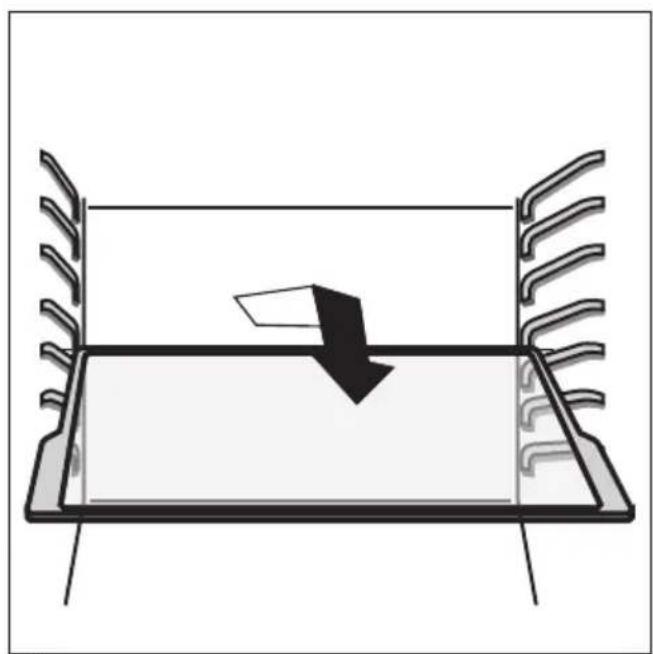
The position of the shelves can be changed if so wished. To change them, pull them towards you, push down and remove, then place them in the desired position. (Figure 3)
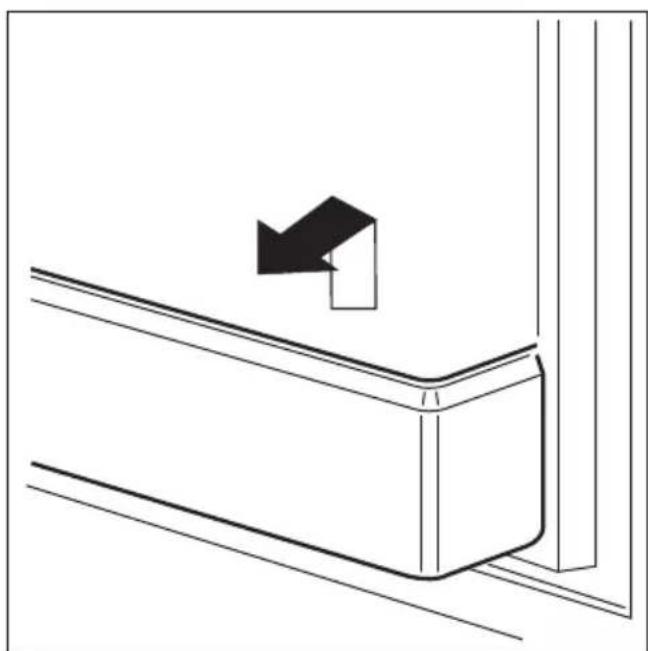
Pull out the containers and racks situated in the door to clean them. (Figure 4).
When putting foodstuffs into the appliance, the following points should be taken into account.
Allow hot food to cool down completely before placing in the appliance
- Cover or wrap foodstuffs well before putting them into the appliance. This will prevent any loss of flavour, aroma or colour. They will stay fresh longer and will not dry out, and the transmission of flavours and smells is thus avoided.
- Do not allow grease of oil to come into contact with the plastic parts of the appliance or with the door seal. (These parts become porous easily).
- Do not store explosive materials in the appliance.
-
Place bottles containing liquids with a high alcohol content in airtight containers and alwais store in an upright position.
-
The coldest areas of the refrigerator compartment are at the back and on the glass shelf. Use these areas to store products that are easily perishable.
- Do not store bottles that contain liquids which may freeze in the appliance. If the liquid freezes the bottle will explode.
Example of food distribution
Figure 1
Refrigerator Compartment A
On the racks (3): from top to bottom - bakery products, pre-cooked food, dairy products.
On the glass shelf (7): meat and processed meat products.
In the vegetable drawers (8): vegetables, fruit and salad products.
In the rack (9): jars, tubes, small bottles. In the bottle rack (10): large bottles.
Freezer Compartment B
In the upper drawer (11): freezing food, ice-making, food storage.
In the lower drawers: food storage.
Note refrigeration zones in the refrigerator compartment!
The air circulation in the refrigerator compartment means that there are zones at different temperatures.
Depending on the model, the zone for sensitive foods is right at the bottom between the arrow on the side and the glass surface below (fig. 10/1 and 2) or between the two arrows (fig. 11/1 and 2). Ideal for storing meat, fish, sausage and salad mixtures, etc.
Freezing/Storing food and Making ice
The following points should be taken into account when buying frozen foods
- Only buy products if the packaging is in perfect condition.
- Do not buy products that have passed their use-by date.
- Check the freezers at the establishment where you buy the products. The unit must have a thermometer that is easily visible. The temperature must be lower than -18ircC .
- Shop for your frozen products towards the end of your shopping. Wrap them in several layers of newspaper or put them into an isothermal or insulating bag to take them home in and make the journey as quickly as possible. Once home, put the products into the freezer without delay.
Advice on wrapping the products or putting them into containers
To home-freeze food, always buy top-quality fresh products that are in perfect condition. Wrap or pack the food into airtight containers to prevent it from drying out or losing its flavour.
Suitable containers and materials:
Plastic sheets, polyethylene film, aluminium foil and containers made of paraffin cardboard, aluminium or plastic are suitable for freezing. These products are available at specialist shops.
Materials that are not suitable for home-freezing:
Wrapping paper, vegetable-sized paper, cellophane, bin bags or used plastic shopping bags. Wrap the food well and extract as much of the air as possible from inside the package and then seal.
Suitable materials for sealing:
Strong elastic bands, plastic clips, string, adhesive tape that is resistant to cold temperatures, humidity, etc. Bags and polyethylene film can be sealed with a special appliance for plastic materials. Before putting the food into the freezer compartment, mark the packs clearly with the contents and add the date.
Freezing Capacity
Information about the max. freezing capacity according to current standards can be found on the rating plate.
The maximum freezing capacity for fresh food in 24 h (distributed on the freezer racks) is indicated on the characteristics plate (in Kg/24h), see figure 9.
Regulating the temperature selector to freeze and use of the freezing switch
Set the temperature selector at position \~ "3" to freeze food. Connect the fast-freeze button (Figure 2/22). (A red mark will appear when this switch is connected). When the freezing process is complete (about 24 hours later), disconnect the switch.
en
Note the following points when freezing fresh products
Place the food directly onto the special freezing surface located on the base of the upper drawer. This will lead to faster and more efficient freezing. Make sure that pre-frozen products that are already stored in the freezer do not touch the fresh food that is being frozen.
Making Ice Cubes
Figure 6
Fill the tray to_full and place on the special freezing surface or in the upper drawer. To remove the ice cubes easily once they are frozen, gently bend the tray.
Cold Accumulators
This accessory is only included with some models. Therefore, if your appliance does not have it, please go to the next section.
The accumulators delay the defrosting process and help to keep the food cold in the event of a breakdown or power cut.
The best results in these cases are obtained by placing the accumulators in the upper drawer directly on top of the frozen food.
The accumulators can also be taken out of the freezer and used as a practical means of keeping fresh food cold for short periods in portable cool-boxes and isothermal bags.
Chart showing storage periods for frozen foods
In order to enjoy the frozen products when they are at their best, they should always be consumed before their freezing date expires. This period varies according to the type of product. The numbers shown next to the symbols indicate the recommended storage periods in months for each product. When pre-frozen products are bought, check the use-by date shown on the packaging.
Defrosting food
It is possible to defrost food in many different ways. Depending on the type of food and the use it will be put to, choose between the following methods:
- at room temperature
- in the refrigerator compartment
- in an electric oven with/without fan
- in a microwave oven
Use the all the food up once it has been allowed to partially or completely defrost. Do not re-freeze these products unless they have been previously cooked (in the oven or boiled), in which case they may be refrozen according to the instructions for pre-cooked foods.
Defrosting the Appliance
The Refrigerator Compartment
The refrigerator compartment defrosts automatically. The drainage duct (Figure 7/5) collects all the water from the defrosting process and channels it to the compressor where it is evaporated. Ensure that the drainage duct and the drainage outlet (Figure 7/6) are always kept clean in order that the water may circulate freely.
The Freezer Compartment
The freezer compartment (Figure 1/B) does not defrost automatically. This avoids the risk of the frozen products being accidentally defrosted.
The formation of thick layers of frost on the freezing surface influences the performance of the appliance and increases energy consumption.
When the layer of frost is approximately 0.5 cm thick it is necessary to defrost the compartment. At all events, it is recommended that the freezer be defrosted at least once or twice a year. The best time to do this is when the appliance is empty.
If you have food in the freezer and you wish to defrost it, remove the freezer drawers complete with their contents. Wrap the drawers in several layers of newspaper or in a blanket, and put them in the coolest place you have available. Leave the freezer compartment door open and unplug.
During the defrosting process the bottom frozenfood drawer in the freezer compartment collects the water. When the defrosting process is complete, empty the drawer. Wipe the remaining water off the freezer- compartment floor with a sponge or cloth.
Ensure that the defrosting process is carried out as quickly as possible (The longer the products are kept at room temperature, the less time they will stay frozen).
Advice for speeding up the defrosting process
To accelerate the defrosting process, the best thing to do is to place a pan of hot water on the freezing surface.
Take care if using a defrosting spray, as they can cause the formation of explosive gases, contain solvents and propellants that may damage the plastic parts of the appliance, and can be damaging to the health.
If possible, avoid scraping away the ice or frost, as this sides of the freezer are very delicate and are easily damaged.
To eliminate the small formations of ice or frost that appear from time to time in some parts of the appliance, break it up with a plastic scraper. Never scrape to such an extent that you touch the freezing surface of the appliance.
The best solution is to leave the appliance to defrost naturally.
en
Cleaning
Before cleaning the appliance, unplug it from the mains or disconnect the fuse.
Clean the refrigerator compartment once a month.
Clean the freezer compartment whenever you defrost it.
Avoid water coming into contact with the controls or the interior lamps.
Clean all the parts of the appliance, with the exception of the door seal, with a mixture of warm water and detergent. Never use cleaning products that contain solvents or acids. Wipe the door seal with clean warm water only, and dry well.
Clean the drainage duct (Figure 7/5) and the drainage outlet (Figure 7/6) situated in the refrigerator compartment more frequently in order that the water may circulate freely. Use a toothpick or similar object to clear the outlet. When cleaning the refrigerator, prevent water from running into the evaporation trough of the compressor.
The exterior of the appliance may be cleaned with any product that is suitable for sprayed surfaces. Keep the door closed while cleaning the outside to prevent the product coming into contact with the plastic parts of the appliance or the door seal.
When you have finished cleaning the appliance, reconnect ir and start it running.
Energy-Saving Advice
• Install the appliance in a cool, dry, easily-ventilated room. Protect it from direct sunlight and sources of heat (radiators, ovens, etc...).
- Leave hot food to become completely cool before putting it into the appliance.
- When defrosting the appliance, put the frozen products in the refrigerator. The cold air given off by these products will be used to cool the food in the refrigerator compartment.
• Always defrost the appliance when a thick layer of ice frost has formed.
- The formation of frost influences the performance of the appliance, impedes the passage of cold air to the products, and increases energy consumption.
- Avoid opening the door frequently. When introducing or removing food, keep the door open for as short a time as possible. The more the door is opened, the quicker the ice will form on the freezing surface.
How to repair minor faults yourself
Before calling the Technical Assistance Service, it is a good idea to follow the indications set out below. In this way, time and money is not wasted unnecessarily, as not all faults are covered by the guarantee.
| Fault | Possible Cause |
| Strange noises | - It is possible that the appliance is not properlylevelled, or that the floor is not level.- Another possibility is that something has got caught in the area of the compressor.- Check that none of the parts at the back of the appliance are in contact with the surface of the appliance itself, or the wall. If this is the case, carefully straighten the part. |
| The refrigerator compartment interior light does not work | - The switch is jammed (Fig. 5/1). Try to move it and if this is not possible, call the Technical Assistance Service.- The bulb may be faulty or have fused.Disconnect the appliance, remove the cover (Fig. 8/19) and fit a new bulb, max. 15W, 220-240V, E14 cap. |
| Performance is reduced | - The door has been opened too often.- A large quantity of food has just been put into the freezer.- The layer of frost in the freezer compartment is too thick.- The ventilation and the ducts are covered.- Something has got caught between the condenser and the wall.- The condenser, located at the rear of the appliance, is full of dust. |
| The appliance does not cool at all | - The plug is not properly plugged into the socket.- The fuse has blown.- The temperature selector (fig. 2/2) is at the “0” position. |
| The temperature in the refrigerator compartment is too low | - The position at which the temperature selector is set is too low. |
en
How to repair minor faults yourself
If, after having followed the indications set out above, you are unable to rectify the fault, call the Technical Assistance Service.
Do not continue trying to find the fault and rectify it yourself. Above all do not touch the electric parts of the appliance.
Try to open the refrigerator door as little as possible in order to prevent the cold air escaping.
Warning!
If the temperature inside the appliances rises as a result of a fault or a power cut, check that the frozen products have not partially or completely defrosted.
Do not re-freeze products that have completely or partially defrosted.
To re-freeze, cook the food first (in the oven /by boiling) and then freeze according to the instructions for pre-cooked food.
Disposing of old appliances
Safety indications
Old appliances that are not to be used again must be rendered unserviceable immediately in the following way for safety reasons:
Remove the plug and cut the lead off. Remove and destroy all locks and bolts. In this way any possible risk of children being locked inside is prevented.
After-Sales Service
Figure 9
When calling the Technical Assistance Service, please quote the number the appliance (22) and the serial number (23). Both these numbers are to be found set out on the Specifications Plate in the area outlined in black.
The Specifications Plate is situated at the bottom left-hand side of the refrigerator compartment near the vegetable drawer.
You will find the address and telephone number of your nearest Technical Service Agent on the list of Service Centres, or in your local telephone directory.
natural_image
Pure geometric lines and markers without any text, numbers, or symbols

2
natural_image
Diagram of a mechanical or electrical component with a downward arrow indicating force or direction, surrounded by multiple blades (no text or symbols)3
natural_image
Technical line drawing of a corner bracket with an arrow indicating direction (no text or symbols)4

natural_image
Technical line drawing of a mechanical component with a labeled section A, no text or symbols present5

natural_image
Illustration of hands placing a cube-shaped object into a basket with an arrow indicating rotation (no text or symbols)6

7

8

9

10

11
Subject to modification
- DE Inhaltsverzaichnis
- FR Tables de matières
- Removal and Disposal of old appliances
- Disposal of your old opliance
- You should render your old appliance useless prior to disposing of it and replacing it with a new one:
- Recommendations for disposal of packing terial
- Safety Advice and General Warnings
- Warning!
- Danger of injury
- Emergency procedure
- Danger of explosion
- ⚠️ Important
- Getting to know the unit
- Figure 1
- en
- Climate class - Maximum room temperatures
- Ventilation
- Figure 3
- Usable capacity
- Connecting the appliance
- Connection and temperature selection
- Connection
- Temperature selection
- Important for storing frozen foods
- Disconnection and Disuse
- Disconnecting the appliance
- Leaving the appliance out of action
- Arranging the foodstuffs inside the appliance
- How to change the layout of the accessories
- Allow hot food to cool down completely before placing in the appliance
- Example of food distribution
- Refrigerator Compartment A
- Freezer Compartment B
- Note refrigeration zones in the refrigerator compartment!
- Freezing/Storing food and Making ice
- The following points should be taken into account when buying frozen foods
- Advice on wrapping the products or putting them into containers
- Suitable containers and materials:
- Materials that are not suitable for home-freezing:
- Suitable materials for sealing:
- Freezing Capacity
- Regulating the temperature selector to freeze and use of the freezing switch
- Note the following points when freezing fresh products
- Making Ice Cubes
- Figure 6
- Cold Accumulators
- Chart showing storage periods for frozen foods
- Defrosting food
- Defrosting the Appliance
- The Refrigerator Compartment
- The Freezer Compartment
- Advice for speeding up the defrosting process
- Cleaning
- Before cleaning the appliance, unplug it from the mains or disconnect the fuse.
- Energy-Saving Advice
- How to repair minor faults yourself
- Disposing of old appliances
- Safety indications
- After-Sales Service
- Figure 9
Brand : SIEMENS
Model : KG28VV00
Category : Refrigerator