
LE DUO PLUS - Food processor MAGIMIX - Free user manual and instructions
Find the device manual for free LE DUO PLUS MAGIMIX in PDF.


| Product type | Food processor |
| Brand | MAGIMIX |
| Model | LE DUO PLUS |
| Dimensions (L x W x H) | 28 x 22 x 38 cm |
| Weight | 5.2 kg |
| Power supply | 220-240 V, 50/60 Hz |
| Power | 900 W |
| Main bowl capacity | 2.5 liters |
| Mini bowl capacity | 0.8 liter |
| Bowl material | Transparent polycarbonate |
| Blades | Stainless steel (high resistance) |
| Main functions | Chop, blend, emulsify, knead, grate, slice |
| Included accessories | Chopping blade, kneading blade, grating/slicing disc, pusher, spatula |
| Number of speeds | 2 speeds + pulse |
| Care and cleaning | Bowl and accessories are dishwasher safe |
| Safety | Bowl locking, shaft safety, automatic stop in case of overload |
| Spare parts and repairability | Parts available on Magimix website |
| Warranty | 2 years |
| Country of manufacture | France |
| Certifications | CE, NF |
Frequently Asked Questions - LE DUO PLUS MAGIMIX
User questions about LE DUO PLUS MAGIMIX
0 question about this device. Answer the ones you know or ask your own.
Ask a new question about this device
Download the instructions for your Food processor in PDF format for free! Find your manual LE DUO PLUS - MAGIMIX and take your electronic device back in hand. On this page are published all the documents necessary for the use of your device. LE DUO PLUS by MAGIMIX.
USER MANUAL LE DUO PLUS MAGIMIX
Instructions for use. Recipe book
When using electrical appliances, basic safety precautions should always be followed. These include the following :
- Read all instructions.
- To protect against risk of electrical shock do not put the juice extractor in water or other liquid.
- Close supervision is necessary when any appliance is used by or near children.
- Unplug from outlet when not in use, before putting on or taking off parts, and before cleaning.
- Ensure the juicer is switched off after each use. Make sure the motor stops completely before disassembling.
- Avoid contacting moving parts.
- Do not operate any appliance with a damaged cord or plug, after the appliances malfunctions, or if it is dropped or damaged in any way. Return appliance to the nearest Authorised Service Facility for examination, repair or electrical or mechanical adjustment.
- The use of attachments not recommended or sold by the manufacturer may cause fire, electric shock or injury.
- Do not use outdoors.
- Do not let the cord hang over edge of table or counter.
- Always make sure the juicer lid is securely locked in place before switching the machine on. Do not unfasten the lid while the juicer is in operation.
- Do not put your fingers or other objects into the juicer opening while it is in operation. If food becomes lodged in opening, use food pusher or another piece of fruit or vegetable to push it down. When this method is not possible turn the motor off and disassemble the juicer to remove the remaining food.
- Do not attempt to over ride the interlock mechanism on the lid.
- Do not use the appliance if the rotating sieve is damaged.
- This product is designated for household use only.
- If your appliance has broken down, if your appliance has fallen, or if the supply cord is damaged, it must be replaced by the manufacturer, a service agent or similarly qualified persons in order to avoid a hazard.
- The appliance is not intended for use by young children or infirm persons unless they are adequately supervised by a responsible person to ensure that they can use the appliance safely.
- Young children should be supervised to ensure that they do not play with the appliance.
- Do not leave this appliance running unattended.
- This appliance is not intended for use by persons (including children) with reduced physical, sensory or mental capabilities, or lack of experience and knowledge, unless they have been given supervision or instruction concerning use of the appliance by a person responsible for their safety
SAVE THESE INSTRUCTIONS
Instructions for use
Important safeguards 2
Description 4
Using the citrus press 6
Using the juicer 7
Using the coulis-maker 8
Using the extra large feed tube 9
Cleaning 10
Electrical instructions 11
Fruit and vegetables
A to Z listing 13
Vitamins and mineral salts 23
Recommendations 24
Recipes
How to read the recipes 24
Fruit & vegetable juices 25
Cocktails & aperitifs 37
High-energy drinks 43
Coulis & sauces 47
Chilled soups 53
Just desserts 59
Sorbets 65
Jams & fruit jellies 71
Index of recipes 78

WARNING

PLEASE READ THE IMPORTANT SAFEGUARDS AND ELECTRICAL INSTRUCTIONS THROUGH CAREFULLY BEFORE USING YOUR APPLIANCE.

only on Le Duo Plus. only on Le Duo Plus XL.
(1) Thread the power cord through the slot underneath the motor base to avoid vibrations.
Wash all the attachments before using the appliance for the first time.
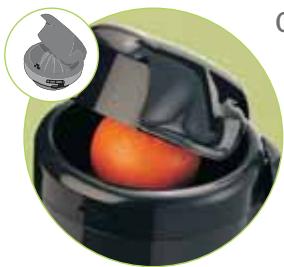
Citrus press
Ideal for citrus fruits such as oranges, lemons and grapefruit.
Result : quick-to-make juice without any pips and exactly the right amount of pulp.

Juice extractor
Ideal for firm-fleshed fruit and vegetables, such as apples, carrots, melons and cucumbers.
Result : a clear juice without any pulp.
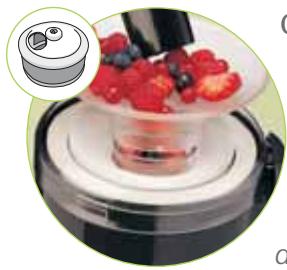
Coulis maker
Ideal for soft (or cooked) fruit and vegetables, such as raspberries, blackcurrants and tomatoes.
Result : a thick nectar or coulis-type juice.
Never use this attachment for juicing hard fruit or vegetables (carrots, coconut, etc.) as you may damage your appliance.
To find out which attachment is most suitable for each type of fruit or vegetable, check A - Z listings on page 13.
only on Le Duo Plus and Le Duo Plus XL.
Attaching the bowl : position it on the motor shaft and turn in an anti-clockwise direction until it locks into place.

Open
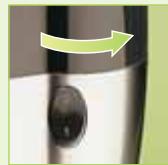
Closed
Double failsafe : your appliance will not start unless both the bowl and the lid (or citrus press basket) are locked into place. When not using your appliance only turn the lid (or citrus press basket) partway, so that it does not lock into place.


Position the citrus press on the bowl and turn anti - clockwise until it locks into place.

Slide the cone onto the motor shaft. Position the lever arm opposite the locking device and clip the tab to the base of the basket.
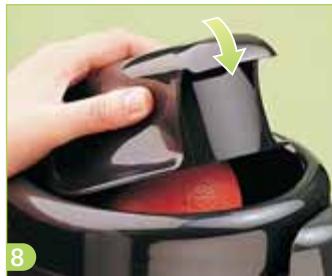

Lower the arm. Press (1), then apply gentle pressure to the lever arm until all the juice has been extracted.


Choose the cone according to the size of your citrus fruit. The larger cone should always be clipped onto the smaller one.


Place a glass under the pouring spout. Position the halved fruit on the cone, pressing slightly.

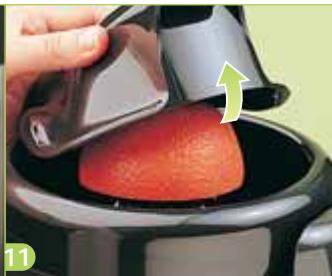
At the end of the operation, switch the appliance off (0) before raising the lever arm, in order to avoid splashing.
If juicing a grapefruit, reduce the pressure slightly from time to time in order to maximize juice extraction.

Lower the juice extractor basket onto the motor shaft.

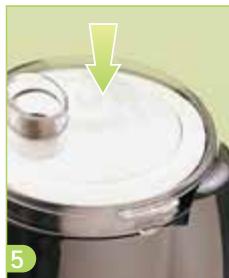
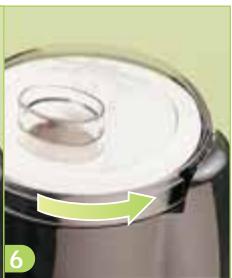
Place the lid on top of the bowl and turn anti - clockwise until it locks into place.
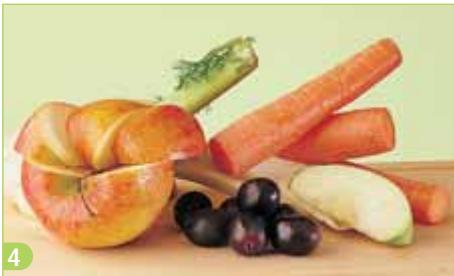
Wash the fruit and vegetables and prepare according to the advice given in the A-Z listings on page 13.

Place a glass under the spout. Switch the machine on (1) and leave it to run without interruption until the operation is finished.

Put the pre-prepared pieces in the feed tube and gently guide them through using the pusher.
WARNING
- Never insert a foreign object - or your fingers - into the feed tube. Always use the pusher supplied for this purpose.
- Wait until the juice extractor basket has stopped turning completely before you unlock the lid.
If your appliance starts to vibrate, switch off and empty the juice extractor basket. For maximum juice extraction, apply gentle pressure so that the fruit (or vegetable) comes in direct contact with the filter basket. At the end of the juicing, wait a few seconds for the appliance to finish extracting the juice before switching it off.


Place the discharge disc at the bottom of the bowl. Lower the juice extractor basket onto the motor shaft.
Place the lid on top of the bowl and turn anti - clockwise until it locks into place.
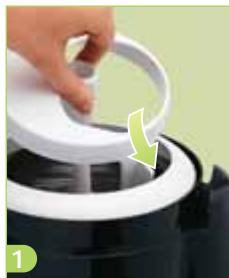
Feed the fruit and vegetables** in little by little, guiding them through with the pusher. Switch the appliance off (0).


Fit the paddle in the juice extractor basket.

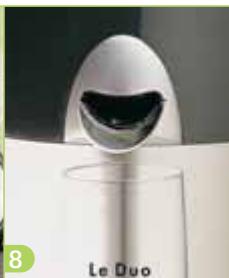
Position the funnel* on top of the feed tube. Place a glass under the spout. Press (1) and leave to run without interruption until the operation is finished.
WARNING
- Never attempt to process hard fruit and vegetables.
- Never insert foreign objects - or your fingers - into the feed tube. Always use the pusher supplied for this purpose.
-
Wait until the juice extractor basket has stopped spinning before you open it.
-
Only on Le Duo Plus
** Prepare your fruit and vegetables according to the advice given on p. 13.
If your appliance starts to vibrate, switch off and empty the juice extractor basket. In the case of some types of soft fruit, such as raspberries, you may need to leave the appliance running a little longer in order to maximize juice extraction.

Juicer : lower the juice extractor basket onto the motor shaft.


Place the XL lid on top of the bowl and turn anti - clockwise until it locks into place.

Introduce your whole fruits and vegetables or in large pieces. Guide them through using the XL pusher. Do not use your hands.

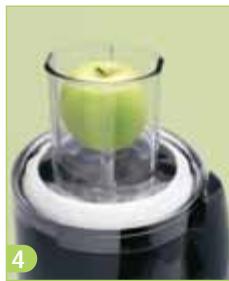
Coulis maker : place the XL coulis maker accessory and the XL discharge disc as explained on page 9 .
Place the XL lid on top of the bowl and turn until it locks into place.


Put your whole fruit and vegetables or large pieces into the feed tube. Guide them through using the XL pusher. Do not use your hands.
Clean the removable parts using water and washing-up liquid immediately after use. Once it has dried, the pulp is harder to remove.
Certain foods, such as carrots, tend to stain the plastic. Use a piece of kitchen paper with a little vegetable oil to remove some of the staining.
Motor base : unplug the power cord, then wipe clean with a damp cloth. Avoid abrasive products (e.g. Brillo pads®).
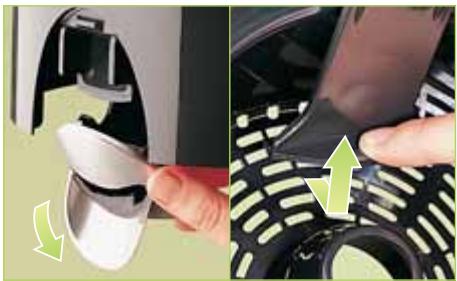
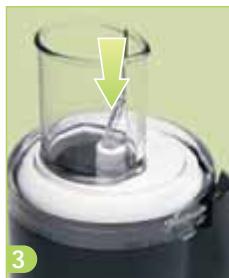
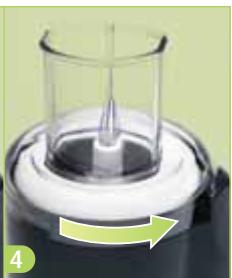
Bowl : push the spout into the cleaning position.
Citrus press basket : unclip the lever arm by pulling the tab free.

Models without cleaning brush : hold the basket vertically under a running tap. Clean the metal filter inside and out using the spatula provided.
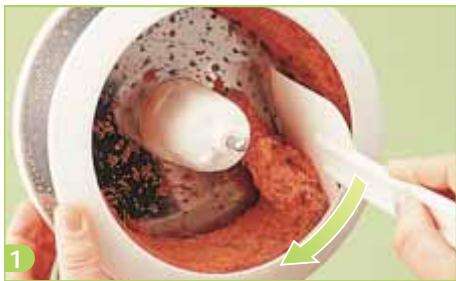
Juice extractor basket : insert the thin end of the spatula into the basket and scrape away the bulk of the pulp.
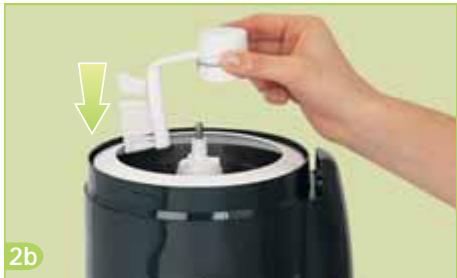
Models with cleaning brush : place the juice extractor basket onto the motor shaft. Fit the cleaning brush and the lid. Switch the machine on and slowly pour water into the feed tube. Stop when the water comes out clean.
It is vital to follow certain rules in order to avoid seriously damaging the removable parts :
- Dishwasher : select the minimum temperature and avoid if possible the drying cycle (generally ≥ 60^ ).
- Handwashing: avoid leaving parts to soak in detergent for too long.
- Detergents : read through the manufacturer's instructions to check that they are suitable for cleaning plastic items.
Ensure that the voltage of your mains supply corresponds to that shown on the identification plate on the underside of your appliance.
For models with a chrome finish, the appliance must always be plugged into an earthed socket.
Your appliance is fitted with a thermal protection system which automatically stops the motor if it has been running for too long or is overloaded. If this happens, switch the appliance off and wait until it has cooled down completely before switching it on again.
ELECTRICAL REQUIREMENTS
For chrome plated models only : To reduce the risk of electric shock, this equipment has a grounding type plug, that has a third (grounding) pin. This plug will only fit into a grounding outlet. If the plug does not fit into the outlet, contact a qualified electrician to install the proper outlet. Do not change the plug in any way.
For all other models : To reduce the risk of electric shock, this equipment has a polarized plug (one blade is wider than the other). This plug will fit in a polarized outlet only in one way. If the plug does not fit fully in the outlet, reverse the plug. Do not change the plug in any way. If it still does not fit, contact a qualified electrician.
The electrical rating listed on the unit is based on the attachment that draws the greatest load.
Other attachments might draw significantly less power or current.
CAUTION
When using your Le Duo XL juicer extractor, feed the fruit or vegetables down the feed tube using the pusher provided.
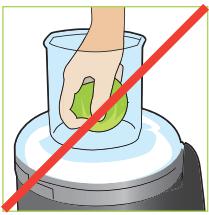
UNDER NO CIRCUMSTANCES REACH INTO THE FEED TUBE WITH YOUR HANDS OR PUT ANY OTHER OBJECT INTO THE FEEDTUBE WHILE THE MACHINE IS RUNNING. In the unlikely event of the fruit becoming stuck, switch off the machine and unplug it at the wall. Remove the lid and clean the feed tube and filter until the machine is unblocked.
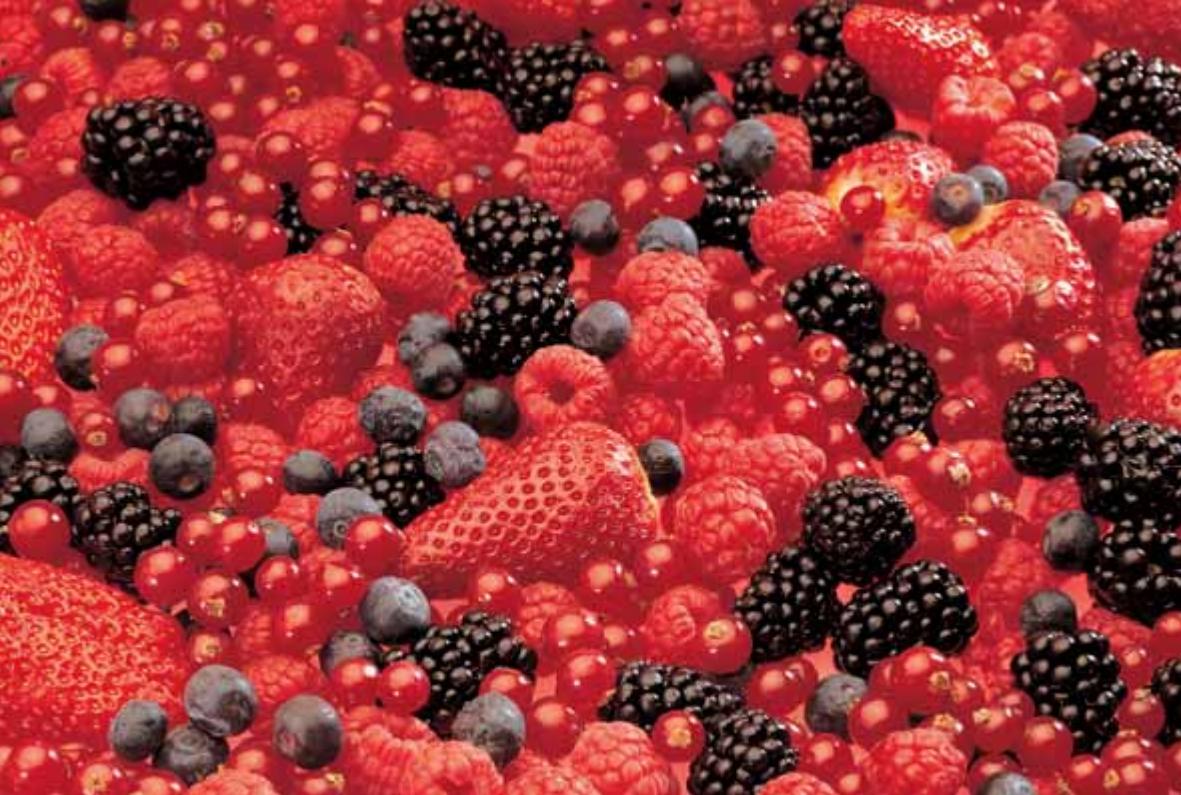
FRUIT AND VEGETABLES

Introduction
The juice extractor and citrus press functions allow you to extract juice from a wide range of fruit and vegetables. And if you also have the coulis maker function, you can turn up to 99 % ^* of the produce on sale at your local greengrocer's into delicious juices, nectars or coulis.
As each individual fruit and vegetable is very different, it is important to choose the most suitable attachment.
Prepare the ingredients following the instructions below.
For every fruit or vegetable, we explain:
How to choose it
How to prepare it
Why it is good for you
- Which attachment to use.
You may have a choice of attachment for certain types of fruit, but you will not necessarily obtain the same results with each. For example, a pear processed in the juice extractor will yield a clear juice, whereas if you use the coulis maker function, you will obtain a thicker, nectar-type juice. As a rule, if you choose the juicer rather than the coulis maker, soft (or pre-cooked) fruits and vegetables will yield slightly less juice, the basket will fill up more quickly and the liquid will flow more slowly.
- For example, avocados are extremely rich and do not yield any juice, which means they have to be blended

Apple

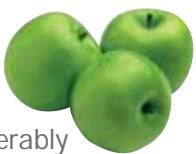
Choose firm fruit, preferably organically grown to avoid having to remove the peel, which is rich in pectin and vitamin A. There are hundreds of varieties of apple. Granny Smiths will produce a very refreshing, slightly acid juice, while Golden Delicious apples will yield a milder juice. Wash them, cut into pieces and process directly in the juicer without coring them.
Benefits : apples are very good for health, as underlined by the saying "An apple a day keeps the doctor away": They help to stabilize cholesterol levels, improve digestion and promote the elimination of toxins. They are also an appetite suppressant.
Apricot, Peach, Nectarine

or

Choose fruit that is dark in colour, slightly soft and feels heavy in the hand. Wash thoroughly, remove the stones and cut into pieces. The flesh of these fruits extracts a fairly thick nectar. When using the juice extractor,

you may therefore need to combine them with other, juicier fruit or vegetables,
in order to increase the flow and dilute the pulp.
Benefits : Apricot : ideal for fighting infections.
Peach/nectarine : stimulates intestinal transit.
Asparagus


Choose young, firm shoots. Wash them, remove the tough part of the stalk and cut into sections before processing in the juice extractor.
Benefits : as it is extremely alkaline, asparagus juice helps to reduce the acidity of your blood.
Banana

Choose fruit with uniformly yellow skin. As banana flesh is extre
mely thick, it will produce apurée rather than a juice when
pressed, which iswhy it is a gooddea to combine it
with other fruit. Make sure you always process the banana first (peeled and cut into pieces), followed by other, juicier fruit to dilute the pulp.
Benefits : a high-energy food, bananas are also excellent for the digestion.
Beetroot

Choose firm ones that are not too big. Scrape the skin off and cut into pieces before processing in the juice extractor. As it is often difficult to find raw beetroots in the shops, you can used cooked ones, bearing in mind that they will have a slightly lower nutritional value.
Benefits : a good source of energy and a powerful cleanser, beetroot juice promotes blood regeneration. WARNING : because it has such a strong effect, beetroot juice should always be combined with other juices.
Blueberry

Choose plump berries with a bloom on their skin. You can also use frozen berries when fresh ones are not in season. Rinse and drain them before processing them using the coulis attachment.
Benefits : blueberry skin has bactericidal properties which are good for the digestive system.
Broccoli

Choose broccoli with tight, green florets. You can process both the stalks and the florets in the juice extractor. As the juice is rather bitter, it is a good idea to combine it
with other juices. Wash the broccoli thoroughly and cut into pieces before placing in the juice extractor.

Benefits : as in the case of other members of the cabbage family, it is said to have anti-cancer properties, while it also improves blood oxygenation.
Carrot

Choose good hard carrots with uniform, unblemished skins. There is no need to peel them, providing you scrub them well before cutting them into pieces. Make sure you always have a store of fresh carrots, as they form the basis of a great many cocktails.
Benefits : as carrot juice is extremely rich in betacarotene, it is good for both your skin and your eyesight.

Celery

Choice firm, fresh, green sticks. Wash and cut into sections before
processing in the juice extractor. Its slightly salty juice
goes well with other fruit and vegetable juices (apple, tomato, etc.)
Benefits : rich in sodium, it neutralizes the body's natural acidity. Celery also helps to eliminate excess carbon dioxide. Lastly, an apple and celery juice combats stress and insomnia.
Cherry


or
Choose dark red, fat and flawless cherries, preferably still with their stalks. Their juice is extremely fragrant, but the preparation takes rather a long time, as it is vital to remove their stones (after washing them and removing their stalks) before processing them in the juice extractor or the coulis maker.
Benefits : extremely rich in vitamin A, and therefore good for the eyesight, cherries are also recommended for people suffering from rheumatism.
Citrus fruit
(Lemon, Orange, Grapefruit)


or
or

Always select citrus fruit that feels heavy in the hand, with a thin, shiny skin. The easiest way to extract the juice is to cut the fruit in half and use the citrus press. However, to make life easier when preparing certain cocktails, you can also process them in the juice extractor or the coulis maker after removing the peel and separating the segments.
Benefits : all citrus fruits are rich in vitamin C, which makes them a good source of energy. They also help to cleanse your body. Pinky-orange citrus fruits, such as blood oranges,
are a good source
of vitamin A (betacarotene).
As for lemon juice, it is a
p o w e r f u l
anti-oxidant , andthen sprinkled onto
other fruits and vegetables, it prevents any discoloration and acts as a natural preservative.
Coconut

Choose a full coconut: when you shake it, you should hear the coconut water moving. Start by piercing one of

its "eyes" (small, dark spots at one end of the coconut) with a small knife and collect the water in a glass.
Smash the shell with a hammer, then remove the flesh and break into small pieces. You do not need to cut off the dark rind. Process the pieces in the juice extractor to obtain a pulp, then pour the coconut water and/or ordinary water through the feed tube to rinse the pulp and thereby obtain coconut milk. Do not discard the pulp, as it can be used in cakes.
Benefits : a thirst-quenching juice rich in mineral salts.
Cucumber


or

Choose firm, dark green cucumbers.
Peel them roughly and cut into pieces. Watery and extremely thirst-quenching, the resulting juice tempers the strong taste of some other juices (radish, pepper, etc.).
Benefits : Rich in mineral salts, it improves skin tone.
Fennel


Choose firm, white bulbs with a few small green sprigs. Wash and cut into pieces. Its aniseed ta
goes well with other juices (apple, orange, etc.).
Benefits : as fennel juice is rich in vitamin A, it is good for the eyesight. It also relieves headaches.
Ginger

Discard any roots that are soft or withered. Cut off a small piece to process in the juice extractor along with other fruits or vegetables to produce a spicy cocktail.
Benefits : used since ancient times in Oriental medicine, ginger is extremely good for you. Boasting fortifying and antiseptic properties, it helps combat head colds, coughs and nausea. It is also extremely good for the circulation (increases
blood flow to the peripheral organs).

Grape

or

Choose bunches of firm, uniformly-sized grapes firmly attached to their
stalks. Wash the bunches

oroughly and strip off the grapes. Naturally mild and sweet, their juice is a firm favourite with children.
Benefits : rich in vitamins and minerals, grapes stimulate the metabolism and pure grape juice can be drunk when dieting.
Guava


or
Choose guavas with pale yellow skin – a sign of ripeness. Remove the skin and cut the flesh into pieces before processing in the juice extractor (for a juice) or using the coulis attachment (puree). As its flesh is extremely dense, it is a good idea to process the fruit one at a time and to empty the juice extractor basket before processing other fruit.
Benefits : large quantities of vitamin C and low in calories.
Kiwi

or

Choose ripe fruit which yield slightly to the touch. Peel and cut into pieces.
Benefits : extremely rich in vitamin C, it is an excellent all-round tonic.
Lettuce

Choose fresh, green lettuce. Detach a few leaves, roll them together and feed them through the tube. Repeat this process as many times as necessary. As the resulting juice is rather bitter, it is a good idea to mix it with other juices.
Benefits : like parsley, lettuce is rich in chlorophyll. Its juice helps to purify the blood and improves skin appearance.

Lychees


or
Choose lychees with pink or red skin. Tinned lychees are freely available, but their taste is far inferior to that of fresh ones. Peel away their tough skin and remove the stones before processing them in the juice extractor or using the coulis attachment.
Benefits : a good source of vitamin C.

Mango, Papaya


or
Choose ripe fruit which yield slightly to the touch. Peel them, remove the stones or seeds and cut into pieces. If you choose the juice extractor
function, you may need to
process juicier fruits after
the mango or papaya in order to dilute the pulp.
Less flavoursome than mangoes, papayas in particular need to be combined with other ingredients.

Benefits : Mango : extremely rich in vitamin A, it is good for the skin.
Papaya : this contains papaine, which promotes the digestion of proteins.
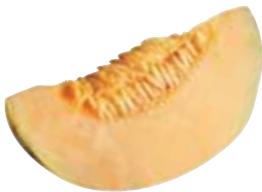
Melon, watermelon

or

Choose a heavy melon with unblemished skin. Its stalk should come away slightly. The skin of a watermelon should be hard and smooth. Remove the seeds (except for the watermelon), remove the rind, then cut into pieces.
Benefits :
Melon :
taken pure, its juice is good for the digestive
system. Its extremely
fragrant juice goes well with that of more acidic fruits, although people subject to gastric disorders should drink it on its own, as once it has reached the stomach it rapidly starts to ferment.
Watermelon : extremely low in calories, watermelon juice is an effective depurative and a natural appetite stimulant.
Parsley


Choose bright green
leaves. When drunk pure, its taste is quite strong, so it is best combined with other juices. Process the parsley leaves in the juice extractor first, after washing and draining them, followed by the other vegetables.
Benefits : extremely rich in chlorophyll, parsley helps to purify the blood and cleanse the liver. It refreshes the breath and improves digestion. It is also a first-rate source of vitamin C.
Passion (fruit)


or
Choose fruit which
Feels heavy in the hand, with slightly wrinkled skin (if it
is too wrinkled, the fruit will
be dry). Cut in half, remove the pulp with a teaspoon and process it in the juice extractor or using the coulis attachment. This extremely flavoursome fruit enhances the taste of many fruit cocktails.
Benefits : good for relieving stress.

Pear

or

Choose firm ones with an unblemished
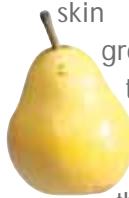
skin (preferably organically grown, to avoid having to peel them). Wash them, cut them in half without peeling or coring them, then process them directly in the juice extractor (for a clear juice) or using the coulis attachment (for a nectar). Add a few drops of lemon juice to prevent the pear juice from oxidizing.
Benefits : this is a juice rich in potassium, mineral salts and vitamins : energy-giving – and – depurative properties.
Persimmon

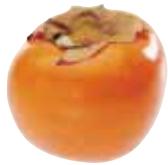
Originally from Japan, persimmons resemble large orange tomatoes. Make sure you only use ones which are fully ripe. Unlike other fruit, they are at their best when they are soft and not too smooth and shiny. Their flesh is soft, with a slight aroma of honey. Wash them, remove their stalks, cut the flesh into pieces and process using the coulis attachment.
Benefits : a fruit rich in vitamins A and C.
Pineapple

or

Choose one that is heavy and fragrant. A pineapple is ripe if you can easily pull off a leaf from the base
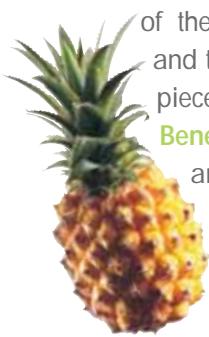
of the tuft. Remove the leaves and the thick skin, then cut into pieces.
Benefits : contains bromeline, an enzyme known to aid digestion.
Plum

or

Choose plump, well-coloured fruit. Its flesh should yield slightly to the touch. Wash, cut into half and remove the stone.
Benefits : an effective stimulant and detoxifier.
Radish


Choose hard, red radishes
with fresh green leaves. Cut off the leafy tops and wash the radishes before processing them in the juice extractor. The resulting peppery juice can be used to "pep up" cocktails.
Benefits : a depurative and a good source of minerals, it is a well-known liver drainer. WARNING : as it has such a powerful effect, radish juice should only be consumed in small quantities and never on its own.
Raspberry

Make sure the fruit is ripe and unblemished. If you pick the raspberries yourself, they should come away easily from the stalk. Avoid washing them, as this will reduce their flavour.
Benefits : an excellent all-round tonic.
Red and blackcurrants

Choose firm berries with shiny skins. In order to enjoy them all year round, you can freeze them: strip them off their stalks, wash and dry them, then place them in a suitable freezer container. If you are using fresh berries, strip them off their stalks before processing them using the coulis maker attachment. As red and blackcurrants are the fruits with virtually the lowest sugar content, you can make their juice less acidic by adding a little cane syrup.
Benefits : both these currants are rich in vitamin C. Blackcurrants also have

antiseptic properties. Redcurrants – arerecommended – for people sufferingfrom rheumatism.
Soya (bean sprouts)

Choose white, crunchy-looking, leafless bean sprouts - organically grown, if possible. As soya juice has a rather earthy taste, it is a good idea to combine it with other juices. Wash the bean sprouts and process them directly in the juice extractor. To maximize yield, make sure you regularly empty the juice extractor basket (approx. every 200 g).
Benefits : an excellent source of proteins, it is a good meat substitute, which is why it is such a feature of vegetarian diets.
Strawberry

or


Choose fragrant, unblemished strawberries. Wipe them gently with damp kitchen paper (if you wash them they will become watery), hull them and cut the larger ones in half. Benefits : an effective depurative which reinforces natural immunity.
Sweet pepper


or
Choose firm, smooth-skinned peppers. They come in several colours, the red one being the one which will extract the sweetest juice. If using the juice extractor, wash the raw peppers, remove the stalks and seeds, then cut into pieces. You will obtain a clear and brightly-coloured juice. If using
the coulis attachment, char the peppers under the grill on all sides, then remove the stalks,
cut into pieces without removing the seeds and process using the coulis attachment to obtain a pepper coulis.
Benefits : rich in silicon, sweet pepper juice is good for the skin, hair and nails.
Tomato


or
Choice dark red, ripe tomatoes. Wash them, remove their stalks and cut into pieces. Although you can process the tomato pieces in the juice extractor, both extraction and capacity will be higher if you use the coulismaker attachment. Fresh, natural tomato juice or coulis is fairly pale, only taking on an attractive crimson hue when cooked.
Benefits : it stimulates the circulation and is recommended in cases of anaemia.
Vitamins
| Fruit | ||||
| B1 | C | A | D | |
| Apple | ● | ● | ● | |
| Apricot | ● | ● | ● | ● |
| Blackberry | ● | ● | ● | ● |
| Blackcurrant | ● | ● | ● | |
| Cherry | ● | ● | ● | ● |
| Grape | ● | ● | ● | |
| Grapefruit | ● | ● | ● | ● |
| Kiwi fruit | ● | ● | ● | ● |
| Lemon | ● | ● | ● | ● |
| Melon | ● | ● | ● | |
| Orange | ● | ● | ● | ● |
| Peach | ● | ● | ● | |
| Pear | ● | ● | ● | |
| Pineapple | ● | ● | ● | ● |
| Plum | ● | ● | ● | |
| Raspberry | ● | ● | ● | |
| Redcurrant | ● | ● | ● | |
| Strawberry | ● | ● | ● | |
| Vegetables | ||||
| B1/B6 | A | E | K | |
| Asparagus | ● | ● | ||
| Cabbage | ● | ● | ● | ● |
| Carrot | ● | ● | ● | |
| Celeriac | ● | |||
| Celery | ● | ● | ● | |
| Chicory | ● | |||
| Courgette | ● | ● | ● | |
| Cucumber | ● | ● | ● | |
| Fennel | ● | ● | ||
| Lettuce | ● | ● | ||
| Onion | ● | |||
| Parsley | ● | ● | ● | |
| Spinach | ● | ● | ● | ● |
| Sweet pepper | ● | ● | ● | |
| Tomato | ● | ● | ||
| Turnip | ● | |||
| Watercress | ● | ● | ● | |
Mineral salts
| Calcium | Which are the best sources?* |
| parsley, watercress, spinach, fennel, broccoli, blackcurrants, french beans, green cabbage, etc. | |
| Iron | ginger, parsley, watercress, spinach, fennel, blackberries, etc. |
| Iodine | pineapple, leek, sorrel, garlic, melon, peach, asparagus, spinach, tomato, etc. |
| Magnesium | ginger, sorrel, spinach, fennel, parsley, etc. |
| Phosphorus | garlic, ginger, coconut, cherries, etc. |
| Potassium | ginger, parsley, spinach, garlic, fennel, etc. |
| Sodium | celeriac, fennel, spinach, beetroot, turnip, parsley, etc. |
- For each mineral salt, we have classified the fresh fruit and vegetables in descending order according to their average content per 100g net. NB: dried fruit (walnuts, hazelnuts, dried apricots, etc.) are also a good source of mineral salts, especially magnesium, phosphorous and potassium.
It is a good idea to vary your consumption of fruit and vegetables, as they do not all contain the same substances and are therefore good for you in different ways.
The fresher the fruit and vegetables, the more vitamins they will contain and the greater the amount of juice they will extract. If possible, choose organically-grown produce, especially in the case of fruit and vegetables you do not need to peel, as the skin is generally rich in nutrients. To dilute your juice, use mineral water. The same applies to making ice cubes for your cocktails.
Drink or use the juice immediately, if possible, as certain vitamins are destroyed by exposure to light or oxygen. If you have to store it for a while, add a few drops of lemon juice so that it keeps longer and place it in the refrigerator.
Always dilute dark red or green vegetable juices, as they are extremely powerful depuratives.
Fruit is rich in fructose (natural sugar), so if you cannot tolerate sugar, do not drink too much.
Children's digestive systems are more sensitive than those of adults, so dilute the juices you make to accustom them to this type of concentrated nutrition and choose fresh, light-tasting fruit juices.
HOW TO READ THE RECIPES
Difficulty of the recipe
Very easy
Easy
More advanced

Use the citrus press

Use the juice extractor

Use the coulis maker
Whenever you are given the choice between two different attachments for the same recipe, we always mention the most suitable one first.
Processing takes between 1 and 5 minutes, depending on the recipe.

Apple and strawberry
A delicious appetite suppressan


or
Makes 2 glasses
2 apples
200 g strawberries

- Preparation : 5 min
Wash and hull the strawberries, reserving 2 for decoration. Wash the apples and cut into pieces. Put the strawberries through the juice extractor or coulis maker first, then the apples. Stir and serve immediately.
Decoration tip : cut a slit in each strawberry and place one on the rim of each glass.
Orange and tangerine
A single glass of this juice contains your daily requirement in vitamin C

Makes 2 glasses
2 oranges
4 tangerines

- Preparation : 5 min
Cut the oranges and tangerines in half. Press them and drink the juice straightaway.
Red fruit
A subtle combination where the sweetness of the grapes counters the tartness of the berries

Makes 2 glasses
200 g strawberries
200 g berries (redcurrants, raspberries, blackberries, etc.)
200 g red grapes

- Preparation : 5 min
Gently wash the fruit. Hull the strawberries and strip the grapes from their stalks.
Prepare a coulis : start with the berries, followed by the strawberries and finally the grapes.
Pineapple, mango and kiwi fruit
A delicious natural pick-me-up


or
Makes 2 glasses
1 / 2 medium-sized pineapple
1 small mango
1 kiwi fruit

- Preparation : 5 min
Peel the fruit and remove the mango stone. Cut into large pieces. Put the mango through the coulis maker, followed by the pineapple. You can also use the juice extractor to prepare this cocktail, but the extraction will be lower. As this juice can be quite thick, you may wish to dilute it with a little mineral water.
Passion fruit, banana, orange and lemon

and

Makes 2 glasses
6 passion fruit
1 banana
2 oranges
1 lime

- Preparation : 5 min
Halve the passion fruit and scoop out the flesh with a teaspoon. Using the coulis maker, process the passion fruit, followed by the banana (peeled and cut into pieces). Extract the orange and lime juice in the citrus press (you can also peel the citrus fruit and process it using the coulis attachment instead). Combine all the juices in a cocktail shaker with ice cubes. This cocktail tastes even better with the juice of a few strawberries (use the coulis maker).

Strawberry, raspberry and melon
A marvellous pick-me-up and a firm favourite with children

Makes 2 glasses
1 / 2 melon
100 g strawberries
100 g raspberries
Preparation:5min
Discard the melon rind and seeds, then cut the flesh into pieces. Wash and hull the strawberries. Using the coulis maker, process the strawberries and raspberries, followed by the melon. Serve chilled. You can dilute this juice with mineral water if you find it too thick.
Guava, apple and raspberry
A delicious juice bursting with vitamins

Makes 1 glass
1 guava
1 handfulraspberries
1 Granny Smith apple
Preparation:5min
Peel the guava. Cut the apple and guava into pieces. Process the raspberries in the juice extractor first, followed by the pieces of fruit, alternating the guava and apple. Add a few ice cubes to the glass and drink immediately.
Grape, carrot and lemon
A very pleasant-tasting juice rich in minerals and an excellent detoxifier

Makes 2 glasses
1 large bunch black grapes
3 carrots
1 / 2 lemon
Preparation:5min
Wash the grapes and strip from their stalks. Process them in the juice extractor, followed by the carrots (washed beforehand). Add the juice of the 1/2 lemon. Stir and serve.

Beetroot, apple and fennel
A nourishing and pleasantly sweet juice with excellent cleansing properties

Makes 2 glasses
1 small cooked beetroot
1 Granny Smith apple
1 small fennel bulb
Preparation:5min
Peel the cooked beetroot. Wash the apple and fennel and cut into pieces. You can reserve a few fennel leaves as decoration. Process all the ingredients in the juice extractor, serve and drink immediately.
Carrot, orange and cherry
An excellent detoxifier, also recommended for people suffering from rheumatism or osteoarthritis

Makes 2 glasses
4 small carrots
1 orange
2 handfuls cherries
Preparation : 5 min
Wash and top and tail the carrots. Wash and pit the cherries. Peel the orange and separate the segments. Process all the ingredients in the juice extractor, stir and drink immediately.
Tomato, pear and lemon
A highly original aperitif rich in minerals

Makes 2 glasses
4 tomatoes
1 pear
1 / 2 lemon
Preparation : 5 min
Wash and dry the tomatoes and pear. Cut them into pieces before processing in the coulis maker. Add the juice of the half-lemon and stir. Serve chilled.

Apricot and carrot
A combination rich in betacarotene for a rosy complexion

Makes 2 glasses
3 ripe apricots
4 medium-sized carrots
Preparation:5min
Wash and top and tail the carrots. Wash and stone the apricots. Process the apricots in the juice extractor first, followed by the carrots. You can dilute this cocktail with a little water, if it is too thick.
Apple, carrot and orange
A classic cocktail which everyone likes, as well as a good liver tonic

and

Makes 2 glasses
1 apple
2 oranges
2 carrots
Preparation:5min
Wash the fruit and vegetables. Top and tail the carrots and cut them and the apple into pieces to process in the juice extractor. Set aside the juice. Extract the juice of the oranges using the citrus press or, if you prefer, peel the oranges, separate the segments and put them through the juice extractor with the other ingredients. Combine the juices in a cocktail shaker with a little crushed ice, if you wish. Chill and serve immediately.
Pineapple and broccoli
A highly original cocktail extremely rich in vitamin C

Makes 2 glasses
4 florets broccoli
1 / 2 pineapple
Preparation : 5 min
Detach 4 florets from a head of broccoli and wash thoroughly. Remove the thick skin of the pineapple, then process it in the juice extractor, followed by the broccoli. Serve with ice cubes.
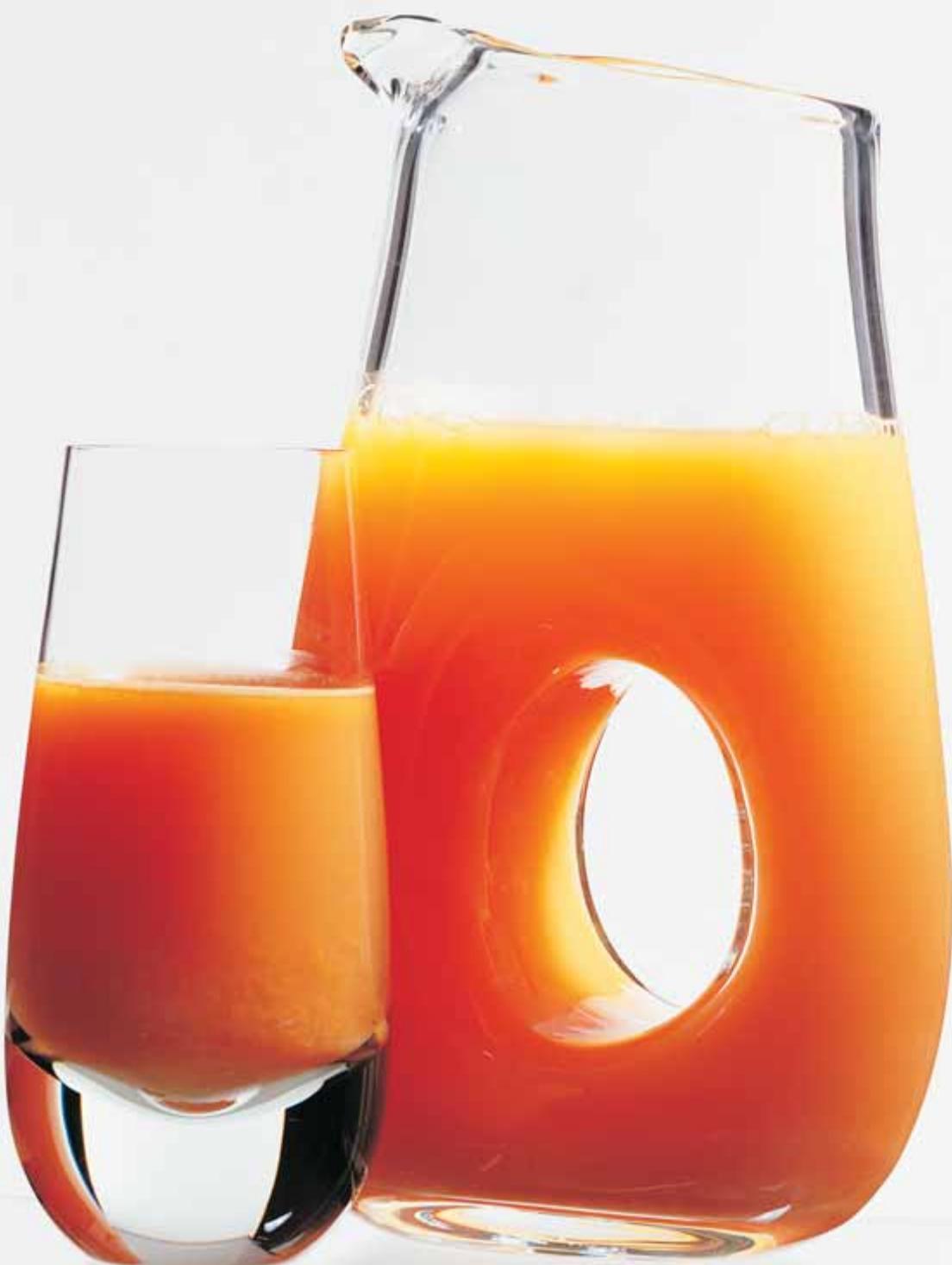
Nectarine and cherry tomato
Excellent for the circulation and the digestive system

Makes 2 glasses
2 nectarines
200 g cherry tomatoes
Preparation:5min
Wash the nectarines, remove their stones and cut into pieces. Wash the cherry tomatoes and remove their stalks. Reserve two of them as decoration. Process all the ingredients using the coulis maker attachment. You can dilute the juice with a little mineral water if you think it is too thick.
Decoration tip : cut a slit in each of your 2 cherrytomatoes and place one on the rim of each glass.
Orange, fennel and mint
Improves digestion

and

Makes 2 glasses
3 oranges
1 fennel bulb
10 mint leaves
Preparation:5min
Wash the fennel and cut into pieces. Process the fennel in the juice extractor with 6 mint leaves (washed) and set aside the juice. Next, extract the orange juice using the citrus press.
Combine the 2 juices, decorate with the remaining mint leaves and serve straightaway.
Lettuce, cucumber, radish, celery and tomato
Very good for the skin

Makes 2 glasses
6 lettuce leaves
2 tomatoes
100 g radishes
1 celery stick
1 / 2 cucumber
chives
Preparation:5min
Wash all the vegetables. Roughly peel the cucumber and remove the stalks of the tomatoes. Cut the bulky vegetables into pieces. Roll the lettuce leaves together before putting through the juice extractor, followed by the tomatoes, radishes, celery and, last of all, the cucumber. Scatter with chopped chives.
Carrot, beetroot and celery
Revitalizing and cleansing

Makes 2 glasses
4 medium-sized carrots
1 cooked beetroot
1/4 celeriac
Preparation : 5 min
Skin the beetroot, wash the carrots and celeriac. Cut all the vegetables into pieces. Put the beetroot through the juice extractor first, followed by the celeriac and lastly the carrots.

Carrot and radish
The peppery taste of the radish adds a pleasant piquancy to the carrot juice

Makes 2 glasses
5 medium-sized carrots
150 g pink radishes
1 dash olive oil
1 pinch salt
Preparation:5min
Remove the radish and carrot tops. Wash the vegetables. Cut the carrots into pieces. Process both vegetables in the juice extractor, then add the salt and olive oil. Stir well before serving.
Fennel, tomato and lemon
Relieves stomach pains

Makes 2 glasses
1 fennel bulb
1 tomato
1 lemon
few sprigs parsley
Preparation : 5 min
Wash the fennel and tomato and cut into pieces. Peel the lemon and cut into quarters. Process the tomato, fennel and parsley in the juice extractor, ending with the lemon.

Lime squash
A thirst-quenching source of vitamin C

Makes 4 glasses
6-8 limes
1 I water
240 g caster sugar
1 / 2 teaspoon salt
ice cubes and fresh mint


Juice the limes with the citrus press. Cover the juice and place in the refrigerator. Put the water, sugar and salt in a saucepan and bring to the boil. Reduce to a simmer, stirring frequently, to obtain a syrup. Remove from the heat, leave to cool and place in the refrigerator. When the syrup is cold, pour into a jug, add the lemon juice and stir well. Add a little sugar, fresh mint and ice cubes according to taste.
Sparkling green melon and lemon
To be quietly sipped in the shade of a lime tree...

Makes approx.1 I
1 large green melon
2 limes
2 tablespoons Demerara sugar
100 ml sparkling water mint leaves

- Preparation : 10 min
Cut the melon in half, discard the seeds, remove the rind and cut the flesh into pieces small enough to fit through the feed tube. Remove the skin and pith of the lemons and cut into quarters. Wash the mint leaves and reserve a few for decoration. Put the melon, mint and lemons through the juice extractor.
Divide the juice between 4 glasses filled a third full with crushed ice, add the Demerara sugar and stir
NB : Top up with sparkling water and decorate with the mint leaves.
Sunset
Low alcohol content

and

Makes 2 glasses
2 small oranges
1 / 2 lemon
450 g strawberries
100 ml muscat wine*
2 tablespoons icing sugar
#
- Preparation : 10 min
Squeeze the oranges and set aside the juice. Replace the citrus press with the coulis maker attachment. Wash and hull the strawberries, then turn them into a coulis. In a cocktail shaker, combine the citrus juice, strawberry coulis, muscat and icing sugar. Serve chilled.
- Excessive alcohol consumption can damage your health. Always drink in moderation.
Pina Colada
Tropical escapism...

Makes 2 glasses
1 / 2 pineapple
Coconut milk
White rum*
Single cream


- Preparation : 10 min
Peel the pineapple, cut into pieces and process in the juice extractor.
In a cocktail shaker, place 3 tablespoons of crushed ice, add 1 measure of coconut milk, 2 measures of pineapple juice, 1 measure of rum and 1 tablespoon of single cream. Shake vigorously and serve.
Purists can make their own coconut milk (see page 16). Empty the juice extractor basket before making the pineapple juice.
- Excessive alcohol consumption can damage your health. Always drink in moderation.
Strawberry and banana nectar
"Delicious childhood memories..."

Makes 2 glasses
10 strawberries
1 banana
1 lime
1 teaspoon runny honey
Preparation : 5 min
Peel the banana and cut into pieces. Wash and hull the strawberries. Process the banana using the coulis maker, then the strawberries. Add the lemon juice and honey. Combine. Place 2 tablespoons of crushed ice in each glass and top up with the juice. You can dilute the nectar with a little water if you find it too thick.
Fuchsia pink
Deliciously thirst-quenching...

or

Makes 4 glasses
1/4 watermelon
6 large strawberries
1 lime
200 ml cold Earl Grey tea mint leaves
Make a cup of light Earl Grey tea and leave to cool.
Peel the watermelon and cut into pieces (no need to remove the seeds). Peel the lemon, removing all the pith, and cut into quarters. Gently wipe the strawberries with damp kitchen paper and put through the juice extractor (or coulis maker for a more nectar-like consistency), followed by the watermelon and lime. Add the iced tea and stir. Divide between the glasses and decorate with mint leaves.

Bloody Mary
The original recipe of this famous cocktail


or
Makes 2 glasses
2 tomatoes
1 small orange
1 / 2 lemon
vodka*
celery salt
Tabasco
Worcester sauce
ice cubes

- Preparation : 10 min
Wash the tomatoes and cut into pieces. Peel the orange and separate the segments. Put the tomatoes through the coulis maker or the juice extractor, followed by the orange. Set aside the juice.
Combine all the ingredients in the following proportions: 3 measures tomato and orange juice, 1 measure vodka, 1 pinch celery salt, 3 drops Tabasco, 2 dashes Worcester sauce. Add a dash of lemon juice and mix in a cocktail shaker with ice cubes. Decorate with a celery stick.
1 measure = 50 ml.
- Excessive alcohol consumption may damage your health. Always drink in moderation.

Raspberry yoghurt
A delicious dessert and detoxifier

Makes 4 glasses
300 g raspberries
1 large bunch black grapes
300 g creamy yoghurt
100 ml milk
1 / 2 teaspoon white pepper
2 teaspoons honey
Prepare a raspberry coulis (keep a few raspberries for decoration). Wash the grapes and strip off their stalks, then process in the coulis maker. Set aside approx. 100ml of the grape and raspberry coulis and whisk the rest into the yoghurt, milk, pepper and honey. Divide the reserved coulis between 4 short glasses, then pour gently over the yoghurt mixture. Add a few raspberries to decorate.
Revitalizing tisane
A health-giving combination of fruit and flowers

Makes 2 glasses
300 g black grapes
2-cm piece fresh ginger
200 ml camomile tisane
Preparation : 5 min
Wash the grapes and strip off their stalks. Peel the ginger and process it in the juice extractor, followed by the grapes. Combine the grape and ginger juice with 200 ml piping-hot camomile tisane and drink immediately.
Melon lassi
Lassi is an extremely popular drink in India, where it generally accompanies hot, spicy dishes

Makes 4 glasses
1/2 melon
1 pot smooth yoghurt
200 ml water
1 teaspoon honey
1 tablespoon lemon juice
Preparation : 5 min
Cut the melon in half and discard the seeds. Remove the rind, cut into pieces and process in the juice extractor. Add the yoghurt, water, honey and lemon, then whisk together. Chill and serve straightaway.

Mild and milky
A milky fruit juice which will please young and old alike

Makes 2 glasses
2 kiwi fruit
1 Granny Smith apple
150 ml milk
1 tablespoon mint syrup
Preparation : 5 min
Peel the kiwi fruit and wash the apple. Cut the fruit into pieces, then process in the juice extractor. In a jug, whisk up the milk, fruit juice and a tablespoon of mint syrup. Drink immediately.
Pear and blueberry milkshake with wheat germ
An excellent source of energy. Wheat germ, which is extremely rich in proteins, minerals and vitamins, increases the nutritional value of any preparation to which it is added

Makes 2 large glasses
1 pear
150 g blueberries
200 ml milk
2 teaspoons honey
1 tablespoon wheat germ
1 tablespoon ground almonds
Preparation : 5 min
Wash the pear and cut into pieces. Wash the blueberries. Extract the fruit using the coulis maker. In a jug, add the other ingredients to the fruit nectar and whisk together.
Pineapple and papaya cocktail with soya milk
It not only burns up the fat... it's delicious !

Makes 4 glasses
2 papayas
6 slices pineapple
200 ml soya milk
1 cm piece of fresh ginger
2 tablespoons lime juice
Preparation : 5 min
Peel the papayas, discard the seeds, cut into large pieces and process using the coulis maker. Next, peel the pineapple, cut 6 slices into large pieces and process along with the small piece of ginger. Add two tablespoons of lime juice. Lastly, combine the soya milk with the juice. Stir thoroughly and serve immediately.
Classic tomato coulis

Makes 500 ml couls (after reduction)
1 kg tomatoes
2 tablespoons olive oil
2 teaspoons sugar
2 garlic cloves
fresh thyme or basil
salt and pepper
Preparation: 5 min Cooking: 30 min
Wash the tomatoes, cut into pieces, then process in the coulis maker and set aside. Pour the olive oil into a large frying pan, add the tomato coulis, crushed garlic cloves, thyme or basil and sugar. Season with salt and pepper according to taste.
Reduce over a low heat for approx. 30 minutes. Check the seasoning.
Delicious with fresh pasta, this coulis can reduced further and spread over a pizza base. Tip : make large quantities of this coulis when tomatoes are in season and freeze them
Hot vegetable coulis with basil and pepper

Makes 800 ml
1 carrot
1 onion
1/2 leek
3 garlic cloves
5 tomatoes
200 g chicken stock
7 basil leaves
1 tablespoon tomato
concentrate
olive oil
salt and pepper
bouquet garni
Dice the carrot, onion and half-leek; peel the garlic cloves. In a little olive oil, cook these vegetables in a frying pan with the lid on. During this time, wash and cut the tomatoes into large pieces. Then add them to the pan with a tablespoon of tomato concentrate and the bouquet garni. Simmer for approx. 10 minutes. Next, add 200 g chicken stock and the 7 basil leaves, season with salt and pepper and cook for a further 5 minutes or so. Process this preparation in the coulis maker and check the seasoning.
Serve with poultry or roast veal

Grilled pepper coulis with olive oil

Makes 300 ml
1 red pepper
2 yellow peppers
2 tablespoons olive oil
1 garlic clove
salt and pepper
Preparation: 10 min Cooking: 45 min
Preheat the oven in the grill position. Wash and wipe the peppers. Place them on a sheet of aluminium foil on the middle shelf in the oven. Turn them regularly until they are nicely grilled on all sides, i.e. approx. 45 minutes. Take the peppers out of the oven and leave them to cool slightly. Remove the stalks while the peppers are still hot (they will come away easily), cut the peppers into large sections without removing the seeds or skin (unless the skin is charred) and put through the coulis maker. Add the olive oil and crushed garlic clove, season to taste and stir.
Eat hot, to accompany a joint of meat or fresh pasta, or cold, e.g. with a salmon tartare
Homemade ketchup
100 % natural !

Makes 1 I
3 large tomatoes
1 celery stick
2 large red apples
1 small mango
1 large onion
150 ml vinegar
250 g white sugar
1 teaspoon salt
Preparation:10min Cooking:1hour
- Resting time : 1 hour
Install the coulis maker attachment. Wash the tomatoes, celery and apples, then cut into pieces. Peel the mango, remove the stone and cut the flesh into pieces. Make a coulis from the tomatoes, celery, apples and mango.
Peel and chop the onion. Pour the coulis into a saucepan, add the chopped onion and all the other ingredients. Combine and simmer for an hour, stirring regularly. Allow to cool, then pour into sterilized jars.
Persimmon chutney

Makes 400 ml
1 onion
2 large, very ripe persimmon
1 sprig thyme
1 bayleaf
1 tablespoon sherry vinegar
1 tablespoon honey
25 g roast pine nuts
Preparation: 5 min Cooking: 15 min
Wash the persimmons, then remove their tops and cut the flesh into large pieces. Prepare a persimmon coulis using the coulis maker. Soften the chopped onion in butter, then add the persimmon pulp, thyme, bayleaf, vinegar and honey. Leave to simmer for 15 minutes, adding the pine nuts at the end of the cooking time.
This chutney goes well with poultry.
Persimmon coulis is also delicious on its own, with desserts such as chocolate cake.
Mango coulis

Makes approx. 300ml
1 mango
1 tablespoon icing sugar
Preparation:5min
Peel the mango and remove the stone. Cut into pieces, then put through the coulis maker. Add a tablespoon of icing sugar and stir.
Serving suggestion : serve with coconut cake, exotic fruit sorbet, chocolate tart, etc.
Strawberry and sweet wine sauce

Makes 500 ml
200 g strawberries
1 lemon
4 tablespoons honey
90 g sugar
500 ml Côtes-du-Rhône wine*

Wash the lemon and carefully remove the zest. Bring the wine to boiling point with the lemon zest and sugar. Reduce to half its volume over a high heat, then leave to cool for about an hour. Wash and hull the strawberries, then process them using the coulis maker. Combine the strawberry coulis with the honey and the wine reduction.
This sauce is delicious poured over a fruit salad. For even more flavour, allow the fruit salad ingredients to macerate in the sauce for about an hour in a cool place before serving
- Excessive alcohol consumption may damage your health. Always drink in moderation.
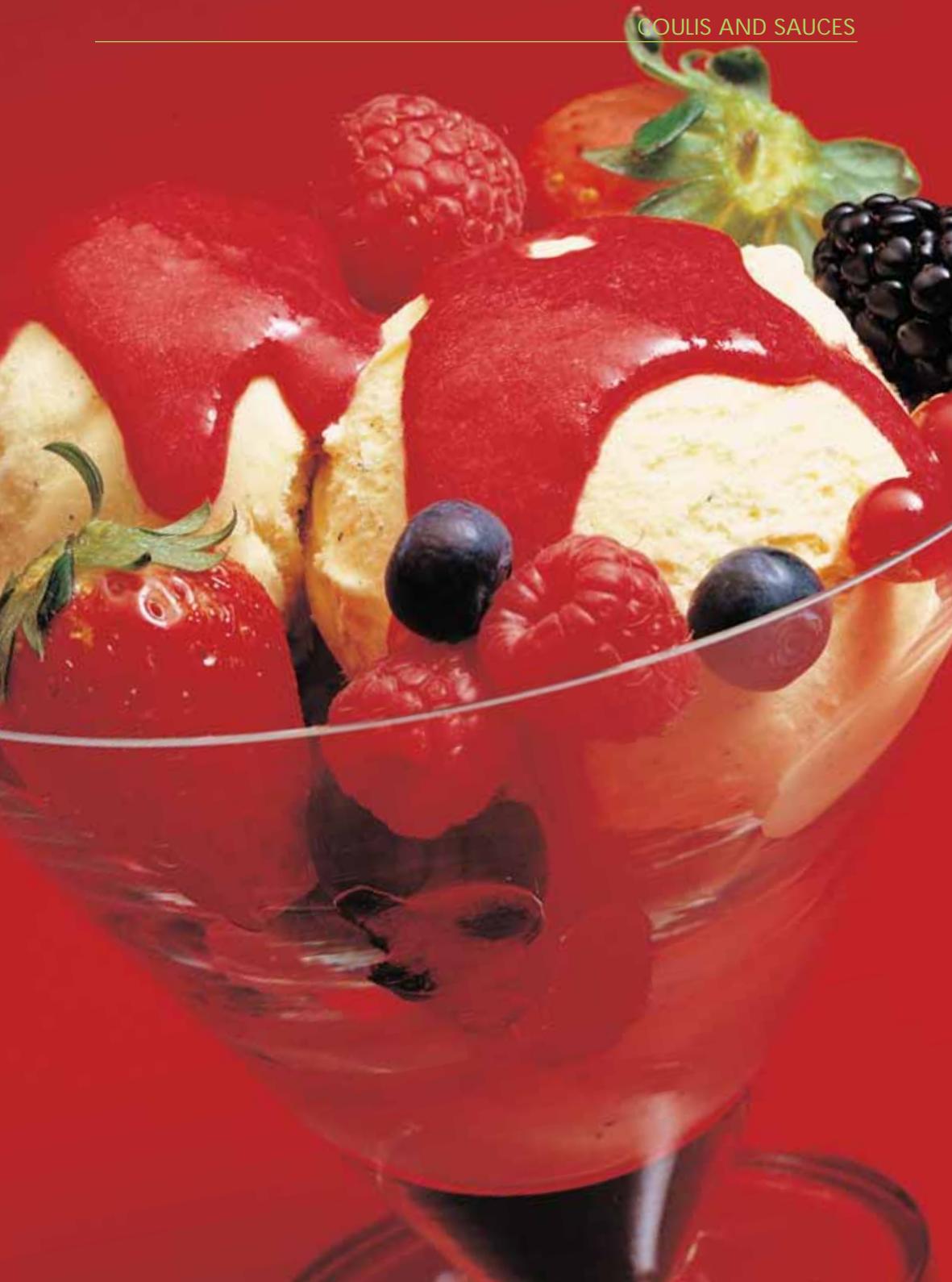
Raspberry coulis with blackcurrant liqueur

Makes approx. 300ml
250 g raspberries
1 / 2 lemon
3 tablespoons blackcurrant liqueur*
3 tablespoons icing sugar

- Preparation : 5 min
Gently wash the raspberries before processing in the coulis maker. Add the icing sugar, blackcurrant liqueur and a dash of lemon juice. Stir well.
Pour over ice cream or sorbet
- Excessive alcohol consumption may damage your health. Always drink in moderation.
Gazpacho


or
Serves 4\*
600 g ripe tomatoes
1 / 4 cucumber
1/4 red pepper
12 garlic clove
2 tablespoon olive oil salt and pepper
Preparation : 10 min • Resting time : 3 hours
Wash the vegetables. Roughly peel the cucumber and remove the pepper and tomato stalks. Cut the vegetables into small enough pieces to fit through the feed tube. Peel the garlic. Process all the vegetables in the coulis maker to obtain a smooth texture (for a thinner consistency, use the juice extractor). Season with salt and pepper and olive oil. Chill for at least 3 hours.
For a more sophisticated starter, add tiny vegetable dice when serving.
- less when using the juice extractor (2-3 servings)
Greek-style cucumber soup


or
Makes 400 ml
1 / 2 cucumber
2 pots Greek yoghurt
chives
mint
salt and pepper
1 dash lemon juice
Wash and roughly peel the cucumber. Cut into pieces and process in the juice extractor or the coulis maker. Whisk the resulting cucumber juice with the yoghurts and add chopped mint and chives according to taste. Season with salt, pepper and a dash of lemon juice.
Suggestion : as an apéritif, serve this soup chilled in tiny glasses decorated with a small bundle of chives.

Chilled red pepper soup


or
Serves 4
5 red peppers
50 g balsamic vinegar
2 garlic cloves
basil
salt and pepper
Preparation : 5 min • Resting time : 3 hours
Wash the peppers and cut into large pieces. Process them in the coulis maker or juice extractor, then add the vinegar. Season and chill for at least 3 hours in the refrigerator.
Blend 2 garlic cloves with 5 basil leaves and set aside.
When ready to serve, pour the soup into soup dishes, shape the garlic paste into tiny garlic quenelles, arrange these on top and decorate with basil and chives.
Mango and pineapple bisque

Serves 6
2 mangoes
1 pineapple
750 ml milk
100 ml single cream
40 g sugar
2 tablespoons dark rum
Ground cinnamon

- Preparation : 10 min • Cooking : 5 min
- Resting time : 3 hours
Make a rum*-based syrup in a small saucepan, bringing the sugar, rum and 2 tablespoons of water to the boil. Reduce over a high heat for a few minutes, then leave to cool.
Peel the mangoes and pineapple. Discard the mango stone and cut the flesh into large pieces before processing in the coulis maker.
Add the rum syrup, milk, single cream and a pinch of cinnamon to the mango and pineapple juice. Stir well, cover and chill for at least 3 hours.
A dessert with a Caribbean flavour
- Excessive alcohol consumption may damage your health. Always drink in moderation.
Summer fruit gazpacho

Serves 4
800 g strawberries
200 g raspberries
200 g redcurrants
3 peaches
1 / 2 lemon
50 g icing sugar
1 tablespoon olive oil pepper

- Preparation : 10 min
- Resting time : 1 hour
Wash the fruit. Hull the strawberries and strip the redcurrants from their stalks. Stone one of the peaches and cut into pieces. Using the coulis maker, process half the raspberries and redcurrants, 600 g strawberries and one peach. Add the juice of the half-lemon, the icing sugar, olive oil and a pinch of pepper. Stir well and chill for an hour.
Cut the remaining strawberries in quarters. Peel the peaches and cut into thin slices.
To serve, pour the gazpacho into soup plates or shallow bowls and arrange the fruit on top.
Suggestion : for pudding lovers, serve the gazpacho with a scoop of vanilla ice cream and fingers of toasted gingerbread.
Coupe royale with red fruit

Serves 6-8
800 g strawberries
200 g raspberries
500 ml champagne*
4 tablespoons blackcurrant
liqueur*
50 g icing sugar
1/2 lemon
fresh mint
Preparation : 10 min • Resting time : 1 hour
Gently wash the raspberries. Wash and hull the strawberries and reserve 200 g. Use the remaining red fruit to make a sauce with the coulis maker. Add the sugar and the juice of the half-lemon, stir well and chill for one hour.
Slice the remaining strawberries and divide them between 4 dishes, then pour a tablespoon of blackcurrant liqueur over each one.
When you are about to serve, uncork the bottle of champagne, add 500 ml to the sauce and stir. Divide between the dishes, add a few mint leaves and eat immediately.
- Excessive alcohol consumption may damage your health. Always drink in moderation.
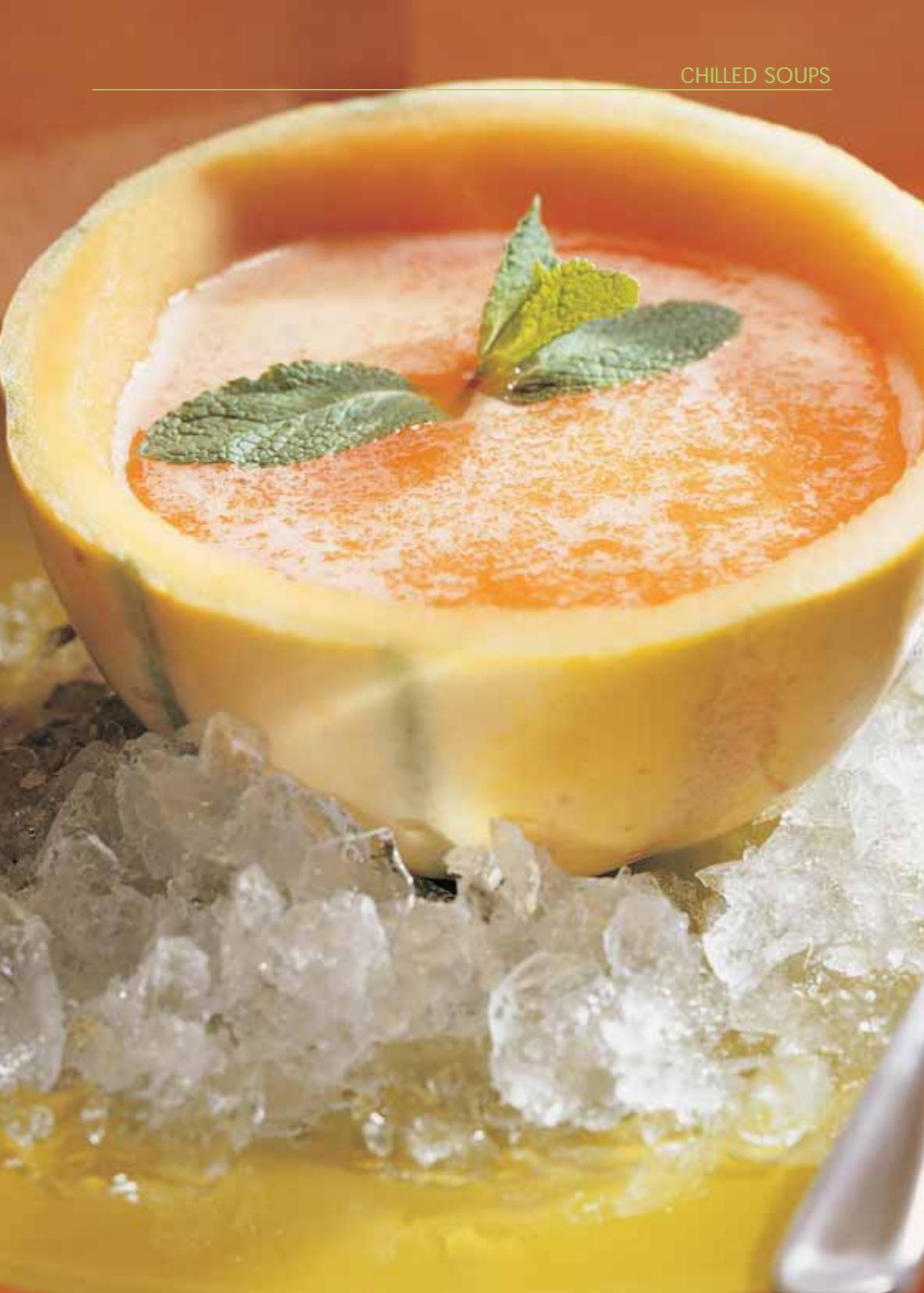
Chilled melon soup

Serves 6
2 Charentais melons
1 / 2 lemon
4 tablespoons muscat wine*
lemon verbena leaves
pepper
Preparation : 10 min • Resting time : 2 hours
Halve the melons and remove the seeds. Scoop out the flesh with a spoon in order to leave the skins intact ready to serve as soup bowls.
Process the melon pulp in the juice extractor, add the juice of the half-lemon and the muscat and stir well. Leave the lemon verbena leaves to infuse in the melon juice for two hours in a cool place.
When serving, pour the chilled soup into the four melon halves and place these on a bed of crushed ice. Grind a little pepper over the soup and decorate with lemon verbena leaves.
You can replace the lemon verbena with mint.
- Excessive alcohol consumption may damage your health. Always drink in moderation.

White chocolate and passion fruit mousse

Serves 6
200 g white chocolate
5 passion fruit
4 eggs
125 g whipped cream
75 g sugar
mint leaves
Preparation:15min Cooking:5min
- Resting time : 4 hours
Cut 4 passion fruit in half and scoop out the pulp with a teaspoon before processing in the coulis maker. Melt the white chocolate in a bain-marie. Off the heat, add 60g passion fruit pulp and 4 egg yolks. Stir well. Add the whipped cream. Whisk the egg whites until firm and add 75g sugar. Gently fold the sweetened beaten egg white into the preparation. Immediately spoon the mousse into small dishes and chill for at least 4 hours.
When serving, divide the remaining fruit pulp between the mousse and decorate with mint leaves.
Decoration tip :sandwich the passion fruit pulp (with the pips) between 2 layers of the white chocolate mousse.
Mini grapefruit flans

Serves 4
2 grapefruits (for 300 ml juice)
125 g caster sugar
3 large eggs
4 teaspoons Demerara sugar
1 level tablespoon cornflour
Preparation: 10 min Resting time: 1 hour Cooking: 10 min + 30 min
Squeeze the grapefruits and pour 300 ml juice into a saucepan with the sugar. Simmer for 10 minutes over a low heat, stir, then leave to cool slightly.
In a bowl, whisk the eggs with the cornflour. Add the lukewarm grapefruit juice, stirring constantly, then pour into 4 ramekins.
Gently steam the small flans for 30 minutes in a pressure cooker or bain marie. Allow to cool.
Sprinkle the flans with Demerara sugar and chill in the refrigerator for at least an hour. Serve chilled.
Quick strawberry mousse

Serves 6
300 g strawberries
400 g low-fat fromage
frais
3 egg whites
125 g caster sugar
Preparation:15min
Gently wipe the strawberries with damp kitchen paper, hull them and put them through the coulis maker In a bowl, whisk the coulis with the sugar and fromage frais.
Whisk the egg whites until stiff, then gently fold into the preparation.
Divide the mousse into small dishes and serve immediately.
You can replace the strawberries with raspberries or blackcurrants.
Grilled pineapple with exotic sauce

Serves 6
1 pineapple
1 small mango
2 kiwi fruit
6 strips candied orange peel
4 tablespoons Demerara
sugar
1 teaspoon ground
cinnamon
20 g butter
desiccated coconut
mint leaves
Preparation:15min Cooking:5min
Preheat the oven in the grill position. Remove the pineapple skin and cut the flesh into 2-cm slices. Cut the candied orange peel into thin slices.
Line a dripping pan with buttered baking paper and arrange the pineapple slices on top. Coat them in melted butter and scatter with the orange slivers. Sprinkle with Demerara sugar and cinnamon and grill for approx. 5 minutes or until the sugar starts to caramelise.
Peel the kiwi fruit. Peel the mango, remove the stone and cut the flesh into pieces. Process the fruit using the coulis maker and add the juices from the cooked pineapple.
Arrange the grilled pineapple slices on the plates and add the sauce. Sprinkle with desiccated coconut and decorate with mint leaves.
You can replace the candied orange peel with candied lemon peel.
Earl Grey tangerine creams

Serves 4
10 tangerines
130 g sugar
1 sachet vanilla-flavoured sugar
40 g cornflour
2 egg yolks
100 ml Earl Grey tea

- Preparation : 15 min • Cooking : 10 min
- Resting time : 4 hours
Brew a cup of Earl Grey tea and leave to cool.
Peel 4 tangerines, removing all the skin and pith, detach the segments from their membranes and remove the pips. Place them in a shallow dish, sprinkle with 20g sugar and pour over 100ml tea. Allow to infuse.
Meanwhile, extract the juice of the remaining tangerines using the citrus press. In a saucepan, combine the tangerine juice, 200ml water, the rest of the sugar, and the vanilla-flavoured sugar and bring to the boil.
Dilute the cornflour in 50ml cold water, then add it to the boiling syrup. Boil for a further minute, stirring constantly. Away from the heat, whisk in the egg yolks, then gently fold in the maceration juice, followed by the tangerine quarters. Pour into small dishes, allow to cool, then chill for 4 hours.
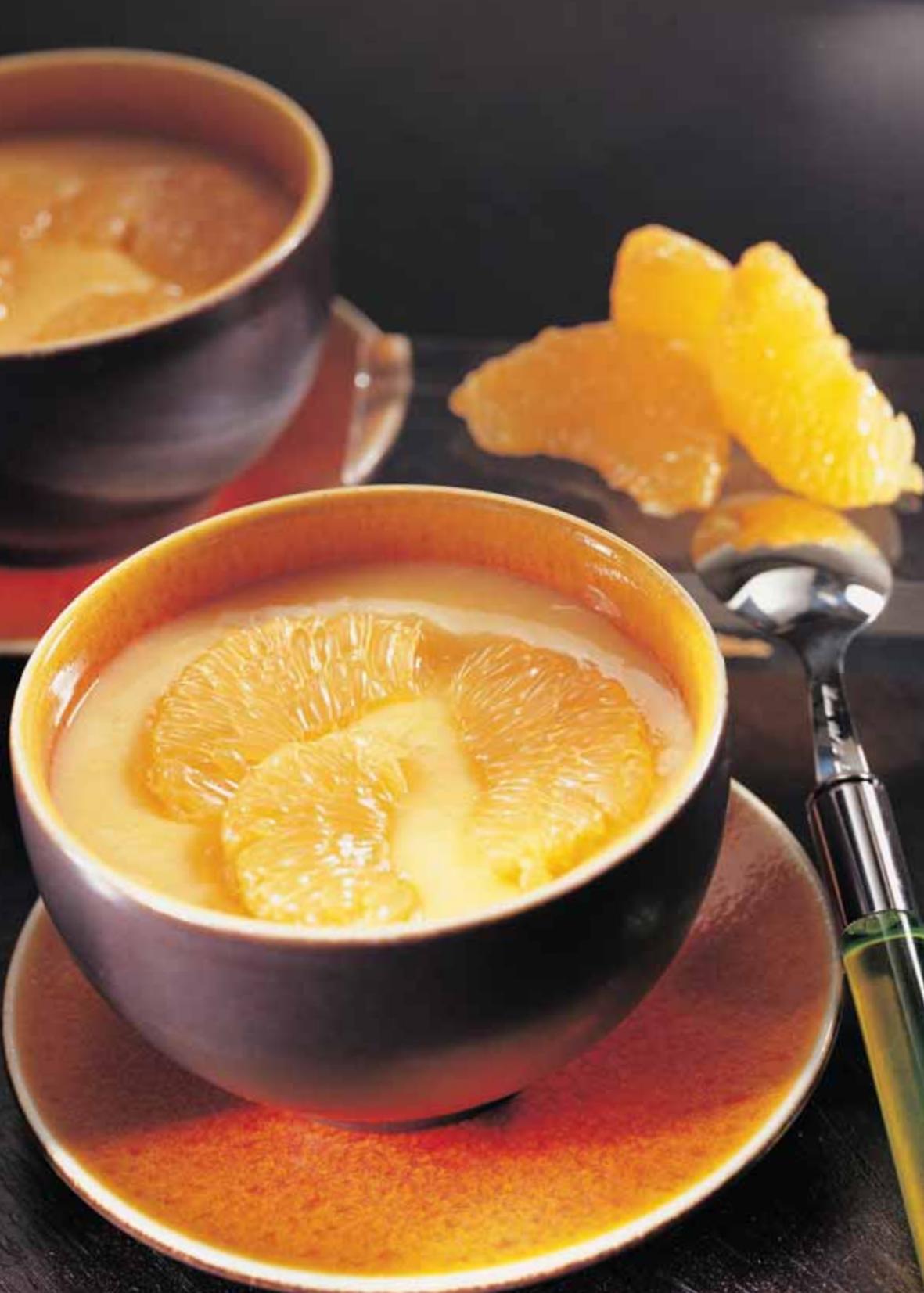
Apple and raspberry soufflés

Serves 4
200 g raspberries
1 apple
2 egg whites
80 g sugar
20 g butter
icing sugar
Preparation: 15 min · Cooking: 10 min
Preheat the oven to thermostat 7, leaving a baking tray inside on the middle shelf.
Pick over the raspberries. Wash the apple and cut into pieces. Put the raspberries through the coulismaker, followed by the apple. Add 2 tablespoons of sugar and set aside.
Generously butter 4 individual souffle dishes and sprinkle with caster sugar. Place a tablespoon of coulis in each one and set aside.
Whisk the egg whites until firm, then gradually add the sugar. Gently fold this meringue mixture into the remaining coulis. Fill the soufflé dishes 12 full. Slide a knife blade between the soufflé preparation and the inside of the dishes to allow the soufflé to rise well.
Place the dishes on the hot baking tray and bake for about 10 minutes or until the soufflés have risen well. Sprinkle with icing sugar and serve straightaway.

Tomato sorbet

Makes approx. 1 I
700 g ripe tomatoes
1 tablespoon tomato concentrate
1 / 2 egg white
1 lime
1 pinch salt
1 pinch white pepper
20 g sugar
10 basil leaves
Preparation: 5 ~min + 25 ~min
- Cooking : 5 min
Heat the sugar in a saucepan with 200 ml water. Turn the heat off as soon as it starts to boil and allow to cool.
Wash the tomatoes, cut into pieces and process in the coulis maker to obtain 400 ml juice.
Whisk the half-egg white in a large bowl. Fold in the tomato coulis, tomato concentrate, lime juice, chopped basil, salt, pepper and syrup. Stir. Pour the mixture into the sorbet maker and freeze for approx. 25 minutes.
For an unusual starter, place a scoop of sorbet on a lettuce leaf and serve with tiger prawns or red mullet fried in olive oil and allowed to cool.
Melon sorbet with kiwi coulis

or

Serves 6
1 large melon
50 ml muscat wine*
30 g sugar
1 lime
4 kiwi fruit
- Excessive alcohol consumption may damage your health. Always drink in moderation.

Heat the sugar in a saucepan with 300ml water. As soon as it comes to the boil, remove from the heat and allow to cool.
Cut the melon in half, remove the seeds and skin. Cut the flesh into pieces small enough to fit through the feed tube and process in the juice extractor. Add the lime juice, muscat and syrup. Next, pour the mixture into a sorbet maker and freeze for approx. 25 minutes.
Meanwhile, peel the kiwi fruit, cut into pieces and put through the juice extractor or coulis maker. To serve, pour the kiwi coulis into the dishes and place 2 scoops of melon ice cream on top.
You can decorate this dessert with red fruit and mint leaves.
Lychee sorbet

or

Serves 4
500 g lychees (peeled and stoned)
150 g sugar

Peel the lychees and remove their stones. In a saucepan, boil 350~ml water with the sugar to obtain a syrup, then add the lychees. Lower the heat and simmer for 5 min. Remove from the heat and allow to cool. Process the lychees and syrup in the coulis maker or the juice extractor. When completely cold, pour the mixture into the sorbet maker and freeze for approx. 25 minutes.
If you are in a hurry, use tinned lychees in syrup.
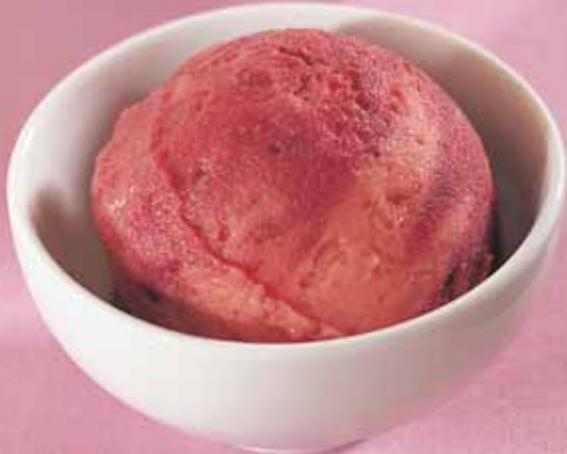
Blueberry sorbet

For approx. 1 I
600 g blueberries
50 g caster sugar
Preparation: 10min + 25min
- Cooking : 5 min
In a saucepan, boil 300 ml water with the sugar to obtain a syrup, then remove from the heat. Wash the blueberries and add them to the syrup while it is still hot. Process this mixture in the coulis maker and allow to cool. When cold, pour this coulis into a sorbet maker and freeze for approx. 25 minutes.
Mint and lime granité

Serves 6
10 limes
300 g sugar
6 sprigs mint
Carefully remove the zest of 2 limes and immerse in the boiling water for 5 minutes. Drain and set aside.
Squeeze the limes using the citrus press to obtain 250 ml juice.
Boil 500~ml water in a saucepan with the sugar to obtain a syrup. After removing the topmost leaves for decoration, add the mint stalks and simmer for 2 minutes. Turn the heat off and allow to cool.
Remove the mint stalks and add the lime juice and zest to the syrup.
Pour into a dish and leave in the freezer to set. Break up the mixture every 30 minutes with a fork until you obtain large ice crystals. Divide the granite between the glasses, decorate with the mint sprigs and serve straightaway.

Iced pear terrine

or

Serves 4
500 g ripe pears
1 vanilla pod
1 / 2 lemon
100 g sugar
1 tablespoon pear
eau-de-vie*

In a saucepan, dissolve the sugar in 300 ml water and add the vanilla pod, split lengthways. Bring to the boil.
Wash the pears, discard the pips and cut into pieces. Add the juice of the half-lemon to the boiling syrup, followed by the pear. Lower the heat and simmer for 5 min.
Turn off the heat, remove the vanilla pod and leave to cool. Process the pears and syrup in the juice extractor or the coulis maker (with this function, you will retain more of the fruit's texture), then add a tablespoon of pear eau-de-vie. When it is completely cold, pour the mixture into the sorbet maker and freeze for approx. 25 minutes.
Transfer to a terrine and keep in the freezer.
Serve with chocolate sauce or a red fruit coulis (p. 52).
- Excessive alcohol consumption can damage your health. Always drink in moderation.

Strawberry jam

Makes 6-8 jars
1.5 kg strawberries
1.6 kg sugar
40 g commercial pectin
1 knob butter
Preparation:10min Cooking:10min
Wash and hull the strawberries. Process in the coulis maker and weigh out 1.4kg . Pour the coulis into a saucepan and heat.
In a bowl, mix the pectin with 2 tablespoons of sugar. Sprinkle this onto the coulis and stir in gently with a wooden spoon. Bring to the boil and keep it on the boil for 3 minutes, stirring constantly. Add the butter and sugar, bring back to the boil for a further 3 minutes, still stirring all the time. As soon as these 3 minutes are up, fill your jam jars (sterilized beforehand) right up to the top. Seal the jars immediately and tilt them in different directions for 5 minutes (if they have airtight lids) to eliminate any air bubbles, then leave to cool.
Remark : commercial pectin (extracted from apples) is freely available. You will find it next to the sugar at your local grocer's.
Redcurrant jelly

Makes 4 jars
1.5 kg redcurrants
800 g sugar
20 g commercial pectin
Preparation:15min Cooking:10min
Wash the redcurrants and strip them off their stalks. Process them in the coulis maker and weigh the juice. In a bowl, mix the pectin with 2 tablespoons of sugar. Place the juice in a preserving kettle and sprinkle the pectin on top, gently stirring it in with a wooden spoon. Bring the mixture to the boil and keep it on the boil for 2 minutes, stirring constantly. Add the same weight in sugar, return to the boil and cook over a high heat for 2 minutes, stirring constantly.
Skim to remove any foam and pour the jelly straight into the jars.
Tip: add a drop of lemon juice at the end of cooking to preserve the colour of the red fruit.
Citrus-flavoured apple and cinnamon jelly

and

Makes 3-4 jars
1.5 kg Granny Smith apples
1 kg sugar
40 g commercial pectin
1 lemon
1 orange
1 teaspoon ground cinnamon
Wash the apples and cut into pieces (leave the skin and the pips). Process half the apples in the juice extractor, empty the basket, then process the remaining ones. Squeeze the orange and lemon in the citrus press and add their juice to that of the apples. Weigh the juice.
In a bowl, mix the pectin with two tablespoons of sugar. Place the juice in a preserving kettle and sprinkle with the pectin, stirring gently with a wooden spoon. Bring to the boil and keep on the boil for 3 minutes, stirring constantly.
Add the same weight in sugar, together with a teaspoon of ground cinnamon. Return to the boil and cook over a high heat for 3 minutes, stirring constantly. Pour straight into the jars.
If the jelly is ready, a drop poured onto a very cold plate should set straightaway.

Mango and raspberry fruit jellies

Makes approx. 60 fruit jellies
2 mangoes
350 g raspberries
20 + 20g commercial pectin
1 + 1 small knobs of butter
275 + 275 g caster sugar

Peel the mangoes, stone them and cut into pieces, then put through the coulis maker. Weigh out 300 g mango pulp.
Clean the juice extractor basket, pick over the raspberries and process them in the coulis maker. Weigh out 300 g raspberry couis.
Pour the mango pulp into a thick-bottomed saucepan with 3 tablespoons of water.
In a bowl, mix 20 g pectin with 3 tablespoons of sugar. Sprinkle this onto the coulis, stirring gently with a wooden spatula.
Add 125 g sugar and a small knob of butter, heat and continue to stir until it starts to boil. Add a further 125 g sugar and heat the mixture until it reaches a temperature of 110^ .
Immediately spread a 12 cm cm layer of mango jelly over the base of a flat-bottomed tin and leave to crystallize.
Meanwhile, without wasting any time, make the raspberry jelly in exactly the same way as the mango jelly, with 300 g raspberry pulp.
Immediately pour the raspberry jelly over the crystallized mango jelly. Leave to set in a cool place for 24 hours.
Remove from the tin, sprinkle each side with sugar, then cut into squares (3 × 3 ~cm) . Separate the jellies and store in an airtight tin.
Commercial pectin (extracted from apples), is freely available and you will find it next to the sugar at your local grocer's.
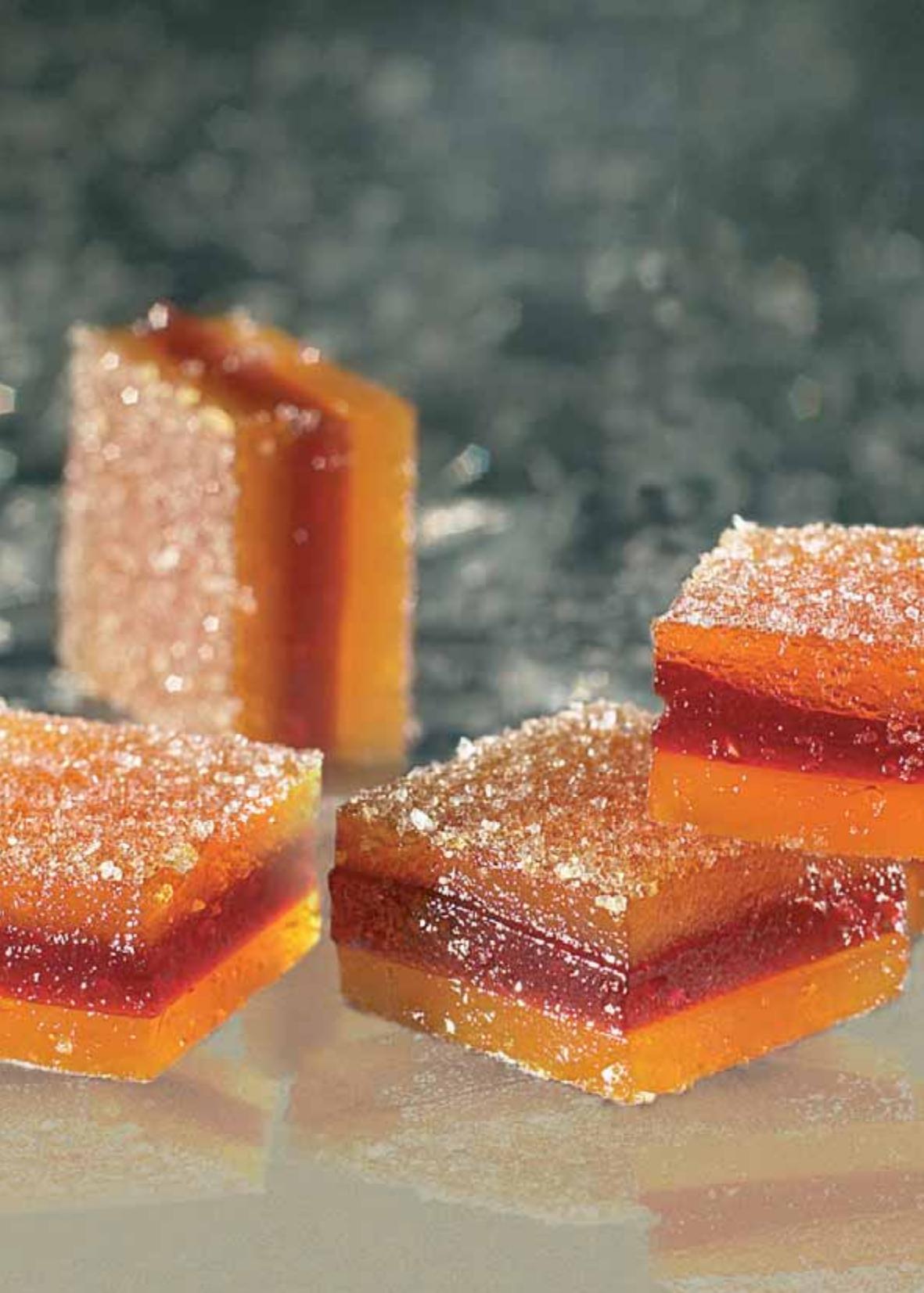
Plum fruit jellies

Makes approx. 60 fruit jellies
600 g plums
1 / 2 lemon
700 g sugar
25 g commercial pectin
Preparation : 15 min
- Cooking : approx. 45 min
- Drying : 24 hours
Wash the plums and poach in simmering water. Drain and remove the stones. Process the plums in the coulis maker, then add a dash of lemon juice. In a bowl, mix the pectin with 75g sugar. Sprinkle this onto the coulis, stirring gently with a wooden spoon.
Pour the resulting coulis into a high-sided saucepan and add 300 g sugar. Bring to the boil, stirring constantly, add 300 g sugar and heat until it reaches a temperature of 110^ .
Immediately pour a layer approx. 1 cm thick over the base of a flat-bottomed tin. Allow to set for 24 hours, then cut into 3-cm squares, roll in granulated sugar, remove the excess sugar and store in an airtight tin.
Commercial pectin (extracted from apples) is freely available, often sold in sachets. You will find it next to the sugar at your local grocer's. Use a jam-making thermometer to check the cooking temperature.
1 kg ripe blackcurrants
1 bottle red wine*
800 g caster sugar

Wash the blackcurrants and strip them from their stalks. Place the fruit in a large bowl, crush with a pestle and add the red wine. Cover and leave to macerate for 48 hours in a cool place.
Process the wine and fruit in the coulis maker. Weigh the juice, pour into a pan, add the same weight in sugar and heat until it reaches boiling point. Leave the liqueur to cool before bottling.
Allow to settle for at least a week in a cool place away from the light.
Important : always use ripe fruit. If not, the liqueur will be too thick, as the level of pectin (natural gelling agent contained in the fruit) is at its highest when the fruit is slightly underripe.
This recipe can be used with other fruits, such as raspberries and blackberries.
Drink as an aperitif with white wine – the famous Kir (1 tablespoon blackcurrant liqueur and 40 ml dry white wine)... or enjoy as a dessert, poured over a sorbet.
- Excessive alcohol consumption can damage your health. Always drink in moderation.
Fruit and vegetable juices
Apple and strawberry p. 26
Apple, carrot and orange p. 32
Apricot and carrot p. 32
Beetroot, apple and fennel p. 30
Carrot and radish p. 36
Carrot,beetroot and celery p.35
Carrot, orange and cherry p. 30
Fennel, tomato and lemon p. 36
Grape, carrot and lemon p. 28
Guava, apple and raspberry p. 28
Lettuce, cucumber, radish, celery and tomato p. 35
Nectarine and cherry tomato p. 34
Orange and tangerine p. 26
Orange, fennel and mint p. 34
Passion fruit, banana, orange and lemon p. 27
Pineapple and broccoli p. 32
Pineapple, mango and kiwi fruit p. 27
Red fruit p. 26
Strawberry, raspberry and melon p. 28
Tomato, pear and lemon p. 30
Cocktails and aperitifs
Bloody Mary p. 42
Fuchsia pink p.40
Lime squash p. 38
Pina Colada p. 39
Sparkling green melon and lemon p. 38
Strawberry and banana nectar p. 40
Sunset p. 39
High-energy drinks
Melon lassi p. 44
Mild and milky p. 46
Pear and blueberry milkshake with wheat germ p. 46
Pineapple and papaya cocktail with soya milk p. 46
Raspberry yoghurt p. 44
Revitalising tisane p. 44
Couls and sauces
Classic tomato coulis p.48
Grilled pepper coulis with olive oil p. 50
Homemade ketchup p. 50
Hot vegetable coulis with basil and pepper p.48
Mango coulis p. 51
Persimmon chutney p. 51
Raspberry coulis with blackcurrant liqueur p. 52
Strawberry and sweet wine sauce p. 52
Chilled soups
Chilled melon soup p. 58
Chilled red pepper soup p. 56
Coupe royale with red fruit p.58
Gazpacho p. 54
Greek-style cucumber soup p. 54
Mango and pineapple bisque p. 57
Summer fruit gazpacho p. 57
Just desserts
Apple and raspberry souffles p.64
Earl Grey tangerine creams p.62
Grilled pineapple with exotic sauce p.61
Mini grapefruit flans p.60
Quick strawberry mousseps p.61
White chocolate and passion fruit mousseps p.60
Sorbets
Blueberry sorbet p.68
iced pear terrine p. 70
Lychee sorbet p.67
Melon sorbet with kiwi coulis p.67
Mint and lime granité p.68
Tomato sorbet p.66
Jams and fruit jellies
Blackcurrant liqueur p. 77
Citrus-flavoured apple and cinnamon jelly p. 73
Mango and raspberry fruit jellies p. 74
Plum fruit jellies p. 76
Redcurrant jelly p. 72
Strawberry jam p. 72
Acknowledgements
We would like to thank Yves Thuries, voted "Best Craftsman in France", from the "Grand Ecuyer" restaurant in Cordes sur Ciel, for his advice and the recipes on
pages 48 (bottom), 56, 60 (top), 74 & 76.
We are also grateful to LSA International for the loan of its tableware (cover photos, pages 25, 29, 31, 33, 37, 41, 47, 49 & 65).

This symbol indicates that this product should not be treated as regular household waste. It should be taken to a collection point for the recycling of electrical and electronic equipment. For more details about collection points, please contact your local council or your household waste disposal service.
- Instructions for use. Recipe book
- When using electrical appliances, basic safety precautions should always be followed. These include the following :
- SAVE THESE INSTRUCTIONS
- Instructions for use
- Fruit and vegetables
- Recipes
- WARNING
- Citrus press
- Juice extractor
- Coulis maker
- ELECTRICAL REQUIREMENTS
- CAUTION
- Introduction
- Apple
- Apricot, Peach, Nectarine
- Asparagus
- Banana
- Beetroot
- Blueberry
- Broccoli
- Carrot
- Celery
- Cherry
- Citrus fruit
- Coconut
- Cucumber
- Fennel
- Ginger
- Grape
- Guava
- Kiwi
- Lettuce
- Lychees
- Mango, Papaya
- Melon, watermelon
- Benefits :
- Parsley
- Passion (fruit)
- Pear
- Persimmon
- Pineapple
- Plum
- Radish
- Raspberry
- Red and blackcurrants
- Soya (bean sprouts)
- Strawberry
- Sweet pepper
- Tomato
- Vitamins
- Mineral salts
- HOW TO READ THE RECIPES
- Apple and strawberry
- Makes 2 glasses
- - Preparation : 5 min
- Orange and tangerine
- Red fruit
- Pineapple, mango and kiwi fruit
- Passion fruit, banana, orange and lemon
- Strawberry, raspberry and melon
- Guava, apple and raspberry
- Makes 1 glass
- Grape, carrot and lemon
- Beetroot, apple and fennel
- Carrot, orange and cherry
- Tomato, pear and lemon
- Apricot and carrot
- Apple, carrot and orange
- Pineapple and broccoli
- Nectarine and cherry tomato
- Preparation:5min
- Orange, fennel and mint
- Lettuce, cucumber, radish, celery and tomato
- Carrot, beetroot and celery
- Preparation : 5 min
- Carrot and radish
- Fennel, tomato and lemon
- Lime squash
- Makes 4 glasses
- Sparkling green melon and lemon
- Makes approx.1 I
- - Preparation : 10 min
- Sunset
- #
- Pina Colada
- Strawberry and banana nectar
- Fuchsia pink
- Bloody Mary
- Raspberry yoghurt
- Revitalizing tisane
- Melon lassi
- Mild and milky
- Pear and blueberry milkshake with wheat germ
- Makes 2 large glasses
- Pineapple and papaya cocktail with soya milk
- Classic tomato coulis
- Makes 500 ml couls (after reduction)
- Preparation: 5 min Cooking: 30 min
- Hot vegetable coulis with basil and pepper
- Makes 800 ml
- Grilled pepper coulis with olive oil
- Makes 300 ml
- Homemade ketchup
- Makes 1 I
- Persimmon chutney
- Makes 400 ml
- Preparation: 5 min Cooking: 15 min
- Mango coulis
- Makes approx. 300ml
- Strawberry and sweet wine sauce
- Makes 500 ml
- Raspberry coulis with blackcurrant liqueur
- Gazpacho
- Serves 4\*
- Greek-style cucumber soup
- Chilled red pepper soup
- Serves 4
- Preparation : 5 min • Resting time : 3 hours
- Mango and pineapple bisque
- Serves 6
- Summer fruit gazpacho
- Coupe royale with red fruit
- Serves 6-8
- Preparation : 10 min • Resting time : 1 hour
- Chilled melon soup
- Preparation : 10 min • Resting time : 2 hours
- White chocolate and passion fruit mousse
- Mini grapefruit flans
- Quick strawberry mousse
- Grilled pineapple with exotic sauce
- Earl Grey tangerine creams
- Apple and raspberry soufflés
- Tomato sorbet
- Makes approx. 1 I
- Melon sorbet with kiwi coulis
- Lychee sorbet
- Blueberry sorbet
- Mint and lime granité
- Iced pear terrine
- Strawberry jam
- Makes 6-8 jars
- Preparation:10min Cooking:10min
- Redcurrant jelly
- Makes 4 jars
- Preparation:15min Cooking:10min
- Citrus-flavoured apple and cinnamon jelly
- Makes 3-4 jars
- Mango and raspberry fruit jellies
- Makes approx. 60 fruit jellies
- Plum fruit jellies
- Fruit and vegetable juices
- Cocktails and aperitifs
- High-energy drinks
- Couls and sauces
- Chilled soups
- Just desserts
- Sorbets
- Jams and fruit jellies
- Acknowledgements
Brand : MAGIMIX
Model : LE DUO PLUS
Category : Food processor