
Dolores - Scale KORONA - Free user manual and instructions
Find the device manual for free Dolores KORONA in PDF.


| Product type | Electronic kitchen scale |
| Brand | Korona |
| Model | Dolores |
| Maximum capacity | 5 kg |
| Accuracy | 1 g |
| Measurement units | g, kg, lb, oz, ml (water/milk) |
| Platform | Stainless steel, removable |
| Display | LCD, backlit |
| Functions | Tare, auto-on, auto-off, low battery indicator |
| Power supply | 2 AAA batteries (not included) |
| Dimensions | 20 x 15 x 2 cm |
| Weight | 350 g |
| Material | ABS plastic, stainless steel tray |
| Care and cleaning | Clean the platform with a damp cloth; do not immerse in water |
| Safety | Do not use with damaged batteries; do not expose to excessive humidity |
| Spare parts | Replacement platform available; standard AAA batteries |
| Repairability | Repairability index not disclosed; contact Korona customer service |
| Warranty | 2 years |
| Country of manufacture | China |
Frequently Asked Questions - Dolores KORONA
User questions about Dolores KORONA
0 question about this device. Answer the ones you know or ask your own.
Ask a new question about this device
Download the instructions for your Scale in PDF format for free! Find your manual Dolores - KORONA and take your electronic device back in hand. On this page are published all the documents necessary for the use of your device. Dolores by KORONA.
USER MANUAL Dolores KORONA
GB DIAGNOSTIC SCALE Instruction for Use
| Alter Sehr gut Gut Mittel schlecht | |||||||
| <19 <1 | 7% | 17–22% | 22,1–27% | >27,1% | |||
| 20–29 | <18% | 18– | 23% | 23,1–28% | >28 | 1% | |
| 30–39 | <19% | 19– | 24% | 24,1–29% | >29 | 1% | |
| 40–49 | <20% | 20– | 25% | 25,1–30% | >30 | 1% | |
| >50 <2 | 1% | 21–26% | 26,1–31% | >31,1% | |||
| Alter | Sehr gut | Gut Mittel | schlecht | |
| <19 | <12% | 12–17% | 17,1–22% | >22,1% |
| 20–29 | <13% | 13–18% | 18,1–23% | >23,1% |
| 30–39 | <14% | 14–19% | 19,1–24% | >24,1% |
| 40–49 | <15% | 15–20% | 20,1–25% | >25,1% |
| >50 | <16% | 16–21% | 21,1–26% | >26,1% |
basierend auf: „Principles + Labs for Physical Fitness and Wellness. 1st edition by Copyright 1999“
You have chosen a quality product from Korona. Please read these instructions for use carefully and keep them for later use, be sure to make them accessible to other users and observe the information they contain.
This diagnostic scale is designed to make a significant contribution to your health.
With kind regards
Your Korona team
1. Interesting facts

This scale determines the body weight, body water and the percentage of muscle according to the principle of Bioelectric Impedance Analysis (BIA). With this process, an imperceptible, completely safe and harmless current enables the determination of body tissue proportions within seconds. This measurement of electrical resistance (impedance) and the inclusion of constants and/or individual values (age, height, sex, activity levels) can be used to determine the percentage of fat, water and muscle in the body. Muscle tissue and water have good electrical conductivity, and therefore a lower resistance. On the other hand, fatty tissue has a low conductivity, as the fat cells hardly conduct the current due to their very high resistance.

Weighing correctly
If possible, always weigh yourself at the same time of day (ideally in the morning), after going to the toilet, on an empty stomach and without clothes to achieve comparable results. Only the long-term trend counts.
Short-term weight fluctuations within a few days are usually only due to a loss of liquid. However, body water plays an important role in your well-being. The interpretation of the results depends on the changes in the:
- total weight
- percentage of fat
- percentage of water
- percentage of muscle
and on the length of time during which these changes take place. Rapid changes over several days should be distinguished from mid-term changes (over several weeks) and long-term changes (months). As a basic rule, SHORT-TERM weight changes almost exclusively represent changes in water content, while mid-term and long-term changes can ALSO concern the percentage of fat and muscle.
ases or remains the same, you have only lost water, e.g. after a training session, going to the sauna or following a diet limited to rapid weight loss.
remains the same, you might have built up your muscle mass or your body may have retained more water (e.g. as the result of taking medication or a weaker cardiac function in elderly people).
you are losing fat mass. Ideally, you can support your diet with physical exercise, fitness or power training. This can result in a mid-term increase in the percentage of muscle in your body.
And remember: Physical exercise is the basis for a healthy body.

2.1 Safety notes:

tic fluid.
- danger of slipping!
batteries are swallowed, get medical help immediately.
circuited.
2.2 General notes:
for professional medical applications.
(3' 03"-7' 03"). The scale can accept a maximum load of 180kg (396 lb, 28 St). The weight measurement is displayed in increments of 100g (0.2 lb, 1/4 St) angezeigt. The measuring results for the body fat, body water and muscle percentages are displayed in 0.1% increments.
switch between "inches", "pounds" and "stones" (lb, st.).
ver immerse the scale in water.
heat sources which are too close (stove, heating radiators).
complaint, first check the batteries and replace them if necessary.
cerning the use of our scale, please contact your dealer or customer service.
Electrical and Electronic Equipment). If you have any queries, please refer to the local authorities responsible for waste disposal.

3.1 Batteries
If present, pull the battery insulating strip off the battery compartment cover or remove the battery's protective film and insert the battery according to the polarity. If the scale fails to operate, remove the battery completely and insert it again. Your scale is equipped with a "replace battery" indicator. When the scale is operated with a battery which is too weak, "L0" appears in the display field and the scale automatically switches off. The battery must be replaced in this case (1 x 3 V lithium battery CR2032). The used, completely drained standard and rechargeable batteries must be disposed of in specially marked collection containers, at toxic waste collection points or electrical product retailers. You are legally obligated to dispose of the batteries.
Note: Batteries containing pollutants are marked with the following symbols: Pb = Battery contains lead, Cd = Battery contains cadmium, Hg = Battery contains mercury.
rect weight measurement.


3.2 Measuring weight only
bration sensor! The entire display (Fig. 1) appears up to “0.0” (Fig. 2) as a self-test (tap-on technology).
Now the scale is ready to measure your weight. Stand on the scale without moving about and distribute your weight evenly on both legs. The scale immediately begins to measure your weight. Your measured weight is displayed shortly after this (Fig 3). The scale switches off a few seconds after you step down from it.
percentage
- Tap the scale quickly and forcefully and wait until the display "0.0" (Fig. 2) appears. Then press "SET". Now the first memory preset flashes in the display (Fig. 4). Select the desired preset by pressing the buttons "up" ▲ or "down" ▼ and confirm the desired preset with the "SET" button.
- Now height in cm (inch) flashes in the display (Fig. 5). Set the desired value by briefly pressing or holding the buttons "up" ▲ or "down" ▼ and confirm it by pressing "SET".
- “Age” in years then flashes in the display (Fig. 6). Set the desired value by briefly pressing or holding the buttons “up” ▲ or “down” ▼ and confirm it by pressing “SET”.
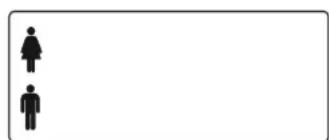
- The sex setting "Woman" or "Man" appears on the display (Fig. 7). Select your sex by pressing the buttons "up" ▲ or "down" ▼ and confirm by pressing "SET".
- Now the setting for your individual level of activity or fitness appears on the display (Fig. 8). Select the desired level of activity by pressing the buttons "up" ▲ or "down" ▼ and confirm the desired level of activity with the "SET" button.
- The values you've just set are displayed again consecutively.
Explanation of the 5 levels of activity:
- Fitness 1: No physical activity while overweight
- Fitness 2: Little physical activity while overweight
- Fitness 3: No or little physical activity
(Less than 20 min of physical exercise twice a week, e.g. going for a walk, light gardening, gymnastic exercises)
This mode should also be selected before the start of a training or dietary program. After approx. 6–10 weeks you can switch to the next level of activity.
- Fitness 4: Moderate physical activity
(20 minutes of physical exercise 2 to 5 times a week, e.g. jogging, cycling, tennis etc.)
This mode should be selected as soon as you notice a general improvement in your well-being/fitness in the course of a training/dietary program. After 8–12 weeks of continuous training/diet, you can change to the next level of activity.
- Fitness 5: Intensive physical activity
(Daily intensive training or physical work, e.g. intensive running, construction work etc.) For this mode you should have an overall high level of mobility, endurance and power and maintain this level over a longer period of time.

Fig. 1

Fig. 2
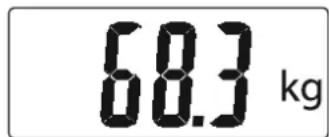
Fig. 3

Fig. 4
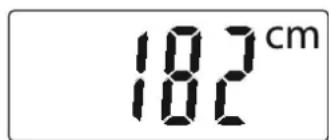
Fig. 5

Fig. 6
natural_image
Two male gender symbols displayed vertically, no text or labels presentFig. 7

Fig. 8

Fig. 9
The scale has 10 memory presets for basic data with which the users, e.g. each member of the family, can store and call up their personal settings at any time.
- Tap the scale quickly and forcefully and wait until the display "0.0" (Fig. 2) appears.
- Select the memory preset where your basic personal data are stored by pressing the ▲ or ▼ button repeatedly. The data are displayed consecutively until "0.0" (Fig. 2) appears.
- Step onto the scale barefoot and make sure you're standing on both electrodes. First your body weight is determined and displayed.
performed. This can take a few seconds.
otherwise the measurement cannot be performed correctly.
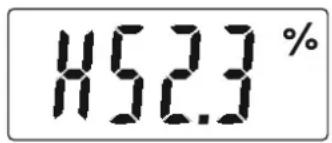
Fig. 10

Fig. 11
The following data are displayed:
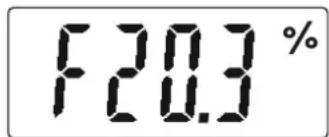
– Body fat percentage in % (Fig. 9)
– Water percentage in % (Fig. 10)
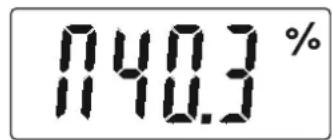
- Muscle percentage in % (Fig. 11)
- Now all measured values are displayed consecutively and the scale switches off.
3.4 Tips for using the scale
Important when measuring body fat/body water/muscle percentage:
- The measurement may only be carried out while barefoot and it is helpful if the soles of your feet are slightly damp. Completely dry soles can result in unsatisfactory results, as they have insufficient conductivity.
- Stand still during the measurement.
- Wait several hours (6-8) after unusually strenuous activity.
- Wait approx. 15 minutes after getting out of bed so that the water in your body can be distributed.
The measurement is not reliable for: - Children under approx. 10 years of age.
- Persons with fever, undergoing dialysis, with symptoms of edema or osteoporosis.
- Persons taking cardiovascular medication. Persons taking vasodialating or vasoconstricting medications.
- Persons with substantial anatomical deviations in the legs relative to their total height (leg length considerably shorter or longer than usual).
Body fat guide
The following body fat levels provide you with a guideline (for further information, please consult your doctor!).
A lower level is often found in athletes. Depending on the type of sports, the intensity of training and the person's physical constitution, levels can be achieved that are even lower than the specified guidelines.
Women Men
| Age | Very good | Good | Average | Poor | |
| <19 | <17% | 17-22% | 22.1-27% | >27.1% | |
| 20-29 | <18% | 18-23% | 23.1-28% | >28.1% | |
| 30-39 | <19% | 19-24% | 24.1-29% | >29.1% | |
| 40-49 | <20% | 20-25% | 25.1-30% | >30.1% | |
| >50 | <21% | 21-26% | 26.1-31% | >31.1% |
| Age Very good Good Average Poor | ||||
| <19 | <12% | 12–17% | 17.1–22% | >22.1% |
| 20–29 | <13% | 13–18% | 18.1–23% | >23.1% |
| 30–39 | <14% | 14–19% | 19.1–24% | >24.1% |
| 40–49 | <15% | 15–20% | 20.1–25% | >25.1% |
| >50 | <16% | 16–21% | 21.1–26% | >26.1% |
based on: "Principles + Labs for Physical Fitness and Wellness. 1st edition, Copyright 1999"
According to the World Health Organization (WHO 2001), the percentage of body water should lie within the following ranges!
Women: 50–55%
Men: 60–65%
Children: 65–75%
In persons with a high percentage of body fat, the percentage of body water very frequently lies below the specified guidelines.
As the percentage of muscle differs from individual to individual, there are no generally valid guidelines.
If the scale detects an error during weighing, "FFFF" or "Err" appears in the display.
If you step onto the scale before "☐.☐" appears in the display, the scale will not operate properly.
| Possible causes of errors: | |
| - The maximum load-bearing capacity of 180 kg (330 lbs) was exceeded. | - Only weigh the maximum permissible weight. |
| - The electrical resistance between the electrodes and the soles of your feed is too high (e.g. with heavily callused skin). | - Repeat weighing barefoot.Slightly moisten the soles of your feet if necessary. Remove the calluses on the soles of your feet if necessary. |
| - Your body fat lies outside the measurable range (less than 5% or greater than 60%). | - Repeat weighing barefoot.- Slightly moisten the soles of your feet if necessary. |
| - Your percentage of water lies outside the measurable range (less than 30% or greater than 90%) | - Repeat weighing barefoot.- Slightly moisten the soles of your feet if necessary. |
natural_image
Two female gender symbols displayed vertically in a rectangular frame (no text or labels)III. 7
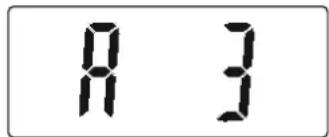
III. 8

III. 9

III. 10
basé sur « Principles + Labs for Physical Fitness and Wellness, 1st edition by Copyright 1999 »
natural_image
Two human gender symbols displayed vertically, no text or labels presentfig. 7

fig. 8

fig. 9

fig. 10

fig. 11
basado en: „Principles + Labs for Physical Fitness and Wellness. 1st edition by Copyright 1999“
natural_image
Two identical human gender symbols (female and male) displayed vertically in a row, no text or labels present.fig. 7
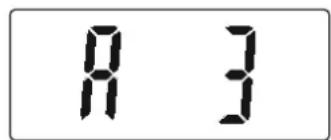
fig. 8
Sulla base di: „Principles + Labs for Physical Fitness and Wellness. 1st edition by Copyright 1999"
natural_image
Two black silhouette figures of a woman standing upright, no text or symbols presentEik. 7

Elk. 8
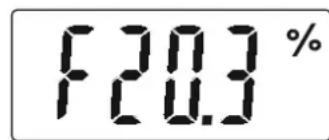
Eik. 9

Eik. 10

Elk. 11
natural_image
Two black silhouette figures of a woman standing upright, no text or symbols presentрис. 7

рис. 8

рис. 9
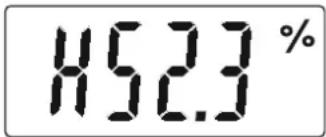
рис. 10

рис. 11
natural_image
Two human gender symbols displayed vertically, no text or labels presentRys. 7

Rys. 8
Rys. 9

Rys. 10
Rys. 11
| Wiek Bardzo dobry Dobry Przeciętny Zły | Wiek Bardzo dobry Dobry Przeciętny Zły | |||||||||
| <19 <17% 17–22% 22,1–27% | >27,1% | <19 <12% 12–17% | 17,1–22% >22,1% | |||||||
| 20–29 | <18% 18–23% | 23,1–28% | >28,1% | 20–29 | <13% 13–18% | 18,1–23% | >23,1% | |||
| 30–39 | <19% 19–24% | 24,1–29% | >29,1% | 30–39 | <14% 14–19% | 19,1–24% | >24,1% | |||
| 40–49 | <20% 20–25% | 25,1–30% | >30,1% | 40–49 | <15% 15–20% | 20,1–25% | >25,1% | |||
| >50 <21% 21–26% 26,1–31% | >31,1% | >50 <16% 16–21% | 21,1–26% | >26,1% | ||||||
W oparciu o: „Principles + Labs for Physical Fitness and Wellness, wyd. 1, Copyright 1999“
- Botmassa in % (afb. 11)


Brand : KORONA
Model : Dolores
Category : Scale