
C3300 - Printer OKI - Free user manual and instructions
Find the device manual for free C3300 OKI in PDF.


| Product Type | Color LED Printer |
| Print Technology | LED (Light Emitting Diode) |
| Print Speed (Color) | Up to 20 ppm (A4) |
| Print Speed (Mono) | Up to 26 ppm (A4) |
| Resolution | 600 x 600 dpi (up to 2400 dpi class) |
| First Page Out (Color) | Approx. 12 seconds |
| First Page Out (Mono) | Approx. 9 seconds |
| Paper Input Capacity | 250 sheets (standard tray) |
| Paper Output Capacity | 150 sheets face-down |
| Media Sizes | A4, A5, A6, B5, Letter, Legal, Executive, envelopes |
| Duplex Printing | Automatic (standard) |
| Connectivity | USB 2.0, 10/100 Base-TX Ethernet |
| Memory | 128 MB (expandable to 640 MB) |
| Display | 2-line LCD with backlight |
| Dimensions (W x D x H) | 410 x 504 x 242 mm |
| Weight | Approx. 20 kg |
| Power Consumption (Operating) | Approx. 1100 W (max) |
| Power Consumption (Standby) | Approx. 80 W |
| Power Supply | 220-240 V AC, 50/60 Hz |
| Noise Level (Operating) | Approx. 52 dB(A) |
| Operating Temperature | 10°C to 32°C |
| Operating Humidity | 20% to 80% RH (non-condensing) |
| Recommended Monthly Volume | 2,000 to 10,000 pages |
| Warranty | 1 year (limited) |
Frequently Asked Questions - C3300 OKI
User questions about C3300 OKI
0 question about this device. Answer the ones you know or ask your own.
Ask a new question about this device
Download the instructions for your Printer in PDF format for free! Find your manual C3300 - OKI and take your electronic device back in hand. On this page are published all the documents necessary for the use of your device. C3300 by OKI.
USER MANUAL C3300 OKI
T··Mobile··
natural_image
Front view of a silver LG flip phone with no visible text or symbols on its body (title partially obscured)Erste Schritte
natural_image
Exterior view of a flip mobile phone with open lid (no visible text or symbols)natural_image
Open mobile phone with keypad and open screen (no visible text or symbols)Einführung 8
natural_image
Illustration of two hands holding a small object, one with a blue arrow indicating direction (no text or symbols)natural_image
Illustration of two hands holding a mobile phone with a close-up inset showing internal components (no text or symbols)natural_image
Hand holding a silver mobile phone with a blue circular button on the screen (no text or symbols visible)natural_image
Hand holding a LG phone with a close-up of its internal components (no text or symbols visible)
natural_image
Hand holding a small electronic component with a blue arrow pointing to it, next to an open electrical wall (no text or symbols visible)natural_image
Illustration of a hand holding a device with a blue arrow pointing to it, no text or symbols present.Wichtig
natural_image
Grid of nine grayscale icons representing various application or service categories (no text or symbols)Auswahl Zurück
natural_image
Collection of grayscale office and document icons including documents, cameras, envelopes, and a clock (no text or symbols)Auswahl Zurück
CB-Service (Cell Broadcast)
(Menü-4-9-4)
natural_image
Illustration of a handheld electrical plug with coiled cable (no text or symbols)Akku
natural_image
3D rendering of a rectangular electronic device with a flat top and rounded edges (no visible text or symbols)Kopfhörer
natural_image
Line drawing of a medical or electronic device with a coiled cable and connector (no text or symbols)Wichtig
Calling Line Identification ..... 46, 109
CB-Service 59,64
CLI 46,109
Codes ändern 92
Cookie Einstellungen (WAP) ..... 100
D
Navigationstasten ..... 16, 17
natural_image
Exterior view of a flip mobile phone with open lid (no visible text or symbols)C3300 User Guide
English
C3300
Table of Contents
Introduction 8
Guidelines for safe and
efficient use 9
C3300 features 14
Parts of the phone 14
Display information ..... 19
Getting started 20
Installing the SIM card and
the handset battery ..... 20
Charging the battery ..... 22
Disconnecting the adapter .....23
Turning your phone on and off ... 24
Turning your phone ON ..... 24
Turning your phone OFF ..... 24
Access codes 24
PIN code 24
PIN2 code 25
PUK code 25
natural_image
Open mobile phone with keypad and screen (no visible text or symbols)PUK2 code 25
Security code 25
Barring password 25
General functions ..... 26
Making and answering calls ..... 26
Making a call 26
Making a call using the send key . . . 26
Making an international call ..... 26
Ending a call 26
Making a call from the phonebook .. 27
Adjusting the volume .....27
Answering a call 27
Switching quickly to
Vibrate only mode 28
Signal strength 28
Entering text 28
Changing the text input mode ..... 29
Contacts 32
In call menu 32
During a call 32
Multiparty or conference calls .... 34
Making a second call 34
Ending a multiparty call .... 35
Menu tree 36
Selecting functions and options . . 38
Special 39
My Media 40
Photos 40
Pictures 40
Sounds 40
Games & more 40
Call register 43
Missed calls 43
Received calls 43
Dialled calls 44
Delete recent calls 44
Call charges 44
Call duration 44
Call costs 45
Settings 45
GPRS information 46
Call duration 46
Data volumes 46
Messages 47
Write text message 47
Write Multimedia messages ..... 49
Inbox 51
Outbox 52
Drafts 53
Listen to voice mail ..... 54
Info message 54
Read 54
Topics 55
Templates 55
Text templates 55
Multimedia templates ..... 56
Signature 57
Settings 57
Text message 57
Multimedia message ..... 58
Voice mail centre 59
Info message 59
Push message 60
t-zones 61
Contacts 62
Search 62
Add new 63
Caller groups 64
Speed dial 64
Settings 65
Set memory 65
Search by 65
View options 65
Copy all 65
Delete all 66
Information 66
Organiser 67
Alarm clock 67
Scheduler 68
Calculator 69
Unit converter .....69
World time 70
Voice recorder 70
Record 70
View list 71
Memory status ....71
S/W version 71
Camera 72
Take photo 72
Take in modes 74
My photos 75
Settings 76
Memory status 76
Settings 77
Profiles 77
Changing the profile ..... 77
Customising profiles
- Personalise 77
Customising profiles
- Rename 78
Date & Time 79
Set date 79
Date format 79
Set time 79
Time format 79
Phone settings 80
Display settings 80
Language 80
Call settings 81
Call divert 81
Answer mode 82
Send my number 82
Call waiting 82
Minute minder 82
Auto redial 82
Closed user group 83
Security settings 84
PIN code request 84
Phone lock 84
Call barring 85
Fixed dial number 86
Change codes 86
Network settings 87
Automatic 87
Manual 87
Preferred 87
GPRS setting 88
Power on 88
When needed 88
Internet 89
Home 90
Bookmarks 90
Profiles 91
Go to URL 93
Cache settings 93
Cookies settings 94
Security certification ..... 94
Reset profiles 94
Browser version 94
Reset settings 94
Q&A 95
Accessories 98
Technical data 99
Introduction
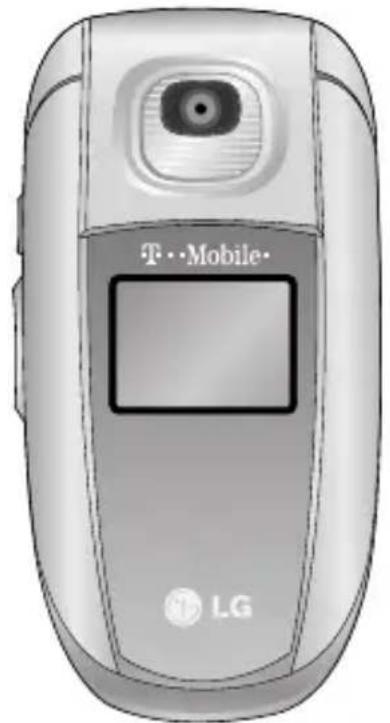
Congratulations on your purchase of the advanced and compact C3300 mobile phone, designed to operate with the latest digital mobile communication technology.
natural_image
Front view of a silver T-Mobile mobile phone with LG branding (no text or symbols on the device body)This user guide contains important information on the use and operation of this phone. Please read all the information carefully for optimal performance and to prevent any damage to or misuse of the phone. Any changes or modifications not expressly approved in this user's guide could void your warranty for this equipment.
Read these simple guidelines. Breaking the rules may be dangerous or illegal. Further detailed information is given in this manual.
Exposure to radio frequency energy
Radio wave exposure and Specific Absorption Rate (SAR) information
This mobile phone model C3300 has been designed to comply with applicable safety requirement for exposure to radio waves. This requirement is based on scientific guidelines that include safety margins designed to assure this safety of all persons, regardless of age and health.
- The radio wave exposure guidelines employ a unit of measurement known as the Specific Absorption Rate, or SAR. Tests for SAR are conducted using standardized method with the phone transmitting at its highest certified power level in all used frequency bands.
- While there may be differences between the SAR levels of various LG phone models, they are all designed to meet the relevant guidelines for exposure to radio waves.
- The SAR limit recommended by the international Commission on Non-Ionizing Radiation Protection (ICNIRP), which is 2W/kg averaged over ten (10) gram of tissue.
- The highest SAR value for this model phone tested by DASY4 for use at the ear is 1.05W/kg (10g).
- SAR data information for residents in countries/regions that have adopted the SAR limit recommended by the Institute of Electrical and Electronics Engineers (IEEE), which is 1.6 W/kg averaged over one (1) gram of tissue (for example USA, Canada, Australia and Taiwan).
Product care and maintenance
Warning: Use only batteries, charger and accessories approved for use with this particular phone model.
The use of any other types may invalidate any approval or warranty applying to the phone, and may be dangerous.
- Do not disassemble this unit. Take it to a qualified service technician when repair work is required.
- Keep away from electrical appliance such as a TV, radio or personal computer.
- The unit should be kept away from heat sources such as radiators or cookers.
- Do not drop.
- Do not subject this unit to mechanical vibration or shock.
- The coating of the phone may be damaged if covered with wrap or vinyl wrapper.
- Use dry cloth to clean the exterior of the unit. (Do not use solvent such as benzene, thinner or alcohol.)
- Do not subject this unit to excessive smoke or dust.
- Do not keep the phone next to credit cards or transport tickets; it can affect the information on the magnetic strips.
- Do not tap the screen with a sharp object; otherwise, it may damage the phone.
- Do not expose the phone to liquid or moisture.
- Use the accessories with caution and follow relevant instructions.
- Do not touch the antenna unnecessarily.
Efficient phone operation
To enjoy optimum performance with minimum power consumption please:
- Hold the phone as you speak to any other telephone. While speaking directly into the microphone, angle the antenna in a direction up and over your shoulder. If the antenna is extendable/retractable, it should be extended during a call.
- Do not hold the antenna when the phone is in use. If you hold it, it can affect call quality. It also may cause the phone to operate as a higher power level that needed and shorten talk and standby times.
- If your mobile phone supports infrared, never direct the infrared ray at anyone's eye.
Electronics devices
All mobile phones may get interference, which could affect performance.
- Do not use your mobile phone near medical equipment without requesting permission. Avoid placing the phone over the pacemaker, i.e. in your breast pocket.
• Some hearing aids might be disturbed by mobile phones. - Minor interference may affect TVs, radios, PCs, etc.
Road safety
Check the laws and regulations on the use of mobile phones in the areas when you drive.
- Do not use a hand-held phone while driving.
- Give full attention to driving.
- Use a hands-free kit, if available.
- Pull off the road and park before making or answering a call if driving conditions so require.
- RF energy may affect some electronic systems in your motor vehicle such as car stereo, safety equipment.
- When your vehicle is equipped with an air bag, do not obstruct with installed or portable wireless equipment. It can cause serious injury due to improper performance.
Blasting area
Do not use the phone where blasting is in progress.
Observe restrictions, and follow any regulations or rules.
Potentially explosive atmospheres
- Do not use the phone at a refueling point. Don't use near fuel or chemicals.
- Do not transport or store flammable gas, liquid, or explosives in the compartment of your vehicle, which contains your mobile phone and accessories.
In aircraft
Wireless devices can cause interference in aircraft.
- Turn off your mobile phone before boarding any aircraft.
- On the ground, follow airline instructions regarding use of mobile phones.
Children
Keep the phone in a safe place out of small children's reach. It includes small parts which if detached may cause a choking hazard.
Emergency calls
Emergency calls may not be available under all cellular networks. Therefore, you should never depend solely on the phone for emergency calls. Check with your local service provider.
Battery information and care
- You do not need to completely discharge the battery before recharging. Unlike other battery systems, there is no memory effect that could compromise the battery's performance.
- Use only LG batteries and chargers. LG chargers are designed to maximize the battery life.
- Do not disassemble or short-circuit the battery pack.
- Keep the metal contacts of the battery pack clean.
- Replace the battery when it no longer provides acceptable performance. The battery pack may be recharged hundreds of times until it needs replacing.
- Recharge the battery if it has not been used for a long time to maximize usability.
- Do not expose the battery charger to direct sunlight or use it in high humidity, such as the bathroom.
- Do not leave the battery in hot or cold places, this may deteriorate the battery performance.
- Dispose of used batteries in accordance with local legislation.
Parts of the phone
Front view

- When the phone is closed, press and hold down one of these keys to display the current time, to change the display to the current date, and to dismiss the display on the outer screen.
- Controls the volume of keypad tone in standby mode with the phone open.
- Controls the earpiece volume during a phone call.
Rear view

Open view
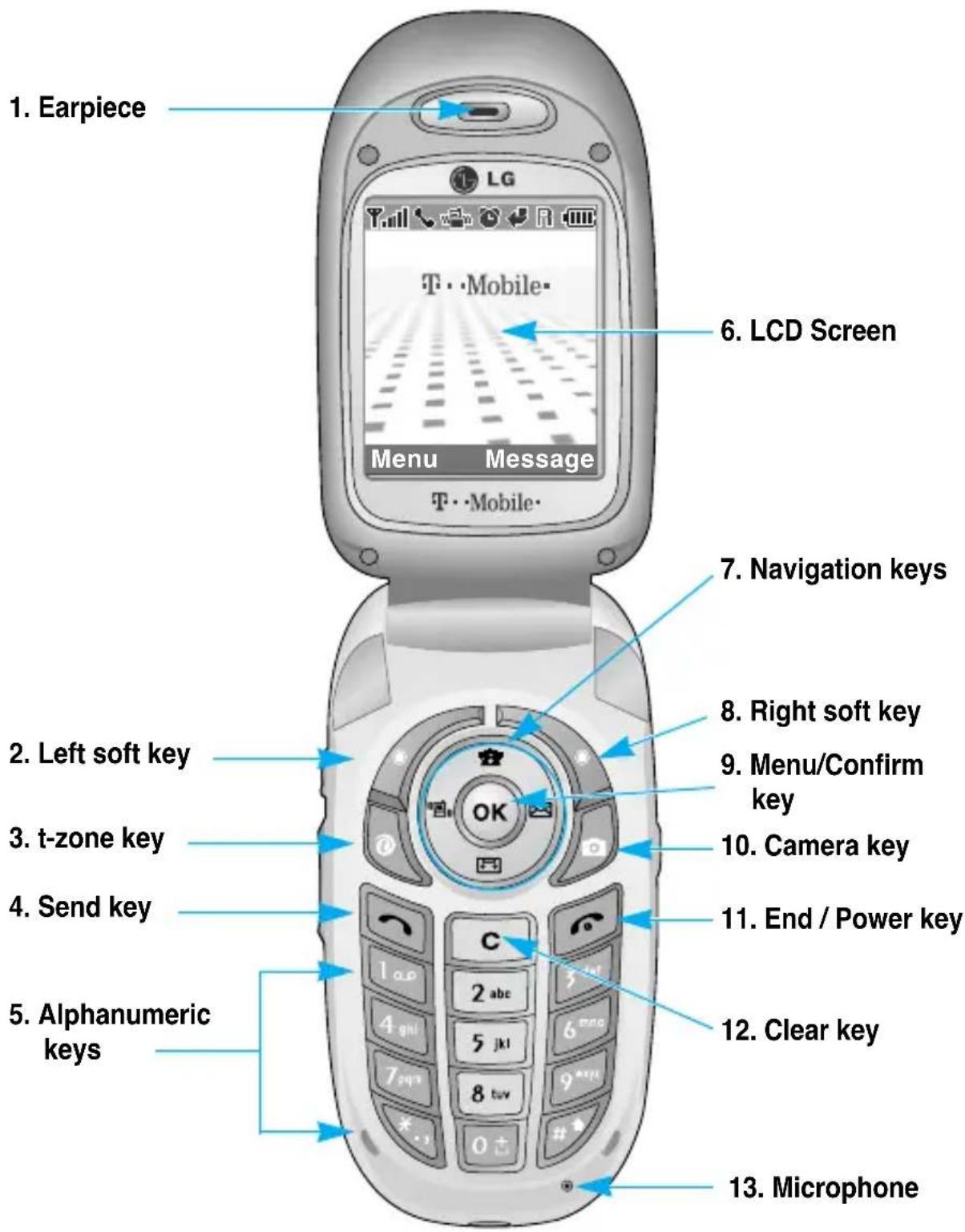
- Earpiece
2, 8. Left soft key/Right soft key: Each of these keys performs the function indicated by the text on the screen immediately above it. - t-zone key: Accesses the t-zones.
- Send key: Dials a phone number and answers incoming calls. You can also quickly access the latest incoming, outgoing and missed calls, by pressing the key in standby mode.
- Alphanumeric keys: Enter numbers, letters and some special characters.
- LCD screen: Displays phone status icons, menu items, Web information, pictures and more in full colour.
- Navigation keys: Use to move the cursor up/down/left/right. And you can quickly access the following features in standby mode.
- Up navigation key ( ) : You can search the contact by name by pressing this key in standby mode.
- Down navigation key ( ): Opens the voice memo list. Holding this key down directly starts voice memo recording.
- Left navigation key ( ) : A shortcut key to the profile menu. Holding this key down changes into the manner mode.
- Right navigation key ( ) : A shortcut key to the message inbox.
- Menu/Confirm key: Opens the menu and confirms actions.
* In standby mode, holding this key down connects to the Internet. - Camera key: Press this key to go to the Camera menu in standby mode.
- End/Power key: Used to end a call or reject a call and also to go back to standby mode. Hold this key down to turn the phone on/off.
C3300 features
- Clear key: Deletes a character by each press. Hold the key down to clear all input. Also use this key to go back to the previous screen.
- Microphone: Can be muted during a call for privacy.
Display information
The table below describes various display indicators or icons that appear on the phone's display screen.
On-Screen Icons
| Icon Description | |
| Tmill | indicates the strength of the network signal. |
| Gmill | Indicates that GPRS service is available. |
| Indicates a call is in progress. | |
| R | Indicates that you are roaming on another network. |
| Indicates the alarm has been set and is on. | |
| Indicates the status of the battery charge. | |
| Indicates that the vibration ringer has been set. | |
| Indicates the Silent profile is activated. | |
| Indicates the General profile is activated. | |
| Indicates the Loud profile is activated. | |
| Indicates the Headset profile is activated. | |
| Indicates the Car profile is activated. | |
| Indicates a call is diverted. | |
| Indicates that the phone is accessing the WAP. | |
| Indicates that you are using GPRS. | |
| Indicates that you entered the security page. | |
| Indicates the receipt of a message. | |
| Indicates the receipt of a voice mail. | |
Getting started
Installing the SIM card and the handset battery
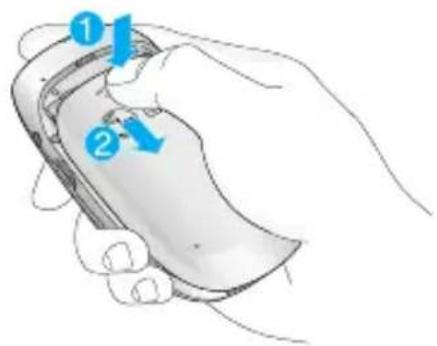
1. Remove the battery cover
Make sure the power is off before you remove the battery.
Press down on the rear cover in indicated position and slide downwards to remove, prize the battery by inserting finger nail in to indicated slots and levering the battery out.
Note
Removing the battery from the phone when the power is on may cause the phone to malfunction.
2. Remove the battery.
Hold the top edge of the battery and lift the battery from the battery compartment.
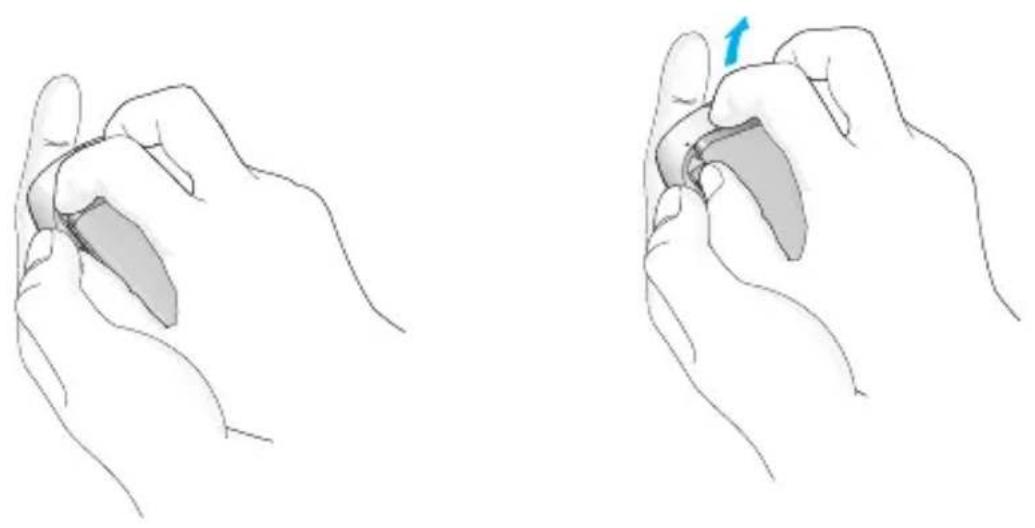
natural_image
Illustration of two hands holding a small object, one with a blue arrow indicating motion (no text or symbols)3. Install the SIM card
Insert the SIM card into the holder. Slide the SIM card into the SIM card holder. Make sure that the SIM card is inserted properly by ensuring that the gold contact area on the card is facing downwards. To remove the SIM card, press down lightly and pull it in the reverse direction.
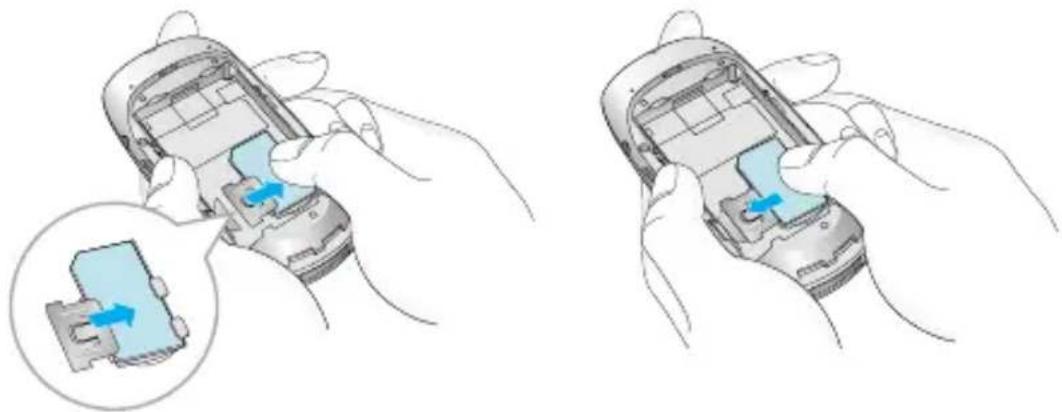
natural_image
Two-step illustration of a mobile phone showing internal components being opened, with one hand holding the phone and the other holding the remainder (no text or symbols present)To insert the SIM card To remove the SIM card
Caution The metal contact of the SIM card can be easily damaged by scratches. Pay special attention to the SIM card while handling. Follow the instructions supplied with the SIM card.
4. Install the battery.
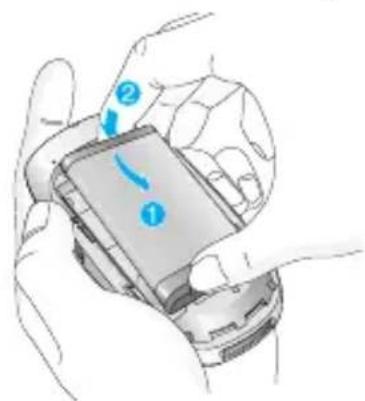
natural_image
Illustration of a hand holding a smartphone with blue arrows indicating motion (no text or symbols)Insert the bottom of the battery first into the bottom edge of the battery compartment. Push down the top of the battery until it snaps into space.

natural_image
Hand holding a silver mobile phone with a small circular button on the screen (no text or symbols visible)5. Replace the battery cover.
Lay the battery cover in place of the phone and slide it until the latch clicks.
Charging the battery
To connect the travel adapter to the phone, you must have installed the battery.
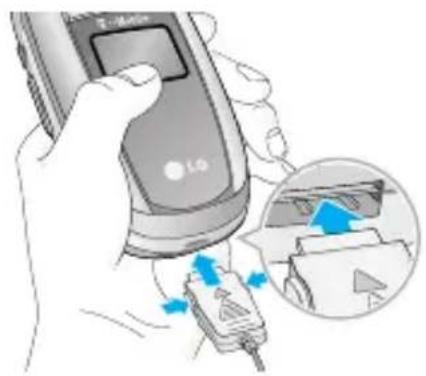
natural_image
Hand holding a mobile phone with a lock and plug, showing a close-up of the device's internal components (no text or symbols visible)
natural_image
Hand inserting a small component into a wall socket (no text or symbols visible)-
Ensure the battery is fully charged before using the phone.
-
With the arrow facing you as shown in the diagram push the plug on the battery adapter into the socket on the bottom of the phone until it clicks into place.
-
Connect the other end of the travel adapter to the mains socket. Use only the included packing charger.
-
The moving bars of battery icon will stop after charging is complete.
Caution
- Do not force the connector as this may damage the phone and/or the travel adapter.
- Insert the battery pack charger vertically to wall power outlet.
- If you use the battery pack charger out of your own country, use an attachment plug adaptor for the proper configuration.
- Do not remove your battery or the SIM card while charging.
Warning
- Unplug the power cord and charger during lightning storms to avoid electric shock or fire.
• Make sure that no sharp-edged items such as animal teeth, nails, come into contact with the battery. There is a risk of this causing a fire.
- Do not place or answer calls while charging the phone as it may short-circuit the phone and/or cause electric shock or fire.
Disconnecting the adapter
- When charging is finished, the moving bars of the battery icon stop and 'Full' is displayed on the screen.
- Unplug the adapter from the power outlet. Disconnect the adapter from the phone by pressing the grey tabs on both sides of the connector and pull the connector out.

natural_image
Illustration of a hand holding an LG device with a blue arrow pointing to the device (no text or symbols present)Note
- Ensure the battery is fully charged before first using the phone.
- Do not remove the battery or SIM card while charging.
- In the case the battery is not properly charged, please turn the phone off and on using the power key, then recharge the battery. After detaching and reattaching the battery, please recharge the battery.
Turning your phone on and off
Turning your phone ON
- Install a battery to the handset and connect the phone to an external power source such as the travel adapter, cigarette lighter adapter or hands-free car kit. Or install a charged battery pack to the handset.
- Press ☐ for a few seconds until the LCD screen is turned on.
- Depending on the status of the PIN code request setting you may need to enter your PIN code.
Notice
Like any other radio devices, avoid any unnecessary contact with the antenna while your phone is on.
Turning your phone OFF
- Press 📞 for a few seconds until the LCD screen is turned off.
Access codes
You can use the access codes described in this section to avoid unauthorised use of your phone. The access codes (except PUK and PUK2 codes) can be changed by using the Change codes feature [Menu-9-5-5]. See page 86.
PIN code (4 to 8 digits)
The PIN (Personal Identification Number) code protects your SIM card against unauthorised use. The PIN code is usually supplied with the SIM card. When the PIN code request is set to On, your phone will request the PIN code every time the phone is switched on. When the PIN code request is set to Off, your phone connects to the network directly without the PIN code.
PIN2 code (4 to 8 digits)
The PIN2 code, supplied with some SIM cards, is required to access functions such as Advice of Call Charge and Fixed Dial Number. These functions are only available if supported by your SIM card.
PUK code (4 to 8 digits)
The PUK (PIN Unblocking Key) code is required to change a blocked PIN code. The PUK code may be supplied with the SIM card. If not, contact your network operator for the code. If you lose the code, also contact your network operator.
PUK2 code (4 to 8 digits)
The PUK2 code, supplied with some SIM cards, is required to change a blocked PIN2 code. If you lose the code, also contact your network operator.
Security code (4 to 8 digits)
The security code protects the unauthorised use of your phone. The default security code is set to '0000' and the security code is required to delete all phone entries and to activate the Reset Settings menu. Also, the security code is required to enable or disable the phone lock function to prevent unauthorised use of the phone. The security code default setting can be modified from the Security Settings menu.
Barring password
The barring password is required when you use the Call Barring function. You obtain the password from your network operator when you subscribe to this function. See [Menu-9-5-3] page 85 for further details.
General functions
Making and answering calls
Making a call
-
Make sure your phone is switched on.
-
Enter a phone number, including the area code. When you entered a wrong number, press the clear key (c) to erase one digit at a time.
▶ Press and hold the clear key ( c ) to erase the digits in succession.
-
Press the send key ( ) to call the number.
-
To end the call, press the end key ( ) or the right soft key ( ). You can also end the call by closing the folder.
Making a call using the send key
-
In standby mode, press the send key ( ), and the latest incoming, outgoing and missed phone numbers will be displayed.
-
Select the desired number by using the up/down navigation key.
-
Press
Making an international call
-
Press and hold the 🔍 key for the international prefix. The ‘+’ character automatically selects the international access code.
-
Enter the country code, area code, and the phone number.
-
Press
Ending a call
When you have finished your call, press the end ( )key.
Making a call from the phonebook (Contacts)
You can save the names and phone numbers dialled regularly in the SIM card and/or phone memory, which is called Contacts.
You can dial a number by simply looking up the desired name in Contacts. For further details on the Contacts feature, please refer to page 62 through 66.
Adjusting the volume
If you want to adjust the earpiece volume during a call, use the side keys ( ). Press the up side key to increase and down side key to decrease the volume.
Note In standby mode pressing the side keys adjusts the key tone volume.
Answering a call
When you receive a call, the phone rings. If the caller can be identified, the caller's phone number (or name if saved in the Contacts) is displayed.
- To answer an incoming call, open the phone and press the send key. Alternatively, please see page 82 for other answer modes.
Note If Press any key has been set as the answer mode (see page 82), any key press will answer a call except for the 📞 or the right soft key.
To reject an incoming call, press and hold one of the side keys on the left side of the phone without opening the folder.
You can answer a call while using the Contacts or other menu features.
- To end the call, close the folder or press the key.
Switching quickly to Vibrate only mode
You can switch your phone quickly to the Vibrate only mode by pressing and holding down the left navigation key ( ) after opening the phone. To go back to the previous profile, press and hold down the left navigation key ( ) again.
Signal strength
You can check the strength of your signal by the signal indicator (T) on the LCD screen of your phone. Signal strength can vary, particularly inside buildings. Moving near to a window may improve reception.
Entering text
You can enter alphanumeric characters by using the phone's keypad. For example, storing names in the Contacts, writing a message, creating a personal greeting or scheduling events in the calendar all require entering text.
The following text input methods are available in the phone.
T9 mode
This mode lets you enter words with only one keystroke per letter. Each key on the keypad has more than one letter. The T9 mode automatically compares your keystrokes with an internal dictionary to determine the correct word, thus requiring far fewer keystrokes than the traditional ABC mode. This is sometimes known as predictive text.
ABC mode
This mode lets you enter letters by pressing the key labelled with the required letter once, twice, three or four times until the letter is displayed.
123 mode (Number mode)
Type numbers using one keystroke per number. To change to 123 mode in a text entry field, press the 🔒 key until 123 mode is displayed.
Changing the text input mode
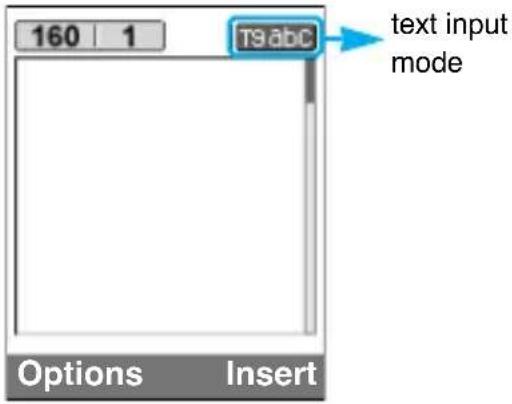
- When you are in a field that allows characters to be entered, you will notice the text input mode indicator in the upper right corner of the LCD screen.
- You can select the language of the T9 mode. Press the left soft key [Options], then select T9 languages. You can also go to T9 languages menu by holding down the 🔒 key. Select the desired language of T9 mode. You can also turn off the T9 mode by selecting T9 off. The default setting on the phone is T9 enabled mode.
- Change the text input mode by pressing 📋. You can check the current text input mode in the upper right corner of the LCD screen.
Using the T9 mode
The T9 predictive text input mode lets you enter words easily with a minimum number of key presses. As you press each key, the phone begins to display the characters that it thinks you are typing based on the built-in dictionary. You can also add new words in the dictionary. As new words are added, the word changes to reflect the most likely candidate from the dictionary.
- When you are in the T9 predictive text input mode, start entering a word by pressing keys 2 abc to 9 abc. Press one key per letter.
- The word changes as letters are typed. Ignore what's on the screen until the word is typed completely.
- If the word is still incorrect after typing completely, press the up/down navigation key once or more to cycle through the other word options.
Example: Press
Press
type Home
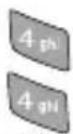


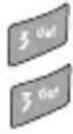
to type Good
[Down navigation key] to
- If the desired word is missing from the word choice list, add it using the ABC mode.
- Enter the whole word before editing or deleting any keystrokes.
- Complete each word with a space by pressing the ☐ key.
To delete letters, press the ☐ key. Press and hold down the ☐ key to erase entire words in succession.
Notice
To exit from the text input mode without saving your input, press Ⓞ. The phone goes back to standby mode.
Using the ABC mode
Use the 2 bit to 9 bits keys to enter your text.
-
Press the key labelled with the required letter:
-
Once for the first letter
- Twice for the second letter
-
And so on
-
To insert a space, press the Ⓞ key once. To delete letters, press the ⓔ key. Press and hold down the ⓔ key to erase the entire words in succession.
Notice
Refer to the table below for more information on the characters available using the alphanumeric keys.
| Key | Characters in the order display | |
| Upper case | Lower case | |
 | . ,/ ? ! - : ' " 1 | . ,/ ? ! - : ' " 1 |
 | A B C 2 Ä À Á Á Å Å Æ Ç | a b c 2 ä à á á ã æ ç |
 | D E F 3 Ė Ė É Ė | d e f 3 Ė è é ê |
 | G H I 4 ī lí í î ĝ | g h i 4 ī lí í í ĝ |
 | J K L 5 | j k l 5 |
 | M N O 6 Ñ Ő Ø ò Ó Ô Ō Æ | m n o 6 ñ Ő ø ò ó ô Ō Æ |
 | P Q R S 7 β § | p q r s 7 β § |
 | T U V 8 Ü ù Ú Û | t u v 8 ü ù ú û |
 | W X Y Z 9 | w x y z 9 |
 | Space key,0 (Press twice) | Space key,0 (Press twice) |
Using the 123(Number) mode
The 123 mode enables you to enter numbers in a text message (a telephone number, for example).
Press the keys corresponding to the required digits before manually switching back to the appropriate text entry mode.
Contacts
You can save phone numbers and their corresponding names in the memory of your SIM card.
In addition, you can save up to 200 numbers and names in the phone memory.
The SIM card and phone are both used in the same way in the Contacts menu.
(Refer to page 62 through 66 for details.)
In call menu
Your phone provides a number of control functions that you can use during a call. To access these functions during a call, press the left soft key [Options].
During a call
The menu displayed on the handset screen during a call is different to the default main menu displayed when in standby mode, and the options are described below.
Making a second call
You can get a number you wish to dial from Contacts to make a second call. Press the right soft key then select Search. To save the dialled number into Contacts during a call, press the right soft key then select Add new.
Switching between two calls
To switch between two calls, press the left soft key [Options], then select Swap or just press the 🔍 key. You can select one of two calls using up/down navigation keys. To end a call, highlight the phone number using up/down navigation keys then press the

key.
Answering an incoming call
To answer an incoming call when the handset is ringing, simply press the 📋 key. The handset is also able to warn you of an incoming call while you are already on a call. A tone sounds in the earpiece, and the display will show that a second call is waiting. This feature, known as Call waiting, is only available if your network supports it. For details of how to activate and deactivate it see Call waiting on page 82.
If Call waiting is activated, you can put the first call on hold and answer the second, by pressing 📋 or by selecting left soft key, then Hold & Answer. You can end the current call and answer the waiting call by selecting left soft key and then End & Answer.
Rejecting an incoming call
You can reject an incoming call without answering by simply pressing the 🔔 key.
During a call, you can reject an incoming call by pressing the left soft key [Menu] and selecting the Multiparty/Reject or by pressing the 🔔 key.
Muting the microphone
You can mute the microphone during a call by pressing the left soft key [Options], then selecting Mute. When the handset is muted, the caller cannot hear you, but you can still hear them. The handset can be unmuted by pressing the [Unmute].
Switching DTMF tones on during a call
To turn DTMF tones on during a call, press the left soft key, and then select DTMF on. DTMF tones can be turned off the same way. DTMF tones allow your phone to make use of an automated switchboard.
Multiparty or conference calls
The multiparty or conference service provides you with the ability to have a simultaneous conversation with more than one caller, if your network operator supports this feature. A multiparty call can only be set up when you have one active call and one call on hold, both calls having been answered. Once a multiparty call is set up, calls can be added, disconnected or separated (that is, removed from the multiparty call but still connected to you) by the person who set up the multiparty call. These options are all available from the In-Call menu. The maximum callers in a multiparty call are five. Once started, you are in control of the multiparty call, and only you can add callers to the multiparty call.
Making a second call
You can make a second call while currently on a call. Enter the phone number and press the 🔔 key. When the second call is connected, the first call is automatically placed on hold. You can swap between two calls by pressing the left soft key then selecting Swap.
Setting up a multiparty call
Place one call on hold and while the active call is on, press the leftsoft key and then select Multiparty/Join all.
Putting a multiparty call on hold
Press the left soft key, then select Multiparty/Hold all.
Activate the multiparty call on hold
Press the left soft key, then select Multiparty/Join all.
Adding calls to the multiparty call
To add a call to an existing multiparty call, press the left soft key, then select Multiparty/Join all.
Putting a member of a multiparty call on hold
To place one selected caller (whose number is currently displayed on the screen) of a multiparty call on hold, press the left soft key, then select Multiparty/Exclude.
Displaying callers in a multiparty call
Using up/down navigation keys, you can scroll through the phone numbers of the callers in a multiparty call.
Having a private call during a multiparty call
To have a private call with one caller from a multiparty call, display the number of the caller you wish to talk to on the screen, then press the left soft key. Select Multiparty/Private to put all the other callers on hold.
Ending a multiparty call
The currently displayed caller from a multiparty call can be disconnected by pressing the 🔍 key. To end a multiparty call, press the left soft key, then select Multiparty/End multiparty. After pressing the left soft key, selecting Multiparty/End all will end all the active and on-hold calls.
Menu tree
The following illustration shows the available menu structure and indicates the:
▶ Number assigned to each menu option.
Page where you can find the feature description.
You can go to the desired menu using the left soft key [Menu], navigation keys and the [OK] key.
This menu is supported by only SAT (SIM Application Tool kit) SIM.

This menu is supported by non-SAT SIM.

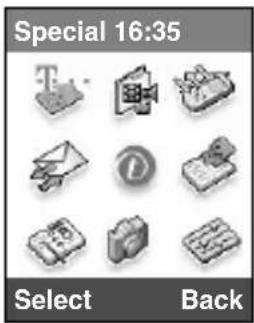
1 Special
This menu depends on SIM and network service. If your SIM card supports SIM tool kit, it is only shown "Special" menu.

2 My Media
1 Photos
2 Pictures
3 Sounds
4 Games & more

3 Call register
1 Missed calls
2 Received calls
3 Dialled calls
4 Delete recent calls
5 Call charges
6 GPRS information

4 Messages
1 Write text messages
2 Write multimedia message
3 Inbox
4 Outbox
5 Drafts
6 Listen to voice mail
7 Info message
8 Templates
9 Settings

5 t-zones

6 Contacts
1 Search
2 Add new
3 Caller groups
4 Speed dial
5 Settings
6 Copy all
7 Delete all
8 Information

7 Organiser
1 Alarm clock
2 Scheduler
3 Calculator
4 Unit converter
5 World time
6 Voice recorder
7 Memory status
8 S/W version

8 Camera
1 Take photo
2 Take in modes
3 My photos
4 Settings
5 Memory status

9 Settings
1 Profiles
2 Date & Time
3 Phone settings
4 Call settings
5 Security settings
6 Network settings
7 GPRS setting
8 Internet
9 Reset settings
Selecting functions and options
Your phone offers a range of functions that allow you to customise it. These functions are arranged in menus and sub-menus, accessed via the two soft keys marked and . Each menu and sub-menu lets you view and alter the settings of a particular function.
The roles of the soft keys vary according to the current context; the label on the bottom line of the screen just above each key indicates its current function.

Press the left soft key to access the available menu.
Press the right soft key to activate the corresponding action.
Special
Your service provider can offer special application through SIM card, such as home banking, stock market, etc.
If you are registered for one of these services, the service name will appear at the end of the Main Menu. With the SIM Services menu your phone is future-proof and will support additions to your service provider's service.
For more information contact your service provider.
My Media
You can download ringtones, sounds, games, pictures, and wallpaper WAP portals such as t-zones.
Photos
Menu-2-1
Opens the My photos. The photos taken with C3300 are stored in here. (For more details, refer to page 75.)
Pictures
Menu-2-2
- My pictures: Selects a picture from the list by pressing the left soft key [View]. Then, you can set it as the wallpaper or send the multimedia message with it by pressing the left soft key [Options].
Sounds
Menu-2-3
• t-music: Connects to the t-zones. You can download various ringtones and caller tunes using the WAP. And they are stored in My sounds.
- My sounds: You can select a sound from the list. After selecting the desired sound, you can set it as the ring tone, send the sound via SMS or MMS, using the left soft key [Options].
Games & more
Menu-2-4
• t-games: Connects to the t-games. You can download games using the WAP. And they are stored in My games & more.
- My games & more: In this menu, you can manage the Java applications installed in your phone. You can play or delete downloaded applications, or set the connecting option. The downloaded applications are stored in folders.
Press the left soft key [Select] to open the selected folder or launch the selected midlet.
Using the right soft key [Menu], the following menus are available.
▶ New folder: Creates a new folder.
▶ Move: Moves the selected folder or application to a destination folder.
▶ Launch: Starts new game.
Remove: Removes a folder or an application.
Rename: You can rename the folder or the application.
Note You cannot remove or rename the preinstalled folder or a game in the folder.
Java™ is a technology developed by Sun Microsystems. Similar to the way you would download the Java Applet using the standard Netscape or MS Internet Explorer browsers, Java MIDlet can be downloaded using the WAP enabled phone. Depending on the service provider, all Java based programs such as Java games can be downloaded and run on a phone. Once downloaded, the Java program can be viewed in the My games & more menu where you can select, execute, or delete. The Java program files saved in the phone are in .JAD or .JAR format.
Note The JAR file is a compressed format of the Java program and the JAD file is a description file that includes all detailed information. From the network, prior to download, you can view all detailed file descriptions from the JAD file.
Caution Only J2ME (Java 2 Micro Edition) based programs will run in a phone environment. The J2SE (Java 2 Standard Edition) based programs will only run in a PC environment.
Option Some Java applications may require a data connection to be made. Select this to set the connecting options.
Call register (Dependent on the network service).
You can check the record of missed, received, and dialled calls only if the network supports Calling Line Identification (CLI) within the service area.
The number and name (if available) are displayed together. You can also view call times and costs.
Press the menu key ( ) and select Call register using navigation keys.
Missed calls
Menu-3-1
This option lets you view unanswered calls.
After pressing the left soft key [Options], you can also:
• View the date and time at which the call was made.
- Save the number in Contacts. Enter a name for the number and save it in Contacts.
- Send a message to this number.
- Delete the call from the list.
Note You can delete all the call records from the list using the Delete recent calls menu. (See page 44.)
Received calls
Menu-3-2
This option lets you view incoming calls. After pressing the left soft key [Options], you can also:
• View the date and time at which the call was made.
- Save the number in Contacts. Enter a name for the number and save it in Contacts.
- Send a message to this number.
- Delete the call from the list.
Note You can delete all the call records from the list using the Delete recent calls menu. (See page 44.)
Dialled calls
Menu-3-3
This option lets you view outgoing calls (called or attempted).
Using the [Options] key, you can also:
- View the date and time at which the call was made.
- Save the number in Contacts. Enter a name for the number and save it in Contacts.
- Send a message to this number.
- Delete the call from the list.
Note You can delete all the call records from the list using Delete recent calls menu. (See page 44.)
Delete recent calls
Menu-3-4
Use this to delete the missed call list, received call list, or dialled call list. You can also delete all call lists at a time selecting All calls.
Call charges
Menu-3-5
Call duration
(Menu-3-5-1)
Use this to view the duration of your incoming and outgoing calls. You can check each call duration at the bottom of screen while scrolling using the up/down navigation keys. You can reset the call timer by selecting Reset all. To prevent accidental reset, you are requested to enter the PIN2 code.
- Last call: Length of the last call.
- All calls: Total length of all calls made or received calls since the timer was last reset.
- Received calls: Length of the incoming calls.
- Dialled calls: Length of the outgoing calls.
- Reset all: Select this to reset all the call duration.
Note The actual time invoiced for calls by your service provider may vary, depending on network features, rounding-off for billing, etc.
Call costs
(Menu-3-5-2)
This network service allows you to check the last call cost, the total call cost and the remaining call cost. The call cost is displayed on the bottom of the LCD screen. To reset the call cost, select Reset all. You are requested to enter the PIN2 code.
Note The actual cost invoiced for calls by your service provider may vary, depending on network features, rounding-off for billing, taxes, etc.
Settings
(Menu-3-5-3)
- Set tariff: You can set the currency type and the unit price. Contact your service provider to obtain charging unit prices. To select the currency or unit in this menu, you need the PIN2 code. If you want to input @, £, \$ symbol, clear all currency strings and then press key. If you want to change the symbol, press key again.
Note When all units have been used, no calls can be made except emergency calls. Depending on the SIM card, you need the PIN2 code to set a call cost limit.
- Set credit: This network service allows you to limit the cost of your calls to the selected charging units. You can make or receive a call up to the specified cost limit.
Read: You can check the remaining units.
Change: You can change your charging limit.
- Auto display: This network service allows you to see automatically the cost of your last call. If you select On, you can see the cost of the last call when the call is released.
GPRS information
Menu-3-6
You can check the amount of data transferred over the network through the GPRS information option. In addition, you can also view how much time you are online. (GPRS stands for General Packet Radio Service.)
Call duration
(Menu-3-6-1)
You can check the duration of the last call and all calls. You can also reset the call timers by selecting Reset all.
Data volumes
(Menu-3-6-2)
You can check the sent data volume, received data volume, and all data volume. You can also reset the counter by selecting Reset all.
Press the menu key ( ) and select Messages using navigation keys.
Write text message
Menu-4-1
Your phone receives voice mail notification messages, and Short Message Service (SMS) messages.
Voice mail and SMS are network services. Please contact your network operator for more information.
When the 🔊️ icon appears, you have received voice mail. When the 📧 icon appears, you have received a new text message. If the message memory is full, a message is displayed, the 📧 icon flashes and you cannot receive any new messages. Use the Delete option in the Inbox menu to delete obsolete messages. Once there is space in the message memory, any undelivered SMS messages will be received (provided sufficient space is available).
You can write and edit text messages up to 10 pages. (approximately 1530 characters)
-
Key in your message. For details on how to enter text, refer to pages 28 through 31 (Entering Text).
-
After you complete the message, to select the required option, press the left soft key [Options]. The following options are available.
▶ Send: Enter the phone number. Or select the number from the recent numbers or the Contacts after pressing the left soft key [Options].
You can send a message up to 6 phone numbers at a time. Before sending the message, you can set the following options by pressing the right soft key [Settings].
1) Validity period: Set the length of time for which your text messages will be saved at the SMS center while attempts are made to deliver them to the recipient. Possible values are 1 hour, 12 hours, 1 day, 1 week and the maximum authorized by your network operator.
2) Delivery report: Select whether activate or deactivate the report function. When this function is activated, the network
informs you whether your message has been delivered or not.
3) Reply charging: Allows the recipients of your text message to send you a reply via your message centre, if the service is provided by the network.
▶ Save: Saves the message so that it can be sent later.
Font: Select the desired font size and style for the message using the left/right navigation keys.
Colour: Select the desired foreground colour using the left/right navigation key. Then, press the down navigation key and select the background colour using the left/right navigation key.
Alignment: Select where to align text.
Add T9 dictionary: When you didn't find a desired word in the T9 text input mode, you can add a word using this option in the T9 dictionary. After typing a word, press the left soft key [Save].
▶ T9 languages: Select the language for T9 input mode.
You can also deactivate T9 input mode by selecting T9 off.
Exit: Exits from the Write text message menu.
- You can also send attachments with the message by pressing the right soft key [Insert], while you're entering a message.
Picture: Sends and receives text messages that contain pictures, known as ‘picture messages’. Several preset pictures are available in the phone and they can be replaced with new ones received from other sources.
Sound: If available, you can attach a sound to a short message.
Text templates: You can select a text template already set in the phone.
Phonebook: You can add phone numbers to the message.
▶ Signature: You can attach your name card.
▶ Symbol: You can attach special characters.
Write multimedia messages
Menu-4-2
A multimedia message can contain text, images, and/or sound clips. This feature can be used only if it is supported by your network operator or service provider. Only the devices that offer compatible multimedia message or e-mail features can receive and send multimedia messages.
You can create a multimedia message up to 10 slides. (approximately 100 KB)
- After entering the subject of the message, press the OK key.
- Key in the text message. Using the right soft key [Insert], you can insert a symbol, a picture, a sound, a voice memo, text templates, phone numbers stored in the phonebook or a signature.
- Press the left soft key [Options]. The following options are available.
▶ Send: You can send the multimedia message up to 6 recipients at the same time.
1) Key in the phone number. You can also search the phone number from the recent number list or the phonebook using the left soft key [Options].
2) Press the right soft key [Settings]. You can set the following options:
- Priority: Set the priority of the MMS.
- Validity period: Set the duration for keeping the multimedia messages on the network server. Possible values are 1 hour, 12 hours, 1 day, 1 week and the maximum authorized by the network operator.
- Delivery report: Select Yes to activate the report function. When this function is activated, the network informs you whether or not your message has been delivered.
3) Press the left soft key [Send].
Preview: Select this option to check out the multimedia message you've created. Each slide is sequentially played back automatically. You can also move to another slide from the currently played slide using the left/right navigation keys. To replay the message, press the left soft key [Replay].
Save: Saves the message in drafts or as a template.
Add slide: Add a slide before or after the current slide.
▶ Move to slide: Select this option to move to another slide from the current slide.
▶ Delete slide: Deletes the current slide.
Set slide format: You can set the following slide format.
- Set timer: Enter the timer in each field using the numeric keypad.
- Swap text and picture: Swaps the text and picture.
Add T9 dictionary: When you didn't find a desired word in the T9 text input mode, you can add a word in the T9 dictionary using this option. After typing a word, press the left soft key [Save].
▶ T9 languages: Select the T9 language for T9 input mode. You can also deactivate the T9 input mode by selecting T9 off.
Exit: Exits from the Write multimedia message menu.
Inbox
Menu-4-3
You will be alerted when you have received messages. And they will be stored in the Inbox.
Press the left soft key [Menu] and select → Inbox.
Or, you can take a shortcut by pressing the right navigation key
( ) in standby mode.
In the Inbox, you can identify each message by icons. For detail, see the icon description below.
| Icon Description | |
 | Multimedia messageShort messageSIM messageReadNotified multimedia message |
Each received message has the following options available. Press the left soft key [Options].
View: You can view the selected message.
▶ Reply: You can reply to the sender with a text message or a multimedia message.
Forward: You can forward the selected message to other recipients.
▶ Return call: You can call back to the sender.
▶ Delete: Deletes the selected message from inbox.
Extract: You can extract picture, sound, sender's number, URL, email address and so on from the message. They will be saved in My folder, Contacts, or Bookmarks.
View information: You can view the information of the message: the sender's address, subject (only for multimedia message), the date and time when the message has arrived, message type and size, and the priority (only for multimedia message).
▶ Replay: You can replay the selected multimedia message. (Only for multimedia message)
▶ Delete all: Deletes all the messages in the inbox folder.
Receive: When you receive a multimedia notification message, you need to select this option to download the multimedia message. (Only for multimedia notification message)
▶ Cancel: You can cancel downloading the multimedia message. (Only for multimedia notification message)
Outbox
Menu-4-4
All the messages you have sent are stored in the Outbox folder. You can view the list and contents of messages.
In the outbox message list, you can verify if the transmission was successful. If the transmission was failed, “(Failed)” is displayed before the recipient. You can also check whether you have received the delivery report through the following icons.
| Icon Description | |
| Multimedia message | |
| Short message | |
| Delivery reported message | |
In each message, the following options are available by pressing the left soft key [Options].

The messages of which transmission was completed has the following options.
▶ View: You can view the selected message.
Forward: You can forward the selected message to other recipients.
Delete: Deletes the selected message from outbox.
View information: You can view the information of selected message: subject (only for multimedia message), the date and time when you sent it, message type and size, the priority (only for multimedia message), and recipients.
▶ Delete all : Deletes all the messages in the outbox folder.

The messages of which transmission is in progress has the following options.
View : You can view the selected message.
▶ Send: Select this to send it again.
▶ Delete: Cancels transmitting the message and deletes the message.
View information: You can view the information of selected message: subject (only for multimedia message), the date and time when you sent it, message type and size, the priority (only for multimedia message), and recipients.
▶ Send all: Sends all the messages of which transmission is in progress again.
▶ Cancel all: Cancels all the message transmission.
▶ Delete all: Cancels all the message transmission and deletes all of them.
Drafts
Menu-4-5
You can view the messages saved as a draft. The draft messages are listed with the date and time when they were saved.
Scroll through the list using up/down navigation keys.
| Icon Description | |
| Multimedia messageText message | |
Each draft has the following options.
Press the left soft key [Options].
▶ View: You can view the selected message.
Edit: You can edit the selected message.
Delete: Deletes the selected message from the drafts folder.
View information: You can view the information of selected message: subject (only for multimedia message), the date and time when saved, message type and size and the priority (only for multimedia message).
▶ Delete all: Deletes all the messages from drafts folder.
Listen to voice mail
Menu-4-6
This menu provides you with a quick way of accessing your voice mailbox (if provided by your network).
Before using this feature, you must enter the voice centre number obtained from your network operator.
When new voice message is received, the 🔒 symbol will be displayed on the screen. Please check with your network provider for details of their service in order to configure the handset correctly.
Info message (Network dependent)
Menu-4-7
Info service messages are text messages sent by the network to mobile phone users. They provide general information such as weather reports or traffic conditions. Each type of information has the number; therefore, you can contact the service provider as long as you have input the certain number for the information. When you receive an info service message, a popup message will indicate a new message receipt or the info service message will be displayed directly. The following options are available when viewing info service messages.
Read
(Menu-4-7-1)
- Select Read to view the message, it will be displayed on the screen.
- The message will be shown until another message is reached.
Topics (Network dependent)
(Menu-4-7-2)
- Add new: You can add a new info service message number with its nickname in the phone or in the SIM (if the SIM is available).
- View list: You can view the list of all the info service message numbers. Press the left soft key [Options] to edit or delete the info message category.
- Active list: You can set whether you will receive each info service message or not using the left soft key [On/Off] in this list.
Templates
Menu-4-8
There are pre-defined messages in the list. You can view and edit the template messages or create new messages. Two types of templates are available: Text and Multimedia.
Text templates
(Menu-4-8-1)
- Please call me back.
• I'm late. I will be there at... - Where are you now?
• I am on the way. - Top urgent. Please contact.
• I love you.
The following options are available.
View: You can view the selected template.
Edit: Use this to write a new message or edit the selected template message from the text template list.
Write text message: Use this to send the selected template message by SMS.
▶ Write multimedia message: Use this to send the selected template message by MMS.
▶ Add new: Use this to create new template.
▶ Delete: Deletes the selected template.
▶ Delete all: Deletes all the text templates.
Multimedia templates
(Menu-4-8-2)
You can create a multimedia template after pressing the left soft key [Add new]. And the multimedia templates you saved as a template while creating a multimedia message in the Write multimedia message.
Preview: Select this option to check out the multimedia message you've created. Each slide is sequentially played back automatically. You can also move to another slide from the currently played slide using the left/right navigation keys. To replay the message, press the left soft key [Replay].
Save: Saves the message in drafts or as a template.
Add slide: Add a slide before or after the current slide.
▶ Move to slide: Select this option to move to another slide from the current slide.
▶ Delete slide: Deletes the current slide.
Set slide format: You can set the following slide format.
- Set timer: Enter the timer in each field using the numeric keypad.
- Swap text and picture: Swaps the text and picture.
Add T9 dictionary: When you didn't find a desired word in the T9 text input mode, you can add a word in the T9 dictionary using this option. After typing a word, press the left soft key [Save].
▶ T9 languages: Select the T9 language for T9 input mode. You can also deactivate the T9 input mode by selecting T9 off.
Exit: Exits from the Write multimedia message menu.
Signature
(Menu-4-8-3)
This option helps you to make your own name card. Key in the name, mobile phone number, home number, office number, Fax number, and E-mail address. After creating the name card, you can access the following options using the left soft key [Options].
▶ Edit: You can edit the name card.
Write text message: Use this to send the name card by SMS.
Write multimedia message: Use this to send the name card by MMS.
▶ Delete: Deletes the name card.
Settings
Menu-4-9
Text message
(Menu-4-9-1)
This menu lets you set up default SMS information.
Message types: Set the default message type (Text, Voice, Fax, Natl. paging, X.400, E-mail, ERMES). The network can convert the messages into the selected format.
▶ Validity period: Set the length of time for which your text messages will be saved at the SMS center while attempts are made to deliver them to the recipient. Possible values are 30 minutes, 1 hour, 6 hours, 12 hours, 1 day, 1 week and the maximum authorised by your network operator.
▶ Delivery report: Select whether to activate or deactivate the report function. When this function is activated, the network informs you whether or not your message has been delivered.
▶ Reply charging: Allows the recipient of your SMS message to send you a reply via your message centre, if the service is provided by the network.
SMS centre: Saves or changes the number of your SMS centre when sending text messages. You must obtain this number from your service provider.
Multimedia message
(Menu-4-9-2)
Via this menu, you can set up the default multimedia message information.
The following options are available.
▶ Priority: Set the priority for the multimedia messages you will send.
▶ Validity period: Set the length of time for which your multimedia messages will be saved in the network server while attempts are made to deliver them to the recipient. Possible values are 1 hour, 12 hours, 1 day, 1 week and the maximum authorised by your network operator.
▶ Delivery report: Select whether to activate or deactivate the report function. When this function is activated, the network informs you whether or not your message has been delivered.
Auto download
- On: If you select this, messages are downloaded automatically on receipt.
- Off: Requires you to confirm you want to download the message.
- Home network only: If you select this, messages are downloaded automatically on receipt in your home network area. And outside your home service area, it requires you to confirm you to download the message.
- Reject: If you select this, every message will be rejected on receipt.
▶ Network settings: If you select the multimedia message server, you can set the URL for multimedia message server.
Permitted types: Set the permitted type. Possible values are Personal, Advertisements and Information.
Voice mail centre
(Menu-4-9-3)
You can receive the voicemail if this feature is supported by your network service provider. When a new voicemail is arrived, the symbol will be displayed on the screen. Please check with your network service provider for details of their service in order to configure the phone accordingly.
-
Hold down 1.0 key in standby mode.
-
You can check the following submenus.
• Home: You can listen to voice mails by selecting Home.
- Roaming: Even when you are in abroad, you can listen to voice mails if roaming service is supported.
Info message
(Menu-4-9-4)
Info service messages are text messages delivered by the network to GSM. They provide general information such as weather reports, traffic news, taxis, pharmacies, and stock prices. Each type of information has the number; therefore, you can contact service provider as long as you have input the certain number for the information. When you have received an info service message, you can see the popup message to show you that you have received a message or the info service message is directly displayed.
The following options are available.
Receive: If you select YES, your phone will receive Info service messages. Otherwise, it will not receive Info service messages any more.
Alert: If you select YES, Your phone will beep when you have received Info service message numbers. Otherwise, it will not beep even though you have received info service messages.
Languages: You can select the language you want by pressing [On/Off]. Then, the info service message will be shown in the language that you selected.
Push message
(Menu-4-9-5)
You can order push messages from WAP service providers. Push messages are notifications of, for example, news headlines and they can contain a text message or the address of a WAP service. For availability and subscription, contact your WAP service provider.
Note
- Service providers can update an existing push message with a new incoming push message. (Old one will be replaced with new one.)
- When push messages expire, they are deleted automatically.
In this menu, you can set the push message receive option.
Receive on/off: If you select Receive on, all push messages will be accepted irrespective of the origination.
▶ Auto download: Will only accept the push messages from T-Mobile.
| Icon Description | |
 | Read Push MessageUnread Push Message |
After selecting a push message, the following menus are available.
• Information: Shows the information of the current push message.
- Load: Connects to a specific site using the information in the current push message.
- Delete: Deletes the current push message.
- Delete All: Deletes all the messages in inbox (including SMS, MMS, etc.).
How to access t-zones
You can use your phone for so much more than just texting and talking. t-zones provides information you need such as news, weather forecast, information on sports or traffic when you need it. In addition, t-zones provides superior multimedia services such as the latest ring tones, wallpapers or games for your interest.
Press the menu key ( ) and select t-zones using navigation keys. You can also access t-zones by pressing key in standby mode.
Note The additional cost for services may be dependent on the network.
Contacts
You can save phone numbers and their corresponding names in the memory of your SIM card. In addition, you can save up to 200 numbers and names in the phone memory.
Press the left soft key [Menu] in standby mode, then select Contacts.
Search
Menu-6-1
- Select Search. You are asked to enter a name.
- Enter the start of the name that you wish to find and press left soft key [Search].
You can access the Contacts directly by pressing the up navigation key ( ) in standby mode.
Note You can also scroll through the Contacts from the beginning, by pressing the left soft key [List] directly.
- After finding the desired contact, you can make a call to the number by pressing the 🔗 key. Or press the left soft key [Option] to use the following options.
Edit: You can edit the name and number.
Write text message: Use this to write a text message to the contact.
Write multimedia message: Use this to write a multimedia message to the contact.
▶ Copy: Use this to copy the contact entry from SIM to the phone memory or vice versa.
Main number: Select which number will be the main number. The main number will be displayed first
▶ Delete: Deletes the contact.
Add new
Menu-6-2
You can add a contact entry using this function.
There are 2 memories: Phone memory and SIM memory. To select the memory, go to Set memory [Menu-6-5-1]. The phone memory capacity is 200 entries. You can enter up to 20 characters in each name in the phone memory. The SIM card memory capacity depends on the SIM card.
- Press the Menu key and select Contacts → Add new.
- You can add new contact entries to the SIM memory or the phone memory. To select the memory, go to Set memory [Menu-6-5-1]. (Refer to page 65.)
- Adding new entries into SIM memory
You can enter a name and number, and select the required group. (Depends on the SIM)
- Adding new entries into the phone memory
You can enter a name, numbers, E-mail address and memo, and select the required group. And select which number will be the main number.
Caller groups
Menu-6-3
You can list up to 20 contacts per group. There are 7 pre-defined groups, where you can create lists.
- Select Caller groups. All group lists will be displayed: Family, Friend, Colleague, VIP, Group 1, Group 2, and Others.
- Select the group name that you want to manage by pressing the left soft key [Option]. The following submenus will be displayed.
▶ Member list: Displays the member list in the group.
▶ Group ringtone: Use this to select the ring tone to be used when you receive a voice phone call from a person in the group.
▶ Group icon: Use this to select the graphic icon to be displayed when you receive a call from a person in the group.
Add member: Add a member to the group. You can add up to 20 members per group.
Remove member: Removes the member from the group member list. The contact entry still remains in Contacts.
▶ Rename: Assigns a new name to the group.
Speed dial
Menu-6-4
You can assign any of the keys 2 abc to 9 with a name list entry. You can call directly by pressing this key for 2-3 seconds.
- Open Contacts first bypassing the right soft key [Contacts] in standby mode.
- Scroll to Speed dial, then press [Select].
- To add a number to Speed dial, select (Empty). Then, you can search the name through Contacts.
- You can change or delete a speed dial number, make a call or send a message by pressing the left soft key [Option].
Settings
Menu-6-5
Set memory
(Menu-6-5-1)
You can select the memory for the Contacts feature between the SIM and the phone. If you select Variable, when adding entry, the phone will ask where to save the number.
Search by
(Menu-6-5-2)
You can set the phone to search by name or number, when you search Contacts. If you select Variable, the phone will ask how to search when you search Contacts.
View options
(Menu-6-5-3)
You can set the Contact display option.
Name only: When you search Contacts, the list displays only names.
With pictures: When you search Contacts, the list displays names and corresponding pictures.
Name & number: When you search Contacts, the list displays names and numbers.
Copy all
Menu-6-6
You can copy/move entries from the SIM card memory to the phone memory and vice versa.
SIM to Phone: Use this to copy the entry from the SIM Card to the Phone memory.
▶ Phone to SIM: Use this to copy the entry from the Phone memory to the SIM Card.
The following options are available.
- Keep original: When copying, the original dial numbers are kept.
- Delete original: When copying, the original dial numbers will be erased.
Delete all
Menu-6-7
You can delete all entries in the SIM and/or phone. This function requires the security code.
Press 📞 to return to standby mode.
Information
Menu-6-8
Service dial number (SIM dependent): Use this to view the list of Service Dialling Numbers (SDN) assigned by your network operator (if supported by the SIM card). Such numbers include the emergency, directory enquiries and voice mail numbers.
- Select the Service dial number option.
- The names of the available services will be shown.
- Use the up/down navigation keys to select a service. Press
▶ Memory status: You can check the current memory status of the SIM card or the phone memory.
▶ Own number (SIM dependent): Use this to display your phone number in the SIM card.
Press the menu key ( ) and select Organiser.
Alarm clock
Menu-7-1
There are 5 alarm clocks available. Set the alarm to ring at a specific time.
After selecting an alarm clock using the left soft key [Select],
-
Alarm on/off: Select On using the left/right navigation key. To deactivate the alarm function, select Off.
-
Alarm time: Enter the alarm time using the numeric keys
-
Repeat: Select the desired one from Once, Mon\~Fri, Mon\~Sat, and Everyday using the left/right navigation key.
-
Alarm melody: Select the desired alarm melody using the left/right navigation key.
-
Press the left soft key [OK].
-
You can edit the alarm clock name. After keying in the name, press the left soft key [OK].
When an alarm function is activated, “ ” is shown in standby mode.
When the alarm time is reached, it sounds the alarm melody.
To turn off the alarm, press the right soft key [Quit].
Scheduler
Menu-7-2
When you enter this menu, a calendar appears. A square cursor is located on the current date. You can move the cursor to another date using navigation keys. On the calendar, you can use the following keys.
| Each press of |  | skips back a year. |
 | skips forward a year. | |
 | skips back a month. | |
| skips forward a month. |

You can enter a schedule or memo in the scheduler by pressing the left soft key [Options].
Add new: Select this to enter a new schedule or a memo. After a schedule note or memo is entered on a date, the date is shown in a different colour and “ ” (schedule), “ ” (memo) appears on the right bottom of the screen. This function reminds you of your schedule. And the phone will sound an alarm tone if you set the phone to do so.
View: Shows the schedule note or memo for the chosen day. Press the left soft key [Options] to edit or delete the note you selected.
View all: Shows all the notes that are entered in the phone. Use the up/down navigation keys to browse through the note lists.
Delete past: Select this to delete the expired schedule notes that have already been notified. You are asked to confirm this action.
Delete all: Select this to delete all the schedule notes and memos. You are asked to confirm this action.
Press the menu key ( ) and select Tools using the navigation keys.
Calculator
Menu-7-3
Using this feature, you can use the phone as a calculator.
The calculator provides the basic arithmetic functions: addition, subtraction, multiplication and division. (You can enter numbers up to the second decimal place).
Using the Calculator
- Enter the first number using the numeric keys.
- Press the corresponding navigation key to select a mathematical function.
Note
To erase any mistakes or clear the display, press the ☐ key. To include a decimal point, press the 🔊 key. To include a minus sign, press the 🔑 key. - To calculate the result, press the left soft key [Result] or OK key.
- After calculation, press the left soft key [Reset] to return to the menu.
Unit converter
Menu-7-4
This converts any measurement from one unit to another.
There are 4 types that can be converted into units: Length, Area, Weight and Volume.
- Select one of four unit types by pressing the left soft key [Unit].
- Move to the current unit section by pressing the down navigation key.
- Select the unit you want to convert using the left/right navigation keys.
-
Move to the Convert unit section by pressing the down navigation key.
-
Select the unit you want to convert to, using the left/right navigation keys.
- Input numbers using the numeric keys. Conversion is calculated automatically.
Note You can input a decimal number by pressing the key.
World time
Menu-7-5
You can check the current time of Greenwich Mean Time (GMT) and 65 major cities around the world, using the left/right navigation keys.
The screen shows the city name, current date and time.
To select the time zone in which you are located, proceed as follows:
- Select the city corresponding to your time zone by pressing the left/right navigation keys. The local date and time are displayed.
- If you want to change the time display in standby mode to the selected time, press the left soft key [Set].
Note The time zone setting of each city in World time menu may be affected by network condition.
Voice recorder
Menu-7-6
You can record a memo. You can record up to 10 voice memos up to a maximum of 20 seconds each.
You can play or delete the recorded memo or record new voice memo using the left soft key [Options] key.
Note In standby mode, you can go directly to the Voice recorder menu by pressing the down navigation key.
Record
- Press and hold down 🔒 key in standby mode.
-
Once recording is started, the message ‘Recording...’ and the remaining time is displayed.
-
When you finish recording, press left soft key [Save].
Note If all memo locations are full, you must delete an old memo before recording a new one.
View list
The phone shows the voice memo title which you have recorded by pressing 📄 in standby mode. You can play back or delete the recorded voice memo.
▶ Playback: Allows you to play back all memos recorded, starting with the most recent memo.
Write multimedia message: You can write multimedia messages using the voice memo.
▶ Delete: Deletes the voice memo.
▶ Delete all: Allows you to delete all the memos. Press the left soft key[Yes] to confirm.
Memory status
Menu-7-7
You can check the current memory status of each repository: Free memory, Text message, Multimedia message, Inbox, Outbox, Drafts, Multimedia templates, Messages in SIM, Push message, Voice memo, Photos, Pictures, Sounds, Games & more. And you can go to each repository to manage it.
S/W version
Menu-7-8
You can check the current Model code, Country code, software version, and network code of your phone.
Camera
With the C3300 phone, you can takes pictures and save them. After taking a picture, you can also send it via MMS(Multimedia Messaging Service) right away.
Note
If the battery is too low, you may not be able to use the Camera feature.
Take photo
Menu-8-1
Press the Menu key and select Camera → Take photo using navigation keys. Or, you can directly open the camera module by a press of the Camera key in standby mode. The camera module opens and you’ll see the view to be captured.
Before shooting, you can set the following options.

- Digital zoom ( [3x1]: x1, x2, x4)
Note The maximum zoom scale depends on the resolution as follows.
| 48 x 48 unavailable | |
| 128 x 160 | 1x, 2x, 4x |
| 320 x 240 | 1x, 2x |
| 640 x 480 | 1x |
-
Tone (☐) : Colour( )/ Sepia(☐)/ Black and white (☐)
-
Brightness ( [XJ]: -2, -1, 0, +1, +2
-
Timer ( Golf ): Off, 3 sec, 5 sec
-
Memory (☐): Shows the current memory status.
Note If the memory is full, "Memory full" message is popped up and you cannot save a photo. Create space by deleting old photos in My photos.
-
Flash ( )
-
Resolution (28x160): 48x48 (for phonebook), 128x160, 320x240, 640x480
Note For the picture to be used in the phonebook, select 48x48 (for phonebook).
-
Image quality ( ) : Fine/ Normal/ Basic.
-
Center the desired option menu using the left/right navigation keys.
-
Select the desired value with the up/down navigation keys.
-
After finishing all the setting, focus on the subject to capture and press the Camera key or OK key. With a click, the image is captured and the following menu bar appears.

flowchart
graph TD
    A["MMS message"] --> B["Save"]
    B --> C["Delete"]
Note If Auto save [Menu-8-4-1] is set to On, the captured image is automatically saved without displaying this menu bar. (Refer to page 76.)
- To save the image, center the ( ) and press OK. If you don't want to save the image, center the ( ) and press OK. You can immediately access My photos by pressing the left soft key [My photos].
You can also send the image via multimedia message by selecting ( ). For further information regarding multimedia message writing, refer to page 49.
Take in modes
Menu-8-2
You can enjoy taking pictures in diverse preset frames. 7 preset frames are available. Press the Menu key and select Camera → Take in modes using navigation keys.
Before shooting, you can set the following options.
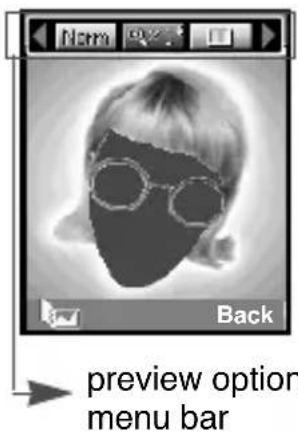
-
Frame ( ) : Select the desired one from 7 preset frames.
-
Image quality (Norm): Fine/ Normal/ Basic.
-
Digital zoom (2x1): x1, x2, x4
-
Tone (☐): Colour(☐)/ Sepia(☐)/ Black and white (☐)
-
Brightness ( ) : -2, -1, 0, +1, +2
-
Timer ( [Bulf]: Off, 3 sec, 5 sec
-
Memory (☐) : Shows the current memory status.
! Note If the memory is full, "Memory full" message is popped up and you cannot save a photo. Create space by deleting old photos in My photos.
-
Flash ( )
-
Center the desired option menu using the left/right navigation keys.
-
Select the desired value with the up/down navigation keys.
-
After finishing all the setting, focus on the subject to capture and press the Camera key or OK key. With a click, the image is captured and the following menu bar appears.
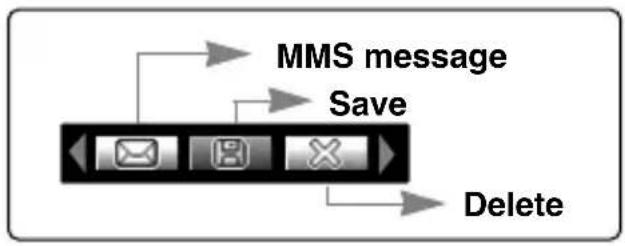
flowchart
graph TD
    A["Save"] --> B["MMS message"]
    B --> C["Delete"]
Note If Auto save [Menu-8-4-1] is set to On, the captured image is automatically saved without displaying this menu bar. (Refer to page 76.)
- To save the image, center the ( [E] ) and press OK. If you don't want to save the image, center the ( [X] ) and press OK.
You can also send the image via multimedia message by selecting ( ).
My photos
Menu-8-3
Press the Menu key and select Camera → My photos using navigation keys.
All the photos taken in the Take photo and Take in modes are stored in this menu. The latest taken picture comes first.
The photos are classified into General photos, Mode photos, and Phonebook photos. And in All photos, you can view all the photos.
With pictures, you can do the following by pressing the left soft key [Options].
Delete: Deletes the selected photo.
Note To clear up the My photos, go to Camera → Settings → Delete all photos [Menu-8-4-2].
▶ Send via MMS: You can also send the image via multimedia message by selecting this menu. For further information regarding multimedia message writing, refer to page 49.
Set as wallpaper: You can set the photo as wallpaper.
Rename: You can change the name of the selected photo.
Information: You can check the name, resolution, size, and date and time of the selected photo.
Settings
Menu-8-4
Press the Menu key and select Camera → Settings using navigation keys.
Auto save: If you set this On, the captured images are automatically saved without displaying the Save menu bar.
Delete all photos: Use this menu to delete all the photos. You are asked to confirm this action.
Memory status
Menu-8-5
Press the Menu key and select Camera → Memory status using navigation keys.
Profiles
Menu-9-1
In Profiles, you can adjust and customise the phone tones for different events, environments, or caller groups.
There are six preset profiles: Vibrate Only, Silent, General, Loud, Headset and Car. Each profile can be personalised.
Press the menu key ( ) and select Profiles using navigation keys.
Changing the profile
(Menu-9-1-1)
- A list of profiles is displayed.
- In the Profile list, scroll to the profile you want to activate and press the left soft key [Select] or OK key (OK).
- Then, select Activate.
Customising profiles - Personalise
(Menu-9-1-2)
Scroll to the desired profile in the Profile list and select Personalise. The profile setting option opens. Set the option as required.
- Call alert type: Set the alert type for incoming calls.
- Ring tone: Select the desired ring tone from the list. Scroll through the list using up/down navigation keys. You can hear the desired tone prior to making a selection.
- Ring volume: Set the volume of the ringing tone.
- Message alert type: Select the alert type for receiving a message.
- Message tone: Select the alert tone for receiving a message.
- Keypad tone: Select the desired keypad tone.
- Keypad volume: Set the volume of keypad tone.
-
Effect sound volume: Set the volume of effect sound.
-
Power on/off volume: Set the volume of the ringing tone when switching the phone on/off.
- Auto answer: (only in Headset profile and Car profile) You can activate the automatic answer feature. Select when the phone answers automatically.
▶ Off: Deactivates the Auto answer feature.
After 5 secs: After 5 seconds, the phone will answer automatically.
After 10 secs: After 10 seconds, the phone will answer automatically.
Customising profiles - Rename
(Menu-9-1-3)
You can rename a profile and give it any name you want. Vibrate only, Headset and Car profiles cannot be renamed.
- To change the name of a profile, scroll to the profile in the profile list and select Rename.
- Key in the desired name and press the OK key or the left soft key [OK].
Press the menu key ( ) and select Settings using the navigation keys.
Date & Time
Menu-9-2
This option lets you change the current time and date displayed.
The following options are available.
Set date
(Menu-9-2-1)
Use this to enter the day, month and year. You can change the date format via the Date format menu option.
Date format
(Menu-9-2-2)
DD/MM/YYYY (day/month/year)
MM/DD/YYYY (month/day/year)
YYYY/MM/DD (year/month/day)
Set time
(Menu-9-2-3)
Use this to enter the current time. You can choose the time format via the Time format menu option.
Time format
(Menu-9-2-4)
24-hours
12-hours
Phone settings
Menu-9-3
Many features of your phone can be customised to suit your preferences. All of these features are accessed via the Phone settings menu.
Display settings
(Menu-9-3-1)
▶ Wallpaper: Use this to set up the display on the LCD screen in standby mode.
Menu colour: Your phone provides you with 4 menu colour themes. Set the menu colour by scrolling and pressing the left soft key [Select].
Greeting note: If you select On, you can edit the text which will be displayed in standby mode
Backlight: Use this to select whether or not the phone uses the backlight. A small increase in standby/talk time can be achieved by turning the backlight off.
LCD contrast: You can set the brightness of LCD by pressing
Information window: You can preview the current state of the selected menu before opening the menu. The state is shown on the bottom of the screen.
Language
(Menu-9-3-2)
You can select the display language. When the language option is set to Automatic, the language is automatically selected according to the language of the SIM card used. English will be set if the language on the SIM card is not supported by the phone.
Call settings
Menu-9-4
To change the settings for call diverting.
Call divert
(Menu-9-4-1)
When this network service is activated, you can direct your incoming calls to another number, for example, to your voice mailbox number. For details, contact your network operator. Select one of the divert options, for example, select If busy to divert voice calls when your number is busy or when you reject incoming calls.
The following options are available.
All voice calls: Diverts all voice calls unconditionally.
If busy: Diverts voice calls when the phone is in use.
If no reply: Diverts voice calls which you do not answer.
If out of reach: Diverts voice calls when the phone is switched off or out of coverage.
All data calls: Diverts to a number with a PC connection unconditionally.
All fax calls: Diverts to a number with a fax connection unconditionally.
Each option has the following menu:
▶ Activate: Activates the corresponding service.
- To voice mail centre: Forwards to message centre. This function does not apply to All data calls and All fax calls menus.
- To other number: Input the number for call diverting.
- To favourite number: After entering up to 5 frequently used phone numbers, you can divert calls to them.
Cancel: Cancels the selected call divert.
▶ View status: You can check the status of the service.
Cancel all: Cancels all call divert settings.
Answer mode
(Menu-9-4-2)
Select the desired mode to answer a call.
▶ Flip open: When the phone rings, you can answer a call simply by opening the folder.
▶ Press any key: When the phone rings, you can answer a call by pressing any key except the 🔒 key and the right soft key ( ).
▶ Send only: You can answer a call only by pressing the send key.
Send my number
(Menu-9-4-3)
This network service lets you decide whether your phone number is displayed (On) or hidden (Off) from the person you are calling. Select Set by network to reset the phone to the setting that you have agreed upon with your service provider.
Call waiting
(Menu-9-4-4)
The network will notify you of a new incoming call while you have a call in progress. Select Activate to request the network to activate call waiting, Cancel to request the network to deactivate call waiting, or View status, to check if the function is active or not.
Minute minder
(Menu-9-4-5)
When set to On, the phone will beep every minute during an outgoing call to keep you informed of the length of the call.
Auto redial
(Menu-9-4-6)
Select On, and your phone will make a maximum of four attempts to connect the call after an unsuccessful call attempt.
Closed user group (Network dependent)
(Menu-9-4-7)
Restricts usage of the phone with numbers that belong to certain user groups. When this function is used, every outgoing call is associated with a group index. If a group index is specified, it is used for all outgoing calls. If no group index is specified, the network will use the preferential index (a specific index that is stored in the network).
Default: Activates the default group agreed on with the network operator.
Set: Select this to activate the selected CUG Index.
Edit: You can edit the CUG name and CUG Index.
▶ Delete: Delets the selected CUG.
▶ Delete all: Delets all CUG.
Security settings
Menu-9-5
Various passwords are used to protect certain features of your phone. Refer to page 24-25 for the various passwords.
PIN code request
(Menu-9-5-1)
When the PIN code request feature is enabled, you must enter your PIN each time you switch the phone on. Consequently, any person who does not have your PIN cannot use your phone without your approval.
Note Before disabling the PIN code request feature, you must enter your PIN.
The following options are available:
- On: You must enter the PIN each time the phone is switched on.
- Off: The phone connects directly to the network when you switch it on.
Phone lock
(Menu-9-5-2)
When the Phone lock feature is enabled, the phone is locked and you must enter the phone password each time the phone is switched on.
The password is factory set to 0000. To change the phone password, refer to the Change codes–Security code menu option (Menu-9-5-5-1). Once the correct password has been entered, you can use the phone until you switch it off.
The following options are available:
1 Power on
On: You are required to enter the phone password when you switch the phone on.
Off: You do not need to enter the phone password when you switch the phone on.
▶ Automatic: Your phone will request security code only when you change your SIM card.
2 Immediately
After entering the correct security code, the phone will lock after going into the idle state. If you want to disable this phone lock, you should enter the right security code after pressing the right soft key. If you power off in the phone lock state, when the phone is next powered on, the phone is in the lock state.
Call barring (Network dependent)
(Menu-9-5-3)
Call barring lets you restrict the making and receiving of calls with your phone. For this function, you need the barring password, which you can obtain from your service provider.
The following options are available:
▶ All outgoing: No call can be made.
International: International calls cannot be made.
International when roam: When abroad, calls can be made only to numbers within the current country and to your home country, the country where your home network provider is located.
All incoming: No call can be received.
Incoming when roam: Calls cannot be received when you are using your phone outside your home service area.
▶ Cancel all: All call barring settings are deactivated; calls can be made and received normally.
Change password: Use this to set and change the call barring password obtained from your service provider using this option. You must enter the current password before you can specify a new one. Once you have entered a new password, you are asked to confirm it by entering it again.
Note To use Call barring service, you must input the network password. When calls are barred, calls may be possible to certain emergency numbers on some networks.
Fixed dial number (FDN)
(SIM dependent)
(Menu-9-5-4)
Use this to restrict your outgoing calls to selected phone numbers, if this function is supported by your SIM card. The PIN2 code is required.
The following options are available:
▶ Activate: Use this to only call phone numbers saved in the phonebook. You must enter your PIN2 code.
▶ Cancel: Allows you to call any number.
Number list: Use this to view the numbers saved as fixed dial numbers.
Note Not all SIM cards have a PIN2. If your SIM card does not, this menu option is not displayed.
Change codes
(Menu-9-5-5)
The Change codes feature lets you change your current password to a new one. You must enter the current password before you can specify a new one.
Use this to change the access codes: Security code, PIN2 code
Note PIN: Personal Identification Number
Network settings
Menu-9-6
The Network settings feature enables you to indicate whether the network used when roaming (outside your home area) is selected automatically, manually or preferably.
Note You can select a network other than your home network only if it has a valid roaming agreement with your home network.
Automatic
(Menu-9-6-1)
Use this to set the phone to automatically search for and select one of the cellular networks available in your area.
The phone will default back to Automatic if it is switched off.
Manual
(Menu-9-6-2)
If you want to select the desired network manually from a list of network. If the connection to the manually selected network is lost, the phone will sound an error tone and ask you to select a network again. The selected network must have a roaming agreement with your home network, that is, the operator whose SIM card is in your phone. The phone will let you select another network if the phone fails to access the selected network. If you switch off the phone, the phone will be reset to Automatic.
Preferred
(Menu-9-6-3)
You can set a list of preferred networks the handset should attempt to register with first, before attempting to register to any other networks. This list is created from the handset's predefined list of known networks.
GPRS setting
Menu-9-7
GPRS(General Packet Radio Service) is a technology that allows mobile phones to be used for sending and receiving data over the mobile network. GPRS is a data bearer that enables wireless access to data network such as the Internet.
Before you can use GPRS technology
- You need to subscribe to the GPRS service. For availability and subscription to GPRS service, contact your network operator or service provider.
- You need to save the GPRS settings for the applications used over GPRS.
Power on
(Menu-9-7-1)
If you select Power on and you are in a network that supports GPRS, the phone registers to the GPRS network and sending short messages will be done via GPRS. Also, starting an active packet data connection, for example, to send and receive e-mail, is quicker.
When needed
(Menu-9-7-2)
If you select When needed, the phone will use a GPRS connection only if you start an application or action that needs it. The GPRS connection is closed after it is no longer required by any application.
Note If there is no GPRS coverage and you have chosen Automatic, the phone will periodically try to establish a connection.
Internet
Menu-9-8
You can access various WAP (Wireless Application Protocol) services such as banking, news, weather reports and flight information. These services are specially designed for mobile phones and they are maintained by WAP service providers.
Check the availability of WAP services, pricing and tariffs with your network operator and/or the service provider whose service you wish to use. Service providers will also give you instructions on how to use their services.
To launch the browser in standby mode, press either the t-zone key ( ) or press and hold the OK key.
Once connected, the homepage is displayed. The content depends on the service provider.
To exit the browser at any time, press the ( ) key. The phone will return to the standby mode.
Navigating with the WAP browser
You can surf the Internet using either the phone keys or the WAP browser menu.
Using the phone keys
When surfing the Internet, the phone keys function differently to phone mode.
| Key Description | |
| C keyOK key | Scrolls each line of the content areaup/down navReturns to the previous pageSelects options and confirms actions |
Using the WAP browser menu
There are various menu options available when surfing the Mobile Web.
Note The WAP browser menus may vary, depending on your browser version.
Home
(Menu-9-8-1)
Connects to a homepage. The homepage will be the site which is defined in the activated profile. It will be defined by the service provider if you have not defined it in the activated profile.
Bookmarks
(Menu-9-8-2)
This menu allows you to store the URL of favourite web pages for easy access at a later time.
To create a bookmark
- Press the left soft key [Options].
- Select Add new and press the OK key.
- After entering the desired URL and title, press the OK key.
* Tip: Use the press

key and

key to enter symbols. To enter “.”,
After selecting a desired bookmark, the following options are available.
Connect: Connects to the selected bookmark.
▶ Add new: Select this to create a new bookmark.
Edit: You can edit the URL and/or the title of the selected bookmark.
▶ Delete all: Deletes all the bookmarks.
Profiles
(Menu-9-8-3)
A profile is the network information used to connect to the Internet. T-mobile supports three kinds of profile.
1. t-zones
If you want to connect the server via WAP 2.0, activate this profile.
2. t-zones business
3. t-zones GPRS
If you want to connect the WAP server over GPRS, activate this profile.
4. t-zones CSD
If you want to connect the WAP server over CSD, activate this profile. For more information, consult T-mobile.
Each profile has submenus as follows:
▶ Activate: Activates the selected profile.
▶ Settings: Use this to edit and change WAP settings for the selected profile.
- Homepage: This setting allows you to enter the address (URL) of a site you want to use as homepage. You do not need to type http:// at the front of each URL as the WAP Browser will automatically add it.
- Bearer: You can set the bearer data service.
1 Data
2 GPRS
- Data settings: Appears only if you select Data Settings as a Bearer / service.
IP address: Enter the IP address of the WAP gateway you want.
Dial number: Enter the telephone number to dial to access your WAP gateway.
User ID: The users identity for your dial-up server (and NOT the WAP gateway).
Password: The password required by your dial-up server (and NOT the WAP gateway) to identify you.
Call type: Select the type of data call : Analogue of Digital (ISDN)
Call speed: The speed of your data connection ; 9600 or 14400
Linger time: You need to enter timeout period. After entering that, the WAP navigation service will be unavailable if any data is not input or transferred.
- GPRS settings: The service settings are only available when GPRS is chosen as a bearer service.
IP address: Input the IP address of the WAP gateway you access.
APN: Input the APN of the GPRS.
User ID: The users identify for your APN server.
Password: The password required by your APN server.
- Connection Type: The options for connection type are Temporary or Continuous and depend on the gateway you are using.
Continuous
A confirmed delivery mechanism but generates more network traffic.
Temporary
A non-confirmed (connectionless) service.
HTTP
Connecting Clients to Server directly in HTTP
- Proxy settings
IP address: Input the IP address of the Proxy server you access.
Port: Input the Proxy Port
- DNS settings
Primary server: Input the IP address of the primary DNS server you access
Secondary server: Input the IP address of the secondary DNS server you access
- Secure settings: According to the used gateway port, you can choose this option as On or Off.
- Display image: You can select whether images on WAP cards are displayed or not.
Rename: You can change the profile name.
▶ Add new: You can add a new profile.
Go to URL
(Menu-9-8-4)
You can connect directly to the site you want. After entering a specific URL, press the OK key.
Cache settings
(Menu-9-8-5)
The information or services you have accessed are saved in the cache memory of the phone.
Clear cache
Removes all context saved in cache.
Check cache
Set a value whether a connection attempt is made through cache or not.
Note
A cache is a buffer memory, which is used to save data temporarily.
Cookies settings
(Menu-9-8-6)
The information or services you have accessed are saved in the cache memory of the phone.
Clear cookies
Removes all context saved in Cookies.
Check cookies
Check whether a cookie is used or not.
Security certification
(Menu-9-8-7)
A list of the available certification is shown.
▶ Authority: You can see the list of authority certificates that have been stored in your phone.
Personal: You can see the list of personal certificates that have been stored in your phone.
Reset profiles
(Menu-9-8-8)
You can reset profiles to return to original settings.
Browser version
(Menu-9-8-9)
The WAP browser version is displayed.
Reset settings
Menu-9-9
You can reset your phone to its default configuration. To do so, proceed, as follows.
- Select the Reset settings menu option.
- You are requested to enter the 4-digit security code.
Note
The security code is preset to 0000. To change this, refer to page 86.
Please check to see if any problem which you may have with your phone is described here before taking it for service or calling a service engineer.
Q How do I view the list of outgoing calls, incoming calls and missed calls?
A Press .
Q How do I clear all call history?
A Press the left soft key and then 3 s ^2 4 s ^2 4 s ^2 .
Q How do I view all numbers saved in the memory?
A Press the up navigation key .
Q does not disappear from the screen.
A Check whether you are in a service area. If you continue to see 📋, turn off the power and wait for approximately 2 minutes before turning it back on. If there is no change, relocate to another area and check again.
Q Connection is poor or is not audible in certain areas.
A In certain areas, signal strength can vary dramatically. Try moving to a different location. Heavy network traffic may affect the ability to connect, or the stability of the call.
Q Connection is poor even when established.
A In certain areas, signal strength can vary dramatically. Try moving to a different location. Heavy network traffic may affect the ability to connect, or the stability of the call.
Q LCD does not turn on.
A Remove and replace the battery and turn on the power. If the phone still does not turn on, charge the battery and try again.
Q An echo can be heard during connection with a certain telephone in a certain area.
A It is called ‘Echo Phenomenon’. It occurs if the volume is too high or caused by special properties (semi electronic telephone exchange) of the machine on the other end.
Q The phone gets warm.
A During long calls, or if games/Internet are used for a long time, the phone may become hot. This is perfectly normal and has no effect upon the life of the product or performance.
Q The bell does not ring, or lamp or LCD blinks only.
A The phone is set to ‘Vibrate only’ or ‘Silent’ in the Profiles menu. Please select ‘General’ or ‘Loud’
Q Standby duration of the phone gradually becomes shorter.
A Batteries have a limited life. When the battery lasts for half its original time, it requires replacement. Only use authorised replacement parts.
Q Usage time of battery becomes shorter.
A If the battery time is short, it may be due to the user environment, or large volume of calls, or weak signals.
Q No number is dialled when you recall a contact entry.
A Check that the numbers have been saved correctly, by using the Contact Search feature. Resave them, if necessary.
Q You cannot be contacted.
A Is your phone switched on (pressed for more than three seconds)? Are you accessing the right cellular network? Have you set an incoming call barring option?
Q I cannot find the lock, PIN, or PUK code, or password?
A The default lock code is ‘0000’. If you forget or lose the lock code, contact your phone dealer. If you forget or lose a PIN or PUK code, or if you have not received such a code, contact your network service provider.
Accessories
There are a variety of accessories available for your mobile phone. You can select these according to your personal communication requirements. Consult your local dealer for availability.
Supplied adapter
This adapter lets you charge the battery while at home or in the office.
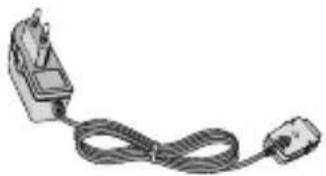
natural_image
Illustration of a handheld electrical plug with coiled cable (no text or symbols)Battery
Standard battery is available.
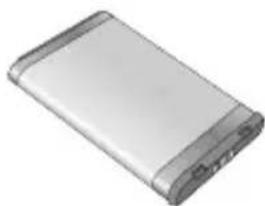
natural_image
Exterior view of a silver rectangular electronic device (no visible text or symbols)Headset
Allows hands-free operation. Includes earpiece and microphone.

natural_image
Line drawing of a medical or electronic device with a coiled cable and earpiece (no text or symbols)Note
• Always use genuine LG accessories. Failure to do this may invalidate your warranty.
• Accessories may be different in different regions; please check with our regional service company or agent for further enquiries.
General
Declaration of Conformity

LG Electronics
Suppliers Details
Name
LG Electronics Inc
Address
LG Electronics Inc. LG Kang-nam Tower 679, Yoksam-dong, Kangnam-gu, Seoul, Korea
Product Details
Product Name
GSM 900 / GSM 1800 Dual Band Terminal Equipment
Model Name
C3300
Trade Name
LG
Applicable Standards Details
R&TTE Directive 1999/5/EC
EN 301 489-7 : 2002
EN 60950-1:2001
EN 50360 :2001
3GPP TS 51.010-1.V5.6.0:2004
Selection according to GCF-CC. V3.12.0 including requirements of EN 301 511
Supplementary Information
The conformity to above standards is verified by 7Layers AG GmbH with Certificate No.(04-510078) and GSM test report (no.4_LGE_1903_GSM_1), EMC test report(no.4_LGE-1903_GSM_EMCa), safety test report(no.S40046) and SAR test report(no.6620_392b)
Declaration
I hereby declare under our sole responsibility that the product mentioned above to which this declaration relates complies with the above mentioned standards and Directives
LG Electronics Inc. Amsterdam Office Veluwezoom 15, 1327 AE Almere, The Netherlands Tel: +31-36-547-8940, e-mail: seokim@lge.com
Name
Issued Date
Jin Seog, Kim / Director
Feb 20, 2005

Signature of representative
- Wichtig
- CB-Service (Cell Broadcast)
- Akku
- Kopfhörer
- D
- C3300
- Table of Contents
- GPRS setting 88
- Internet 89
- Reset settings 94
- Introduction
- Exposure to radio frequency energy
- Radio wave exposure and Specific Absorption Rate (SAR) information
- Product care and maintenance
- Efficient phone operation
- Electronics devices
- Road safety
- Blasting area
- Potentially explosive atmospheres
- In aircraft
- Children
- Emergency calls
- Battery information and care
- Parts of the phone
- Front view
- Rear view
- Open view
- C3300 features
- Display information
- Getting started
- Installing the SIM card and the handset battery
- Remove the battery cover
- Note
- Remove the battery.
- Install the SIM card
- Install the battery.
- Replace the battery cover.
- Charging the battery
- Caution
- Warning
- Disconnecting the adapter
- Turning your phone on and off
- Turning your phone ON
- Turning your phone OFF
- Access codes
- PIN code (4 to 8 digits)
- PIN2 code (4 to 8 digits)
- PUK code (4 to 8 digits)
- PUK2 code (4 to 8 digits)
- Security code (4 to 8 digits)
- Barring password
- General functions
- Making and answering calls
- Making a call
- Making a call using the send key
- Making an international call
- Ending a call
- Making a call from the phonebook (Contacts)
- Adjusting the volume
- Answering a call
- Switching quickly to Vibrate only mode
- Signal strength
- Entering text
- T9 mode
- ABC mode
- mode (Number mode)
- Changing the text input mode
- Using the T9 mode
- Example: Press
- to type Good
- Notice
- Using the ABC mode
- Using the 123(Number) mode
- Contacts
- In call menu
- During a call
- Making a second call
- Switching between two calls
- Answering an incoming call
- Rejecting an incoming call
- Muting the microphone
- Switching DTMF tones on during a call
- Multiparty or conference calls
- Setting up a multiparty call
- Putting a multiparty call on hold
- Activate the multiparty call on hold
- Adding calls to the multiparty call
- Putting a member of a multiparty call on hold
- Displaying callers in a multiparty call
- Having a private call during a multiparty call
- Ending a multiparty call
- Menu tree
- Special
- My Media
- Call register
- Messages
- t-zones
- Contacts
- Organiser
- Camera
- Settings
- Selecting functions and options
- Special
- My Media
- Photos
- Pictures
- Sounds
- Games & more
- Call register (Dependent on the network service).
- Missed calls
- Received calls
- Dialled calls
- Delete recent calls
- Call charges
- Call duration
- Call costs
- Settings
- GPRS information
- Data volumes
- Write text message
- Write multimedia messages
- Inbox
- Outbox
- The messages of which transmission was completed has the following options.
- The messages of which transmission is in progress has the following options.
- Drafts
- Listen to voice mail
- Info message (Network dependent)
- Read
- Topics (Network dependent)
- Templates
- Text templates
- Multimedia templates
- Signature
- Text message
- Multimedia message
- Voice mail centre
- Info message
- Push message
- How to access t-zones
- Search
- Add new
- Caller groups
- Speed dial
- Set memory
- Search by
- View options
- Copy all
- Delete all
- Information
- Alarm clock
- Scheduler
- Calculator
- Using the Calculator
- Unit converter
- World time
- Voice recorder
- Record
- View list
- Memory status
- S/W version
- Camera
- Take photo
- Take in modes
- My photos
- Profiles
- Changing the profile
- Customising profiles - Personalise
- Customising profiles - Rename
- Date & Time
- Set date
- Date format
- Set time
- Time format
- Phone settings
- Display settings
- Language
- Call settings
- Call divert
- Answer mode
- Send my number
- Call waiting
- Minute minder
- Auto redial
- Closed user group (Network dependent)
- Security settings
- PIN code request
- Phone lock
- Power on
- Immediately
- Call barring (Network dependent)
- Fixed dial number (FDN)
- (SIM dependent)
- Change codes
- Network settings
- Automatic
- Manual
- Preferred
- GPRS setting
- Power on
- When needed
- Internet
- Navigating with the WAP browser
- Using the phone keys
- Using the WAP browser menu
- Home
- Bookmarks
- To create a bookmark
- t-zones
- t-zones business
- t-zones GPRS
- t-zones CSD
- Continuous
- Temporary
- HTTP
- - Proxy settings
- - DNS settings
- Go to URL
- Cache settings
- Clear cache
- Check cache
- Cookies settings
- Clear cookies
- Check cookies
- Security certification
- Reset profiles
- Browser version
- Reset settings
- Accessories
- Supplied adapter
- Battery
- Headset
- General
- Declaration of Conformity
- Suppliers Details
- Product Details
- Applicable Standards Details
- Supplementary Information
- Declaration
Brand : OKI
Model : C3300
Category : Printer