
JetForce - Scooter PEUGEOT - Free user manual and instructions
Find the device manual for free JetForce PEUGEOT in PDF.


| Type of product | Scooter with internal combustion engine |
| Engine type (50 cc) | Single cylinder 2-stroke direct injection (TSDI), liquid cooled |
| Engine type (125 cc) | Single cylinder 4-stroke indirect injection (EFI), liquid cooled |
| Displacement (50 cc) | 49.9 cc |
| Displacement (125 cc) | 124.8 cc |
| Max power (50 cc) | 3.75 kW at 7500 rpm |
| Max power (125 cc) | 9.2 kW at 8750 rpm |
| Fuel system (50 cc) | Direct electronic injection (TSDI) |
| Fuel system (125 cc) | Indirect electronic injection (EFI) |
| Cooling system | Liquid cooled |
| Transmission | 2 variable pulleys and Vee belt, centrifugal automatic clutch |
| Overall length (50 cc) | 1914 mm |
| Overall length (125 cc) | 1918 mm |
| Width | 740 mm |
| Height with mirror (50 cc) | 1260 mm |
| Height with mirror (125 cc) | 1279 mm |
| Wheelbase (50 cc) | 1314 mm |
| Wheelbase (125 cc) | 1369 mm |
| Saddle height (50 cc) | 820 mm |
| Saddle height (125 cc) | 845 mm |
| Unladen weight (50 cc) | 115 kg |
| Unladen weight (125 cc) | 149 kg |
| Front tyre (both) | 130/60 - 13 |
| Rear tyre (50 cc) | 130/60 - 13 |
| Rear tyre (125 cc) | 140/60 - 13 |
| Front suspension (50 cc) | ∅ 32 mm hydraulic telescopic fork, travel 85 mm |
| Front suspension (125 cc) | ∅ 36 mm hydraulic telescopic fork, travel 95 mm |
| Rear suspension | Central hydraulic shock absorber, travel 90-95 mm |
| Braking system (50 cc) | Conventional hydraulic system |
| Braking system (125 cc) | ABS/PBS integral hydraulic braking system |
| Immobiliser system | Transponder immobiliser with red master key and black keys |
| Instrumentation | Multi-function display, speedometer, rev counter, temperature gauge, diagnostic lights |
Frequently Asked Questions - JetForce PEUGEOT
User questions about JetForce PEUGEOT
0 question about this device. Answer the ones you know or ask your own.
Ask a new question about this device
Download the instructions for your Scooter in PDF format for free! Find your manual JetForce - PEUGEOT and take your electronic device back in hand. On this page are published all the documents necessary for the use of your device. JetForce by PEUGEOT.
USER MANUAL JetForce PEUGEOT
natural_image
Red and silver sports scooter with black seat and silver body, no visible text or symbolsPRESENTATION OF THE MACHINE
CONTENTS
CHARACTERISTICS ....5
Engine....5
Dimensions and weight 5
50 CC ENGINES....6
50 cc 2-stroke TSDI liquid cooled engine....6
Description 7
Separate lubrication....7
Cooling....7
CATALYTIC EXHAUST 8
Composition of the catalytic exhaust system: 8
FUNCTIONING OF THE CATALYTIC CONVERTER EXHAUST....8
Definition......8
INJECTION SYSTEMS / TSDI IGNITION....9
Introduction 9
SYSTEM COMPONENTS....10
Functioning principle 10
PRESENTATION OF THE 2 STROKE INJECTION SYSTEM ....11
DIAGNOSTIC....12
Warning....12
Fault processing principle ....12
Self-diagnostic principle....12
125 CC ENGINES....13
125 cc 4-stroke EFI liquid cooled engine....13
Description 14
Lubrication 14
Cooling....14
Cooling system functioning principle ....14
INTRODUCTION ....15
ADVANTAGES OF THE INJECTION SYSTEM....15
Fuel injector....15
INJECTION SYSTEM / EFI IGNITION....16
Reminder of operation....16
FRAME....17
Frame....17
Suspension....18
Tyres....18
Suspension....19
Tyres....19
BRAKES....20
Reminder of functioning of the different braking systems....20
ABS/PBS hydraulic braking system....21
ABS/PBS SYSTEM SYNOPTICS....22
BODY PANELS....23
ELECTRICITY 25
Functioning principle of the 50 cc starter and lighting circuits....25
50 cc ignition on or engine running....26
50 cc starting function 27
Direction indicator functioning principle (125 cc)....28
Hazard warning lights with ignition on (125 cc)....29
CONTENTS
Hazard warning lights without ignition on (125 cc)....30
Functioning principle of the ABS/PBS system (125 cc)....31
ABS/PBS ELYSTAR 125cc ....32
TRANSPONDER IMMOBILISER ....33
System programming 33
Reminder of the key memory procedure....33
Key memory check....33
Additional information....33
Synoptics 34
INSTRUMENT CLUSTER ....36
Description 36
Instrument cluster self-diagnostic when ignition is turned on 36
Description of the multi-function display ....37
MULTI-FUNCTION DISPLAY FUNCTIONS AND SETTINGS ....37
Changing the distance unit ....37
Tripmeter Total/Daily display 38
Daily Km reset....38
Time setting....38
Maintenance reset....39
Fuel gauge self-diagnostic....39
Gauge functioning (8s timer) 39
LOCATION OF COMPONENTS 40
50 cc 40
125 cc 41
SPECIAL TOOLING....42
CHARACTERISTICS
CHARACTERISTICS
Engine
| 50 cm | ^3 125 cm | ^3 |
| Type Single | cylinder 2-stroke direct injection | Single cylinder 4-stroke indirect injection |
| Cooling Liquid | ||
| Bore x stroke | 39.9 x 39.8 mm 57 x 48.9 mm | |
| Cubic capacity | 49.9 cc 124.8 cc | |
| Max. power output | 3.75 kW at 7500 rpm 9.2 kW at | 8750 rpm |
| Max. torque at | 6500 rpm 7250 rpm | |
| Fuel system | Direct electronic injection (TSDI) | Indirect electronic injection (EFI) |
| Lubrication Electric oil pump Trochoidal pump | ||
| Transmission | 2 variable pulleys and Vee belt | |
| Clutch | Centrifugal automatic | |
| Spark plug | NGK CPR8E | NGK CR7EB |
| Exhaust | Catalytic | Non-catalytic |
Dimensions and weight
| Overall length | 1914 mm | 1918 mm |
| Width at handlebar | 740 mm | |
| Height with rear view mirror | 1260 | 1279 |
| Wheelbase | 1314 mm | 1369 mm |
| Saddle height: | 820 mm | 845 mm |
| Unladen weight | 115 kg | 149 kg |
50 CC ENGINES
50 cc 2-stroke TSDI liquid cooled engine
45 km/h version
Sport version
Unlimited version (registered)

natural_image
Exterior view of a modern electric motor assembly with a black and silver housing (no visible text or symbols)
natural_image
Technical line drawings of various mechanical components, including motor casings and housing (no text or labels)Description
HL1 engine marking
Separate lubrication
1.2 l tank capacity

natural_image
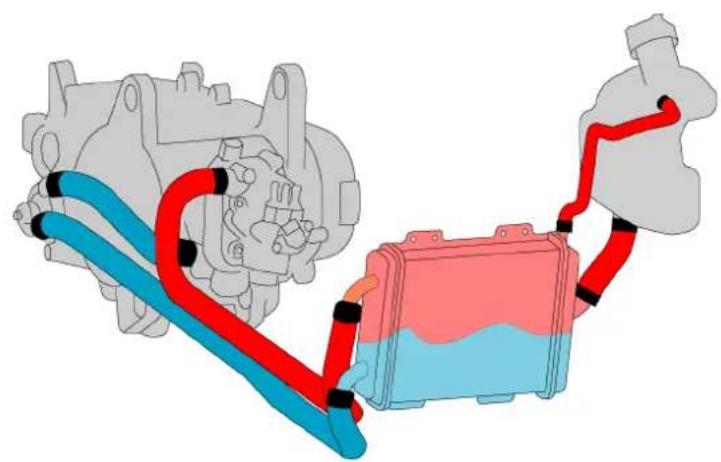
Technical line drawing of a mechanical assembly with orange cable and component (no text or symbols)Cooling
1.21 capacity
natural_image
Diagram of a mechanical assembly with blue and red tubing connecting components (no text or labels)CATALYTIC EXHAUST
Composition of the catalytic exhaust system:
The catalytic exhaust system is distinguished by the fitting of a « catalyser cone » just after the exhaust inlet cone. All the exhaust gases are fed through the catalyser cone.

- Exhaust pipe
- Heat insulation
- Catalyser cone
FUNCTIONING OF THE CATALYTIC CONVERTER EXHAUST
Definition
The catalyser is a block used to facilitate and acceleration chemical reactions without being modified itself
Composition of the catalytic block
The catalytic block is composed of a metal grid, impregnated with precious metals, rolled inside a steel tube forming a honeycomb.
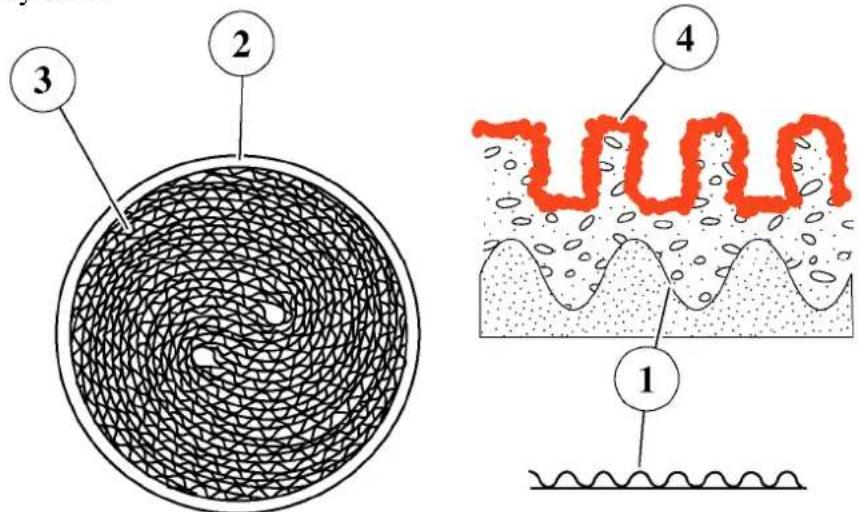
- Metal grid
- Steel tube
- Honeycomb
- Impregnation with precious metals (Platinum, palladium, rhodium, etc...)
INJECTION SYSTEMS / TSDI IGNITION
Introduction
Of the throttle angle / engine speed type, the SYNERJECT system was developed for the following applications:
Monopoint sequential injection
Static timing
The system basic principle consists in measuring the engine speed and load (throttle opening) in order to determine the optimum quantity of fuel injected
This system is used on the JET FORCE 50 scooter and requires NO ADJUSTMENT (Ditto Looxor and Elystar 50 cc).
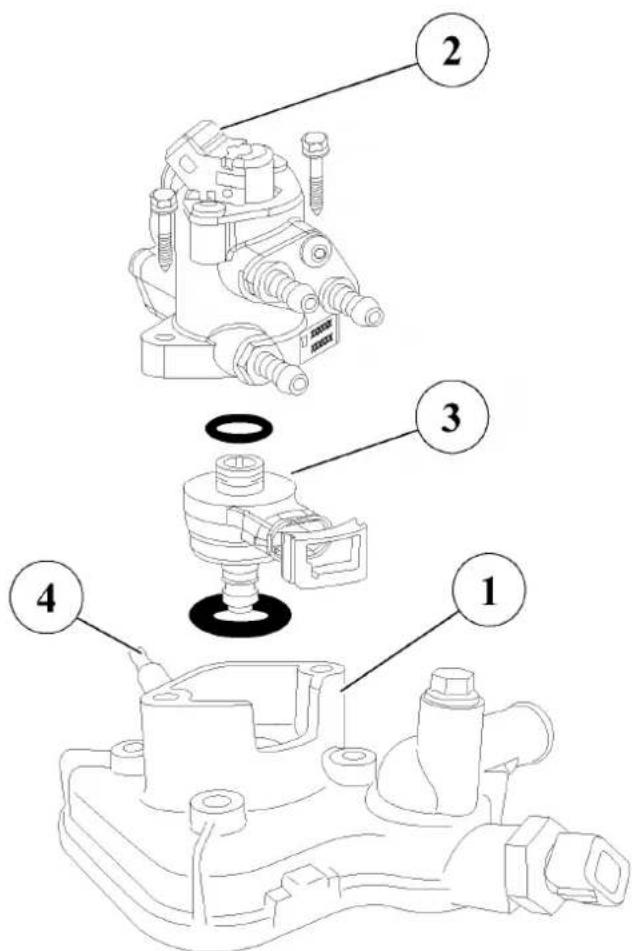
- Cylinder head
- Petrol injector
- Air injector
- Spark plug
SYSTEM COMPONENTS
Functioning principle

- Crank assembly
- Compressor
- Throttle unit
- Spark plug
- Lubrication system
- Feed rail
a / petrol injector
b / air injector
c/ petrol pressure regulator
A. Fuel inlet
B. Fuel return
C. Pressurised air inlet
PRESENTATION OF THE 2 STROKE INJECTION SYSTEM

Fuel system
- Fuel tank
- Fuel pump
- Pressure regulator
Ignition system:
- Coil and suppressor
- Resistive spark plug
Injection system
- Petrol injector
- Air injector
Lubrication system
- Oil tank
- Oil pump
Compressed air circuit
- Compressor
Transponder circuit
- Immobiliser module
- Transponder
DIAGNOSTIC
Warning

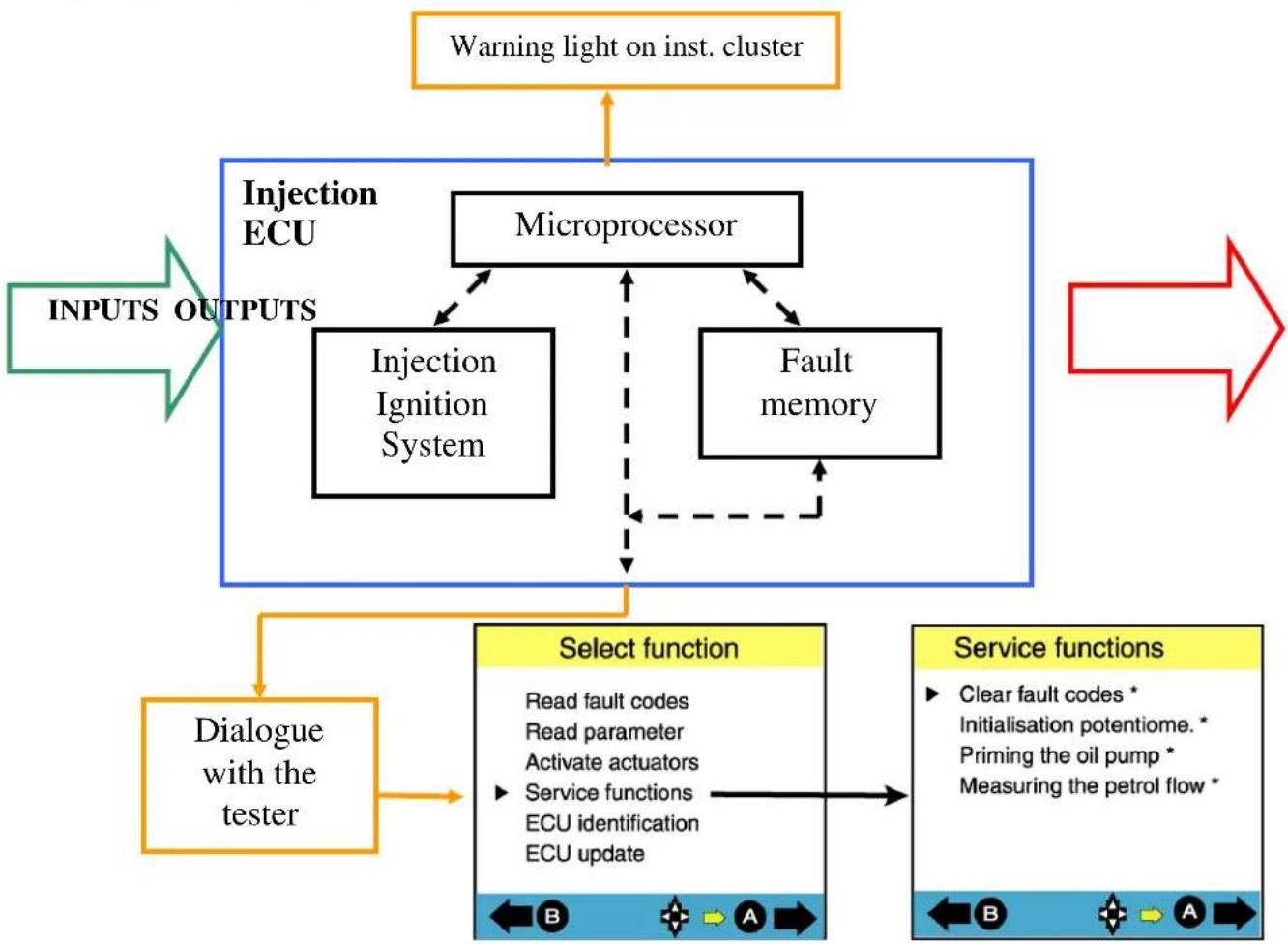
A LED comes on on the instrument cluster to warn the rider of a fault on the injection and ignition system ELECTRICS
Fault processing principle
Three priority levels
1 - “serious safety” fault: fault memorised in ECU and LED stays on
2 - “serious” fault: fault memorised in ECU and LED flashes
3 - “ minor ” fault: fault memorised in the ECU without lighting the warning light
Note: When the ignition is turned on, the LED stays on to check it is functioning correctly
Self-diagnostic principle
flowchart
graph TD
    A["Warning light on inst. cluster"] --> B["Microprocessor"]
    C["INPUTS OUTPUTS"] --> D["Injection ECU"]
    D --> B
    B --> E["Injection Ignition System"]
    B --> F["Fault memory"]
    E --> G["Select function"]
    F --> G
    G --> H["Service functions"]
    H --> I["Clear fault codes *"]
    H --> J["Initialization potentiome *"]
    H --> K["Priming the oil pump *"]
    H --> L["Measuring the petrol flow *"]
    G --> M["Read fault codes"]
    G --> N["Read parameter"]
    G --> O["Activate actuators"]
    G --> P["Service functions"]
    G --> Q["ECU identification"]
    G --> R["ECU update"]
    M --> S["Dialogue with the tester"]
    N --> S
    O --> S
    P --> S
    Q --> S
    R --> S
    S --> T["Back to Dialogue with the tester"]
125 CC ENGINES
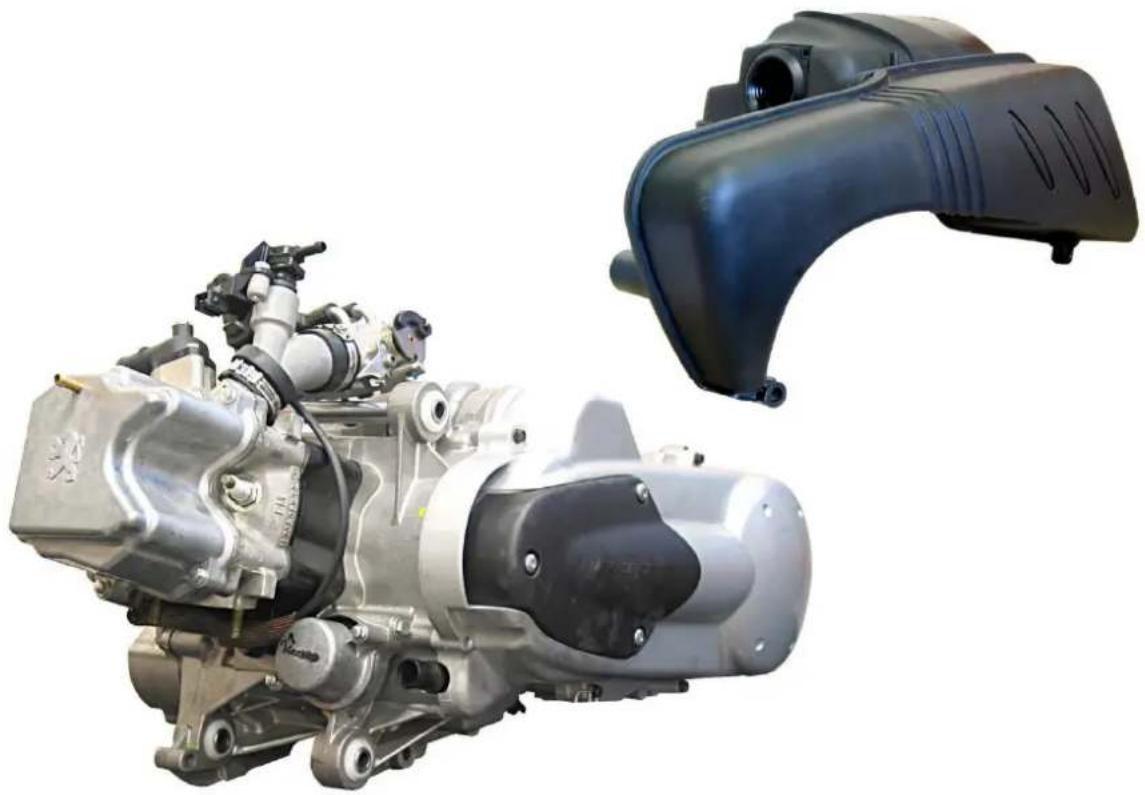
125 cc 4-stroke EFI liquid cooled engine
Naturally aspirated version
Turbo version (compressor)
natural_image
Two industrial mechanical components, one metallic and one black, displayed against a white background (no visible text or symbols)
natural_image
Exploded view diagram of a mechanical assembly showing exploded and assembled views (no text or labels)Description
FD5 engine markings
Lubrication
1.25 l capacity
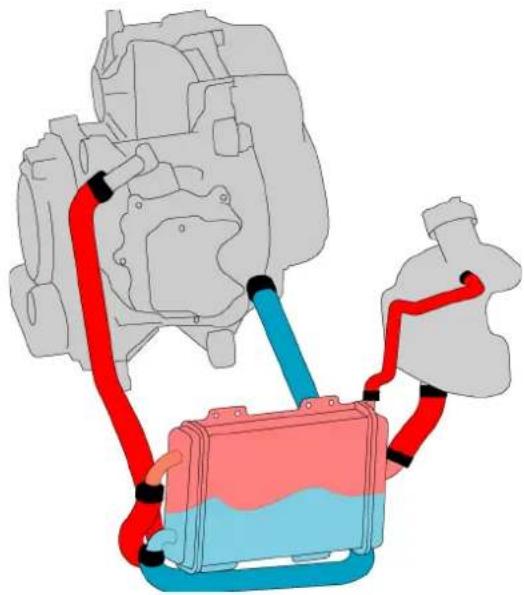
Cooling
1.5 l capacity
natural_image
Diagram of a vehicle battery pack connected to a mechanical component, showing red and blue tubing (no text or labels)Cooling system functioning principle
flowchart
graph TD
    A["ON"] --> B["6"]
    C["OFF"] --> D["3"]
    B --> E["RG-NR"]
    D --> E
    E --> F["15A"]
    F --> G["NR"]
    G --> H["2"]
    H --> I["1"]
    I --> J["VE-NR"]
    K["VE"] --> L["25A"]
    L --> M["RG"]
    N["HEV"] --> O["1"]
    P["HEV"] --> Q["4"]
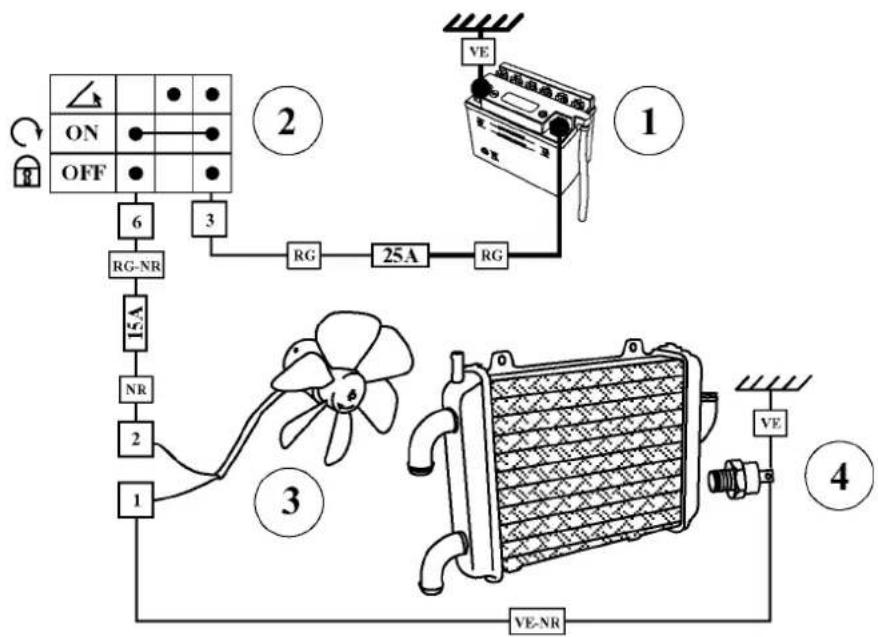
- Battery
- Ignition switch
- Fan
- Heat switch
INTRODUCTION
Of the throttle angle / engine speed type, the EFI system was developed for the following applications: Monopoint sequential injection
Static timing
The system basic principle consists in measuring the engine speed and load (throttle opening) in order to determine the optimum quantity of fuel injected
This system is used on the JET FORCE 125 scooter and requires NO ADJUSTMENT (Ditto Elystar 125 - 150 cc)
ADVANTAGES OF THE INJECTION SYSTEM
Peugeot Motocycles has developed a new generation of engines. Cleaner, more reliable, more economical, these engines comply with the most stringent emission control standards, whilst maintaining a very high level of performance. There are many advantages:
- Reduction in polluting emissions
- Reduction in fuel consumption
- Improved rider comfort
Fuel injector
The injectors are of the electro-magnetically operated single-jet type
The ECU electrical pulses generate a magnetic field in the magnet winding, the core is attracted, the injector plate raised off its seat and releases the pressurised fuel upline of the inlet valve

INJECTION SYSTEM / EFI IGNITION
Reminder of operation

- ECU
- Battery
Fuel system
- Fuel tank
- Fuel pump
- Pressure regulator
Ignition system:
- HT coil
- Resistive spark plug and suppressor
Transponder circuit
- Transponder module
- Transponder
Injection system
- Petrol injector
- Idle control valve
- Air pressure and air temperature sensor
Diagnostic circuit
- Injection diagnostic lamp
- Transponder diagnostic lamp
- Diagnostic plug
FRAME Frame

natural_image
Technical line drawing of automotive chassis components (no text or labels)Steel wrap-round frame (DIRECT PERIMETRIC FRAME - DPF)
Suspension
| 50 cm ^3 | |
| Front suspension: | ∅ 32 mm hydraulic telescopic fork |
| Travel 85 mm | |
| Rear suspension | Central hydraulic shock absorber |
| Travel 95 mm |
Tyres
| Front wheel 13-inch alloy | |
| Front tyre 130/60 - 13 | |
| Front tyre pressure | 2 bar |
| Rear wheel 13-inch alloy | |
| Rear tyre 130/60 - 13 | |
| Rear tyre pressure | 2,2 bar |
natural_image
Technical diagram of a vehicle suspension system with spring, chain, and wheel components (no text or labels)Suspension
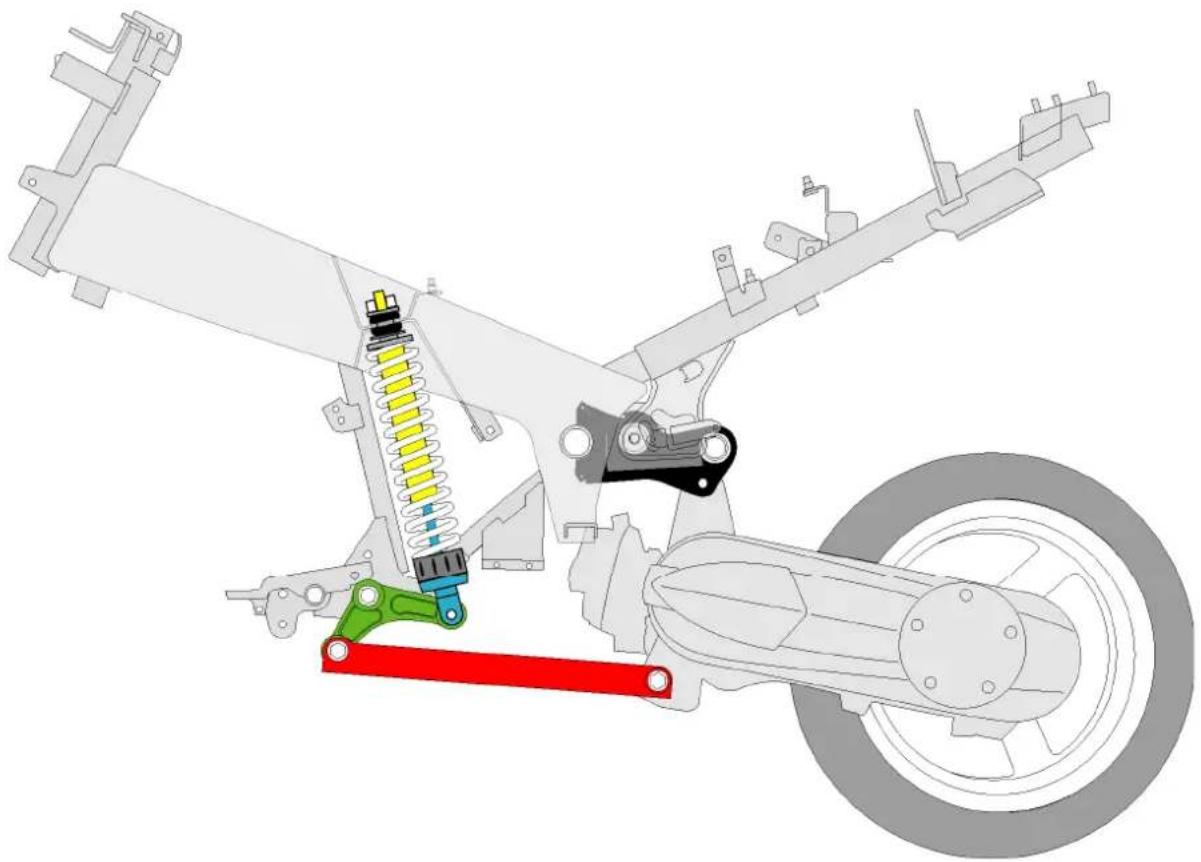
| 125 cm ^3 | |
| Front suspension | ∅ 36 mm hydraulic telescopic fork |
| Travel 95 mm | |
| Rear suspension | Central hydraulic shock absorber |
| Travel 90 mm |
Tyres
| Front wheel 13-inch alloy | |
| Front tyre 130/60 - 13 | |
| Front tyre pressure | 2 bar |
| Rear wheel 13-inch alloy | |
| Rear tyre 140/60 - 13 | |
| Rear tyre pressure | 2,2 bar |

natural_image
Technical illustration of a vehicle suspension system with colored components (no text or labels)BRAKES
Reminder of functioning of the different braking systems
Conventional hydraulic system

natural_image
Pure electrical circuit lines without any symbolsSBC integral hydraulic braking system

natural_image
Pure electrical circuit lines without any symbolsSBC2 integral hydraulic braking system

flowchart
graph TD
    A["Port 1"] --> B["Component 1"]
    B --> C["Component 2"]
    C --> D["Component 3"]
    D --> E["Component 4"]
    E --> F["Port 5"]
    F --> G["Component 6"]
    G --> H["Port 7"]
    H --> I["Component 8"]
    I --> J["Port 9"]
    J --> K["Component 10"]
    K --> L["Port 11"]
    L --> M["Component 12"]
    M --> N["Port 13"]
    N --> O["Component 14"]
    O --> P["Port 15"]
    P --> Q["Component 16"]
    Q --> R["Port 17"]
    R --> S["Component 18"]
    S --> T["Port 19"]
    T --> U["Component 20"]
    U --> V["Port 21"]
    V --> W["Component 22"]
    W --> X["Port 23"]
    X --> Y["Component 24"]
    Y --> Z["Port 25"]
ABS/PBS hydraulic braking system
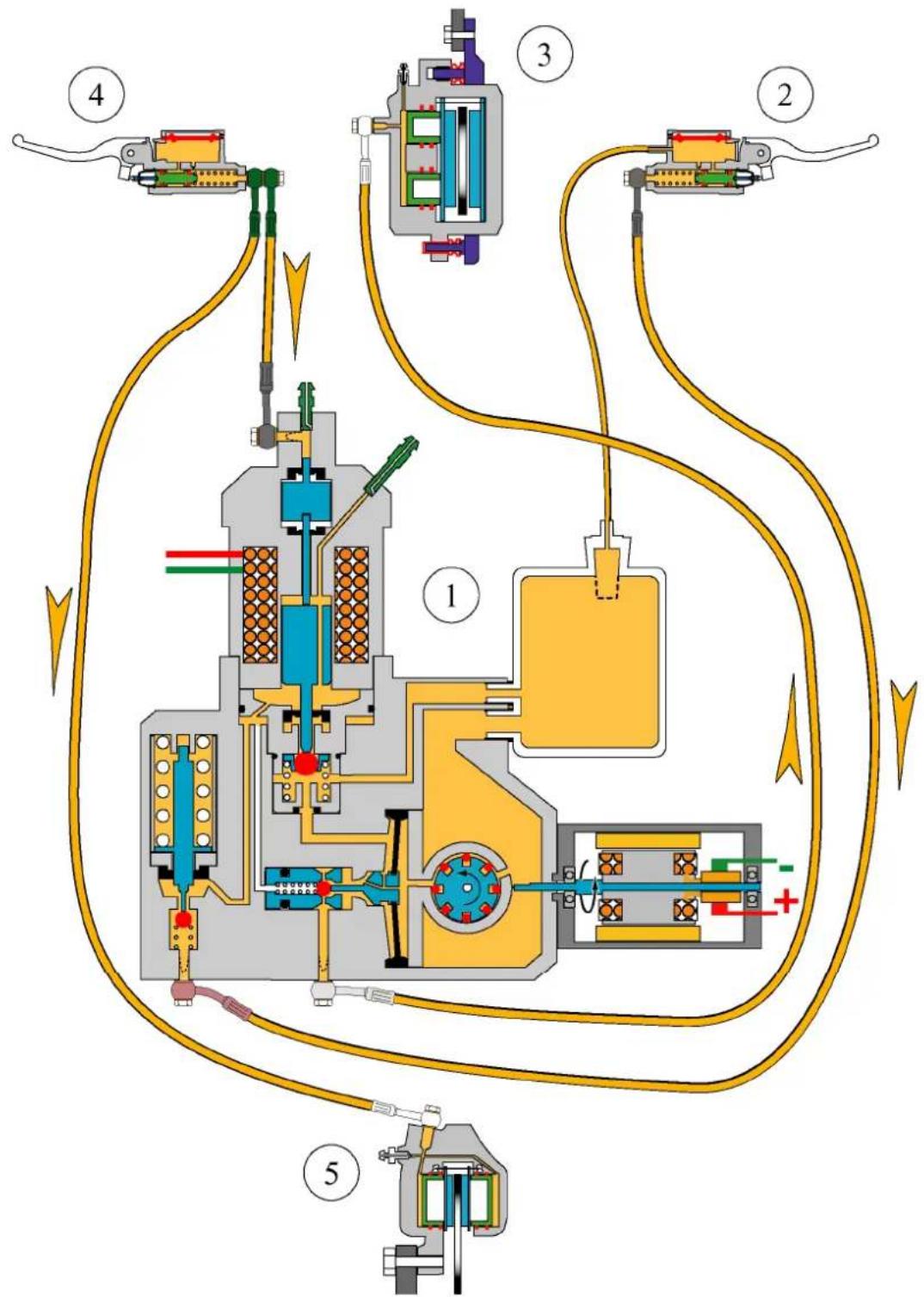
- Braking control unit
- Right-hand brake master cylinder (emergency brake)
- Front brake caliper
- Left-hand brake master cylinder (integral brake)
- Rear brake caliper
ABS/PBS SYSTEM SYNOPTICS

flowchart
graph TD
    A["RH brake lever contactor"] --> B["ABS/PBS ECU"]
    C["RH brake lever contactor"] --> B
    D["Front wheel speed sensor"] --> B
    E["Battery voltage"] --> B
    F["Vehicle coding (PIN code)"] --> B
    B --> G["Software: Manages system operation"]
    B --> H["Calibration: Values specific to machine (mapping)"]
    G --> I["Diagnostic plug"]
    H --> J["Diagnostic light"]
    K["Hydraulic pump"] --> L["Brake light"]
    M["Regulation solenoid valve"] --> N["Main relay"]
    O["Starter relay"] --> P["Instrument cluster"]
    B -.-> Q["Dashed line"]
    Q -.-> R["Diagnostic plug"]
BODY PANELS
BODY PANELS

TRAINING MANUAL: JET FORCE

flowchart
graph TD
    A["BODY PANELS"] --> B["LEGSHIELD TOP PANEL (1)"]
    A --> C["FOOTBOARDS (5)"]
    A --> D["RIDER SADDLE (8)"]
    A --> E["PASSENGER SADDLE AND GRAB HANDLE (15)"]
    B --> F["HANDLBAR FRONT FAIRING (2)"]
    C --> G["FRONT LOWER LEGSHIELDS (4)"]
    D --> H["TUNNELS (6)"]
    E --> I["BATTERY COVER (16)"]
    F --> J["HANDLEBAR REAR FAIRING (3)"]
    G --> K["MUDGUARD AND FORK GUARD (12)"]
    H --> L["BELLYPAN (7)"]
    I --> M["FUEL TANK FAIRING (10)"]
    J --> N["MUDGUARD (13)"]
    K --> O["LEGSHIELD REAR PANEL (11)"]
    L --> P["MUDFLAP AND NUMBER PLATE PANEL (14)"]
    M --> Q["REAR FAIRING AND IMMOBILISER UNIT (17)"]
    N --> R["STORAGE COMPARTMENT TRIM PANELS (18)"]
TRAINING MANUAL: JET FORCE
Page: 24/43
Reproduction or translation, even partial, is forbidden without the written consent of Peugeot Motocycles
ELECTRICITY
Functioning principle of the 50 cc starter and lighting circuits

flowchart
graph TD
    A["①"] --> B["VE"]
    B --> C["ON"]
    B --> D["OFF"]
    C --> E["7.5A"]
    D --> F["6"]
    D --> G["3"]
    E --> H["RG-NR"]
    F --> I["15A"]
    G --> J["RG"]
    K["②"] --> L["VE"]
    M["③"] --> N["VE"]
    O["④"] --> P["VE"]
    Q["⑤"] --> R["VE"]
    S["⑥"] --> T["VE"]
    U["⑦"] --> V["VE"]
    W["⑧"] --> X["VE"]
    Y["⑨"] --> Z["VE"]
    AA["⑩"] --> AB["VE"]
    AC["⑪"] --> AD["VE"]
    AE["⑫"] --> AF["VE"]
    AG["⑬"] --> AH["VE"]
    AI["⑭"] --> AJ["VE"]
    AK["⑮"] --> AL["VE"]
    AM["⑯"] --> AN["VE"]
    AO["⑰"] --> AP["VE"]
    AQ["⑱"] --> AR["VE"]
    AS["⑲"] --> AT["VE"]
    AU["⑳"] --> AV["VE"]
    AW["㉑"] --> AX["VE"]
    AY["㉒"] --> AZ["VE"]
    BA["㉔"] --> BB["VE"]
    BC["㉕"] --> BD["VE"]
    BE["㉖"] --> BF["VE"]
    BG["㉗"] --> BH["VE"]
    BI["㉘"] --> BJ["VE"]
    BK["㉛"] --> BL["VE"]
    BM["㉜"] --> BN["VE"]
    BO["㉝"] --> BP["VE"]
    BQ["㉓"] --> BR["VE"]
    BS["㉔"] --> BT["VE"]
    BU["㉔"] --> BV["VE"]
    BW["㉕"] --> BX["VE"]
    BY["㉖"] --> BZ["VE"]
    CA["㉗"] --> CB["VE"]
    CC["㉘"] --> CD["VE"]
    CE["㉙"] --> CF["VE"]
    DG["㉚"] --> DH["VE"]
- Battery
- Ignition switch
- Starter button
- Lighting control
- Rear light
- Instrument cluster
- Brake light
- High beam
- Dip beam
- Sidelight
- Lighting relay
- Starter motor relay
- Starter motor
- Brake light switch
| BA White | |
| JN-BE Yellow-Blue | |
| JN-VE Yellow-Green | |
| MR Brown | |
| NR Black | |
| RG Red | |
| RG-NR Red-Black | |
| VE Green | |
| VI Mauve | |
50 cc ignition on or engine running
flowchart
graph TD
    subgraph Unit_1
        A["①"] --> B["VE"]
        B --> C["ON"]
        C --> D["OFF"]
        D --> E["6"]
        E --> F["3"]
        F --> G["15A"]
        G --> H["RG"]
        H --> I["12"]
        I --> J["3"]
        J --> K["1"]
        K --> L["4"]
        L --> M["2"]
        M --> N["3"]
        N --> O["5"]
        O --> P["7"]
        P --> Q["VE"]
        Q --> R["⑤"]
        R --> S["⑦"]
        S --> T["⑦"]
        T --> U["⑦"]
        U --> V["⑦"]
        V --> W["⑦"]
        W --> X["⑦"]
        X --> Y["⑦"]
        Y --> Z["⑦"]
        Z --> AA["⑦"]
        AA --> AB["⑦"]
        AB --> AC["⑦"]
        AC --> AD["⑦"]
        AD --> AE["⑦"]
        AE --> AF["⑦"]
        AF --> AG["⑦"]
        AG --> AH["⑦"]
        AH --> AI["⑦"]
        AI --> AJ["⑦"]
        AJ --> AK["⑦"]
        AK --> AL["⑦"]
        AL --> AM["⑦"]
        AM --> AN["⑦"]
        AN --> AO["⑦"]
        AO --> AP["⑦"]
        AP --> AQ["⑦"]
        AQ --> AR["⑦"]
        AR --> AS["⑦"]
        AS --> AT["⑦"]
        AT --> AU["⑦"]
        AU --> AV["⑦"]
        AV --> AW["⑦"]
        AW --> AX["⑦"]
        AX --> AY["⑦"]
        AY --> AZ["⑦"]
        AZ --> BA["⑦"]
        BA --> BB["⑦"]
        BB --> BC["⑦"]
        BC --> BD["⑦"]
        BD --> BE["⑦"]
        BE --> BF["⑦"]
        BF --> BG["⑦"]
        BG --> BH["⑦"]
        BH --> BI["⑦"]
        BI --> BJ["⑦"]
        BJ --> BK["⑦"]
        BK --> BL["⑦"]
        BL --> BM["⑦"]
        BM --> BN["⑦"]
        BN --> BO["⑦"]
        BO --> BP["⑦"]
        BP --> BQ["⑦"]
        BQ --> BR["⑦"]
        BR --> BS["⑦"]
        BS --> BT["⑦"]
        BT --> BU["⑦"]
        BU --> BV["⑦"]
        BV --> BW["⑦"]
        BW --> BX["⑦"]
        BX --> BY["⑦"]
        BY --> BZ["⑦"]
        BZ --> CA["⑦"]
        CA --> CB["⑦"]
        CB --> CC["⑦"]
        CC --> CD["⑦"]
        CD --> CE["⑦"]
        CE --> CF["⑦"]
        CF --> CG["⑦"]
        CG --> CH["⑦"]
        CH --> CI["⑦"]
        CI --> CJ["⑦"]
        CJ --> CK["⑦"]
        CK --> CL["⑦"]
        CL --> CM["⑦"]
        CM --> CN["⑦"]
        CN --> CO["⑦"]
        CO --> CP["⑦"]
        CP --> CQ["⑦"]
        CQ --> CR["⑦"]
        CR --> CS["⑦"]
        CS --> CT["⑦"]
        CT --> CU["⑦"]
        CU --> CV["⑦"]
        CV --> CW["⑦"]
        CW --> CX["⑦"]
        CX --> CY["⑦"]
        CY --> CZ["⑦"]
        CZ --> DA["⑦"]
        DA --> DB["⑦"]
        DB --> DC["⑦"]
        DC --> DV["⑦"]
        DV --> DW["⑦"]
        DW --> DX["⑦"]
        DX --> DXB["⑦"]
    end
    subgraph Unit_1
    A
    B
    C
    D
    E
    F
    G
    H
    I
    J
    K
    L
    M
    N
    O
    P
    Q
    R
    S
    T
    U
    V
    W
    X
    Y
    Z
    AA
    AB
    AC
    AD
    AE
    AF
    AG
    AH
    AI
    AJ
    AK
    AL
    AM
    AN
    AO
    AP
    AQ
    AR
    BA
    BB
    BC
    BD
    BE
    BF
    BG
    BH
    BI
    BJ
    BK
    BL
    BM
    BN
    BO
    BP
    BPB
    BA
    BA
    BA
    BA
    BA
    BA
    BA
    BA
    BA
    BA
    BA
    BA
    BA
    BA
    BA
    BA
    BA
    BA
    BA
    BA
    BA
    BA
    BA
    BA
    BA
    BA
    BA
    BA
    BA
    BA
    BA
    BA
    BA
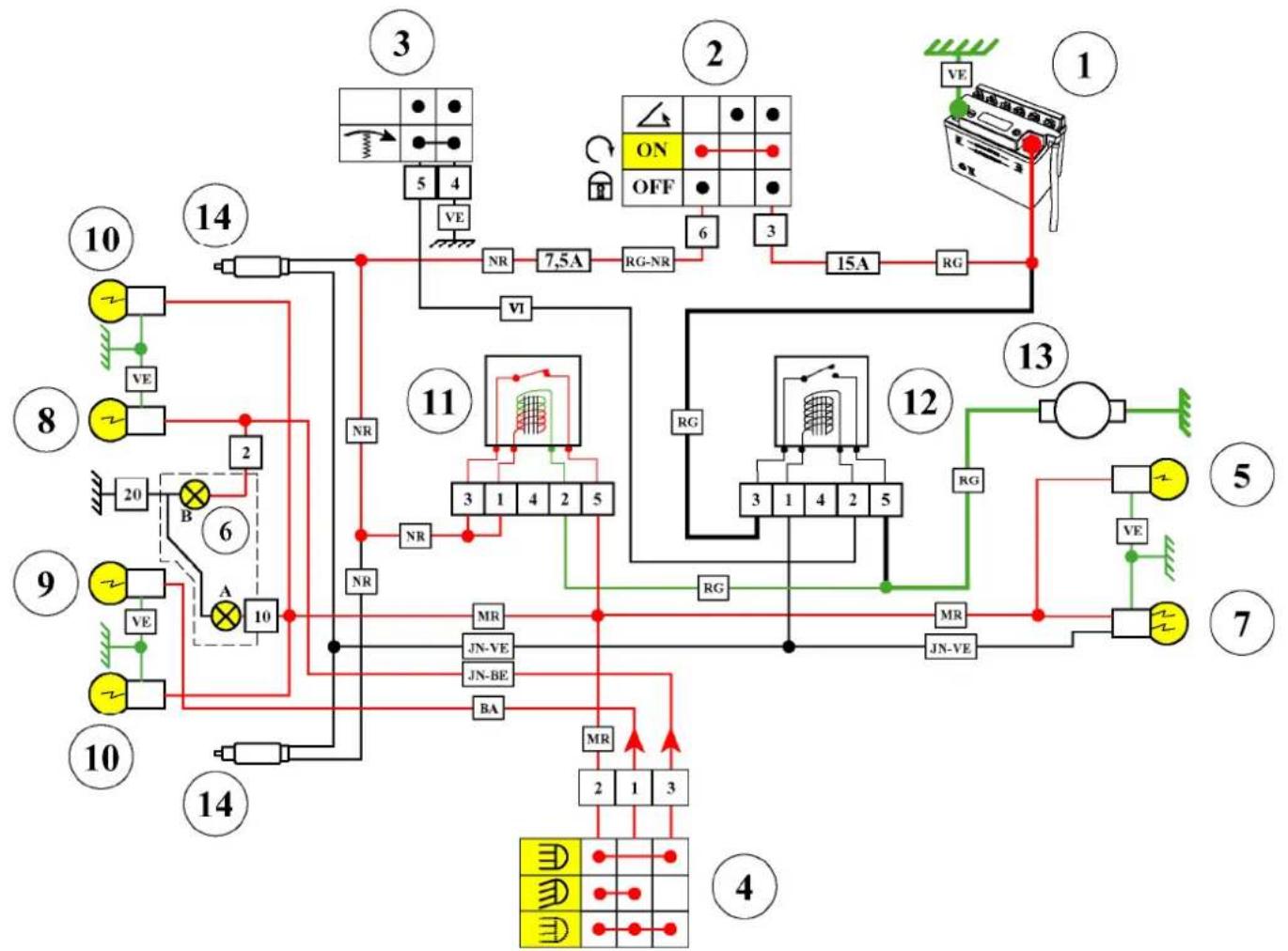
The lighting relay (11) is powered when the ignition is on via terminals 1 and 3
Over terminal 2 of the relay, the control coil is earthed through the starter motor (13)
The power circuit, via relay terminal 5 powers:
- The rear and front sidelights
- The number plate light (50cc IL and 125cc)
- The instrument cluster lighting
- Power supply to the Dip/Full Beam control (4) and the headlight flasher for the 125 cc
50 cc starting function

flowchart
graph TD
    subgraph Component_1
        A["①"] --> B["②"]
        B --> C["③"]
        C --> D["④"]
        D --> E["⑤"]
        E --> F["⑥"]
        F --> G["⑦"]
        G --> H["⑧"]
        H --> I["⑨"]
        I --> J["⑩"]
        J --> K["⑪"]
        K --> L["⑫"]
        L --> M["⑬"]
        M --> N["⑭"]
        N --> O["⑮"]
        O --> P["⑯"]
        P --> Q["⑰"]
        Q --> R["⑱"]
        R --> S["⑲"]
        S --> T["⑳"]
        T --> U["⑪"]
        U --> V["⑫"]
        V --> W["⑬"]
        W --> X["⑭"]
        X --> Y["⑮"]
        Y --> Z["⑯"]
        Z --> AA["⑰"]
        AA --> AB["⑱"]
        AB --> AC["⑲"]
        AC --> AD["⑳"]
        AD --> AE["⑪"]
        AE --> AF["⑫"]
        AF --> AG["⑬"]
        AG --> AH["⑭"]
        AH --> AI["⑮"]
        AI --> AJ["⑯"]
        AJ --> AK["⑰"]
        AK --> AL["⑱"]
        AL --> AM["⑲"]
        AM --> AN["⑳"]
        AN --> AO["㉑"]
        AO --> AP["㉒"]
        AP --> AQ["㉓"]
        AQ --> AR["㉔"]
        AR --> AS["㉕"]
        AS --> AT["㉖"]
        AT --> AU["㉗"]
        AU --> AV["㉘"]
        AV --> AW["㉙"]
        AW --> AX["㉚"]
        AX --> AY["㉜"]
        AY --> AZ["㉝"]
        AZ --> BA["㉞"]
        BA --> BB["㉟"]
        BB --> BC["㉟A"]
        BC --> BD["㉞A"]
        BD --> BE["㉟B"]
        BE --> BF["㉟C"]
        BF --> BG["㉟D"]
        BG --> BH["㉟E"]
        BH --> BI["㉟F"]
        BI --> BJ["㉟G"]
        BJ --> BK["㉟H"]
        BK --> BL["㉟I"]
        BL --> BM["㉟J"]
        BM --> BN["㉟K"]
        BN --> BO["㉟L"]
        BO --> BP["㉟M"]
        BP --> BQ["㉟N"]
        BQ --> BR["㉟O"]
        BR --> BS["㉟P"]
        BS --> BT["㉟Q"]
        BT --> BU["㉟R"]
        BU --> BV["㉟S"]
        BV --> BW["㉟T"]
        BW --> BX["㉟U"]
        BX --> BY["㉟V"]
        BY --> BZ["㉟W"]
        BZ --> CA["㉟X"]
        CA --> CB["㉟Y"]
        CB --> CC["㉟Z"]
Press starter button (3):
Pressing the starter button (3) earths the starter relay winding (12) which then powers:
- The starter motor
- Terminal 2 of the lighting relay (11)
The potential on the coil two terminals is the same (12 V):
- the magnetic field disappears
- the relay blade opens
- the lighting circuit is no longer powered
Note: All of the battery power will be used by the starter motor
Without pressing the starter button (3):
The magnetic field in the starter relay coil (12) disappears the power circuit opens:
- Terminal 2 on the lighting relay is earthed through the starter motor
- The lighting circuit is powered
Direction indicator functioning principle (125 cc)

flowchart
graph TD
    A[" meters"] --> B[" ON "]
    A --> C[" OFF "]
    B --> D[" RG-NR "]
    C --> E[" RG "]
    D --> F[" 15A "]
    E --> G[" 25A "]
    F --> H[" 19 "]
    G --> I[" 18 "]
    H --> J[" BA-NR "]
    I --> K[" 3 "]
    J --> L[" OR "]
    K --> M[" BC "]
    L --> N[" BC "]
    M --> O[" 4 "]
    N --> P[" 6 "]
    O --> Q[" 7 "]
    P --> R[" 7 "]
    Q --> S[" 7 "]
    R --> T[" 7 "]
    S --> U[" 7 "]
    T --> V[" 7 "]
    U --> W[" 7 "]
    V --> X[" 7 "]
    W --> Y[" 7 "]
    X --> Z[" 7 "]
    Y --> AA[" 7 "]
    Z --> AB[" 7 "]
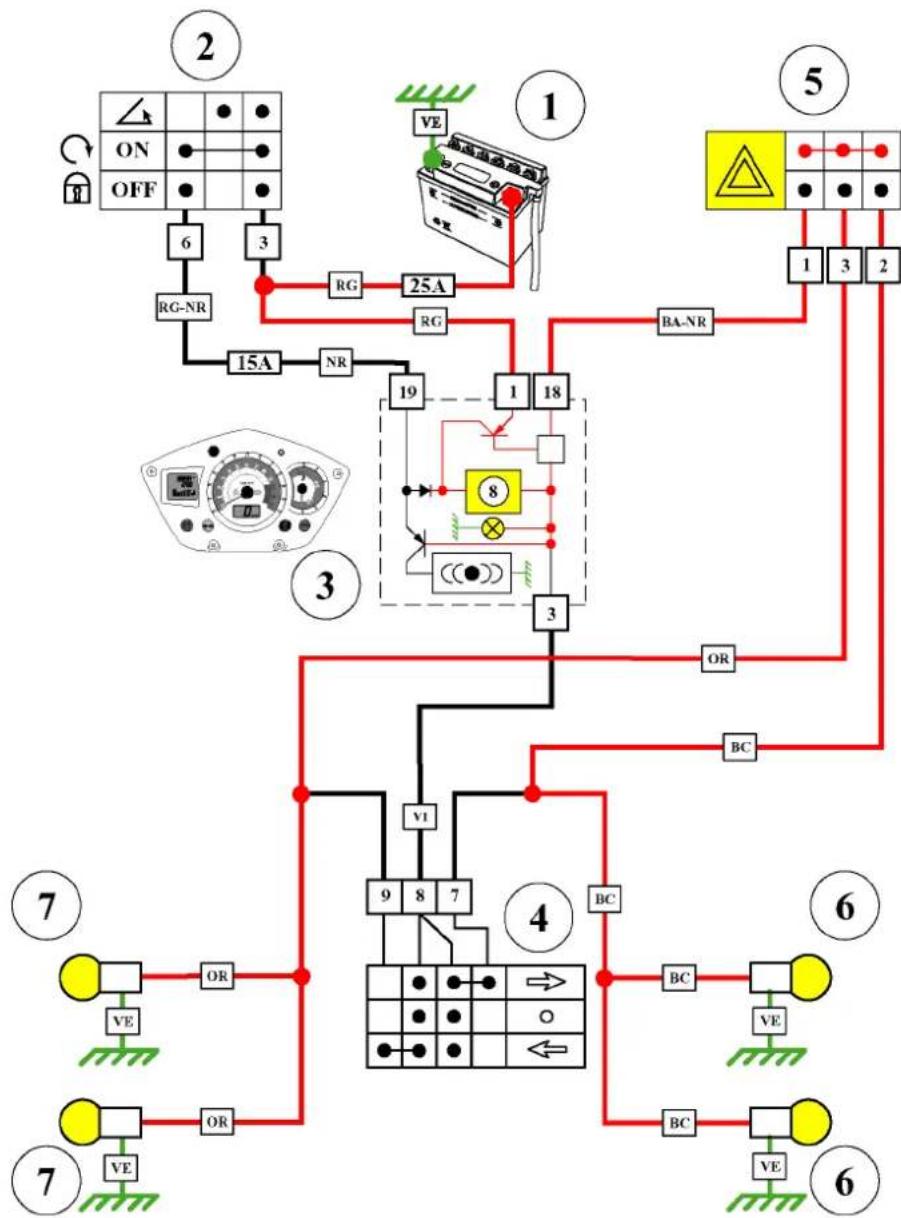
Direction indicator function
- Battery
- Ignition switch
- Instrument cluster
- Direction indicator switch
- Hazard warning lights switch
- Right direction indicator
- Left direction indicator
- Direction indicator unit
| BA-NR White-Black |
| BC Light blue |
| JN-BE Yellow-Blue |
| OR Orange |
| RG Red |
| RG-NR Red-Black |
| VE Green |
| VI Mauve |
Hazard warning lights with ignition on (125 cc)

flowchart
graph TD
    A["①"] --> B["VE"]
    B --> C["25A"]
    C --> D["RG-NR"]
    D --> E["15A"]
    E --> F["NR"]
    F --> G["19"]
    G --> H["1"]
    H --> I["18"]
    I --> J["BA-NR"]
    J --> K["⑤"]
    K --> L["1"]
    L --> M["3"]
    M --> N["2"]
    N --> O["OFF"]
    P["⑥"] --> Q["VE"]
    Q --> R["OR"]
    R --> S["OR"]
    S --> T["VE"]
    U["⑦"] --> V["VE"]
    V --> W["OR"]
    W --> X["OR"]
    X --> Y["VE"]
    Z["⑧"] --> AA["BC"]
    AA --> AB["VE"]
    AC["⑨"] --> AD["OR"]
    AD --> AE["OR"]
    AE --> AF["VE"]
    AG["⑩"] --> AH["BC"]
    AH --> AI["VE"]
    AJ["⑪"] --> AK["OR"]
    AK --> AL["OR"]
    AL --> AM["VE"]
Hazard warning lights without ignition on (125 cc)
flowchart
graph TD
    A["ON"] --> B["6"]
    C["OFF"] --> D["3"]
    B --> E["RG-NR"]
    D --> F["15A"]
    F --> G["NR"]
    G --> H["19"]
    H --> I["1"]
    I --> J["18"]
    J --> K["BA-NR"]
    K --> L["1"]
    L --> M["3"]
    M --> N["2"]
    N --> O["5"]
    P["VE"] --> Q["3"]
    R["OR"] --> S["7"]
    T["VE"] --> U["7"]
    V["OR"] --> W["7"]
    X["VE"] --> Y["7"]
    Z["OR"] --> AA["7"]
    AB["VE"] --> AC["7"]
    AD["OR"] --> AE["7"]
    AF["VE"] --> AG["7"]
    AH["OR"] --> AI["7"]
    AJ["VE"] --> AK["7"]
    AL["OR"] --> AM["7"]
    AN["VE"] --> AO["7"]
    AP["OR"] --> AQ["7"]
    AR["VE"] --> AS["7"]
    AT["OR"] --> AU["7"]
    AV["VE"] --> AW["7"]
    AX["OR"] --> AY["7"]
    AZ["VE"] --> BA["7"]
    BB["OR"] --> BC["7"]
    BD["VE"] --> BE["7"]
    BF["OR"] --> BG["7"]
    BH["VE"] --> BI["7"]
    BJ["OR"] --> BK["7"]
    BL["VE"] --> BM["7"]
    BN["OR"] --> BO["7"]
    BP["VE"] --> BQ["7"]
    BR["OR"] --> BS["7"]
    BT["VE"] --> BU["7"]
    BV["OR"] --> BW["7"]
    BX["VE"] --> BY["7"]
    BZ["OR"] --> BQ
    CA["VE"] --> CB["7"]
    CC["OR"] --> CC
    DD["VE"] --> DE["7"]
    DF["OR"] --> DG["7"]
    DH["VE"] --> DI["7"]
    DJ["OR"] --> DJ
    DK["VE"] --> DL["7"]
    DV["OR"] --> DV
    DW["VE"] --> DX["7"]
    DX --> DXB["7"]
    DXB --> DXC["7"]
    DXC --> DXD["7"]
    DXD --> DXE["7"]
    DXE --> DXF["7"]
    DXF --> DXG["7"]
    DXG --> DXH["7"]
    DXH --> DXI["7"]
    DXI --> DXJ["7"]
    DXJ --> DXK["7"]
    DXK --> DXL["7"]
    DXL --> DXM["7"]
    DXM --> DXN["7"]
    DXN --> DXO["7"]
    DXO --> DXP["7"]
    DXP --> DXQ["7"]
    DXQ --> DXR["7"]
    DXR --> DXS["7"]
Functioning principle of the ABS/PBS system (125 cc)
flowchart
graph TD
    A["1"] --> B["25A"]
    C["2"] --> D["ON OFF 6 3"]
    E["3"] --> F["4 2 5"]
    G["4"] --> H["5 15A"]
    I["5"] --> J["6 19"]
    K["6"] --> L["7 20 1"]
    M["7"] --> N["8 14"]
    O["8"] --> P["9 25 24 CODE PIN"]
    Q["9"] --> R["A3 B3 A2 B2 A1 B1"]
    S["10"] --> T["1 25A"]
    U["11"] --> V["2 25"]
    W["12"] --> X["3 4 5"]
    Y["13"] --> Z["4"]
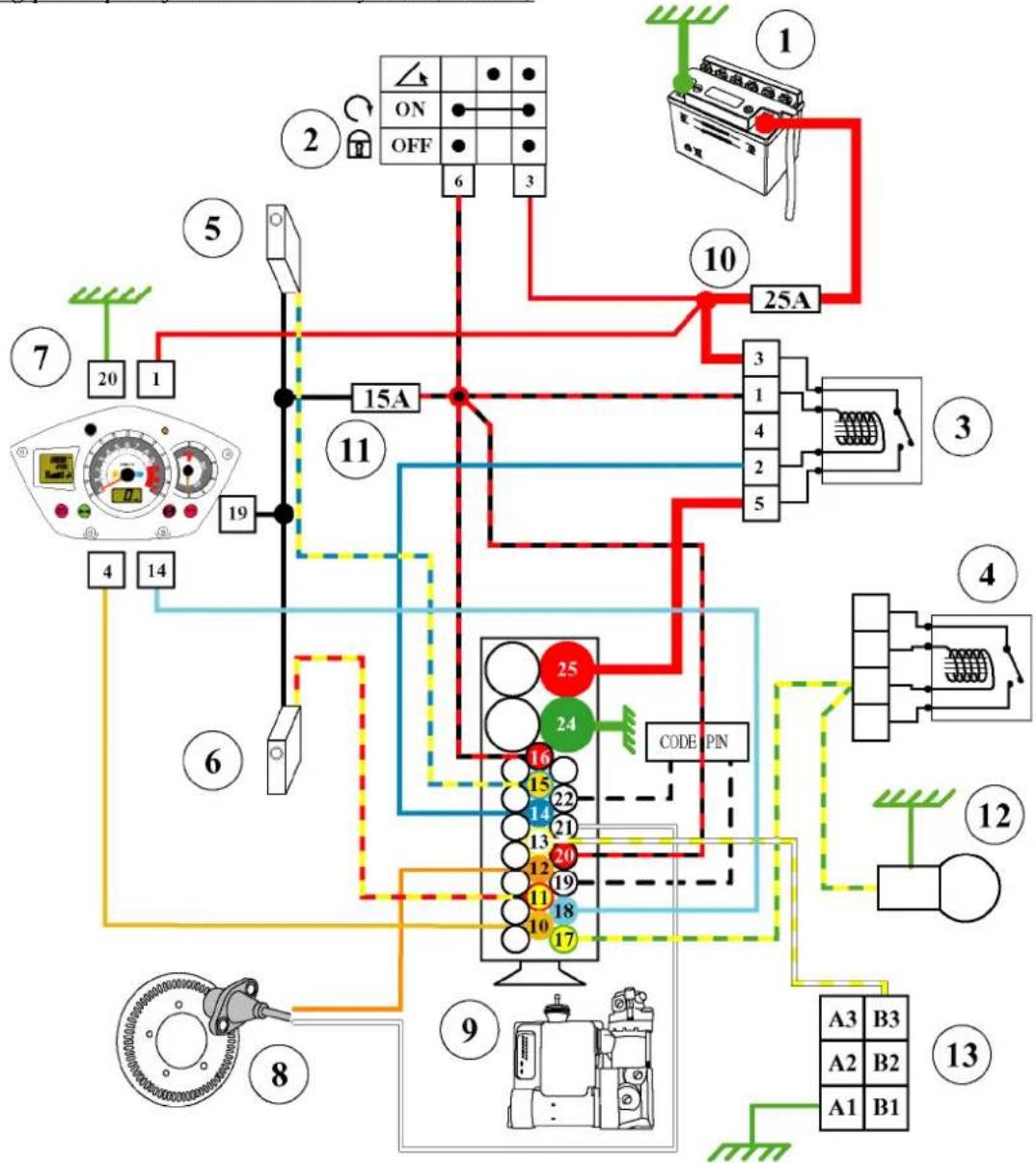
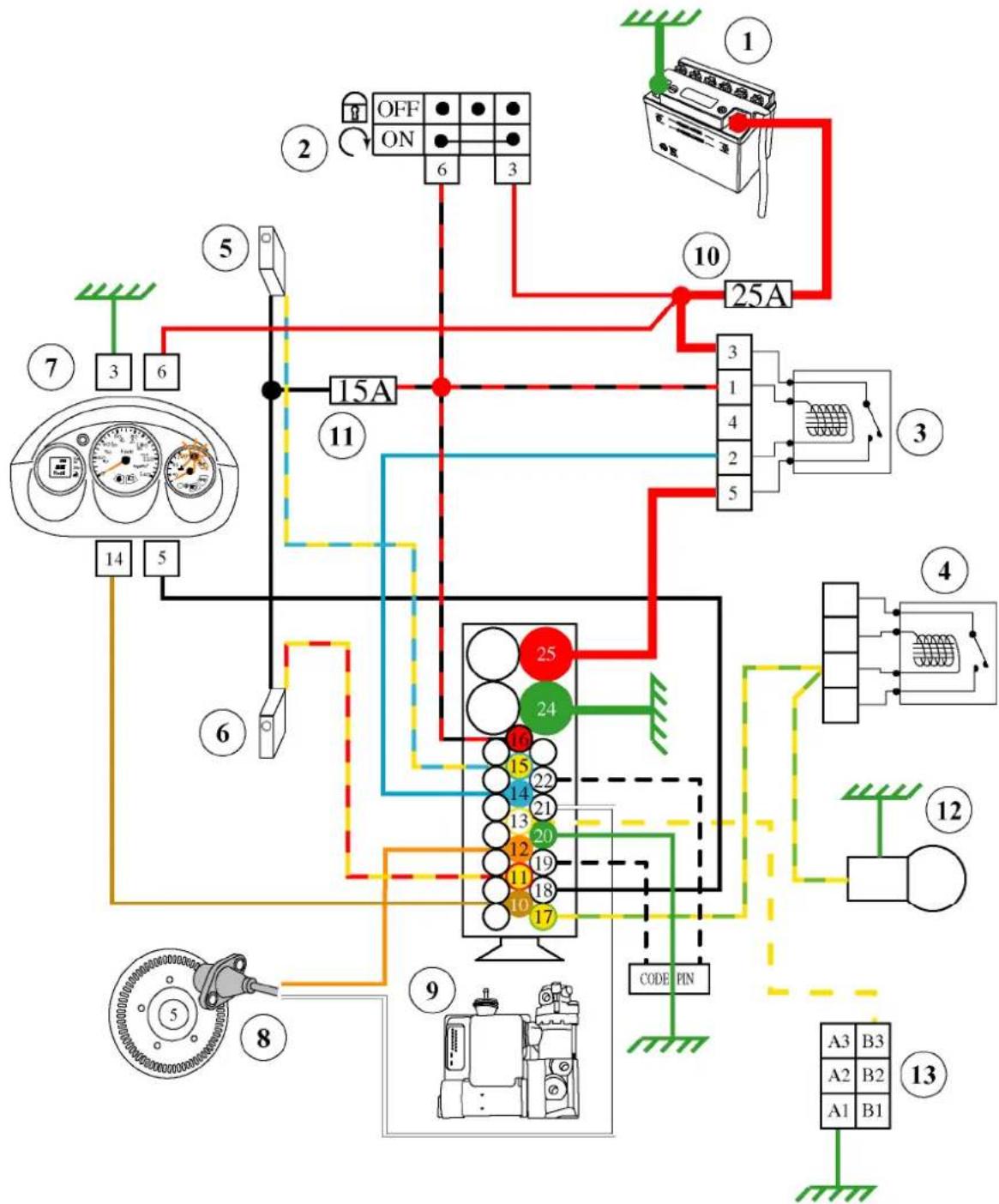
- Battery
- Ignition switch
- Module main relay
- Starter motor relay
- RH brake contactor
- LH brake contactor
- Instrument cluster
- Machine speed sensor
- Control unit
- 25A fuse
- 15A fuse
- Brake light
- Diagnostic plug
ABS/PBS ELYSTAR 125cc
flowchart
graph TD
    A["1"] --> B["25A"]
    B --> C["3"]
    C --> D["4"]
    D --> E["5"]
    E --> F["6"]
    F --> G["7"]
    G --> H["8"]
    H --> I["9"]
    I --> J["A3 B3"]
    I --> K["A2 B2"]
    I --> L["A1 B1"]
    M["OFF ON 6"] --> N["15A"]
    O["25A"] --> P["3"]
    Q["10"] --> R["25A"]
    S["14"] --> T["5"]
    U["24"] --> V["10"]
    W["25"] --> X["10"]
    Y["24"] --> Z["10"]
    AA["10"] --> AB["25A"]
    AC["10"] --> AD["25A"]
    AE["10"] --> AF["25A"]
    AG["10"] --> AH["25A"]
    AI["10"] --> AJ["25A"]
    AK["10"] --> AL["25A"]
    AM["10"] --> AN["25A"]
    AO["10"] --> AP["25A"]
    AQ["10"] --> AR["25A"]
    AS["10"] --> AT["25A"]
    AU["10"] --> AV["25A"]
    AW["10"] --> AX["25A"]
    AY["3"] --> AZ["15A"]
    BA["6"] --> BB["15A"]
    BC["7"] --> BD["15A"]
    BE["8"] --> BF["15A"]
    BG["9"] --> BH["15A"]
    BI["10"] --> BJ["15A"]
    BK["10"] --> BL["15A"]
    BM["10"] --> BN["15A"]
    BO["10"] --> BP["15A"]
    BQ["3"] --> BR["25A"]
    BS["4"] --> BT["25A"]
    BU["5"] --> BV["25A"]
    BW["6"] --> BX["25A"]
    BY["7"] --> BZ["25A"]
    CA["8"] --> CB["25A"]
TRANSPONDER IMMOBILISER
Precautions:
Check that the diagnostic plug jumper is fitted. The jumper provides the link between the immobiliser module and the injection/ignition ECU, and is essential to be able to start the engine
If the jumper is not fitted, the transponder LED diagnostic is always the same (no link between the immobiliser and the ECU)
Note: Fitting of a 5 kΩ resistive suppressor along with a resistive spark plug is essential for the proper functioning of the engine
System programming
The machine is supplied with a red key (master) and a black key
The system is programmed in the factory
It is possible to program up to 7 black keys
The key memory procedure is the same as the AEC400 and ACI100 system
Reminder of the key memory procedure
-
Using the red key, set the ignition to on, and when the LED lights, turn off the ignition
-
Within a maximum of 15 seconds of cutting off the ignition with the red key, turn on the ignition with the black key, and when the LED comes on turn off the ignition (repeat the operation for each black key to be memorised (maximum of 7 black keys))
-
Within a maximum of 15 seconds of turning off the ignition with the last key memorised, turn on the ignition with the red key, and when the LED comes on, turn off the ignition
Key memory check
Using the red key, turn on the ignition, the LED on the instrument panel comes on for 0.5 seconds and flashes a number of times. The number of flashes indicates the number of keys memorised, including the red key
Additional information
Before carrying out any work on the transponder immobiliser, have the machine red key and black key to hand
If the engine will not start, a first diagnostic may be carried out using the LED before checking the other parts of the ignition system
Note: Do not remove the diagnostic plug jumper
In case of a fault, do not use an immobiliser module or ECU from another machine to carry out tests. The keys, immobiliser module and ECU programmed on another machine form an assembly, are linked by a code and must under no circumstances be separated
Important: If an ECU is changed without memorising the keys, do not turn on the ignition more than 16 times if the diagnostic jumper is disconnected as beyond this number, the ECU immobiliser function is erased.
TRANSPONDER IMMOBILISER
Synoptics
 | Assembly correct | H — — |
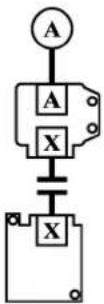 | Cut between the immobiliser module and the ECU | H H I— |
 | Cut between the antenna and the immobiliser unit or no transponder in they key | H HH I— |
 | Wrong key or immobiliser module from another machine | H HHH I— |
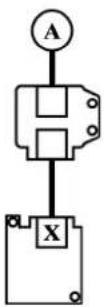 | Blank immobiliser module | I— I H H H I— |
TRANSPONDER IMMOBILISER
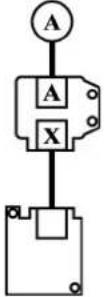 | Blank ECU(starting possible with red key) | H — — |
 | Immobiliser module and ECU blank | H |
 | Programmed immobiliser module and key from another machine | H H |
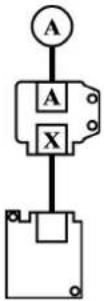 | Blank ECU, with 16 memorised switch on without diagnostic plug loop | H H H |
INSTRUMENT CLUSTER
Description

- Multi-function display
- Rev counter
- Speedometer
- Engine temperature gauge
- Control button
- Injection system diagnostic warning light
- Transponder immobiliser dissuasion light
- ABS/PBS system diagnostic light
- Headlight warning light
- Oil low level warning light
- Direction indicator warning light
- Battery charge warning light
Instrument cluster self-diagnostic when ignition is turned on
Different functioning tests are carried out automatically for 5 seconds :
- Display of all of the multi-function display items (1) and the speed (3)
- Lighting of all the warning lights (except ABS/PBS depending on version)
- Test of rev counter stepper motors (2) and engine temperature (4) giving one sweep of the needles and zero reset where necessary
Description of the multi-function display

MULTI-FUNCTION DISPLAY FUNCTIONS AND SETTINGS
Changing the distance unit


- Ignition off
-Press button and hold down
-Turn on the ignition
-Release the button
-Press for <3s to select Km/Miles
-Turn off ignition to confirm
Tripmeter Total/Daily display
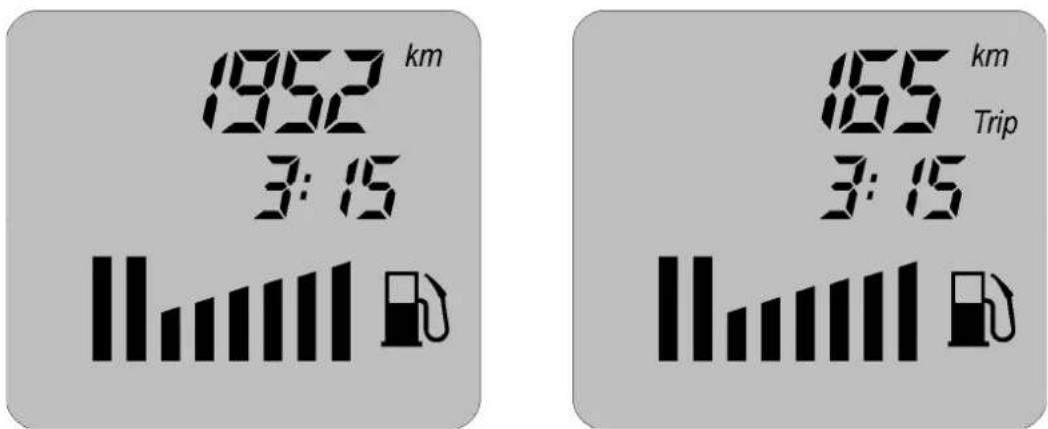
- Turn on the ignition
-Press and release the button to select the function required
Daily Km reset
-Hold down the button for >5s
Time setting

The time can only be set in the tripmeter total position
- Ignition on, press the button (5) until the time flashes
- Set the time by successive pushes on the control button
- Press the control button to confirm the hour, the minutes figure flashes
- Proceed in the same way to set the minutes
- Press the control button for more than 3 seconds to confirm the time
Maintenance reset
Every 5000 km a « spanner » symbol appears informing the rider that his machine is due for service. After servicing the machine, erase the symbol as follows:
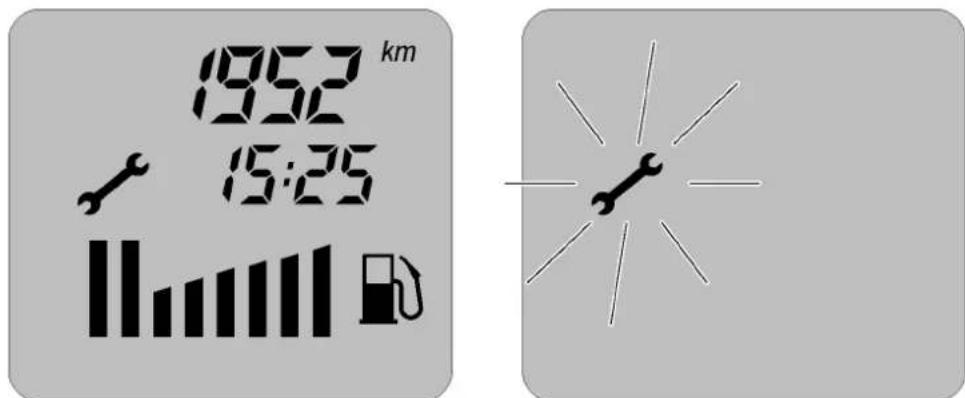
- Ignition off
- Press button and hold down
-Turn on the ignition (only the spanner appears and flashes) - Press for >5s to erase the symbol
Fuel gauge self-diagnostic
If the fuel system is cut off from the fuel gauge, when the ignition is turned on, the 8 LEDs light one after the other
Gauge functioning (8s timer)
8 LEDs represent a full tank (10 ohms)
2 LEDs flash (75 ohms)
1 LED flashes (98 ohms)
8 LEDs flash (R> 87 ohms) means an empty tank
- Injection ECU
- Throttle unit
- Engine position and speed sensor
- Temperature sensor
- Battery
- Fuel injector
- Air injector
- Ignition coil
- Immobiliser module
-
Fuel pump
-
Oil pump
- Diagnostic light
- Diagnostic plug
- Air compressor
- Fuses
- Voltage regulator
- Horn
- Saddle lock
- Starter / lighting relay
125 cc
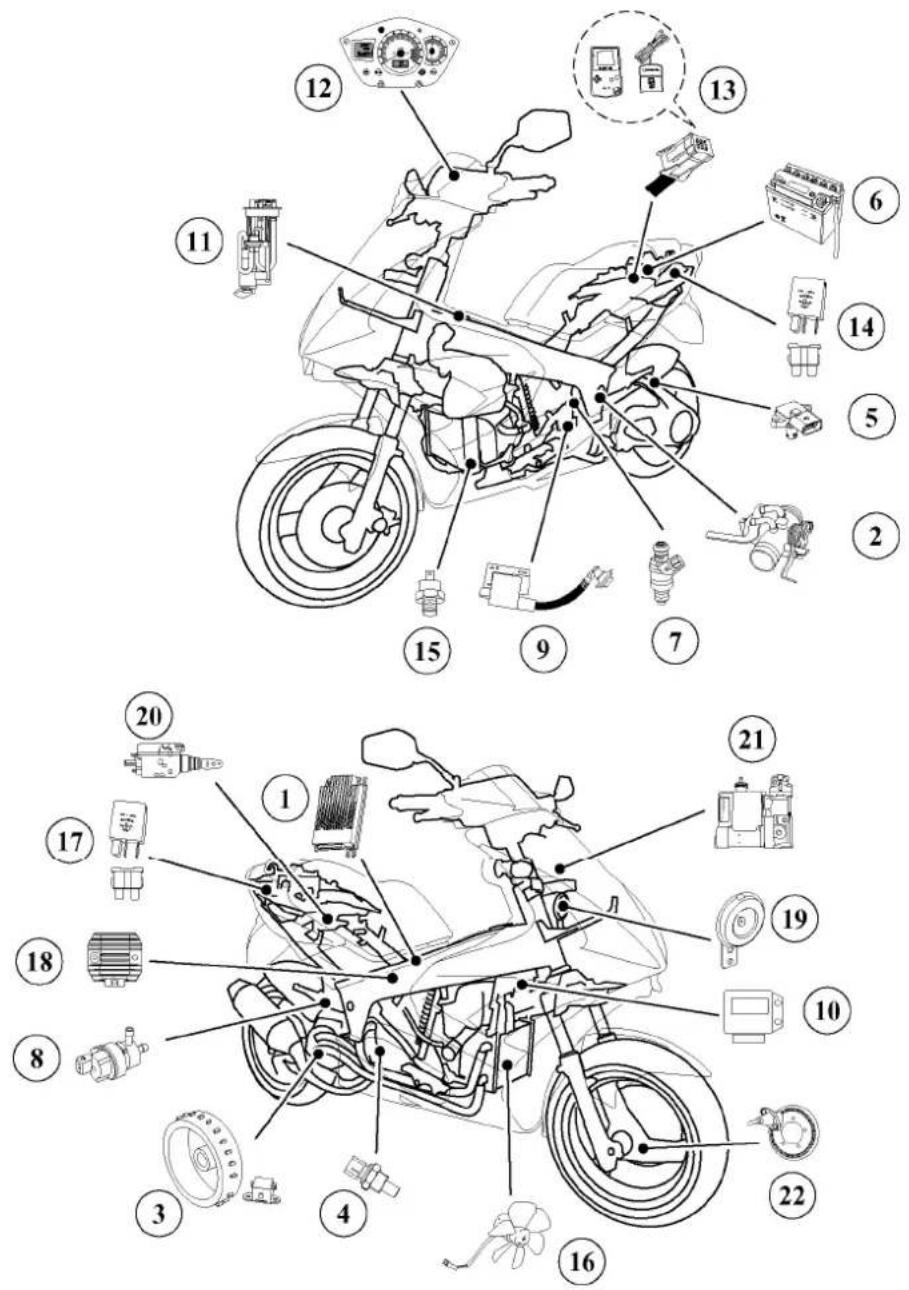
- Injection ECU
- Throttle unit
- Engine position and speed sensor
- Temperature sensor
- Air pressure and air temperature sensor
- Battery
- Fuel injector
- Idle control valve
- Ignition coil
- Immobiliser module
-
Fuel pump
-
Diagnostic light
- Diagnostic plug
- Fuel pump relay/ABS relay/light relay/Fuse 25A
- Heat switch
- Motor-driven fan
- Fuse 15A/starter relay
- Voltage regulator
- Horn
- Saddle lock
- ABS/PBS module
- Machine speed sensor
SPECIAL TOOLING
SPECIAL TOOLING
| . Tool N° | Description | Used with | ||
 | 756717 Engine mount adapter 125 cc | |||
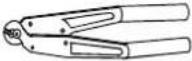 | 750539 Tie-wrap pliers | |||
 | 755996 Pipe clamp | |||
 | 755986 air injector setting tool 50 cc | |||
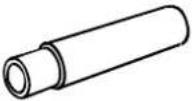 | 755989 air injector drift 50 cc | |||
 | replaces 756076 | Tank gauge spanner | ||
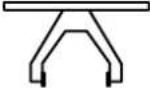 | 756716 replaces 755056 | Tank ring spanner | ||
| . Tool N° | Description | Used with | |
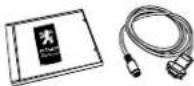 | 755990 | Diagnostic toolupdate software | Computer755878755806755807 |
 | 755806 | CartridgeEurope | 755878 |
 | 755807 | Cartridge Export | 755878 |
 | 755878 | Diagnostic tool(game boycolor) | 755806 |
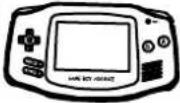 | 756714replaces755878 | Diagnostic tool(game boyadvance) | 755806755807 |
 | 756017 | 50 cc fuelinjector powersupply harness | |
 | 756449 | ABS/PBSinterface cablefor diagnostictool125 cc |
SPECIAL TOOLING
| . Tool N° | Description | Used with | |
 | 756607 | Fork seal fitting tool 125 cc | |
 | 756608 | Fork seal fitting tool 50 cc | |
 | 756668 | Crank assembly lip seal tool 50 cc |
- PRESENTATION OF THE MACHINE
- CONTENTS
- CHARACTERISTICS ....5
- CC ENGINES....6
- CATALYTIC EXHAUST 8
- FUNCTIONING OF THE CATALYTIC CONVERTER EXHAUST....8
- INJECTION SYSTEMS / TSDI IGNITION....9
- SYSTEM COMPONENTS....10
- PRESENTATION OF THE 2 STROKE INJECTION SYSTEM ....11
- DIAGNOSTIC....12
- CC ENGINES....13
- INTRODUCTION ....15
- ADVANTAGES OF THE INJECTION SYSTEM....15
- INJECTION SYSTEM / EFI IGNITION....16
- FRAME....17
- BRAKES....20
- ABS/PBS SYSTEM SYNOPTICS....22
- BODY PANELS....23
- ELECTRICITY 25
- TRANSPONDER IMMOBILISER ....33
- INSTRUMENT CLUSTER ....36
- MULTI-FUNCTION DISPLAY FUNCTIONS AND SETTINGS ....37
- LOCATION OF COMPONENTS 40
- SPECIAL TOOLING....42
- CHARACTERISTICS
- CC ENGINES
- Description
- Separate lubrication
- Cooling
- CATALYTIC EXHAUST
- FUNCTIONING OF THE CATALYTIC CONVERTER EXHAUST
- Composition of the catalytic block
- INJECTION SYSTEMS / TSDI IGNITION
- SYSTEM COMPONENTS
- Fuel system
- Ignition system:
- Injection system
- Lubrication system
- Compressed air circuit
- Transponder circuit
- DIAGNOSTIC
- Fault processing principle
- CC ENGINES
- Lubrication
- INTRODUCTION
- ADVANTAGES OF THE INJECTION SYSTEM
- Fuel injector
- INJECTION SYSTEM / EFI IGNITION
- Diagnostic circuit
- FRAME Frame
- BRAKES
- BODY PANELS
- ELECTRICITY
- TRANSPONDER IMMOBILISER
- Precautions:
- System programming
- Reminder of the key memory procedure
- Key memory check
- Additional information
- Note: Do not remove the diagnostic plug jumper
- INSTRUMENT CLUSTER
- MULTI-FUNCTION DISPLAY FUNCTIONS AND SETTINGS
- The time can only be set in the tripmeter total position
- Maintenance reset
- Fuel gauge self-diagnostic
- Gauge functioning (8s timer)
- SPECIAL TOOLING
Brand : PEUGEOT
Model : JetForce
Category : Scooter