PD3812 - Portable CD player Emerson - Free user manual and instructions
Find the device manual for free PD3812 Emerson in PDF.


| Product Type | Portable CD player with AM/FM tuner and cassette recorder |
| Model Number | PD3812CH / PD3812BK / PD3812BL |
| Power Sources | 120V 60Hz AC or 8 x C batteries (not included) |
| CD Compatibility | CD, CD-R, CD-RW |
| Radio Bands | AM, FM (Stereo) |
| Preset Stations | 20 (10 FM + 10 AM) |
| Cassette Recording | From CD or radio with automatic level control |
| Playback Modes | Normal, Random, Repeat (single/all), Programmed (up to 20 tracks) |
| Audio Output | Built-in speakers, stereo headphone jack (3.5mm) |
| Display | Multi-function LCD with clock and track info |
| Controls | Power, Function, Volume, Bass Boost, Play/Pause, Skip/Search, Stop/Band, Program, Cassette keys |
| Dimensions (Approx.) | 13 x 9 x 3 inches (without handle) |
| Weight (Approx.) | 3.5 lbs (with batteries) |
| Battery Life (Estimated) | Up to 4 hours on CD (varies with usage) |
| Special Features | Auto preset, clock with 12/24h format, carry handle |
| Safety Certifications | FCC Class B, Class 1 Laser product |
| Warranty | 90 days limited (parts and labor) |
Frequently Asked Questions - PD3812 Emerson
User questions about PD3812 Emerson
0 question about this device. Answer the ones you know or ask your own.
Ask a new question about this device
Download the instructions for your Portable CD player in PDF format for free! Find your manual PD3812 - Emerson and take your electronic device back in hand. On this page are published all the documents necessary for the use of your device. PD3812 by Emerson.
USER MANUAL PD3812 Emerson
Portable CD-R/RW Player with AM/FM Digital Tuner and Cassette Recorder
OWNER'S MANUAL
PD3812CH (Champagne Color)
PD3812BK (Black Color)
PD3812BL (Blue Color)
Visit our web site at www.emersonradio.com
CAUTION
TO PREVENT FIRE OR SHOCK HAZARD, DO NOT USE THIS PLUG WITH AN EXTENSION CORD, RECEPTACLE OR OTHER OUTLET UNLESS THE BLADES CAN BE FULLY INSERTED TO PREVENT BLADE EXPOSURE. TO PREVENT FIRE OR SHOCK HAZARD, DO NOT EXPOSE THIS APPLIANCE TO RAIN OR MOISTURE.
The lightning flash with arrowhead symbol, within an equilateral triangle is intended to alert the user to the presence of uninsulated 'dangerous voltage' within the product's enclosure that may be of sufficient magnitude to constitute a risk of electric shock to persons.
CAUTION
RISK OF ELECTRIC SHOCK
DO NOT OPEN
WARNING: TO REDUCE THE RISK OF ELECTRIC SHOCK DO NOT REMOVE COVER (OR BACK), NO USER SERVICEABLE PARTS INSIDE REFER SERVICING TO QUALIFIED SERVICE PERSONNEL.

The exclamation point within an equilateral triangle is intended to alert the user to the presence of important operating and maintenance (servicing) instructions in the literature accompanying the appliance.
IMPORTANT SAFETY INSTRUCTIONS
1.) Read these instructions.
2.) Keep these instructions.
3.) Heed all warnings.
4.) Follow all instructions.
5.) Do not use this apparatus near water.
6.) Clean only with dry cloth.
7.) Do not block any ventilation openings. Install in accordance with the manufacturer's instructions.
8.) Do not install near any heat sources such as radiators, heat registers, stoves, or other apparatus (including amplifiers) that produce heat.
9.) Do not defeat the safety purpose of the polarized or grounding-type plug. A polarized plug has two blades with one wider than the other. A grounding type plug has two blades and a third grounding prong. The wide blade or the third prong is provided for your safety. If the provided plug does not fit into your outlet, consult an electrician for replacement of the obsolete outlet.
10.) Protect the power cord from being walked on or pinched particularly at plugs, convenience receptacles, and the point where they exit from the apparatus.
11.) Only use attachments / accessories specified by the manufacturer.
12.) Unplug this apparatus during lightning storms or when unused for long periods of time.
13.) Refer all servicing to qualified service personnel. Servicing is required when the apparatus has been damaged in any way, such as power-supply cord or plug is damaged, liquid has been spilled or objects have fallen into the apparatus, the apparatus has been exposed to rain or moisture, does not operate normally, or has been dropped.
14.) This appliance shall not be exposed to dripping or splashing water and no object filled with liquids such as vases shall be placed on the apparatus.
15.) Do not overload wall outlet. Use only power source as indicated.
16.) Use replacement parts as specified by the manufacturer.
17.) The product may be mounted to a wall only if recommended by the manufacturer.
18.) Upon completion of any service or repairs to this product, ask the service technician to perform safety checks.



Thank you......
for purchasing this Emerson audio product. The Emerson brand is your assurance of quality, performance and value.
Our engineers have included many useful and convenient features in this product. Please be sure to read this Owner's Manual completely to make sure you are getting the maximum benefit from each feature.
This product was manufactured using the highest quality components and standards of workmanship. It was tested by Emerson inspectors and found to be in perfect working order before it left our factory. However, there is always the chance that some problem may occur because of rough handling during shipment to the retail store or to the final consumer.
If, after reading this manual, you experience any problems with the operation of this product, please refer to the instructions for obtaining service at the end of this manual. Emerson and Emerson retailers are committed to your satisfaction.
Once again, thanks for purchasing this Emerson audio product.
The serial number can be found on the bottom cabinet. We suggest that you record the serial number of your unit in the space below for future reference.
Model No: PD3812CH / PD3812BK / PD3812BL
Serial No:

IMPORTANT NOTES
- Avoid installing this unit in places exposed to direct sunlight or close to heat radiating appliances such as electric heaters, on top of other stereo equipment that radiates too much heat, places lacking ventilation or dusty areas, places subject to constant vibration and/or humid or moist areas.
-
Do not attempt to clean this unit with chemical solvents as this might damage the finish. Use a clean dry cloth.
-
Operate controls and switches as described in the manual.
- Before turning ‘On’ the power, make certain that power cord is properly installed.
- Store your CDs, cassettes in a cool area to avoid damage from heat.
- When moving the set, be sure to first disconnect the power cord.
CLASS 1 LASER PRODUCT
CLASS 1 LASER PRODUCT APPAREIL À LASER DE CLASSE 1 PRODUCTO LASER DE CLASE 1
CAUTION INVISIBLE LASER RADIATION WHEN OPEN AND INTERLOCKS DEFEATED. AVOID EXPOSURE TO BEAM

This product contains a low power Laser Device.
FCC INFORMATION
This equipment has been tested and found to comply with the limits for a Class B digital device, pursuant to Part 15 of the FCC Rules. These limits are designed to provide reasonable protection against harmful interference in a residential installation. This equipment generates, uses, and can radiate radio frequency energy and, if not installed and used in accordance with the instructions, may cause harmful interference to radio communications. However, there is no guarantee that interference will not occur in a particular installation. If this equipment does cause harmful interference to radio or television reception, which can be determined by turning the equipment off and on, the user is encouraged to try to correct the interference by one or more of the following measures:
- Reorient or relocate the receiving antenna.
- Increase the separation between the equipment and receiver.
- Connect the equipment into an outlet on a circuit different from that to which the receiver is connected.
- Consult the dealer or an experienced radio/TV technician for help.
This device complies with Part 15 of the FCC Rules. Operation is subject to the following two conditions:
(1) This device may not cause harmful interference, and
(2) This device must accept any interference received, including interference that may cause undesired operation.
PREPARATION FOR USE
Unpacking And Set Up
- Carefully remove the unit from the carton and remove all packing materials from the unit.
- Carefully remove any small strips of tape which may have been used to keep the CD and Cassette doors closed during shipment.
- Open the CD compartment by pressing the OPEN/CLOSE wording on the CD door. Inside the CD compartment you will see a dummy CD protection card which is used to prevent the laser pick-up from moving during shipment. Carefully remove this card and close the CD compartment door.
- Please save the carton and packing materials in the event that your unit ever needs to be returned for service. The original carton and packing materials are the only way to protect the unit from damage during shipment.
- The AC power cord is inside the polyfoam packing material. Make sure that you do not accidentally discard the AC cord with the packing material.
Protect Your Furniture
This model is equipped with non-skid rubber 'feet' to prevent the product from moving when you operate the controls. These 'feet' are made from non-migrating rubber material specially formulated to avoid leaving any marks or stains on your furniture. However certain types of oil based furniture polishes, wood preservatives, or cleaning sprays may cause the rubber 'feet' to soften, and leave marks or a rubber residue on the furniture. To prevent any damage to your furniture we strongly recommend that you purchase small self-adhesive felt pads, available at hardware stores and home improvement centers everywhere, and apply these pads to the bottom of the rubber 'feet' before you place the product on fine wooden furniture.
Power Sources
This unit is designed to operate on 8 "C" batteries, not included, or on normal 120V 60Hz AC house current. Operating this unit from any other power source may cause damage to the unit, and such damage is not covered by your warranty.
Battery Operation
1.) Open the battery compartment door on the bottom of the cabinet by pressing down on the “▼” mark and sliding the door in the direction of the ‘arrow’.
2.) Insert 8 "C" size batteries into the battery compartment according to the polarity diagram engraved inside the compartment. If the batteries are inserted incorrectly the unit will not work.

natural_image
Technical line drawing of a mechanical component with internal compartments and a directional arrow (no text or symbols)3.) Replace the battery compartment door.
NOTE: In order to operate the unit on battery power the AC cord must be disconnected from the AC socket on the back cabinet.
BATTERY PRECAUTIONS
Follow these precautions when using batteries in this device:
- Use only the size and type of batteries specified.
- Be sure to follow the correct polarity when installing the batteries as indicated in the battery compartment. Reversed batteries may cause damage to the device.
- Do not mix different types of batteries together (e.g. Alkaline and Carbon-Zinc) or old batteries with fresh ones.
- If the device is not to be used for a long period of time, remove the batteries to prevent damage or injury from possible battery leakage.
- Do not try to recharge batteries not intended to be recharged; they can overheat and rupture. (Follow battery manufacturer's directions.)
AC Operation
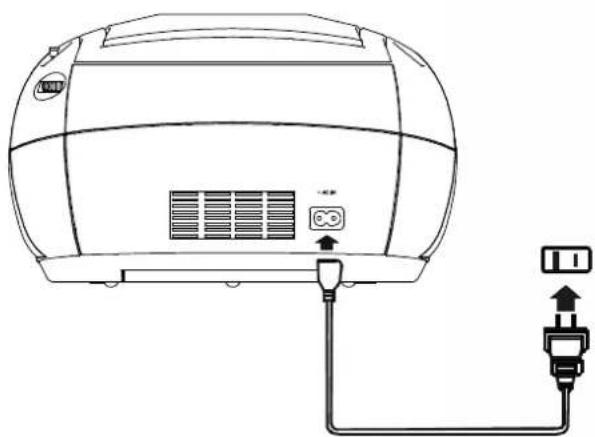
Connect the small end of the AC Power Cord to the AC socket on the back cabinet, then insert the plug in any convenient household 120V 60Hz AC outlet.
natural_image
Line drawing of a portable electronic device with attached plug and socket (no text or symbols)Note:
This unit has a polarized AC plug with one wide blade and one narrow blade. This plug will only fit into a matching polarized AC outlet. This is a safety feature to reduce the possibility of electric shock.
If this plug will not fit in your AC outlet, you probably have an outdated non-polarized outlet. You should have your outdated outlet changed by a qualified, licensed electrician.
Do not file the wide blade on the plug, or use an adapter to make the plug fit into your outlet. This defeats the safety feature and could expose you to electric shock.

LOCATION OF CONTROLS AND INDICATORS

natural_image
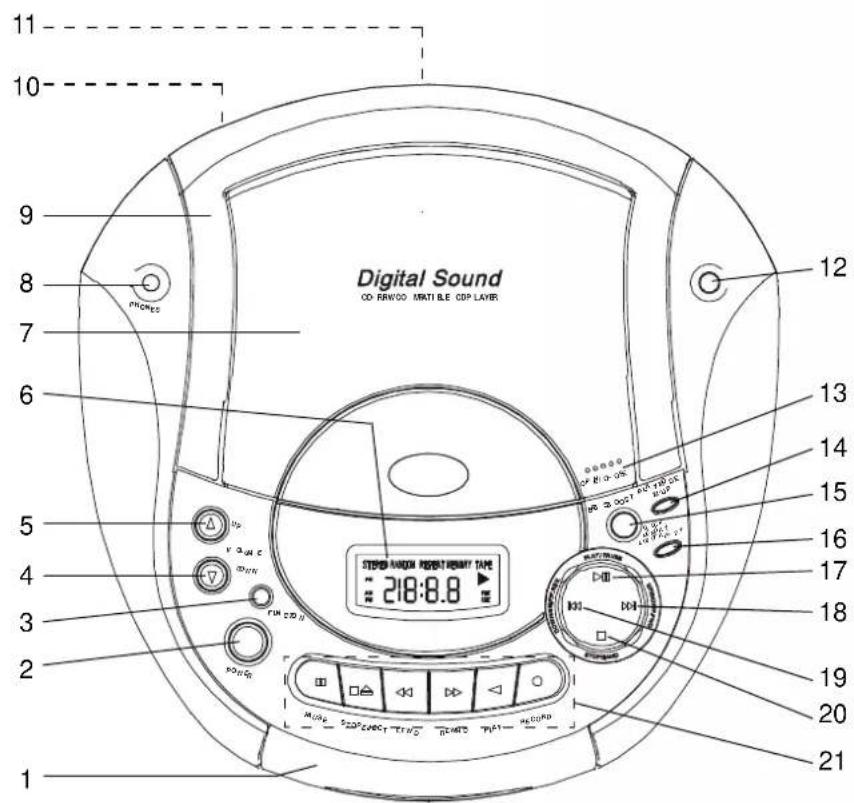
Color palette bar with grayscale gradient and a crosshair symbol (no text or symbols)1.) Cassette Door.
2.) POWER On/Off Button.
3.) FUNCTION Button.
4.) VOLUME DOWN ▼ Button.
5.) VOLUME UP ▲ Button.
6.) Multi-Function LCD Display.
7.) CD door.
8.) PHONES (Stereo Headphone) Jack.
9.) Carrying Handle.
10.) AC Cord Socket (Back Cabinet).
11.) Battery Compartment (Bottom Cabinet).
12.) FM Telescopic Antenna.
13.) CD door OPEN/CLOSE Position.
14.) PLAY MODE/M-UP Button.
15.) BASS BOOST Button.
16.) CLOCK/MEMORY/AUTO PRESET Button.
17.) CD PLAY/PAUSE ▶Button.
18.) UP/SKIP/F.FWD. ▶▶Button.
19.) DOWN/SKIP/F.REV. ◀ Button.
20.) CD STOP/BAND ■ Button.
21.) Cassette Control Keys.
(PAUSE || / STOP-EJECT ■▲ / F.FWD ◀/ REWIND ▶/ PLAY◀/ RECORD ●)
OPERATING INSTRUCTIONS
Setting The Clock
Note: The clock can only be set at TAPE mode, or when power is 'Off'.
1.) Press the CLOCK/MEMORY/AUTO PRESET button on the top panel.
"12 H" will begin flashing in the display indicating that the clock is set for "American" 12-hour time.
Press either the ▶ or ◀ button on the top panel to change the clock format to "European" 24-Hour time if desired.
The display will change from "12H" to "24H".

2.) Press the CLOCK/MEMORY/AUTO PRESET button. The Hour digits will begin flashing.

3.) Press the ▶ or ◀ buttons to set the display to the correct Hour, AM or PM.
4.) Press the CLOCK/MEMORY/AUTO PRESET button again. The Minute digits will begin flashing.

5.) Press the ▶ or ◀ buttons to set the display to the correct Minute.
6.) Press the CLOCK/MEMORY/AUTO PRESET button once more.
The colon " : " begins flashing and the clock starts to run.

Notes: The correct time will always appear on the display in TAPE mode and when power is 'Off'.
Listening To The Radio
1.) Press the POWER button on the top panel to turn the unit "On".
If necessary, press the FUNCTION button to select the Radio mode.
The main display turns on and shows FM 87.5 MHz.
2.) Press the STOP/BAND ■ button to select a different radio band.
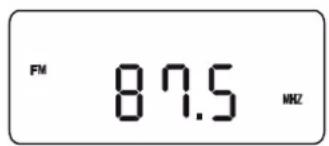

3.) Tune to the desired frequency as follows:
- Manual Tuning
Repeatedly press the ▶ or ◀ buttons on the top panel until the frequency of the desired station appears on the display.
- Automatic Tuning
Press and hold the ▶▶ or ◀◀ buttons on the top panel until the display begins to move, then release the buttons. The tuner will search up or down the band for the next strong station and stop on that station.
Repeat this procedure until the tuner stops on your desired station.
4.) If you tuned to an FM Stereo station the "STEREO" indicator will appear in the display.

5.) Adjust the VOLUME UP ▲ or DOWN ▼ and BASS BOOST controls as desired.
6.) When you are finished listening press the POWER button to return to the Standby (Power Off) mode.
The display shows the correct time.
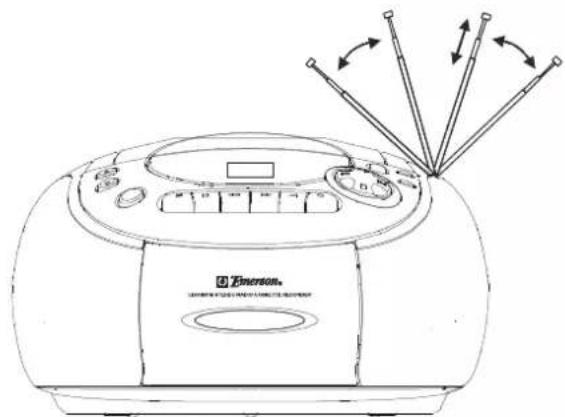
Antenna Information
AM
The AM bar antenna is inside the cabinet.
If AM reception is unsatisfactory try rotating the entire unit until you find the position that provides the best reception.

FM
Vary the direction of the FM telescopic antenna to find the position that provides the best reception.
natural_image
Line drawing of a portable electronic device with indicator lights and control panel (no text or symbols)Pre-setting Stations In The Tuner Memory
This system includes a 20 station preset memory. You can store up to 10 FM stations and 10 AM stations in the tuner memory for immediate recall.
The procedure for storing stations in memory is as follows:
1.) Follow step 3 under Listening To The Radio on page 11 to select the first station you wish to memorize.
Example: FM 103.5 MHz.

2.) When the desired station appears on the display press the CLOCK/MEMORY/AUTO PRESET button on the top panel.
“P 1.” indicator appears and the “MEMORY” indicator flashes in the display.

3.) Press the PLAY MODE/M-UP button on the top panel to select a preset channel number.
Example: Preset channel #3.
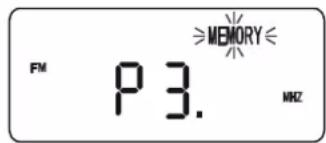
4.) Press the CLOCK/MEMORY/AUTO PRESET button once more to enter the station in preset channel #3.
The "MEMORY" indicator stops flashing.

5.) Repeat steps 1 through 4, selecting a different preset number in Step 3 each time until you have entered up to 10 FM stations in the tuner memory.
6.) Press the STOP/BAND ■ button to select the AM band and follow the same procedure to enter up to 10 AM stations in the tuner memory.
AUTO PRESET Function
This model includes an Auto-Preset feature which you can use to automatically enter 10 strong FM and AM stations in the tuner preset memory.
Note: This feature is useful if you live in a rural area with a limited number of stations. However if you live in a major metropolitan area with many strong stations, do not use the Auto-Preset feature. It will memorize the first 10 strong stations it encounters and these will probably not be the same 10 stations that you would select if you were memorizing stations manually.
To use the Auto-Preset feature, turn the unit 'On', select the Tuner function and the desired band.
Depress and hold the "CLOCK/MEMORY/AUTO PRESET" button until the tuner display begins to move, then release the button.
The tuner will start searching up the band and it will automatically enter the first 10 strong stations on the selected band in the 10 preset memories. The display will indicate which station is being entered in each of the 10 memories.
After the Auto-Preset feature memorizes 10 stations, the tuner returns to preset memory number 1.
Recalling Preset Stations
Turn the unit 'On' and select the desired band.
Press the PLAY MODE/M-UP button on the top panel repeatedly to scroll through the preset memories until the display shows the desired station.
Changing Preset Stations
To change any preset station memory select the desired band and tune to the new station you wish to memorize.
Press the CLOCK/MEMORY/AUTO PRESET button and then press the PLAY MODE/M-UP buttons to display the channel number you wish to change.
Press the CLOCK/MEMORY/AUTO PRESET button again to enter the new station in the memory. The new station is memorized and the previous station is deleted from the memory.


Playing Compact Discs
Note: Although this portable CD player can read CD-R and CD-RW discs, in addition to normal CDs, however the playability of CD-R/RW discs may be affected by the type of software that was used to create the discs, as well as the quality and condition of the blank media you are using. 100% playability cannot be guaranteed. This is not an indication of a problem with the player.
Normal Playback
1.) Press the POWER button on the top panel. The main display turns on.
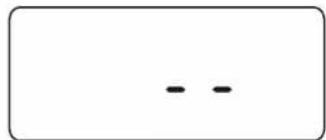
2.) Press the FUNCTION button on the top panel to select CD mode.
The display will show two dashes “--”.
natural_image
Simple diagram with two black dots inside a rectangle (no text or symbols)3.) Open the CD door by pressing the OPEN/CLOSE position on the CD door. Place a CD on the center spindle with the printed label side facing up.
Close the CD door.


4.) The disc will spin for a few seconds as the player reads the disc.
Then the disc will stop and the display will show the total number of tracks on the disc.

5.) Press the PLAY/PAUSE ▶ button on the top panel to begin playback on track 1.
Track number "01" appears in the display and the Play ▶ indicator comes 'On'.

6.) Adjust the VOLUME and BASS BOOST controls as desired.
7.) Playback will continue until the last track has played then the disc stops and the Play ▶ indicator goes 'Off', and the display will show the total number of tracks on the disc.
To stop playback before the disc ends press the STOP/BAND ■ button on the top panel.
8.) If you are finished listening open the CD door and remove your disc.
9.) To listen to the Radio or Cassette Tape, press the FUNCTION button as desired, or press the POWER button to turn the power 'Off'.
PAUSE Control
To pause momentarily during CD playback press the PLAY/PAUSE ▶II button on the top panel again.
The sound stops and the Play indicator flashes but the disc continues to spin.
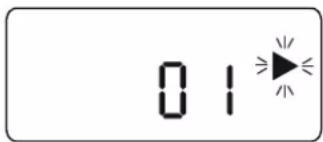
Press the PLAY/PAUSE ▶ button again to cancel the Pause mode and resume normal playback.
The sound resumes at the same point on the disc and the Play indicator stops flashing.
SKIP/Search (▶) Controls
- During playback press the ▶▶ or ◀◀ buttons on the top panel repeatedly to skip forward or back to higher or lower numbered tracks. Playback will start at the beginning of the selected track.
- To search within a track for a specific musical passage depress and hold the ▶ button on the top panel.
The player will search rapidly forward or backward as long as the buttons are depressed. When you hear the desired passage release the buttons and normal playback will resume at that point.
Note: The volume is automatically reduced during high speed music search.
- To start playback from a specific track load your disc as usual and wait until the display shows the total number of tracks.
Press the ▶▶ or ◀◀ buttons repeatedly until the desired track number appears in the display then press the PLAY/PAUSE ▶▶ button to begin playback on the desired track.
RANDOM Playback
This feature allows you to play all the tracks on a disc in random order.
Load the disc as usual and wait until the display shows the total playing time and number of tracks.
Press the PLAY MODE/M-UP button three times. The RANDOM indicator appears in the display.
If necessary, press the PLAY/PAUSE ▶ button to begin playback. The tracks will be played in random order continuously.
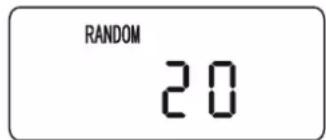
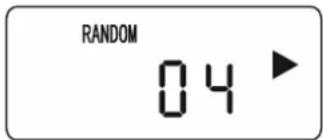
To cancel the Random mode, press the PLAY MODE/M-UP button until the RANDOM indicator disappears. Random mode can also be canceled by pressing the STOP/BAND button, opening the CD Door, or switching to the Tuner function.
REPEAT Playback
You can program the player to continuously repeat a single track or the entire disc. The Repeat mode can be selected while the disc is playing or while the disc is stopped.
Single Track Repeat
Select the track to be repeated and then press the PLAY MODE/M-UP button on the top panel once.
The REPEAT indicator flashes.
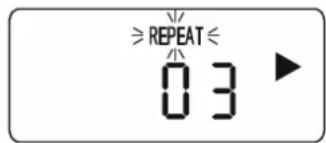
If necessary, press the PLAY/PAUSE ▶ button to begin playback. The selected track will be repeated continuously.
All Tracks Repeat
Press the PLAY MODE/M-UP button on the top panel twice.
The REPEAT indicator remains "On".
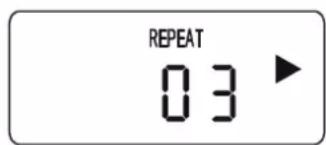
If necessary, press the PLAY/PAUSE ▶ button to begin playback. The entire disc will be repeated continuously.
To cancel Repeat playback press the PLAY MODE/M-UP button until the REPEAT indicator goes 'Off'.
Repeat Playback mode may also be cancelled by pressing the STOP/BAND button, switching to other function, or shut the power 'Off'.



Programmed Playback
You can program up to 20 tracks on a disc to playback in any desired order. You may also program a specific track to play several times within the same program.
Note: The player cannot be programmed while a disc is playing. If a disc is playing press the STOP/BAND ■ button to stop playback before you begin the programming steps below.
1.) Press the FUNCTION button to select the CD mode, insert your disc in the player, close the door, and wait until the total track number appears in the display.
2.) Press the CLOCK/MEMORY/AUTO PRESET button once. The MEMORY indicator begins flashing in the display. "P 0 1" appears briefly then "0 0" flashes.


3.) Press the ▶ or ◀ button to select the first track to be programmed.
Example: Track 08.

4.) Press the CLOCK/MEMORY/AUTO PRESET button once again to enter the track "08" in program memory number "P 0 1".
"P 0 2" appears briefly then "0 0" flashes again in the display, indicating that you may now select a track to be entered in program memory number "02".
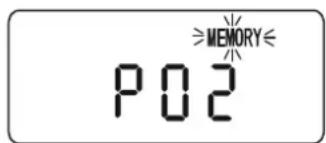


5.) Press the ▶▶ or ◀◀ buttons to select the next track to be programmed. When the desired track number flashes in the display press the CLOCK/MEMORY/AUTO PRESET button again to enter that track in the program memory.


6.) Repeat Step 5 until you have entered up to 20 tracks in the program memory.
When the memory is full, the “- -” indicator flashes in the display.
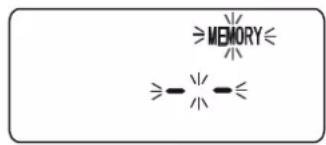
7.) To begin programmed playback press the PLAY/PAUSE ▶II button.
The display will show the first programmed track and playback will begin on that track.
The MEMORY indicator remains "On".

After the last programmed track has played the player stops but the programmed tracks remain in the memory.
To play the programmed tracks again, press the CLOCK/MEMORY/AUTO PRESET button and then the PLAY/PAUSE ▶II button.
To cancel the programmed sequence from memory, press the STOP/BAND button at programming mode, or open the CD door.
Programmed Repeat Playback
You can use the Program and Repeat features together to continuously repeat a programmed sequence of tracks.
- First, program the desired tracks according to Steps 1 through 7 on page 18.
- When Programmed Playback begins, press the PLAY MODE/M-UP button twice to activate the All Tracks Repeat feature.
- The REPEAT indicator appears in display and all the tracks in your programmed sequence will be repeated continuously.
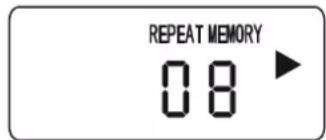
To cancel Programmed Repeat Playback press the STOP/BAND ■ button until both the MEMORY and REPEAT indicators go 'Off'.

Playing Cassette Tapes
1.) Press the POWER button to turn on. Press the FUNCTION button to select the TAPE mode.
The correct time appears in display.

2.) Open the cassette door by pressing the STOP/EJECT ■▲ key.
3.) Place a pre-recorded cassette tape into the slots on the inside of the door with the exposed tape facing up and the full reel on the right side.
Close the cassette door.

4.) Press the cassette PLAY ◀ key to begin playback.
5.) Adjust the VOLUME and BASS BOOST controls as desired.
6.) To advance the tape rapidly press the F.FWD ◀◀ key. To stop the tape before it ends press the STOP/EJECT ■▲ key.
7.) To rewind the tape rapidly press the REWIND ▶ key. To stop the tape before it ends press the STOP/EJECT ■▲ key.
8.) When the tape ends the Automatic Stop System releases the PLAY ◀ key and shuts off the tape motor. You may then open the cassette door, remove your tape, turn it over and play the other side if desired.



9.) When you are finished listening stop the tape, open the door, remove the tape and close the door.
If you are playing a tape and then change to the Radio or CD function be sure to press the STOP/EJECT ■▲ key to disengage the tape mechanism. This prevents excess wear and tear on the mechanism.
IMPORTANT:
Always press the STOP/EJECT ■▲ key to shut off the tape motor before opening the cassette door to remove your tape.
The Automatic Stop System does not function in the F. FWD ◀ and REWIND ► modes. When the tape ends in the F. FWD ◀ and REWIND ► modes the motor continues to run.
You must press the STOP/EJECT ■▲ key to shut off the motor before opening the door to remove your tape.
Making A Tape Recording
This model allows you to make tape recordings directly from the CD player, or the radio.
- Refer to "Playing Compact Discs" on page 14 if necessary to operate the CD player.
- Refer to "Listening To The Radio" on page 10 if necessary to tune in the station you wish to record from radio.
1.) Press the STOP/EJECT ■▲ key to open the cassette door.
2.) Insert a good quality blank cassette tape into the slots on the cassette door with the open end facing up and the full reel on the right.
Use normal tape only. Do not use tape identified as "CrO2" (Chrome) or "Metal" tape formulations.
For best results use tapes of 60 minutes (C-60) or less. Do not use 90 minute or 120 minute tapes as these thinner tapes are more likely to jam in the mechanism.
3.) Close the cassette door.
4.) When you are ready to start recording press the RECORD ● key. The PLAY ◀ key will also engage.
The CD you are playing, or radio program you selected will be recorded directly on to the tape.
5.) Press the PAUSE II key during recording to stop the tape temporarily and avoid recording unwanted material such as radio commercials.
6.) When you have finished recording press the STOP/EJECT ■▲ key to stop and remove the tape.


Automatic Recording Volume Level Control
This unit has an Automatic Level Control (ALC) circuit which controls the recording volume level and prevents overloaded and distorted recordings.
The VOLUME and BASS BOOST controls have no effect on recording volume level. You may change the VOLUME and BASS BOOST controls setting during the recording or even reduce the volume level to "Minimum". This will not effect the level of the recording.



PHONES Jack
Connect a set of stereo headphones (not included) with a 3.5mm mini plug to the PHONES jack (located at rear left top cabinet) for private listening without disturbing others.
Before putting on the headphones reduce the VOLUME control to a low level, then put the headphones on and gradually increase the VOLUME control to a comfortable listening level.
The built in speakers are automatically disconnected when headphones are connected to the PHONES jack.

CARE AND MAINTENANCE
About Cassette Tapes
Whenever you record on a cassette any previously recorded material is erased as the new material is recorded. To prevent you from accidentally erasing material which you wish to save, blank cassettes are equipped with erase prevention tabs for each side of the tape. If the erase prevention tab for side A is removed, you cannot accidentally record on side A. The record key cannot be depressed if the erase prevention tab on the cassette has been removed.
To prevent accidental erasing on side A of a cassette use a small screw driver or similar tool to break off the erase prevention tab for side A. This prevents the record key from locking.

natural_image
Line drawing of a cassette tape with two buttons and a label (no text or symbols)TAB FOR SIDE A BREAK OUT TO PREVENT RECORDING
If later you do wish to record on side A of the cassette, cover the tab opening with a piece of cellophane tape. This will allow the record key to function again.

natural_image
Line drawing of a cassette tape with two circular buttons and a handle (no text or symbols)COVER OPENING WITH TAPE IN ORDER TO RECORD AGAIN.
Cassette Care
Two common causes of trouble experienced when using cassettes are:
1.) Tape jamming — Leading to uneven speed in playback, and
2.) Tape tangling — Where the tape wraps itself around vital parts of themechanism.
To reduce the likelihood of these problems occurring, the following precautions should be observed:
- Check that there are no loose layers of tape visible through the cassette center window (see Fig. 1). Take up any loose layers, using a pencil or hexagonal barrelled ballpoint pen, before inserting the cassette into the machine (see Fig. 2).
- If the cassette feels “tight” while performing operation shown (see Fig. 2), the tape may be jamming due to “ridges” formed in the winding of the tape (visible through the center window). These may be removed, in most cases, by fast winding of the cassette from one end to the other and back again.
- Use only well-known brands of tape. Avoid use of C-120 cassettes.
Furthermore, do not expose cassettes to direct sunlight, dust or oil, and do not touch the tape surfaces.
Head Cleaning
The tape heads, pinch roller and capstan require periodic cleaning. This removes particles of the metal oxide coating that wear off the tape and accumulate on these parts and impair performance. Switch off the power, press the STOP/EJECT key to open the cassette door, and press the PLAY key. Clean the tape heads, pinch roller and capstan with a soft cloth or cotton pad dampened in isopropyl alcohol or special tape head cleaner.
Compact Disc Care
- To remove a disc from its storage case, press down on the center of the case and lift the disc out, holding it carefully by the edges.
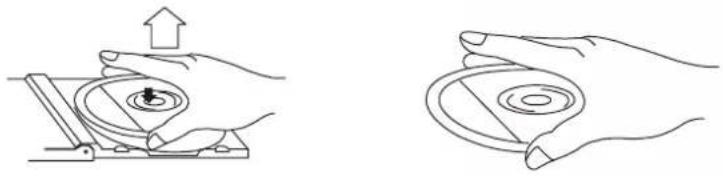
natural_image
Line drawings of hands operating a mechanical device with an upward arrow and circular components (no text or symbols)- Fingerprints and dust should be carefully wiped off the disc's recorded surface with a soft cloth. Unlike conventional records, compact discs have no grooves to collect dust and microscopic debris, so gently wiping with a soft cloth should remove most particles. Wipe in a straight line from the inside to the outside of the disc. Small dust particles and light stains will have absolutely no effect on reproduction quality.
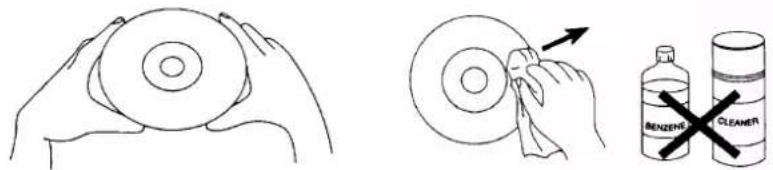
- Clean the disc periodically with a soft, lint-free, dry cloth. Never use detergents or abrasive cleaners to clean the disc. If necessary, use a CD cleaning kit.
- Never write on or affix labels to the surface of compact discs.
Care Of The Cabinet
If the cabinet becomes dusty wipe it with a soft dry dust cloth. Do not use any wax, polish sprays, or abrasive cleaners on the cabinet.
Caution
Never allow any water or other liquids to get inside the unit while cleaning.
LIMITED WARRANTY
Emerson Radio Corp. warrants manufacturing defects in original material, including original parts and workmanship, under normal use and conditions, for a period of ninety (90) days from the date of original purchase in the U.S. With your dated proof of purchase, we will provide repair service at no charge for labor and parts at an authorized Depot Repair Facility, or replace the product in our discretion. For repair or replacement, pack your unit in a padded box, enclose your check or money order payable to Emerson Radio Corp. in the amount of \$9.00 (not required by California residents) to cover shipping and handling costs, and enclose a copy of your proof of purchase. Send your unit to:
Emerson Radio Corp.
1901 Diplomat Drive.
Farmers Branch, TX 75234.
This warranty does not cover damage from negligence, misuse, abuse, accident, failure to follow operating instructions, commercial use, rental, repairs by an unauthorized facility, or products purchased, used, serviced or damaged outside of the United States.
THIS WARRANTY GIVES YOU SPECIFIC LEGAL RIGHTS, AND YOU MAY ALSO HAVE OTHER RIGHTS WHICH VARY FROM STATE TO STATE.
AU898M

Emerson®
SERVICE
TO FIND THE LOCATION AND PHONE NUMBER OF YOUR NEAREST SERVICE CENTER PERMITTED TO PERFORM WARRANTY...
CALL TOLL FREE: 1-800-695-0098
FOR ADDITIONAL SET-UP OR OPERATING ASSISTANCE
PLEASE CALL: -800-898-9020
FOR CUSTOMER SERVICE, PLEASE WRITE TO:
Emerson Radio Corp.
Consumer Affairs Dept.
1901 Diplomat Drive, mers Branch, TX 75234.

natural_image
Color palette bar with grayscale gradient and a crosshair for selection (no text or symbols)Emerson®
EMERSON
Part No. 16-2972B
503-02
Printed in China
PD3812_B032305.p65 23/3/2005, 15:0329

- Portable CD-R/RW Player with AM/FM Digital Tuner and Cassette Recorder
- CAUTION
- IMPORTANT SAFETY INSTRUCTIONS
- IMPORTANT NOTES
- CLASS 1 LASER PRODUCT
- FCC INFORMATION
- PREPARATION FOR USE
- Unpacking And Set Up
- Protect Your Furniture
- Power Sources
- Battery Operation
- 3.) Replace the battery compartment door.
- BATTERY PRECAUTIONS
- AC Operation
- Note:
- OPERATING INSTRUCTIONS
- Setting The Clock
- Listening To The Radio
- Antenna Information
- AM
- FM
- Pre-setting Stations In The Tuner Memory
- AUTO PRESET Function
- Recalling Preset Stations
- Changing Preset Stations
- Playing Compact Discs
- Normal Playback
- PAUSE Control
- SKIP/Search (▶) Controls
- RANDOM Playback
- REPEAT Playback
- Single Track Repeat
- All Tracks Repeat
- Programmed Playback
- Programmed Repeat Playback
- Playing Cassette Tapes
- IMPORTANT:
- Making A Tape Recording
- Automatic Recording Volume Level Control
- PHONES Jack
- CARE AND MAINTENANCE
- About Cassette Tapes
- Cassette Care
- Head Cleaning
- Compact Disc Care
- Care Of The Cabinet
- LIMITED WARRANTY
Brand : Emerson
Model : PD3812
Category : Portable CD player