F70E1UDNK9 - Washing machine LG - Free user manual and instructions
Find the device manual for free F70E1UDNK9 LG in PDF.


User questions about F70E1UDNK9 LG
0 question about this device. Answer the ones you know or ask your own.
Ask a new question about this device
Download the instructions for your Washing machine in PDF format for free! Find your manual F70E1UDNK9 - LG and take your electronic device back in hand. On this page are published all the documents necessary for the use of your device. F70E1UDNK9 by LG.
USER MANUAL F70E1UDNK9 LG
text_image
Technical diagram of a device with numbered components, likely an appliance or fan assemblytext_image
Normal Speed Wash Lingerie/Woo 18:00 Boil Wash Baby Wear Rinse+Spin Hold to Start Extra Function - Held in seconds Tub Clean Extra Rinse Made by 2 3 4 5① Кнопка Питание
Before beginning installation, read these instructions carefully. This will simplify installation and ensure that the product is installed correctly and safely. Leave these instructions near the product after installation for future reference.
EN ENGLISH RU PYCCKИЙ
F70E1UDNK9
F70E1UDNK12
TABLE OF CONTENTS
This manual may contain images or content different from the model you purchased. This manual is subject to revision by the manufacturer.
SAFETY INSTRUCTIONS .... 3
IMPORTANT SAFETY INSTRUCTIONS....3
INSTALLATION 9
Parts 9
Accessories 9
Installation Place Requirements....11
Unpacking and Removing Packing Materials 12
Stacking the Pedestal Washing Machine 12
Connecting the Supply Hose 13
Installing the Box Hops 45
Installing the Drain Hose .... 10
Leveling the Appliance .... 47
Leveling the Appliance....17
OPERATION 18
Using the Appliance....18
Sorting Laundry 19
Closing the Door and Drawer 20
Adding Cleaning Products 21
Control Panel....23
Programme Table 24
Option Programme 26
SMART FUNCTIONS....27
LG ThinQ Application....27
Smart Diagnosis 27
MAINTENANCE....28
Cleaning Your Washing Machine....28
Tub Clean 29
Cleaning the Water Inlet Filter 29
Cleaning the Lint Filter....30
Care in Cold Climates....30
TROUBLESHOOTING 32
Diagnosing Problems 22
SAFETY INSTRUCTIONS
EN
The following safety guidelines are intended to prevent unforeseen risks or damage from unsafe or incorrect operation of the appliance.
The guidelines are separated into 'WARNING' and 'CAUTION' as described below.

This symbol is displayed to indicate matters and operations that can cause risk. Read the part with this symbol carefully and follow the instructions in order to avoid risk.

WARNING
This indicates that the failure to follow the instructions can cause serious injury or death.

CAUTION
This indicates that the failure to follow the instructions can cause the minor injury or damage to the product.
IMPORTANT SAFETY INSTRUCTIONS

WARNING
To reduce the risk of explosion, fire, death, electric shock, injury or scalding to persons when using this product, follow basic precautions, including the following:
Children in the Household
This appliance is not intended for use by persons (including children) with reduced physical, sensory or mental capabilities, or lack of experience and knowledge, unless they have been given supervision or instruction concerning use of the appliance by a person responsible for their safety. Children should be supervised to ensure that they do not play with the appliance.
EN
Installation
- Never attempt to operate the appliance if it is damaged, malfunctioning, partially disassembled, or has missing or broken parts, including a damaged cord or plug.
- This appliance should only be transported by two or more people
holding the appliance securely.
- Do not install the appliance in a damp and dusty place. Do not install or store the appliance in any outdoor area, or any area that is subject to weathering conditions such as direct sunlight, wind, or rain or temperatures below freezing.
- Tighten the drain hose to avoid separation.
- If the power cord is damaged or the hole of the socket outlet is loose, do not use the power cord and contact an authorized service centre.
- This appliance must not be installed behind a lockable door, a sliding door or a door with a hinge on the opposite side to that of the appliance, in such a way that a full opening of the appliance door is restricted.
- This pedestal washing machine must be installed underneath a matching LG front-loading washing machine manufactured after 2009.
- This appliance must be grounded. In the event of malfunction or breakdown, grounding will reduce the risk of electric shock by providing a path of least resistance for electric current.
- This appliance is equipped with a power cord having an equipment-grounding conductor and a grounding power plug. The power plug must be plugged into an appropriate socket outlet that is installed and grounded in accordance with all local codes and ordinances.
- Improper connection of the equipment-grounding conductor can result in risk of electric shock. Check with a qualified electrician or service personnel if you are in doubt as to whether the appliance is properly grounded.
- Do not modify the power plug provided with the appliance. If it does not fit the outlet, have a proper outlet installed by a qualified electrician.
Operation
- Do not use a sharp object like drill or pin to press or separate an operation unit.
- Do not repair or replace any part of the appliance. All repairs and servicing must be performed by qualified service personnel unless specifically recommended in this Owner's Manual. Use only authorized factory parts.
- Use new hose or hose-set supplied with the appliance. Reusing old hoses can cause a water leak and subsequent property damage.
- Do not reach into the appliance if the tub or agitator is moving.
- Keep the area underneath and around the appliance free of combustible materials such as lint, paper, rags, chemicals, etc.
- Do not put animals, such as pets into the appliance.
- Do not leave the appliance door open. Children may hang on the door or crawl inside the appliance, causing damage or injury.
- Never reach into the appliance while it is operating. Wait until the drum has completely stopped.
- Do not put in, wash or dry articles that have been cleaned in, washed in, soaked in, or spotted with combustible or explosive substances (such as wax, oil, paint, gasoline, degreasers, drycleaning solvents, kerosene, vegetable oil, cooking oil, etc.). Improper use can cause fire or explosion.
• In case of flood, disconnect the power plug and contact the LG Electronics customer information centre.
- Do not push down the door excessively, when the appliance door is open.
- Do not touch the door during a high temperature programme.
- Do not use flammable gas and combustible substances (benzene, gasoline, thinner, petroleum, alcohol, etc.) near the appliance.
- If the drain hose or inlet hose is frozen during winter, use it only after thawing.
- Keep all washing detergents, softener and bleach away from children.
- Do not touch the power plug or the appliance controls with wet hands.
- When pulling out the power plug from an outlet, hold the power plug, not the cable.
- Do not bend the power cable excessively or place a heavy object on it.
- If there is a gas leakage (isobutane, propane, natural gas, etc.), do not touch the appliance or power plug and ventilate the area immediately.
- Do not operate the pedestal washing machine with two or more pedestal washing machines stacked.
- To avoid breaking the door glass, do not push too hard on the door when closing.
- Do not step on the pedestal washing machine.
- Do not wash rugs, mats, shoes or pet blankets, or any other items other than clothes or sheets, in this machine.
- This appliance must only be used for domestic household purposes and should not be used in mobile applications.
- Do not open or close the door by foot.
Maintenance
- Securely plug the power plug in the socket outlet after completely
removing any moisture and dust. - Disconnect the power cord before cleaning the appliance.
- Never unplug the appliance by pulling on the power cable. Always
grip the power plug firmly and pull straight out from the socket
outlet. - Do not spray water inside or outside the appliance to clean it.
Disposal
- Before discarding an old appliance, unplug it. Cut off the cable directly behind the appliance to prevent misuse.
- Dispose of all packaging materials (such as plastic bags and styrofoam) away from children. The packaging materials can cause suffocation.
- Remove the door before disposing of or discarding this appliance to avoid the danger of children or small animals getting trapped inside.
INSTALLATION
EN
Parts
text_image
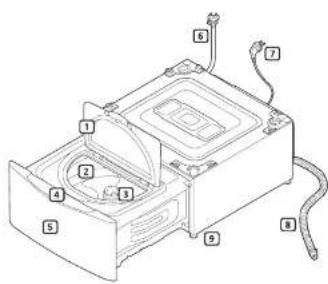
Technical diagram of a device with numbered components, likely an electronic or mechanical assembly.① Door
② Drum
3 Lint Filter
4 Control Panel
5 Drawer
6 Water Supply Hose
⑦ Power Plug
8 Water Drain Hose
9 Leveling Feet
Accessories


Water supply hose (for cold water)
Connecting supply hose
Water drain hose Water supply hose connector
Detergent measuring cup


Cable tie (2 EA)
drain hose connector


Anti-slip sheets Spanner Screws
(18 EA) / (4 EA)

EN
Specifications
| Model | F70E1UDNK9F70E1UDNK12 |
| Wash Capacity | 3.5 kg (Wash) |
| Power Supply 220 - 240 V~, 50 Hz | |
| Size 700 mm (W) x 770 mm (D) x 360 mm (H) | |
| Product Weight 48.7 kg | |
| Permissible Water Pressure | 0.1 - 0.8 MPa (1.0 - 8.0 kgf / cm2) |
- Appearance and specifications may change without notice to improve the quality of the product.
• The external hot water supply MUST NOT exceed 65°C. - No further backflow protection required for connection to the water supply.
Installation Place Requirements
Location

text_image
10 cm 123 cm 3 x 5 cm 400 cm* 179 cm : additionally needed for service.
Level floor : Allowable slope under the entire appliance is 1°.
Power outlet: Must be within 1.5 meters of either side of the location of the appliance.
- Do not overload the outlet with more than one appliance.
Additional Clearance : 5 cm at the sides and 10 cm behind the unit.
- Do not place or store laundry products on top of the appliance at any time.
• These products may damage the finish or controls.
WARNING
- The plug must be plugged into an appropriate outlet that is properly installed and grounded in accordance with all local codes and ordinances.
Positioning
• Install the appliance on a flat hard floor.
• Make sure that air circulation around the appliance is not impeded by carpets, rugs, etc.
- Never try to correct any unevenness in the floor with pieces of wood, cardboard or similar materials under the appliance.
- If it is impossible to avoid positioning the
EN
- Do not install the appliance in rooms where freezing temperatures may occur. Frozen hoses may burst under pressure. The reliability of the electronic control unit may be impaired at temperatures below freezing point.
- Ensure that when the appliance is installed, it is easily accessible for an engineer in the event of a breakdown.
- With the appliance installed, adjust all four feet using a transit bolt spanner to ensure the appliance is stable, and a clearance of approximately 15 cm is left between the top of the appliance and the underside of any work-top.
- If the appliance is delivered in winter and temperatures are below freezing, place the appliance at room temperature for a few hours before putting it into operation.
- Do not use a drip pan as it can block the drawer. Using the drip pan may result in increased vibration and noise during operation.
A WARNING
- This equipment is not designed for maritime use or for use in mobile installations such as caravans, aircraft etc.
Electrical Connection
- Do not use an extension cord or double adapter.
• Always unplug the appliance and turn off the water supply after use.
- Connect the appliance to an earthed socket in accordance with current wiring regulations.
• The appliance must be positioned so that the plug is easily accessible.
- Repairs to the appliance must only be carried out by qualified personnel. Repairs carried out by inexperienced persons may cause injury or serious malfunctioning. Contact your local service centre.
EN
Unpacking and Removing Packing Materials
1 Lift the appliance off the foam base.
• If you must lay the appliance down to remove the carton base, always protect the side of the appliance and lay it carefully on its side. Do not lay the appliance on its front or back.
2 Pull and save the foam block for future use
- If the washing machine must be moved in the future, the foam block will help prevent damage to the washing machine during transportation.

NOTE
• To prevent damage, do not remove the foam block until the washing machine is at the final location.
3 Turn the top cover about 180 degrees.
- Cover the upper hole with the top cover and install 4 short screws (included in packing box) to fix it in place.

Stacking the Pedestal Washing Machine
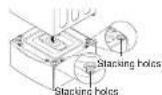
1 Make sure the leveling feet on the front-loading washing machine are fully retracted before stacking. Place the front-loading washing machine on top of the pedestal washing machine. Make sure the holes on the pedestal washing machine align with the holes in the front-loading washing machine.
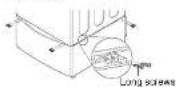
2 Install 4 long screws (included in box) at each corner to securely attach the front-loading washing machine to the pedestal washing machine.
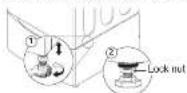
3 Turn the feet of the front-loading washing machine slightly until it is snugged up against the pedestal washing machine. Extend all the legs 1/2 turn with wrench and tighten all 4 lock nuts. All lock nuts must be tightened.
WARNING
• The top cover must be installed to avoid the
EN
WARNING
• This pedestal washing machine must be installed underneath a matching LG front-loading washing machine manufactured after 2009. (16-21 kg washing machine only)
• The pedestal washing machine will not work as a standalone unit.
• The pedestal washing machine must be stacked under an LG front-loading washing machine in order to operate properly.
Checking the Rubber Seal on the Supply Hose
Two rubber seals are supplied with the water supply hoses. They are used for preventing water leaks. Make sure the connection to taps is sufficiently tight.

Connecting the Supply Hose
- Water supply pressure must be between 0.1 MPa and 0.8 MPa (1.0–8.0 kgf/cm²).
- Do not strip or crossthread when connecting supply hose to the valve.
- If the water supply pressure is more than 0.8 MPa, a decompression device should be installed.
- Periodically check the condition of the hose and replace the hose if necessary.

Connecting Hose to Water Tap
Connecting Screw-Type Hose to Tap with Thread
Screw the hose connector onto the water supply tap.

Connecting Screw-Type Hose to Tap without Thread
1 Loose the four fixing screws.
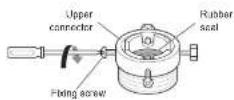
2 Remove the guide plate if the tap is too large to fit the adapter.
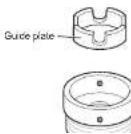
EN
3 Push the adapter onto the end of the tap so that the rubber seal forms a waterlight connection. Tighten the four fixing screws

4 Push the supply hose vertically upwards so that the rubber seal within the hose can adhere completely to the tap and then tighten it by screwing it to the right.

Connecting One Touch Type Hose to Tap Without Thread
1 Unscrew the adapter ring plate and loose the four fixing screws.
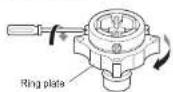
EN
2 Remove the guide plate if the tap is too large to fit the adapter.

3 Push the adapter onto the end of the tap so that the rubber seal forms a watertight connection. Tighten the four fixing screws and the adapter ring plate.

4 Pull the connector latch plate down, push the supply hose onto the adapter, and release the connector latch plate. Make sure the adapter locks into place.
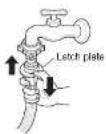
Connecting Hose to Two Washing Machines
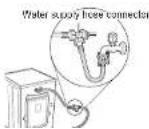
1 Connect the water supply hose connector to the water supply hose of the front-loading washing machine. Open the accessory package for pedestal washing machine installation.
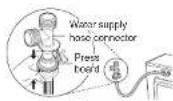
2 Connect the water supply hose of pedestal washing machine to the water supply hose connector, pedestal washing machine to be installed.

3 Connect the additionally provided water supply hose of the front-loading washing machine to the water supply hose connector and water faucet.
NOTE
• After connecting the supply hose to the water
EN
Installing the Drain Hose
• The drain hose should not be placed higher than 100 cm above the floor. Water in the appliance may not drain or may drain slowly.
1 Insert the band clamp onto the drain hose elbow.
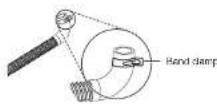
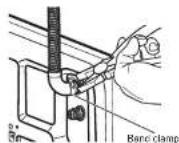
2 With the hose leading up from the elbow, insert the elbow onto the drain outlet on the back of the pedestal washing machine.

3 Adjust the band clamp with pliers to keep the hose securely in place and prevent leaking.
Using the Drain Hose Connector
1 Connect the drain hose of the front-loading washing machine and the pedestal washing machine to the drain connector.
2 Insert the included band clamps on to the ends of the two drain hoses.
3 Push the drain hoses firmly onto the drain connector.
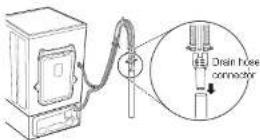
CAUTION
- Adjust the band clamps to prevent the hoses from coming loose or leaking. Failure to do so could result in flooding. Use of the drain connector helps avoid siphoning, odors, or improper draining.
EN
Leveling the Appliance
If the floor is uneven, turn the adjustable feet as required (Do not insert pieces of wood etc. under the feet). Make sure that all four feet are stable and resting on the floor and then check that the appliance is perfectly level (Use a spirit level).
- Once the appliance is level, tighten the lock nuts up towards the base of the appliance. All lock nuts must be tightened.

Diagonal Check
- When pushing down the edges of the top plate diagonally, the appliance should not move up and down at all (check both directions). If the appliance rocks when pushing the machine top plate diagonally, adjust the feet again.
WARNING
- When stacking the front-loading washing machine on the pedestal washing machine, use the leveling feet on the pedestal washing machine to level both. The front-loading washing machine's leveling feet should be minimized and the locknuts turned counterclockwise to secure them.
NOTE
• Timber or suspended type flooring may contribute to excessive vibration and unbalance.
- If the washing machine is installed on a raised platform, it must be securely fastened in order to eliminate the risk of falling off.
Using Anti-Slip Sheets (Optional)
If you install the appliance on a slippery surface, it may move because of excessive vibration. Incorrect leveling may cause malfunction through noise and vibration. If this occurs, install the anti-slip sheets under the leveling feet and adjust the level.
1 Clean the floor to attach the anti-slip sheets.
- Use a dry rag to remove and clean foreign objects and moisture. If moisture remains, the anti-slip sheets may slip.
2 Adjust the level after placing the appliance in the installation area.
3 Place the adhesive side of the anti-slip sheets on the floor.
- It is most effective to install the anti-slip sheets under the front feet. If it is difficult to place the pads under the front feet, place them under the back feet.
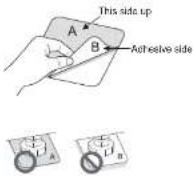
4 Ensure the appliance is level.
- Push or rock the top edges of the appliance gently to make sure that the appliance does not rock. If the appliance rocks, level the appliance again.
NOTE
OPERATION
EN
Using the Appliance
1 Sort laundry and load items.
- Sort laundry by fabric type, soil level, colour and load size as needed. Open the door and load items into the washing machine.

2 Add cleaning products.
- Add the proper amount of detergent with the detergent measuring cup to the washing drum evenly.

3 Closing the door and drawer.
4 Turn on the washing machine.
- Press the Power button to turn on the washing machine.

5 Choose the desired washing cycle.
- Press the cycle button repeatedly until the desired cycle is selected.

6 Begin cycle.
- Press the Start/Pause button to begin the cycle. The washing machine will agitate briefly without water to measure the weight of the load. If the Start/Pause button is not pressed within a certain time, the appliance will shut off and all settings will be lost.

7 Add softener.
- When the machine chimes for about 20 seconds, add the softener and press Start/Pause to restart the cycle.
8 End of cycle.
- When the cycle is finished, a melody will sound. Immediately remove your clothing from the washing machine to remove wrinkling and odors.
• After washing is complete, wipe off the washing machine door, gasket and inside the washing drum with a dry towel for clean washing.
Sorting Laundry
1 Lock for a care label on your clothes.
• This will tell you about the fabric content of your garment and how it should be washed.
- Symbols on the care labels.

Normal machine waste

Permanent press

Defcale

land wash

Do not wash
2 Sorting laundry.
• To get the best results, sort clothes into loads that can be washed with the same wash cycle.
- Different fabrics need to be washed at varying temperatures and spin speeds.
- Wash two or more towels or knits together. If washed separately, laundry which absorbs a lot of water may not be washed well or abnormal spin-drying may occur due to leaning.
• Always sort dark colours from pale colours and whites. Wash separately as dye and lint transfer can occur causing discolouration of white and pale garments. If possible, do not wash heavily soiled items with lightly soiled ones.
- Soil (Heavy, Normal, Light) : Separate clothes according to amount of soil.
- Colour (White, Lights, Darks): Separate white fabrics from coloured fabrics.
- Lint (Lint producers, Collectors); Wash lint producers and lint collectors separately
EN
3 Caring before loading.
- Do not wash 'memory wire' on female inner wear (such as a brassiere) as it may damage other clothes or the washing machine and create noise.
- Check all pockets to make sure that they are empty. Items such as nails, hair clips, matches, pens, coins and keys can damage both your washing machine and your clothes.
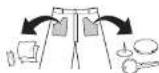
- Close zippers, hooks and strings to make sure that these items don't snag on other clothes.
• Pre-treat dirt and stains by brushing a small amount of detergent dissolved water onto stains to help lift dirt.
• If an item of clothing has a long lace attached to it, arrange the lace so it cannot be tangled or put it into a washing net. - Remove the insides of cushions, pillows, or sitting mats and only wash the cover. The insides may protrude, damaging other laundry. Plastic parts may generate abnormal vibrations.
CAUTION
- Divide laundry in large volume for washing so that the laundry can be submerged under water completely. If laundry expands during washing, it may cause damage to the laundry and parts during washing or spin.
EN
Closing the Door and Drawer
1 Push the washing machine door until it clicks.
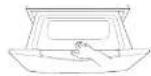
2 Push the drawer completely closed.
CAUTION
- Do not let your hands get stuck between the door and the washing machine, as this can cause injury.
- Forcing the drawer or the door to open can
cause part damages and safety problems. - Closing the drawer before having closed the door completely may scratch the door class.
- Ensure the drawer is pulled out completely to
- Ensure the drawer is pulled out completely to prevent the door from contacting the front load washing machine.
NOTE
- Door lock may fail if there is too much laundry in the machine or if the door is not completely closed.
- If the product is operating or the Drawer Lock (②), indicator is displayed, the door cannot open. To open the door, press the Start/Pause button to stop the product, and when Drawer Lock (④) indicator disappears, open the door. Do not force the drawer and door open.
-
Not a warning sign appears on the display, close the drawer and the door completely. After doing so, press the Start/Pause button.
-
If the drawer cannot be opened completely, pull the drawer forward with a little force using both hands.
- If power failure occurs during product operation, the door cannot be opened. Provide the power again or contact the LG service centre. (in case of boil wash, the door may not open after the power is supplied again due to high temperature inside the washing machine).
- If the door cannot open due to high temperature, carry out rinsing with cold water using the Rinse+Spin programme or wait a while before opening the door.
- If the drawer cannot be opened completely, pull the drawer forward with a little force using both hands.
- If power failure occurs during product operation, the door cannot be opened. Provide the power again or contact the LG service centre. (in case of boil wash, the door may not open after the power is supplied again due to high temperature inside the washing machine).
- If the door cannot open due to high temperature, carry out rinsing with cold water using the Rinse+Spin programme or wait a while before opening the door.
EN
Adding Cleaning Products
Detergent Dosage
- Detergent should be used according to the instruction of the detergent manufacturer and selected according to type, colour, soiling of the fabric and washing temperature.
• If too much detergent is used, too many suds can occur and this will result in poor washing results or cause heavy load to the motor.
• If you wish to use liquid detergent follow the guidelines provided by the detergent manufacturer.
- If too many suds occur, reduce the detergent amount.
- Detergent usage may need to be adjusted for water temperature, water hardness, size and soil level of the load. For best results, avoid oversudsing.
• Refer to the label of the clothes, before choosing the detergent and water temperature.
- When using the washing machine, use designated detergent for each type of clothing only:
– General powdered detergents for all types of fabric
– Powdered detergents for delicate fabric
– Liquid detergents for all types of fabric or designated detergents only for wool
- For better washing performance and whitening, use detergent with the general powdered bleach.
Adding Detergent
Measure the detergent with the detergent dispenser and pour it into the tub.

- Use the provided detergent measuring cup to add only one cup of detergent.
- Reduce the amount of detergent for lightly soiled laundry. If you use too much detergent, excessive bubbles will remain after rinsing.
EN
Adding Softeners
Adding Fabric Softener
CASE 1. When the machine chimes:
1 Press Start/Pause to pause the cycle.
2 Add the liquid fabric softener.
3 Close the door, slide the drawer closed, and press Start/Pause to restart the cycle.
NOTE
• To disable or enable the fabric softener alert, press and hold the Extra Rinse button for three seconds.
CASE 2. If you miss the softener add point:
1 Press the Power button to interrupt the cycle.
2 Select the Rinse+Spin programme and press the Start/Pause button to start the cycle. Add the fabric softener at the chimes.
3 Close the door, slide the drawer closed, and press Start/Pause to restart the cycle.
NOTE
- Do not pour fabric softener directly on the clothes.
- The softener can also be diluted with water and added directly into the drum. Do not pour undiluted softener directly onto clothing because it may stain fabrics.
Adding Water Softener
A water softener, such as anti-limescale can be used to cut down on the use of detergent in areas with high water hardness level.
- Dispense according to the amount specified on the packaging. First add detergent and then the water softener.
CAUTION
- Do not directly put bleach to the laundry. This may cause partial discoloration and severe damage to the laundry.
- Do not use chlorine bleach or acidic cleaner when washing the laundry, as it can cause damage to clothes such as discoloration and decoloration of laundry.
EN
Control Panel

text_image
Normal Speed Wash Lingerie/Wool 1:00 Boil Wash Baby Wear Rinse+Spin Tub Clean Over the Reuse Extra Rinse 2 3 4 5 Hold to Start① Power Button
- Press the Power button to turn the washing machine on.
3 Display
• The display shows the cycle status and estimated time remaining.
6: Drawer lock indicator
Door lock indicator
Child lock indicator
2 Start/Pause Button
- This Start/Pause button is used to start the wash cycle or pause the wash cycle.
• If a temporary stop of the wash cycle is
needed, press the Start/Pause button.
NOTE
- If the Start/Pause button is not pressed within a certain time, the appliance will shut off and all settings will be lost.
4 Programme Button
- Programmes are available according to laundry type.
5 Options
• Use these buttons to select the desired
options for the selected programme
• The setting lights above the buttons
illuminate to show the current selection.
EN
Programme Table
Washing Programme
| Programme | Description Note | Maximum Load | |
| Normal | Use this programme to wash lightly soiled normal items, except delicate fabrics such as wool or silk. | Pressing the Start/Pause button without selecting a programme will cause the Normal programme to begin immediately using the default settings. | 3.5 kg |
| Speed Wash | Use this programme to speed up the washing time for small loads and lightly soiled clothes. | Use very little detergent in this programme. | 1 kg |
| Lingerie/Wool | Use this programme to wash textiles, lingerie, or fine clothes likely to shrink or deform. | To reduce damage to textiles and improve washing performance, use special neutral detergent for wool.To prevent damage to clothes, the drum spins gently to the left and right for washing. | 1.5 kg |
EN
| Programme | Description Note | Maximum Load | |
| Boil Wash | Use this programme to wash under wears or baby wear to be sterilized and whitened. | In this programme, laundry is washed thoroughly due to high temperature. Use 1/2 the amount of detergent recommended by the manufacturer for a normal load.Do not wash white or brightly colored laundry with darkly colored laundry that can discharge colors.It is more effective to pre-wash laundry which is stained with blood or milk briefly with cold water before carrying out main washing can remove stains more effectively.In this programme, water is heated using the heating system of the washing machine.Bubble Removing Function: If an excessive amount of detergent is used, the bubble removing function may operate.Lowering Drain Temperature Function: For the safety, cold water is briefly supplied before draining to lower the water temperature. | 1.5 kg |
| Baby Wear | Use this programme to wash baby wear hygienically. | Select a proper type of neutral detergent Clothes are washed at high temperature to sterilize and remove miles.It is more effective to pre-wash laundry stained with food, sweat, urine and feces briefly before washing.Due to high temperature, this programme is not recommended for wool, silk or any other delicates. | 1.5 kg |
| Rinse+Spin | Select this programme to rinse and spin a load separately from a regular cycle. | Add fabric softener only. 1.5 kg |
EN
Option Programme
Tub Clean
Use this option to keep the drum clean by sterilizing germs within the drum. For information on using Tub Clean, see the Cleaning Your Washing Machine section.
Extra Rinse
Use this option to increase the number of rinsing programmes.
1 Press the Power button.
2 Select a washing programme.
3 Press the Extra Rinse button. - When you press the Extra Rinse button, the number of rinsing cycles (1 - 5) to be added will be displayed.
4 Press the Start/Pause button.
Child Lock (
Use this option to disable the controls. This feature can prevent children from changing cycles or operating the appliance.
Locking the Control Panel
1 Press and hold the Tub Clean and Extra Rinse button at the same time for three seconds.
2 Will appear on the display. When the Child Lock is set, all buttons are locked except the Power button.
NOTE
- Turning off the power or completing all cycles will not reset the child lock function. You must deactivate child lock before you can access any other functions.
Unlocking the Control Panel
Press and hold the Tub Clean and Extra Rinse button at the same time for three seconds. • To change the cycle or option, press the Start/Pause button to stop operation, and then choose the cycle or option which you wish to change.
SMART FUNCTIONS
EN
LG ThinQ Application
Installing the LG ThinQ Application
Search for the LG ThinQ application from the Google Play Store or Apple App Store on a smartphone. Follow instructions to download and install the application.
LG ThinQ Application Features
Smart Diagnosis
This function provides useful information for diagnosing and solving issues with the appliance based on the pattern of use.
Smart Diagnosis
This feature is only available on models with the 🎨 or 🔒 logo.
Use this feature to help you diagnose and solve problems with your appliance.
NOTE
- The feature may be subject to change without prior notice and may have a different form depending on where you are located.
- For reasons not attributable to LGE's negligence, the service may not operate due to external factors such as, but not limited to, Wi-Fi unavailability, Wi-Fi disconnection, local app store policy, or app unavailability.
Declaration of Conformity
Using Audible Diagnosis to Diagnose Issues
Follow the instructions below to use the audible diagnosis method.
- Launch the LG ThinQ application and select the Smart Diagnosis feature in the menu. Follow the instructions for audible diagnosis provided in the LG ThinQ application.
1 Press the Power button to turn on the appliance.
• Do not press any other buttons.
2 Place the mouthpiece of your smartphone close to the 🎨 or 🌘 logo.

3 Press and hold the Tub Clean button for 3 seconds or longer while holding the smartphone mouthpiece to the logo until the data transfer is complete.
- Keep the smartphone in place until the data transfer has finished. Time remaining for data transfer is displayed.
4 After the data transfer is complete, the diagnosis will be displayed in the application.
NOTE
- For best results, do not move the smartphone while the tones are being transmitted.
MAINTENANCE
EN
WARNING
- Unplug the washing machine before cleaning to avoid the risk of electric shock. Failure to follow this warning may result in serious injury, fire, electric shock, or death.
- Never use harsh chemicals, abrasive cleaners, or solvents to clean the washing machine. They may damage the finish.
Cleaning Your Washing Machine
Care After Wash
• After the cycle is finished, wipe the door and the inside of the door seal to remove any moisture.
- Leave the door open to dry the drum interior.
- Wipe the body of the washing machine with a dry cloth to remove any moisture.

Cleaning the Exterior
Proper care of your washing machine can extend its life.
Door:
- Wash with a damp cloth on the outside and inside and then dry with a soft cloth.
Exterior:
• Immediately wipe off any spills.
- Wipe with a damp cloth.
- Do not press the surface or the display with sharp objects.
EN
Tub Clean
Use this option to keep the drum clean by sterilizing germs within the drum.
1 Press the Power button.
2 Dilute 200 ml liquid chlorine bleach in 1 t of water and pour the mixture in the drum.
3 Press the Tub Clean button.
4 Press the Start/Pause button.
CAUTION
• If there is a child, be careful not to leave the door open for too long.
Cleaning the Water Inlet Filter
- Turn off the stopclock if the washing machine is to be left for any length of time (e.g. holiday), especially if there is no floor drain (gully) in the immediate vicinity.
- icon may blink on the display when the water pressure is weak or an inlet filter is cleared with dirt. Clean the inlet filter
- The inlet filter screens could be plugged by hard water scale, sediment in the water supply or other debris.
1 Turn off the water tap and unscrew the water inlet hose.

2 Clean the filter using a hard bristle brush.

EN
Cleaning the Lint Filter
The filter is an important part for efficient washing performance result, so it needs special care from you. It is recommended that the filter be cleaned regularly.
1 Pull the cap of the lint filter.
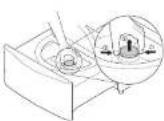
2 Open the cap and remove lint and then wash out.

3 Insert the lower part of the filter into the drum and close the cap until you hear a click sound.
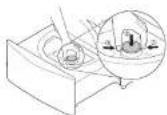
NOTE
- When the lint filter is damaged, contact LG
service centre. - Do not operate the washing machine without
- Do not place the lint filter loosely. Doing so may damage the fabrics or the washing machine.
Care in Cold Climates
- When frozen, the product does not operate normally. Make sure to install the product where it will not freeze during winter.
• Make sure to check the following.
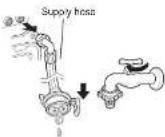
How to Keep the Product from Freezing
• After closing the tap, disconnect the cold supply hose from the tap, and remove water while keeping the hose facing downwards.
EN
How to Handle Freezing
Step 1. When the Door is Frozen
• Thaw out the door using a hot water cloth.
Step 2. When the Water Supply Hose is Frozen
- Icon may blink on the display when water supply problems occur, take the following measures.
- Take out water supply hose and connect to the tap and check that water comes from the tap and supply hose.
- Turn off the tap, and thaw out the tap and both connection areas of supply hose of the product using a hot water cloth.
- Take out supply hose and immerse in warm water below 50–60 °C.

Step 3. When the Drain Pump is Frozen
- F1 Can may blink on the display when drain pump problems occur, take the following measures.
Pour 15 t warm water below 50–60 °C in the drum until washing machine wing nuts are immersed and wait for an hour.
2 Press the Power button and then run the Boil Wash programme for an hour.
- When a icon appears on the display, repeat steps 1 to 2.
3 Turn off the power when the Boil Wash programme is finished. If the drawer is open, select the Rinse+Spin and then press the Extra Rinse to the number of 9 and press the Start/Pause button to run the Spin.
4 Select the Rinse+Spin programme and press the Start/Pause button to check that the washing machine works.
5 When icon appears on the display, thaw out the drain hose inner part with the hot water.
TROUBLESHOOTING
EN
The appliance is equipped with an automatic error-monitoring system to detect and diagnose problems at an early stage. If the appliance does not function properly or does not function at all, check the following before you call for service:
Diagnosing Problems
| Symptoms Reason Solution | ||
| Rattling and clanking noise | Foreign objects, such as keys, coins, or safety pins may be in drum. | • Stop washing machine, check drum for foreign objects. If noise continues after washing machine is restarted, call for service. |
| Thumping sound | Heavy wash loads may produce a thumping sound. | • If sound continues, washing machine is probably out of balance. Stop and redistribute wash load. |
| Wash load may be out of balance. | • Pause the cycle and redistribute the load after the door unlocks. | |
| Vibrating noise | Packaging materials were not removed. | • Remove packing materials |
| Wash load may be unevenly distributed in the drum. | • Pause the cycle and redistribute the load after the door unlocks. | |
| Not all leveling feet are resting firmly and evenly on the floor. | • See Leveling the Appliance in the Installation section. | |
| Floor not rigid enough. | • Make sure that the floor is solid and does not flex. | |
| Water leaks every load | Hoses not installed correctly. | • Check all fill and drain hose connections to ensure that they are tight and secure. |
| Excessive sudsing | Too much detergent or incorrect detergent. | • Reduce the amount of detergent for lightly soiled laundry. If you use too much detergent, excessive bubbles will remain after rinsing. |
| Staining | Clothes were not properly sorted. | • Always wash dark colors separately from light colors and whites to prevent discoloration.• Never wash heavily soiled items washed with lightly soiled items. |
EN
| Symptoms Reason Solution | ||
| Water leaking | Supply hose connection is loose at the tap, washing machine, or drain hose connector. | Check hoses and drain hose connectors for leaks, cracks and splits.Tighten hose connections. |
| House drain pipes are clogged. | The washing machine pumps out water very rapidly. Check for water backing up out of the drain pipe during drain. If water is seen coming out of the drain, check for proper drain hose installation and check for restrictions in the drain. Contact a plumber to repair drain pipe. | |
| Drain hose has come out of drain connector or is not inserted far enough. | Tie drain hose to supply hose or standpipe to prevent it from coming out during drain. For smaller drain pipes, insert the drain hose into the pipe as far as the drain hose flange. For larger drain pipes, insert the drain hose into the pipe 2-5 cm past the flange. | |
| Load is too large for the drum. | Reduce the load or use the front-loading washing machine.Stop the washing machine and check the load. Make sure the load fits loosely in the drum and the door closes easily. | |
| Wrinkling | Washing machine not unloaded promptly. | Always remove items from the washing machine as soon as the cycle is complete. |
| Washing machine overloaded. | The washing machine can be fully loaded but the drum should not be lightly packed with items. The door of the washing machine should close easily. | |
| Hot and cold water supply hoses are reversed. | Hot water rinse can set wrinkles in garments. Check the supply hose connections. | |
| Water leaks Oversuding of detergent. | Oversuding may create leaks, and may be caused by the type and amount of detergent used. Always reduce the amount of detergent if the load is small or lightly soiled, or if your water is very soft. Never use more than the maximum amount shown in the dispenser provided. | |
EN
| Symptoms Reason Solution | ||
| Washing machine not filling properly | Filter clogged. | Make sure the inlet filters on the fill valves are not clogged. Refer to the filter cleaning instructions. |
| Supply hoses may be kinked. | Check that supply hoses are not kinked or clogged. | |
| Insufficient water supply. | Make sure that both hot and cold water taps are turned on all the way. | |
| door and drawer are open. | The washing machine will not operate if the door is open. Close the door and make sure that nothing is caught under the door preventing it from closing completely. | |
| Hot and cold supply hoses are reversed. | Check supply hose connections. | |
| Water level is too low. | The fill level is optimized for the wash motion to achieve the best wash performance. | |
EN
| Symptoms Reason Solution | ||
| Washing machine will not operate | Control panel has powered off due to inactivity. | This is normal. Press the Power button to turn the washing machine on. |
| Washing machine is unplugged. | Make sure cord is plugged securely into a working outlet. | |
| Water supply is turned off. | Tum both hot and cold taps fully on. | |
| Controls are not set properly. | Make sure the cycle was set correctly, close the door and press the Start/Pause button. | |
| Door or drawer is open. | Close the door and drawer make sure that nothing is caught under the door preventing it from closing completely. | |
| Circuit breaker/fuse is tripped/blown. | Check house circuit breakers/fuses. Replace fuses or reset breaker. The washing machine should be on a dedicated branch circuit. The washing machine will resume the cycle where it stopped once power is restored. | |
| Control needs to be reset. | Press the Power button, then re-select the desired programme and press the Start/Pause button. | |
| Start/Pause was not pressed after a cycle was set. | Press the Power button then re-select the desired programme and press the Start/Pause button. If the Start/Pause button is not pressed within a certain time, the appliance will shut off and all settings will be lost. | |
| Extremely low water pressure. | Check another tap in the house to make sure that household water pressure is adequate. | |
| Washing machine is too cold. | If the washing machine has been exposed to temperatures below freezing for an extended period of time, allow it to warm up before pressing the Power button. | |
EN
| Symptoms Reason Solution | ||
| Washing machine will not drain water | Kinked drain hose. | • Ensure that the drain hose is not kinked. |
| Drain located higher than 2.4 m above the floor. | • Make sure that the drain hose is no higher than 2.4 m above the bottom of the washing machine and is no more than 1.5 m away from the washing machine. | |
| Poor stain removal | Heavily soiled load. | • Use the front-loading washing machine. |
| Previously set stains. | • Articles that have previously been wash may have stains that have been set. These stains may be difficult to remove and may require hand washing or pre-treating to aid in stain removal. | |
| Wash cycle time is longer than usual | The washing machine automatically adjusts the wash time for the amount of laundry, water pressure and other operating conditions. | • This is normal. The washing machine adjusts cycle time automatically to provide optimal results for the selected programme. The time remaining shown in the display is only an estimate. Actual time may vary. |
| Musty or mildewy odor in washing machine | Incorrect or too much detergent has been used. | • This machine requires very little detergent. Use the provided detergent measuring cup. |
| Inside of drum was not cleaned properly. | • Run the Tub clean programme regularly. | |
| Washing machine chimes repeatedly before final rinse | This is not an error. | • This is an alert to allow the addition of liquid fabric softener before the final rinse. |
EN
Error Messages
| Symptoms Reason Solution | ||
| dE1dE2 | Drawer is not closed properly. | Close the drawer and press Start/Pause button to start the cycle.If the drawer is closed and the drawer lock error message is displayed, call for service. |
| dE3 | Door is not closed properly. | Open the drawer and make sure the latch area is free of clothing or other obstructions.Close the door, shut the drawer, and press Start/Pause to start the cycle.If the door is closed and the door error message is displayed, call for service. |
| IE | Water supply taps are not fully open. | Make sure that the water taps are fully open. |
| Water line hoses are kinked, pinched, or crushed. | Make sure that the hoses are not kinked or pinched. Be careful when moving the washing machine during cleaning and maintenance. | |
| Water inlet filters are clogged. | Clean the inlet filters. | |
| Water supply pressure to tap or house is too low. | Check another tap in the house to make sure that household water pressure is adequate and flow is not restricted.Disconnect the supply hose from the washing machine and run a few liters of water through the hose to flush the water supply lines. If flow is too low, contact a plumber to have the water lines repaired. | |
| Water supply connected with leak-limiting hoses. | Hoses designed to limit leaks can trip falsely and prevent the washing machine from filling. The use of leak limiting hoses is not recommended. | |
| OE | Drain hose is kinked, pinched, or clogged. | Make sure the drain hose is free of clogs kinks, etc., and is not pinched behind or under the washing machine. |
| Drain discharge is more than 1.2 m above bottom of washing machine. | Adjust or repair drain. Maximum drain height is 1.2 m. | |
EN
| Symptoms Reason Solution | ||
| UE | UE rebalancing operation is not successful. | The automatic attempt to rebalance the load was not successful. The cycle has been paused to allow the load to be manually adjusted. |
| The load is too small. | Add more items to allow the washing machine to balance the loads. | |
| Heavy articles are mixed with lighter items. | Wash articles of somewhat similar weight. | |
| The load is out of balance. | Manually redistribute the load if articles have become tangled. | |
| LE | Control error. | Unplug the power plug and call for service. |
| FE | Water level is too high due to a faulty water valve. | Close the water taps, unplug the washing machine, and call for service. |
| PE | The water level sensor is not working correctly. | Close the water taps, unplug the washing machine, and call for service. |
| LE | A motor error has occurred. | Allow the washing machine to stand for 30 minutes and then restart the cycle. If the LE error code persists, call for service. |
| tCL | It is time to run the Tub Clean programme. | Run the Tub Clean programme. |
| ET | Pedestal washing machine is being operated without a full-size washing machine. | The pedestal washing machine will not operate as a standalone unit. It must be stacked under an LG front-loading washing machine. |
| Stacking switch is not working properly. | The stacking switch will not operate properly if the unit is stacked under a non-LG appliance, or an LG appliance manufactured before 2009. | |
| FF | Drain hose, supply hose or drain pump is frozen. | Thaw out the supply hose using a hot water cloth.Pour warm water in the drum. |
| CL | CL is not an error. This prevents children from changing cycles or operating the appliance. | To deactivate, press the Tub Clean and Extra Rinse button for three seconds. |
Memo
Memo
Memo

LG
Life's Good