RT29BVMS - Freezer SAMSUNG - Free user manual and instructions
Find the device manual for free RT29BVMS SAMSUNG in PDF.


User questions about RT29BVMS SAMSUNG
0 question about this device. Answer the ones you know or ask your own.
Ask a new question about this device
Download the instructions for your Freezer in PDF format for free! Find your manual RT29BVMS - SAMSUNG and take your electronic device back in hand. On this page are published all the documents necessary for the use of your device. RT29BVMS by SAMSUNG.
USER MANUAL RT29BVMS SAMSUNG
Before operating the unit, please read this manual thoroughly, and retain for future reference.

natural_image
Line drawing of a Samsung refrigerator with front door and side panels (no text or symbols)MAIN FEATURES

natural_image
Illustration of two people sitting at a table with food, near a window (no text or symbols)Large Freezer Storage Area
- Stores large quantities of food in the freezer.
Jumbo Storage Guard
- Holds large bottles securely.
Adjustable Storage Guards
- Position them for your convenience and according to the height of your food containers.
Bio-Fresh Zone
- Keeps vegetables fresh for longer periods.
Sliding Drawer (Premium only)
- Extra storage space for vegetables and fruits.
iCooling (Premium only)
- Advanced air circulation for faster surround cooling.
Super Freeze Zone
- Freezes stored items quickly.
Twist Ice-Tray (Premium Only)
- Spring mechanism for automatic release of ice cubes.
BASIC PREPARATION
Read Instructions.
Please read all safety and operating instructions before operating this appliance.
Retain Instructions.
Please keep this Owner's Manual for future reference.
Heed Warnings.
All warnings, Cautions and Notes on this refrigerator are important; please pay attention to them.
Follow Instructions.
For best results, follow all instructions given in this manual.
Model and Serial Numbers.
Include both the model number and the serial number when corresponding with your Dealer concerning this product.
This manual is made on the basis of RT26 model among RT34 / 31 / 26 and RT23
Date of Purchase : ____
Model No.:
Serial No.:
Contents
MAIN FEATURES 1
CONTENTS....2
BASIC PREPARATION......2
- Getting Started.... 3
INSTALLATION 4
CAUTIONS WHILE USING...... 6
PARTS 8,9
REPLACING THE LAMP 10
STORING FOOD 11
HOW TO USE 12
- Temperature contro.l.... 12
- Ice cube maker.... 13,14
- Chiller Compartmen.t.... 15
- Vegetable bin. 15
LEVELING THE APPLIANCE 16
REMOVING ACCESSORIES 17
CLEANING THE REFRIGERATOR ..... 19
BEFORE CALLING SERVICE...... 21

Getting Started
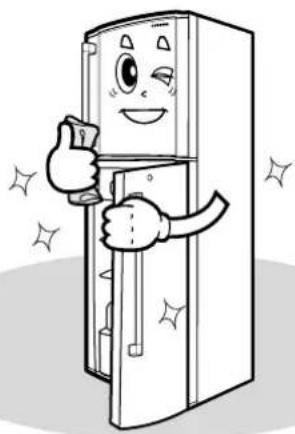
- Wipe the appliance inside and outside using a cloth dampened with warm water and a small amount of detergent.
natural_image
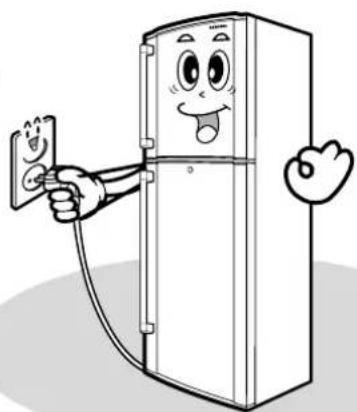
Cartoon illustration of a smiling refrigerator with arms and legs, giving a thumbs-up gesture (no text or symbols)22 Before plugging in for the first time, allow the refrigerator to stabilize for at least one hour. Allow the freezer compartment to cool for 2 to 3 hours before storing food.
natural_image
Cartoon illustration of a smiling refrigerator with a smiley face and a pointing hand holding an electric plug (no text or symbols)INSTALLATION
natural_image
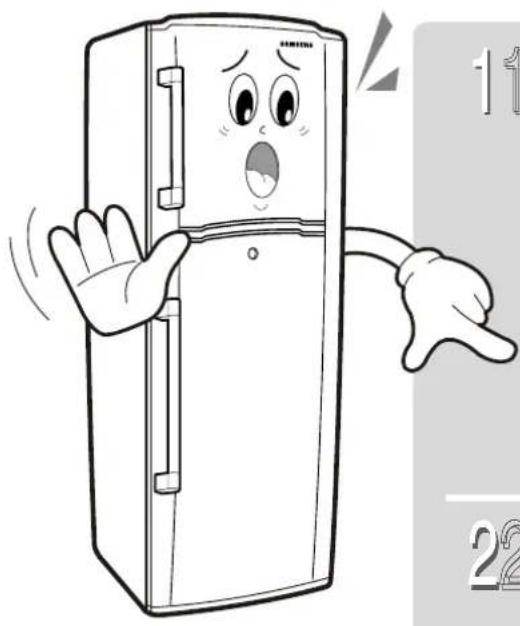
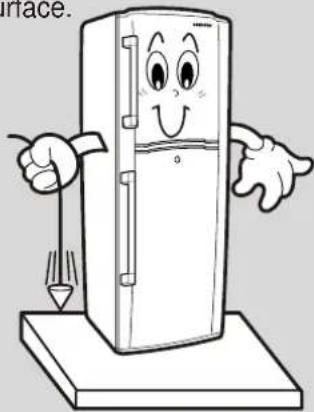
Cartoon illustration of a smiling refrigerator with arms and legs, waving and gesturing (no text or symbols)Install this refrigerator on a firm, flat surface.
natural_image
Cartoon illustration of a smiling refrigerator with arms and legs, standing on a base with a downward arrow (no text or symbols)22 Avoid locations affected by draughts or dampness.

natural_image
Cartoon illustration of a distressed refrigerator with arms and legs behind a window, no text or symbols present3 For optimum operation, normal room temperature is recommended. Avoid locations in direct sunlight, near heaters, radiators, stoves or ovens.

natural_image
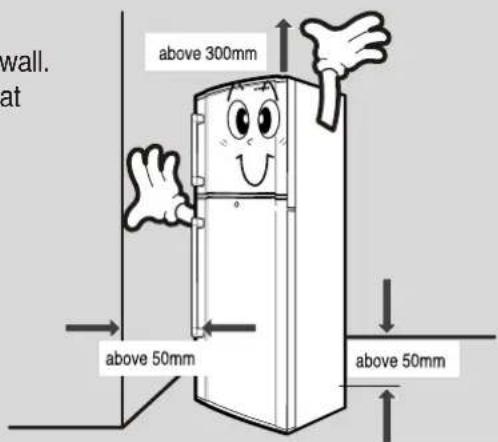
Cartoon illustration of a refrigerator with a sad face and a steamer (no text or symbols)44 Allow a 50mm space between the refrigerator and the wall. If your refrigerator is going into a recessed area, allow at least 300mm clearance above the refrigerator.
text_image
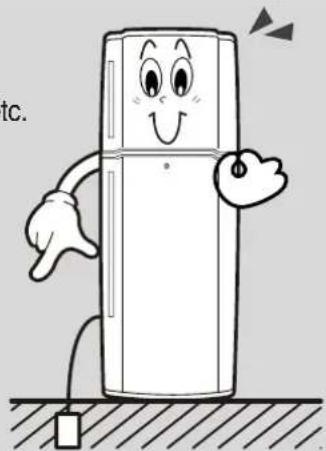
above 300mm above 50mm above 50mm wall. at55 For personal safety, properly ground this appliance. Do not ground this refrigerator with a telephone line, gas pipe, etc.
natural_image
Cartoon illustration of a smiling refrigerator with arms and legs, standing on a surface (no text or symbols)CAUTIONS WHILE USING
natural_image
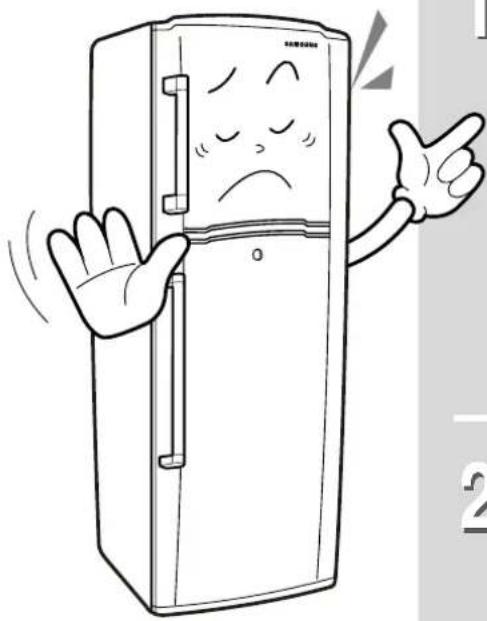
Cartoon illustration of a distressed refrigerator with arms and facial expressions, no text or symbols presentDo not allow water to splash onto the refrigerator.
- Water impairs the insulation of electric parts and may cause an electrical shock or a fire hazard.

natural_image
Cartoon illustration of a distressed refrigerator with hands and tears, no text or symbols present2 Do not use flammable sprays such as lacquer and paint near the refrigerator.
- Heat from the refrigeration unit may ignite flammable aerosols.

text_image
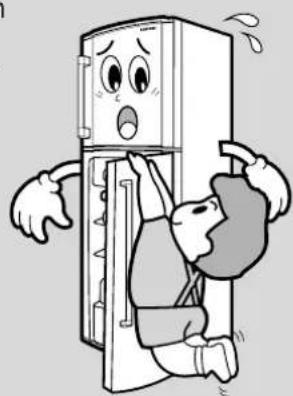
Cartoon illustration showing a hand holding a refrigerator with a spray bottle emitting smoke, featuring Chinese characters on the door.Do not allow unattended children to play in or around refrigerators and other large appliances. The child may get hurt or they could damage the appliance.
- Do not allow children to hang on to the refrigerator door.
natural_image
Cartoon illustration of a person inside a refrigerator with surprised expression (no text or symbols)44 For optimum operation, do not leave the door open for any longer than necessary.
- Leaving the door open allows warmer air to enter the refrigerator and causes the refrigeration unit to use more energy to maintain the temperature.

natural_image
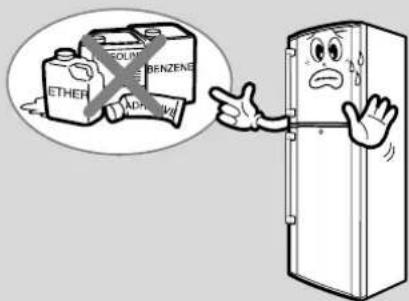
Cartoon illustration of a distressed refrigerator with arms and legs, showing a broken refrigerator window (no text or symbols)5 Do not store volatile chemicals such as ether and benzene in the refrigerator.
- The fumes, besides damaging food, can build up and cause an explosion.
text_image
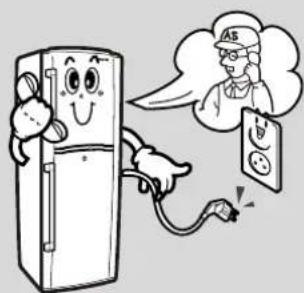
BENZENE ETHER ADHORIZY6 Do not use the refrigerator if it is not operating correctly or has been damaged. Disconnect it from the power supply and call your local service center.
- If the power cord is damaged, avoid a hazard by replacing it through the manufacturer or its service agent or a similarly qualified person.
natural_image
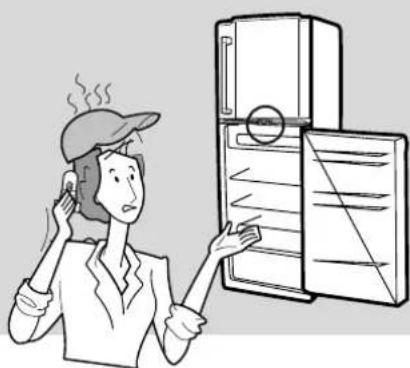
Cartoon illustration of a refrigerator with a smiling face and a person inside, connected to a plug (no text or symbols)7 Always be careful of not banging your head on the bracket lock while storing or taking out food.
natural_image
Illustration of a person in a coat and cap reacting to heat near a refrigerator (no text or symbols)PARTS(RT23 / 26)

text_image
Twist Ice Cube Tray (Premium only) Ice Storage Bin Freezer Compartment Temperature Control Super-Freeze Zone (Premium only) Chiller Compartment Refrigerator Compartment Temperature Control i-cooling (Premium only) Refrigerator Shelf (Plastic or Steel) Lamp Adjustable Storage Guard Dairy Guard (RT26 Premium only) Bottle Guide(Premium only) Jumbo Guard Bottle Storage Guard Bio-Fresh Zone Sliding Drawer (Premium only)PARTS(RT31 / 34)

text_image
Twist Ice Cube Tray Ice Storage Bin Freezer Compartment Temperature Control Super Freeze Zone Freezer shelf Chiller Compartment Refrigerator Compartment Temperature Control i -cooling Refrigerator Shelf Lamp Adjustable Storage Guard (RT34 2EA) Dairy Guard Bottle Guide Jumbo Guard Bottle Storage Guard Bio-Fresh Zone Sliding DrawerREPLACING THE LAMP

natural_image
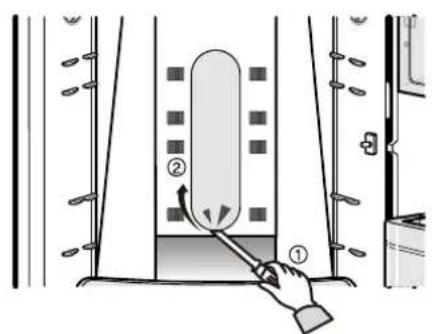
Line drawing of a person wearing a cap and holding an earbell, gesturing with open hands (no text or symbols)Press upper tab of the lamp cover with some tool such as ⊙driver and pull it out.
text_image
Diagram showing a hand pressing a button on a device with labeled parts and directional arrows indicating motion or movement.
text_image
Diagram showing a door with a highlighted keyhole and an eye symbol, illustrating the mechanism of opening or opening.22 Turn the existing lamp bulb and replace it with a new one.
- Replace the lamp cover by aligning the cover at the top(①) and carefully pressing it into place(②).

text_image
Diagram showing a door mechanism with an eye icon and directional arrow, likely illustrating a mechanical or electrical system concept.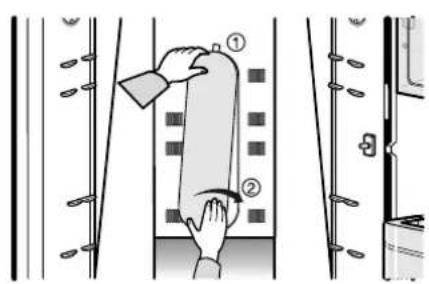
text_image
Diagram showing two steps of a hand holding a cylindrical object, labeled with numbers ① and ②, indicating a procedure or step in a mechanical or electrical assembly.STORING FOOD
Store food in small portions

natural_image
Illustration of fish, a plate of food items, and a knife (no text or symbols)Seal food in containers with lids, in plastic wrap or in plastic bags to prevent drying and the mingling of odors.
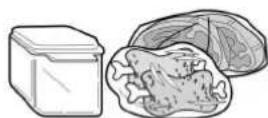
Allow hot food and drinks to cool to room temperature before placing them in the refrigerator or freezer.

Allow sufficient space between stuff to help the circulation of cool air.

Place liquid at the front of the refrigerator to avoid freezing.
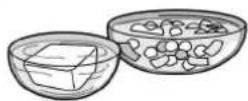
Wash dry fruits and vegetables before placing them in the refrigerator.r.


natural_image
Technical line drawing of a refrigerator internal compartments (no text or symbols)HOW TO USE
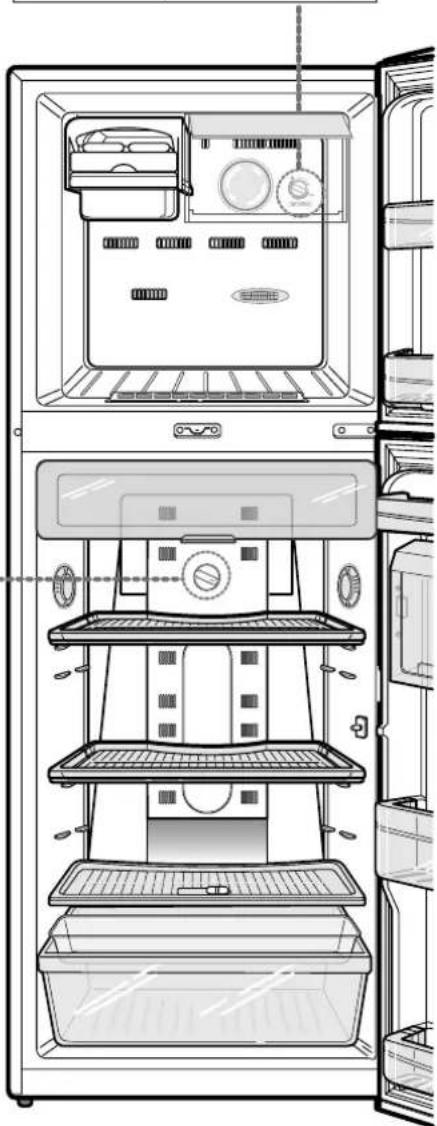
Temperature control
COLDER
Turn the Temperature Control to "COLDER" if you; - have a lot of food to store (refrigerator or freezer) - want to make ice (freezer) - require fast freezing (freezer)
Freezer


Refrigerator
NORMAL
Refrigerator Temperature control
Turn the Temperature Control to the midway point between "COLDER" and "COLD" for normal refrigerating or freezing mode.

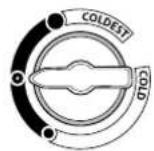
COLD
Turn the Temperature Control to "COLD" if you want to store only a small amount of food in the refrigerator or freezer.


Freezer Temperature control
natural_image
Line drawing of an open refrigerator interior showing front, top, and side views with no text or symbols
NOTE
When the air surrounding the refrigerator is below 5^ C, turn the Temperature Control to "COLD" to avoid freezing.
Ice Cube Maker (Premium Type)

natural_image
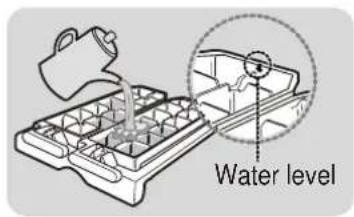
Line drawing of an open refrigerator interior showing front, top, and side views with no text or symbolsFill the ice cube tray with water taking care not to overfill.
text_image
Water level2 Slide the tray onto the ice cube shelf.
natural_image
Line drawing of hands holding a device with a circular button, no text or symbols present
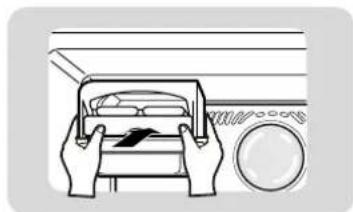
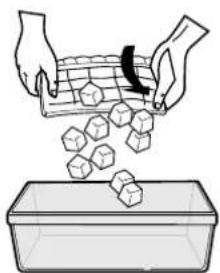
When ice is formed, remove the ice cubes from the ice cube tray by twisting the ice tray knobs. Make sure the ice storage bin is beneath the ice cube tray (see diagram below).

text_image
Knobs of ice trayIce Cube Maker (Economic Type)
natural_image
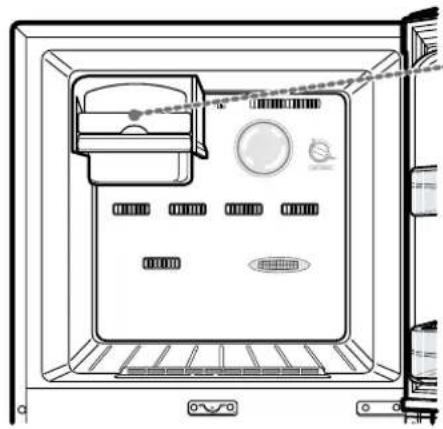
Top-down schematic of a microwave oven with control panel and fan (no text or labels)Fill the ice tray with water taking care not to overfill and place it on the support tray.

text_image
Water level2 When ice is formed, hold both ends of the tray and remove the ice cubes by twisting it gently.
natural_image
Illustration of hands sorting and packing small cubes into a container (no text or symbols)Chiller Compartment
natural_image
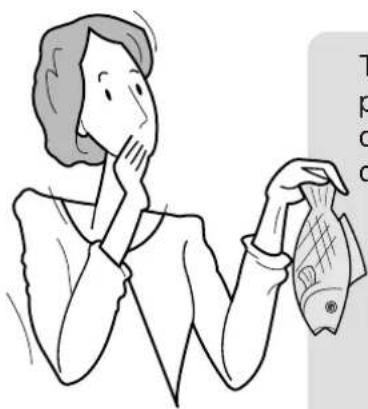
Illustration of a person holding a fish, no text or symbols presentThis compartment helps preserve the taste of food and prolongs its freshness by freezing the surface of the food only. Use the chiller for storing cheese, meat, snacks, fish or any food to be used soon.

natural_image
Line drawing of a refrigerator interior showing front and side views (no text or symbols)Bio-Fresh Zone

natural_image
Illustration of a woman holding a grape cluster, with no text or symbols presentThis compartment maintains the moisture and freshness of vegetables. It maintains necessary humidity and protects the vegetables from direct draughts of cold air which prevents drying.

natural_image
Line drawing of a grocery basket containing various vegetables and fruits (no text or labels)To increase humidity, set the humidity control to high. To decrease humidity, set it to low.

text_image
HIGH LOW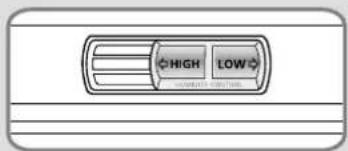
text_image
HIGH LOW SMART SWITCH
The vegetable bin is not suitable for storing tropical fruits such as bananas, pineapples, etc.
LEVELING THE APPLIANCE
natural_image
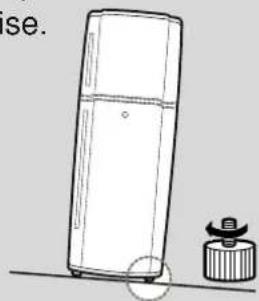
Cartoon illustration of a smiling refrigerator character wearing a graduation cap and holding a pointer (no text or symbols)To compensate for any floor unevenness, adjust the height of the appliance by turning the adjustable feet clockwise or counterclockwise. The adjustable feet are at the front along the lower edge of the refrigerator chassis.
When the refrigerator leans to the left, turn the left front foot counterclockwise.

natural_image
Line drawing of a refrigerator and a small cylindrical object with a circular mark, no text or symbols present.When the refrigerator leans to the right, turn the right front foot counterclockwise.
natural_image
Line drawing of a refrigerator and a small cylindrical device (no text or symbols)REMOVING ACCESSORIES
Freezer Shelf
- Pull the shelf forward and slide it out.

natural_image
Illustration of a hand pressing down on a computer screen with buttons and a small icon (no text or symbols)Refrigerator Shelf
- Pull the shelf forward until it meets the stopper.r
-Tilt the front of the shelf up and pull it out.
natural_image
Diagram of a conveyor belt system with two arms and control panels (no text or symbols)Bio-Fresh Zone Bin and Cover
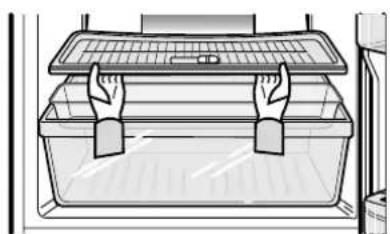
- Pull the vegetable bin forward and take it out of the refrigerator.
- Lift the cover up and pull it out of the refrigerator.
natural_image
Line drawing of a hand placing a tray on top of a rectangular device (no text or symbols)
natural_image
Interior view of a refrigerator showing front, top, and side views with no visible text or symbols
natural_image
Technical line drawing of a refrigerator interior showing door, shelves, and door frame (no text or symbols)Chiller Compartment
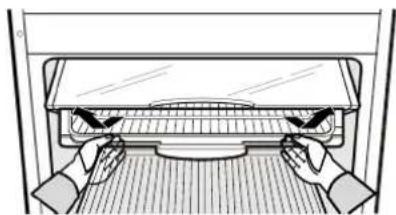
- Pull the chiller compartment towards you until it meets the stopper.
- Tilt the front upward and pull the compartment out.
natural_image
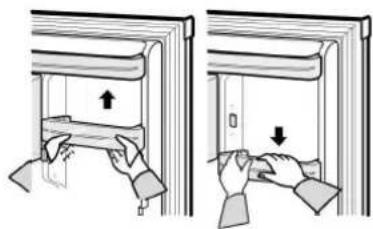
Line drawing of hands operating a refrigerator with a mesh chamber (no text or symbols)Adjustable Storage Guard
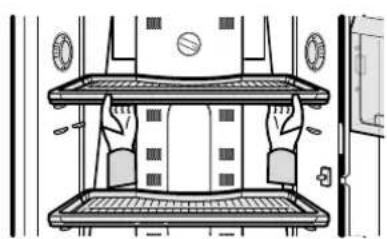
Lift the guard up and slide it out (These storage guards are adjustable and may be positioned to best fit your needs.)
natural_image
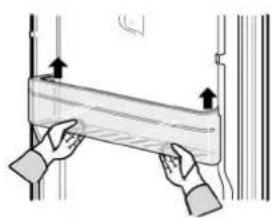
Illustration of two hand positions inside a double door frame, showing movement from left to right (no text or symbols)Bottle Storage Guards
Lift the guard up and slide it out. (This bottle storage guard is not adjustable; it fits in only one position.)
natural_image
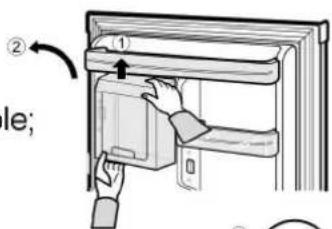
Illustration of hands holding a transparent cylindrical object with directional arrows indicating movement (no text or symbols)Dairy Guard (RT26 / 31 / 34)
Lift the guard up and slide it out. (This bottle storage guard is not adjustable; it fits in only one position.)
When the cover is away from the guard.
- Stick the left boss of the cover into the hole as shown.
- Lift the cover up at the end.
- Push the right boss of the cover into the hole.
text_image
Diagram showing a hand inserting a device into a refrigerator with labeled parts and directional arrow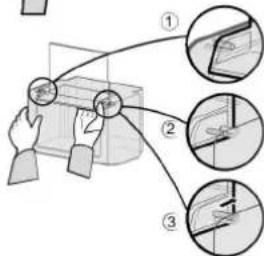
text_image
Diagram illustrating a mechanical or electrical component with labeled parts and magnified views showing internal structure.CLEANING THE REFRIGERATOR
natural_image
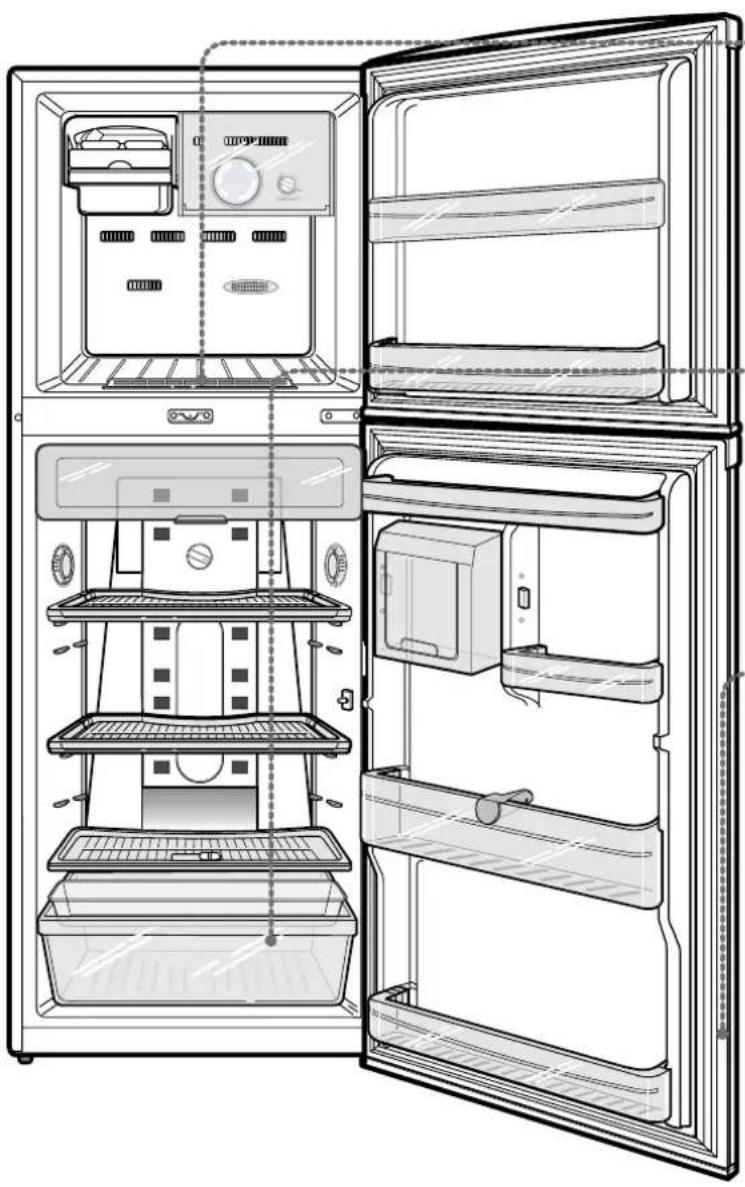
Line drawing of an open refrigerator with internal compartments and ventilation grilles (no text or symbols)Evaporation Slots in Freezer
Wipe the slot area with a clean, dry, soft cloth.
Caution: Do not allow any foreign substance or particles to clog these openings.

natural_image
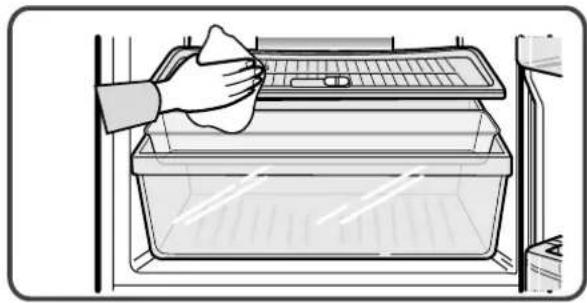
Illustration of a hand cleaning a kitchen appliance with a cloth (no text or symbols)Interior Parts
After removing all the shelves, wipe the appliance clean using a clean, soft cloth dampened with warm water and a mild detergent.
natural_image
Illustration of a hand cleaning an oven with a cloth (no text or symbols)Door Seals
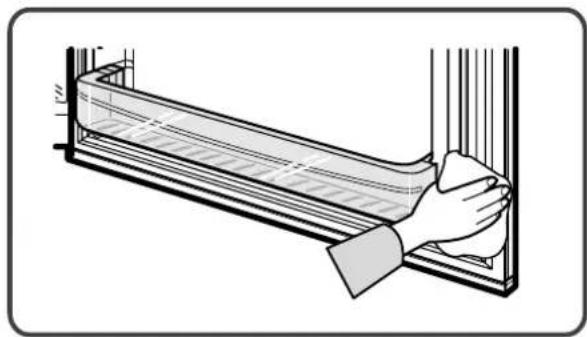
Clean the door seals often using a clean, soft cloth dampened with warm water and a mild detergent. Be careful not to damage the seals.
Caution: Dirt encrusted door seals prevent the doors from closing properly. Poorly closed doors waste energy and add unnecessary cost to your electricity bills.
natural_image
Illustration of a hand cleaning a curved panel or structure with a cloth (no text or symbols)BEFORE CALLING SERVICE
When the Refrigerator / Freezer is not operating or the food does not cool sufficiently.
- Is the plug properly connected?
- Is the power fuse blown?
- Are the temperature controls set properly (not set to "COLD")?
- Is the appliance exposed to direct sunlight or installed near a heater?
- Does the appliance have enough clearance from the wall in all directions?

natural_image
Cartoon illustration of a refrigerator character with a surprised expression and pointing gesture (no text or symbols)When food freezes in the refrigerator:
- Are the temperature controls set properly (not set to "COLDER")?
- If the food is juicy or very moist, is the temperature control set to "COLDER"?
- Is the ambient temperature too low?
natural_image
Cartoon illustration of a refrigerator with steam rising, showing a surprised expression (no text or symbols)When there is noise from the unit:
- Is the refrigerator installed on a flat, stable surface?
- Is the appliance positioned too close to a wall?
- Are there any objects behind or under the refrigerator?
- Is the sound coming from the compressor?
natural_image
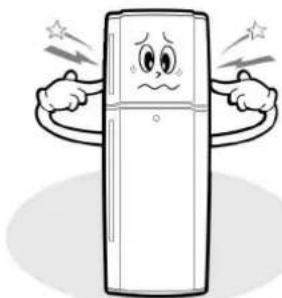
Cartoon illustration of a refrigerator with arms and facial expressions, surrounded by stars (no text or symbols)When the rear or side panel of the refrigerator is hot:
- Is there sufficient ventilation around the refrigerator?
- Is the ambient temperature high?
- Has dew formed on the outside of the appliance because of high humidity?
natural_image
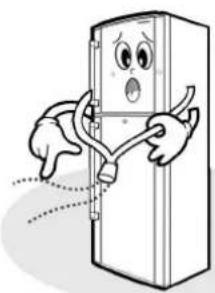
Cartoon illustration of a door with arms and legs, showing motion lines (no text or symbols)When you hear a sound like water flowing:
- This sound is generated by movement of the refrigerant and is not a malfunction.
natural_image
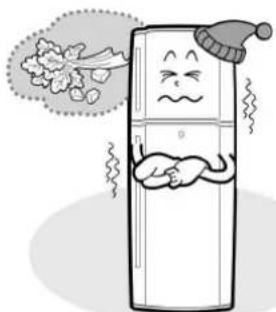
Cartoon illustration of a smiling refrigerator with arms and legs, no text or symbols presentWhen you notice a foul odor inside the appliance:
- Do you have spoiled food in the refrigerator?
- Is all food stored in sealed containers?
- Has fluid collected in the bottom of the vegetable bin?
- Are the freezer evaporation slots clogged?
- Has the evaporation tray at the back of the appliance become foul?

natural_image
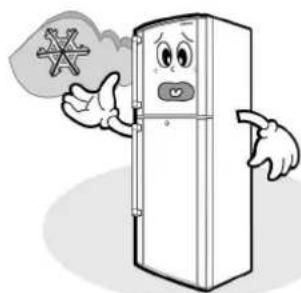
Cartoon illustration of a person opening a refrigerator with steam rising (no text or symbols)When frost develops inside the freezer:
- Does the door seal tightly?
- Are the evaporation slots clogged?
- Is there enough room for efficient air circulation?
natural_image
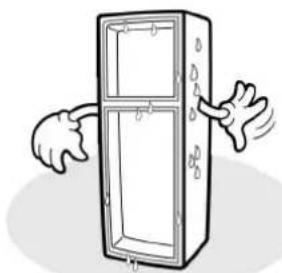
Cartoon illustration of a refrigerator with a star-shaped symbol on its door, giving a thumbs-up gesture (no text or symbols present)When dew develops on the vegetable compartment:
- Does the door seal tightly?
- Have you left the door open for a long time?
- Is liquid stored without a cover?

natural_image
Cartoon illustration of a smiling refrigerator with arms and legs, no text or symbols presentSAMSUNG
ELECTRONICS