
ZCE65200WA - Cooker ZANUSSI - Free user manual and instructions
Find the device manual for free ZCE65200WA ZANUSSI in PDF.


| Type | Freestanding electric cooker |
| Product dimensions (H x W x D) | 847 - 867 mm x 596 mm x 600 mm |
| Oven capacity | 74 L |
| Hob type | Radiant (4 cooking zones) |
| Hob zones power | 1000 W, 1500 W, 1500 W, 2000 W (including one rapid hot plate) |
| Oven functions | Oven Lamp, Circulated Cooking, Conventional Cooking, Bottom Heat, Defrost, Grilling, Fast Grilling, Turbo Grilling |
| Control type | Knobs (oven functions, minute minder, temperature, hob zones) |
| Minute minder | Yes (countdown timer) |
| Cooling fan | Automatic |
| Oven lamp | Replaceable, 300°C heat-resistant |
| Oven accessories | Wire shelf, baking tray, deep pan, storage drawer |
| Door type | Removable glass panels (multiple layers) |
| Shelf supports | Removable |
| Anti-tilt protection | Yes (must be installed) |
| Energy supply | Electric (230 V / 50 Hz, cable not supplied) |
| Cable type recommended | H07 RN-F, H05 RN-F, H05 RR-F, H05 VV-F, H05 V2V2-F (T90), H05 BB-F |
| Cleaning | Soft cloth, neutral detergents; catalytic enamel not for cleaning; stainless steel cleaner recommended for edges |
| Safety features | Child safety (supervision for 8+ years), residual heat indicator (hob), automatic deactivation (none mentioned) |
| Installation | Freestanding, levelling feet, anti-tilt bracket, minimum distances from cabinets (A=2 mm, B=685 mm) |
| Environmental recycling | Packaging recyclable, appliance marked with crossed-out wheelie bin |
Frequently Asked Questions - ZCE65200WA ZANUSSI
User questions about ZCE65200WA ZANUSSI
0 question about this device. Answer the ones you know or ask your own.
Ask a new question about this device
Download the instructions for your Cooker in PDF format for free! Find your manual ZCE65200WA - ZANUSSI and take your electronic device back in hand. On this page are published all the documents necessary for the use of your device. ZCE65200WA by ZANUSSI.
USER MANUAL ZCE65200WA ZANUSSI
Safety information 2
Safety Instructions 3 ____
Product description 5____
Before first use 6 ____
Hob - Daily use_Z ____
Hob - Helpful hints and tips____7
Hob - Care and cleaning_7____
Oven - Daily use 8 ____
Oven - Helpful hints and tips.9____
Oven - Care and cleaning 21____
Troubleshooting 23____
Installation____24
Subject to change without notice.
⚠️ Safety information
Before the installation and use of the appliance, carefully read the supplied instructions. The manufacturer is not responsible if an incorrect installation and use causes injuries and damages. Always keep the instructions with the appliance for future reference.
Children and vulnerable people safety

WARNING!
Risk of suffocation, injury or permanent disability.
- This appliance can be used by children aged from 8 years and above and persons with reduced physical, sensory or mental capabilities or lack of experience and knowledge if they have been given supervision or instruction concerning use of the appliance in a safe way and understand the hazards involved.
- Do not let children play with the appliance.
- Keep all packaging away from children.
- Keep children and pets away from the appliance when it operates or when it cools down. Accessible parts are hot.
- Cleaning and user maintenance shall not be made by children without supervision.
General Safety
- Only a qualified person must install this appliance and replace the cable.
-
Do not operate the appliance by means of an external timer or separate remote-control system.
-
Unattended cooking on a hob with fat or oil can be dangerous and may result in fire.
- Never try to extinguish a fire with water, but switch off the appliance and then cover flame e.g. with a lid or a fire blanket.
- Do not store items on the cooking surfaces.
- Do not use a steam cleaner to clean the appliance.
- Metallic objects such as knives, forks, spoons and lids should not be placed on the hob surface since they can get hot.
- Internally the appliance becomes hot when in operation. Do not touch the heating elements that are in the appliance. Always use oven gloves to remove or put in accessories or ovenware.
- Before maintenance cut the power supply.
- Ensure that the appliance is switched off before replacing the lamp to avoid the possibility of electric shock.
- Do not use harsh abrasive cleaners or sharp metal scrapers to clean the glass door since they can scratch the surface, which may result in shattering of the glass.
- If the supply cord is damaged, it must be replaced by the manufacturer, its Authorised Service Centre or similarly qualified persons in order to avoid a hazard.
- Be careful, when you touch the storage drawer. It can get hot.
- To remove the shelf supports first pull the front of the shelf support and then the rear end away from the side walls. Install the shelf supports in the opposite sequence.
- The means for disconnection must be incorporated in the fixed wiring in accordance with the wiring rules.
Safety Instructions
Installation

WARNING!
Only a qualified person must install this appliance.
- Remove all the packaging.
- Do not install or use a damaged appliance.
- Obey the installation instruction supplied with the appliance.
- Always be careful when you move the appliance because it is heavy. Always wear safety gloves.
-
Do not pull the appliance by the handle.
-
The kitchen cabinet and the recess must have suitable dimensions.
- Keep the minimum distance from the other appliances and units.
- Make sure that the appliance is installed below and adjacent safe structures.
- Parts of the appliance carry current. Close the appliance with furniture to prevent touching the dangerous parts.
- The sides of the appliance must stay adjacent to appliances or to units with the same height.
-
Do not install the appliance on a platform.
-
Do not install the appliance adjacent to a door or under a window. This prevents hot cookware to fall from the appliance when the door or the window is opened.
- Make sure to install a stabilizing means in order to prevent tipping of the appliance. Refer to Installation chapter.
Electrical Connection

WARNING!
Risk of fire and electrical shock.
- All electrical connections should be made by a qualified electrician.
- The appliance must be earthed.
- Make sure that the electrical information on the rating plate agrees with the power supply. If not contact an electrician.
- Always use a correctly installed shockproof socket.
- Do not use multi-plug adapters and extension cables.
- Do not let mains cables to come in touch with the appliance door, specially when the door is hot.
- The shock protection of live and insulated parts must be fastened in such a way that it cannot be removed without tools.
- Connect the mains plug to the mains socket only at the end of the installation. Make sure that there is access to the mains plug after the installation.
- If the mains socket is loose, do not connect the mains plug.
- Do not pull the mains cable to disconnect the appliance. Always pull the mains plug.
- Use only correct isolation devices: line protecting cut-outs, fuses (screw type fuses removed from the holder), earth leakage trips and contactors.
- The electrical installation must have an isolation device which lets you disconnect the appliance from the mains at all poles. The isolation device must have a contact opening width of minimum 3 mm.
- Fully close the appliance door, before you connect the mains plug to the mains socket.
Use

WARNING!
Risk of injury and burns. Risk of electrical shock.
- Use this appliance in a household only.
- Do not change the specification of this appliance.
- Make sure that the ventilation openings are not blocked.
- Do not let the appliance stay unattended during operation.
- Deactivate the appliance after each use.
- Be careful when you open the appliance door while the appliance is in operation. Hot air can release.
- Do not operate the appliance with wet hands or when it has contact with water.
- Do not use the appliance as a work surface or as a storage surface.

WARNING!
Risk of fire and explosion
- Fats and oil when heated can release flammable vapours. Keep flames or heated objects away from fats and oils when you cook with them.
- The vapours that very hot oil releases can cause spontaneous combustion.
- Used oil, that can contain food remnants, can cause fire at a lower temperature than oil used for the first time.
- Do not put flammable products or items that are wet with flammable products in, near or on the appliance.
- Do not let sparks or open flames to come in contact with the appliance when you open the door.
- Open the appliance door carefully. The use of ingredients with alcohol can cause a mixture of alcohol and air.

WARNING!
Risk of damage to the appliance.
- To prevent damage or discoloration to the enamel:
- do not put ovenware or other objects in the appliance directly on the bottom.
– do not put water directly into the hot appliance.
– do not keep moist dishes and food in the appliance after you finish the cooking. - be careful when you remove or install the accessories.
- Discoloration of the enamel has no effect on the performance of the appliance. It is not a defect in the sense of the warranty law.
- Use a deep pan for moist cakes. Fruit juices cause stains that can be permanent.
- Do not keep hot cookware on the control panel.
- Do not let cookware boil dry.
- Be careful not to let objects or cookware fall on the appliance. The surface can be damaged.
- Do not activate the cooking zones with empty cookware or without cookware.
- Do not put aluminium foil on the appliance or directly on the bottom of the appliance.
- Cookware made of cast iron, aluminium or with a damaged bottom can cause scratches. Always lift these objects up when you have to move them on the cooking surface.
- This appliance is for cooking purposes only. It must not be used for other purposes, for example room heating.
Care and Cleaning

WARNING!
Risk of injury, fire, or damage to the appliance.
- Before maintenance, deactivate the appliance.
Disconnect the mains plug from the mains socket. - Make sure the appliance is cold. There is the risk that the glass panels can break.
- Replace immediately the door glass panels when they are damaged. Contact the Service.
- Be careful when you remove the door from the appliance. The door is heavy!
- Clean regularly the appliance to prevent the deterioration of the surface material.
Product description
General overview
- Remaining fat or food in the appliance can cause fire.
- Clean the appliance with a moist soft cloth. Only use neutral detergents. Do not use abrasive products, abrasive cleaning pads, solvents or metal objects.
- If you use an oven spray, obey the safety instructions on the packaging.
- Do not clean the catalytic enamel (if applicable) with any kind of detergent.
Internal light
- The type of light bulb or halogen lamp used for this appliance is only for household appliances. Do not use it for house lighting.

WARNING!
Risk of electrical shock.
- Before replacing the lamp, disconnect the appliance from the power supply.
- Only use lamps with the same specifications.
Disposal

WARNING!
Risk of injury or suffocation.
- Disconnect the appliance from the mains supply.
- Cut off the mains cable and discard it.
- Remove the door catch to prevent children and pets to get closed in the appliance.
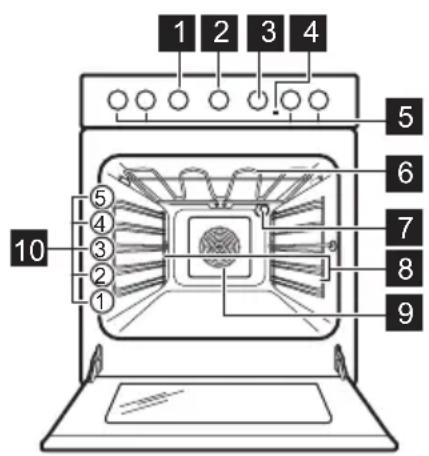
1 Knob for the oven functions
2 Knob for the Minute Minder
3 Knob for the temperature
4 Temperature lamp / symbol / indicator
5 Knobs for the hob
6 Heating element
7 Lamp
8 Shelf support, removable
9 Fan
10 Shelf positions
Cooking surface layout
Accessories
- Wire shelf
For cookware, cake tins, roasts. - Baking tray
For cakes and biscuits.
Before first use
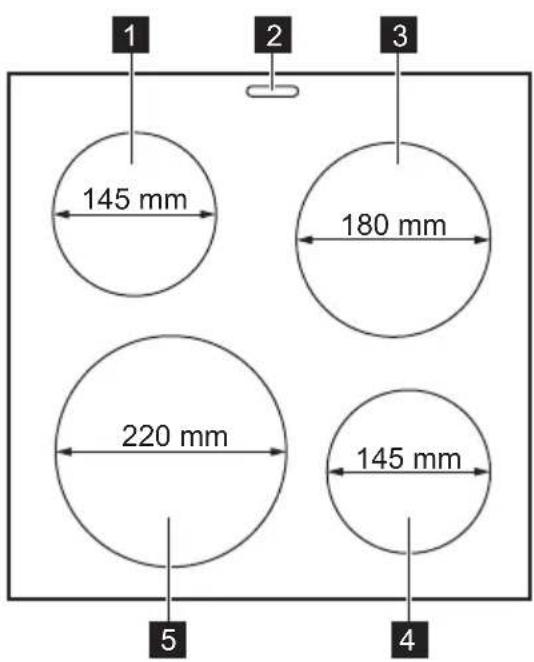
1 Cooking zone 1000 W
2 Steam outlet - number and position depends on the model
3 Cooking zone 1500 W
4 Cooking zone 1500 W
5 Cooking zone 2000 W
- Extra deep pan
To make a moussaka. - Storage drawer
Below the oven cavity is the storage drawer.

WARNING!
Refer to Safety chapters.
Initial Cleaning
Remove all accessories and removable shelf supports from the appliance.

Refer to "Care and cleaning" chapter.
- Clean the appliance before first use.
- Put the accessories and the removable shelf supports back to their initial position.
Preheating
Preheat the empty appliance to burn off the remaining grease.
- Set the function and the maximum temperature.
- Let the appliance operate for 1 hour.
- Set the function and the maximum temperature.
- Let the appliance operate for 15 minutes. Accessories can become hotter than usual. The appliance can emit an odour and smoke. This is normal. Make sure that the airflow is sufficient.

WARNING!
Refer to Safety chapters.
Heat setting
| Symbols Function | |
| 0 | Off position |
| 1 - 6 Heat settings(1 - lowest heat setting, 6 - highest heat setting) | |

Use the residual heat to decrease energy consumption. Deactivate the cooking zone approximately 5 - 10 minutes before the cooking process is completed.
Hob - Helpful hints and tips
Turn the knob to a necessary heat setting. To complete the cooking process, turn the knob to the off position.
Using the rapid hot plate
A red dot in the middle of the plate shows a rapid hot plate. A rapid hot plate heats up faster than usual plates. The red dots are painted on the plates. They can deteriorate during use and even disappear completely after a period of time. It does not have an effect on the performance of the hob.

WARNING!
Refer to Safety chapters.
Cookware

The bottom of the cookware must be as thick and flat as possible.

CAUTION!
Do not use cast iron pans, potstones, earthenware, grill or toaster plates. The stainless steel can become tarnished if it is too much heated.
Energy saving
- If it is possible, always put the lids on the cookware.
- Put cookware on a cooking zone before you start it.
- Use the residual heat to keep the food warm or to melt it.
Hob - Care and cleaning
- The bottom of the pans and cooking zones must have the same dimension.
Examples of cooking applications
| Heat setting: | Application: |
| 1 Keeping warm | |
| 2 Gentle simmering | |
| 3 Simmering | |
| 4 Frying / browning | |
| 5 Bringing to the boil | |
| 6 Bringing to the boil / quick frying / deep-frying | |

WARNING!
Refer to Safety chapters.
General information
- Clean the hob after each use.
- Always use cookware with clean bottom.
- Scratches or dark stains on the surface have no effect on how the hob operates.
Stainless steel
- For stainless steel edges of the hob use a special cleaner applicable for the stainless steel.
- The stainless steel edge of the plate can change the colour as a result of high temperature.
- Wash stainless steel parts with water, and then dry them with a soft cloth.
Oven - Daily use

WARNING!
Refer to Safety chapters.
Cooling fan
When the appliance operates, the cooling fan activates automatically to keep the surfaces of the appliance cool. If you deactivate the appliance, the cooling fan can continue to operate until the appliance cools down.
Activating and deactivating the oven

The knob symbol, indicator or lamp (depends on the model - refer to the product description):
- The indicator comes on when the oven heats up.
- The lamp comes on when the oven operates.
- The symbol shows whether the knob controls one of the cooking zones, the oven functions or the temperature.
Oven functions
| Symbol Oven function Application | ||
| [KDOT] | Off position The appliance is off. | |
 | Oven Lamp To activate the lamp without a cooking function. | |
 | Circulated cooking To roast or roast and bake food with the same cooking temperature, on more than 1 shelf position, without flavour transference. | |
| Symbol Oven function Application | |
 | Conventional Cooking To bake and roast food on 1 shelf position. |
 | Bottom heat To bake cakes with crispy bottom and to preserve food. |
 | Defrost To defrost frozen food. |
 | Grilling To grill flat food and to toast bread. |
 | Fast Grilling To grill flat food in large quantities and to toast bread. |
 | Turbo Grilling To roast larger meat joints or poultry with bones on 1 shelf position. Also to make gratins and to brown. |
Minute Minder
Use it to set a countdown time.

This function has no effect on the operation of the appliance.
Turn the knob for the timer as far as it goes, then turn it to necessary time period. After the time period is completed, an acoustic signal sounds.
Inserting the oven accessories
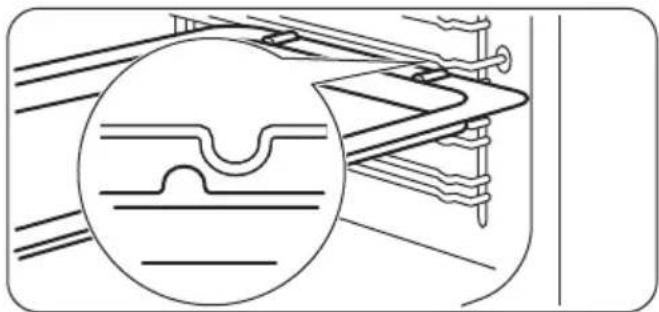
Deep pan:
Push the deep pan between the guide bars of the shelf support.
natural_image
Technical line drawing of a mechanical assembly with a magnified circular detail (no text or symbols)Oven - Helpful hints and tips
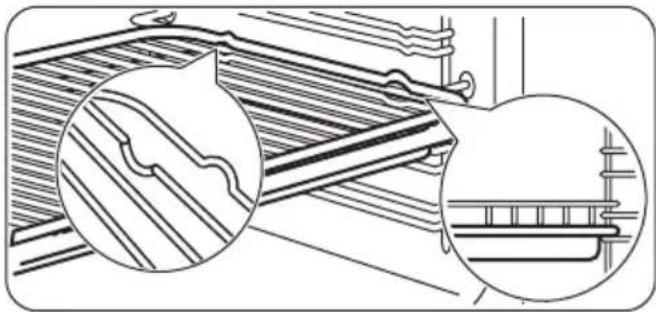
Wire shelf and the deep pan together:
Push the deep pan between the guide bars of the shelf support and the wire shelf on the guide bars above.
natural_image
Technical line drawing of wooden beam joint detail showing two magnified views (no text or symbols)
- All accessories have small indentations at the top of the right and left side to increase safety. The indentations are also anti-tip devices.
- The high rim around the shelf is a device which prevents cookware from slipping.

WARNING!
Refer to Safety chapters.

The temperature and baking times in the tables are guidelines only. They depend on the recipes and the quality and quantity of the ingredients used.
Baking
- Your oven can bake or roast differently to the appliance you had before. Adapt your usual settings (temperature, cooking times) and shelf positions to the values in the tables.
- The manufacturer recommends that you use the lower temperature the first time.
- If you cannot find the settings for a special recipe, look for the one that is almost the same.
- You can extend baking times by 10 – 15 minutes if you bake cakes on more than one level.
- Cakes and pastries at different heights do not always brown equally at first. If this occurs, do not change the temperature setting. The differences equalize during the baking procedure.
- With longer baking times, you can deactivate the oven approximately 10 minutes before the end of the baking time and then use the residual heat.
When you cook frozen food, the trays in the oven can twist during baking. When the trays become cold again, the distortions are gone.
Tips on baking
| Baking results Possible cause Remedy | ||
| The bottom of the cake is not browned sufficiently. | The shelf position is incorrect. Put the cake on a lower shelf. | |
| The cake sinks and becomes soggy, lumpy or streaky. | The oven temperature is too high. | The next time you bake, set a slightly lower oven temperature. |
| The cake sinks and becomes soggy, lumpy or streaky. | The baking time is too short. Set a longer baking time.You cannot decrease baking times by setting higher temperatures. | |
| The cake sinks and becomes soggy, lumpy or streaky. | There is too much liquid in the mixture. | Use less liquid. Be careful with mixing times, especially if you use a mixing machine. |
| The cake is too dry. The oven temperature is too low. | The next time you bake, set a higher oven temperature. | |
| The cake is too dry. The baking time is too long. The next time you bake, set a shorter baking time. | ||
| The cake browns unevenly. The oven temperature is too high and the baking time is too short. | Set a lower oven temperature and a longer baking time. | |
| The cake browns unevenly. The mixture is unevenly distributed. | Spread the mixture evenly on the baking tray. | |
| The cake is not ready in the baking time given. | The oven temperature is too low. | The next time you bake, set a slightly higher oven temperature. |
Circulated cooking


When you cook pizza, for better results turn the knobs for the oven functions and oven temperature to the position 🌿
Baking on one oven level
Baking in tins
| Food Shelf position Temperature (°C) Time (min) | |||
| Ring cake or brioche 2 | 150 - 160 50 - 70 | ||
| Madeira cake/fruit cakes | 1 - 2 140 - 160 50 - 90 | ||
| Fatless sponge cake 3 | 150 - 160 1) | 25 - 40 | |
| Flan base - short pastry | 2 170-180 10 - 25 | ||
| Flan base - sponge mixture | 2 150 - 170 20 - 25 | ||
| Apple pie (2tins ∅20cm, diagonally off set) | 2 - 3 160 60 - 90 | ||
1) Pre-heat the oven
Cakes/pastries/breads on baking trays
| Food Shelf position Temperature (°C) Time (min) | ||
| Cake with crumble topping (dry) | 3 150 - 160 20 - 40 | |
| Fruit flans (made with yeast dough/sponge mixture) 1) | 3 150 35 - 55 | |
| Fruit flans made with short pastry | 3 160 - 170 40 - 80 | |
1) Use deep pan
Biscuits
| Food Shelf position Temperature (°C) Time (min) | ||
| Short pastry biscuits 3 | 150 - 160 10 - 20 | |
| Short bread/Pastry Stripes | 3 140 20 - 35 | |
| Biscuits made with sponge mixture | 3 150 - 160 15 - 20 | |
| Food Shelf position Temperature (°C) Time (min) | |||
| Pastries made with egg white,meringues | 3 80 - 100 120 - 150 | ||
| Macaroons 3 100 - 120 30 - 50 | |||
| Biscuits made with yeast dough | 3 150 - 160 20 - 40 | ||
| Puff pastries 3 | 170 - 180 1) | 20 - 30 | |
| Rolls 3 160 10 - 35 | |||
| Small cakes (20per tray) | 3 150 20 - 35 | ||
1) Pre-heat the oven
Bakes and gratins table
| Food Shelf position Temperature (°C) | Time (min) | ||
| Baguettes topped with melted cheese | 1 | 160 - 170 1) | 15 - 30 |
| Stuffed vegetables 1 160 - 170 30- 60 | |||
1) Pre-heat the oven
Multileveled Baking
Cakes/pastries/breads on baking trays
| Food2 positions | Shelf position Temperature (°C) Time (min) | |
| Cream puffs / Eclairs 2/4 | 160 - 180 1) | 25 - 45 |
| Dry streusel cake 2/4 150 - 160 30 - 45 |
1) Pre-heat the oven
Biscuits/small cakes/pastries/rolls
| Food2 positions | Shelf position Temperature (°C) Time (min) | ||
| Short pastry biscuits 2/4 | 150 - 1601) | 20 - 40 | |
| Short bread / PastryStripes | 2/4 140 20 - 45 | ||
| Biscuits made withsponge mixture | 2/4 160 - 170 25 - 45 | ||
| Biscuits made withegg white,meringues | 2/4 80 - 100 130 - 170 | ||
| Food2 positions | Shelf position Temperature (°C) Time (min) | |
| Macaroons 2/4 100 - 120 40 - 80 | ||
| Biscuits made with yeast dough | 2/4 160 - 170 30 - 60 | |
| Puff pastries 2/4 170 - 180 30 - 50 |
1) Pre-heat the oven
Conventional Baking on one level
Baking in tins
| Food Shelf position Temperature (°C) Time (min) | |||
| Ring cake or brioche 2 160 - 180 50 - 70 | |||
| Madeira cake/fruit cakes 1 - 2 150 - 170 50 - 90 | |||
| Fatless sponge cake 3 | 170^1) | 25 - 40 | |
| Flan base - short pastry 2 | 190 - 210 10 - 25 | ||
| Flan base - sponge mix-ture | 2 170 - 190 20 - 25 | ||
| Apple pie (2tins ∅20cm, diagonally off set) | 1 - 2 180 60 - 90 | ||
| Savoury flan (e. g, quiche lorraine) | 1 180 - 220 35- 60 | ||
| Cheesecake 1 - 2 160 - 180 60 - 90 | |||
1) Pre-heat the oven
Cakes/pastries/breads on baking trays
| Food Shelf position | Temperature (°C) Time (min) | ||
| Plaited bread/bread crown | 2 | 170 - 190 40 - 50 | |
| Christmas stolen | 2 | 160 - 180 1) | 50 - 70 |
| Bread (rye bread):1. First part of baking process.2. Second part of baking process. | 1 - 2 | 1. 2302. 160 - 180 | 1. 202. 30 - 60 |
| Cream puffs/eclairs 3 | 190 - 210 | 20 - 35 | |
| Swiss roll | 3 | 180 - 200 10 - 20 | |
| Food Shelf position Temperature (°C) | Time (min) | |
| Cake with crumble top-ping (dry) | 3 160 - 180 20 - 40 | |
| Buttered almond cake/sugar cakes | 3 190 - 210 20 - 30 | |
| Fruit flans (made with yeast dough/sponge mixture) ^2) | 3 170 35 - 55 | |
| Fruit flans made with short pastry | 3 170 - 190 40 - 60 | |
| Yeast cakes with deli-cate toppings (e.g. quark,cream, custard) | 3 160 - 180 40 - 80 | |
| Pizza (with a lot of top-ping) | 1 - 2 190 - 210 30 - 50 | |
| Pizza (thin crust) 1 - 2 220 - 250 15 - 25 | ||
| Unleavened bread 1 230 - 250 10 - 15 | ||
| Tarts (CH) 1 210 - 230 35 - 50 |
1) Pre-heat the oven
2) Use deep pan
Biscuits
| Food Shelf position Temperature (°C) Time (min) | |||
| Short pastry biscuits 3 | 170 - 190 10 - 20 | ||
| Short bread/Pastry Stripes | 3 | 160^1) | 20 - 35 |
| Biscuits made with sponge dough | 3 170 - 190 20 - 30 | ||
| Pastries made with egg white, meringues | 3 80 - 100 120- 150 | ||
| Macaroons 3 120 - 130 | 30 - 60 | ||
| Biscuits made with yeast dough | 3 170 - 190 20 - 40 | ||
| Puff pastries 3 190 - 210 | 20 - 30 | ||
| Rolls | 3 190 - 210 10 - 55 | ||
| Small cakes (20per tray) | 3 - 4 | 170 20 - 30 | |
1) Pre-heat the oven
Bakes and gratins table
| Food Shelf position Temperature (°C) | Time (min) | |
| Pasta bake 1 180 - 200 45 - 60 | ||
| Lasagne 1 180 - 200 35 - 50 | ||
| Vegetables au gratin 1 | 180 - 200^1) | 15 - 30 |
| Baguettes topped with melted cheese | 1 200 - 220 15 - 30 | |
| Sweet bakes 1 180 - 200 40 - 60 | ||
| Fish bakes 1 180 - 200 40 - 60 | ||
| Stuffed vegetables 1 180 - 200 40 - 60 |
1) Pre-heat the oven
Roasting
- Use heat-resistant ovenware to roast (refer to the instructions of the manufacturer).
- You can roast large roasting joints directly in the deep pan (if present) or on the wire shelf above the deep pan.
- Roast lean meats in the roasting tin with the lid. This keeps the meat more succulent.
- All types of meat that can be browned or have crackling can be roasted in the roasting tin without the lid.
-
We recommend that you cook meat and fish weighing 1 kg and above in the appliance.
-
To prevent the meat juices or fat from burning onto the pan, put some liquid into the deep pan.
- If necessary, turn the roast (after 1/2 - 2/3 of the cooking time).
- Baste large roasts and poultry with their juices several times during roasting. This gives better roasting results.
- You can deactivate the appliance approximately 10 minutes before the end of the roasting time, and use the residual heat.
Roasting with Conventional Cooking

Beef
| Food Quantity Shelf position Temperature | (°C) | Time (min) | ||
| Pot roast | 1 - 1.5 kg | 1 | 200 - 230 | 105 - 150 |
| Roast beef or fil-let: rare | per cm. of thick-ness | 1 | 230 - 250 ^1) | 6 - 8 |
| Roast beef or fil-let: medium | per cm. of thick-ness | 1 | 220 - 230 | 8 - 10 |
| Roast beef or fil-let: well done | per cm. of thick-ness | 1 | 200 - 220 | 10 - 12 |
1) Pre-heat the oven
Pork
| Food Quantity | Shelf position | Temperature | (°C) | Time (min) |
| Shoulder, neck, ham joint | 1 - 1.5 kg | 1 210 - 220 90 - 120 | ||
| Chop, spare rib | 1 - 1.5 kg | 1 180 - 190 60 - 90 | ||
| Meat loaf | 750 g - 1 kg | 1 170 - 190 50 - 60 | ||
| Porkknuckle (precooked) | 750 g - 1 kg | 1 200 - 220 90 - 120 |
Veal
| Food Quantity Shelf position Temperature | (°C) | Time (min) | ||
| Roast veal1) | 1 kg 1 210 - 220 | 90 - 120 | ||
| Knuckle of veal 1.5 - 2 kg 1 200 - 220 | 150 - 180 | |||
1) Use a closed roasting dish
Lamb
| Food Quantity | Shelf position | Temperature | (°C) | Time (min) |
| Leg of lamb, roast lamb | 1 - 1.5 kg | 1 210 - 220 90 - 120 | ||
| Saddle of lamb 1 | - 1.5 kg | 1 210 - 220 40 - 60 |
Game
| Food Quantity | Shelf position | Temperature | (°C) | Time (min) |
| Saddle of hare, leg of hare | up to 1 kg 1 | 220 - 240 ^1) | 30 - 40 | |
| Saddle of veni-son | 1.5 - 2 kg 1 210 - 220 35 - 40 | |||
| Haunch of veni-son | 1.5 - 2 kg 1 200 - 210 90 - 120 |
1) Pre-heat the oven
Poultry
| Food Quantity | Shelf position | Temperature | (°C) | Time (min) |
| Poultry portions | 200 - 250 g each | 1 220 - 250 20 - 40 | ||
| Half chicken 400 | -500 g each | 1 220 - 250 35 - 50 | ||
| Chicken, poulard | 1 - 1.5 kg | 1 220 - 250 50 - 70 | ||
| Duck 1.5 - 2 kg | 1 210 - 220 80 - 100 | |||
| Goose 3.5 - 5 kg | 1 200 - 210 150 - 180 | |||
| Turkey 2.5 - 3.5 kg | 1 200 - 210 120 - 180 | |||
| Turkey 4 - 6 kg | 1 180 - 200 180 - 240 |
Fish
| Food Quantity Shelf position Temperature | (°C) | Time (min) |
| Whole fish 1 - 1.5 kg 1 210 - 220 40 - 70 |
Roasting with Turbo Grilling

Beef
| Food Quantity | Shelf position | Temperature | (°C) | Time (min) |
| Roast beef or fil-let: rare | per cm. of thickness | 1 | 190 - 200^1) | 5 - 6 |
| Roast beef or fil-let: medium | per cm. of thickness | 1 | 180 - 190 | 6 - 8 |
| Roast beef or fil-let: well done | per cm. of thickness | 1 | 170 - 180 | 8 - 10 |
1) Pre-heat the oven
Pork
| Food | Quantity | Shelf position Temperature (°C) | Time (min) |
| Shoulder, neck, ham joint | 1 - 1.5 kg | 1 | 160 - 180 |
| Chop, spare rib | 1 - 1.5 kg | 1 | 170 - 180 |
| Meat loaf | 750 g - 1 kg | 1 | 160 - 170 |
| Porkknuckle (precooked) | 750 g - 1 kg | 1 | 150 - 170 |
Veal
| Food Quantity Shelf position Temperature | (°C) | Time (min) | ||
| Roast veal 1 kg 1 | 160 - 180 | 90 - 120 | ||
| Knuckle of veal 1.5 - 2 kg 1 | 160 - 180 | 120 - 150 | ||
Lamb
| Food Quantity | Shelf position | Temperature | (°C) | Time (min) |
| Leg of lamb, roast lamb | 1 - 1.5 kg | 1 150 - 170 | 100 - 120 | |
| Saddle of lamb 1 | - 1.5 kg | 1 160 - 180 | 40 - 60 |
Poultry
| Food Quantity Shelf position Temperature | (°C) | Time (min) | |
| Poultry portions 200 - 250 g each | 1 200 - 220 30 - 50 | ||
| Half chicken 400 - 500 g each | 1 190 - 210 35 - 50 | ||
| Chicken, pou-lard | 1 - 1.5 kg 1 190 - 210 50 - 70 | ||
| Duck 1.5 - 2 kg 1 | 180 - 200 80 - 100 | ||
| Goose 3.5 - 5 kg | 1 160 - 180 120 - 180 | ||
| Turkey 2.5 - 3.5 kg | 1 160 - 180 120 - 150 | ||
| Turkey 4 - 6 kg 1 | 140 - 160 150 - 240 | ||
Grilling in general
- Always grill with the maximum temperature setting.
- Set the shelf into the shelf position as recommended in the grilling table.
- Always set the deep pan to collect the fat into the first shelf position.
- Grill only flat pieces of meat or fish.
- Always preheat an empty oven with the grill functions for 5 minutes.
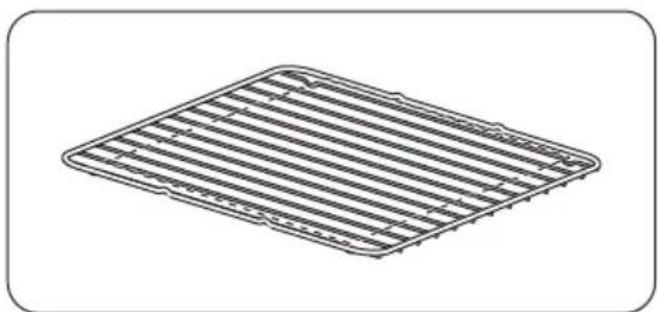
natural_image
Line drawing of a rectangular grid-like structure with horizontal lines, no text or symbols presentThe grilling area is set in centre of the shelf.
| Food Shelf position Temperature (°C) | Time (min) | ||
| 1st side2nd side | 2nd side | ||
| Roast beef, medium | 2 210 - 230 30 - 40 30 - 40 | ||
| Filet of beef, medium | 3 230 20 - 30 20 - 30 | ||
| Back of pork 2 210 - 230 30 - 40 30 - 40 | |||
| Back of veal 2 210 - 230 30 - 40 30 - 40 | |||
| Back of lamb 3 210 - 230 25 - 35 20 - 35 | |||
| Whole fish, 500 - 1000g | 3 - 4 210 - 230 15 - 30 15 - 30 | ||
Grilling
| Food Shelf position Temperature (°C) | Time (min) | ||
| 1st side2nd side | 2nd side | ||
| Burgers 4 | max 1) | 9 - 15 8 - 13 | |
| Pork fillet 4 max 10 - 12 6 - 10 | |||
| Sausages 4 max 10 - 12 6 - 8 | |||
| Fillet steaks, vealsteaks | 4 max 7 - 10 6 - 8 | ||
| Toast 4 - 5 max 1 - 4 1 - 4 | |||
| Toast with top-ping | 4 max 6 - 8 - | ||
1) Pre-heat the oven
Preserving / Bottom Heat □
- Use only preserve jars of the same dimensions available on the market.
- Do not use jars with twist-off and bayonet type lids, or metal tins.
- Use the first shelf from the bottom for this function.
- Put no more than six one-litre preserve jars on the baking tray.
-
Fill the jars up to the same level and close with a clamp.
-
The jars cannot touch each other.
- Put approximately 1/2 litre of water into the baking tray to give sufficient moisture in the oven.
- When the liquid in the jars starts to simmer (after approx. 35-60 minutes with one-litre jars), stop the oven or decrease the temperature to 100^ (see the table).
Soft fruit
| Preserve Temperature (°C) Cooking time until simmering (min) | Continue to cook at 100 °C (min) | ||
| Strawberries, blueberries, raspberries, ripe gooseberries | 160 - 170 35 - 45 - | ||
Stone fruit
| Preserve Temperature (°C) Cooking time until simmering (min) | Continue to cook at 100 °C (min) |
| Pears, guinces, plums 160 - 170 35 - 45 10 - 15 |
Vegetables
| Preserve Temperature (°C) Cooking time until simmering (min) | Continue to cook at 100 °C (min) | ||
| Carrots1) | 160 - 170 50 - 60 5 - 10 | ||
| Cucumbers 160 - 170 | 50 - 60 - | ||
| Mixed pickels 160 - 170 | 50 - 60 5 - 10 | ||
| Kohlrabi, peas, asparagus | 160 - 170 50 - 60 15 - 20 | ||
1) Leave standing in oven when switched off
Defrosting

- Remove the food packaging. Put the food on a plate.
- Do not cover it with a bowl or a plate. This can extend the defrost time.
- Use the first oven shelf level. The one on the bottom.
| Food Quantity | Defrosting time (min) | Further de-frosting time (min) | Comments |
| Chicken 1 kg 100 - 140 20 - 30 Put the chicken on an upturned saucer in a big plate. Turn halfway through. | |||
| Meat 1 kg 100 - 140 20 - 30 Turn halfway through. | |||
| Meat 500 g 90 - 120 20 - 30 Turn halfway through. | |||
| Trout | 150 g 25 - 35 | 10 - 15 --- | |
| Strawberries | 300 g 30 - 40 | 10 - 20 --- | |
| Butter 250 g | 30 - 40 10 - 15 --- | ||
| Cream 2 x 200 g | 80 - 100 10 - 15 Whip the cream when still slightly frozen in places. | ||
| Cake 1,4 kg | 60 60 --- | ||
Oven - Care and cleaning

WARNING!
Refer to Safety chapters.
Notes on cleaning
- Clean the front of the appliance with a soft cloth with warm water and a cleaning agent.
- To clean metal surfaces, use a usual cleaning agent.
- Clean the appliance interior after each use. Fat accumulation or other food remains may result in a fire. The risk is higher for the grill pan.
- Clean stubborn dirt with a special oven cleaner.
- Clean all accessories after each use and let them dry. Use a soft cloth with warm water and a cleaning agent.
- If you have nonstick accessories, do not clean them using aggressive agents, sharp-edged objects or a dishwasher. It can cause damage to the nonstick coating.
Stainless steel or aluminium appliances

Clean the oven door with a wet sponge only. Dry it with a soft cloth. Do not use steel wool, acids or abrasive materials as they can damage the oven surface. Clean the oven control panel with the same precautions.
Removing the shelf supports
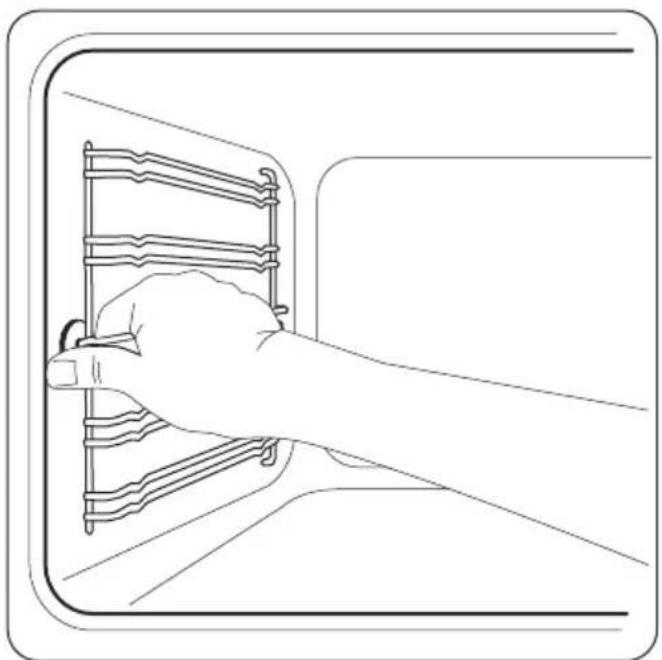
To clean the oven, remove the shelf supports.
- Pull the front of the shelf support away from the side wall.
natural_image
Line drawing of a hand inserting a spring into a window frame (no text or symbols)- Pull the rear end of the shelf support away from the side wall and remove it.
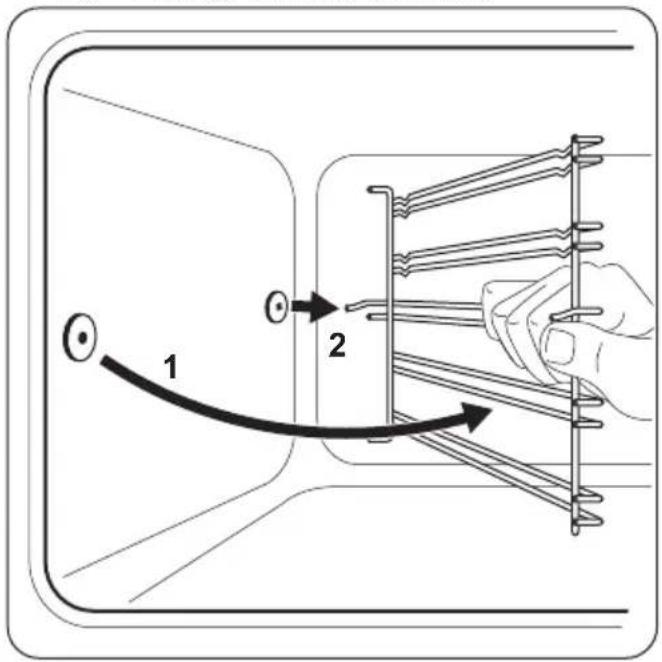
Install the shelf supports in the opposite sequence.

Make sure that the longer fixing wire is in the front. The ends of the two wires must point to the rear. Incorrect installation can cause damage to the enamel.
Removing and cleaning the door glasses

The door glass on your product can be different in type and shape from the examples you see in the diagrams. The number of glasses can also be different.
- Open the door fully.
- Move the slider until you hear a click.
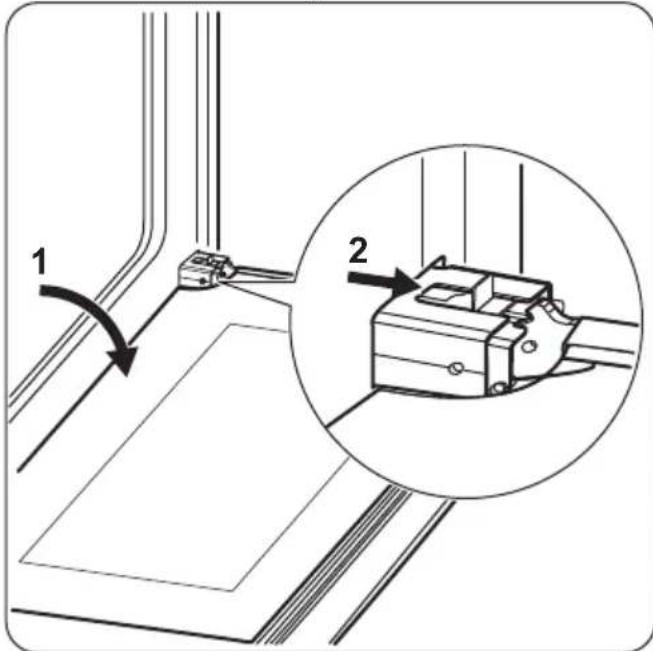
- Close the door until slider locks.
- Hold the door trim on the top edge of the door at the two sides and push inwards to release the clip seal.
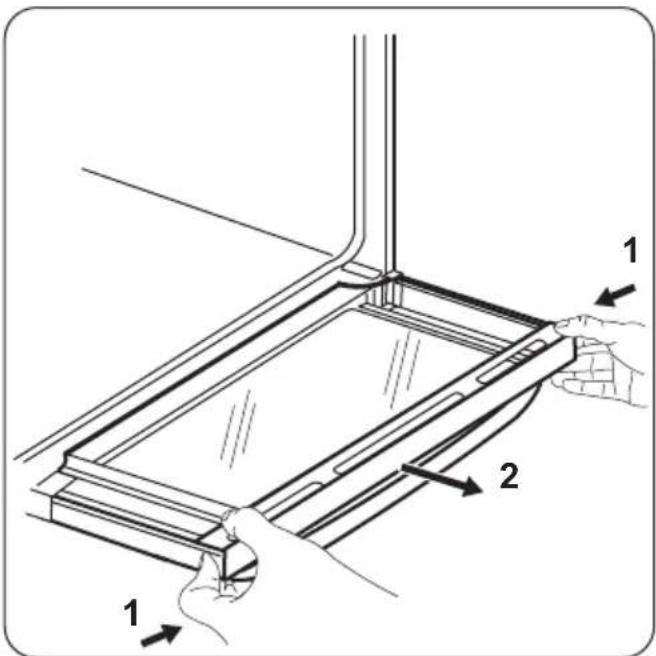
- Pull the door trim to the front to remove it.
- Remove the glass panels.
To install panels follow the procedure in reverse.
Replacing the lamp
Put a cloth on the bottom of the interior of the appliance. It prevents damage to the lamp glass cover and the cavity.

WARNING!
Danger of electrocution! Disconnect the fuse before you replace the lamp. The lamp and the lamp glass cover can be hot.
- Deactivate the appliance.
- Remove the fuses from the fuse box or deactivate the circuit breaker.
The back lamp

The lamp glass cover is at the back of the cavity.
- Turn the lamp glass cover counterclockwise to remove it.
- Clean the glass cover.
- Replace the oven lamp with a suitable 300 °C heat-resistant oven lamp.
Use the same oven lamp type.
- Install the glass cover.
Removing the drawer

WARNING!
When the oven is in use, heat can build up in the drawer. Do not keep flammable things in there (e.g. cleaning materials, plastic bags, oven gloves, paper, cleaning sprays, etc.).
The drawer below the oven can be removed for cleaning.
- Pull the drawer out until it stops.
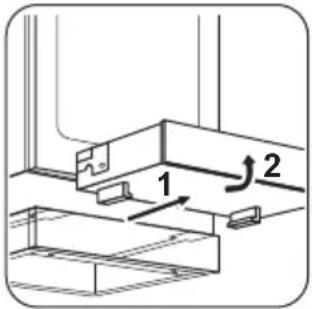
Troubleshooting
-
Lift the drawer at a small angle and remove it from the drawer support rails.
-
To insert the drawer set the drawer on the support rails. Make sure that the catches engage correctly into the rails
-
Lower the drawer until it is horizontal and push it in.

WARNING!
Refer to Safety chapters.
What to do if...
| Problem Possible cause Remedy | ||
| You cannot activate the appli-ance. | The appliance is not connec-ted to an electrical supply or it is connected incorrectly. | Check if the appliance is cor-rectly connected to the electri-cal supply. |
| You cannot activate the appli-ance. | The fuse is released. Make sure that the fuse is the cause of the malfunction. If the fuse releases again and again, contact a qualified electrician. | |
| The oven does not heat up. The oven is deactivated. Activate the oven. | ||
| The oven does not heat up. The necessary settings are not set. | Make sure that the settings are correct. | |
| The lamp does not operate. The lamp is defective. Replace the lamp. | ||
| Steam and condensation settle on the food and in the cavity of the oven. | You left the dish in the oven for too long. | Do not leave the dishes in the oven for longer than 15 - 20 minutes after the cooking process ends. |
Service data
If you cannot find a solution to the problem yourself, contact your dealer or an Authorised Service Centre.
The necessary data for the service centre is on the rating plate. The rating plate is on the front frame of the appliance cavity. Do not remove the rating plate from the appliance cavity.
We recommend that you write the data here:
| Model (MOD.) | |
| Product number (PNC) | |
| Serial number (S.N.) |
Installation

WARNING!
Refer to Safety chapters.
Technical data
| Dimensions | |
| Height 847 - 867 mm | |
| Width 596 mm | |
| Depth 600 mm | |
| Oven capacity 74 l | |
Location of the appliance
You can install your freestanding appliance with cabinets on one or two sides and in the corner.
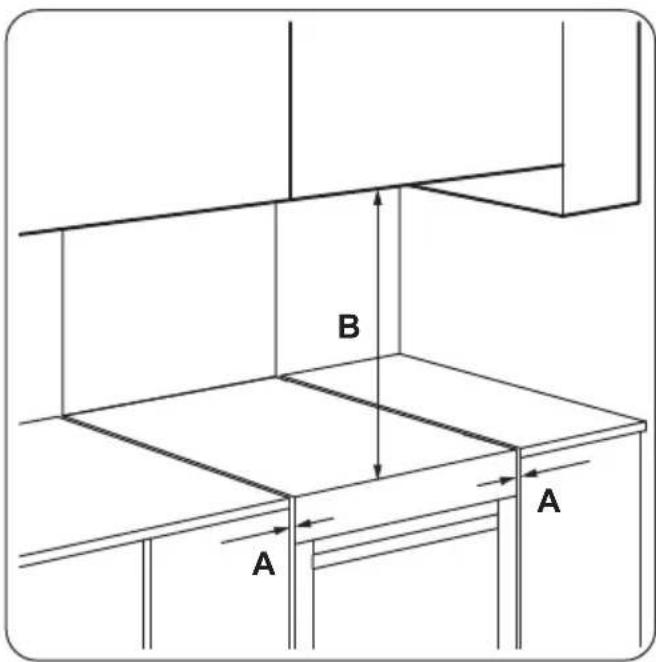
Minimum distances
| Dimension mm | |
| A | 2 |
| B 685 |
Levelling of the appliance
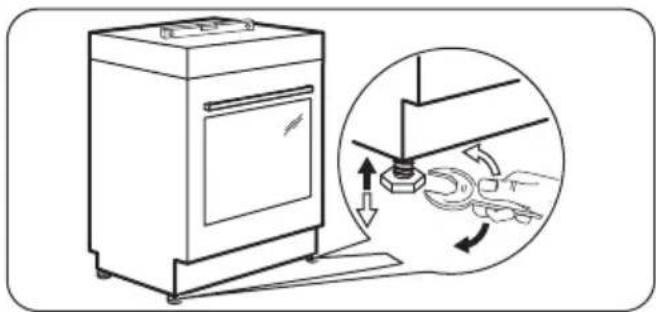
natural_image
Line drawing of a kitchen appliance with an inset showing hand cleaning steps (no text or symbols)Use small feet on the bottom of appliance to set the appliance top surface level with other surfaces.
Anti-tilt protection

CAUTION!
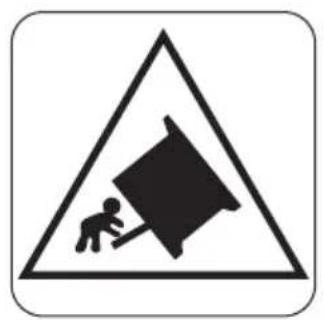
Install the anti-tilt protection to prevent the appliance from falling under incorrect loads. The anti-tilt protection only works when the appliance is put in a correct area. Your appliance has the symbols shown on the pictures (if applicable) to remind you about the installation of the anti-tilt protection.
natural_image
Warning sign depicting a person pushing a large object through a triangular frame (no text or symbols)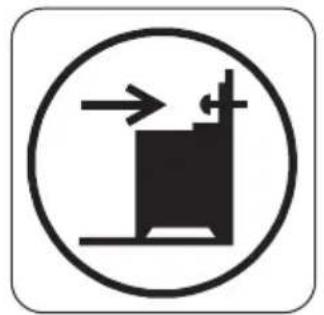
natural_image
Simple black-and-white diagram of a device with directional arrows, enclosed in a circle (no text or symbols)
CAUTION!
Make sure you install the anti-tilt protection at the correct height.
Make sure that the surface behind the appliance is smooth.
- Set the correct height and area for the appliance before you attach the anti-tilt protection.
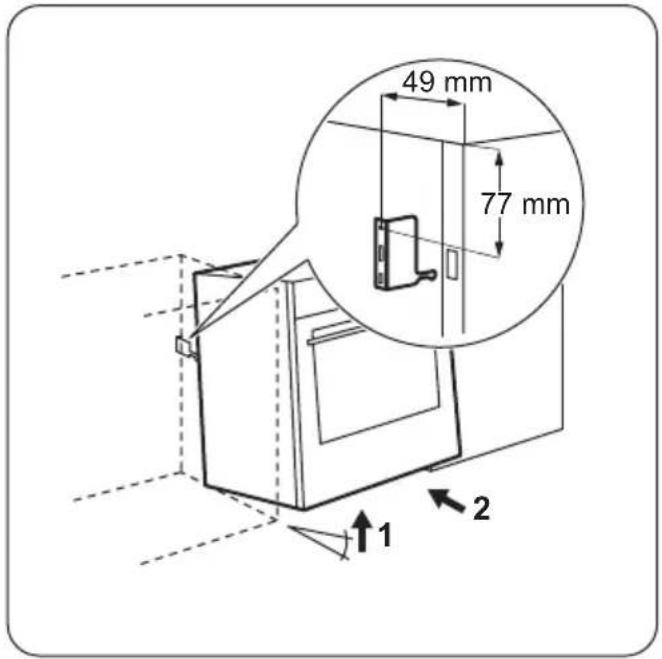
- Install the anti-tilt protection 77 mm down from the top surface of the appliance and 49 mm from the left side of the appliance into the circular hole on the bracket (see fig.). Screw it into the solid material or use applicable reinforcement (wall).
- You can find the hole on the left side at the back of the appliance (see fig.). Lift the front of the appliance (1) and put it in the middle
ENVIRONMENTAL CONCERNS
Recycle the materials with the symbol Put the packaging in applicable containers to recycle it. Help protect the environment and human health and to recycle waste of electrical and electronic appliances. Do not dispose appliances marked with the symbol with the household waste. Return the product to your local recycling facility or contact your municipal office.
of the space between the cupboards (2). If the space between the bench cupboards is larger than the width of the appliance, you must adjust the side measurement to centre the appliance.
Electrical installation

WARNING!
The manufacturer is not responsible if you do not follow the safety precautions from Safety chapters.
This appliance is supplied without a main plug or a main cable.
Applicable cable types: H07 RN-F, H05 RN-F, H05 RR-F, H05 VV-F, H05 V2V2-F (T90), H05 BB-F.
Περιεχόμενα
natural_image
Technical line drawing of a mechanical assembly with a magnified circular detail (no text or symbols)natural_image
Technical line drawing of a wooden beam joint with two magnified views showing detailed details (no text or symbols)
natural_image
Isometric line drawing of a rectangular grid-like structure with horizontal lines, no text or symbols present.natural_image
Line drawing of a hand inserting a spring into a window frame (no text or symbols)natural_image
Illustration of a kitchen appliance with a magnified inset showing hand cleaning steps (no text or symbols)natural_image
Warning sign depicting a person pulling a large block inside a triangle (no text or symbols)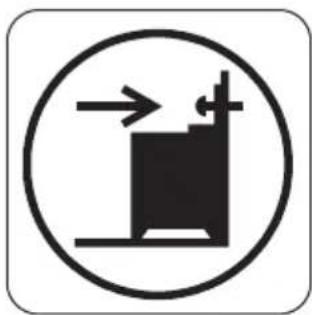
natural_image
Simple line drawing of a mechanical device with directional arrows, enclosed in a circle (no text or symbols)
ΠΡΟΣΟΧΗ!
www.zanussi.com/shop

CE
- ⚠️ Safety information
- Children and vulnerable people safety
- WARNING!
- General Safety
- Safety Instructions
- Installation
- Electrical Connection
- Use
- Care and Cleaning
- Product description
- General overview
- Internal light
- Disposal
- Cooking surface layout
- Accessories
- Before first use
- Initial Cleaning
- Preheating
- Hob - Helpful hints and tips
- Using the rapid hot plate
- Cookware
- CAUTION!
- Energy saving
- Hob - Care and cleaning
- General information
- Stainless steel
- Oven - Daily use
- Cooling fan
- Activating and deactivating the oven
- The knob symbol, indicator or lamp (depends on the model - refer to the product description):
- Oven functions
- Minute Minder
- Inserting the oven accessories
- Deep pan:
- Oven - Helpful hints and tips
- Wire shelf and the deep pan together:
- Baking
- Circulated cooking
- Multileveled Baking
- Conventional Baking on one level
- Roasting
- Roasting with Conventional Cooking
- Roasting with Turbo Grilling
- Grilling in general
- Grilling
- Preserving / Bottom Heat □
- Defrosting
- Oven - Care and cleaning
- Notes on cleaning
- Stainless steel or aluminium appliances
- Removing the shelf supports
- Removing and cleaning the door glasses
- Replacing the lamp
- The back lamp
- Removing the drawer
- Troubleshooting
- Service data
- Location of the appliance
- Anti-tilt protection
- ENVIRONMENTAL CONCERNS
- Electrical installation
- Περιεχόμενα
- ΠΡΟΣΟΧΗ!
Brand : ZANUSSI
Model : ZCE65200WA
Category : Cooker