
ORD 172 F - Freezer Orima - Free user manual and instructions
Find the device manual for free ORD 172 F Orima in PDF.


| Product Type | Fridge-Freezer |
| Brand | Orima |
| Model | ORD 172 F |
| Total Gross Volume | 138 L |
| Net Fridge Capacity | 97 L |
| Net Freezer Capacity | 35 L |
| Dimensions (H x W x D) | 1246 x 475 x 573 mm |
| Energy Efficiency Class | A+ |
| Annual Energy Consumption | 183 kWh/year |
| Climate Class | ST |
| Noise Level | 40 dB(A) |
| Temperature Control | Thermostat (settings 1-6, plus OFF) |
| Defrost Type | Automatic (fridge), manual (freezer) |
| Internal Light | Yes, user-replaceable |
| Adjustable Feet | Yes |
| Door Reversibility | Not reversible |
| Cooling System | Static |
| Storage Compartments | Salad drawer, bottle shelves |
| Power Supply | 220-240 V~50 Hz |
| Spare Parts | Light bulb (user-replaceable) |
Frequently Asked Questions - ORD 172 F Orima
User questions about ORD 172 F Orima
0 question about this device. Answer the ones you know or ask your own.
Ask a new question about this device
Download the instructions for your Freezer in PDF format for free! Find your manual ORD 172 F - Orima and take your electronic device back in hand. On this page are published all the documents necessary for the use of your device. ORD 172 F by Orima.
USER MANUAL ORD 172 F Orima
MANUAL DE INSTRUÇÕES
INSTRUCTION MANUAL LIVRE D'INSTRUCTIONS LIBRO DE INSTRUCCIONES
www.orima.pt
facebook.com/orima.pt
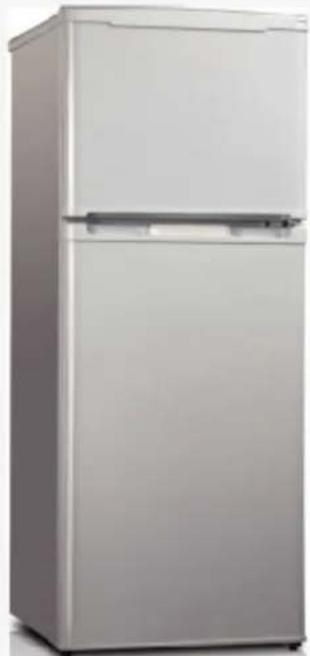

Frigorifico
UK Thank you for purchasing this ORIMA product. Please read this manual carefully before using the appliance.
- Congelador -Prateleira
- Termóstato
- Prateleira Frigorífico
- Tampo Gaveta de Frutas e Vegetais
- Gaveta Frutas e Vegetais
- Tomada eléctrica
- Pé ajustável
- Prateleira Garrafas - Porta
- Prateleira - Porta
DISCRIPTION OF APPLIANCE

- Cabinet Top - Freezer Shelf
- Thermostat Housing
- Fridge Shelf
- Salad Drawer Cover
- Fridge Shelf- Salad Drawer
- Plug
- Adjustable Feet
- Upper Bottle Shelf
- Bottom Bottle Shelf
Safety information
This information is provided in the interest of your safety. Please read the following carefully before carrying out the installation or use of the appliance.
If you are discarding an old freezer or refrigerator with a lock / catch fitted to the door, ensure that it is left in a safe condition to prevent the entrapment of young children.
As old refrigeration equipment may contain CFC's which will damage the ozone layer, when disposing of any refrigeration equipment please contact your local waste disposal department for advice on the correct method of disposal
This appliance must only be used for its intended purpose i.e. the freezing and storage of domestic edible foodstuffs and should not be used for any other purpose
If the mains cable requires replacement, this must only be undertaken by a suitably qualified person, as special purpose tools are required.
Installation
Position the appliance and allow to stand for two to three hours before it is turned on for the first time to allow the system to settle. Do not position next to any heat source e.g. cooker, boiler or in direct sunlight etc.
A clearance of 10 cm must be left between the sides of the appliance and any adjacent cabinets or walls to allow for adequate air circulation. The appliance is not designed for recessed installation (“building in”).
Install on a good firm level surface, and any unevenness of the floor should be corrected prior to installation, slight unevenness can be overcome by adjusting the front feet.
NOTE: If the appliance is positioned on a carpet, soft floor covering you should re-adjust the front feet once the appliance has had time to settle.
Please note that the doors on this appliance can not be reversed.
Instructions for use
Remove all packing materials and wash the interior of the appliance using lukewarm water containing a little bicarbonate of soda in the proportion of 1 teaspoon to 1.2 litres (2 pints) of water. Do not use detergents or soaps as they may taint the food. After cleaning, dry all parts thoroughly.
Temperature Control
The refrigerator is designed to maintain an internal storage temperature in the refrigerator compartment between +2C to +5C.
To enable adjustment of the temperature in the appliance it is fitted with an adjustable thermostat located in the fridge compartment, which can be adjusted from setting 1 (warmest) to 6 (coldest). For normal working temperature it is recommended to adjust the thermostat control to the midway position, after a few hours readjust the thermostat to the desired temperature. There is also an off position “OFF”. Which turns OFF/ON the refrigerator freezer compartment. Please Note this dose not disconnect the appliance from the mains supply. To do this you must remove the mains plug from the socket.
To obtain a lower internal temperature turn the thermostat temperature control clockwise to a higher number. To obtain a higher internal temperature turn the thermostat control anticlockwise to a lower number. However, the internal temperature and temperature control setting is dependent on a number of factors:
- Varying ambient temperatures.
- The number of times the appliance doors is opened and how long the doors remain open.
- The amount and temperature of the food and drink introduced into the appliance.
- The weather conditions and time of year e.g. summer/winter.
- The positioning of the appliance and an adequate air circulation to the sides and back of the cabinet.
Never place hot or warm foods into the cabinet or leave the doors open for longer than necessary as this will raise the temperature and cause excessive amounts of moisture thus increasing the amount of ice in the refrigerator / freezer compartment.
The Internal Light
The internal light will automatically switch ON and OFF whenever the refrigerator door is opened or closed. To change the light bulb, please see the chapter on changing the light bulb.
Storage of fresh food in the refrigerator
Food should always be covered tightly with foil, plastic film, placed in bags or stored in airtight containers. This will prevent food from dehydrating and prevent the strong smell of some foods transferring to milder ones.
To store raw meat wrap in polythene bags or airtight containers and place on the lowest shelf.
Do not allow raw meat to come into contact with cooked foods. For safety, only store raw meat for two or three days. Fruit and vegetables should be thoroughly cleaned and placed in the vegetable/ salad bin.
Milk and other liquids should be sealed with lids and placed in the bottle shelf on the door.
Store frozen food
When using the freezer for the first time or after defrosting, turn the thermostat temperature control to setting 6 for at least two hours before introducing the food to be stored, Then adjust to your preferred setting.
All frozen food products you purchase should be placed in the freezer as soon as possible to avoid the frozen food from defrosting.
Storage recommendations printed on the packaging of frozen food by the manufactures should always be followed.
Freezing fresh food
Ensure that your freezing operations are carried out under the most hygienic conditions, as freezing alone does not sterilise the food. Never put hot or even warm foodstuffs into the freezer. Prior to storing the food, pack it in plastic bags, aluminium foil or freezer containers and place into the freezer without putting them in contact with food that has already been frozen. See the technical data sheet at the rear of this booklet for the maximum permissible amount in kilograms of fresh food that can be frozen in any 24 hour period with a room temperature of 25C Never freeze more than the maximum permissible.
Making ice cubes
Pour water into the ice cube tray until it is two thirds full and place into the freezer. Ice cubes will form in approximately 2 to 3 hours. The ice cube can be easily removed by twisting the ice cube tray or running under cold water for a short time.
Refrigerator defrost process
The refrigerator defrosting process is carried out automatically every time the compressor stops.
The defrost water drains from the cabinet into a tray placed on the top of the compressor to the rear of the unit where it evaporates.
Freezer defrost process
Small amounts of frost will accumulate inside the freezer depending upon the length of time during which the door is left open or the amount of moisture introduced. It is essential to ensure that no frost or ice is allowed to form at places where it will affect the close fitting of the door seal. This might allow air to penetrate the cabinet, thus encouraging continuous running of the compressor. Thin frost formation is quite soft and can be removed with a brush or plastic scraper. Do not use metal or sharp scrapers, mechanical devices or other means to accelerate the defrosting process. Remove all dislodged frost from the cabinet floor .For the removal of thin frost it is not necessary to switch off the appliance.
For the removal of heavy ice deposits disconnect the appliance from the mains supply and empty the contents into cardboard boxes and wrap in thick blankets or layers of paper to keep them cold. Defrosting will be most effective if carried out when the freezer is nearly empty, and it should be carried out as quickly as possible to prevent undue increase in temperature of the contents.
Do not use metal or sharp scrapers, mechanical devices or other means to accelerate the defrosting process. An increase in temperature of frozen food packages during defrosting will shorten the storage life. Provided that the contents are well wrapped and placed in a cool area they should keep for several hours. Examine the contents when replacing them in the freezer and if some of the packages have thawed out it should be eaten within 24 hours or be cooked and re-frozen.
After defrosting has finished clean the inside with a solution of warm water with a little bicarbonate of soda and then dry thoroughly. Wash all removable parts in the same way and reassemble. Reconnect the appliance to the mains supply and leave for 2 to 3 hours on setting number 6 before introducing the food back into the freezer.
Warning : The refrigerating system must not be damaged at any time.
Cleaning and maintenance
Before any cleaning or maintenance is carried out you must disconnect the appliance from the mains supply by removing the plug, never remove the plug by pulling on the mains cord. Remove the plug by pulling on the plug itself.
It is recommended that when cleaning the appliance, both the inside and outside, can be cleaned using warm water and a little bicarbonate of soda. Use 1 teaspoon to 1.2 litres of water.
If the appliance is not to be used for a long period of time then it is recommended to remove all the food stuff, clean the inside of the appliance and leave the door open to allow the air to circulate thus avoiding unpleasant odours.
Changing the light bulb
Note. Light bulbs are not covered by the warranty
Disconnect the appliance from the mains supply.
Slide the lamp cover downwards, to gain accesses to the lamp holder.
Unscrew the light bulb in an anticlockwise direction from the holder.
Replace the bulb with one of the correct type and size.
Replace the cover by sliding the cover upwards.
Reconnect the appliance to the mains supply.
Power Failure
If there is a power failure for a short time less than 16 hrs keep the door closed
Frozen food should not be affected if the failure lasts for less than 16 hrs.
Extra protection can be given by covering the appliance with two or three thick blankets.
If a long power failure is anticipated, try to get the foodstuff into another appliance or cold store, if possible.
If the power cut is longer than 16 hrs then check the content of the freezer.
If the food as defrosted cook and refreeze the food or it should be eaten immediately.
Never refreeze food that as been defrosted.
If the appliance is not operating correctly:
Please check the following points.
Is there a power failure? (Check by turning on a house light)
Has the fuse blown or has the circuit breaker tripped.
Has the door been closed correctly?
Check the thermostat as been set correctly.
Check the mains plug seated in the wall socket correctly and the socket switch is on.
Do's and don'ts
Do- keep raw meat and poultry below cooked food and dairy products.
Do- Leave lettuce, cabbage, parsley and cauliflower on the stem.
Do- Wrap cheese firstly in greaseproof paper and then in a polythene bag, excluding As much air as possible. For best results, take out of the fridge compartment an hour before eating.
Do- Wrap raw meat and poultry loosely in polythene or aluminium foil. This prevents drying.
Do- Wrap fish and offal in polythene bags.
Do- Wrap food with a strong odour or which may dry out, in polythene bags, or aluminium foil or place in airtight container.
Do- Wrap bread well to keep it fresh.
Do- Chill white wines, beer, larger and mineral water before serving.
Do- Check contents of the low temp compartment every so often.
Do- Keep food for as short a time as possible and adhere to “best before” and “Use by” etc. dates.
Do- Store commercially prepared food in accordance with the instructions given on the packets.
Do- Always choose high quality fresh food and be sure it is thoroughly clean before Storing it.
Do- Wrap all food in aluminium foil or food quality polythene bags and make sure any air is excluded.
Do-Keep ventilation openings, in the appliance enclosure clear of obstruction.
Do-ensure that frozen food does not rise in temperature while defrosting, a rise in temperature during defrosting may shorten the storage life of your food.
Don't- Cover the shelves with any protective materials which may obstruct air circulation.
Don't- Store poisonous or any dangerous substances in your fridge. It has been designed for the storage of edible foodstuffs only.
Don't- Consume food which has been refrigerated for an excessive length of time.
Don't- Store cooked and fresh food together in the same container. They should be packaged and stored separately.
Don't- Let defrosting food or food juices drip onto already stored food.
Don't- leave the door open for long periods, as this will make the appliance more costly to run and cause excessive ice formation.
Don't- Use sharp edged objects such as knives or forks to remove the ice.
Don't- Never use hairdryers, or electrical appliances for defrosting only use item recommended by the manufacturer.
Don't-put hot food into the appliance. Let it cool down first.
Don't- put liquid-filled bottles or sealed cans containing carbonated liquids into the freezer section, as they may burst.
Don't- Give children ice cream and water ices direct from the freezer section. The low temperature may cause ‘freezer burns’ on the lips.
Don't- Try to keep frozen food which has thawed; it should be eaten within 24 hours or cooked and refrozen.
Don't- Damage the refrigerant circuit at any time
| Model | ORD 172 F |
| Total Gross Volume, L | 138 |
| Net Volume Fridge, L | 97 |
| Net Volume Freezer, L | 35 |
| The current consumption depends on how the appliance is used and its location | |
| Energy efficiency class | A + |
| Energy consumption: kWh/year | 183 |
| Climate Class | ST |
| Dimensions (H x W x D), mm | 1246 x 475 x 573 |
| Noise Level, db(A) re 1pw | 40 |
| Electrical Information | Check Rating Label |
| Note: The manufacturer reserves the right to make future changes in specifications and Technical parameters. | |
| Correct Disposal of this product | |
 | Correct Disposal of this productThis marking indicates that this product should not be disposed with other household wastes throughout the EU. To prevent possible harm to the environment or human health from uncontrolled waste disposal, recycle it responsibly to promote the sustainable reuse of material resources. To return your used device, please use the return and collection systems or contact the retailer where the product was purchased. They can take this product for environmental safe recycling. |
- MANUAL DE INSTRUÇÕES
- FRIGORIFICO
- DISCRIPTION OF APPLIANCE
- SAFETY INFORMATION
- INSTALLATION
- INSTRUCTIONS FOR USE
- TEMPERATURE CONTROL
- THE INTERNAL LIGHT
- STORAGE OF FRESH FOOD IN THE REFRIGERATOR
- STORE FROZEN FOOD
- FREEZING FRESH FOOD
- MAKING ICE CUBES
- REFRIGERATOR DEFROST PROCESS
- FREEZER DEFROST PROCESS
- WARNING : THE REFRIGERATING SYSTEM MUST NOT BE DAMAGED AT ANY TIME
- CLEANING AND MAINTENANCE
- CHANGING THE LIGHT BULB
- POWER FAILURE
- IF THE APPLIANCE IS NOT OPERATING CORRECTLY
- DO'S AND DON'TS
Brand : Orima
Model : ORD 172 F
Category : Freezer